The Wild World of Chinese Food Nicknames
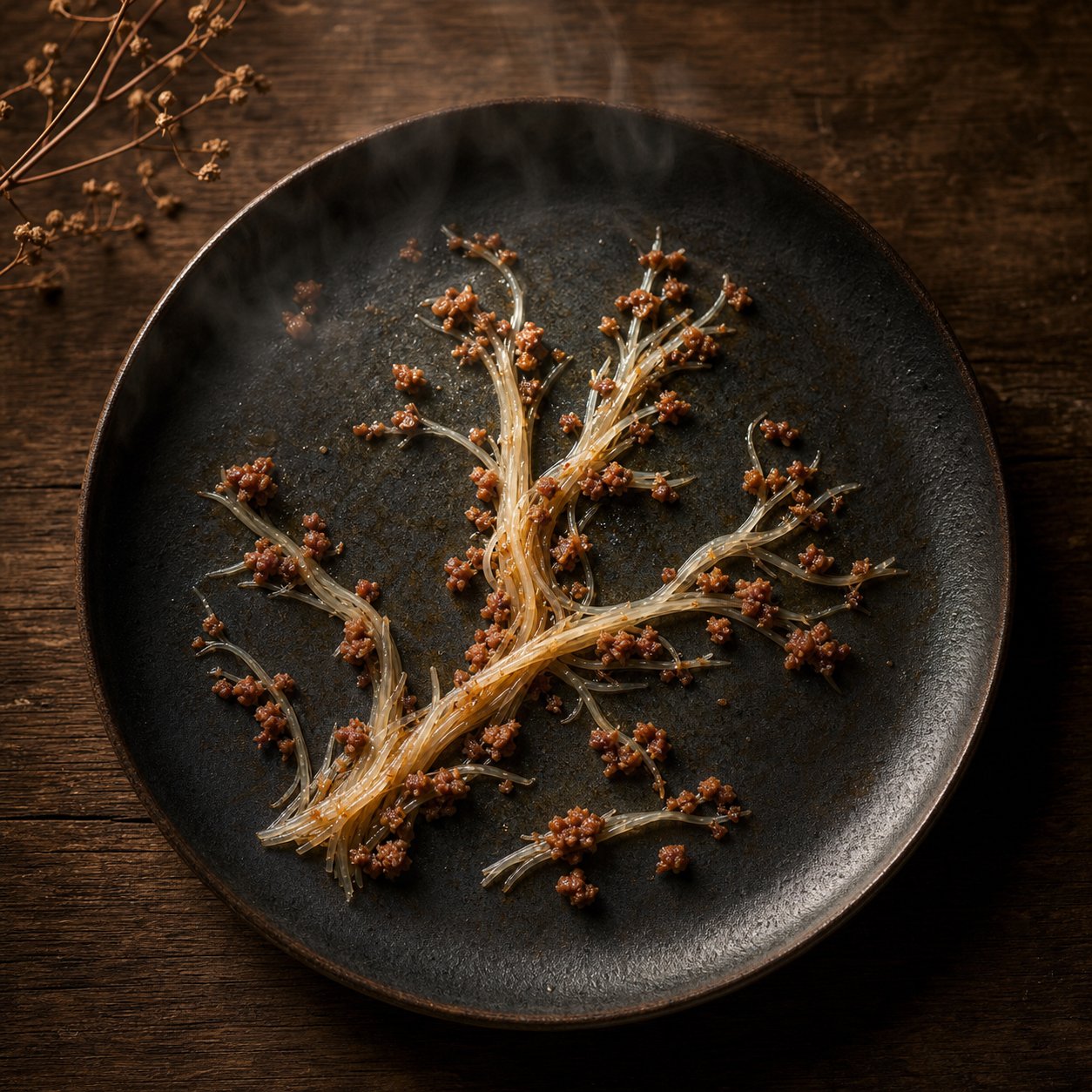
Imagine opening a menu and finding "Ants Climbing a Tree" listed between appetizers and mains. No insects involved. No bark in sight. What arrives at your table is a fragrant plate of glass noodles tossed with seasoned minced pork, the tiny meat bits clinging to the translucent strands like ants scaling branches.
Mayishangshu (蚂蚁上树) literally translates to "ants climbing a tree," yet it contains zero insects. The minced pork scattered across bean thread noodles simply resembles ants on twigs.
Welcome to the world of Chinese food nicknames, where dish names read like fragments of folklore, poetry, or fever dreams rather than ingredient lists. This tradition of metaphorical naming runs deep in Chinese culinary culture. As researchers in food culture translation have noted, Chinese people believe that a wonderful dish name is not only a vivid advertisement for the dish but also an organic part of the dish itself, one that pleases the spirit and satisfies psychological needs.
Why Chinese Dishes Have Such Creative Names
So what separates a "nickname" from a straightforward dish name? A literal name like "hongshao rou" (red-braised pork) tells you exactly what you are eating. A nickname, on the other hand, wraps the dish in metaphor, story, or visual poetry. Think of it this way: one approach labels, the other paints a picture. Chinese food names lean heavily toward painting.
This happens because, in the Chinese dietary concept, eating is not merely a physiological activity. It is a social and cultural event. People endow food with rich cultural connotations tied to themes of fortune, longevity, happiness, and prosperity. The chinese character for food, 食 (shi), appears across countless compound words that connect nourishment to culture, ritual, and identity. Understanding these chinese food words opens a door into how an entire civilization thinks about what it eats.
The Cultural Logic Behind Food Naming
Chinese food nicknames generally fall into a handful of naming convention categories, each with its own logic:
- Appearance-based — dishes named for what they look like on the plate
- Legend-based — names rooted in folk stories, historical events, or myths
- Person-based — dishes tied to a famous figure or inventor
- Animal metaphor-based — names borrowing dragon, phoenix, lion, or other creature imagery
- Auspicious meaning-based — names chosen for lucky sounds or symbolic blessings
Each category reflects a different facet of how food in chinese language carries meaning far beyond flavor. Some funny chinese food names land as unintentional comedy for English speakers, while others reveal centuries of storytelling compressed into two or three characters. The result is a naming system where chinese food names function more like tiny poems than labels.
What follows is a comprehensive guide bridging Chinese characters, pinyin, and English translations for these colorful dish names. Whether you have encountered funny names in chinese on a restaurant menu or simply want to decode what "Buddha Jumps Over the Wall" could possibly mean, each naming category holds its own surprises, starting with the animals that never actually made it onto the plate.
Animal Metaphors That Confuse Every Tourist
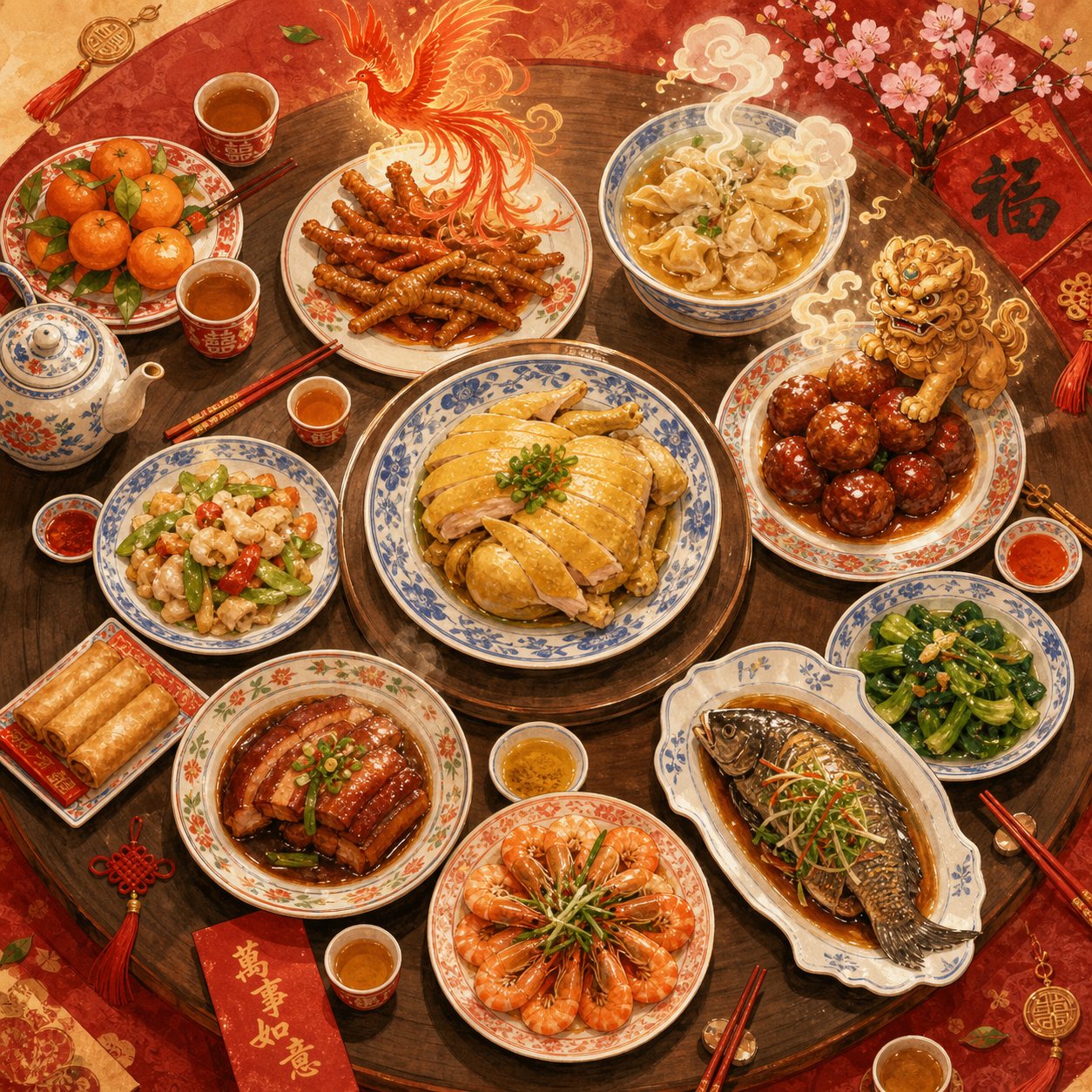
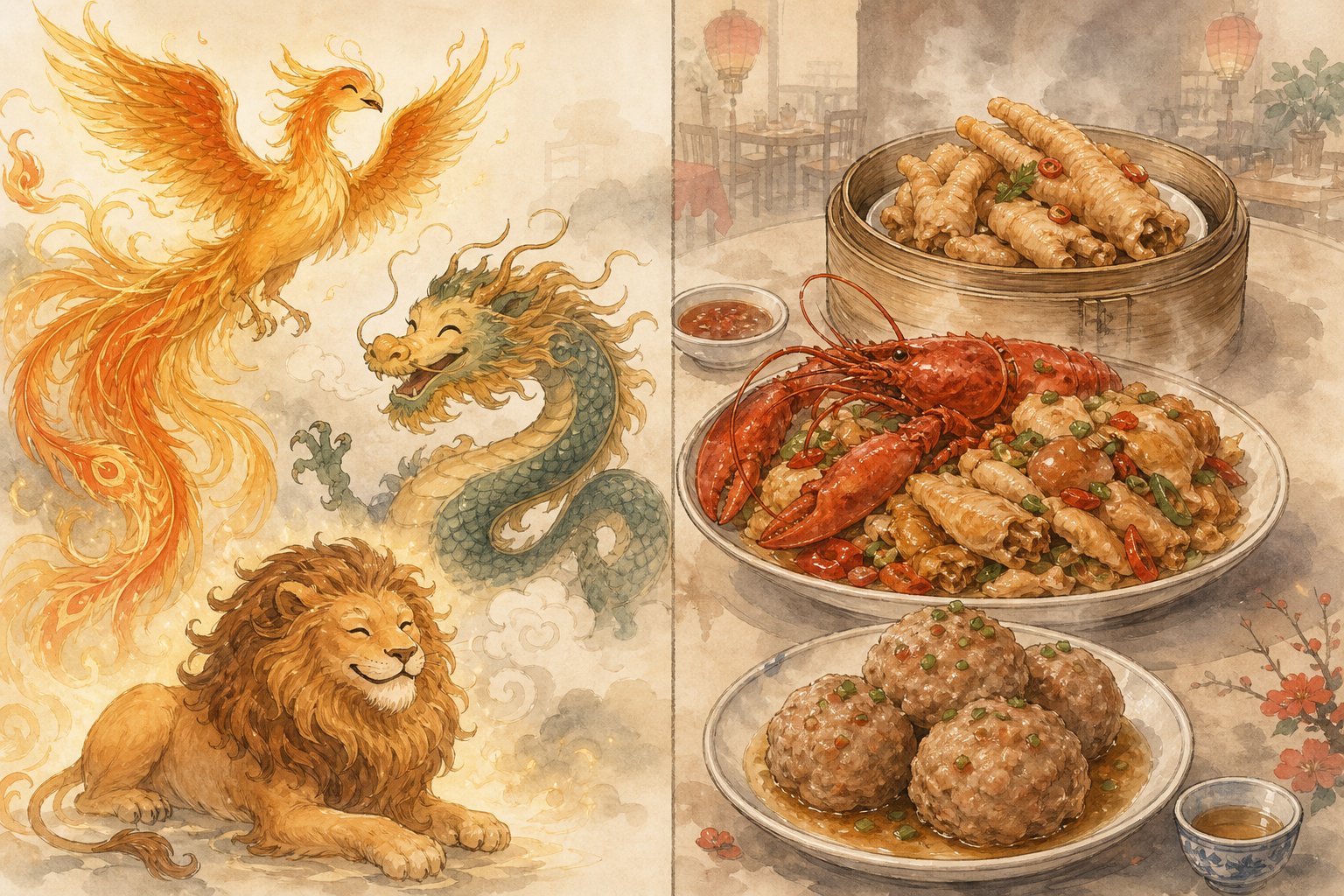
You sit down at a Cantonese restaurant, scan the menu, and spot "Phoenix Claws." Your mind conjures a mythical bird. What arrives is a plate of braised chicken feet. No phoenix. No claws ripped from legend. Just tender, gelatinous chicken toes drenched in sauce. This is the reality of animal-based chinese food nicknames: the creatures on the menu rarely match the creatures on the plate.
Animal metaphors rank among the most disorienting naming conventions in Chinese cuisine. They borrow the grandeur of mythical beasts and the charm of familiar animals to elevate humble ingredients into something poetic. The logic is rooted in symbolism. Dragons represent imperial power and masculine energy. Phoenixes embody elegance, femininity, and renewal. Lions signal prosperity and strength. When these animals appear in chinese dishes names, they are not describing ingredients. They are assigning status.
Phoenix and Dragon Dishes Decoded
The pairing of dragon and phoenix, longfeng (龙凤), is one of the most celebrated symbolic combinations in Chinese culture. It represents the harmony of yin and yang, making it a staple at wedding banquets. On the plate, "dragon" typically refers to lobster or shrimp (their curved bodies echoing a dragon's form), while "phoenix" stands in for chicken (both are feathered, elegant creatures in the cultural imagination).
Phoenix Claws, or fengzhao (凤爪), is a perfect example of how chinese chicken names elevate a simple protein. Calling chicken feet "phoenix claws" transforms a budget cut into something regal. The name stuck so firmly in Cantonese dim sum culture that most diners in Guangdong never think twice about it. Meanwhile, first-time visitors flip through translation apps trying to figure out why a restaurant is serving mythological birds.
Then there is "Field Chicken," tianjī (田鸡), which sounds innocent enough until you learn it means frog. The name likely originated because frogs live in rice paddies (fields) and their leg meat tastes vaguely like chicken. It is a gentle euphemism, one that makes ordering frog legs feel a little less adventurous for the squeamish.
When Lions and Squirrels Appear on the Menu
Lion's Head Meatballs, shīzitóu (狮子头), come from Jiangsu province's Huaiyang cuisine tradition. These oversized pork meatballs, braised in broth with napa cabbage, get their name from their shaggy appearance. The rough, textured surface of the meatball supposedly resembles a lion's mane. No actual lion is involved, just a generous ball of seasoned ground pork that could fill your palm.
Squirrel Fish, sōngshǔ guìyú (松鼠桂鱼), might be the most theatrical dish on this list. A whole mandarin fish is deboned, scored in a crosshatch diamond pattern, battered, and deep-fried until the flesh fans outward like golden fur. The head and tail curl upward, giving the finished dish the silhouette of a bushy-tailed squirrel. As chefs in Suzhou describe it, the fish meat spreads out like gold fur while the head and tail turn up, creating a striking visual resemblance to the animal. Some accounts also attribute the name to the squealing sound the hot sweet-and-sour sauce makes when poured over the crispy fish.
This dish traces its popularity to the Qing Dynasty, when Emperor Qianlong reportedly ordered it repeatedly during visits to Suzhou's famous Songhelou restaurant. That imperial endorsement cemented squirrel fish as the signature of Jiangsu cuisine and one of the most recognizable asian food names worldwide.
| Nickname (English) | Chinese Characters & Pinyin | Actual Ingredients | Region of Origin |
|---|---|---|---|
| Phoenix Claws | 凤爪 (fengzhao) | Braised or steamed chicken feet | Cantonese (Guangdong) |
| Dragon and Phoenix Bringing Prosperity | 龙凤呈祥 (longfeng chengxiang) | Lobster/shrimp paired with chicken | Nationwide (banquet dish) |
| Field Chicken | 田鸡 (tianji) | Frog (typically frog legs) | Cantonese & Sichuan |
| Lion's Head Meatballs | 狮子头 (shizitou) | Large braised pork meatballs | Jiangsu (Huaiyang) |
| Squirrel Mandarin Fish | 松鼠桂鱼 (songshǔ guiyu) | Deep-fried scored mandarin fish with sweet-and-sour sauce | Jiangsu (Suzhou) |
Notice how these dishes in chinese span vastly different regional traditions. Cantonese cuisine favors the phoenix and dragon imagery tied to celebration and refinement. Jiangsu cooking leans into visual artistry, naming dishes for what they resemble once plated. Sichuan kitchens, as you will see later, tend toward bolder and more humorous naming. Yet all three regions share the same underlying principle: the animal in the name is a metaphor, never a literal ingredient.
This metaphorical habit extends beyond grand mythical creatures. You will find "Husband and Wife" dishes, "Beggar's" recipes, and names pulled from centuries-old love stories. The animals were just the beginning. Behind every poetic creature name sits a legend waiting to be told.
Legendary Stories Behind Famous Dish Names
Animal metaphors borrow from nature. But some of the most memorable chinese dish names borrow from something even richer: human stories. Legends, love affairs, acts of devotion, and even petty theft have all been immortalized in the names of Chinese food. These are dishes where the nickname is not a description of appearance or ingredients. It is a compressed narrative, a folktale you can eat.
What makes legend-based naming so fascinating is how it transforms a recipe into cultural memory. Every time someone orders "Buddha Jumps Over the Wall" or "Crossing the Bridge Noodles," they are participating in a story that has been retold for generations. Some of these tales have multiple competing versions depending on the region, the storyteller, or the century. The dish stays the same. The legend keeps evolving.
Buddha Jumps Over the Wall and Other Sacred Stories
If you had to pick one dish that captures the sheer drama of Chinese food naming, it would be Buddha Jumps Over the Wall, or fotiao qiang (佛跳墙). The name alone raises questions. Why would a Buddha jump? What wall? And what does any of this have to do with soup?
The dish traces its origins to the Guangxu era of the Qing dynasty in Fujian province. According to the most widely told version, Zhou Lian, the Fujian provincial governor, once tasted a lavish stew called fushou quan (meaning "happiness and longevity") at a government official's home. Deeply impressed, Zhou ordered his own kitchen master, Zheng Chunfa, to refine the dish further. Zheng layered chicken, duck, abalone, sea cucumber, and other delicacies into a Shaoxing wine jar and simmered them slowly over gentle heat. When the lid was finally lifted and the aroma escaped, scholars and gourmands are said to have exclaimed that even Buddha himself would abandon meditation and leap over the wall for a taste.
The aroma was so intoxicating that even a vegetarian Buddhist monk would break his vow, jump over the monastery wall, and demand a bowl. That single poetic exaggeration became the dish's permanent name.
What makes this one of the most famous names of chinese food is the sheer excess it represents. The ingredient list reads like a treasure inventory: abalone, sea cucumber, shark fin (historically), fish maw, scallops, pig trotters, shiitake mushrooms, and aged Shaoxing wine. The preparation takes days. Regional interpretations have since emerged across Fujian, Cantonese, and Taiwanese traditions, each with its own character. Fujian versions build on chicken and duck stock for a glossy amber broth. Cantonese renditions center on abalone sauce. Taiwanese cooks emphasize pre-frying ingredients like taro and crispy pork ribs to better absorb the broth.
The dish remains a centerpiece at Lunar New Year reunion feasts, symbolizing abundance, celebration, and completeness. It is not just a funny chinese dish name. It is a culinary monument to patience and luxury.
Love Stories Preserved in Dish Names
Not every legend involves monks and imperial kitchens. Some of the best chinese food nicknames are love stories in disguise.
Husband and Wife Lung Slices, or fuqi feipian (夫妻肺片), sounds alarming in English. The name conjures images no one wants at dinner. But the reality is a cold Sichuan appetizer of thinly sliced beef and offal (usually cow heart, tongue, or tripe) dressed in chili oil, Sichuan peppercorn, and sesame. Despite the name, actual lung is rarely used.
The story goes back to late Qing dynasty Chengdu, where many vendors sold cold beef slices on the streets. A married couple, Guo Zhaohua and his wife Zhang Tianzheng, grew famous for their version. They used inventive marinating techniques to transform cheap offal cuts into something irresistible. People began calling the dish "husband and wife waste slices" (夫妻废片) after its creators and their use of discarded cuts. The couple liked the name but not the word "waste" (废), so they swapped it for the homophone "lung" (肺), since lung could technically appear in the dish. One satisfied merchant reportedly gave the couple a gold plaque inscribed with the new name to hang in their shop.
The name stuck permanently, even as later cooks upgraded to beef tongue, tendon, and other tastier cuts. It is a reminder that chinese dish names often preserve a moment in history long after the original context has changed.
Crossing the Bridge Noodles, guoqiao mixian (过桥米线), carries an equally tender origin story from Yunnan province. A diligent scholar spent his days studying for the imperial exams on a small island in a lake south of Mengzi city. Every day, his wife made the long walk across a bridge to bring him his midday meal. But the scholar was so absorbed in his books that he often forgot to eat until the food had gone cold.
Worried about his health, the wife had an idea. She prepared a rich chicken broth separately from the rice noodles, fresh ingredients, and seasonings. The layer of oil on the hot broth kept it piping hot during her walk across the bridge. When she arrived, she combined everything just before serving, and the broth stayed hot enough to cook the noodles and ingredients on the spot. The scholar loved it, eventually passed his exams, and credited his wife's noodles for sustaining him through the grueling preparation.
Today, guoqiao mixian is still served in separate components. You get a bowl of scalding broth, a plate of raw ingredients, and fresh rice noodles. You assemble it yourself at the table, reenacting the wife's daily ritual every time you eat it. The dish is so popular in Yunnan that entire restaurant chains specialize exclusively in varieties of Crossing the Bridge Noodles.
Then there is Beggar's Chicken, jiaohua ji (叫花鸡), which tells a very different kind of story. The legend varies by region, but the most common version involves a homeless man (or thief, depending on who is telling it) who stole a chicken but had no pot or pan to cook it. Desperate, he wrapped the bird in mud and lotus leaves, then buried it in hot coals. When he cracked open the hardened clay shell, the steam released an incredible aroma, and the meat inside was impossibly tender and fragrant.
The technique eventually made its way into professional kitchens, where chefs refined it with marinades, stuffings, and carefully sourced lotus leaves. The clay-baking method seals in moisture and creates a dramatic tableside presentation when the shell is cracked open. Some food historians trace the dish to Hangzhou, others to Changshu in Jiangsu province. Like many entries on any chinese list of food legends, the "true" origin depends on which city you are eating in.
What connects all four of these dishes is how the story became inseparable from the food itself. You cannot order Buddha Jumps Over the Wall without someone at the table asking why. You cannot eat Crossing the Bridge Noodles without noticing the separate bowls and wondering about their purpose. The legends are not marketing. They are the dish's identity, passed down through generations of cooks and diners who found that a good story makes food taste better.
These narratives also reveal something about how Chinese culture values food. A dish is never just fuel. It carries emotional weight, historical memory, and social meaning. The same impulse that names a soup after a monk's broken vow also names noodles after a wife's devotion. Both treat eating as an act of storytelling.
Of course, not every chinese food nickname needs a centuries-old legend. Some dishes earn their names simply by looking strange, beautiful, or poetic on the plate. That visual imagination drives an entirely different category of naming, one where the eyes do the work before the tongue ever gets involved.
Appearance-Based Nicknames and Visual Poetry
Chinese cooks have always been painters as much as chefs. Where Western naming tends to list ingredients or cooking methods (grilled salmon, roasted potatoes), Chinese naming often asks a different question: what does this dish look like once it hits the plate? The answer becomes the name. The result is a category of chinese food nicknames that function like tiny landscape paintings, each one capturing a visual impression in just a few characters.
This approach prioritizes poetic description over practical information. You will not learn what you are eating from the name alone. But you will see it in your mind before the plate arrives. For anyone searching for names and pictures of chinese food, these appearance-based dishes are where language and imagery overlap most beautifully.
Dishes Named for What They Look Like
The most famous example is one we have already met. Ants Climbing a Tree, mayishangshu (蚂蚁上树), is a classic Sichuan dish of glass noodles stir-fried with ground pork in a savory, spicy sauce. The person who named it was, as The Woks of Life puts it, "definitely an impressionist with a sense of humor." They saw the translucent noodles as tree branches, the chopped scallion as leaves, and the tiny bits of ground meat as ants scaling the branches. No insects. No trees. Just a vivid visual metaphor that stuck for centuries.
This same visual logic runs through dozens of other dishes. Here is a scannable list of the most striking appearance-based nicknames:
- Ants Climbing a Tree — 蚂蚁上树 (mayishangshu): Minced pork clinging to glass noodles resembles ants on branches. A Sichuan staple.
- Marble Eggs — 茶叶蛋 (chayedan): Tea eggs simmered in spiced liquid after their shells are gently cracked. The dark tea seeps into the cracks, creating an intricate marble-like pattern on the white surface.
- Silver Ear — 银耳 (yin'er): White fungus with ruffled, translucent lobes that resemble a delicate ear. Used in sweet soups and desserts across southern China.
- Cloud Swallowing — 吞云 (tunyun): A poetic alternate name for wontons, describing how the delicate dumplings float in broth like wisps of cloud being swallowed. The more common name, huntun (馄饨), itself may derive from an ancient word for "chaos" describing their irregular folded shape.
- Hair Vegetable — 发菜 (facai): A terrestrial cyanobacterium that, when cooked, straightens out to resemble a mass of strands of flowing black hair. Its name in Cantonese, "fat choy," sounds identical to the word for "get rich," making it a Lunar New Year essential.
Each of these names rewards the diner who looks before eating. If you browse chinese food pictures with names side by side, the visual logic clicks instantly. The marble pattern on tea eggs is unmistakable. The white fungus genuinely looks ear-shaped. The ground pork really does cling to glass noodles like tiny creatures on vines.
Texture and Shape Inspired Names
Some appearance-based names go beyond static visuals and describe texture or movement. Silver Ear gets its name not just from shape but from the ingredient's translucent, almost gelatinous quality that catches light like polished metal. Cloud Swallowing evokes motion: the act of broth enveloping a floating wonton, pulling it downward like sky absorbing a cloud.
Hair Vegetable is perhaps the most striking texture name of all. Fat choy has no real flavor on its own. Its value is almost entirely symbolic and textural. The thin, wiry strands create a sensation in the mouth that is unlike any common vegetable. As one food writer describes it, biting down on fat choy is akin to moving a soggy mass of fine threads around in your mouth. The appeal is cultural and tactile rather than gustatory.
This willingness to name food for how it feels, not just how it tastes, reflects a broader Chinese culinary concept called kougan (口感), or "mouthfeel." Many Chinese ingredients are prized for texture above flavor. When you look at chinese food names and pictures together, you start to notice how often the name is describing a physical sensation or visual impression rather than a taste.
The pattern holds across regions. Cantonese cooks name dishes for elegance and refinement. Sichuan cooks lean into humor and surprise. But both traditions share this fundamental instinct: describe what the eyes and mouth experience, and let the diner discover the ingredients for themselves. It is a naming philosophy that treats every plate as a small riddle worth solving.
These visual nicknames travel well within China, where diners share a cultural vocabulary of imagery. But they travel poorly across languages and dialects. The same dish can carry entirely different poetic names depending on whether you are ordering in Cantonese, Mandarin, or Hokkien, and that regional fragmentation adds yet another layer of complexity to an already colorful system.
Regional Differences in How Dishes Get Named
A wonton in Guangzhou is not called a wonton in Chengdu. Same dough, same filling concept, completely different name. This is the reality of Chinese food naming across regions: a single dish can carry three, four, or even a dozen different nicknames depending on which province, city, or dialect group claims it. The poetic names explored so far only tell part of the story. The other part is geography.
China spans roughly the same area as all of Europe, with comparable linguistic diversity. Cantonese, Mandarin, Hokkien, Shanghainese, and Sichuanese are not just accents. They are distinct tonal systems with different vocabularies, different cultural references, and different attitudes toward food naming. When you look at dishes in chinese across these traditions, you are really looking at parallel naming universes that occasionally overlap.
Cantonese vs Mandarin Naming Styles
Cantonese cuisine, rooted in Guangdong province and Hong Kong, tends toward refined and poetic naming. Dim sum food names are a perfect example. Chicken feet become "phoenix claws" (凤爪, fengzhao). A rice noodle roll becomes cheung fun (肠粉), literally "intestine noodle," named for its tubular shape. Char siu bao (叉烧包) keeps its Cantonese pronunciation even in Mandarin-speaking regions because the dish is so firmly associated with Cantonese tea houses.
Mandarin naming, particularly in northern China, tends to be more direct and descriptive. Food in mandarin often follows a structure of ingredient plus cooking method: hongshao rou (red-braised pork), chao jidan (stir-fried eggs), zha jianbing (fried pancake). The poetry is still there, but it shows up less frequently in everyday dishes and more in banquet or festival contexts.
Sichuan cuisine takes a different path entirely. Naming in Sichuan kitchens leans toward bold humor, playful exaggeration, and sometimes outright provocation. "Strange Flavor Chicken" (怪味鸡, guaiwei ji) is not an insult. It is a compliment describing a sauce that hits every taste simultaneously: sweet, sour, salty, spicy, numbing, and savory. "Mouth-Watering Chicken" (口水鸡, koushui ji) is named because the dish is supposedly so good that just thinking about it makes you drool. This irreverent energy is distinctly Sichuanese.
If you have ever searched for dim sum food names and pictures, you will notice that nearly all the terminology comes from Cantonese. Har gow, siu mai, cheung fun, char siu bao. These are Cantonese pronunciations that have become the international standard because dim sum itself is a Cantonese tradition. In Mandarin, dim sum is called dian xin (点心), meaning "to touch the heart." The small, delicate nature of the dishes is meant to touch your heart rather than fill your stomach. Cantonese speakers say "yum cha" (drink tea) when they mean "let's go have dim sum," linking the food inseparably to the tea-drinking ritual.
How Dumplings Got Dozens of Names
No single food category illustrates regional naming chaos better than dumplings. The dumplings chinese name most people know is jiaozi (饺子), but that is just the starting point. Across China's provinces and dialect groups, the same basic concept of filling wrapped in dough splinters into a constellation of names, each carrying its own cultural weight.
Wontons are called huntun (馄饨) in standard Mandarin, but in Cantonese they become yuntun (云吞), literally "cloud swallowing," a poetic nod to their billowy shape floating in broth. In Sichuan, the same wrapped dumpling is called chaoshou (抄手), meaning "crossed hands," describing the folding technique where the wrapper's corners cross over each other. In Fujian and Taiwan, a similar preparation goes by bianshi (扁食), meaning "flat food." Four regions, four names, one basic idea.
The names for chinese dumplings multiply further when you account for cooking method and shape. Boiled dumplings are shuijiao (水饺). Steamed versions become zhengjiao (蒸饺). Pan-fried dumplings are jianjiao (煎饺), while potstickers carry the separate name guotie (锅贴), literally "pot stick," because the dough adheres to the pan during cooking. Xiao long bao (小笼包) are often called "soup dumplings" in English, but they are technically steamed buns with soup sealed inside, not dumplings at all.
| Dish Concept | Cantonese Name | Mandarin Name | Sichuan Name | Hokkien/Fujian Name |
|---|---|---|---|---|
| Wonton (soup dumpling) | 云吞 yuntun | 馄饨 huntun | 抄手 chaoshou | 扁食 bianshi |
| Dim sum (small dishes) | 点心 dim sam | 点心 dianxin | 小吃 xiaochi | 点心 tiamxim |
| Rice noodle roll | 肠粉 cheung fun | 肠粉 changfen | — (not traditional) | — (not traditional) |
| Pork-filled open dumpling | 烧卖 siu mai | 烧麦 shaomai | 烧麦 shaomai | 烧卖 sio-mai |
| Stuffed bun | 叉烧包 char siu bao | 包子 baozi | 包子 baozi | 肉包 bah-pau |
This table only scratches the surface. Each row represents a dish that millions of people eat daily, yet they cannot agree on what to call it. The English word "wonton" itself derives from the Cantonese pronunciation yuntun, not the Mandarin huntun. This is because Cantonese immigrants established the first Chinese restaurants in Western countries, and their dialect shaped how English speakers learned these names for chinese dumplings.
The regional fragmentation goes deeper than vocabulary. It reflects genuinely different culinary philosophies. Cantonese dim sum culture prizes delicacy, presentation, and variety. A single meal might include a dozen small dishes, each with its own poetic name. Sichuan street food culture values boldness and accessibility. Chili Oil Wontons are called hongyou chaoshou (红油抄手), a name that is blunt, descriptive, and appetizing in its directness: red oil, crossed hands. No metaphor needed when the chili oil speaks for itself.
This diversity is what makes Chinese food naming uniquely complex compared to, say, Italian or French cuisine. Italian pasta names follow relatively consistent rules across regions (shape plus size). French dishes named after cities or chefs maintain those names nationally. But Chinese food operates across mutually unintelligible dialect groups, each with centuries of independent culinary development. The same noodle soup can have five legitimate names, none of them wrong, all of them carrying local pride and history.
For anyone trying to navigate a Chinese menu, this regional layering creates a fascinating puzzle. A dish name that makes perfect sense in Cantonese might be completely unrecognizable to a Mandarin speaker from Beijing. And when these already complex regional names get translated into English, the confusion multiplies exponentially, producing some of the most bewildering menu translations the world has ever seen.
Lost in Translation on English Menus
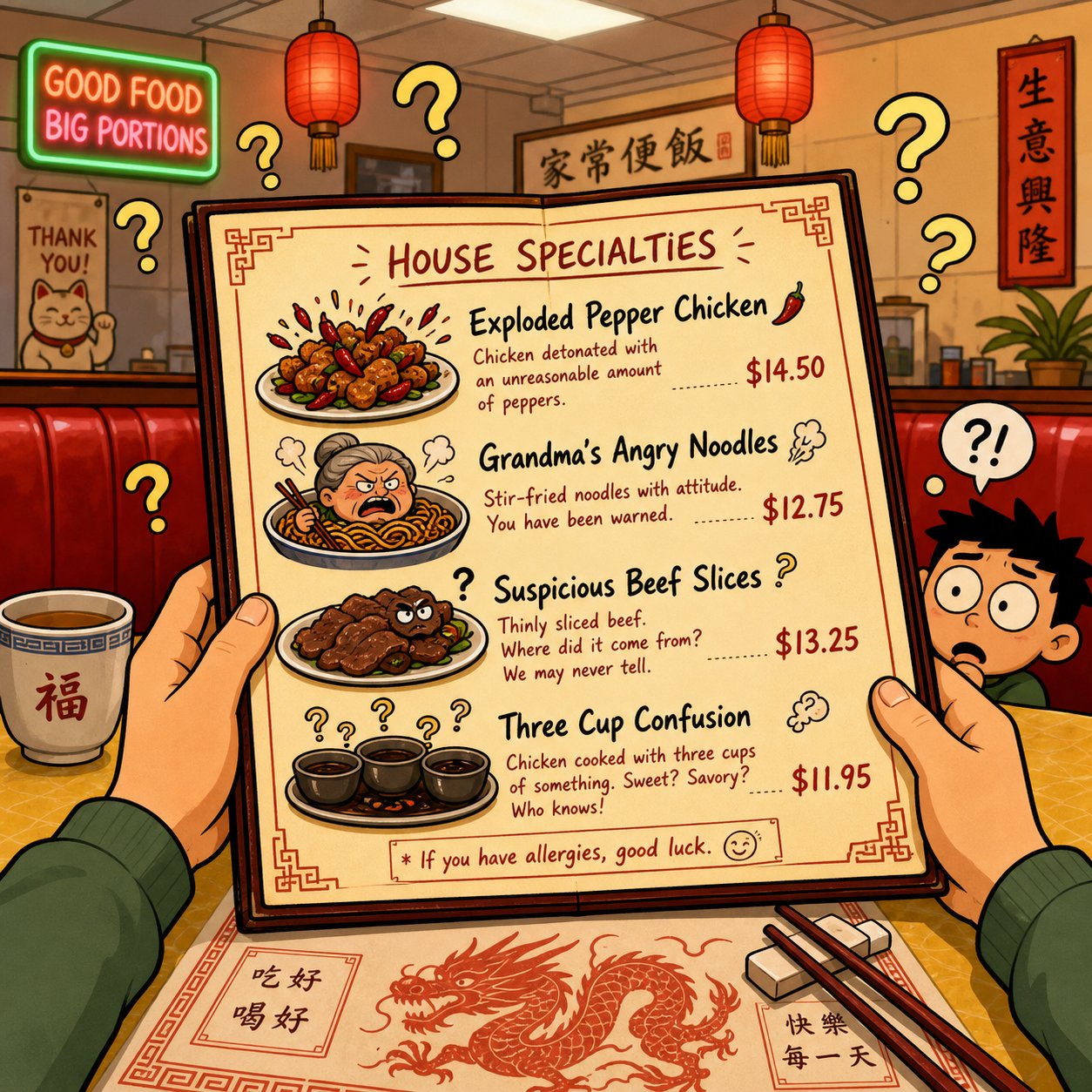
Picture yourself in a Beijing restaurant, English menu in hand. You scan the options and find "Husband and Wife Lung Slices," "Strange Flavor Chicken," and "Wood Ear Fungus Salad." Your appetite wavers. Is someone serving organs? Is the chicken bad? Are you eating a tree's ear? Every item sounds like a dare rather than dinner. This is what happens when poetic chinese food nicknames collide head-on with literal English translation.
The problem is not bad translators. As Isaac Yue, an associate professor of translation at the University of Hong Kong, puts it, translating Chinese food names into English is simply "an impossible task." China has an extraordinarily complex culinary culture with a highly specific vocabulary, and in many cases, equivalent foods, cooking methods, and concepts simply do not exist in English. The result is a gap that no translation can fully bridge.
When Literal Translation Goes Wrong
The core dilemma facing any translator is a three-way choice: translate literally, adapt culturally, or just transliterate the Chinese sounds into Roman letters. Each approach has tradeoffs, and none of them work perfectly for every dish.
Literal translation preserves the poetry but often alarms English speakers. "Husband and Wife Lung Slices" (fuqi feipian, 夫妻肺片) is a cold Sichuan appetizer of thinly sliced beef offal in chili oil. No romance. No lungs. But the English name sounds like a crime scene. You could translate it functionally as "sliced beef offal in spicy sauce," but as British food writer Fuchsia Dunlop notes, that would lack flair and take away from the experience.
"Strange Flavor Chicken" (guaiwei ji, 怪味鸡) is another case where the English sounds like a warning. In Chinese, "strange flavor" is a genuine compliment. It describes a sauce that hits every taste at once: sweet, sour, salty, spicy, numbing, and savory. The word "strange" here means "wonderfully complex," not "something is wrong." But try explaining that to a first-time diner scanning the menu in a hurry.
"Wooden Ear" (mu'er, 木耳) is a perfectly accurate description of a dark, ear-shaped tree fungus used in stir-fries and salads across China. The texture is crunchy and mild. But "wooden ear" in English conjures something you would find in a carpenter's workshop, not on a dinner plate. The disconnect between how do you say food in chinese and how it lands in English is often a matter of cultural framing rather than vocabulary.
Translation apps make things worse. Dunlop recalls seeing stir-fried cabbage translated as "handbag food" because the Chinese word for cabbage, baocai (包菜), contains the character bao (bag) and cai (food/vegetable). A cookie baked on an iron plate (tieban shao) became "iron flooring cremation." These are not jokes. They are what happens when food in chinese characters gets fed through software that processes individual characters without understanding culinary context.
Here are some of the most commonly mistranslated or confusingly translated dish names you might encounter:
- Husband and Wife Lung Slices (夫妻肺片) — Actually sliced beef offal in chili oil, no lungs involved
- Strange Flavor Chicken (怪味鸡) — A compliment meaning the sauce combines every taste simultaneously
- Wooden Ear Salad (凉拌木耳) — Cold dressed tree fungus, crunchy and mild
- Fish-Fragrant Eggplant (鱼香茄子) — Contains zero fish; the seasoning blend was traditionally used in fish dishes
- Iron Flooring Cremation — A mangled translation of a cookie baked on an iron plate
- Handbag Food — Stir-fried cabbage, mistranslated character by character
- Pineapple Bun (菠萝包) — Contains no pineapple; named for its crackled crust pattern resembling pineapple skin
The question of how do you spell chinese food in English has no single correct answer. Romanization systems vary. Regional dialects produce different sounds for the same characters. And the gap between what a name means culturally and what it communicates to an English speaker is often unbridgeable without a footnote.
Dishes That Kept Their Chinese Names Abroad
Some dishes sidestepped the translation problem entirely by keeping their Chinese names in English. You already know these words even if you have never studied Mandarin or Cantonese: dim sum, wonton, chow mein, tofu, bok choy. These terms entered English through decades of restaurant culture, immigration, and repetition until they needed no translation at all.
The pattern is revealing. Most of these borrowed words come from Cantonese, not Mandarin, because Cantonese-speaking immigrants from Guangdong and Hong Kong established the first Chinese restaurants in the United States, United Kingdom, and Australia. "Wonton" is the Cantonese pronunciation. In Mandarin, the same dish is huntun. "Chow mein" reflects Cantonese chau mein, not the Mandarin chao mian. Even "Peking duck" preserves an older romanization of Beijing that predates modern pinyin.
Other dishes got entirely new Western names that bear no resemblance to their Chinese originals. "Egg roll" is an American invention, both the name and often the dish itself. "General Tso's Chicken" is rarely found in China and carries a name that most Mandarin speakers would not immediately recognize as chinese food in chinese. These Western-born names created their own parallel vocabulary, one that exists almost exclusively outside China.
Dunlop suggests a practical middle path: borrow Chinese terms directly, the way English already borrows French culinary words like "chef," "saute," and "omelet." Keep the poetry of the original name, but add a brief description underneath. A menu might read "Fuqi Feipian — chilled sliced beef and offal in numbing chili oil." This preserves cultural context while giving English-speaking diners enough information to order confidently.
Yue takes an even more relaxed view. "Mistranslation can be just as culturally enriching — if not more so — than a proper translation," he argues. The confusion itself becomes a conversation starter, a reason to ask questions, a doorway into understanding chinese food in english on its own terms rather than forcing it into familiar Western categories.
The translation challenge is not going away. Chinese cuisine has thousands of dishes, each with names shaped by regional dialects, historical legends, and visual metaphors that resist clean conversion into any other language. But that friction is also part of the charm. Every baffling menu translation is an invitation to look deeper, ask the server, or simply point at the table next to you and say "I will have what they are having."
Of course, the naming creativity does not stop at translation. English speakers have developed their own layer of slang, nicknames, and playful naming conventions around Chinese food, from mispronounced generals to pun-filled restaurant signs that blend cultures in ways no translator ever intended.
English Slang and Restaurant Name Creativity
English speakers never just accept a food name and move on. They shorten it, mangle it, turn it into a punchline, or invent something entirely new. Chinese food in the West has accumulated its own thick layer of informal nicknames, slang terms, and creative restaurant branding that exists independently of anything happening in China. This parallel naming universe blends mispronunciation, affection, marketing savvy, and internet humor into something uniquely its own.
Western Slang for Chinese Takeout Favorites
Start with the most famous example: General Tso's Chicken. The dish was created by Peng Chang-kuei in Taipei in 1953 for a diplomatic banquet honoring American Admiral Arthur W. Radford. Peng named it after General Tso (Zuo Zongtang), a 19th-century Qing Dynasty military strategist from Hunan, choosing him over the more famous General Zeng because Zeng was known for frugality, a reputation that did not suit a rich, indulgent chicken dish. As National Geographic details, the dish was never meant to reflect traditional Chinese cooking. It was purposefully crafted to seduce the American palate from the very beginning.
What happened to the name in American mouths is its own story. "General Tso's" gets pronounced a dozen different ways: "General Tso's," "General Chow's," "General Tsao's," or simply "the General's chicken." Many Americans drop the name entirely and just say "that sticky chicken" or "the crispy one with the sauce." The dish became so ubiquitous on East Coast takeout menus through the 1990s that it needed no formal name at all. You pointed at the picture or said the number.
On the West Coast, a different dish claimed that same shorthand status. Orange chicken, popularized by Panda Express, became so synonymous with American Chinese food that for millions of people it is the default order. No one calls it by a Chinese name because it does not really have one. It is an American creation with an American name, and its cultural weight comes entirely from repetition and accessibility.
Colloquial food slang fills in the gaps where formal names feel too stiff. Diners call particularly addictive dishes "crack chicken" or "crack noodles," borrowing the language of addiction to describe something they cannot stop eating. Crab rangoon becomes "crab puffs" or just "rangoons." Lo mein gets shortened to "lo." Egg rolls are "rolls." This casual trimming signals familiarity and comfort. You only nickname the things you love.
The Art of Naming a Chinese Restaurant
Walk through any American city and you will notice patterns in chinese restaurant names that repeat with almost mathematical regularity. This is not coincidence. It is a naming system built on cultural symbolism, customer expectations, and decades of immigrant entrepreneurship.
According to Springroll's analysis of naming trends, over 40% of Chinese restaurant names in the U.S. include the word "China" or "Chinese," like China Garden, China King, or China Wok. It is a direct, familiar signal that tells customers exactly what kind of food to expect. Beyond that baseline, names draw from a shared vocabulary of lucky symbols, regional references, and aspirational imagery.
Here are the most common naming patterns, ranked by how frequently they appear across American cities:
- Lucky symbols and numbers — Golden Dragon, Lucky Star, Jade Palace. The number 8 represents wealth, 88 means double happiness, and "golden" signals prosperity. These names build trust through cultural resonance.
- Province in the names of chinese restaurants — Hunan Garden, Szechuan Spice, Shanghai Inn, Peking House. Regional names signal a specific cooking style and lend authenticity, even when the menu covers multiple traditions.
- Royal and imperial imagery — China King, Emperor's Garden, Mandarin Palace. "King" adds a feeling of quality and authority. You will find a China King or Peking King in nearly every region of the country.
- Family names and "house" themes — Lee's Garden, Wong's Kitchen, House of Hunan. These reflect the family-run nature of most Chinese restaurants and create a warm, welcoming vibe.
- Animal power symbols — Dragon City, Golden Phoenix, Panda Express. Dragons represent power and protection, pandas project friendliness, and phoenixes suggest elegance.
- Puns and wordplay — Wok This Way, Wok 'n Roll, Rice to Meet You. These names are designed to make customers smile before they even open the menu.
The pun category is where funny chinese restaurant names really shine. Names like Wonton Fun, Bao Down, Kung Food, and Woking on Sunshine blend English wordplay with Chinese food vocabulary in ways that signal a younger, more playful brand identity. These are not the names of traditional family restaurants. They are the names of fast-casual spots, late-night takeout joints, and social media-savvy eateries targeting millennials and Gen Z diners who want personality with their potstickers.
Some of the most creative funny names for chinese restaurants lean into absurdity: Captain Kung Pao, Frying Panda, Wok-a-Holic, and Fortune Cookie Comedy. Others use rhyme for memorability: Dragon Wagon, Bao Wow, Dim Sum Fun, Feast from the East. The goal is always the same. Stand out on a street where three other Chinese restaurants already have "Golden" or "Dragon" in their name.
Then there are the weird chinese restaurant names that defy easy categorization. Names that sound like they were generated by a committee of poets and comedians: Noodle Nirvana, Celestial Wontons, Supersonic Oriental Soul Food. These push the boundaries of what names for a chinese restaurant can be, treating the sign above the door as a creative statement rather than a functional label.
The trend intensifies with chinese food truck names and mobile vendors, where standing out is even more critical. A food truck has seconds to grab attention from passing pedestrians. Names like Mandarin Motor, Dragon Wagon, Wok-n-Wheels, Dumpling Dash, and Bao Bun Bus combine movement imagery with food references. The best asian food truck names communicate speed, fun, and flavor simultaneously. They borrow from the same playful energy as ice cream trucks and taco carts, adapting it to Chinese cuisine with puns that work at a glance.
Chinese cafe and tea house naming follows yet another pattern. Jade Leaf Cafe, Oolong Oasis, Dragonwell Delight, and Phoenix Feather Cafe lean into elegance and calm rather than humor. The naming convention shifts because the dining context shifts. A bubble tea shop wants to feel serene and Instagram-worthy, not loud and punny.
Internet-era food culture has accelerated all of these trends. Social media rewards memorable names with free publicity. A restaurant called "Bao Down" gets shared on Instagram stories in a way that "Golden Dragon #7" never will. Food bloggers and TikTok creators amplify clever branding, turning a good restaurant name into a viral moment. The line between naming a dish and naming a brand has blurred completely, with restaurants, food trucks, and delivery apps all competing for the same attention span.
What connects all of this creativity is a fundamental truth about Chinese food in the West: it has always been a space where cultures collide, remix, and produce something new. The slang, the puns, the mispronunciations, and the playful branding are not disrespectful. They are evidence of deep familiarity. You only play with language around food you have eaten a thousand times. And that same playful energy is now flowing back into China itself, where younger generations are inventing their own modern nicknames for dishes that have carried the same names for centuries.
Modern Nicknames and Internet Food Culture
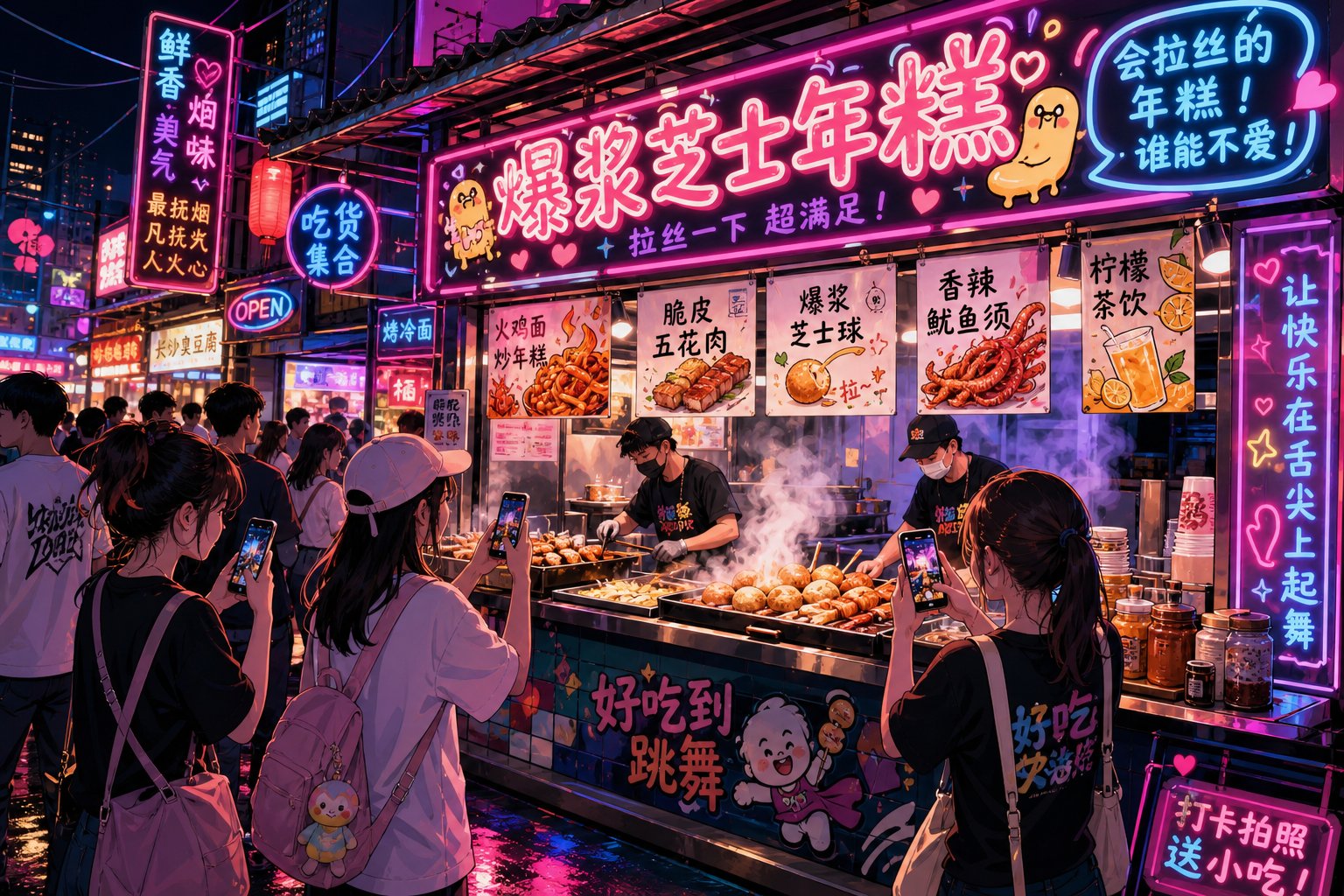
Inside China, the naming game has not stood still. Platforms like Douyin (Chinese TikTok), Xiaohongshu (Little Red Book), and Weibo have become breeding grounds for new food slang that spreads faster than any folk legend ever could. Younger generations treat dish naming the way previous generations treated poetry: as a creative act worth showing off.
Social Media Era Food Nicknames
Street food vendors were early adopters of catchy, attention-grabbing names. A simple grilled skewer stand might advertise "soul-snatching lamb" (勾魂烤串) or "addictive stinky tofu" (上瘾臭豆腐). The goal is the same as a food truck name in English: stop someone mid-scroll or mid-stride. But social media amplified this instinct into a full-blown creative culture.
On Douyin, viral food trends often come packaged with nicknames that stick. Dirty buns (脏脏包, zangzang bao) are chocolate-smeared pastries that leave your hands filthy. The name is the selling point. Nobody wants a "chocolate-coated brioche." They want the funny, self-aware mess. Similarly, "internet celebrity milk tea" (网红奶茶) is not a flavor. It is a status, a signal that this drink went viral and you need to try it before the trend dies.
Zangzang bao, or "dirty dirty bun," earned its name because eating one guarantees chocolate smeared across your face and fingers. The messier you look, the more authentic the experience. The name turned a bakery item into a social media challenge.
Chinese cafe culture has embraced what you might call cute asian food naming. Bubble tea shops and dessert cafes use diminutives, animal references, and playful language to make their menus feel approachable and Instagram-worthy. A mango pudding becomes "little fatty mango" (小胖芒). A matcha latte is a "green fairy" (绿仙子). Chinese cafe names themselves follow this pattern: Naicha Meimei (Milk Tea Little Sister), Tian Mi Mi (Sweet Honey Honey), or Mao Xiao Yuan (Cat Little Garden). The aesthetic is soft, warm, and designed to photograph well.
This cute naming trend reflects how younger Chinese consumers relate to food. Eating is content. A funny chinese menu is a shareable moment. When someone posts a photo of their "dirty bun" or "exploding cheese toast" (爆浆芝士吐司), the name does half the marketing work. Vendors know this. The most creative street food stalls update their signage the way influencers update captions, always chasing the next phrase that makes someone stop and point.
The word for delicious in chinese mandarin, hao chi (好吃), has itself spawned slang variations. Young people say "yyds" (永远的神, meaning "eternal god") to describe food that is transcendently good. Calling something tasty in chinese used to be straightforward. Now it comes layered with internet shorthand, emoji-like expressions, and funny chinese names puns that only make sense if you are plugged into the current meme cycle.
Auspicious Names for Celebration Dishes
Yet for all this modern playfulness, the oldest naming tradition in Chinese food remains untouched: auspicious naming for banquets and festivals. When Lunar New Year arrives, wedding season opens, or a business dinner demands formality, the funny nicknames disappear. In their place come names loaded with blessings, homophones for wealth, and symbols of abundance.
Fish appears at every New Year table because the word for fish, yu (鱼), sounds identical to the word for surplus (余). Serving a whole fish means "may you have more than enough." Nian gao (年糕), sticky rice cake, contains the word gao, a homophone for "tall" or "high," symbolizing rising fortunes year after year. Hair vegetable (发菜, facai) sounds like "get rich" in Cantonese. Even dumplings carry auspicious weight: their shape resembles gold ingots, and families wrap them together as a ritual of unity and shared prosperity.
Banquet menus read like wish lists. "Dragon and Phoenix Bringing Prosperity" (龙凤呈祥) is not just lobster and chicken. It is a blessing for the newlyweds. "Gold and Jade满堂" (金玉满堂, jinyu mantang) might be a simple dish of corn kernels and green peas, but the name means "may gold and jade fill your halls." The ingredients are almost beside the point. The name is the gift.
This dual system, playful internet slang for everyday eating and reverent auspicious naming for ritual occasions, shows how Chinese food nicknames continue to evolve without abandoning their roots. The same culture that invented "dirty dirty bun" still insists on serving "surplus fish" at midnight on New Year's Eve. Both impulses come from the same place: a belief that what you call your food shapes how it makes you feel.
That coexistence of ancient and modern, sacred and silly, is what makes the full landscape of Chinese food naming so rich. And for anyone trying to navigate it all, a practical decoder that organizes these nicknames by category can turn confusion into confidence.
Your Complete Chinese Food Nickname Decoder
Every unfamiliar dish name on a Chinese menu follows a pattern. Once you recognize which category a name belongs to, the mystery dissolves. What felt like a riddle becomes a clue. This reference guide organizes the major chinese food nicknames by their naming logic so you can bookmark it, return to it, and decode new dishes on the fly.
Quick Reference by Naming Category
The table below covers six naming conventions, each with representative dishes. Think of it as a chinese food list organized not by region or flavor, but by how the name was born.
| Category | Dish Nickname | Chinese & Pinyin | What It Actually Is |
|---|---|---|---|
| Appearance-Based | Ants Climbing a Tree | 蚂蚁上树 (mayishangshu) | Glass noodles stir-fried with minced pork in spicy sauce |
| Appearance-Based | Marble Eggs | 茶叶蛋 (chayedan) | Tea-steeped eggs with crackled marble-patterned shells |
| Appearance-Based | Silver Ear | 银耳 (yin'er) | White fungus used in sweet soups and desserts |
| Legend-Based | Buddha Jumps Over the Wall | 佛跳墙 (fotiao qiang) | Slow-simmered soup of abalone, sea cucumber, and other delicacies |
| Legend-Based | Crossing the Bridge Noodles | 过桥米线 (guoqiao mixian) | Rice noodles assembled tableside in scalding broth |
| Legend-Based | Beggar's Chicken | 叫花鸡 (jiaohua ji) | Whole chicken wrapped in lotus leaves and baked in clay |
| Person-Based | Kung Pao Chicken | 宫保鸡丁 (gongbao jiding) | Diced chicken with peanuts and chili, named after Governor Ding Baozhen |
| Person-Based | Mapo Tofu | 麻婆豆腐 (mapo doufu) | Spicy tofu with minced pork, named after a pockmarked old woman |
| Person-Based | Husband and Wife Lung Slices | 夫妻肺片 (fuqi feipian) | Chilled sliced beef offal in chili oil, named after a married couple |
| Animal Metaphor | Phoenix Claws | 凤爪 (fengzhao) | Braised or steamed chicken feet |
| Animal Metaphor | Lion's Head Meatballs | 狮子头 (shizitou) | Large braised pork meatballs in broth |
| Animal Metaphor | Squirrel Fish | 松鼠桂鱼 (songshǔ guiyu) | Deep-fried scored mandarin fish in sweet-and-sour sauce |
| Sound-Based | Hair Vegetable | 发菜 (facai) | Black cyanobacterium; Cantonese name sounds like "get rich" |
| Sound-Based | Sticky Rice Cake | 年糕 (niangao) | Glutinous rice cake; "gao" sounds like "tall/high," meaning rising fortunes |
| Sound-Based | Tangerines | 橘子 (juzi) | Fresh citrus fruit; "ju" sounds like "luck" in some dialects |
| Auspicious Meaning | Gold and Jade Fill the Halls | 金玉满堂 (jinyu mantang) | Corn kernels with green peas, symbolizing wealth and abundance |
| Auspicious Meaning | Dragon and Phoenix Prosperity | 龙凤呈祥 (longfeng chengxiang) | Lobster and chicken, served at weddings as a blessing |
| Auspicious Meaning | Surplus Every Year | 年年有余 (niannian youyu) | Whole steamed fish; "yu" (fish) sounds like "surplus" |
This is not an exhaustive chinese food list, but it covers the patterns you will encounter most often. Once you spot the category, the name stops being confusing and starts being interesting.
How to Decode Any Chinese Dish Name
You do not need to memorize every entry above. Instead, carry a few mental shortcuts that work across any menu. Here is how to approach unfamiliar chinese food with names that sound bizarre:
- Spot animal words first. If you see dragon (龙), phoenix (凤), lion (狮), or squirrel (松鼠), the dish almost certainly does not contain that animal. It is a metaphor for shape, status, or visual resemblance. The real protein is usually chicken, pork, fish, or seafood.
- Check for historical figure names. Words like "gongbao" (palace guardian), "mapo" (pockmarked grandmother), or "fuqi" (husband and wife) signal a person-based name. The story behind the name is cultural context, not an ingredient warning.
- Ask whether the name describes appearance or origin. If it sounds visual (ants, marble, clouds, hair), the dish is named for what it looks like on the plate. If it sounds narrative (jumping, crossing, begging), there is a legend attached.
- Listen for homophones. Many chinese words for food are chosen because they sound like lucky words. Fish (鱼, yu) means surplus. Cake (糕, gao) means rising. Noodles (面, mian) represent longevity because of their length. If a dish appears at a festival or banquet, the name is probably a blessing in disguise.
- When in doubt, ask. As Pandaist's menu guide suggests, a simple "zhege cai li you shenme?" (这个菜里有什么? — What is in this dish?) goes a long way. Most restaurant staff are happy to explain.
The relationship between chinese food and names is not designed to exclude outsiders. It is designed to delight insiders. Every poetic name is an invitation to ask a question, hear a story, or notice something beautiful about what is on your plate. The confusion you feel reading "Buddha Jumps Over the Wall" is the same curiosity that has kept these names alive for centuries.
Learning even a handful of foods in chinese by their real names, characters, pinyin, and backstory, changes how you experience a menu. It stops being a wall of mystery and becomes a gallery of miniature stories. You do not need fluency. You need pattern recognition. And the patterns, as this guide shows, are surprisingly consistent once you know where to look.
So the next time a menu offers you something that sounds like a fairy tale gone wrong, lean in. The ants are not real. The Buddha is not jumping. The lion has no head. But the food is extraordinary, and the name is trying to tell you why.
Frequently Asked Questions About Chinese Food Nicknames
1. Why do Chinese dishes have such unusual names?
Chinese culinary culture treats eating as a social and cultural event, not just a physiological activity. Dish names carry rich cultural connotations tied to fortune, longevity, and prosperity. Rather than simply listing ingredients, Chinese naming conventions use metaphor, folklore, visual poetry, and auspicious symbolism to elevate food into a storytelling medium. Categories include appearance-based names (Ants Climbing a Tree), legend-based names (Buddha Jumps Over the Wall), animal metaphors (Phoenix Claws), person-based names (Mapo Tofu), and sound-based auspicious names chosen for lucky homophones.
2. What does Phoenix Claws mean on a Chinese menu?
Phoenix Claws (凤爪, fengzhao) is the Cantonese dim sum name for braised or steamed chicken feet. The name elevates a humble ingredient by associating it with the mythical phoenix, which symbolizes elegance and renewal in Chinese culture. This naming pattern is common in Cantonese cuisine, where animal metaphors assign cultural status to dishes rather than describing literal ingredients. No mythical bird is involved.
3. What is the story behind Buddha Jumps Over the Wall?
Buddha Jumps Over the Wall (佛跳墙, fotiao qiang) is a luxurious Fujian soup containing abalone, sea cucumber, fish maw, scallops, and other delicacies slow-simmered in Shaoxing wine. The name comes from the Qing Dynasty era claim that the aroma was so intoxicating that even a vegetarian Buddhist monk would break his vow and leap over the monastery wall to taste it. The dish requires days of preparation and remains a centerpiece at Lunar New Year feasts symbolizing abundance.
4. Why are Chinese food names so hard to translate into English?
Chinese food names resist English translation because they rely on cultural metaphors, historical legends, visual poetry, and dialect-specific homophones that have no equivalent in English. Translators face a three-way dilemma: translate literally (which often alarms English speakers), adapt culturally (which loses the poetry), or transliterate the Chinese sounds. Many dishes like dim sum, wonton, and chow mein kept their Chinese pronunciations in English because no translation could capture their full meaning.
5. How can I decode unfamiliar Chinese dish names on a menu?
Use pattern recognition. If you spot animal words like dragon, phoenix, or lion, the dish does not contain that animal but uses it as a metaphor for shape or status. Historical figure names signal a person-based origin story. Visual-sounding names (ants, marble, clouds) describe the dish's appearance on the plate. At festivals, names often contain homophones for lucky words: fish (鱼) sounds like surplus, cake (糕) sounds like rising fortunes. When uncertain, asking staff what ingredients are in the dish is always welcome.