The Dragon Character in Chinese Writing
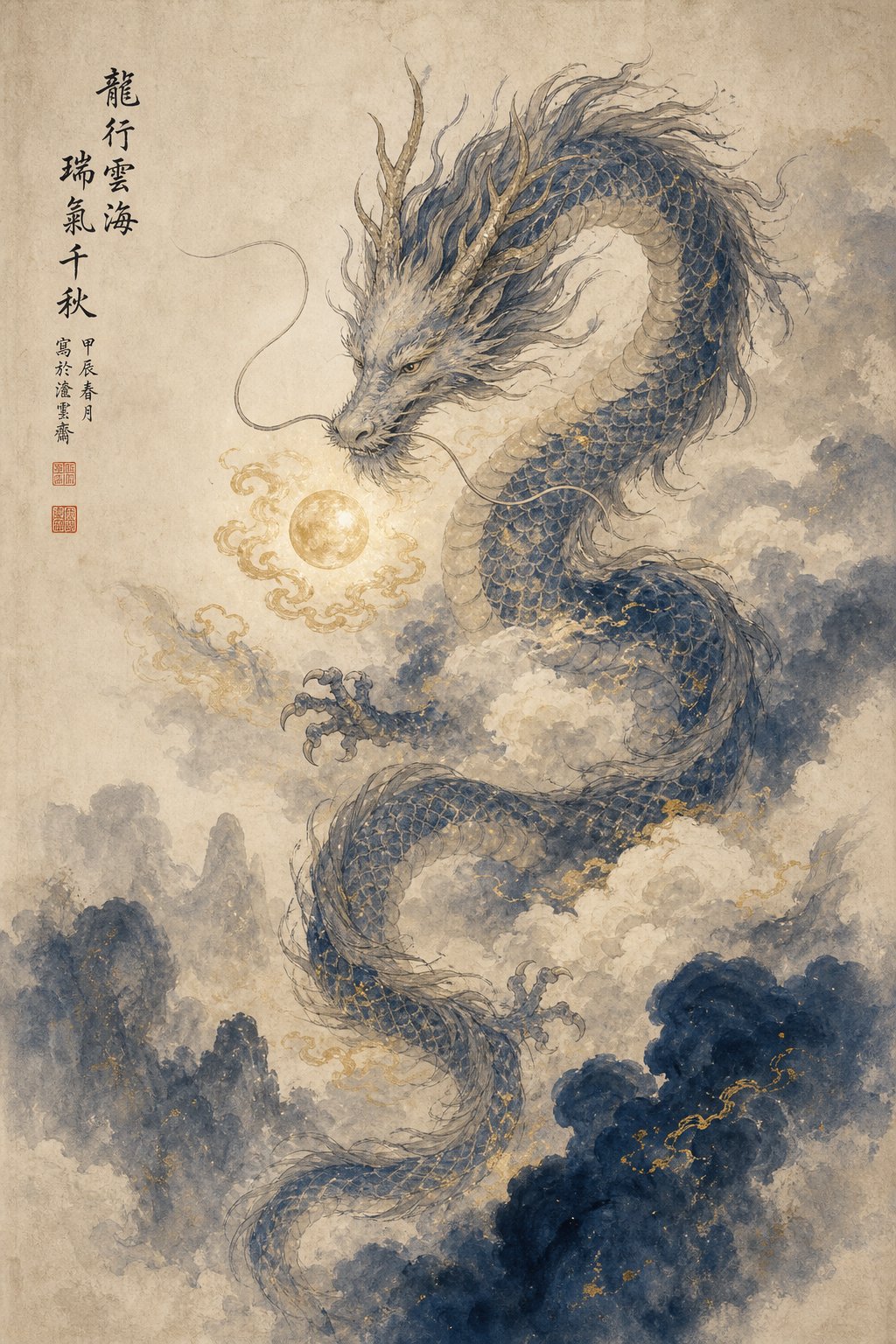
Imagine a single character that holds the weight of an entire civilization's identity. In Chinese, that character is 龙 (simplified) or 龍 (traditional), and the dragon chinese character meaning runs far deeper than any English word can capture.
What Is the Dragon Character in Chinese
The mandarin word for dragon is long, written in pinyin as long and pronounced with a rising second tone: long (second tone). You'll hear it rhyme roughly with the English word "lung" but with a rising pitch, like asking a question. This is the chinese name for dragon, and it exists in two written forms depending on region and context.
The simplified form, 龙, uses just five strokes. It's the standard in Mainland China and Singapore. The traditional form, 龍, requires sixteen strokes and remains the norm in Taiwan, Hong Kong, and Macau. Both represent the same word, the same sound, and the same vast network of meaning. As a hieroglyphic character first seen in Oracle Bone script, 龙 originally depicted a serpentine creature synthesized from the shapes of several animals and decorated with imagination. It was a divine object in the minds of China's ancestors.
The dragon character in chinese is classified under Radical 212 in the traditional Kangxi system, meaning it serves as its own radical. Few characters carry that distinction. It signals that 龙 is not merely a building block of language but a foundational concept, one so central it became a category unto itself.
Why This Character Matters Beyond Translation
Here's where things get interesting. The standard chinese dragon definition in most dictionaries simply reads "dragon." But a growing number of scholars, translators, and even Chinese state media argue that this translation is fundamentally misleading. The English word "dragon" traces back to the Greek drakon, meaning a huge serpent associated with a deadly glance. Western dragons breathe fire, hoard gold, and get slain by heroes. The chinese symbol for dragon carries none of those associations.
The character 龙 encapsulates an entire cosmological concept, one tied to rain, imperial authority, and cosmic benevolence, that has no direct equivalent in any Western language. Translating it as "dragon" imports centuries of negative connotations that simply do not exist in the original.
This tension between the dragon in chinese culture and the Western creature called "dragon" is not a minor academic footnote. It shapes how a billion people's cultural identity gets represented in English. China's state broadcaster CGTN has begun using "loong" instead of "dragon" in official translations, reigniting a debate that Chinese academics have pursued for decades.
What follows is an exploration of this character from the inside out: its ancient pictographic origins, its structural anatomy, its cultural symbolism, and ultimately, what gets lost when we flatten 龙 into a single English word. The goal is not just a chinese dragon definition but a full reckoning with what this character actually means.
Historical Evolution From Oracle Bone to Modern Form
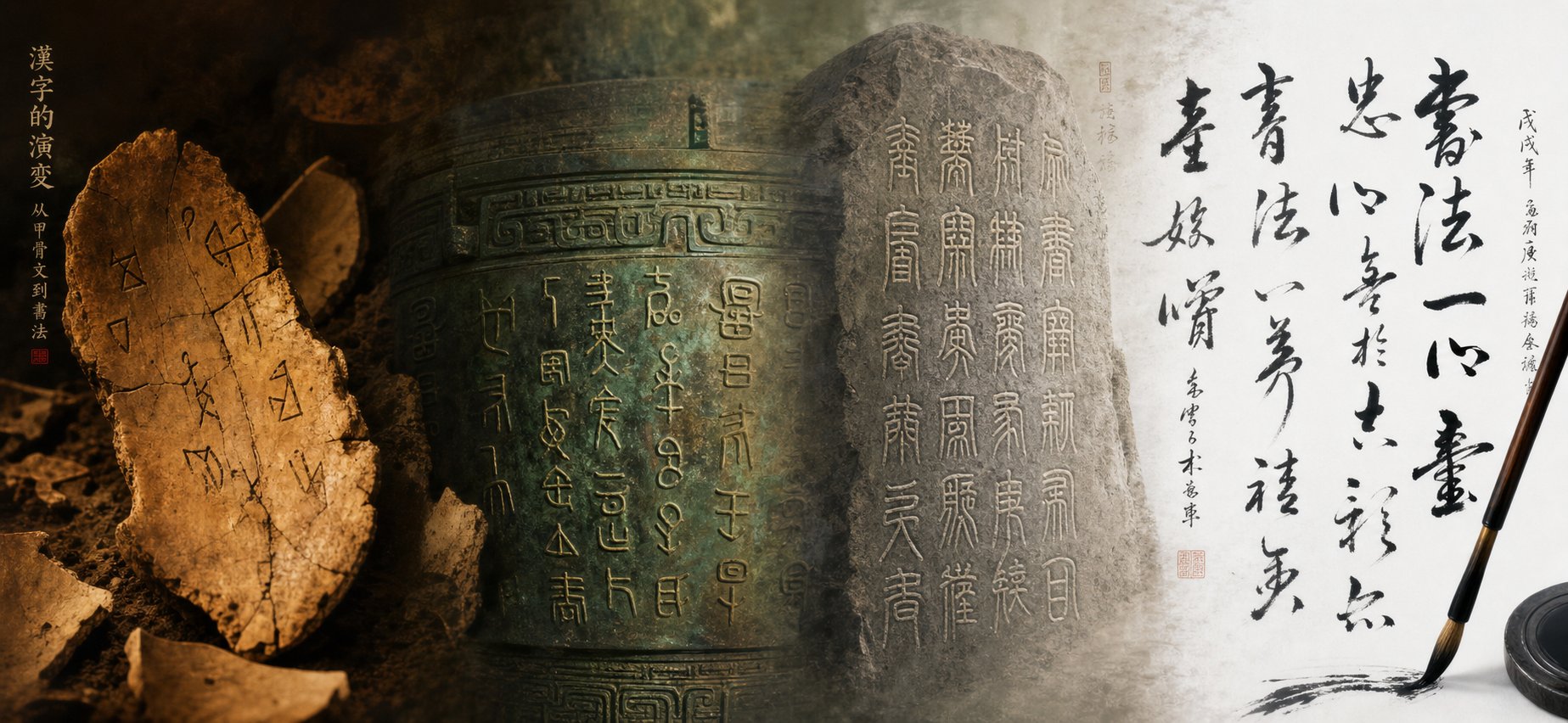
Every Chinese character has a biography. The long chinese character, 龙, has one of the most dramatic life stories in the entire writing system, spanning more than three thousand years of continuous transformation. Tracing that journey reveals how a pictograph of a mythical creature gradually became the streamlined five-stroke symbol used across Mainland China today.
Oracle Bone Script to Bronze Inscriptions
The earliest confirmed examples of chinese writing dragon forms appear on oracle bones dating to the Shang Dynasty, roughly 1200 BCE. These bones, cattle scapulae and turtle plastrons used for divination, preserve the character in its most pictographic state. Imagine a serpentine body coiled upward, topped with what scholars interpret as a crowned or horned head, sometimes with an open jaw. The creature's body curves and bends, suggesting movement through water or clouds.
What did each element represent? Paleographers generally agree on a few key features in the oracle bone form:
- A prominent head with horn-like or crest-like projections, suggesting divinity or authority
- A long, sinuous body rendered with flowing curves, evoking a serpent or river creature
- In some variants, small limb-like strokes near the body, hinting at claws
The character was not standardized at this stage. Multiple variants existed simultaneously, with scribes carving slightly different versions depending on region and period. Research on oracle bone inscription evolution confirms that about 4,300 oracle bone characters have been discovered, though only about one-third are fully deciphered. The dragon character is among those confidently identified.
As Chinese civilization moved into the Western Zhou period (circa 1046-771 BCE), writing shifted from bone to bronze. Bronze inscriptions, cast into ritual vessels and bells, gave scribes more room for detail. The traditional chinese dragon character in bronze script became more elaborate: the head gained clearer features, the body filled out, and decorative elements multiplied. Bronze forms often show a more upright posture, as if the creature were rising. The increased complexity reflected both improved casting techniques and the dragon's growing ritual importance.
Seal Script Through Regular Script
The next major transformation came with seal script (篆书, zhuanshu). After the First Emperor of Qin unified China in 221 BCE, Small Seal Script became the empire's official writing standard. The dragon character in this period took on the balanced, symmetrical lines characteristic of seal script: even stroke widths, rounded turns, and a more geometric structure. You could still see the creature's outline, but it was becoming increasingly stylized.
The real watershed arrived with clerical script (隶书, lishu), which emerged during the Han Dynasty. As the Smithsonian's National Museum of Asian Art notes, clerical script is recognized by its prominent down strokes and angular structure. This shift, sometimes called libian (the clerical transformation), fundamentally altered how characters looked. Curved pictographic lines became straight. The dragon's serpentine body was broken into discrete, angular strokes. The pictographic origins grew increasingly abstract.
Research using neural networks to analyze character evolution across periods found that the transition from seal script to clerical script shows the lowest visual similarity of any adjacent period in Chinese writing history. The writing speed increased, complexity decreased, and the connection to the original pictograph weakened dramatically.
By the time regular script (楷书, kaishu) stabilized around the 4th century CE, the dragon traditional chinese form 龍 had reached its mature shape: sixteen strokes arranged in a complex but standardized configuration. The pictographic serpent was gone. In its place stood an abstract arrangement of components that required memorization rather than visual intuition. Yet the character's cultural weight only grew heavier with each passing dynasty.
The Simplification of 龍 to 龙
In January 1956, the State Council of the People's Republic of China formally promulgated the Chinese Character Simplification Scheme, a sweeping reform that reduced the stroke counts of hundreds of commonly used characters. The goal was straightforward: improve literacy rates by making characters faster to learn and write. The dragon was among the most dramatically affected.
The traditional 龍, with its sixteen strokes and intricate internal structure, became 龙, a mere five strokes. That is an 11-stroke reduction, one of the largest in the entire scheme. The simplified form retains a skeletal echo of the original, preserving the leftward sweep and the general vertical orientation, but strips away nearly all internal complexity.
What was lost? The traditional form's internal components, which some scholars read as containing references to the creature's body, mouth, and standing posture, disappeared entirely. What was preserved? The character's pronunciation (long, second tone), its meaning, its radical classification, and its role in compound words all remained unchanged. The simplification was purely visual.
Where is each form used today? The division is geographic and political:
| Period / Form | Approximate Date | Strokes | Key Features |
|---|---|---|---|
| Oracle Bone Script | c. 1200 BCE | Varies | Pictographic serpent with crowned head, multiple variants |
| Bronze Inscriptions | c. 1000-500 BCE | Varies | More elaborate, upright posture, added decorative detail |
| Seal Script (篆书) | c. 221 BCE onward | Varies | Symmetrical, even line width, rounded and geometric |
| Clerical Script (隶书) | c. 200 BCE - 200 CE | ~16 | Angular strokes, prominent horizontals, pictographic link fading |
| Regular Script (楷书) | c. 4th century CE onward | 16 | Standardized traditional form 龍, fully abstract |
| Simplified (1956) | 1956 - present | 5 | Mainland China and Singapore standard form 龙 |
Taiwan, Hong Kong, and Macau continue using the traditional 龍 in all official and everyday contexts. Mainland China and Singapore use 龙. Both forms appear in calligraphy, classical texts, and artistic contexts regardless of region. The chinese dragon in chinese writing thus exists in two parallel visual identities, each carrying the same ancient meaning but wearing very different faces.
This three-millennium journey from pictograph to abstraction raises a natural question: what structural details survive inside each form, and how do you actually write them stroke by stroke?
How to Write Dragon in Chinese: Radical Breakdown and Stroke Order
The chinese character for dragon is unusual in the Kangxi system. Most characters are classified under a simpler radical, a smaller component that hints at meaning or category. But 龍 is Radical 212 itself, one of only two 16-stroke radicals in the entire 214-radical dictionary system. It does not belong to another category. It is the category.
Breaking Down 龍 Traditional Form
The traditional dragon chinese letter 龍 contains 16 strokes packed into a dense, visually imposing square. Scholars who have analyzed its internal structure identify several pictographic remnants from its ancient origins:
- Bottom left: Open jaws facing downward, representing the creature's mouth
- Top left: The back of the head, including horn-like or crown-like projections that suggest divinity
- Right side: The body and legs, rendered as a vertical structure with multiple horizontal strokes
- Right bottommost stroke: The tail, a final sweeping mark that completes the creature's form
Think of it this way: the left portion captures the dragon's fearsome head, while the right portion renders its powerful body in profile. The traditional form's older interpretation places the wings on the right and the head, with horns and mouth, on the left. Over centuries of abstraction, these pictographic elements became geometric strokes, but the spatial logic persists. The head still occupies the left, the body still fills the right.
Because 龍 functions as its own radical, it also appears as a component inside other characters. In the Kangxi Dictionary, 14 characters are classified under Radical 212. The most common example is 聾 (long, deaf), which combines 龍 as a phonetic element with the ear radical 耳, literally meaning "a word related to ears that sounds like dragon."
Understanding 龙 Simplified Form
So how do you write dragon in chinese using the modern simplified form? The character 龙 requires only five strokes, making it one of the most dramatically reduced characters in the 1956 reform. Despite losing eleven strokes, it preserves the essential skeletal outline: a leftward-leaning vertical structure that echoes the traditional form's overall silhouette.
Here is the stroke order for writing 龙 step by step:
- Horizontal stroke (一) across the top
- Short left-falling stroke (撇) from the upper area
- Vertical hook (竖弯钩) sweeping down and curving right
- Short left-falling stroke (撇) inside the curve
- Dot (点) to finish
For the traditional 龍, the stroke order follows standard principles: top to bottom, left to right, outside before inside. The 16 strokes build the left head section first, then construct the right body section, finishing with the tail stroke at the bottom right.
The dragon in chinese letters looks strikingly different depending on which form you encounter. Here is a structured comparison:
| Feature | Traditional 龍 | Simplified 龙 |
|---|---|---|
| Stroke count | 16 | 5 |
| Radical classification | Radical 212 (itself) | Radical 212 (itself) |
| Used in | Taiwan, Hong Kong, Macau | Mainland China, Singapore |
| Pinyin | long (second tone) | long (second tone) |
| Unicode | U+9F8D | U+9F99 |
| Visual complexity | High (dense internal structure) | Low (open, minimal strokes) |
| Calligraphic use | Preferred for formal and artistic contexts | Standard for everyday writing |
Pronunciation: Getting the Tone Right
Whether you write the dragon in chinese character as 龍 or 龙, the pronunciation is identical: long, spoken with a rising second tone. Your voice starts low and rises sharply, like the intonation of an English question ("Really?"). The most common mispronunciation pitfalls for learners include:
- Flat tone error: Saying "long" with no pitch change, which produces long (first tone), meaning "cage" or "steamer" (笼) in certain contexts
- Falling tone confusion: Using a fourth tone (falling sharply), which does not correspond to any standard word spelled "long"
- English interference: Pronouncing it like the English word "long," which adds a hard "g" sound at the end. In Mandarin, the final "-ong" is a nasal vowel without a pronounced "g"
A useful tone-pair drill: practice saying long (second tone, dragon) immediately followed by long (third tone, as in 垄, ridge). The contrast between the rising second tone and the dipping third tone trains your ear to distinguish the dragon character's correct pronunciation from its near-neighbors in the tonal landscape.
Knowing the structure and sound of this chinese letter for dragon is one thing. Understanding what it means, culturally and spiritually, is another matter entirely.
What Does a Chinese Dragon Symbolize: Cultural and Spiritual Meaning
A character's structure tells you how to write it. Its symbolism tells you why people carved it into oracle bones in the first place. So what does a chinese dragon symbolize at its deepest level? The answer touches imperial politics, agricultural survival, spiritual cosmology, and a national identity that over a billion people still claim today.
What Does a Chinese Dragon Symbolize
The chinese dragon carries a cluster of interlocking symbolic associations, each reinforcing the others:
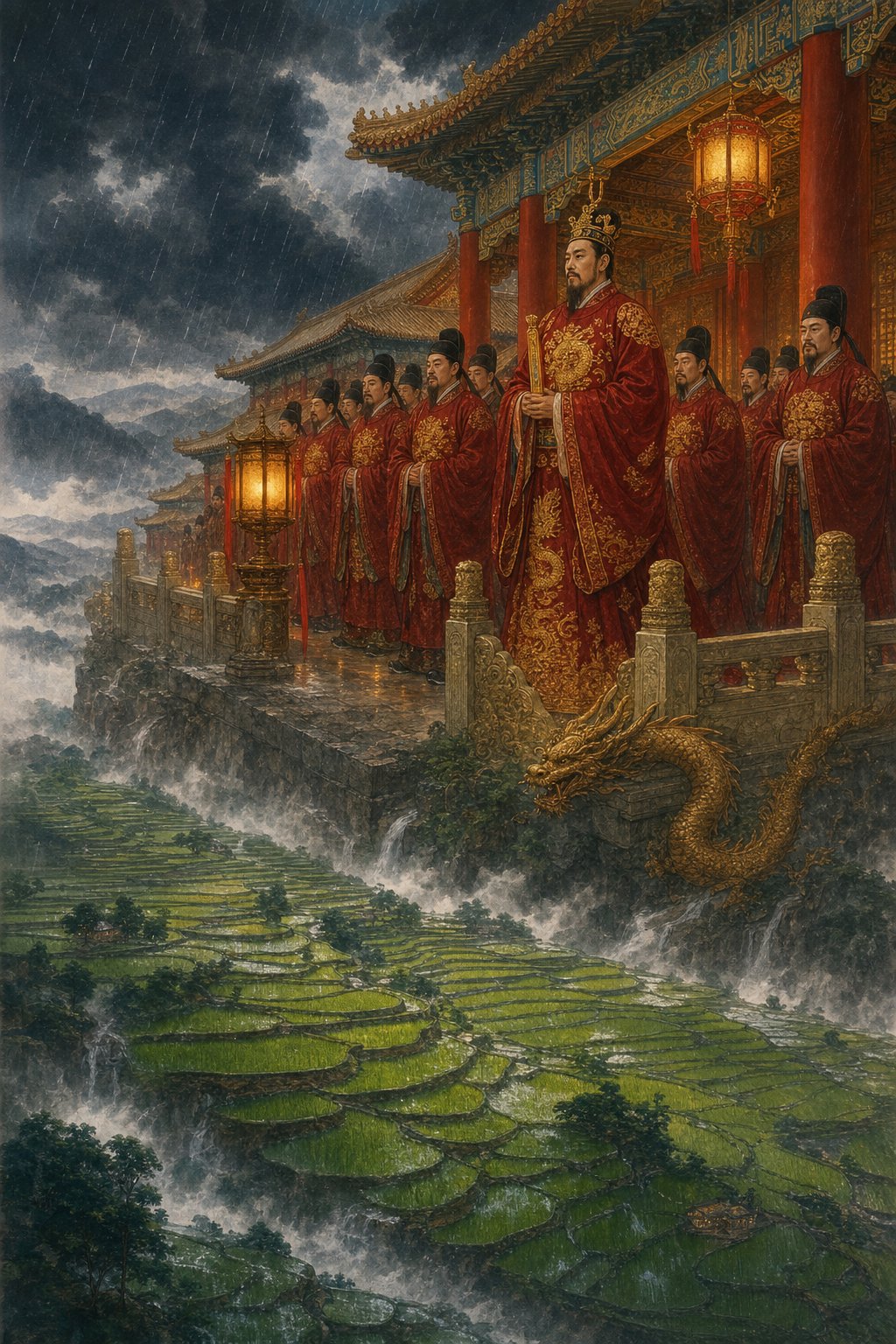
- Imperial power: Ancient Chinese emperors were regarded as descendants of dragons and claimed the ability to commune with these mythical creatures to obtain earthly wisdom. The dragon became the exclusive symbol of the emperor, appearing on robes, thrones, palace walls, and state iconography. The Qing Dynasty battle flag, for example, depicted an upward-facing dragon as a direct assertion of divine authority.
- Auspiciousness and good fortune: Unlike its Western counterpart, the chinese dragon is fundamentally a bringer of luck. Its presence signals prosperity, success, and positive outcomes.
- Strength and might: Dragon symbolism encompasses raw power, but power exercised wisely. As Shi Aidong, a senior researcher at the Chinese Academy of Social Sciences, explains, "In traditional Chinese culture, dragons symbolize qualities like might and wisdom, along with harmony between humans and nature."
- Control over water and weather: The dragon's dominion over rain, rivers, and seas made it essential to an agricultural civilization dependent on predictable rainfall.
This last point deserves emphasis. What does dragon represent in the context of ancient China? Survival itself. The dragon's association with rain-bringing was not decorative mythology. It was a spiritual framework for understanding why crops grew or failed. Asiatic dragons were bestowed with power over bodies of water and the divine ability to bring rain, an all-important quality for the primarily agricultural society of ancient China.
This auspicious association with potent good fortune made the symbol of the chinese dragon omnipresent. Many Chinese today proudly refer to themselves as "descendants of the dragon," a phrase that signifies the creature's profound role in collective identity, intertwining with the country's history across millennia.
Spiritual and Cosmological Meaning
The chinese dragon spiritual meaning extends beyond politics and agriculture into cosmology. In Chinese thought, the dragon is a benevolent cosmic force, a mediator between heaven and earth. It moves through clouds, rises from rivers, and brings the rains that sustain life. It represents the yang principle in its most dynamic form: creative, ascending, transformative.
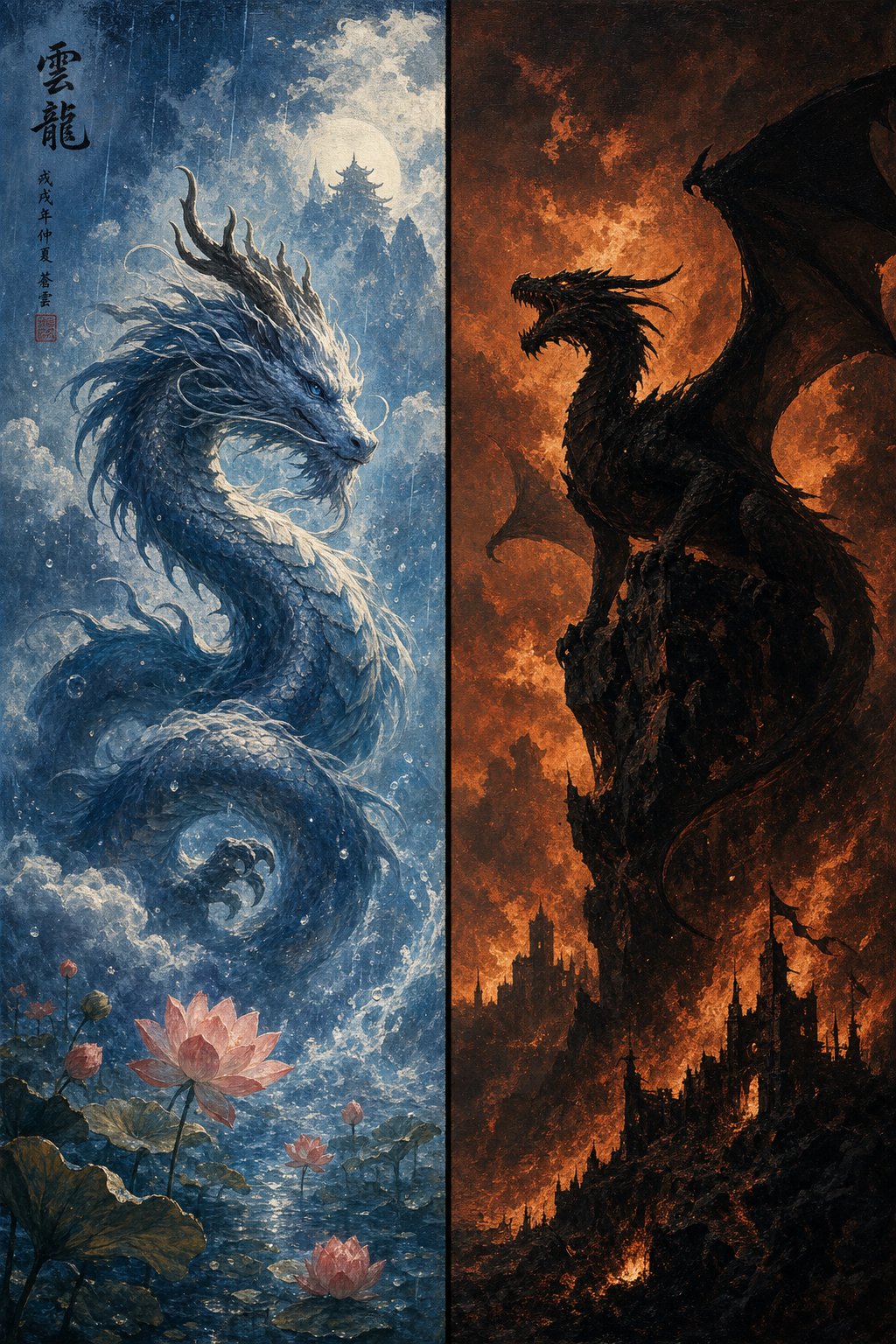
Contrast this with the European tradition. In Western mythology, the dragon is a malevolent beast, often intent on protecting a hoard of riches or bringing destruction. It breathes fire, guards treasure, and exists primarily to be slain by a hero. The European dragon's persistent negative connotations trace directly to early Christianity, where the dragon served as a stand-in for Satan in the Book of Revelation.
The character 龙 carries inherently positive connotations, evoking rain, wisdom, and cosmic harmony, while the English word "dragon" imports associations of greed, destruction, and evil that are entirely absent from the Chinese concept.
This is not a subtle difference. It is a complete inversion. What do dragons represent in the West? Chaos to be conquered. What do they represent in China? Order to be revered. The same word in English flattens two opposing cosmologies into a single misleading label.
The Dragon in Chinese Zodiac
The character's cultural weight reaches its most tangible expression in the Chinese zodiac. The Year of the Dragon, 龙年 (longnian), occurs once every twelve years, and it is by far the most desired birth year across Chinese-speaking societies.
According to the foundational legend, the Jade Emperor challenged a group of animals to cross a rushing river, promising that whoever arrived first would have a calendar year named in their honor. The dragon came in fifth. Those born under its sign are said to inherit the mythical creature's auspicious traits: power, strength, confidence, and ambition.
This is not just folklore. Research by economists Naci H. Mocan and Han Yu found measurable differences in educational outcomes and even height among Chinese children born in dragon years. Parents of dragon-year children invested more time, money, and food to ensure their children reached their zodiac-dictated potential. Dragon-year girls were found to be taller than peers, and dragon-year students scored higher on standardized tests.
"These self-fulfilling expectations are important. They become a cultural norm," Mocan told The Guardian. "There is no scientific or biological reason that dragon children are more successful. But it tells you the power of cultural beliefs."
Previous dragon years have triggered measurable birth spikes in China, Taiwan, Hong Kong, and Singapore. The dragon is the only mythical creature among the twelve zodiac animals, and what does a dragon symbolize in this context? Destiny itself. Parents time pregnancies to give children the perceived advantage of a dragon birth year, creating real demographic waves that strain hospital capacity and later crowd school classrooms.
The dragon's reach extends far beyond China's borders. Across East Asia, the same character, adapted into different writing systems and pronunciations, carries remarkably similar cultural weight.
The Dragon Character Across East Asian Languages
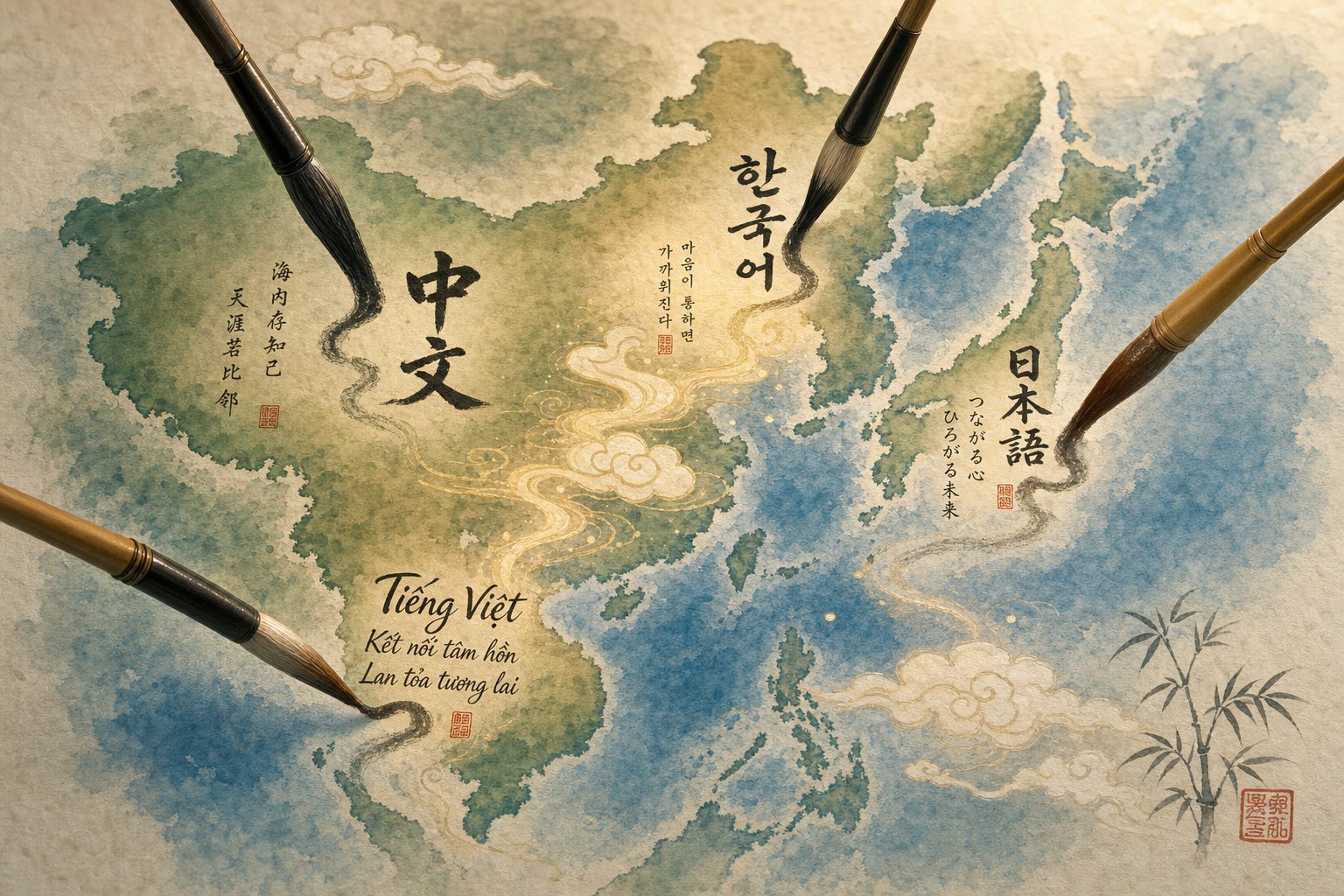
The character 龍 did not stay within China's borders. Over more than a millennium, it traveled east to Japan, south to Vietnam, and across the Korean peninsula, embedding itself into each language's writing system and vocabulary. The result is a shared cultural inheritance expressed through four distinct linguistic traditions, each preserving the dragon's meaning while reshaping its pronunciation and written form.
Chinese 龍 and 龙 Versus Japanese 竜 and 龍
When you encounter a dragon in kanji, you might see two different characters: 龍 or 竜. Both are valid in Japanese, but they carry different registers and histories.
The traditional form 龍 entered Japan directly from China during the early transmission of Chinese literacy, likely between the 5th and 7th centuries CE. Japanese dragon mythology amalgamates native legends with imported stories from China and Korea, and the three-clawed long (龍) dragons were introduced in Japan from China in ancient times. The character 龍 is classified as the kyujitai (old character form) in modern Japanese and appears in formal contexts: temple names like Tenryu-ji (天龍寺, "Heavenly Dragon Temple"), classical literature, and ceremonial usage.
The simplified variant 竜 is Japan's own reduction, classified as shinjitai (new character form). Unlike China's 1956 reform, Japan's simplification followed a different path, producing a visually distinct character rather than a skeletal abbreviation. The dragon kanji 竜 uses 10 strokes compared to 龍's 16, and it appears in everyday modern writing: newspaper articles, manga, product names, and general text.
Here is where the japanese kanji dragon gets interesting linguistically. Both 龍 and 竜 have two pronunciation systems:
- Kun'yomi (native Japanese reading): tatsu - used when the character stands alone or in native Japanese compounds
- On'yomi (Sino-Japanese reading): ryu (or archaically ryo) - used in Sino-Japanese compound words borrowed from Chinese
So the dragon in japanese kanji can be read as tatsu in a name like Tatsuo (竜夫) or as ryu in a compound like Ryujin (龍神, "dragon god"). The reading depends entirely on context. Many Japanese dragon names are direct loanwords from Chinese: Seiryu (青龍, Azure Dragon), the Four Dragon Kings (四竜), and countless temple and place names all preserve the Sino-Japanese ryu pronunciation that echoes the original Chinese long.
A distinctive visual marker separates Chinese and Japanese dragons in art: Japanese dragons are traditionally depicted with three claws, while Chinese imperial dragons have five. This convention traces back to the Tang Dynasty, when three-clawed dragons were the principal form used on court robes. Japan adopted the character and its imagery during this period, preserving the three-claw standard even as China later shifted to four and five claws.
Korean 龍 and Vietnamese Long
Korean uses the character 龍 in its hanja (Chinese character) form, but everyday writing relies on hangul, the native Korean alphabet. In hangul, the dragon is written 용 and pronounced yong. An older pronunciation variant, 룡 (ryong), persists in North Korean usage and in certain compound words in the South. The shift from ryong to yong reflects a phonological rule in South Korean where initial /r/ drops before /y/ sounds.
The hanja form 龍 still appears in formal contexts: personal names, newspaper headlines for stylistic emphasis, and historical or academic texts. Korean dragon mythology shares the Chinese association with water and benevolence. The dragon remains a symbol of royal authority in Korean culture, appearing in palace architecture and traditional art.
Vietnamese presents a fascinating case. The word for dragon is "long" (or "rong" in the native Vietnamese term), derived directly from the same Chinese root. The city of Ha Long (下龍, literally "descending dragon") and the fruit thanh long (青龍, literally "green dragon," known in English as dragon fruit) both preserve this Sino-Vietnamese pronunciation. As Chunom.org's character database confirms, 龍 carries the Sino-Vietnamese reading "long" and ranks as the 393rd most frequent character in the Vietnamese literary tradition.
The viet dragon holds deep national significance. Vietnam's origin myth tells of the Lac Long Quan (貉龍君, "Dragon Lord of Lac"), a dragon king who married a fairy and produced the Vietnamese people. The dragon appears on the steps of imperial palaces in Hue and remains a potent national symbol. Vietnamese abandoned Chinese characters in the early 20th century in favor of the Latin-based quoc ngu script, but the dragon's Sino-Vietnamese pronunciation "long" persists unchanged in modern vocabulary.
What connects all four languages is the phenomenon linguists call Sino-Xenic pronunciation: the systematic borrowing of Chinese character readings that occurred when Korean, Japanese, and Vietnamese speakers gained literacy through Chinese texts. Each language approximated the Chinese pronunciation of 龍 according to its own phonological rules, producing parallel readings that still run in recognizable correspondence today. Chinese long became Japanese ryu, Korean yong/ryong, and Vietnamese long. The Vietnamese form stayed closest to the original Mandarin pronunciation, while Japanese and Korean diverged more significantly.
| Language | Character Form(s) | Pronunciation | Stroke Count | Modern Usage Context |
|---|---|---|---|---|
| Chinese (Simplified) | 龙 | long (2nd tone) | 5 | Standard in Mainland China and Singapore for all contexts |
| Chinese (Traditional) | 龍 | long (2nd tone) | 16 | Standard in Taiwan, Hong Kong, Macau; calligraphy everywhere |
| Japanese (Shinjitai) | 竜 | tatsu (kun) / ryu (on) | 10 | Everyday modern writing, newspapers, general text |
| Japanese (Kyujitai) | 龍 | tatsu (kun) / ryu (on) | 16 | Formal contexts, temple names, classical literature |
| Korean | 용 (hangul) / 龍 (hanja) | yong (South) / ryong (North) | 16 (hanja) | Hangul for daily use; hanja in names and formal writing |
| Vietnamese | 龍 (historical) / "long" (quoc ngu) | long | 16 (historical) | Latin script "long" in modern compounds; characters only in scholarship |
This table reveals something remarkable. Four languages, four writing systems, four distinct cultures, yet the same character sits at the center of each tradition's dragon mythology. The chinese kanji dragon, as some learners call it when first encountering the character through Japanese study, is really a shared East Asian inheritance. The kanji for dragon in Japan, the hanja in Korea, and the historical chu nom character in Vietnam all trace back to the same oracle bone pictograph carved over three thousand years ago.
The dragon character's influence does not stop at cultural symbolism, though. Back in Chinese, 龙 plays a quieter but equally important role: it lends its sound to dozens of other characters, functioning as a phonetic building block in ways most learners never expect.
龙 as a Phonetic Component: The Chinese Dragon Characters You Never Noticed
Here is something most learners miss entirely: the dragon in mandarin does not just carry cultural weight. It carries sound. The character 龙 functions as a phonetic building block inside dozens of other characters, lending its pronunciation to words that have nothing to do with mythical creatures. Understanding this pattern unlocks a systematic shortcut for reading and memorizing Chinese.
How 龙 Lends Its Sound to Other Characters
Around 80% of all Chinese characters are phonetic-semantic compounds (形声字, xingshengzi). Each one combines two parts: a semantic component that hints at meaning and a phonetic component that signals pronunciation. The semantic part tells you what category the word belongs to. The phonetic part tells you how it sounds.
Think of it like a formula: meaning clue + sound clue = new character.
The dragon chinese word 龙 (long, second tone) is one of the most productive phonetic components in the system. When you spot 龙 tucked inside an unfamiliar character, you can immediately guess the pronunciation is somewhere in the long neighborhood. The meaning, meanwhile, comes from the other component, the semantic radical.
Take 聋 (long, deaf) as a clear example. It combines 龙 as the phonetic element with 耳 (ear) as the semantic radical. As Wikipedia's entry on Radical 212 explains, this is literally "a word with meaning related to ears and pronounced similarly to 龍." The dragon gives sound; the ear gives meaning. The character itself has nothing to do with dragons.
Or consider 笼 (long, cage or basket). The top component 竹 (bamboo) tells you the object is made of bamboo. The bottom component 龙 tells you it sounds like long. A bamboo cage. Pronounced like dragon. No mythological connection whatsoever.
This pattern repeats across the dragon in chinese word family. The phonetic component 龙 appears in characters spanning multiple tone variations:
- Second tone (long): 笼 (cage/basket, bamboo radical), 胧 (hazy/dim, moon radical), 聋 (deaf, ear radical), 珑 (tinkling of jade, jade radical), 咙 (throat, mouth radical), 栊 (cage/pen, wood radical), 泷 (rapids, water radical)
- Third tone (long): 拢 (to gather/collect, hand radical), 垄 (ridge/mound, earth radical), 陇 (hilly land, hill radical)
- Different initial (chong): 宠 (to favor/pet, roof radical)
Notice the pattern. The tone sometimes shifts, and occasionally the initial consonant changes (long to chong), but the core sound stays recognizably close. This is typical of phonetic components across Chinese. They are not perfect predictors, but they are powerful clues.
The Dragon Character Family Tree
The chinese dragon characters containing 龙 split into two functional categories. In some, 龙 provides the sound. In others, it provides the meaning. Recognizing which role it plays in a given character is the key to using this knowledge effectively.
龙 as phonetic component (provides sound, not meaning):
- 笼 (long) - cage, basket, steamer. Semantic: 竹 bamboo. The dragon component only contributes pronunciation.
- 聋 (long) - deaf. Semantic: 耳 ear. Sound from dragon, meaning from ear.
- 胧 (long) - hazy, dim (as in 朦胧, menlong, "hazy"). Semantic: 月 moon/flesh. Sound from dragon.
- 珑 (long) - tinkling of jade (as in 玲珑, linlong, "exquisite"). Semantic: 王 jade. Sound from dragon.
- 咙 (long) - throat (as in 喉咙, houlong, "throat"). Semantic: 口 mouth. Sound from dragon.
- 拢 (long) - to gather, to collect. Semantic: 扌hand. Sound from dragon, tone shifted to third.
- 垄 (long) - ridge, raised path between fields. Semantic: 土 earth. Sound from dragon, tone shifted to third.
- 陇 (long) - hilly terrain, old name for Gansu province. Semantic: 阝hill. Sound from dragon, tone shifted to third.
- 宠 (chong) - to favor, to pamper, pet. Semantic: 宀 roof/house. Sound loosely from dragon, initial shifted.
龙 as semantic component (provides meaning, not sound):
- 龚 (gong) - a surname, originally meaning "to supply respectfully." The dragon element contributes a sense of reverence or grandeur.
- 龛 (kan) - a niche or shrine. The dragon element suggests a sacred or elevated space.
- 袭 (xi) - to raid, to inherit. Contains a dragon element in its traditional form, suggesting power or sudden force.
The phonetic group is far larger than the semantic group. This tells you something important about how 龙 functions in the modern writing system: its primary job, beyond standing alone as the dragon in mandarin, is to signal the sound long inside other characters. The mythological meaning fades into the background. Only the pronunciation persists.
For language learners, this is a practical goldmine. When you encounter an unfamiliar character and spot 龙 inside it, you can confidently guess the pronunciation falls near long (second or third tone). The semantic radical beside it will point you toward the meaning category. Bamboo radical? Probably a container. Water radical? Something related to flowing water. Hand radical? An action. This two-part decoding strategy works across thousands of chinese dragon characters and their phonetic cousins throughout the writing system.
The dragon's phonetic offspring are scattered across everyday vocabulary. But 龙 also appears in complete compound words and classical idioms where its meaning, not just its sound, takes center stage.
Dragon Compound Words and Classical Idioms in Everyday Chinese
The dragon character does not live only in mythology and phonetics. It shows up in words you would never expect, naming everything from prehistoric reptiles to kitchen faucets. These compound words reveal how deeply 龙 has embedded itself into the fabric of daily Mandarin, carrying its prestige into surprisingly mundane territory.
Everyday Compound Words Using 龙
When Chinese speakers needed names for powerful, impressive, or visually striking things, they reached for the dragon character instinctively. The result is a set of modern compounds where 龙 functions less as a mythological reference and more as an intensifier, a way of saying "grand" or "mighty" through a single syllable.
- 恐龙 (konglóng) - dinosaur. Literally "terror dragon." When Western paleontology arrived in China, translators needed a word for these massive ancient reptiles. The dragon character was the obvious choice. Every Chinese child learns this word early, making 龙 one of the first characters associated with science rather than myth.
- 龙头 (longtóu) - faucet, or figuratively, a leader. The literal meaning is "dragon head." A water faucet earned this name because its spout resembles a dragon's open mouth dispensing water. In business contexts, 龙头企业 (longtóu qiye) means a leading enterprise, the "head" that others follow.
- 龙卷风 (longjuanfeng) - tornado. Literally "dragon-swirl wind." The name refers to the shape of a violently rotating column of air, which resembles a swirling dragon descending from the sky.
- 龙虾 (longxia) - lobster. Literally "dragon shrimp." The lobster's armored body, antennae, and imposing claws apparently reminded Chinese speakers of a miniature dragon. The name elevates a crustacean to mythical status.
- 龙舟 (longzhou) - dragon boat. The long, narrow racing boats decorated with dragon heads and tails, central to the Duanwu Festival celebrated every fifth lunar month.
Notice the pattern. The dragon character lends grandeur, scale, or visual resemblance to each word. A tornado is not just wind; it is dragon wind. A lobster is not just a shrimp; it is a dragon shrimp. This linguistic habit reveals what does the dragon symbolize at the vocabulary level: power, impressiveness, and a kind of awe that ordinary words cannot convey.
Dragon Idioms and Their Hidden Meanings
Chinese culture symbols often crystallize into four-character idioms called chengyu (成语). These compact phrases pack entire stories, moral lessons, or observations into just four syllables. The dragon character appears in dozens of chengyu, each one a window into how Chinese speakers have used the symbol of a dragon to express ambition, artistry, and human nature for centuries.
Here are the most essential dragon idioms, drawn from classical sources and modern usage:
- 望子成龙 (wang zi chéng lóng)
Literal meaning: "Hoping one's child becomes a dragon."
Figurative meaning: Wishing for your children to achieve great success.
Usage: Describes the universal parental desire for children to excel. One of the most commonly used dragon idioms in daily conversation, especially around exam season. - 画龙点睛 (huà lóng dian jing)
Literal meaning: "Painting a dragon and dotting its eyes."
Figurative meaning: Adding the crucial finishing touch that brings a work to life.
Usage: Originates from a legend about the painter Zhang Sengyao, who painted four dragons without eyes on a temple wall. When asked why, he said they would fly away if given eyes. Skeptics insisted, and upon painting the pupils, thunder broke the wall and two dragons flew away. Used today for any detail that elevates an entire piece of work. - 龙飞凤舞 (lóng fei fèng wu)
Literal meaning: "Dragons flying and phoenixes dancing."
Figurative meaning: Lively, bold, and fluid calligraphy or handwriting. Sometimes used sarcastically for illegible scrawl.
Usage: Describes the aesthetic energy of brushwork that moves with the freedom and power of mythical creatures. Reflects the deep connection between dragon iconography and Chinese calligraphic art. - 卧虎藏龙 (wò hu cáng lóng)
Literal meaning: "Crouching tiger, hidden dragon."
Figurative meaning: Undiscovered talent lurking in unexpected places.
Usage: Popularized globally by Ang Lee's film, but the idiom predates it by centuries. It warns against underestimating quiet people or humble settings. - 叶公好龙 (Yè Gong hào lóng)
Literal meaning: "Lord Ye loves dragons."
Figurative meaning: Professing to love something but being terrified of the real thing.
Usage: From a story about a nobleman so obsessed with dragon art that a real dragon visited him, only for Lord Ye to flee in terror. Used to mock people whose enthusiasm is superficial. - 龙凤呈祥 (lóng fèng chéng xiáng)
Literal meaning: "Dragon and phoenix present auspiciousness."
Figurative meaning: A harmonious union bringing good fortune, especially in marriage.
Usage: Appears constantly in wedding decorations, invitations, and celebratory contexts. The dragon represents the groom, the phoenix the bride.
Each of these idioms treats the dragon as a symbol of aspiration, vitality, or hidden greatness. They are not museum pieces. Chinese speakers deploy them in text messages, business presentations, and dinner table conversations. The dragon character lives in these phrases as actively as it did when scholars first coined them centuries ago.
What emerges from both the compound words and the classical idioms is a consistent picture: 龙 functions as a linguistic marker of excellence, power, and positive transformation. It is dragon as a symbol not of fear, but of the highest human potential. That consistent positivity is precisely what makes the standard English translation so problematic, a tension the character's own history can help resolve.
The Translation Controversy and the True Meaning of a Chinese Dragon
If 龙 consistently signals excellence, benevolence, and cosmic harmony across thousands of years of usage, why does its English translation conjure fire-breathing monsters guarding gold? That mismatch is not a minor footnote. It is a fundamental distortion, and Chinese scholars have been arguing about it for decades.
Why Some Scholars Say 龙 Is Not a Dragon
The academic case is straightforward. The English word "dragon" derives from the Greek drakon and carries centuries of European baggage: greed, destruction, Satanic evil. The chinese symbol of the dragon carries none of those associations. Translator Professor Lu Binghong was among the earliest Chinese scholars to argue that 龙 should never be rendered as "dragon." In a 1987 article, he pointed out that calling someone a "dragon" in English implies something violent and formidable, while in Chinese it implies nobility and power. The metaphor runs in opposite directions.
This is not a fringe position. Anthropologist Yan Yunxiang, English language expert Ge Chuangui, and numerous academics have echoed the same conclusion: 龙 and "dragon" should not be treated as equivalents. Luca Nurmio, a scholar at the University of Luxembourg, put it plainly: "The Chinese dragon is friendly and benevolent, while Western dragons are often depicted as monsters, so there is a clear difference."
The alternative? Loong. This transliteration first appeared in British missionary Joshua Marshman's 1823 Elements of Chinese Grammar, where he phonetically annotated 龙 as "loong." The term resurfaced in modern usage when China's state broadcaster CGTN began rendering 龙年 as "Year of the Loong" rather than "Year of the Dragon." China's first domestically designed CPU chip, 龙芯, uses the English name Loongson. Zhejiang Loong Airlines adopted the same convention. The loong dragon concept gained further traction when a CPPCC member formally proposed clarifying the English translation during China's 2015 Two Sessions.
Not everyone agrees. Hong Kong commentator Johnny Lau argues that the shift "violates established linguistic conventions" and is unlikely to become mainstream worldwide. Language evolves through organic adoption, not decree. Still, the debate itself reveals something important about what does the chinese dragon mean: it means something so culturally specific that no existing English word can hold it without leaking foreign connotations.
What the Translation Gap Reveals About Meaning
So what does the china dragon meaning actually encompass? Rain-bringing. Imperial legitimacy. Cosmic yang energy. Zodiac destiny. Parental aspiration. National identity. Calligraphic beauty. Agricultural survival. The meaning of a chinese dragon is not a definition you can look up in a bilingual dictionary. It is an entire worldview compressed into five strokes.
The asian dragon meaning, broadly shared across East Asia, diverges so completely from the European concept that using the same English word for both creates a false equivalence. You would not translate "kami" as "god" without heavy qualification. The same logic applies here.
Understanding 龙 requires moving beyond translation entirely. No single English word, whether "dragon" or "loong," can encode the full chinese dragon significance this character carries. The real meaning lives in the culture itself: in the idioms, the zodiac, the rain prayers, the emperor's robes, and the parents who time pregnancies to dragon years.
Where does that leave you as a reader or learner? With a practical path forward. Study the character's compounds and idioms in context. Read the chengyu stories. Learn how 龙 functions as a phonetic component. Pay attention to how Chinese speakers actually use the word, not how dictionaries flatten it. The more time you spend inside the character's native ecosystem, the less you will need any English translation at all. That is when you will truly know what 龙 means.
Frequently Asked Questions About the Dragon Chinese Character
1. How do you write dragon in Chinese?
The dragon character has two forms. The simplified version 龙 uses five strokes and is standard in Mainland China and Singapore. The traditional version 龍 requires sixteen strokes and is used in Taiwan, Hong Kong, and Macau. To write the simplified 龙, start with a horizontal stroke across the top, followed by a short left-falling stroke, a vertical hook sweeping down and curving right, another short left-falling stroke inside the curve, and a final dot. Both forms are pronounced 'long' with a rising second tone.
2. What is the difference between a Chinese dragon and a Western dragon?
Chinese and Western dragons are fundamentally opposite concepts sharing an English name. The Chinese 龙 is a benevolent cosmic force associated with rain, wisdom, imperial authority, and good fortune. It represents the yang principle and is deeply revered. Western dragons derive from the Greek drakon and carry associations of greed, destruction, and evil, often depicted as fire-breathing monsters to be slain by heroes. Many scholars argue that using the same English word for both creates a misleading false equivalence.
3. Why is the Chinese dragon called 'loong' instead of 'dragon'?
The term 'loong' is a phonetic transliteration of 龙 that avoids importing negative Western connotations. It first appeared in British missionary Joshua Marshman's 1823 grammar text and has gained modern traction through China's state broadcaster CGTN, Zhejiang Loong Airlines, and the Loongson CPU chip. Supporters argue that 'dragon' distorts the character's inherently positive meaning, while critics say the alternative violates established linguistic conventions and is unlikely to achieve global adoption.
4. What does the dragon symbolize in Chinese culture?
In Chinese culture, the dragon symbolizes imperial power, auspiciousness, strength, and control over water and weather. Emperors claimed descent from dragons and used the symbol exclusively on robes and palace architecture. The dragon's rain-bringing ability made it essential to agricultural survival. Today, Chinese people call themselves 'descendants of the dragon,' and the Dragon remains the most desired zodiac birth year due to associations with success, ambition, and good fortune.
5. Is the dragon character the same in Chinese, Japanese, and Korean?
All three languages share the traditional form 龍, but each adapted it differently. Chinese uses both 龍 (traditional) and 龙 (simplified). Japanese uses 龍 in formal contexts and its own simplified variant 竜 in everyday writing, with pronunciations tatsu or ryu. Korean writes it as 용 (yong) in hangul while retaining 龍 as hanja for formal use. Vietnamese uses the Latin-script word 'long' derived from the same Chinese root. These parallel forms reflect shared cultural heritage through Sino-Xenic borrowing.