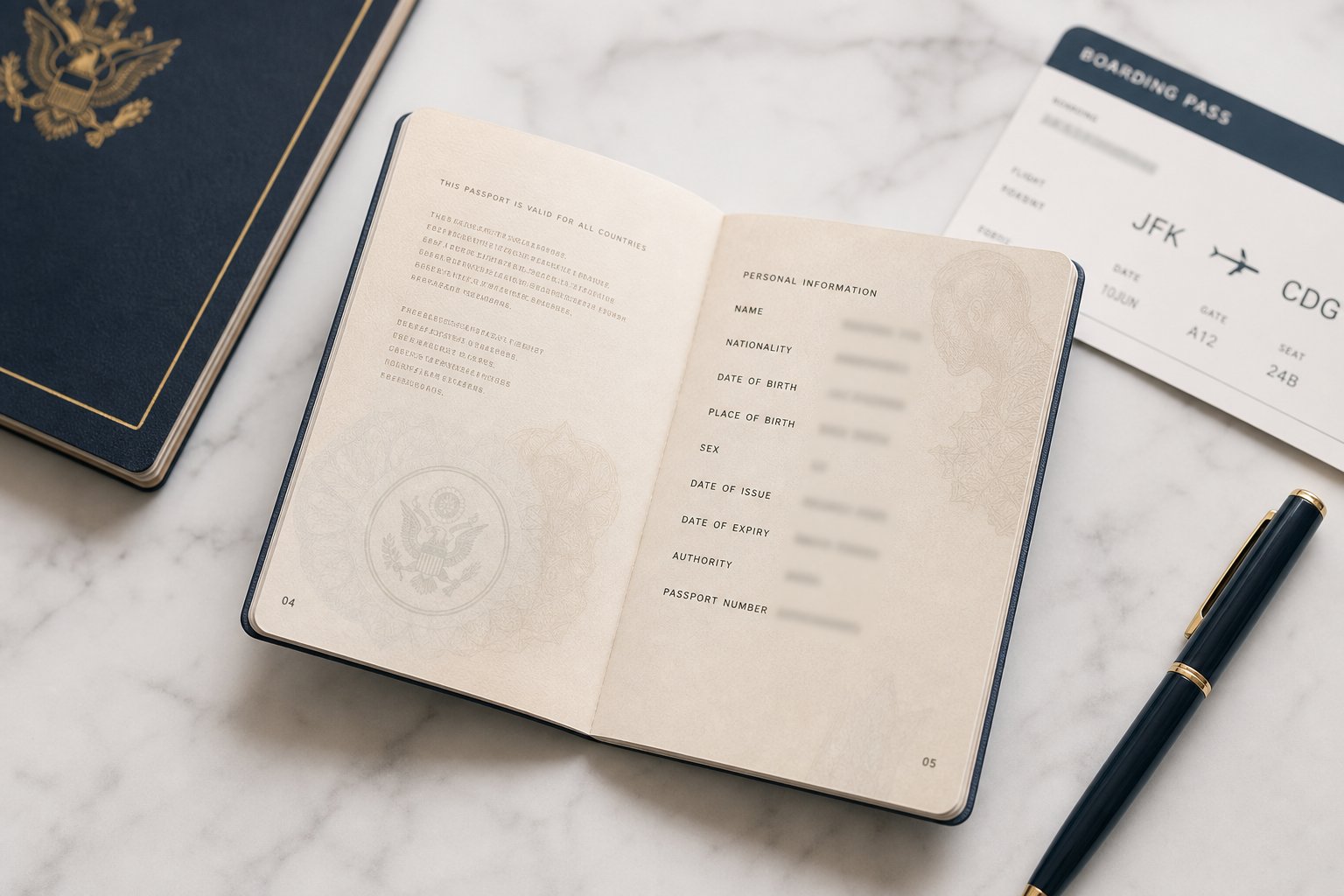
How Chinese Names Actually Appear on Your Passport
You are staring at an online booking form. It asks for your first name and last name. You glance at your Chinese passport and freeze. Which part goes where? If you have ever hesitated at that moment, you are not alone. The chinese name on passport format trips up millions of travelers every year, and the reason is simple: Chinese naming conventions are the mirror image of Western ones.
Why Chinese Passport Name Format Confuses Travelers
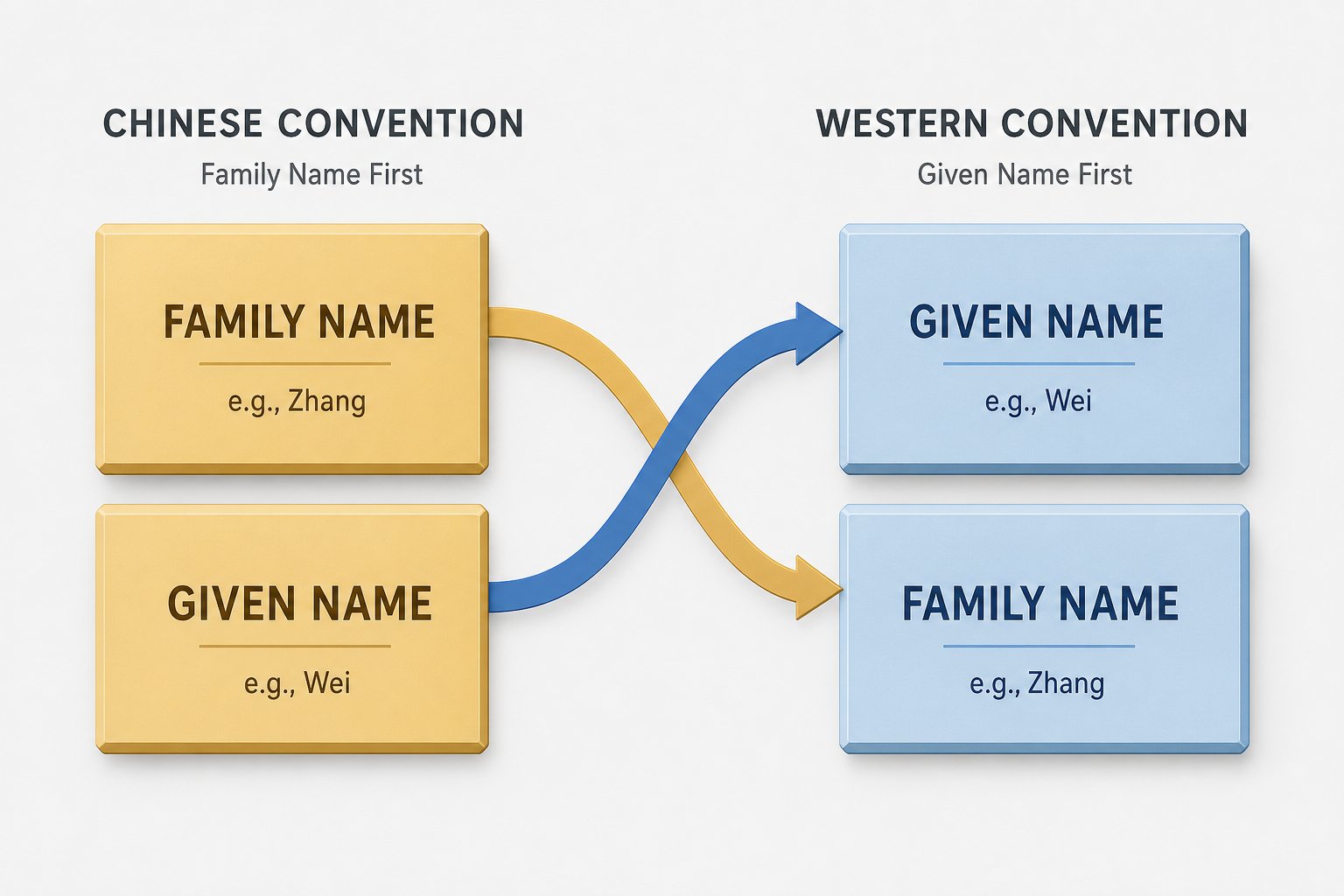
In Chinese culture, the family name always comes first, followed by the given name. So when you see a name like Wang Xiaoming on a passport, Wang is the surname and Xiaoming is the personal name. In Western naming order, the first name is the personal name and the last name is the family name. Chinese names flip that entirely. The first name is surname in Chinese convention, which means your chinese name first name is actually what Western forms call the "last name."
This reversal creates real confusion when filling out visa applications, airline bookings, and immigration cards that use Western-style fields. Understanding what is first name and last name on a Chinese passport is the single most important thing you can get right before any international trip.
On a Chinese passport, the surname (family name) always appears first, followed by the given name. Both are rendered in pinyin, uppercase, without tone marks.
What You Will Learn About Passport Name Fields
This article is your single-page reference for decoding every aspect of the format. You will learn how the name appears in three distinct zones on the passport page, the official pinyin romanization rules the Chinese government applies, and how to map given name vs family name to the correct fields on international forms. We also cover edge cases like compound surnames, minority names, and the differences between PRC, Singaporean, and Malaysian Chinese passport conventions.
Whether you are booking a flight, applying for a visa, or opening a bank account abroad, the goal is the same: enter your name exactly as it appears on your passport. The details of how that name is structured, and where each piece belongs on a form, are what we will break down step by step.
Three Name Zones on a Chinese Passport Explained
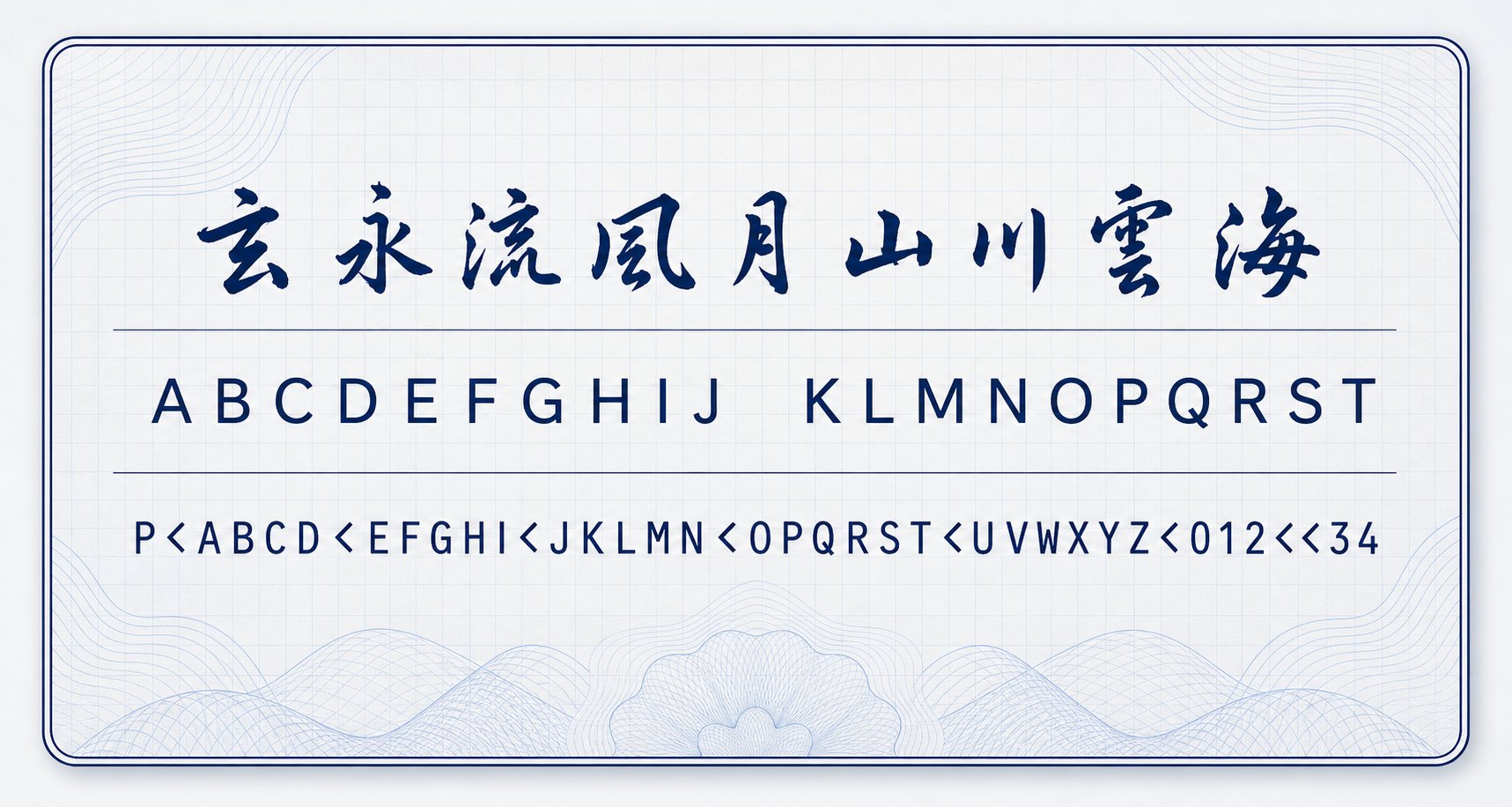
Open your Chinese passport to the identity page and you will notice the same name displayed three separate times, each in a different format. This is not redundancy for the sake of it. Each zone serves a distinct purpose, from human readability to machine scanning, and the formatting rules change depending on which zone you are looking at. Understanding what is surname in passport terms across all three zones prevents costly mistakes on forms.
Printed Chinese Characters Section
The top portion of the identity page displays your name in standard Chinese characters (hanzi). This is the most straightforward zone. Your surname appears first, immediately followed by your given name, with no punctuation or spacing between them. For someone named Zhang Xiaoming, this section simply shows 张晓明.
This zone exists primarily for human verification by Chinese-speaking officials. It matches the name on your household registration (hukou) and national ID card. No romanization appears here, so it is not directly useful when filling out English-language forms. However, it serves as the authoritative reference that the pinyin line below is derived from.
Pinyin Romanization Line
Directly beneath the Chinese characters, you will find the romanized version of your name in pinyin. This is the zone that matters most for international travel because it is what you type into booking systems and visa applications. Here, the surname and given name are clearly separated by a space, both printed in uppercase letters without tone marks.
For our example, this line reads: ZHANG XIAOMING. Notice that the given name characters are merged into a single unit. There is no space or hyphen between XIAO and MING. This is an official formatting rule, not a printing error. The separation you see is only between the surname and the given name, nothing else.
So what is a given name in passport context? It is everything after the surname on this pinyin line. For ZHANG XIAOMING, the given name is XIAOMING as one continuous string. This distinction matters because many travelers mistakenly assume XIAO is a middle name and MING is the first name, leading to booking errors.
Machine-Readable Zone Name Format
At the very bottom of the identity page sits the Machine-Readable Zone, or MRZ. This is the two-line strip of characters printed in the standardized OCR-B font defined by ICAO Doc 9303. Chinese passports use the TD3 format: two lines, each containing exactly 44 characters.
The MRZ encodes your name on the first line using a specific structure. After the document type code (P) and issuing country code (CHN), your surname appears first, followed by two chevron characters (<<) that act as a separator, and then your given name. Any remaining space in the 44-character line is filled with additional chevrons as padding.
For Zhang Xiaoming, the first line of the MRZ looks something like this:
P<CHNZHANG<<XIAOMING<<<<<<<<<<<<<<<<<<<<<<<<<
The double chevron (<<) separates the surname from the given name. If a person had multiple given names, those would be separated by a single chevron (<). But since most Chinese passports list one continuous given name in pinyin, you typically see the double chevron followed by the full given name and then padding.
What are given names on a passport MRZ? They are everything that appears after the double-chevron separator on line one. The MRZ uses only uppercase letters A through Z, digits 0 through 9, and the chevron filler character. No spaces exist anywhere in this zone.
| Zone | Format for Zhang Xiaoming (张晓明) | Key Characteristics |
|---|---|---|
| Chinese Characters | 张晓明 | Standard hanzi, no spacing, surname first |
| Pinyin Romanization | ZHANG XIAOMING | Uppercase, space between surname and given name, no tone marks |
| Machine-Readable Zone (MRZ) | ZHANG<<XIAOMING<<<<<... | Double chevron separates surname from given name, padded to 44 characters |
You will notice that the pinyin line and the MRZ carry essentially the same information, just formatted for different readers. The pinyin line is designed for humans filling out forms. The MRZ is designed for optical scanners at border checkpoints. When a scanner reads the MRZ, it extracts the surname and given name fields separately based on the chevron positions, then cross-checks the data against the passport's embedded chip using calculated check digits defined by ICAO standards.
The practical takeaway? When any form asks for your name, always reference the pinyin romanization line. It gives you the clearest, most form-friendly version of your name. The MRZ confirms the split between surname and given name if you are ever unsure where one ends and the other begins. Look for those double chevrons as your guide.
These formatting rules are consistent across all Chinese passports, but the underlying pinyin itself follows a strict set of government-mandated romanization standards that determine exactly how your characters translate into letters.
Pinyin Romanization Rules That Govern Passport Names
The letters printed on your passport are not a casual transliteration. They follow a precise set of government-mandated rules rooted in the Scheme for the Chinese Phonetic Alphabet (Hanyu Pinyin Fang'an), first adopted in 1958 and reinforced by subsequent national standards. These rules determine every detail of how your chinese first name last name combination is rendered in Latin script. Get familiar with them, because any mismatch between what you type on a form and what appears on your passport can delay a visa or void a plane ticket.
Official Pinyin Rules for Passport Names
The Ministry of Public Security applies a consistent set of romanization standards when issuing passports. Here are the core rules that shape how every name looks on the pinyin line:
- All letters are uppercase. No lowercase characters appear anywhere in the name fields. ZHANG XIAOMING, never Zhang Xiaoming or zhang xiaoming.
- Tone marks are omitted. Standard pinyin uses diacritical marks (e.g., Zhāng Xiǎomíng) to indicate tones, but passports strip these entirely. International systems cannot process diacritics reliably, so the name stays in plain ASCII-compatible letters.
- The surname and given name are separated by a single space. This is the only space in the entire name. No extra spaces, no commas, no punctuation of any kind.
- Multi-character given names are joined as one continuous string. If your given name is two characters, like 晓明, it becomes XIAOMING, not XIAO MING and not XIAO-MING.
- The ü sound is written as YU. Characters like 吕 (Lǚ) become LYU on newer passports, though older issuances may show LV. The syllable 女 (nǚ) in a name would render as NYU.
- No hyphens or apostrophes appear in the name. Even where standard pinyin uses an apostrophe to separate syllables (like Xi'an), passport formatting omits it entirely.
These rules apply universally. Whether your name has two characters or four, whether your surname is common or rare, the same formatting logic governs the output.
Why Multi-Character Given Names Have No Spaces
This is the rule that causes the most confusion for travelers. Imagine your first name in chinese is 小明 (two characters: xiǎo and míng). In everyday pinyin writing, you might see it as Xiao Ming with a space. But on a passport, it becomes XIAOMING, one unbroken unit.
Why? The Chinese government treats the given name as a single semantic entity regardless of how many characters compose it. This approach aligns with the national standard GB/T 28039-2011, which specifies that a person's given name should be written as one word in pinyin. The logic is straightforward: in Chinese, 晓明 is one name, not two separate words. Splitting it with a space would imply two distinct given names, which is how Western systems interpret spaced entries. That misinterpretation could lead booking systems to treat XIAO as a first name and MING as a middle name, fragmenting your identity across databases.
Are chinese names last name first? Yes, and this concatenation rule reinforces that structure. The surname stands alone as the first element, and everything after it is one unified given name. There is no middle name concept in standard Chinese naming. The space exists only to mark the boundary between family name and personal name, nothing more.
Special Pinyin Spelling Cases
A few pinyin syllables get special treatment on passports that you will not find in a standard textbook:
- ü → YU or LYU/NYU: The umlaut does not exist in the passport character set. For surnames like 吕, current passports print LYU. For given names containing nü or lü syllables, the same substitution applies.
- Syllable boundaries without markers: A name like 西安 (Xi'an) would print as XIAN with no apostrophe. Context determines pronunciation, but the passport does not encode it.
- Rare characters with non-standard readings: Some characters have regional or literary pronunciations that differ from their dictionary pinyin. The passport uses the standard Mandarin reading as defined by the Xinhua Dictionary, regardless of how the family traditionally pronounces the name.
For anyone with a first name chinese speakers would recognize as two-character, the critical habit is simple: look at your passport's pinyin line and treat that exact string as your official given name. Do not add spaces, do not separate syllables, and do not reformat it to look more Western-friendly. The system that issued your passport already made those decisions for you.
These romanization rules explain how your name is spelled, but they do not tell you which field to put it in when a form asks for your surname and given name separately. That mapping between Chinese naming order and Western form fields is where the next layer of confusion lives.
Mapping Chinese Names to Western Passport Fields
You know the pinyin spelling rules. You can spot the three name zones on your passport page. But when a visa application asks you to fill in "surname" and "given name" in two separate boxes, which piece goes where? This is where the reversed naming order creates real-world errors, because the answer depends on understanding what is surname and given name in each cultural context.
Surname Field Equals Chinese Family Name
On any Western form, the field labeled "surname," "last name," or "family name" all mean the same thing: your inherited family identifier. In Chinese, that is your 姓 (xing). Here is the catch: your xing is the FIRST element of your Chinese name, but it belongs in the LAST NAME field on English-language forms.
So is surname last name or first? In Western convention, surname equals last name. In Chinese convention, the surname comes first when spoken or written. The position in the name changes, but the concept stays the same. Your surname is your family name regardless of where it sits in the sequence. When a form says "Last Name," it wants your family name, which is the first part of your Chinese passport name.
Given Name Field Equals Chinese Personal Name
The field labeled "given name," "first name," or "forename" on Western forms refers to your personal name, the one your parents chose specifically for you. In Chinese, that is your 名 (ming). It appears SECOND on your passport, after the surname, yet it goes into the FIRST NAME box on international forms.
Think of it this way: first name surname order in English is the reverse of Chinese order. Your passport reads WANG XIAOLI (surname first, given name second). A Western form wants XIAOLI in the "First Name" field and WANG in the "Last Name" field. The words flip positions, but each piece lands in its correct conceptual home.
Understanding first name last name for chinese names means accepting this crossover. The first thing you read on your passport is your last name on the form. The second thing you read is your first name on the form.
Mapping Examples for Common Names
Concrete examples make this click. The table below shows how several common Chinese passport names map to standard Western form fields. Notice that the passport always prints surname first, but the form fields reverse the visual order.
| Chinese Passport (Pinyin Line) | Surname / Last Name Field | Given Name / First Name Field |
|---|---|---|
| WANG XIAOLI | WANG | XIAOLI |
| LI MINGZHE | LI | MINGZHE |
| ZHANG WEI | ZHANG | WEI |
| LIU YANTING | LIU | YANTING |
| CHEN JIAHAO | CHEN | JIAHAO |
The pattern is consistent every time. The first word on the pinyin line is your surname (last name field). Everything after that single space is your given name (first name field). No middle name exists unless your passport explicitly shows one, which standard PRC passports do not.
When dealing with first name last name chinese conventions, the golden rule is simple: split at the space. Left side goes to "Last Name." Right side goes to "First Name." Copy letter for letter, no reformatting, no creative reordering. The first name and last name for chinese passport holders map cleanly once you internalize that one split point.
This mapping works perfectly for the vast majority of Chinese names. But what happens when your surname is two characters instead of one, or when your given name is a single syllable that looks suspiciously short? Those edge cases introduce their own set of complications.
Edge Cases and Minority Name Formats
The one-space split rule works beautifully for names like WANG XIAOLI or CHEN JIAHAO. But what if your surname is two characters long? Or your given name is just a single syllable? Or your name does not follow Han Chinese conventions at all? These edge cases trip up travelers and form-processing systems alike, and they deserve their own breakdown.
Compound Surnames Like Ouyang and Sima
Most Chinese surnames are a single character, but compound surnames (fuXing) still exist, with origins tracing back to ancient official titles, regional names, and ethnic minority tribes. China currently has fewer than 100 compound surnames in active use, but millions of people carry them. On a passport, these two-character surnames are written as a single unbroken string in the surname position, just like a single-character surname would be.
Here is a surname and given name example using a compound surname: someone named 欧阳娜娜 appears on the pinyin line as OUYANG NANA. The surname field is OUYANG (two syllables, no space), and the given name field is NANA. The same one-space rule applies. Everything before the space is the last name given name split point.
Common compound surnames and their passport formatting:
- 欧阳 → OUYANG (China's most common compound surname, used by over 1.1 million people)
- 上官 → SHANGGUAN (approximately 88,000 users)
- 皇甫 → HUANGFU
- 令狐 → LINGHU
- 诸葛 → ZHUGE
- 司徒 → SITU
- 司马 → SIMA
The potential confusion? When you see OUYANG NANA on a passport, a Western booking system might interpret OUYANG as a given name and NANA as a surname, since it expects the shorter element to be the family name. It will not. The passport structure is always chinese last name first, regardless of character count. If your compound surname looks long, resist the urge to split it across two fields.
Single-Character Given Names
On the opposite end, some people have given names that are just one character. A name like 李伟 appears as LI WEI on the passport. This creates a symmetrical look: one short surname, one short given name. The risk here is that form reviewers or automated systems might flag the entry as incomplete, assuming a full given name should be longer.
There is nothing wrong or unusual about this. Single-character given names are common in chinese first and last names. The passport is authoritative. If it says WEI and nothing else after the space, then WEI is your complete given name. Do not pad it, do not add characters, and do not invent a middle name to make it look more substantial. A surname and given name example like LI WEI maps cleanly: LI in the last name field, WEI in the first name field. Done.
Minority Name Formats on Chinese Passports
Not everyone in China follows Han Chinese naming conventions. Uyghur, Kazak, Tibetan, Mongolian, and other ethnic minority names operate under entirely different structures, and their passport formatting reflects that.
The most visible difference is the middle dot (·) used to separate name components. A Uyghur name like Murat Mamut appears on the passport as MURAT·MAMUT, with a raised dot (interpunct) between the given name and patronymic. This dot is the official separator, functioning similarly to the space in Han Chinese names but carrying different structural meaning.
This dot has caused significant practical problems for millions of ethnic minority citizens. E-commerce platforms, mobile banking apps, and airline booking systems often cannot process the middle dot correctly. Some systems use different Unicode characters for the dot, others omit it entirely, and the inconsistency between ID cards, bank accounts, and passports creates verification failures. As one Uyghur citizen described it: "I feel as if I have wasted half of my life dealing with this dot."
Additional complications with minority names include:
- Longer name lengths: Some ethnic names can reach 16 characters in romanized form, exceeding the character limits imposed by many online systems.
- Different romanization systems: Tibetan names may use Wylie transliteration or phonetic approximations rather than pinyin. Mongolian names follow their own romanization conventions.
- No clear surname/given name division: Some minority naming systems do not use hereditary surnames in the Han Chinese sense, making the last name given name distinction on Western forms genuinely ambiguous.
Historical passport issuances add another layer. Older Chinese passports (pre-2012) sometimes formatted names differently, using spaces within given names or alternate spellings for the ü sound (LV instead of LYU). If you hold an older passport, your name formatting might not match current standards. This discrepancy can cause mismatches when renewing documents or when an airline's records from a previous booking do not align with your new passport.
These edge cases highlight why the universal advice remains the same: copy exactly what your passport shows. But when standard formatting rules meet real-world booking systems that demand middle names, reject dots, or truncate long entries, you need practical strategies for making the system work in your favor.

Filling International Forms and Booking Flights Correctly
Knowing the theory behind your passport's name format is one thing. Typing it into a booking system that was designed for Western names is another challenge entirely. Forms ask for first name, middle name, and last name in a rigid structure that does not always accommodate Chinese naming conventions. Here is how to handle the most common real-world scenarios without triggering errors or mismatches at the gate.
Booking Flights With Your Chinese Passport Name
Airlines are strict about one rule above all others: the name on your ticket must match the name on your passport exactly. A single misplaced letter can mean denied boarding. For Chinese passport holders, the process is straightforward once you know where each piece goes.
Follow these steps when filling in a typical airline booking form:
- Open your passport to the pinyin romanization line. This is your only reference. Ignore how your name appears on business cards, social media, or other documents.
- Enter the first word on the pinyin line into the "Last Name" or "Surname" field. For ZHANG XIAOMING, type ZHANG.
- Enter everything after the space into the "First Name" or "Given Name" field. Type XIAOMING as one continuous string. Do not add a space between syllables.
- Leave the "Middle Name" field blank. If the system requires an entry, type a single space or check any available "No Middle Name" box.
- Select the correct title (Mr/Ms/Mrs) and verify spelling character by character before confirming.
Some booking platforms, like AirAsia's guest details system, provide explicit guidance for Asian name formats. Their system does not accept symbols or special characters, and they require the name to match your passport or national ID exactly. If your name appears as NG AH HOCK on a passport, the given name field gets AH HOCK and the surname field gets NG. The same logic applies to any Chinese passport name.
Filling Visa Applications Correctly
Visa forms add complexity because they often ask for more detail than airline bookings. The U.S. DS-160 nonimmigrant visa application is a good example. It requires you to enter surnames and given names exactly as shown in your passport. The form's help text states explicitly: "If your passport does not include a first or given name, please enter 'FNU' (meaning 'first name unknown') in the space for Given Names."
For most Chinese passport holders, FNU is not necessary because you do have a given name. Simply enter your surname in the surname field and your full given name (the concatenated pinyin) in the given name field. The DS-160 also asks for your name in your native alphabet, so you will type your Chinese characters there as well.
Immigration arrival cards at border checkpoints follow the same pattern. Whether you are landing in the UK, Australia, or Thailand, the family name first name middle name order on the card maps identically: surname in the family name box, full pinyin given name in the first name box. Keep a note on your phone with the exact spelling if you tend to second-guess yourself mid-flight.
What to Do When Forms Require a Middle Name
This is the question that haunts Chinese travelers. The standard first name last name middle name format on Western forms assumes everyone has three name components. Chinese passports typically show only two: surname and given name. There is no middle name for chinese passport holders in the traditional sense.
When a form forces you to enter something in the middle name field, you have a few options:
- Leave it blank if the field is optional. Most airline and immigration systems accept an empty middle name without issue.
- Enter "NMN" (No Middle Name) if the system rejects a blank entry. Some government forms recognize this abbreviation.
- Do not split your given name to manufacture a middle name. Entering XIAO as a first name and MING as a middle name creates a mismatch with your passport, which shows XIAOMING as one unit.
The last name first name middle name format that some systems expect simply does not apply to standard Chinese passport names. If a system absolutely requires three fields, put your full given name in the first name field and leave middle name empty or marked NMN. Never rearrange or fragment your name to fit a template that was not designed for it.
Opening bank accounts abroad follows the same principles. Banks verify your identity against your passport, so the name on your account must reflect the first name middle name last name format exactly as your travel document presents it. If the bank's system cannot handle a missing middle name, ask the representative to enter NMN or leave it blank in their system. This is a routine request at international branches accustomed to serving Chinese clients.
Consistency across all your documents and bookings is what keeps you moving through airports and embassies without friction. But if your passport was issued in Singapore or Malaysia rather than mainland China, the naming conventions shift in ways that demand their own set of strategies.
Singaporean and Malaysian Chinese Passport Names
A PRC passport spells your surname in standard Mandarin pinyin. A Singaporean or Malaysian passport might spell the exact same Chinese character completely differently. If your family name is 陈, your PRC passport says CHEN. A Singaporean passport could say TAN, and a Malaysian one might show CHAN or TAN depending on dialect heritage. Same character, different romanization, different form-filling headaches.
Singaporean Chinese Passport Name Conventions
Singapore names follow dialect-based romanization rather than Hanyu Pinyin. Hokkien, Teochew, Cantonese, and Hakka pronunciations determine how characters are spelled in English. Common singapore surnames like CHEN (陈) become TAN in Hokkien or Teochew, while ZHANG (张) might appear as CHONG (Hakka) or TIONG (Hokkien). This romanized spelling is the official version of a person's name in Singapore, printed on passports and birth certificates alike.
Names from singapore also frequently include an English given name. The government-promoted order is [SURNAME] [Chinese given name] [English given name]. So you might see TAN MEI LING EMILY on a passport. When filling forms, TAN goes in the surname field, and MEI LING EMILY goes in the given name field. Unlike PRC passports, Singaporean Chinese given names are often written as two separate words (MEI LING rather than MEILING), which can make the given name look like it contains a middle name.
Another key difference: singaporean last names are fixed in their dialect spelling. A person emotionally identifies with that specific romanization. You cannot swap TAN for CHEN on a form just because pinyin dictionaries say so.
Malaysian Chinese Name Differences
Malaysian Chinese names follow a similar dialect-romanization pattern, but the passport formatting introduces its own quirk. According to UK government guidance on Malaysian documents, the name field on a Malaysian passport is a single field. Forenames and surnames are not separated. The passport displays the name as forename followed by surname, or surname followed by forename for those following Chinese naming convention.
For example, if a person is named Tan Yun Han, Tan is the surname and Yun Han is the given name. Some Malaysian Chinese also adopt an English forename, which may appear first in the sequence. The lack of a clear field separator means you need to know your own name structure to fill forms correctly. Malay last names work differently altogether, since ethnic Malays use patronymics (bin/binte + father's name) rather than hereditary family names, and the concept of a last name malay citizens carry does not map neatly to the Western surname field either.
Dialect Romanization vs Standard Pinyin
The core difference comes down to this: PRC passports use one standardized system. Singapore and Malaysia let dialect heritage dictate spelling. This means singapore last names like NG, GOH, ONG, and LIM have no direct pinyin equivalent that a mainland Chinese system would recognize. When booking flights or applying for visas, you must use the exact spelling on your passport regardless of what a pinyin chart says.
| Feature | PRC Passport | Singaporean Passport | Malaysian Passport |
|---|---|---|---|
| Romanization System | Standard Hanyu Pinyin | Dialect-based (Hokkien, Cantonese, etc.) | Dialect-based (varies by family) |
| Example: 陈明华 | CHEN MINGHUA | TAN MING HUA or TAN MING HUA DAVID | TAN MING HUA or MING HUA TAN |
| Given Name Spacing | No space (MINGHUA) | Often spaced (MING HUA) | Often spaced (MING HUA) |
| English Name Included | No | Yes, commonly | Sometimes |
| Name Field Structure | Surname and given name separated | Surname and given name separated | Single combined name field |
| Surname Position | Always first | Always first | Usually first (Chinese convention) |
The practical impact is significant. If your Singaporean passport says TAN MEI LING, do not enter CHEN MEILING on any form because that is the pinyin version. If your Malaysian passport shows the name in one continuous field without a clear surname marker, you still need to identify which part is your family name and enter it in the correct box. When in doubt, contact the airline or embassy and explain your passport's format. They handle these variations routinely.
Whether your passport comes from Beijing, Singapore, or Kuala Lumpur, the mistakes travelers make tend to follow the same patterns. Recognizing those common errors before they happen is the fastest way to keep every form submission clean.

Common Mistakes and a Quick Reference Checklist
Every tip in this guide boils down to one reality: most name-related travel problems are caused by the same handful of preventable errors. You already understand the format, the pinyin rules, and the field mapping. The question is whether you will remember all of it at 2 AM while bleary-eyed and rushing through a booking form. This section exists so you do not have to.
Top Mistakes When Entering Chinese Passport Names
These are the errors that cause denied boarding, rejected visa applications, and frozen bank accounts. Each one is easy to avoid once you see the pattern.
- Reversing surname and given name on forms. The most common mistake. Your passport reads ZHANG XIAOMING, so ZHANG goes in the last name field and XIAOMING goes in the first name field. Many travelers instinctively put the first word they see into the "first name" box. That is backwards. Is given name same as first name? Yes, it is. Your given name (XIAOMING) belongs in the first name field, every time.
- Adding spaces within the given name. Your passport says XIAOMING, not XIAO MING. Typing a space where none exists creates a mismatch. Airline systems compare your booking against your passport character by character. An extra space can flag you for manual verification at check-in.
- Splitting the given name into first and middle names. Entering XIAO as a first name and MING as a middle name fragments your identity across databases. Your passport has no middle name. Do not invent one.
- Confusing dialect romanization with pinyin. If your PRC passport says CHEN, do not enter TAN because that is how your Singaporean relatives spell it. Conversely, if your Singaporean passport says TAN, do not "correct" it to CHEN. Use what your passport shows.
- Mismatches between passport and other documents. Your bank account, work permit, and tax records should all reflect the exact name on your current passport. A name recorded differently across systems creates compliance problems that surface during audits, renewals, or routine verification checks. The burden of fixing these inconsistencies falls entirely on you.
- Using an old passport's spelling on new forms. If your previous passport spelled your name as LV and your current one says LYU, the current version is authoritative. Update every system and booking to match.
What is given name and family name in practical terms? Your family name is the inherited surname that goes in the "last name" field. Your given name is the personal name your parents chose, and it goes in the "first name" field. If you can keep that mapping straight, you eliminate most of the errors above.
Quick Reference Checklist for Travelers
Before you hit submit on any form, run through this list. It takes thirty seconds and saves hours of correction later.
Always copy the name exactly as it appears on your passport, character by character. Do not reformat, do not add spaces, do not reorder.
- Open your passport to the pinyin romanization line. This is your single source of truth.
- Confirm the first word (before the space) goes into the Surname / Last Name / Family Name field.
- Confirm everything after the space goes into the Given Name / First Name field as one unbroken string.
- Verify there is no space within your given name unless your passport explicitly shows one (common for Singaporean and Malaysian passports, not for PRC passports).
- Leave the middle name field blank or enter NMN if the system forces an entry.
- Double-check spelling letter by letter against the passport. Pay attention to easily confused pairs: I vs L, O vs 0, YU vs YV.
- Confirm the name on your booking matches the name on your passport, not your ID card, not your business card, not your WeChat name.
- If you recently renewed your passport, verify that all linked systems (airline loyalty accounts, visa records, bank accounts) reflect the current passport's name and number.
For anyone still wondering about the terminology: is family name last name? Yes. What does given name mean? It means your personal name, the one unique to you rather than shared with your family. And given name vs first name? They are the same thing, just different labels used by different forms. Once you lock in these equivalences, the chinese name on passport format stops being confusing and becomes purely mechanical: split at the space, place each half in the correct box, and move on.
Travel should be about the destination, not about fighting with forms. Keep this checklist on your phone, reference your passport every time, and you will never fill a name field wrong again.
Frequently Asked Questions About Chinese Name on Passport Format
1. Which part of a Chinese passport name is the first name and which is the last name?
On a Chinese passport, the first word on the pinyin line is the surname (last name), and everything after the space is the given name (first name). For example, if your passport reads WANG XIAOMING, WANG is your last name and XIAOMING is your first name. Chinese naming order places the family name before the personal name, which is the reverse of Western convention. When filling forms, put the first word in the 'Last Name' or 'Surname' field and the remaining string in the 'First Name' or 'Given Name' field.
2. Why is there no space between the two syllables of my given name on my Chinese passport?
The Chinese government treats multi-character given names as a single semantic unit under national standard GB/T 28039-2011. Two characters like 晓明 become XIAOMING rather than XIAO MING because adding a space would imply two separate names in Western systems. This prevents booking platforms from misinterpreting part of your given name as a middle name. Always enter your given name exactly as printed on the passport, with no added spaces or hyphens.
3. What should I put in the middle name field if my Chinese passport does not have one?
Standard PRC passports do not include a middle name. If a form requires an entry in the middle name field, leave it blank when possible, or enter 'NMN' (No Middle Name) if the system rejects an empty field. Never split your given name to create an artificial middle name, as this creates a mismatch with your passport and can cause issues at check-in or during visa processing. Some airline systems also offer a 'No Middle Name' checkbox you can select.
4. How do Singaporean and Malaysian Chinese passport names differ from PRC passport names?
PRC passports use standardized Hanyu Pinyin, while Singaporean and Malaysian passports use dialect-based romanization reflecting Hokkien, Cantonese, Teochew, or Hakka pronunciations. The surname 陈 appears as CHEN on a PRC passport but may be TAN on a Singaporean passport. Additionally, Singaporean passports often include English given names and may space out Chinese given names (MEI LING instead of MEILING). Malaysian passports sometimes use a single combined name field without separating surname and given name. Always use the exact spelling shown on your specific passport.
5. How do compound surnames like Ouyang or Zhuge appear on a Chinese passport?
Compound surnames are written as one continuous string without spaces in the surname position. For example, 欧阳娜娜 appears as OUYANG NANA on the pinyin line. OUYANG is the complete surname and goes in the 'Last Name' field, while NANA is the given name for the 'First Name' field. The same one-space rule applies: everything before the space is the surname, everything after is the given name, regardless of how long either part looks. Do not split a compound surname across two fields.