How Chinese Names Encode Birth Order and Family Hierarchy
Imagine looking at a person's name and instantly knowing whether they were the firstborn, the second child, or the youngest in their family. For thousands of years, Chinese names did exactly that. They weren't chosen for sound alone or picked from a list of trending options. They functioned as compressed family records, encoding hierarchy, generational position, and birth order into just two or three characters.
Why Birth Order Shaped Chinese Names for Millennia
So what are Chinese names, really? At their core, they are layered identifiers where every character carries deliberate meaning. Among the most powerful layers is birth order. In a culture built on familial hierarchy, knowing who came first, second, or last wasn't trivia. It determined inheritance rights, ritual responsibilities, and social standing. Chinese naming conventions evolved to make that information visible at a glance, embedded directly in a child's given name from the day they received it.
A single Chinese given name can reveal whether someone was the first, second, third, or youngest child in their family, turning every name into a miniature genealogical document.
How Chinese Names Work as a Family Record
Understanding how Chinese names work means recognizing three major systems that families used to mark birth position. The classical 伯仲叔季 (bó zhòng shū jì) system assigned specific prefix characters to the eldest through youngest sons. A parallel numeric system used characters like 大 (big) or 三 (three) to signal order more directly. And the generational name system gave siblings a shared character while differentiating them individually, linking cousins and even distant relatives across a clan. Even many common Chinese names that appear simple on the surface carry traces of these traditions. Together, these systems reveal that the order of Chinese names is never accidental. Each one is a deliberate act of placing a person within their family's story.
The Confucian Philosophy Behind Birth Order Naming
Birth order didn't become central to Chinese naming by accident. It was driven by a philosophical system that treated family hierarchy as the foundation of all social order. Confucianism, the dominant ethical framework shaping Chinese civilization for over two millennia, insisted that every person know their exact station within the family. Names became the most visible tool for enforcing that clarity.
Filial Piety and the Naming of Sons
Two core Confucian virtues sit at the heart of this tradition: 孝 (xiào), filial piety toward parents, and 悌 (tì), respect and deference toward elder siblings. Together, they created a world where generation, age, and gender determined every individual's rights, duties, and privileges within the household. A younger brother owed obedience to his older brother just as a son owed obedience to his father. When you understand this, the chinese name definition expands beyond a simple label. It becomes a public declaration of where someone stands in the family pecking order.
In Confucian thought, a well-ordered family is the microcosm of a well-ordered state. If names failed to clarify rank, the entire social structure risked confusion.
How Confucian Values Embedded Hierarchy in Names
Consider the most famous example hiding in plain sight. Confucius himself was born Kong Qiu (孔丘), but his personal name was Zhongni (仲尼). That character 仲 (zhòng) means "second." It tells us directly that he was the second son in his family. Even the philosopher who codified these hierarchical principles carried birth order in his own ancient chinese names. This wasn't decorative symbolism. It had real consequences. The eldest son, often marked with 伯 (bó), held primary inheritance rights and bore the heaviest ritual obligations, including ancestor worship. A chinese courtesy name, granted later in life as a mark of respect, might also reference birth position, reinforcing the hierarchy through chinese honorifics used in daily address. Younger sons knew from their very names that their roles, their property claims, and their ceremonial duties differed from the firstborn's. The chinese name origins of this practice trace directly back to the Zhou dynasty's feudal inheritance laws, where primogeniture made the distinction between eldest and younger sons a matter of land, title, and political power.
The Traditional 伯仲叔季 Birth Order System
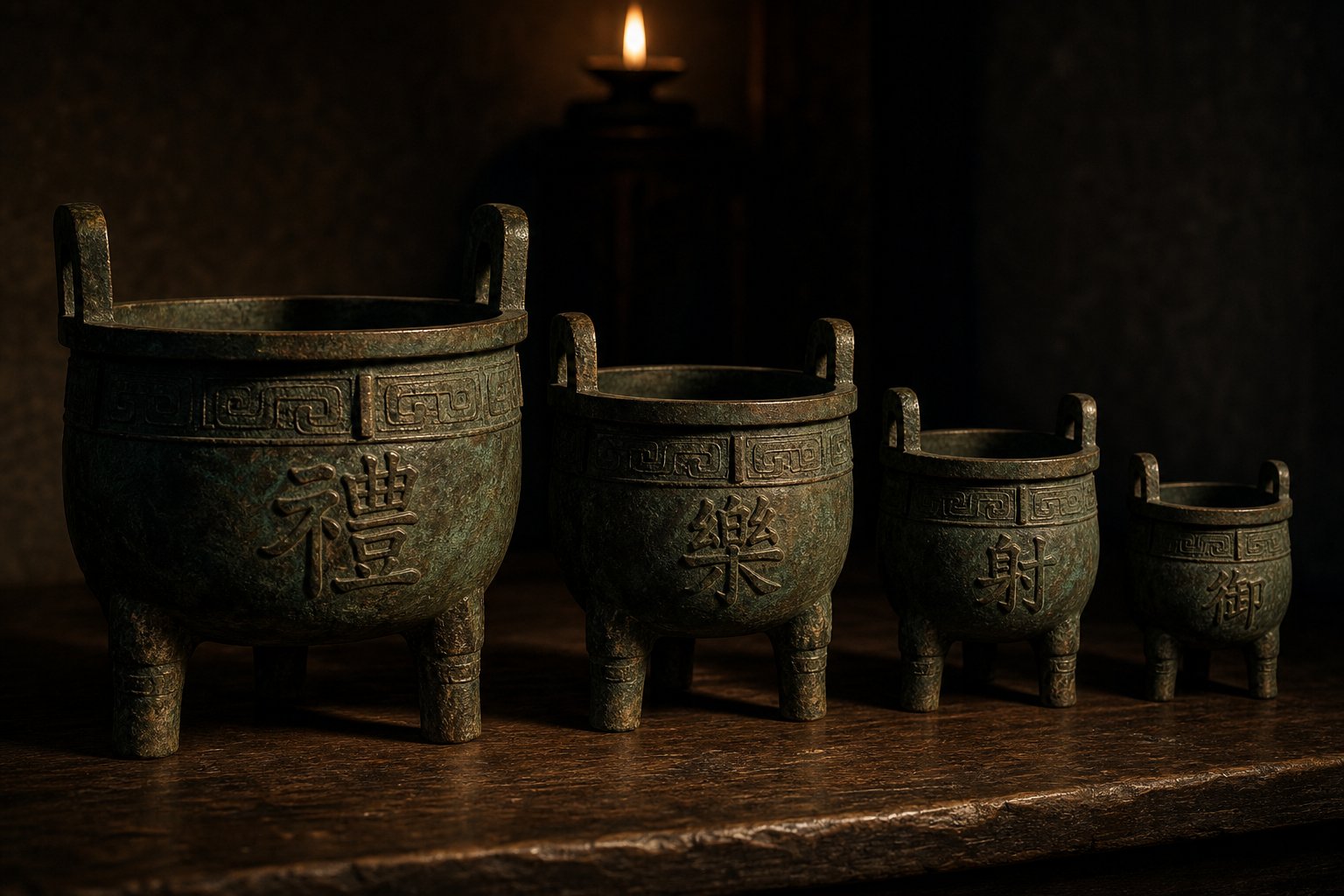
Zhou dynasty inheritance laws gave the eldest son land, title, and ritual authority. But how did everyone know who was eldest? The answer lived inside the name itself. A compact set of four characters, 伯仲叔季, served as a birth order code that Chinese families used for centuries. These name chinese characters functioned as position markers, slotted directly into a son's given name or courtesy name to broadcast his rank among siblings.
The Four Positions of 伯仲叔季 Explained
The system is elegant in its simplicity. Four characters map to four sibling positions:
- 伯 (bó) — marks the eldest son. Its core meaning is "elder" or "chief." An alternate character for this position is 孟 (mèng), which also means "eldest" or "first" and was used interchangeably in many families.
- 仲 (zhòng) — marks the second son. It literally means "middle" or "second in sequence."
- 叔 (shū) — marks the third son. Its original meaning relates to "younger" or "junior."
- 季 (jì) — marks the fourth or youngest son. It carries the meaning of "last" or "youngest in a series."
These characters typically appeared as the first character of a two-character given name. The second character could be unique to the individual or shared among all brothers as a generational marker. This layered approach meant that chinese name meanings were readable on two levels simultaneously: birth position and family generation.
Character Breakdowns with Pinyin and Meanings
For anyone attempting chinese name interpretation on historical texts or genealogical records, recognizing these four characters is essential. Here's a complete reference:
| Position | Character | Pinyin | Literal Meaning | Famous Historical Example |
|---|---|---|---|---|
| 1st (Eldest) | 伯 / 孟 | bó / mèng | Elder, chief / Eldest, first | Bo Yang Fu (伯阳父) — Spring and Autumn Period official |
| 2nd | 仲 | zhòng | Second, middle | Kong Zhongni (孔仲尼) — Confucius, second son of his father |
| 3rd | 叔 | shū | Younger, third | Cao Shuquan (曹叔权) — third son of Cao Cao, via courtesy name |
| 4th / Youngest | 季 | jì | Last, youngest | Li Jilan (李季兰) — Tang dynasty poet, youngest child |
Historical Figures Whose Names Use This System
Some of the most famous chinese names in history carry these markers. Sun Quan (孙权), the ruler of Eastern Wu during the Three Kingdoms period, held the courtesy name Zhongmou (仲谋), meaning "Second Strategist." That 仲 tells us he was the second son of the warlord Sun Jian. Confucius's own name, Zhongni (仲尼), works identically. These weren't nicknames or afterthoughts. They were formal names and characters chosen with deliberate precision.
The general Cao Cao (155–220 CE) offers a particularly clear case. Research on Chinese generation names documents that his seven sons received courtesy names following the sequence exactly: Boquan (伯权, "Eldest Rule"), Zhongquan (仲权, "Second Rule"), Shuquan (叔权, "Third Rule"), and Jiquan (季权, "Fourth Rule"). For the fifth and sixth sons, the family adapted with 幼 (yòu, "young") and 稚 (zhì, "youngest"), demonstrating what happened when a family outgrew the four-character framework.
This adaptation reveals an important nuance. The 伯仲叔季 system was designed for families with up to four sons. When more children arrived, families either cycled back through the sequence or introduced supplementary characters like 幼, 稚, or 少 (shào, "junior"). The system bent rather than broke, preserving the meaning behind chinese names even in large households.
Historically, this naming practice emerged during the Spring and Autumn Period (722–481 BCE) and saw its widest use through the Zhou and Han dynasties. It was primarily associated with elite and literati families, the social classes most invested in Confucian hierarchy and formal genealogical records. By the Tang dynasty, a parallel system using numeric characters began gaining ground, especially among commoners who found the classical four-character set too formal for everyday life.
Numeric and Ordinal Characters in Chinese Given Names
Not every family had the classical education or social standing to use the 伯仲叔季 framework. For millions of ordinary households across imperial China, a simpler and more intuitive method existed: embedding numeric or ordinal characters directly into a child's given name. Where the literati system required knowledge of four specialized characters and their precise sequence, the numeric approach used characters that anyone could understand at a glance. The chinese name meaning was immediately transparent, no classical training required.
Numeric Characters That Signal Birth Position
The numeric system drew from a broader pool of characters, each signaling a child's rank through plain language rather than coded terminology. Here are the most common ones you'll encounter in old chinese names and historical records:
- 大 (dà) — "big" or "great." Used to mark the eldest child. You'll see it in names like 大郎 (Dàláng, "Eldest Son").
- 元 (yuán) — "first" or "original." Another marker for the firstborn, carrying connotations of primacy and origin.
- 长 (zhǎng) — "eldest" or "senior." Directly states the child's position as the oldest.
- 二 (èr) — "two" or "second." Straightforward numeric placement for the second child.
- 三 (sān) — "three" or "third." Marks the third-born.
- 四 (sì) — "four" or "fourth." Continues the sequence for the fourth child.
- 小 (xiǎo) — "small" or "youngest." A flexible marker indicating the last-born child, regardless of whether they were the second, fifth, or eighth in line.
Notice how 小 works differently from the others. While 大, 二, 三, and 四 pin a child to a specific numeric slot, 小 simply means "the last one." A family with three sons might name them 大宝, 二宝, and 小宝 without needing to know in advance how many children they'd eventually have. This flexibility made it one of the most common chinese name elements across all social classes and regions.
When Families Used Numbers Instead of 伯仲叔季
The two systems coexisted for centuries, but they occupied different social registers. Understanding which system a family used tells you something about their background and era. The research by Irena Kaluzynska on Chinese generation names documents that the tradition of using numerals in generation names started during the Tang Dynasty (618–907), and the method was called yòng shùmùzì zuò páiháng (用数目字作排行), literally "using numerals to make generational names."
| Feature | 伯仲叔季 System | Numeric System (大/二/三/小) |
|---|---|---|
| Primary era of use | Zhou through Han dynasties (c. 1050 BCE–220 CE) | Tang dynasty onward (618 CE–modern era) |
| Social class | Literati, aristocratic, and elite families | Commoners, merchants, and farming families |
| Maximum positions | Four (with adaptations for larger families) | Unlimited — numbers scale naturally |
| Transparency | Requires classical knowledge to decode | Immediately understandable |
| Typical context | Formal given names and courtesy names | Given names, childhood names, and informal address |
| Flexibility for youngest | 季 (jì) fixed as fourth position | 小 (xiǎo) floats to mark any last-born |
The Tang dynasty provides vivid examples of how the numeric system worked in practice. Famous poets used numeric names to address each other within their extended clans: Li Bai (李白) was known as Li Shi'er (李十二, "Li the Twelfth"), Du Fu (杜甫) was called Du Er (杜二, "Du the Second"), and Bai Juyi (白居易) went by Bai Ershier (白二十二, "Bai the Twenty-second"). These numbers reflected their rank among all male cousins in the broader clan, not just immediate siblings.
Perhaps the most striking historical example comes from the Ming dynasty's founding emperor. Zhu Yuanzhang (朱元璋) grew up in a peasant family that used numeric naming conventions extensively. His original childhood name was Zhu Chongba (朱重八), meaning roughly "Zhu Double-Eight" or "Zhu the Eighth (repeated)." His father was Zhu Wusi (朱五四, "Zhu Fifty-Four"), and his grandfather was Zhu Chuyi (朱初一, "Zhu the First"). The entire family tree reads like a ledger. No poetic allusions, no classical references — just numbers marking each person's position. This naming pattern was typical of impoverished families in the Yuan and early Ming periods, where the china name meaning was purely functional rather than aspirational.
The contrast is telling. When Zhu Yuanzhang became emperor, he adopted a name rich with literary meaning (元璋 references precious jade), leaving behind the numeric conventions of his humble origins. Yet those numeric names survive in historical records, offering genealogists a clear window into family structure. For anyone researching typical chinese names from the Song, Yuan, or Ming dynasties, recognizing numeric patterns is essential. A name in chinese meaning "the third" or "the youngest" isn't a lack of creativity — it's a deliberate system that prioritized clarity of position over poetic beauty.
This numeric tradition also explains why certain characters appear so frequently across Chinese naming history. Characters like 元, 大, and 小 show up in names spanning every dynasty and region, making them among the most common chinese name elements in genealogical records. Their persistence reflects a practical truth: not every family needed an elaborate classical system to accomplish the same goal of marking where each child stood in the family line.
Generational Names and How Siblings Share Characters
Numeric characters and the 伯仲叔季 framework both mark a child's rank among siblings. But Chinese families developed a third system that operates on a different axis entirely: the generational name. Rather than distinguishing one sibling from another, chinese generational names link siblings together while simultaneously placing them within the broader sweep of the family's history. Think of it as a vertical coordinate. Birth order tells you where someone sits horizontally among brothers and sisters. The generational character tells you which layer of the family tree in chinese names they belong to.
How the Generational Character System Works
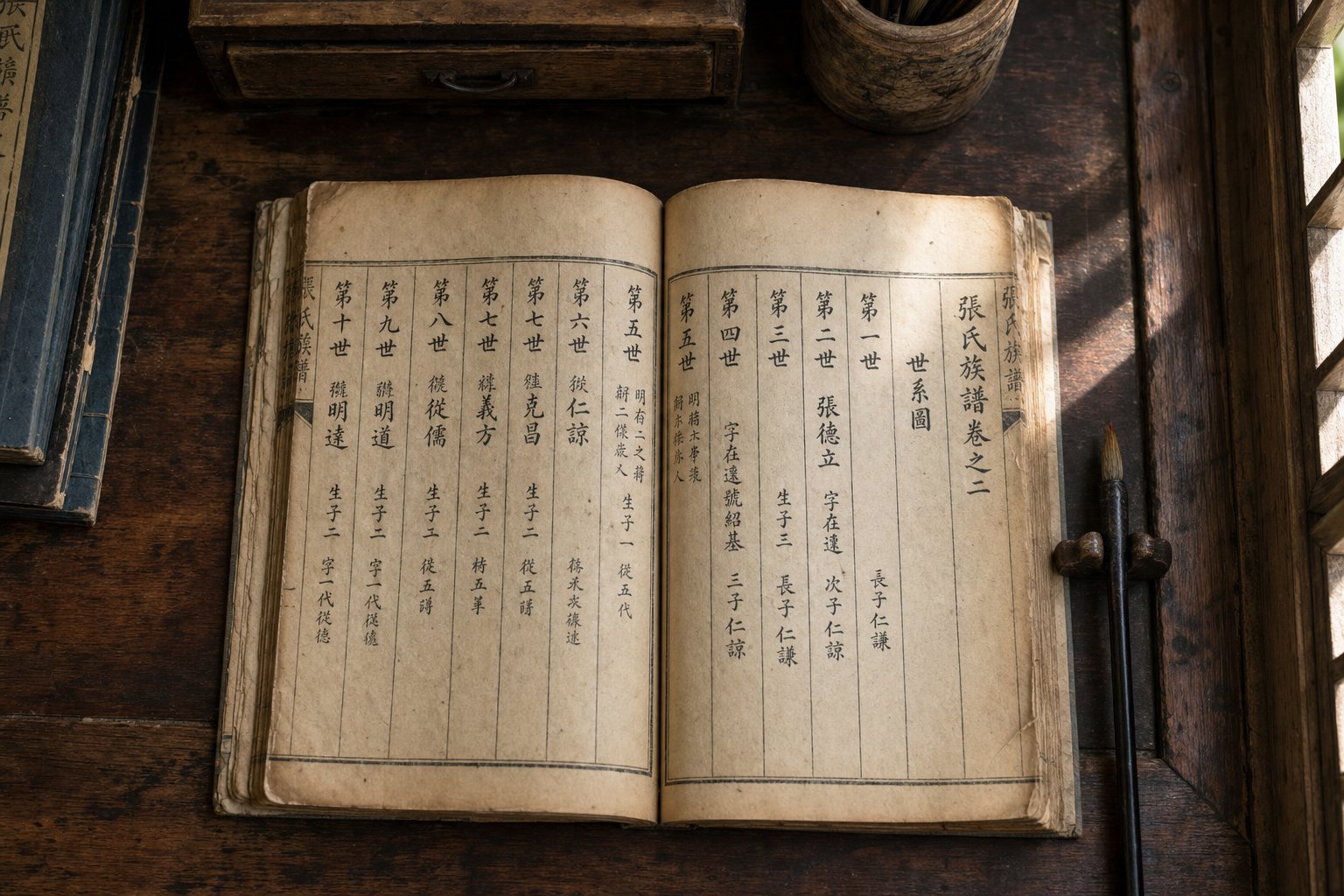
The system, known as 字辈 (zìbèi) or 排行 (páiháng), works like this: every person in the same generation of a clan shares one specific character in their given name. Brothers, sisters, and even cousins across different branches of the family all carry this identical character. The remaining character in the given name is unique to each individual, often chosen to reflect personal aspirations, birth order, or the five elements.
The structural patterns follow two main formats:
- Surname + generational character + individual character — the most common arrangement. For example, if the generational character is 耀 (Yào), siblings might be named Li Yaoming (李耀明) and Li Yaohui (李耀辉). The shared 耀 instantly marks them as belonging to the same generation.
- Surname + individual character + generational character — less common but used by certain clans. Here the generational character appears in the second position of the given name rather than the first.
This is where birth order and chinese generation names intersect. The individual character — the one that differs between siblings — could itself encode birth position. A family might give their first son a character meaning "brightness" and their second son a character meaning "wisdom," or they might use numeric markers in that individual slot. The generational character holds the siblings together as a unit; the personal character separates them within it.
Shared Characters Among Siblings and Cousins
What makes this system remarkable is its scope. The shared character didn't just connect immediate siblings. It connected all male relatives of the same generation across the entire clan, even those living in different provinces or countries. If you encountered a stranger with your surname and your generational character, you could immediately determine your exact relationship. This is why researchers tracing ancestry in chinese genealogical records find generational characters so valuable. They act like a fingerprint for identifying which branch and generation a person belongs to.
The characters weren't chosen randomly. Most clans composed a generational poem, called 字辈诗 (zìbèi shī), that predetermined the sequence of generational characters for dozens — sometimes hundreds — of future generations. These poems were typically structured in lines of five or seven characters, each character assigned to one generation in order. Some poems followed rhyme schemes; others prioritized meaning over sound. The characters often conveyed virtues like loyalty, wisdom, or prosperity, expressing the clan's hopes for each successive generation.
These poems were recorded in clan genealogies known as 族谱 (zúpǔ) or 家谱 (jiāpǔ). A single jiapu might document chinese family names and meanings stretching back twenty or thirty generations, with the generational poem serving as the organizing spine. Because each clan's poem is unique, even a handful of generational characters can identify which family lineage a person belongs to — useful information when you consider that a list of chinese family names contains only a few hundred common surnames shared by over a billion people. The generational character is what distinguishes one Wang family from another.
The system was primarily created for male descendants, giving brothers and cousins a shared character in their names. Some clans extended it to daughters as well, either using the same poem or maintaining a separate sequence for female family members. By the Ming dynasty, two-character given names shaped by clan traditions and generation poems had become standard practice, making chinese family tree names readable as layered documents: surname for the clan, generational character for the era, and personal character for the individual.
Even families who never wrote down a formal poem often followed informal generational patterns. If you look at a family tree and notice repeating characters among siblings and cousins of the same generation, you're likely seeing this system at work — a hidden poem waiting to be recognized, connecting each person to the larger story of their lineage.
Address Terms vs Given Names for Birth Position
Generational characters and numeric markers live permanently inside a person's legal name. But there's a completely separate system for expressing birth order in Chinese that often gets confused with naming: sibling address terms. If you've ever heard someone called 大哥 (dàgē) or 二姐 (èrjiě), you're hearing this system in action. It looks similar on the surface, but it operates on entirely different rules.
Address Terms That Mark Sibling Position
In Chinese families, younger siblings in chinese households never call their older siblings by their given names. Instead, they use ranked titles that specify exactly where each sibling falls in the birth sequence. Your oldest brother in chinese is 大哥 (dàgē), your second-oldest brother is 二哥 (èrgē), your third is 三哥 (sāngē), and so on. The same pattern applies to sisters.
Here's the complete hierarchy for brothers and sisters:
- 大哥 (dàgē) — oldest older brother in chinese address; literally "big brother"
- 二哥 (èrgē) — second older brother in chinese
- 三哥 (sāngē) — third older brother
- 大姐 (dàjiě) — oldest older sister; the standard chinese for older sister when she's the eldest
- 二姐 (èrjiě) — second older sister
- 三姐 (sāngjiě) — third older sister
- 大弟 (dàdì) — oldest younger brother in chinese address
- 二弟 (èrdì) — second younger brother
- 大妹 (dàmèi) — oldest younger sister
- 二妹 (èrmèi) — second younger sister; the youngest sister in chinese families is often simply called 小妹 (xiǎomèi)
As Into the Middle Kingdom notes, if you had more than one older brother or sister, you would refer to them in the order of their birth — your oldest older brother would be 大哥 and the others 二哥, 三哥, and so on. These terms extend beyond the family too. Children address unrelated young adults as 大哥 or 大姐, and the terms 叔叔 (shūshu) and 阿姨 (āyí) serve as respectful address for older generations.
Why Address Terms and Given Names Are Different Systems
Here's the distinction that matters: address terms are relational and contextual, while birth order encoded in a given name is permanent and absolute.
When you call someone 二哥, that title only makes sense from your perspective as a younger sibling. The same person might be 大哥 to a different sibling below him, or simply "older brother" to an outsider. The label shifts depending on who's speaking. But when a person's actual given name contains 仲 or 二 or 季, that marker is fixed. It doesn't change based on context or audience. It's written on official documents, carved on tombstones, and recorded in genealogies.
Address terms tell you how two people relate to each other. Given-name markers tell you where a person sits in the family permanently, regardless of who's asking.
This distinction trips up many language learners. Encountering 大哥 or 二姐 in conversation, it's easy to assume these are parts of someone's actual name. They're not. They're titles of address, functioning more like "eldest brother" as a role than as a personal identifier. A man called 二哥 by his younger siblings has a completely separate legal name that may or may not contain birth order information. The two systems can coexist — a second son named 仲明 would also be addressed as 二哥 by younger siblings — but they operate independently.
Understanding this separation clarifies something else: the address term system applied equally to sons and daughters, with big sister in chinese (大姐) and younger sister in chinese (小妹) used just as naturally as the male equivalents. The given-name encoding systems, however, didn't always extend the same courtesy to daughters — a disparity rooted in how families historically recorded male and female children differently.
Gender Differences in Birth Order Naming Traditions
That disparity wasn't subtle. For most of Chinese history, the elaborate systems designed to mark birth position — 伯仲叔季, numeric characters, generational poems — were built with sons in mind. Daughters existed in a parallel naming universe where beauty, virtue, and nature imagery took priority over rank. If you're researching chinese first names female ancestors carried, you'll often find that birth order was simply invisible in their names, even when their brothers' names spelled it out clearly.
How Sons and Daughters Were Named Differently
The logic was rooted in inheritance. Since property, titles, and ritual duties passed through male lines, distinguishing the first son from the third son had legal and economic consequences. Chinese masculine names needed to encode that information. A chinese boy name containing 伯 or 仲 wasn't just a family tradition — it was a claim to specific rights. Daughters, who married out of the family and joined their husband's lineage, were not assigned positions in the same hierarchy.
Instead, chinese feminine names drew from an entirely different vocabulary. Analysis of Han Chinese naming patterns shows that popular characters for women historically invoked beauty and nature: 玉 (yù, jade/pristine), 梅 (méi, plum blossom), 芳 (fāng, fragrance), and 丽 (lì, beautiful). Chinese male given names, by contrast, favored characters signaling ambition and capability: 志 (zhì, ambition), 明 (míng, brightness/forthright), and 文 (wén, cultured). The difference is structural. Chinese names for boys encoded position; names for girls encoded aspiration about character and appearance.
Here's how the two systems contrast in practice:
- Male birth order markers: 伯 (eldest), 仲 (second), 叔 (third), 季 (youngest), 大 (big/first), 二 (second), 三 (third), 元 (first), 长 (eldest)
- Female naming elements: 兰 (orchid), 莲 (lotus), 秀 (elegant), 淑 (gentle/virtuous), 珍 (precious), 凤 (phoenix), 春 (spring), 雪 (snow)
- Male generational markers: Shared characters from clan poems recorded in genealogies, linking brothers and male cousins
- Female generational markers: Rarely assigned; daughters were often excluded from formal 字辈 poems entirely
Female Birth Order Indicators and Naming Patterns
Exceptions existed, particularly in families with many daughters. When parents had four or five girls, they sometimes fell back on numeric patterns out of practical necessity. You'll encounter names like 大妹 (Dàmèi, "eldest younger sister"), 二妹 (Èrmèi, "second sister"), and 三妹 (Sānmèi, "third sister") — especially in rural communities and among families of lower social standing. The character 妹 (mèi, younger sister) itself served as a gender marker, combined with a number to indicate sequence. Some families used 姑 (gū, "maiden" or "father's sister") in a similar way, or employed the 女 (nǚ, woman) radical in characters to signal female children's position.
These numeric patterns for daughters tended to appear in informal childhood names rather than formal registered names. A girl called 三妹 at home might carry a completely different name — something with 芳 or 兰 — in official records. Chinese names male children received, by contrast, often kept their birth order markers across both informal and formal contexts.
This asymmetry creates real challenges for modern ancestry research. Clan genealogies (族谱) frequently recorded daughters only as "first daughter" or "second daughter" without preserving their actual given names. Chinese first names male ancestors carried are documented in detail across generations, complete with birth order markers and generational characters. Female ancestors often appear as blanks or footnotes. Anyone tracing a family line through women's names will find fewer clues, less consistency, and more gaps — a direct consequence of naming systems that treated sons as permanent members of the lineage and daughters as temporary ones.
The shift toward gender-neutral naming accelerated dramatically after the 1980s. As research on Han Chinese name evolution documents, daughters born after this decade increasingly received characters previously reserved for sons — 佳 (jiā, excellent), 晓 (xiǎo, knowing), and 文 (wén, cultured). The old binary between chinese names male children carried and the floral vocabulary assigned to girls has blurred considerably, though birth order encoding in given names had already become rare for both genders by the time this shift occurred.
Regional and Dialect Variations Across Chinese Communities
Gender wasn't the only factor that shaped how birth order appeared in a name. Geography mattered just as much. China's vast linguistic landscape — Cantonese, Hokkien, Hakka, Teochew, and dozens of other dialect groups — produced distinct regional traditions for encoding sibling rank. The same birth order characters exist across all these communities, but how they were used, pronounced, and romanized into English varied dramatically. If you're trying to decode an asian name from a historical immigration record or family document, knowing which dialect group the family belonged to is often the first step.
Cantonese Birth Order Naming Patterns
Cantonese-speaking families from Guangdong province and Hong Kong developed their own distinctive approach to marking birth order. One of the most recognizable features of cantonese names is the 阿 (a) prefix combined with numeric markers. A family might call their children 阿大 (A-daai, "the eldest"), 阿二 (A-yi, "the second"), and 阿三 (A-saam, "the third") in everyday speech. These weren't always formal registered names, but they frequently became the only name a person was known by, especially in working-class families.
The 阿 prefix itself is a Cantonese familiarity marker with no direct Mandarin equivalent in naming. It softens the numeric character into something affectionate rather than clinical. You'll also encounter it in address terms — older sister in chinese cantonese is 阿家姐 (a-ga-je) or simply 家姐 (ga-je), distinct from the Mandarin 姐姐 (jiějie). This prefix system extended to birth order names so naturally that many Cantonese speakers carried these 阿-prefixed numeric names throughout their entire lives.
When Cantonese families emigrated to North America, Australia, or Southeast Asia, translating chinese names into english created additional complexity. The same character 王 that becomes "Wang" in Mandarin pinyin appears as "Wong" in Cantonese romanization. A surname in chinese might be written identically in characters but look completely different on an English-language document depending on the family's dialect. As the Asia Media Centre documents, the character 王 is pronounced Wang in Mandarin, Wong in Cantonese, Ong in Hokkien, and Heng in Teochew — and each romanization signals a different ancestral region.
Hokkien and Hakka Regional Variations
Hokkien communities from Fujian province and their diaspora across Taiwan, the Philippines, and Southeast Asia maintained their own generational naming poems that often differed from northern Chinese clan traditions. These poems were composed in Hokkien pronunciation, meaning the same characters carried different sounds than their Mandarin equivalents. A generational character that sounds like "ming" in Mandarin might be "beng" in Hokkien — making cross-dialect genealogical research surprisingly difficult even when the written characters match.
Hakka families, scattered across southern China and Southeast Asia, preserved some of the oldest birth order conventions. Their naming traditions tended to be more conservative, retaining classical elements that Mandarin-speaking families in the north had already abandoned. Teochew communities from the Chaoshan region developed yet another set of conventions, with their own romanization patterns appearing in records across Thailand, Cambodia, and Vietnam.
Here are the key regional differences in how birth order was expressed across dialect groups:
- Cantonese: Frequent use of 阿 (a) prefix with numeric characters; informal birth order names often became permanent identifiers; romanized as Wong, Chan, Cheung rather than Wang, Chen, Zhang
- Hokkien: Distinct generational poems composed in Hokkien pronunciation; strong clan genealogy traditions preserved in Taiwan and Southeast Asia; surnames romanized as Ong, Tan, Teo rather than Wang, Chen, Zhang
- Hakka: Conservative retention of older 伯仲叔季 patterns longer than other groups; surnames romanized as Wong, Chin, Cheong; strong genealogical record-keeping among diaspora communities
- Teochew: Numeric naming common among merchant families; unique romanization patterns (Heng for 王, Tay for 郑); concentrated diaspora in Thailand and Cambodia preserved pre-modern conventions
- Mandarin (Northern): Standard pinyin romanization; earlier adoption of literary and aspirational naming over birth order markers; generational poems following northern pronunciation
This variation matters enormously for anyone researching family history. A name in chinese language records might use identical characters across all dialect groups, but the romanized version on an immigration form, birth certificate, or gravestone reflects whichever dialect the family spoke. Understanding that "Ong" and "Wong" and "Wang" all represent the same chinese name in chinese language — the character 王 — is essential for connecting records across different countries and time periods.
Overseas Chinese communities add another layer. Families who emigrated to Singapore, Malaysia, Indonesia, and the Philippines during the 19th and early 20th centuries often preserved naming conventions that mainland families later abandoned. The upheavals of the 20th century — war, revolution, the Cultural Revolution's attack on traditional culture — disrupted generational naming poems and birth order traditions across mainland China. But diaspora communities, insulated from those disruptions, continued using older systems. In territories with a sizeable Chinese diaspora like Singapore and Malaysia, the way a family name is spelled remains a signifier of the region a person's ancestors came from. A researcher encountering asian names in Southeast Asian records can often identify the dialect group — and therefore the likely naming conventions — from the romanization alone.
The practical takeaway is straightforward: there is no single system for how birth order appears in Chinese names. Dialect group determines pronunciation, romanization, and even which birth order conventions a family preferred. Recognizing these regional patterns transforms what might look like inconsistent or confusing records into a coherent picture of family structure — if you know which tradition you're looking at.
How to Identify Birth Order Indicators in Any Chinese Name
Knowing that regional, gendered, and historical systems exist is one thing. Applying that knowledge to an actual name sitting in front of you — on a gravestone, an immigration form, or a clan genealogy — is another. This section gives you a practical method for spotting birth order clues, whether you're a genealogist piecing together a family tree, a historian reading primary sources, or a language learner trying to understand how are chinese names structured beneath the surface.
A Step-by-Step Method for Spotting Birth Order Clues
Before you begin, remember the basic architecture. Are chinese names last name first? Yes. The chinese surname always comes first, followed by the given name. So in a name like 王仲明, the first character 王 is the chinese last name, and 仲明 is the given name — the part where birth order hides. With that orientation in mind, here's a checklist you can follow when analyzing any unfamiliar Chinese name:
- Isolate the given name. Since the chinese first name last name order places the surname first, identify the family name (usually one character, occasionally two) and set it aside. The remaining one or two characters are where birth order markers appear.
- Scan for 伯仲叔季 characters. Check whether the given name contains 伯 (bó, eldest), 仲 (zhòng, second), 叔 (shū, third), or 季 (jì, youngest). Also look for the alternate 孟 (mèng, eldest). These are the clearest classical indicators.
- Look for numeric characters. Check for 大 (big/eldest), 元 (first), 长 (eldest), 二 (second), 三 (third), 四 (fourth), or 小 (youngest). In older records, you might even find double-digit numbers like 十二 (twelfth) indicating clan-wide ranking.
- Compare siblings' names for shared characters. If you have access to names of brothers or cousins, look for a repeated character in the same position. A shared character signals the generational marker; the differing character may encode birth order or individual identity.
- Check the dialect and romanization. Determine whether the name was romanized from Cantonese, Hokkien, Hakka, or Mandarin. This affects how you transliterate back to characters and which naming conventions likely applied.
- Consider the era. Names from the Zhou through Han dynasties are more likely to use 伯仲叔季. Tang through Qing dynasty commoner names favor numeric characters. Post-1950 names rarely encode birth order at all.
- Account for gender. If the person is female, birth order markers are less likely but not impossible. Look for numeric patterns combined with 妹, 姑, or characters carrying the 女 radical.
Using Birth Order Names in Genealogical Research
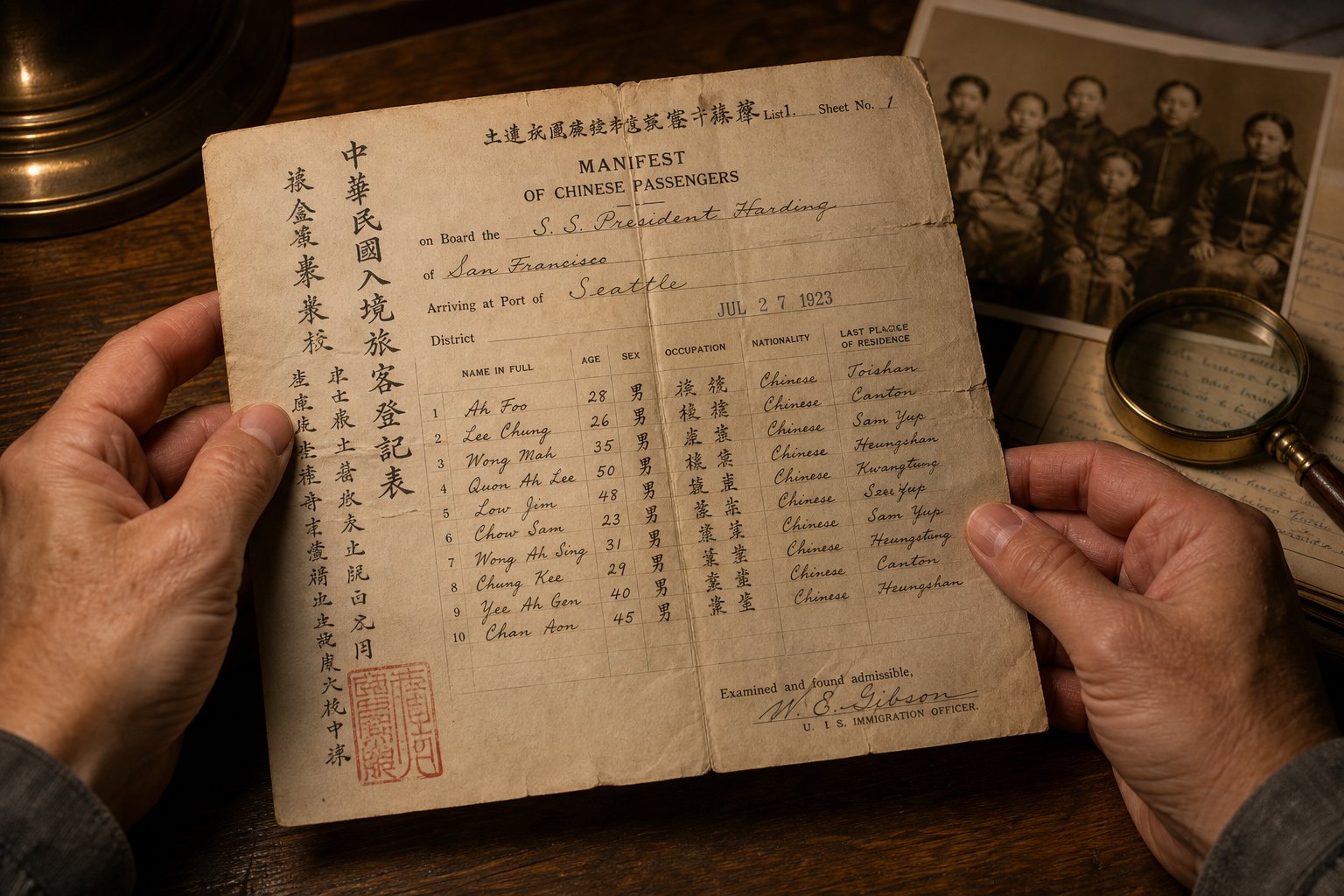
This checklist becomes especially powerful when applied to historical documents. Immigration records from the 19th and early 20th centuries often contain names where the first name and last name in chinese order was misunderstood by foreign clerks. As My China Roots documents, the unique ordering of chinese names first last caused confusion among immigration officers, who sometimes recorded the given name as the surname or vice versa. Knowing that a character like 仲 or 季 belongs in a given name — not a family name — can help you reconstruct a garbled record.
Clan genealogies (族谱) offer even richer ground. When you find a generation of brothers all sharing one character, you've identified the generational marker. The differing characters then become your clues to individual identity and possible birth rank. Cross-referencing these with the clan's generational poem, if one survives, lets you place each person precisely within the family's timeline.
The modern context complicates things. China's one-child policy (1980–2015) made birth order naming largely irrelevant for an entire generation. When most families had only one child, there was no sibling hierarchy to encode. Naming trends shifted toward poetic, aspirational, and culturally allusive names instead. Recent reporting from the Global Times shows that post-1990 parents increasingly draw from classical literature and philosophy — names like "Yanzhou" (inkstone and boat) and "Chirou" (harnessing softness) — rather than positional markers. The tradition of encoding birth order has largely faded from active practice.
Has the relaxation of family size restrictions sparked any revival? The evidence so far is modest. Since the two-child policy (2016) and three-child policy (2021), families with multiple children have returned, but the naming culture hasn't snapped back to classical conventions. Parents today are more likely to give each child a unique literary name than to revive 伯仲叔季 or numeric markers. The generational poem tradition survives in some rural clans — the Zhuge village in Zhejiang still assigns names from an 80-character poem — but these are exceptions rather than the norm.
Still, the knowledge matters. Millions of historical names carry birth order information that becomes invisible if you don't know what to look for. Whether you're reading a Tang dynasty poem, deciphering a 19th-century ship manifest, or simply understanding why your grandfather's name contains the character 三, recognizing these patterns connects you to a naming tradition that shaped Chinese identity for over three thousand years. Every chinese surname tells you which family someone belongs to. The birth order markers tell you exactly where they stood within it.
Frequently Asked Questions About Chinese Names and Birth Order
1. How can you tell birth order from a Chinese name?
Look for specific characters in the given name that signal sibling rank. The classical system uses 伯 (eldest), 仲 (second), 叔 (third), and 季 (youngest). A parallel numeric system uses characters like 大 (big/first), 二 (second), 三 (third), and 小 (youngest). For example, Confucius's personal name Zhongni (仲尼) contains 仲, revealing he was the second son. You can also compare siblings' names for shared generational characters, where the differing character may indicate birth position.
2. What is the 伯仲叔季 system in Chinese naming?
The 伯仲叔季 (bo zhong shu ji) system is a classical birth order code used primarily from the Zhou through Han dynasties. It assigns four specific characters to mark sibling positions: 伯 or 孟 for the eldest, 仲 for the second, 叔 for the third, and 季 for the youngest. These characters were placed directly into a son's given name or courtesy name. Families with more than four sons adapted by adding supplementary characters like 幼 (young) or 稚 (youngest). The system was mainly associated with literati and aristocratic families.
3. Did Chinese daughters receive birth order names like sons?
Historically, the elaborate birth order systems were designed primarily for sons because inheritance, titles, and ritual duties passed through male lines. Daughters typically received names reflecting beauty, virtue, or nature imagery instead of rank markers. However, exceptions existed in families with many daughters, where numeric patterns like 大妹 (eldest sister), 二妹 (second sister), and 三妹 (third sister) were used, particularly in rural communities. These tended to be informal childhood names rather than formal registered names.
4. What is the difference between Chinese sibling address terms and birth order names?
Address terms like 大哥 (oldest brother) or 二姐 (second older sister) are relational titles that change depending on who is speaking. They are not part of a person's legal name. Birth order characters embedded in given names, such as 仲 or 季, are permanent markers recorded on official documents and genealogies. A second son named 仲明 would also be called 二哥 by younger siblings, but these are two independent systems operating simultaneously.
5. Do modern Chinese families still use birth order in naming?
The practice has largely faded. China's one-child policy (1980-2015) made birth order naming irrelevant for an entire generation. Even after the relaxation to two-child and three-child policies, parents today prefer unique literary or aspirational names over classical positional markers. Some rural clans still follow generational poems that assign shared characters, but reviving 伯仲叔季 or numeric birth order conventions remains rare in contemporary naming culture.