What the Chinese Nickname Little White Rabbit Really Means
Someone just called you or someone you know 小白兔. You searched it, got "small white rabbit," and thought: that can't be the whole story. You're right. When Chinese speakers use this term to describe a person, they're saying far more than the dictionary lets on.
小白兔 (xiǎo bái tù) is one of the most recognizable nicknames in Chinese. It literally translates to "little white rabbit," but as a nickname applied to a person, it describes someone perceived as innocent, naive, pure-hearted, and endearing. Think of the softest, most harmless creature you can imagine, and you'll understand the emotional weight this phrase carries in everyday conversation.
小白兔 (xiǎo bái tù): A common Chinese nickname meaning "little white rabbit," used to describe a person who appears innocent, naive, overly trusting, and sweet-natured. It can be affectionate, teasing, or dismissive depending on context and tone.
What 小白兔 Means When Applied to a Person
When you hear this nickname in Chinese directed at someone, it paints a specific picture. The person being described is gentle, perhaps sheltered, and likely unaware of how the world can be harsh. In romantic contexts, it's a term of endearment. In workplace settings, it can describe someone who lacks street smarts or professional toughness. The term even appears in Chinese HR discussions to describe employees who are enthusiastic but inexperienced and overly trusting in professional environments.
Literal Translation vs Cultural Meaning
This is where most English-language resources fall short. A dictionary entry for 小白兔 might tell you it means "bunny rabbit" or "innocent and naive person." The CC-CEDICT dictionary defines it as "small white rabbit / (fig.) innocent and naive person." Accurate, but flat. What it misses is the emotional texture, the social dynamics, and the spectrum of intent behind the nickname in Chinese culture. Calling someone 小白兔 can be the sweetest compliment or a subtle put-down. The difference lives entirely in context, tone, and the relationship between speaker and subject.
Understanding this nickname requires peeling back each character, tracing its cultural roots, and seeing how modern Chinese speakers deploy it across very different situations.
Character-by-Character Breakdown of 小白兔
Three characters. That's all it takes to conjure an entire personality profile in Chinese. Each character in 小白兔 pulls its own weight, contributing a distinct layer of meaning and emotional color. When you understand what each piece does individually, you'll see why this combination hits so differently than simply saying "rabbit" or "innocent person."
This three-character structure follows a common nickname pattern in Chinese: a diminutive prefix plus a descriptive modifier plus a noun. It's the same formula behind dozens of other personality-based nicknames, and once you recognize it, you'll start spotting it everywhere in Chinese conversation and media.
- 小 (xiǎo) - diminutive prefix meaning "small" or "little"; adds affection and endearment
- 白 (bái) - adjective meaning "white"; conveys purity, innocence, and blankness
- 兔 (tù) - noun meaning "rabbit"; brings imagery of softness, harmlessness, and cuteness
小 - The Diminutive That Adds Affection
If you've spent any time around Chinese speakers, you've heard 小 (xiǎo) attached to names constantly. Xiao Wang, Xiao Li, Xiao Zhang. As a common Chinese nickname prefix, 小 signals familiarity and approachability rather than just physical smallness. It's the verbal equivalent of a warm smile before you even get to the substance of what you're saying.
In the context of 小白兔, this character does something specific: it miniaturizes. It takes a white rabbit and makes it a little white rabbit, which amplifies the cuteness and vulnerability. Imagine the difference between calling someone "rabbit" versus "little rabbit" in English. The diminutive softens everything, making the subject seem more delicate, more in need of protection, more adorable. It also positions the speaker as someone looking down with fondness, the way you might gaze at something small and precious.
白 - Purity and Innocence in One Character
白 (bái) means "white," but in Chinese it carries connotations that go well beyond color. This single character can mean pure, blank, plain, or even naive depending on context. Consider the word 白纸 (bái zhǐ), meaning "blank paper," often used metaphorically to describe someone with no experience, an untouched slate. Or 明白 (míng bái), meaning "to understand," where 白 contributes the sense of clarity and transparency.
When 白 modifies 兔 in this nickname, it does double duty. On the surface, it describes the rabbit's fur color, calling up the image of a soft, snow-white creature. Beneath that, it layers in all those associations with purity, cleanness, and a lack of worldly stain. The person being called 小白兔 isn't just cute. They're untouched by cynicism, deception, or complexity. Whether that's charming or concerning depends entirely on who's speaking.
You'll also notice 白 appearing in other funny Chinese characters and expressions related to naivety. The term 小白 (xiǎo bái) alone means "newbie" or "someone clueless about a topic," drawing directly on this association between whiteness and blankness.
兔 - Why Rabbits Carry Cute Connotations
The final character, 兔 (tù), anchors the whole nickname in a specific animal image. Why rabbits and not, say, kittens or lambs? In Chinese culture, rabbits occupy a unique symbolic space. They're gentle, non-aggressive, easily startled, and physically soft. A rabbit doesn't fight back. A rabbit freezes when frightened. A rabbit is, above all, harmless.
The famous nursery rhyme "小白兔, 白又白, 两只耳朵竖起来" (little white rabbit, so white and fair, two little ears standing up there) is one of the first songs many Chinese children learn. This early exposure cements the rabbit as a symbol of childhood innocence in the cultural imagination. By the time someone hears 小白兔 used as a nickname in adulthood, all those childhood associations activate instantly.
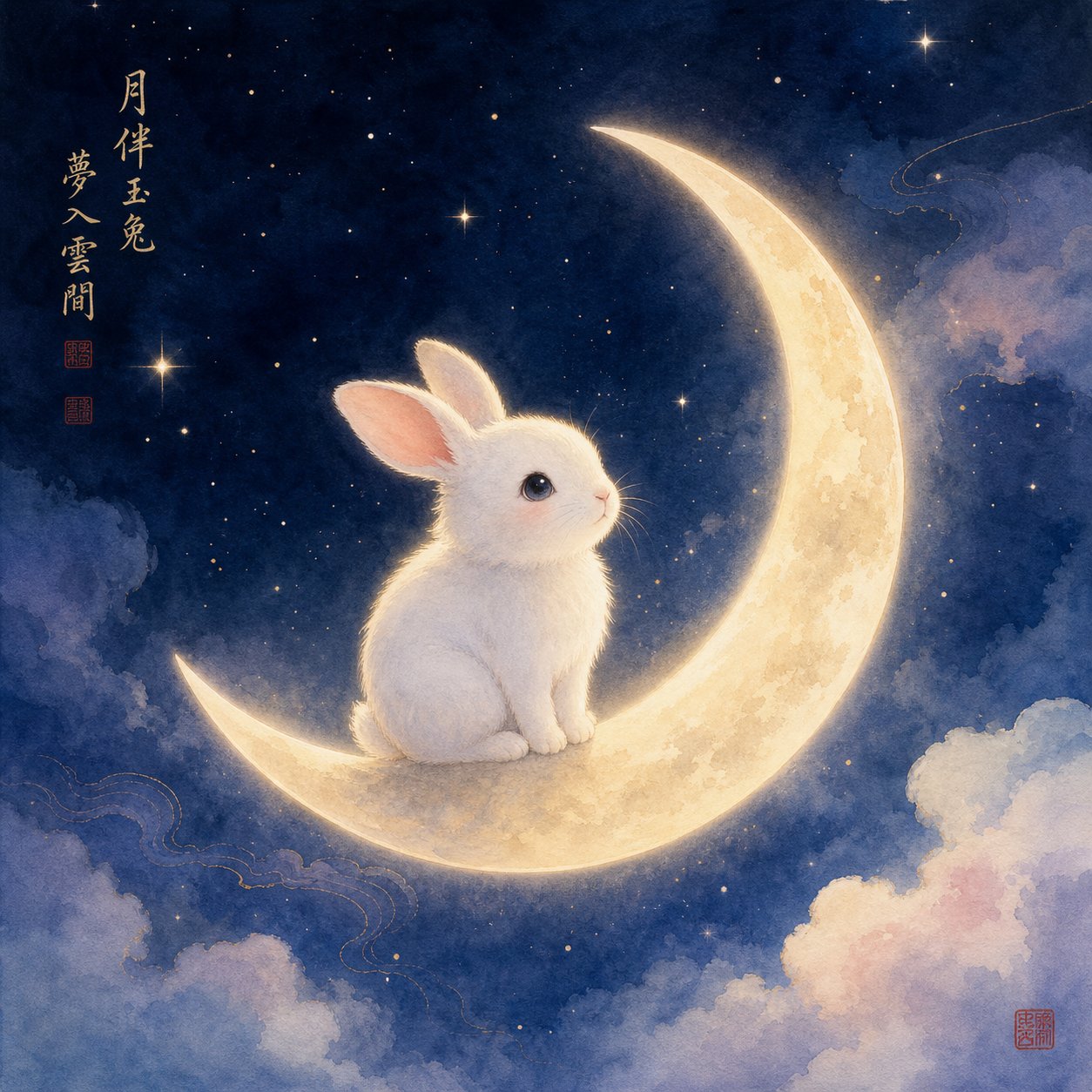
Rabbits also appear as the fourth animal in the Chinese zodiac, associated with gentleness, elegance, and sensitivity. And the mythological Jade Rabbit living on the moon reinforces the creature's connection to purity and quiet devotion. All of this cultural weight funnels into that single character 兔, making it far more loaded than the English word "rabbit" could ever be.
Together, these three characters create something greater than their parts. 小 makes it tender. 白 makes it pure. 兔 makes it vulnerable. The result is a nickname that instantly communicates an entire personality archetype, one that Chinese culture has strong and sometimes conflicting feelings about.
Cultural and Mythological Roots Behind the Rabbit Symbol
Characters carry meaning, but culture gives them power. The reason 小白兔 lands so immediately with native speakers isn't just linguistic. It's because rabbits have been woven into Chinese mythology, music, and cosmology for thousands of years. Every time someone uses this white rabbit slang to describe a person, they're tapping into a deep reservoir of shared stories and associations that most non-Chinese speakers never see.
The Jade Rabbit and Moon Mythology
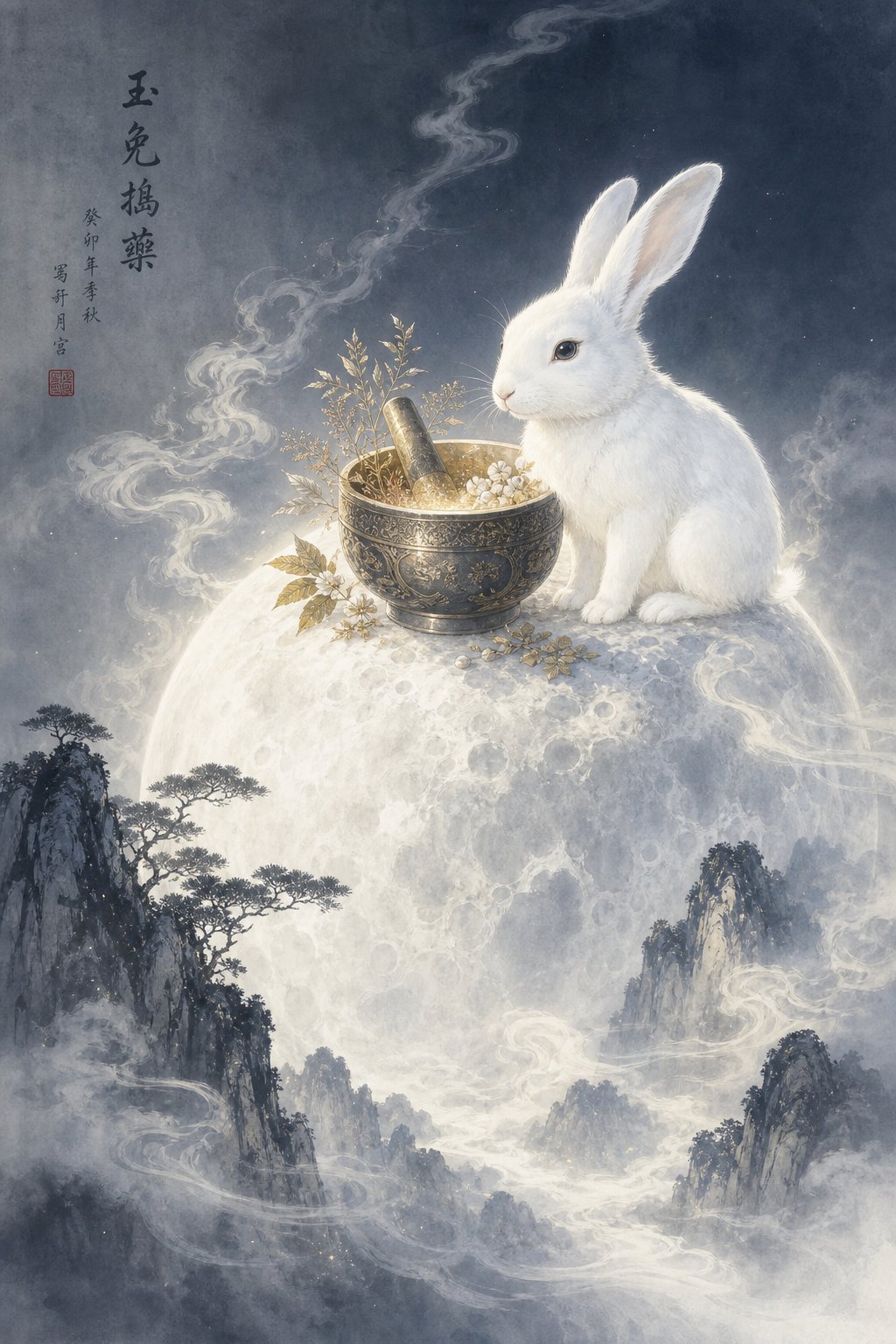
Imagine looking up at the full moon and seeing a rabbit. That's exactly what Chinese mythology describes. The Jade Rabbit (玉兔, yù tù) is a celestial creature said to live on the moon alongside Chang'e, the Moon Goddess. According to legend, the rabbit spends eternity grinding herbs with a mortar and pestle, preparing the elixir of immortality. It's a figure of quiet devotion, selflessness, and purity, never seeking glory, just faithfully doing its work in silence.
This myth has been retold for over two thousand years, appearing in poetry, paintings, and festival traditions surrounding the Mid-Autumn Festival. The Jade Rabbit isn't fierce or cunning. It's gentle, loyal, and content in its role. When modern Chinese speakers hear 小白兔, this mythological backdrop activates subconsciously. The person being described isn't just innocent. They carry an echo of that celestial purity, that quiet, unassuming goodness associated with the moon rabbit.
How the Children's Song 小兔子乖乖 Shaped Cultural Associations
If mythology plants the seed, childhood music waters it daily. Nearly every Chinese person knows the song 小兔子乖乖 (xiǎo tù zi guāi guāi), which translates to "Little Rabbit, Be Good." The song tells the story of baby rabbits home alone while their mother is away. A wolf comes knocking, pretending to be their mother, and the rabbits must decide whether to open the door.
The moral is simple: be cautious of strangers, stay safe, and wait for those you trust. But the deeper cultural imprint is this: rabbits equal vulnerable children who need protection. The song reinforces the rabbit-as-innocent-child association at the earliest possible age. By the time kids grow up and encounter the chinese rabbit meme culture online or hear someone called 小白兔, the emotional wiring is already in place. Rabbits are the ones who need protecting, not the ones doing the protecting.
The Rabbit in the Chinese Zodiac
The rabbit holds the 4th position in the Chinese zodiac, and its personality profile reads like a character description for anyone nicknamed 小白兔. People born in the Year of the Rabbit are described as elegant, imaginative, and courteous to others, even their enemies, because they dislike conflict. They possess sensitivity, gentleness, and a preference for comfort over confrontation.
The zodiac rabbit's strengths include a gentle nature, keen intelligence, and sincere modesty. Its weaknesses? A tendency toward caution that can become paranoia, and an avoidance of anything stressful or confrontational. You'll notice how closely this maps to the nickname's implied meaning. Calling someone 小白兔 essentially says: you have all the zodiac rabbit's softness without its shrewdness.
These three cultural threads, the devoted Jade Rabbit on the moon, the vulnerable baby rabbits in the nursery song, and the gentle zodiac personality, braid together into a single, instantly recognizable archetype. This is why the asian rabbit meme resonates so strongly across Chinese-speaking communities. It's not just a cute animal comparison. It's a cultural shorthand built on millennia of storytelling, and it carries assumptions about who deserves protection, who lacks worldly awareness, and who might be too soft for the world they're living in.
Who Gets Called Little White Rabbit and Why
Cultural weight explains why the nickname resonates. But who actually ends up on the receiving end of it? Not everyone gets called 小白兔, and the patterns around who does reveal something important about gender expectations, social hierarchies, and how Chinese speakers perceive vulnerability in the people around them.
Among the many asian nicknames rooted in animal imagery, 小白兔 stands out for how narrowly it targets a specific type of person. It's not random. The nickname gravitates toward people who display a particular combination of traits: softness in speech, openness in expression, and a visible lack of guardedness that others read as either charming or concerning.
Gender Dynamics and Who Uses This Nickname
Here's the reality: 小白兔 is overwhelmingly applied to women and girls. While it's technically gender-neutral in grammar, its usage skews heavily female. Young women who speak softly, trust easily, blush quickly, or seem sheltered from life's rougher edges are the most common recipients. You'll hear it from romantic partners using it as a term of endearment, from older relatives expressing protective affection, and from friends teasing someone about being too trusting.
Men rarely receive this nickname. When they do, it often carries a slightly mocking edge, implying they're too passive or inexperienced for their age. The gendered pattern isn't accidental. It reflects broader cultural expectations about femininity in Chinese-speaking societies, where softness and innocence in women have traditionally been valued, even idealized.
Children, of course, also get called 小白兔 freely and without any of the complicated undertones. For kids, it's purely affectionate, the way an English-speaking grandparent might call a child "my little lamb." The nickname maps perfectly onto childhood because children are genuinely innocent and in need of protection. The complexity only emerges when the same label gets applied to adults navigating a world that demands shrewdness.
Who does the naming matters just as much as who receives it. Boyfriends call their girlfriends 小白兔 to express tenderness. Mothers use it for daughters heading off to college in a big city. Female friends deploy it as gentle teasing when someone falls for an obvious scam or trusts a stranger too quickly. In each case, the speaker positions themselves as someone who sees the world more clearly than the person they're naming.
The Implied Power Dynamic Between Speaker and Subject
Every nickname carries a power relationship, and 小白兔 is no exception. When you call someone a little white rabbit, you're implicitly saying: I understand the world better than you do. I can see dangers you cannot. You need guidance, or at least someone watching out for you.
This dynamic isn't always negative. A partner who calls their girlfriend 小白兔 might genuinely feel protective and adoring. Research on pet names in relationships suggests that nicknames function as markers of intimacy and emotional bonding, creating a private language that strengthens connection. The nickname becomes part of what researchers call "idiosyncratic communication," the insider language unique to a specific relationship that reinforces closeness.
But there's a subtle edge here that separates 小白兔 from generic terms of endearment like "honey" or "babe." This nickname doesn't just express affection. It makes a claim about the other person's competence and worldliness. It says: you are sweet precisely because you don't know better. That framing can feel warm and protective in one context, and patronizing or dismissive in another.
Consider the difference between funny asian nicknames exchanged between equals who are joking around, and a label applied by someone who genuinely believes the other person is too naive to function independently. The words are identical. The power dynamic underneath them is not. A colleague calling you 小白兔 after you get outmaneuvered in a negotiation hits very differently than a partner whispering it while you're curled up watching a movie together.
This is why context determines everything with this nickname. The same three characters can communicate "I adore your sweetness" or "you're hopelessly out of your depth," and the person on the receiving end often feels the difference immediately, even when they can't articulate exactly why.

The Full Spectrum from Endearing to Dismissive
Context determines everything, but what does that spectrum actually look like in practice? The same nickname, 小白兔, can land anywhere between a warm embrace and a verbal eye-roll. The difference isn't in the words themselves. It's in who says them, how they say them, and what they're really communicating about the person on the receiving end.
Think of it like calling someone "innocent" in English. A lover saying "you're so innocent" while smiling might be charming. A coworker saying it after you miss obvious office politics? That stings. Chinese speakers navigate this same tonal range with 小白兔, and they do it instinctively.
| Context | Speaker | Tone | Implied Meaning |
|---|---|---|---|
| Romantic relationship | Partner | Warm, affectionate | You're sweet, pure, and I adore that about you |
| Family setting | Parent or older sibling | Protective, fond | You're still sheltered and I want to keep you safe |
| Friend group | Close friend | Teasing, playful | You're too trusting and it's kind of funny |
| Workplace gossip | Colleague | Dismissive, pitying | You don't understand how things really work here |
| Online commentary | Stranger | Critical, mocking | You're naive to the point of being foolish |
Affectionate Usage in Romantic Relationships
At its sweetest, 小白兔 functions like the most tender pet name imaginable. A boyfriend calling his girlfriend 小白兔 is saying: your gentleness is what I love most. Your trust in the world, your softness, your lack of cynicism, these aren't weaknesses to me. They're what make you precious.
In this register, the nickname celebrates qualities that the speaker finds endearing rather than problematic. It often appears early in relationships when partners are still enchanted by each other's vulnerability. The innocence isn't something to fix. It's something to cherish and protect. Among the many humorous chinese names couples give each other, 小白兔 stands out because it carries genuine emotional weight rather than just playfulness.
You'll also hear it used self-referentially. Some women describe their younger selves as 小白兔, looking back with a mix of nostalgia and amusement at how trusting they once were before life taught them otherwise.
When 小白兔 Becomes a Criticism
Slide further along the spectrum and the same nickname turns sharp. When someone describes a colleague, acquaintance, or public figure as a 小白兔, they're often not being kind. They're saying: this person is dangerously naive. They don't understand manipulation, power dynamics, or self-protection. They'll get eaten alive.
In professional contexts, being labeled 小白兔 suggests you lack the shrewdness needed to survive. You trust the wrong people. You take things at face value. You don't read between the lines. It's the kind of assessment that sounds gentle on the surface but carries real judgment underneath. Unlike the funniest chinese names that people wear as badges of humor, this label at its harshest implies a deficit rather than a charm.
The critical usage often emerges after someone gets deceived or taken advantage of. Friends might say "她就是个小白兔" (she's just a little white rabbit) to explain why someone fell for a scam, stayed in a bad relationship too long, or got outmaneuvered at work. The nickname becomes a diagnosis: this happened because she's too innocent for her own good.
Contrast with 白莲花 and Other Personality Descriptors
Here's where things get interesting. Chinese internet culture has developed a related but opposite term: 白莲花 (bái lián huā), meaning "white lotus." If 小白兔 describes someone who genuinely is innocent, 白莲花 describes someone who only pretends to be. The white lotus is a person, almost always a woman, who cultivates an appearance of purity and helplessness while secretly being calculating and manipulative.
The distinction matters because it reveals a cultural anxiety. If 小白兔 is the real thing, 白莲花 is the performance of it. Chinese speakers developed a separate term specifically to call out people who weaponize the appearance of innocence. This tells you something about how seriously the culture takes the difference between genuine naivety and strategic vulnerability.
Other personality descriptors in this ecosystem include 绿茶 (lǜ chá, "green tea"), another term for women who appear sweet but are manipulative, and 心机女 (xīn jī nǚ, "scheming woman"), which drops all pretense of gentleness. Among the hilarious chinese names that populate internet slang, these form a constellation of archetypes that Chinese netizens use to categorize female behavior, for better or worse.
The relationship between these terms creates a kind of personality map. A 小白兔 is genuinely innocent. A 白莲花 fakes innocence. A 绿茶 uses sweetness as a weapon. And a 心机女 doesn't bother hiding her ambition at all. Understanding where 小白兔 sits in this system helps you grasp not just what the nickname means, but what it means in contrast to everything it's not.
This web of related terms also reveals something about how these nicknames function beyond individual relationships. They've become personality archetypes, character types that show up repeatedly in entertainment, online discourse, and the way Chinese speakers make sense of social behavior.
How Little White Rabbit Lives in Chinese Internet Culture
Personality archetypes don't stay locked in face-to-face conversation. They migrate online, mutate, and take on new life. On Chinese social media, 小白兔 has evolved from a casual nickname into a full-blown character type that users deploy in relationship advice threads, drama reviews, dating profiles, and personality quizzes. If you spend any time on platforms like Weibo, Douyin, or Xiaohongshu, you'll encounter this term functioning less like a nickname and more like a personality category, something closer to how English speakers use "introvert" or "empath."
小白兔 as a Personality Archetype Online
Chinese internet culture loves sorting people into types. You'll find endless posts asking questions like "Are you a 小白兔 or a 老狐狸?" (Are you an innocent rabbit or a cunning fox?) These aren't just silly chinese quizzes for entertainment. They reflect a genuine cultural habit of using animal-based shorthand to map personality traits quickly and vividly.
On Xiaohongshu, users post guides with titles like "How to stop being a 小白兔 in the workplace" or "小白兔 girls' guide to spotting red flags." The term shows up in dating discussions constantly. Women describe themselves as "recovering 小白兔" types who've learned to be more guarded after bad experiences. Men post about whether they prefer dating a 小白兔 or someone more worldly. The nickname has become a self-identification tool, a way to signal where you fall on the innocence-to-street-smart spectrum.
On Douyin, short videos tagged with 小白兔 often feature skits contrasting the innocent type with savvier personality archetypes. A common format shows a 小白兔 character walking into an obvious social trap while a narrator or friend character reacts with exasperation. These videos rack up millions of views because the archetype is so instantly recognizable that no explanation is needed. Viewers see themselves, their friends, or their younger selves in the character immediately.
Weibo relationship threads frequently use the term when analyzing celebrity couples or public figures. When a young actress appears overly trusting in interviews or seems unaware of industry politics, commenters will label her a 小白兔, sometimes protectively, sometimes with the implication that she won't last long in such a competitive environment.
Meme Culture and Social Media Usage
The rabbit emoji (🐰) has taken on specific connotations in Chinese online spaces that differ from its usage in Western internet culture. When Chinese users add 🐰 to their display names or bios, it often signals softness, approachability, or a deliberately cute persona. In dating app profiles, the rabbit emoji can function as shorthand for "I'm gentle and sweet," leaning into the 小白兔 archetype intentionally.
Meme culture around the term draws heavily from Chinese drama and fiction. The "小白兔 female lead" has become a recognized trope in C-dramas and web novels, describing the innocent protagonist who stumbles into dangerous situations but survives through pure-heartedness rather than cunning. Think of the heroine who accidentally catches the attention of a powerful CEO or cold-hearted prince precisely because she's unlike the scheming people around him. This trope is so common that audiences now use 小白兔女主 (little white rabbit female lead) as a genre tag when recommending or critiquing shows.
The asian names funny trend on platforms like TikTok and Instagram has also brought some awareness of Chinese animal nicknames to English-speaking audiences, though often stripped of their cultural depth. What gets lost in translation is how seriously Chinese internet users take these categories. A post calling someone a 小白兔 isn't just a throwaway joke. It's a personality assessment that other users immediately understand and can debate, agree with, or push back against.
Animal-based personality typing has become its own subculture on Chinese social media. Users create elaborate posts mapping different animals to workplace behavior, relationship styles, and conflict responses. The 小白兔 always occupies the same corner of these charts: high trust, low aggression, strong emotional sensitivity, weak boundary-setting. It's become so codified that some users treat it almost like a Chinese internet equivalent of a Myers-Briggs type, a quick label that supposedly tells you everything about how someone navigates the world.
This online evolution matters because it shapes how younger Chinese speakers encounter and understand the nickname. For previous generations, 小白兔 was something a boyfriend whispered or a grandmother said fondly. For the current generation, it's a personality category they've seen dissected in thousands of posts, memes, and video essays before anyone ever applies it to them personally. The nickname arrives pre-loaded with internet discourse, carrying not just cultural mythology but layers of online debate about whether being a 小白兔 is something to embrace, outgrow, or protect.
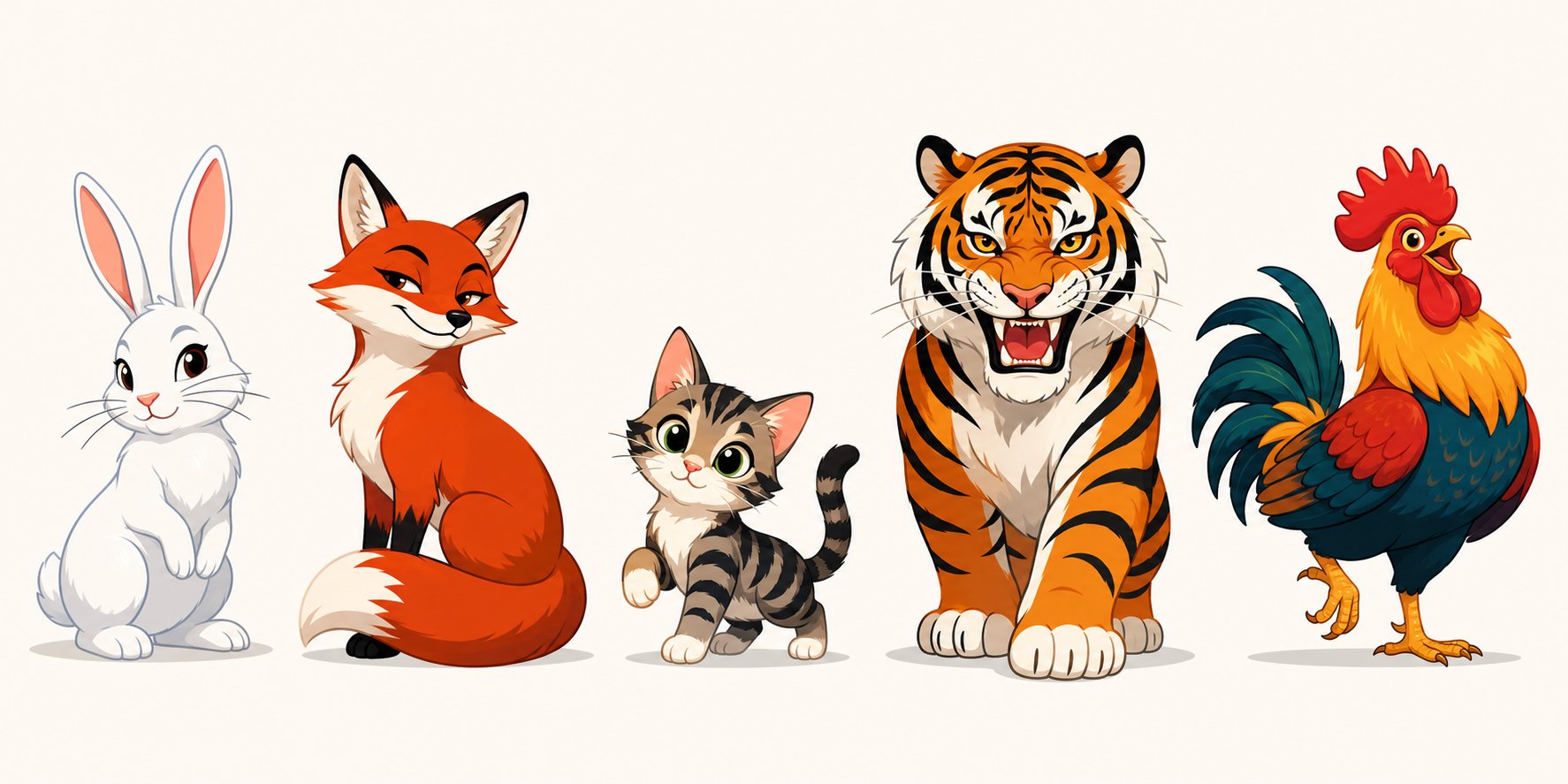
Chinese Animal Nicknames Compared
Animal-based personality typing isn't unique to 小白兔. It's part of a whole ecosystem. Chinese speakers have developed an entire zoo of funny chinese nicknames, each one mapping a specific animal's traits onto human behavior with surprising precision. Once you see the system, you'll realize that 小白兔 doesn't exist in isolation. It occupies one corner of a personality grid where every animal represents a distinct way of moving through the world.
What makes these nicknames so effective is their immediacy. You don't need a paragraph of explanation. Say 老狐狸 and every Chinese speaker instantly pictures a shrewd, calculating person who's been around long enough to outmaneuver everyone in the room. Say 小猫咪 and the image shifts to someone playful, a little self-centered, and irresistibly charming. Each animal carries centuries of cultural association compressed into two or three characters.
Common Chinese Animal Nicknames and Their Meanings
| Nickname | Pinyin | Literal Meaning | Personality Trait | Typical Context |
|---|---|---|---|---|
| 小白兔 | xiǎo bái tù | Little white rabbit | Innocent, naive, overly trusting | Romantic endearment; teasing someone too sheltered |
| 老狐狸 | lǎo hú li | Old fox | Cunning, experienced, sly | Describing a shrewd businessperson or manipulator |
| 小猫咪 | xiǎo māo mī | Little kitten | Cute, playful, slightly self-absorbed | Flirty nickname; describing someone charming but aloof |
| 母老虎 | mǔ lǎo hǔ | Tigress / Mother tiger | Fierce, domineering, hot-tempered | Describing a strict wife or intimidating woman |
| 单身狗 | dān shēn gǒu | Single dog | Lonely, unlucky in love, self-deprecating | Self-mocking term used by single people, especially on Valentine's Day |
| 铁公鸡 | tiě gōng jī | Iron rooster | Extremely stingy, never spends money | Complaining about someone who never pays or treats others |
| 变色龙 | biàn sè lóng | Chameleon | Two-faced, adapts behavior to benefit themselves | Criticizing someone who changes loyalties or opinions constantly |
| 落汤鸡 | luò tāng jī | Drenched chicken | Pitiful, bedraggled, in a sorry state | Describing someone caught in rain or in an embarrassing situation |
| 纸老虎 | zhǐ lǎo hǔ | Paper tiger | Appears threatening but is actually weak | Political rhetoric; calling out empty threats or bluffs |
| 哈巴狗 | hǎ ba gǒu | Pekingese dog | Sycophantic, overly eager to please authority | Criticizing someone who flatters their boss excessively |
How Animal Traits Map to Human Personalities in Chinese
Notice the pattern? Each nickname works because the animal's most recognizable behavior translates directly into a human personality trait. Foxes are sly, so 老狐狸 means cunning. Tigers are fierce, so 母老虎 means domineering. Roosters don't shed feathers easily, so 铁公鸡 (iron rooster) means someone who never lets go of money. The logic is intuitive once you see it.
What separates cool chinese nicknames from merely descriptive ones is emotional charge. Some carry affection (小猫咪), some carry self-deprecating humor (单身狗), and some carry genuine criticism (哈巴狗). The animal chosen isn't random. It's selected precisely because its cultural associations match the judgment the speaker wants to deliver.
You'll also notice a structural difference between positive and negative animal nicknames. The affectionate ones tend to use 小 (little) as a prefix, softening the label: 小白兔, 小猫咪. The critical ones often use 老 (old) or compound structures that emphasize the negative trait: 老狐狸, 铁公鸡. This prefix alone can signal whether the speaker is being fond or cutting.
Among the many funny chinese names that circulate online, these animal nicknames endure because they're efficient. A single term replaces an entire personality description. Saying someone is a 老狐狸 communicates in three syllables what might take a full paragraph in English: this person has been around, they know every trick, they'll outmaneuver you before you realize the game has started, and they'll smile while doing it.
Understanding this system also helps you gauge how others perceive you. If Chinese-speaking friends or colleagues assign you an animal nickname, the specific animal they choose tells you exactly where they think you fall on the spectrum from harmless to dangerous, from endearing to exasperating. And knowing the full lineup gives you the vocabulary to push back, agree, or assign your own labels in return.
How to Respond When Someone Calls You 小白兔
Knowing the full lineup of animal nicknames is one thing. Knowing what to do when one gets pinned on you is another. If someone calls you 小白兔, your response should depend entirely on who said it, how they said it, and what your relationship looks like. A blanket reaction doesn't work here because the nickname itself carries such a wide emotional range.
For non-Chinese speakers, pause before reacting. This isn't one of those silly chinese names tossed around without weight. It carries real cultural meaning, and your response signals whether you understand that meaning or not. A laugh when seriousness is warranted, or offense when affection is intended, can create awkwardness fast.
Responding in Romantic and Close Relationships
When a partner or close friend calls you 小白兔 with warmth in their voice, they're expressing tenderness. They find your openness and gentleness attractive rather than problematic. In this context, embracing the nickname strengthens intimacy.
- From a romantic partner (affectionate tone): Accept it warmly. Smile, lean into it, or playfully assign them an animal nickname in return, like 大灰狼 (dà huī láng, big bad wolf), which is a common playful pairing.
- From a parent or older relative: Recognize it as protective love. They see you heading into a world they consider harsh and want you to stay safe. A simple acknowledgment works, no need to prove your toughness.
- From a close friend (teasing tone): Laugh along. They're poking fun at a specific moment where you were overly trusting, not making a permanent judgment about your character. You might respond with something like "好吧, 下次我当老狐狸" (fine, next time I'll be the old fox).
When the Nickname Feels Patronizing or Unwelcome
Not every use of 小白兔 feels good. From a colleague after a professional setback, or from someone you barely know, it can land as condescending. The nickname implies you lack competence, and that's worth addressing.
- From a colleague (dismissive tone): Don't laugh it off if it bothers you. A calm, direct response works best: "我没那么天真" (wǒ méi nàme tiānzhēn, I'm not that naive). This pushes back without escalating.
- From an acquaintance or stranger: Consider whether engagement is even worth it. If it is, a raised eyebrow and brief "是吗?" (shì ma? Oh really?) signals you're not accepting the label without making a scene.
- From someone you suspect is being manipulative: Trust that instinct. People sometimes use flattering-sounding nicknames to keep others in a submissive position. Recognizing the dynamic is more important than crafting the perfect verbal response.
The key principle across all scenarios: match your energy to theirs. Warmth deserves warmth. Condescension deserves quiet confidence. And if you're unsure of the intent, asking directly, "你这是夸我还是损我?" (are you complimenting me or roasting me?), is perfectly acceptable in Chinese social norms. It forces the speaker to clarify without making you look defensive.
Whether the nickname lands among the funniest asian names you've been called or the most patronizing, your reaction teaches people how to treat you going forward. Embrace it when it feels right. Redirect it when it doesn't. Either way, understanding what's actually being communicated puts you in control of the exchange rather than leaving you guessing.
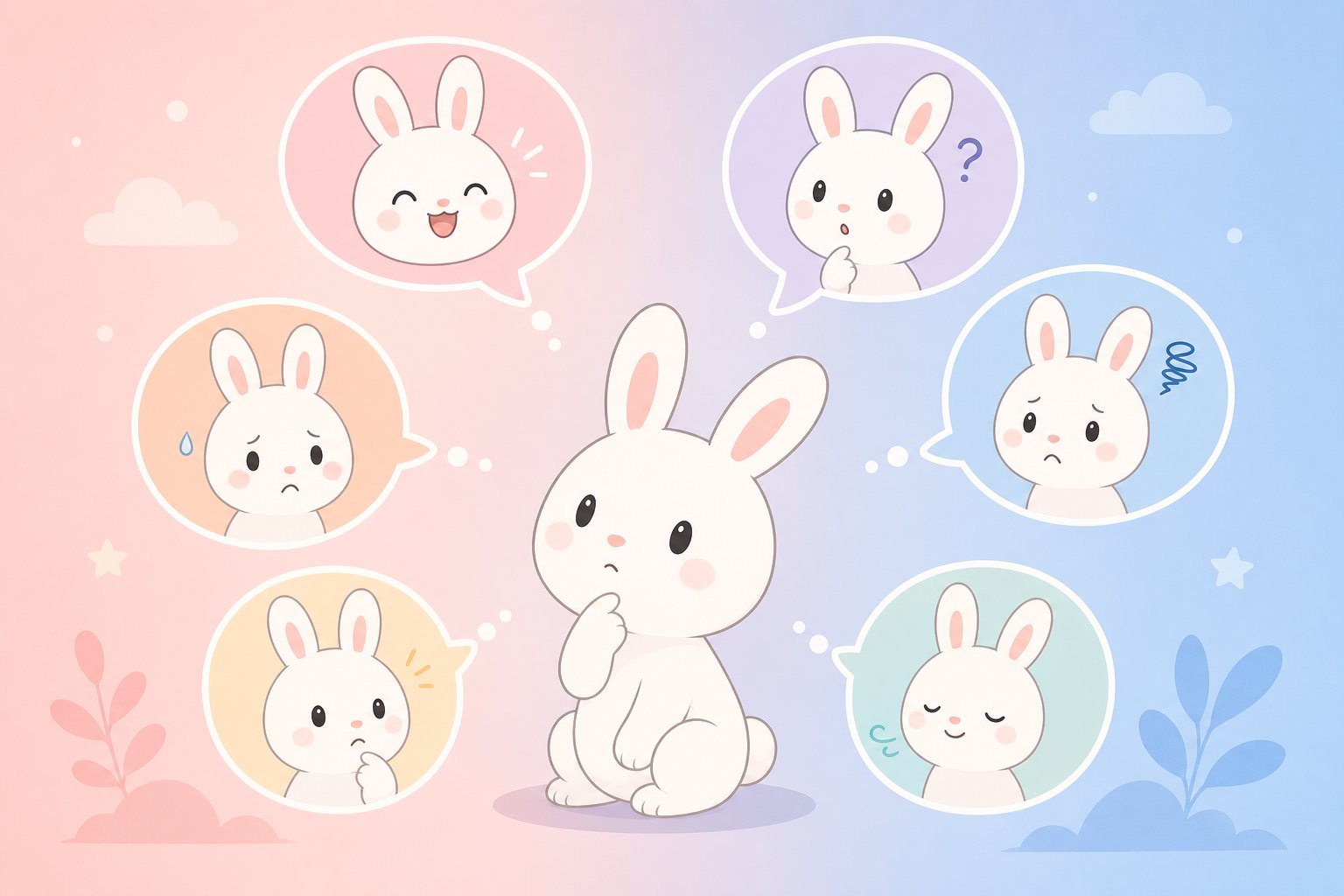
Real Example Sentences Using 小白兔 as a Nickname
Knowing how to respond is useful, but hearing the nickname in action makes everything click. The best way to internalize how 小白兔 actually functions in conversation is to see it embedded in real sentences, complete with the tonal shifts and contextual cues that tell you exactly what the speaker means. Below are example sentences spanning the full emotional range, from the sweetest endearment to the sharpest critique.
Each example includes the original Chinese characters, pinyin romanization, and a natural English translation that captures not just the literal meaning but the emotional subtext. Pay attention to the surrounding words and sentence structure. They're what transform the same three characters into completely different messages.
Romantic and Affectionate Example Sentences
In intimate relationships, 小白兔 wraps around a person like a verbal hug. The speaker isn't commenting on a flaw. They're celebrating a quality they find irresistible. You'll notice these sentences often pair the nickname with protective or adoring language.
- 你就是我的小白兔, 我会一直保护你。
Nǐ jiù shì wǒ de xiǎo bái tù, wǒ huì yī zhí bǎo hù nǐ.
You're my little white rabbit. I'll always protect you.
(A partner expressing devotion, positioning themselves as the protector of their loved one's innocence.) - 她笑起来的样子像只小白兔, 太可爱了。
Tā xiào qǐ lái de yàng zi xiàng zhī xiǎo bái tù, tài kě ài le.
The way she smiles looks just like a little white rabbit. So adorable.
(Someone describing their crush or partner to a friend, emphasizing how endearing they find her gentle expressions.) - 我家小白兔今天穿白裙子, 好看死了。
Wǒ jiā xiǎo bái tù jīn tiān chuān bái qún zi, hǎo kàn sǐ le.
My little white rabbit wore a white dress today. She looked gorgeous.
(A boyfriend posting on social media about his girlfriend, using the nickname as a possessive term of endearment. 我家 literally means "my family's," adding extra intimacy.)
Notice how in each romantic example, the speaker's tone carries warmth and the surrounding language reinforces affection. There's no judgment here, only fondness for the person's gentle nature.
Teasing and Critical Example Sentences
Shift the context and the same nickname takes on an entirely different flavor. Among friends, it becomes playful ribbing. In professional or critical settings, it becomes a diagnosis of someone's weakness. The sentences below show how surrounding language and situation transform the meaning completely.
- 你也太小白兔了吧, 这种话你也信?
Nǐ yě tài xiǎo bái tù le ba, zhè zhǒng huà nǐ yě xìn?
You're way too much of a little white rabbit. You actually believed that?
(A friend reacting after someone fell for an obvious lie or scam. The tone is exasperated but still caring, a "come on, wake up" kind of energy.) - 别当小白兔了, 职场没人会心疼你。
Bié dāng xiǎo bái tù le, zhí chǎng méi rén huì xīn téng nǐ.
Stop being a little white rabbit. Nobody in the workplace is going to feel sorry for you.
(Blunt advice from a mentor or older colleague. This is the nickname at its most instructive, telling someone their innocence is a liability that needs correcting.) - 她在公司就是个小白兔, 谁都能欺负她。
Tā zài gōng sī jiù shì gè xiǎo bái tù, shéi dōu néng qī fu tā.
She's just a little white rabbit at the company. Anyone can push her around.
(A critical observation about a colleague who lacks assertiveness. The speaker isn't being affectionate here. They're identifying a vulnerability that others exploit.) - 妈妈说: 你一个人去大城市, 别像小白兔一样什么人都相信。
Māma shuō: nǐ yī gè rén qù dà chéng shì, bié xiàng xiǎo bái tù yī yàng shén me rén dōu xiāng xìn.
Mom said: you're going to the big city alone. Don't be like a little white rabbit trusting everyone you meet.
(A protective parent warning their child before a major life transition. The nickname here carries love and worry in equal measure.) - 他投资被骗了五十万, 朋友都说他是小白兔。
Tā tóu zī bèi piàn le wǔ shí wàn, péng yǒu dōu shuō tā shì xiǎo bái tù.
He got scammed out of 500,000 yuan on an investment. His friends all said he's a little white rabbit.
(A harsh assessment after a financial loss. When applied to a man in this context, the nickname carries extra sting because it implies a failure of judgment that's almost childlike.)
These examples reveal something important about how funny names in chinese operate differently from English nicknames. The same term doesn't just shift in intensity. It shifts in entire emotional category. English speakers might use different words for different levels of criticism, but Chinese speakers often use the same nickname and let context do all the heavy lifting.
You'll also notice that the critical examples tend to include action verbs or consequences: getting scammed, being pushed around, believing lies. The nickname alone doesn't carry the criticism. It's the pairing of 小白兔 with evidence of real-world failure that turns it from cute to cutting. Without that evidence, the same words in the same tone might just be gentle teasing between friends who care about each other.
Whether these sentences sound like funny names chinese speakers toss around casually or serious personality assessments depends entirely on the relationship and stakes involved. A friend laughing "你太小白兔了" over a minor misunderstanding is worlds apart from a business partner saying the same thing after a deal falls through. The characters stay the same. Everything else shifts beneath them.
Frequently Asked Questions About the Chinese Nickname Little White Rabbit
1. What does it mean when a Chinese person calls you 小白兔?
When someone calls you 小白兔 (xiǎo bái tù), they're describing you as innocent, naive, pure-hearted, and endearing. The meaning ranges from a warm romantic pet name to a subtle criticism depending on context. A partner might use it to celebrate your gentleness, while a colleague might imply you lack the shrewdness needed in professional settings. The speaker's tone, your relationship, and the situation all determine whether it's affectionate or dismissive.
2. Is being called 小白兔 a compliment or an insult in Chinese?
It can be either. In romantic relationships and family settings, 小白兔 is a genuine compliment expressing adoration for someone's sweetness and purity. However, in workplace or critical contexts, it implies the person is dangerously naive, easily deceived, or unable to handle real-world complexity. The same three characters shift meaning entirely based on who says them and in what situation. Think of it like calling someone 'innocent' in English — charming from a lover, patronizing from a boss.
3. Why are rabbits associated with innocence in Chinese culture?
Rabbits carry deep symbolic weight in Chinese culture through three main sources. The Jade Rabbit (玉兔) from moon mythology represents quiet devotion and purity. The beloved children's song 小兔子乖乖 teaches kids about vulnerability and needing protection, cementing the rabbit-as-innocent-child association from early childhood. Additionally, the rabbit zodiac sign is linked to gentleness, elegance, and conflict avoidance. These cultural threads combine to make rabbits the default symbol for harmless innocence.
4. What is the difference between 小白兔 and 白莲花 in Chinese?
小白兔 describes someone who genuinely is innocent and naive, while 白莲花 (white lotus) describes someone who only pretends to be. A 小白兔 person is authentically trusting and soft-hearted. A 白莲花 person cultivates an appearance of purity and helplessness while secretly being calculating and manipulative. Chinese internet culture developed 白莲花 specifically to call out people who weaponize the appearance of innocence for personal gain.
5. How should I respond if someone calls me 小白兔?
Your response should match the intent behind the nickname. From a romantic partner, embrace it warmly or playfully call them 大灰狼 (big bad wolf) in return. From a teasing friend, laugh along and acknowledge the moment. If it feels patronizing from a colleague, a calm '我没那么天真' (I'm not that naive) pushes back without escalating. When unsure of intent, asking directly '你这是夸我还是损我?' (are you complimenting or roasting me?) is perfectly acceptable in Chinese social norms.