The Chinese Surname That Means Horse
Imagine a single brushstroke sketch of a galloping animal, carved into bone over three thousand years ago, eventually becoming the family name shared by tens of millions of living people. That is the story of Ma (馬/马), the Chinese surname meaning horse. It ranks as the 13th most common surname in mainland China, carried by roughly 18 million people across the country and diaspora communities worldwide.
What the Ma Surname Means
Ma (馬 in traditional script, 马 in simplified script, pronounced mǎ) is a Chinese family name that literally means "horse." It is the most prominent among Chinese surnames meaning horse, ranking 52nd in the classical Hundred Family Surnames text and 13th in modern population surveys.
The ma surname traces its roots to the ancient Chinese character for horse, a pictograph that once depicted the animal's mane, legs, and flowing tail. Over millennia, this character evolved from oracle bone carvings into the streamlined form used today. But the story behind the ma last name goes far deeper than a single character.
Why Horse Surnames Matter in Chinese Culture
What makes this chinese surname horse truly unusual is its origin story. Or rather, its origin stories. Unlike most Chinese family names that descend from one ancestral line, the Ma surname emerged independently through at least three major pathways. One branch descends from Zhao She, a celebrated general of the Warring States period whose fief was called Mafu. Another pathway involves Chinese Muslims who adopted Ma as a phonetic stand-in for Muhammad. Still others trace back to Manchu and Mongolian families who sinicized their names during various dynasties.
This convergence of Han Chinese, Islamic, and multi-ethnic histories into a single character makes the ma surname meaning uniquely layered. You won't find another Chinese family name that bridges so many cultures, religions, and historical periods within two simple strokes of a pen.
The pages ahead trace this surname from its earliest pictographic form through its multiple origin stories, its deep ties to Chinese Islamic history, and its spread across East Asian cultures under different romanizations like Mah, Mar, and Mak.
Etymology and Evolution of the 馬 Character
Every Chinese character has a biography. Some started as abstract symbols. Others began as tiny drawings scratched into animal bones. The chinese character for ma belongs to the second group, and its visual history is one of the most vivid in the entire writing system.
From Oracle Bone to Modern Script
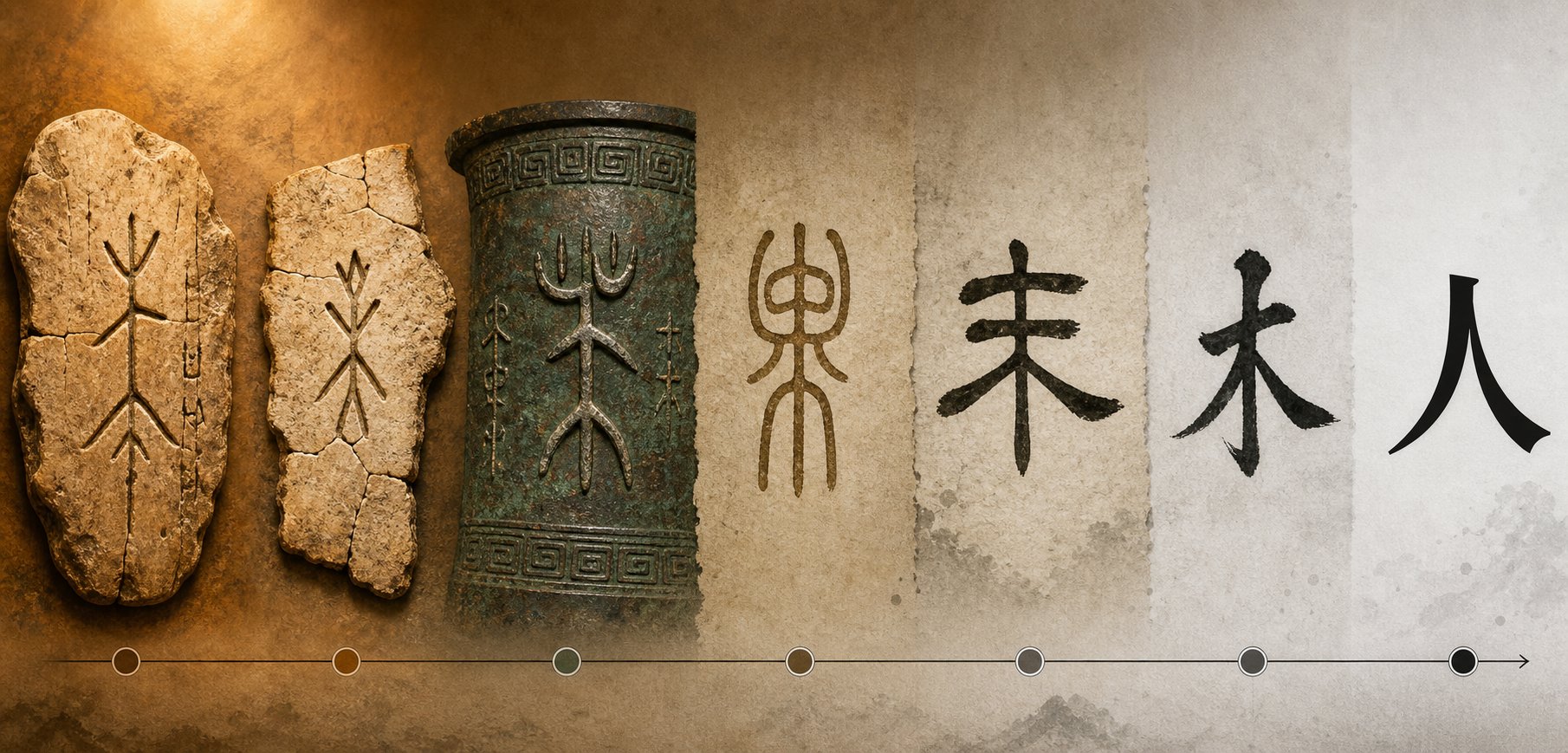
Around 1200 BCE, during the Shang dynasty, scribes carved divination records onto turtle shells and ox bones. Among those carvings was a small pictograph unmistakably depicting a horse viewed from the side. You could see the arched neck, a flowing mane, a long tail, and four legs. It looked like a sketch an artist might dash off in seconds.
Over the following centuries, this pictograph passed through several transformations. In bronze inscriptions from the Western Zhou period (roughly 1046-771 BCE), the horse's head was often simplified into a shape resembling the character for eye (目). The body became more angular, adapting to the constraints of casting metal. By the time seal script emerged during the Qin dynasty unification (221 BCE), the character had grown more stylized, its curves regularized into balanced, flowing lines.
The traditional form 馬 that survives today crystallized during the Han dynasty's clerical script period. The top portion represents the horse's head and mane, while the four dots at the bottom (灬) evolved from earlier, more detailed drawings of the animal's legs and tail. These four dots are unrelated to the fire radical they resemble; they are purely a graphic simplification of hooves in motion.
When the People's Republic of China introduced simplified characters in the 1950s and 1960s, 馬 was reduced to just three strokes: 马. The simplification stripped away most of the pictographic detail, but the character's meaning and pronunciation remained unchanged.
| Script Period | Approximate Era | Form | Key Visual Feature |
|---|---|---|---|
| Oracle Bone Script | c. 1200-1050 BCE (Shang) | Pictograph | Recognizable horse with mane, legs, tail |
| Bronze Inscriptions | c. 1050-400 BCE (Zhou) | Stylized pictograph | Head simplified to eye-like shape |
| Seal Script | c. 221-206 BCE (Qin) | Regularized form | Balanced, flowing curves |
| Traditional (Clerical onward) | c. 200 BCE-present | 馬 | 10 strokes; four dots for legs |
| Simplified | 1956-present | 马 | 3 strokes; minimal form |
How to Pronounce and Write the Horse Character
So how do you say horse in Chinese? The answer is straightforward: horse in Chinese is mǎ (马), pronounced with the third tone in Mandarin. That third tone dips down and then rises, almost like the inflection of a skeptical question. The consonant "m" and vowel "a" are familiar to English speakers, making this one of the easier Chinese words to produce correctly once you get the tone right.
Tone matters here more than you might expect. Change the tone and you change the word entirely. The first tone mā can mean "mother," the second tone má can mean "hemp" or "numb," and the fourth tone mà means "to scold." Only the third tone mǎ gives you the horse.
In terms of writing, the traditional form 馬 requires 10 strokes and serves as Kangxi radical 187. The simplified form 马 uses just 3 strokes, making it one of the most dramatically reduced characters in the simplification process. Both forms function identically in meaning.
Beyond standing alone as a word, 馬 also works as a radical component inside other characters. You'll find it embedded in words like 駕/驾 (jià, to drive), 騎/骑 (qí, to ride), and 驗/验 (yàn, to verify). Dozens of characters contain this horse radical, most of them related to equine activities, movement, or transportation. This radical productivity hints at just how central the horse was to Chinese civilization when the writing system took shape.
That centrality extended beyond vocabulary. When powerful families needed surnames, the horse's prestige made 馬 a natural choice, but the paths by which different lineages arrived at this same character were anything but uniform.
Multiple Origins of the Ma Surname
Most Chinese family names trace back to a single ancestor or a single event. The Ma surname breaks that pattern entirely. If you've ever wondered where does the last name Ma come from, the honest answer is: it depends on which Ma family you're asking about. At least three major, completely independent pathways fed into this one character over the course of two thousand years.
The Zhao She Lineage From the Warring States
The most widely recognized ma surname origin begins with a military victory in 270 BCE. Zhao She was a general serving the State of Zhao, one of the seven powers competing for dominance during the Warring States period. When the formidable Qin army besieged the stronghold of Yuyu, most Zhao commanders considered a rescue mission hopeless. Zhao She disagreed. He led his forces to a decisive, unexpected victory that stunned both allies and enemies.
In recognition of this achievement, King Huiwen of Zhao granted him the fief of Mafu, located northwest of present-day Handan in Hebei Province, along with the title Lord Mafu. His descendants initially used "Mafu" as their family name. Over generations, they dropped the second character and kept only "Ma." Zhao She is thus recognized as the founding ancestor of the Ma clan, and Handan remains the acknowledged ancestral homeland of this lineage.
Non-Han Ethnic Origins of the Ma Surname
Centuries after Zhao She's descendants established their line, entirely separate groups arrived at the same surname through different logic. The Manchu people offer a clear example. Within the Eight Great Manchu Surnames, the Majia clan took its name from a geographic area in Manchuria. Their original Jurchen-era surname was Peiman (also recorded as Feimo), which had been translated into the Chinese character Ma as far back as the Jin dynasty (1115-1234). After the mid-Qing period, the clan formally adopted the single character Ma as their sinicized surname, a process mirrored by many Mongolian families who also chose Ma during periods of cultural integration.
Meanwhile, officials in earlier dynasties whose roles involved managing horses sometimes passed those titles down as family names. During the Western Zhou (1046-771 BCE), the position of Ma Zhi oversaw military horse inspections. In the Spring and Autumn period, the role of Wu Ma handled veterinary care for sick horses. Descendants of these officials adopted Ma as a surname derived from their ancestors' job titles.
Multiple Pathways to One Surname
Laid out chronologically, the ma last name origin story looks less like a single thread and more like several rivers converging into one channel:
- Western Zhou period (1046-771 BCE): Descendants of horse-management officials (Ma Zhi, Sou Ren) adopt Ma from their ancestors' titles.
- Spring and Autumn period (770-403 BCE): Veterinary officials (Wu Ma) in the State of Chu pass the horse-related title to their children as a surname.
- Warring States period (270 BCE): Zhao She receives the fief of Mafu; his descendants simplify the place name to the single surname Ma. This becomes the dominant lineage.
- Jin dynasty through Qing dynasty (1115-1912): Jurchen and Manchu clans, particularly the Majia (originally Peiman/Feimo), sinicize their names to Ma through phonetic translation.
- Tang dynasty onward (7th century CE and later): Muslim settlers and traders adopt Ma as a phonetic approximation of Muhammad, creating a massive new population of Ma surname bearers among the Hui people.
This ma surname history reveals something unusual about Chinese naming conventions. A single character can serve as a meeting point for unrelated peoples, separated by centuries and thousands of miles, each arriving at the same surname for entirely different reasons. The result is a family name that cannot be reduced to one genealogy or one ethnic group.
Among all these pathways, the Islamic connection stands out as perhaps the least expected and most culturally significant. It transformed Ma from a moderately common Han Chinese surname into one of the most widespread family names across China's diverse Muslim communities.
The Ma Surname and Chinese Islamic History
A popular saying among China's Muslim communities captures the relationship in five words: "Ten Hui, nine surnamed Ma." It's an exaggeration, but not by much. The ma family name is so overwhelmingly common among the Hui people that it has become almost synonymous with Chinese Islamic identity. How did a character meaning "horse" become the default surname for millions of Chinese Muslims? The answer lies in a phonetic coincidence that played out across a thousand years of cultural integration.
Why Ma Became the Muslim Chinese Surname
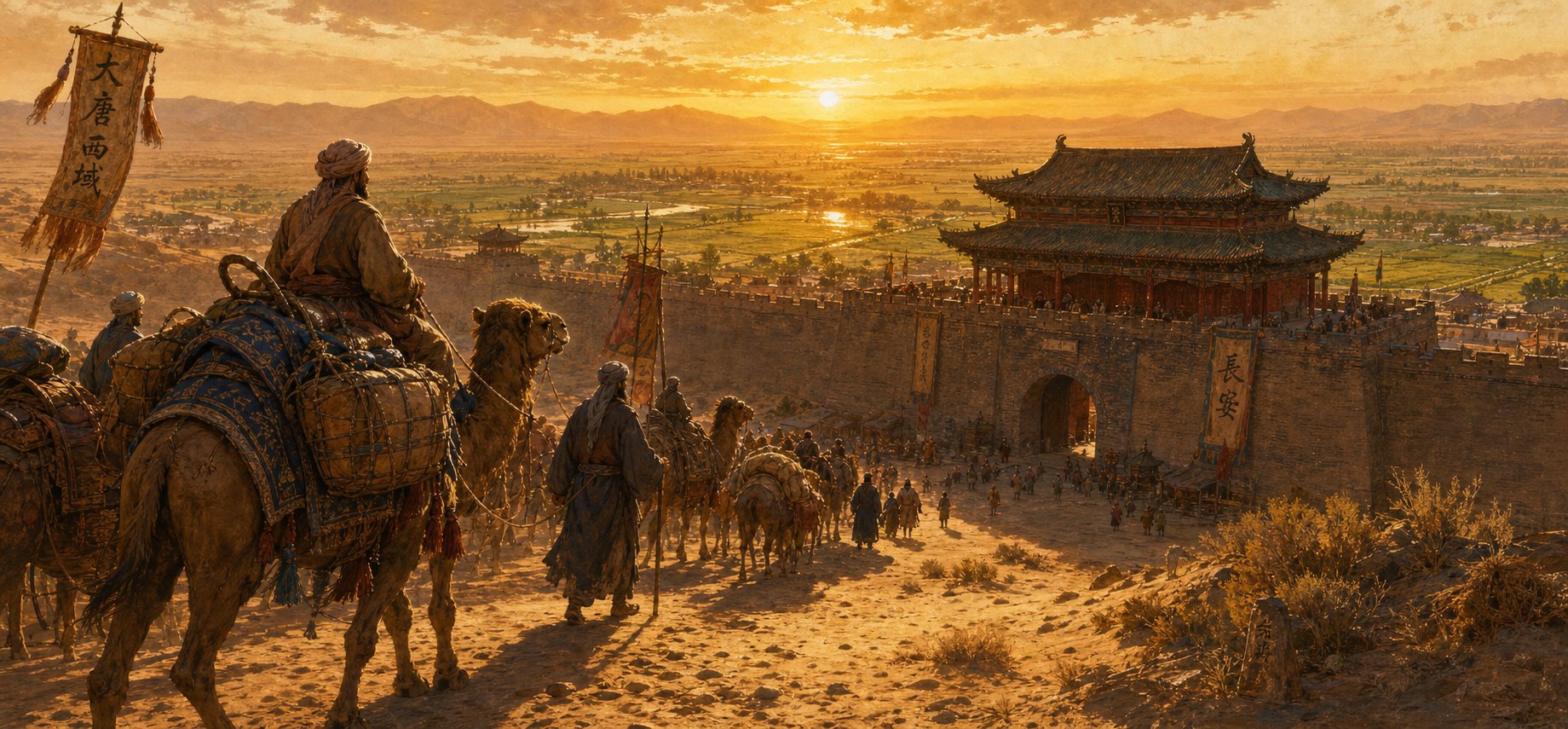
When Arab and Persian Muslim traders first arrived in China during the Tang dynasty (618-907 CE), they brought names rooted in Arabic. The most common of these was Muhammad, the name of the Prophet, which countless Muslim men carried as a given name or incorporated into longer compound names like Mahmud, Muhammad al-Din, or Mustafa.
As these traders settled, married local women, and raised families across Song, Yuan, and Ming dynasty China, they faced a practical problem. Chinese bureaucratic systems required a single-character surname. Arabic names didn't fit that structure. So Muslim families needed to choose a Chinese character that could represent their identity.
The first syllable of Muhammad, Mahmud, and other common Muslim names beginning with "Ma-" sounds nearly identical to the Chinese character 马 (mǎ). This phonetic overlap made Ma the natural transliteration choice, turning a word meaning "horse" into the most widespread Muslim Chinese surname.
The process wasn't limited to Muhammad alone. Names like Mustafa, Mansur, and Musa all begin with that same "M" consonant, and Chinese transliterations of these names frequently started with the character 马. Historical records show variants like "Ma-ha-mo-de" (马哈默德) for Muhammad, "Ma-sha" (马沙) for Musa, and "Ma-he-ma" (马合麻) for Mahmud. In each case, the character 马 anchored the transliteration. When descendants later shortened these multi-character renderings into a single surname, Ma was the obvious survivor.
The Hui People and Surname Adoption
The Hui people are China's most widely distributed Muslim ethnic group, living in nearly every province but concentrated in the northwestern regions of Ningxia, Gansu, and Qinghai. Their ancestors include Arab merchants, Persian scholars, Central Asian soldiers, and Turkic settlers who arrived across multiple dynasties. By the Ming dynasty (1368-1644), imperial policies actively encouraged these communities to adopt Chinese surnames, dress, and language while maintaining their Islamic faith.
The ma surname chinese muslim connection deepened through several mechanisms beyond simple phonetics:
- Direct transliteration: Families took the first syllable of ancestral names like Muhammad or Mahmud and rendered it as 马.
- Mid-name extraction: Some families whose names contained "ma" in the middle or end, such as Uthman (Wu-si-man) or Ismail (Yi-si-ma-yin), also extracted the 马 character as their surname.
- Imperial bestowal: Ming dynasty emperors occasionally granted the surname Ma to Muslim officials and scholars entering Chinese service. The astronomer Ma Delu Ding, recruited from the western regions during the Hongwu reign, received Ma as an imperially bestowed surname.
- Social conformity: In regions where Ma was already the dominant Muslim surname, newly arriving families or converts often adopted it simply to fit the local community pattern.
The hui people ma surname tradition also absorbed members of other ethnic groups over time. Uyghur families, Dongxiang communities, Salar people, and Bonan groups all adopted Ma through similar phonetic logic. A Uyghur scholar named Xi Li Ji Si, for instance, took the Chinese name Ma Qingxiang during the Jin dynasty. His descendants eventually identified as Hui, carrying the Ma surname into a new ethnic identity.
The result is striking. While the last name Ma ranks 13th overall in China's population, its concentration within Muslim communities is dramatically higher. In Ningxia Hui Autonomous Region and parts of Gansu, Ma dominates local surname registries in a way no other single name does for any other ethnic minority group. The surname became so closely associated with Islam in China that even non-Muslim Chinese sometimes assume anyone named Ma has Hui ancestry, though the Han Chinese Zhao She lineage predates the Islamic connection by over a millennium.
This dual identity gives the Ma surname a cultural richness that few other Chinese family names can match. It carries the weight of ancient Chinese military honor and the legacy of Silk Road exchange in a single character. And that cultural weight only deepens when you consider what the horse itself symbolized in the civilization that gave this surname its meaning.
Cultural Significance of the Horse in China
A surname doesn't exist in a vacuum. When millions of people carry a family name that literally means "horse," the cultural prestige of that animal shapes how the name is perceived, spoken, and felt. The chinese horse surname meaning draws power from over three thousand years of horse symbolism in Chinese civilization, a tradition where the animal represented far more than transportation.
Horses in Chinese Warfare and Trade
Imagine ancient China without the horse. No cavalry charges sweeping across northern plains. No rapid messenger relays connecting distant provinces. No Silk Road caravans carrying goods between Chang'an and Central Asia. The horse transformed Chinese military strategy so fundamentally that control over horse supply often mattered as much as control over territory itself.
Archaeological evidence from the Shang dynasty (c. 1600-1046 BCE) shows horse culture taking root early. The Yinxu Museum in Anyang, Henan, houses some of the earliest horse remains found in China, and oracle bone inscriptions from this period already depict the character for horse as a fine steed. By the Zhou dynasty, the government had established official roles dedicated entirely to managing horses, from grazing to breeding, forming a complete bureaucratic system of equine care.
Cavalry revolutionized warfare during the Warring States period, the same era that produced Zhao She and the original Ma surname lineage. Fast horses carried intelligence across vast distances, guarded trade routes, and served as high-value diplomatic gifts. On the Silk Road, horses were just as vital as the more commonly pictured camels. Speed, security, and prestige all depended on them. The legendary "heavenly horses" from Central Asia's Ferghana Valley were so prized that the Han dynasty emperor Wudi launched military campaigns specifically to acquire them.
This military and economic importance meant that families associated with horses, whether through breeding, management, or battlefield prowess, carried genuine social prestige. The surname Ma didn't just reference an animal. It referenced power infrastructure.
The Horse in Chinese Zodiac and Symbolism
Beyond the battlefield, horse symbolism in Chinese culture permeates everyday language, art, and spiritual life. The Horse (马) holds the seventh position in the Chinese zodiac's twelve-year cycle. People born in a Year of the Horse are traditionally associated with energy, independence, sociability, and a love of freedom. In zodiac storytelling, the Horse is admired for its vitality and forward drive, qualities that align closely with the broader cultural symbolism of the animal.
The symbolic layers run deep:
- Speed and success: Horses suggest swift progress, projects moving quickly, goals reached with momentum.
- Strength and resilience: Endurance on long journeys mirrors perseverance through difficulty.
- Freedom and spirit: The galloping horse symbolizes independence, open horizons, and untamed energy.
- Loyalty and service: In historical contexts, horses were trusted companions in work and war, reflecting reliability and duty.
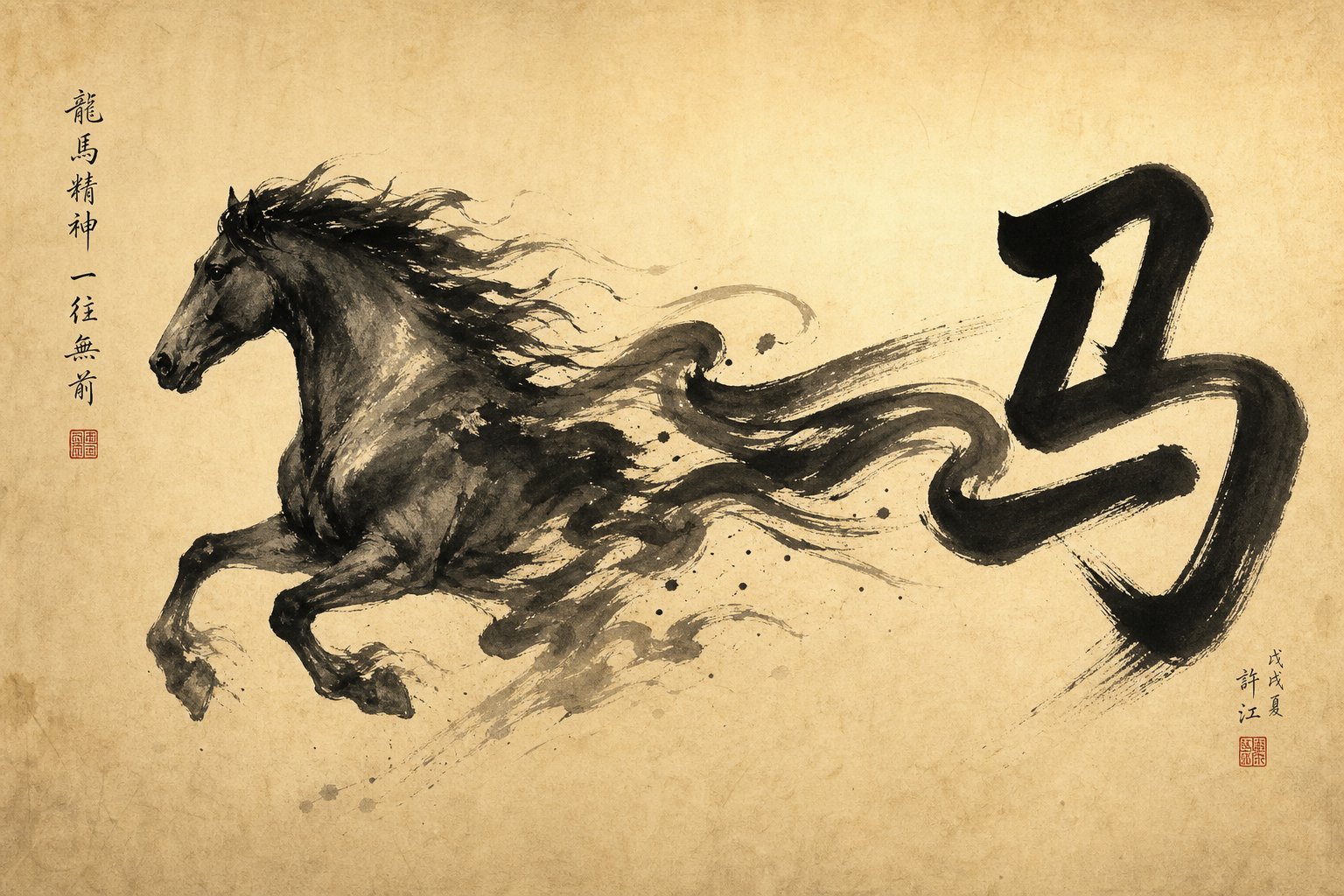
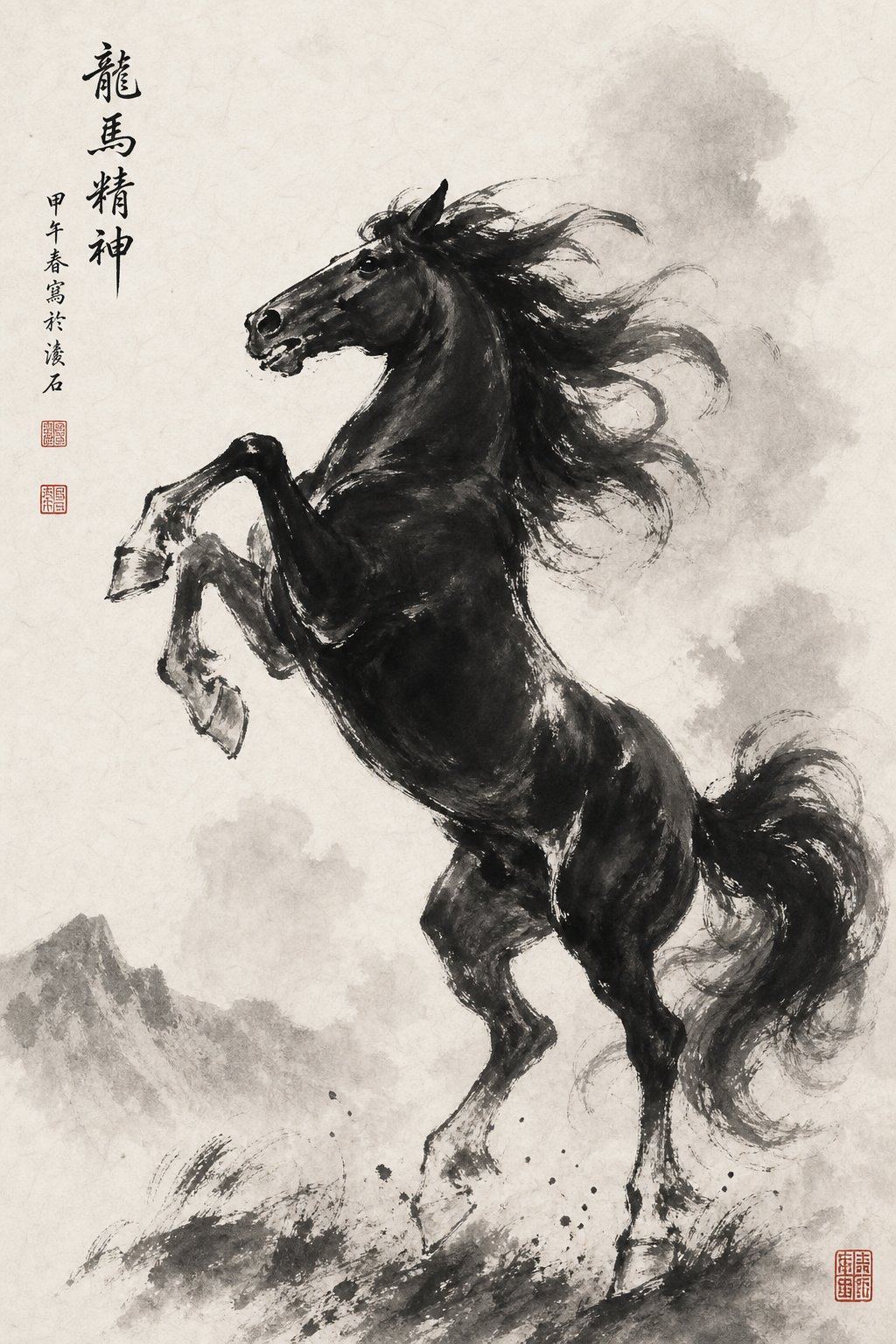
These meanings crystallized into some of the most recognizable idioms in the Chinese language. The expression 马到成功 (ma dao cheng gong) literally translates to "the horse arrives, success follows," and it's used to wish someone instant success at the start of any new endeavor. Another common phrase, 一马当先 (yi ma dang xian), means "to charge ahead like the lead horse," praising initiative and leadership. The idiom 龙马精神 (long ma jing shen), meaning "the spirit of a dragon-horse," describes someone brimming with vitality and determination.
In art, few animals appear as consistently or dramatically. Tang dynasty painters like Han Gan captured imperial stallions with muscles tensed and nostrils flared, embodying qi (vital force). The famous Bronze Galloping Horse of the Han dynasty, with one hoof balanced on a swallow, became an icon of Chinese cultural heritage. In the modern era, Xu Beihong's ink-wash horses, painted during the war with Japan, radiated freedom and national strength through urgent brushstrokes and wind-swept manes.
Among names that mean horse in Chinese culture, Ma carries all of this symbolic weight. Animal-based surnames in the Chinese system often absorb the cultural associations of the creature they reference. The surname Niu (牛, ox) suggests steadiness and hard work. Long (龙, dragon) implies imperial grandeur. But the horse occupies a unique position because it combines practical importance with spiritual prestige. It was simultaneously a tool of empire and a subject of poetry, a beast of burden and a symbol of transcendence.
The ma meaning chinese families carry isn't just a label. It's a compressed cultural statement about ambition, mobility, and the drive to move forward. When a Chinese person hears the surname Ma, they don't just hear a family name. They hear hoofbeats echoing through three millennia of civilization, from oracle bone carvings to zodiac celebrations, from Silk Road caravans to modern greetings wishing instant success.
That cultural resonance helps explain why so many different peoples, across so many centuries, were drawn to adopt this particular character as their family name. It also explains why the individuals who bore it often rose to remarkable prominence.
Famous People With the Ma Surname
Cultural symbolism is one thing. Living proof is another. The ma name meaning gains weight when you look at the individuals who carried it across two thousand years of Chinese history. From generals who reshaped borders to explorers who documented distant shores, famous people named ma span every major era of Chinese civilization and represent both the Han Chinese and Hui Muslim lineages of the surname.
Historical Generals and Explorers Named Ma
Ma Yuan (14 BCE-49 CE) stands as the earliest towering figure. A descendant of Zhao She's original lineage, he served the Eastern Han dynasty as a general known by the title "Fubo Jiangjun" (General who Calms the Waves). He helped Emperor Guangwu unite the empire, suppressed the Trung sisters' rebellion in what is now Vietnam, and subjugated the Qiang peoples along China's western frontier. His legacy was so enduring that temples dedicated to him still stand in both China and Vietnam.
A century and a half later, Ma Teng (died 211 CE) emerged as a powerful warlord during the chaotic final years of the Eastern Han. Based in the northwest, he controlled strategic territory in modern Gansu and Shaanxi. His son Ma Chao became one of the most celebrated warriors of the Three Kingdoms period, eventually serving the state of Shu Han.
Then there's Ma Huan (c. 1380-1460), a Hui Muslim from Zhejiang who accompanied Admiral Zheng He on three of his seven maritime expeditions. Fluent in both Chinese and Arabic, Ma Huan served as translator and chronicler, producing the Yingya Shenglan (The Overall Survey of the Ocean's Shores), a primary historical source documenting Southeast Asian and Indian Ocean societies in the early 15th century. His work remains invaluable to historians studying Ming dynasty naval exploration.
The Ma Surname in the Modern World
The ma surname famous people tradition didn't end with imperial China. In the contemporary era, Jack Ma (Ma Yun, born 1964) built Alibaba Group into one of the world's largest e-commerce platforms, becoming a globally recognized figure in technology and entrepreneurship. Ma Huateng (born 1971) founded Tencent, the company behind WeChat and one of Asia's most valuable tech firms. In the arts, Yo-Yo Ma (born 1955) became perhaps the world's most celebrated cellist.
| Name | Era / Period | Notable Achievement |
|---|---|---|
| Ma Yuan (馬援) | Eastern Han (14 BCE-49 CE) | General who expanded southern borders into Vietnam and pacified western frontiers |
| Ma Teng (馬騰) | Late Eastern Han (died 211 CE) | Northwestern warlord; father of the famed Three Kingdoms warrior Ma Chao |
| Ma Huan (馬歡) | Ming dynasty (c. 1380-1460) | Hui Muslim translator and chronicler on Zheng He's maritime voyages |
| Jack Ma (馬雲) | Contemporary (born 1964) | Founder of Alibaba Group, global e-commerce pioneer |
| Ma Huateng (馬化騰) | Contemporary (born 1971) | Founder of Tencent, creator of WeChat |
| Yo-Yo Ma (馬友友) | Contemporary (born 1955) | World-renowned cellist and cultural ambassador |
Notice the pattern. Ma Yuan descended from the original Zhao She lineage. Ma Huan was Hui Muslim. The modern figures span mainland China, Hong Kong, and the diaspora. This diversity within a single surname reflects exactly what makes the Ma family name so distinctive: it was never one family's property. It belonged to generals and scholars, Muslims and Han Chinese, empire builders and artists alike.
That reach extends beyond China's borders, too. As Ma surname bearers migrated across East Asia and into global diaspora communities, the name took on different romanizations and pronunciations, adapting to new languages while keeping its horse-character root intact.
The Horse Surname Across East Asian Cultures
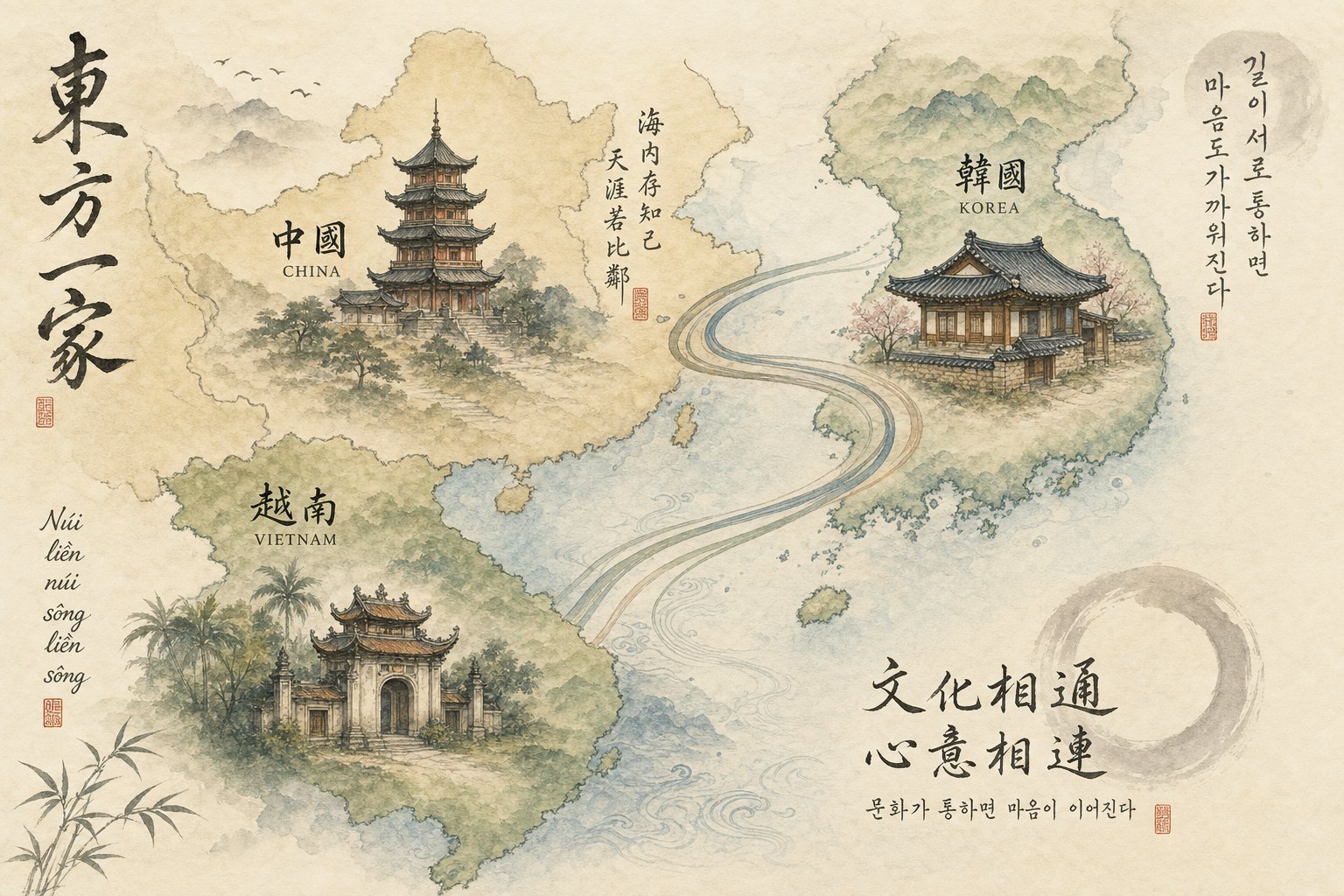
A single character doesn't stay put. As Chinese culture spread across East Asia through migration, trade, and political influence, the horse surname traveled with it, picking up new pronunciations and spellings in every region it touched. If you encounter the last name Mak on a business card in Hong Kong, or the surname Ma on a Korean passport, or the name Ma with a tilde in a Vietnamese document, you may be looking at the same ancient character wearing different clothes.
Ma Across Chinese Dialects and Romanizations
Within China alone, the character 馬 sounds different depending on which dialect group is speaking. In Mandarin, it's Ma (third tone). In Cantonese, it's pronounced closer to Maa (low-rising tone). In Hokkien and Teochew, common across Singapore, Malaysia, and Taiwan, the same character becomes Bay. Hakka and Hainanese speakers pronounce it as Ma, similar to Mandarin.
When diaspora families romanized their names for immigration documents, passports, and school records, these dialect differences produced a scatter of English spellings. You'll find:
- Ma - the standard Mandarin pinyin romanization, used across mainland China and by many overseas families
- Mah - common among Cantonese speakers in North America, as seen with politicians like Mah Bow Tan in Singapore and Theresa Mah in the United States
- Mar - another Cantonese-influenced variant found in older diaspora communities
- Bay - the Hokkien and Teochew pronunciation, common in Southeast Asian Chinese communities
Here's where the mak surname question gets interesting. The mak last name most commonly represents the character 麥 (meaning "wheat" or "barley"), which is a completely separate surname with its own distinct origin. In standard Cantonese romanization, 馬 is "Maa" while 麥 is "Mak." These are different characters, different meanings, and different lineages. However, in some older or non-standard romanization systems, particularly those used in Hong Kong before Jyutping became widespread, 馬 occasionally appeared as "Mak" on identity documents. If you're researching the mak last name origin, the critical step is identifying which character sits behind the romanization. A person with the last name Mak whose family character is 麥 has no connection to the horse surname. A person whose underlying character is 馬 does.
This distinction matters for genealogical research. The same English spelling can mask entirely different Chinese characters, and only the character itself reveals the true surname lineage.
The Horse Surname in Korea and Vietnam
Beyond Chinese-speaking communities, the horse character crossed into Korean and Vietnamese naming systems centuries ago. In Korea, the surname is written 마 (Ma) in hangul and traces to Chinese immigrants who settled on the peninsula. The Mokcheon Ma clan and the Sanggok Ma clan are two recognized Korean lineages, both with roots in Chinese ancestry. Approximately 39,586 people in South Korea carry this surname today.
In Vietnam, the surname appears as Ma (written with the tilde diacritic in Vietnamese orthography). It ranks among the less common Vietnamese surnames but maintains a clear presence, with over 219,000 bearers recorded across the country. Vietnamese pronunciation preserves the rising-falling tone pattern that distinguishes it from other Ma-sounding words in the language.
| Culture | Character | Romanization | Approximate Bearers |
|---|---|---|---|
| Chinese (Mandarin) | 馬 / 马 | Ma (pinyin: Ma) | ~18,400,000 (mainland China) |
| Chinese (Cantonese) | 馬 | Ma, Maa, Mah, Mar | ~70,000 (Hong Kong) |
| Chinese (Hokkien/Teochew) | 馬 | Bay | Included in Singapore/Malaysia totals |
| Korean | 마 | Ma | ~39,500 (South Korea) |
| Vietnamese | Ma (Chu Nom: 馬) | Ma | ~219,000 (Vietnam) |
What ties all these variants together is the original Chinese character 馬. Whether you encounter it as Ma in Beijing, Mah in Vancouver, Bay in Penang, or Ma in Seoul, the genealogical thread leads back to the same pictograph of a galloping horse. The romanization is just the surface layer. Beneath it, the character holds the lineage.
This proliferation of spellings raises a natural follow-up question: is 馬 the only Chinese surname connected to horses, or do other characters in the writing system carry equine associations too?
Other Chinese Surnames Connected to Horses
The character 馬 dominates any conversation about chinese surnames with horse meaning, but it isn't the only family name in the Chinese writing system that carries equine DNA. The horse radical (馬/马) appears inside dozens of more complex characters, and a handful of those characters function as surnames. Meanwhile, a completely unrelated surname sounds almost identical to Ma in spoken Mandarin, creating confusion that trips up researchers and casual learners alike.
Surnames Containing the Horse Radical
In the Kangxi Dictionary, Radical 187 (the horse radical) generates 472 characters. Most describe types of horses, riding actions, or movement. A smaller subset became surnames. You'll notice these horse radical chinese surnames are far less common than Ma itself, but each one carries the visual imprint of the horse within its structure:
- 駱 / 骆 (Luo, fourth tone): Contains the horse radical on the left and 各 (ge, meaning "each") on the right. The character originally referred to a black-maned white horse, but its most common modern meaning is "camel." As a surname, Luo ranks among the top 200 in China. The famous Tang dynasty poet Luo Binwang bore this name. Despite the camel association, the horse radical anchors the character's visual identity.
- 騫 / 骞 (Qian, first tone): Built with the horse radical at the bottom and 寒 (han, meaning "cold") modified above it. The character means "to soar" or "to rise high," evoking a horse leaping upward. Its most famous bearer is Zhang Qian, the Han dynasty explorer who opened the Silk Road, though in his case Qian was a given name rather than a surname. As a surname, Qian is rare but documented.
- 馮 / 冯 (Feng, second tone): This is a subtle one. The traditional form 馮 places the ice radical (冫) beside the horse character 馬. The original meaning relates to galloping or charging across water. As a surname, Feng ranks in the top 30 in China, making it far more common than most people realize contains the horse radical. The simplified form 冯 obscures this connection by reducing 馬 to 马.
- 駕 / 驾 (Jia, fourth tone): Contains the horse radical and means "to drive" or "to harness." Extremely rare as a surname, but it exists in historical records.
- 駱 / 骆 (Luo) compounds: The surname 駱 sometimes appears in compound surnames like Ouyang or Sima, though Luo itself stands alone as a single-character family name.
What connects these horse radical chinese surnames is their shared visual element. When written in traditional script, you can spot the 馬 component immediately, sitting on the left side or at the bottom of the character like a foundation. In simplified script, the reduced form 马 still appears, though it's less visually striking. These surnames remind us that the horse's influence on Chinese writing extended far beyond a single character. It seeded an entire family of related words, some of which became family names in their own right.
That said, none of these surnames achieved the mass surname adoption that 馬 itself did. Luo and Feng are reasonably common, but neither carries the same cultural weight or multi-ethnic complexity as Ma. The horse radical surnames orbit around Ma like satellites around a planet.
Ma the Horse vs Ma the Hemp — An Important Distinction
Here's where things get confusing for anyone researching chinese surnames meaning horse through sound alone. Two completely different surnames are romanized as "Ma" in pinyin, and they sound nearly identical in casual speech. Only the tone and the character distinguish them:
| Character | Pinyin | Tone | Meaning | Approximate Bearers |
|---|---|---|---|---|
| 馬 / 马 | Ma | Third tone (dipping then rising) | Horse | ~18,000,000 |
| 麻 | Ma | Second tone (rising) | Hemp, flax, sesame | ~1,000,000 |
The surname 麻 (Ma, second tone) means "hemp" or "flax" and has entirely separate origins. It traces back to ancient officials who managed hemp production or to place names associated with the plant. The character itself contains no horse radical. Its upper portion is 广 (a shelter radical) with 林 (forest) beneath, and two strokes at the bottom. Visually and etymologically, it has zero connection to horses.
Sounds simple enough on paper. In practice, the distinction collapses in several situations:
- Romanized documents: Both surnames appear as "Ma" in passports, immigration records, and English-language databases. Without seeing the Chinese character, you cannot tell which surname someone carries.
- Casual conversation: In rapid Mandarin speech, the difference between second tone (rising) and third tone (dipping) can blur, especially for non-native speakers or in noisy environments.
- Dialect pronunciation: In some southern Chinese dialects, the tonal distinction between these two characters narrows further or shifts entirely.
If you're tracing genealogy or researching family history, always confirm the underlying character. Ask for the Chinese script, not just the romanization. A person surnamed 麻 has no ancestral connection to Zhao She, no link to the Hui Muslim naming tradition, and no relationship to the horse radical system. They simply share a sound.
This kind of homophone confusion isn't unique to Ma. Chinese has many surname pairs that sound alike but carry different characters and histories. What makes the Ma/Ma pair notable is the enormous population gap between them. The horse Ma dwarfs the hemp Ma by roughly 18 to 1, which means most people you meet with this romanized surname will indeed trace back to the horse character. But "most" isn't "all," and assumptions based on sound alone can lead genealogical research astray.
Understanding these distinctions, between the dominant horse surname, its horse-radical cousins, and its hemp-meaning homophone, gives you a complete picture of how the equine character fits within the broader landscape of Chinese family names. It also sets the stage for appreciating where Ma sits in the canonical tradition of Chinese surname scholarship.
The Ma Surname in Chinese Genealogical Tradition
Chinese surname scholarship has its own canon, a text so foundational that schoolchildren memorized it for a thousand years. The surname Ma holds a specific seat in that canon, and the gap between its historical ranking and its modern population tells a story about how dramatically this family name grew over the centuries.
Ma in the Hundred Family Surnames Text
The Hundred Family Surnames (百家姓, Baijiaxing) is a Song dynasty rhyming poem composed around 960 CE. It catalogued Chinese surnames into a four-character-per-line verse designed for easy memorization. The first 408 characters represent single-character surnames that existed during the Song period, arranged not by population size but by political prestige and poetic rhythm. The opening line, "Zhao Qian Sun Li," placed the Song imperial surname Zhao first as a mark of respect.
Within this canonical list, the surname Ma sits at position 52. That mid-range placement tells us something important about ma chinese surname history: during the Song dynasty, Ma was already well-established and widely recognized, but it hadn't yet reached the demographic dominance it holds today. The massive influx of Muslim families adopting Ma as their surname was still accelerating during the Song and Yuan periods. The text captured a snapshot of the surname's status before its most dramatic growth phase.
Fast forward to modern census data, and the picture shifts dramatically. The surname ma now ranks as the 13th most common in mainland China, shared by approximately 17.2 million people, or about 1.29% of the total population. That leap from 52nd in a Song dynasty poem to 13th in contemporary surveys reflects centuries of population growth across multiple lineages, particularly the expansion of Hui Muslim communities throughout northwestern China. Henan province holds the largest concentration of Ma surname bearers today.
The Enduring Legacy of China's Horse Surname
Step back far enough and the arc becomes clear. A Shang dynasty scribe scratched a tiny horse into bone. That pictograph hardened into a character. The character became a word. The word became a surname when a Warring States general received a fief called Mafu. Then, across a thousand years of Silk Road exchange, that same character absorbed an entirely separate population of Muslim families seeking a phonetic home for Muhammad. Manchu clans added another layer. Official titles contributed yet another.
The result is a family name that defies the usual rules of Chinese genealogy. Most surnames point to one ancestor, one homeland, one story. The surname ma points to many.
The Ma surname represents something rare in Chinese naming tradition: a single character where Han military heritage, Islamic faith, and multi-ethnic integration converge. No other Chinese family name bridges so many histories within two brushstrokes.
That convergence is what makes this surname worth understanding beyond its ranking or population count. It's a living record of how Chinese civilization absorbed, adapted, and unified diverse peoples under shared symbols. The horse gallops forward. The name endures.
Frequently Asked Questions About Chinese Surnames Meaning Horse
1. What Chinese surname means horse?
The Chinese surname Ma (馬 in traditional script, 马 in simplified) literally means horse. Pronounced with a third tone in Mandarin (ma with a dipping-then-rising inflection), it ranks as the 13th most common surname in mainland China with approximately 18 million bearers. The character originated as a pictograph depicting a horse with mane, legs, and tail, first carved into oracle bones around 1200 BCE during the Shang dynasty.
2. Why is Ma such a common surname among Chinese Muslims?
Ma became the dominant surname among China's Hui Muslim communities because it phonetically resembles the first syllable of Muhammad, Mahmud, Mustafa, and other common Arabic names beginning with 'Ma.' When Muslim traders and settlers integrated into Chinese society from the Tang dynasty onward, they needed single-character Chinese surnames for bureaucratic purposes. The sound similarity between ma and Muhammad made it the natural choice, eventually producing the saying 'Ten Hui, nine surnamed Ma' to describe its prevalence in Muslim communities.
3. Where does the last name Ma come from?
The Ma surname has at least three independent origins. The primary lineage traces to Zhao She, a Warring States general (270 BCE) who received the fief of Mafu from the King of Zhao. His descendants shortened the place name to the single character Ma. A second major pathway involves Chinese Muslims adopting Ma as a phonetic stand-in for Muhammad from the Tang dynasty onward. A third pathway includes Manchu and Mongolian families who sinicized their names to Ma during the Jin and Qing dynasties.
4. Is the surname Mak related to the Chinese horse surname?
Usually not. The surname Mak most commonly represents the character 麥, meaning wheat or barley, which is a completely separate surname with its own distinct origin and lineage. In standard Cantonese romanization, 馬 (horse) is written as 'Maa' while 麥 (wheat) is 'Mak.' However, in some older or non-standard romanization systems used in Hong Kong, 馬 occasionally appeared as 'Mak' on identity documents. The only way to confirm which surname someone carries is to check the underlying Chinese character.
5. What does the horse symbolize in Chinese culture and how does it relate to the Ma surname?
In Chinese culture, the horse symbolizes speed, success, strength, loyalty, and freedom. These associations appear in idioms like 马到成功 (instant success) and 一马当先 (charging ahead like the lead horse). The Horse is also one of the twelve Chinese zodiac animals, associated with energy and independence. Bearers of the Ma surname inherit this cultural weight, as animal-based Chinese surnames often carry the symbolic prestige of the creature they reference. The horse's importance in warfare, Silk Road trade, and art made Ma one of the most culturally resonant family names.