What Chinese Tea Brand Names Actually Tell You
Pick up a tin of Chinese tea at your local specialty shop. You'll notice elegant characters printed across the label, maybe a pinyin transliteration underneath, and perhaps a loose English translation that feels poetic but vague. What you're seeing is only the surface. Beneath those characters sits a compressed story — one that communicates origin, quality, philosophy, and aspiration in just two or three syllables.
Chinese tea names are never arbitrary. The language is character-based, and because each character carries its own meaning, every brand name functions as the sum of its parts. A single character can simultaneously reference a mountain range, a flavor profile, a line of classical poetry, and a market positioning strategy. This layered encoding is what separates Chinese tea branding from most Western naming conventions, where brand names often prioritize sound over substance.
Why Chinese Tea Brand Names Are More Than Labels
When you ask what is Chinese tea at its core, you're really asking about a tradition where naming is inseparable from identity. Tea names in China evolved from a system where the product's place of origin, harvest season, and processing method were all embedded directly into what it was called. Commercial brands inherited this tradition and expanded it. They don't just label a product — they make a cultural argument about why you should trust it.
Think of it this way: where a Western brand might coin a catchy, meaningless word, a Chinese tea brand name reads more like a thesis statement. The types of tea names you encounter range from geographic markers and sensory descriptions to philosophical ideals and literary references. Each category signals something specific to consumers who can read the characters.
What Brand Names Reveal About Tea Quality and Heritage
A single Chinese character in a tea brand name can simultaneously reference geography, flavor, literary tradition, and market positioning — making every chinese tea name a miniature cultural document.
This density of meaning creates a challenge for international buyers. Without understanding the naming conventions, you're navigating blind. You might pass over a brand whose name signals high-altitude, spring-harvest leaves from a protected origin region — or overpay for one whose name is pure marketing aspiration with no heritage behind it.
What follows is a brand name decoder. We'll break down the specific characters, literary allusions, geographic references, and sensory vocabulary that power chinese tea names — from centuries-old heritage houses to modern bubble tea chains rewriting the rules. Whether you're a casual drinker or a serious collector, understanding these naming patterns gives you a direct line into quality signals that packaging design alone can never communicate.
Essential Characters That Power Chinese Tea Brand Names
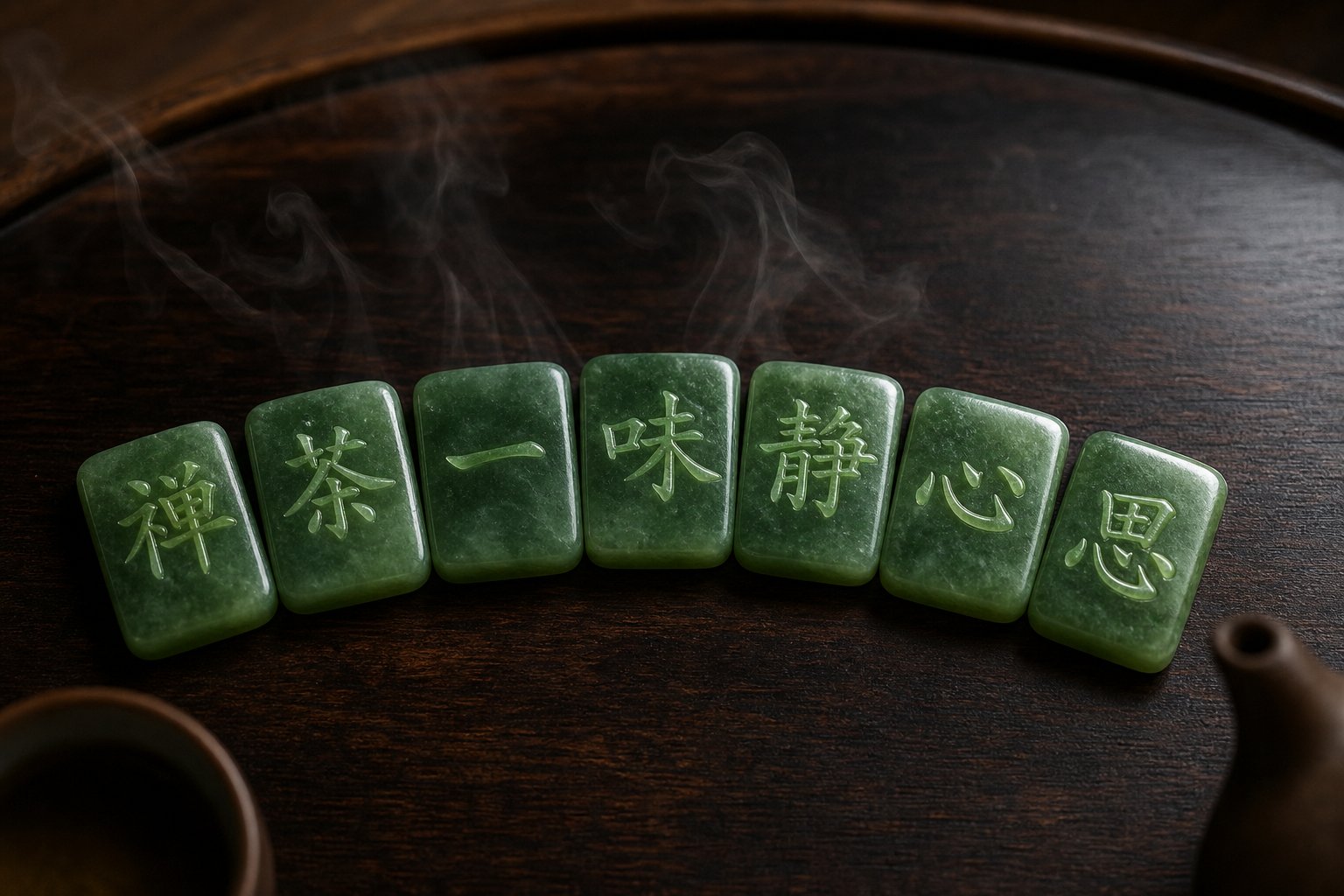
Seven characters appear again and again across Chinese tea branding. Learn to recognize them, and you hold a key that unlocks the intent behind hundreds of brand names — even without speaking a word of Mandarin. Each of these characters functions like a building block. Brands combine them, pair them with other characters, and layer their meanings to craft names that resonate on multiple levels simultaneously.
The tea chinese character 茶 (cha) is the most obvious starting point. But the real insight comes from the supporting cast — the characters that surround 茶 and tell you what kind of experience a brand promises. These recurring symbols draw from nature, imperial history, sensory language, and seasonal imagery. Together, they form a shared vocabulary that Chinese tea brands have relied on for centuries.
Recurring Symbolic Characters in Tea Branding
Let's break down the seven characters you'll encounter most often when reading tea in Chinese characters on packaging and brand logos.
茶 (cha, second tone) — The chinese word for tea itself. Its presence in a brand name is not always guaranteed. Some premium brands omit it entirely, trusting consumers to know they sell tea. When it does appear, it anchors the name and signals directness. Brands that include 茶 tend to position themselves as specialists rather than lifestyle companies.
香 (xiang, first tone) — Literally "fragrance." In branding, this character promises an aromatic experience and suggests careful processing that preserves volatile compounds. You'll find it frequently in oolong and jasmine tea brands where scent is the primary selling point.
雅 (ya, third tone) — "Elegance" or "refinement." This character signals a brand targeting educated, discerning consumers. It carries Confucian overtones of cultivated taste and is common among brands that position their teas as gifts or ceremonial-grade products.
清 (qing, first tone) — "Purity" or "clarity." Beyond its literal meaning, 清 evokes clean mountain water, transparent liquor in the cup, and a minimalist aesthetic. Green tea brands favor this character because it mirrors the visual clarity of a well-brewed cup.
龙 (long, second tone) — "Dragon." In Chinese culture, the dragon represents imperial authority, supreme quality, and auspicious power. A brand using 龙 is making a bold claim — this is the best, the most prestigious, the emperor's choice. The famous Longjing (Dragon Well) tea lends this character enormous weight in the tea world specifically.
云 (yun, second tone) — "Cloud." This character evokes high-altitude tea gardens shrouded in mist, where slow growth and cool temperatures produce complex flavors. When you see 云 in a brand name, it's communicating terroir — the idea that these leaves grew above the clouds, in conditions that mass-produced tea cannot replicate.
春 (chun, first tone) — "Spring." The first flush of spring produces the most prized tea leaves in China. Brands incorporating 春 signal freshness, youth, and the premium value of early-harvest picking. It's a temporal quality marker compressed into a single stroke.
| Character | Pinyin | Literal Meaning | Cultural Connotation in Branding | Example Brand |
|---|---|---|---|---|
| 茶 | cha (2nd tone) | Tea | Specialist identity, product clarity | Heytea (喜茶) |
| 香 | xiang (1st tone) | Fragrance | Aromatic excellence, sensory promise | Tianxiang (天香) |
| 雅 | ya (3rd tone) | Elegance | Refinement, educated taste, gift-worthy | Qingya (清雅) |
| 清 | qing (1st tone) | Purity/Clarity | Clean processing, visual transparency | Qingquan (清泉) |
| 龙 | long (2nd tone) | Dragon | Imperial quality, supreme prestige | Longjing (龙井) |
| 云 | yun (2nd tone) | Cloud | High altitude, mist-grown terroir | Yunnan Pu'er brands |
| 春 | chun (1st tone) | Spring | First harvest, freshness, premium timing | Biluochun (碧螺春) |
How Tonal Differences Shape Brand Perception
Here's something most Western tea drinkers never consider: Mandarin is a tonal language with four distinct tones, and the tone of each character in a brand name affects how it feels when spoken aloud. The chinese character tea 茶 uses the rising second tone, giving it an upward, questioning lilt. Pair it with another second-tone character and the name sounds energetic, almost urgent. Pair it with a falling fourth-tone character and the result feels decisive, authoritative.
Brands are deliberate about this. Premium heritage brands tend to favor combinations of first and fourth tones — flat and falling — which sound steady and commanding in Mandarin. Think of it like the difference between a brand name that sounds like a whisper versus one that sounds like a declaration. Modern lifestyle brands, by contrast, often mix second and third tones to create names that sound lighter, more playful, and approachable to younger consumers.
The tea chinese word choices also interact with regional dialects. A name that sounds elegant in Mandarin might carry unfortunate homophones in Cantonese or Hokkien. Savvy brands test their names across dialect groups before committing — because in Chinese for tea branding, sound carries as much strategic weight as meaning.
These individual characters rarely stand alone. Brands combine them into compounds, layer them with geographic references, or set them against literary allusions that amplify their meaning exponentially. The real artistry lies not in choosing a single powerful character, but in how two or three characters interact to create something greater than the sum of their parts.
Literary Allusions and Poetic Naming in Tea Brands
Character combinations become truly powerful when they reference something beyond themselves — a famous poem, a philosophical principle, or a cultural myth that educated consumers recognize instantly. This is where traditional Chinese tea branding enters its most sophisticated territory. Premium brands don't just describe their product. They invoke an entire literary tradition, compressing centuries of cultural memory into a two- or three-character name.
Poetry and Philosophy in Premium Tea Branding
Imagine encountering a brand name that, to a Chinese reader, immediately conjures a Tang dynasty landscape painting or a Song dynasty poet sipping tea in a mountain pavilion. That's exactly what premium chinese teas achieve through literary naming. The strategy draws from three deep wells of cultural material:
- Tang and Song dynasty poetry — The golden age of Chinese tea culture coincided with the golden age of Chinese poetry. Lu Yu's eighth-century Classic of Tea (茶经) elevated tea from a simple beverage to a philosophical practice, and the poetic vocabulary he established still echoes in brand names today. Characters referencing mist, moonlight, bamboo groves, and mountain streams often trace back to specific poems from this era.
- Daoist nature imagery — Daoism prizes naturalness, spontaneity, and harmony with the landscape. Brands that incorporate characters like 道 (dao, the way), 隐 (yin, hidden/recluse), or 幽 (you, secluded) are signaling alignment with Daoist ideals of simplicity and retreat from the commercial world — even as they operate within it.
- Confucian ideals of refinement — Characters like 雅 (elegance), 品 (to savor, also meaning quality/grade), and 德 (virtue) connect a brand to the Confucian tradition of self-cultivation through aesthetic appreciation. Tea drinking itself was considered a practice of personal refinement in Confucian thought.
Consider the name 竹叶青 (Zhuyeqing, Bamboo Leaf Green). Bamboo is one of the "Four Gentlemen" in Chinese literary tradition — a symbol of integrity, resilience, and scholarly virtue that appears in thousands of classical poems. The name doesn't just describe the leaf's appearance. It places the tea within a poetic lineage that any educated Chinese consumer recognizes immediately. Similarly, names of teas like 铁观音 (Tieguanyin, Iron Goddess of Mercy) draw from Buddhist tradition, referencing the bodhisattva Guanyin and layering spiritual meaning onto a sensory product.
Why Literary Allusions Signal Quality to Chinese Consumers
This naming approach works because it creates an in-group effect. When you recognize the allusion, you feel a sense of shared cultural literacy with the brand. You're not just buying tea — you're participating in a tradition that stretches back to the poets and scholars who first codified tea appreciation. The brand flatters your education while reinforcing its own prestige.
For domestic Chinese consumers, spotting a literary reference in a brand name functions like a trust signal. It communicates that the company values cultural depth over flashy marketing, that it sees its customers as cultivated individuals rather than passive buyers. Among traditional chinese teas marketed at the premium tier, this strategy dominates. You'll find it across oriental teas positioned as gifts for business relationships or ceremonial occasions — contexts where cultural sophistication matters as much as flavor.
Mass-market brands take the opposite approach. They favor clarity, accessibility, and names that require no specialized knowledge to understand. The contrast is deliberate. A literary name says "this tea is for people who appreciate subtlety." A straightforward descriptive name says "this tea is for everyone." Neither strategy is superior — they simply target different relationships between consumer and product. But for international buyers trying to decode quality signals, recognizing a literary allusion in a brand name is one of the strongest indicators that a company is positioning itself at the premium end of traditional chinese tea culture.
Geography, however, carries equal weight in Chinese tea naming — and unlike literary allusions, geographic references make verifiable claims about where leaves actually grew.

Geographic Pride and Origin-Based Brand Names
A literary allusion tells you a brand values cultural sophistication. A geographic reference tells you something more concrete — where the tea supposedly comes from. In China, origin is everything. The same tea variety grown in two different regions can taste dramatically different, command wildly different prices, and carry entirely different reputations. Brands know this, and they encode geographic prestige directly into their names to borrow the authority of a famous terroir.
This practice has deep roots. Tea from china has historically been identified by its place of origin first and its processing method second. Longjing (Dragon Well) means the tea comes from the Dragon Well area near Hangzhou. Huangshan Maofeng tells you the leaves grew on Yellow Mountain in Anhui province. These aren't brand names — they're variety names inseparable from geography. Commercial brands tap into this same instinct, weaving place names into their identity to signal authenticity before a customer even opens the package.
Mountain and Region References in Brand Names
Mountains dominate Chinese tea geography. High elevation means cooler temperatures, more mist, slower leaf growth, and greater concentration of flavor compounds. When you see 山 (shan, mountain) in a brand name, it's making a terroir argument. The brand is saying: our leaves come from elevation, from difficulty, from conditions that produce complexity you can't get in lowland plantations.
But there's an important distinction to understand. A tea variety named for its region — like Wuyi Rock Tea (武夷岩茶) from the Wuyi Mountains — carries a verifiable geographic claim. A commercial brand that incorporates "Wuyi" into its name may be sourcing from that region, or it may be borrowing the prestige without the provenance. This is where understanding chinese tea brand name meanings becomes genuinely practical. The geographic element in a brand name might be a factual origin statement or an aspirational association.
Province-level references work similarly. Yunnan (云南, literally "south of the clouds") is synonymous with pu'er tea. Fujian signals oolong and white tea expertise. Zhejiang means green tea territory. Brands that incorporate these provincial markers are positioning themselves within established tea china traditions, leveraging centuries of regional reputation in a single word.
Water imagery adds another layer. Rivers and springs appear in brand names because water quality was historically considered inseparable from tea quality. Characters like 泉 (quan, spring), 溪 (xi, stream), and 湖 (hu, lake) evoke purity, natural filtration, and the specific mineral profiles that different water sources contribute to a tea's character.
How Geographic Names Build Trust and Authenticity
Geographic naming works because it creates an immediate, testable claim. A consumer who sees a mountain name in a brand can research whether that mountain actually produces tea, what varieties grow there, and whether the brand has legitimate ties to the region. Among china tea varieties with protected geographic indications — similar to European appellations — using a place name without authorization carries legal consequences. This gives geographic brand names a layer of accountability that purely poetic names lack.
Here are the most common geographic elements you'll find encoded in chinese tea varieties and the brands that sell them:
- Mountain peaks (山, shan) — Signals high-altitude growing conditions, slow growth, and concentrated flavor. Examples include Wuyi (武夷), Huangshan (黄山), and Emei (峨眉). The more specific the mountain reference, the stronger the authenticity claim.
- Famous tea-growing regions — Provincial or county-level names like Yunnan (云南), Anxi (安溪), and Hangzhou (杭州) immediately place a brand within a recognized tea tradition. These function as shorthand for entire processing styles and flavor profiles.
- River valleys and water sources (溪, 泉, 湖) — Evoke purity, natural mineral content, and the historical importance of water in tea preparation. Brands using water imagery suggest their teas from china carry the clean, sweet character associated with mountain springs.
- Cloud and mist references (云雾, yunwu) — Specifically indicate teas grown in misty, high-humidity microclimates where diffused sunlight produces higher amino acid content and sweeter flavor. This is a terroir claim disguised as poetry.
- Directional markers (南, south; 西, west) — Often paired with other geographic characters to pinpoint a sub-region. These add specificity and suggest the brand is proud enough of its exact origin to narrow the claim beyond a general area.
For international buyers browsing teas from china, a geographic brand name is one of the most useful signals to decode. It tells you what style of tea to expect, what flavor profile the brand aspires to, and — if the claim is legitimate — provides a traceable link back to a specific piece of land. The more specific the geographic reference, the more confident you can be that the brand is staking its reputation on verifiable origin rather than vague prestige.
Geography tells you where a tea comes from. But some brands skip the map entirely and instead build their names around what the tea looks, smells, and tastes like — turning sensory experience into identity.
Sensory and Appearance-Based Naming Strategies
Some brands skip geography and literary allusion altogether. Instead, they build their entire identity around what the tea does to your senses — how it looks in the cup, what it smells like when the lid lifts off a gaiwan, or the color of the dry leaves catching light. This approach turns a sensory promise into a brand name, setting expectations before you ever take a sip.
Color and Appearance in Tea Brand Identity
Color vocabulary runs deep across all chinese tea types. The six major categories are literally defined by color terms: lu cha (green tea in mandarin), hong cha (red tea, what the West calls black tea), bai cha (white tea), huang cha (yellow tea), qing cha (blue-green, referring to oolong), and hei cha (dark tea). Brands that lean into this system borrow the immediate visual recognition these color words carry.
Consider how powerfully a name like Biluochun (碧螺春, Green Snail Spring) works. The character 碧 (bi) doesn't just mean green — it means jade green, the deep luminous green of precious stone. Before you've brewed a single cup, the name has already told you the liquor will be vivid, jewel-toned, and visually striking. Similarly, Bai Hao Yin Zhen (白毫银针) translates to White Hair Silver Needle, painting a precise picture of the downy, silver-white buds you'll find inside the package. As Tea For Me Please notes, white tea is named not for the brewed liquor but for the fine hairs covering the tender buds — a visual detail encoded directly into the name.
This strategy works because it gives consumers a mental image they can verify. You open the tin, and either the leaves match the name's promise or they don't. It's a form of built-in quality assurance through naming.
Fragrance and Flavor Words as Brand Signals
Aroma-based naming takes a different angle. Rather than telling you what the tea looks like, it tells you what it smells like — often using floral or fruit references that cross sensory boundaries. The Dan Cong oolong tradition offers a clear example: varieties are sometimes classified by their 10 Fragrances, with names like Ya Shi Xiang (Duck Sh*t Fragrance) and Mi Lan Xiang (Honey Orchid Fragrance) building identity entirely around scent.
This is synesthetic naming at work — combining visual, aromatic, and taste references into a single compound. A name might pair a color character with a fragrance character, asking your brain to simultaneously imagine a golden liquor and an orchid-like aroma. The effect is immersive. You're not just reading a label; you're previewing an experience.
The vocabulary shifts noticeably across the types of chinese tea. Green tea brands gravitate toward freshness and coolness — characters evoking dew, jade, spring water, and new growth. Black tea in chinese is called hong cha (red tea), and brands in this category lean toward warmth and richness: golden buds (金芽), sweet fragrance (甜香), and amber liquor. Among chinese black tea types, you'll find black tea names like Jin Jun Mei (Golden Beautiful Eyebrow) that combine a color descriptor with a shape reference, painting the exact appearance of the tightly twisted, gold-tipped leaves. Black chinese tea brands operating in the premium space use these warm, luxurious descriptors to differentiate from the mass-market black china tea that historically prioritized volume over nuance.
- 碧/翠 (bi/cui, jade green) — The most common sensory descriptor in green tea branding. Signals vivid color, freshness, and visual purity in the brewed cup.
- 香 (xiang, fragrance) — Appears across all categories but dominates oolong and scented tea naming. Promises aromatic complexity as the primary experience.
- 金 (jin, gold/golden) — Frequently used in red and black tea branding to describe the color of bud tips or liquor. Communicates premium grade and visual warmth.
- 银 (yin, silver) — Associated with white tea and bud-only picks. Evokes the pale, shimmering appearance of unoxidized buds covered in fine down.
- 兰 (lan, orchid) — A fragrance reference that crosses into flavor territory. Orchid notes are prized in high-quality oolongs and some green teas, making this character a quality signal.
- 露 (lu, dew) — Suggests freshness, morning harvest, and delicate sweetness. Common in green and white tea branding where lightness is the selling point.
- 蜜 (mi, honey) — Indicates natural sweetness and smooth mouthfeel. Appears in red tea and aged oolong naming where oxidation produces honeyed flavors.
Sensory naming gives brands a direct line to your imagination. But the most iconic Chinese tea companies don't rely on a single strategy. They weave together geography, literary allusion, and sensory language into names that reward deeper reading — names worth decoding character by character.
Famous Chinese Tea Brands Decoded Character by Character
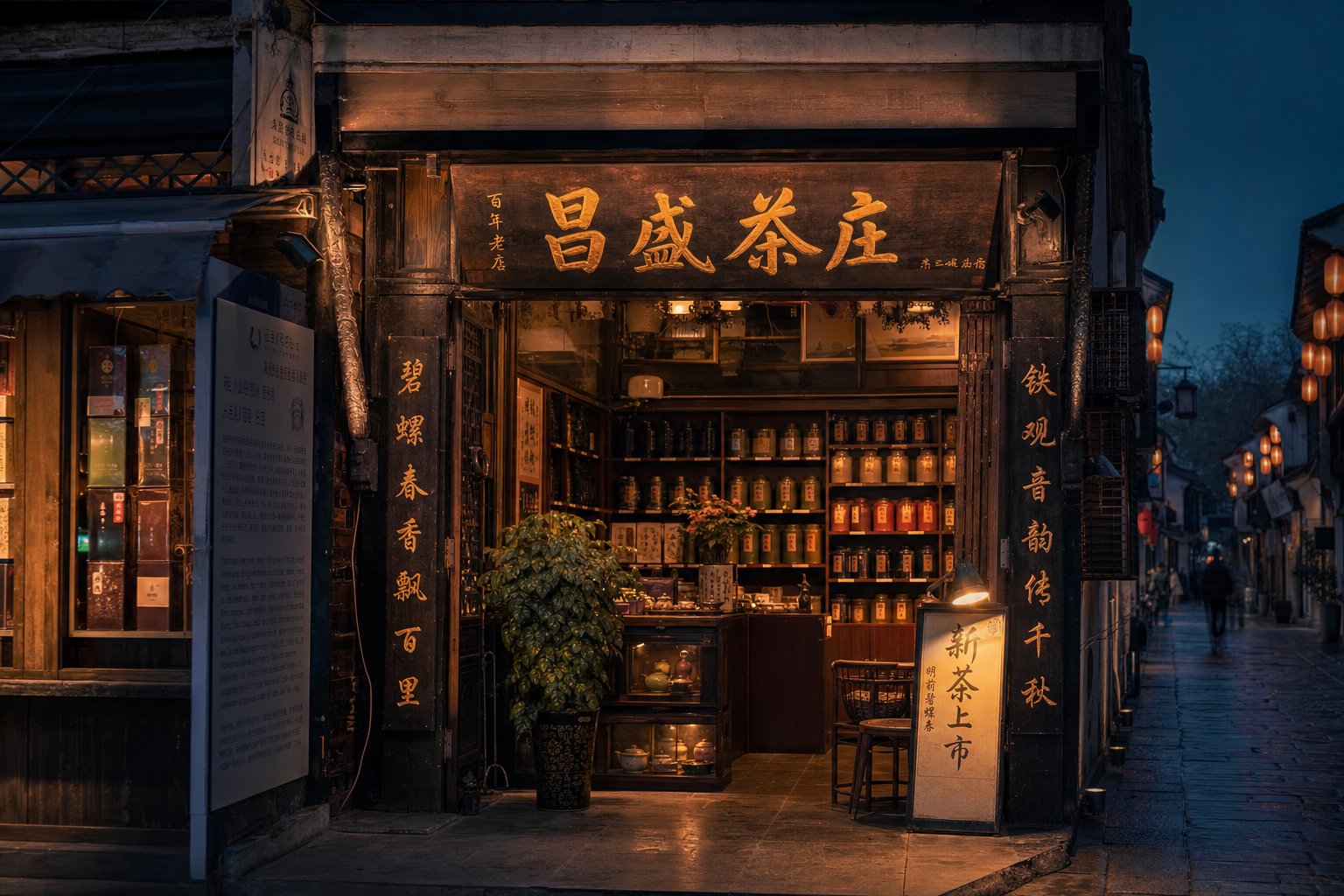
Reading individual characters is one thing. Watching them interact inside a real brand name — where history, founder ambition, and marketing strategy collide — is where the decoding gets genuinely interesting. Most tea names lists you'll find online give you a romanized spelling and a one-line English gloss. That's not enough. To understand what a name of tea actually communicates to Chinese consumers, you need the character-by-character breakdown, the cultural backstory, and the naming logic that ties it all together.
Three heritage brands illustrate this perfectly. Each one uses a completely different naming strategy, yet all three have survived for decades (or over a century) in one of the world's most competitive tea markets. Their names aren't accidents — they're arguments.
Decoding Zhuyeqing, Wuyutai, and Zhang Yiyuan
Zhuyeqing (竹叶青) breaks down into three characters: 竹 (zhu, bamboo), 叶 (ye, leaf), and 青 (qing, green/young). The literal translation is "Bamboo Leaf Green," and it describes both the flat, slender shape of the processed leaves and their vivid color. But the name carries far more weight than a physical description. Bamboo is one of the Four Gentlemen (四君子) in Chinese art and literature — a symbol of integrity, resilience, and the scholar's upright character. By naming itself after bamboo, this Sichuan-based brand wraps its product in literary prestige while simultaneously telling you exactly what the leaves look like. The story goes that Marshal Chen Yi, a prominent political figure and tea lover, bestowed this name in the 1960s after tasting the tea at a monastery on Mount Emei. That origin story adds another layer: the name carries the endorsement of a cultural authority figure, not just a marketing team.
Wuyutai (吴裕泰) uses a completely different strategy — the founder's legacy name. Character by character: 吴 (Wu, the founder's surname), 裕 (yu, prosperity/abundance), and 泰 (tai, peace/safety). The intended meaning is something like "Wu Family's Prosperity and Peace," a name that functions as both a family signature and a blessing. Founded in 1887 in Beijing by Wu Xiting, this brand embeds its founder's identity directly into its commercial name. The characters 裕泰 together express a Confucian ideal of stable, abundant wellbeing — not flashy wealth, but steady, dignified prosperity. For Chinese consumers, this naming pattern signals generational continuity and trustworthiness. You're not buying from a faceless corporation; you're buying from a family that staked its reputation on the name over a century ago.
Zhang Yiyuan (张一元) offers yet another approach. The characters: 张 (Zhang, the founder's surname), 一 (yi, one/first), and 元 (yuan, beginning/dollar/origin). Founded in 1900 in Beijing by Zhang Wenqing, the name references the classical idiom 一元复始 (yi yuan fu shi), meaning "a new cycle begins" — the idea of fresh starts and renewal. But 一元 also literally means "one yuan" (one dollar), giving the name a secondary reading of "Zhang's First Dollar" that speaks to entrepreneurial ambition and humble origins. This double meaning is deliberate. It communicates both philosophical depth and commercial honesty in the same breath. The brand is saying: we started from nothing, and we see every transaction as a fresh beginning.
What Heritage Brand Names Communicate About Company Values
Notice the pattern across these three names. Zhuyeqing uses nature symbolism and literary allusion. Wuyutai uses founder identity and Confucian values. Zhang Yiyuan uses wordplay that bridges philosophy and commerce. Each strategy communicates a different relationship with the customer:
- Nature/literary names (like Zhuyeqing) say: "Our product embodies timeless aesthetic ideals."
- Founder/legacy names (like Wuyutai) say: "A real family stands behind this tea with generations of reputation at stake."
- Philosophical/aspirational names (like Zhang Yiyuan) say: "We share values with you — renewal, honesty, fresh starts."
These aren't the only heritage brands worth decoding. A broader list of teas and their brand names reveals how consistently these strategies repeat across the industry. Tenfu (天福) combines 天 (tian, heaven) with 福 (fu, fortune/blessing), positioning itself as divinely blessed abundance — a name that resonates with the Chinese cultural emphasis on auspicious language in commerce. Dayi (大益) pairs 大 (da, great) with 益 (yi, benefit), making a direct promise: great benefit to the drinker. This brand dominates the pu'er market, where aged teas are investment-grade products and the name's suggestion of tangible returns carries literal financial weight. Bama (八马) means "Eight Horses," referencing a legend tied to Anxi county's oolong tea tradition where eight tea plants were carried by horseback — a name that encodes regional origin story and historical narrative simultaneously.
| Brand Name (English) | Chinese Characters | Pinyin | Literal Translation | Intended Meaning | Naming Strategy |
|---|---|---|---|---|---|
| Zhuyeqing | 竹叶青 | Zhu Ye Qing | Bamboo Leaf Green | Scholar's integrity; visual leaf description | Nature symbolism + literary allusion |
| Wuyutai | 吴裕泰 | Wu Yu Tai | Wu's Prosperity and Peace | Family legacy, stable trustworthiness | Founder identity + Confucian values |
| Zhang Yiyuan | 张一元 | Zhang Yi Yuan | Zhang's First Dollar / New Beginning | Renewal, humble ambition, fresh starts | Philosophical wordplay |
| Tenfu | 天福 | Tian Fu | Heaven's Fortune | Divinely blessed abundance | Auspicious language |
| Dayi | 大益 | Da Yi | Great Benefit | Tangible value, worthy investment | Direct promise |
| Bama | 八马 | Ba Ma | Eight Horses | Regional legend, heritage narrative | Origin story encoding |
What this names of teas list reveals is a consistent principle: heritage brands treat their names as permanent arguments about identity. They don't chase trends or rebrand for new demographics. The name is the brand's thesis statement, and it has to hold up across generations. A tea name list built from these examples shows that the most enduring Chinese brands choose names that reward repeated reading — names where you discover a new layer of meaning the more cultural context you bring to them.
Younger brands, however, play by entirely different rules. The new generation of Chinese tea companies isn't reaching back to classical poetry or founder legacies. They're building names designed to travel across languages, appeal to consumers who may never read a Chinese character, and signal something heritage brands never needed to: modernity itself.
Modern Tea Brands and the New Naming Playbook
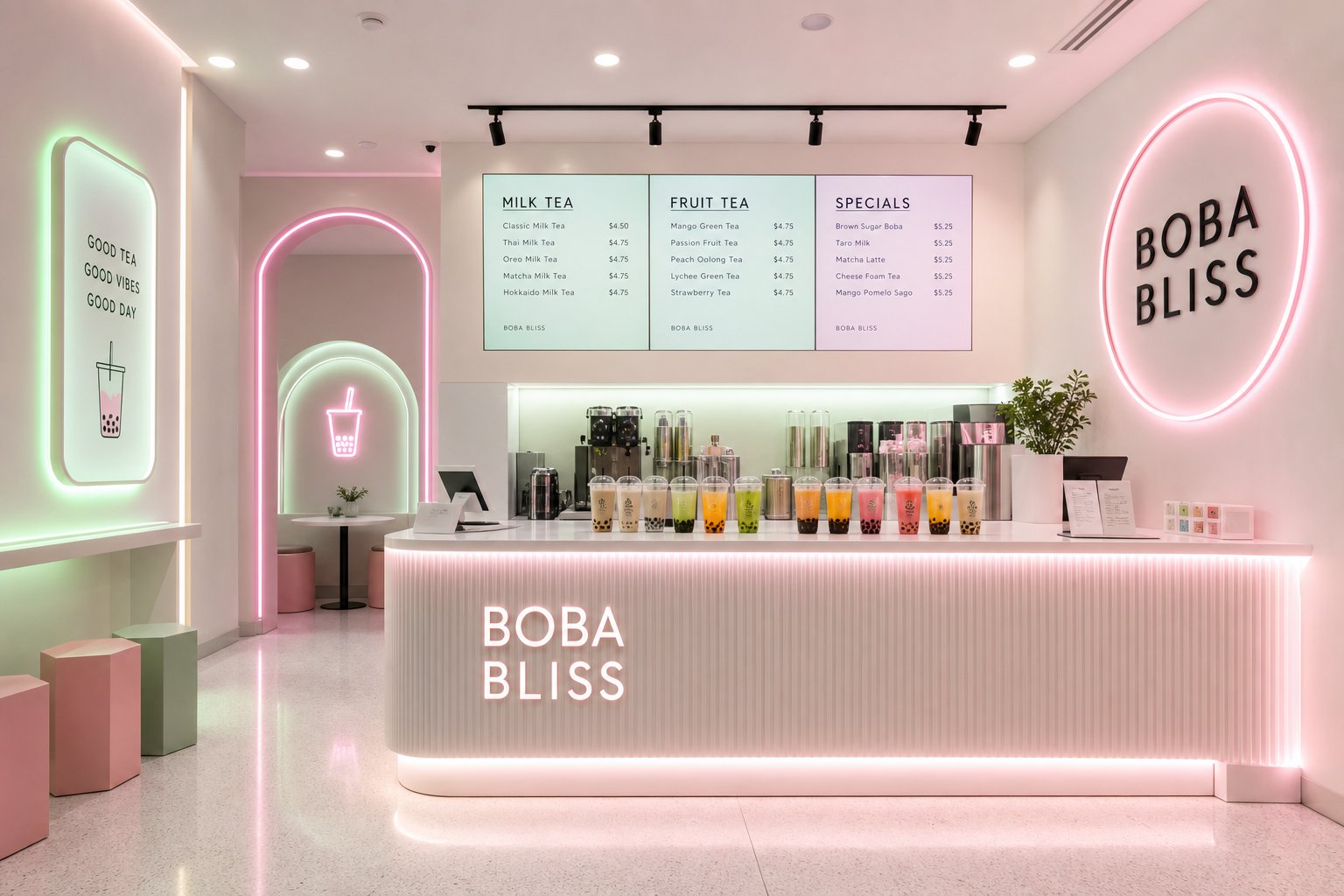
Heritage brands build names that reward scholarly reading. The new wave of Chinese tea companies does the opposite — they build names designed to be Instagrammed, hashtagged, and pronounced by consumers who may never learn how to say tea in Chinese. Bubble tea chains and ready-to-drink brands have rewritten the naming playbook from scratch, prioritizing emotional resonance and cross-cultural portability over literary depth.
Bubble Tea and RTD Brands Break Naming Conventions
The shift is visible in the biggest names dominating China's new-style tea market. HEYTEA (喜茶) pairs the character 喜 (xi, joy/happiness) with 茶 (cha) to create a name that's emotionally direct and universally positive. There's no mountain reference, no literary allusion, no founder surname. Just happiness plus tea. The English name "HEYTEA" doesn't even attempt to translate the Chinese meaning — it's a phonetic hybrid designed to sound casual and approachable in global markets. The brand, established in Guangdong in 2012, blends traditional Chinese tea culture with modern aesthetics, and its naming reflects exactly that fusion.
Nayuki (奈雪の茶) pushes even further. The name incorporates the Japanese hiragana particle の (no, meaning "of"), creating a tea chinese brand name that visually signals East Asian cosmopolitanism rather than purely Chinese heritage. 奈雪 (nai xue) evokes "snow" imagery through the character 雪, but the overall name prioritizes aesthetic feel over semantic precision. It looks elegant on a cup, sounds soft when spoken, and reads as modern across multiple Asian markets simultaneously.
This represents a fundamental philosophical break. The mandarin word for tea — cha — still anchors many of these names, but everything surrounding it has changed. Where traditional brands used 茶 as a specialist credential, modern brands use it as a category anchor that keeps one foot in heritage while the rest of the identity sprints toward lifestyle branding.
How New Brands Balance Tradition and Modernity
The contrast between old and new naming philosophy reveals how dramatically consumer expectations have shifted:
- Traditional naming: Draws from classical poetry, geographic prestige, and founder legacies. Targets educated consumers who recognize literary allusions. Prioritizes depth of meaning over ease of pronunciation. Designed to endure across generations without modification.
- Modern naming: Prioritizes emotional immediacy, visual aesthetics, and cross-language portability. Targets young consumers who share brand experiences on social media. Favors short, punchy names that work as hashtags. Designed to feel fresh and adaptable to co-branding partnerships and seasonal campaigns.
Cultural taboos still apply to both camps, though. Every tea brand — traditional or modern — must navigate the minefield of Chinese homophones. The number four (四, si) sounds dangerously close to death (死, si) and is universally avoided. Characters that sound like 散 (san, to scatter/lose) or 苦 (ku, bitter) carry negative associations that no amount of clever branding can overcome. Lucky associations matter too: the number eight (八, ba) sounds like 发 (fa, to prosper), which is why Bama (八马, Eight Horses) benefits from both its origin story and its phonetic fortune.
Dialect compatibility adds another constraint. A name built for Mandarin speakers might fall flat — or worse, sound offensive — in Cantonese tea culture, where different tonal patterns and pronunciation rules apply. The cha chinese speakers use in Cantonese (pronounced "cha" with a low falling tone) carries the same character but a different sonic texture than its Mandarin counterpart. Brands expanding from Guangdong northward, or from Beijing southward, test their names across dialect groups to avoid unintended meanings that could derail a regional launch.
What unites these modern brands is a willingness to treat naming as a living, adaptable asset rather than a permanent monument. HEYTEA's name works equally well on a minimalist storefront in Shanghai and a delivery app in Singapore. That portability is the point — and it raises a deeper question about what happens when any Chinese tea brand, traditional or modern, crosses into international markets where characters disappear entirely and only sound remains.
How Chinese Tea Names Travel to International Markets
A name that works beautifully in Chinese characters — layered with literary allusion, geographic pride, and sensory promise — faces a brutal reduction the moment it crosses a border. Characters disappear. Tones vanish. What remains is either a string of romanized syllables that mean nothing to English speakers, or a translation that captures one dimension of meaning while flattening everything else. Every Chinese tea brand entering international markets confronts the same decision: transliterate, translate, or reinvent entirely?
Transliteration vs. Translation in Export Branding
The spectrum runs from pure pinyin romanization on one end to full creative adaptation on the other. Most brands land somewhere in between, and where they land reveals how they think about their international identity.
Pure transliteration — writing out the pinyin pronunciation without translation — preserves the sound of the chinese tea in chinese but sacrifices all semantic content. "Biluochun" tells an English-speaking buyer nothing about jade-green snail-shaped leaves harvested in spring. "Tieguanyin" erases the Iron Goddess of Mercy entirely. As research on tea terminology translation notes, names like "Lu An Gua Pian" rendered purely in pinyin "do not make any sense to foreign customers" — the meaning that the leaves are shaped like melon seeds is completely lost.
Full translation goes the other direction. "Dragon Well" for Longjing, "Red Robe" for Dahongpao, "Iron Goddess" for Tieguanyin — these give English readers something to hold onto, but they introduce new problems. The word "dragon" carries negative connotations in Western culture (evil, destruction) that directly contradict its Chinese meaning of imperial prestige and supreme quality. A translated name can actively mislead rather than illuminate.
The middle path — and the one most successful brands now follow — combines transliteration with selective translation. CHAGEE keeps "Cha" (echoing the sound of tea) while adding a phonetically friendly ending that English speakers can pronounce easily. Their product "Da Hong Pao Perfumed Lemon Tea" retains the original pinyin for the culturally rich element while pairing it with universally understood descriptors. This dual strategy — foreignization for the heritage element, domestication for the accessible element — lets brands preserve cultural identity without alienating new audiences.
Meaning Lost and Gained Across Languages
Some translations flatten meaning so dramatically that the original name becomes unrecognizable. Consider what happens to CHAGEE's product 伯牙绝弦 (Boya Jue Xian, literally "Boya's Broken String") — a name referencing one of China's most famous stories about deep friendship and artistic understanding between the musician Boya and his listener Zhong Ziqi. The export name? "Jasmine Green Milk Tea."
When 伯牙绝弦 becomes "Jasmine Green Milk Tea," an entire narrative about friendship, loss, and artistic devotion collapses into a generic ingredient list — the cultural soul of the name erased in favor of market accessibility.
That trade-off isn't always wrong. For a bubble tea brand targeting consumers unfamiliar with types chinese tea traditions, clarity beats poetry. But it illustrates the fundamental tension: every translation choice gains something (accessibility, pronunciation, category recognition) while losing something else (narrative depth, cultural prestige, differentiation from competitors).
Brands that successfully preserve resonance tend to follow a pattern. They keep the romanized original name as the primary identifier — Longjing, Dahongpao, Biluochun — and let familiarity build over time, the same way "cappuccino" or "sake" entered English without translation. Among asian tea names that have achieved global recognition, the ones that stuck are almost always transliterations that became familiar through repetition rather than translations that tried to explain themselves. West Lake Longjing Tea, Biluochun Tea, Tieguanyin Tea — these have become the norm-based standard precisely because international consumers learned to recognize the sound without needing the meaning decoded every time.
For brands exploring types of asian tea markets beyond China, dual-identity systems have become standard practice. The domestic Chinese name carries full cultural weight — literary allusions, geographic claims, sensory poetry. The export name operates as a simplified access point, sometimes bearing almost no resemblance to the original. Savvy international buyers learn to look past the English label and investigate the Chinese name underneath, because that's where the real quality signals live.
Here's the practical takeaway for anyone browsing teas from asia at a specialty shop or online retailer: if a brand provides both its Chinese characters and an English name, check whether the English version is a transliteration (preserving sound), a translation (preserving meaning), or a complete reinvention (prioritizing market appeal). Transliterations paired with brief explanations suggest a brand confident enough in its heritage to let the original name lead. Complete reinventions — especially generic descriptors stripped of all cultural specificity — may indicate a brand prioritizing volume over the kind of depth that serious asian teas collectors value. Understanding what the original name means, even roughly, gives you a filter that packaging design and marketing copy never will.
Frequently Asked Questions About Chinese Tea Brand Name Meanings
1. What do Chinese characters in tea brand names mean?
Chinese tea brand names use characters that each carry layered meanings beyond their literal translation. Common characters like 龙 (dragon) signal imperial-grade quality, 云 (cloud) indicates high-altitude growing conditions, and 春 (spring) marks premium first-harvest leaves. Brands combine these characters strategically to communicate origin, quality tier, and cultural philosophy in just two or three syllables, functioning as compressed stories rather than arbitrary labels.
2. Why do some Chinese tea brands have poetic or literary names?
Premium Chinese tea brands deliberately reference Tang and Song dynasty poetry, Daoist nature imagery, and Confucian ideals to signal sophistication and deep cultural roots. This creates an in-group effect among educated domestic consumers who recognize the allusions. For example, bamboo references invoke scholarly virtue from classical art tradition, while names containing characters like 道 (the way) or 隐 (recluse) align with Daoist philosophy. Literary naming functions as a trust signal that the brand values cultural depth over flashy marketing.
3. How do Chinese tea brand names differ between traditional and modern companies?
Traditional brands draw from classical poetry, geographic prestige, and founder legacies, targeting consumers who appreciate literary depth. Modern brands like HEYTEA (喜茶) and Nayuki (奈雪の茶) prioritize emotional immediacy, visual aesthetics, and cross-language portability. New-style brands favor short, punchy names that work as social media hashtags and can be pronounced across multiple languages, while heritage brands treat their names as permanent cultural arguments designed to endure across generations.
4. What happens to Chinese tea brand name meanings when translated to English?
Translation forces a trade-off between cultural richness and accessibility. Pure pinyin transliterations like 'Biluochun' preserve sound but lose all semantic content about jade-green spring leaves. Full translations like 'Dragon Well' give English readers something to grasp but can introduce unintended Western connotations. The most successful approach combines transliteration for heritage elements with universally understood descriptors, letting the original name lead while providing enough context for new audiences to engage.
5. How can understanding tea brand name meanings help identify quality?
Brand name meanings reveal quality signals that packaging alone cannot communicate. Geographic references like specific mountain names indicate verifiable terroir claims and high-altitude growing conditions. Literary allusions suggest premium positioning for educated consumers. Founder-legacy names signal generational accountability. Sensory descriptors set testable expectations you can verify when you open the package. Learning to read these naming patterns gives international buyers a filter for distinguishing heritage-backed quality from pure marketing aspiration.