Understanding Gender-Neutral Chinese Names
When you hear a name like "Alex" or "Jordan" in English, you might not immediately know the person's gender. Chinese names work the same way, but through a completely different mechanism. Instead of relying on sound patterns or cultural familiarity, gender neutral chinese names derive their flexibility from the meaning embedded in each character. A single Chinese character is a self-contained word, and when parents select characters associated with nature, virtue, or abstract ideals rather than explicitly gendered concepts, the result is a name that sits comfortably on anyone.
This article is not a baby name list. It is a trend analysis of chinese unisex name trends, exploring why and how naming conventions are shifting across generations, regions, and cultural contexts. The forces behind this shift run deeper than personal preference. They touch on family policy, gender politics, linguistic structure, and pop culture in ways that make Chinese naming a fascinating lens on modern society.
What Makes a Chinese Name Unisex
Chinese names typically follow a simple structure: a one-character surname followed by a one- or two-character given name. Each character in the given name carries specific meaning, and it is this meaning, not the sound, that signals gender. Characters containing the "woman" radical (女) lean feminine. Characters with meanings like "army" (军) or "strong" (强) lean masculine. But a vast middle ground exists: characters meaning "wisdom" (智, zhi4), "rain" (雨, yu3), or "dawn" (晨, chen2) carry no inherent gender weight.
Unlike Western names, where gender is encoded in sound and cultural memory, Chinese names encode gender through character meaning and radical structure. A 3 letter chinese name in Pinyin, like "Yu Chen," reveals almost nothing about gender without seeing the underlying characters.
This distinction matters. In alphabetic languages, names become gendered through repeated association. "Ashley" shifted from male to female over decades of cultural usage. In Chinese, the shift can happen at the level of a single radical or character pairing, making the boundary between gendered and neutral far more fluid.
Historically Neutral vs Newly Neutral Names
Some chinese names and meanings have always transcended gender. Characters like 文 (wen2, "cultured") and 明 (ming2, "bright") appear in both male and female names across every birth cohort tracked in Chinese name databases from the 1930s onward. These are historically neutral: parents of sons and daughters alike have reached for them for generations.
Then there are the newly neutral names. Characters like 佳 (jia1, "excellent"), which carries the "man" radical but began appearing frequently in female names after the 1980s, represent a cultural reclassification. Research on over 1.2 billion Han Chinese individuals born between 1930 and 2008 shows that popular characters for both men and women became noticeably more gender neutral after the 1980s, with nature-based radicals like "water" (氵) and "green" (青) replacing explicitly gendered ones.
A dataset of over 1 million unique Chinese given names published in Scientific Data found that roughly 4.82% of names in Chinese characters fall into a truly gender-neutral zone, where between 40% and 60% of users are female. That percentage climbs to 7.66% when names are converted to Pinyin, because distinct characters collapse into identical romanized spellings. Even a 3 letter chinese name in Pinyin can map to dozens of character combinations, each with different gender associations.
Understanding this distinction between historically neutral and newly neutral chinese gender neutral names sets the stage for a bigger question: what societal forces are pushing more parents toward the middle ground, and why is this acceleration happening right now?
Why Unisex Naming Is Rising in Modern China
Naming trends never shift in a vacuum. When millions of parents start gravitating toward the same type of name, something structural is happening beneath the surface. The rise of gender-neutral chinese baby names reflects a convergence of policy, economics, and evolving social values that has reshaped how families think about identity itself.
Gender Equality and Parental Values
Imagine you are a parent in urban China today. You have likely attended university, and if you are a mother, you probably hold a professional career. Women's labor force participation and educational attainment have climbed steadily over the past four decades. In Taiwan, women now earn more than half of all graduate degrees, and the island holds the highest percentage of female lawmakers in East Asia. Mainland China has seen parallel gains in female enrollment at universities and in white-collar professions.
This shift in women's social standing directly influences what parents want a name to communicate. A generation ago, the most popular chinese names for girls often emphasized beauty, gentleness, or obedience. Names for boys stressed strength and ambition. Parents today are more likely to value individuality and open-ended potential over rigid gender expectations. Research published in Sociolinguistic Studies confirms this pattern: over time, there appears to be a measurable decrease in gender stereotypes as reflected in naming practices, with the most common chinese names increasingly featuring characters that carry less gendered connotation.
The result? Parents choosing chinese names popular for their aspirational neutrality, names that say "this child can become anything" rather than prescribing a gendered life path from birth.
How Family Planning Policy Shaped Naming Culture
The one-child policy, enforced from 1979 to 2015, reshaped Chinese family dynamics in ways that still echo through naming choices. For 36 years, most urban families had a single child. When that child was a daughter, she became the sole recipient of all parental investment, ambition, and hope. Traditional naming logic, where sons received powerful names and daughters received decorative ones, started to break down under this pressure.
The policy's demographic legacy is stark. China currently has 30 million more men than women, a gender imbalance that paradoxically elevated the social value of daughters in many families. Parents who once might have reserved ambitious, virtue-laden characters for sons began applying them equally to their only daughters. Over a full generation, this eroded the assumption that certain characters "belong" to one gender.
You'll notice the pattern: when families invest equally in a child regardless of sex, the name becomes a vehicle for aspiration rather than a gender marker. The most popular chinese names emerging from post-policy generations reflect exactly this mindset. Characters meaning "wisdom," "ambition," and "excellence" now appear with near-equal frequency across genders in birth registries.
These societal forces, rising gender equality, single-child investment dynamics, and shifting parental philosophies, created the demand side of the equation. They explain why parents want neutral names. The supply side, how the Chinese language actually enables this neutrality at a structural level, involves a different set of mechanics entirely.
The Linguistic Structure Behind Unisex Chinese Names
Every Chinese character is a small architecture of meaning. Radicals, stroke count, semantic layers, and even tonal quality all contribute to how a name "reads" in terms of gender. Understanding chinese name meaning at this structural level reveals why certain characters feel neutral while others immediately signal masculinity or femininity. The language itself provides a toolkit for gender fluidity that alphabetic systems simply cannot replicate.
Character Meanings That Transcend Gender
When parents select characters for a gender-neutral name, they tend to draw from three broad semantic categories that carry no inherent gender weight. These categories sit outside the traditional masculine-feminine divide because they reference universal experiences rather than gendered traits.
- Nature elements: 雨 (yu3, "rain"), 天 (tian1, "sky"), 林 (lin2, "forest"), 海 (hai3, "ocean"), 岚 (lan2, "mountain mist"), 霖 (lin2, "continuous rain")
- Virtues and character traits: 智 (zhi4, "wisdom"), 诚 (cheng2, "integrity"), 毅 (yi4, "resilience"), 信 (xin4, "trust"), 睿 (rui4, "sagacity")
- Abstract and poetic concepts: 晨 (chen2, "dawn"), 旅 (lu3, "journey"), 和 (he2, "harmony"), 安 (an1, "peace"), 悦 (yue4, "joy")
Notice the pattern. None of these characters describe physical appearance, social roles, or biological traits. They point to qualities of the world or qualities of mind. A study on naming practices in Mandarin Chinese found that the most commonly used gender-neutral names feature characters with less gendered connotations, often incorporating metaphoric usage not conventionally associated with either gender. This is the core principle behind mandarin name meaning in neutral contexts: the character references something beyond the body.
How Radicals and Stroke Patterns Signal Gender
Radicals are the building blocks of Chinese characters. There are 214 radicals in the traditional system, and they offer immediate visual cues about a character's semantic field. For chinese name interpretation, radicals function almost like gender flags.
The female radical 女 (nu3) appears in characters like 婷 (ting2, "graceful"), 娜 (na4, "elegant"), and 妍 (yan2, "beautiful"). Seeing this radical in a name instantly signals femininity. On the masculine side, characters containing the strength radical 力 (li4) or the metal radical 金 (jin1) lean toward male associations: think 钢 (gang1, "steel") or 勇 (yong3, "brave").
Gender-neutral characters tend to carry radicals from semantically open fields. The water radical 氵 appears in names like 浩 (hao4, "vast") and 涵 (han2, "encompass"). The wood radical 木 shows up in 林 (lin2, "forest") and 桐 (tong2, "paulownia tree"). The heart radical 忄 or 心 appears in 悦 (yue4, "joy") and 恒 (heng2, "perseverance"). None of these radicals carry gender weight on their own.
Stroke count also plays a subtle role. Characters with very few strokes (under five) often feel simple and universal, like 安 (an1, six strokes but visually clean). Highly complex characters with many strokes can feel weighty and formal, which some parents associate with masculinity. The sweet spot for neutral names tends to fall in the middle range: characters complex enough to feel substantial but not so dense that they project heaviness.
Tonal Qualities in Neutral Names
Sounds complex? It gets more nuanced. Mandarin's four tones influence how a name feels when spoken aloud, and this tonal quality contributes to gender perception in ways that go beyond what a chinese name mean on paper.
First tone (high and flat) and fourth tone (sharp and falling) tend to sound assertive. Names in chinese and meanings that use these tones, like 天 (tian1) or 毅 (yi4), carry a crisp, decisive energy. Second tone (rising) and third tone (dipping) feel softer and more melodic. Characters like 雨 (yu3) or 宁 (ning2, "tranquil") have a gentler oral quality.
Truly neutral names often balance tonal contrast. A two-character given name pairing a fourth-tone character with a second-tone character, for example, creates a rhythmic equilibrium that avoids leaning too hard in either direction. Parents attuned to meaning chinese names at this phonetic level will test how a name sounds spoken aloud, not just how it looks written.
This interplay between radical, meaning, stroke density, and tone is what makes Chinese naming so layered. A single character can shift from neutral to gendered depending on what it is paired with, which raises the practical question: which specific characters are parents actually choosing right now, and how do they combine them?
Popular Unisex Chinese Names and Their Meanings
The characters parents reach for reveal exactly where cultural values are heading. Rather than offering a random list, the names below are organized by the three semantic categories that dominate gender-neutral naming: nature, virtue, and abstract concepts. Each one appears regularly in birth registries for both boys and girls, making them genuinely unisex rather than simply "trending female" or "trending male."
You'll notice that many of these characters overlap with what were once considered common chinese girl names or traditional chinese names for boys. The boundaries have blurred. A character like 瑞 (rui4, "auspicious") once appeared primarily in male names but now shows up with near-equal frequency across genders. Similarly, 宁 (ning2, "tranquil") was historically more common among chinese names for girls but has gained traction as a unisex choice for its calm, aspirational quality.
Nature-Inspired Unisex Names
Nature characters work as gender-neutral options because they reference the external world rather than human traits. Rain does not belong to a gender. Neither does sky, forest, or ocean. These characters let parents evoke beauty and power without prescribing identity.
| Character | Pinyin | Meaning | Usage Notes |
|---|---|---|---|
| 林 | lin2 | Forest; woods | Clean and balanced visually; doubles as a common surname, giving it familiarity across contexts |
| 雨 | yu3 | Rain | Soft tonal quality (third tone) but strong imagery; pairs well with both assertive and gentle second characters |
| 天 | tian1 | Sky; heaven | First tone gives it a bright, open sound; one of the most historically neutral nature characters |
| 海 | hai3 | Ocean; sea | Evokes vastness and depth; slightly more common in chinese names for boys historically but increasingly neutral |
| 岚 | lan2 | Mountain mist | Poetic and visually complex; carries the "mountain" radical (山) which reads as gender-neutral |
| 霖 | lin2 | Continuous rain; timely rain | Carries the "rain" radical (雨) at the top; suggests nourishment and persistence |
| 云 | yun2 | Cloud | Simple stroke structure; light and airy feel; used across all genders for centuries |
These nature-inspired options often appear in lists of unique chinese girl names and adventurous boy names alike. The character 岚 (lan2), for instance, has gained popularity precisely because it feels poetic without being delicate, strong without being rigid.
Virtue and Character-Based Neutral Names
Virtue names carry weight. They communicate what parents hope their child will embody, and the most popular ones transcend gender because qualities like wisdom, integrity, and resilience belong to everyone.
| Character | Pinyin | Meaning | Usage Notes |
|---|---|---|---|
| 智 | zhi4 | Wisdom; intellect | Fourth tone gives it decisiveness; the "sun" radical (日) at the bottom anchors it in clarity rather than gender |
| 诚 | cheng2 | Sincerity; integrity | Contains the "speech" radical (讠), linking it to honest communication; rising tone softens the assertiveness |
| 毅 | yi4 | Perseverance; determination | Visually dense character that projects strength; increasingly chosen for daughters as well as sons |
| 睿 | rui4 | Sagacity; foresight | Contains the "eye" radical (目); suggests perceptiveness; popular in professional-class families |
| 信 | xin4 | Trust; faith; truthfulness | Simple structure with the "person" radical (亻); reads as universally positive across all contexts |
| 恒 | heng2 | Perseverance; constancy | Heart radical (忄) signals emotional depth; second tone gives it a steady, measured sound |
What makes these virtue names particularly interesting is their crossover appeal. A decade ago, 毅 (yi4) would have appeared almost exclusively in chinese names for boys. Today, parents selecting beautiful chinese girl names increasingly reach for it because determination is no longer coded as a masculine trait in contemporary Chinese culture.
Abstract and Poetic Unisex Names
Abstract names occupy the most creatively open space in Chinese naming. They reference experiences, moments, or states of being rather than concrete objects or traits. This abstraction is precisely what makes them feel unbounded by gender.
| Character | Pinyin | Meaning | Usage Notes |
|---|---|---|---|
| 晨 | chen2 | Dawn; morning | The "sun" radical (日) paired with temporal meaning; suggests new beginnings without gendered weight |
| 安 | an1 | Peace; calm; safety | One of the oldest neutral characters in Chinese naming; the "roof" radical (宀) over "woman" (女) originally meant "woman at home" but has long since lost that gendered reading |
| 悦 | yue4 | Joy; delight; pleasure | Heart radical (忄) connects it to emotion; fourth tone keeps it from feeling overly soft |
| 旭 | xu4 | Rising sun; brilliance | Compact and energetic; the "sun" radical gives it warmth; works equally well as a standalone or paired character |
| 宁 | ning2 | Tranquility; serenity | Contains the "roof" radical; evokes inner peace; popular across all chinese girl names and boy names lists |
| 逸 | yi4 | Leisure; freedom; transcendence | The "movement" radical (辶) suggests forward motion; implies someone who rises above constraints |
| 禾 | he2 | Grain; harmony | Visually simple and elegant; agricultural roots give it a grounded, earthy quality without gender coding |
Characters like 逸 (yi4) and 旭 (xu4) are especially popular among parents who want a name that feels modern and aspirational. They show up in naming forums on Xiaohongshu and Weibo as recommendations for parents seeking something beyond the conventional chinese names girl lists or standard boy options.
One pattern worth noting across all three categories: the most successful unisex names tend to pair a semantically neutral character with a tonally balanced one. A name like 宇晨 (yu3 chen2, "universe" + "dawn") combines a third-tone character with a second-tone character, creating a gentle rise that feels neither overly soft nor overly sharp. This tonal pairing strategy is something parents can apply regardless of which meaning category they draw from.
These names represent the current landscape, but they do not exist in a cultural vacuum. The same character can carry different gender weight depending on whether you are in Beijing, Taipei, or Vancouver. Regional context reshapes perception in ways that surprise even native speakers.
Regional Differences in Unisex Name Perception
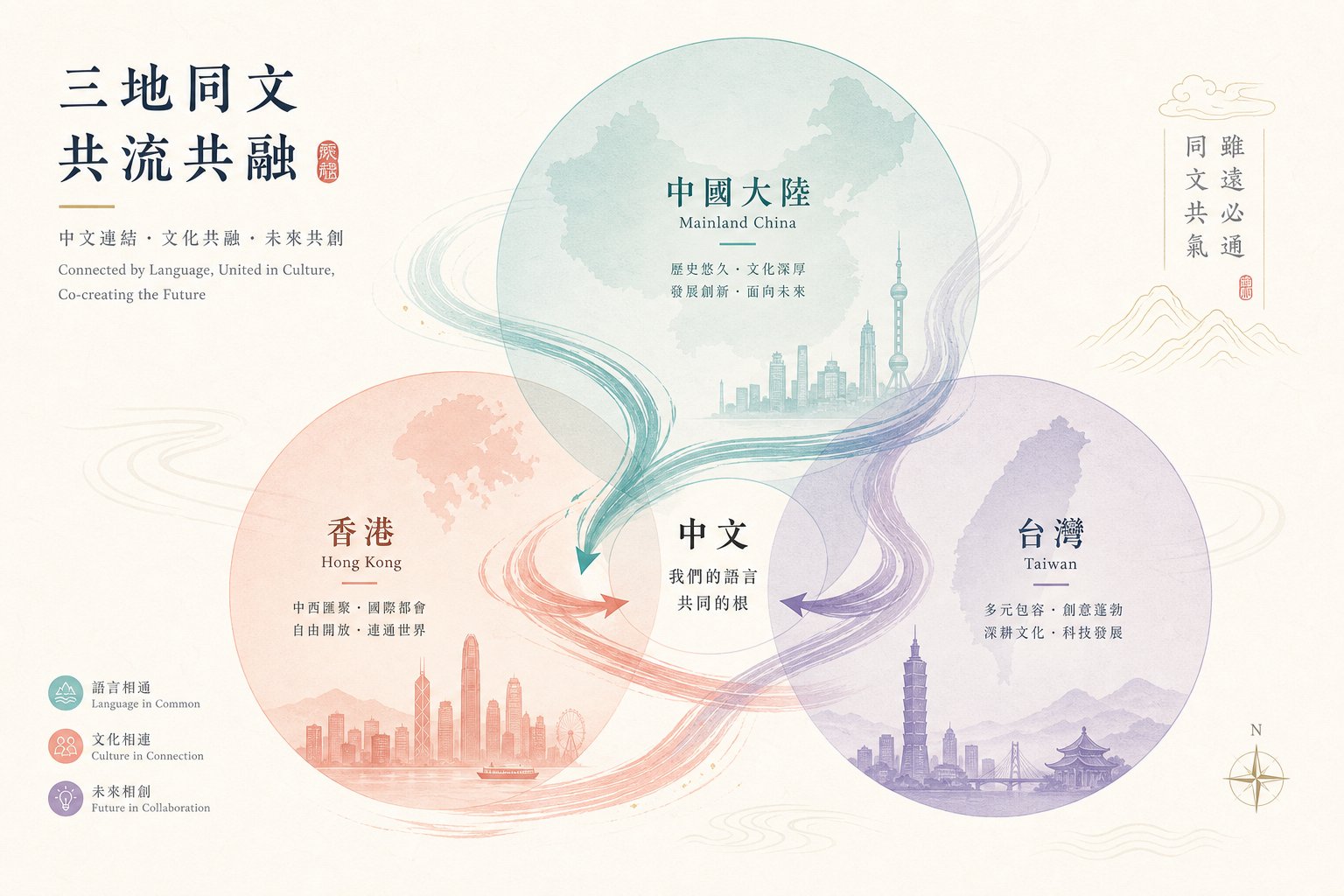
A character that reads as perfectly neutral in Shanghai might lean masculine in Taipei or feminine in a Cantonese-speaking household in Vancouver. When you look at chinese names in chinese across different regions, you quickly realize that gender perception is not fixed. It shifts with dialect, script form, and local naming culture in ways that catch even native speakers off guard.
Mainland China vs Taiwan Naming Conventions
The most immediate difference is script. Mainland China uses simplified characters while Taiwan uses traditional ones. This matters more than you might expect. The simplified character 云 (yun2, "cloud") looks clean and minimal, carrying a light, open feel that reads as neutral. Its traditional form, 雲, adds the rain radical (雨) on top, making it visually denser and, for some Taiwanese parents, slightly more feminine in its poetic weight.
Naming culture diverges in other structural ways too. Taiwanese families are more likely to consult fortune-tellers and follow generation-name poems (字辈), which can constrain gender-neutral choices. When a clan poem assigns a character that carries strong masculine or feminine associations, parents have less room to maneuver toward neutrality. Mainland urban families, particularly in first-tier cities, have largely abandoned these systems, giving them more creative freedom to select names in chinese that feel unbounded by tradition.
Regional popularity also creates different gender associations for the same character. 佳 (jia1, "excellent") appears frequently in female names on the mainland but carries a more balanced perception in Taiwan. Meanwhile, 宇 (yu3, "universe") leans male in mainland registries but shows up in Taiwanese female names often enough to read as neutral there.
| Character | Pinyin | Mainland China Perception | Taiwan Perception | Overseas Diaspora Perception |
|---|---|---|---|---|
| 佳 | jia1 | Leans female | Neutral to slightly female | Neutral |
| 宇 | yu3 | Leans male | Neutral | Neutral to slightly male |
| 嘉 | jia1 | Neutral | Slightly male (formal register) | Neutral |
| 涵 | han2 | Slightly female | Neutral | Neutral |
| 睿 | rui4 | Slightly male | Neutral | Neutral |
These differences matter practically. Parents researching chinese family names and meanings across regions may find conflicting advice depending on whether the source reflects mainland, Taiwanese, or diaspora conventions.
How Diaspora Communities Approach Gender-Neutral Names
Overseas Chinese families face a layer of complexity that domestic families do not: the name must work in two linguistic worlds simultaneously. A chinese names english translation that sounds natural in English classrooms often takes priority alongside the character meaning. This dual requirement actually pushes diaspora families toward gender-neutral choices more aggressively than their counterparts in Asia.
Why? Because when selecting chinese names for english names, parents often prioritize characters whose Pinyin romanization sounds ungendered in English. A name like 安 (an1, "peace") works as "An" in English contexts without triggering gender assumptions either way. Characters like 明 (ming2, "bright") or 林 (lin2, "forest") similarly produce romanizations that English speakers cannot easily gender-code.
Dialect adds another dimension. In Cantonese-speaking communities across Hong Kong, Guangdong, and much of the Southeast Asian diaspora, the same character carries a different sound and therefore a different feel. The character 慧 (hui4 in Mandarin, wai6 in Cantonese) means "intelligent." In Mandarin, its falling tone and association with female names like 慧敏 make it lean feminine. In Cantonese, the deeper tonal register and different naming patterns make it read as more neutral. Similarly, 俊 (jun4 in Mandarin, zeon3 in Cantonese) carries a sharper, more decisive sound in Cantonese that reinforces its masculine lean, while in Mandarin some parents have begun using it for daughters.
The takeaway is straightforward: there is no single "correct" gender reading for most Chinese characters. Context, region, dialect, and script all reshape perception. For families navigating chinese family names and meanings across borders, this flexibility is both a challenge and an opportunity. It means a well-chosen neutral name can travel across regions without friction, but it also means parents need to test how a name lands in every community their child will inhabit.
This regional fluidity raises a related question. If geography shifts gender perception, so does time. The same character that felt firmly masculine to a grandparent in the 1960s may feel completely neutral to a parent choosing a name today, and that generational gap creates its own set of family dynamics.
Generational Attitudes Toward Unisex Names
Picture a family dinner in a Chinese household where a baby is on the way. The expectant parents suggest the name 睿安 (rui4 an1, "wise and peaceful"). The grandmother frowns. To her, 睿 belongs in masculine chinese names, the kind reserved for sons destined for leadership. The grandfather nods in agreement, recalling that traditional chinese names in his generation drew sharp lines between what boys and girls could be called. The parents, meanwhile, see nothing gendered about wisdom or peace. This scene plays out in countless families, and it reveals how deeply generational experience shapes the perception of gender in naming.
The Generational Divide in Name Gender Expectations
Older generations grew up in eras when naming carried explicit ideological or gendered purpose. A woman born in the 1950s might carry a name with 秀 (xiu4, "elegant") or 芳 (fang1, "fragrant"), characters that anchored feminine chinese names to beauty and domesticity. A man from the same era likely carries 建 (jian4, "build") or 国 (guo2, "nation"), characters that tied masculine chinese names to public duty and strength. For these generations, the gender boundary in naming was not a suggestion. It was a cultural rule.
This lived experience creates a strong instinct: certain characters "belong" to one gender. When grandparents encounter a granddaughter named 毅 (yi4, "perseverance") or a grandson named 宁 (ning2, "tranquility"), it can feel like a violation of natural order rather than a creative choice. The friction is not about the child. It is about decades of reinforced association between specific characters and specific genders.
Younger parents operate from a different baseline. They grew up seeing typical chinese names blur gender lines in their own classrooms and workplaces. A 2020 study on gender characteristics of Chinese names over a century found that naming diversity increased significantly in recent decades, with characters once coded as exclusively male or female appearing across genders with growing frequency. For millennials and Gen Z parents, this blurring is not a trend to adopt. It is simply the water they swim in.
Family negotiation around naming often becomes a proxy for larger generational tensions about gender roles, tradition, and modernity. Grandparents may invoke ancient chinese names and classical naming principles rooted in yin-yang balance, arguing that a girl's name should carry "soft" energy and a boy's name should project "hard" energy. Parents counter with the argument that limiting a child's name limits their identity. The compromise often lands on characters from the neutral middle ground, ones old enough to feel respectable to elders but open enough to satisfy younger sensibilities.
How Unisex Naming Evolved Across Decades
The shift did not happen overnight. Each decade brought specific cultural forces that nudged naming conventions closer to where they stand today. Naming data tracked by The World of Chinese and government registry reports reveal a clear trajectory.
- 1950s-1960s: Naming was heavily politicized. Characters like 国 (guo2, "nation"), 红 (hong2, "red"), and 兵 (bing1, "soldier") dominated both genders during the Cultural Revolution, creating an accidental form of unisex naming driven by ideology rather than gender consciousness. Ancient chinese names rooted in classical literature temporarily fell out of favor.
- 1970s-1980s: Reform and Opening Up brought individualism. Chinese male names began incorporating softer characters, and female names started borrowing from Western sounds. Double-character names like 欢欢 (huan1 huan1) emerged for girls, reinforcing cuteness as a feminine marker. Gender lines in naming actually sharpened during this period as political uniformity faded.
- 1990s: The one-child generation reached naming age as parents. Mothers' surnames began appearing in children's given names, a practice that disrupted traditional patrilineal naming and introduced structural novelty. Gender-neutral characters like 嘉 (jia1, "excellent") and 宇 (yu3, "universe") gained traction as parents sought names that felt modern and unbounded.
- 2000s-2010s: Internet culture and global exposure accelerated the trend. Parents researched names online, compared options across regions, and encountered naming philosophies from other cultures. Characters emphasizing individuality and aspiration, like 逸 (yi4, "transcendence") and 睿 (rui4, "sagacity"), rose sharply for both genders.
- 2020s: Gender-neutral naming has become a conscious, deliberate choice rather than an accidental byproduct. Social media naming communities actively promote neutral options, and parents articulate explicit philosophies about not limiting their child's identity through gendered characters.
What emerges from this timeline is a clear pattern: each generation's naming choices reflect the dominant cultural anxiety or aspiration of their era. Political loyalty gave way to economic ambition, which gave way to individual expression, which has now arrived at gender fluidity. The grandparents who named children for the nation and the parents who name children for boundless potential are both responding rationally to their moment in history.
This generational evolution did not happen in isolation. At every stage, external cultural forces amplified or redirected the trend. Celebrity naming choices, viral social media discussions, and even traditional cosmological systems like wuxing all play active roles in shaping which neutral names gain momentum and which fade.
Pop Culture and Social Media Driving Unisex Names
Cultural forces do not just nudge naming trends. They accelerate them. In China, the entertainment industry, social media platforms, and traditional cosmological systems form a feedback loop that pushes specific gender-neutral characters into mainstream popularity faster than any previous generation experienced.
Celebrity Influence on Gender-Neutral Naming
In 2005, 400 million viewers watched Li Yuchun (李宇春) win the singing competition Super Girls. Her gender-nonconforming presentation and androgynous stage name made her a cultural phenomenon. The character 宇 (yu3, "universe") in her name carries no gender weight, and her massive visibility helped normalize the idea that famous chinese names do not need to signal femininity or masculinity to command respect. Research from the University of Texas identifies Li as a zhongxing (中性, "gender-neutral") pop star who paved the way for many such figures to follow.
The pattern extends beyond Li. Entertainers with names that blur traditional gender lines, names that might once have appeared only in lists of chinese warrior names for boys or pretty chinese names for girls, demonstrate through sheer visibility that neutral naming carries cultural power. When audiences associate a gender-neutral name with talent, charisma, and success, the name itself sheds whatever residual gendered reading it once held. Parents notice. They reach for the same characters.
Social Media Trends Driving Name Choices
Platforms like Xiaohongshu (Little Red Book) and Weibo have transformed naming from a private family decision into a community-sourced activity. Parents post shortlists and receive feedback from thousands of strangers. Naming consultants build followings by recommending characters that feel fresh and unbounded. The result is a rapid consensus-building mechanism that did not exist a generation ago.
Several cultural influences converge on these platforms to drive gender-neutral choices:
- Celebrity name analysis posts that break down why certain stars' names "work," encouraging parents to borrow the same characters
- Naming aesthetic trends favoring what users call "高级感" (gao1 ji2 gan3, "elevated feel"), names that sound sophisticated rather than cute chinese names or overtly gendered options
- Cross-gender recommendation threads where users explicitly request names that work for any child regardless of sex
- Backlash against overly common names like 子涵 (zi3 han2) and 梓萱 (zi3 xuan1), pushing parents toward less saturated, more distinctive neutral characters
- International exposure through K-drama and C-drama fandoms, where beautiful chinese names with poetic neutrality gain aspirational status
The speed matters here. A character that goes viral on Xiaohongshu can jump from obscurity to top-ten popularity within a single birth-year cohort. This compression of trend cycles means gender-neutral naming is not just growing. It is growing exponentially, with each viral post reinforcing the next.
Zodiac and Wuxing Philosophy in Neutral Names
Traditional naming philosophy has not disappeared. It has adapted. Many parents still consult the Chinese zodiac year and the five-element wuxing system (五行) when selecting a name, but they now apply these frameworks without defaulting to gendered outcomes.
Wuxing naming works by identifying which elemental energy, Wood, Fire, Earth, Metal, or Water, is weak or missing in a child's BaZi (八字) birth chart. A naming specialist then selects characters containing radicals that reinforce the deficient element. The key insight for gender-neutral naming: elemental balance has nothing to do with gender. A child who needs Water energy might receive the character 涵 (han2, "encompass"), which carries the water radical (氵) and reads as neutral regardless of the child's sex. A Metal deficiency might call for 铭 (ming2, "inscription"), equally appropriate for any gender.
This compatibility between traditional cosmology and modern gender neutrality gives parents cultural permission to choose neutral names without feeling they have abandoned heritage. They can honor wuxing principles, satisfy grandparents who value astrological alignment, and still select characters that refuse to box their child into a gendered identity. The ancient system, it turns out, never required gendered naming in the first place. It required elemental harmony.
Cultural momentum and philosophical grounding explain why neutral names gain traction. The remaining question is more grounded: how do these names actually perform in the real world, in classrooms, on resumes, and within the constraints of government naming regulations?
Practical Guide to Choosing a Unisex Chinese Name
Trends and philosophy are one thing. Real-world performance is another. A gender-neutral name that sounds poetic in a naming forum still needs to work on a school roster, a job application, and a government ID card. Parents weighing chinese first names for their child face a practical landscape shaped by institutional rules, professional norms, and bureaucratic systems that do not always accommodate creative choices gracefully.
Unisex Names in Professional and Academic Settings
Does a gender-neutral name help or hinder a child later in life? The answer depends on context. In academic settings, where chinese given names male and female appear on exam papers and enrollment lists, a neutral name can actually reduce bias. Teachers grading papers without knowing a student's gender cannot unconsciously apply gendered expectations to their assessment. The same logic applies to blind resume screening in corporate hiring.
In professional environments, neutral chinese middle names and given names carry a distinct advantage in international contexts. When a colleague or client encounters a name like 睿安 (rui4 an1) on an email signature, they engage with the person's work before forming gender-based assumptions. For professionals working across borders, where the question "what is your name in chinese" often arises in cross-cultural introductions, a neutral name sidesteps the awkward moment where a foreign counterpart realizes they assumed the wrong gender.
There is a flip side. In domestic Chinese contexts where networking relies heavily on personal relationships, some hiring managers or university administrators may feel uncertain about how to address someone whose name gives no gender cue. This discomfort is generational and fading, but it exists. Parents should weigh whether their child will primarily operate in traditional domestic institutions or in more globalized, progressive environments.
Government Naming Rules and Constraints
China's naming laws do not restrict gender-neutral choices, but they impose structural constraints that indirectly shape what parents can select. The key rules are straightforward: names must use Chinese characters, cannot include Latin letters or numerals, and must be encodable in the government's digital systems. Article 99 of the General Principles of Civil Law guarantees citizens the right to a name, and the government does not interfere with given name selection as long as it uses permissible characters.
The practical constraint is technological. As of the most recent system updates, approximately 32,000 characters are supported for computer input in government databases. Characters that fall outside this set, no matter how beautiful or meaningful, simply cannot be registered. This eliminates some rare classical characters that parents might otherwise choose for their poetic neutrality. The case of Ma Cheng, a Beijing woman whose obscure name character could not be entered into police and airport systems, illustrates how technical limitations override creative intent.
For parents selecting gender-neutral names, this means sticking to commonly encoded characters. Fortunately, the most popular neutral characters like 睿, 安, 晨, 涵, and 宇 all fall well within standard encoding. The constraint primarily affects parents reaching for extremely rare or archaic characters in pursuit of uniqueness. There are no character-count restrictions either, though typical Chinese names average two to three characters total. A surname plus a two-character given name remains the standard structure, giving parents two characters to balance meaning, tone, and gender neutrality.
One additional consideration: surnames must come from either parent under Article 22 of the Marriage Law. The growing practice of incorporating the mother's surname into a child's given name, creating a compound that honors both lineages, sometimes produces unexpected gender readings. A child surnamed 王 (wang2) with the mother's surname 林 (lin2) embedded in the given name might end up with 王林宇 (wang2 lin2 yu3), which reads differently in terms of gender weight than 王宇林 (wang2 yu3 lin2). Character order matters.
Strategies for Choosing a Balanced Unisex Name
Selecting a name that reads as genuinely neutral across contexts requires more than picking a single ungendered character. It requires thinking about how characters interact with each other, how they sound spoken aloud, and how they perform in different social settings. Here are practical strategies parents can apply:
- Test the name across audiences. Say the name to people of different generations and regions. If grandparents immediately assume one gender and peers assume another, the name may lean more than you think. A truly neutral name produces genuine uncertainty about the bearer's gender.
- Balance tonal weight. Pair a falling-tone (fourth tone) character with a rising or neutral tone to avoid sounding either too sharp (masculine-coded) or too melodic (feminine-coded). Names like 逸宁 (yi4 ning2) achieve this equilibrium naturally.
- Avoid radicals with strong gender signals. The female radical (女), flower radical (艹 in names like 芳 or 萱), and jade radical (王 in names like 琳) lean feminine. The strength radical (力), weapon radical (戈), and metal radical (金) lean masculine. Neutral radicals include water (氵), wood (木), sun (日), and heart (忄).
- Check frequency data across genders. China's Ministry of Public Security publishes periodic national name reports showing which characters appear most frequently for newborns. Cross-reference a character's usage across male and female registries. If it appears in the top 50 for both, it is genuinely neutral in current usage.
- Consider the full name as a unit. A neutral given name paired with certain surnames can shift perception. 张安 (zhang1 an1) reads differently from 林安 (lin2 an1) because surname associations color the whole name. Test the complete combination, not just the given name in isolation.
- Evaluate Pinyin romanization. For families in diaspora contexts or those planning international exposure, check how the name looks and sounds in romanized form. Some Pinyin spellings map to English names with gender associations. "Ming" reads as neutral in English; "Mei" does not.
- Verify character compatibility with wuxing and zodiac systems. If family tradition requires elemental alignment, confirm that the neutral characters you prefer also satisfy these requirements. Most nature and virtue characters carry clear elemental associations that work within traditional frameworks.
Parents browsing lists of male chinese first names or female options often find that the characters they are drawn to already sit in the neutral zone. The instinct toward names that feel open and aspirational, rather than prescriptive, is itself a sign of how deeply this cultural shift has taken root. What once required deliberate countercultural intent now feels like common sense to a growing majority of parents.
Looking ahead, the trajectory is clear. As gender equality continues advancing across Chinese-speaking societies, as social media accelerates the spread of naming aesthetics, and as younger generations become parents themselves, the pool of characters considered genuinely neutral will only expand. Characters that today still carry faint gendered associations, like 瑞 (rui4) or 涵 (han2), will likely shed those traces entirely within another generation. The question for future parents will not be "should we choose a neutral name?" but rather "which neutral name best captures who we hope this child will become?" That shift, from debating the concept to refining the execution, is perhaps the clearest sign that chinese unisex name trends have moved from cultural experiment to cultural norm.
Frequently Asked Questions About Chinese Unisex Name Trends
1. What makes a Chinese name gender-neutral?
A Chinese name becomes gender-neutral when its characters reference universal concepts rather than gendered traits. Characters tied to nature (rain, sky, forest), virtues (wisdom, integrity), or abstract ideas (dawn, harmony) carry no inherent gender weight. The radicals within each character also matter: neutral radicals like water, wood, sun, and heart avoid signaling masculinity or femininity. Tonal balance between characters further contributes to a neutral reading, with parents often pairing assertive fourth-tone characters with softer second-tone ones to create equilibrium.
2. Why are unisex names becoming more popular in China?
Several converging forces drive this trend. Rising gender equality and women's educational attainment have shifted what parents want a name to communicate. The one-child policy (1979-2015) led families to invest equally in daughters and sons, eroding the assumption that ambitious characters belong only to boys. Social media platforms like Xiaohongshu accelerate the spread of neutral naming aesthetics, while celebrity figures with androgynous names normalize the practice. Together, these factors have moved gender-neutral naming from a countercultural choice to mainstream preference among younger parents.
3. Do unisex Chinese names affect career prospects?
Gender-neutral names can reduce unconscious bias in academic and professional settings where evaluators see a name before meeting the person. In blind resume screening and exam grading, neutral names prevent gendered assumptions from influencing outcomes. In international business contexts, they sidestep the awkward moment when foreign colleagues realize they assumed the wrong gender. However, in traditional domestic networking environments, some older professionals may feel uncertain about how to address someone whose name gives no gender cue, though this discomfort is generational and fading.
4. Are there legal restrictions on choosing gender-neutral names in China?
China's naming laws do not restrict gender-neutral choices. The government does not interfere with given name selection as long as names use permissible Chinese characters encodable in official digital systems (approximately 32,000 supported characters). Names cannot include Latin letters or numerals. The practical constraint is technological rather than ideological: rare or archaic characters that fall outside standard encoding cannot be registered, but popular neutral characters like 睿, 安, 晨, 涵, and 宇 all fall well within supported sets.
5. How do regional differences affect whether a Chinese name reads as unisex?
The same character can carry different gender perceptions across regions. Simplified vs. traditional script forms alter visual weight and associations. Regional naming popularity creates different baselines: 佳 (jia1) leans female on the mainland but reads as more neutral in Taiwan and diaspora communities. Dialect pronunciation also shifts perception, as a character's tonal quality in Cantonese versus Mandarin can change its gendered feel. Parents choosing names for children who will live across regions should test how the name lands in each community.