Why Chinese and Korean Naming Traditions Deserve a Direct Comparison
Imagine you encounter two names: Wang Xiaoming and Park Jimin. Both place the family name first. Both feature a two-syllable given name. Both draw from a shared pool of Chinese characters. On the surface, these naming systems look almost interchangeable. Dig a little deeper, though, and you'll find two distinct cultural engines running beneath that familiar structure.
Why Compare These Two Naming Systems
Chinese and Korean naming traditions share over a thousand years of Confucian philosophical heritage. Korea historically borrowed Chinese characters (called hanja) as its writing system, and the term for Korea in Chinese — Hanguo (韩国) — itself reflects this deep linguistic entanglement. Yet centuries of independent cultural evolution have produced naming rules that diverge in surprising ways. The surname pools differ dramatically in size. The logic behind choosing given-name characters follows separate philosophies. Even the generational tracking systems, while serving a similar purpose, operate on entirely different mechanics.
Despite surface-level similarities — family-name-first order, two-syllable given names, and shared Chinese-character roots — the construction logic behind Chinese and Korean names differs significantly in ways that affect identity, lineage, and daily social interaction.
Who Benefits From Understanding Both Traditions
This comparison matters for more people than you might expect. Fiction writers crafting East Asian characters need to know why a Korean name built like a Chinese one will feel inauthentic to native readers. Genealogy researchers tracing family lines across borders need to understand how clan systems function differently in each culture. People in cross-cultural relationships navigating what to name a child benefit from grasping the philosophical weight each tradition places on character selection. And cultural enthusiasts simply curious about how a Korean name works compared to its Chinese counterpart will find the structural contrasts genuinely fascinating.
This article breaks down seven key dimensions where these naming traditions part ways:
- Surname concentration and diversity
- Given name construction logic
- Generational naming systems
- Character selection philosophy and the hanja question
- Clan systems and lineage tracking
- Modern trends and legal frameworks
- A complete side-by-side breakdown
Each section unpacks a specific area where the shared heritage produces different outcomes — revealing how two cultures can start from the same raw materials and build remarkably different naming architectures.
How We Structured This Comparison
Comparing two naming systems that share a common ancestor requires more than listing surface differences. You need a consistent lens — a set of dimensions applied equally to both traditions so the contrasts emerge clearly rather than anecdotally. That's the approach here.
Our Comparative Framework
To understand how do Korean names work relative to Chinese ones, we evaluate both systems across six parallel dimensions:
- Surname structure — pool size, concentration patterns, and historical origins
- Given name construction — syllable count, character freedom, and phonetic considerations
- Generational markers — how each culture encodes lineage position within a name
- Character selection philosophy — the reasoning and rituals behind choosing specific characters
- Clan systems — how surnames connect to broader kinship networks and social identity
- Modern legal frameworks — government regulations shaping what parents can and cannot name their children
Each dimension gets equal treatment for both traditions, making it possible to spot where the Korean name structure genuinely diverges from its Chinese counterpart — and where the two still align.
Sources and Cultural Context
The analysis draws on government naming statistics, clan genealogical records (Korean jokbo and Chinese jiapu), and linguistic scholarship covering both historical and contemporary naming practices. Because korean pronunciation of shared characters often differs substantially from Mandarin readings of the same character, all examples include original script — hanzi (汉字) for Chinese names and hanja (漢字) or hangul (한글) for Korean names — alongside romanization. This matters: the Korean for name characters like 金 (Kim) and 李 (Lee/Yi) look identical to their Chinese equivalents but carry distinct phonetic values and cultural weight in each language.
With this framework in place, the first structural difference worth examining is also the most statistically dramatic: how concentrated each culture's surname pool actually is.
Surname Concentration and Diversity
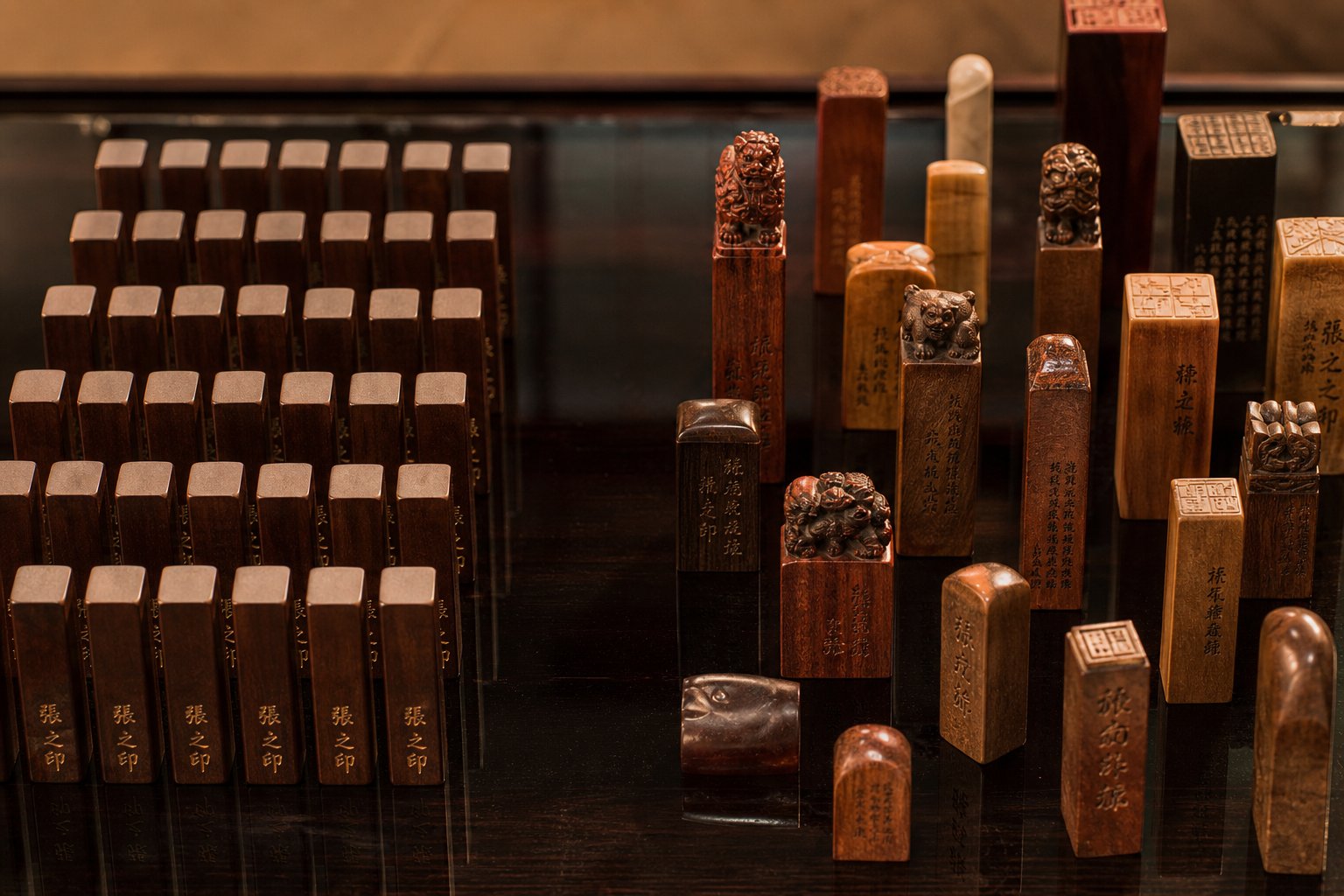
Picture stopping a random person on the street in Seoul. There's roughly a one-in-two chance their last name is Kim, Lee, or Park. Try the same experiment in Beijing, and the top three surnames — Wang, Li, and Zhang — cover about 21% of the population. Both countries show high surname concentration compared to Western nations, but Korea takes this phenomenon to an extreme that shapes everyday social life.
Korean Surname Concentration Explained
South Korean surnames cluster around a remarkably small set of names. Census data from Statistics Korea shows that Kim, Lee, and Park alone account for nearly 45% of the population — over 20 million people. Expand to the top ten common korean surnames, and you're looking at 64% of all South Koreans sharing just ten family names.
This concentration is so pronounced it spawned the Korean expression "finding Mr. Kim in Seoul" to describe an impossible task — their version of finding a needle in a haystack. The entire pool of south korean surnames traditionally numbers only around 288, connected to over 4,000 different clan branches. Compare that to the United States, which recorded 6.3 million surnames in its 2010 census alone.
Why so few? For much of Korean history, surnames were reserved exclusively for royals and nobles. It wasn't until the Goryeo era (918-1392) that family names began filtering down to commoners. The lowest classes — slaves, butchers, shamans — remained without surnames until the late Joseon period. When these groups finally acquired korean last names, they overwhelmingly adopted the prestigious names already held by the aristocratic yangban class: Kim, Lee, and Park. Many fabricated family trees to cement their newly purchased social status, inserting themselves into prominent clan genealogies. By the time Korea's class system was officially abolished in 1894, the damage to surname diversity was already done.
Chinese Surname Distribution Patterns
China's surname landscape tells a different story. The country has about 6,000 surnames in active use, drawn from a historical pool of over 20,000 recorded names. The top five — Wang, Li, Zhang, Liu, and Chen — are shared by more than 433 million people, or roughly 30% of the population. That's still a high concentration by global standards, but far less extreme than Korea's pattern.
Almost 86% of China's 1.37 billion citizens share just 100 surnames. Yet the remaining 14% still represents over 190 million people spread across thousands of less common names. China's greater geographic expanse, ethnic diversity (56 officially recognized ethnic groups), and longer history of migration and political fragmentation all contributed to a broader surname pool. Nomadic groups adopted Han Chinese names at different points in history. Regional fiefdoms generated new surnames. And the sheer size of the population meant that even rare names could sustain themselves across generations.
Surname extinction does occur in China — a natural process accelerated by patrilineal inheritance and, more recently, by digital systems that can't render rare characters. But the starting pool was large enough that China still maintains twenty times more active surnames than Korea.
What the Numbers Reveal
| Rank | Korean Surname | % of Population | Chinese Surname | % of Population |
|---|---|---|---|---|
| 1 | Kim (김/金) | ~21.5% | Wang (王) | ~7.2% |
| 2 | Lee (이/李) | ~14.7% | Li (李) | ~7.0% |
| 3 | Park (박/朴) | ~8.4% | Zhang (张) | ~6.8% |
| 4 | Choi (최/崔) | ~4.7% | Liu (刘) | ~5.1% |
| 5 | Jung (정/鄭) | ~4.3% | Chen (陈) | ~4.6% |
The contrast is stark. Korea's top surname alone covers more of its population than China's top three combined. Among popular korean last names, the top five account for over 53% of all South Koreans, while China's top five reach about 30%. This gap reflects fundamentally different historical forces: Korea's rigid class system funneled millions into a handful of prestigious korean family names, while China's geographic and ethnic diversity preserved a wider range of options.
These numbers also explain why Korean naming traditions developed additional mechanisms — like the bon-gwan clan system — to differentiate people who share the same surname. When half your country is named Kim, Lee, or Park, you need something beyond the family name to establish distinct identity. That structural pressure shaped how given names are constructed in each culture, a topic where the two traditions diverge even further.
Given Name Construction Logic
Half of South Korea shares five surnames. Over 20% of China uses just three. With surname pools this constrained, the given name carries an outsized burden — it's where individuality actually lives. Yet the rules governing how that individuality gets built differ sharply between the two traditions, even when the resulting names look structurally similar on paper.
Chinese Given Name Construction
Chinese given names can be either one or two characters, and parents enjoy enormous creative latitude in selecting them. There's no fixed list of approved name characters (though recent regulations have introduced some restrictions on obscure ones), and the combinatorial possibilities across tens of thousands of characters are essentially limitless.
What constrains Chinese naming isn't a rulebook — it's a four-dimensional optimization problem. A well-crafted Chinese given name must satisfy sound, form, meaning, and elemental balance simultaneously:
- Tonal harmony (声) — Mandarin's four tones must flow naturally across the full name. A sequence like Lǐ Jīn Zé (李金泽) moves through third, first, and second tones, creating rhythmic variety. Three consecutive characters in the same tone sound flat and awkward.
- Visual balance (形) — Characters are judged by stroke count and calligraphic weight. A dense surname like Wei (魏, 17 strokes) paired with equally complex given-name characters creates a visually heavy name. Skilled namers balance light and dense characters intentionally.
- Literary meaning (义) — Characters are often sourced from classical poetry. The Book of Songs (诗经) and Chu Ci (楚辞) remain popular hunting grounds. A name like Mu Bai (沐白) evokes "bathed in clarity" — layered meaning compressed into two characters.
- Five Elements balance (象) — Based on the child's BaZi (八字) birth chart, parents or naming specialists identify which elements (Wood, Fire, Earth, Metal, Water) need reinforcement. Characters containing specific radicals — like the water radical (氵) in Ze (泽) — supply the missing elemental energy.
The result? A Chinese given name is less a label and more a compact poem engineered across multiple dimensions. A single-character given name like Ming (明, "bright") works just as well as a two-character name like Jinze (金泽, "golden grace") — the choice depends on what satisfies all four criteria for that particular surname and birth chart.
Korean Given Name Patterns
Korean first names follow a tighter structural template. The overwhelming majority use exactly two syllables, and until recently, each syllable corresponded to a specific hanja character with defined meaning. Where Chinese parents face an open canvas, Korean parents work within a more constrained — but no less intentional — framework.
Here's what shapes a typical name in korean naming practice:
- Two-syllable standard — Names like Jimin (지민), Seonghyun (성현), or Jieun (지은) follow the dominant pattern. Single-syllable given names exist but remain uncommon.
- Generational syllable (dollimja) — One of the two syllables is often shared across all siblings and cousins of the same generation within a clan. This leaves only one syllable for individual identity.
- Saju consultation — Many Korean families consult a naming specialist called a 작명가 (jangmyeongga) who analyzes the baby's Four Pillars of Destiny chart. The specialist recommends hanja characters that supply whichever of the Five Elements the birth chart lacks.
- Stroke count mapping — Each hanja character is assigned an elemental value based on its stroke count using a specific numerical correspondence system. This adds a mathematical layer absent from Chinese naming.
- Legal character restrictions — South Korea maintains an approved list of hanja characters permitted for use in names, limiting the pool far more than China's system does.
When parents choose korean baby names through the saju method, the process is essentially prescriptive. The birth chart reveals a deficiency, and the name characters are selected to address it. A baby born with excessive Wood energy might receive Fire-element characters to channel that energy outward — the name becomes a form of elemental medicine applied through language.
The Role of Sound and Meaning
Both traditions care deeply about korean name meaning and Chinese name meaning alike — but they weight the inputs differently. Chinese naming treats sound as a primary architectural element. Tonal collisions or unfortunate homophones can disqualify an otherwise perfect character. The test is practical: does the name carry clearly when spoken across a crowded room?
Korean naming, by contrast, places heavier emphasis on the metaphysical properties of the written character. The sound matters, but it's secondary to whether the hanja supplies the correct elemental energy. A Korean naming specialist might reject a beautiful-sounding character because its stroke count maps to an element the child already has in excess.
This creates a subtle but important difference in outcome. Chinese names tend to prioritize aesthetic unity — the name as a self-contained work of art. Korean names tend to prioritize functional harmony — the name as a corrective tool calibrated to the individual's cosmic blueprint. Both approaches produce meaningful, carefully chosen names. But the logic driving each selection process points in different directions, even when the final products — a three-character, surname-first name written in shared Chinese characters — look nearly identical to an outside observer.
That functional difference becomes even more visible in how each culture handles generational identity within names — a system where the structural gap between the two traditions widens considerably.
Generational Naming Systems Compared
Both Chinese and Korean cultures embed generational identity directly into personal names. But the mechanisms they use — and the social problems those mechanisms solve — differ in revealing ways. Think of it like two different GPS systems: both tell you where someone sits on a family tree, but they calculate the coordinates using entirely different logic.
Chinese Generational Poems and Their Function
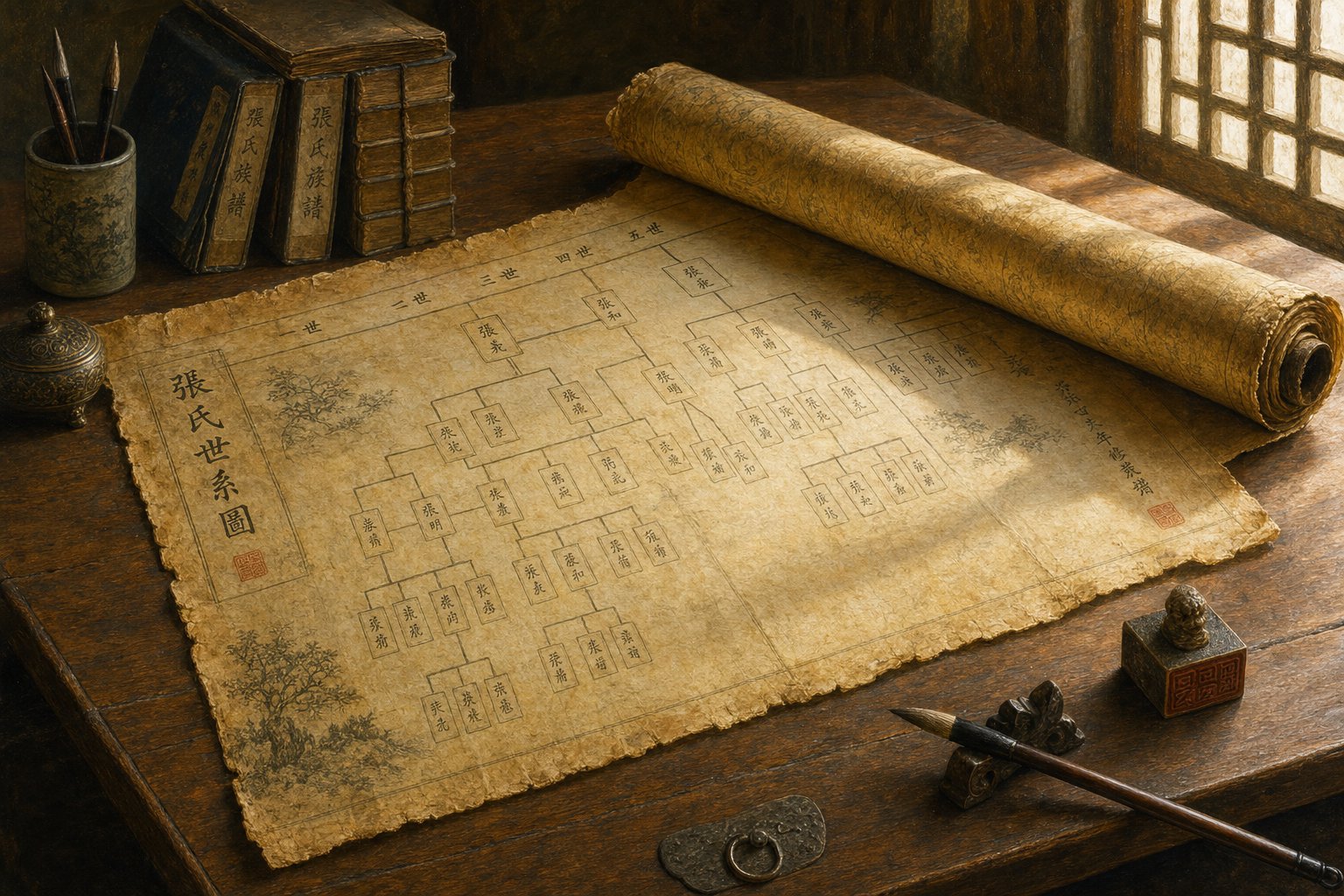
In Chinese tradition, generational naming follows a system called zibei (字辈) or banci (班次). Here's how it works: a committee of family elders composes a poem — sometimes a dozen characters long, sometimes stretching to over fifty — and each successive character in that poem becomes the generational marker for the next generation of descendants. Every child born into that generation shares the designated character as one syllable of their given name.
The most famous example belongs to the descendants of Confucius (the Kong family), whose generation poem was imperially bestowed during the Ming dynasty and later extended under the Qing dynasty and the Beiyang government. That poem spans 50 characters across 50 generations — a naming blueprint laid out centuries in advance. The current generation of Confucius's descendants uses characters from lines composed over 500 years ago.
These poems weren't just mnemonic devices. They functioned as planning tools. A family establishing a new lineage through emigration or social elevation would commission a poem long enough to cover 20 or more generations into the future. Once the poem's final character was reached, it could be recycled or extended by a new council of elders. The generation character typically occupies a fixed position — either the first or second character of the given name — though some lineages alternate position with each generation.
Korean Dollimja System
Korea's equivalent system is called dollimja (돌림자) or hangnyeolja (行列字). The core concept is similar: all members of the same generation within a clan share one syllable in their given name. But the selection method and social function diverge from the Chinese approach.
Do koreans have middle names in the Western sense? Not exactly. What outsiders sometimes interpret as korean middle names is actually the dollimja — the shared generational syllable occupying one of the two positions in a Korean given name. If the dollimja for a particular generation is "현" (hyeon), then all male cousins within that clan branch might be named Hyeon-woo, Hyeon-jun, Hyeon-seok, and so on. The other syllable carries individual identity.
A key structural difference: Korean dollimja commonly alternates position between generations. One generation places the shared syllable first (현우, 현준), while the next places it second (민현, 재현). This alternating pattern is far more prevalent in Korean names and surnames than in Chinese naming, where position tends to stay fixed within a lineage. The dollimja characters themselves often follow the Five Elements cycle (Wood, Fire, Earth, Metal, Water), with each generation's shared character containing a radical corresponding to the next element in sequence.
How Each System Tracks Lineage
Here's where the social function splits. Chinese generational poems solve a temporal problem — they tell you which generation someone belongs to within a known family line. If you meet a Kong family member whose given name starts with "令" (ling), you can pinpoint their exact generational position within Confucius's lineage by locating that character in the poem.
Korean dollimja solves a relational problem. When half the country shares the surname Kim, you need a mechanism to determine whether two strangers named Kim are actually from the same clan and, if so, how closely related they are. Recognizing a shared dollimja syllable between two people with the same korean names and last names immediately signals a generational connection — critical information in a culture where marrying within the same clan was historically prohibited.
| Feature | Chinese Generational Poems (字辈) | Korean Dollimja (돌림자) |
|---|---|---|
| Source of characters | Pre-composed poem by family elders | Often follows Five Elements cycle |
| Typical span | 20-50+ generations planned in advance | Determined per generation by clan council |
| Position in given name | Usually fixed (first or second character) | Commonly alternates between generations |
| Primary social function | Temporal mapping within a known lineage | Identifying clan relationships between strangers |
| Modern usage | Declining, especially in urban areas | Declining, but still referenced in clan records |
Both systems are losing ground in modern life. Urban Chinese families increasingly skip the generational poem entirely, choosing names based on personal preference rather than ancestral obligation. Korean parents — particularly those opting for pure hangul names without hanja backing — often bypass the dollimja tradition as well. Yet the underlying logic persists in genealogical records, and understanding it remains essential for anyone researching korean names and surnames across multiple generations or interpreting historical family documents from either culture.
The generational character, though, is only one piece of the naming puzzle. The other character — the one carrying individual meaning — reveals an even deeper philosophical split: how each culture decides which characters are worthy of a name in the first place.
Character Selection Philosophy and the Hanja Question
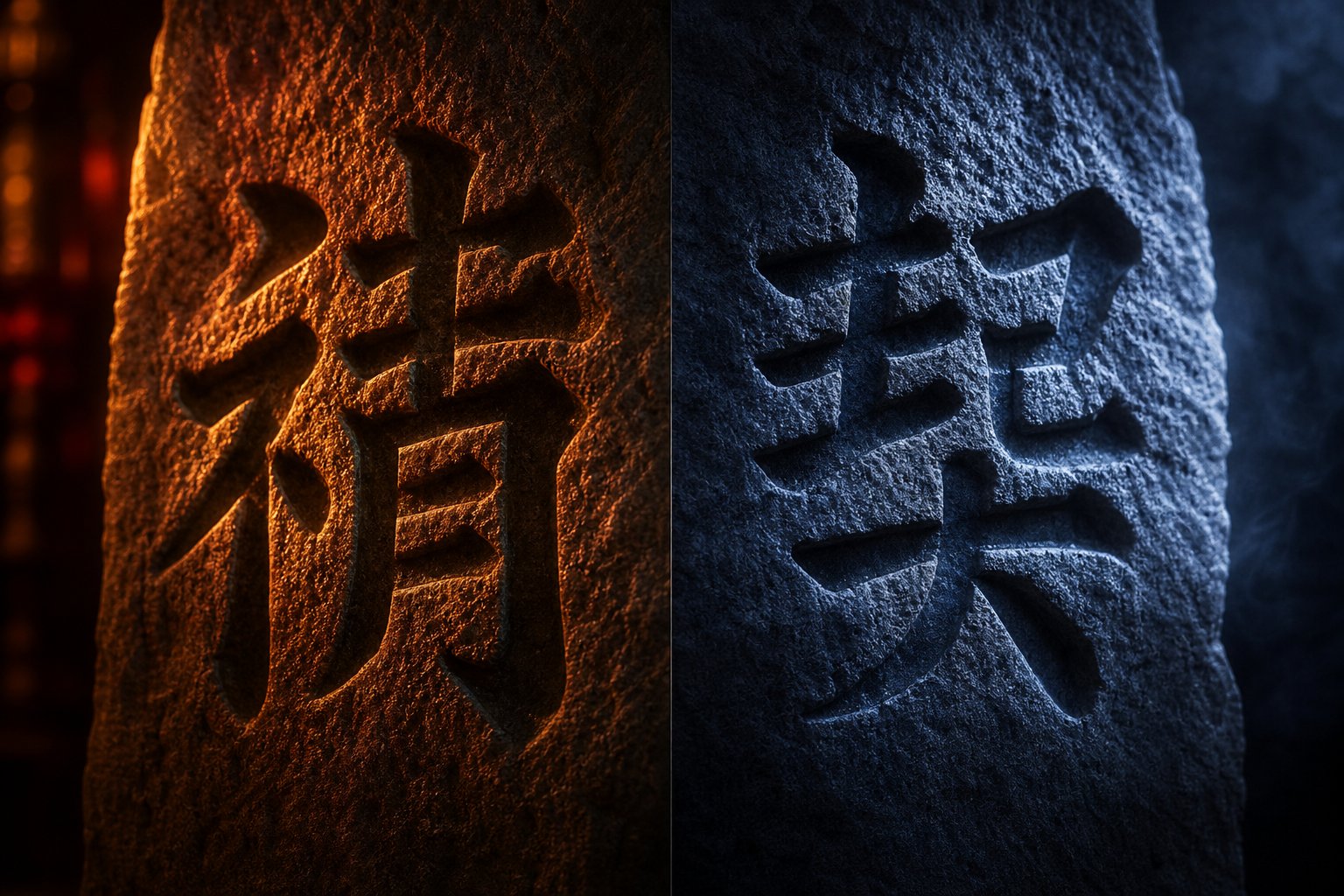
A character like 明 means "bright" in both Chinese and Korean. Same strokes, same radical structure, same ancient origin. Yet when a Chinese parent selects it for a name, they're drawing from one philosophical well — and when a Korean parent chooses it, they're often drawing from another entirely. The shared script masks a divergence in why certain characters get chosen and what cultural weight they carry once embedded in a name.
The Hanja Connection Explained
Hanja (한자, 漢字) refers to Chinese characters as borrowed and adapted into the Korean language. Unlike Japanese kanji, which underwent systematic simplification, hanja characters remained almost entirely identical to traditional Chinese forms. They were never given native Korean readings the way Japanese assigns kun'yomi — hanja only carry Sino-Korean pronunciations derived from historical Chinese phonology.
For centuries, every Korean name was written in hanja. Understanding korean last names and meanings required knowing the underlying Chinese character: Kim (金) means "gold," Park (朴) means "simple" or "unadorned," and Jung (鄭) references an ancient Chinese state. The korean family names meaning embedded in these characters connected Korean identity directly to a Chinese literary tradition stretching back millennia.
But here's the critical distinction: while China never developed an alternative script for names — hanzi remains the sole writing system — Korea created hangul in 1443. That invention eventually gave Korean naming a second path, one entirely unavailable to Chinese culture.
How Characters Diverged in Meaning
Even when both cultures use the same character, centuries of independent cultural evolution have shifted the connotations. Consider the character 龍 (dragon). In Chinese naming, it carries imperial associations — power, authority, celestial mandate. In Korean naming, the same character (용, yong) connects more strongly to folk mythology and protective shamanism. Same character, different cultural resonance.
The character 美 (beautiful) in a Chinese name often signals aesthetic refinement rooted in Confucian or Daoist ideals of natural harmony, while in a Korean name it frequently reflects fortune-telling calculations where the character's stroke count supplies a specific elemental value — the beauty is almost incidental to the metaphysical function.
Chinese character selection philosophy draws heavily from two streams: Confucian virtue naming (choosing characters like 仁 "benevolence," 义 "righteousness," or 礼 "propriety") and Daoist cosmological naming (characters evoking natural forces, longevity, or spiritual transcendence). The goal is often aspirational — the name expresses what the parents hope the child will embody.
Korean naming meaning traditions, while also influenced by Confucianism, lean more heavily on shamanistic and divinatory frameworks. The saju (four pillars) system and its associated fortune-telling practices treat characters less as aspirational poetry and more as corrective prescriptions. Korean meaning names are engineered to balance cosmic forces specific to the individual child's birth chart. The character's beauty or literary elegance matters, but it's subordinate to whether the character delivers the right elemental energy.
The Shift Toward Pure Korean Names
The most dramatic divergence between these two naming cultures is happening right now. A growing movement in South Korea rejects hanja entirely, opting for names written exclusively in hangul — names whose meanings derive from native Korean vocabulary rather than Chinese characters.
Organizations like VANK (Voluntary Agency Network of Korea) have launched platforms helping people discover "pure Korean" names built from indigenous vocabulary. Names like "Seul-A" combine native Korean roots — seulgiropda (wise) and ooh-a hada (elegant) — creating korean name meanings entirely independent of the Chinese character system. This movement frames pure Korean naming as both a cultural reclamation and a linguistic declaration of independence.
China has no equivalent movement. There is no alternative script, no "pure Chinese" naming trend that bypasses hanzi. Characters are the Chinese writing system — there's nothing to bypass them with. This asymmetry means Korean naming is actively evolving away from its shared-character heritage in a direction Chinese naming structurally cannot follow.
The implications for korean surnames and meanings are significant too. While surname characters remain fixed in hanja (you can't reinvent 金 as a pure Korean word), given names increasingly exist in a hangul-only space where the old rules about stroke counts, elemental radicals, and character-based fortune-telling simply don't apply. A pure hangul name like 하늘 (Haneul, meaning "sky") carries meaning through sound and native etymology rather than through the visual architecture of a Chinese character.
This philosophical split — characters as the permanent foundation in China versus characters as one option among several in Korea — reshapes how each culture's naming traditions will develop going forward. But names don't exist in isolation. They connect individuals to larger kinship networks, and the systems governing those connections reveal yet another layer where these two traditions have built different structures on shared foundations.
Clan Systems and Lineage Tracking
Names connect people to families. But in cultures where millions share the same surname, you need something beyond the family name itself to distinguish one lineage from another. Both Chinese and Korean traditions built elaborate systems for this purpose — yet the architectures they chose reflect fundamentally different social priorities.
Korean Bon-gwan System
When someone tells you their korean family name is Kim, that information alone tells you almost nothing about their ancestry. The real question is: which Kim? Korea's answer is the bon-gwan (본관) system — a geographic identifier linking each surname to a specific ancestral seat of origin.
The kim surname, for example, splits into over 300 distinct clans. A Kim from Gimhae (김해 김씨) traces their lineage to the ancient Gaya kingdom's founder, while a Kim from Gyeongju (경주 김씨) descends from Silla dynasty royalty. These are entirely separate families who happen to share a character. The same logic applies across all Korean surnames: the park last name origin splits between Miryang Park (밀양 박씨) and other branches, each with independent founding ancestors and genealogical records.
Even less common surnames carry this distinction. The jung surname (정/鄭) divides into clans based in Dongnae, Gyeongju, and Hadong — each with separate founding stories. Similarly, the kang surname origin (강/姜) traces to different ancestral seats like Jinju (진주), connecting bearers to distinct historical figures and migration paths. Two people named Kang might share zero genealogical connection despite the identical family name.
Bon-gwan isn't just trivia. Until 1997, South Korean law prohibited marriage between people sharing both the same surname and the same bon-gwan — regardless of how distantly related they actually were. A Gimhae Kim could not legally marry another Gimhae Kim, even if their common ancestor lived 600 years ago.
Chinese Jiapu Genealogies
China tracks lineage through a different mechanism: the jiapu (家谱), or clan genealogy book, paired with physical ancestral halls (citang, 祠堂). Where Korea uses geographic origin as the primary identifier, China anchors identity in documented descent and physical sacred spaces.
A jiapu is a comprehensive written record that can span dozens of generations. These documents include generation charts, surname origin studies, clan rules, biographical entries for notable ancestors, and records of ancestral hall properties. Before the Song Dynasty (960-1279 CE), jiapu served as official court documents proving ruling-class identity. After the Song Dynasty, they became social tools unifying families by kinship — spreading from aristocrats to commoners.
The ancestral hall functions as the physical anchor for this system. Halls house ancestral tablets, store the jiapu itself, and serve as gathering points for clan rituals. Their names often reference the clan's district of origin (junwang, 郡望) — a concept loosely parallel to Korean bon-gwan but operating through built infrastructure rather than a formal registry system. When Chinese families introduce themselves at social gatherings, they traditionally pair their surname with their district name, signaling which ancestral temple and lineage they belong to.
Social Functions of Each System
Both systems solve the same core problem — distinguishing between unrelated people who share a surname — but they do so through different social mechanisms and with different practical consequences:
- Marriage regulation — Korean bon-gwan historically created hard legal barriers to marriage within the same clan. Chinese naming taboos focused less on marriage prohibition by surname and more on avoiding ancestral names (bihui, 避讳), where using a character from an emperor's or direct ancestor's name was considered deeply disrespectful.
- Identity verification — Korean bon-gwan is recorded on official family registers and can be stated in a single phrase. Chinese jiapu verification requires consulting physical documents, sometimes stored in ancestral halls in remote villages.
- Scope of prohibition — Chinese bihui taboos extended beyond family. During imperial eras, the reigning emperor's name characters were avoided by the entire population — scholars would substitute homophones in examinations, and commoners would alter their own names if they shared a character with a new emperor. Korea practiced similar avoidance of royal names but applied it less broadly to the general population.
- Modern relevance — Korean bon-gwan remains part of official identity documents. Chinese jiapu, while culturally significant, holds no legal weight and exists primarily as a private family or clan association project.
- Geographic anchoring — Korean bon-gwan names a specific town or region permanently tied to the clan's identity. Chinese lineage connects to both a geographic origin and a physical ancestral hall that may still stand — or may have been destroyed during the Cultural Revolution and since rebuilt.
The practical upshot? In Korea, clan identity is compressed into a portable label — surname plus bon-gwan — that anyone can state and verify instantly. In China, clan identity lives in documents and buildings, requiring access to physical records or institutional memory to confirm. Both systems shaped naming practices by determining which characters were available (avoiding taboo names) and which social connections a name signaled to others.
These traditional structures still echo in modern life, but they're increasingly colliding with contemporary legal frameworks and cultural shifts that are reshaping what names can look like — and what governments allow parents to choose.
Modern Trends and Legal Frameworks
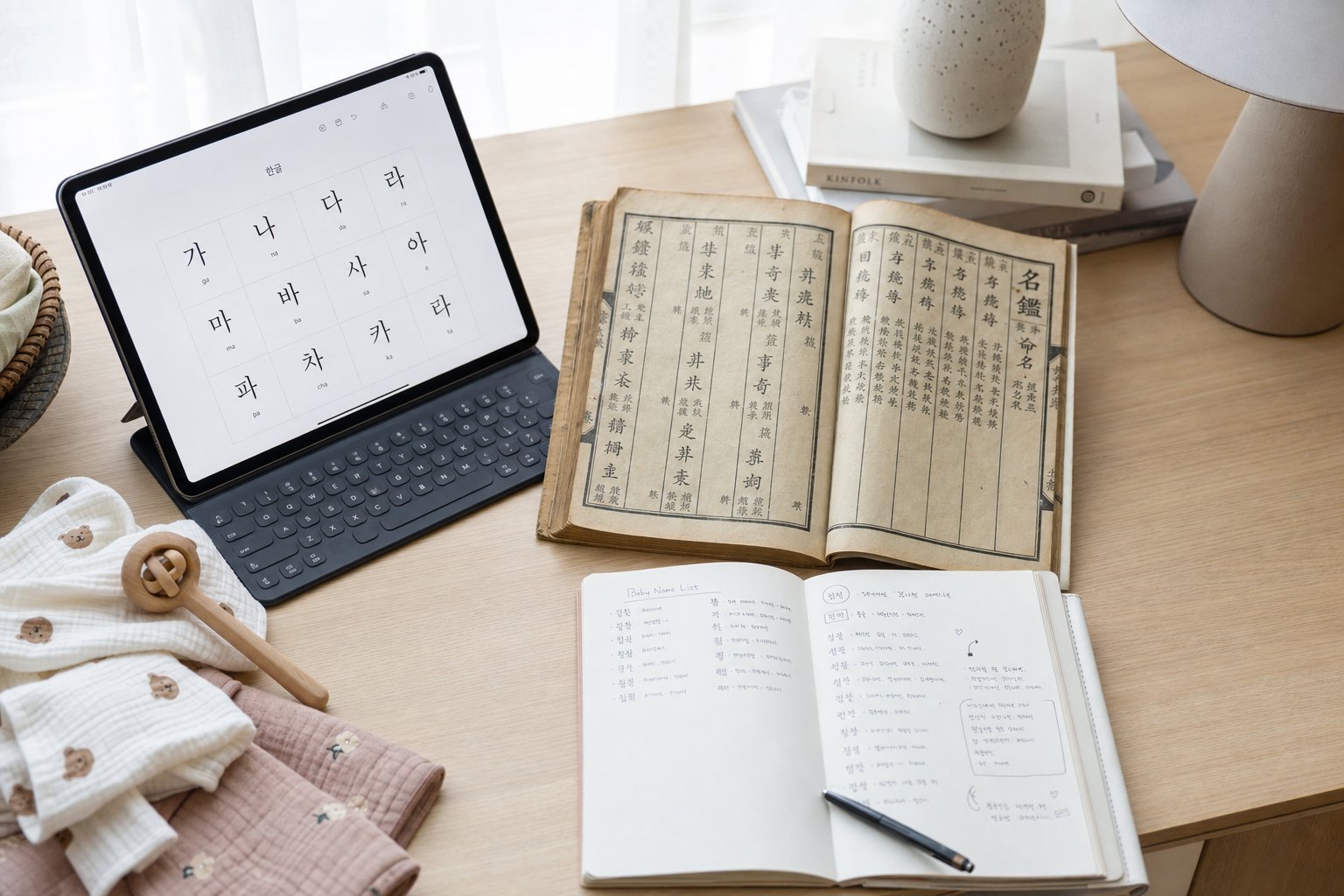
Traditional clan systems and generational poems evolved over centuries without government interference. Modern naming, though, doesn't happen in a vacuum. Both China and South Korea now regulate what parents can legally name their children — and the rules they've chosen reflect very different anxieties about identity, technology, and cultural preservation.
Modern Chinese Naming Regulations
China's one-child policy (1980-2015) left an unexpected mark on naming patterns. With only one shot at naming a child, parents gravitated toward single-character given names — shorter, punchier, and easier to pair with aspirational meaning. The result? A generation of near-identical names. By some estimates, nearly 300,000 people in China share the name "Zhang Wei" alone.
The government responded with tightening regulations. China's Civil Code and public security naming guidelines now restrict characters to those encodable in the national standard character set — effectively banning obscure or archaic characters that digital systems can't process. Recent crackdowns have targeted names containing symbols, numbers, or excessively rare characters that cause administrative headaches. Parents who want to use characters outside the standard set must petition for approval.
Ironically, the post-one-child era has swung the pendulum back. With naming duplication now a recognized social problem, younger Chinese parents are exploring rare characters, classical literary references, and four-character names (adding a second surname or compound given name) to differentiate their children. The tension between creative expression and administrative standardization defines China's current naming landscape.
Contemporary Korean Naming Trends
South Korea's regulatory approach works differently. The Family Registry Law (section 37) requires that any hanja used in personal names come from an approved list — currently capped at 5,038 characters. Parents wanting to use a character outside this list simply cannot register it. This creates a hard ceiling on character diversity that China's system doesn't impose.
But the bigger shift among south korean names isn't about which hanja to pick — it's about whether to use hanja at all. The pure hangul naming movement has accelerated since the late 1970s, producing names like Haneul (하늘, "sky"), Iseul (이슬, "dew"), and Seulgi (슬기, "wisdom") that derive meaning from native Korean vocabulary rather than Chinese characters. Some of the most popular korean names for recent generations are hangul-only constructions with no hanja backing whatsoever.
This trend intersects with another distinctive feature of Korean naming: many korean names are genderless by design. Names like Yun (윤), Jiho (지호), and Haneul carry no inherent gender marker, a quality that appeals to modern parents seeking flexibility. South Korea also imposed a five-syllable maximum on given names in 1993 after some parents registered absurdly long native Korean names — one famous example stretched to 16 syllables.
How Globalization Affects Both Traditions
Diaspora communities handle naming pressure differently in each culture. Americanized korean names typically involve adopting a Western first name for daily use while retaining the Korean name on legal documents — think "Daniel Park" in the office and "Park Jimin" at family gatherings. The Korean name remains intact; the English name layers on top.
Chinese diaspora families more commonly integrate Western and Chinese naming at the structural level. A Chinese-American child might be legally named "Emily Chen" with a separate Chinese name (陈美琳) used within the family but never appearing on official documents. The two names exist in parallel rather than in sequence.
Both approaches reflect a shared challenge: navigating systems designed for one cultural context while living in another. But the solutions reveal different priorities — Korean diaspora naming preserves the original name's integrity, while Chinese diaspora naming often creates two fully independent identity layers.
| Regulatory Dimension | China | South Korea |
|---|---|---|
| Character restrictions | Must be encodable in national standard character set | Given names limited to 5,038 approved hanja characters |
| Non-character names | Not permitted — all names must use hanzi | Pure hangul names fully legal and increasingly korean names popular |
| Name length limits | No formal character limit, but two-character given names are standard | Given names capped at five syllables (since 1993) |
| Name change process | Permitted but requires court approval and valid reason | Permitted through family court petition |
| Surname rules | Child typically takes father's surname; mother's surname allowed since 2021 | Child takes father's surname by default; mother's surname allowed by agreement |
| Duplicate name concerns | Government actively discourages common name combinations | Less acute due to hangul's phonetic flexibility |
The regulatory contrast captures a deeper philosophical split. China treats characters as the non-negotiable foundation of naming — the debate is only about which characters are acceptable. South Korea treats characters as one option among several, with pure hangul representing a legitimate and growing alternative. One system tightens control over a single naming medium; the other expands the available media entirely.
These diverging trajectories — China optimizing within its character system while Korea increasingly steps outside it — make a side-by-side summary essential for anyone trying to understand where both traditions stand today and where they're headed next.
The Complete Side-by-Side Breakdown
Seven dimensions. Two cultures. One shared ancestor script — and a long list of divergences that matter whether you're writing a novel, tracing a family tree, or choosing a name for a child born into both worlds. Here's everything distilled into a single reference point.
Complete Comparison at a Glance
| Dimension | Chinese Tradition | Korean Tradition |
|---|---|---|
| Surname pool size | ~6,000 active surnames from a historical pool of 20,000+ | ~288 surnames connected to 4,000+ clan branches |
| Surname concentration | Top 5 cover ~30% of population | Top 5 cover ~53% of population; the most common name in Korea (Kim) alone reaches 21.5% |
| Given name syllable count | One or two characters — both equally standard | Almost always two syllables; single-syllable given names are rare |
| Generational system | Zibei (字辈): pre-composed poems spanning 20-50+ generations | Dollimja (돌림자): shared syllable alternating position, often following Five Elements cycle |
| Character usage | Hanzi is the only writing system — no alternative exists | Hanja optional; pure hangul names increasingly common and legally valid |
| Clan structure | Jiapu genealogy books + physical ancestral halls | Bon-gwan (본관) geographic identifier tied to official family registers |
| Naming philosophy | Multi-dimensional optimization: tonal harmony, stroke balance, literary meaning, Five Elements | Saju-driven prescription: birth chart analysis determines elemental deficiency, characters selected as corrective |
| Modern regulations | Characters must be encodable in national standard set; no non-hanzi names permitted | Hanja limited to 5,038 approved characters; pure hangul names fully legal |
Chinese and Korean naming traditions share deep historical roots in Chinese character culture but have diverged into distinct systems with different social functions — one optimizing within a single script, the other expanding beyond it.
Key Takeaways for Researchers and Writers
If you're navigating these systems in practice — for business, creative writing, genealogy, or personal relationships — a few principles will save you from common mistakes:
- Don't assume interchangeability. A Korean surname like Kim and a Chinese surname like Jin (金) use the same character but belong to entirely different cultural systems. Popular korean surnames carry bon-gwan identifiers that have no Chinese equivalent.
- Respect the generational layer. If you encounter a Korean name where one syllable repeats across siblings or cousins, that's the dollimja — not a coincidence. In Chinese families, look for the zibei character occupying the same position across a generation.
- Recognize the hangul shift. Not every modern Korean name has hanja backing. Asking "what characters is that written with?" may not apply to younger Koreans whose names exist only in hangul. This question always applies in Chinese contexts.
- Understand that each korean surname maps to multiple clans. Two colleagues both named Park may share zero ancestry. The bon-gwan distinction matters socially in ways that Chinese surname-sharing typically does not.
- Account for naming philosophy differences. Chinese names tend toward poetic aspiration. Korean names — especially those chosen through saju consultation — tend toward metaphysical correction. Both are intentional, but the intent differs.
For fiction writers: building a Korean character's name using Chinese naming logic (or vice versa) will ring false to readers familiar with either tradition. The most common korean surnames and the most common korean names follow patterns distinct enough that cultural accuracy requires understanding which system you're working within.
For genealogy researchers: tracing a family across the Korean-Chinese border means switching between two entirely different record-keeping architectures — bon-gwan registries on one side, jiapu documents and ancestral halls on the other. The surname character may be identical, but the infrastructure surrounding it changes completely.
These two naming traditions started from the same raw materials over a thousand years ago. What they built with those materials tells you everything about how shared heritage can produce genuinely independent cultural systems — systems that deserve to be understood on their own terms, not collapsed into a single "East Asian naming" category.
Frequently Asked Questions About Chinese vs Korean Naming Traditions
1. Why do so many Koreans share the same last name?
Korea's extreme surname concentration traces back to its rigid class system. For most of Korean history, surnames belonged exclusively to royals and nobles. When commoners and lower classes finally gained the right to adopt family names during the late Joseon period, they overwhelmingly chose prestigious aristocratic names like Kim, Lee, and Park. Many even fabricated genealogies to claim noble lineage. By the time the class system was abolished in 1894, roughly 45% of the population shared just three surnames. Korea's total surname pool sits at only about 288 names, compared to China's 6,000+ active surnames, making it one of the most concentrated surname systems in the world.
2. Do Korean names use Chinese characters?
Traditionally, yes. Korean names were written in hanja, which are Chinese characters adapted into the Korean language. Each syllable of a Korean name corresponded to a specific hanja with defined meaning. However, a significant modern shift is underway. South Korea now legally permits pure hangul names that derive meaning from native Korean vocabulary rather than Chinese characters. Names like Haneul (sky) or Iseul (dew) have no hanja backing at all. China has no equivalent option since hanzi remains the sole writing system for names. This divergence represents one of the most fundamental differences between the two naming traditions today.
3. What is the Korean dollimja system and how does it differ from Chinese generational naming?
Dollimja is a shared syllable given to all members of the same generation within a Korean clan. It typically alternates position between generations and often follows the Five Elements cycle. Chinese generational naming uses zibei, pre-composed poems where each character designates a successive generation, sometimes planning 50+ generations ahead. The key functional difference is that Chinese poems solve a temporal problem (pinpointing someone's generation within a known lineage), while Korean dollimja solves a relational problem (identifying whether two strangers with the same surname belong to the same clan and generation).
4. How do Chinese and Korean parents choose characters for baby names differently?
Chinese parents typically optimize across four dimensions simultaneously: tonal harmony, visual stroke balance, literary meaning from classical poetry, and Five Elements balance based on the birth chart. The result aims for aesthetic unity, treating the name as a compact poem. Korean parents more commonly consult a naming specialist (jangmyeongga) who analyzes the baby's Four Pillars of Destiny chart and prescribes characters that correct elemental deficiencies. Korean naming treats characters as functional medicine rather than artistic expression, with stroke count mapping and elemental values taking priority over sound or literary elegance.
5. What is the Korean bon-gwan system and why does it matter?
Bon-gwan is a geographic identifier linking each Korean surname to a specific ancestral seat of origin. Since Korea has extreme surname concentration, bon-gwan distinguishes between unrelated families sharing the same name. The Kim surname alone splits into over 300 distinct clans based on geographic origin. Until 1997, South Korean law actually prohibited marriage between people sharing both the same surname and bon-gwan. China uses a different system, tracking lineage through jiapu genealogy books and physical ancestral halls rather than a formal geographic registry. Bon-gwan remains part of official Korean identity documents today.