Understanding the Chuci and Its Baby Naming Legacy
Imagine naming your child after a line of poetry written over 2,200 years ago, one that carries the weight of loyalty, natural beauty, and spiritual longing in a single pair of characters. That is exactly what generations of Chinese families have done, and what a growing number of parents around the world are discovering through the Chuci, or Songs of Chu.
What Is the Chuci Anthology
The Chuci (楚辞) holds a dual identity in Chinese literary history. It is both a poetic genre and an anthology. As a genre, it refers to a style of verse rooted in the dialect, accent, and folk traditions of the ancient state of Chu, a kingdom that once spanned what is now Hunan and Hubei provinces in southern China. As an anthology, it is a compiled collection of works primarily attributed to the statesman-poet Qu Yuan (340-278 BC) and later poets including Song Yu, Dongfang Shuo, and Wang Bao. The scholar Liu Xiang assembled the first edition during the Western Han Dynasty, gathering 16 pieces into a single literary collection. Wang Yi later expanded it to 17 works with his own annotations.
What sets the Chuci apart from other ancient China poetry is its emotional intensity. The anthology is characterized by profound emotions, wild imagination, and rich allusions to mythology from the dawn of Chinese civilization. It stands alongside the Shijing (Book of Songs) as one of the twin literary pinnacles of early Chinese verse. Later scholars called its distinctive voice the "Sao Style," named after Qu Yuan's masterpiece Li Sao.
Why Parents Choose Names from Classical Poetry
Chinese naming culture runs deep. Unlike many Western traditions, most Chinese families do not recycle names from relatives. Instead, they seek characters that are elegant, meaningful, and ideally unique. Among the many approaches to naming, one tradition has endured for centuries and is now experiencing a revival among younger parents:
男楚辞, 女诗经 (nan Chuci, nu Shijing) — For a boy, turn to the Chuci. For a girl, turn to the Shijing.
This saying, passed down through generations, reflects a belief that the Chuci's grand, courageous imagery suits masculine names, while the Shijing's gentler love poems inspire feminine ones. As Sixth Tone notes, this creed is especially popular among younger generations whose love for ancient literature is part of a wider resurgence of interest in Chinese antiquity.
You'll notice this tradition is no longer confined to families in mainland China. Diaspora communities, bilingual households, and parents with no Chinese heritage at all are drawn to chuci songs of chu baby names for the same reason: each name carries a story, a philosophical stance, and a connection to one of humanity's oldest literary traditions. The characters are not arbitrary labels. They are compressed poems.
The real question, then, is which poems within this vast anthology yield the most compelling names, and how do you navigate their layers of meaning to find the right one for your child?
The History and Themes Behind the Songs of Chu
Every name drawn from the Chuci carries the fingerprint of one man's extraordinary life. To understand why these chinese verses resonate so deeply as naming material, you need to know the poet behind them and the world he inhabited.
Qu Yuan and the Origins of the Songs of Chu
Qu Yuan (屈原, d. 278 BCE) was not simply a writer. He served as a high minister to King Huai of Chu, advising on governance and foreign alliances during one of the most turbulent periods in Chinese history. He advocated reforms and pushed for an alliance with the state of Qi to counter the rising threat of Qin. Court rivals slandered him, and he was dismissed from office. Exiled and heartbroken, Qu Yuan poured his grief, loyalty, and longing into verse. His masterpiece Li Sao (On Encountering Sorrow) reads as part autobiography, part spiritual journey, and part political protest. When the Chu capital eventually fell, he drowned himself in the Miluo River, an act that transformed him into a symbol of moral integrity across Chinese culture.
The anthology itself grew over centuries. The Han-period scholar Liu Xiang (77-6 BCE) first compiled the collection, and Wang Yi (89-158 CE) later expanded and annotated it. Beyond Qu Yuan's own qu yuan poems, the anthology incorporates works by Song Yu (298-222 BCE), another minister at the Chu court, along with later poets like Jia Yi, Dongfang Shuo, and Wang Bao. David Hawkes' landmark translation Ch'u Tz'u: The Songs of the South (1959) and Gopal Sukhu's more recent scholarly work have made these ancient texts accessible to English-speaking readers, opening the door for parents worldwide to explore them as naming sources.
Themes That Make Chuci Names Meaningful
What makes the Chuci so unusually rich for baby naming? Unlike straightforward narrative poetry, these verses layer meaning through allegory. Qu Yuan used flowers to represent virtue, celestial journeys to express spiritual aspiration, and mythological figures to embody ideals. A single character plucked from a line can carry an entire philosophical stance.
The major thematic categories found across the anthology include:
- Nature imagery — orchids, cassia, lotus, rivers, clouds, and mountains appear constantly as symbols of purity and resilience
- Virtue and moral integrity — loyalty to one's principles, refusal to compromise with corruption, and steadfast character
- Beauty and elegance — jade, fragrant herbs, and luminous imagery convey refinement and inner worth
- Celestial and spiritual imagery — deities, stars, heavenly chariots, and cosmic journeys represent aspiration and transcendence
- Strength and endurance — imagery of weathering storms, crossing vast rivers, and standing alone against adversity
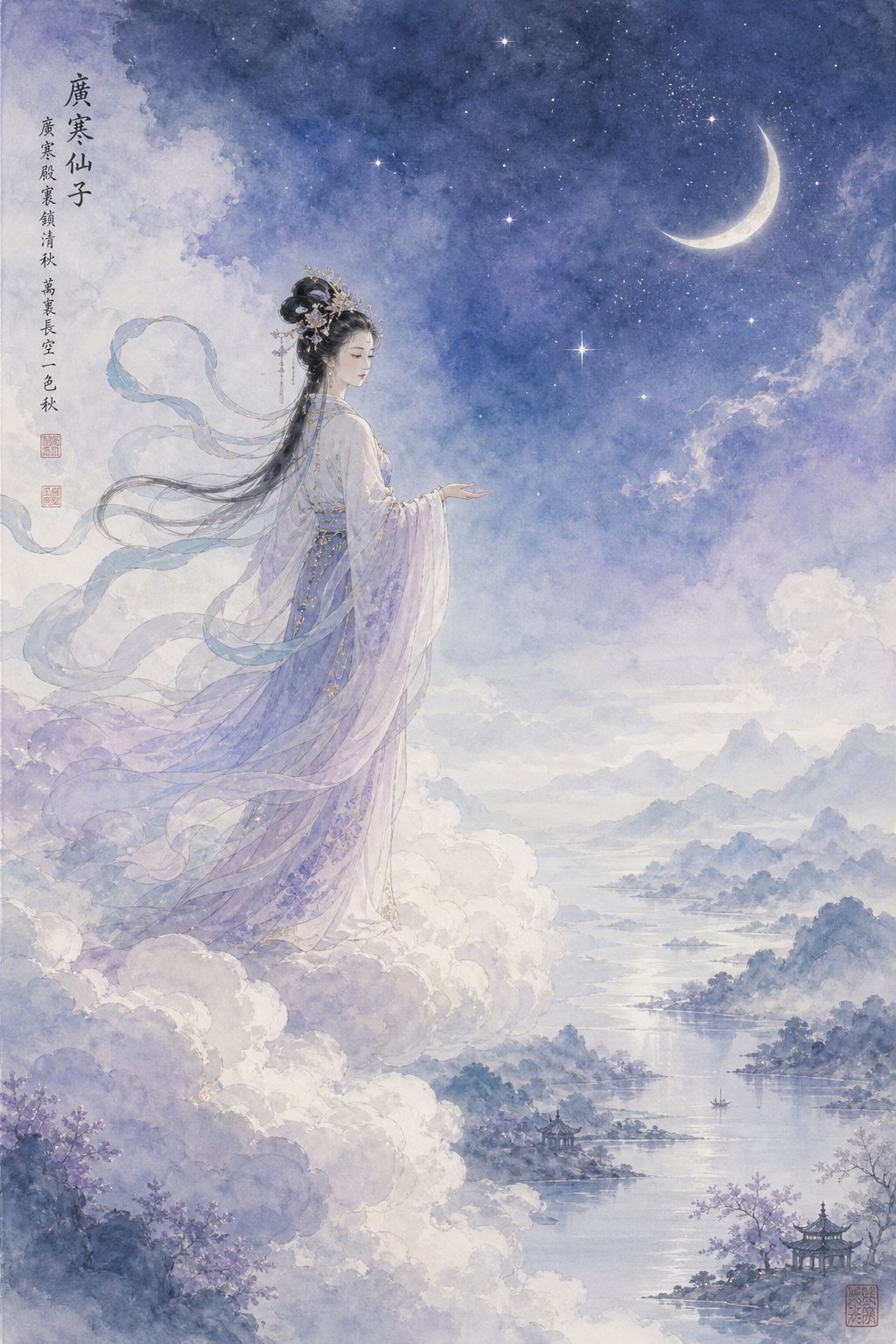
Southern poetry from the Chu tradition differs markedly from the more restrained northern style. Where northern verse tends toward directness, the Chuci is rich with sentiment, mystical visions, and shamanic invocations. Qu Yuan rides a horse-drawn chariot through the heavens. He summons river goddesses. He adorns himself with flowers as armor against a corrupt world. This emotional and imaginative intensity is precisely what gives Chuci-derived names their depth. A name like Yunzhong (云中, "within the clouds") is not merely descriptive. It references a specific deity from the Nine Songs and carries connotations of mystery, elevation, and otherworldly grace.
These thematic layers mean that parents choosing from this tradition are not just picking pleasant sounds. They are selecting compressed narratives, each one rooted in a specific poem, a specific image, and a specific moral stance that has resonated for over two millennia. The challenge lies in knowing which sections of the anthology offer the richest material and how to extract names that work in practice.
Which Chu Ci Poems Are Richest for Baby Names
The Chuci anthology contains 17 major sections, but not all of them are equally useful for naming. Some poems are dense with philosophical argument. Others consist of rhetorical questions or ritual formulas. The sections that yield the most compelling baby names share three qualities: vivid imagery, characters with clear positive meanings, and sounds that pair well with common Chinese surnames. Three sections stand above the rest as naming goldmines.
Li Sao as a Source of Virtue Names
Li Sao (离骚, "On Encountering Sorrow") is the longest and most celebrated poem in the entire ci chu tradition. Running to over 370 lines, it follows Qu Yuan's spiritual autobiography as he journeys through heaven and earth, adorning himself with fragrant plants and seeking an ideal ruler worthy of his loyalty. The poem is saturated with botanical imagery, each plant standing as an allegory for moral character.
What makes Li Sao particularly rich for boy names is its vocabulary of virtue. Qu Yuan names himself Zhengze (正则, "just and upright") and Lingguang (灵均, "divinely balanced") within the poem's opening lines, establishing a tradition of embedding moral aspiration directly into personal names. Throughout the text, you'll find characters pairing concepts like brilliance with integrity, fragrance with loyalty, and light with perseverance.
Li Sao also works well for girl names, though this is less traditional. Its floral imagery — orchids, cassia, angelica, lotus — provides elegant feminine characters. The poem references over twenty distinct plants, many of which carry the grass radical (艹) that signals botanical beauty in written Chinese. However, the sheer length of Li Sao and its political allegory mean that extracting names requires careful reading. Not every beautiful phrase translates into a usable name. Some characters are archaic, some carry tonal awkwardness when paired with modern surnames, and some have shifted meaning over two millennia.
Nine Songs and Its Deity-Inspired Names
If Li Sao is the philosophical heart of the anthology, Jiu Ge (九歌, Nine Songs) is its most evocative section for naming purposes. Despite the title, this section actually contains eleven separate poems, each addressed to a different deity or spirit. These were originally ritual songs performed with costumes and orchestral accompaniment in the Yangzi River valley, invoking divine beings through a process of courtship and praise.
The deity names themselves are immediately usable: Yunzhong Jun (云中君, Lord within the Clouds), Shao Si Ming (少司命, Lesser Master of Fate), and Xiang Jun (湘君, God of the Xiang River) all contain characters that work beautifully in modern names. But the real treasure lies in the descriptive imagery within each poem. Shan Gui (山鬼, The Mountain Spirit) depicts a goddess wearing climbing-fig vine and riding a magnolia chariot drawn by leopards. Shao Si Ming describes celestial movements and the delicate balance of fate. Each poem is compact — far shorter than Li Sao — making it easier to scan for naming material.
The poetry china tradition has produced nothing quite like these eleven songs. Their blend of shamanic ritual, romantic longing, and nature worship creates a vocabulary that feels both ancient and surprisingly fresh. Characters drawn from the Nine Songs tend to carry an ethereal, luminous quality that appeals to parents seeking names with spiritual depth rather than purely earthly virtues. The Xiang River poems (numbers 3 and 4) are especially popular for feminine names, while Guo Shang (国殇, Hymn to the Fallen) — which David Hawkes called "surely one of the most beautiful laments for fallen soldiers in any language" — provides powerful masculine imagery of courage and sacrifice.
Nine Declarations for Names of Moral Strength
Jiu Zhang (九章, Nine Declarations) is the third major source, consisting of nine individual poems that chronicle Qu Yuan's emotional journey through exile. Where Li Sao is allegorical and the Nine Songs are ritualistic, the Nine Declarations are deeply personal. Poems like "Crossing the River" (涉江), "Embracing Sand" (怀沙), and "Thinking of a Fair One" (思美人) express raw grief, homesickness, and unwavering moral resolve.
Names drawn from this section tend to carry emotional weight and moral seriousness. The vocabulary here centers on endurance, reflection, and inner strength rather than celestial grandeur. One standout piece is "In Praise of the Orange-Tree" (橘颂), which uses the orange tree as a metaphor for a person who remains rooted and true regardless of circumstance. Characters from this poem work particularly well for names conveying steadfastness and quiet integrity.
The Nine Declarations yield fewer total names than either Li Sao or the Nine Songs, partly because their emotional intensity sometimes produces characters too heavy or sorrowful for a child's name. Careful selection is key — you want the resilience without the grief, the moral clarity without the bitterness of exile.
The following table compares these three sections side by side, helping you identify where to focus your search based on the qualities you value most:
| Section | Extractable Names | Dominant Themes | Gender Suitability |
|---|---|---|---|
| Li Sao (离骚) | 40-60 characters/pairs | Virtue, botanical imagery, moral aspiration, cosmic journey | Primarily boys; girls through floral imagery |
| Nine Songs (九歌) | 60-80 characters/pairs | Deities, celestial beauty, nature spirits, romantic longing, heroism | Both; strongest source for girls and ethereal boy names |
| Nine Declarations (九章) | 25-40 characters/pairs | Moral endurance, emotional depth, loyalty, rootedness | Primarily boys; select pieces for girls |
Why do certain poems yield more usable names than others? Three factors determine practical viability. First, character beauty — some ancient characters have fallen out of common use and may cause confusion on official documents. Second, tonal quality — names need to sound pleasing when spoken aloud, and characters with clashing tones or awkward consonant clusters get filtered out naturally. Third, meaning clarity — the best names carry meanings that are immediately recognizable to educated Chinese speakers without requiring a literary footnote. The Nine Songs score highest on all three counts because their imagery is concrete and visual rather than abstract, their language is more accessible than Li Sao's dense allegory, and their deity names have remained culturally familiar across centuries.
Even poems from the tang dynasty and later periods drew inspiration from these Chuci sections, recycling their imagery and vocabulary. This literary continuity means that a name sourced from the Nine Songs or Li Sao carries recognition value far beyond the original text — it connects to an entire tradition of poetry china has built over millennia. The specific names waiting within each section, and how to match them to your child's gender and your family's values, is where the real craft begins.
Boy Names Inspired by the Songs of Chu
The craft begins with intention. The '男楚辞' tradition does not simply mean picking any attractive character from the anthology. It directs parents toward a specific register of meaning: integrity, ambition, cosmic scope, and natural grandeur. Qu Yuan wrote as a man who refused to compromise his principles, and the vocabulary he chose reflects that stance. Boy names drawn from his work tend to carry an inherent seriousness, a sense of purpose embedded at the character level. Tang dynasty poets centuries later still referenced these same images when crafting verses about honor and aspiration, which speaks to the enduring power of this naming source.
What follows is a curated selection organized by the two dominant thematic currents for masculine names: virtue and integrity on one hand, nature and celestial imagery on the other.
Virtue and Integrity Names for Boys
These names draw from passages where Qu Yuan articulates moral ideals directly. They suit families who want a name that communicates principled character and inner strength.
| Character | Pinyin | Source Poem | Meaning |
|---|---|---|---|
| 正则 | Zhengze (zheng ze) | Li Sao — "名余曰正则兮" | Just and principled. Qu Yuan's own given name within the poem, signifying one who follows the straight path of righteousness. |
| 灵均 | Lingjun (ling jun) | Li Sao — "字余曰灵均" | Divinely balanced. Qu Yuan's courtesy name, suggesting a spirit that is both transcendent and harmonious. |
| 修远 | Xiuyuan (xiu yuan) | Li Sao — "路漫漫其修远兮" | Long and far-reaching. From the famous line about the endless road of seeking truth, conveying perseverance and vision. |
| 信芳 | Xinfang (xin fang) | Li Sao — "苟余情其信芳" | Truly virtuous. Fragrance as metaphor for moral character that remains genuine regardless of circumstance. |
| 秉德 | Bingde (bing de) | Nine Declarations (橘颂) — "秉德无私" | Upholding virtue selflessly. From the Orange Tree ode, describing a person rooted in principle like a tree that never transplants. |
Notice how each name encodes a specific moral stance. Zhengze is not vaguely positive — it asserts that the bearer walks a just path. Xiuyuan does not merely sound pleasant — it references one of the most quoted lines in all of Chinese literature, instantly recognizable to educated speakers. This recognition factor is part of what makes the chu wise naming tradition so appealing: the name functions as a cultural signal, connecting your child to a lineage of literary awareness that tang poets and scholars have honored for millennia.
Nature and Celestial Names for Boys
The Chuci's cosmic imagery offers a different register entirely. These names evoke vastness, light, and the natural world at its most awe-inspiring.
| Character | Pinyin | Source Poem | Meaning |
|---|---|---|---|
| 云中 | Yunzhong (yun zhong) | Nine Songs (云中君) — "云中君" | Within the clouds. The title of a deity poem, suggesting mystery, elevation, and a spirit that dwells above the ordinary. |
| 望舒 | Wangshu (wang shu) | Li Sao — "前望舒使先驱" | The moon's chariot driver. A celestial deity who guides the moon across the night sky, evoking gentle luminosity and guidance. |
| 承宇 | Chengyu (cheng yu) | Jiu Bian — "云霏霏而承宇" | Clouds embracing the sky. An image of mist rising to meet the heavens, suggesting expansiveness and upward aspiration. |
| 嘉树 | Jiashu (jia shu) | Nine Declarations (橘颂) — "后皇嘉树" | Noble tree. The opening image of the Orange Tree ode, representing a person of fine character who stands tall and rooted. |
| 辰良 | Chenliang (chen liang) | Nine Songs (东皇太一) — "吉日兮辰良" | Auspicious star, favorable time. From the invocation to the supreme deity, carrying connotations of fortunate destiny and brightness. |
Wangshu deserves special attention. The modern Chinese name for the lunar rover Chang'e-4's Yutu companion probe drew from similar celestial mythology, and the poet Dai Wangshu (1905-1950) famously bore this name. It demonstrates how Chuci-derived names maintain cultural currency across centuries — from ancient verse through tang dynasty poets who echoed these images, all the way to contemporary usage.
When selecting from either category, pay attention to how the name pairs with your surname. A two-character given name like Yunzhong carries a three-syllable rhythm when combined with a single-character surname (e.g., Li Yunzhong), creating a cadence that flows naturally in spoken Mandarin. A single-character pick like the "yun" from Yunzhong can work alone but loses the literary reference that gives the name its depth.
The masculine names above share a common thread: they refuse smallness. Whether expressing moral resolve or cosmic scope, each one positions the bearer within a tradition that values grandeur of spirit. Yet the Chuci is not exclusively masculine territory. Its flower imagery, goddess figures, and dream-like landscapes offer equally compelling material for daughters — a dimension the traditional saying only partially acknowledges.
Girl Names from the Chuci Anthology
The traditional saying assigns the Shijing to daughters, but the Chuci refuses to cooperate with neat categories. Its pages overflow with goddess figures draped in orchids, river spirits trailing mist, and mountain deities crowned with climbing-fig vine. Scholars have long noted that the anthology's flower and plant names carry deep symbolic weight — fragrant plants represent virtue and beauty, while the female deities of the Nine Songs embody grace, mystery, and emotional depth. For parents seeking girl names with literary resonance, the Chuci offers material every bit as rich as the Shijing, just with a different temperament: wilder, more luminous, more spiritually charged.
Floral and Nature Names for Girls
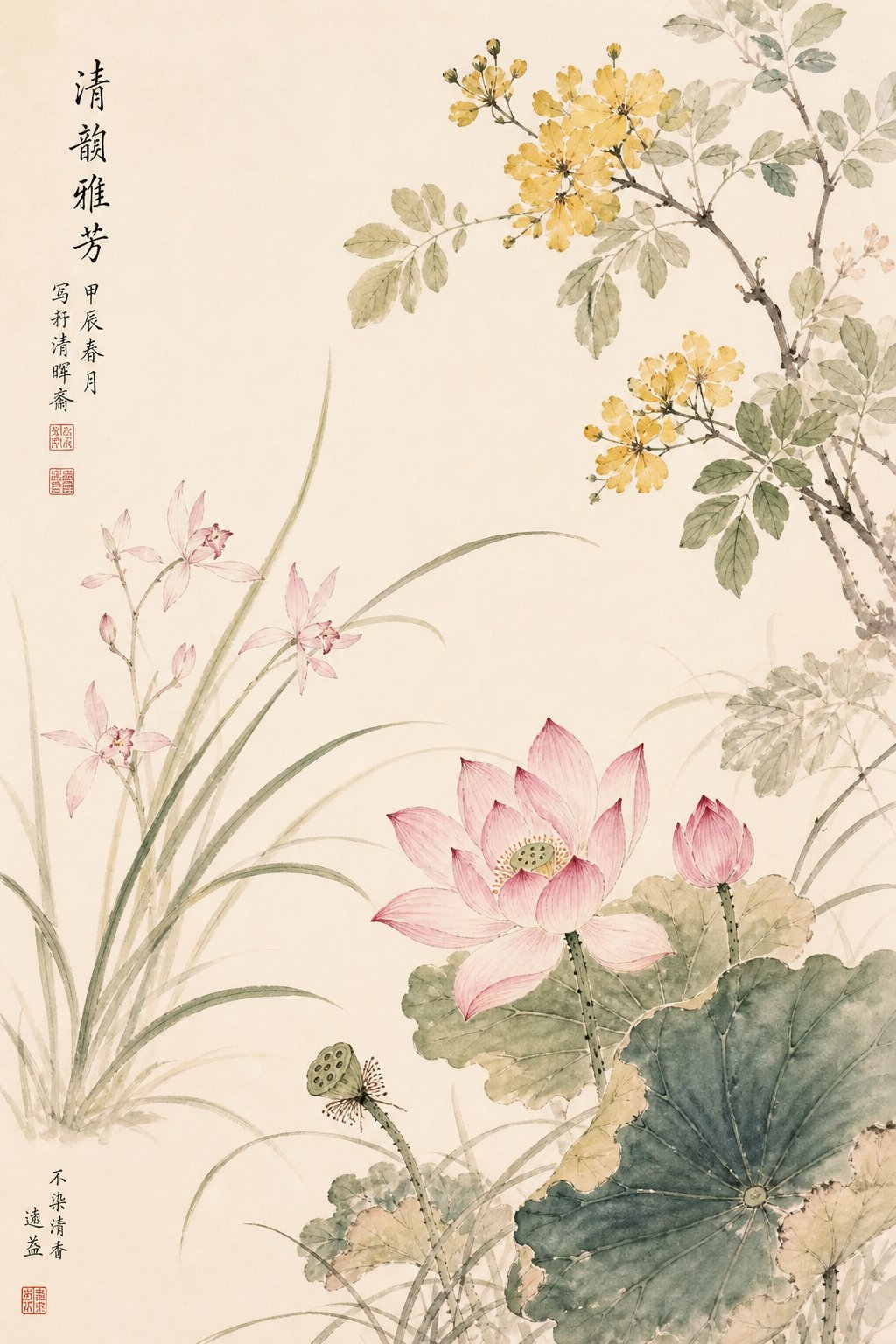
Qu Yuan adorned himself with flowers as a form of moral armor. In the Li Sao alone, over twenty distinct plants appear, each carrying allegorical meaning. Wang Yi, the earliest authoritative Chuci commentator, explained the principle clearly: "good birds and fragrant plants are used to represent loyal ministers." But these same botanical characters — orchid, angelica, cassia, lotus — also carry an inherent elegance that makes them natural choices for feminine names. The grass radical (艹) that tops many of these characters signals botanical beauty at a glance in written Chinese.
| Character | Pinyin | Source Poem | Meaning |
|---|---|---|---|
| 若兰 | Ruolan (ruo lan) | Li Sao — "扈江离与辟芷兮, 纫秋兰以为佩" | Like an orchid. Combines "ruo" (graceful, like) with "lan" (orchid), the Chuci's most iconic plant symbol of inner refinement and quiet virtue. |
| 蕙茝 | Huichi (hui chi) | Li Sao — "杂申椒与菌桂兮, 岂惟纫夫蕙茝" | Fragrant herbs. Two aromatic plants paired together, representing a person whose goodness is evident without effort, like natural perfume. |
| 芷若 | Zhiruo (zhi ruo) | Li Sao — "岸芷汀兰" tradition | Angelica and iris. Two riverbank plants suggesting purity that thrives in quiet, unspoiled places. |
| 琼华 | Qionghua (qiong hua) | Nine Songs — "被石兰兮带杜衡" | Jade blossom. "Qiong" (fine jade) paired with "hua" (flower/splendor) evokes something precious and blooming — beauty that is both rare and natural. |
| 杜若 | Duruo (du ruo) | Nine Songs (山鬼) — "山中人兮芳杜若" | A fragrant plant from the Mountain Spirit poem. The goddess Shan Gui is described as smelling of duruo, linking this name to wild, untamed beauty. |
You'll notice that many of these names pair two botanical characters together, creating a layered effect. Ruolan does not simply mean "orchid" — the addition of "ruo" (若) softens it, adding a quality of resemblance or aspiration. The name suggests someone who embodies orchid-like grace rather than claiming it outright. This subtlety is characteristic of Chuci naming at its best.
Celestial and Dream-Inspired Names for Girls
Beyond the botanical, the Chuci's female deities offer a different palette entirely. Xiang Fei (湘妃, the Lady of the Xiang River) and Shan Gui (山鬼, the Mountain Spirit) are among the most vivid feminine figures in all of ancient Chinese literature. They appear wreathed in clouds, riding dragon-drawn chariots, waiting by riverbanks for lovers who may never arrive. Their imagery lends itself to names that feel ethereal and slightly otherworldly.
The broader Chu literary tradition deepens this well further. Zhuangzi, himself a product of Chu culture, gave Chinese literature one of its most haunting images: the butterfly dream. In his famous parable, he wakes from dreaming he was a butterfly and cannot determine whether he is a man who dreamed of being a butterfly, or a dreaming butterfly imagining it is a man. This dream of the butterfly has inspired feminine names for centuries, capturing the quality of something beautiful, transient, and suspended between worlds.
| Character | Pinyin | Source Poem | Meaning |
|---|---|---|---|
| 瑶溪 | Yaoxi (yao xi) | Nine Songs — celestial imagery tradition | Jade stream. "Yao" (precious jade, mythical) combined with "xi" (stream) suggests a luminous waterway in a celestial landscape — beauty that flows rather than stands still. |
| 湘灵 | Xiangling (xiang ling) | Nine Songs (湘夫人) — "帝子降兮北渚" | Spirit of the Xiang River. Drawn from the goddess poems, this name carries connotations of grace, musical talent, and deep feeling. |
| 梦蝶 | Mengdie (meng die) | Zhuangzi (Chu tradition) — "庄周梦蝶" | Butterfly dreams. Directly references the Zhuangzi butterfly dream parable, evoking transformation, wonder, and the beauty of impermanence. |
| 云裳 | Yunshang (yun shang) | Nine Songs — "青云衣兮白霓裳" | Cloud garments. From the celestial robing imagery of the deity poems, suggesting someone dressed in sky and light. |
| 灵兮 | Lingxi (ling xi) | Nine Songs (湘君) — "横流涕兮潺湲" | Spiritual grace. "Ling" (spirit, divine) paired with the poetic particle "xi" creates a name that sounds like a whispered invocation — delicate and ancient. |
Mengdie stands apart from the other names here because it draws from Zhuangzi rather than the Chuci anthology directly. Yet the connection is organic. Zhuangzi lived in the state of Song but was steeped in Chu philosophical culture, and his butterfly dreams parable shares the same dreamlike, boundary-dissolving quality that pervades the Nine Songs. Parents drawn to this name are tapping into a broader Chu literary sensibility — one where the line between waking and dreaming, mortal and divine, remains beautifully unclear.
A practical note: several of these names use the jade radical (玉/王) in characters like 瑶 and 琼. In Chinese naming culture, jade signifies moral beauty, durability, and preciousness without ostentation. When you see this radical in a Chuci-derived girl name, it signals that the character carries connotations of something treasured and enduring rather than merely decorative.
These feminine names share a quality that sets them apart from typical modern Chinese girl names: they refuse prettiness for its own sake. Each one anchors its beauty in a specific literary image — a goddess waiting by a river, a butterfly dissolving the boundary between dream and reality, an orchid blooming unseen in a mountain valley. The depth is the point. But depth alone does not make a name practical. Understanding how these characters function at the structural level — their radicals, stroke counts, and tonal interactions — determines whether a beautiful literary reference actually works as a name your daughter will carry through daily life.
Character Analysis and Tonal Harmony for Chuci Names
A name might carry a stunning literary reference, but if its characters clash visually or its tones stumble when spoken aloud, something essential is lost. Chinese characters are not abstract letters. Each one is a visual composition built from smaller components called radicals, and each carries a specific tone that shapes how the name sounds in conversation. Understanding these structural elements turns name selection from guesswork into informed craft.
Radicals and Stroke Counts That Matter
Every Chinese character contains at least one radical — a building block that often hints at the character's semantic category. When you encounter a Chuci-derived name, the radical acts as a visual clue to its meaning layer. A parent who recognizes these components can immediately sense what territory a name occupies, even before consulting a dictionary.
The radicals most frequently found in chuci songs of chu baby names cluster around a few semantic families:
- 艹 (cao, grass radical) — Signals plants and flowers. Found in characters like 兰 (orchid), 芷 (angelica), 蕙 (fragrant orchid), and 若 (iris/like). Names carrying this radical connect directly to the Chuci's botanical allegory tradition.
- 王/玉 (wang/yu, jade radical) — Indicates preciousness and moral beauty. Present in 瑶 (precious jade), 琼 (fine jade), and 珑 (clarity). Jade imagery runs throughout tang dynasty poetry and earlier Chu verse alike, symbolizing virtue that endures.
- 氵 (shui, water radical) — Represents fluidity, depth, and grace. Found in 溪 (stream), 湘 (Xiang River), and 泽 (marsh/grace). The Chuci's river goddess poems make water-radical characters especially resonant for names.
- 心/忄 (xin, heart radical) — Conveys emotion, spirit, and inner life. Characters like 思 (longing), 怀 (cherish), and 慕 (admire) carry this radical, anchoring names in emotional depth.
- 日 (ri, sun radical) — Suggests brightness and time. Found in 明 (bright), 晨 (morning), and 昭 (luminous). These characters lend names a quality of clarity and illumination.
- 木 (mu, wood/tree radical) — Represents rootedness and growth. Present in 桂 (cassia), 杜 (birchleaf pear), and 橘 (orange tree). The Nine Declarations' famous Orange Tree ode makes this radical particularly meaningful.
Stroke count matters for a different reason: visual balance. A name pairing a surname of 4 strokes with given-name characters of 20+ strokes each looks heavy and dense when written. Conversely, pairing a complex surname with very simple given-name characters can feel unanchored. The principle from traditional naming practice is intentional balance — the characters should look harmonious together on paper, whether handwritten or printed on official documents. Most Chuci-derived characters fall in the 8-15 stroke range, which pairs comfortably with the majority of common Chinese surnames.
Tonal Harmony in Two-Character Names
Mandarin has four tones: first tone (high and level), second tone (rising), third tone (falling then rising), and fourth tone (sharp falling). A name's tonal pattern determines whether it flows musically or lands with an awkward thud. Imagine introducing yourself across a room — the tones shape whether your name carries or collapses.
The core principle is contrast. Two consecutive third tones create a dip that feels sluggish. Two consecutive fourth tones sound abrupt, almost aggressive. The most pleasing combinations alternate between tonal registers. For example, Wangshu (望舒) pairs a fourth tone with a first tone, creating a falling-then-level pattern that feels decisive yet smooth. Ruolan (若兰) pairs a fourth tone with a second tone, producing a satisfying downward-then-upward arc.
When evaluating a candidate name, speak the full three-character combination (surname plus given name) aloud several times. Listen for whether the tones create natural movement or pile up in one register. Tang poetry codified tonal patterning into strict rules for verse composition, and while naming does not require that level of rigor, the underlying principle holds: varied tones produce rhythm, and rhythm produces beauty.
One final check that many parents overlook: homophones. Chinese is rich with characters that share identical pronunciation. A name that looks elegant on paper might sound identical to an unfortunate word when spoken. The character combination 梦思 (mengsi, "dream thoughts") is lovely in isolation, but spoken aloud it can resemble 蒙死 ("confused to death") depending on regional accent. Always test your chosen name against common homophones in both Mandarin and any relevant dialect your family speaks. Ask native speakers from different regions for their immediate associations — what sounds neutral in Beijing may carry unintended humor in Guangzhou.
These structural considerations — radical meaning, stroke balance, tonal flow, and homophone safety — form the technical foundation beneath every successful Chuci name. They are the difference between a name that merely references a beautiful poem and one that functions beautifully in daily life. For bilingual families, an additional layer of complexity emerges: how these carefully constructed Chinese sounds translate into English pronunciation and cross-cultural contexts.
Pronunciation and Cross-Cultural Guide for Bilingual Families
For families living between languages, a Chuci name faces a test that Qu Yuan never anticipated: it needs to survive contact with English. A name that flows beautifully in Mandarin can stumble when a teacher reads it off a class roster, or when a child introduces herself at a new school. This does not mean bilingual families should avoid classical Chinese names. It means the selection process gains an extra dimension — one that balances literary depth with phonetic practicality across two very different sound systems.
Pinyin Pronunciation Basics for Non-Chinese Speakers
Pinyin is the standard romanization system for Mandarin Chinese. It uses the Latin alphabet but assigns different sound values to several letters. If you are an English speaker encountering names like Ruolan or Yunzhong for the first time, a few key differences will trip you up unless you know what to listen for.
The following guide covers the sounds most commonly found in Chuci-derived names:
- Q sounds like "ch" in English. The pinyin "q" (as in Qionghua) is pronounced like a soft "ch" with the tongue pressed forward. Think "chee-ong-hwah" rather than "kwee-ong."
- X sounds like "sh" but lighter. The pinyin "x" (as in Xiuyuan or Xiangling) sits between English "sh" and "s." Place your tongue behind your lower teeth and push air through. Approximate it as "shee-oh-yuan" for practical purposes.
- Zh sounds like "j" in "judge." The pinyin "zh" (as in Zhengze or Zhiruo) is a retroflex sound. Curl your tongue back slightly and produce a "j" sound. English speakers can safely approximate it as a firm "j."
- C sounds like "ts" in "cats." This catches many English speakers off guard. The pinyin "c" is never a "k" sound. In names related to the ci chu tradition, this distinction matters.
- U with umlauts (u) sounds like French "u." Written as "u" after j, q, x, and y in pinyin, this vowel does not exist in English. Round your lips as if saying "oo" but try to say "ee" instead. Some romanizations render this as "ue" — which is why you may encounter spellings like chue or chuê in older transliteration systems.
- Tones change meaning, not just emphasis. Each syllable carries one of four tones. Tone marks sit above the main vowel: first tone (macron, as in ma), second tone (rising accent, as in ma), third tone (caron, as in ma), fourth tone (falling accent, as in ma). In tone number notation, these are written as ma1, ma2, ma3, ma4.
As Temple University's Center for Chinese Language Instruction emphasizes, mispronouncing a tone can change a name's meaning entirely. The syllable "wen" in the fourth tone means inquisitive and intelligent, but in the second tone it could mean mosquito. For parents choosing a Chuci name, understanding which tone your child's name carries is not optional — it is part of the name itself.
A helpful resource is any interactive Chinese pinyin chart with audio, which lets you hear each initial and final combination across all four tones. Spending ten minutes with one of these charts will give you a functional grasp of how your chosen name should sound.
Cross-Cultural Naming Strategies for Bilingual Families
Knowing how pinyin works is one thing. Deciding how to position a Chuci name within an English-dominant environment is another. Bilingual families typically navigate one of several strategies, each with its own advantages.
Strategy 1: Chinese name as the legal middle name. This is the most common approach for diaspora families. The child carries an English first name for daily use and a Chuci-derived middle name that preserves heritage. A name like Wangshu becomes a middle name that grandparents use, that appears on formal documents, and that the child can choose to foreground later in life. This approach removes daily pronunciation friction while keeping the literary connection intact.
Strategy 2: Choose pinyin that reads naturally in English. Some Chuci names translate phonetically with minimal friction. Names like Lan (orchid), Ming (bright), or Yao (jade) are short, intuitive for English speakers, and avoid awkward homophones. Longer names work too if their syllables map to familiar English sounds — Lingjun sounds close enough to recognizable English phonetics that most speakers can approximate it on first attempt. Avoid names where the pinyin creates unfortunate English associations. Always say the name aloud in an English sentence and listen for unintended meanings.
Strategy 3: Select names with natural English nicknames. Some Chuci names contain syllables that double as English short forms. Ruolan can become "Rue" or "Lana." Yunshang offers "Yuna." Chenliang shortens to "Chen," which is already familiar in English-speaking contexts. This gives the child flexibility — a full literary name for Chinese contexts and an easy nickname for English ones, without needing two entirely separate names.
Strategy 4: Use the song chi approach — sound harmony across both languages. Rather than starting with meaning and hoping the sound works, some parents begin with phonetic compatibility. They identify syllables that sound pleasing in both Mandarin and English, then search the Chuci for characters matching those sounds. This reverses the traditional process but can yield names that feel genuinely bilingual rather than awkwardly transplanted.
For diaspora families who may not speak fluent Mandarin, the Chuci naming tradition remains accessible. You do not need to read classical Chinese to choose a meaningful name. Scholarly translations by David Hawkes and others provide full context for every poem. Online databases cross-reference characters with their source lines. Family elders or cultural consultants can verify pronunciation and associations. The tradition invites participation at whatever level of linguistic fluency you bring — what matters is the intention behind the choice and the story it carries.
One consideration specific to families using chu yi or other regional romanization variants: be consistent on legal documents. Pinyin is the international standard, but Wade-Giles, Cantonese Jyutping, and other systems produce different spellings for the same characters. Decide early which romanization your child's name will use officially, and stick with it across passports, birth certificates, and school records.
The phonetic and cultural groundwork covered here prepares you for the final practical step: assembling all these considerations — meaning, tone, cross-cultural viability, family input — into a coherent selection process that moves from initial inspiration to a name you can commit to with confidence.
How to Choose the Perfect Chu Ci Baby Name
Inspiration is one thing. Commitment is another. You may have a dozen characters circled in your notebook, each one beautiful in isolation. The question is which combination will hold up across a lifetime of introductions, official documents, family gatherings, and quiet moments when your child asks what their name means. A structured process prevents decision paralysis and ensures nothing important gets overlooked.
Step-by-Step Name Selection Process
This sequence moves from broad exploration to final verification. Each step narrows the field while keeping the literary connection intact.
- Identify your preferred themes. Decide what qualities matter most to your family. Virtue and integrity? Natural beauty? Celestial aspiration? Emotional depth? Your thematic preference determines which sections of the anthology to prioritize — Li Sao for moral grandeur, Nine Songs for ethereal imagery, Nine Declarations for quiet resilience.
- Read the relevant poem sections. Use a scholarly translation — David Hawkes' The Songs of the South remains the gold standard — and read with a pencil in hand. Mark lines where imagery strikes you. Do not hunt for names yet. Let the poetry work on you first.
- Extract candidate characters. Return to your marked passages and identify two-character combinations or individual characters that carry clear, positive meanings. Aim for a shortlist of 8-12 options. Check each character's modern usage frequency to ensure it remains recognizable.
- Check tonal pairing with your surname. Speak each candidate name aloud with the family surname attached. Listen for tonal variety and natural rhythm. Eliminate combinations where tones pile up in one register or where the full name sounds monotonous.
- Verify no negative homophones or associations. Test each name against common words in Mandarin and any dialect your family speaks. Ask two or three native speakers from different regions for their immediate reaction. What sounds elegant in one dialect may carry unintended humor in another.
- Consult family elders if applicable. In many Chinese families, grandparents hold naming authority or at minimum expect to be consulted. Present your shortlist with the source poems and meanings. Elders often catch cultural associations that younger generations miss — naming taboos like avoiding characters shared with famous figures or recently deceased relatives still carry weight in traditional households.
- Confirm cross-cultural viability. If your child will live in an English-speaking environment, say the pinyin aloud in English sentences. Check for awkward homophones in English. Decide whether the name will serve as a first name, middle name, or both.
- Finalize and document the source. Record the exact poem, line number, and meaning for your chosen name. This becomes a gift in itself — a story your child can carry and share throughout life.
Famous Figures Named from the Chuci Tradition
If the process feels weighty, consider the company your child will join. The tradition of drawing names from the Chuci has produced some of the most celebrated figures in Chinese cultural history, demonstrating that this practice carries prestige across centuries and disciplines.
Qu Yuan himself established the pattern by naming his poetic persona Zhengze and Lingjun within Li Sao. The poet Dai Wangshu (1905-1950), one of modern China's most influential lyric poets, took his pen name directly from the moon chariot driver in Li Sao. The historian Sima Qian referenced Chuci imagery when describing virtuous officials in his Records of the Grand Historian. Across the poetry tang dynasty era, writers like Li Bai and Du Fu — the most revered tang poets in the canon — drew heavily on Chuci vocabulary and imagery, and families who admired their work named children after the same source material. The modern writer Mao Dun (pen name of Shen Yanbing) and the physicist Qian Xuesen both carried names rooted in classical literary traditions that trace back to this anthology.
The pattern holds today. Contemporary Chinese parents who choose Chuci names are not reviving a dead tradition — they are continuing one that never stopped. Each generation finds fresh relevance in these ancient characters because the values they encode — integrity, beauty, aspiration, rootedness — do not expire.
Before you commit, run your final choice through this checklist:
- The characters carry clear, positive meanings recognizable to educated Chinese speakers
- The name's tonal pattern flows naturally with your surname
- No negative homophones exist in Mandarin or relevant dialects
- Stroke counts create visual balance when the full name is written
- The source poem and line are documented for your child's future reference
- Family elders have been consulted (if culturally appropriate)
- The pinyin romanization works in English-speaking contexts (if applicable)
- The name does not duplicate a famous historical or political figure's name
- You can explain the name's meaning and story in one or two sentences
A name chosen from the Chuci is more than a label. It is a compressed inheritance — a fragment of verse that has survived over two thousand years of dynastic change, war, revolution, and cultural transformation. When you give your child a name from this tradition, you are handing them a thread that connects to Qu Yuan standing by the Miluo River, to every poet tang dynasty scholars celebrated, to every parent who believed that a name could carry aspiration forward through time. The anthology remains open. The next name it gives belongs to your child.
Frequently Asked Questions About Chuci Baby Names
1. What does the Chinese saying 'boys from Chuci, girls from Shijing' mean?
This centuries-old naming tradition (男楚辞, 女诗经) advises parents to draw boy names from the Chuci anthology because its imagery conveys courage, integrity, and cosmic grandeur, while girl names traditionally come from the Shijing (Book of Songs) for its gentler, romantic tone. However, the Chuci also contains rich feminine imagery through its goddess figures, floral symbolism, and celestial beauty, making it a viable source for girl names as well.
2. Which sections of the Chuci are best for finding baby names?
Three sections stand out as the richest sources. The Nine Songs (Jiu Ge) offers 60-80 extractable name characters featuring deity-inspired and celestial imagery suitable for both genders. Li Sao provides 40-60 options focused on virtue and botanical allegory, primarily for boys. The Nine Declarations (Jiu Zhang) yields 25-40 characters emphasizing moral endurance and quiet strength, best suited for masculine names with select options for girls.
3. How do I make a Chuci name work in an English-speaking environment?
Bilingual families can use several strategies: position the Chinese name as a legal middle name while using an English first name daily, choose pinyin spellings that read naturally in English (like Lan, Ming, or Yao), select names with built-in English nicknames (Ruolan shortens to Rue or Lana), or start with phonetic compatibility and then find matching Chuci characters. Consistency in romanization across legal documents is essential regardless of approach.
4. What are some popular Chuci boy names and their meanings?
Notable options include Zhengze (正则, meaning just and principled, Qu Yuan's own poetic name), Xiuyuan (修远, meaning long and far-reaching, from the most quoted line in Chinese literature), Wangshu (望舒, the moon's chariot driver representing gentle luminosity), and Yunzhong (云中, within the clouds, a deity title suggesting mystery and elevation). Each name traces to a specific poem and line, giving it documented literary provenance.
5. Do I need to speak Chinese to choose a Chuci baby name?
No. Scholarly English translations like David Hawkes' The Songs of the South provide full context for every poem. Online databases cross-reference characters with source lines and meanings. Family elders or cultural consultants can verify pronunciation and check for unintended associations. The tradition welcomes participation at any level of linguistic fluency — what matters is understanding the name's story and ensuring it works phonetically in your family's daily language.