The Chinese Character for Cloud at a Glance
Looking up the cloud Chinese character meaning and want a quick, clear answer? Here it is:
The Chinese character for cloud is 云 (yun, second tone). In its simplest definition, it refers to the clouds in the sky, the vapor rising from mountains and rivers. Written in just four strokes, this character has been in use for thousands of years and carries a surprising second meaning: "to say" in classical Chinese.
That dual identity is what makes this character so fascinating. A single symbol, barely more than a few brushstrokes, holds layers of meaning that stretch from ancient oracle bones to modern cloud computing terminology. Whether you're a Mandarin learner, a calligraphy enthusiast, or someone curious about how Chinese writing encodes meaning, this cloud in Chinese character form has a lot to reveal.
What Does the Cloud Character Mean in Chinese
At its core, 云 (yun) represents clouds as a natural phenomenon. The classical dictionary Shuowen Jiezi defines it as "the vapor of mountains and rivers," painting a vivid picture of mist rising from landscapes and gathering into clouds overhead. The traditional form, 雲, makes this even more explicit by placing the rain radical (雨) on top, signaling that the character belongs to the category of weather and precipitation.
But here's where it gets interesting. Before 雲 existed, the simpler form 云 originally meant "to say" or "to speak." Over time, the cloud meaning was layered onto the same character, and scribes eventually added the rain radical to separate the two senses. The simplified Chinese character reverted back to the original four-stroke form, reuniting both meanings under one roof.
Why This Character Matters for Learners
You might wonder why a single character deserves this much attention. Consider what 云 teaches you about how Chinese works:
- It demonstrates how radicals add semantic meaning (雨 signals weather)
- It shows how one component can serve as a phonetic clue in dozens of other characters
- It connects ancient philosophy, poetry, and art to everyday modern vocabulary
- It appears in essential compound words from weather forecasts (多云, cloudy) to tech jargon (云计算, cloud computing)
This article walks you through the full story: how the character evolved from pictographs carved into bone, how to write and pronounce it correctly, what it symbolizes in Chinese culture, and how it lives on in contemporary language. Think of it as a complete learner journey, from quick definition to deep understanding.
The story begins with the earliest known versions of this character, scratched into turtle shells over three thousand years ago.
The Evolution of the Cloud Character Through History
Imagine standing in a field 3,000 years ago, watching vapor curl upward from a river valley. You want to record what you see, but you have no alphabet, no phonetic system. All you have is a sharp tool and a piece of turtle shell. How do you capture the idea of a cloud? Ancient Chinese scribes solved this problem by drawing exactly what they observed: a swirling shape rising toward the sky.
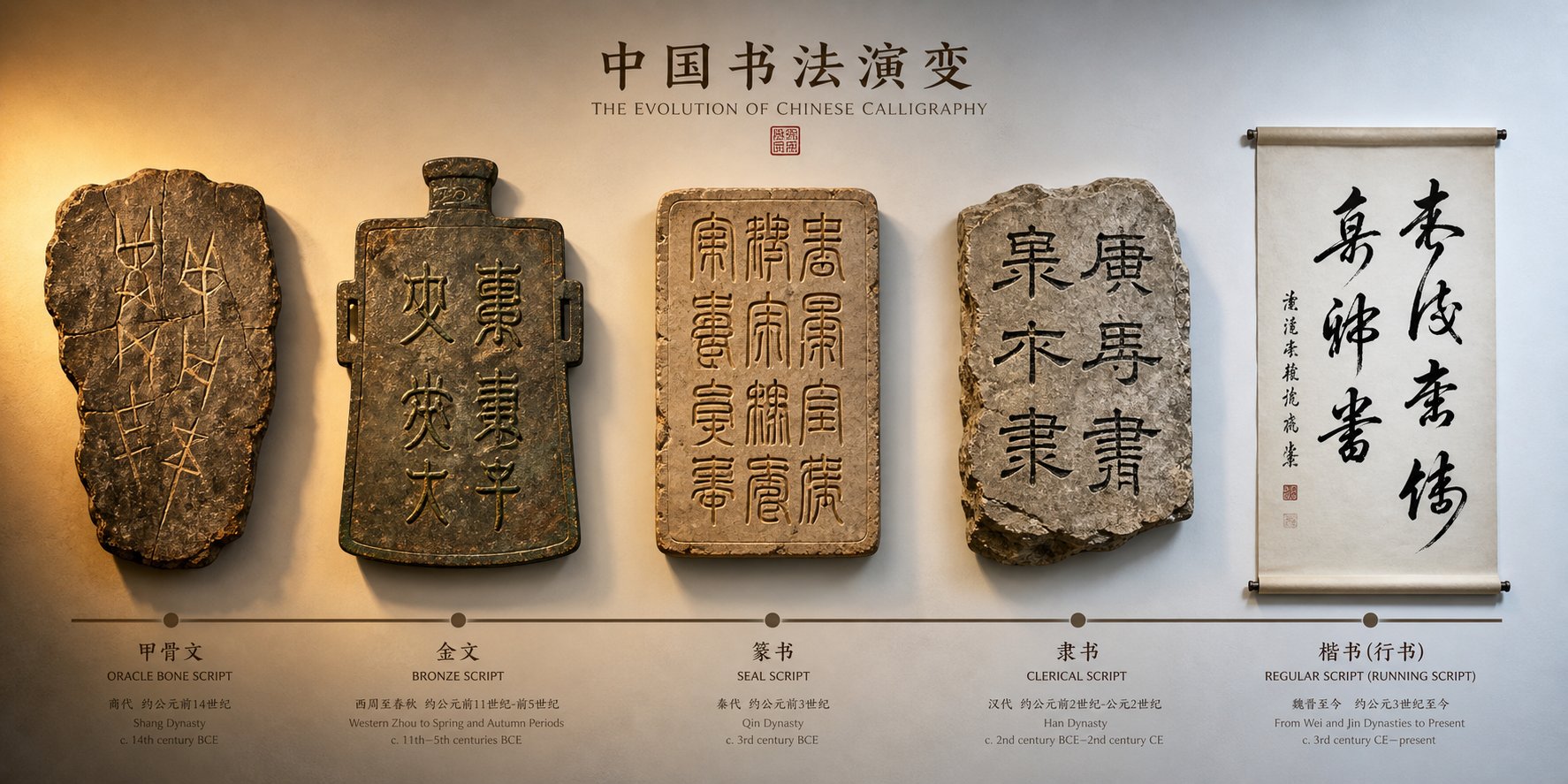
The history of Chinese character yun stretches across five major script stages, each one reshaping the character while preserving its visual logic. Tracing this path reveals how writing systems evolve, not through random change, but through a slow negotiation between pictorial clarity and writing efficiency.
From Oracle Bone to Modern Brushstroke
The oldest surviving form of 云 appears in oracle bone script, dating to roughly 1250-1000 BC during the Shang dynasty. These inscriptions, carved into animal bones and turtle plastrons, show the cloud character as a swirling shape depicting rising vapor with two curling lines suggesting rotation or turbulence. The upper portion of the character indicated the sky or the space above, while the curving strokes below captured the rolling, billowing motion of clouds as seen from the ground.
By the Late Spring and Autumn period (around 500 BC), bronze inscriptions refined this image. Cast into ritual vessels rather than scratched into bone, the bronze script version gained smoother curves and more consistent proportions. The swirl motif remained, but the lines became more deliberate, more stylized. You can think of it as the difference between a quick sketch and a careful illustration: same subject, more polish.
The seal script form, documented in the Shuowen Jiezi (around 100 AD), introduced further standardization. The Shuowen defines the character with the phrase "mountain and river vapor" (山川气也), confirming that even two millennia ago, scholars understood this ancient cloud symbol as a depiction of natural atmospheric phenomena. At this stage, the character's strokes became more uniform and symmetrical, suitable for official seals and formal documents.
How Ancient Scribes Depicted Clouds
The real transformation came during the clerical script period of the Eastern Han dynasty (25-220 AD). Clerical script prioritized speed and practicality over pictorial beauty. Curved lines flattened into angular strokes, and the flowing swirl of earlier forms gave way to the horizontal-and-turning structure we recognize today. This is where 云 began to look less like a picture of a cloud and more like an abstract written symbol.
The regular script that followed, and that remains standard in modern Chinese, completed the journey. The four-stroke character you see today, two horizontal lines followed by a turning stroke and a dot, retains almost no visible resemblance to those ancient swirling pictographs. Yet the lineage is unbroken.
| Script Type | Period | Visual Characteristics |
|---|---|---|
| Oracle Bone Script | ~1250-1000 BC | Swirling lines depicting rising vapor; angular scratches on bone or shell |
| Bronze Script | Late Spring and Autumn (~500 BC) | Smoother curves cast in metal; stylized cloud swirl with clearer proportions |
| Seal Script | Shuowen (~100 AD) | Symmetrical, standardized strokes; formal and balanced composition |
| Clerical Script | Eastern Han (25-220 AD) | Flattened curves; angular, efficient strokes replacing pictorial elements |
| Regular Script | Modern | Four clean strokes (horizontal, horizontal, turning, dot); fully abstract |
What's remarkable about this evolution of Chinese characters for cloud is how much meaning survived the loss of visual resemblance. The oracle bone version looks like a cloud. The modern version does not. Yet every Chinese reader instantly connects 云 to the sky, to weather, to that same rising vapor the Shang dynasty scribes watched curling above their rivers.
This progression also explains something important about the traditional form, 雲. As the simplified character lost its pictorial cloud shape over centuries, scribes added the rain radical (雨) on top to reinforce the weather meaning. That twelve-stroke traditional form was not the original; it was a later clarification. The simpler 云 came first, and the story of why it needed that extra radical leads directly into the relationship between these two forms.
Simplified vs Traditional Cloud Character: Two Forms, One Meaning
Two versions of the same word exist side by side in the Chinese-speaking world. If you search for the traditional Chinese character for cloud, you'll find 雲, a twelve-stroke character with a rain radical perched on top. If you look at simplified Chinese, you'll see 云, a compact four-stroke form. Both mean "cloud." Both are correct. But they belong to different writing systems, different regions, and slightly different eras of Chinese history.
Understanding the relationship between these two forms is more than an academic exercise. It shapes which textbooks you buy, which apps you use, and which communities you can read comfortably in.
Simplified 云 Versus Traditional 雲
The difference in cloud character stroke count is dramatic. Simplified 云 requires just 4 strokes. Traditional 雲 requires 12. That's a three-to-one ratio, making this one of the more visually striking examples of how simplification reduced writing complexity.
| Feature | Simplified 云 | Traditional 雲 |
|---|---|---|
| Stroke Count | 4 | 12 |
| Radical | 二 (two) or classified under 云 itself | 雨 (rain) |
| Structure | Standalone character | Top-bottom: 雨 (semantic) + 云 (phonetic) |
| Pinyin | yun (2nd tone) | yun (2nd tone) |
| Primary Region | Mainland China, Singapore, Malaysia | Taiwan, Hong Kong, Macau |
| Used in HSK Exams | Yes | No |
| Used in TOCFL Exams | No | Yes |
Here's what's interesting: the simplified form is actually the older one. As the previous section explained, 云 existed first as a standalone character. The traditional form 雲 was created later by adding the rain radical to clarify meaning. When the PRC carried out its script reform in 1956, one of the simplification methods was "use of archaic forms." The character 雲 was simplified back to 云 by simply removing the rain radical on top, restoring the character to its ancient shape.
Understanding the Rain Radical in 雲
Why does the traditional form have 雨 sitting on top? Think of it as a category label. In Chinese, the rain radical 雨 signals that a character relates to atmospheric or weather phenomena. You'll notice it in characters like:
- 雪 (xue) - snow
- 雷 (lei) - thunder
- 霜 (shuang) - frost
- 雾 (wu) - fog
- 露 (lu) - dew
These rain radical Chinese characters all follow the same structural logic: the 雨 component on top tells you the character belongs to the weather family, while the bottom component often provides a pronunciation hint. In 雲, the bottom component is 云 itself, which supplies the sound "yun." This top-semantic, bottom-phonetic structure is one of the most common patterns in Chinese writing, and 雲 is a textbook example of how it works.
So the traditional form is essentially a compound: "the weather-related thing that sounds like yun." The simplified form strips away that semantic scaffolding and trusts context to do the work instead.
Which Form Should You Learn?
Your choice depends on where you plan to use Chinese. Simplified characters are used by over 1.4 billion people in mainland China, plus millions more in Singapore and Malaysia. Traditional characters serve roughly 32 million people across Taiwan, Hong Kong, and Macau. If you're preparing for the HSK exam, doing business with mainland companies, or consuming content on platforms like Weibo and Douyin, simplified 云 is what you need.
If your goals involve Taiwan, Hong Kong, classical literature, or calligraphy, traditional 雲 is the form you'll encounter daily. Many learners eventually pick up both. About 70% of commonly used characters are identical in both systems anyway, so the gap is smaller than it first appears. The simplified vs traditional cloud character distinction is one of the 30% that actually differs, but once you understand the rain radical relationship, switching between the two becomes intuitive rather than memorization-heavy.
Whichever form you choose, you'll still need to get the pronunciation right. The sound "yun" carries a specific rising tone that changes the word's meaning entirely if you get it wrong, and the stroke order follows a precise sequence that affects both handwriting legibility and digital input.
How to Pronounce and Write the Cloud Character in Chinese
Getting the shape on paper is one thing. Getting the sound right is another challenge entirely. The yun Chinese pronunciation tone trips up many learners because Mandarin's second tone requires a specific pitch movement that doesn't map neatly onto English intonation patterns. And the cloud character stroke order, while only four strokes long, follows a sequence that matters for legibility and proper input on digital devices.
How to Pronounce Yun with Correct Tone
The pinyin for 云 is yun, spoken in the second tone (tone 2). In Mandarin's four-tone system, the second tone is a rising pitch. Imagine someone asks you a one-word question: "Tea?" That upward inflection at the end is close to what the second tone feels like, except you sustain the rise across the entire syllable rather than just tagging it onto the end.
Here's how to produce it: start at a comfortable mid-pitch in your voice, then rise smoothly to a high pitch. On the standard 1-to-5 pitch scale used in Chinese linguistics, the second tone moves from 3 (mid) to 5 (high). A few common mistakes to watch for:
- Starting too high. If you begin at pitch level 4 or 5, you have nowhere left to rise. Simply start lower at your natural mid-range, and the rise will come naturally.
- Rising too late. Some learners dip down before rising, which makes the second tone sound like a third tone. Aim to rise immediately from the start.
- Not rising enough. In connected speech, the rise can flatten out and disappear. Make sure the pitch still climbs, even at the beginning of a word.
One helpful detail: unlike the third tone, the second tone has no obligatory tone change rules. If you always pronounce yun with a clear rise, you'll be correct in every context. It may sound slightly robotic in rapid speech, but it won't be wrong.
Writing 云 Stroke by Stroke
Wondering how to write cloud in Chinese? The simplified character 云 uses just four strokes, written in this specific order:
- First horizontal stroke (横) - Draw a short horizontal line from left to right near the top of the character space.
- Second horizontal stroke (横) - Draw a longer horizontal line below the first, also from left to right. This stroke is wider than the first, giving the character a stable base at the top.
- Turning stroke (横折弯钩) - Starting from the left side, draw rightward, then turn downward and curve to the right, finishing with a small upward hook. This is the most complex stroke in the character.
- Dot (点) - Place a short dot stroke to the right of the turning stroke, angled slightly downward to the right.
The general rule in Chinese writing applies here: top before bottom, left before right, horizontal before vertical. With only four strokes, 云 is one of the simplest weather-related characters you'll encounter, especially compared to its twelve-stroke traditional counterpart.
Pronunciation Across Chinese Dialects
Mandarin yun is the standard pronunciation, but Chinese is a family of languages. If you encounter this character in other dialect contexts, the sound shifts considerably:
| Dialect/Language | Pronunciation | Tone |
|---|---|---|
| Mandarin (Standard) | yun | 2nd (rising) |
| Cantonese | wan | 4 (low falling) |
| Hokkien (Southern Min) | hun | 5 (rising) |
| Hakka (Sixian) | yun | 4th |
| Wu (Shanghai) | yun | Voiced initial tone |
The Cantonese reading wan4 and Hokkien hun are particularly useful to know if you're consuming media from Hong Kong or Taiwan's southern communities. These dialect pronunciations all trace back to the same Middle Chinese ancestor, hjun, which explains the family resemblance despite surface differences.
With the sound and shape covered, there's still a deeper layer to unpack. That classical meaning of "to say" hiding inside 云 isn't just a historical footnote. It shows up in idioms and literary expressions that educated Chinese speakers still use today.
The Hidden Second Meaning: When 云 Means "To Say"
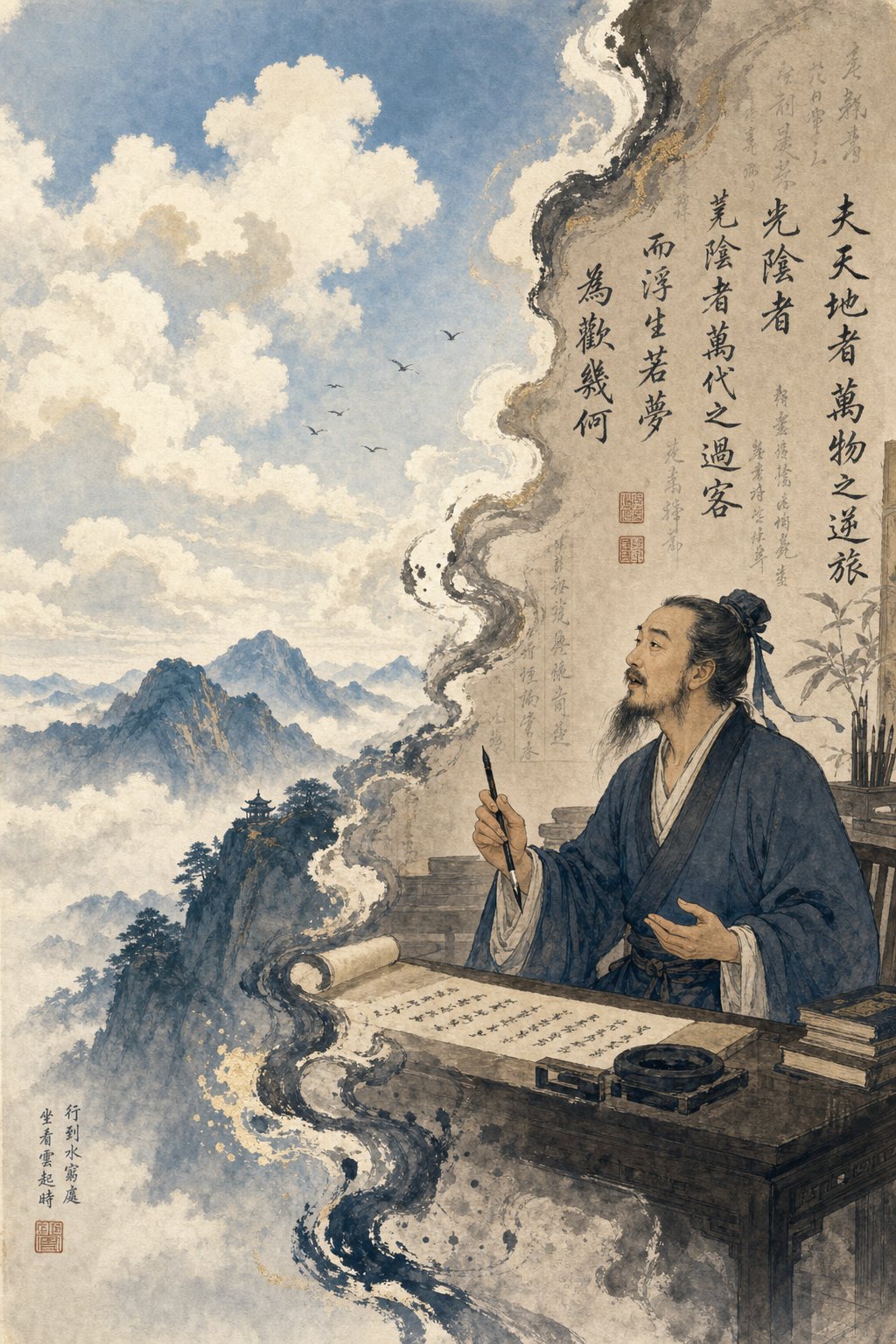
Here's the twist most learners never expect. The character 云 doesn't just mean "cloud." In classical Chinese, it means "to say" or "to speak." And this isn't some obscure footnote buried in academic dictionaries. It's the original meaning. The cloud sense came second.
That reversal surprises people. How can a character primarily associated with weather actually have started life as a verb for speech? The cloud character etymology tells a story about how written language evolves when too many meanings pile onto too few symbols.
The Historical Split Between Two Meanings
In the earliest stages of Chinese writing, 云 functioned as a grammatical particle and verb meaning "to say." Scribes used it in records of speech, royal proclamations, and philosophical dialogue. It was a workhorse of classical prose, appearing wherever someone needed to attribute a statement to a speaker.
At some point, the same character was borrowed to represent the word for "cloud," likely because the spoken words sounded identical. This kind of borrowing, called 假借 (jiajie, "phonetic loan"), was common in early Chinese. When the writing system didn't yet have a dedicated character for a concept, scribes grabbed an existing character with the right sound and repurposed it.
The problem? Now one character carried two unrelated meanings. Context usually resolved the ambiguity, but as writing became more complex, scribes wanted clarity. Their solution was elegant: add the rain radical 雨 on top of 云 to create 雲, a new character dedicated exclusively to the atmospheric meaning. As Wiktionary's glyph origin entry explains, 雲 is both an ideogrammic compound and a phono-semantic compound: semantic 雨 ("rain") plus phonetic 云, "originally written 云, with the 雨 radical added to distinguish from the borrowed sense of 'to speak.'"
So the timeline looks like this:
- 云 originally meant "to say"
- 云 was borrowed to also mean "cloud" (phonetic loan)
- 雲 was created (adding 雨) to separate the cloud meaning from the speech meaning
- Modern simplification returned the cloud meaning to 云, collapsing both senses back into one form
This is one of the clearest examples of dual meaning Chinese characters in the entire writing system. Two completely unrelated concepts, atmospheric vapor and human speech, sharing a single written form because of a sound coincidence thousands of years ago.
When 云 Means to Say or Speak
In classical Chinese texts (文言文), the yun meaning in classical Chinese as "to say" appears constantly. You won't encounter it in modern conversation or news articles, but it lives on in set phrases, literary quotations, and formal writing. Here are the most recognizable examples:
人云亦云 (ren yun yi yun) - "Others say it, and one also says it." Meaning: to parrot others without independent thought.
This four-character idiom (chengyu) uses 云 twice in its "to say" sense. It describes someone who simply echoes whatever opinion they hear, never forming their own view. You'll still hear this in modern Mandarin when criticizing groupthink or blind conformity.
子曰诗云 (zi yue shi yun) - "The Master said, the Odes say..." A formulaic phrase in Confucian texts introducing quotations from the Book of Songs.
In this pairing, both 曰 (yue) and 云 (yun) mean "to say," but they carry slightly different registers. 曰 introduces direct speech from a specific person, while 云 often introduces a general statement or quotation from a text. Classical authors used them almost interchangeably, but 云 tended toward the impersonal.
古人云 (gu ren yun) - "The ancients said..." A common opening formula in classical essays and commentaries.
This phrase appears across centuries of Chinese literature whenever a writer invokes the authority of earlier thinkers. The chinese character yun to say here functions exactly like English "as the saying goes" or "it is said that."
One more example worth noting: the expression 不知所云 (bu zhi suo yun), meaning "not knowing what is being said," or more colloquially, "making no sense." This phrase uses 云 in its speech sense and remains common in modern written Chinese when describing incoherent arguments or confusing explanations.
For learners focused on modern Mandarin, you don't need to actively use 云 as "to say" in your own speech. But recognizing it unlocks a layer of Chinese idioms and literary references that would otherwise seem opaque. When you see 云 in a chengyu and the context has nothing to do with weather, you'll know exactly what's happening.
This dual identity also hints at something broader about how Chinese characters carry cultural weight. A single form can encode philosophy, nature, and everyday speech simultaneously. That layering extends into the character's symbolic life in art, literature, and religious thought, where clouds represent far more than water vapor in the sky.
Cloud Symbolism in Chinese Culture: From Immortals to Idioms
Clouds in Chinese thought are never just weather. They carry the weight of philosophy, religion, and artistic tradition stretching back millennia. When a painter adds swirling mist to a mountain landscape, or a poet describes an immortal riding through the sky, the cloud isn't decoration. It's a symbol loaded with meaning about the relationship between heaven, earth, and human life.
Clouds in Chinese Philosophy and Art
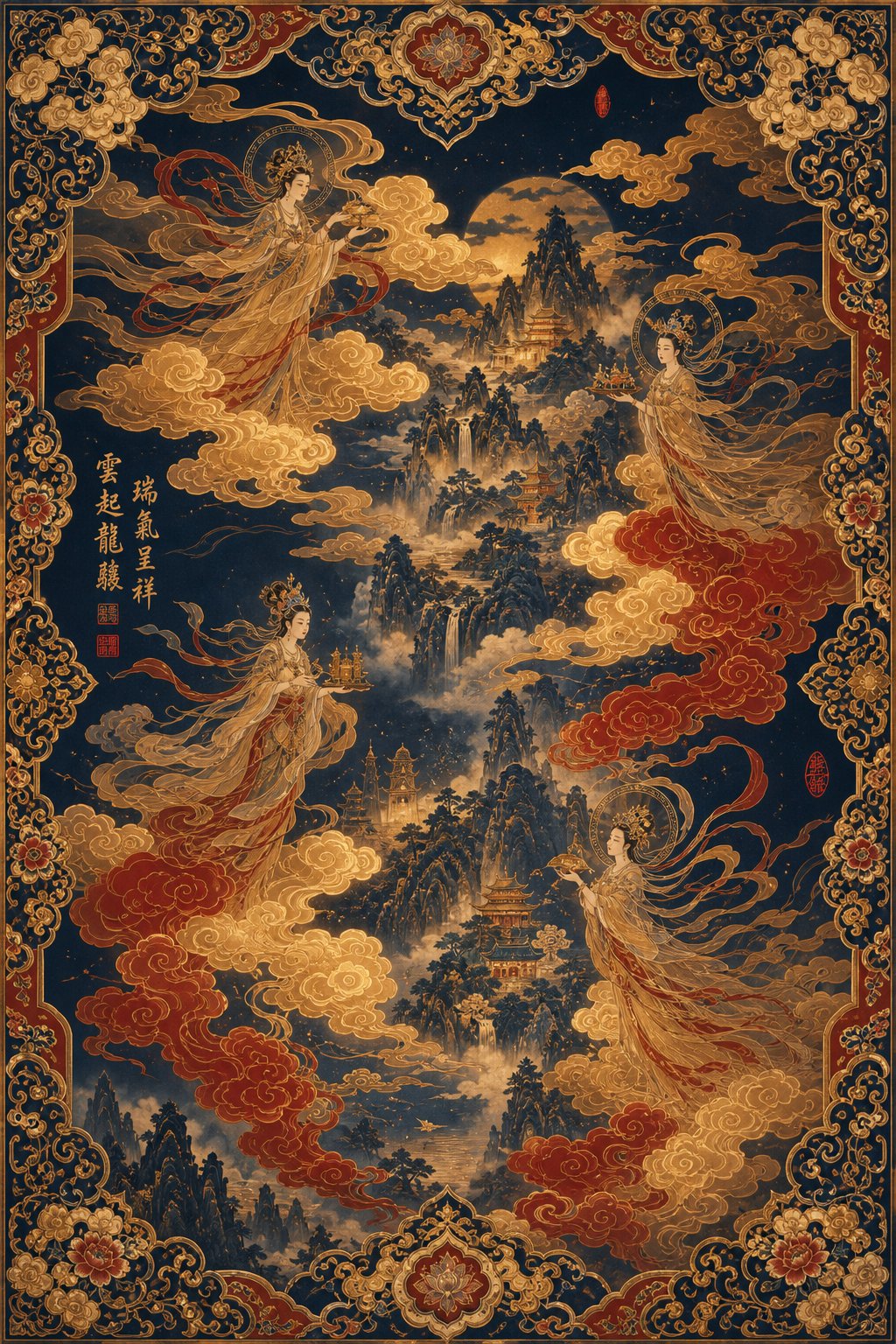
In Daoist tradition, clouds serve as vehicles for the xian, the immortals who have transcended ordinary existence. The image of a figure riding clouds through mountain peaks represents spiritual freedom, the ability to move beyond earthly constraints. This man in clouds imagery appears across centuries of Chinese painting, sculpture, and literature, always signaling transcendence and otherworldly power.
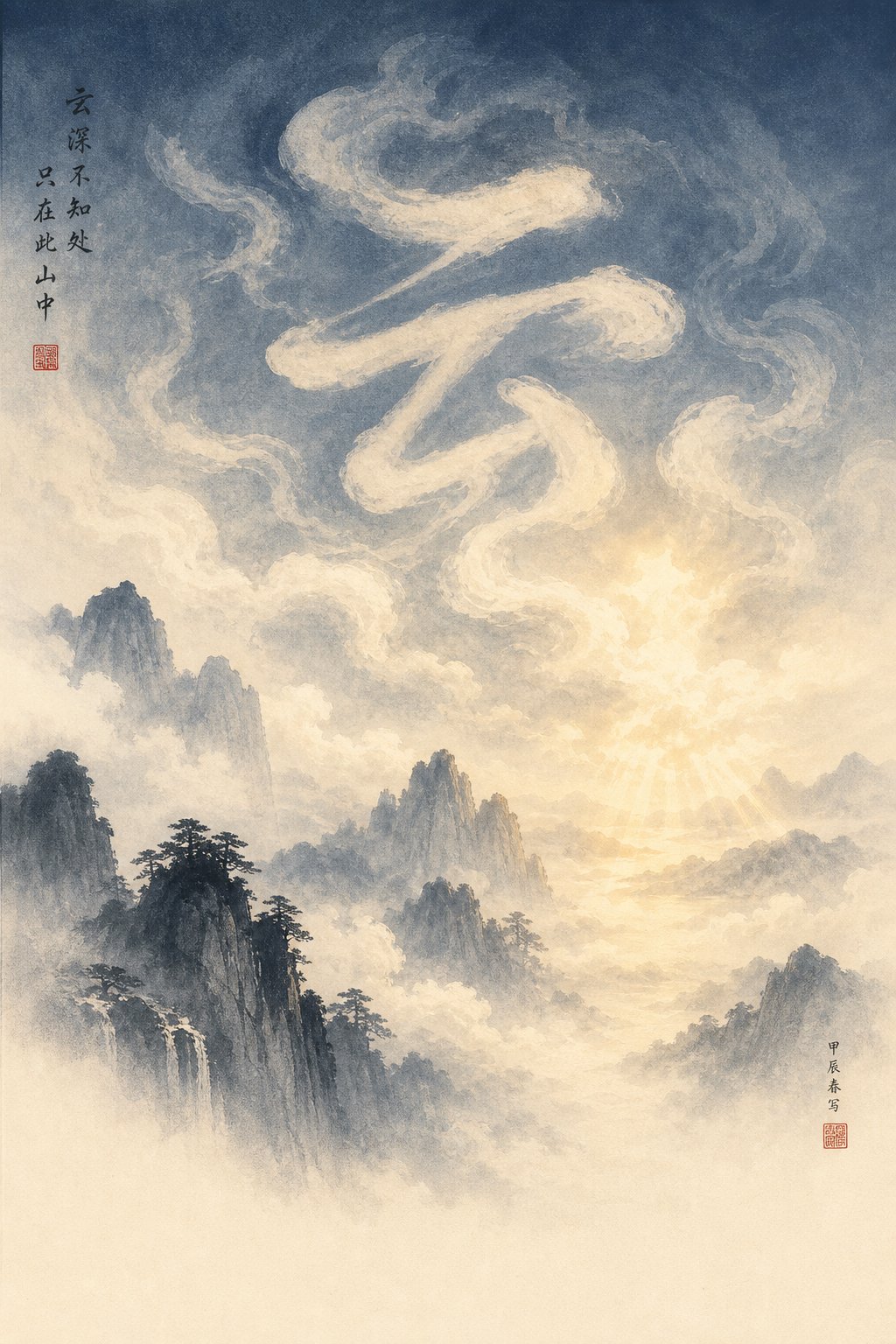
The concept of 云山 (yunshan, "cloud mountains") became a central motif in traditional landscape painting. Artists didn't paint clouds merely to show weather conditions. They used mist and vapor to create depth, mystery, and the sense that nature contains hidden realms beyond human perception. A mountain half-veiled in cloud suggests that reality itself is partially concealed, an idea deeply rooted in both Daoist and Buddhist philosophy.
Buddhism contributed another layer: impermanence. Clouds form, shift, dissolve, and reform. They have no fixed shape, no permanent home. This made them a natural metaphor for the Buddhist teaching that all phenomena are transient. The phrase 浮云 (fuyun, "floating clouds") became shorthand for things that seem substantial but ultimately pass away, including wealth, fame, and worldly attachments.
On the auspicious side, the Xiangyun (祥云) pattern, or "auspicious clouds," has been one of China's most enduring decorative motifs for over 7,000 years. Originating from ancient nature worship, where clouds bringing rain meant survival for agrarian communities, Xiangyun evolved into a symbol of divine blessing and cosmic harmony. In Confucian texts, the appearance of auspicious clouds signaled wise governance. In Daoist practice, they represented the vehicle of enlightenment. These stylized cloud designs appear on everything from Shang dynasty bronze vessels to the 2008 Beijing Olympic torch, demonstrating how cloud symbolism in Chinese culture bridges the ancient and the contemporary.
The dark cloud in Chinese characters takes the form 乌云 (wuyun), literally "crow-black cloud." Just as in English, dark clouds carry ominous weight. 乌云密布 (wuyun mibu, "dark clouds gather densely") describes both literal storm weather and figurative situations where trouble is approaching. The contrast between 祥云 (auspicious clouds) and 乌云 (dark clouds) captures the full emotional range that clouds occupy in Chinese thought: hope and dread, blessing and warning, all encoded in the same natural phenomenon.
Essential Cloud Idioms and Their Origins
Chinese cloud idioms (chengyu) compress these philosophical and cultural associations into four-character phrases that native speakers use in everyday conversation. Each one draws on a specific tradition, whether Daoist mythology, political metaphor, or aesthetic sensibility.
- 腾云驾雾 (teng yun jia wu) - Literal: "mount clouds and ride mist." Figurative: to move with supernatural speed or power, or to feel lightheaded and disoriented. Originally described immortals traveling through the sky. Now used both admiringly (for someone moving fast through life) and humorously (for feeling dizzy or confused).
- 风云变幻 (feng yun bian huan) - Literal: "winds and clouds shift unpredictably." Figurative: a volatile, rapidly changing situation, especially in politics or business. The pairing of wind and cloud represents forces beyond human control, making this idiom a favorite in news commentary about unstable markets or power struggles.
- 云淡风轻 (yun dan feng qing) - Literal: "clouds are light, breeze is gentle." Figurative: a calm, carefree state of mind, or describing something with deliberate understatement. This idiom evokes the aesthetic ideal of effortless composure, treating serious matters as though they weigh nothing.
- 风云人物 (feng yun ren wu) - Literal: "wind-and-cloud figure." Figurative: an influential person who shapes events, a mover and shaker. The cloud here represents power and momentum on a grand scale.
- 云消雾散 (yun xiao wu san) - Literal: "clouds vanish, fog disperses." Figurative: doubts, worries, or misunderstandings clear away completely. Draws on the Buddhist association between clouds and illusion.
- 乌云压顶 (wu yun ya ding) - Literal: "dark clouds press down on the head." Figurative: an overwhelming sense of impending disaster or oppression. Uses the dark cloud imagery to convey psychological weight and dread.
These chinese cloud idioms chengyu aren't museum pieces. They appear in news headlines, social media posts, and daily conversation. Learning them gives you access to a layer of expression that single-word vocabulary can't reach.
What's striking is how 云 functions as more than a standalone symbol. It also works as a building block inside other characters, lending its sound to an entire family of related words. That phonetic role turns a single character into a learning shortcut for dozens more.
Characters Containing the Cloud Radical: A Phonetic Family
Chinese characters aren't random collections of strokes. Many of them share internal components that signal how they sound. The character 云 is a perfect example. It appears inside a whole family of characters, and in most cases, it tells you the pronunciation before you even look the word up. Recognizing this phonetic component yun pattern turns one piece of knowledge into a skeleton key for dozens of new words.
Characters That Contain the 云 Component
When 云 sits inside a more complex character, it usually contributes its sound, yun or a close variant like hun. The other component, typically a radical on the left or top, tells you the meaning category. This division of labor between sound and sense is how the majority of Chinese characters are constructed. Once you spot 云 embedded in an unfamiliar character, you can make an educated guess at the pronunciation immediately.
Here's a cloud radical character list showing the most common members of this phonetic family:
| Character | Pinyin | Meaning | Semantic Radical | How 云 Contributes |
|---|---|---|---|---|
| 运 | yun (4th tone) | Transport, luck, fortune | 辶 (movement) | Provides the "yun" sound |
| 魂 | hun (2nd tone) | Soul, spirit | 鬼 (ghost) | Provides a close sound variant "hun" |
| 耘 | yun (2nd tone) | To weed, to cultivate | 耒 (plow) | Provides exact "yun" sound |
| 酝 | yun (4th tone) | To brew, to ferment | 酉 (wine vessel) | Provides the "yun" sound |
| 芸 | yun (2nd tone) | Rue (an herb), common | 艹 (grass/plant) | Provides exact "yun" sound |
| 纭 | yun (2nd tone) | Confused, tangled | 纟 (silk/thread) | Provides exact "yun" sound |
| 陨 | yun (3rd tone) | To fall, to perish | 阝 (mound/hill) | Provides a close sound variant |
Notice the pattern. The radical on the left or top anchors the meaning: 辶 relates to movement, 鬼 relates to spirits, 耒 relates to farming, 酉 relates to fermentation, 艹 relates to plants. Meanwhile, 云 sitting inside each character does the same job every time: it signals a pronunciation in the yun/hun neighborhood.
The tone may shift (yun can appear as 2nd, 3rd, or 4th tone across these characters), and occasionally the initial consonant changes (hun instead of yun in 魂). These small variations are normal. Phonetic components in Chinese predict the approximate sound, not the exact tone or initial in every case. Think of it like English word families: "sign," "signal," and "design" all share a root, but the pronunciation shifts slightly in each word.
Using Phonetic Patterns to Learn Faster
Why does this matter for learners? Because it transforms character acquisition from brute memorization into pattern recognition. Instead of treating each new character as a completely independent puzzle, you start seeing chinese characters with yun radical as variations on a theme you already know.
Imagine you encounter 酝酿 (yunniang, "to brew" or "to develop gradually") in a reading passage. You've never seen 酝 before. But you spot 云 on the right side and guess the sound is something like "yun." You see 酉 on the left and recall it relates to alcohol or fermentation. Without a dictionary, you've already narrowed down both the sound and the meaning category. That's the power of phonetic component awareness.
A practical approach for building this skill:
- When you learn a new character, check whether it contains a component you already know
- Group characters by shared phonetic elements in your flashcard system
- Pay attention to which radicals pair with 云 and what meaning categories they signal
- Accept that the sound match won't be perfect every time, but it will be close enough to help
Research on Chinese literacy acquisition supports this strategy. Learners who develop sensitivity to phonetic components read new characters more accurately than those who rely purely on rote memorization. The 云 family is an ideal starting point because the base character is so simple (just four strokes) and so visually distinctive that it's easy to spot inside more complex forms.
This phonetic role also explains why 云 appears so frequently across the Chinese lexicon. It's not just a word for cloud or a classical verb for speech. It's a structural building block that lends its sound to characters spanning farming, philosophy, chemistry, and mythology. That structural versatility extends into compound words too, where 云 pairs with other characters to create vocabulary covering everything from weather reports to server architecture.
Common Words and Compounds Using 云: Cloud Vocabulary in Mandarin Chinese
Knowing a character in isolation is one thing. Knowing how it behaves in the wild, paired with other characters to form real vocabulary, is where fluency actually lives. The character 云 generates dozens of compound words spanning weather, geography, literature, and technology. These yun compound words in Chinese show up in weather apps, news headlines, travel guides, and tech product launches. Grouping them by category makes them easier to absorb and recall.
Weather and Nature Compounds
Weather is the most intuitive category. When 云 pairs with other nature-related characters, the resulting compounds describe specific atmospheric conditions you'll encounter in forecasts, travel writing, and everyday conversation.
- 云层 (yunceng) - cloud layer. Refers to a stratum of clouds at a particular altitude. Used in aviation reports and meteorology.
- 多云 (duoyun) - cloudy, overcast. The most common weather term containing 云. You'll see this on every Chinese weather app and forecast.
- 云雾 (yunwu) - cloud and fog, mist. Describes low-hanging clouds that blur the boundary between sky and ground. Common in descriptions of mountain scenery.
- 乌云 (wuyun) - dark cloud. Literally "crow-black cloud." Used both literally for storm clouds and figuratively for looming trouble.
- 白云 (baiyun) - white cloud. Appears in place names (Baiyun District in Guangzhou, Baiyun Mountain) and poetic descriptions of clear skies.
- 云海 (yunhai) - sea of clouds. Describes the phenomenon of clouds viewed from above, typically from a mountain peak. A famous attraction at Huangshan (Yellow Mountain).
- 云彩 (yuncai) - clouds (colloquial). A slightly informal, conversational way to say "clouds," often used when admiring their appearance.
Here's how these chinese words with cloud character appear in context:
Example: 明天北京多云转晴,气温15到22度。
Pinyin: Mingtian Beijing duoyun zhuan qing, qiwen shiwu dao ershier du.
Translation: Tomorrow Beijing will be cloudy turning clear, temperature 15 to 22 degrees.
That sentence is the kind of thing you'd hear on any Chinese weather broadcast. The word 多云 functions exactly like "cloudy" in English forecasts, brief, factual, and immediately understood.
Example: 山顶的云海非常壮观。
Pinyin: Shanding de yunhai feichang zhuangguan.
Translation: The sea of clouds at the mountain summit is spectacular.
Geographic Names with 云
The character 云 is embedded in some of China's most recognizable place names. The most significant is 云南 (Yunnan), a province in southwestern China whose name literally means "south of the clouds." The yunnan cloud character meaning reflects the province's geography: situated south of the Yunling mountain range, where clouds perpetually gather along the peaks. Other geographic terms include:
- 云南 (Yunnan) - Yunnan province. One of China's most biodiverse and ethnically diverse regions, bordering Vietnam, Laos, and Myanmar.
- 云冈 (Yungang) - Yungang Grottoes. A UNESCO World Heritage Site in Shanxi province featuring ancient Buddhist cave carvings.
- 云梦 (Yunmeng) - A county in Hubei province. The name means "cloud dream," referencing an ancient marshland mentioned in classical poetry.
When you see 云 in a place name, it almost always evokes elevation, mist, or the kind of dramatic mountain scenery where clouds sit at eye level rather than overhead.
Figurative Expressions and Technology Terms
Beyond weather and geography, 云 generates figurative compounds where the cloud meaning extends into metaphor. These expressions treat clouds as symbols of distance, wandering, grandeur, or mystery.
- 风云人物 (fengyun renwu) - influential figure, someone who shapes events. Literally "wind-and-cloud person."
- 云游 (yunyou) - to wander, to roam (like a cloud drifting). Originally described Daoist monks traveling without fixed destination. Now used more broadly for free-spirited travel.
- 凌云 (lingyun) - to soar above the clouds. Figuratively means lofty ambition or towering talent.
- 云集 (yunji) - to gather like clouds. Describes a large number of people or things converging in one place.
- 烟消云散 (yan xiao yun san) - smoke vanishes and clouds disperse. Means something disappears completely without a trace.
Example: 各地专家云集北京,讨论气候变化问题。
Pinyin: Gedi zhuanjia yunji Beijing, taolun qihou bianhua wenti.
Translation: Experts from all over gathered in Beijing like clouds to discuss climate change issues.
The technology category is where ancient meets modern most dramatically. When cloud computing arrived in China, translators reached for 云 as the natural equivalent, and the metaphor mapped perfectly: data stored in an invisible, ever-present layer above you, accessible from anywhere, shapeless yet real.
- 云计算 (yun jisuan) - cloud computing
- 云存储 (yun cunchu) - cloud storage
- 云服务 (yun fuwu) - cloud service
- 云端 (yunduan) - the cloud (as a location), literally "cloud's edge/end"
- 云平台 (yun pingtai) - cloud platform
- 上云 (shang yun) - to migrate to the cloud. A verb phrase used in enterprise IT contexts.
Example: 我们公司的数据已经全部迁移到云端了。
Pinyin: Women gongsi de shuju yijing quanbu qianyi dao yunduan le.
Translation: Our company's data has already been fully migrated to the cloud.
This cloud vocabulary in Mandarin Chinese spans a remarkable range. A single character connects a weather forecast (多云), a province name (云南), a philosophical attitude (云游), and a server infrastructure (云计算). For learners building practical vocabulary, these compounds offer high-frequency, high-utility words that appear across contexts you'll actually encounter in reading, listening, and conversation.
The technology terms deserve special attention, though. The adoption of 云 for digital infrastructure wasn't arbitrary. It reflects a deeper logic about why this ancient character was chosen to describe something that didn't exist until the twenty-first century.

Cloud Computing in Chinese Translation: Why Tech Chose an Ancient Character
A character carved into turtle shells 3,000 years ago now labels server farms, data centers, and subscription software. That's not a coincidence. When Chinese tech professionals needed a word for "cloud computing" in the late 2000s, they didn't coin something new. They reached for 云, the same four-stroke character that ancient scribes used to describe vapor rising from rivers. The metaphor was too perfect to ignore.
Understanding how 云 entered the chinese tech vocabulary cloud gives you insight into both the language and the industry. It also explains why you'll encounter this character constantly if you work with Chinese software products, read Chinese tech news, or collaborate with teams in mainland China.
Why Cloud Computing Uses This Ancient Character
The English term "cloud computing" itself comes from a visual metaphor. In network diagrams dating back to the late 1970s, engineers drew cloud-shaped icons to represent networks whose internal details didn't matter to the diagram's purpose. The cloud meant "stuff happens here, but you don't need to see how." When companies like Amazon and Google commercialized remote computing services in the mid-2000s, that diagram shorthand became a product category.
The term first appeared around 1996 in internal documents at Compaq Computer, where marketing executive George Favaloro and tech specialist Sean O'Sullivan used "cloud computing" to describe internet-delivered services. By 2006, Google CEO Eric Schmidt used the phrase publicly, and Amazon's EC2 launched the first major commercial cloud product. The Chinese translation 云计算 (yun jisuan) followed shortly after, appearing in Chinese media by early 2008.
Why did 云 work so well as the translation? Consider what atmospheric clouds and digital clouds share:
- Both are invisible infrastructure. You know clouds exist above you, but you don't see their internal mechanics. Cloud servers work the same way: present, functional, but hidden from the end user.
- Both are accessible from anywhere. A cloud overhead doesn't belong to one specific spot on the ground. Cloud data is similarly location-independent.
- Both are shapeless yet real. Clouds have no fixed form, no hard edges. Cloud services scale up and down fluidly, with no rigid physical boundary the user can point to.
- Both involve something rising upward. The original Shuowen Jiezi definition of 云 as "mountain and river vapor" describes something moving from earth toward sky. Uploading data to the cloud mirrors that upward movement perfectly.
The parallel runs deeper than surface resemblance. In Chinese network engineering, the cloud icon (云朵图标) had already been used for decades to represent telephone exchange networks and the internet in topology diagrams, just as it had in English-language engineering. So when 云计算 entered the Chinese lexicon, it carried the same dual heritage: an ancient atmospheric word and a modern engineering diagram convention, converging on the same character.
Essential Tech Vocabulary with 云
If you're working in or around Chinese technology, these are the yun ji suan cloud computing Chinese terms you'll encounter most frequently. They appear in product interfaces, technical documentation, sales materials, and everyday office conversation.
- 云计算 (yun jisuan) - cloud computing. The umbrella term for on-demand computing resources delivered via the internet. This is the core term from which all others branch.
- 云存储 (yun cunchu) - cloud storage. Remote data storage accessed over a network. Equivalent to services like Dropbox or Google Drive.
- 云服务 (yun fuwu) - cloud service. Any service delivered through cloud infrastructure, from email to enterprise software.
- 云服务器 (yun fuwuqi) - cloud server. A virtual server running in a cloud computing environment rather than on local hardware.
- 云平台 (yun pingtai) - cloud platform. The underlying infrastructure that hosts cloud applications and services.
- 云端 (yunduan) - "the cloud" as a location. Literally "cloud's edge." Used the way English speakers say "in the cloud" or "on the cloud."
- 上云 (shang yun) - to migrate to the cloud. A verb phrase meaning to move systems or data from local infrastructure to cloud services.
- 云原生 (yun yuansheng) - cloud-native. Describes applications designed from the ground up to run in cloud environments.
- 混合云 (hunhe yun) - hybrid cloud. An architecture combining private and public cloud resources.
- 公有云 (gongyou yun) - public cloud. Cloud resources shared across multiple organizations (e.g., Alibaba Cloud, Tencent Cloud).
- 私有云 (siyou yun) - private cloud. Cloud infrastructure dedicated to a single organization.
You'll notice that Chinese tech vocabulary follows a consistent pattern: 云 appears at the front of the compound, functioning as a modifier that means "cloud-based" or "delivered via cloud." It works almost like a prefix. Once you recognize this structure, you can decode new cloud-related terms on sight, even ones you haven't memorized.
Here's how these terms sound in real workplace context:
Example: 公司决定今年完成上云,把所有业务系统迁移到公有云平台。
Pinyin: Gongsi jueding jinnian wancheng shang yun, ba suoyou yewu xitong qianyi dao gongyou yun pingtai.
Translation: The company decided to complete its cloud migration this year, moving all business systems to a public cloud platform.
Major Chinese cloud providers have also built their brand identities around this character. Alibaba Cloud is known as 阿里云 (Ali yun), Tencent Cloud as 腾讯云 (Tengxun yun), and Huawei Cloud as 华为云 (Huawei yun). The character 云 in each brand name instantly communicates the service category, no explanation needed. It's the equivalent of putting "Cloud" in your English product name, except the Chinese version carries 3,000 years of atmospheric poetry along with it.
For language learners encountering word cloud Chinese characters in tech contexts, the key insight is this: 云 hasn't changed its fundamental meaning. It still describes something vast, formless, and hovering above. The only difference is that "above" now refers to a network layer rather than the atmosphere. Ancient scribes watching vapor rise from mountain valleys and modern engineers watching data packets route through server clusters are both pointing at the same character and saying: that thing up there, beyond reach but always present. That continuity is what makes 云 one of the most satisfying characters to learn deeply. Its meaning hasn't been replaced by technology. It's been extended by it.
Frequently Asked Questions About the Cloud Chinese Character
1. What is the Chinese character for cloud and how do you write it?
The Chinese character for cloud is 云 (yun, second tone) in simplified Chinese and 雲 in traditional Chinese. The simplified form uses only four strokes written in this order: a short horizontal stroke, a longer horizontal stroke below it, a turning stroke with a hook, and a dot. The traditional form adds the rain radical 雨 on top, bringing the total to 12 strokes. Mainland China, Singapore, and Malaysia use the simplified version, while Taiwan, Hong Kong, and Macau use the traditional form.
2. Why does the Chinese character 云 have two meanings?
The character 云 originally meant 'to say' or 'to speak' in ancient Chinese. It was later borrowed through a process called phonetic loan (假借) to also represent the word for cloud, since both words sounded the same. To resolve the ambiguity, scribes created 雲 by adding the rain radical on top, dedicating that form to the atmospheric meaning. When China simplified its script in 1956, the character reverted to the original four-stroke 云, reuniting both meanings under one form again.
3. How do you pronounce the cloud character in Mandarin Chinese?
The cloud character 云 is pronounced 'yun' in the second tone (rising pitch). To produce it correctly, start at a mid-level pitch and rise smoothly to a high pitch, similar to the upward inflection when asking a short question in English. Common mistakes include starting too high (leaving no room to rise), dipping before rising (which sounds like third tone), or not rising enough. In Cantonese, the same character is pronounced 'wan4,' and in Hokkien it is 'hun.'
4. What are common Chinese words and idioms that use the cloud character?
The character 云 appears in weather terms like 多云 (cloudy) and 乌云 (dark cloud), place names like 云南 (Yunnan province), figurative expressions like 风云人物 (influential figure), and technology terms like 云计算 (cloud computing). Popular idioms include 腾云驾雾 (riding clouds and mist, meaning supernatural speed), 云淡风轻 (light clouds and gentle breeze, meaning carefree composure), and 人云亦云 (to parrot others without independent thought), which uses the classical 'to say' meaning.
5. Why is the character 云 used for cloud computing in Chinese?
Chinese tech professionals adopted 云 for cloud computing (云计算) because the metaphor maps perfectly between atmospheric clouds and digital infrastructure. Both are invisible yet ever-present, accessible from anywhere, shapeless but real, and involve something rising upward. The cloud icon had already been used in Chinese network diagrams for decades, just as in English engineering. Major providers like Alibaba Cloud (阿里云) and Tencent Cloud (腾讯云) build their brand names around this character, instantly communicating their service category.