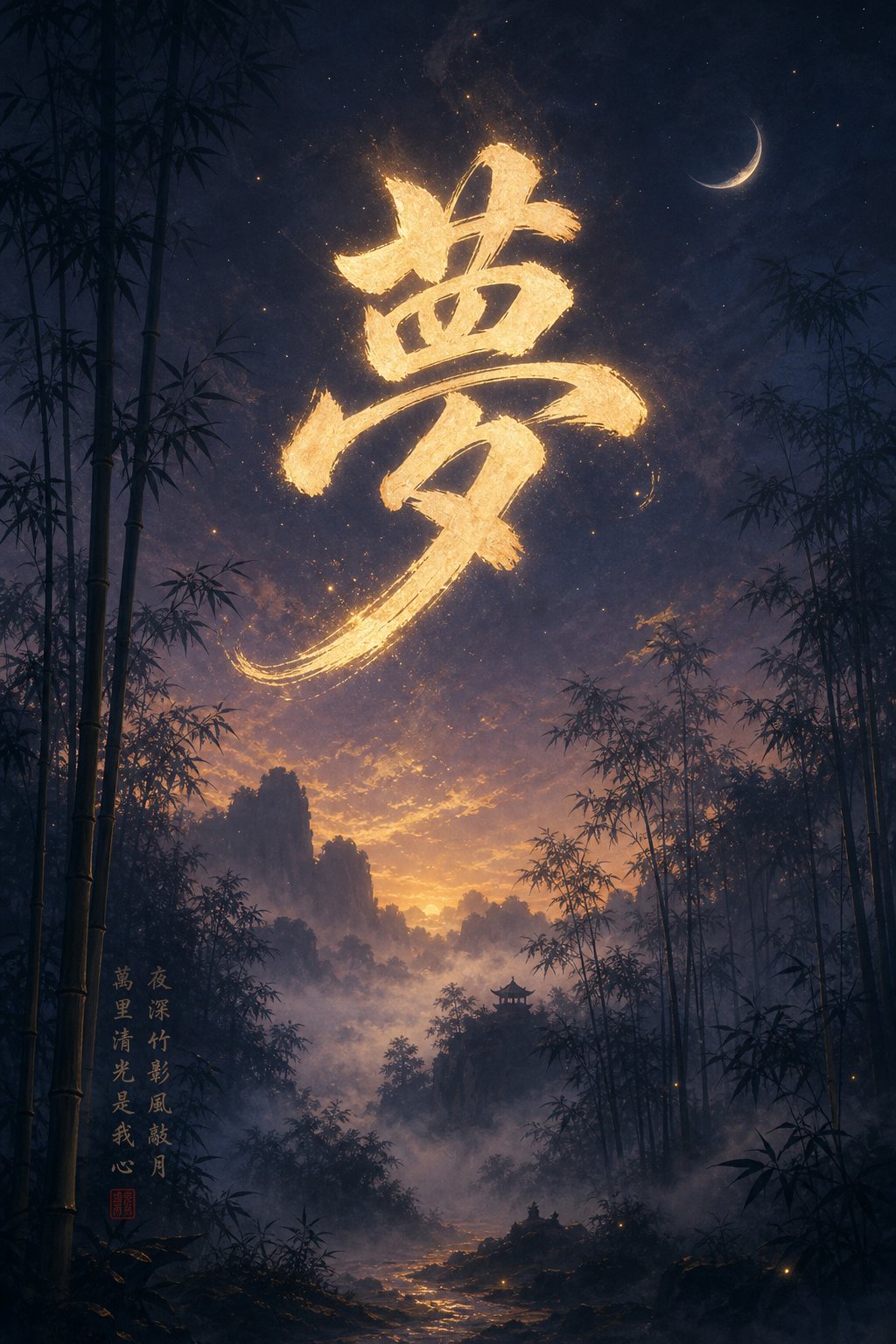
The Chinese Character for Dream 梦 at a Glance
The Chinese character for dream is 梦 in simplified form or 夢 in traditional form, both pronounced mèng (fourth tone). It carries a cluster of related meanings: a dream during sleep, the act of dreaming, an aspiration or hope, and something illusory or wishful. Whether you landed here looking for a quick definition or a deep dive into how to write dream in Chinese, this guide covers both ends and everything in between.
What Does the Chinese Character for Dream Mean
梦 (simplified) / 夢 (traditional) — pinyin: mèng — Meanings: dream; to dream; visionary; wishful; aspiration; illusion. Measure words: 场 (cháng), 个 (gè).
At its most basic, the meng Chinese character definition centers on the experience of dreaming. You'll encounter it in everyday words like 做梦 (to dream), 梦想 (dream or aspiration), and 噩梦 (nightmare). It also appears in classical idioms, political slogans, and philosophical texts spanning over three thousand years of Chinese literary history.
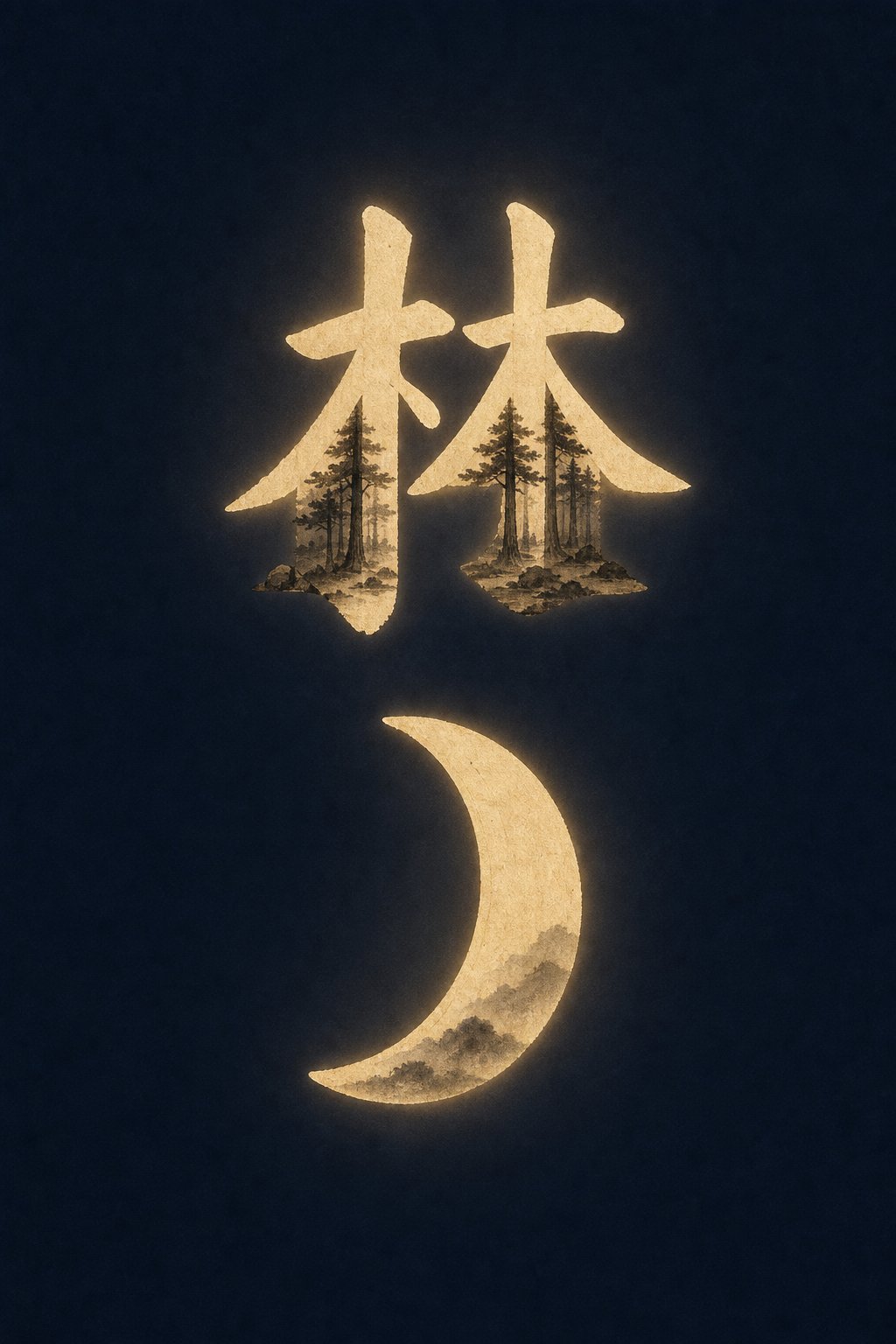
The dream symbol in Mandarin Chinese is more than a vocabulary item. Its visual structure tells a story. The simplified form stacks 林 (forest) above 夕 (evening), painting a picture of shadowy trees at nightfall when dreams begin. The traditional form is even more layered, incorporating elements that reference eyes closing under cover of darkness. Each component is a clue to how ancient Chinese thinkers understood the act of dreaming itself.
Quick Reference for 梦 and 夢
| Feature | Simplified 梦 | Traditional 夢 |
|---|---|---|
| Pinyin | mèng | mèng |
| Tone | 4th (falling) | 4th (falling) |
| Stroke Count | 11 | 13 |
| HSK Level | 4 | — |
| Primary Meanings | dream, to dream, aspiration, illusion, visionary | |
| Regions Used | Mainland China, Singapore, Malaysia | Taiwan, Hong Kong, Macau |
This article is structured in layers. If you just needed the quick reference above, you're set. If you want to understand how the character's radicals encode meaning, the next section breaks down each component piece by piece. And if you're curious about why dreams held spiritual and philosophical weight across Chinese history, from oracle bone inscriptions to Zhuangzi's butterfly, that story unfolds further in. The character 梦 rewards closer inspection at every level.
Radicals and Components That Build the Dream Character
Chinese characters are not random strokes. They are assembled from smaller meaningful parts, radicals and components, that work together like puzzle pieces. When you look at the 梦 character component breakdown, you'll find a miniature scene hidden inside the strokes: a forest fading into evening darkness. The traditional form 夢 tells an even richer story, layering eyes, cover, and night into a single visual package.
Simplified 梦 Component Breakdown
The simplified character 梦 splits neatly into two stacked components:
- 林 (lín) on top — meaning "forest" or "trees." This component is itself made of two 木 (tree) radicals side by side.
- 夕 (xī) on the bottom — meaning "evening" or "sunset." It depicts a crescent moon not yet fully risen, signaling the transition from day to night.
Imagine walking into a dense forest as the sun drops below the horizon. Shadows stretch between the trunks, outlines blur, and the boundary between what's real and what's imagined starts to dissolve. That's the semantic logic baked into the simplified form: trees at evening equal the threshold of dreaming. The forest represents obscurity and the unknown, while evening marks the time when consciousness gives way to sleep.
According to HanziCraft, the simplified 梦 decomposes at the radical level into 林 and 夕 (evening), with 夕 carrying the "evening" semantic tag that anchors the character's meaning to nighttime experience.
Traditional 夢 Radical Analysis
The traditional character 夢 is more complex and more descriptive. It stacks four components from top to bottom:
- 艹 (cǎo) — the grass radical, sitting at the very top. In this context, it suggests a natural canopy or the soft, organic world one sinks into during sleep.
- 罒 (wǎng) — a horizontal form of the "eye" or "net" radical. Here it represents eyes, specifically eyes in a closed or obscured state.
- 冖 (mì) — the "cover" radical, depicting something placed over or concealing what lies beneath.
- 夕 (xī) — evening, the same crescent-moon element found in the simplified form.
Read these components as a sequence and a vivid scene emerges: plants sway overhead as eyes close under a cover at night, and the dreamer slips into visions. Kanji-Trainer summarizes the traditional form with a mnemonic: "With plants the eyes are covered in the evening and then come the dreams." The character essentially narrates the physical act of falling asleep and the visual experience that follows.
Historical sources add another layer. The World of Chinese notes that some scholars interpret the 目 (eyes) and 夕 (sunset) elements within 夢 as suggesting that "at night the eyes are tired and can't see clearly," linking the character's structure directly to the blurred, half-seen quality of dream imagery.
How Components Connect to Meaning
Both forms share one critical anchor: 夕 (evening). This component appears at the base of the simplified version and at the bottom of the traditional version, grounding both characters firmly in nighttime. No matter which form you encounter, the presence of 夕 immediately signals that this character belongs to the world after dark.
The difference lies in what sits above that evening element. The simplified form uses 林 (forest) to evoke mystery and obscurity. The traditional form uses 罒 (eyes) and 冖 (cover) to describe the physical mechanism of dreaming: eyes shut, vision turned inward. One form paints the atmosphere of dreams; the other describes the bodily experience of entering them.
| Component | Pinyin | Individual Meaning | Role in the Dream Character | Found In |
|---|---|---|---|---|
| 林 | lín | Forest, trees | Evokes darkness, obscurity, the unknown landscape of dreams | Simplified 梦 |
| 夕 | xī | Evening, sunset | Anchors the character to nighttime, when dreams occur | Both 梦 and 夢 |
| 艹 | cǎo | Grass, plants | Suggests a natural canopy or soft organic world of sleep | Traditional 夢 |
| 罒 | wǎng | Eyes / net | Represents eyes closing or vision becoming obscured | Traditional 夢 |
| 冖 | mì | Cover | Depicts concealment, the blanket or lid over waking awareness | Traditional 夢 |
This layered construction is what makes the traditional vs simplified dream character comparison so interesting for learners. The simplified 梦 is poetic and atmospheric. The traditional 夢 is almost cinematic, walking you through a sequence: nature above, eyes closing, something covering them, night settling in. Both arrive at the same destination, but they take different narrative paths to get there.
Understanding these radicals does more than satisfy curiosity. It gives you a structural foothold for remembering the character and for recognizing its components when they appear in other characters. The element 夕, for instance, shows up in 夜 (night), 多 (many), and 外 (outside), always carrying that sense of evening or transition. Recognizing it inside 梦 connects this character to a broader web of meaning, and that web is exactly what makes Chinese characters stick in long-term memory.
How to Pronounce 梦 in Mandarin and Cantonese
Knowing what the character looks like is one thing. Saying it correctly is another challenge entirely. The pronunciation of 梦 trips up English speakers in two specific ways: the falling tone and the nasal ending. Here's a practical breakdown so you can nail both.
Mandarin Pronunciation mèng Fourth Tone Guide
In Mandarin, 梦 is pronounced mèng, using the fourth tone. The fourth tone drops sharply from high to low, like giving a firm command or saying "Stop!" in English. Your pitch starts at the top of your vocal range and falls quickly and decisively to the bottom. There's no hesitation or trailing off at the end.
Here's how to produce the fourth tone meng Chinese character sound step by step:
- Start with your pitch at the highest comfortable point in your range.
- Drop your voice sharply downward in one quick, decisive motion.
- Keep the syllable short and punchy. Don't let it linger or soften at the end.
- Think of the tone contour as a steep downhill slope, not a gentle decline.
- Finish the nasal -ng ending by letting air pass through your nose while your tongue presses against the back of your soft palate.
One piece of good news for learners: 梦 appears in many compound words like 梦想 (mèngxiǎng, aspiration) and 做梦 (zuòmèng, to dream), and because it carries a fourth tone, tone sandhi rules don't alter it. Unlike third-tone characters that shift pronunciation depending on what follows, a fourth tone stays a fourth tone in virtually every context. That's one less variable to worry about.
Cantonese and Dialect Readings
If you're learning Cantonese or consuming media from Hong Kong, you'll encounter the traditional form 夢 pronounced mung6 in Jyutping romanization. The "6" indicates a low-level tone in Cantonese's six-tone system. The vowel shifts noticeably: where Mandarin uses "e" (as in "uh"), Cantonese rounds it to "u" (as in "book"). Common Cantonese compounds include 發夢 (faat3 mung6, to dream) rather than the Mandarin 做夢, and 惡夢 (ok3 mung6) for nightmare, as documented in the CantoDict character entry.
In other dialect groups, readings vary further. Hokkien (Min Nan) uses "bāng" or "bōng" depending on the sub-dialect, while Hakka renders it closer to "mung" with different tonal contours. These variations reflect the deep history of the character across regional Chinese languages.
Common Pronunciation Mistakes to Avoid
English speakers tend to stumble on two specific features when learning how to pronounce meng in Chinese:
- Swallowing the -ng ending. English has nasal endings too (think "song" or "ring"), but learners often cut the nasal short or substitute an "n" sound. The -ng in mèng requires your tongue to press against the soft palate at the back of your mouth, not the ridge behind your teeth. If your tongue tip touches anything, you're producing "men" instead of "meng," which is a completely different syllable.
- Weakening the tone drop. Many learners don't commit to the full pitch fall. The result sounds flat or uncertain, closer to a first tone. Exaggerate the drop during practice. Make it sound almost aggressive. You can soften later once the muscle memory is locked in.
- Confusing mèng with méng. The second-tone méng (萌, meaning "sprout" or "cute") rises where mèng falls. Mixing these up changes your meaning entirely. One is a dream; the other is an internet slang term for adorable.
A useful self-check: record yourself saying mèng and compare it to a native speaker's audio. If your version sounds like a question (rising pitch), you've slipped into second tone. If it sounds flat and sustained, you're stuck on first tone. The correct fourth tone should sound assertive and brief, like a verbal period at the end of a sentence.
With the sound locked down, the character's deeper story starts to open up. The way ancient scribes first scratched this word into bone and bronze reveals just how far back the Chinese fascination with dreams reaches.
Historical Evolution from Oracle Bones to Modern Script
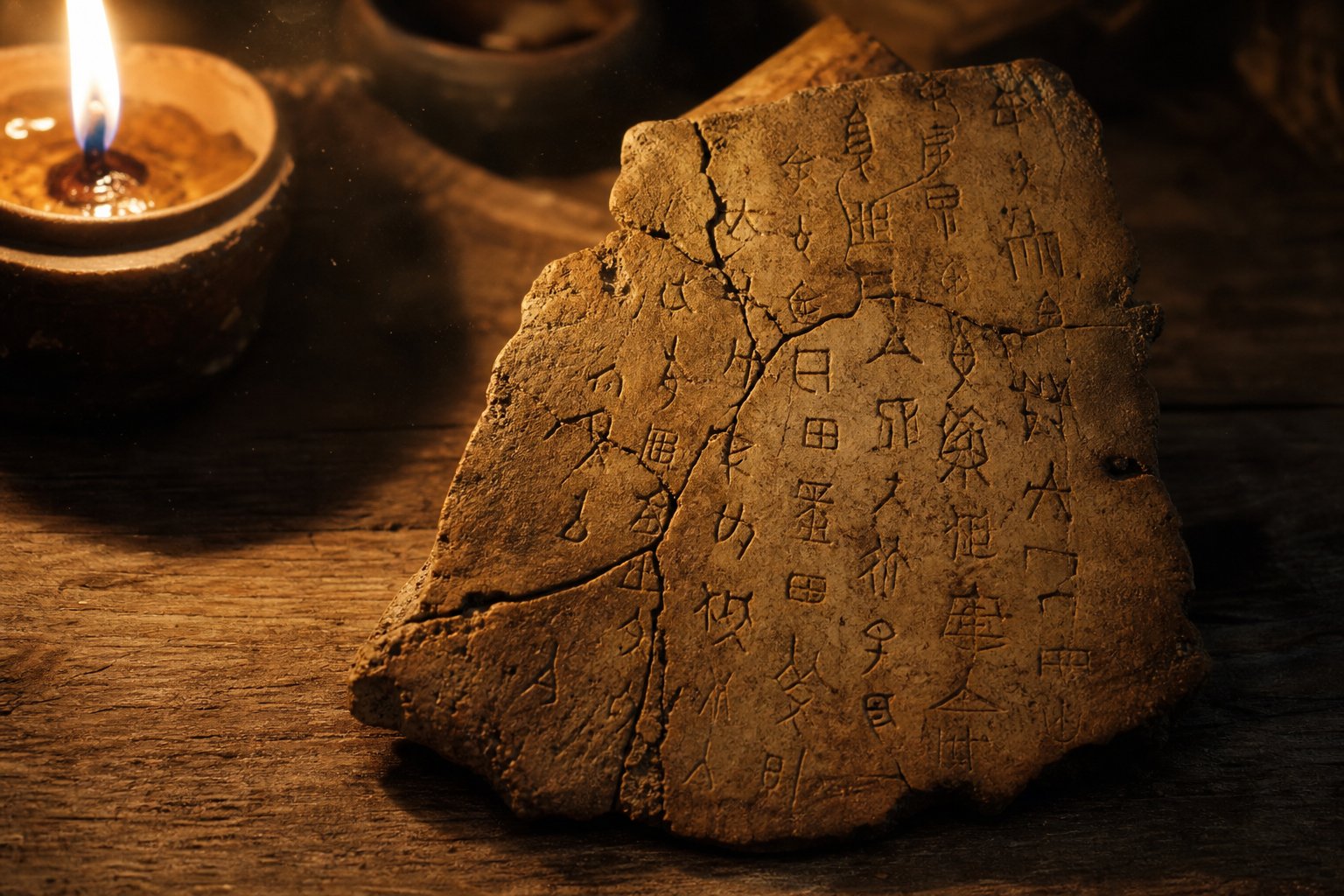
Every Chinese character carries a biography written in bone, bronze, and ink. The etymology of 梦 stretches back over three thousand years, and its earliest forms look nothing like the tidy strokes you see on a screen today. Tracing the ancient Chinese character for dream evolution reveals something unexpected: the original scribes weren't just labeling a concept. They were drawing a picture of a person in the act of dreaming, complete with exaggerated eyes and a body in motion.
Oracle Bone and Bronze Inscription Origins
The dream character oracle bone script origin dates to the Shang Dynasty (roughly 1600-1046 BCE), when diviners carved questions to ancestors and spirits on turtle shells and animal bones. The earliest known form of the character depicted a person lying on a bed with oversized, prominent eyes. Some scholars describe the figure as appearing to dance slightly in sleep, capturing the restless, vivid quality of dream experience.
Why the exaggerated eyes? In Shang Dynasty cosmology, dreams were not random neural firings. They were channels of communication between the living and the divine. A dreamer's eyes, even closed, were understood to be "seeing" something real: messages from ancestors, warnings from spirits, or glimpses of future events. The enlarged eyes in the oracle bone form reflect this belief. The dreamer is not merely asleep. The dreamer is receiving visions.
This spiritual dimension is critical to understanding the history of dream symbol in Chinese writing. The Epoch Times notes that in ancient writings, one meaning of the character referred specifically to "a place where the divine and humans communicate," revealing how early Chinese people understood multiple realities and the relationship between mortals and gods. Dreams were sacred territory, not idle entertainment.
The bronze inscription period presents an interesting gap. The World of Chinese reports that 梦 does not appear in bronze inscriptions, which is unusual for a character of its age. Bronze script (金文) flourished during the late Shang and Zhou Dynasties, when characters were cast into ritual vessels. The absence of the dream character from these inscriptions may suggest that dream-related divination was handled through oral tradition or alternative written forms during that period, or simply that surviving bronze artifacts haven't preserved it.
From Seal Script to Modern Simplification
The character resurfaces clearly in Qin Dynasty (221-207 BCE) seal script, and here it takes on a dramatically more complex form. The seal script version assembled multiple components into a single elaborate structure:
- 宀 (mián) — a roof or house, representing the shelter where one sleeps
- 爿 (pán) — a bed or wooden frame, placing the dreamer in a reclining position
- 夢 — the phonetic-semantic element meaning "dusky" or "unclear," which also indicated the character's pronunciation
Picture the full scene: a person inside a house, lying on a bed, with eyes growing dim in the evening. The Qin-era character was essentially a sentence compressed into a single written unit. It told you where dreaming happens (in a house), what position the dreamer is in (on a bed), and what the experience feels like (dusky, unclear vision at night).
The problem? This full form was painfully complex to write. Scribes and officials working under time pressure began dropping the outer elements, 宀 and 爿, and writing only the inner component 夢 for convenience. This shorthand gradually replaced the original compound character entirely. By the Song Dynasty (960-1279), the abbreviated 夢 had become the standard written form across China.
The final simplification came in the 20th century. When the People's Republic of China introduced simplified characters in the 1950s and 1960s, 夢 was further reduced to 梦. The upper components (艹, 罒, 冖) were replaced with 林 (forest), preserving the atmospheric sense of obscurity and shadow while cutting the stroke count from 13 to 11. The bottom element 夕 (evening) survived intact, maintaining the character's ancient connection to nighttime.
Here's how the evolution unfolds across time:
| Period | Script Type | Form | Key Features |
|---|---|---|---|
| Shang Dynasty (c. 1600-1046 BCE) | Oracle Bone Script | Pictographic | Person on bed with exaggerated eyes, body in motion |
| Qin Dynasty (221-207 BCE) | Seal Script | 宀 + 爿 + 夢 | Full compound: house + bed + dusky-eyed evening vision |
| Song Dynasty (960-1279) | Regular Script | 夢 | Simplified to inner component only: 艹 + 罒 + 冖 + 夕 |
| 1950s-1960s | Simplified Script | 梦 | Upper elements replaced with 林 (forest); 夕 retained |
What's remarkable about this progression is how the character's core meaning persisted through every transformation. The oracle bone form showed a person seeing visions in sleep. The seal script form described the setting and sensation of that experience. The traditional form 夢 preserved the eyes-closing-at-night imagery. And the modern simplified 梦 still evokes the mysterious, shadowy quality of dreams through its forest-at-evening composition.
Each stage stripped away physical detail while retaining emotional and sensory truth. The bed disappeared. The house disappeared. But the darkness, the closing eyes, the sense of entering another world at nightfall, those elements survived three millennia of scribal evolution. The character adapted its body while keeping its soul.
This deep history also explains why 梦 carries such weight in Chinese culture beyond its dictionary definition. A character born from spiritual communication between humans and the divine, carved into sacred bones used for divination, doesn't shed that gravity easily. The philosophical and literary traditions that grew around dreaming in China drew on this same well of meaning, treating dreams not as mental noise but as encounters with something larger than waking life.
Dreams in Chinese Philosophy and Cultural Tradition
A character born from oracle bone divination and shaped by millennia of spiritual belief doesn't exist in a cultural vacuum. The dream symbolism in Chinese culture runs far deeper than vocabulary. It threads through philosophy, religion, literature, and even modern politics, each era layering new meaning onto the same ancient character. To understand what 梦 truly carries, you need to follow it across these dimensions.
Zhuangzi Butterfly Dream and Philosophical Roots
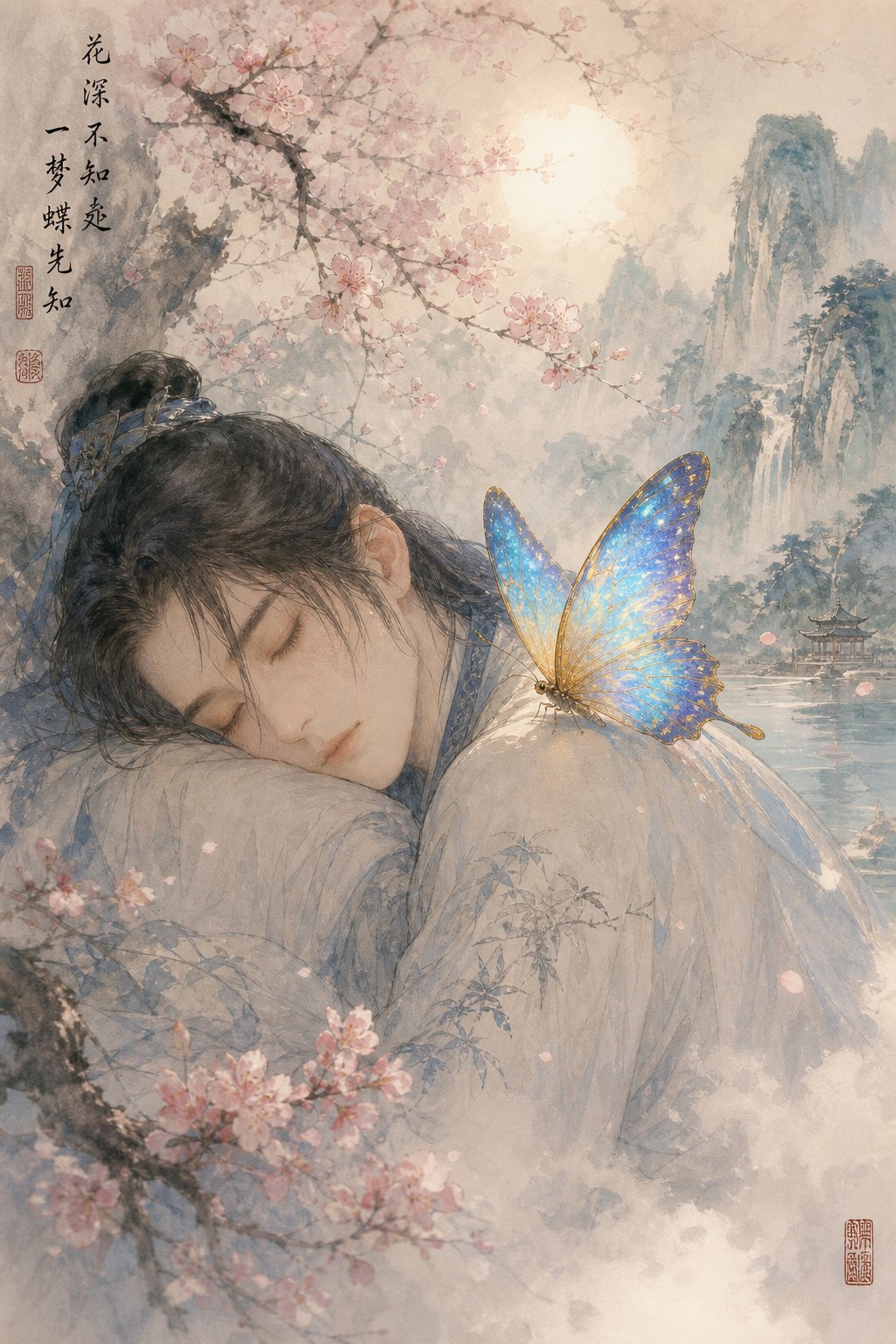
Imagine falling asleep and becoming a butterfly. You flutter through open air, completely content, with no memory of ever being human. Then you wake up. You're a person again, solid and unmistakably yourself. But here's the question that refuses to dissolve: were you a person dreaming of being a butterfly, or are you now a butterfly dreaming of being a person?
This is the Zhuangzi butterfly dream, one of the most famous passages in all of Chinese philosophy. Written during the late Warring States period (476-221 BCE), it appears in the text Zhuangzi, attributed to the Daoist philosopher Zhuang Zhou. The passage is deceptively short but philosophically bottomless.
Zhuang Zhou once dreamed he was a butterfly, flitting and fluttering around, happy, and doing as he pleased. As a butterfly, he did not know he was Zhuang Zhou. All of a sudden, he awoke and found he was Zhuang Zhou, solid and unmistakably human. But then he did not know whether he was Zhuang Zhou dreaming he was a butterfly or a butterfly dreaming he was Zhuang Zhou.
Zhuangzi's conclusion wasn't that dreams are meaningless illusions. Instead, he pointed to what he called the "transformation of things" (物化), a constant flux between states of consciousness where the self shifts from being unaware of distinctions to being sharply aware of them. The dream state and the waking state are not ranked. Neither is declared more "real" than the other. This radical move placed dreams in Chinese philosophy and literature on equal footing with waking experience, a position that Western philosophy wouldn't seriously entertain until Descartes raised similar doubts two thousand years later.
Two contrasting interpretive traditions grew from this single parable. The China Story identifies an optimistic school that seized on the carefree butterfly as a symbol of joyful freedom, and a melancholy school that read the passage as evidence that "life is but a dream," fleeting and insubstantial. Over the centuries, the optimistic reading gained the upper hand. Poets and scholars treated the butterfly dream as a fixed allusion for delightful experience. Su Shi (Su Dongpo), the eminent Song Dynasty poet, alluded to it when describing a wonderful dream in the mountains: "In my dreams I am a joyful butterfly, carefree."
Dreams as Spiritual Messages in Ancient China
Long before Zhuangzi turned dreams into a philosophical puzzle, ancient Chinese people treated them as something far more practical: direct communication from the spirit world. During the Shang Dynasty, when diviners carved questions into oracle bones, dreams were considered messages from ancestors and deities. A king's dream wasn't personal psychology. It was state intelligence, requiring interpretation by specialists.
This belief system gave rise to formal dream divination practices. The Rites of Zhou (周礼), a text describing the ideal bureaucratic structure of the Zhou Dynasty, actually lists an official position for dream interpretation. These court diviners categorized dreams into types and cross-referenced them with cosmological systems to extract guidance for governance, warfare, and ritual. Dreams sat alongside bone-cracking and milfoil-stalk casting as legitimate methods of accessing divine knowledge, as documented in studies of ancient Chinese divination.
The spiritual weight of dreams persisted well beyond the Shang. In the Book of Songs (诗经), dating to the 11th-7th centuries BCE, the character 梦 appears with connotations of darkness and confusion. One line reads: "When I see you so mengmeng, my heart is full of pain," where meng implies a murky, disoriented state. This usage reveals how the character's meaning expanded early on from literal dreaming to encompass dimness, gloom, and emotional confusion, all qualities associated with the liminal space between waking and sleeping.
Classical literature carried these associations forward. Late imperial China (1368-1911) produced a wave of literary works with "dream" in their titles, using the concept as a metaphor for impermanence and loss. Zhang Dai wrote Dream Recollections of Tao'an (陶庵梦忆) after the fall of the Ming Dynasty, treating dreams as vessels for a vanished world. Cao Xueqin's Dream of the Red Chamber (红楼梦), published in 1791, used the dream framework to explore the decline of a great family and, by extension, the decay of an entire social order. In these works, 梦 became a metaphor for a forever-lost life and its material pleasures, a lament for displacement in space and time.
The Chinese Dream as Modern Political Symbol
Fast forward to 2012. Xi Jinping, newly promoted to the top Communist Party post, introduced a phrase that would blanket Chinese media for years to come: 中国梦 (Zhōngguó Mèng), the Chinese Dream. The slogan calls for the "great rejuvenation of the Chinese nation," combining national pride with collective aspiration.
How does this modern usage connect to the ancient character? Linguistically, it's a departure. The China Story notes that 中国梦 is a calque, a loan translation modeled on the word construction of 美国梦 (the American Dream). The character 梦 here functions as 梦想 (aspiration, ideal), stripped of the philosophical ambiguity that Zhuangzi gave it and the spiritual gravity it carried in oracle bone divination. It's forward-looking rather than reflective, collective rather than individual.
The BBC reported that the slogan's appeal lies partly in its vagueness. It can mean national military strength to a retired colonel, academic achievement to a university student, or economic prosperity to a factory worker. This flexibility is by design. Where Zhuangzi's dream dissolved boundaries between self and world, the Chinese Dream reasserts them, defining a clear national identity and a shared destination.
Yet the tension between these meanings is revealing. Ancient dream symbolism in Chinese culture emphasized uncertainty, transformation, and the blurring of reality. The modern political dream emphasizes certainty, unity, and a fixed goal. The same character, 梦, holds both meanings simultaneously, proof that Chinese characters are not static containers but living vessels that absorb new significance with each generation.
What ties all three dimensions together, philosophical, spiritual, and political, is the character's refusal to mean just one thing. It is a dream you have at night, a vision sent by ancestors, a philosophical riddle about the nature of reality, a literary metaphor for impermanence, and a national rallying cry. This layered richness is exactly what makes 梦 one of the most culturally loaded characters in the Chinese writing system, and why it appears so frequently in the idioms and compound words that Chinese speakers use every day.
Idioms and Compound Words Built on 梦
A single character carrying three thousand years of philosophical and spiritual weight doesn't sit quietly in a dictionary. It breeds expressions. Chinese idioms about dreams are everywhere in daily conversation, literature, and media. Some carry the weight of Tang Dynasty parables. Others are as casual as saying "no way" in English. Knowing these expressions is what separates textbook knowledge from real fluency.
Essential Chengyu Using 梦
Chengyu are four-character idioms, compact stories compressed into a fixed phrase. Several of the most vivid chengyu with dream character 梦 draw directly from classical literature, each one a miniature fable about illusion, longing, or awakening.
Take 黄粱美梦 (huángliáng měimèng). This expression comes from the Tang Dynasty tale The Record of the Pillow (枕中记) by Shen Jiji. A young man named Lu Sheng, frustrated by poverty and obscurity, borrows a magic pillow from a Daoist priest at an inn. He falls asleep and lives an entire lifetime of glory: passing the imperial exams, rising to prime minister, accumulating wealth, raising a family, and dying at eighty. When he wakes, the pot of yellow millet (黄粱) the innkeeper put on the stove hasn't even finished cooking. A whole life of splendor lasted less time than it takes to boil porridge. The idiom now means a pipe dream or wishful fantasy that evaporates on contact with reality.
南柯一梦 (nánkē yī mèng) tells a parallel but distinct story. From Li Gongzuo's Tang Dynasty tale The Governor of Nanke, a man named Chunyu Fen falls asleep drunk under a locust tree and dreams he enters a grand kingdom. He marries a princess, governs a province for twenty years, and achieves fame. When he wakes, he discovers the "kingdom" was an ant colony beneath the tree's southern branch (南柯). Where 黄粱美梦 emphasizes how briefly glory lasts, 南柯一梦 stresses how hollow and illusory it was from the start. One is about time collapsing. The other is about scale collapsing.
Here's a full reference table for the most important dream-related chengyu:
| Expression | Pinyin | Literal Meaning | Figurative Meaning |
|---|---|---|---|
| 黄粱美梦 | huángliáng měimèng | Beautiful dream of yellow millet | A pipe dream; fleeting fantasy of wealth or success |
| 南柯一梦 | nánkē yī mèng | A dream under the southern branch | An illusory experience; grandeur revealed as nothing |
| 梦寐以求 | mèngmèi yǐ qiú | To seek even in dreams and sleep | To long for something intensely; a cherished aspiration |
| 白日做梦 | báirì zuòmèng | Dreaming in broad daylight | Daydreaming; entertaining absurd fantasies |
| 如梦初醒 | rú mèng chū xǐng | As if waking from a dream for the first time | A sudden realization; finally seeing the truth |
Notice the emotional range. 梦寐以求 is positive, describing passionate longing for something worthy. 白日做梦 is dismissive, the equivalent of telling someone "you're dreaming" in English. 如梦初醒 is neutral to positive, marking a moment of clarity. These idioms don't all treat dreams the same way, and choosing the right one depends on whether you want to express longing, mockery, or awakening.
Common Compound Words with 梦
Beyond four-character idioms, 梦 forms the backbone of everyday dream compound words in Mandarin that you'll encounter constantly in conversation and writing:
- 做梦 (zuòmèng) — to dream; the most basic and common way to say "have a dream" in spoken Chinese.
- 梦想 (mèngxiǎng) — dream or aspiration; used for life goals, ambitions, and ideals. This is the word behind 中国梦 (Chinese Dream).
- 噩梦 (èmèng) — nightmare. If you're wondering how to say nightmare in Chinese, this is it. The character 噩 means "startling" or "terrible."
- 梦游 (mèngyóu) — sleepwalking, literally "dream-wandering."
- 美梦 (měimèng) — a pleasant dream or a beautiful fantasy.
- 梦境 (mèngjìng) — dreamscape; the world or setting within a dream.
- 梦想家 (mèngxiǎngjiā) — dreamer; someone who pursues ideals. The suffix 家 (jiā) turns the noun into a person, just like "artist" (艺术家) or "scientist" (科学家).
The word 梦想家 is worth highlighting for anyone searching for how to say "dreamer" in Chinese. It carries a respectful tone, suggesting someone with vision rather than someone lost in fantasy. Compare it to 白日做梦 and you'll see how context flips the connotation of dreaming from admirable to ridiculous.
Using Dream Expressions in Context
Knowing the definitions is useful. Knowing when to deploy each expression is what makes your Chinese sound natural. Here are quick usage notes:
- Use 黄粱美梦 when someone's plans for quick riches or overnight success fall apart. It carries a tone of wistful regret or gentle warning.
- Use 南柯一梦 when you want to emphasize that something impressive turned out to be hollow or meaningless. It's sharper, more disillusioning.
- Use 梦寐以求 in formal or written contexts to describe something deeply desired. It sounds literary and earnest, never sarcastic.
- Use 白日做梦 to shut down unrealistic ideas. It's blunt and colloquial, the verbal equivalent of an eye-roll.
- Use 如梦初醒 for moments of sudden clarity after a period of confusion or denial.
These expressions show how a single character branches into an entire emotional vocabulary. The dream character doesn't just mean "dream." It means longing, delusion, awakening, fantasy, and aspiration, depending on which words surround it. That flexibility is part of what makes 梦 so central to Chinese expression, and part of what makes it stick in memory once you've seen it in action across enough contexts.

Memory Tricks to Never Forget the Dream Character
Knowing the idioms, the history, and the pronunciation is valuable, but none of it matters if you can't recall the character when you need it. Rote repetition, writing 梦 fifty times in a row, feels productive in the moment. A week later, the strokes blur together with a dozen other characters you drilled the same way. There's a better path: mnemonic storytelling that turns the character's visual components into a scene your brain actually wants to remember.
Mnemonic Story for Simplified 梦
The simplified form gives you two clear building blocks: 林 (forest) on top and 夕 (evening) on the bottom. Your job is to weave these into a short, vivid narrative that connects to the meaning "dream."
Imagine this: you're walking through a dense forest at dusk. The trees press close on both sides, their branches tangling overhead until the fading sky is barely visible. Evening settles in. Shadows stretch and merge. The boundary between what you're seeing and what you're imagining starts to dissolve. You're not quite awake anymore. You're entering a dream.
That's it. Forest + evening = the threshold where dreams begin. The story works because it's sensory. You can feel the dimness, the disorientation, the shift from waking clarity into something murkier. Every time you see 梦, you recall that twilight forest, and the meaning surfaces without effort.
Mnemonic Story for Traditional 夢
The traditional form is more complex, with four stacked components: 艹 (grass) + 罒 (eyes) + 冖 (cover) + 夕 (evening). More components means a richer scene to work with.
Picture this sequence like a short film: tall grass sways gently above you as you lie down outdoors. Your eyes grow heavy. A blanket, or maybe the grass itself, covers your face. Evening arrives. The last light disappears. Behind your closed eyelids, images begin to form. You've entered the dream world.
Read the components top to bottom and you're watching someone fall asleep in real time: grass overhead, eyes closing, something covering them, night settling in. The traditional form is almost cinematic in how it narrates the physical act of dreaming. Once you've "watched" this scene once or twice, the character's structure locks into place.
Visual Memory Techniques for Chinese Characters
Why do these story-based approaches work so much better than writing a character repeatedly? The answer comes down to how memory actually functions.
Writing a character fifty times in one sitting is what researchers call massed repetition. It feels effective because recognition is easy when you just wrote the thing thirty seconds ago. But spaced repetition research shows that reviews spread out over time are many times better for long-term recall than reviews crammed together. A mnemonic story gives your brain a retrieval hook, something to grab onto when you encounter the character days or weeks later and need to reconstruct its meaning from memory.
Component-based mnemonics also leverage a principle that character learning specialists emphasize: every Chinese character is composed of smaller components, and each component can be associated with a name or meaning. When you decompose a character into its parts and create a story weaving those parts together with the character's meaning, you're building multiple memory connections instead of one. You're linking visual shape to narrative to meaning, giving your brain three paths back to the same destination instead of a single fragile thread.
Here's a step-by-step process for building your own mnemonic for any character, using 梦 as the model:
- Break the character into its components. For 梦: 林 (forest) and 夕 (evening).
- Assign each component its core meaning or a vivid image. Forest = dense trees, shadows, mystery. Evening = fading light, transition, the edge of sleep.
- Connect the component meanings to the character's definition through a short narrative. The story should be sensory and specific, not abstract.
- Make it personal. If forests don't resonate with you, substitute a dark alley, a foggy park, or any shadowy place that triggers the feeling of entering the unknown.
- Review the story at increasing intervals: a few minutes later, then the next day, then three days later. Each recall strengthens the connection.
That last point matters. A mnemonic without spaced review still fades. The story gives you the hook; spaced repetition keeps the hook sharp. Together, they form the easy way to learn dream in Chinese and retain it permanently.
Different learners respond to different angles. If you're a visual thinker, sketch the forest-at-evening scene next to the character. If you learn through sound, narrate the story aloud each time you review. If you prefer logic over imagery, focus on the semantic reasoning: 夕 (evening) anchors the character to nighttime, while 林 (forest) represents the obscurity and confusion of the unconscious mind. The mnemonic for dream Chinese character doesn't have to be the same for everyone. It just has to be vivid enough that your brain holds onto it.
One more tip: once you've locked in 梦, notice how its components appear in other characters. 夕 shows up in 夜 (night), 多 (many), and 外 (outside). 林 appears in 森 (dense forest) and 禁 (forbidden). Each recognition reinforces the original mnemonic while expanding your character web outward. You're not just memorizing one character. You're building a network, and networks are far harder to forget than isolated facts.
With the character firmly anchored in memory, the practical question shifts: where does 梦 sit in a structured study plan, and what should you learn next to build on it?
Study Guide and Learner Tips for Mastering 梦
HSK Level and Frequency Data for 梦
Where does 梦 sit in your study progression? According to HanziDB, the character belongs to HSK Level 4, placing it in the upper-intermediate tier of the Chinese Proficiency Test. It carries a frequency rank of 865 out of all modern Chinese characters and holds General Standard index number 2221. In practical terms, this means you'll encounter it regularly in novels, news articles, song lyrics, and everyday conversation, but it's not among the first few hundred characters a beginner tackles.
For context, HSK 4 represents the stage where learners can discuss a broad range of topics with some fluency. If you're preparing for this level, 梦 is not optional. It appears in compound words like 梦想 (aspiration) and 做梦 (to dream) that show up in reading passages and listening exercises. Mastering it here also unlocks the chengyu and literary references covered earlier in this article, giving you access to a richer layer of Chinese expression.
Stroke Order and Writing Practice Tips
The simplified 梦 contains 11 strokes. Its radical is 木 (wood/tree), classified under Kangxi radical 75. Writing it correctly means following a top-to-bottom sequence, completing the 林 (forest) component before moving to 夕 (evening) below. Here's how to write 梦 step by step:
- Write the left 木 of the 林 component: horizontal stroke, then vertical stroke downward, then left-falling stroke, then right-falling dot.
- Write the right 木 of the 林 component: horizontal stroke, vertical stroke, left-falling stroke, right-falling dot.
- Write the 夕 component below: first the short left-falling stroke, then the horizontal-turning stroke, then the final dot.
The traditional form 夢 adds two more strokes (13 total), stacking 艹, 罒, and 冖 above 夕. The principle stays the same: work top to bottom, left to right, completing each component layer before descending to the next.
A few chinese dream character study tips for beginners: pay attention to proportions. The 林 section should occupy roughly two-thirds of the character's vertical space, with 夕 compact and tucked underneath. Many learners make 夕 too large, throwing off the visual balance. Practice on grid paper first to train your eye for spacing.
Next Steps for Chinese Learners
With 梦 locked in, consider branching into related characters that share components or semantic territory:
- 想 (xiǎng) — to think, to miss, to want. Pairs naturally with 梦 in the compound 梦想.
- 睡 (shuì) — to sleep. Shares the nighttime semantic field and uses the eye radical 目.
- 眠 (mián) — to sleep (literary). Appears in classical texts alongside 梦 and uses the same 目 radical.
- 夜 (yè) — night. Contains the same 夕 component you already recognize from 梦.
Each of these characters reinforces components you've already internalized. 夕 reappears in 夜. The eye radical 目 connects 睡 and 眠 back to the traditional form 夢. You're not starting from scratch with any of them. You're extending a network that already has roots.
Mastering 梦 also opens a door to reading classical Chinese texts, from Zhuangzi's butterfly parable to Cao Xueqin's Dream of the Red Chamber, and to understanding modern political discourse around 中国梦. Few single characters span this range: a literal dream at night, a metaphor for illusion, a word for aspiration, and a national slogan. That breadth is what makes 梦 worth the effort, not just as a vocabulary item, but as a key that unlocks layers of Chinese thought stretching back to the oracle bones.
Frequently Asked Questions About the Dream Chinese Character
1. How do you write dream in Chinese?
The simplified form is 梦 (11 strokes), used in mainland China, Singapore, and Malaysia. The traditional form is 夢 (13 strokes), used in Taiwan, Hong Kong, and Macau. Both are pronounced meng with a fourth (falling) tone. To write the simplified version, complete the 林 (forest) component on top first, then write 夕 (evening) below, working top to bottom and left to right.
2. What is the difference between simplified 梦 and traditional 夢?
Both characters mean dream and share the same pronunciation (meng, fourth tone). The structural difference lies in their upper components. Simplified 梦 uses 林 (forest) to evoke mystery and darkness. Traditional 夢 stacks 艹 (grass), 罒 (eyes), and 冖 (cover) above 夕 (evening), narrating the physical act of eyes closing under cover at night. The traditional form is more descriptive, while the simplified form is more atmospheric and poetic.
3. What HSK level is the character 梦?
The character 梦 belongs to HSK Level 4, which represents upper-intermediate proficiency. It has a frequency rank of approximately 865 among modern Chinese characters. At this level, learners are expected to discuss a broad range of topics with some fluency, and 梦 appears in common compounds like 梦想 (aspiration) and 做梦 (to dream) that feature in reading and listening exercises.
4. What does the Zhuangzi butterfly dream mean in Chinese philosophy?
The Zhuangzi butterfly dream is a foundational Daoist parable from the Warring States period. Zhuang Zhou dreamed he was a butterfly, completely unaware of being human. Upon waking, he could not determine whether he was a man who dreamed of being a butterfly or a butterfly now dreaming of being a man. The passage explores the transformation of things (物化) and places dream consciousness on equal footing with waking reality, questioning fixed boundaries between self and world.
5. How do you say nightmare and dreamer in Chinese?
Nightmare in Chinese is 噩梦 (emeng), where 噩 means startling or terrible. Dreamer is 梦想家 (mengxiangjia), combining 梦想 (dream/aspiration) with the suffix 家 (person/specialist). The term 梦想家 carries a respectful connotation, suggesting someone with vision and ideals rather than someone lost in idle fantasy. Other useful compounds include 做梦 (to dream), 梦游 (sleepwalking), and 美梦 (pleasant dream).