Understanding Pinyin Name Character Aesthetics
When you hear a Chinese name spoken aloud, you're hearing more than syllables. You're hearing a tonal melody shaped by thousands of years of linguistic tradition. When you see that same name written in characters, you're looking at a visual composition balanced in stroke and structure. And beneath both sound and sight, layers of meaning ripple outward from each carefully chosen character. This intersection of phonetics, visuals, and semantics is what pinyin name character aesthetics is all about.
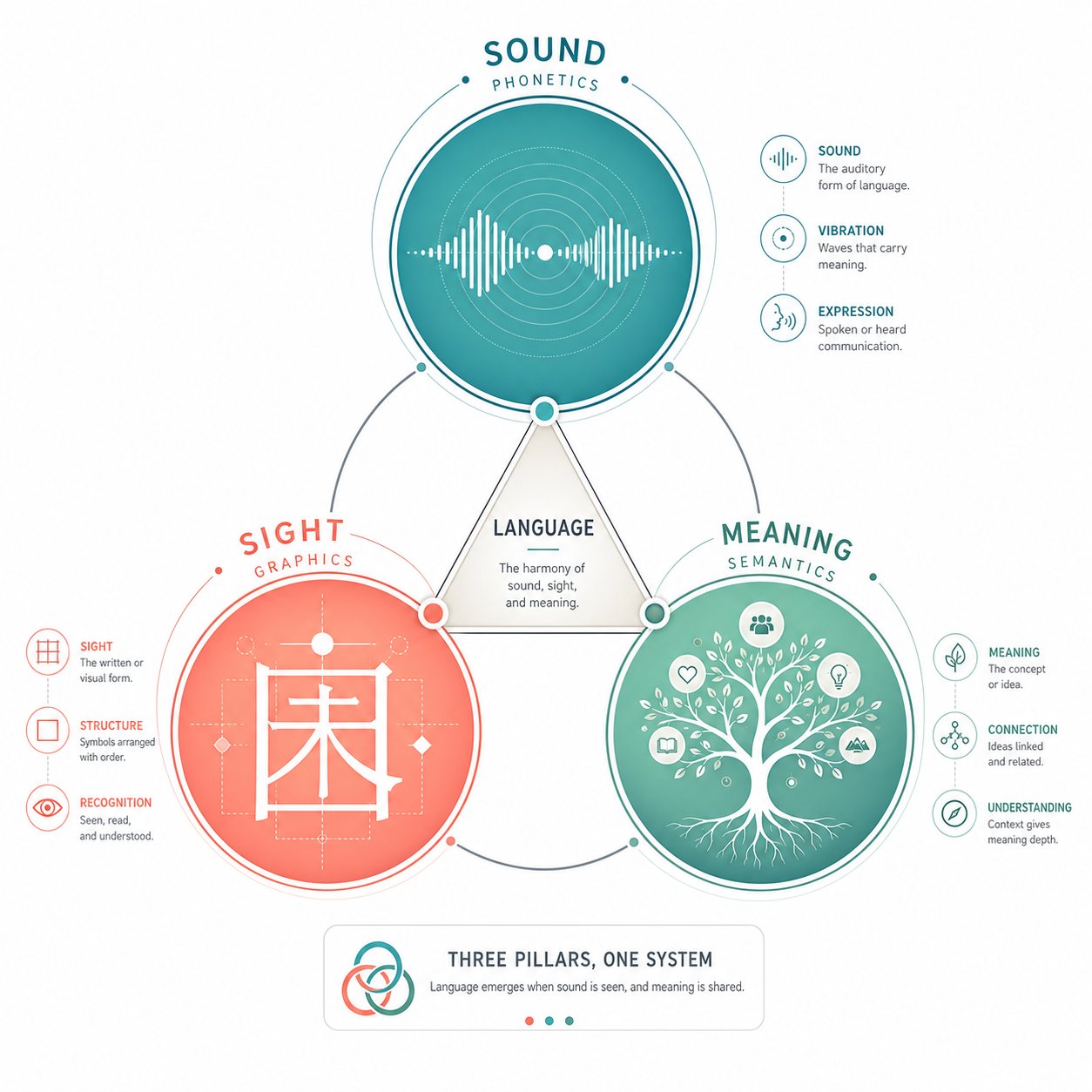
Pinyin name character aesthetics is the study and practice of evaluating Chinese names across three dimensions: phonetic beauty (tonal harmony when spoken), visual beauty (structural balance of written characters), and semantic beauty (depth and resonance of meaning).
So what are the chinese characters called in their written form? They're known as hanzi, and each one is far more than a letter. A single Chinese hanzi carries its own pronunciation, tone, meaning, and visual architecture. This makes Chinese names and characters fundamentally different from alphabetic names, where letters represent sounds but carry no independent meaning.
What Pinyin Name Aesthetics Really Means
To understand this system, you'll need a few key terms. Pinyin is the romanization system that represents Mandarin pronunciation using Latin letters and tone marks. Tones are the four pitch contours in Mandarin that distinguish meaning. The same syllable pronounced with a different tone becomes an entirely different word. Radicals are the semantic building blocks within characters, hinting at category or meaning. And stroke order is the prescribed sequence for writing each character, which affects its calligraphic flow and balance.
These elements don't operate in isolation. In traditional Chinese naming culture, families consider how a name sounds when called across a room, how it looks when signed on a document, and what aspirations its meanings encode. As Temple University's Center for Chinese Language Instruction explains, the basic unit in written Chinese consists of three parts: the character, the pronunciation, and the meaning, and all three come into play when naming a child.
Three Dimensions of Chinese Name Beauty
Think of aesthetic chinese naming as a triangle with three equal sides:
- Phonetic dimension — How the tones of each syllable interact to create a melodic or discordant spoken name
- Visual dimension — How the stroke counts, structural types, and proportions of characters create harmony on the page
- Semantic dimension — How character meanings, radical symbolism, and literary allusions layer together into something resonant
A truly beautiful chinese name achieves balance across all three. A name might sound musical but look cluttered when written. Another might carry profound meaning but stumble awkwardly off the tongue. The art lies in harmonizing these dimensions simultaneously.
This guide treats Chinese names as an art form grounded in linguistic principles rather than offering a shallow list of "cool-sounding" options. Whether you're a heritage speaker reconnecting with naming traditions, a writer crafting authentic characters, or a learner choosing your own Chinese for name use in daily life, the framework ahead gives you the tools to evaluate and appreciate names with real depth.
That three-part harmony starts with sound, and sound in Mandarin means tones. The way those four pitch contours combine across a name's syllables creates patterns that native speakers instinctively recognize as pleasing or jarring.

The Phonetic Beauty of Tonal Patterns in Names
Every Mandarin syllable carries a tone, and every tone traces a distinct pitch contour. When two or three syllables combine into a full name, those contours interact like notes in a short musical phrase. Some combinations glide effortlessly. Others collide. Understanding how to read chinese symbols in pinyin means recognizing that the diacritical marks above vowels aren't decorative. They're the melody line of the language, and in naming, they're the first thing a listener perceives.
How Mandarin Tones Shape Name Musicality
Mandarin has four primary tones plus a neutral (unstressed) tone. Each one creates a different pitch movement within a single syllable:
- First tone (high flat) — a steady, sustained pitch at the top of the speaker's range
- Second tone (rising) — pitch climbs from middle to high, like a one-word question
- Third tone (low/dipping) — pitch drops low and stays there (or dips then rises in isolation)
- Fourth tone (falling) — pitch drops sharply from high to low, like a firm command
When you string these together in a name, the transitions between tones create what native speakers perceive as tonal contour. A name like Wáng Yǔxuān (王宇轩) moves from rising, to low, to high-flat, producing a dip-and-recover pattern that feels balanced. Compare that to Zhǎng Yǔyǔ, where three consecutive third tones force awkward tone sandhi adjustments that make the name stumble in natural speech.
This is the core principle: tonal variety across syllables produces musicality, while tonal repetition (especially of the third tone) creates friction. Traditional Chinese naming practice has long accounted for this. Parents and naming consultants map the tone pattern of a full name, surname included, before finalizing character choices. Most English-language resources on Chinese names overlook this entirely, treating character selection as purely a matter of meaning.
Euphonic Syllable Combinations in Pinyin
Beyond tone, the syllable structure itself shapes how a name feels when spoken. Each chinese word pinyin representation breaks into an initial (the leading consonant) and a final (the vowel or vowel-plus-ending). The final determines whether a syllable is open or closed:
- Open syllables end in a pure vowel — li, yu, hua. These sound lighter, more flowing.
- Closed syllables end in a nasal consonant — -n or -ng. Endings like ming, han, or cheng carry more weight and resonance.
Imagine the difference between the name pinyin Lì Yú (丽瑜) and Lì Míng (黎明). Both use a fourth-tone-then-second-tone pattern, but the first feels quick and airy because both finals are open vowels. The second feels grounded because ming resonates through its nasal ending. Neither is better. They simply project different qualities: softness versus strength, delicacy versus solidity.
This interplay between tone contour and syllable structure is what gives each name its spoken personality. Here's how common tone pairings across a two-syllable given name tend to be perceived:
| Tone Pattern (Given Name) | Pitch Contour | Aesthetic Effect | Example |
|---|---|---|---|
| 2nd + 4th | Rising then falling | Melodic, decisive | Chéng Yì (成毅) |
| 1st + 2nd | High-flat then rising | Bright, uplifting | Fēi Yáng (飞扬) |
| 4th + 1st | Falling then high-flat | Strong opening, steady close | Hào Tiān (浩天) |
| 1st + 4th | High-flat then falling | Flowing, graceful descent | Yī Nuò (一诺) |
| 2nd + 2nd | Rising then rising | Energetic but potentially monotonous | Chéng Lín (成林) |
| 3rd + 3rd | Low then low (sandhi applies) | Awkward; first syllable shifts to rising | Yǔ Měi (雨美) |
| 4th + 4th | Falling then falling | Staccato, abrupt | Jùn Yì (俊毅) |
You'll notice that the most traditionally prized patterns involve contrast: a rising tone followed by a falling one, or a high-flat tone anchoring a falling close. These create a sense of arc and resolution. Consecutive identical tones, particularly two fourth tones, can sound clipped or aggressive. Two third tones trigger mandatory tone sandhi, where the first third tone is actually pronounced as a second tone. The name still works, but the mismatch between written pinyin and spoken reality can confuse learners trying to understand how to read chinese symbols accurately.
The relationship between surname tone and given-name tones matters just as much. A surname in the fourth tone (like Zhào 赵) pairs naturally with a given name starting in the first or second tone, creating a falling-then-rising arc. A surname in the first tone (like Zhāng 张) flows well into a second-tone or fourth-tone given name, avoiding the flatness of stacking first tones. Converting any character to pinyin mandarin reveals these patterns immediately, which is why phonetic mapping is the first step in evaluating a name's spoken beauty.
Ultimately, the phonetic dimension of name aesthetics is about creating a miniature melody. Two or three syllables, each with its own pitch shape and resonance, combining into something that feels inevitable rather than accidental. The best names sound like they couldn't have been arranged any other way. But sound is only one dimension. Those same characters that produce tonal harmony also exist as visual objects on a page, where stroke count, structure, and proportion create an entirely different kind of balance.
Visual Character Aesthetics and Calligraphic Appeal
A Chinese name isn't just spoken. It's written on birth certificates, carved into seals, signed on artwork, and displayed on doorframes during holidays. Every time a name appears in written form, its characters sit side by side as a visual composition. The balance between those characters, their density, their structural architecture, determines whether a name looks elegant or awkward on the page. This visual dimension is where chinese character symbols become something closer to graphic design.
Stroke Count Balance and Visual Harmony
Each Chinese character is built from a specific number of strokes, the individual pen movements required to write it. The character 一 (one) has a single stroke. The character 龍 (dragon) has sixteen. When characters with wildly different stroke counts sit next to each other in a name, the result can feel visually lopsided, like pairing a whisper with a shout.
Traditional naming practice treats stroke-count proportion as a genuine aesthetic consideration. A name like 李明 (Lǐ Míng) pairs a 7-stroke surname with an 8-stroke given name, creating near-equal visual weight. Compare that to 丁鑫 (Dīng Xīn), where a 2-stroke surname sits beside a 24-stroke given name. The imbalance is immediately visible: one character looks sparse while the other fills every available space.
Beyond simple proportion, traditional Chinese naming numerology assigns Yin or Yang qualities based on stroke count. Characters with even strokes are Yin; odd strokes are Yang. A well-formed name balances these energies across its characters in specific patterns, such as Yang-Yang-Yin or Yin-Yang-Yang. The total stroke count of the full name (called the zhōng gé) also ideally falls within a set of auspicious numbers. This system adds a layer of intentionality that goes far beyond simply picking pretty chinese characters at random.
Structural Symmetry Between Name Characters
Stroke count tells you about density. Structure tells you about shape. Chinese characters follow a limited set of spatial configurations, and understanding these patterns is key to evaluating visual harmony in names. Here are the most common structural types you'll encounter in chinese characters and symbols used for naming:
- Left-right (⿰) — Two components side by side. Examples: 明, 休, 林, 婷. These characters tend to look wide and balanced.
- Top-bottom (⿱) — Components stacked vertically. Examples: 花, 雪, 思, 慧. These appear tall and layered.
- Enclosed (⿴) — An outer frame surrounds an inner component. Examples: 国, 圆, 园. These feel contained and stable.
- Semi-enclosed (⿸ / ⿺) — A partial frame wraps around content. Examples: 远, 庭, 展. These suggest openness on one side.
- Symmetrical/standalone — Single-unit characters without clear division. Examples: 中, 山, 水. These appear compact and grounded.
Pairing characters with complementary structures produces visual rhythm. A left-right character beside a top-bottom character creates variety without conflict, like alternating horizontal and vertical brushstrokes in a painting. Two left-right characters in a row can feel repetitive, while two enclosed characters may look heavy. The goal is contrast within cohesion.
Imagine the name 林雪 (Lín Xuě). The first character splits left-right (two 木 components side by side), while the second stacks top-bottom (雨 over a base). Written together, they create a pleasing alternation of wide-and-short with tall-and-layered. That structural contrast is part of what makes certain cool chinese characters work well as pairs even before you consider their meanings.
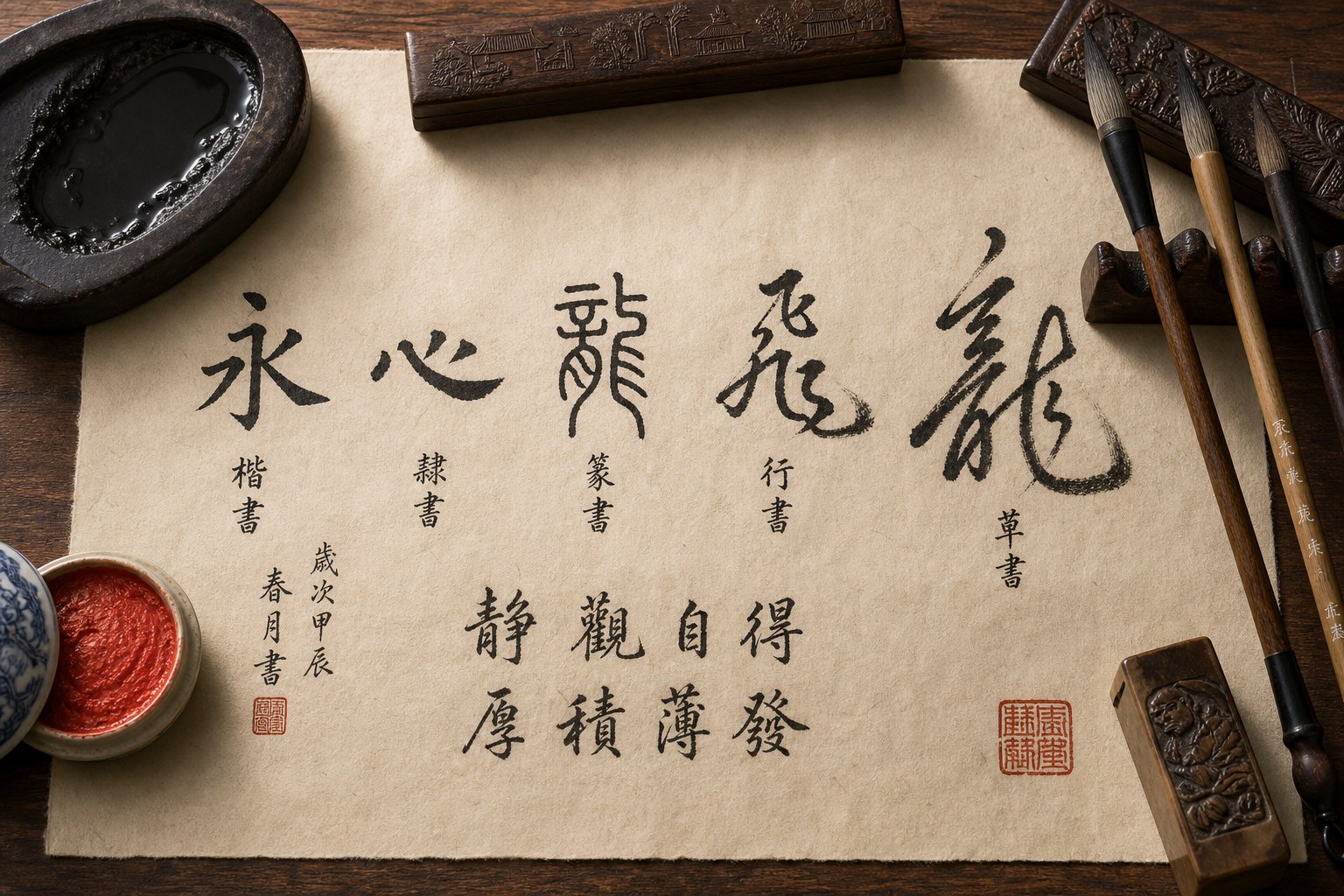
Calligraphic Appeal Across Script Styles
For calligraphy-aware families, a name's beauty extends beyond standard print. Chinese has multiple script styles, and a character that looks ordinary in regular script (楷书) might become stunning in running script (行书) or seal script (篆书). Characters with sweeping diagonal strokes, like 飞 (fly) or 凤 (phoenix), gain dramatic energy in running script. Characters with symmetrical structures, like 林 or 森, look striking in seal script where their geometric balance becomes pronounced.
This matters practically. Names appear on personal seals, wedding scrolls, and art signatures. Families who practice calligraphy often test how a name looks brushed in multiple styles before committing. If you copy and paste chinese characters into a font preview tool, you can approximate this by viewing the same name in songti (serif), kaiti (regular script), and xingshu (semi-cursive) typefaces. The differences can be dramatic.
There's a sweet spot in stroke complexity that calligraphers prize. Characters between 8 and 14 strokes tend to have enough internal structure to look interesting without becoming cluttered. Below 5 strokes, a character can appear too sparse to carry visual weight in a formal context. Above 20 strokes, the character risks looking dense and illegible at smaller sizes. When people copy and paste chinese symbols into digital documents or social profiles, overly complex characters often render poorly at standard font sizes, losing the very details that made them appealing.
You can think of it this way: the visual dimension of name aesthetics asks whether a name looks composed rather than assembled. Do the characters belong together visually? Do they share a proportional logic? Would they look balanced on a seal, a business card, a piece of calligraphy? These questions matter because names are seen as often as they're heard. And for those who want to explore character options digitally, the ability to chinese symbols copy paste into comparison tools makes this evaluation more accessible than ever.
Visual harmony gives a name its presence on the page. But characters aren't just shapes. Each one contains smaller components, radicals, that carry their own symbolic weight and quietly influence how a reader perceives the name's deeper identity.
How Radicals Shape Meaning and Beauty in Names
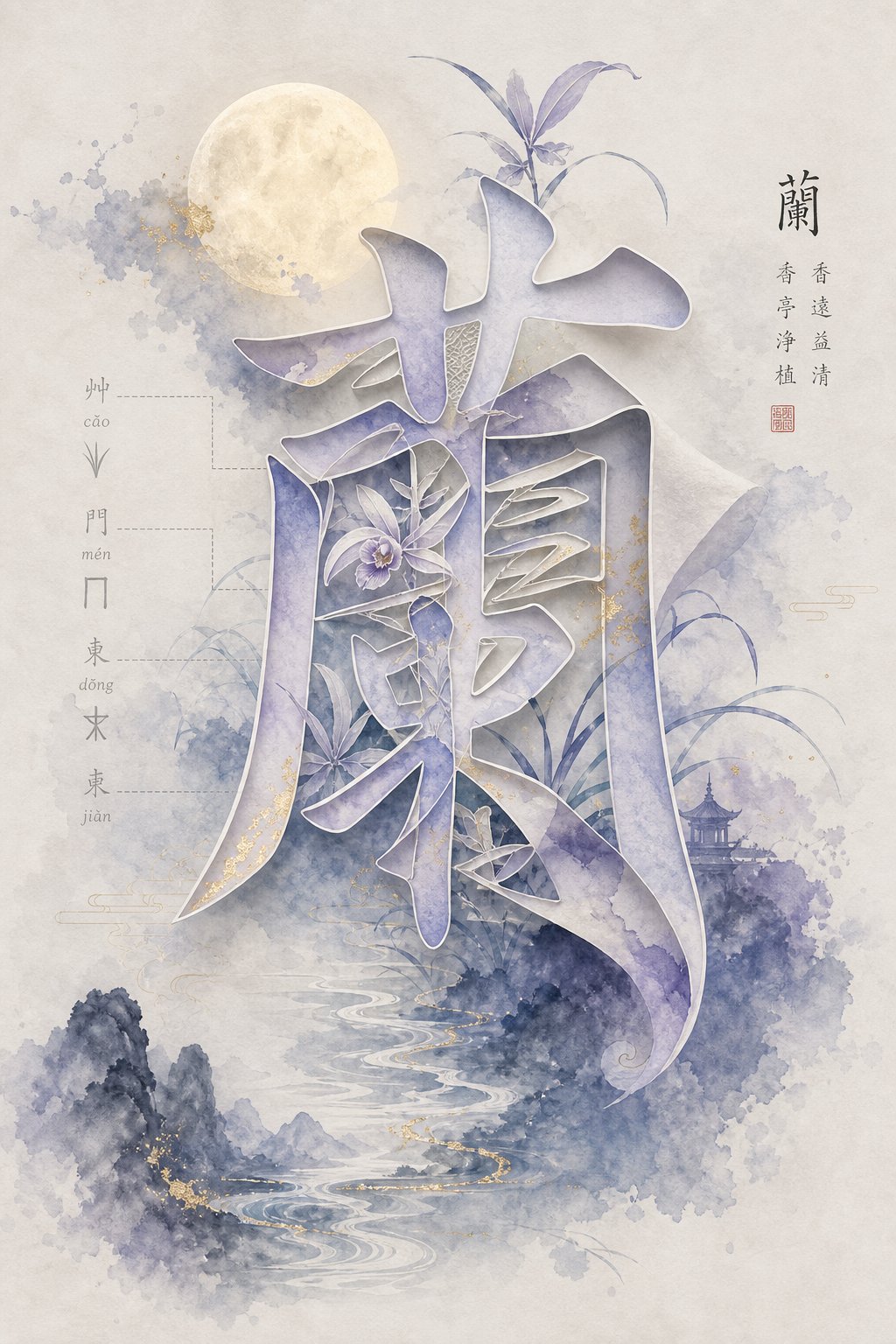
Look closely at any Chinese character and you'll find it isn't a single indivisible unit. It's built from smaller components, each carrying its own history and associations. The most important of these are radicals: the semantic building blocks that hint at a character's category of meaning. When you encounter chinese characters with meanings layered beneath the surface, radicals are often the key to unlocking that deeper reading. In naming, they function as hidden aesthetic signals that shape how a reader instinctively feels about a name before consciously processing its full definition.
Radicals as Hidden Aesthetic Signals
Every Chinese character contains a radical, even if the radical is the character. As Clozemaster's guide to Chinese radicals explains, there are roughly 200 radicals in use, and they serve as the base component that indexes each character by meaning category. In naming, certain radicals carry strong symbolic weight that colors the entire character's perception:
| Radical | Pinyin | Symbolic Association | Example Characters in Names |
|---|---|---|---|
| 氵 (水) | shuǐ | Water, fluidity, adaptability | 洁 (pure), 涵 (contain), 澜 (waves) |
| 艹 (草) | cǎo | Nature, growth, vitality | 芳 (fragrant), 蕊 (stamen), 萱 (daylily) |
| 王/玉 | yù | Jade, preciousness, refinement | 瑶 (precious jade), 琳 (fine jade), 瑞 (auspicious) |
| 心/忄 | xīn | Heart, emotion, inner character | 慧 (wisdom), 恩 (grace), 悦 (joy) |
| 日 | rì | Sun, brightness, time | 晨 (morning), 昊 (vast sky), 曦 (dawn light) |
| 木 | mù | Wood, trees, steadfastness | 林 (forest), 桐 (paulownia), 梓 (catalpa) |
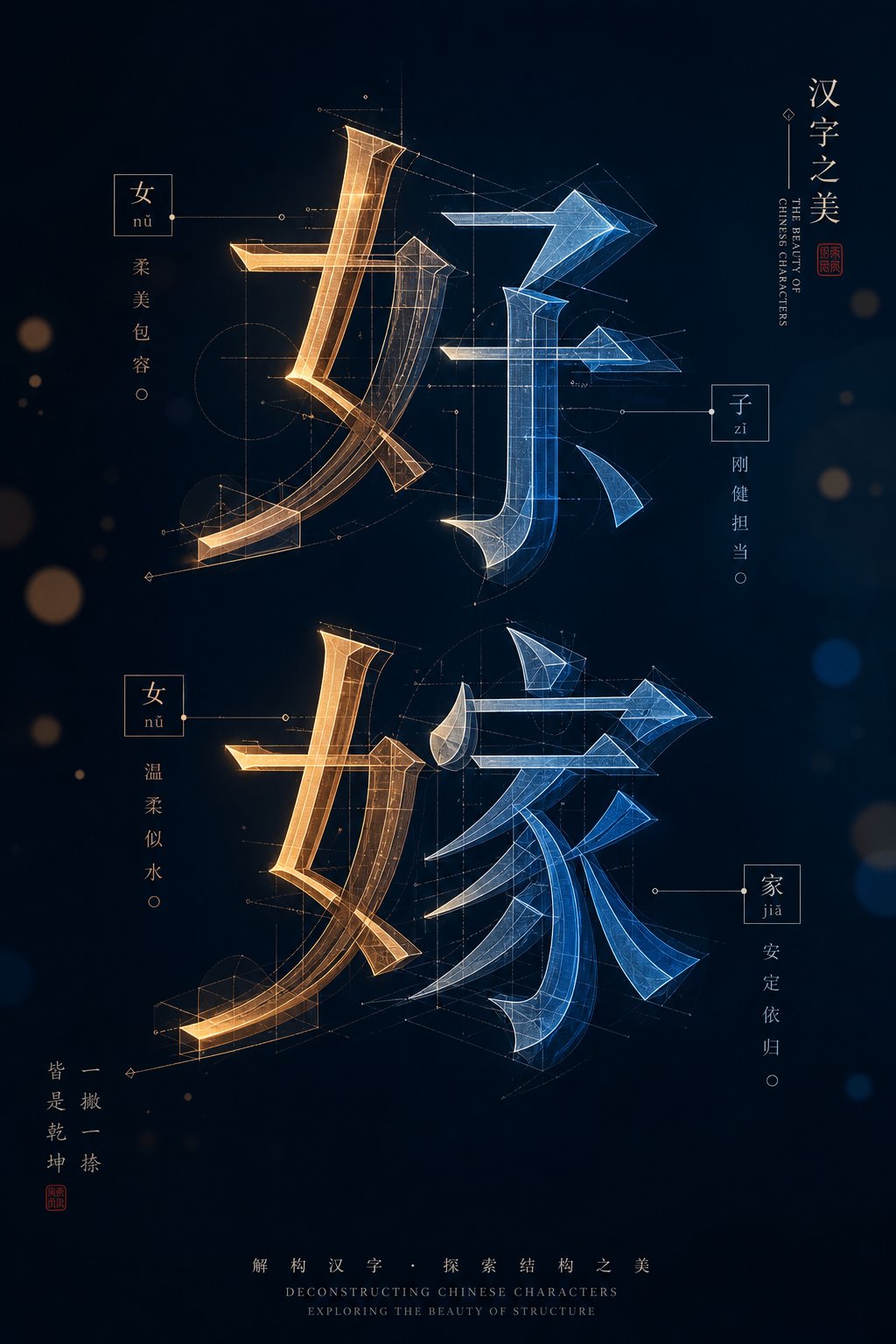
| 女 | nǚ | Femininity, elegance | 婷 (graceful), 娴 (refined), 妍 (beautiful) |
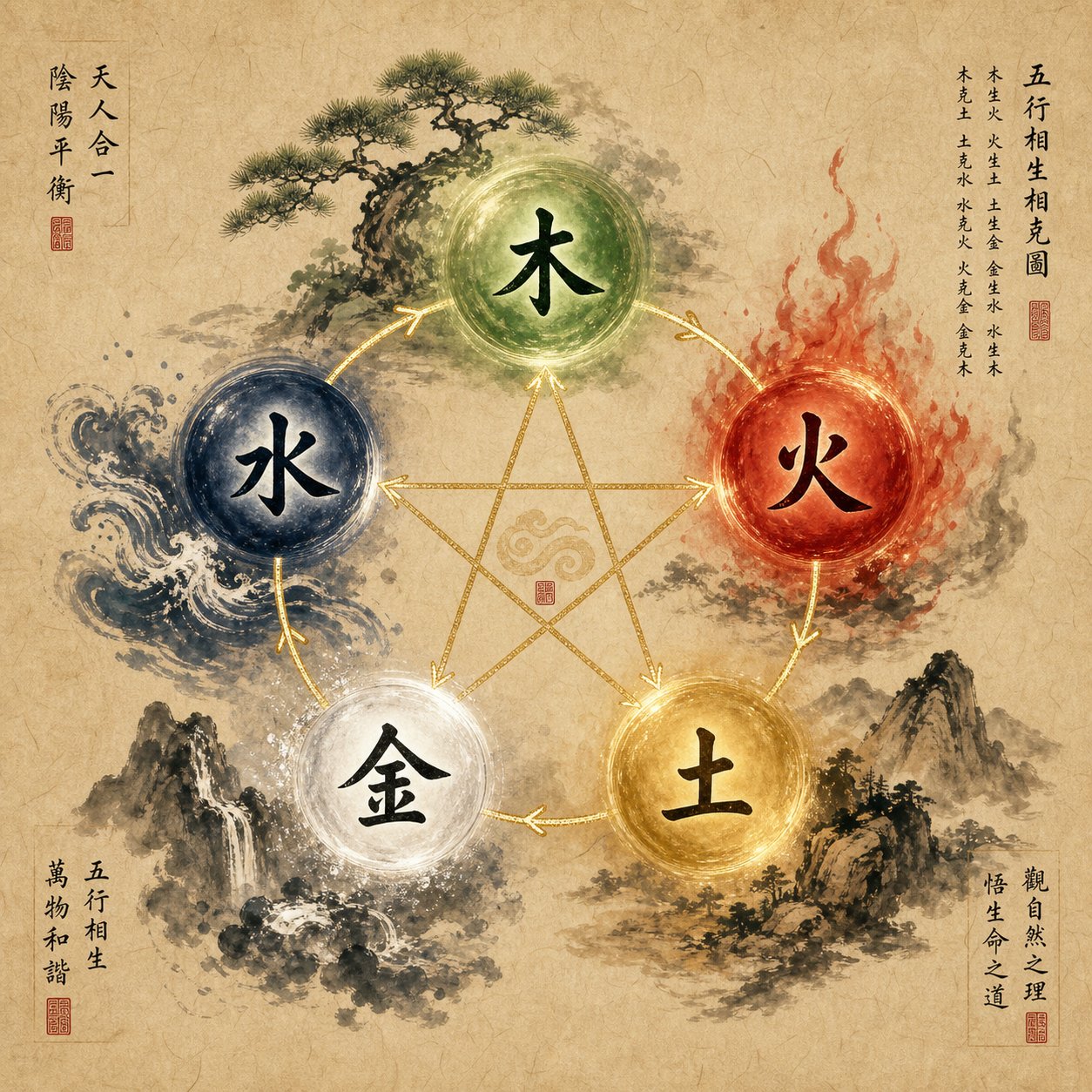
| 金/钅 | jīn | Metal, strength, value | 锦 (brocade), 铭 (inscribe), 鑫 (prosperous) |
When a reader sees the water radical in a name character, they subconsciously register associations with flow, clarity, and depth before they even parse the full character's dictionary definition. This is the chinese character semantic layer that operates below conscious reading. A name like 清涵 (Qīng Hán) doubles down on water imagery through both characters sharing the 氵 radical, creating an immediate impression of calm fluidity. That kind of embedded coherence is what separates thoughtfully constructed names from random character selection.
Thematic Coherence Through Radical Pairing
Skilled naming goes beyond picking individual characters with nice meanings. It considers how the radicals across a full name interact thematically. Two characters sharing a nature-related radical (grass + wood, water + rain) create a unified natural imagery. Characters with complementary radicals (sun + moon, jade + gold) suggest balance and completeness. This is where chinese character interpretation becomes an art: reading not just what a name says, but what its internal architecture implies.
Consider the name 梓萱 (Zǐ Xuān). The first character carries the wood radical (木), the second the grass radical (艹). Together they paint a coherent botanical scene: a catalpa tree beside daylilies. The thematic unity feels intentional, grounded. Compare that to a name pairing the illness radical (疒) with the jade radical. The symbolic dissonance would be jarring regardless of the individual characters' meanings.
This brings up a critical distinction that many learners of chinese words characters miss: not every component in a character is a semantic radical. Many characters are phonetic-semantic compounds, where one part signals meaning and the other signals pronunciation. In the character 妈 (mā, mother), the 女 radical carries the meaning (female), while 马 (mǎ, horse) is purely a phonetic component indicating approximate sound. Research published in the Journal of Experimental Psychology confirms that semantic radicals carry measurable consistency in how they relate to character meaning, a property researchers call "semantic radical consistency." Characters with high consistency between their radical and their overall meaning are processed more fluently by readers.
Why does this matter for naming? Because when you browse mandarin characters and meanings looking for name options, understanding which component is semantic and which is phonetic helps you make smarter choices. A character whose radical aligns with your intended meaning and whose phonetic component produces a pleasing pinyin sound gives you both dimensions at once. The character 瑶 (yáo, precious jade) is a perfect example: the jade radical (王) delivers the meaning of preciousness, while the phonetic component 缶 approximates the sound. You get semantic richness and a smooth rising tone in one package.
Think of radicals as the subtext of a name. They're the associations a literate reader picks up without effort, the thematic thread running beneath the surface of chinese words and meanings. A name built with radical awareness doesn't just mean something beautiful. It feels coherent at a structural level, like a painting where the color palette was chosen before the first brushstroke. That structural coherence sets the stage for the next layer of aesthetic depth: the full semantic meanings, literary allusions, and cultural connotations that individual characters bring to a name.
Semantic Depth and Hidden Meanings in Character Selection
Radicals hint at meaning beneath the surface. But the full semantic weight of a character, its dictionary definition, its literary history, its cultural connotations, is what ultimately makes a name resonate or fall flat. This is the layer where chinese symbols and meanings converge into something personal: a name that doesn't just sound pleasant or look balanced, but actually says something about the person who carries it.
Layers of Meaning in Aesthetic Name Characters
When Chinese families select name characters, they're drawing from a vast reservoir of meaning categories. Each category carries its own emotional register and cultural weight. Here are the most common thematic groupings found in aesthetically valued names:
- Nature imagery — 月 (yuè, moon), 雪 (xuě, snow), 兰 (lán, orchid), 梅 (méi, plum blossom), 云 (yún, cloud). These characters connect a person to the natural world and often carry classical poetic associations.
- Virtues and inner character — 慧 (huì, wisdom), 德 (dé, virtue), 仁 (rén, benevolence), 义 (yì, righteousness). These express moral aspirations and link the bearer to Confucian ideals.
- Aspirational qualities — 翔 (xiáng, soaring), 瑞 (ruì, auspicious), 志 (zhì, ambition), 伟 (wěi, greatness). These project hope for the child's future trajectory.
- Beauty and elegance — 婷 (tíng, graceful), 秀 (xiù, elegant), 华 (huá, splendid), 妍 (yán, beautiful). These emphasize aesthetic refinement itself.
- Strength and resilience — 竹 (zhú, bamboo), 强 (qiáng, strong), 勇 (yǒng, brave), 鹏 (péng, mythical great bird). These signal endurance and power.
What makes certain characters prized over others within these categories? Depth. The character 兰 (orchid) doesn't just mean a flower. In classical Chinese literature, the orchid symbolizes a person of noble character who remains virtuous even in obscurity, a meaning chinese symbols carry from centuries of poetic usage. Similarly, 竹 (bamboo) isn't just a plant. It represents flexibility without breaking, integrity that bends under pressure but never snaps. These layered associations are what separate a rich name character from a flat one.
This is where etymology and literary history matter. Characters that appear in the Book of Songs (诗经), the Analerta of Confucius, or Tang dynasty poetry carry an inherited resonance that newer coinages simply don't possess. A name like 思远 (Sī Yuǎn, "thinking far") echoes a line from the Book of Songs, and any educated reader will catch that allusion. The chinese character symbol meanings in such names operate on two levels simultaneously: the literal definition and the literary reference beneath it.
Understanding chinese letters symbols and meanings at this depth reveals why some characters feel timeless while others feel trendy. Characters rooted in classical texts have been tested across centuries of use. Their connotations are stable, their associations well-established. A name built from these characters carries a quiet authority that newer, rarer characters can't replicate.
A truly aesthetic name harmonizes sound, sight, and meaning simultaneously. No single dimension can compensate for weakness in another.
Cultural Taboos and Homophones to Avoid
Here's where meaning becomes treacherous. A character might look beautiful on paper and carry a lovely dictionary definition, yet create serious problems through its sound. Mandarin is rich in homophones, words that share identical or near-identical pronunciation, and cultural naming taboos take these sound-alike dangers seriously.
Consider the characters 思 (sī, to think/miss) and 旺 (wàng, prosperous). Both carry positive chinese meanings and symbols individually. But combined as a name, 思旺 (sī wàng) sounds dangerously close to 死亡 (sǐ wáng), meaning death. The name looks fine written down. Spoken aloud, it's a disaster. This is why families always say a proposed name out loud repeatedly, testing it against every possible homophone collision.
Other taboos to watch for:
- Characters resembling inauspicious words — Any name that echoes 死 (sǐ, death), 苦 (kǔ, suffering), or 败 (bài, failure) in pronunciation is avoided regardless of the actual characters chosen.
- Colloquial vulgarities — Some characters carry vulgar slang meanings in certain regions. The character 日 (rì) means sun in standard usage but functions as profanity in some dialects. Similarly, 草 (cǎo, grass) can carry crude connotations in informal speech.
- Ancestor name repetition — Using the same character as a direct ancestor, called 避讳 (bìhuì, name taboo), is considered deeply disrespectful in traditional families. Even using a different character with the same pronunciation can be problematic.
- Famous political figures — Names identical to major historical leaders like 毛泽东 or 邓小平 are avoided entirely, as repetition could be perceived as presumptuous.
- Overly rare characters — A character so obscure that most people can't read or type it creates daily friction, no matter how beautiful its chinese words symbols and meanings might be.
The homophone problem is especially tricky because it's invisible to anyone evaluating a name purely through written characters. You can study the chinese symbol meanings of each character in isolation and conclude the name is perfect, only to discover that the combined pronunciation triggers an unfortunate association for native speakers. This is precisely why the phonetic and semantic dimensions can't be evaluated independently. They interact, sometimes in ways that only a native ear will catch.
Meaning, then, is never just about what a character denotes. It's about what it connotes, what it echoes, what it accidentally sounds like, and what cultural baggage it carries from history. These semantic considerations don't exist in a vacuum either. They shift across generations, as political movements, literary trends, and globalization reshape which characters feel fresh and which feel dated.
Generational Shifts in Chinese Name Aesthetics
A name that sounded powerful in 1955 might feel heavy-handed today. A name considered elegant in the 1990s might already feel generic to a new parent browsing character options. Pinyin name character aesthetics isn't a fixed system. It evolves alongside politics, pop culture, and the practical realities of living in a globalized world. Tracing these shifts reveals how deeply naming trends mirror the values of each era, and why the most common chinese names from one decade can feel completely alien to the next.
Naming Trends Across Chinese Generations
The clearest way to see how aesthetic priorities shift is to walk through the decades. Each generation's naming patterns read like a cultural snapshot, reflecting what mattered most to parents at that moment in history.
1950s-1960s: Political conviction as beauty. After the founding of the People's Republic in 1949, names became declarations of loyalty. The character 国 (guó, nation) dominated. A report from The World of Chinese notes that common chinese last names like Chen, Zhang, and Tang paired with given names like 建国 (jiàn guó, build the country), 卫国 (wèi guó, guard the country), and 国强 (guó qiáng, the country is powerful). During the Cultural Revolution of the 1960s, 红 (hóng, red) and 兵 (bīng, soldier) surged in popularity, influenced by the Red Guards movement. Even the name 文革 (Wéngé), literally "Cultural Revolution," was used. Phonetic beauty and visual balance were secondary. What mattered was ideological clarity.
Late 1970s-1980s: Simplicity, then elegance. After Reform and Opening Up, the character 富 (fù, wealth) reflected new economic aspirations. Single-character given names became fashionable, projecting a concise, modern sensibility. By the mid-1980s, double-character names returned with a softer aesthetic. Western-influenced names appeared: a girl surnamed 苏 (Sū) might become 苏珊 (Sū Shān), borrowed from Susan. Reduplicated names like 冰冰 or 诗诗 became popular for chinese girl names, valued for their lighthearted, melodic quality. The aesthetic pendulum had swung from political weight toward personal charm.
1990s-2000s: Individuality and classical revival. Parents began incorporating the mother's surname into children's names, sometimes creating four-character names that broke from tradition. Rare characters appeared as families sought uniqueness. The pop star Yi Yangqianxi (易烊千玺) exemplifies this trend: a four-character name combining a dialect word with a millennium reference, so unusual that many people struggle to read it correctly on first encounter. Meanwhile, classical elegance resurged. Characters like 雅 (yǎ, elegant), 婷 (tíng, graceful), and 轩 (xuān, lofty) dominated the most common chinese names lists for newborns.
Contemporary trends: Literary depth and pop culture. Today's most popular chinese boy names draw from classical texts. The top name 浩然 (hàorán) comes directly from Mencius, describing an upright and noble spirit. For girls, 梓萱 (zǐ xuān) combines botanical imagery with the wood and grass radicals. Pop culture also drives trends: after the time-travel drama Treading On Thin Ice aired in 2011, the heroine's name 若曦 (ruò xī) appeared on birth certificates across the country. The aesthetic ideal has shifted toward names that reward deeper reading, names that reveal literary allusions to those who recognize them.
What's striking across these shifts is how the definition of beauty keeps changing. Political names prioritized semantic directness. 1980s names prioritized phonetic softness. Contemporary names prioritize layered meaning. The underlying framework of sound, sight, and meaning remains constant, but which dimension gets weighted most heavily depends entirely on the cultural moment.
The Dual Aesthetic of Pinyin in International Contexts
Here's a dimension that didn't exist for previous generations: how does a name look and sound when romanized? For diaspora families, internationally mobile professionals, and anyone whose name appears on a passport, the pinyin spelling has become its own aesthetic object. A name must now satisfy two visual systems simultaneously: hanzi and Latin script.
This dual consideration reshapes naming choices in practical ways. Some chinese surnames romanize into combinations that non-Chinese speakers find difficult or awkward. The surname 邱 becomes "Qiu," which English speakers often mispronounce. The surname 许 becomes "Xu," a combination that looks alien in English. Families aware of this sometimes weigh how accessible a full name will be when written in pinyin on international documents, email signatures, or business cards.
The visual length of a romanized name matters too. A two-character given name like 思远 (Sīyuǎn) produces a compact, balanced pinyin form. A name like 翔宇 (Xiángyǔ) creates a longer romanization where the "x" and "ng" clusters look unfamiliar to Western eyes. In taiwanese mandarin contexts and other regions where romanization systems vary, these considerations multiply further, since Wade-Giles, Tongyong Pinyin, and Hanyu Pinyin can render the same name differently.
Research on naming practices in Hong Kong illustrates how seriously this dual aesthetic is taken. A study published in Inquiries Journal found that many families now choose names with explicit attention to how they'll function across linguistic contexts. Some parents select characters whose pinyin approximates a recognizable English name, creating a bridge between the two systems. Others prioritize pinyin combinations that are phonetically intuitive for non-Chinese speakers, ensuring the name won't be mangled in international settings.
For chinese boy names and chinese girl names alike, this international dimension adds a new constraint to the aesthetic equation. A name might achieve perfect tonal harmony, visual balance, and semantic depth in its Chinese form, yet produce a pinyin romanization that looks clunky or invites mispronunciation abroad. Increasingly, the "best" name is one that works beautifully in both scripts, a challenge that previous generations never had to consider.
This generational evolution reveals something important: pinyin name character aesthetics isn't a tradition frozen in amber. It's a living practice that absorbs new pressures and possibilities with each decade. The principles of tonal harmony, visual balance, and semantic depth remain foundational, but how families apply those principles, and which new dimensions they add, keeps shifting. What stays constant is the need for a systematic way to evaluate all these dimensions together, a practical framework that integrates sound, sight, meaning, and modern context into a coherent assessment.
A Practical Framework for Evaluating Name Beauty
Knowing the principles behind tonal flow, visual balance, and semantic depth is one thing. Applying them together to a specific name candidate is another. How do you actually evaluate whether a name works? You need a repeatable method, a sequence of checks that catches weaknesses before a name gets committed to a birth certificate or a character sheet. Think of it as a diagnostic process: each step isolates one dimension, and the final step tests how they interact.
A Step-by-Step Name Aesthetics Evaluation Method
Whether you're selecting a name for personal use, evaluating options from a mandarin characters list, or vetting a fictional character's name for authenticity, this sequence covers the essentials. Work through each step in order, since later steps depend on earlier ones:
- Map the tone pattern. Write out the full name in pinyin with tone marks. Identify the tone of each syllable (surname + given name). Check for consecutive identical tones, especially back-to-back third tones that trigger sandhi. Look for tonal variety and a sense of arc: does the name rise, fall, or create a satisfying contour when spoken aloud?
- Test spoken flow. Say the name out loud at conversational speed, multiple times. Does it roll naturally? Are there awkward consonant clusters at syllable boundaries? Does the combination of initials and finals create any unintentional tongue-twisters? A name that looks fine in pinyin but stumbles in speech fails this check.
- Evaluate visual balance. Count the strokes in each character. Compare the structural types (left-right, top-bottom, enclosed). Check whether the characters feel proportionally matched or lopsided. If you're working from a list of chinese letters and their stroke counts, flag any pairing where one character has fewer than 5 strokes and the other exceeds 18.
- Verify semantic harmony. Look up the full chinese character meaning of each character individually, then consider them together. Do the meanings complement each other or contradict? Check the radicals: do they share a thematic thread (nature, virtue, light) or clash symbolically? Research any classical literary allusions the characters carry.
- Check radical coherence. Identify the semantic radical in each given-name character. Do they belong to compatible meaning families? A water radical paired with a fire radical can suggest internal conflict unless the name deliberately invokes balance. Complementary pairings (wood + water, sun + moon) tend to feel more unified.
- Run the homophone test. Say the full name aloud and listen for sound-alike words, especially negative ones (death, illness, failure, vulgarity). Test in both standard Mandarin and any relevant regional dialect. Ask a native speaker if possible. This single step catches problems that purely visual analysis misses entirely.
- Assess cultural associations. Does the name duplicate a famous historical figure, a fictional villain, or a politically sensitive reference? Is any character so rare that most people can't read or type it? Would the name sound dated to a specific generation? These contextual factors determine whether a name functions smoothly in real life.
Each step builds on the previous one. There's no point perfecting semantic harmony if the tone pattern already fails, and there's no point in any of it if the homophone test reveals a fatal collision. The order matters because it moves from the most immediately perceptible quality (sound) to the most contextual (cultural associations), mirroring how people actually encounter and process a name.
Balancing Sound, Sight, and Meaning Together
A perfect score across every dimension is rare. Real naming involves tradeoffs. The question is which dimension deserves priority in your specific context. Here's a sample evaluation matrix showing how a hypothetical name, Lin Yuhan (林雨涵), might score across all three dimensions:
| Dimension | Criteria Evaluated | Score (1-5) | Notes |
|---|---|---|---|
| Phonetic | Tone pattern: 2nd-3rd-2nd. Variety present but two rising tones bookend the name. | 4 | Natural flow; slight repetition in rising tones but no sandhi issues. |
| Visual | Stroke counts: 8-8-11. Structures: left-right, top-bottom, left-right. | 4 | Good proportional balance. Structural alternation between first two characters adds rhythm. |
| Semantic | Meanings: forest + rain + contain/encompass. Radicals: wood, rain, water. | 5 | Strong thematic coherence. Nature imagery unified through water cycle. Literary depth in 涵 (to contain, to cultivate). |
| Homophone Safety | No negative sound-alikes identified in standard Mandarin. | 5 | Clean. No collision with common inauspicious words. |
| Cultural Fit | Contemporary feel. No political or celebrity overlap. Characters are common enough to type easily. | 5 | Accessible without being generic. Works well for current generation. |
This name scores strongly across the board, with its only minor weakness being a slight tonal repetition. In practice, that's an excellent result. Most names will show more pronounced tradeoffs, and that's where context determines your priorities.
When does each dimension matter most? Consider these scenarios:
- Names primarily spoken aloud (daily introductions, phone calls, professional networking) — prioritize phonetic flow and homophone safety above all else. A name that stumbles in speech undermines every interaction.
- Names displayed visually (calligraphy, art signatures, personal seals, social media profiles) — prioritize stroke balance and structural harmony. The chinese writing and meaning need to work as a visual composition first.
- Names carrying family legacy (generation names, ancestral references, heritage reconnection) — prioritize semantic depth and radical coherence. The chinese writing with meaning embedded in each character matters more than phonetic perfection.
- Names used internationally (passports, business cards, email addresses) — add a fourth consideration: how the pinyin romanization looks and sounds to non-Chinese speakers. Accessibility in Latin script becomes a real constraint.
Understanding chinese letters meaning at this systematic level transforms naming from guesswork into informed decision-making. You're not just picking characters that "feel nice." You're running each candidate through a structured evaluation that catches weaknesses early and highlights genuine strengths. The framework doesn't guarantee a perfect name, but it guarantees you'll understand exactly where any given name succeeds and where it compromises.
A framework is only as useful as its application. The real test comes when you sit down with a specific goal: choosing a name for yourself as a learner, crafting one for a fictional character, or helping a family find the right combination for a new child. Each scenario brings its own constraints, and the way you weight these dimensions shifts accordingly.
Practical Applications for Writers, Learners, and Families
Frameworks only matter when they meet real decisions. Whether you're a Mandarin student choosing your first Chinese name, a novelist building a cast of characters, or a heritage speaker naming a child, the same aesthetic principles apply. What changes is how you weight them.
Applying Name Aesthetics for Writers and Learners
Each scenario brings different constraints. Here are the most common situations where these principles come into play:
- Mandarin learners choosing a personal name — Start with a common Chinese surname that sounds close to your own, then select one or two given-name characters using the evaluation framework. Prioritize phonetic flow and homophone safety, since this name will be spoken constantly in class and conversation. A chinese name generator can offer starting points, but always run results through the tonal and semantic checks yourself.
- Heritage families reconnecting with tradition — If your family uses a generational character, that's your fixed constraint. Build around it by finding complementary characters that balance its stroke count, match its radical theme, and create tonal variety against the surname. Consult older family members about naming taboos specific to your lineage.
- Writers crafting historical or contemporary fiction — Research the era. A Tang dynasty scholar wouldn't carry a name that sounds like a 1990s pop star. Match character choices to the period's aesthetic values, and verify with a native speaker that nothing reads as anachronistic.
Creating Authentic Character Names for Fiction and Games
Genre fiction demands names that feel culturally grounded while signaling character archetypes. In xianxia and cultivation fantasy, names lean toward celestial and elemental imagery: characters containing radicals for jade, cloud, or immortality. Danmei fiction often uses names with literary allusions and tonal elegance, since readers pay close attention to how names sound when spoken between characters. As one native Chinese writer advises, villain names tend toward darker imagery and sharper sounds, while mentor figures carry characters suggesting wisdom and age.
Gaming brings its own dimension. If you've explored where winds meet character creation or studied genshin character names, you've seen how developers use these same principles. Genshin in chinese reveals that each character's name encodes personality through radical choice, tonal contour, and meaning layers. A genshin impact chinese name like Zhongli (钟离) uses an ancient compound surname evoking bells and separation, immediately signaling antiquity and solitude. Writers and players can reverse-engineer these choices to build equally resonant names for their own projects.
For further exploration, these resources will deepen your practice:
- Character dictionaries — MDBG for radical breakdowns and pinyin lookup, and Han Dian for classical definitions and etymology.
- Stroke order references — YellowBridge's animated stroke order tool for visualizing how characters flow under a brush.
- Pinyin converters — PopupChinese's converter for adding tone marks to character strings instantly.
- Sensitivity readers — For fiction, hiring a native Chinese reader to review your character names catches cultural missteps no tool can flag.
Mastering pinyin name character aesthetics isn't a one-time exercise. It's an ongoing practice that sharpens with every poem you read in the original, every name you hear called across a crowded room, every character you trace stroke by stroke. The principles stay constant. Your sensitivity to them grows. And the names that stay with you longest, the ones that feel inevitable rather than constructed, are always the ones where sound, sight, and meaning arrive together in effortless harmony.
Frequently Asked Questions About Pinyin Name Character Aesthetics
1. What are the three dimensions of pinyin name character aesthetics?
Pinyin name character aesthetics evaluates Chinese names across phonetic beauty (how tones interact to create musicality when spoken), visual beauty (how stroke counts and structural types create balance when written), and semantic beauty (how character meanings, radical symbolism, and literary allusions layer together). A well-crafted name achieves harmony across all three dimensions simultaneously, though different contexts may prioritize one over another.
2. Why do tone patterns matter when choosing a Chinese name?
Mandarin's four tones create pitch contours that interact like musical notes when syllables combine in a name. Tonal variety produces a melodic quality, while repetition, especially consecutive third tones, creates awkward sandhi adjustments. Traditional naming practice maps the tone pattern of a full name including the surname to ensure a pleasing spoken arc. Contrasting patterns like a rising tone followed by a falling tone are generally considered most euphonic.
3. How do radicals influence the aesthetic quality of Chinese name characters?
Radicals are semantic building blocks within characters that carry symbolic associations readers perceive subconsciously. The water radical suggests fluidity, the jade radical signals preciousness, and the grass radical connects to nature. Pairing characters with complementary radicals, such as wood and water or sun and moon, creates thematic coherence throughout a name. This radical-level harmony adds a layer of meaning that operates beneath the conscious reading of individual character definitions.
4. What cultural taboos should you avoid when selecting Chinese name characters?
The most critical taboo involves homophones: characters that sound like inauspicious words when spoken aloud, particularly those resembling death, suffering, or failure. Other taboos include repeating an ancestor's name character, using characters identical to major political figures, selecting regionally vulgar terms, and choosing characters so rare that most people cannot read or type them. Always test a proposed name by speaking it aloud repeatedly and checking for sound-alike collisions.
5. How has globalization changed Chinese naming aesthetics?
Modern families now face a dual aesthetic challenge: names must work beautifully both as spoken Mandarin with balanced hanzi and as romanized pinyin on passports, email signatures, and international documents. This means considering how pinyin letter combinations look in Latin script, whether non-Chinese speakers can pronounce the romanization intuitively, and how the visual length of the pinyin form appears alongside Western names. This international dimension adds a constraint that previous generations never needed to consider.