What the Chinese Fire Character 火 Actually Means
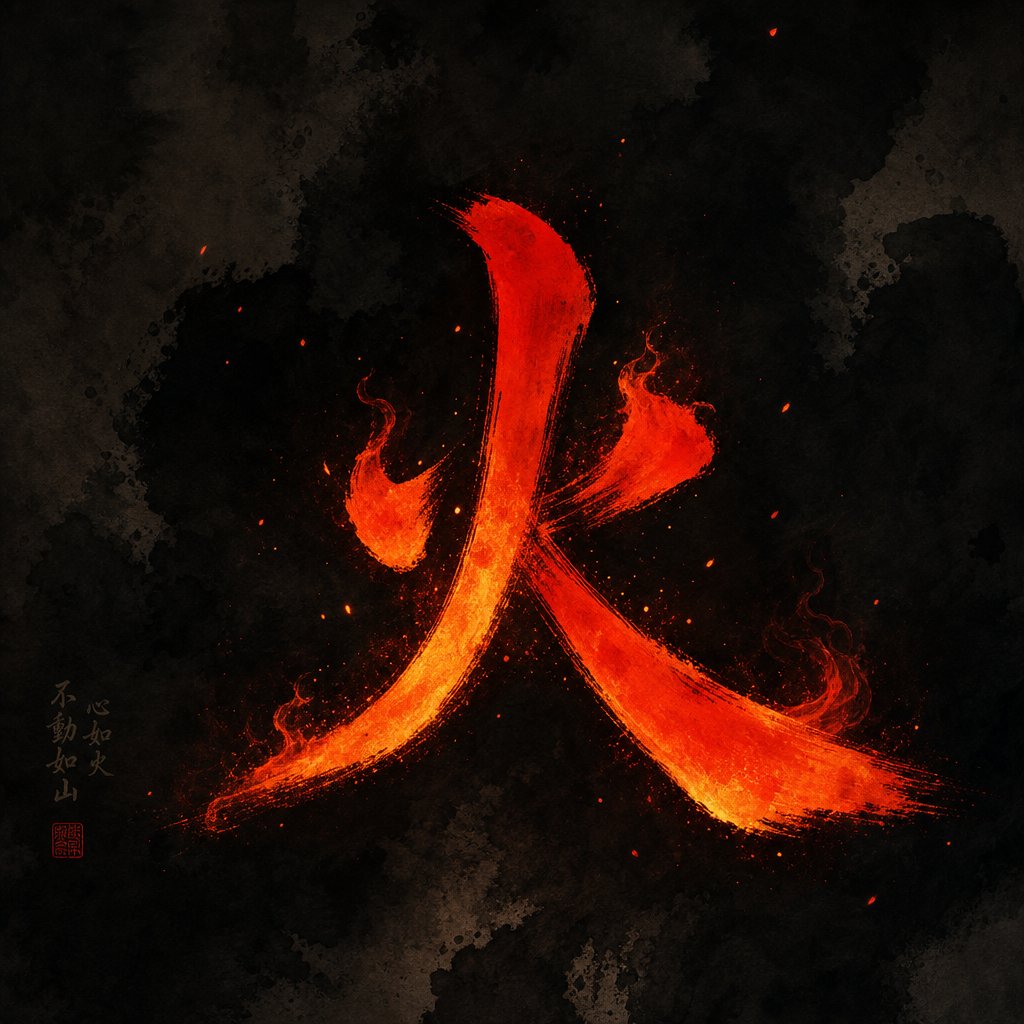
Looking up the fire chinese character and wondering what it really means? Here is the short answer: 火 (huǒ) is the Chinese character for fire. It represents flames, heat, and burning in its most literal sense. But that definition barely scratches the surface.
What Does 火 Mean in Chinese
火 (huǒ) is the standard Chinese character for fire. As one of the oldest pictographs in the language, it functions as a standalone word meaning fire or flame, a radical component inside hundreds of other characters, a figurative expression for anger and popularity, and a core element in Chinese Five Elements philosophy.
This single character carries an unusual amount of weight. It appears in everyday vocabulary like 火车 (train), 火山 (volcano), and 火锅 (hotpot). It shows up as a building block, called a radical, inside characters related to cooking, heat, and light. And in modern slang, saying something is 火了 means it went viral. The 火 meaning stretches from ancient philosophy all the way to internet culture.
Pronunciation and Tone Guide for Huǒ
火 is pronounced "huǒ" in Mandarin Chinese. That little caret above the "o" signals the third tone. If you have studied any Mandarin, you know tones can be tricky. The third tone is often described as "falling-rising," dipping low before coming back up. In practice, though, research into Mandarin pronunciation shows the third tone functions primarily as a low tone in connected speech. The rising part only surfaces when the syllable is spoken in isolation or at the very end of a phrase.
So when you say 火 by itself, you will hear that characteristic dip and rise. But inside a sentence or compound word, keep it low and steady. Think of it less as a dramatic swoop and more as your voice settling into its lowest comfortable register. That approach will sound far more natural to native ears.
Here is a quick pronunciation breakdown:
- Initial: h (aspirated, like the "h" in "hot")
- Final: uo (a rounded "oo" gliding into "oh")
- Tone: Third tone, low and creaky in natural speech
The 火meaning goes well beyond a dictionary entry. This character connects to how Chinese speakers describe emotions, classify the natural world, and even diagnose health conditions in traditional medicine. Whether you are a beginner memorizing your first radicals or an intermediate learner decoding compound words, understanding 火 gives you a key that unlocks patterns across the entire writing system.
What follows covers everything in one place: how to write the character stroke by stroke, how it evolved from ancient pictographs, the family of characters it generates as a radical, and the philosophical framework that gives fire its deeper cultural significance.
Ancient Origins and Evolution of 火
Every Chinese character has a backstory, but few are as visually intuitive as 火. When you look at the modern form, you can still sense something flame-like in its shape. That is not a coincidence. This character began as a direct drawing of fire over three thousand years ago, and its pictographic DNA has survived millennia of script reform. Among the many symbols of fire across world civilizations, the Chinese 火 stands out for its unbroken lineage from ancient pictograph to modern daily use.
Oracle Bone Origins of the Fire Character
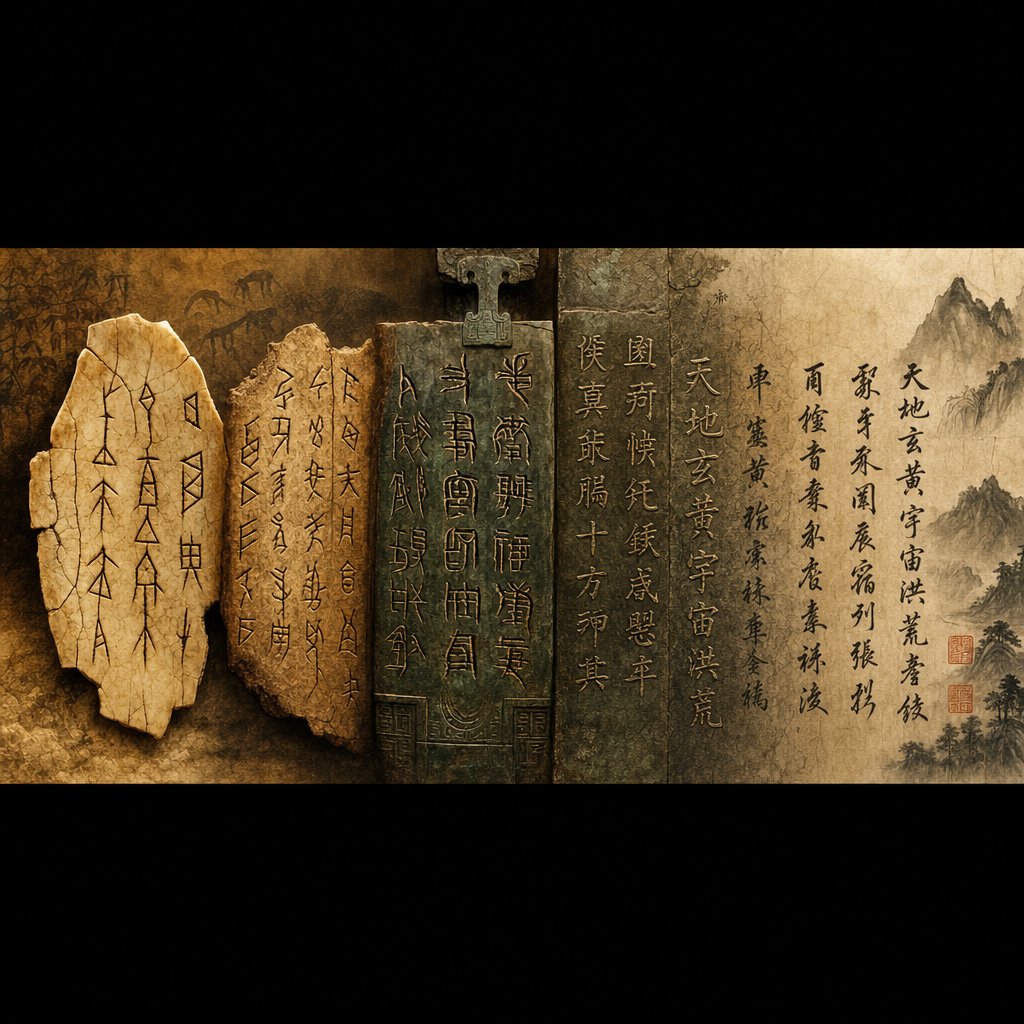
The earliest confirmed version of 火 appears in oracle bone inscriptions from the late Shang dynasty, roughly 1350 to 1050 BCE. These inscriptions were carved into turtle plastrons and animal scapulae, primarily for divination purposes. The oracle bone script represents the oldest substantial body of Chinese writing we have access to, with over 100,000 inscribed fragments excavated near Anyang, the last Shang capital.
In its oracle bone form, 火 depicted flames rising upward from a central point. Some paleographers interpret the shape as tongues of fire flickering in different directions. Others see a more anthropomorphic image: a figure with arms raised, as if the character captures both the shape of a flame and the human gesture of alarm or reverence toward fire. Either way, the pictographic intent is unmistakable. You are looking at one of the oldest ancient symbols for fire in any writing system still in active use.
One important detail about oracle bone script: because scribes carved into hard materials like bone and shell, they adapted their strokes for efficiency. Rounded shapes became angular. Thick brush marks became thin lines. So the oracle bone version of 火 looks more geometric and spare than what the scribes likely wrote with brushes on bamboo, a medium that unfortunately has not survived from the Shang period.
How 火 Evolved Through Chinese Script History
The journey from oracle bone pictograph to the character you see on your screen involved several major script stages, each shaped by different writing tools, materials, and political forces. The evolution of Chinese writing was not a neat, linear progression. As Outlier Linguistics points out, the common charts showing tidy stages are a massive oversimplification. Regional variation, the influence of popular handwriting on formal script, and political standardization all played roles.
Still, for 火 specifically, you can trace a clear visual thread through the major periods:
- Oracle Bone Script (ca. 1350-1050 BCE): Angular depiction of rising flames, carved into bone and shell. The fire symbolism is immediately apparent even to modern eyes.
- Bronze Inscriptions (ca. 1400-700 BCE): Cast onto ritual bronze vessels, these forms were more pictographic and rounded than oracle bone versions. The flames appear fuller, with thicker strokes reflecting the casting process in clay molds.
- Seal Script (ca. 221 BCE onward): After Qin Shi Huang unified China, Chancellor Li Si standardized the writing system into Small Seal Script. The 火 character became more symmetrical and stylized, with uniform stroke widths and balanced proportions. This is the version still used on traditional seals and formal calligraphy today.
- Clerical Script (ca. 200 BCE onward): As bureaucratic demand for faster writing grew during the Han dynasty, strokes became flatter and more angular. The flowing curves of seal script gave way to efficient, brush-friendly movements.
- Regular Script (ca. 200 CE to present): The standard form used in print and everyday writing. This is the 火 you recognize today, with its four distinct strokes preserving the essential upward energy of the original pictograph.
What makes this evolution remarkable is how much symbolic fire imagery the character retained. Many characters lost their pictographic quality entirely over these transitions. The character for "horse" (马), for example, bears almost no visual resemblance to its oracle bone ancestor. But 火 still looks like what it means. The two outer strokes suggest flames leaning outward, while the central strokes evoke a burning core. That visual persistence is part of why 火 remains one of the most teachable and memorable characters for learners.
The progression from pictograph to modern form also reveals something about how Chinese civilization related to fire itself. In the Shang dynasty, fire was a tool of divination and ritual. By the Qin unification, it was a philosophical concept embedded in cosmology. The character carried all of those accumulated meanings forward, even as its physical shape streamlined for practical writing. Among all the symbols for fire in human history, few have maintained such a direct visual and semantic connection across more than three millennia of continuous use.
That pictographic clarity is not just historically interesting. It has a practical payoff for learners: once you can see the flames in 火, you can start spotting fire-related meaning in dozens of other characters where 火 appears as a structural component.
How to Write 火 with Correct Stroke Order
Seeing the flames in 火 is one thing. Putting brush or pen to paper and producing the character correctly is another challenge entirely. The good news? With only four strokes, the fire character chinese learners encounter is one of the simplest to write. The catch is that those four strokes follow a specific sequence that might feel counterintuitive at first.
Step-by-Step Stroke Order for 火
The 火 stroke order follows the standard left-before-right, top-before-bottom principles of Chinese writing. Here is the exact sequence:
- Left dot (点, dian): Start with a short dot stroke on the upper left side, pressing downward to the left. Think of it as a small spark flying off the flame.
- Right dot (点, dian): Place a short dot stroke on the upper right side, pressing downward to the right. This mirrors the first dot, creating the two outer flickers of the flame.
- Left-falling stroke (撇, pie): Beginning from the center-top area between the two dots, sweep a longer stroke downward and to the left. This stroke passes beneath the left dot and extends below it.
- Right-falling stroke (捺, na): Starting from the same central origin point as stroke three, sweep downward and to the right with a gradually thickening stroke. This creates the base of the fire and gives the character its grounded, spreading shape.
Notice how strokes three and four meet at a single point near the top center, then diverge outward like flames splitting apart. That intersection is the structural heart of the character. Getting it right means your 火 will look balanced and natural in fire in chinese writing.
Why does the sequence matter? Proper stroke order is not just calligraphic tradition. It directly affects how handwriting recognition software on phones and tablets interprets your input. Write the strokes out of order and your device may not recognize the character. Beyond technology, following correct stroke order builds muscle memory that transfers to every fire-radical character you will learn later.
Common Writing Mistakes to Avoid
Research into chinese writing for fire and other basic characters reveals consistent patterns in how non-native learners struggle. A study by Ch'ng, Ting, and Chuah (2018) found that Stroke Misalignment, Stroke Shape errors, and Non-existing Strokes are the three most prominent mistake types among beginner learners, accounting for the majority of all writing errors observed.
For 火 specifically, watch out for these common pitfalls:
- Treating the dots as simple points: The two upper dots are not periods or circles. Each has a directional press. The left dot angles left, the right dot angles right. Flattening them into identical marks removes the character's visual energy.
- Disconnecting strokes three and four: The left-falling and right-falling strokes should originate from the same point. Beginners often start them too far apart, making the character look like two separate shapes stacked together rather than a unified form.
- Alphabetic interference: Learners whose first language uses the Latin alphabet sometimes unconsciously reshape strokes to resemble familiar letters. The research notes that strokes like 撇 (pie) get written as a forward slash, or curves get straightened into lines resembling "t" or "v." With 火, this can turn the natural brush-like strokes into rigid geometric marks.
- Incorrect proportions: The two dots should sit roughly at the same height, and the two falling strokes should spread symmetrically. Writing one side longer or lower than the other throws off the balance. Chinese characters occupy a square frame, and every component needs to respect that spatial constraint.
The fix for most of these issues comes down to one thing: deliberate attention to stroke order. As the research concludes, stroke order learning is one of the most impactful components for minimizing writing mistakes among non-native learners. When you internalize the correct sequence, your hand naturally places each stroke in proper relation to the ones before it.
Practice 火 until it feels automatic, because this character does not just stand alone. It reappears as a radical component, sometimes in its standard four-stroke form and sometimes disguised as four dots along the bottom of a character. Recognizing and writing it fluently here sets you up for the entire family of fire-related characters ahead.
The Fire Radical and Its Character Family
That four-stroke character you just practiced does not only appear as a standalone word. It also works as a structural component, a radical, embedded inside hundreds of other characters. And here is the part that surprises many learners: 火 has a disguised form you have probably seen without recognizing it. Those four little dots sitting at the bottom of characters like 热 (hot) and 煮 (cook)? That is fire too.
The Fire Radical 灬 Hidden in Common Characters
In the Chinese writing system, Radical 86 is the fire radical. It appears in two visual forms depending on its position within a character:
- 火 (standard form): Used when the radical sits on the left side or stands alone. You will see this in characters like 炒 (stir-fry), 烤 (roast), and 灯 (lamp).
- 灬 (four-dot form): Used when the radical sits at the bottom of a character. This variant is called 四点底 (si dian di), literally "four-dot bottom." It appears in characters like 热 (hot), 煮 (boil), 照 (shine), and 熊 (bear).
Why two forms? Chinese radicals often change shape to fit the spatial constraints of the character they inhabit. When fire needs to sit beneath another component, squeezing the full four-stroke 火 into that narrow horizontal space would look cramped. So the writing system flattened it into four dots spread across the bottom. The first dot angles to the left, while the remaining three angle to the right, a pattern Hanhai Language Studio describes as the defining stroke rule for 四点底.
Imagine you encounter an unfamiliar character and spot 灬 along its base. Even without knowing the exact meaning, you can make an educated guess: this character likely relates to heat, burning, cooking, or energy. That single recognition shortcut works across a massive portion of the Chinese lexicon. The Kangxi Dictionary lists 639 characters under Radical 86, making it one of the most productive radicals in the entire system.
There are exceptions, of course. The character 熊 (xiong, bear) carries the four-dot fire radical, but its connection to fire is not immediately obvious. Some scholars trace it to the bear's association with strength and fiery energy in ancient Chinese thought. Others point out that radical assignment sometimes reflects phonetic rather than semantic logic. Still, the overwhelming majority of 灬 characters connect to heat or combustion in some way.
Character Family Tree of 火-Based Characters
One of the most practical benefits of understanding the fire radical is pattern recognition. When you can spot 火 or 灬 inside a character, you instantly narrow down its likely meaning to a handful of categories. Think of it as a filing system built directly into the writing itself.
Here is how fire-radical characters cluster by meaning:
| Category | Character | Pinyin | Meaning | Radical Form |
|---|---|---|---|---|
| Cooking | 煮 | zhu | boil | 灬 (bottom) |
| Cooking | 煎 | jian | pan-fry | 灬 (bottom) |
| Cooking | 烤 | kao | roast / grill | 火 (left) |
| Cooking | 炒 | chao | stir-fry | 火 (left) |
| Heat | 热 | re | hot | 灬 (bottom) |
| Heat | 烫 | tang | scalding | 火 (left) |
| Heat | 焰 | yan | flame | 火 (left) |
| Heat | 炎 | yan | blazing / inflammation | 火 (stacked) |
| Light | 照 | zhao | shine / illuminate | 灬 (bottom) |
| Light | 灯 | deng | lamp | 火 (left) |
| Light | 炫 | xuan | dazzling | 火 (left) |
| Destruction | 烧 | shao | burn | 火 (left) |
| Destruction | 焚 | fen | set ablaze | 火 (bottom) |
| Destruction | 灾 | zai | disaster | 火 (bottom) |
Notice how the cooking category alone gives you four high-frequency characters. If you are learning Chinese to navigate restaurant menus or follow recipes, recognizing the fire radical immediately tells you a character involves applying heat to food. The chinese flame connection is literal: these characters describe what happens when fire meets ingredients.
The character 炎 deserves special attention. The 炎 meaning is "blazing" or "scorching," and its construction is beautifully logical: two 火 characters stacked on top of each other. Double fire equals intense heat. In modern Chinese, 炎 also means "inflammation" in medical contexts, a metaphorical extension where the body's internal "fire" flares up. This stacking principle extends further. The character 焱 (yan) places three fires together (三个火), meaning "spark" or "brilliant flame." And 燚 (yi) stacks four fires (四個火), an extremely rare character sometimes used in personal names to represent overwhelming fiery energy.
This layering pattern, one fire to two to three to four, demonstrates how Chinese characters build complexity from simple components. Each addition of 火 intensifies the meaning, moving from ordinary fire to blaze to brilliant spark to an inferno of flame. It is a system that rewards pattern recognition at every level.
For learners, the practical takeaway is straightforward: whenever you encounter an unfamiliar character with 火 on the left or 灬 on the bottom, your first instinct should be to connect it to heat, light, cooking, or destruction. You will be right far more often than not. That single habit transforms the fire radical from a piece of trivia into an active decoding tool, one that scales as your vocabulary grows and you encounter increasingly complex characters built on this same fiery foundation.
The radical tells you what a character is about. But fire also builds meaning at the word level, combining with other characters to create compound vocabulary with surprisingly creative logic.
Common Words Built with the Fire Character
Chinese compound words often work like tiny stories. Two characters combine, each contributing a piece of meaning, and together they name something entirely new. The chinese word for fire, 火, is one of the most productive characters in this system. It pairs with other characters to create vocabulary that ranges from everyday transportation to geological phenomena, and the etymological logic behind each pairing makes them surprisingly easy to remember.
Why Fire-Vehicle Means Train in Chinese
Imagine you are in 19th-century China, seeing a steam locomotive for the first time. A massive iron machine roars down metal tracks, belching smoke and flame from its furnace. How would you name it? Chinese speakers reached for the most obvious visual: fire plus vehicle. The word 火车 (huoche) literally translates to "fire-vehicle," and it stuck. As Chinese4kids explains, historically trains were steam-powered, hence the use of 火 in the term. Today it refers to trains in general, even though modern trains are electric.
That same creative logic runs through dozens of huo chinese compound words. Each one pairs 火 with a second character that describes the context, and together they paint a vivid picture.
Essential 火 Compound Words Every Learner Needs
Here are the most common and useful compounds built with 火. Notice how the literal meaning tells a small story that connects to the actual meaning:
| Compound | Pinyin | Literal Meaning | Actual Meaning |
|---|---|---|---|
| 火车 | huoche | fire + vehicle | train |
| 火山 | huoshan | fire + mountain | volcano |
| 火箭 | huojian | fire + arrow | rocket |
| 火锅 | huoguo | fire + pot | hotpot |
| 火柴 | huochai | fire + kindling material | match (for lighting fire) |
| 火腿 | huotui | fire + leg | ham |
| 火焰 | huoyan | fire + blaze | flame |
| 火灾 | huozai | fire + disaster | fire disaster |
Each compound follows the same pattern: 火 provides the fire-related concept, and the second character specifies the context. A mountain with fire inside it? Volcano. An arrow propelled by fire? Rocket. A pot heated over fire? Hotpot. The flame in chinese vocabulary is not just a single word but an entire family of expressions built on this one character.
The word 火柴 is particularly interesting. 柴 (chai) means firewood or kindling, the material you use to start a fire. So a "fire-material" is a match, the small stick that produces flame. Similarly, 火腿 (ham) gets its name from the smoking and curing process that uses fire to preserve the leg of pork.
To see how these words work in real sentences, here are a few beginner-level examples:
- 火车: 我们坐火车去旅游。(Women zuo huoche qu luyou.) — We took a train to travel.
- 火山: 那座火山很危险。(Na zuo huoshan hen weixian.) — That volcano is very dangerous.
- 火锅: 我想吃火锅。(Wo xiang chi huoguo.) — I want to eat hotpot.
- 火箭: 火箭飞得很快。(Huojian fei de hen kuai.) — Rockets fly very fast.
- 火柴: 你有火柴吗?(Ni you huochai ma?) — Do you have a match?
You will notice that huo in chinese compounds almost always occupies the first position, acting as a modifier for the noun that follows. This is a common pattern in Mandarin word formation: the descriptive element comes first, followed by the category word. Fire-vehicle, fire-mountain, fire-arrow. Once you internalize this structure, you can often guess the meaning of new 火 compounds before looking them up.
The beauty of these etymologies is that they are not arbitrary. They reflect how Chinese speakers historically perceived and categorized the world around them. A train was defined by its power source. A volcano was defined by what comes out of it. A rocket was defined by its propulsion method. Each compound preserves a moment of observation, a creative naming decision frozen in language.
These literal meanings also make the vocabulary sticky. Tell someone that the chinese word for train is "fire-vehicle" and they rarely forget it. The image is too vivid, too logical to slip away. That memorability is one reason fire in chinese word formation remains such a popular teaching topic for Mandarin instructors at every level.
Compound words show how 火 builds meaning outward, combining with other characters to name concrete things. But this character also builds meaning inward, taking on figurative and emotional dimensions that go far beyond physical flames.
Figurative Meanings and Modern Slang Uses of 火
When you hear someone say they are "on fire," you know they do not mean literal combustion. English uses fire as a metaphor for intensity, passion, and anger. Chinese does the same thing, but with far more range. The figurative uses of 火 span emotions, social trends, urgency, and even medical diagnosis. Understanding what does fire represent in Chinese beyond the physical flame is where this character truly comes alive for intermediate learners.
When Fire Means Anger in Chinese
Picture someone so furious that heat seems to radiate from their face. In Chinese, that image is not just poetic. It is built directly into the vocabulary. The expression 发火 (fahuǒ) literally means "to emit fire," and it describes an explosive display of anger. As Jiaoshoo notes, 发火 specifically captures the moment someone blows up, distinguishing it from milder anger words like 生气 (shengqi, general annoyance) or more literary terms like 动怒 (dongnu).
Here is an example at intermediate level:
他一听到这个消息就发火了。(Ta yi tingdao zhege xiaoxi jiu fahuo le.) — The moment he heard the news, he lost his temper.
The logic is visceral. Anger builds like heat inside the body until it erupts outward, like fire escaping containment. This is not unique to Chinese, but the directness of the metaphor, emit plus fire equals rage, makes it one of the clearest examples of what fire symbolizes in emotional language: uncontrolled intensity that bursts through restraint.
Related idioms reinforce this connection. The chengyu 火上浇油 (huo shang jiao you, "pour oil on the fire") describes making an angry person even angrier. Another, 心急火燎 (xinji huoliao, "heart-urgent, fire-scorching"), captures the sensation of being so anxious that fire seems to scorch your insides. In each case, fire represents emotional states that feel physically hot and dangerously uncontrollable.
火了 and Modern Slang for Going Viral
Scroll through Chinese social media and you will encounter 火 used as an adjective meaning "super popular" or "trending." When someone says 这首歌最近很火 (zhe shou ge zuijin hen huo), they mean "this song is really blowing up right now." The character has jumped from describing physical combustion to describing cultural combustion, the rapid spread of attention across millions of people.
The expression 火了 (huo le) functions almost exactly like the English "went viral":
这个视频在网上火了,点击量超过一千万。(Zhege shipin zai wang shang huo le, dianji liang chaoguo yiqianwan.) — This video went viral online, with over ten million clicks.
Why fire for popularity? The symbolic meaning for fire here connects to how quickly flames spread. A spark catches, jumps to the next surface, and suddenly everything is ablaze. Viral content behaves the same way: one share leads to thousands, and momentum builds exponentially. Chinese speakers intuitively mapped that physical behavior onto social phenomena.
Here is a full list of the major figurative meanings, each with an example:
- 发火 (fahuo) — to lose one's temper: 别为了小事发火。(Bie weile xiaoshi fahuo.) — Don't get angry over trivial things.
- 火了 (huo le) — went viral / became popular: 她的新歌火了。(Ta de xin ge huo le.) — Her new song blew up.
- 火急 (huoji) — extremely urgent: 这件事火急,必须马上处理。(Zhe jian shi huoji, bixu mashang chuli.) — This matter is extremely urgent and must be handled immediately.
- 上火 (shanghuo) — internal heat (TCM) / irritated: 最近压力大,有点上火,嘴里起了溃疡。(Zuijin yali da, youdian shanghuo, zui li qi le kuiyang.) — There has been a lot of stress lately; I have internal heat and mouth ulcers appeared.
- 火爆 (huobao) — explosively popular / fiery atmosphere: 这家餐厅生意火爆。(Zhe jia canting shengyi huobao.) — This restaurant's business is booming.
The term 上火 deserves extra attention because it bridges traditional medicine and everyday speech. In Traditional Chinese Medicine, 上火 describes a condition where excess yang energy causes the body's internal "fire" to rise, producing symptoms like sore throat, mouth ulcers, red eyes, and irritability. As eChineseLearning explains, TCM holds that imbalance of yin and yang and vigorous internal heat lead to 上火. Eating too much spicy or fried food, sleeping poorly, or experiencing prolonged stress can all trigger it.
But 上火 also works colloquially to describe someone who is upset or heated up emotionally. A manager frustrated by employees arriving late might be described as 很上火 (hen shanghuo). The medical and emotional meanings blur together, both rooted in the same metaphor: fire rising inside the body, whether that manifests as inflammation or frustration.
What is fire a symbol of across all these uses? Intensity that spreads, transforms, and demands attention. Whether the context is rage, popularity, urgency, or bodily imbalance, 火 consistently points to energy that has exceeded its normal boundaries. That single thread connects a three-thousand-year-old pictograph to the slang teenagers type on their phones.
These figurative meanings exist in everyday conversation, but 火 also occupies a formal position in one of China's oldest philosophical systems, where it represents far more than a metaphor. It becomes a cosmic principle governing seasons, directions, and the human body itself.
Fire in Chinese Five Elements Philosophy
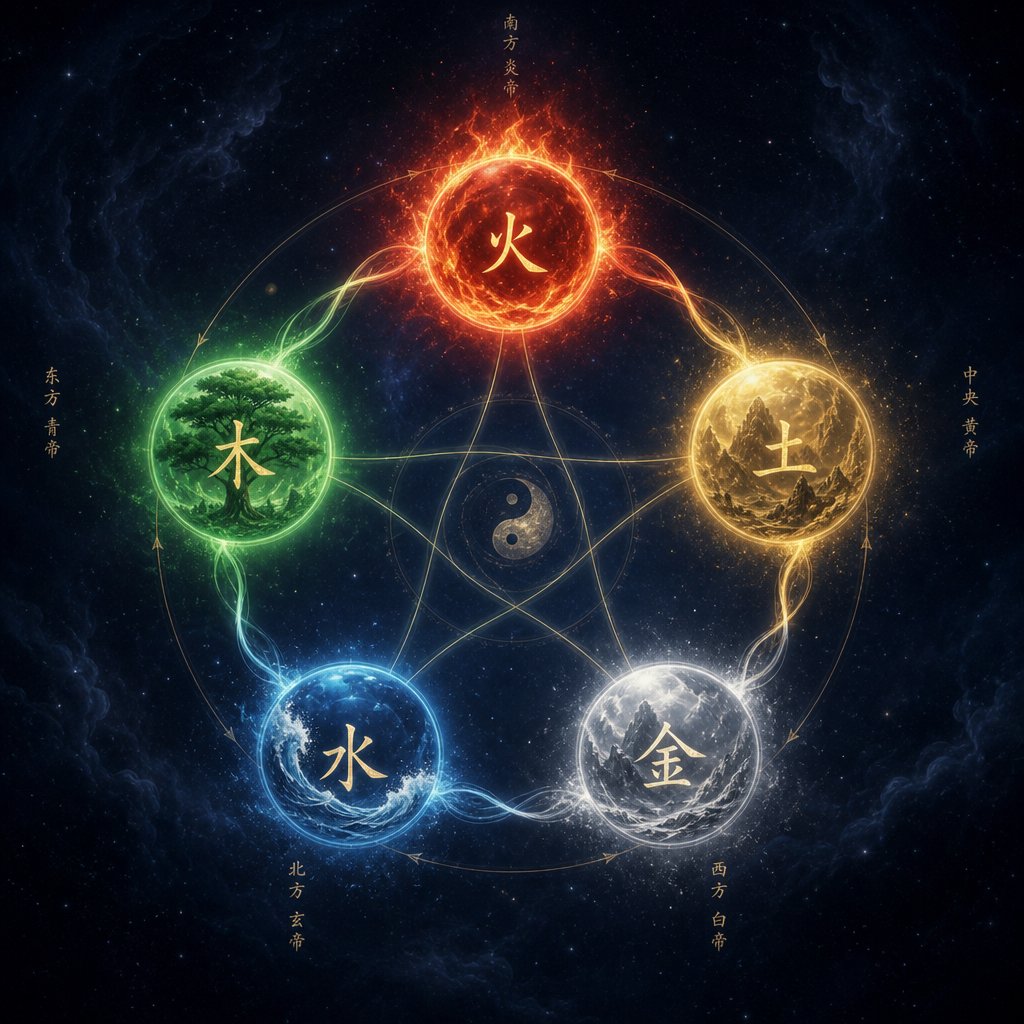
In Chinese cosmology, 火 is not simply a substance. It is one of five fundamental forces that govern how the universe operates. The Five Elements theory, known as 五行 (wuxing), first emerged during the Spring and Autumn Period (770-476 BCE) and became one of the most influential frameworks in Chinese thought. The five elements, wood, fire, earth, metal, and water, are believed to be the building blocks of everything in the natural world, cycling through patterns of creation and destruction that keep the universe in balance.
The chinese fire element is not a static category. The word 行 (xing) in 五行 means "movement" or "phase," which tells you something important: these elements describe processes, not just materials. Fire as a classical element represents expansion, transformation, and peak energy. It is the moment when potential becomes action, when a seed that sprouted in spring reaches full bloom in summer.
Fire in the Five Elements System
Each element carries a web of associations that connects it to directions, seasons, colors, organs, emotions, and even tastes. These correspondences are not arbitrary. They reflect centuries of observation about how natural phenomena cluster together. Summer heat, the color red, the heart's pumping vitality, the bitter taste that clears excess warmth: all of these share the same energetic quality that Chinese philosophers identified as fire.
Here is how all five elements map across their key associations:
| Association | Wood | Fire | Earth | Metal | Water |
|---|---|---|---|---|---|
| Direction | East | South | Center | West | North |
| Season | Spring | Summer | Change of seasons | Autumn | Winter |
| Color | Green | Red | Yellow | White | Black |
| Organ | Liver | Heart | Spleen | Lungs | Kidneys |
| Emotion | Benevolence | Joy | Honesty | Righteousness | Wisdom |
| Taste | Sour | Bitter | Sweet | Spicy | Salty |
| Climate | Windy | Hot | Damp | Dry | Cold |
The fire element symbolism here runs deep. In Traditional Chinese Medicine, the fire element is associated with the Heart and Small Intestine organ systems, and its spirit aspect is called Shen, which governs consciousness, mental clarity, and emotional openness. When balanced, fire energy brings warmth, enthusiasm, and the capacity for genuine connection with others. When excessive, it manifests as anxiety, restlessness, insomnia, or heart palpitations.
The bitter taste association might seem counterintuitive, but it follows TCM logic: bitter foods like dandelion greens and chrysanthemum tea are used to clear excess heat from the body. They regulate fire rather than fuel it. This is the fire element spiritual meaning in practice: not just raw intensity, but the wisdom to keep that intensity in harmony with the body's other systems.
Productive and Destructive Cycles of Fire
The five elements do not exist in isolation. They interact through two primary cycles that describe how energy flows and transforms in the natural world. Understanding where fire sits in these cycles reveals why the fire feng shui element matters for spatial design, medicine, and even personality analysis.
The productive cycle (also called the generating cycle) works like a nurturing relationship between parent and child:
- Wood fuels Fire (burning wood creates flames)
- Fire forms Earth (volcanic ash and combustion create soil)
- Earth contains Metal (ores are found within the ground)
- Metal carries Water (condensation forms on metal, pipes carry water)
- Water feeds Wood (rain nourishes trees and plants)
In this cycle, fire occupies the position between wood and earth. It receives energy from wood and passes energy forward to earth. This is why, in feng shui fire element applications, wooden objects and green colors placed in the south sector of a space are said to "feed" the fire energy there, strengthening qualities like visibility, reputation, and recognition.
The controlling cycle (also called the overcoming cycle) acts as a system of checks and balances:
- Water quenches Fire
- Fire melts Metal
- Metal penetrates Wood
- Wood separates Earth
- Earth absorbs Water
Water controls fire. Fire controls metal. Each element has one that nurtures it and one that restrains it, creating a self-regulating system. As feng shui consultant Dr. Michael Oon explains, there are actually four cycles at work: the productive, reductive (reverse of productive), controlling, and destructive (reverse of controlling). The reductive cycle shows how fire depletes wood, while the destructive cycle shows how fire evaporates water. These nuances matter when practitioners diagnose imbalances in a space or a body.
How does this philosophical framework show up in daily life? Consider a few practical examples:
- Feng shui: The south-facing area of a home is associated with fire energy. Decorating it with red accents, triangular shapes, or proper lighting is thought to enhance reputation and social recognition. Placing water features in the south, however, would "quench" that fire energy.
- Traditional medicine: A patient showing signs of excess fire (irritability, red face, insomnia) might be treated with herbs or foods associated with the water element to restore balance. The bitter taste, fire's own associated flavor, is also used to clear internal heat.
- Seasonal living: Summer is fire's season. TCM practitioners recommend eating cooling, hydrating foods during this time and avoiding overexertion, because the body's fire energy is already at its peak and does not need additional fuel.
The fire element feng shui connection also extends to color psychology and spatial design. Red, fire's color, is considered auspicious in Chinese culture for celebrations, entrances, and branding. Triangular or angular shapes represent fire's upward-pointing energy. These are not just aesthetic choices. They reflect a cosmological system where every shape, color, and direction carries elemental significance.
This philosophical layer gives the fire chinese character meaning a dimension that purely linguistic analysis misses. When Chinese speakers use 火 in compound words, idioms, or medical terminology, they are drawing on thousands of years of elemental thinking, a framework where fire is not just a phenomenon but a cosmic principle with specific relationships to every other force in nature.
The Five Elements system does not stop at describing the physical world. It also maps onto human personality, combining with the Chinese zodiac to create detailed profiles of temperament and destiny.
Fire Element Personality and Chinese Astrology
The Five Elements do not just describe seasons and directions. They describe people. In Chinese astrology, your birth year assigns you both a zodiac animal and an element, and that combination shapes a detailed personality profile. The fire element in chinese astrology represents the energy of summer at its peak: outward, radiant, and impossible to ignore. If your birth year ends in 6 or 7, fire is your elemental signature.
Fire Element Personality Traits
What does a fire element personality actually look like in practice? Imagine someone who walks into a room and shifts the energy immediately. Not through volume or aggression, but through sheer warmth and presence. The personality of fire is defined by intensity that draws people in rather than pushing them away.
Here are the core traits associated with fire personality types in the Wu Xing system:
- Passionate intensity: Fire types experience life at full volume. Half-measures and lukewarm commitments feel foreign to them. When they pursue something, they pursue it completely.
- Natural charisma: People gravitate toward fire personalities the way they gravitate toward a campfire on a cold night. Their enthusiasm and emotional expressiveness create an almost magnetic social presence.
- Transformative power: Fire does not preserve the status quo. It changes everything it touches. Fire types inject stagnant situations with the energy needed for radical shifts.
- Spontaneity: Their best ideas come from flashes of inspiration rather than careful planning sessions. They trust instinct, and instinct rewards that trust.
- Warmth and generosity: Emotional warmth is genuine and abundant. Fire types give encouragement freely and create environments where others feel welcome.
- Impulsiveness: The shadow side. That same spontaneous energy can produce decisions made in the heat of the moment, commitments that outpace available resources, and burnout from unsustainable intensity.
The Wu Xing personality framework connects fire's signature emotion to joy. In Traditional Chinese Medicine, the heart, fire's organ, is said to house the spirit of joy. When fire energy is balanced, it radiates delight and genuine connection. When imbalanced, joy can flip into anxiety, mania, or restless searching for stimulation. Learning to sustain warmth without chasing intensity is the central growth challenge for every element fire personality type.
Beyond psychology, the personality of fire carries spiritual dimensions rooted in Chinese cultural traditions. Fire symbolizes transformation, the alchemical process of turning raw material into something refined. It represents purification, burning away what is no longer needed. And it embodies illumination, the capacity to bring clarity and visibility to what was previously hidden in darkness. These three qualities, transformation, purification, and illumination, run through Chinese ritual, philosophy, and art wherever fire appears as a symbolic force.
Fire Combined with Chinese Zodiac Animals
Chinese astrology operates on a 60-year cycle created by pairing 12 zodiac animals with 5 elements (each in yin and yang forms). That means each specific animal-element combination, like the Fire Horse or Fire Dragon, only occurs once every six decades. The element modifies the animal's baseline personality, amplifying certain traits and softening others.
Consider a few notable fire-animal pairings:
- Fire Dragon (1976, 2036): The dragon is already the most dynamic and ambitious sign. Adding fire creates extraordinary charisma and leadership drive, but also a tendency toward domination and impatience with slower-moving people.
- Fire Horse (1966, 2026): The Fire Horse is one of the most intense combinations in the entire cycle. Horses are already forthright, energetic, and independent. Fire intensifies those characteristics into what feng shui expert Ming Shao describes as dynamism, dedication, and leadership taken to their extreme. The last Fire Horse year was 1966; the current one brings that same high-energy signature back.
- Fire Dog (1946, 2006): Dogs are loyal, honest, and protective by nature. The chinese astrology fire dog adds warmth, idealism, and passionate advocacy to those qualities. Fire Dogs fight fiercely for causes they believe in, combining the dog's sense of justice with fire's transformative intensity.
- Fire Monkey (1956, 2016): Monkeys are clever and adaptable. Fire gives them boldness and showmanship, turning natural wit into magnetic performance energy.
Fire element years follow a predictable pattern. Years ending in 6 carry Yang Fire energy, described as outwardly expressive and commanding, like a bonfire. Years ending in 7 carry Yin Fire, more intimate and illuminating, like a candle flame. Recent fire years include 1986, 1987, 1996, 1997, 2006, 2007, 2016, 2017, and 2026. If you were born in any of these years, fire shapes your elemental constitution regardless of which zodiac animal governs your sign.
The fire personality does not exist in isolation, though. It interacts with other elements through the same productive and controlling cycles discussed earlier. Wood personalities fuel fire types, providing steady ideas and grounded idealism that give fire something meaningful to burn for. Water personalities can feel suffocating to fire, dampening enthusiasm with caution and introspection. These elemental relationships add another layer to compatibility analysis in Chinese astrology, explaining why certain pairings feel energizing while others feel draining.
All of these dimensions, literal flame, radical component, figurative slang, philosophical element, and personality archetype, live inside a single four-stroke character. Pulling them together into one reference framework reveals just how much meaning Chinese packs into 火.
Complete Reference Guide to Every Meaning of 火
Four strokes. One character. A dozen distinct functions spanning literal description, emotional expression, philosophical classification, and structural architecture. The chinese symbol for fire is not just a word you look up once and move on from. It is a key that keeps unlocking new doors the further you travel into the language.
All Meanings of 火 at a Glance
When you encounter 火 in the wild, context determines which of its many roles it is playing. The table below organizes every major function into a single reference framework, from beginner-level vocabulary all the way to the cultural and philosophical layers that advanced learners engage with. Think of it as a map showing how one fire symbol chinese learners meet on day one continues revealing new territory for years afterward.
| Meaning Category | Usage | Example | Proficiency Level |
|---|---|---|---|
| Literal (noun) | Physical fire, flame, combustion | 火很大 (The fire is big) | Beginner |
| Compound vocabulary | First element in noun compounds | 火车, 火山, 火锅 | Beginner |
| Radical (left position) | Semantic component indicating heat or burning | 烤, 炒, 灯, 烧 | Beginner |
| Radical (bottom position, 灬) | Four-dot variant indicating heat or energy | 热, 煮, 照, 熊 | Beginner |
| Figurative (anger) | Metaphor for explosive temper | 发火 (lose one's temper) | Intermediate |
| Figurative (popularity) | Adjective meaning trending or viral | 这首歌很火 (This song is blowing up) | Intermediate |
| Figurative (urgency) | Intensifier for time pressure | 火急 (extremely urgent) | Intermediate |
| Medical (TCM) | Internal heat or excess yang energy | 上火 (internal heat rising) | Intermediate |
| Philosophical (Five Elements) | One of five cosmic phases in Wu Xing | 火属南方 (Fire belongs to the south) | Advanced |
| Astrological (personality) | Elemental modifier for zodiac signs | 火龙 (Fire Dragon) | Advanced |
| Stacked intensification | Multiple 火 characters compounding meaning | 炎 (blazing), 焱 (spark), 燚 (inferno) | Advanced |
Notice the progression. A beginner learns 火 as a noun and a radical. An intermediate learner discovers it functioning as a metaphor for human emotions and social phenomena. An advanced learner sees it operating as a cosmological principle and personality archetype. The character itself never changes. Your understanding of it deepens.
From One Character to Hundreds of Words
The real power of mastering the chinese fire symbol is not memorizing a single definition. It is developing a recognition reflex. Every time you spot 火 on the left side of an unfamiliar character, you know heat or burning is involved. Every time you see 灬 along the bottom, the same logic applies. That pattern recognition, as Hacking Chinese emphasizes, is what separates learners who struggle with thousands of unique symbols from those who see a system of recombining parts.
The elemental fire symbol carries meaning at every scale: inside individual characters as a radical, between characters as a compound builder, across sentences as a figurative device, and throughout Chinese culture as a philosophical force. Few characters in any language pack this much functional range into so few strokes.
Here is a practical habit worth building: whenever you encounter a new character containing 火 or 灬, pause and ask two questions. First, what is the fire connection? Is it heat, light, cooking, destruction, or energy? Second, what does the other component contribute? That two-second analysis will make the character stick faster than rote repetition ever could, and it scales effortlessly as your vocabulary grows from dozens of characters to thousands.
火 started as a drawing of flames on oracle bones over three thousand years ago. It still burns through every layer of the Chinese language today.
Frequently Asked Questions About the Fire Chinese Character
1. What is the Chinese character for fire and how do you pronounce it?
The Chinese character for fire is 火, pronounced 'huǒ' in Mandarin with a third tone. The third tone dips low and rises slightly when spoken in isolation, but in connected speech it functions primarily as a low, steady tone. The initial 'h' is aspirated like in 'hot,' and the final 'uo' blends a rounded 'oo' into 'oh.' This character serves as both a standalone word meaning fire or flame and as a radical component inside hundreds of other characters related to heat, cooking, and light.
2. How many strokes does 火 have and what is the correct stroke order?
火 consists of exactly four strokes written in this sequence: first a left-angled dot on the upper left, then a right-angled dot on the upper right, followed by a left-falling sweep from the center, and finally a right-falling stroke from the same central point. The two falling strokes meet at a single intersection near the top center and diverge outward like splitting flames. Correct stroke order matters for handwriting recognition software and builds muscle memory for writing more complex fire-radical characters later.
3. What does 火 mean in slang and figurative Chinese?
Beyond its literal meaning of fire, 火 carries several figurative uses in modern Chinese. Saying something is '很火' or '火了' means it went viral or became extremely popular, similar to English 'blowing up.' The expression '发火' (emit fire) means to lose one's temper explosively. '火急' means extremely urgent, and '上火' refers to internal heat rising in Traditional Chinese Medicine, causing symptoms like sore throat or mouth ulcers. These figurative meanings connect physical fire to emotional intensity and social momentum.
4. What is the difference between the 火 radical and the 灬 radical?
They are actually the same radical (Radical 86) in two different visual forms. When the fire radical appears on the left side of a character, it keeps its standard 火 shape, as seen in 烤 (roast) and 灯 (lamp). When it appears at the bottom of a character, it transforms into 灬, four dots spread horizontally, called 四点底. You can see this form in 热 (hot), 煮 (boil), and 照 (shine). Both forms signal that the character relates to heat, burning, cooking, or energy, making them a powerful decoding tool for unfamiliar characters.
5. How does fire function in the Chinese Five Elements system?
In the Five Elements (五行) framework, fire represents expansion, transformation, and peak energy. It corresponds to the south direction, summer season, red color, the heart organ, joy as an emotion, and bitter taste. Fire sits in a cycle where wood fuels it (productive cycle) and water controls it (controlling cycle). This system influences feng shui design, Traditional Chinese Medicine diagnoses, personality typing in Chinese astrology, and seasonal living practices. Years ending in 6 or 7 carry fire element energy in the zodiac cycle.