Why Chinese Parents Choose Flower Characters for Names
Imagine naming a child not just with a pleasant sound, but with a living symbol that carries centuries of philosophy, poetry, and moral aspiration. That is exactly what happens when Chinese parents select flower characters for their children's names. A Chinese name flower choice is never decorative. It is a deliberate act of embedding hope, virtue, and identity into the very characters a person will carry for life.
Chinese names are typically composed of two or three characters, with the given name carefully chosen to reflect qualities parents wish upon their child. Among the thousands of characters available, flower-related ones stand out as some of the most culturally layered options. The word for flower in Chinese is 花 (hua), and learning how to say flower in Chinese opens a window into an entire system of meaning. This single character connects to a vast tradition where plants represent human virtues, seasonal cycles, and spiritual ideals.
Why Flowers Hold Special Power in Chinese Names
Chinese flowers have served as moral metaphors since the earliest literary anthologies. In The Book of Songs (《诗经》), natural imagery expressed emotions and virtues: plum blossoms for resilience, orchids for integrity, pine trees for longevity. These poetic associations gradually entered naming practices, making botanical characters a way to encode moral aspiration within aesthetic form. A girl named with the lotus character carries connotations of purity rising from muddy waters. A boy named with the plum blossom character inherits a legacy of endurance through hardship.
What makes flowers in Mandarin particularly powerful for naming is their dual nature. They are simultaneously beautiful and meaningful. Unlike abstract virtue characters that can feel heavy or didactic, flower characters offer grace alongside depth. Parents can wish strength upon a daughter through the plum blossom without sacrificing femininity, or bestow scholarly refinement through the chrysanthemum without sounding austere.
The Philosophy Behind Naming with Nature
Three philosophical traditions converge in the practice of choosing Chinese flower names for children:
- Confucian virtue: Flowers represent moral qualities a person should cultivate. The orchid embodies the gentleman's integrity; the chrysanthemum reflects the scholar's independence from worldly corruption.
- Taoist nature harmony: Naming a child after a flower aligns them with the natural world, reflecting the Taoist belief that human life flows best when it mirrors nature's rhythms.
- Buddhist purity: The lotus, rooted in mud yet blooming immaculately, symbolizes spiritual transcendence and the possibility of purity amid worldly suffering.
Understanding flower meanings in Chinese names requires grasping both linguistic structure and cultural philosophy, because each character operates simultaneously as a sound, a visual form, and a vessel of centuries-old symbolism.
This layered quality is what separates Chinese naming from traditions where names are chosen primarily for sound. A flower in Chinese character form carries its meaning visibly. Every time the name is written, read, or recognized, its symbolic content is present. The name does not merely label a person; it speaks to who they might become.
The chapters ahead unpack exactly how this works, from the structural anatomy of flower characters to the specific virtues each bloom encodes, and the practical considerations parents weigh when choosing among them.
Anatomy of Flower Characters in Chinese Writing
Every flower in Chinese character form tells a visual story before you even know its pronunciation. Chinese writing is not alphabetic. It is built from components called radicals, and these radicals act as semantic clues. When you encounter a character used as a name, its internal structure reveals whether it belongs to the world of chinese plants, water, metal, or something else entirely. For flower-related characters, one radical dominates the landscape.
The Grass Radical and Its Role in Flower Characters
Look at the top of characters like 莲 (lian, lotus), 兰 (lan, orchid), 菊 (ju, chrysanthemum), 芳 (fang, fragrance), and 蕊 (rui, stamen). You will notice a shared element: 艹, known as cao zi tou (literally "grass character head"). This radical sits at the top of a character and signals that the meaning relates to plants, herbs, or flowers. Think of it as a botanical flag waving above the rest of the character's components.
Not every flower character carries this radical in an obvious way. The character 梅 (mei, plum blossom) uses the wood radical 木 on its left side, because plum is a tree rather than an herb. Similarly, 桂 (gui, osmanthus) and 桃 (tao, peach blossom) feature the wood radical, reflecting their tree origins. This distinction matters: characters with 艹 tend to reference herbaceous plants and flowers, while those with 木 point to flowering trees. Both categories appear frequently in chinese plant names used for people.
Recognizing these radicals gives you a reading shortcut. When you see 艹 atop an unfamiliar character in someone's name, you can reasonably guess it connects to the botanical world, even without knowing the exact pronunciation.
Reading Botanical Meaning in Chinese Characters
Here is where naming gets interesting. Parents choosing flowers in Chinese for a child's name face a creative decision: use the flower name directly, or choose a character that evokes floral qualities without naming a specific bloom.
Direct flower characters are straightforward. Naming a daughter 莲 (lian) places the lotus front and center. Everyone who reads the name immediately sees the flower. But subtler options exist. Characters like 芳 (fang, fragrance), 蕊 (rui, stamen or pistil), 萌 (meng, sprouting), and 茵 (yin, lush grass or cushion of flowers) evoke the botanical world without pointing to a single species. These associated quality characters let parents reference the essence of flowers, their scent, their delicacy, their vitality, without committing to one specific bloom.
The table below breaks down common names of flowers in Chinese alongside quality-based botanical characters, showing how each is constructed and what it contributes to a name:
| Character | Pinyin | Literal Meaning | Radical Breakdown | Naming Significance |
|---|---|---|---|---|
| 莲 | lian | Lotus | 艹 (grass) + 连 (connect) | Purity, rising above adversity |
| 兰 | lan | Orchid | 艹 (grass) + simplified form | Elegance, refined integrity |
| 菊 | ju | Chrysanthemum | 艹 (grass) + 匊 (phonetic) | Scholarly nobility, endurance |
| 梅 | mei | Plum blossom | 木 (wood) + 每 (every) | Resilience, beauty in hardship |
| 桂 | gui | Osmanthus | 木 (wood) + 圭 (jade tablet) | Honor, high achievement |
| 芳 | fang | Fragrance | 艹 (grass) + 方 (direction) | Virtuous reputation, moral beauty |
| 蕊 | rui | Stamen/pistil | 艹 (grass) + 心心心 (three hearts) | Delicacy, inner beauty, femininity |
| 薇 | wei | Fern/wild rose | 艹 (grass) + 微 (subtle) | Gentle grace, understated charm |
| 萱 | xuan | Daylily | 艹 (grass) + 宣 (declare) | Joy, freedom from worry |
| 茉 | mo | Jasmine (part of 茉莉) | 艹 (grass) + 末 (end/tip) | Sweetness, purity, gentle nature |
You will notice that each flower in chinese character form carries its radical like a badge of origin. The radical tells you the category; the remaining components typically provide the pronunciation or add further meaning. This dual-layer system means that even the visual shape of a name communicates something about its bearer's connection to the natural world.
The practical takeaway? When parents select a direct flower character, they are making a bold, unmistakable statement. When they choose a quality character like 芳 or 蕊, they are weaving botanical beauty into the name more subtly, leaving room for the character to interact with its pairing in the full given name. That interplay between directness and subtlety becomes even richer when these characters are placed within the classical frameworks that have guided Chinese naming for centuries.
The Four Gentlemen Framework as Naming Philosophy
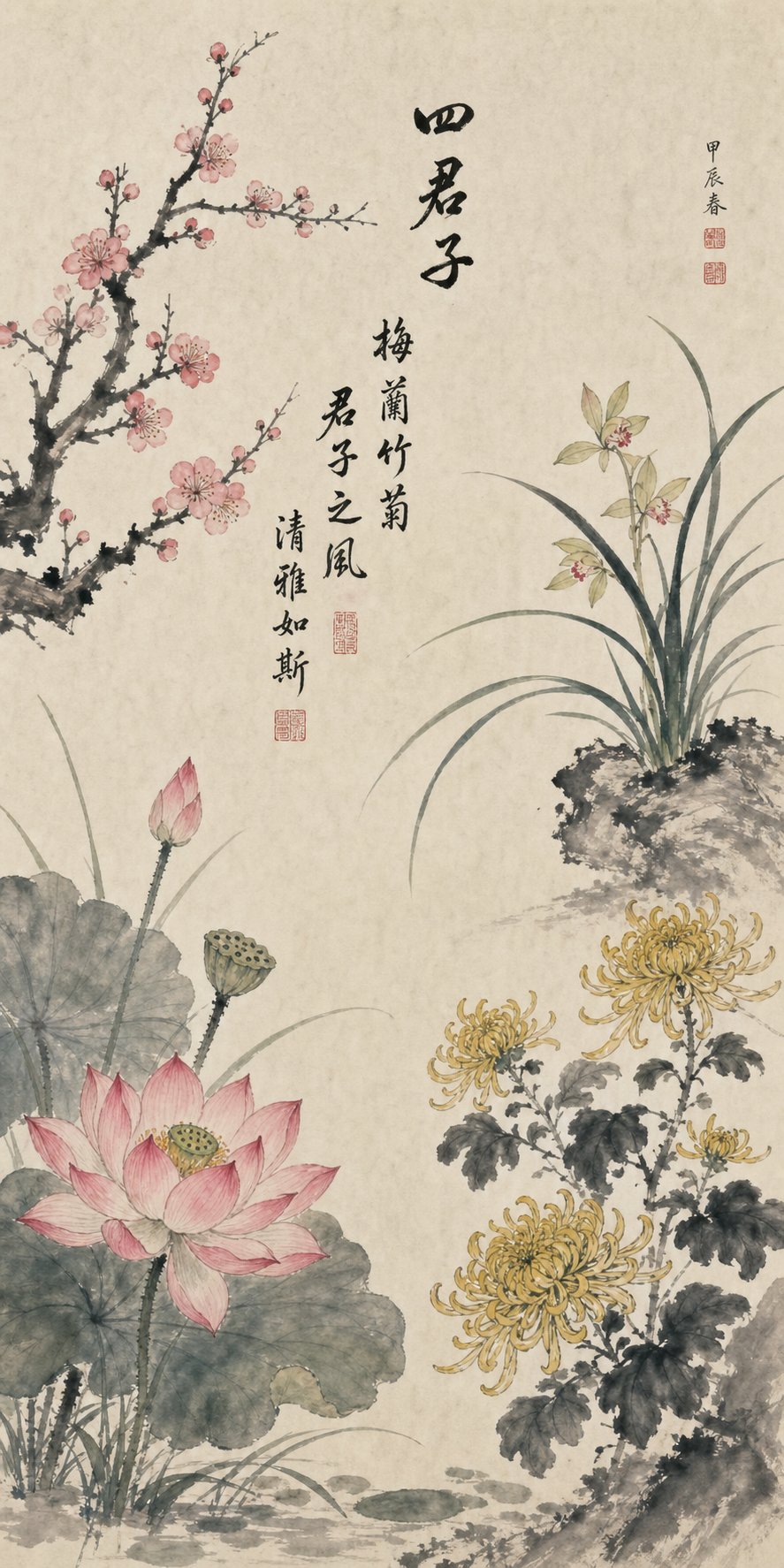
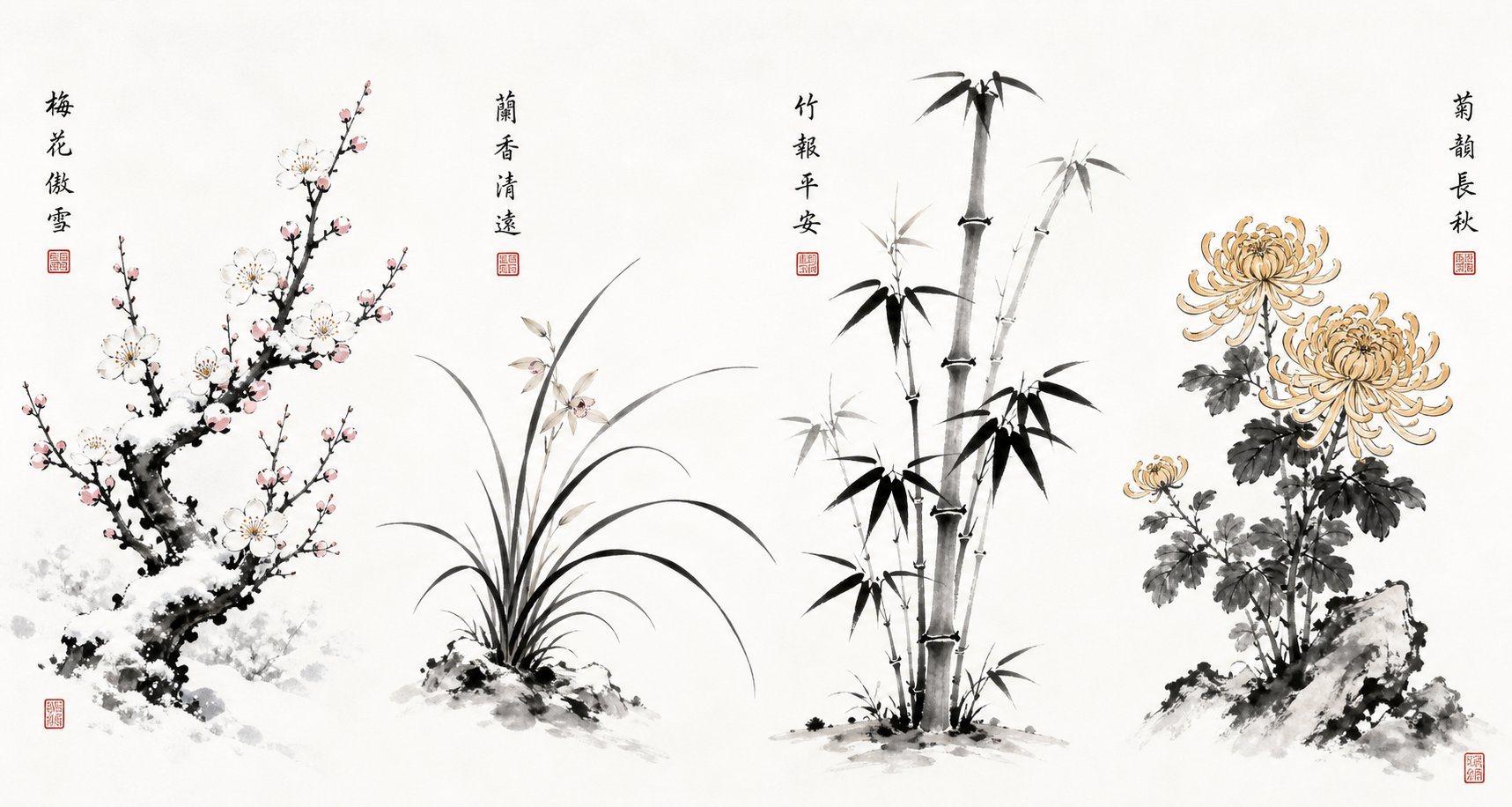
Those classical frameworks? The most influential one has a name: the Four Gentlemen, or 四君子 (si jun zi). This grouping of four plants, plum blossom (梅 mei), orchid (兰 lan), bamboo (竹 zhu), and chrysanthemum (菊 ju), represents the complete moral compass of Confucian virtue. Each plant corresponds to a season, a set of character traits, and a vision of the ideal person. When parents draw from this framework to name a child, they are not simply picking a pretty flower. They are selecting from a philosophical system that has shaped Chinese culture for over a thousand years.
The term 君子 (jun zi) itself means "gentleman" or "person of noble character." These four plants earned that title because scholars saw in their natural behaviors a mirror of human virtue. The flowers depicted in classical Chinese art almost always include these four subjects, and their presence in painting, poetry, and calligraphy reinforced their symbolic weight across generations. That same weight transfers directly into naming.
Plum Blossom and Orchid Names for Resilience and Grace
Consider what it means to bloom when snow still covers the ground. The plum blossom (梅 mei) does exactly this, flowering in late winter when every other plant remains dormant. This biological fact became a powerful metaphor: the plum blossom represents fortitude, resilience, and hope, a noble spirit that remains unbroken in adversity. Parents who name a child 梅 are encoding a wish for inner strength, the ability to thrive precisely when conditions are harshest.
The orchid (兰 lan) operates differently. It blooms in spring, often hidden in secluded valleys, its fragrance subtle rather than showy. This makes it the symbol of humility, refined elegance, and spiritual purity. A person named 兰 carries the aspiration of quiet excellence, someone whose virtue does not demand attention but is unmistakable to those who encounter it.
Here is how each of the Four Gentlemen maps to naming virtues:
- 梅 (mei) - Plum Blossom, Winter: Resilience, perseverance, hope in adversity. Example names: 梅芳 (Mei Fang, "plum fragrance"), 冬梅 (Dong Mei, "winter plum"), 梅英 (Mei Ying, "plum blossom hero")
- 兰 (lan) - Orchid, Spring: Humility, refined elegance, integrity. Example names: 兰芝 (Lan Zhi, "orchid and lingzhi"), 幽兰 (You Lan, "secluded orchid"), 兰心 (Lan Xin, "orchid heart")
- 竹 (zhu) - Bamboo, Summer: Uprightness, flexibility, moral integrity. Example names: 竹青 (Zhu Qing, "green bamboo"), 修竹 (Xiu Zhu, "tall bamboo"), 竹林 (Zhu Lin, "bamboo grove")
- 菊 (ju) - Chrysanthemum, Autumn: Endurance, scholarly nobility, graceful independence. Example names: 秋菊 (Qiu Ju, "autumn chrysanthemum"), 菊华 (Ju Hua, "chrysanthemum splendor"), 菊英 (Ju Ying, "chrysanthemum brilliance")
You will notice that bamboo (竹 zhu), while not technically a flower, belongs to this framework because its virtues, growing upright yet bending without breaking, complete the moral picture. Its hollow stem symbolizes open-mindedness, and its evergreen nature represents constancy. Flowers in classical Chinese art almost always pair bamboo with the other three gentlemen as an inseparable quartet.
Chrysanthemum Names and the Scholar's Ideal
The chrysanthemum holds a special place in this framework because of one poet: Tao Yuanming (陶渊明 Tao Yuan Ming), who lived during the Eastern Jin dynasty. After resigning from government office, he retreated to rural life and became inseparable from the chrysanthemum in literary memory. His famous line, "Plucking chrysanthemums beneath the eastern fence, at ease I catch sight of the southern mountain," transformed the flower into a symbol of the scholar who chooses integrity over political ambition.
This literary legacy means that chrysanthemum in China carries connotations far beyond simple beauty. A child named 菊 (ju) inherits an association with intellectual independence, the courage to step away from worldly power, and contentment found in simplicity. The flower in Chinese art traditions reinforced this connection for centuries, as literati painters returned to the chrysanthemum again and again as a subject that expressed their own values.
The poetic tradition matters here because Chinese parents often choose names with specific literary references in mind. A father who names his daughter 秋菊 (Qiu Ju, "autumn chrysanthemum") may be consciously invoking Tao Yuanming's legacy. A mother selecting 兰芝 (Lan Zhi) might be referencing the orchid imagery in Li Bai's poetry. These are not accidental echoes. Classical Chinese art flowers carry their literary histories into every name they inhabit, giving children a connection to centuries of cultural memory.
This philosophical depth explains why the Four Gentlemen remain central to naming practices even today. They offer parents something rare: a single character that simultaneously conveys beauty, moral aspiration, seasonal identity, and literary heritage. The question then becomes how these characters interact with gender expectations, and whether the virtues they encode belong exclusively to daughters or sons.
Popular Flower Characters in Girls' Names
The Four Gentlemen provide the philosophical backbone, but the full range of chinese flower names girl options extends far beyond those four plants. Flower characters have been concentrated in female names for centuries, not because women are merely decorative, but because flowers in Chinese culture encode specific feminine virtues: inner strength expressed through grace, moral clarity paired with beauty, and quiet resilience that does not need to announce itself.
When parents choose a chinese name meaning flower for a daughter, they are selecting from a rich vocabulary where each bloom carries distinct connotations. Some choices are immediately recognizable. Others are subtle, poetic, and surprisingly rare. Knowing the difference helps you understand what a name is truly saying.
Classic Flower Characters for Daughters
Certain flower characters have appeared in women's names across so many generations that they feel almost timeless. These are the names you will encounter most frequently in chinese names that mean flower, each one carrying a specific wish from parent to child.
| Flower Character | Pinyin | Meaning | Virtues Conveyed | Example Full Names |
|---|---|---|---|---|
| 莲 | lian | Lotus | Purity, spiritual transcendence, rising above hardship | 莲心 (Lian Xin), 金莲 (Jin Lian), 碧莲 (Bi Lian) |
| 梅 | mei | Plum blossom | Resilience, endurance, beauty in adversity | 雪梅 (Xue Mei), 寒梅 (Han Mei), 梅芳 (Mei Fang) |
| 兰 | lan | Orchid | Elegance, integrity, quiet refinement | 秀兰 (Xiu Lan), 桂兰 (Gui Lan), 兰芝 (Lan Zhi) |
| 菊 | ju | Chrysanthemum | Nobility, scholarly independence, endurance | 秋菊 (Qiu Ju), 菊英 (Ju Ying), 菊华 (Ju Hua) |
| 桂 | gui | Osmanthus | Honor, high achievement, sweet reputation | 桂兰 (Gui Lan), 桂花 (Gui Hua), 桂英 (Gui Ying) |
| 茉莉 | moli | Jasmine | Grace, sweetness, gentle purity | 茉莉 (Mo Li), 茉心 (Mo Xin) |
| 芙蓉 | furong | Hibiscus | Natural beauty, warmth, radiance | 芙蓉 (Fu Rong), 蓉华 (Rong Hua) |
| 薇 | wei | Fern/wild rose | Delicacy, understated charm, gentle strength | 紫薇 (Zi Wei), 蔷薇 (Qiang Wei) |
| 荷 | he | Lotus leaf | Freshness, purity, natural grace | 荷芳 (He Fang), 荷花 (He Hua) |
| 萱 | xuan | Daylily | Joy, freedom from worry, maternal love | 玉萱 (Yu Xuan), 萱草 (Xuan Cao) |
You will notice patterns here. Names like 秀兰 (Xiu Lan, "elegant orchid") and 雪梅 (Xue Mei, "snow plum blossom") pair a flower character with a quality character, creating layered meaning that neither element achieves alone. The flower provides the natural image; the pairing character sharpens the specific virtue being invoked.
Among asian flower names, the lotus and orchid dominate because their symbolism runs deepest in Chinese philosophy. But the table above only scratches the surface. Some of the most beautiful chinese name for flower choices come from blooms that rarely appear in standard naming guides.
Lesser-Known Flowers That Make Beautiful Names
Beyond the familiar favorites, several flowers offer distinctive naming possibilities that most parents overlook. These lesser-known names of chinese flowers carry equally rich symbolism, often with a more contemporary or poetic feel.
Osmanthus (桂 gui): While 桂 appears in the table above, its full cultural weight deserves attention. The osmanthus blooms in autumn with tiny golden flowers that release an intensely sweet fragrance. In Chinese tradition, it connects to the legend of the osmanthus tree on the moon, linking it to high achievement and celestial beauty. The name 桂兰 (Gui Lan, "osmanthus and orchid") combines two botanical symbols into a single expression of honor paired with elegance.
Wisteria (紫藤 ziteng): Wisteria's cascading purple blossoms evoke romance, devotion, and enduring love. The character 紫 (zi, purple) itself carries connotations of nobility, since purple was historically associated with royalty in Chinese culture. While the full compound 紫藤 rarely appears as a given name, the character 紫 frequently pairs with floral elements. The name 紫薇 (Zi Wei, "crape myrtle") uses this color-flower combination to suggest regal beauty.
Camellia (茶花 chahua): The camellia, sometimes called the "tea flower" because it belongs to the same genus as the tea plant, symbolizes devotion and longevity. Its waxy petals and evergreen leaves suggest a beauty that does not fade with seasons. While 茶花 itself is uncommon as a direct name, the character 茗 (ming, "tea sprout") appears in names like 茗芳 (Ming Fang, "tea fragrance"), carrying the camellia's associations of quiet, lasting grace.
Rose (蔷薇 qiangwei): The rose flower chinese tradition associates with young love and beauty differs from Western rose symbolism. In Chinese naming, 蔷薇 (qiangwei) refers specifically to wild roses or climbing roses rather than cultivated garden varieties. The character 薇 (wei) from this compound frequently appears independently in girls' names, offering a subtle rose reference without the directness of the full word. Names like 紫薇 (Zi Wei) and 蔷薇 (Qiang Wei) both draw from this tradition.
Magnolia (玉兰 yulan): Literally meaning "jade orchid," the magnolia combines two precious symbols into one name. It represents dignity, purity, and a love of nature. The name 玉兰 (Yu Lan) works beautifully as a given name because both characters carry independent positive meanings while together referencing a specific, beloved flower.
These lesser-known options give modern parents room to honor tradition while choosing something distinctive. A name like 紫薇 feels fresh compared to the more common 兰 or 梅, yet it carries equal cultural depth. The key is understanding that each flower encodes specific qualities, and the choice between well-known and rare blooms often reflects whether parents prioritize immediate recognition or poetic subtlety.
Of course, flower characters have not belonged exclusively to daughters throughout Chinese history. Certain plants have always crossed gender lines in naming, and contemporary practices are pushing those boundaries further still.
Flower Characters in Male Names and Shifting Gender Conventions
The assumption that botanical characters belong only in women's names misses a significant piece of Chinese naming history. Certain plants have carried masculine weight for centuries, precisely because their natural qualities mirror virtues traditionally expected of men: endurance, steadfastness, and the strength to weather hardship without complaint.
Flowers and Plants Traditionally Used in Male Names
Three chinese flora characters have appeared consistently in male names across dynasties:
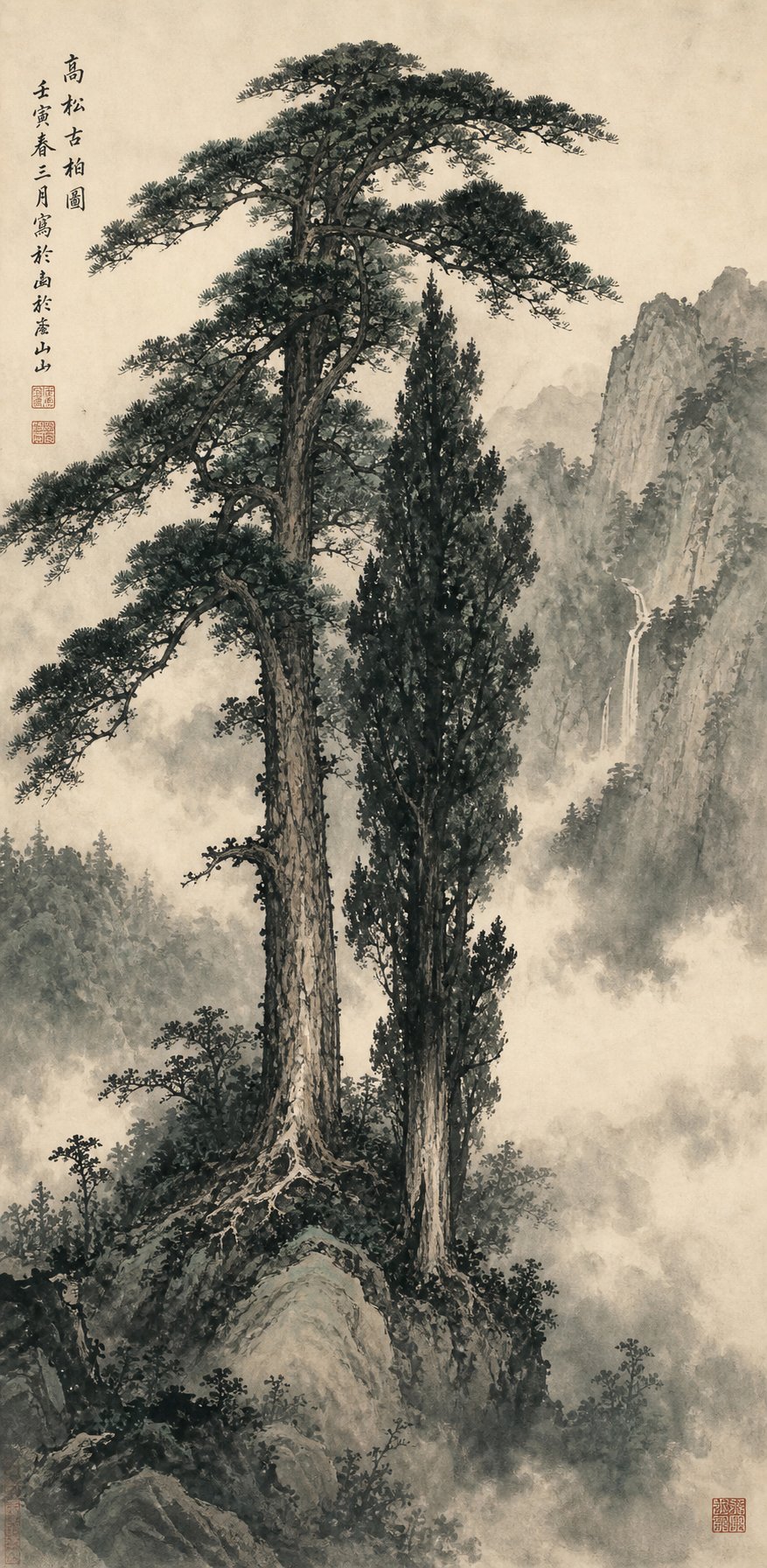
- 松 (song, pine): The pine tree remains green through the harshest winters, never shedding its needles. This makes it a symbol of unwavering loyalty and steadfastness. Names like 松涛 (Song Tao, "sound of wind through pines") and 松林 (Song Lin, "pine forest") evoke a man who stands firm regardless of circumstances.
- 柏 (bai, cypress): Another evergreen, the cypress represents longevity and calm resilience. As a chinese flower tree that endures harsh weather, it implies a life of quiet strength. Common male names include 柏然 (Bai Ran, "cypress composure") and 健柏 (Jian Bai, "vigorous cypress").
- 梅 (mei, plum blossom): While 梅 appears frequently in female names, it has never been exclusively feminine. For boys, the emphasis shifts from beauty to endurance through hardship. The chinese blossom that flowers in snow speaks to masculine grit. Names like 梅坚 (Mei Jian, "plum firmness") highlight this reading.
The Four Gentlemen framework also bridges gender naturally. Bamboo (竹 zhu) has always leaned masculine in naming, its upright growth and hollow core symbolizing moral backbone and open-mindedness. A name like 竹青 (Zhu Qing) works for either gender, but historically appeared more often for sons. Even orchid (兰 lan), despite its feminine associations today, was originally Confucius's metaphor for the virtuous gentleman.
How Modern Naming Breaks Gender Boundaries
Generational shifts reveal how dramatically attitudes toward botanical names have changed. The differences are striking:
- Grandparents' generation (born 1940s-1960s): Flower names for women were direct and unambiguous. Names like 桂花 (Gui Hua, "osmanthus flower"), 菊英 (Ju Ying, "chrysanthemum brilliance"), and 兰花 (Lan Hua, "orchid flower") stated the bloom plainly. Male botanical names stuck to trees: 松, 柏, 林 (lin, forest).
- Parents' generation (born 1970s-1980s): Flower names for girls became slightly more refined. 薇 (wei) and 萱 (xuan) gained popularity over the more literal 花 (hua). Boys' names began incorporating subtler nature references like 森 (sen, forest) and 林 (lin).
- Millennial and Gen Z naming (2000s-present): Gender lines blur considerably. Parents favor characters that evoke asian flowers and plants without naming them directly. Boys receive names with 艺 (yi, art/skill, which contains the grass radical 艹), 萧 (xiao, a type of bamboo), or 蔚 (wei, lush/luxuriant). Girls' names move toward abstract botanical qualities rather than specific blooms.
Contemporary Chinese parents balance tradition with modern aesthetics by choosing chinese plants names that feel fresh yet culturally grounded. A boy named 柏宇 (Bai Yu, "cypress universe") carries botanical heritage without feeling old-fashioned. A girl named 芮 (rui, "small and lush") references plant life subtly rather than declaring a specific flower.
This generational evolution reflects a broader cultural shift: the virtues encoded in botanical characters, resilience, grace, integrity, are increasingly understood as universal rather than gendered. The flower or tree matters less than the quality it represents. What matters more, perhaps, is how these characters interact with their partners in a full name, creating compound meanings that neither character achieves alone.
How Flower Characters Combine to Create Layered Meanings
A single flower character carries rich symbolism on its own, but a chinese flower name rarely stands alone. A standard Chinese given name consists of one or two characters, and when a flower character occupies one of those slots, the pairing character transforms its meaning entirely. Think of it like a musical chord: one note is beautiful, but the second note determines whether the chord sounds triumphant, melancholy, or serene.
Take 莲 (lian, lotus) as an example. Pair it with 心 (xin, heart) and you get 莲心 (Lian Xin), meaning "pure heart," a name that emphasizes the lotus's spiritual purity directed inward. Pair the same flower with 清 (qing, clear) and you get 清莲 (Qing Lian), meaning "clear lotus" or "pure integrity," shifting the emphasis outward toward moral transparency. Same flower, completely different aspiration. The pairing character acts as a lens, focusing the flower's broad symbolism into a specific wish for the child.
Pairing Flower Characters with Virtue Characters
Parents constructing a name that means flower plus something more typically draw from four pairing categories, each producing a distinct emotional register:
- Flower + Virtue (德 de, 贤 xian): These combinations emphasize moral character. The flower provides beauty; the virtue character anchors it in ethics. A name like 兰德 (Lan De, "orchid virtue") says this person's elegance is rooted in genuine goodness.
- Flower + Beauty (美 mei, 秀 xiu): Here the pairing amplifies the aesthetic dimension. 梅秀 (Mei Xiu, "plum blossom elegance") doubles down on grace, creating a name that feels poetic and visually evocative.
- Flower + Nature (云 yun, 雪 xue): Pairing a flower with another natural element creates a landscape within the name. 雪梅 (Xue Mei, "snow plum") places the plum blossom in its winter setting, reinforcing its resilience symbolism through imagery.
- Flower + Aspiration (志 zhi, 飞 fei): These pairings push the name toward ambition and forward motion. 兰飞 (Lan Fei, "orchid in flight") takes the orchid's quiet refinement and adds dynamism, suggesting someone whose grace propels them upward.
Each category produces a different tone. Virtue pairings feel grounded and traditional. Beauty pairings feel lyrical. Nature pairings feel atmospheric. Aspiration pairings feel energetic. Understanding the hua name meaning in a compound name requires reading both characters together as a single thought, not as two separate words placed side by side.
Creating Layered Meaning Through Character Combinations
The table below shows how specific flower characters interact with different pairing types to produce distinct china flower name combinations. Notice how the same flower shifts in feeling depending on its partner:
| Flower Character | Pairing Character | Combined Name | Combined Meaning | Tone/Feel |
|---|---|---|---|---|
| 莲 (lian, lotus) | 心 (xin, heart) | 莲心 (Lian Xin) | Pure heart, lotus core | Spiritual, inward |
| 莲 (lian, lotus) | 清 (qing, clear) | 清莲 (Qing Lian) | Clear lotus, pure integrity | Moral, transparent |
| 梅 (mei, plum) | 雪 (xue, snow) | 雪梅 (Xue Mei) | Snow plum blossom | Resilient, poetic |
| 梅 (mei, plum) | 志 (zhi, ambition) | 梅志 (Mei Zhi) | Plum's resolve | Determined, strong |
| 兰 (lan, orchid) | 德 (de, virtue) | 兰德 (Lan De) | Orchid virtue | Noble, grounded |
| 兰 (lan, orchid) | 秀 (xiu, elegant) | 兰秀 (Lan Xiu) | Orchid elegance | Graceful, refined |
| 菊 (ju, chrysanthemum) | 贤 (xian, worthy) | 菊贤 (Ju Xian) | Chrysanthemum worthiness | Scholarly, dignified |
| 桂 (gui, osmanthus) | 云 (yun, cloud) | 桂云 (Gui Yun) | Osmanthus among clouds | Ethereal, elevated |
| 荷 (he, lotus leaf) | 美 (mei, beautiful) | 荷美 (He Mei) | Lotus beauty | Fresh, natural |
| 薇 (wei, fern/rose) | 飞 (fei, fly) | 薇飞 (Wei Fei) | Rose in flight | Dynamic, free-spirited |
A few structural principles emerge from these combinations. When the flower character comes first, it tends to set the emotional foundation, with the pairing character directing that energy. When the flower character comes second, the pairing character establishes context and the flower provides the resolution. 雪梅 (Xue Mei) places you in winter first, then reveals the bloom. 梅志 (Mei Zhi) starts with the flower and drives toward purpose.
This construction logic is what makes a chinese flower name far more than a label. Each compound name functions as a compressed poem, two characters creating meaning that neither holds independently. The parent's art lies in finding the combination where sound, visual form, and layered symbolism all align. And because Chinese names also carry tonal rhythm and seasonal associations, the pairing decision often connects to something even more specific: the time of year the child arrives.
Birth Season Traditions and Flower Name Selection
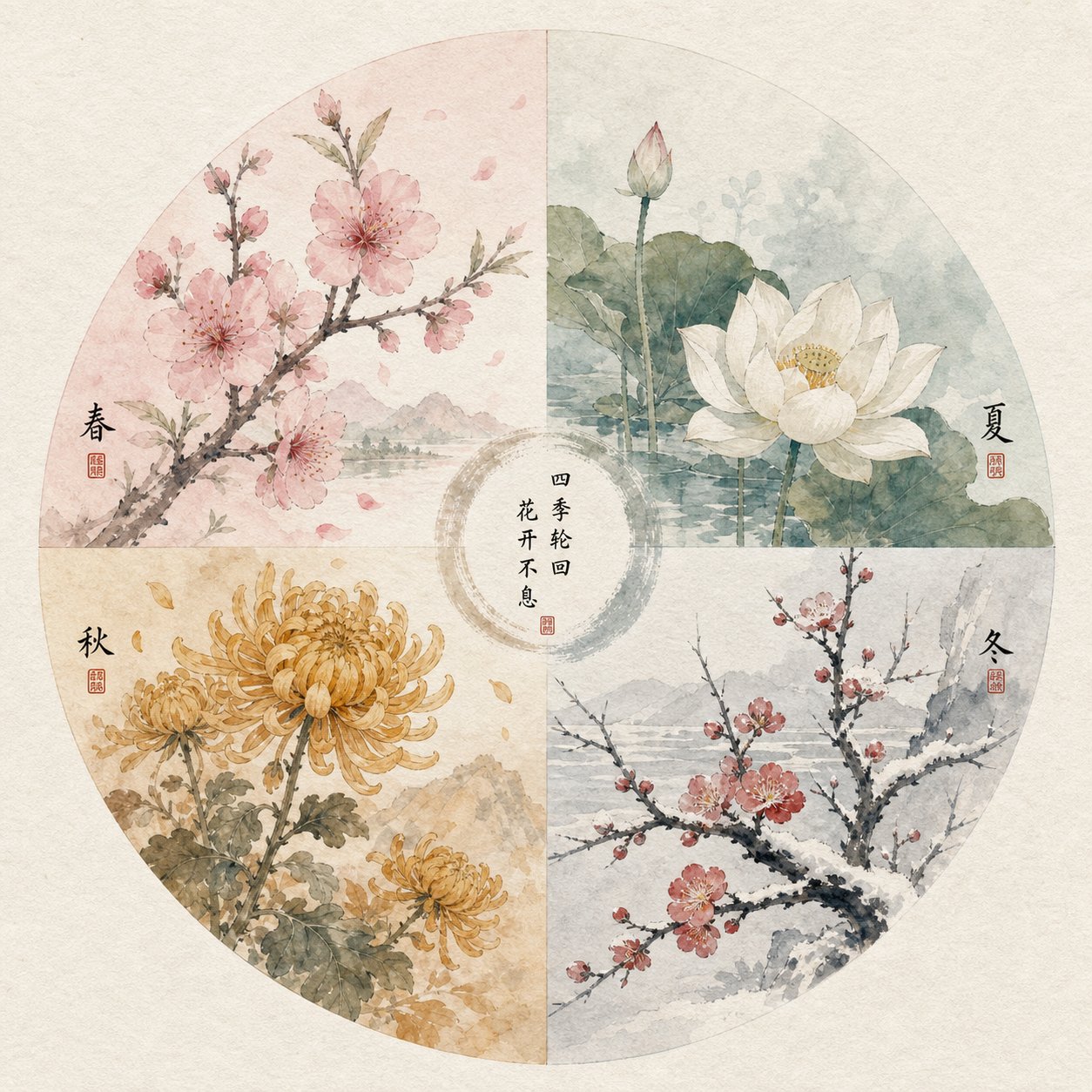
The time of year a child enters the world has long influenced which flower character parents choose. This is not arbitrary preference. It reflects a deeply rooted belief that a person's name should harmonize with the natural conditions surrounding their birth, anchoring them to the season's energy from their very first breath. Among the many flowers in China that bloom across different months, each carries seasonal symbolism that parents deliberately match to a child's arrival.
This practice draws directly from Taoist philosophy, where living in harmony with nature's cycles is considered essential to a balanced life. A child born in winter who carries a plum blossom name is not just named after a pretty flower. They are symbolically aligned with the season's defining quality: quiet strength amid cold and stillness. The name becomes a bridge between the child and the natural world at the exact moment they joined it.
Spring and Summer Birth Flower Names
Spring and summer births call for flowers that embody renewal, vitality, and abundance. These are the seasons of visible growth, and the flowers from China's rich botanical landscape that bloom during these months carry that expansive energy into a child's name.
- Spring (春 chūn) — Rebirth and New Beginnings: Spring flowers represent fresh starts and youthful beauty. Key naming characters include 桃 (táo, peach blossom), symbolizing romance, vitality, and good fortune; 樱 (yīng, cherry blossom), representing the fleeting beauty of youth and gentle grace; and 杏 (xìng, apricot blossom), conveying warmth and early promise. Example names: 桃芳 (Táo Fāng, "peach fragrance"), 樱雪 (Yīng Xuě, "cherry snow"), 春桃 (Chūn Táo, "spring peach").
- Summer (夏 xià) — Fullness and Flourishing: Summer births align with flowers at their most lush and open. The lotus dominates this season, with both 莲 (lián, lotus flower) and 荷 (hé, lotus leaf) available as naming characters. Summer also brings 茉莉 (mòlì, jasmine), whose intense fragrance peaks in hot months. Example names: 夏莲 (Xià Lián, "summer lotus"), 荷清 (Hé Qīng, "clear lotus leaf"), 茉芳 (Mò Fāng, "jasmine fragrance").
Spring names tend to feel lighter and more playful, while summer names carry a sense of fullness and maturity. A child named 樱 (yīng) inherits the cherry blossom's association with beautiful transience, a reminder to cherish each moment. A child named 荷 (hé) carries the lotus leaf's freshness, its ability to repel impurity while floating gracefully on still water.
Autumn and Winter Birth Flower Names
Autumn and winter births call for flowers that demonstrate endurance, depth, and quiet nobility. These seasons test the natural world, and the plants that thrive during them carry that resilience into a child's identity.
- Autumn (秋 qiū) — Maturity and Scholarly Depth: The chrysanthemum in Chinese culture is inseparable from autumn, blooming precisely when other flowers fade. Osmanthus (桂 guì) also peaks in autumn, filling the air with its distinctive golden sweetness. Both flowers in Asia's temperate regions carry associations with harvest, accomplishment, and reflective wisdom. Example names: 秋菊 (Qiū Jú, "autumn chrysanthemum"), 桂秋 (Guì Qiū, "osmanthus autumn"), 菊芳 (Jú Fāng, "chrysanthemum fragrance").
- Winter (冬 dōng) — Resilience and Inner Strength: Winter births receive the most symbolically powerful flower names because blooming in cold requires extraordinary fortitude. The plum blossom (梅 méi) reigns here, joined by the pine (松 sōng) and occasionally the narcissus (水仙 shuǐxiān, literally "water immortal"). Example names: 冬梅 (Dōng Méi, "winter plum"), 松雪 (Sōng Xuě, "pine and snow"), 寒梅 (Hán Méi, "cold-weather plum").
Winter names carry particular weight. A child born in January who receives the name 寒梅 (Hán Méi) is being told, through their name, that they arrived during the hardest season and are therefore equipped with the strength to bloom when others cannot. It is both a description and a prophecy.
Regional variations add another layer to these seasonal choices. In mainland China, the traditional seasonal framework holds strong, with chrysanthemum and plum blossom remaining dominant in their respective seasons. Taiwan's naming culture leans slightly toward Japanese-influenced aesthetics, making cherry blossom (樱 yīng) more popular there than on the mainland. Hong Kong parents, influenced by Cantonese pronunciation considerations, may favor flowers whose tonal qualities sound more auspicious in their dialect. And among diaspora communities, parents sometimes choose flowers that resonate in both Chinese and local cultures, selecting blooms like the tulip in Chinese (郁金香 yùjīnxiāng) that carry positive associations across cultural boundaries, even though 郁金香 itself is rarely used as a direct name character.
These regional differences remind us that flower naming is not a single monolithic tradition but a living practice shaped by local language, climate, and cultural contact. What remains constant across all regions is the underlying principle: the flower should feel right for the moment the child arrives, creating a lifelong connection between person and season. That connection, however, comes with boundaries. Not every beautiful flower makes a safe or auspicious name, and the next consideration parents face involves knowing which blooms to avoid entirely.
Naming Taboos and Flowers to Avoid in Chinese Names
Chinese flower symbolism works in both directions. The same cultural depth that makes certain blooms powerful name choices makes others genuinely dangerous to use. A flower can be visually stunning, poetically celebrated, and still completely unsuitable for a personal name because of its associations with death, misfortune, or phonetic accidents. Parents navigating this landscape need to know where the boundaries lie, because a well-intentioned name that triggers the wrong association can follow a child for life.
When asking what do the flowers mean in a naming context, the answer sometimes includes meanings no parent wants to bestow. Understanding these taboos is just as important as understanding the positive symbolism covered earlier.
Funeral Flowers and Why They Are Avoided in Names
Certain flowers carry strong funerary associations in Chinese culture, making them effectively off-limits for personal names regardless of their beauty. Chinese flowers for funeral use occupy a distinct cultural category, and crossing that line in naming is considered deeply inauspicious.
- White chrysanthemums (白菊 bai ju): While chrysanthemum (菊 ju) is one of the Four Gentlemen and appears frequently in names, white chrysanthemums specifically are the primary funeral flower in Chinese culture. They are placed on graves, offered at memorial altars, and associated with mourning. The character 菊 alone is safe for naming, but pairing it with 白 (bai, white) or using it in contexts that evoke its funeral role creates an uncomfortable association.
- White lilies (白百合 bai baihe): Lilies appear at Chinese funerals as expressions of grief and the wish for the departed soul's peaceful rest. The character 百合 (baihe, lily) literally means "hundred unions" and can carry positive meaning in other contexts, but its strong funeral presence makes parents cautious. You will rarely encounter it as a given name.
- Yellow chrysanthemums in certain regions: In some parts of China, yellow chrysanthemums share the funerary association with their white counterparts. Regional variation matters here. What feels neutral in one province may feel morbid in another.
- Paper flowers (纸花 zhihua): While not a real botanical species, paper flowers are burned as offerings to the dead. Any name that phonetically echoes 纸花 risks this association.
The underlying principle is straightforward: flowers regularly seen at funerals absorb that context permanently. No amount of poetic beauty overrides the visceral association with death and mourning once it takes hold in cultural memory.
Homophone Pitfalls and Tonal Considerations
Chinese is a tonal language with extensive homophony, meaning many characters share identical pronunciations but carry vastly different meanings. A flower character that sounds beautiful in isolation might create an unfortunate phrase when combined with a common surname. This is where naming becomes genuinely tricky.
Consider these examples:
- 梅 (mei, plum blossom) paired with the surname 倪 (Ni) creates "Ni Mei," which sounds close to 你没 (ni mei, "you don't have") in casual speech, an inauspicious ring.
- 桃 (tao, peach) can sound like 逃 (tao, escape/flee) in certain tonal contexts, suggesting running away from something rather than blooming toward it.
- 莲 (lian, lotus) shares its pronunciation with 怜 (lian, pity) and 廉 (lian, cheap/frugal). While the characters are visually distinct, spoken aloud the overlap can create unintended connotations depending on the surname pairing.
- 花 (hua, flower) itself is rarely used as a name character despite being the most direct flower reference, partly because 花 colloquially means "to spend money" or can imply someone is frivolous or promiscuous in certain dialects.
Tonal balance also matters. A full Chinese name has a rhythmic quality created by the tones of its two or three characters. Names where all characters share the same tone can sound flat or monotonous. Flower characters tend to cluster in certain tonal ranges: 兰 (lan, second tone), 梅 (mei, second tone), 莲 (lian, second tone) are all second-tone characters. Pairing any of these with a second-tone surname like 陈 (Chen) or 林 (Lin) creates a name that rises repeatedly without variation, which many parents find aesthetically unpleasing.
Experienced name-givers listen to the full name spoken aloud, testing it across Mandarin and the family's home dialect. What sounds elegant in Mandarin might hit an awkward homophone in Cantonese, Hokkien, or Shanghainese. This dialect-checking step catches problems that looking at characters alone cannot reveal.
For non-Chinese parents or adoptive parents seeking to understand or choose flower-based Chinese names, a few practical guidelines help avoid common mistakes:
- Consult a native speaker from the relevant dialect group. A Mandarin speaker may miss problems that a Cantonese speaker catches immediately, and vice versa.
- Research what do the flowers mean in both positive and negative contexts. A flower's beauty does not guarantee its safety as a name. Ask specifically about funeral associations and homophone risks.
- Avoid choosing characters solely based on English translations. "Lily" sounds lovely in English, but 百合 carries funeral weight in Chinese. The emotional register of a flower differs across languages.
- Test the full name aloud with the surname. Write it, say it, and ask native speakers for their honest first impression. If anyone hesitates or winces, take that seriously.
- Understand that what does red symbolize in China (luck, joy, celebration) versus white (mourning, death) inverts Western color associations. A "white flower" name that feels pure in English may feel funereal in Chinese.
These taboos and considerations are not obstacles to creativity. They are guardrails that protect a child from carrying an unintended burden. Parents who understand both the positive symbolism and the pitfalls are equipped to choose names that honor tradition without stumbling into cultural minefields. And as naming practices continue to evolve, the way parents navigate these boundaries reveals broader shifts in how flower symbolism functions in contemporary Chinese life.
Modern Trends in Flower-Based Chinese Naming
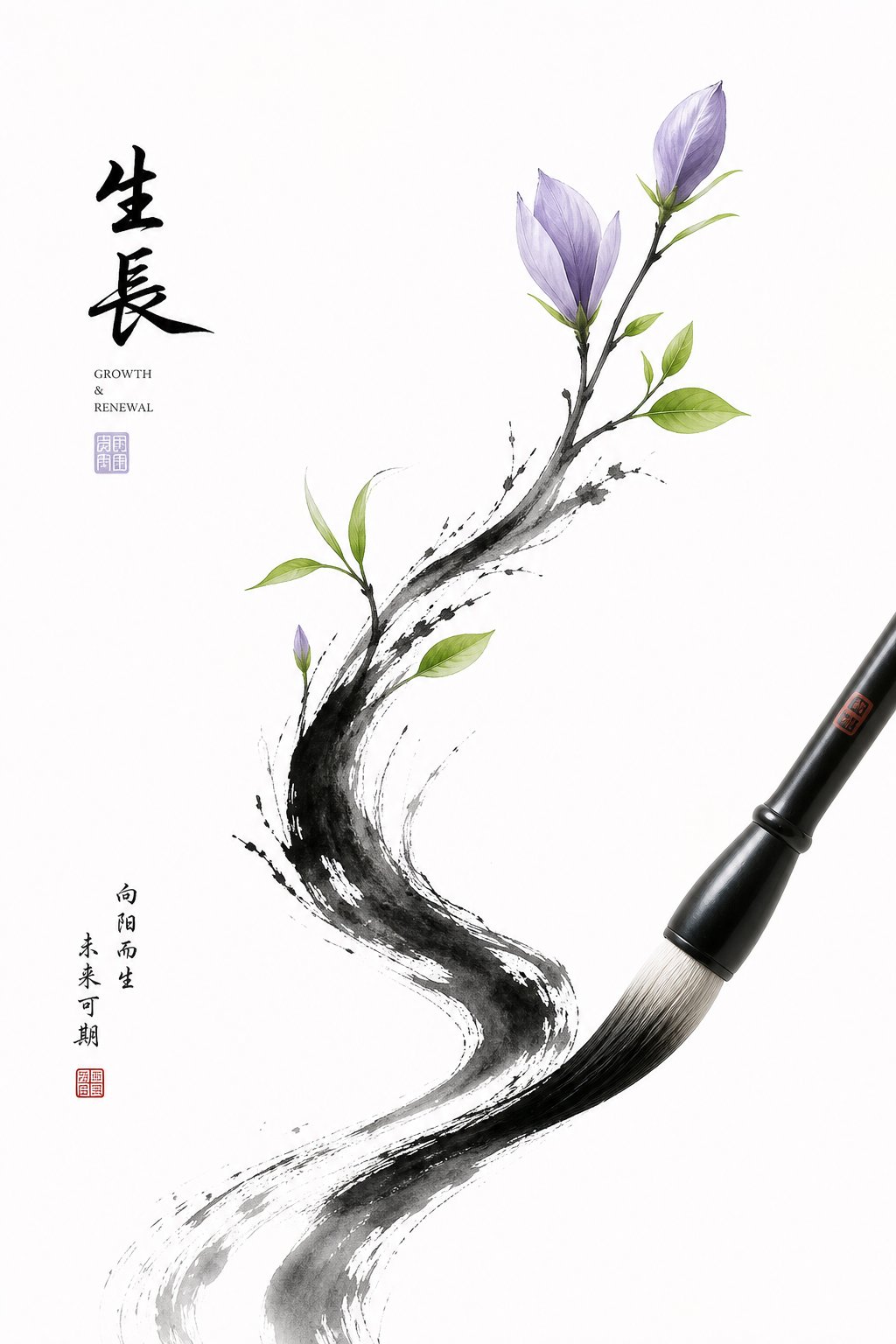
Knowing what to avoid is one thing. Knowing what contemporary parents actually choose reveals where this tradition is headed. Chinese flower meanings have not faded with modernization. They have shifted shape, moving from direct botanical references toward subtler, more poetic expressions that still carry centuries of symbolic weight beneath the surface.
Classic Flower Names That Endure Today
Some traditional chinese flowers used in names have proven remarkably durable. The lotus (莲 lian) and orchid (兰 lan) remain popular across generations because their symbolism, purity and refined integrity, never feels dated. Parents still reach for 梅 (mei, plum blossom) when they want to encode resilience, and 萱 (xuan, daylily) continues to appear in girls' names for its association with joy and freedom from worry.
Others have faded. Names like 桂花 (Gui Hua, "osmanthus flower") and 菊英 (Ju Ying, "chrysanthemum brilliance") feel generational now, associated with grandmothers rather than newborns. The shift is not about rejecting these flowers' meanings. It is about how directly a name states its botanical reference. Modern parents tend to find the compound flower-plus-flower format (桂花, 兰花, 荷花) too literal for contemporary taste. They prefer a single flower character paired with something unexpected, or they skip the flower name entirely in favor of characters that evoke floral qualities without naming a specific bloom.
New Approaches to Botanical Naming in Modern China
Here is where the evolution gets interesting. Young parents increasingly choose characters that carry the essence of flowers, fragrance, freshness, the act of blooming, without pointing to a particular species. Characters like 馨 (xin, distant fragrance), 萌 (meng, sprouting), 蕾 (lei, flower bud), and 芮 (rui, small and lush) all reference the botanical world obliquely. The child's name smells like a garden without naming a single plant in it.
Popular culture accelerates these shifts. Celebrity baby names circulate on social media platforms like Weibo and Xiaohongshu, influencing millions of naming decisions. When a well-known actress names her daughter with a character like 蕊 (rui, stamen) or 芷 (zhi, angelica), that character trends among new parents within months. Chinese symbols flowers have always carried cultural authority, but social media compresses the timeline from centuries of poetic tradition to weeks of viral popularity.
Television dramas set in historical periods also revive interest in classical flower names. A character named 如兰 (Ru Lan, "like an orchid") in a popular period drama can spark renewed appreciation for orchid-based names among viewers planning families. The tradition feeds popular culture, and popular culture feeds the tradition back.
Chinese flowers meaning in names has survived dynastic collapses, cultural revolutions, and globalization because the underlying logic is timeless: nature provides the vocabulary for human aspiration, and parents will always reach for that vocabulary when naming what they love most.
What persists across every generation is the core principle. Whether a parent in 1950 chose 桂花 or a parent today chooses 芮, both are doing the same thing: encoding a wish for their child's character through botanical symbolism. The surface changes. The depth remains.
For readers choosing or seeking to understand flower-based Chinese names, a few practical takeaways hold true regardless of era:
- Every chinese flower symbols choice encodes specific virtues. Research the particular qualities a flower represents, not just its visual beauty.
- Character pairing transforms meaning. A flower character's significance shifts depending on what it is combined with in the full given name.
- Season, tone, and dialect all matter. The best flower name harmonizes sound, meaning, and timing.
- Taboos are real boundaries. Funeral associations and homophone risks are not superstition but lived cultural knowledge.
- The tradition is alive. Modern naming draws from the same philosophical roots while expressing them through fresher, more subtle character choices.
Chinese flowers and meanings have traveled together for millennia, from the earliest poetry anthologies through imperial court culture, revolutionary upheaval, and into the smartphone age. The flowers themselves have not changed. What changes is how each generation finds new ways to plant them in their children's names, ensuring that the garden keeps growing.
Frequently Asked Questions About Flower Meanings in Chinese Names
1. What are the most common flower characters used in Chinese girls' names?
The most popular flower characters for Chinese girls' names include 莲 (lian, lotus) for purity, 兰 (lan, orchid) for elegance, 梅 (mei, plum blossom) for resilience, 菊 (ju, chrysanthemum) for nobility, and 桂 (gui, osmanthus) for honor. Lesser-known but equally beautiful options include 薇 (wei, fern or wild rose) for gentle grace, 萱 (xuan, daylily) for joy, and 茉莉 (moli, jasmine) for sweetness. Each character carries specific virtues parents wish to bestow upon their daughter, and the meaning deepens further when paired with a complementary character in the full given name.
2. Can flower characters be used in Chinese male names?
Yes, certain botanical characters have appeared in male names for centuries. Pine (松 song) symbolizes unwavering loyalty, cypress (柏 bai) represents longevity and calm resilience, and plum blossom (梅 mei) conveys endurance through hardship when used for boys. Bamboo (竹 zhu) has traditionally leaned masculine in naming due to its association with moral backbone. Modern naming practices are further blurring gender boundaries, with contemporary parents choosing subtler botanical references like 蔚 (wei, lush) or 萧 (xiao, a type of bamboo) for sons.
3. What is the Four Gentlemen framework in Chinese naming?
The Four Gentlemen (四君子 si jun zi) is a philosophical grouping of four plants: plum blossom (梅), orchid (兰), bamboo (竹), and chrysanthemum (菊). Each corresponds to a season and a set of moral virtues. Plum blossom represents winter resilience, orchid embodies spring refinement, bamboo symbolizes summer uprightness, and chrysanthemum reflects autumn scholarly independence. This framework has guided Chinese naming for over a thousand years, offering parents characters that simultaneously convey beauty, moral aspiration, seasonal identity, and literary heritage rooted in classical poetry.
4. Which flowers should be avoided when choosing a Chinese name?
White chrysanthemums and white lilies should be avoided because they are primary funeral flowers in Chinese culture. The character 花 (hua, flower) itself is rarely used in names because it can imply frivolity or spending money in colloquial speech. Parents must also watch for homophone pitfalls where a flower character combined with certain surnames creates unfortunate-sounding phrases. Tonal balance matters too, as many popular flower characters share the same tone, which can make a full name sound monotonous. Always test the complete name aloud in both Mandarin and the family's home dialect.
5. How does birth season affect flower name selection in Chinese culture?
Chinese parents traditionally choose flower characters that bloom during the child's birth season, reflecting Taoist harmony with nature. Spring births align with peach blossom (桃) and cherry (樱) for renewal. Summer births pair with lotus (莲) and jasmine (茉莉) for fullness. Autumn births connect to chrysanthemum (菊) and osmanthus (桂) for maturity. Winter births receive plum blossom (梅) and pine (松) for resilience. This practice symbolically anchors the child to the natural world at the moment of their arrival, creating a lifelong connection between person and season.