What Makes Chinese Nicknames So Funny
In English, a funny nickname usually relies on rhyming or an obvious physical trait. Call someone "Red" for their hair color and you've exhausted most of the creative machinery. Funny Chinese nicknames operate on an entirely different level because the language itself is a playground of tonal shifts, visual characters, and layered cultural meaning. One wrong tone can turn a term of endearment into an insult about someone's mother. One swapped character can transform a compliment into a barnyard animal reference.
Why Chinese Nicknames Hit Different
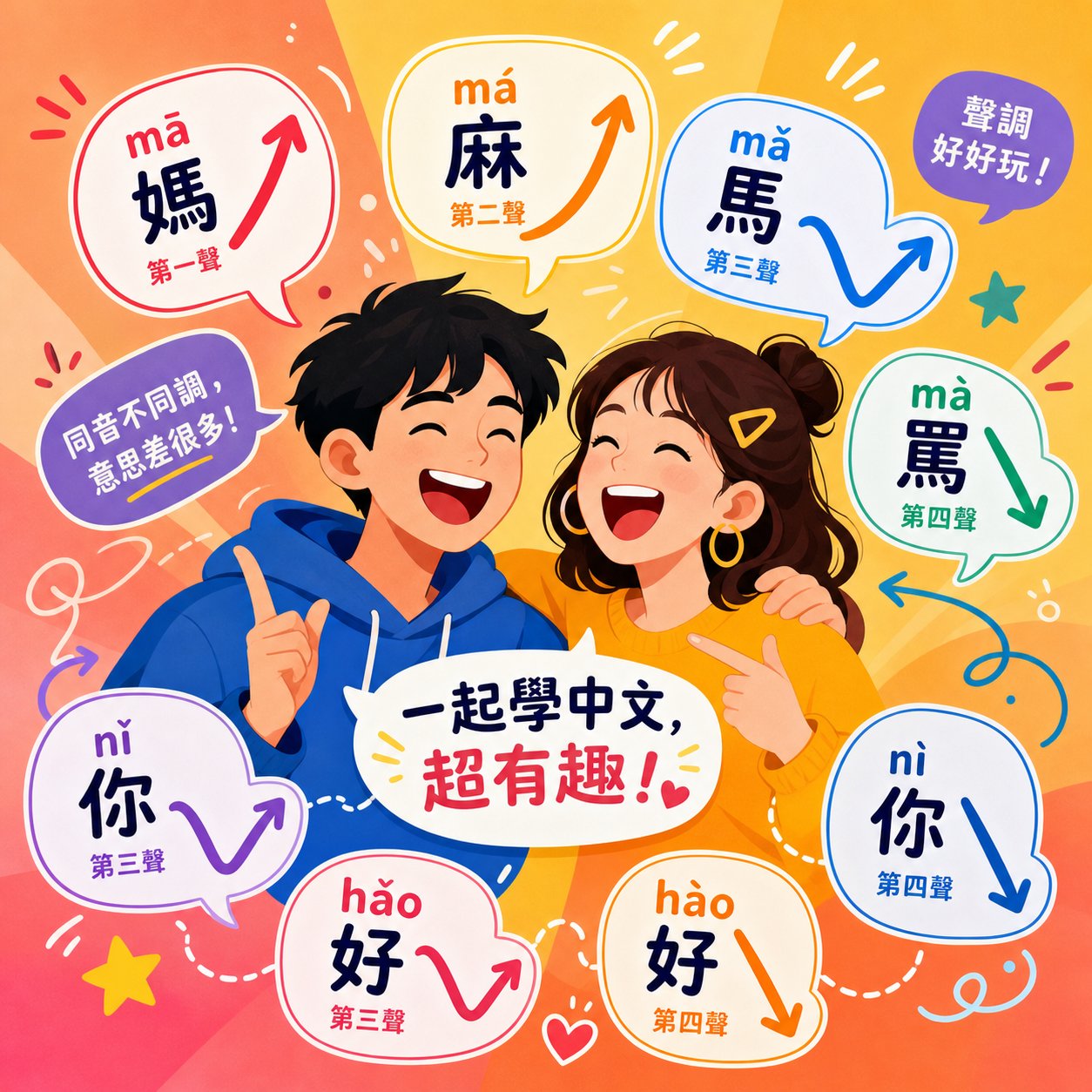
So what counts as a funny Chinese name? There are two broad categories. The first is intentional: nicknames crafted by friends, partners, or internet users to tease, flirt, or joke. The second is accidental, where tonal mispronunciations or unfortunate character combinations produce meanings nobody planned. Both are endlessly entertaining, but they work through completely different mechanisms. Intentional humor shows linguistic creativity. Accidental humor reveals the traps built into a tonal, character-based language where the same syllable "ma" can mean mother, horse, hemp, or a curse word depending on your pitch.
The Layers of Humor in Chinese Names
What makes humorous Chinese names so rich is that they can be funny in ways you can see, hear, and feel culturally, all at once. A nickname might look absurd when written, sound like a pun when spoken aloud, and carry a cultural joke that only insiders catch.
Chinese nickname humor operates on three dimensions simultaneously: visual (how the characters look), phonetic (how tones and sounds interact), and cultural (what associations they trigger). A single nickname can be funny on all three levels at once.
This multi-layered quality is why funny names in chinese rarely translate well into English. The joke lives in the intersection of sound, symbol, and shared context. Strip away any one layer and the humor flattens. Understanding how these dimensions interact is the key to appreciating, and eventually creating, genuinely clever Chinese nicknames.
Each of these dimensions has its own set of rules, patterns, and pitfalls, and the funniest nicknames tend to exploit more than one at a time.
How Funny Chinese Nicknames Are Actually Formed
Those three dimensions of humor don't appear out of thin air. They emerge from specific linguistic building blocks that Chinese speakers mix and match to create nicknames. Think of these as formulas: once you recognize the patterns, you'll start spotting them everywhere, from office banter to internet comments.
Chinese nicknames follow a handful of reliable formation methods. Each one generates a different flavor of comedy, and understanding the mechanics helps you see why certain nicknames land harder than others.
Prefix Patterns That Create Instant Comedy
The fastest way to build a Chinese nickname is to slap a prefix onto someone's name or a descriptive word. Four prefixes dominate the nickname landscape, and each carries its own comedic energy:
- 小 (xiao, third tone, sounds like "shee-OW" with a dipping pitch) - Means "little" or "young." Used by elders or seniors toward younger people to show affection. Humor kicks in when you attach it to something unexpected. Calling a massive guy 小胖 (Xiao Pang, "Little Fatty") is funny precisely because it's ironic. The prefix signals warmth, so even a teasing nickname feels friendly rather than cruel.
- 大 (da, fourth tone, sounds like "dah" with a sharp falling pitch) - Means "big." Less common as a nickname prefix than 小, but funnier when deployed because it amplifies whatever follows. 大嘴 (Da Zui, "Big Mouth") hits harder than just calling someone loud.
- 老 (lao, third tone, sounds like "laow" with a dipping pitch) - Means "old" but signals respect or amity when used as a prefix before surnames. 老王 (Lao Wang) is how you'd casually address a colleague named Wang. The comedy comes from context: 老王 has become an internet meme representing the nosy neighbor or the "other man" in jokes about infidelity. A perfectly innocent Chinese nickname turned into a cultural punchline.
- 阿 (a, first tone, sounds like "ah" with a flat high pitch) - A casual, affectionate prefix common in southern dialects and Taiwanese Mandarin. It attaches to single-syllable names or family names: 阿明 (A Ming), 阿花 (A Hua). The humor often comes from pairing it with words that sound dignified on their own but become absurdly cute with 阿 in front.
You'll notice that nicknames in chinese rely heavily on the gap between what the prefix implies and what the base word means. That contrast is where the laugh lives.
Reduplication and Wordplay Mechanics
Reduplication, repeating a syllable, is another core method for forming a Chinese nickname. Words like 宝宝 (baobao, "baby"), 乖乖 (guaiguai, "good kid"), and 甜甜 (tiantian, "sweetie") double a character to create a softer, more playful sound. The repetition itself signals intimacy or childishness.
Where it gets funny: adults using baby-talk reduplication on each other. Imagine a grown man being called 猪猪 (zhuzhu, "piggy piggy") by his girlfriend in public. The mismatch between the cutesy sound pattern and the actual person creates instant comedy. Reduplication also powers homophone wordplay. Because Mandarin has a limited number of syllables spread across four tones, doubling a sound increases the chance it overlaps with something embarrassing. 蛋蛋 (dandan) means "little egg" as a child's nickname, but it's also slang for a body part most people don't mention at dinner.
Character Substitution Tricks
The most creative method involves swapping one character for another that sounds identical or similar but carries a wildly different meaning. This is where funny chinese characters truly shine. Someone named 诗涵 (Shi Han, "poetic and cultured") might get nicknamed 石憨 (Shi Han, same sounds, but now meaning "stone-stupid"). The written form looks completely different, yet spoken aloud, the nickname is indistinguishable from the real name.
Character substitution works because Mandarin is packed with homophones. The same pinyin syllable can map to dozens of characters, each with its own meaning. Skilled nickname creators exploit this overlap to build jokes that only reveal themselves on paper, or jokes that only work when spoken. Either way, the result is a nickname that operates on multiple humor dimensions at once, exactly the kind of layered comedy that makes these names so hard to translate.
These formation patterns are the toolkit. The real fun starts when you see how Chinese speakers deploy them across different categories of humor, from animal references to food metaphors, each carrying cultural weight that outsiders rarely expect.
Funny Nicknames Sorted by Humor Type
Knowing how nicknames are built is one thing. Knowing what material Chinese speakers actually reach for when crafting them is another. The formation patterns from the previous section are the skeleton, but the flesh comes from four reliable humor categories: animals, food, appearance, and personality traits. Each category carries cultural baggage that determines whether a funny Chinese name lands as affectionate teasing or a genuine insult.
Animal Nicknames and Their Hidden Meanings
Animal references are everywhere in Chinese funny names, but the cultural logic behind them trips up outsiders constantly. Not every animal carries the same connotation it does in English.
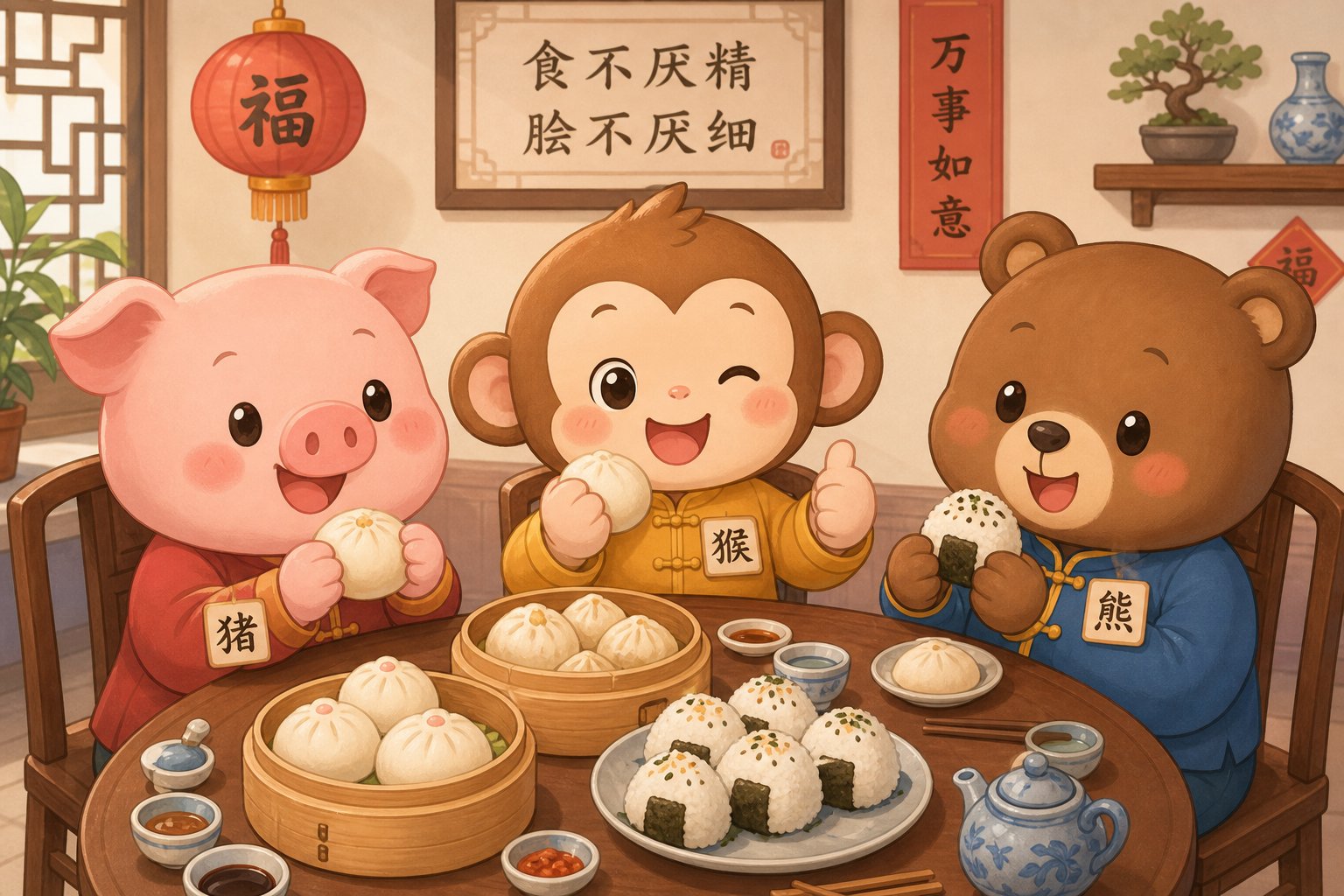
Take 猪 (zhu, first tone, sounds like "joo" with a flat high pitch), meaning "pig." Between romantic partners, calling someone 猪猪 (zhuzhu) or 小猪 (xiao zhu, "little pig") is genuinely affectionate. It implies the person is cute, pampered, maybe a little lazy in an endearing way. A girlfriend texting her boyfriend "我的小猪今天吃了什么?" ("What did my little piggy eat today?") is flirting. A stranger calling you 猪 on the street? That's a fight.
Then there's 龟 (gui, first tone, sounds like "gway"), meaning "turtle." In English, calling someone a turtle might suggest slowness. In Chinese, 龟 carries a much heavier punch. 龟公 (gui gong) historically referred to a brothel keeper, and 乌龟 (wugui) implies a man whose partner is unfaithful. Using turtle-based nicknames carelessly can escalate a conversation fast.
Other animal nicknames sit in safer territory. 猴子 (houzi, "monkey") teases someone who's hyperactive or skinny. 熊 (xiong, "bear") describes a clumsy or bumbling person. And 狐狸精 (huli jing, "fox spirit") targets someone seen as seductive or manipulative, almost always directed at women.
Food and Appearance Nicknames in Context
Food-based nicknames reflect China's deep culinary culture. Calling a round-faced friend 包子 (baozi, "steamed bun") or 汤圆 (tangyuan, "glutinous rice ball") is common and warmly received. These names reference shape without malice. Someone who eats constantly might earn 大胃王 (da wei wang, "Big Stomach King"), a nickname that Chinese speakers use to tease friends' appetites with genuine affection.
Appearance-based nicknames are where cultural sensitivity matters most. The term 胖子 (pangzi, "fatty" in Chinese) is used with surprising casualness among close friends. In Chinese social contexts, 胖子 between buddies who've known each other for years carries zero hostility. It's closer to a factual descriptor than an attack. You'll hear "胖子,过来吃饭" ("Fatty, come eat") shouted across a cafeteria without anyone flinching. From a stranger or in a formal setting, though, the same word becomes rude.
Trait-based nicknames round out the categories. 书呆子 (shu daizi, "bookworm") targets someone who studies obsessively. 话痨 (hua lao, "chatterbox") goes to the friend who never stops talking. 迷糊 (mihu, "scatterbrain") fits the person who forgets everything.
| Category | Chinese Characters | Pinyin | Literal Meaning | Actual Connotation | Appropriate Use |
|---|---|---|---|---|---|
| Animal | 小猪 | xiao zhu | Little pig | Cute, pampered | Romantic partners, very close friends |
| Animal | 猴子 | houzi | Monkey | Hyperactive, skinny | Friends, kids |
| Animal | 乌龟 | wugui | Turtle | Cuckold, insulting | Avoid unless intentionally provoking |
| Food | 包子 | baozi | Steamed bun | Round-faced, cute | Friends, family |
| Food | 大胃王 | da wei wang | Big Stomach King | Loves eating, hearty appetite | Friends, casual settings |
| Appearance | 胖子 | pangzi | Fatty | Neutral among close friends, rude from strangers | Only between close male friends |
| Appearance | 黑炭 | heitan | Black charcoal | Dark-skinned | Close friends only, can offend easily |
| Trait | 话痨 | hua lao | Chatterbox | Talks too much | Friends, family teasing |
| Trait | 书呆子 | shu daizi | Bookworm | Studies obsessively, socially awkward | Classmates, colleagues |
The pattern across all four categories is consistent: relationship closeness determines whether a nickname is chinese names funny or genuinely offensive. The exact same word shifts from playful to hurtful based entirely on who says it, to whom, and in what setting. A 胖子 between college roommates is bonding. A 胖子 from your boss is a lawsuit waiting to happen.
This context-dependence is what makes the tonal dimension of Chinese nicknames even more treacherous. When the wrong pronunciation enters the picture, even a well-chosen nickname can spiral into something nobody intended.
Tonal Mishaps That Turn Names Into Jokes
Context-dependence governs who can say what to whom. But there's another variable that no amount of social awareness can fully control: your pronunciation. In a tonal language like Mandarin, the pitch contour of a single syllable carries meaning. Shift it slightly and you're no longer calling your friend "little treasure." You might be calling them something that makes the whole room go silent.
Mandarin uses four tones plus a neutral tone. Tone 1 is high and flat. Tone 2 rises. Tone 3 dips then rises. Tone 4 drops sharply. Swap any of these and the word changes entirely. This is where some of the funniest chinese names are born, not through clever wordplay, but through pure tonal accident.
When Wrong Tones Create Accidental Comedy
Imagine you want to give someone an affectionate nickname using the word "kiss" but accidentally land on "ask" instead. Sounds harmless? In Mandarin, the difference between a romantic gesture and a polite question is one tone shift. These silly chinese moments happen constantly to learners and even to native speakers in noisy environments.
Here are real examples of how wrong tones create accidental comedy in nicknames and everyday speech:
- 吻 (wen3, third tone, dipping pitch) "kiss" vs. 问 (wen4, fourth tone, falling pitch) "ask" - You try to say "Can I ask you something?" (我可以问你吗? Wo keyi wen ni ma?) but produce tone 3 instead of tone 4. Suddenly you've said "Can I kiss you?" (我可以吻你吗?). The sentence structure is identical. Only the tone on that single syllable separates a normal question from an extremely forward proposition.
- 水饺 (shui3jiao3, both third tone) "dumplings" vs. 睡觉 (shui4jiao4, both fourth tone) "sleep" - The third tone is notoriously difficult because two consecutive third tones require a tone sandhi rule. Beginners often flatten both syllables into fourth tones. Ask "How much for a bowl of dumplings?" with the wrong tones and you've asked "How much for one night's stay?" The hilarious chinese names potential here is obvious: nickname someone 水饺 and mispronounce it, and you've just called them "Sleepy" instead of "Dumpling."
- 西服 (xi1fu2, first + second tone) "suit" vs. 媳妇 (xi2fu, second tone + neutral) "wife" - Tell a colleague "Your suit looks nicer than mine" with a tone slip and you've declared "Your wife looks better than mine." One produces a compliment about fashion. The other produces a very awkward silence, especially if your own spouse is within earshot.
- 收拾 (shou1shi, first + neutral tone) "to clean up" vs. 收尸 (shou1shi1, first + first tone) "to collect a corpse" - Offer to tidy the kitchen and accidentally announce you're here to handle the dead body. The difference is barely perceptible: a neutral tone versus a full first tone on the second syllable. Yet the meaning gap is enormous.
These examples show why the funniest chinese names often emerge from accidents rather than intention. A learner trying to use the cute nickname 宝贝 (bao3bei4, "baby") might land on a tone combination that sounds like something else entirely, producing a silly chinese nickname they never meant to create.
Intentional Tonal Wordplay in Nicknames
Native speakers don't just stumble into tonal humor. They weaponize it. Because Mandarin's limited syllable inventory means dozens of characters share the same pinyin, skilled nickname creators deliberately choose names that hover between two meanings depending on how you hear the tone.
A classic move: giving someone a nickname that sounds perfectly innocent at normal conversational speed but reveals a second, funnier meaning when you slow down and listen to the tones carefully. The nickname 大志 (da4 zhi4, "great ambition") sounds noble until someone points out it's tonally close to 大痔 (da4 zhi4, "big hemorrhoid"), which uses the exact same tones but a different character. Spoken aloud, they're indistinguishable. Written down, one is inspirational and the other is a medical condition.
This kind of intentional ambiguity is what separates casual teasing from genuinely clever wordplay. The best tonal nickname jokes work precisely because both interpretations are grammatically plausible in context. The listener's brain toggles between meanings, and that moment of recognition is where the laugh happens.
In tonal languages, humor lives in the gap between what you meant to say and what your pitch actually communicated. One tone is the difference between a love name and a lunch order.
The tonal dimension adds a layer of risk to every Chinese nickname that simply doesn't exist in English. You can craft the perfect character combination, choose a culturally appropriate category, and still have the whole thing collapse into embarrassment because your third tone wasn't dipping enough. That instability is part of what makes these names so entertaining, and it's also why the internet generation has found entirely new ways to play with nickname humor beyond traditional tonal tricks.

Internet and Social Media Nicknames Chinese Speakers Actually Use
Tonal wordplay and character substitution have been around for centuries. But the internet compressed nickname evolution into hyperspeed. Chinese social media platforms breed new nickname formats weekly, and the humor mechanics have shifted dramatically from what older generations recognize. If traditional nicknames relied on linguistic cleverness, modern ones run on meme literacy, platform culture, and speed of reference.
Spend five minutes scrolling Douyin comments or Weibo threads and you'll encounter nicknames that make zero sense unless you're plugged into the specific cultural moment that spawned them. This is where cool chinese nicknames live now, not in careful character selection but in rapid-fire internet shorthand.
Weibo and Douyin Nickname Trends
Each platform has its own naming DNA. Weibo, functioning like a hybrid of Twitter and Reddit, favors nicknames built from trending hashtags and viral moments. Douyin (the Chinese version of TikTok) generates nicknames tied to audio clips, dance trends, and visual memes. WeChat, being more private, preserves slightly more traditional nickname patterns but still absorbs internet slang at a rapid pace.
Here are the dominant internet nickname formats Gen Z Chinese speakers use right now:
- Emoji-character hybrids (e.g., 小废物🐱) - Combining self-deprecating text with a cute emoji. 小废物 (xiao feiwu, "little waste/useless person") paired with a cat face turns an insult into an ironic badge of honor. The emoji softens the text, signaling that the speaker is joking about their own laziness or incompetence.
- Alphabet-number codes (e.g., 2G少女, 9527) - 2G少女 (2G shaonv, "2G girl") mocks someone who's slow to catch on, referencing outdated mobile network speeds. Number codes like 9527 reference specific movie scenes (in this case, Stephen Chow's film) and function as insider jokes that double as nicknames.
- Self-deprecating occupation titles (e.g., 打工人, 干饭人) - 打工人 (dagong ren, "working person") became a viral identity label in 2020, used as both a nickname and a rallying cry for exhausted office workers. 干饭人 (ganfan ren, "rice-eating person") celebrates someone whose main life achievement is eating enthusiastically. These started as memes and solidified into actual nicknames friends call each other.
- Pinyin abbreviation nicknames (e.g., YYDS, XSWL) - YYDS stands for 永远的神 (yongyuan de shen, "eternal god"), used to hype someone up. XSWL means 笑死我了 (xiao si wo le, "laughing myself to death"). Friends assign these as shorthand nicknames in group chats: "You're my YYDS" functions like calling someone your MVP.
- Food-chain hierarchy names (e.g., 卷王, 摆烂王) - 卷王 (juan wang, "involution king") nicknames the overachiever who makes everyone else look bad. 摆烂王 (bai lan wang, "rot king") is the opposite: someone who's proudly given up trying. Both are used affectionately within friend groups to label each person's role.
- Celebrity-derived format names (e.g., X哥/X姐 + trait) - Taking a celebrity's viral moment and applying its structure to friends. When a Douyin creator's catchphrase goes viral, the phrase format becomes a nickname template that millions adopt and personalize.
What makes these funny asian nicknames distinct from traditional ones is their shelf life. A nickname format might dominate WeChat group chats for three weeks, then vanish entirely once the meme cycle moves on. The humor is disposable by design, which means staying current requires constant platform engagement.
Generational Gaps in Chinese Nickname Humor
The contrast with older generations is stark. Parents and grandparents built nicknames to last. A child nicknamed 小胖 (Xiao Pang, "Little Fatty") at age five might carry that name into their forties. The humor was gentle, stable, and rooted in observable physical traits or birth-order patterns (老大, 老二, 老三 for first, second, third child).
Gen Z treats nicknames as rotating content. The same person might be 打工人 in January, 摆烂王 by March, and something entirely new by summer, all depending on which meme best captures their current mood or life situation. The nickname isn't a fixed identity marker. It's a status update.
This generational split also shows up in how asian nicknames function across different Chinese-speaking communities online. Older diaspora communities on Facebook or family WeChat groups still favor the prefix-based patterns (小X, 阿X) discussed earlier. Younger users on Xiaohongshu or Douyin find those formats painfully outdated, the equivalent of your dad using slang from 2005.
There's also a tonal shift in what's considered funny. Traditional nickname humor punched outward: you gave someone a name based on their appearance or behavior. Internet-era humor punches inward. The funniest nicknames are self-assigned, self-deprecating, and deliberately pathetic. Calling yourself 社恐本恐 (she kong ben kong, "social anxiety personified") or 废柴 (feichai, "deadwood/useless person") signals relatability rather than weakness. The joke is communal: everyone's a mess, and the nickname proves you're in on it.
Platform-specific naming conventions also mean that chinese nicknames in english translation lose even more context than traditional ones. Explaining why 2G少女 is funny requires explaining Chinese mobile network history, generational tech literacy gaps, and the specific Weibo post that made it viral. The humor is layered not in characters and tones, but in shared digital experience.
This rapid evolution raises a practical question: if nicknames are this context-dependent and culturally specific, how do they translate when Chinese internet users turn their creative energy toward naming people outside their own culture? Western celebrities, as it turns out, receive some of the most inventive and baffling nickname treatments of all.
Hilarious Chinese Nicknames for Western Celebrities
Chinese internet users don't just nickname each other. They turn their creative energy outward, assigning Western celebrities names that range from affectionate to absurd. These fan names for celebrities spread across Weibo and Douyin at lightning speed, and most Western stars have no idea what they're being called. The results are some of the most inventive funny names for celebrities you'll find in any language.
The naming logic falls into two camps: phonetic transliterations that accidentally produce hilarious meanings, and deliberate meaning-based nicknames that capture a celebrity's essence through Chinese cultural references. Both reveal how chinese famous names get constructed when fans localize foreign stars into their own linguistic world.
Celebrity Transliteration Gone Hilariously Wrong
When a Western name gets transliterated into Mandarin, each syllable maps onto a Chinese character. The goal is phonetic similarity, but since every character carries its own meaning, the result often reads like an unintentional joke.
Leonardo DiCaprio's first name gets transliterated starting with 李 (Li), which means "plum." Chinese fans ran with it, calling him 小李子 (Xiao Lizi), or "Little Plum." One of Hollywood's most intense actors, reduced to a small fruit. The nickname stuck so thoroughly that even Chinese news outlets use it casually.
Timothee Chalamet fared similarly. The "Cha" in Chalamet sounds like 茶 (cha, "tea"), and fans found his appearance sweet. Result: 甜茶 (Tian cha), "Sweet Tea." Billie Eilish became 碧梨 (bili, "green pear") because "Billie" approximates the Mandarin word for that fruit. These transliteration accidents are funny precisely because the celebrity has zero connection to the food item. The sound just happened to land there.
Nicki Minaj's case is the boldest. "Minaj" sounds close to 麻辣鸡 (malaji), meaning "numbing spicy chicken," a reference to Sichuan cuisine's signature flavor profile. The nickname captures her fiery persona so perfectly that it feels intentional, even though it started as a phonetic coincidence.
Creative Meaning-Based Celebrity Nicknames
The second category skips sound entirely and builds nicknames from a celebrity's image, behavior, or career moments. These require cultural context to appreciate, which is why they confuse Westerners completely.
Taylor Swift is called 霉霉 (Meimei), literally "Moldy Moldy." The word 霉 (mei) means mold or bad luck. Chinese fans coined it during her early career struggles with Billboard chart positions and public relationship drama. Despite the meaning, it's used with pure affection. Ariana Grande in chinese internet culture is 小牛牛 (Xiao niuniu), or "Little Cool Cool," positioning her as a younger version of Mariah Carey, who holds the title 牛姐 (Niu jie, "Cool Sister"). The slang word 牛 means "awesome," not literally "cow," though the double meaning adds humor.
Katy Perry became 水果姐 (Shuiguo jie, "Fruit Sister") thanks to her fruit-themed stage costumes. Scarlett Johansson earned 水饺 (shuijiao, "soup dumpling") after burning her tongue on one during her first China visit. And Ryan Reynolds is 小贱贱 (Xiao jianjian, "Little Cheeky Cheeky") because of his Deadpool persona.
| Celebrity | Chinese Nickname | Pinyin | Literal Meaning | Why It's Funny in Chinese Culture |
|---|---|---|---|---|
| Leonardo DiCaprio | 小李子 | Xiao Lizi | Little Plum | Transliteration accident; serious actor becomes a tiny fruit |
| Taylor Swift | 霉霉 | Meimei | Moldy Moldy | World's biggest pop star nicknamed after bad luck and fungus |
| Nicki Minaj | 麻辣鸡 | Malaji | Numbing Spicy Chicken | "Minaj" sounds like a Sichuan dish; matches her fiery image |
| Katy Perry | 水果姐 | Shuiguo jie | Fruit Sister | Fruit costumes made literal; 姐 adds respectful familiarity |
| Ariana Grande | 小牛牛 | Xiao niuniu | Little Cool Cool | Positioned as Mariah Carey's "little sister" in talent |
| Mariah Carey | 牛姐 | Niu jie | Cool Sister | 牛 means "awesome" in slang, not "cow"; honors her vocals |
| Britney Spears | 小甜甜 | Xiao tiantian | Little Sweetie | Reduplication makes it sound like a candy brand name |
| Scarlett Johansson | 水饺 | Shuijiao | Soup Dumpling | Based on a real tongue-burning incident in China |
The cross-cultural humor gap here is real. A Western audience hears "Moldy Moldy" and assumes hostility. Chinese fans hear 霉霉 and feel warmth, because the reduplication pattern signals affection regardless of the base word's meaning. Similarly, calling someone "Spicy Chicken" sounds like an insult in English but reads as a compliment about intensity in Chinese. The disconnect happens because Western listeners process the literal translation while missing the cultural layer, the formation patterns, slang meanings, and tonal associations that chinese famous names carry beneath the surface.
These celebrity nicknames also reveal something about famous people nicknames in general within Chinese internet culture: they're acts of adoption. Giving a foreign star a Chinese nickname means claiming them as part of your cultural conversation. It's less about mockery and more about belonging.
Celebrity chinese nicknames follow national trends, but they also vary by region. A Cantonese-speaking fan community might coin an entirely different name for the same star, because the phonetic overlaps shift when the dialect changes. That regional dimension adds yet another layer to how Chinese nickname humor works across the language's many varieties.
Regional Differences in Chinese Nickname Humor
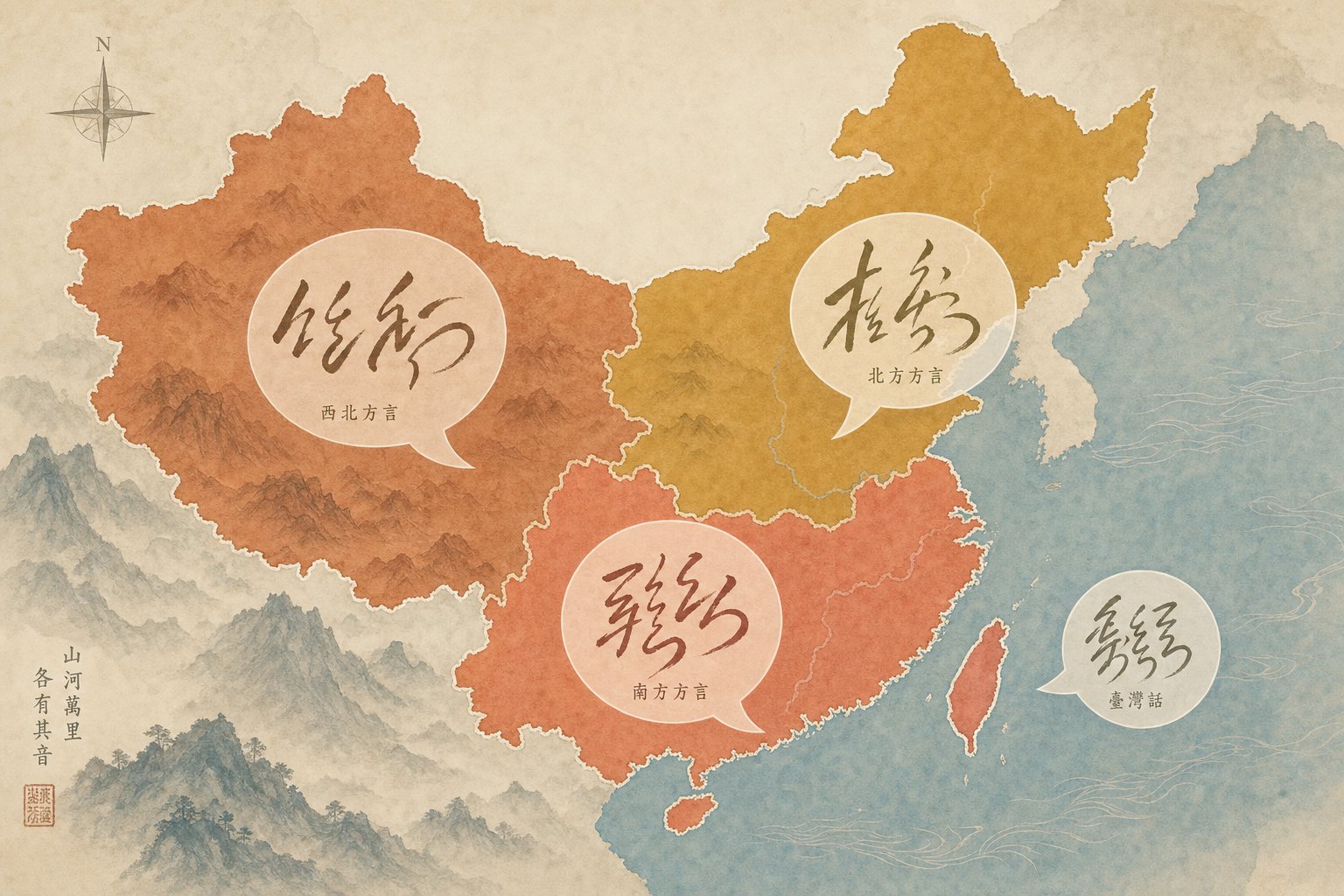
A Cantonese speaker in Guangzhou and a Mandarin speaker in Beijing might share the same written language, but their nickname humor barely overlaps. Dialect changes everything: the available sounds, the tonal system, the slang vocabulary, and even which words qualify as puns. A nickname in chinese that kills in one region can fall completely flat, or worse, mean something offensive, three provinces away.
This isn't just an accent issue. Cantonese has six tones (some linguists count nine). Mandarin has four plus a neutral. Taiwanese Mandarin borrows vocabulary from Hokkien and Japanese. Each system creates a different playground for wordplay, which means the same comedic intent produces entirely different nicknames depending on where you are.
Cantonese Nickname Humor vs. Mandarin
Cantonese nicknames lean harder into crude phonetic puns because the dialect's expanded tone and sound inventory creates more homophone collisions. The extra tones mean more opportunities for a name to accidentally overlap with something vulgar or absurd.
Here's how the same nickname concept plays out differently across dialects:
- "Fatty" concept - Mandarin uses 胖子 (pangzi). Cantonese speakers say 肥仔 (fei zai) or 肥妹 (fei mui). The Cantonese version sounds harsher to Mandarin ears because 肥 (fei) literally means "fat" in the greasy, animal-fat sense, while 胖 carries a slightly softer "plump" connotation. Yet among Cantonese friends, 肥仔 is just as casual and affectionate as 胖子 is up north.
- "Little" prefix - Mandarin defaults to 小 (xiao). Cantonese nicknames favor 细 (sai) for "small" or use 阿 (a) far more frequently. 阿猪 (a zyu, "Ah Pig") is standard Cantonese affection. In Mandarin, the 阿 prefix sounds distinctly southern and carries a regional flavor that northern speakers find quaint or old-fashioned.
- "Stupid" teasing - Mandarin friends might call someone 笨蛋 (bendan, "dumb egg"). Cantonese speakers reach for 戆居 (ngong geoi) or the iconic 傻佬 (so lou, "silly guy"). These Cantonese terms have no direct Mandarin equivalent, and their humor relies on the specific mouth-feel of Cantonese syllables that simply don't exist in the northern sound system.
- Homophone puns - Cantonese nicknames exploit the dialect's unique sound overlaps. The number 9 (九, gau2) sounds identical to a vulgar Cantonese word, so any nickname incorporating "nine" carries a hidden joke that Mandarin speakers completely miss. Similarly, 咸湿 (haam sap, "salty wet") means "perverted" in Cantonese slang but translates to nothing meaningful in Mandarin.
Cantonese nicknames also tend to be blunter. Where nickname mandarin patterns soften teasing through reduplication or cute prefixes, Cantonese humor often goes direct. The dialect's cultural reputation for frankness extends into its naming conventions.
Taiwanese Mandarin Nickname Quirks
Taiwanese Mandarin occupies a middle ground. It uses the same four-tone Mandarin system but borrows heavily from Hokkien (Taiwanese dialect) and Japanese loanwords, creating nickname possibilities that mainland speakers find baffling.
- Japanese-influenced cuteness - Taiwanese nicknames frequently add the suffix 醬 (jiang, from Japanese "-chan") to names. 小明醬 (Xiaoming jiang) sounds natural in Taipei but bizarre in Beijing. The Japanese borrowing adds a layer of kawaii-style cuteness that mainland Chinese nickname culture doesn't traditionally embrace.
- Hokkien inserts - Taiwanese speakers drop Hokkien words into Mandarin nicknames for comic effect. 白目 (bai mu, from Hokkien "bat-bak") means someone who can't read social cues. It functions as a nickname in Taiwan but draws blank stares on the mainland.
- Softer tone delivery - Taiwanese Mandarin's overall softer, more melodic delivery changes how nicknames land. The same characters spoken in Taiwanese Mandarin sound gentler than their Beijing Mandarin equivalents. A teasing nickname that sounds aggressive in a northern accent feels playful in a Taiwanese one, purely because of prosodic differences.
- Political humor layer - Taiwan's distinct political environment generates nicknames that reference local media figures and politicians in ways that don't cross the strait. These region-locked references mean entire categories of Taiwanese nickname humor are invisible to mainland audiences.
The regional dimension matters practically. If you're learning to use a nickname in chinese conversation, knowing your audience's dialect background determines whether your joke connects or confuses. A perfectly crafted Cantonese pun nickname deployed in a Shanghai group chat won't just miss. It'll need a footnote.
All these regional variations share one thing: they follow the same structural patterns of prefixes, reduplication, and character substitution covered earlier. The toolkit is universal. The raw materials change by region. Which raises the practical question: if you wanted to build your own nickname using these patterns, where would you actually start?
How to Create Your Own Funny Chinese Nickname
The toolkit is laid out: prefixes, reduplication, character substitution, tonal wordplay, regional flavor. The question is how to actually assemble these pieces into a nickname that's genuinely funny without accidentally offending someone or sounding like a textbook exercise. Creating a nickname chinese speakers would actually laugh at requires a process, not just random character selection.
Think of it like cooking. You know the ingredients exist. You've seen the dishes other people make. But throwing everything into a wok at once produces chaos, not comedy. The steps below walk you through building a nickname that works.
Step-by-Step Nickname Creation Guide
- Choose your base material. Every nickname starts with a foundation. You have three options: the person's actual name (or a syllable from it), a physical or personality trait, or an interest or habit. Using a name syllable gives you phonetic raw material for puns. Using a trait gives you descriptive power. Using an interest makes the nickname feel personal rather than generic. Pick one. For example, if your friend's name contains the syllable "wei," that's your starting point. If they're always cold, that's a trait base. If they eat ramen daily, that's a habit base.
- Select a formation method. Match your base to the pattern that creates the best comedic effect. A trait base pairs naturally with a prefix: 小冷 (Xiao Leng, "Little Cold") for the friend who's always freezing. A name syllable works best with character substitution: swap 伟 (wei, "great") for 胃 (wei, "stomach") and suddenly their name references their appetite. A habit base suits reduplication or compound construction: 面面 (mianmian, "noodle noodle") for the ramen addict.
- Check for unintended meanings. This is where most foreigners skip ahead and regret it. Every character combination in Mandarin potentially overlaps with something else. Say your creation out loud. Then say it faster. Then say it with slightly different tones. Does it sound like a body part, a curse word, or a reference to death? The character 死 (si, "death") lurks behind many innocent-sounding combinations. Homophones are a minefield: "Si" (to think) combined with "Wang" (prosperous) produces something that sounds like 死亡 (siwang, "death"). Always run your creation past a dictionary check for sound-alike problems.
- Test relationship appropriateness. Ask yourself: would I use this nickname in front of this person's mother? Their boss? A stranger? If the answer is no to any of those, you've calibrated the intimacy level. Animal nicknames (小猪, 猴子) require close friendship. Appearance nicknames (胖子, 黑炭) demand years of trust. Trait nicknames (书呆子, 话痨) sit in the middle. Match the nickname's intensity to the actual closeness of your relationship, not the closeness you wish you had.
- Get a native speaker gut-check. Even after all four steps above, run your creation past someone who grew up speaking the language. They'll catch regional connotations, generational associations, and tonal problems that no dictionary reveals. A name that looks clean on paper might remind a native speaker of a viral meme, a political figure, or a children's cartoon character in ways you can't predict.
Follow these steps in order. Skipping step three is how you end up with names for chinese people that sound creative to you but mortifying to them.
Mistakes to Avoid When Using Chinese Nicknames
Foreigners attempting funny asian names in Chinese tend to fall into the same traps repeatedly. These aren't obscure pitfalls. They're the greatest hits of nickname failure:
- Using nicknames too early in a relationship. In English, you might nickname a coworker after a week. In Chinese social dynamics, casual nicknames signal established intimacy. Deploying one before the relationship supports it feels presumptuous, not playful. Wait until the other person nicknames you first, or until your friendship has weathered at least a few shared meals.
- Choosing characters based only on how they look. A character might appear elegant or funny on paper, but if you can't pronounce it correctly, the nickname dies on delivery. Prioritize characters you can actually say with the right tone. A simple nickname spoken confidently beats a clever one butchered in pronunciation.
- Ignoring generational context. Calling a 50-year-old colleague 打工人 (dagong ren) as a joke might confuse them entirely because the meme reference doesn't register. Similarly, using 阿X patterns with Gen Z friends can feel patronizing. Match your nickname's cultural era to your audience's age bracket.
- Translating English nicknames directly. "Buddy," "champ," or "big guy" don't map onto Chinese nickname patterns. Direct translation produces awkward constructions that no native speaker would use. Instead of translating your English nickname instinct, rebuild from scratch using Chinese formation methods.
- Forgetting that written and spoken nicknames differ. A nickname that works beautifully in a WeChat message might sound strange spoken aloud, and vice versa. Character substitution jokes only land in text. Tonal puns only work in speech. Know which medium your nickname is designed for.
- Applying the same nickname across regions. As covered earlier, a Cantonese-friendly nickname can misfire in a Mandarin-speaking context. If your social circle spans dialect groups, either stick to universally understood patterns or maintain separate nicknames for different audiences.
The underlying principle behind all these mistakes is the same: nicknames for asians, like nicknames in any culture, are social tools first and linguistic objects second. The cleverest wordplay in the world fails if it violates the social contract between speaker and listener. Get the relationship right, and even a simple 小X nickname lands perfectly. Get it wrong, and your elaborate four-character pun just makes everyone uncomfortable.
Building a nickname is the creative part. Knowing when and where to actually use it is the part that determines whether people laugh with you or stare in confused silence.

Which Funny Nickname to Use and When
You've built the nickname. You've checked for unintended meanings and confirmed it won't accidentally reference someone's grandmother's funeral. The final variable is context. In Chinese social dynamics, the same nickname can function as a bonding ritual or a relationship-ending insult depending entirely on the situation where you deploy it. Knowing which funny chinese nicknames belong in which setting is the difference between getting a laugh and getting ghosted.
Chinese speakers navigate an unspoken hierarchy of nickname appropriateness that foreigners rarely encounter in English. The rules aren't written anywhere, but violating them produces immediate social consequences. A nickname that's perfect for a late-night group chat becomes deeply inappropriate at a family dinner. One that charms a romantic partner would horrify a child's teacher.
Nicknames for Friends and Partners
Friend-teasing nicknames thrive on shared history. The funnier the nickname, the longer the friendship it implies. When a college roommate calls you 笨蛋 (bendan, "dumb egg"), it signals years of accumulated trust. The insult is the proof of closeness. You'll hear exchanges like:
"笨蛋,快点过来帮我搬东西" ("Dumb egg, hurry up and help me move stuff"). No offense taken. The nickname functions as a verbal handshake confirming the friendship is solid enough to absorb teasing.
Between close male friends, appearance-based nicknames like 胖子 (pangzi, "fatty") or 大头 (datou, "big head") flow freely. The rule: if you'd lend them money without asking when they'd pay it back, you can call them 胖子. If you wouldn't, stick to their actual name.
Romantic nicknames operate on different fuel. Partners use diminutives and animal references that would sound absurd between friends. A girlfriend texting "小猪猪,你想我了吗?" ("Little piggy piggy, did you miss me?") is standard couple behavior. The reduplication pattern signals intimacy. How to call someone hot in chinese flirting contexts often involves ironic understatement: 小傻瓜 (xiao shagua, "little silly melon") or 笨笨 (benben, "stupid stupid") communicate attraction through playful insult. The logic is counterintuitive to English speakers, but calling your partner "stupid" in Chinese can be more romantic than calling them beautiful, because it implies comfort and zero pretense.
For kids, the nickname register shifts entirely. Parents and grandparents favor food-based cuteness: 小汤圆 (xiao tangyuan, "little rice ball"), 小吃货 (xiao chihuo, "little foodie"), or 崽崽 (zaizai, "baby"). These names are warm, round-sounding, and carry zero edge. A parent might say "崽崽乖,吃完饭再玩" ("Baby, be good, finish eating before you play"). The nickname reinforces the protective, nurturing dynamic.
Internet banter with strangers follows its own logic entirely. Online, self-deprecating nicknames dominate. You don't nickname strangers directly, you nickname yourself and let others react. Calling yourself 社恐患者 (shekong huanzhe, "social anxiety patient") or 咸鱼 (xianyu, "salted fish") in a forum bio invites connection through shared vulnerability. Nicknaming a stranger directly online, especially with appearance-based terms, crosses a line that even anonymous platforms enforce through community backlash.
Context Rules That Keep You Out of Trouble
The social mechanics behind these distinctions aren't arbitrary. They follow a consistent logic that applies across all categories of funny oriental names and nickname patterns:
Intimacy must precede the nickname, never the reverse. You don't build closeness by assigning a nickname. You earn the right to use one after closeness already exists. Attempting to shortcut this process, using a teasing nickname to force familiarity, reads as presumptuous in Chinese culture. The nickname confirms a relationship stage. It doesn't create one.
Public versus private settings also shift what's acceptable. A nickname that's fine in a private WeChat conversation becomes awkward when spoken in front of the person's parents or colleagues. 老婆 (laopo, "wifey") between a dating couple at home is sweet. Shouting it across a formal company dinner makes everyone uncomfortable. The general rule: the more people present, the more conservative your nickname choice should be.
Age dynamics add another layer. Younger people nicknaming older people requires extreme caution. You can call a peer 老铁 (laotie, "old iron/close buddy") freely, but using casual nicknames upward toward elders or superiors violates hierarchical norms that Chinese social structure still enforces. The exception: when an older person explicitly invites casual address, which signals they're granting permission to cross that boundary.
Understanding these rules helps explain why lists of funny oriental names without context guidance are essentially useless. A nickname divorced from its appropriate setting is just a word. Placed correctly, it becomes social glue.
| Situation | Nickname | Pinyin | Tone/Feel | Appropriateness Level |
|---|---|---|---|---|
| Friend teasing | 笨蛋 | bendan | Playful insult | Close friends only; years of trust required |
| Friend teasing | 老铁 | laotie | Warm, loyal | Peers of similar age; casual settings |
| Friend teasing | 大头 | datou | Light mockery | Close male friends; never with acquaintances |
| Romantic | 小猪猪 | xiao zhuzhu | Cutesy, intimate | Partners only; private or semi-private |
| Romantic | 小傻瓜 | xiao shagua | Affectionate tease | Dating couples; signals comfort |
| Romantic | 宝宝 | baobao | Tender, sweet | Partners or very young children |
| Kids | 小汤圆 | xiao tangyuan | Warm, food-cute | Parents to children; grandparents to grandkids |
| Kids | 崽崽 | zaizai | Protective, soft | Family only; signals nurturing bond |
| Kids | 小吃货 | xiao chihuo | Playful, gentle | Any adult to a child they know well |
| Online strangers | 咸鱼 | xianyu | Self-deprecating | Self-assigned only; never label strangers |
| Online strangers | 打工人 | dagong ren | Communal irony | Self-label or mutual use among peers |
| Online strangers | 社恐患者 | shekong huanzhe | Vulnerable humor | Bio/profile use; invites connection |
The funniest asian names and nicknames aren't the ones with the cleverest wordplay. They're the ones deployed at exactly the right moment, in exactly the right relationship, with exactly the right audience. A perfectly timed 笨蛋 between lifelong friends carries more humor and warmth than the most elaborate four-character pun dropped into the wrong conversation.
Chinese nickname culture ultimately rewards social intelligence over linguistic cleverness. You can memorize every formation pattern, master every tone, and catalog every regional variation. But the real skill is reading the room, knowing which name fits which moment, and understanding that the same word changes meaning entirely based on who's listening. That's what makes these nicknames endlessly fascinating: they're not just language. They're relationship barometers, measuring closeness, trust, and shared history in a single spoken word.
Frequently Asked Questions About Funny Chinese Nicknames
1. Why are Chinese nicknames funnier than English ones?
Chinese nicknames operate on three humor dimensions simultaneously: visual (how characters look when written), phonetic (how tones and sounds interact to create puns), and cultural (the associations they trigger for native speakers). English nicknames typically rely on a single mechanism like rhyming or physical traits. Because Mandarin is a tonal language with thousands of homophones, a single syllable can map to dozens of different characters with wildly different meanings, creating layered jokes that simply cannot exist in non-tonal languages.
2. What does it mean when a Chinese person calls you Xiao Zhu (little pig)?
Being called 小猪 (xiao zhu, little pig) in Chinese is almost always affectionate rather than insulting. Between romantic partners, it implies the person is cute, pampered, and endearing. Between very close friends, it carries similar warmth. The key factor is relationship closeness: from a partner or intimate friend, it is flirtatious or playful. From a stranger or someone you barely know, the same word becomes rude. Context and relationship depth determine whether any Chinese animal nickname is a compliment or an offense.
3. How do Chinese internet users create nicknames for Western celebrities?
Chinese fans use two main methods. The first is phonetic transliteration, where syllables of a Western name get mapped to Chinese characters that sound similar but carry their own meanings, often producing accidental humor. Leonardo DiCaprio became 小李子 (Little Plum) because 'Li' sounds like part of his name. The second method is meaning-based, where fans create nicknames from a celebrity's image or viral moments. Katy Perry became 水果姐 (Fruit Sister) due to her fruit-themed costumes. These nicknames spread rapidly on Weibo and Douyin and become the standard way Chinese audiences refer to foreign stars.
4. Can mispronouncing tones in Chinese accidentally create offensive nicknames?
Yes, and it happens frequently. Mandarin's four tones mean that the same syllable pronounced with different pitch contours becomes an entirely different word. Saying 水饺 (dumplings) with fourth tones instead of third tones produces 睡觉 (sleep). Mixing up tones on 西服 (suit) can produce 媳妇 (wife). When creating or using Chinese nicknames, a slight tonal error can transform an affectionate name into something embarrassing or vulgar. Native speakers also exploit this intentionally, crafting nicknames that hover between two meanings depending on how carefully the listener pays attention to tones.
5. What are the rules for using funny nicknames in Chinese social settings?
The core rule is that intimacy must precede the nickname. You earn the right to use a teasing name after closeness already exists, not before. Public settings require more conservative choices than private ones. Age hierarchy matters: nicknaming someone older or senior requires explicit permission. Animal and appearance-based nicknames demand years of established trust. Online, self-deprecating nicknames are safe, but directly nicknaming strangers crosses social boundaries. The general principle is that the same nickname shifts from bonding to offensive based entirely on who says it, to whom, and in what setting.