Understanding the Chinese Character for Good
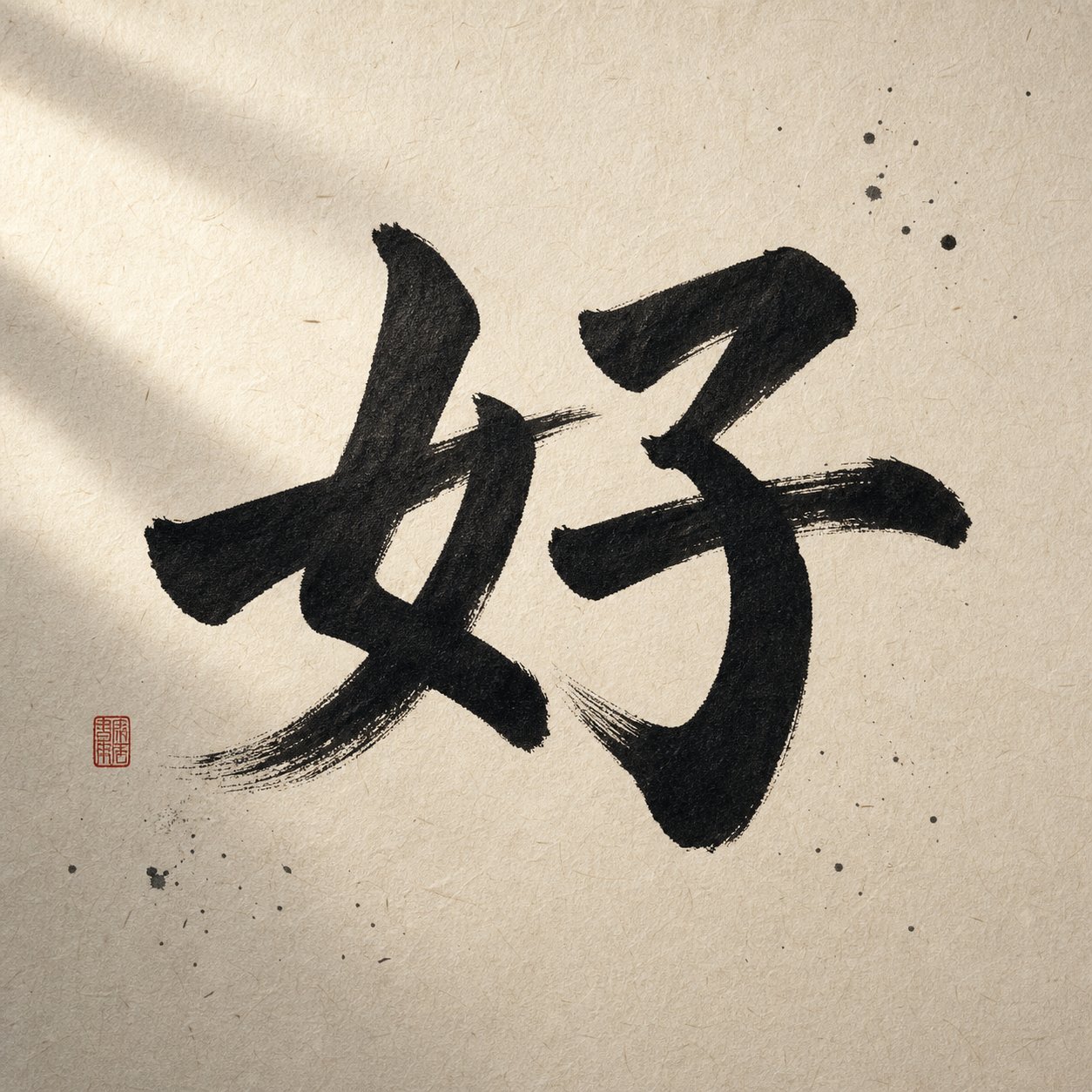
You've spotted a character on a piece of jewelry, a restaurant sign, or maybe someone's tattoo, and you want to know what it means. If the character you're looking at is 好, you've found the single most common way to say good in Chinese. Pronounced hǎo (rhymes roughly with "how"), this six-stroke character appears everywhere in daily Mandarin, from casual greetings to formal writing.
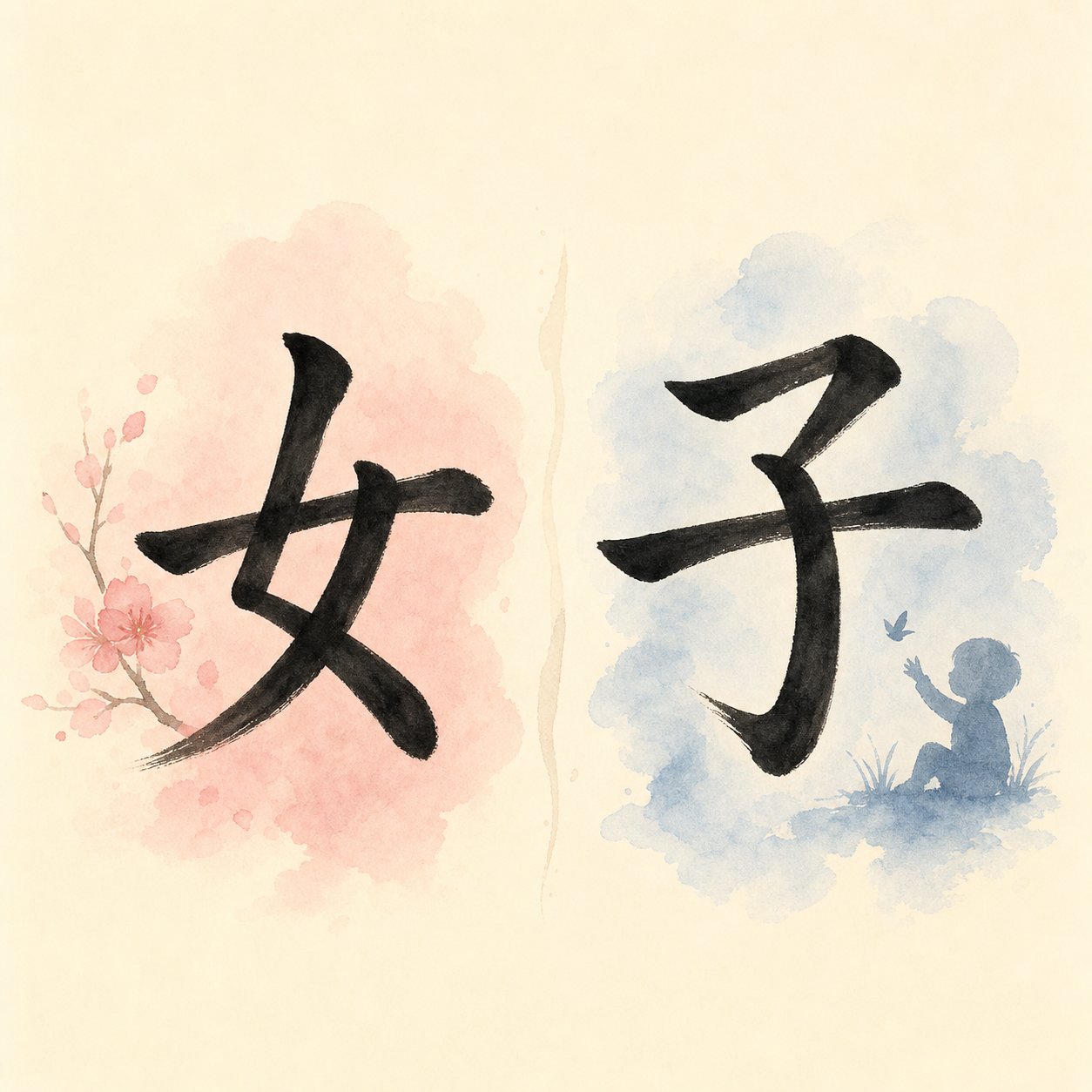
好 (hǎo): good, well, fine, okay. A compound ideograph combining the radicals for "woman" (女) and "child" (子). It is the primary character used to express general goodness, approval, or satisfactory quality in Mandarin Chinese.
What Does Good Mean in Chinese
The short answer is 好. It functions as an adjective, an adverb, and even a conversational particle depending on context. When someone asks how you're doing, you reply 我很好 (wǒ hěn hǎo), meaning "I'm good." When you greet a person, you say 你好 (nǐ hǎo), literally "you good," the standard hello in Mandarin. Data from linguist Jun Da's frequency analysis of classical and modern Chinese texts ranks 好 as the 81st most frequently used character overall, placing it firmly among the essential building blocks of the language.
But the good chinese character meaning goes deeper than a single translation. Unlike English, where "good" is one word with flexible usage, Chinese distributes the concept of goodness across several characters, each carrying a distinct shade of meaning. 好 covers everyday, general-purpose goodness. Other characters handle moral virtue, superior quality, or excellence in specific domains.
Why One Character Carries Many Meanings
Chinese is a logographic language, meaning each character represents a unit of meaning rather than a sound. This design allows a single character like 好 to stretch across multiple roles. It can describe food (好吃, delicious), appearance (好看, good-looking), or even intensity (好大, so big). Context tells the reader or listener which meaning applies.
For learners exploring good in Chinese language resources, this flexibility is both a challenge and a reward. One character unlocks dozens of phrases. And for anyone verifying a character seen on artwork or a product label, knowing that 好 simply means "good" or "well" provides immediate clarity.
Still, the real story behind 好 lives inside its structure. Two smaller characters, woman and child, sit side by side to form the idea of goodness. That composition raises a question worth exploring: why would ancient Chinese scribes choose those two elements to represent something positive?
Breaking Down the Radicals Inside 好
Chinese characters are not random drawings. Most are built from smaller components called radicals, each carrying its own meaning. The hao Chinese character is a textbook example: split it down the middle and you get two independent characters, 女 on the left and 子 on the right. Together they form a compound ideograph, a character whose meaning emerges from the combination of its parts.
The Woman and Child Radicals Explained
Before understanding the whole, you need to know the pieces. Each radical in 好 functions as a standalone character with its own pronunciation, stroke count, and family of related characters.
| Radical | Pinyin | Meaning | Strokes | Example Characters |
|---|---|---|---|---|
| 女 | nǚ | woman, female | 3 | 妈 (mother), 姐 (older sister), 妻 (wife), 如 (like, as if) |
| 子 | zǐ | child, son, seed | 3 | 孝 (filial piety), 学 (study), 孙 (grandchild), 字 (character) |
The 女 radical appears in dozens of characters related to women, family roles, and feminine qualities. Recognizing it instantly tells you the character likely involves a person or a relationship. The 子 radical shows up in characters tied to children, learning, and generation. When you see these two radicals side by side in the Chinese character hao, the traditional reading is straightforward: a woman beside her child represents something good.
Scholarly Debate on the Origins of 好
The most widely taught interpretation says that a mother with her child symbolizes happiness, harmony, and therefore goodness. This reading aligns with Confucian family values, where the bond between parent and child sits at the center of social order.
However, scholars examining oracle bone inscriptions have proposed alternative theories. Some paleographers argue the earliest forms of 好 depict a woman kneeling while holding or embracing a baby, making it less an abstract pairing and more a literal scene of maternal affection. Others suggest the original hao meaning in Chinese may have been closer to "beautiful" or "attractive" rather than "good," since early uses of the character often described physical appearance before broadening into general approval.
A third theory points out that 女 and 子 together could represent the idea of fertility and continuation of the family line, concepts ancient societies considered the highest form of fortune. Under this reading, the good in Chinese character 好 is not moral goodness but existential completeness: having descendants meant life was going well.
Regardless of which origin story you favor, the practical takeaway remains the same. The character's internal logic gives learners a visual mnemonic: picture a woman and child together, and you recall that 好 means good. That built-in story is exactly what makes Chinese radicals so useful for memory, and it hints at how the character's visual form shifted across centuries of script evolution.
How to Say Good in Chinese with Correct Tones
Knowing what 好 looks like on paper is one thing. Saying it correctly is another challenge entirely. Mandarin is a tonal language, meaning the pitch pattern you use when pronouncing a syllable changes the word itself. The syllable "hao" carries two completely different meanings depending on whether you use the third tone or the fourth tone. Get the tone wrong and you're no longer saying "good" at all.
Tones in Mandarin function much like vowels do in English. As Hacking Chinese explains, if you change the tone, you change the word, just as swapping a vowel in English turns "bid" into "bad" or "bed." For anyone learning how to say good in Chinese, mastering this distinction is non-negotiable.
Third Tone hǎo for Good and Well
The pronunciation you'll use most often is hǎo, spoken with Mandarin's third tone. Imagine your voice dipping low and then rising slightly at the end, like the shape of a shallow valley. In practice, especially in the middle of a sentence, native speakers often just go low without the final rise, producing what linguists call a "half third tone."
Here's a step-by-step guide to nailing the sound:
- Start at a mid-low pitch, roughly where your voice sits when you're bored or unimpressed.
- Let your pitch drop to the bottom of your comfortable range. Don't force it into vocal fry, just go low.
- If the word appears at the end of a phrase or in isolation, allow a slight rise at the tail. If it's followed by another syllable, stay low and move on.
- The vowel sound rhymes with "how" in English. Round your lips slightly and let the "ao" diphthong glide from an open "ah" to a closed "oh."
Common mistakes English speakers make with hǎo include not going low enough (producing something that sounds like a second tone) or adding too much vocal tension at the bottom. Relax your throat and think of it as a lazy dip rather than a dramatic plunge.
Example sentences using hǎo (third tone):
- 你好 (nǐ hǎo) - Hello (literally "you good")
- 我很好 (wǒ hěn hǎo) - I am good / I'm fine
- 好的 (hǎo de) - Okay / Alright
- 天气很好 (tiānqì hěn hǎo) - The weather is good
Fourth Tone hào for Liking and Preference
Switch to the fourth tone and 好 becomes hào, a verb meaning "to like," "to be fond of," or "to have a preference for." The fourth tone is a sharp, decisive drop from high to low, similar to the pitch of a firm English command like "Stop!" or "No!" You start at the top of your range and fall quickly.
This version of the character appears in words like 爱好 (àihào, hobby) and 好奇 (hàoqí, curious). The meaning shifts entirely from describing quality to expressing desire or inclination.
Example sentences using hào (fourth tone):
- 他好学 (tā hàoxué) - He is eager to learn
- 我的爱好是画画 (wǒ de àihào shì huàhuà) - My hobby is painting
- 她好奇心很强 (tā hàoqíxīn hěn qiáng) - She has strong curiosity
The table below puts both tones side by side so you can see how one syllable splits into two distinct words:
| Tone | Pinyin | Meaning | Example Phrase | English Translation |
|---|---|---|---|---|
| Third tone (dipping) | hǎo | good, well, fine | 很好 (hěn hǎo) | very good |
| Third tone (dipping) | hǎo | okay, done | 好了 (hǎo le) | it's done / that's enough |
| Fourth tone (falling) | hào | to like, fond of | 爱好 (àihào) | hobby, interest |
| Fourth tone (falling) | hào | curious, eager | 好奇 (hàoqí) | curious |
Notice how the same six strokes, the same woman-and-child structure, produce entirely different vocabulary depending on pitch alone. This is why tone accuracy matters so much in Mandarin. A single misstep doesn't just sound off; it points listeners toward a different word altogether. For anyone searching how do you say good in Chinese, the answer is hǎo with that low dipping tone. For anyone asking how to express a fondness or hobby, the answer is the same character pronounced hào with a sharp fall.
Practicing both tones back to back is one of the most effective drills. Say 好人 (hǎo rén, good person) and then 好学 (hào xué, eager to learn) in sequence. You'll train your ear and your muscle memory to feel the difference. Over time, the correct tone will attach itself to the meaning automatically, the same way English speakers instinctively know that "record" as a noun stresses the first syllable while "record" as a verb stresses the second.
Tone is just one layer of how 好 operates in Mandarin. The character's flexibility extends far beyond pronunciation into grammar, where it takes on roles that might surprise anyone who thinks of it as a simple adjective.
The Historical Evolution of 好 Through Chinese Script
The 好 you see printed on a screen or written in a textbook today looks nothing like the version carved into turtle shells over three thousand years ago. If you're curious about how to write hao in Chinese, the answer depends on which era you're asking about. The character passed through at least five major script stages, each shaped by the tools and materials available at the time.
From Oracle Bones to Modern Simplified Script
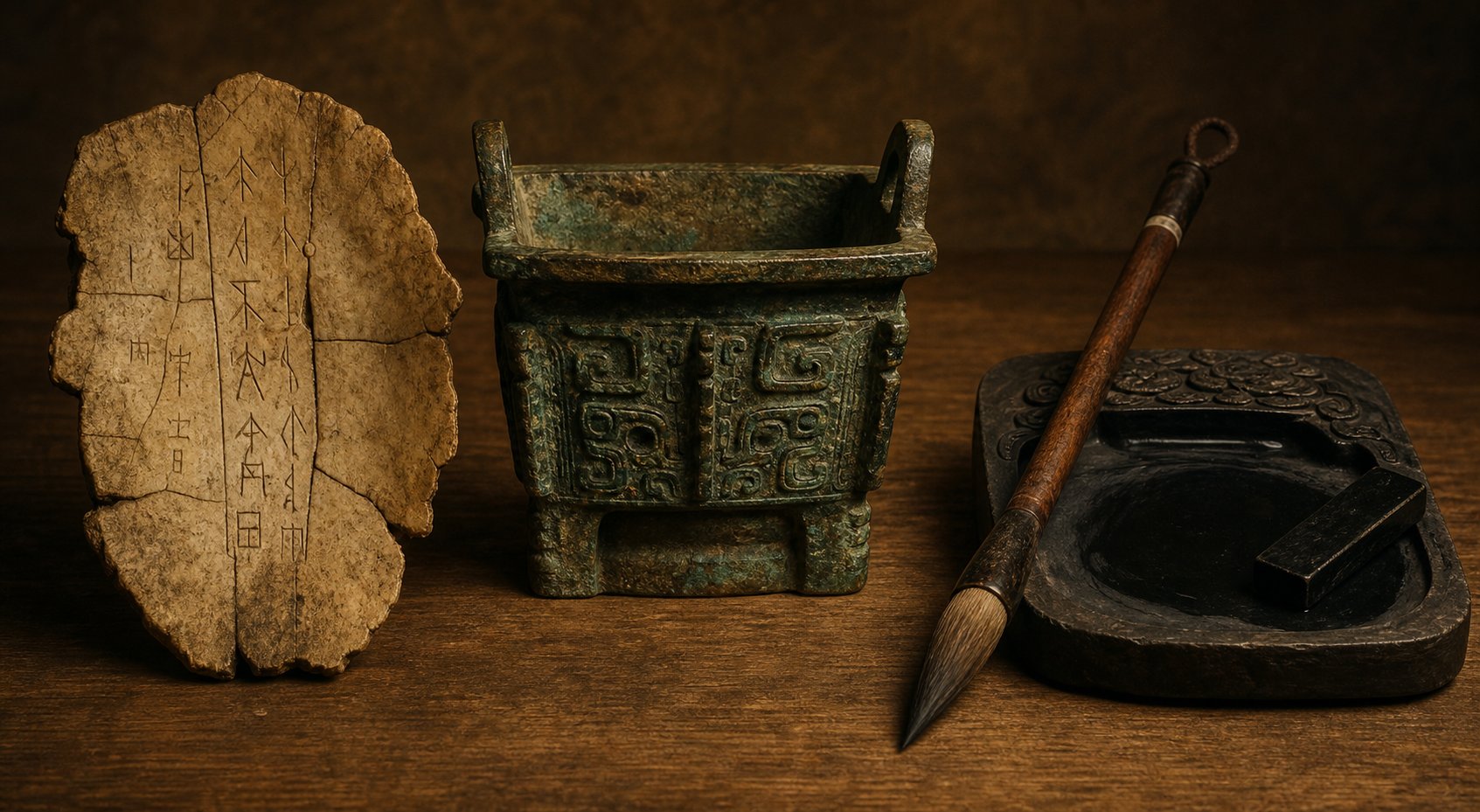
Chinese writing evolved through distinct phases, each leaving its mark on every character in the language. Research from Rutgers University's documentation of Chinese script history traces this progression from oracle bone inscriptions (1600-1100 BC) through bronze script, seal script, clerical script, and into the standard forms used today. The character for hao in Chinese traveled this entire path.
In the oracle bone period, scribes carved characters into animal bones and turtle shells using sharp tools. The resulting strokes were thin, angular, and pictographic. The earliest form of 好 showed a recognizable kneeling woman figure beside a small child figure, both rendered with scratchy, uneven lines. The image was literal: you could see the human forms clearly.
Bronze script (1400-700 BC) brought rounder, thicker strokes because characters were now cast into metal vessels. The woman and child in chinese hao became more stylized, their limbs smoother and more uniform. Seal script, standardized around 221 BC under the Qin dynasty, pushed the character further toward geometric abstraction. Strokes became uniform in width, producing what scholars describe as an "iron wire" quality. The human figures were still present but required trained eyes to spot.
Clerical script (li shu) emerged around 200 BC as bureaucrats needed to write faster. Angular turns replaced curves, horizontal strokes gained dramatic flared endings, and the character flattened into a wider shape. This was the stage where 好 began looking recognizably modern.
How the Shape of 好 Changed Over Millennia
The table below maps each script stage so you can see the full transformation at a glance:
| Script Stage | Approximate Era | Visual Description of 好 | Context of Usage |
|---|---|---|---|
| Oracle Bone (甲骨文) | 1600-1100 BC | Thin, angular lines showing a kneeling woman and small child as distinct pictographic figures | Divination records carved on turtle shells and animal bones |
| Bronze Script (金文) | 1400-700 BC | Rounder, thicker strokes with smoother human forms; more stylized but still pictorial | Formal inscriptions cast into ceremonial bronze vessels |
| Seal Script (小篆) | 221 BC onward | Uniform-width strokes, geometric and symmetrical; human figures abstracted into balanced curves | Official government documents, seals, and stone steles |
| Clerical Script (隶书) | 200 BC onward | Flattened, wider form with angular turns and flared horizontal strokes; clearly two-part structure | Administrative records written with brush on bamboo and silk |
| Regular Script (楷书) | 200 AD to present | Clean, balanced strokes with distinct 女 on left and 子 on right; the modern standard form | All general writing, print, and digital text |
What's remarkable is that through every transformation, the core radical structure survived. The woman stayed on the left, the child on the right. Tools changed, aesthetics shifted, empires rose and fell, but the internal logic of 好 held steady for over three millennia. That structural persistence is part of what makes Chinese characters so durable as a writing system: even when the surface appearance evolves, the meaning-bearing components remain intact.
This deep history also explains why 好 can do so much work in modern Mandarin. A character that has been in continuous use for thousands of years accumulates grammatical roles the way an old house accumulates additions, each generation finding new ways to put the same structure to use.
Multiple Ways 好 Functions in Mandarin Grammar
Most learners meet 好 as an adjective meaning "good." That's accurate, but it barely scratches the surface. In everyday Mandarin, 好 shifts between at least four distinct grammatical roles, sometimes within the same conversation. Understanding these roles is what separates someone who memorized a flashcard from someone who actually uses the character fluently.
好 as an Adverb and Intensifier
Place 好 directly before an adjective and it stops meaning "good" altogether. Instead, it becomes an intensifier, similar to "so" or "really" in English. Want to know how to say very good in Chinese? One common spoken option is 好好 (hǎo hǎo), where the first 好 amplifies the second. This pattern works with nearly any adjective in casual speech.
Imagine you step outside on a sweltering day. A native speaker might say 好热 (hǎo rè), meaning "so hot!" The character 好 here carries no sense of "good" whatsoever. It's pure emphasis. As ImproveMandarin.com notes, 好 used this way conveys a stronger tone than the standard intensifier 很 (hěn) and functions specifically for exclamation rather than neutral description.
Beyond adjectives, 好 intensifies certain psychological verbs related to feelings. You'll hear 好想你 (hǎo xiǎng nǐ), meaning "I miss you so much," or 好喜欢 (hǎo xǐhuan), meaning "I really like it." One important rule: this exclamatory 好 expresses your own feelings or observations. You wouldn't use it to relay something you heard secondhand.
好 also serves as a result complement when placed after a verb. In this position it signals that an action has been completed successfully. 做好 (zuò hǎo) means "done well" or "finished properly." 准备好 (zhǔnbèi hǎo) means "prepared" or "ready." Think of it as the difference between doing something and actually getting it done right.
Then there's the greeting function. 你好 (nǐ hǎo) is the first phrase most learners encounter, literally "you good," used in the sense of wishing someone well. You can attach 好 to titles for more formal greetings: 老师好 (lǎoshī hǎo, hello teacher) or 大家好 (dàjiā hǎo, hello everyone).
Finally, 好 works as a question particle when tagged onto the end of a statement. Adding 好吗 (hǎo ma) or 好不好 (hǎo bu hǎo) turns any sentence into a soft request for agreement, similar to saying "okay?" or "sound good?" in English.
The table below maps each grammatical function with real examples:
| Grammatical Function | Example Phrase | Pinyin | English Meaning |
|---|---|---|---|
| Adjective (good, fine) | 我很好 | wǒ hěn hǎo | I am good / I'm fine |
| Intensifier (so, really) | 好大 | hǎo dà | So big! |
| Result complement (done, completed) | 做好了 | zuò hǎo le | It's done / finished properly |
| Greeting element | 你好 | nǐ hǎo | Hello |
| Question particle (seeking agreement) | 我们走吧,好吗? | wǒmen zǒu ba, hǎo ma? | Let's go, okay? |
| Permission (allowed to) | 这里好停车吗? | zhèlǐ hǎo tíngchē ma? | Can I park here? |
Notice the wo hen hao characters (我很好) in the first row. That simple three-character phrase meaning "I am good" in Chinese language is often the first full sentence a learner produces. Yet the same character driving that sentence also powers intensifiers, complements, and conversational tags across the rest of the table.
Common Phrases and Compound Words with 好
When 好 pairs with verbs related to the senses, it creates compound adjectives that function as standalone vocabulary. These combinations appear constantly in spoken Mandarin:
- 好吃 (hǎochī) - delicious, literally "good to eat"
- 好看 (hǎokàn) - good-looking, attractive, or enjoyable to watch
- 好听 (hǎotīng) - pleasant to hear, nice-sounding
- 好玩 (hǎowán) - fun, amusing, literally "good to play"
- 好闻 (hǎowén) - smells good, pleasant-smelling
- 好喝 (hǎohē) - tastes good (for drinks), literally "good to drink"
The pattern is consistent: 好 plus a sense-related verb produces an adjective describing a positive sensory experience. Flip the logic and you get the negative versions by swapping 好 for 难 (nán, difficult): 难吃 means "tastes bad," 难看 means "ugly."
For anyone wondering how to express chinese very good in a natural way, the phrase 非常好 (fēicháng hǎo) works in formal contexts, while 好极了 (hǎo jí le, extremely good) and 太好了 (tài hǎo le, great!) suit casual conversation. Each option carries a slightly different energy, from measured approval to genuine excitement.
This grammatical range is what makes 好 one of the highest-value characters for learners. Master its multiple roles and you unlock not just a single word but an entire toolkit for expressing quality, intensity, completion, and agreement. That versatility, however, belongs to just one character in a family of several that express goodness in Chinese, each tuned to a different register and context.
Other Chinese Characters That Mean Good
好 handles everyday goodness, but Mandarin doesn't stop there. The language offers a roster of characters that each capture a different flavor of "good," from moral virtue to technical excellence. If you've been relying solely on 好, expanding into these alternatives is how you move from basic fluency toward precision. Think of it like upgrading from "good" in English to "virtuous," "fine," "excellent," or "outstanding." Each word fits a different situation, and choosing the right one signals that you understand not just vocabulary but context.
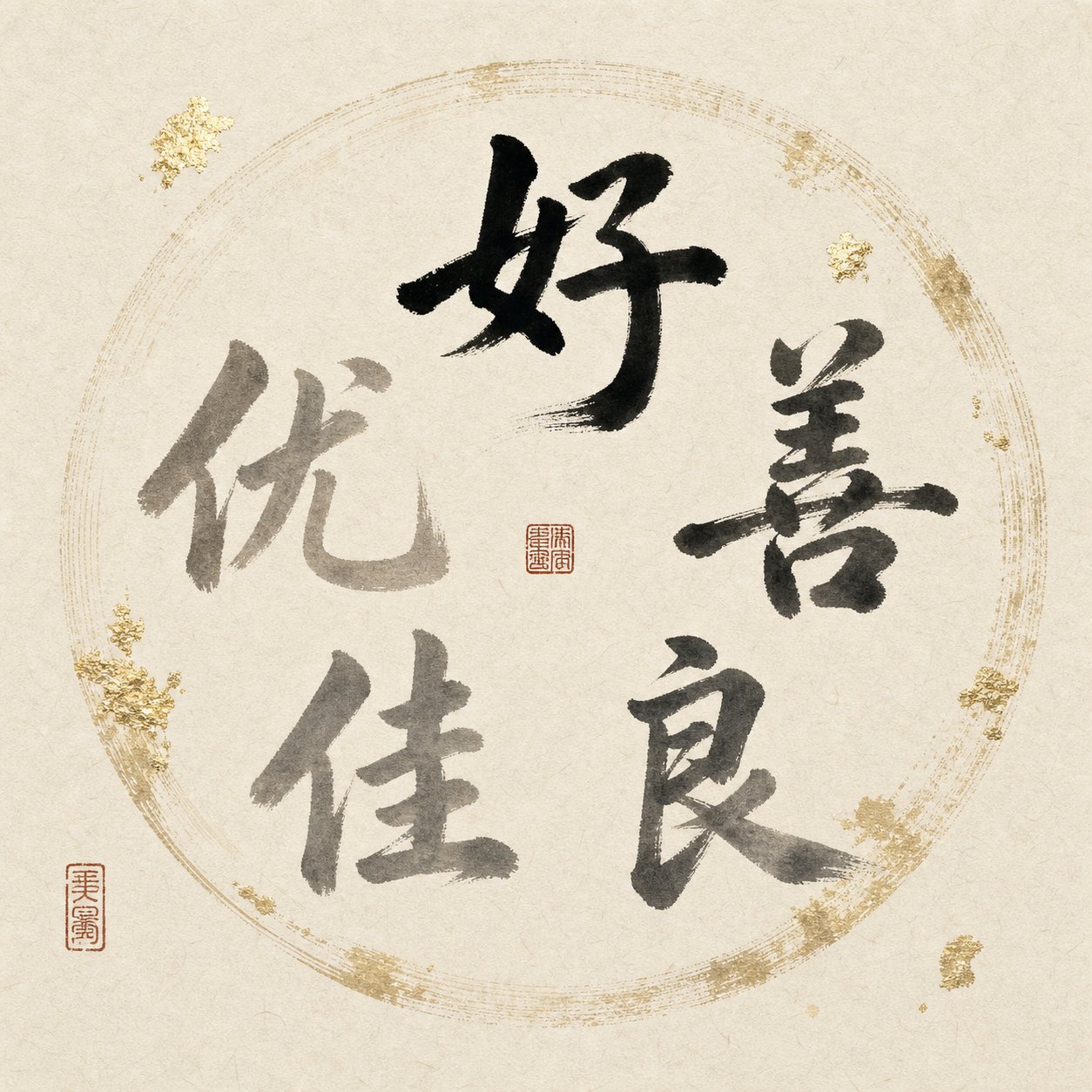
善 良 佳 优 and Their Distinct Meanings
Four characters stand out as the most useful alternatives to 好 when expressing goodness in Mandarin. Each occupies its own lane.
善 (shàn) carries the weight of moral goodness. Where 好 describes something that's fine or satisfactory, 善 points specifically to ethical behavior, kindness, and virtue. You'll encounter it in philosophical texts, religious contexts, and discussions about character. The compound 善良 (shànliáng) means "kindhearted," and 慈善 (císhàn) means "charity" or "philanthropy." When someone is described as 善人 (shàn rén), they're not just a good person in a casual sense; they're a morally upright one. This character appears heavily in Confucian and Buddhist writing, where the concept of cultivating inner goodness is central.
良 (liáng) describes inherent quality or fineness. It suggests something is good by nature rather than by effort. A 良心 (liángxīn) is a "conscience," literally a "good heart." 良好 (liánghǎo) means "fine" or "satisfactory" in formal assessments, the kind of word you'd see on a report card or quality inspection. 优良 (yōuliáng) means "excellent quality." Where 好 is casual and broad, 良 is measured and evaluative, often appearing in written or official language rather than street-level conversation.
佳 (jiā) leans toward "excellent" or "beautiful" with an aesthetic edge. It describes things that are not merely good but admirably so. 佳作 (jiāzuò) is a "fine work" or masterpiece. 佳节 (jiājié) refers to a joyous festival. 最佳 (zuìjiā) means "the best" and shows up in award titles like 最佳影片 (Best Picture). You'll notice 佳 in literary writing, formal praise, and contexts where elegance matters. It's the character you'd reach for when "good" feels too plain and you want to convey something closer to how to say great in Chinese with a touch of refinement.
优 (yōu) means "superior," "outstanding," or "excellent" with an emphasis on being above average. It implies comparison: something is 优 because it surpasses others. 优秀 (yōuxiù) means "outstanding" and is the highest praise on academic evaluations. 优势 (yōushì) means "advantage." 优先 (yōuxiān) means "priority." This character belongs to formal and academic registers. When you want to express very good in Chinese Mandarin with a sense of ranking or superiority, 优 is the character that delivers that weight.
When to Use Each Character Instead of 好
Choosing between these characters comes down to what kind of goodness you're describing. Are you talking about someone's moral fiber? Use 善. Evaluating inherent quality in a formal report? Reach for 良. Praising something with aesthetic admiration? 佳 fits. Ranking performance against a standard? 优 is your pick. And for everything else, the general-purpose, conversational, works-in-any-context default? That's still 好.
The table below lays out the comparison so you can see each character's territory at a glance:
| Character | Pinyin | Core Meaning | Usage Context | Difficulty Level | Example Compounds |
|---|---|---|---|---|---|
| 好 | hǎo | good, well, fine | Everyday conversation, casual writing, greetings | Beginner (HSK 1) | 好人 (good person), 好看 (good-looking), 你好 (hello) |
| 善 | shàn | virtuous, morally good, kind | Ethics, philosophy, religion, formal praise of character | Intermediate (HSK 4-5) | 善良 (kindhearted), 慈善 (charity), 善意 (goodwill) |
| 良 | liáng | fine, good quality, innate goodness | Formal evaluations, written reports, quality assessments | Intermediate (HSK 4) | 良好 (satisfactory), 良心 (conscience), 改良 (improve) |
| 佳 | jiā | excellent, beautiful, admirable | Literary writing, awards, aesthetic praise, formal contexts | Intermediate-Advanced (HSK 5-6) | 佳作 (masterpiece), 最佳 (the best), 佳节 (joyous festival) |
| 优 | yōu | superior, outstanding, first-rate | Academic rankings, performance reviews, competitive contexts | Intermediate (HSK 4-5) | 优秀 (outstanding), 优势 (advantage), 优先 (priority) |
For learners building vocabulary progressively, the path is clear. Start with 好 as your foundation, the mandarin for good that covers 90% of daily situations. As you advance, layer in 善 when discussing ethics or personality, 良 when writing formally about quality, 佳 when you want literary flair, and 优 when ranking or comparing. Each addition sharpens your ability to express exactly the shade of goodness you mean.
One practical tip: pay attention to how these characters combine with each other. 善良 pairs moral goodness (善) with inherent quality (良) to create "kindhearted." 优良 pairs superiority (优) with fineness (良) to mean "excellent quality." These overlapping compounds show that the characters aren't isolated islands. They form a network, and understanding how they interact gives you a richer sense of how Chinese expresses the full spectrum of what's great in Chinese language and thought.
These characters don't just live in vocabulary lists. They appear in names, proverbs, and philosophical traditions that have shaped Chinese culture for millennia, carrying layers of meaning that a dictionary entry alone can't capture.
好 in Chinese Names, Idioms, and Proverbs
Characters that survive thousands of years of continuous use don't just sit in dictionaries. They embed themselves in the culture's idioms, names, and philosophical traditions. The character 好 is no exception. It shows up in wedding blessings, four-character proverbs, and everyday well-wishes, each usage revealing a different facet of what "good" means to Chinese speakers across generations.
Famous Chinese Idioms Featuring 好
Chinese idioms, called 成语 (chéngyǔ), are fixed four-character phrases drawn from classical literature, historical events, or folk wisdom. They pack complex ideas into compact expressions, and several of the most commonly used ones feature 好 in a central role. If you're wondering how do you say very good in Chinese with cultural weight behind it, these idioms offer far more texture than a simple 很好.
- 百年好合 (bǎi nián hǎo hé) - Literal: "A hundred years of good togetherness." Figurative: May you live a long and happy life together. This is one of the most popular wedding blessings in Chinese culture, spoken to newlyweds as a wish for lasting harmony.
- 好事多磨 (hǎo shì duō mó) - Literal: "Good things face much grinding." Figurative: The path to something worthwhile is never smooth. Used to encourage patience when plans hit obstacles.
- 好好学习,天天向上 (hǎo hǎo xuéxí, tiāntiān xiàng shàng) - Literal: "Study well, improve daily." Figurative: A famous slogan encouraging diligence, often displayed in Chinese classrooms. Though technically a phrase rather than a strict 成语, it functions the same way in daily speech.
- 好聚好散 (hǎo jù hǎo sàn) - Literal: "Good gathering, good parting." Figurative: Let's part on good terms. Used when relationships or partnerships end, expressing a wish for mutual respect rather than bitterness.
- 好自为之 (hǎo zì wéi zhī) - Literal: "Good self-doing." Figurative: Take care of yourself / conduct yourself well. Often used as a parting warning or advice to someone making their own choices.
Notice how hao in Mandarin carries different emotional weight in each idiom. In 百年好合 it expresses a blessing. In 好事多磨 it sets up a contrast between desire and difficulty. In 好聚好散 it frames civility. The character adapts to its surroundings while anchoring each phrase to the idea of something positive or desirable.
好人一生平安 (hǎo rén yī shēng píng'ān) - "A good person enjoys a lifetime of peace." This proverb, popularized through a well-known Chinese song, reflects the deep cultural belief that moral goodness attracts fortune and safety.
Goodness in Confucian and Taoist Philosophy
The concept of "goodness" in Chinese thought runs far deeper than a single character. Each of China's major philosophical traditions, often called the three pillars of ancient Chinese society, approaches the idea through a different lens and often through a different character.
Confucianism, founded by Confucius (551-479 BCE), centers goodness on human relationships and social harmony. The key character here is 仁 (rén), meaning "benevolence" or "humaneness." For Confucius, being good meant fulfilling your obligations to others with respect and kindness. The character 善 (shàn, moral virtue) also features prominently. Confucian thought treats goodness as something cultivated through ritual, education, and self-discipline rather than something you simply are.
Taoism takes a different path. Rather than defining goodness through social roles, Taoists locate it in harmony with the natural order, the Tao (道). The concept of 无为 (wúwéi, non-action) suggests that true goodness arises when you stop striving and align with nature's flow. A Taoist might argue that forcing yourself to be "good" in the Confucian sense actually moves you further from authentic virtue. The character 德 (dé, virtue or moral power) captures this idea: goodness as an effortless quality that emerges from living in accordance with the Way.
Buddhism, which arrived in China around the first century CE, introduced yet another framework. The Buddhist concept of 善 (shàn) overlaps with Confucian usage but emphasizes intention and karma. Good actions (善行, shànxíng) generate positive karma, while the ultimate goal transcends goodness altogether, reaching enlightenment beyond dualistic categories of good and bad.
So how do you say good in Mandarin with philosophical precision? It depends on your framework. 好 handles the practical, everyday sense. 善 carries Confucian and Buddhist moral weight. 德 points toward Taoist natural virtue. 仁 captures Confucian benevolence specifically. Each character opens a door into a different tradition's understanding of what it means to live well.
These philosophical layers also explain why 好 appears so frequently in names. Parents naming a child 好 or using it in compound names like 好文 (good writing) or 好学 (love of learning) are drawing on centuries of cultural association between the character and a life well-lived. The character carries not just a definition but a wish, a hope that the name's bearer will embody the goodness it represents.
That cultural weight is precisely what draws people to 好 for purposes beyond language learning. When someone chooses this character for calligraphy, a tattoo, or decorative art, they're selecting a symbol loaded with philosophical and emotional resonance, which makes getting it right all the more important.
Using 好 in Calligraphy, Tattoos, and Art
A large number of people searching for the chinese character good aren't studying Mandarin at all. They're looking at a character on a wall scroll, a piece of jewelry, or a tattoo flash sheet and want to confirm what it actually says. Others are choosing a character to get permanently inked and need to be absolutely certain they're picking the right one. Either way, the stakes are higher than a vocabulary quiz. A wrong character on your skin stays there.
好 in Calligraphy Styles and Tattoo Design
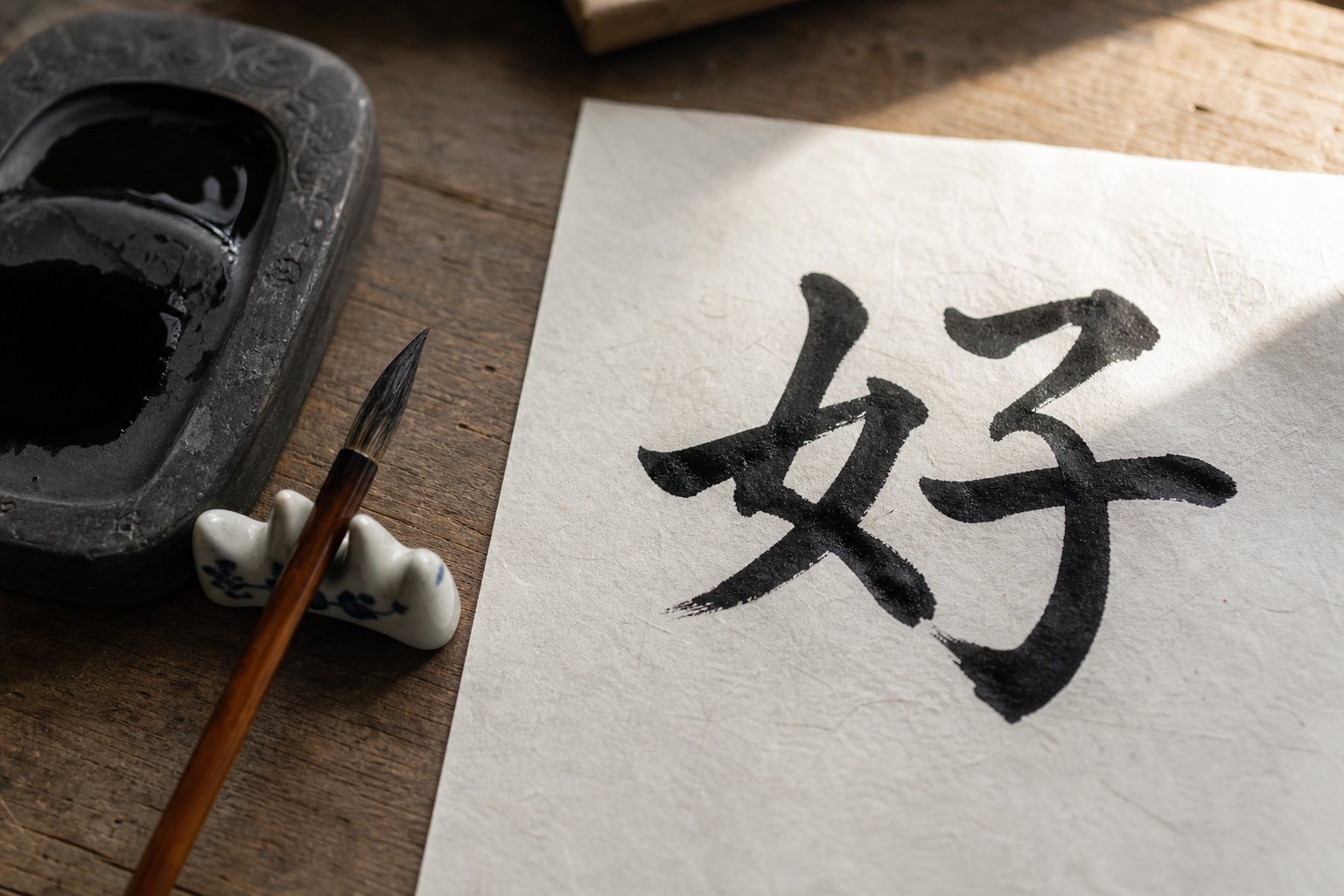
The character 好 looks dramatically different depending on which calligraphy style renders it. If you're selecting a design for artwork or a tattoo, understanding these styles helps you choose an aesthetic that matches your intent.
Regular script (楷书, kǎishū) is the clearest and most legible form. Each stroke is distinct, the 女 radical sits neatly on the left, and 子 occupies the right. This is the style you see in printed books and digital fonts. For tattoos, it reads cleanly at any size and leaves no room for misinterpretation.
Running script (行书, xíngshū) connects some strokes for a more fluid, handwritten feel. Imagine cursive handwriting in English but less extreme. The character retains its recognizable structure while gaining movement and personality. This style works well for decorative art where you want elegance without sacrificing readability.
Cursive script (草书, cǎoshū) pushes fluidity to its limit. Strokes merge, abbreviate, and flow into each other. A 好 written in cursive can look like a single sweeping gesture rather than two distinct radicals. It's visually striking but risky for tattoos because even native readers sometimes struggle to decipher cursive characters out of context.
Seal script (篆书, zhuànshū) is the ancient form with uniform-width strokes and rounded, symmetrical shapes. It carries a classical, archival quality and appears on traditional Chinese seals (stamps). For artwork meant to evoke history or authority, seal script delivers that gravitas. However, most modern Chinese readers cannot read seal script without training, so it functions more as visual art than communication.
When choosing a style, consider your audience and purpose. If you want people to read and understand the character immediately, regular or running script is safest. If the goal is purely aesthetic and you're comfortable explaining the meaning when asked, cursive or seal script offers more visual drama.
How to Verify a Chinese Character Before Permanent Use
Tattoo regret stories involving wrong Chinese characters are common enough to fill entire websites. The mistakes range from reversed radicals to completely wrong characters that happen to look similar to the intended one. Before committing to any permanent use of 好 or any other character, run through this verification process:
- Cross-reference multiple dictionaries. Check the character in at least two reputable sources (MDBG, Pleco, or LINE Dictionary). Confirm the pinyin, meaning, and stroke order all match what you expect.
- Ask a native speaker. Show the exact design file to someone who reads Chinese fluently. Ask them what it says without telling them what you think it means. Their unprompted reading is your best reality check.
- Verify the calligraphy style. If you're using a stylized version, confirm with a calligraphy reference that the artistic rendering still reads as 好 and hasn't drifted into a different character.
- Check orientation and stroke direction. Chinese characters read left to right in modern usage but top to bottom in traditional vertical text. Make sure your design isn't mirrored or rotated in a way that changes the character.
- Distinguish handwritten from machine-generated text. Authentic calligraphy shows natural variation in stroke thickness, slight asymmetry, and ink texture. Machine-generated characters are perfectly uniform. For tattoo art, hand-brushed calligraphy by a skilled artist will look more natural on skin than a computer font.
One critical tip: avoid relying on image searches alone. A photo of a character on someone else's tattoo may itself be wrong. Always trace your reference back to a verified dictionary entry.
Distinguishing 好 from visually similar characters is another common pitfall. Chinese has many characters that share structural elements or differ by a single stroke. Beginners, and even tattoo artists unfamiliar with Chinese, frequently confuse characters that look nearly identical but carry entirely different meanings. The table below highlights characters that could be mistaken for components of 好 or for the character itself:
| Character | Pinyin | Meaning | How It Differs from 好 or Its Radicals |
|---|---|---|---|
| 女 | nǚ | woman | Left radical of 好 alone; missing the 子 component entirely |
| 子 | zǐ | child | Right radical of 好 alone; incomplete without 女 |
| 如 | rú | like, as if | Also uses 女 radical but pairs it with 口 (mouth) on the right |
| 她 | tā | she, her | Uses 女 radical on the left but pairs it with 也 on the right |
| 字 | zì | character, word | Contains 子 under a roof radical (宀); no 女 component |
| 仔 | zǎi/zǐ | young animal, careful | Contains 子 on the right but uses 亻(person) on the left instead of 女 |
The most common mistake isn't confusing 好 with a completely different character. It's getting one of its radicals slightly wrong: an extra stroke turning 女 into something unrecognizable, or a misplaced hook on 子 that shifts it toward 孑 (jié, alone). These small errors matter because they produce either a nonsense character or an unintended real one.
For anyone choosing the chinese character good for art or body ink, the meaning in English is straightforward: good, well, fine. But the visual execution requires care. Take the time to verify, consult a native reader, and choose a calligraphy style that balances beauty with accuracy. A character that has carried meaning for over three thousand years deserves that level of respect when you give it a permanent home.
Frequently Asked Questions About the Chinese Character for Good
1. What is the Chinese character for good?
The most common Chinese character for good is 好 (hǎo). It is a compound ideograph made up of two radicals: 女 (woman) on the left and 子 (child) on the right. The traditional interpretation holds that a woman beside her child represents harmony and goodness. Ranked as the 81st most frequently used character in Chinese, 好 serves as an adjective (good, fine), an adverb (so, really), a greeting element (你好 means hello), and a result complement indicating completion.
2. How do you say good in Chinese?
You say good in Chinese as hǎo, using Mandarin's third tone. The pitch dips low and rises slightly at the end, similar to the shape of a shallow valley. The vowel sound rhymes with 'how' in English. Be careful not to confuse it with hào (fourth tone, a sharp falling pitch), which means 'to like' or 'to be fond of.' Common phrases include 你好 (nǐ hǎo, hello), 我很好 (wǒ hěn hǎo, I'm fine), and 好的 (hǎo de, okay).
3. Why does the Chinese character for good combine woman and child?
The most widely accepted explanation is that a mother with her child symbolizes happiness, harmony, and completeness, concepts ancient Chinese society equated with goodness. Some scholars studying oracle bone inscriptions suggest the original form depicted a woman holding or embracing a baby, representing maternal affection. A third theory proposes that 女 and 子 together symbolized fertility and continuation of the family line, which ancient cultures considered the highest fortune. Regardless of the exact origin, the pairing gives learners a powerful visual mnemonic for remembering the character.
4. Are there other Chinese characters that mean good besides 好?
Yes. Mandarin has several characters expressing different shades of goodness. 善 (shàn) refers to moral virtue and ethical kindness. 良 (liáng) describes inherent fine quality, often used in formal evaluations. 佳 (jiā) means excellent or admirable with an aesthetic edge, common in literary contexts and awards. 优 (yōu) means superior or outstanding, implying comparison and ranking. Each fits a specific context: 善 for ethics, 良 for quality assessments, 佳 for elegant praise, and 优 for academic or competitive excellence.
5. How do you verify a Chinese character before getting it as a tattoo?
Start by cross-referencing the character in at least two reputable dictionaries such as MDBG or Pleco to confirm its pinyin, meaning, and stroke order. Then show the exact design to a native Chinese speaker and ask them to read it without telling them what you think it says. Verify that any stylized calligraphy version still reads correctly by checking against calligraphy references. Confirm the character is not mirrored or rotated, and ensure the design traces back to a verified dictionary entry rather than another tattoo image that may itself be incorrect.