Understanding the World Chinese Character and Its Deep Meaning
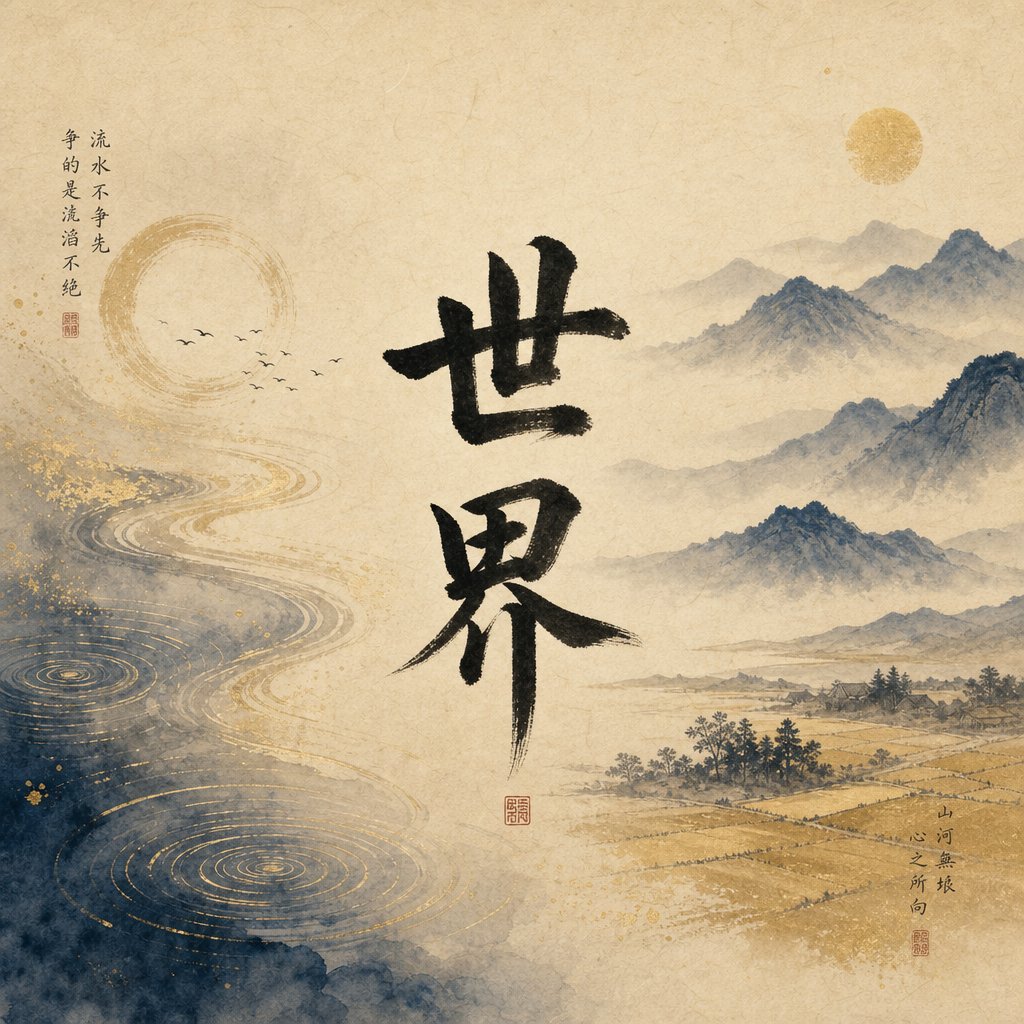
When you look up the word "world" in a Chinese dictionary, you'll find two characters standing side by side: 世界. Not one symbol, but two, each carrying its own weight of meaning. This is the first clue that the Chinese character meaning behind "world" runs deeper than a simple translation.
What 世界 Means in Chinese
世界 is pronounced shìjiè in Mandarin Chinese. The first character 世 carries a falling fourth tone, and 界 also takes the fourth tone. Together, they translate to "world," but also extend to mean earth, globe, or universe depending on context. As one of the 500 most common compound words in the Chinese language (ranked 359th), 世界 appears everywhere from daily conversation to literature and news headlines. A simple example: 我计划周游世界 (Wǒ jìhuà zhōuyóu shìjiè) means "I plan to travel around the world."
But here's what most dictionary entries won't tell you. Unlike the English word "world," which traces back to a Germanic root meaning "age of man," the Chinese characters and meanings packed into 世界 encode something far more expansive: a fusion of time and space.
Why This Character Pair Is Unique
Most learners studying chinese character symbol meanings treat 世界 as a single vocabulary item to memorize. That approach misses the philosophy hiding in plain sight. Each character in this pair does specific conceptual work:
世 represents generations and eras, the passage of time. 界 represents boundaries and realms, the division of space. Together, they define "world" as the totality of all time flowing through all space.
This isn't a modern interpretation. The compound 世界 entered Chinese through Buddhist scripture translation over 1,700 years ago, carrying with it a cosmological framework where reality is understood through temporal cycles and spatial dimensions simultaneously. No single character meaning in Chinese captures "world" alone. It takes both halves, time plus space, to complete the picture.
So where did this remarkable compound come from, and how did Buddhist monks decide that these two specific characters should carry the weight of an entire universe?
Etymology and Buddhist Origins of the Chinese Word for World
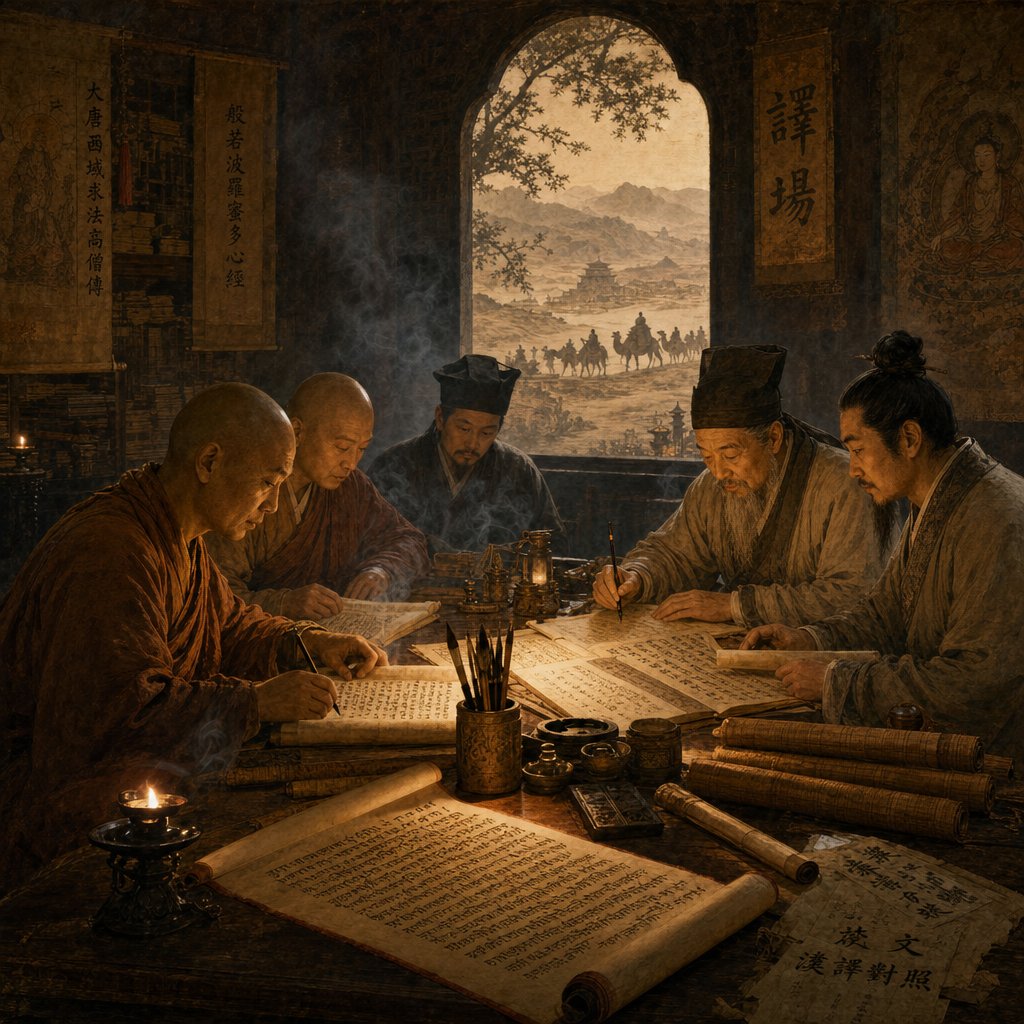
Before 世界 existed in the Chinese language, there was already a word for "world": 天下 (tiānxià), literally "all under heaven." This older term imagined the world as everything beneath the sky, with China at the center. It was political, hierarchical, and deeply Confucian. So what changed? Buddhist monks arrived along the Silk Road, carrying Sanskrit scriptures that described reality in a completely different way, and Chinese needed new chinese characters with meanings expansive enough to hold that vision.
The Buddhist Sanskrit Origins of 世界
The translation of Buddhist texts in premodern China spanned over 900 years, beginning in the mid-second century CE. During this massive translation movement, Indian and Central Asian monks collaborated with Chinese scholars to render Sanskrit concepts into Literary Chinese. One of the terms they needed to translate was lokadhātu, a compound from two Sanskrit roots:
- Loka — world, people, a generation of beings living through time
- Dhātu — element, realm, a bounded domain in space
The translators split this single Sanskrit term across two Chinese characters. 世 (shì) captured loka, the temporal dimension of generations and ages. 界 (jiè) captured dhātu, the spatial dimension of realms and boundaries. The result was 世界, a compound that preserved the original Buddhist cosmological structure: the universe as cycles of time unfolding across layers of space.
This wasn't a rough approximation. Early translators like Kumārajīva (344-413 CE) were known for producing crystalline translations that became scriptures in their own right. 世界 is one of Buddhism's most invisible but pervasive linguistic legacies in Chinese. It joined everyday words like 因果 (cause and effect), 烦恼 (worry), and 刹那 (an instant), all Buddhist loanwords now so deeply embedded that most speakers no longer recognize their origins.
How 世界 Differs From 天下
Understanding the meaning of chinese characters often means understanding what they replaced. 天下 didn't disappear when 世界 arrived, but the two terms carved out very different conceptual territory. Imagine two lenses for viewing reality: one political, one cosmological.
| Feature | 世界 (shìjiè) | 天下 (tiānxià) |
|---|---|---|
| Origin | Buddhist Sanskrit (lokadhātu) | Native Chinese (Confucian/Zhou Dynasty) |
| Literal Meaning | Generations + boundaries (time + space) | All under heaven |
| Philosophical Scope | Cosmological: infinite realms and cycles | Political: civilized world under one ruler |
| Center of Reference | No fixed center; multiple world-systems | China as the Middle Kingdom |
| Modern Usage | Standard word for "world" in all contexts | Literary/historical; used for rhetorical grandeur |
天下 assumed a single world with China at its heart. 世界, by contrast, came from a tradition that imagined countless world-systems stacked across time and space, none more central than another. When Chinese character meanings shifted from 天下 to 世界 as the default word for "world," it reflected a quiet philosophical revolution: the universe grew larger, and China's place in it became relative rather than absolute.
This etymological backstory sets up a natural question. If 世 carries time and 界 carries space, what exactly is happening inside each character at the level of strokes and radicals?
Breaking Down 世 and Its Time-Related Meanings
Look at the character 世 on its own and you'll notice something visually striking. Three horizontal levels connected by a single vertical stroke, almost like layers stacked on top of each other. This isn't a coincidence. As one chinese character with meaning rooted in the passage of time, 世 visually suggests the idea of generations layered across history.
The ancient dictionary Shuowen Jiezi (circa 100 AD) defines it plainly: "三十年為一世" — thirty years makes one 世. That's one generation. But the character's story goes even further back. According to etymological research, 世 originally depicted three leaves on the branches of a tree. Its earliest meaning was literally "leaf." Over time, the meaning shifted to "generation" because leaves pile up in layers, much like successive generations of people. The modern character for leaf (葉) eventually took over that original meaning, freeing 世 to become purely temporal.
With just 5 strokes, 世 is compact but structurally distinctive. It belongs to HSK Level 3 vocabulary and ranks as the 340th most common character in spoken Chinese. For a single chinese character meaning in english, its core translations include: generation, era, age, lifetime, epoch, and world.
How to Write 世 Step by Step
Writing 世 correctly requires following a specific stroke order. Here are the five strokes in sequence:
- Stroke 1: Begin with a short horizontal stroke (横) moving left to right near the top left area of the character.
- Stroke 2: From the right end of that horizontal stroke, draw a vertical stroke (竖) downward.
- Stroke 3: Start a second short horizontal stroke to the right, then continue downward with a vertical stroke, forming an angular shape in the middle section.
- Stroke 4: Draw a longer vertical stroke (竖) from the top center, passing through all horizontal levels and extending below them. This is the spine of the character.
- Stroke 5: Finish with a long horizontal stroke (横) at the bottom, sweeping left to right, grounding the entire structure.
You'll notice the central vertical stroke acts like a timeline running through the horizontal layers. This visual architecture is part of what makes chinese characters that look like their meaning so memorable. The layers of 世 mirror the layers of time it represents.
Standalone Meanings and Compounds Using 世
Here's where Chinese word-formation logic becomes fascinating. Once you know that 世 means "generation" or "era," you can predict the meaning of dozens of compounds. Think of 世 as a root that branches into an entire family tree of time-related words:
- 世代 (shìdài) — generations; from generation to generation. Combines 世 (generation) + 代 (era/substitute), doubling down on the idea of successive ages.
- 世紀 / 世纪 (shìjì) — century. Pairs 世 (era) + 紀 (record/period), literally "a recorded era" of one hundred years.
- 前世 (qiánshì) — previous life; past incarnation. Uses 前 (before/previous) + 世 (lifetime), a term deeply tied to Buddhist ideas of reincarnation.
- 出世 (chūshì) — to be born; to come into the world; also to withdraw from worldly affairs. Combines 出 (to exit/emerge) + 世 (the world/life).
- 去世 (qùshì) — to pass away; to die. Literally 去 (to leave) + 世 (this life). A gentle euphemism for death.
- 今世 (jīnshì) — this life; the present age. Uses 今 (now/present) + 世 (lifetime).
- 來世 / 来世 (láishì) — the next life; afterlife. Pairs 來 (coming/future) + 世 (lifetime).
- 世襲 / 世袭 (shìxí) — hereditary succession. Combines 世 (generational) + 襲 (to inherit), describing power passed down through family lines.
Notice the pattern? Nearly every compound involving 世 deals with the flow of time: births, deaths, past lives, future lives, centuries, and lineages. This one chinese character with meaning tied to temporal succession generates an entire vocabulary of duration and continuity.
The compound 前世 is especially revealing. It shows how Buddhist concepts of reincarnation became embedded in everyday Chinese through this single character. When someone says 前世姻缘 (a marriage predestined in a former life), they're using 世 in its most spiritually loaded sense: a lifetime within an infinite cycle of lifetimes.
Even modern expressions carry this temporal DNA. 世界大战 (world war) uses 世 through its compound 世界, while 二十一世纪 (the 21st century) uses 世 directly in its "era" sense. The character moves fluidly between ancient philosophy and contemporary headlines.
So 世 handles time. But a world defined only by time would be formless, an endless river with no banks. That's where its partner comes in: 界, the character that gives the world its edges, its territories, its shape in space.
Breaking Down 界 and Its Space-Related Meanings
If 世 is a river of time, 界 is the riverbank. It gives shape, edges, and territory to what would otherwise be formless. The character 界 (jiè) means boundary, realm, or domain, and its internal structure tells you exactly why. When you study chinese characters with meaning tied to spatial concepts, 界 is one of the clearest examples of form reflecting function.
According to the ancient dictionary Shuowen Jiezi, the original entry reads: "畍,境也。从田,介聲" — meaning "界 is a boundary; it takes 田 for meaning and 介 for sound." This tells us 界 is a phonosemantic compound, one of the most common formation types in Chinese. The top component 田 (tián, field) provides the semantic clue: think of a field with clear borders, a plot of land marked off from its neighbors. The bottom component 介 (jiè, to lie between) supplies the pronunciation and reinforces the idea of something positioned between two things, a dividing line.
Imagine looking down at farmland from above. Each plot is separated by ridges and paths. That's the visual logic of 界: a bounded territory, a space with defined limits. With 9 strokes total and classified under the 田 radical with 4 additional strokes, this character ranks as the 430th most common character in spoken Chinese and appears in nearly 75% of Chinese-language films.
How to Write 界 Step by Step
Writing 界 means writing two distinct components stacked vertically. The top half is 田 (field), and the bottom half is 介 (between). Here are the nine strokes in order:
- Stroke 1: Begin with a vertical stroke (竖) on the left side, drawing downward to form the left wall of 田.
- Stroke 2: From the top of that vertical stroke, draw a horizontal stroke (横) moving right, then turn downward (横折) to form the top and right wall of 田.
- Stroke 3: Draw a short horizontal stroke (横) inside the box, connecting the left and right walls. This creates the upper internal division of the field.
- Stroke 4: Draw a short vertical stroke (竖) from the top horizontal line down through the center of the box, dividing it into sections.
- Stroke 5: Close the bottom of 田 with a horizontal stroke (横) connecting the lower left and right corners.
- Stroke 6: Moving to the lower component 介, draw a short left-falling stroke (撇) angling from center-right down to the left.
- Stroke 7: Draw a vertical stroke (竖) straight down through the center, forming the spine of 介.
- Stroke 8: Add a left-falling stroke (撇) from the middle of the vertical, angling down to the lower left.
- Stroke 9: Finish with a right-falling dot or short stroke (点) on the lower right, completing 介.
The top half (田) is compact and boxy, representing enclosed space. The bottom half (介) opens outward with its falling strokes, suggesting the act of dividing or standing between. Together, they create a character that visually communicates containment and separation.
Standalone Meanings and Compounds Using 界
What makes 界 so productive in modern Chinese is its flexibility. It doesn't just mean "boundary" in a geographic sense. It extends to any defined domain, whether physical, professional, intellectual, or biological. The Taiwan Ministry of Education dictionary lists four core meanings: territorial boundaries, professional or social spheres, biological classification kingdoms, and the verb "to adjoin." This range is what makes chinese characters and their meanings so layered: a single character can operate across concrete and abstract registers simultaneously.
Here are the most important compounds built from 界:
- 邊界 / 边界 (biānjiè) — border, boundary line. Combines 邊 (edge/side) + 界 (boundary). Used for national borders and territorial limits.
- 世界 (shìjiè) — world. Pairs 世 (time/generation) + 界 (space/realm), creating the complete spatiotemporal concept we've been exploring.
- 眼界 (yǎnjiè) — field of vision; breadth of experience. Literally 眼 (eye) + 界 (scope). When someone says 开阔眼界 (broaden your horizons), they're using 界 as a metaphorical boundary of perception.
- 學界 / 学界 (xuéjiè) — academic world; scholarly circles. Uses 學 (learning) + 界 (domain). One of many "sector" compounds.
- 政界 (zhèngjiè) — political circles; the world of politics. Pairs 政 (politics/governance) + 界 (sphere).
- 各界 (gèjiè) — all circles; all sectors of society. Combines 各 (each/every) + 界 (domain). Common in news: 各界人士 means "people from all walks of life."
- 外界 (wàijiè) — the outside world; external environment. Uses 外 (outside) + 界 (realm).
- 動物界 / 动物界 (dòngwùjiè) — the animal kingdom. Here 界 functions as a taxonomic rank, the broadest classification level in biology.
- 國界 / 国界 (guójiè) — national border. Pairs 國 (country) + 界 (boundary).
Notice the pattern? When 界 combines with a concrete noun like 國 or 邊, it produces a physical boundary. When it combines with an abstract noun like 學 or 政, it produces a conceptual domain. And when it pairs with 世, it produces something grander than either: a total realm of existence.
This dual function, boundary-maker and realm-definer, is exactly why 界 pairs so naturally with 世. The character 世 gives you endless time flowing forward through generations. The character 界 gives you defined space, carved into territories and domains. Put them together and you get chinese characters meaning something no single word in English quite captures: the world as the sum of all time passing through all bounded space.
Understanding what chinese characters and what they mean at this structural level transforms vocabulary learning from rote memorization into pattern recognition. Every new compound containing 界 becomes partially transparent: you already know it involves some kind of bounded domain. Every new compound with 世 involves some dimension of time. The question that remains is what happens philosophically when these two dimensions merge, and why Buddhist thinkers considered that merger essential to describing reality itself.
The Philosophy Behind Combining Time and Space
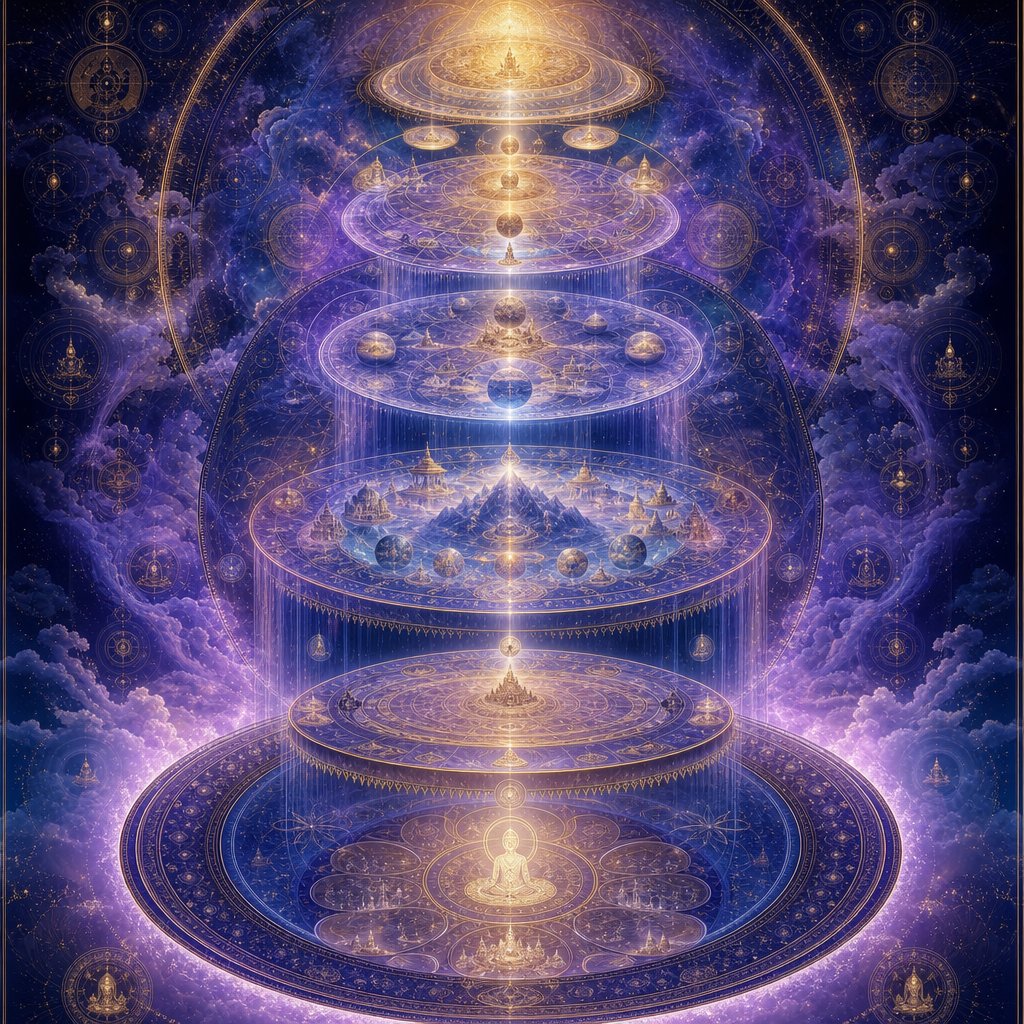
Buddhist cosmology doesn't describe the universe as a static container. It describes it as a process: realms arising, persisting, decaying, and dissolving across inconceivable stretches of time. To capture that vision, you need a word that holds both dimensions at once. That's exactly what 世界 does. It's one of the clearest examples of chinese characters with deep meaning, where the compound isn't just a label but a philosophical statement compressed into two syllables.
Time Plus Space Equals World
When 3rd-century translators fused 世 (generations, temporal cycles) with 界 (bounded realms, spatial domains), they weren't making an arbitrary pairing. They were encoding a specific cosmological claim: reality cannot be understood through space alone or time alone. A "world" in the Buddhist sense is a realm that exists for a duration, passes through stages of formation, stability, destruction, and emptiness, then gives way to the next cycle.
This is the framework behind the famous term 大千世界 (dàqiān shìjiè), often translated as "the great thousand worlds" or "the three-thousand-fold world system." In Mahayana Buddhism, this concept represents the vastness of existence encompassing all realms, a universe of staggering scale where a thousand worlds form a small world-system, a thousand of those form a medium world-system, and a thousand medium systems form one great thousand world-system. Each of these worlds moves through time simultaneously. Space multiplied by time, endlessly.
Compare this with the English word "world." Its Proto-Germanic root *wer + *ald literally means "age of man," combining "man" (as in werewolf) with "age" (as in old). The original Old English sense was "human secular existence" or "a long period of time," not the physical earth. So both words, 世界 and "world," encode time in their DNA. But here's the difference: the Germanic root anchors the concept in human lifespan, while the Chinese compound expands it to cosmic cycles across infinite spatial realms. One is anthropocentric. The other is cosmological.
This distinction matters if you want to understand what do chinese characters mean beyond their surface translations. 世界 doesn't just mean "the planet we live on." It means the totality of existence understood as time flowing through structured space. That's a fundamentally different starting point for thinking about reality.
Cultural and Literary Significance
This philosophical depth didn't stay locked inside Buddhist temples. Over centuries, 世界 migrated into poetry, proverbs, and everyday speech, carrying traces of its cosmological origins even in casual use.
The expression 大千世界 became a literary shorthand for the overwhelming variety and strangeness of life. When a Chinese speaker says 大千世界,无奇不有 (in this vast world, nothing is too strange to exist), they're invoking a Buddhist sense of infinite possibility across countless realms. The phrase 花花世界 (huāhua shìjiè, "the dazzling world") uses 世界 to describe the sensory temptations of worldly life, echoing the Buddhist warning against attachment to material existence.
一花一世界,一叶一菩提 (yī huā yī shìjiè, yī yè yī pútí) — In a single flower, a whole world; in a single leaf, enlightenment.
This famous line, attributed to Buddhist scripture and widely quoted in Chinese literature, captures the fractal logic of 世界 perfectly. If the world is time-plus-space, then even the smallest thing contains its own complete world: its own duration, its own boundaries, its own cycle of arising and passing away.
Modern Chinese built on this foundation. 世界觀 (shìjièguān, "worldview") pairs 世界 with 觀 (to observe/perspective), creating a term for one's fundamental understanding of reality. It parallels the German Weltanschauung, which also combines "world" with "view," though the Chinese version carries that extra spatiotemporal resonance. 世界和平 (world peace), 世界纪录 (world record), 世界杯 (World Cup) — these modern compounds use 世界 in its neutral, geographic sense, but the philosophical architecture remains underneath.
For anyone who wants to enjoy learning chinese characters and discover their hidden meanings, 世界 is a perfect case study. It shows how chinese characters the art and meaning of hanzi work on multiple levels simultaneously: practical vocabulary on the surface, philosophical framework underneath, and historical narrative woven through both. A single compound can function as a dictionary entry, a cosmological diagram, and a cultural artifact all at once.
This layered richness didn't stay confined to China. As Buddhist thought and Chinese writing spread across East Asia, 世界 traveled with them, taking root in Japanese, Korean, and Vietnamese with remarkably little change in meaning.
How 世界 Spread Across East Asian Languages
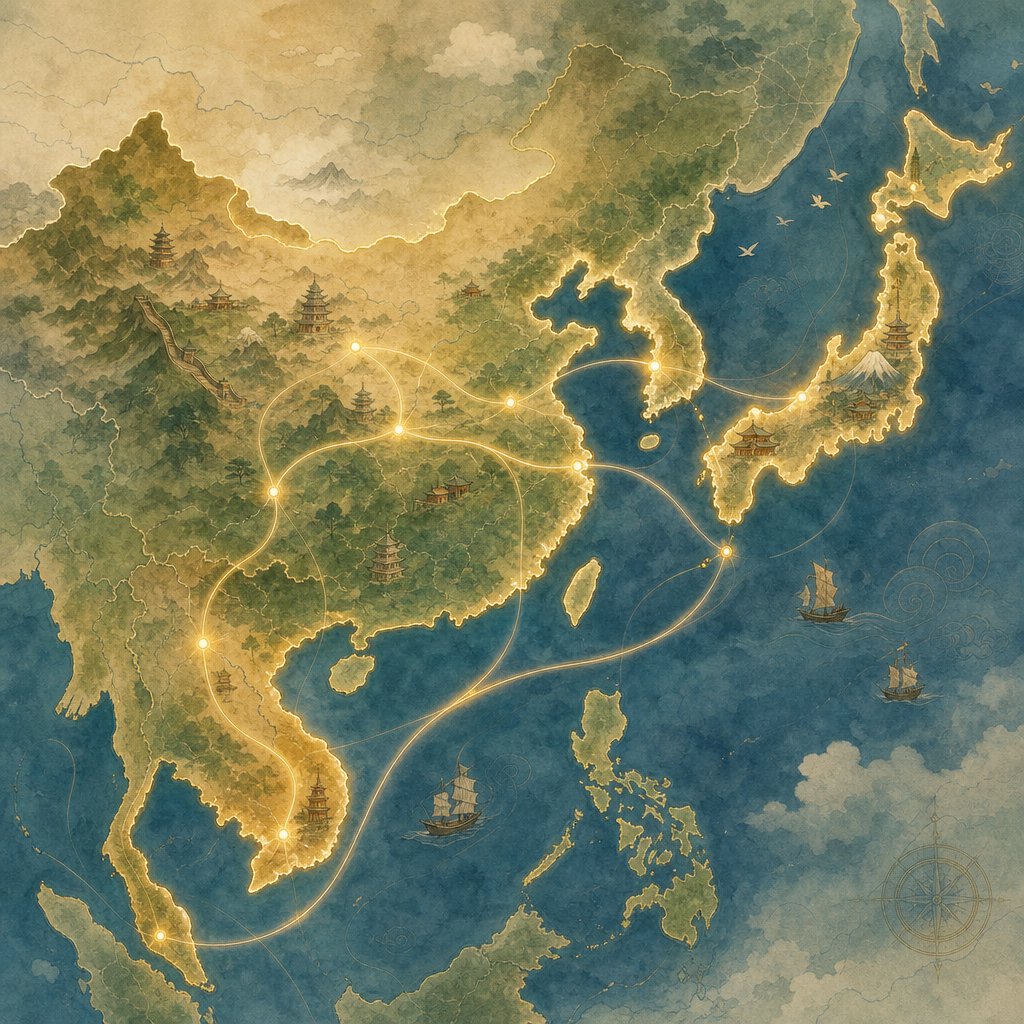
A word coined by Buddhist translators in 3rd-century China didn't stay within Chinese borders. As Buddhism traveled along trade routes and through royal courts into Japan, Korea, and Vietnam, it carried its vocabulary with it. 世界 was part of that linguistic cargo, and it landed in each new language with its meaning almost perfectly intact. Few terms illustrate the cultural reach of Chinese writing as clearly as this one.
世界 in Japanese, Korean, and Vietnamese
In Japanese, 世界 is pronounced sekai and means exactly what it means in Chinese: world. You'll hear it in everyday conversation, song lyrics, anime titles, and news broadcasts. The characters are written identically using kanji, the Japanese writing system borrowed from Chinese. In Korean, the same characters (written in hanja as 世界) are pronounced segye and carry the same meaning. The 2030 World Expo bid by Busan, for instance, uses 세계 (segye) in all its Korean-language materials. In Vietnamese, the term becomes the gioi (thế giới), rendered in the Latin-based Vietnamese alphabet but historically written with the same Chinese characters during the centuries when Vietnam used classical Chinese script.
What's remarkable is the stability. Pronunciation shifted according to each language's phonological rules, but the core meaning of chinese characters and their meanings in english — "world" as a totality of existence — remained unchanged across all four languages. This isn't always the case with shared vocabulary. Many Chinese-origin words drifted in meaning as they crossed borders. But 世界 held firm, likely because its Buddhist philosophical grounding gave it a precision that resisted reinterpretation.
| Language | Characters Used | Pronunciation | Meaning Differences |
|---|---|---|---|
| Chinese (Mandarin) | 世界 | shìjiè | Standard meaning: world, realm, universe |
| Japanese | 世界 (kanji) | sekai | Identical meaning; also used in compounds like 世界観 (worldview) |
| Korean | 세계 / 世界 (hanja) | segye | Identical meaning; hanja form now rarely written but understood |
| Vietnamese | thế giới (formerly 世界) | thế giới | Identical meaning; Chinese characters no longer used in daily writing |
Each language adapted the pronunciation to fit its own sound system. Japanese dropped the tones entirely and mapped the characters to on'yomi (Chinese-derived readings). Korean preserved a closer approximation of the Middle Chinese pronunciation. Vietnamese retained tonal distinctions but shifted the consonants and vowels. The written form, however, remained identical for centuries until Korea and Vietnam moved toward phonetic scripts.
Shared Kanji and Divergent Meanings
A common question among language learners is: do kanji and chinese characters have the same meaning? The short answer is sometimes yes, sometimes no. Japanese kanji were borrowed from Chinese, so they share the same visual forms. But over centuries of independent development, meanings diverged for many terms. The Japanese word 手紙 (tegami) uses characters that mean "hand" and "paper," but in Japanese it means "letter" while in Chinese it means "toilet paper." 勉強 (benkyō) means "study" in Japanese but "reluctantly" in Chinese.
世界 is one of the most stable exceptions. Across Chinese, Japanese, Korean, and Vietnamese, it has meant "world" for over a thousand years without significant semantic drift. This stability makes it a reliable anchor point for anyone studying chinese characters meanings english across multiple East Asian languages. If you know what 世界 means in one language, you know what it means in all four.
Why such consistency? The answer traces back to the compound's origins. 世界 entered all four languages through the same channel: Buddhist scripture. As the shared Sino-Japanese vocabulary developed, terms rooted in Buddhist philosophy tended to maintain stable meanings because they referred to specific doctrinal concepts rather than everyday objects that might be used differently across cultures. The word carried its definition with it, locked in by religious authority and textual tradition.
This single compound reveals something broader about how Chinese characters and meanings in english spread across East Asia. It wasn't just a writing system that traveled. It was an entire intellectual framework: Buddhist cosmology, Confucian ethics, literary conventions, and scientific terminology all moved together through the medium of Chinese characters. Following the Meiji Restoration in Japan, the flow even reversed. Japanese scholars coined new compounds using Chinese characters (called wasei-kango) to translate Western concepts like 哲学 (philosophy) and 電話 (telephone), and these terms were then re-imported into Chinese, Korean, and Vietnamese.
世界 itself predates that modern exchange. It belongs to the older, deeper layer of shared vocabulary, one that connects all four languages back to a moment when Indian Buddhist thought met Chinese linguistic creativity and produced a word that four civilizations still use daily. For learners working through chinese characters and meanings in english, recognizing these shared terms across languages is a powerful shortcut: one compound, four languages, one meaning.
Knowing the history and cross-linguistic reach of 世界 is one thing. Using it correctly in actual sentences, and avoiding the traps that trip up English speakers, is another challenge entirely.
Practical Examples and Common Mistakes to Avoid
You've seen the philosophy, the etymology, and the cross-linguistic reach. But when you sit down to write or speak a sentence using 世界, what does it actually look like in practice? The gap between understanding a word's meaning and using it fluently is where most learners stumble. These example sentences move from simple to complex, showing how 世界 behaves at every level of Chinese proficiency.
Beginner Sentences Using 世界
At the beginner stage, 世界 appears in short, declarative structures. You're working with basic subject-predicate patterns and common adjectives. If you're just starting to learn simple chinese characters and meanings, these sentences show how 世界 slots into everyday grammar without any special rules:
- 世界很大。
Pinyin: Shìjiè hěn dà.
English: The world is big. - 我想环游世界。
Pinyin: Wǒ xiǎng huányóu shìjiè.
English: I want to travel around the world. - 世界上有很多国家。
Pinyin: Shìjiè shàng yǒu hěn duō guójiā.
English: There are many countries in the world.
Notice the pattern in sentence 3: 世界上 (shìjiè shàng) literally means "on the world" and functions like the English phrase "in the world." This is one of the most common chinese characters and meanings combinations you'll encounter in daily reading. Beginners often try to say 在世界里 (inside the world), but 世界上 is the natural, idiomatic choice.
Intermediate and Advanced Usage
As your Chinese improves, 世界 starts appearing in idiomatic expressions, news headlines, and literary registers. These sentences show the word working harder, carrying cultural weight and appearing in more complex grammatical structures:
- 这个世界充满了奇迹。
Pinyin: Zhège shìjiè chōngmǎn le qíjì.
English: This world is full of wonders. - 他的发明改变了世界。
Pinyin: Tā de fāmíng gǎibiàn le shìjiè.
English: His invention changed the world. - 大千世界,无奇不有。
Pinyin: Dàqiān shìjiè, wú qí bù yǒu.
English: In this vast world, nothing is too strange to exist. - 她的音乐打开了一个全新的世界。
Pinyin: Tā de yīnyuè dǎkāi le yī gè quánxīn de shìjiè.
English: Her music opened up an entirely new world. - 世界观决定了一个人如何看待问题。
Pinyin: Shìjièguān juédìng le yī gè rén rúhé kàndài wèntí.
English: One's worldview determines how a person approaches problems. - 各国领导人呼吁维护世界和平。
Pinyin: Gè guó lǐngdǎorén hūyù wéihù shìjiè hépíng.
English: Leaders of various nations called for the preservation of world peace. - 一花一世界,一叶一菩提。
Pinyin: Yī huā yī shìjiè, yī yè yī pútí.
English: In a single flower, a whole world; in a single leaf, enlightenment.
Sentence 6 uses the Buddhist expression 大千世界 in a proverbial context. Sentence 10 is literary Chinese, the kind you'd encounter in classical poetry or philosophical writing. These examples demonstrate how popular chinese characters and meaning shift register depending on context: the same two characters can sound casual, journalistic, or ancient depending on the sentence surrounding them.
Common Mistakes English Speakers Make
When learners ask what do these chinese characters mean, they often assume 世界 maps perfectly onto every English use of "world." It doesn't. Here are the traps to watch for:
Confusing 世界 with 地球 (dìqiú). In English, "the world" and "the Earth" overlap heavily. You can say "the world is round" or "the Earth is round" interchangeably. In Chinese, these are distinct concepts. 地球 refers specifically to the physical planet, the sphere orbiting the sun. 世界 refers to the broader concept of human civilization, all of existence, or a domain of experience. Saying 世界是圆的 (the world is round) sounds philosophical rather than geographic. If you mean the planet, use 地球是圆的.
Using 世界 where 天下 fits better. In classical or literary contexts, especially when evoking imperial China or grand rhetorical sweep, 天下 carries more cultural weight. A martial arts novel character declaring dominion over "the world" would say 天下, not 世界. A news anchor reporting on global trade uses 世界. Mixing them up won't cause confusion, but it will sound slightly off, like using "the globe" in a Shakespeare monologue.
Forgetting 世界 as a metaphorical domain. English speakers sometimes overlook that 世界 can mean "a world" in the sense of a field or sphere. The expression 动物世界 (animal world) doesn't mean animals have their own planet. It means the domain or realm of animals. Similarly, 内心世界 (inner world) refers to someone's psychological landscape. This metaphorical extension is among the most common chinese characters and meanings patterns you'll encounter in intermediate reading.
Getting these distinctions right is what separates textbook knowledge from real fluency. And as you expand beyond 世界 into the broader ecosystem of culturally significant characters, you'll find that the same radical-based logic, the same compound-building patterns, apply to dozens of other terms worth learning.
Related Cultural Characters and Symbols
The compound-building logic you've seen with 世 and 界 doesn't exist in a vacuum. Chinese characters live in a cultural ecosystem where certain symbols carry enormous weight beyond their dictionary definitions. They appear on doorways during festivals, stamped in gold on red envelopes, embroidered into wedding textiles, and tattooed on skin. Understanding how these culturally loaded characters work, and how their internal structure reveals meaning, connects directly to the radical-analysis skills you've been building.
世界 in Celebrations and Cultural Symbols
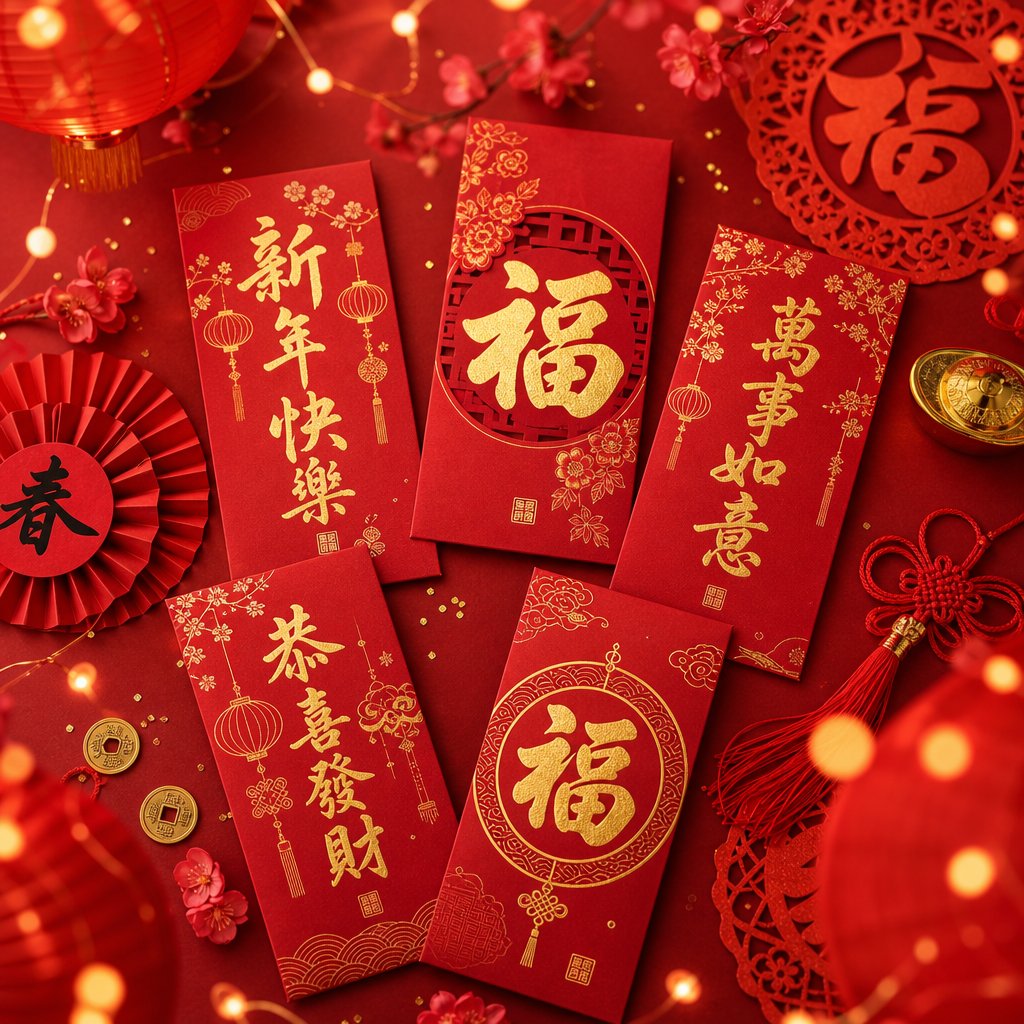
During Chinese New Year, you'll notice characters everywhere: pasted on doors, printed on lanterns, and decorating the red envelopes exchanged between family members. The symbol chinese red envelope character meaning depends on the occasion. For New Year, envelopes typically feature 福 (fu, blessings) or phrases like 恭喜发财 (gongxi facai, wishing you prosperity). For weddings, you'll see 囍 (double happiness). For birthdays, 寿 (longevity) takes center stage.
世界 itself appears in celebratory contexts through phrases like 世界和平 (world peace) on public banners and 新年快乐 (happy New Year) paired with wishes for a better world. But the real cultural action happens at the single-character level, where individual symbols become visual shorthand for entire value systems. The tradition of giving red envelopes (hongbao) dates back to legends about protecting children from evil spirits, and the characters printed on those envelopes are chosen with care. Each one is a compressed wish, a single brushstroke prayer for the recipient's future.
This is where the radical-analysis approach pays off. When you encounter an unfamiliar character on a decoration or envelope, you don't need to panic. If you can identify the radical, you already have a clue about its semantic field, just as 田 in 界 told you the character relates to bounded land.
Related Characters Worth Learning
So what does the chinese character fu mean, and why does it dominate festive decorations? The chinese character fu meaning centers on blessings, good fortune, and happiness. 福 (fu) combines the radical 礻(spirit/divine) on the left with 畐 (abundance) on the right, literally suggesting "divine abundance" or "blessings from above." It's one of the most recognized symbols in Chinese culture, often displayed upside down on doors because the word for "upside down" (倒, dao) sounds like "to arrive" (到, dao), creating a visual pun meaning "blessings have arrived."
Beyond 福, here are other culturally essential characters that learners encounter alongside 世界 when exploring chinese new year characters and meanings:
- 福 (fu) — Blessings, good fortune. Appears on red envelopes, door decorations, and New Year banners. Its radical 礻signals connection to the spiritual realm. This is the character people most often ask about when researching the good fortune chinese red envelope character meaning.
- 寿 / 壽 (shou) — Longevity. Common on birthday gifts for elders and in traditional art. The character's complex structure (simplified to 寿) historically depicted a long, winding path, symbolizing a long life.
- 喜 (xi) — Happiness, joy. Doubled into 囍 (double happiness) for weddings. The character contains 口 (mouth) components, suggesting spoken celebration.
- 爱 / 愛 (ai) — Love. The traditional form 愛 contains 心 (heart) at its center, making it one of those chinese characters that visually encode their meaning. The simplified form 爱 removed the heart component, a change that has sparked cultural debate.
- 和 (he) — Harmony, peace. Built from 禾 (grain) and 口 (mouth), suggesting that when everyone has food to eat, there is peace. Central to Chinese philosophical values.
- 安 (an) — Safety, peace. Shows 女 (woman) under 宀 (roof), the idea of a woman safe at home. Used in compounds like 平安 (peace and safety), a common New Year wish.
- 春 (chun) — Spring. Appears on countless New Year decorations because the festival marks the beginning of spring. Combines 日 (sun) with plant-related elements, evoking new growth.
Each of these characters follows the same structural logic you've seen with 世 and 界. Radicals provide semantic clues. Phonetic components hint at pronunciation. And the compound-building system lets single characters combine into richer expressions: 和平 (peace), 平安夜 (Christmas Eve, literally "peaceful night"), 福气 (good fortune as a quality), 世界和平 (world peace).
You'll also encounter these characters as emoji chinese characters meaning searches online, where people try to decode symbols they've seen in messages or social media posts. The same decomposition strategy works: identify the radical, check the component parts, and the meaning starts to emerge even before you reach for a dictionary.
This pattern recognition is the real skill underneath vocabulary memorization. Once you understand that 礻relates to spirits and rituals, you can make educated guesses about unfamiliar characters containing that radical: 祝 (to wish/bless), 祈 (to pray), 神 (god/spirit). Once you know 田 relates to fields and land, characters like 畜 (livestock), 略 (strategy, originally about dividing land), and of course 界 (boundary) become partially transparent. The question then becomes: how do you systematically find and verify these meanings when you encounter a character you've never seen before?
How to Find the Meaning of Any Chinese Character
You've just spent an entire article decomposing 世界 into radicals, phonetic components, and compound-building patterns. That same toolkit works for every unfamiliar character you'll ever encounter. The question isn't whether you can decode new characters. It's which method to reach for first.
Methods for Identifying Unknown Characters
When you spot a character you don't recognize, whether on a street sign, in a text message, or printed on a red envelope, you have several reliable strategies. Each one suits a different situation, and experienced learners typically combine them.
- Radical lookup. Identify the radical (the semantic component, usually on the left or top). Count the remaining strokes. Then search in a chinese character meaning dictionary organized by radical index. For example, if you see an unknown character with 氵(water radical) on the left and 5 additional strokes, you can narrow it down to a handful of candidates. Online tools like MDBG's radical table make this process much faster than flipping through paper pages.
- Stroke count lookup. If you can't identify the radical, count the total number of strokes and browse characters with that count. This is slower but works as a fallback when the radical isn't obvious, like with characters such as 五 (where the radical is the non-intuitive 二).
- Handwriting input (draw to find). Open your phone's handwriting keyboard or use Google Translate's draw feature. Trace the character stroke by stroke on the touchscreen. The recognition software matches your input against its database and suggests candidates. This is the fastest method for most learners once you understand basic stroke order. You can draw a chinese character to find meaning in seconds, even if you know nothing else about it.
- OCR (optical character recognition). Point your phone camera at printed text using apps like Pleco or Google Lens. The app identifies the character instantly and provides definitions, pinyin, and example sentences. This works best with clearly printed characters rather than handwritten ones.
- Contextual guessing with wildcards. If you recognize one character in a two-character word but not the other, search using a wildcard. In Pleco, typing "@界" returns all words ending in 界, letting you find the unknown first character through context.
- Phonetic component guessing. If the character contains a phonetic component you recognize, try typing that pronunciation in pinyin. For instance, seeing 介 inside 界 might prompt you to try "jie" as a pronunciation guess, which would lead you straight to the correct character.
Each method has tradeoffs. Radical lookup builds deep structural understanding but requires some existing knowledge. The chinese character meaning draw approach is beginner-friendly but depends on getting stroke order roughly right. OCR is nearly effortless for printed text but doesn't teach you anything about the character's internal logic. The best learners rotate between methods depending on context.
Building Your Character Knowledge Systematically
Finding a single character's meaning solves an immediate problem. Building a system for expanding your vocabulary solves the long-term one. The compound-building logic you've seen throughout this article, where 世 branches into 世代, 世纪, 前世, and 界 branches into 边界, 眼界, 学界, is the key to scaling your knowledge efficiently.
Here's a practical approach for working outward from any character you've already learned:
- Start with a known character. Take 界, for example. You know it means boundary or realm.
- Search for compounds containing that character. Use a chinese characters list and meanings resource or dictionary app to find all common words built from 界. You'll discover 界限 (boundary), 视界 (field of view), 业界 (industry circles), and dozens more.
- Identify the pattern. Notice that 界 consistently contributes the idea of "domain" or "boundary" to every compound. This confirms your understanding and makes each new word partially predictable.
- Branch into the partner characters. From 学界, you now have 学. Search compounds with 学: 学生 (student), 学校 (school), 学问 (knowledge). Each new character opens another branch.
- Revisit radicals when stuck. When a new character looks completely opaque, fall back on radical analysis. Identify the semantic component, check its meaning family, and the character becomes less mysterious.
This branching method mirrors how Chinese vocabulary actually works. Characters aren't isolated units. They're nodes in a network, and every new connection you make strengthens your ability to decode the next unfamiliar character without help. The radical analysis you practiced with 田 in 界 and the layered strokes of 世 isn't just trivia. It's the most sustainable long-term strategy for reading Chinese independently, turning every new character from a wall into a puzzle you already have tools to solve.
Frequently Asked Questions About the World Chinese Character
1. What is the Chinese character for world?
The Chinese word for 'world' is 世界 (shijie), a two-character compound. Unlike English, Chinese requires two characters working together to express this concept. The first character 世 (shi) represents time and generations, while 界 (jie) represents space and boundaries. Together they form a philosophical statement: the world is the totality of all time flowing through all bounded space. This compound originated from Buddhist scripture translations in the 3rd century CE.
2. Why does Chinese use two characters to write 'world' instead of one?
Chinese uses two characters because the concept of 'world' in Buddhist philosophy requires both a temporal and spatial dimension. The compound 世界 was created by translators rendering the Sanskrit term lokadhatu, where loka meant generations of beings in time and dhatu meant a bounded realm in space. No single Chinese character could hold both dimensions, so translators paired 世 (time) with 界 (space) to preserve the original cosmological meaning that reality encompasses both endless cycles and structured domains.
3. What is the difference between 世界 and 天下 in Chinese?
世界 and 天下 both translate to 'world' but carry very different philosophical weight. 天下 (tianxia, 'all under heaven') is a native Chinese term rooted in Confucian political thought, placing China at the center of a hierarchical civilization. 世界 entered Chinese through Buddhist translation and describes a cosmological totality with no fixed center, encompassing infinite realms and temporal cycles. In modern usage, 世界 is the standard neutral term for 'world,' while 天下 appears in literary, historical, or rhetorically grand contexts.
4. Do Japanese kanji and Chinese characters for 'world' have the same meaning?
Yes, 世界 is one of the most stable shared terms across East Asian languages. In Japanese it is pronounced sekai, in Korean segye, and in Vietnamese the gioi. All four languages inherited this compound through Buddhist scripture, and its meaning has remained virtually identical for over a thousand years. This consistency is unusual because many shared characters diverged in meaning over time. The stability of 世界 is attributed to its precise Buddhist doctrinal definition, which resisted reinterpretation as it crossed cultural borders.
5. How can I look up the meaning of a Chinese character I don't recognize?
You have several practical methods. The fastest for beginners is handwriting input: draw the character on your phone's touchscreen using Google Translate or apps like Pleco, and the software identifies it instantly. For deeper understanding, try radical lookup by identifying the semantic component (usually on the left or top) and searching a dictionary organized by radical. You can also use OCR by pointing your phone camera at printed text, or guess the pronunciation from a phonetic component you recognize. Combining these methods builds both immediate answers and long-term character recognition skills.