Why Chinese Brands Need a Western Naming Strategy
Imagine you've built a brand in China with a name that carries layers of meaning — tonal nuance, visual symbolism in its characters, cultural resonance spanning centuries. Then you decide to expand westward, and suddenly all of that richness needs to fit into 26 letters with zero tonal distinction. That's the core challenge when figuring out how to name a Chinese brand for the Western market.
Why Western Naming Is Different for Chinese Brands
Most naming guides out there tackle the opposite problem: helping Western companies like Coca-Cola or BMW find a Chinese name that sounds right in Mandarin. There's plenty of advice on that direction. But Chinese brand naming for Western markets is a fundamentally different exercise. You're not adapting an alphabetic name into characters — you're compressing a character-based, tonal, culturally symbolic identity into a flat phonetic system where none of those layers survive automatically.
Chinese brands expanding to a Western audience face hurdles that Western brands entering China simply don't encounter. Your original name might be two characters that evoke prosperity and craftsmanship to a Chinese speaker, but romanized into pinyin, it becomes a string of syllables that English speakers can't pronounce, can't remember, and might accidentally associate with something embarrassing in French or Spanish.
The core tension: a Chinese brand name rich with tonal meaning, visual symbolism, and cultural depth gets flattened into a non-tonal alphabetic system where all those layers vanish unless you deliberately rebuild them.
The Reverse Direction Gap Most Guides Miss
Chinese companies are rewriting the global expansion playbook, with cross-border marketing and brand localization becoming central strategic priorities. Yet the naming challenges for Chinese brands abroad remain underserved in English-language resources. The question isn't simply "what sounds good in English" — it's how to preserve heritage, signal quality, and gain acceptance simultaneously.
This creates a decision with real stakes. Get the name right, and Western consumers engage with your brand on its own terms. Get it wrong, and you're fighting an uphill battle against mispronunciation, confusion, or unintended associations before your product even gets a fair hearing. The good news: there's a clear framework for making this decision well, starting with understanding which naming approach fits your specific brand context.
Step 1 Choose Your Naming Approach
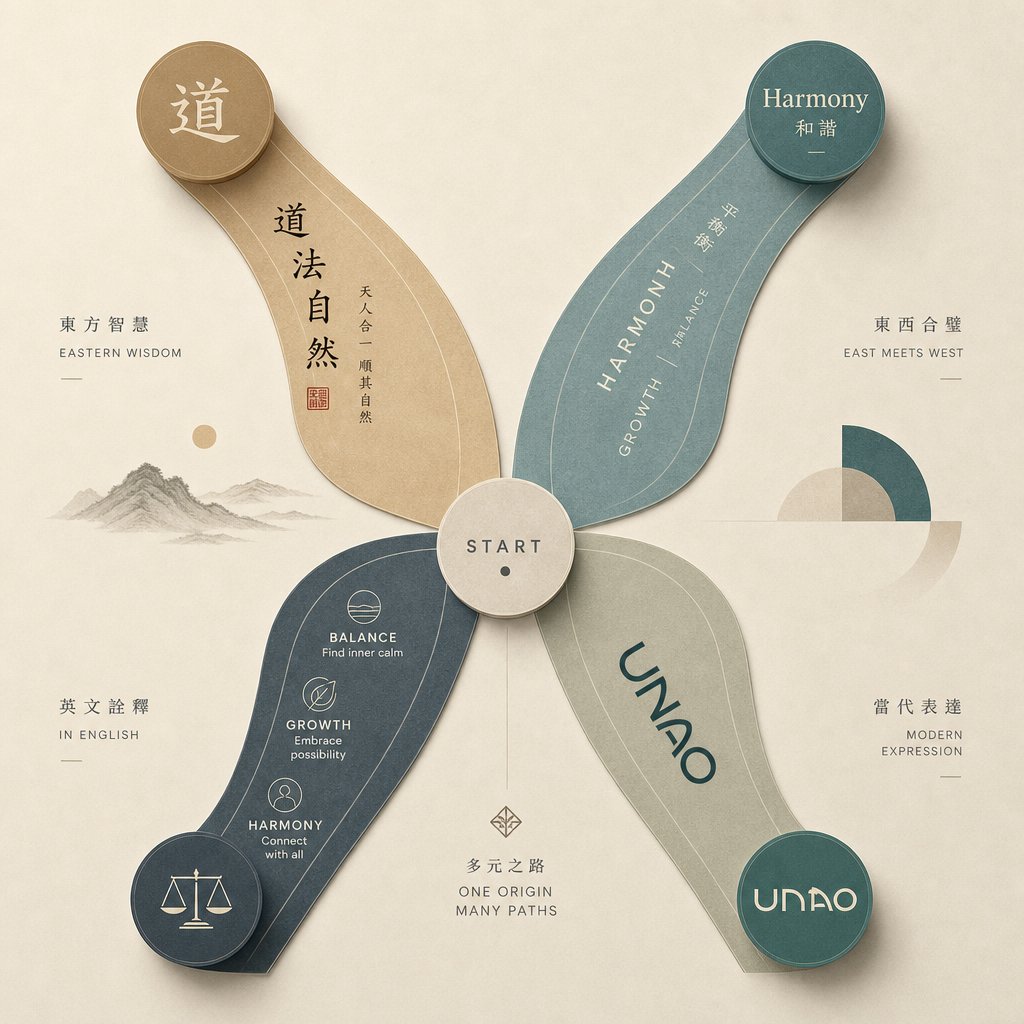
Every Chinese brand heading west faces the same fork in the road: what do you do with your existing name? You can't just romanize it and hope for the best. You also can't abandon it without losing something. The reality is that Chinese to English brand name translation strategies fall into four distinct paths, each with clear tradeoffs depending on your industry, audience, and long-term goals.
Four Naming Paths From Chinese to Western Markets
Think of these four approaches as a spectrum. On one end, you keep everything from your original Chinese name. On the other, you start completely fresh. In between, you blend sound or meaning to bridge both worlds.
1. Keep the Romanized Pinyin
This means using your Chinese name's pinyin spelling directly as your Western brand name. Brands like Huawei and Xiaomi took this route. You'll notice this approach preserves a direct link to your Chinese identity — anyone who searches your brand in China or the West finds the same name. The downside? Western consumers often struggle with pronunciation. "Xiaomi" still gets mangled in English conversations years after the brand became globally known.
2. Phonetic Adaptation
Here, you modify the sound of your Chinese name to create something more natural for Western tongues while retaining an echo of the original. Phonetic adaptation for a Chinese brand name means finding syllables that Western speakers can say comfortably while still sounding recognizably connected to the source. It's a middle ground — you don't lose your origin story, but you smooth out the rough edges that trip up non-Mandarin speakers.
3. Semantic Translation (Meaning Transfer)
Instead of preserving sound, you preserve meaning. If your Chinese brand name means "golden mountain," you might explore English names that evoke that same imagery. This works well when your brand name carries strong conceptual weight that resonates across cultures. The risk is that direct meaning transfers can sound awkward or overly literal in English — what feels poetic in Mandarin might land flat in a Western market.
4. Create an Entirely New Western Name
Some brands choose to create a new Western name for their Chinese company that has no phonetic or semantic connection to the original. This gives you maximum flexibility to craft something perfectly suited to Western naming conventions, category expectations, and trademark availability. The tradeoff is significant: you sever brand continuity between your Chinese and Western identities, essentially running two separate brands.
Strategic Tradeoffs of Each Approach
Choosing between these four paths isn't about which one is "best" — it's about which one fits your specific situation. A Chinese brand naming approaches comparison reveals that each strategy excels in different contexts.
| Approach | Description | Pros | Cons | Best Suited Industries |
|---|---|---|---|---|
| Keep Romanized Pinyin | Use the direct pinyin spelling of your Chinese name as-is | Preserves full heritage; single global identity; no brand fragmentation | Pronunciation difficulty; low memorability for Western consumers; potential unintended associations in other languages | Tech, electronics, automotive (where brand scale eventually forces recognition) |
| Phonetic Adaptation | Modify the sound to be Western-friendly while echoing the original | Balances origin with accessibility; easier pronunciation; maintains partial brand link | May lose tonal meaning; requires careful testing across multiple Western languages; can sound artificial if poorly executed | Consumer goods, lifestyle brands, food and beverage |
| Semantic Translation | Translate the meaning of the Chinese name into English or a Western equivalent | Conveys brand story and values; culturally meaningful; can differentiate in crowded markets | May sound awkward or overly literal; loses phonetic connection to original; harder to trademark common words | Beauty, wellness, tea, traditional crafts, heritage brands |
| New Western Name | Create a completely independent name with no link to the Chinese original | Maximum flexibility; optimized for Western ears; clean trademark landscape; fits category conventions perfectly | Severs brand continuity; requires building equity from scratch; dual-brand management costs | Fashion, SaaS, B2B services, any category where Chinese origin may trigger bias |
A pinyin brand name for the Western market works best when you have the marketing budget to teach consumers how to say it — the way Huawei eventually did through sheer global presence. Smaller brands rarely have that luxury. Phonetic adaptation tends to be the sweet spot for mid-size companies that want recognition without confusion. Semantic translation shines when your brand name's meaning is genuinely compelling and culturally transferable. And creating something entirely new makes sense when you're entering a category where Western consumers have strong expectations about what a brand "should" sound like.
The approach you choose here shapes every decision that follows — from how you position yourself against Western competitors to whether your Chinese heritage becomes a marketing asset or stays behind the scenes. That positioning question, it turns out, depends heavily on what your target industry expects a brand name to look and sound like in the first place.
Step 2 Align With Western Industry Naming Conventions
Every Western industry has unwritten rules about what a brand name should feel like. Consumers don't consciously think about these patterns, but they register them instantly. A two-syllable invented word signals "tech startup." A French-sounding surname signals "luxury." A warm, descriptive phrase signals "artisan food." How Western consumers perceive brand names is shaped heavily by these category-level expectations — and a Chinese brand entering the market either plays within them or deliberately breaks them.
Industry Naming Patterns in Western Markets
Spend ten minutes browsing competitors in your target category and you'll notice the patterns immediately. Western market naming conventions by industry cluster around surprisingly consistent formulas:
- Technology and SaaS: Short invented words, typically two syllables, often ending in a vowel or soft consonant. Think of how tech brand naming patterns in English lean toward punchy neologisms — crisp, modern, easy to type into a search bar. Numbers or alphanumeric combinations also work here for hardware products.
- Luxury and Fashion: Founder surnames, heritage terms, or words borrowed from French, Italian, or Latin. These names signal craftsmanship and legacy. Length is acceptable — even desirable — because it implies complexity and sophistication.
- Consumer Packaged Goods: Descriptive or evocative names that hint at the product's benefit or emotional promise. These tend to be real English words or recognizable blends that consumers can parse without effort.
- B2B and Professional Services: Compound names, acronyms, or professional-sounding invented words. Reliability and competence matter more than personality here. Names often feel deliberate and structured rather than playful.
- Food and Beverage: Geographic references, ingredient nods, or warm sensory language. Origin stories carry weight in this category, which can actually benefit Chinese brands in segments like tea, spices, or specialty ingredients.
- Health and Wellness: Clean, natural-sounding names — often short with soft consonants. Latin or Greek roots appear frequently, lending a sense of scientific credibility without feeling clinical.
These patterns exist because they work as cognitive shortcuts. Research on brand name psychology shows that names with moderate congruence to their category trigger a satisfying "aha" moment in consumers — familiar enough to feel right, distinct enough to be memorable. A name that completely violates its category norms forces consumers to work harder to place it, which can either intrigue them or confuse them depending on execution quality.
Matching Your Category Expectations
Before settling on a Western name, map out ten to fifteen competitors in your target category and note their naming structures. Are they short or long? Invented or real words? Do they reference origin, function, or emotion? This exercise reveals the industry-specific naming rules for foreign brands that no style guide will spell out explicitly.
Here's the strategic tension: conforming to category norms makes your brand feel like it belongs, which reduces friction for new customers. Breaking those norms can differentiate you — but only if the rest of your branding (visual identity, messaging, product quality) supports the deviation. A Chinese electronics brand with a three-syllable poetic name might stand out beautifully, or it might simply confuse shoppers scanning a shelf of two-syllable tech names.
The safest path for most Chinese brands entering Western markets is to work within category conventions while adding a subtle point of distinction. Save the rule-breaking for after you've established a foothold. Category alignment gets you in the door; your product keeps you in the room.
Of course, even a perfectly category-aligned name can fail if Western speakers physically can't say it. The phonetic dimension — how a name actually feels in someone's mouth — introduces a whole separate layer of risk that romanized Chinese names are especially vulnerable to.

Step 3 Identify and Avoid Phonetic Pitfalls
A brand name might look fine on paper and still die in someone's mouth. This is the reality for many romanized Chinese names entering Western markets. Pinyin was never designed for English speakers — or French, German, or Spanish speakers for that matter. It was built as a phonetic system for native Mandarin speakers who already knew the sounds. When Western consumers encounter pinyin on a product label, they apply their own language's phonetic rules, and the results range from mildly wrong to completely unrecognizable.
Common Phonetic Pitfalls in Romanized Chinese Names
The root problem is structural. Mandarin Chinese uses four tones to distinguish meaning, but romanization strips all tonal information away. A syllable like "ma" could mean mother, hemp, horse, or scold depending on tone — yet in pinyin without diacritics, it's just "ma." That tonal flattening is unavoidable in Western markets, but it's only the beginning of the phonetic challenges.
Chinese pinyin sounds difficult for Westerners because several initials and finals have no equivalent in English or other European languages. As Hacking Chinese emphasizes, pinyin is not English — you should never guess pronunciation based on English spelling conventions. Yet that's exactly what Western consumers do when they see your brand name for the first time.
Here are the specific pinyin pronunciation problems for English speakers that trip up brand names most often:
- The "x" initial: Pinyin "x" represents a palatal fricative that doesn't exist in English. Western speakers default to "z," "ks," or "sh" — so "Xiaomi" gets pronounced at least three different ways in any given English-speaking office.
- The "q" initial: In English, "q" almost always pairs with "u" and sounds like "kw." Pinyin "q" is an aspirated palatal affricate closer to "ch." A brand name starting with "q" will be mispronounced by virtually every Western consumer on first encounter.
- The "zh" combination: English speakers read this as a voiced sound (like the "s" in "measure"), but in Mandarin it's an unvoiced retroflex affricate — closer to a hard "j" with the tongue curled back.
- The "c" initial: Pinyin "c" sounds like "ts" — not the "k" or "s" that English speakers expect. A brand name like "Cainiao" gets butchered before anyone even reaches the second syllable.
- The "-iu" and "-ui" finals: These are abbreviated spellings. As phonetic research shows, "-iu" is actually pronounced "-iou" and "-ui" is pronounced "-uei." Western speakers who read them at face value produce sounds that don't match the intended pronunciation at all.
- Multi-syllable pinyin strings: Names with three or more syllables in pinyin (like "Zhongguancun") overwhelm Western speakers with unfamiliar consonant clusters and syllable boundaries they can't parse.
Beyond mispronunciation, romanized Chinese names carry the risk of unintended meanings in Western languages. A perfectly respectable Chinese brand name might accidentally sound like a slang term, a medical condition, or something vulgar in English, French, or German. This isn't hypothetical — it's one of the most common and expensive mistakes in cross-border branding.
Testing Pronunciation Across Western Languages
Here's something many brands miss: a name that works phonetically in English may fail entirely in other Western markets. Each European language applies its own reading rules to unfamiliar letter combinations. The French will nasalize vowels before "n." Germans will harden soft consonants at the end of syllables. Spanish speakers will add vowel sounds between consonant clusters that feel natural in English.
A naming audit — the kind offered by linguistic consultancies — specifically tests proposed names against these cross-language pitfalls. The process typically examines whether a name is easy to pronounce in each target market, whether it triggers negative linguistic associations, and whether it projects the right tone for local audiences.
To test brand name pronunciation across Western languages effectively, follow this process:
- Record native speakers reading the name cold. Give them no pronunciation guidance — just the written name. Note how they naturally say it. If five English speakers produce three different pronunciations, the name has a problem.
- Check for unintended meanings in each target language. Run the name past native speakers of English, French, German, Spanish, Italian, and Portuguese at minimum. Ask specifically about slang, informal associations, and phonetic similarities to negative words.
- Test memorability after a single exposure. Say the name once in conversation, then ask people to repeat it an hour later. Names that can't survive this basic recall test won't survive real-world word-of-mouth.
- Evaluate across regional accents. British, American, and Australian English speakers may handle the same name differently. A name that flows in a London accent might stumble in a Texas drawl.
- Listen for the "telephone test." Can someone hear the name spoken aloud and spell it correctly enough to find it online? If not, you're losing customers at the most basic discovery stage.
Chinese brand name phonetic testing isn't a one-time checkbox — it's an iterative process. The Spanish brand Danone learned this when American consumers kept mispronouncing it as "Dan One," eventually forcing an adaptation to "Dannon" for the US market. Chinese brands face even steeper phonetic gaps, which makes early and rigorous testing non-negotiable.
Phonetic viability narrows your options, but it doesn't make the final decision for you. The bigger strategic question — whether your Western-facing name should visibly connect to your Chinese parent brand or stand entirely on its own — shapes how consumers perceive not just your name, but your entire brand story.
Step 4 Decide Your Brand Architecture Strategy
Your name passes the pronunciation test. It fits your industry's conventions. But there's a deeper structural question that determines how that name actually lives in the market: how much of your Chinese identity should be visible to Western consumers? This is the brand architecture decision, and it shapes everything from packaging design to investor decks to how your customer service team introduces themselves on calls.
Visible vs Hidden Chinese Brand Origin
Think of Chinese brand architecture for Western markets as a spectrum with three positions:
- Full transparency: The Chinese parent brand is front and center. Your Western name is clearly presented as part of a Chinese company, with Chinese characters sometimes appearing alongside the English name. Heritage is a feature, not a footnote.
- Connected but distinct: The Western-facing name stands on its own in consumer-facing materials, but the Chinese parent brand is acknowledged — on the corporate website, in press releases, or with a subtle "by [Chinese parent]" endorsement. Consumers can find the connection if they look, but it's not the lead story.
- Complete separation: The Western brand operates as an independent entity with no visible Chinese connection. Different name, different visual identity, different brand narrative. The Chinese origin exists only in corporate filings and supply chain documentation.
Each position carries real strategic weight. Full transparency builds trust with consumers who value authenticity — and as Design Bridge observes about brands like BYD and Lee Kum Kee, none of these successful global Chinese brands hide their origins, but equally, none make Chinese heritage their only story. Complete separation avoids potential bias but sacrifices the brand equity you've already built at home.
Building a Brand Architecture That Serves Both Markets
Here's what makes this decision complicated: Western consumer perception of Chinese brands varies dramatically by industry. In tech and electronics, Chinese origin increasingly signals innovation and value — consumers associate it with cutting-edge manufacturing and competitive pricing. BYD's European sales grew 178% year-over-year precisely because the brand leaned into its identity as a Chinese EV innovator rather than disguising it.
But in categories like food safety, children's products, or luxury fashion, some Western consumers still carry skepticism rooted in outdated perceptions. The bias isn't fair, and it's shifting — particularly among younger consumers. Research shows 73% of Gen Z consumers prioritize transparency about sourcing and labor practices over brand mythology. Factory-floor TikTok videos from Chinese manufacturers are actively reshaping how Western audiences perceive Chinese-made goods, turning origin visibility into a trust signal rather than a liability.
So should Chinese brands hide their origin? The honest answer depends on your category, your target demographic, and your confidence in the product story you can tell. A brand origin strategy for Chinese companies entering premium Western segments might look very different from one targeting value-conscious Gen Z shoppers who actively reward transparency.
The key question every Chinese brand owner must answer: Is your Chinese origin a story worth telling in your target category, or is it a detail that distracts from the value your product delivers?
There's no universal right answer. Mandarin Oriental maintains its Eastern identity as a luxury asset. Chinese EV makers position their origin as proof of technological capability. Lee Kum Kee leverages 135 years of Chinese culinary heritage as its core differentiator. Each made a deliberate architectural choice that aligned origin visibility with category expectations.
What matters is that the decision is intentional rather than accidental. Too many Chinese brands default to hiding their origin out of anxiety rather than strategy — or reveal it inconsistently, creating confusion about what the brand actually stands for. The architecture you choose becomes the foundation for every naming, messaging, and positioning decision that follows. And making that choice well requires a structured framework that accounts for your specific market context, brand equity, and long-term ambitions.

Step 5 Apply the Naming Decision Framework
Strategy, phonetics, architecture — you've absorbed the principles. But principles don't make decisions for you. What you need is a structured way to weigh your specific variables and land on the naming approach that actually fits your brand's situation. A Chinese brand naming decision framework eliminates guesswork by forcing you to evaluate the factors that matter most before committing to a direction.
Decision Framework for Your Naming Strategy
Not every Chinese brand faces the same constraints. A Shenzhen electronics company targeting Amazon shoppers in the US operates in a completely different reality than a Yunnan tea producer building a premium presence across Europe. The right naming path depends on five key variables working together — not any single factor in isolation.
Walk through these evaluation steps in order. Each one narrows your options until the best-fit approach becomes clear:
- Define your target market scope. Are you entering a single English-speaking market (US, UK, Australia) or building a pan-European presence that spans French, German, Spanish, and Italian-speaking consumers? A single-market entry gives you more phonetic flexibility — you only need the name to work in one language. Pan-European expansion demands a name that survives pronunciation across multiple language systems without triggering negative associations in any of them. If your ambition is pan-European from day one, eliminate any candidate name that relies on English-specific phonetic comfort.
- Identify your industry category's origin sensitivity. Does your target category reward or penalize Chinese origin? Tea, traditional medicine, martial arts equipment, silk, ceramics, and certain electronics categories carry positive Chinese associations in Western markets. China's tea industry is actively building internationally recognized brands precisely because Chinese origin signals authenticity and expertise in that space. Fashion, baby products, food safety-sensitive categories, and luxury goods may still encounter skepticism. If your category values Chinese heritage, lean toward preserving Chinese elements in your name. If it doesn't, a new Western name or heavy phonetic adaptation becomes the safer bet.
- Assess your brand positioning: premium or value. Premium positioning benefits from names that feel crafted, intentional, and story-rich — whether that story is Chinese heritage or Western sophistication. Value positioning benefits from names that are simple, memorable, and frictionless. A premium Chinese tea brand can afford a semantically translated name that requires explanation because the explanation itself becomes part of the luxury narrative. A value-oriented consumer electronics brand needs something a shopper can remember after seeing it once on a product listing.
- Evaluate your existing brand equity in China. How much have you invested in your current Chinese name? If you have significant domestic recognition — millions in marketing spend, strong consumer loyalty, media coverage tied to your name — severing that connection entirely carries a real cost. Chinese brand equity in Western markets matters when your domestic reputation can transfer (through diaspora communities, business press coverage, or industry recognition). Brands with strong Chinese equity should explore pinyin retention or phonetic adaptation before jumping to a completely new name. Brands that are relatively unknown domestically have less to lose by starting fresh.
- Clarify your long-term global ambitions. Is this Western expansion a focused experiment in one market, or the first step toward a unified global brand? If you plan to eventually operate under one name worldwide, you need a name that works across both Chinese and Western contexts from the start — which typically means phonetic adaptation or a carefully chosen new name that can also function in Chinese markets. If your Western operation will always remain separate from your Chinese business, you have more freedom to create something entirely independent.
Matching Your Brand Context to the Right Approach
These five variables interact. Here's how to read the pattern they create:
Preserve Chinese elements (pinyin or semantic translation) when three or more of these conditions are true: your category values Chinese origin, you have strong existing brand equity, your positioning is premium, your target market is single-language, and your global ambition includes eventual brand unification.
Create a new Western name when: your category carries origin bias, you're targeting multiple Western language markets simultaneously, your positioning is value-oriented, your Chinese brand equity is low, or you plan to operate Western and Chinese businesses independently.
Use phonetic adaptation as your default when the signals are mixed — some factors point toward preservation, others toward reinvention. Phonetic adaptation is the most flexible middle path because it maintains a thread of connection without demanding that Western consumers learn Mandarin pronunciation.
Consider how this plays out in practice. A brand like CHAGEE — one of China's fastest-growing tea beverage chains with over 6,000 stores — chose a name that phonetically echoes Chinese tea culture while remaining pronounceable for Western consumers. The category (tea) rewards Chinese origin. The positioning is premium. The equity is massive domestically. All signals pointed toward preserving Chinese elements, and the phonetic adaptation delivers exactly that.
Contrast that with a Chinese SaaS company targeting US enterprise buyers. The category has no Chinese-origin advantage. The buyers expect professional, Western-sounding names. The domestic brand equity doesn't transfer to American IT procurement teams. Every signal points toward creating a fresh Western name optimized for the category.
How to choose a Western name for your Chinese brand ultimately comes down to honest self-assessment. The framework doesn't tell you what your brand should be — it reveals what your brand's context already demands. Use this brand naming checklist for international expansion as a filter, not a formula. Run your top three name candidates through each variable and see which approach survives all five without creating a contradiction.
A clear naming direction, though, is only as good as your ability to legally own it. The Western trademark landscape is crowded, domain names are scarce, and a name you love might already belong to someone else in your target market — which makes legal clearance the next critical gate before you invest in building equity around any name.
Step 6 Secure Trademarks and Digital Presence
You've landed on a name that sounds right, fits your category, and aligns with your brand architecture. But here's the uncomfortable truth: none of that matters if someone else already owns it. Trademark registration for a Chinese brand in the US and EU is where naming strategy meets legal reality — and where many Chinese companies discover that their perfect name is already taken, contested, or sitting in a domain squatter's portfolio.
The Western trademark landscape is dense. Millions of marks are already registered across dozens of classes in every major market. Romanized Chinese names create a specific problem: short pinyin syllables like "li," "mei," or "hua" overlap with existing Western trademarks, personal names, and established brands in ways you might not anticipate until a cease-and-desist letter arrives.
Trademark Search Process for Western Markets
A USPTO trademark search for Chinese companies follows the same mechanics as any applicant — but the pitfalls are different. Your romanized name might conflict with marks you've never heard of because they exist only in Western markets. A phonetically adapted name might be too close to an existing registration in a related goods class. Even a brand-new invented name needs clearance against millions of existing entries.
Here are the key registries you'll need to search:
- USPTO (United States Patent and Trademark Office): Covers the US market. Search their TESS database for identical and phonetically similar marks in your goods/services class.
- EUIPO (European Union Intellectual Property Office): A single registration covers all 27 EU member states. Their eSearch plus database lets you check EU-wide conflicts.
- UKIPO (UK Intellectual Property Office): Post-Brexit, the UK requires separate registration from the EU. Search their trademark database independently.
Follow this step-by-step clearance process before investing in any name:
- Run preliminary searches yourself. Use the free databases at each registry to check for identical matches. Search your exact name, common misspellings, and phonetic equivalents. This eliminates obvious conflicts before you spend money on professional searches.
- Commission a comprehensive trademark search. Hire a trademark attorney or specialized search firm to run a full clearance report. They'll check not just identical marks but also "confusingly similar" ones — names that sound alike, look alike, or convey similar commercial impressions. This catches conflicts that free database searches miss.
- Check across relevant Nice classes. Trademarks are registered by goods/services category (Nice Classification). Your name might be available in Class 9 (electronics) but blocked in Class 25 (clothing). Identify every class relevant to your current and planned product lines.
- Search common law (unregistered) marks. In the US especially, trademark rights can exist without registration. Search business directories, state registrations, and industry databases for unregistered uses of your proposed name.
- Evaluate the risk level of any conflicts found. Not every similar mark is a dealbreaker. Your attorney can assess whether coexistence is possible based on differences in goods, geography, or consumer channels. But be realistic — if a well-funded competitor holds a similar mark in your exact category, that name is effectively off the table.
- File applications in priority markets simultaneously. Trademark rights in most Western jurisdictions go to the first filer, not the first user. Once you've cleared a name, file quickly in every target market. Delays create windows for others to register your name — including bad-faith actors who monitor Chinese brand expansion announcements.
Why should this happen early? Because trademark clearance should happen early in the naming process to avoid costly rebranding. Building marketing materials, packaging, and consumer awareness around a name you can't legally protect is throwing money into a hole. Chinese brands that treat legal clearance as a final checkbox rather than an early filter routinely lose months of work and significant investment when conflicts surface late.
Domain and Digital Name Availability
Trademark clearance is half the battle. Chinese brand name domain availability is the other half — and it's arguably gotten harder. Short, memorable .com domains are almost entirely registered. Two-word combinations in common English are largely taken. Even creative spellings face competition from domain investors who hold thousands of names speculatively.
Your digital presence strategy for a Chinese brand entering the Western market should prioritize in this order:
- .com is still king. Western consumers default to .com when typing a brand name into their browser. If the exact-match .com isn't available, consider whether the name is worth pursuing at all. Alternatives like adding "get," "try," or "hello" before your brand name work but dilute memorability.
- Country-code TLDs as supplements. If you're targeting specific markets, country-code domains like .co.uk, .de, or .fr enhance local credibility and protect your brand from regional squatters. These work best alongside a .com, not as replacements for it.
- Alternative TLDs for specific use cases. Extensions like .io (popular in tech), .co, or industry-specific TLDs (.shop, .tech) can work for startups, but they carry less consumer trust than .com in most Western markets. Use them strategically for product-specific microsites or campaign pages rather than as your primary brand domain.
- Social media handle consistency. Check availability on Instagram, X, LinkedIn, TikTok, YouTube, and Facebook simultaneously. Inconsistent handles across platforms create confusion and make your brand harder to find. If your preferred name is taken on three major platforms, that's a signal to reconsider — consumers who can't find you where they expect to look will find someone else instead.
A practical tip: run domain and social media checks at the same time as your initial trademark search. There's no point clearing a name legally if the digital real estate is completely unavailable. Tools like Namechk or KnowEm let you scan handle availability across dozens of platforms in seconds.
The brands that navigate this process smoothly share one trait: they treat naming as a legal and digital exercise from the start, not an afterthought. Generate a shortlist of five to ten candidates, run all of them through trademark databases and domain checks in parallel, and eliminate conflicts before you fall in love with any single option. Emotional attachment to an unprotectable name is the most expensive mistake in international brand building.
Legal ownership secures your name. But owning a name and making it mean something to Western consumers are two different things. The real work begins when you take that cleared, available, phonetically sound name and build a story around it that gives people a reason to remember it.

Step 7 Build Brand Storytelling Around Your Name
A name without a story is just a label. It sits on packaging, appears in search results, and does nothing to shape how people feel about your brand. The strongest Chinese brands entering Western markets understand that their chosen name isn't the end of the naming process — it's the opening line of a narrative that frames every interaction a consumer will ever have with the brand.
Your brand name is not identification. It's the first sentence of a story that Western consumers will either want to keep reading or immediately forget.
Crafting Your Brand Origin Narrative
Brand storytelling for Chinese companies in the West comes down to a single creative decision: what role does your Chinese origin play in the story you tell? This isn't the same as the architecture question you answered earlier — that was structural. This is emotional. It's about how your origin narrative makes people feel when they encounter your brand for the first time.
Three narrative postures work consistently in Western markets:
- Heritage as authority: Your Chinese origin is the reason consumers should trust you. This works for tea, traditional wellness, ceramics, silk, culinary ingredients — any category where centuries of Chinese expertise is the product's core value proposition. The name itself can signal this through semantic echoes or retained Chinese phonetics that feel intentional rather than accidental.
- Origin as innovation proof: China's manufacturing and technology ecosystem becomes the story. Brands like those in the EV and consumer electronics space use their Chinese roots to signal cutting-edge capability, scale, and engineering ambition. The name might be modern and invented, but the brand narrative openly connects it to Chinese technological momentum.
- Universal story, Chinese soul: The brand leads with a universal human insight — convenience, beauty, connection, sustainability — while Chinese origin adds depth rather than defining the brand. The name sounds globally neutral, but the brand story weaves in Chinese philosophy, craftsmanship values, or design principles as a differentiator rather than the headline.
As industry experts observe, Chinese brands expanding globally tend to be product-led rather than brand-pedigree-led — they let the product prove itself first and build narrative credibility through performance rather than mythology. This pragmatic approach actually works in their favor. Western consumers increasingly distrust brands that lead with lofty origin stories unsupported by product reality. A Chinese brand that says "here's what our product does for you, and here's the expertise behind it" often resonates more authentically than one that manufactures a heritage narrative from scratch.
Using Your Name to Shape Western Consumer Perception
How to position a Chinese brand for Western consumers starts with recognizing that your name is doing narrative work whether you intend it to or not. Every name carries implicit signals. A short, punchy invented name signals modernity and tech-forward thinking. A name with soft vowels and natural-sounding syllables signals wellness or lifestyle. A name that retains Chinese phonetic elements signals authenticity and cultural confidence.
The key is alignment between what your name signals and the story you actually want to tell. Misalignment creates cognitive dissonance — imagine a premium Chinese skincare brand with a name that sounds like a budget electronics company. The name and the narrative fight each other instead of reinforcing the same message.
A strategic brand narrative answers four questions that your name should implicitly support: Who are we? What problem do we solve? Why do we do what we do? What makes us different from other global players? When your name and your narrative align on these answers, every piece of marketing you produce feels coherent rather than forced.
Consider how this plays out practically. A Chinese brand origin narrative strategy that positions the company as a bridge between Eastern craftsmanship and Western lifestyle needs a name that feels neither purely Chinese nor generically Western — it needs to occupy that middle space linguistically. The name becomes the proof point for the positioning, not just a tag attached to it.
Before you commit to launch, validate your name-story combination through these final steps:
- Test with focus groups in each target market. Present the name alongside your brand narrative and measure whether consumers connect the two naturally. Research shows brands investing in pre-launch name testing have a 50% greater likelihood of achieving above-average market share in their first year. Don't skip this step to save time.
- Validate across markets simultaneously. A name-story pairing that resonates in the US might fall flat in Germany or misfire in France. Run cultural resonance evaluations in every target market before committing — these typically take four to eight weeks but prevent expensive post-launch corrections.
- Iterate before you invest. Treat your shortlisted names as hypotheses, not decisions. Run A/B tests, gather quantitative recall data, and combine it with qualitative emotional response feedback. The goal is evidence-based confidence, not gut-feel commitment.
- Pressure-test the narrative under scrutiny. Ask yourself: if a journalist writes about this brand, does the name-story connection hold up? If a consumer explains your brand to a friend, can they retell the story in one sentence? If not, simplify until they can.
Western market brand launch naming tips often focus on the mechanics — phonetics, trademarks, domains. Those matter enormously, and you've already addressed them. But the brands that endure in Western markets are the ones whose names carry meaning that compounds over time. Every ad, every product review, every word-of-mouth recommendation reinforces the story the name started telling on day one. Get that story right, and your name stops being something Western consumers have to learn — it becomes something they want to remember.
FAQs About Naming Chinese Brands for Western Markets
1. What are the main naming strategies for Chinese brands entering Western markets?
Chinese brands have four core naming paths: keeping the romanized pinyin (like Huawei), phonetically adapting the name for Western tongues, translating the meaning into English, or creating an entirely new Western name with no connection to the original. Each approach carries distinct tradeoffs in terms of heritage preservation, consumer accessibility, and trademark flexibility. The best choice depends on your industry, target audience, existing brand equity, and whether Chinese origin is an asset or liability in your product category.
2. Why do romanized Chinese brand names cause problems in Western markets?
Pinyin was designed for Mandarin speakers, not Western audiences. Specific initials like 'x,' 'q,' 'zh,' and 'c' have no English equivalents, causing widespread mispronunciation. Beyond phonetics, tonal meaning is completely lost in romanization, multi-syllable pinyin strings overwhelm Western speakers, and certain letter combinations may accidentally resemble negative words in English, French, German, or Spanish. These issues compound when a brand operates across multiple European language markets simultaneously.
3. Should Chinese brands hide their origin when entering Western markets?
Not necessarily. The decision depends on your product category and target demographic. In tech, electronics, and tea, Chinese origin increasingly signals innovation or authenticity. In categories like luxury fashion or baby products, some consumer skepticism may persist. Research shows Gen Z consumers actively reward transparency about sourcing and manufacturing. The most successful global Chinese brands like BYD and Lee Kum Kee don't hide their origins but also don't make heritage their only story. Make this an intentional strategic choice rather than a default driven by anxiety.
4. How do you test if a Chinese brand name works in Western languages?
Effective testing involves multiple steps: have native speakers read the name cold without pronunciation guidance and note variations, check for unintended meanings across English, French, German, Spanish, Italian, and Portuguese, test memorability after a single exposure by asking people to recall it an hour later, evaluate across regional accents within the same language, and apply the telephone test to see if someone hearing the name can spell it well enough to search online. This process should be iterative and cover all target market languages before launch.
5. When should Chinese brands start the trademark search process for Western markets?
Trademark clearance should happen early in the naming process, not as a final checkbox. Building marketing materials and consumer awareness around an unprotectable name wastes significant investment. Start with free database searches on USPTO, EUIPO, and UKIPO to eliminate obvious conflicts, then commission professional comprehensive searches that check phonetically similar marks and common law uses. File applications in all priority markets simultaneously once cleared, since most Western jurisdictions award rights to the first filer. Run domain and social media handle checks in parallel with trademark searches to avoid falling in love with a name that has no available digital real estate.