What Are Hyphenated Chinese Surnames
You see a name on a form: Ouyang, Lam-Cheng, or Mei-Ling. Each one looks like it could be a hyphenated Chinese surname, yet each represents something entirely different. The confusion is real, and it trips up everyone from immigration officers to HR departments to the people who actually carry these names.
A hyphenated Chinese surname refers to any Chinese family name that appears with a hyphen or as multiple elements in romanized form. This includes three distinct categories: traditional compound surnames (复姓) like Ouyang or Sima that have existed for thousands of years, hyphenated married surnames like Lam-Cheng used in Hong Kong, and romanized given names (like Mei-Ling) that get mistakenly treated as part of the surname by Western systems.
What Hyphenated Chinese Surnames Actually Mean
The term covers three separate phenomena that happen to look similar once Chinese names hit the Latin alphabet:
- Traditional compound surnames (复姓): These are single Chinese surnames made up of two or more characters. Ouyang (欧阳), Sima (司马), and Zhuge (诸葛) are not two names joined together. They are one indivisible surname with ancient roots, sometimes romanized with a hyphen (Ou-yang) and sometimes without.
- Hyphenated married surnames: In Hong Kong, professional women sometimes place their husband's surname before their maiden name, connected by a hyphen. Lam-Cheng, for example, signals a married woman whose husband's Chinese surname is Lam and whose birth surname is Cheng.
- Romanization-based hyphenation: When a two-character given name like 美玲 gets romanized as Mei-Ling, automated systems often misread "Ling" as part of the surname. The hyphen here has nothing to do with the family name at all.
These three categories share a visual similarity in English but carry completely different cultural, legal, and historical weight. Mixing them up leads to real problems on passports, airline tickets, and legal documents.
Why This Topic Causes So Much Confusion
Part of the problem is terminology. Across different sources, you'll find "double-barrelled," "compound," and "hyphenated" used interchangeably without clear distinctions. A Wikipedia article about Chinese compound surnames covers ancient multi-character family names. A forum post about hyphenated Chinese last names might be asking how to fill out a visa application. A news article referencing a Hong Kong politician's double-barrelled surname is describing a married-name convention.
People searching for information on this topic arrive with very different needs. Some want the cultural history behind traditional compound surnames that trace back to the Zhou dynasty. Others need practical guidance because a booking system just split their Chinese surname into two fields and now their plane ticket doesn't match their passport. This article addresses both groups in one place, walking through the history, the regional variations, and the real-world paperwork challenges that come with carrying any form of multi-part Chinese family name.
The layers go deeper than most people expect. Romanization systems, regional naming laws, generational shifts in marriage customs, and the limitations of Western database fields all play a role in how these names get recorded, misrecorded, and misunderstood.
Traditional Compound Surnames in Chinese History
Most Chinese surnames are a single character. Wang, Li, Zhang, Chen. One syllable, one character, no ambiguity. But a small and fascinating subset breaks that pattern entirely. Traditional Chinese compound surnames (复姓/複姓) use two or more characters to form a single, indivisible family name. These are not two surnames stuck together. They are ancient chinese surnames that function as one unit, with histories stretching back thousands of years.
Imagine someone named Sima Qian. "Sima" is not a first name plus a surname. It is the complete surname, and "Qian" is the given name. The same applies to Zhuge Liang, Ouyang Xiu, and Shangguan Wan'er. Each of these compound last names operates as a single family identifier, no different in function from a one-character surname like Li or Wang.
Historical Origins of Chinese Compound Surnames
Where did these multi-character surnames come from? According to the Wikipedia taxonomy of Chinese compound surnames, many trace their origins to the Zhou dynasty and the Spring and Autumn period. Their sources fall into several broad categories:
- Official titles: Sima (司马) literally means "Master of the Horse," a high military office equivalent to a marshal. Situ (司徒) derives from "Minister over the Masses," one of the Three Excellencies of the Han dynasty. Sikong (司空) comes from "Minister of Works." Families holding these positions eventually adopted the title as their permanent surname.
- Place names: Ouyang (欧阳) references the south side of Mount Ou Yu. Shangguan (上官) derives from a place associated with high officials. Linghu (令狐) and Guanqiu (毌丘) both originate from geographic locations where clans settled.
- Ancestral designations: Gongsun (公孙) means "dukes' descendants," a term used for noble offspring during the Spring and Autumn period. Xiahou (夏侯) translates roughly to "Marquess Xia," linking the family to descendants of Yu the Great.
- Non-Han ethnic origins: Many compound surnames entered Chinese naming through northern ethnic minorities. Yuwen (宇文), Murong (慕容), and Tuoba (拓跋) all come from Xianbei clans. Huyan (呼延) has Xiongnu roots. The Manchu imperial clan Aisin Gioro (爱新觉罗) represents an even longer compound surname from a later period.
These royal chinese surnames and official-title surnames reflect a time when family names served as markers of political status, geographic origin, or ethnic identity. Over centuries, many clans simplified their compound surnames to single characters, which is why only a handful remain common today.
Famous Compound Surnames and Their Meanings
Of the many traditional chinese last names with multiple characters that existed in early history, only a few survive in widespread use. The table below covers the most recognizable ones, along with their origins and notable bearers:
| Pinyin | Simplified | Traditional | Meaning/Origin | Notable Figure |
|---|---|---|---|---|
| Ouyang | 欧阳 | 歐陽 | South of Mount Ou Yu | Ouyang Xiu (poet, statesman) |
| Sima | 司马 | 司馬 | "Master of the Horse" (military title) | Sima Qian (historian) |
| Zhuge | 诸葛 | 諸葛 | Branch of the Ge (葛) clan | Zhuge Liang (strategist) |
| Shangguan | 上官 | 上官 | "High official" (place name) | Shangguan Wan'er (Tang poet) |
| Huangfu | 皇甫 | 皇甫 | Branch of the Zi (子) clan | Huangfu Song (Han general) |
| Situ | 司徒 | 司徒 | "Minister over the Masses" (official title) | Szeto Wah (HK educator) |
| Xiahou | 夏侯 | 夏侯 | "Marquess Xia" (noble title) | Xiahou Dun (Three Kingdoms general) |
| Gongsun | 公孙 | 公孫 | "Dukes' descendants" | Gongsun Long (philosopher) |
| Huyan | 呼延 | 呼延 | Xiongnu tribal origin | Huyan Zan (Song dynasty general) |
| Dongfang | 东方 | 東方 | "East" (descendants of Fuxi clan) | Dongfang Shuo (Han court jester) |
You'll notice the Situ surname appears in multiple romanized forms depending on dialect. In Cantonese, it becomes the szeto surname (as in Szeto Wah, the prominent Hong Kong educator and activist). In Mandarin Pinyin, it is written Situ. The situ last name is one of the most frequently encountered chinese compound surnames in modern times, alongside Ouyang and Sima. This variation in spelling across dialects is itself a source of confusion when people encounter these names on documents.
The key distinction worth repeating: every name in the table above is a single surname. Zhuge Liang's family name is Zhuge, not Zhu. Sima Qian's family name is Sima, not Si. Splitting these names at the syllable boundary is like splitting "McDonald" into "Mc" and "Donald" and filing them as separate names.
Here is where the romanization problem enters. Depending on which system is used, these compound surnames sometimes appear hyphenated (Ou-yang, Shang-kuan in Wade-Giles) and sometimes as a single run-together word (Ouyang, Shangguan in Pinyin). The Library of Congress romanization guidelines explicitly instruct catalogers to join together syllables of multi-character surnames without spaces or hyphens. But older texts, Taiwanese publications using Wade-Giles, and informal usage often insert hyphens. When a Western reader sees "Ou-yang" on a document, it looks identical in structure to a hyphenated married name or a hyphenated given name, even though it represents something entirely different: an ancient, undivided family name.
That visual similarity across romanization systems is precisely what makes navigating these names so difficult once they leave the Chinese writing system and enter the world of Latin-alphabet forms and databases.
Married-Name Hyphenation in Hong Kong and Beyond
Ancient compound surnames exist as fixed historical artifacts. Nobody creates a new Ouyang or Sima today. But there is another category of dual surnames in the Chinese-speaking world that is actively produced by living people making personal choices: the hyphenated married surname. And nowhere is this practice more visible than in Hong Kong.
How Hong Kong Married-Name Hyphenation Works
In Hong Kong, women do not legally change their surnames upon marriage. Their official identity documents retain their maiden name throughout their lives. This is a key difference from many Western jurisdictions where a legal name change is standard. However, a long-standing social convention allows married women, particularly those in public or professional life, to place their husband's chinese family name before their own birth surname in formal contexts.
The most widely recognized example is former Chief Executive Carrie Lam. Her full formal name is Lam Cheng Yuet-ngor (林鄭月娥). Here, "Lam" is her husband's surname, "Cheng" is her birth surname, and "Yuet-ngor" is her given name. In English-language media, this sometimes appears as "Lam-Cheng" when referring to her plural family name, though the hyphen is not always used consistently.
The structural pattern follows a specific formula:
- [Husband's surname] [Wife's birth surname] [Given name] - the standard arrangement
- Example: LAM CHENG Yuet-ngor - husband's surname is Lam, birth surname is Cheng
- Example: TUNG LEUNG Chun-ying - husband's surname is Tung, birth surname is Leung
- The husband's surname is added before the woman's full original name
- This creates last names with two words that function together as the married identity
As the Cultural Atlas guide to Hong Kong naming notes, some government officials choose to place their husband's family name before their full name, but this is not reflected in formal Chinese documentation, which always displays a woman's maiden name. The convention is social and professional rather than legal.
This creates an interesting duality. A woman using this convention carries two identities: her legal name on official documents and her married-name form in professional and public settings. The hyphenated version signals marital status and social standing without erasing the birth surname entirely.
The Feminist Dimension of Surname Hyphenation
Where did this practice come from? It sits at the intersection of two cultural forces: British colonial naming conventions and Chinese patrilineal traditions. Under British influence, the idea of a woman taking her husband's name gained social currency in Hong Kong. But Chinese custom held firm on one point: a woman's birth name remains her legal identity. The hyphenated married surname emerged as a compromise between these two systems.
The result is a naming convention that carries real feminist tension. On one hand, it preserves the woman's birth surname visibly. Unlike the Western tradition of complete replacement (Jane Smith becomes Jane Johnson), the Hong Kong convention keeps both names present. On the other hand, the husband's surname comes first, occupying the dominant position in the name structure. The woman's identity is still defined relationally, framed by her marital connection.
As Hong Kong Free Press has explored, naming traditions carry implicit power dynamics. In mainland China, women generally do not change their names after marriage legally, but informal practices of referring to married women by their husband's last names persist. Hong Kong's hyphenated convention formalizes this into a visible, public-facing identity marker.
Who actually uses this convention today? Primarily women in senior government positions, the judiciary, and established professional circles. Younger generations in Hong Kong show less interest in adopting the practice. For many women under 40, the convention feels tied to a specific era of colonial-influenced formality rather than a living tradition they want to continue. The shift reflects broader changes in how women relate to marriage as an identity marker, not just in Hong Kong but across Chinese-speaking communities worldwide.
There is also a practical ceiling to consider. If a woman with a hyphenated married surname has a daughter who also marries and adopts the convention, the name does not compound further. Each generation resets. The daughter would use her own husband's surname plus her father's surname (since children in Hong Kong receive their father's surname by default). The mother's birth surname disappears from the next generation's name entirely, a quiet illustration of how patrilineal naming still shapes outcomes even within a system that appears to preserve women's identities.
This regional convention raises a natural question: how do other Chinese-speaking jurisdictions handle the same tensions between romanization, marriage, and identity? The answer varies dramatically depending on which country, which dialect, and which bureaucratic system is doing the recording.
How Romanization Systems Create Hyphenation Confusion
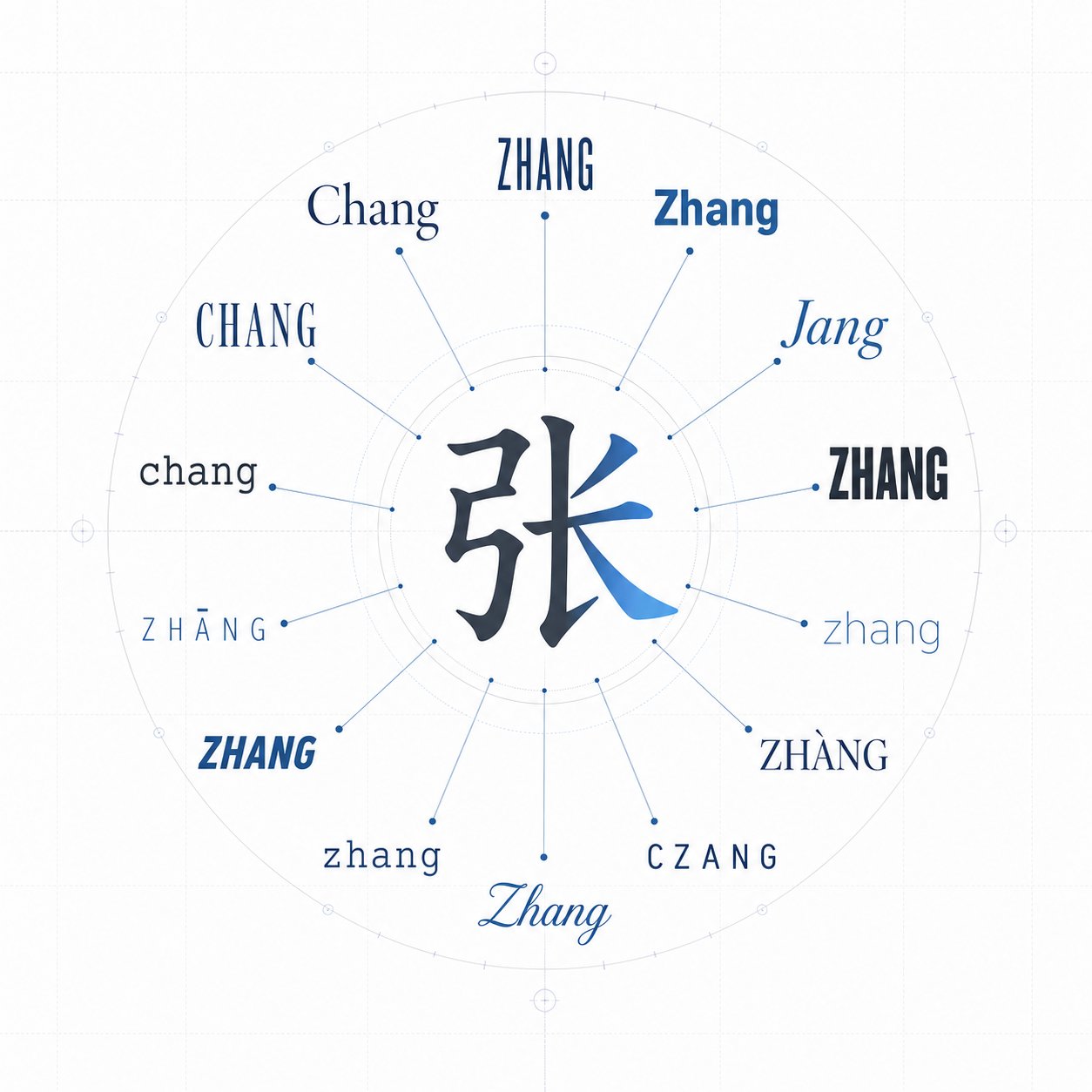
The same Chinese name, written with the same characters, can look completely different depending on which romanization system converts it to the Latin alphabet. One system joins syllables together. Another inserts a hyphen. A third separates them with a space. This inconsistency is not a minor academic detail. It is the single biggest reason hyphenated Chinese surnames get misread, misrecorded, and mishandled by Western databases, airline systems, and government forms.
Think of it this way: a surname in Chinese characters is unambiguous. 司马 is one surname. 美玲 is one given name. But the moment these characters get romanized, the visual cues that distinguish surname from given name, and one-part names from two-part names, disappear entirely. The hyphen becomes a wildcard that could mean almost anything.
Pinyin vs Wade-Giles Hyphenation Rules
Pinyin, the standard romanization system used in mainland China, follows clear rules established by the ALA-LC Romanization guidelines used in libraries and official documents worldwide. The core principle: join multi-character surnames and given names into single unhyphenated strings. Sima Xiangru, not Si-ma Hsiang-ju. Sun Zhongshan, not Sun Chung-shan. No hyphens appear in mandarin last names under standard Pinyin.
Wade-Giles, the older system still encountered in Taiwanese documents and historical texts, takes a different approach. It freely uses hyphens between syllables of given names and sometimes within compound surnames. Chiang Kai-shek, Lee Teng-hui, Mao Tse-tung. These are all Wade-Giles renderings where the hyphen connects syllables of the given name, not the surname. But to someone unfamiliar with the convention, "Kai-shek" looks like it could be a two-part surname.
Here is where the confusion compounds. Taiwan historically used Wade-Giles for official documents but has been gradually adopting Pinyin for some purposes. The result is a transitional period where the same Taiwanese person might appear as "Shang-ho Huang" on one document and "Shanghe Huang" on another. Both refer to the same individual. Neither is wrong within its own system. But a border agent or HR database sees two different names.
The Yale Library romanization guide notes that well-established personal names in Wade-Giles are sometimes not converted to Pinyin even in library systems, creating permanent dual-format records for historical figures. If professional catalogers struggle with this, imagine what happens when an automated airline booking system encounters it.
Cantonese and Hokkien Romanization Differences
Pinyin and Wade-Giles at least romanize the same spoken language: Mandarin. Cantonese and Hokkien introduce an entirely separate layer of complexity because they are different spoken languages with their own romanization traditions.
Cantonese romanization in Hong Kong has never been fully standardized. Multiple systems coexist: Yale Cantonese, Jyutping, Sidney Lau, and various government romanization conventions. As the Chuniversiteit guide to Chinese names illustrates, the same characters can produce noticeably different romanizations depending on which Cantonese system is applied. Hong Kong tends to separate given name syllables with a space (Chan Tai Man), while Taiwan-influenced conventions prefer a hyphen (Chan Tai-man).
Hokkien POJ (Pe̍h-ōe-jī) adds yet another pattern. Common among Chinese communities in Southeast Asia, particularly in Malaysia, Singapore, and the Philippines, this system uses hyphens extensively. A two syllable last name like 欧阳 might appear as "Au-yong" in Hokkien romanization, looking identical in structure to a hyphenated married name or a hyphenated given name, even though it represents a single compound surname.
The table below shows how one person's full name (司马明华, a person with the compound surname Sima and the given name Minghua) would appear across different systems:
| Romanization System | Full Name Rendering | Where Hyphens Appear | Region of Use |
|---|---|---|---|
| Pinyin (standard) | Sima Minghua | None | Mainland China |
| Wade-Giles | Ssu-ma Ming-hua | Surname and given name | Taiwan (historical) |
| Yale Cantonese | Si-ma Ming-wa | Surname and given name | Academic contexts |
| Jyutping | Si Maa Ming Waa | None (spaces only) | Hong Kong (modern) |
| Hokkien POJ | Su-ma Bêng-hôa | Surname and given name | Southeast Asia |
You'll notice the problem immediately. In Pinyin, "Sima" is clearly one surname. In Wade-Giles, "Ssu-ma" looks like two elements joined by a hyphen. In Jyutping, "Si Maa" with a space looks like a given name "Si" followed by a surname "Maa." Same person, same characters, five different visual impressions of where the surname begins and ends.
This is exactly why someone named "Mei-Ling Chen" (陈美玲) runs into trouble. The hyphen in "Mei-Ling" follows a Wade-Giles or Taiwanese convention for writing two-character given names. "Chen" is the only surname. But Western systems parsing this name often read left to right and assume the surname in Chinese must be the last element. Or worse, they interpret the hyphen as a surname connector and record "Ling Chen" or "Mei-Ling" as the family name, leaving "Chen" floating as an unexplained fragment.
As TropicalHainan documents, even within China's own administrative systems, hyphenated surnames get split into two words, joined without the hyphen, or entered inconsistently across different databases. The problem is not limited to Western misunderstanding. It is structural, built into the gap between character-based writing and alphabet-based recording.
The practical fallout varies by region. A person whose name is romanized one way on their birth certificate, another way on their passport, and a third way on their university diploma faces cascading identity verification problems every time they cross a border or apply for a new document. Each country's bureaucratic system handles these discrepancies differently, with some far more forgiving than others.
Regional Differences Across Countries and Cultures
How forgiving a bureaucratic system is depends entirely on where you are. The same ethnic Chinese family can spell their surname differently depending on which country they settled in, which dialect group they belong to, and which era their documents were first issued. A comprehensive list of chinese family names would need dozens of variant spellings for each entry, because geography shapes how these names appear on paper just as much as language does.
Here is a region-by-region breakdown of how chinese family names get romanized, hyphenated, and recorded across the major jurisdictions where Chinese communities live.
Mainland China and Taiwan Naming Conventions
Mainland China operates under the clearest and most standardized system. Pinyin is the sole official romanization method, and its rules leave little room for ambiguity:
- Dominant romanization: Hanyu Pinyin, mandated for all official documents including passports
- Married-name hyphenation: Does not exist. Women retain their birth surnames after marriage both legally and socially. Children typically take the father's surname, though the law permits either parent's surname
- Compound surname rendering: Written as one word without hyphens (Ouyang, Sima, Shangguan). The Asia Media Centre notes there are approximately 81 compound surnames among the roughly 400 distinct china family names still in active use
- Unique conventions: Given names are joined into a single string (Minghua, not Ming-hua). No spaces, no hyphens within either surname or given name. This makes mainland Chinese passports the easiest to parse by automated systems
Taiwan presents a more complicated picture because it sits in a transitional zone between two systems:
- Dominant romanization: Historically Wade-Giles, with a gradual shift toward Pinyin for some official purposes. Many Taiwanese citizens still carry Wade-Giles romanizations on their passports
- Married-name hyphenation: Rare. Taiwanese law allows women to add their husband's surname before their own, but few exercise this option in practice
- Compound surname rendering: Often hyphenated under Wade-Giles (Ou-yang, Shang-kuan), which creates visual confusion with hyphenated given names like Kai-shek or Ching-te
- Unique conventions: Citizens can choose their own romanization when applying for a passport, leading to inconsistency even within the same family. One sibling might use Pinyin while another uses Wade-Giles
Southeast Asian Chinese Surname Practices
Singapore and Malaysia represent the most diverse romanization landscape in the Chinese-speaking world. Unlike mainland China's top-down standardization, these countries preserve dialect-based spellings that reflect centuries of migration history.
Singapore:
- Dominant romanization: Varies by dialect group. Hokkien, Teochew, Cantonese, Hakka, and Hainanese communities each romanize the same characters differently. As Wee Kek Koon explains in the South China Morning Post, Singaporean Chinese names are romanized based on the pronunciation in their ancestral dialect
- Married-name hyphenation: Not a standard convention. Women generally retain their birth surnames
- Compound surname rendering: Follows dialect pronunciation. Ouyang might appear as "Au Yeong" or "Au-yong" in Hokkien-influenced spelling
- Unique conventions: The surname chinese communities use often signals their dialect heritage. A person with the surname Mak is understood to have Cantonese roots, while the same character (麦) appears as "Beh" in Hokkien. The mak family name is one of many where a single Chinese character produces completely different romanizations across dialect groups
Malaysia:
- Dominant romanization: Dialect-based, similar to Singapore but with additional Malay-influenced spelling conventions. Clan associations historically played a major role in standardizing surname spellings within each dialect community
- Married-name hyphenation: Uncommon among ethnic Chinese Malaysians. The practice exists but is not widespread
- Compound surname rendering: Highly variable. The same compound surname might appear as two separate words, a hyphenated pair, or a single joined word depending on the family's preference and dialect
- Unique conventions: The chong family name illustrates regional variation well. In Mandarin Pinyin it would be Zhang (张), but in Hakka romanization it becomes Chong or Cheong. Malaysian Chinese families often preserve these dialect spellings across generations even if younger members no longer speak the ancestral dialect. The surname Mak similarly persists in Cantonese-heritage families throughout Malaysia and Hong Kong
Hong Kong:
- Dominant romanization: Cantonese-based, using a loosely standardized government system that is not fully consistent with any single academic romanization method like Jyutping
- Married-name hyphenation: The most prominent jurisdiction for this practice. Professional women in government and judiciary commonly use the husband's-surname-first convention
- Compound surname rendering: Follows Cantonese pronunciation. Situ becomes Szeto, Ouyang becomes Au Yeung or Au-yeung
- Unique conventions: Given names are typically separated by a space (Tai Man) rather than joined (Taiman) or hyphenated (Tai-man), though all three formats appear on Hong Kong identity documents
Western Diaspora Adaptations
Chinese communities in the United States, Canada, the United Kingdom, Australia, and New Zealand face a different challenge entirely. They must fit their names into systems designed for European naming conventions, where one given name and one surname is the assumed default.
- Dominant romanization: Whatever system was used when the family first immigrated. This means a family that arrived in the 1960s might use Wade-Giles or a Cantonese romanization, while recent arrivals use Pinyin. The result is that any list of chinese family names in Western countries contains multiple spelling variants for the same surname
- Married-name hyphenation: Follows local law. In countries where hyphenated married surnames are legally recognized (UK, Australia, Canada), Chinese women may adopt the convention. In the US, state-level variation in name-change laws creates inconsistency
- Compound surname rendering: Often mishandled. Western systems frequently split compound surnames at the syllable boundary, recording "Ou" as a middle name and "Yang" as the surname, or vice versa
- Unique conventions: Many diaspora Chinese adopt an English given name and place it before their Chinese name, creating formats like "David Ouyang Minghua" where the compound surname sits in the middle of the full name. This further confuses systems trying to identify which element is the family name
The pattern is clear: the further a Chinese name travels from its character-based origin, the more opportunities exist for misinterpretation. A person whose surname is unambiguous in Chinese characters (欧阳, one surname, no question) might find that same name recorded as "Ou Yang," "Ou-yang," "Ouyang," "Au Yeung," or "Au-yong" across documents issued in different countries. Each spelling is technically correct within its own system. None of them match each other.
This fragmentation is not just a curiosity for linguists. It creates real friction every time someone with a multi-part chinese surname crosses a border, books a flight, or applies for a visa. The bureaucratic systems that process these names were built with assumptions about how surnames work, and those assumptions break down the moment a hyphenated or multi-word surname enters the field.
Handling Hyphenated Surnames on Legal Documents
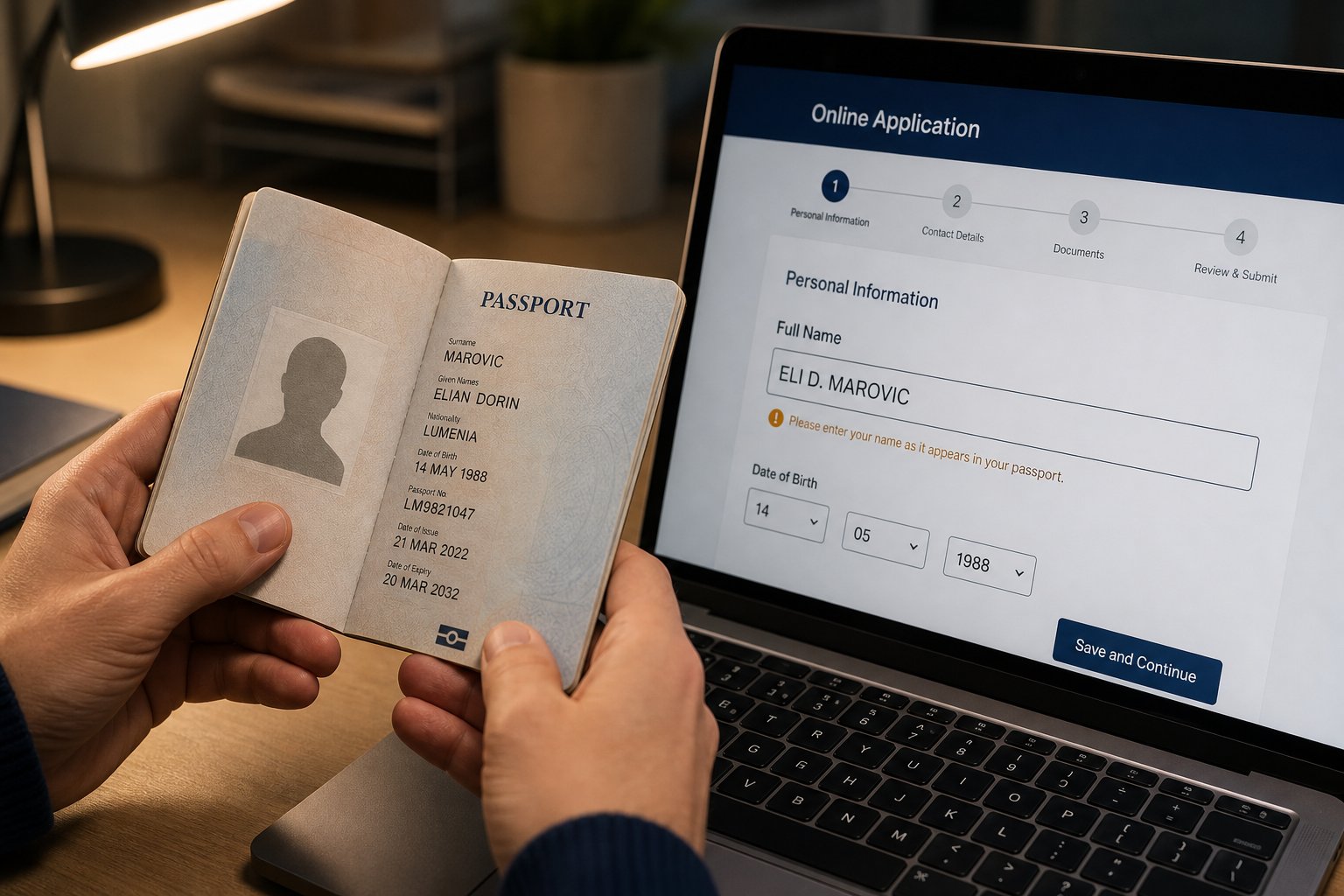
Fragmentation across romanization systems and regional conventions would be manageable if it stayed in the realm of linguistics. But it doesn't. The moment a hyphenated chinese last name meets a government form, a booking system, or an immigration database, abstract naming differences become concrete problems with real consequences: denied boarding, flagged identity checks, mismatched records that take months to resolve.
If you carry a long chinese name with multiple elements, hyphens, or spaces, you've likely already experienced the frustration of watching a system mangle your identity. Here's why it happens and what you can do about it.
Passport and Immigration Form Challenges
Every country's passport system makes assumptions about how names are structured. Most were designed around a simple model: one given name, one surname, maybe a middle name. Hyphenated Chinese surnames break that model in multiple ways.
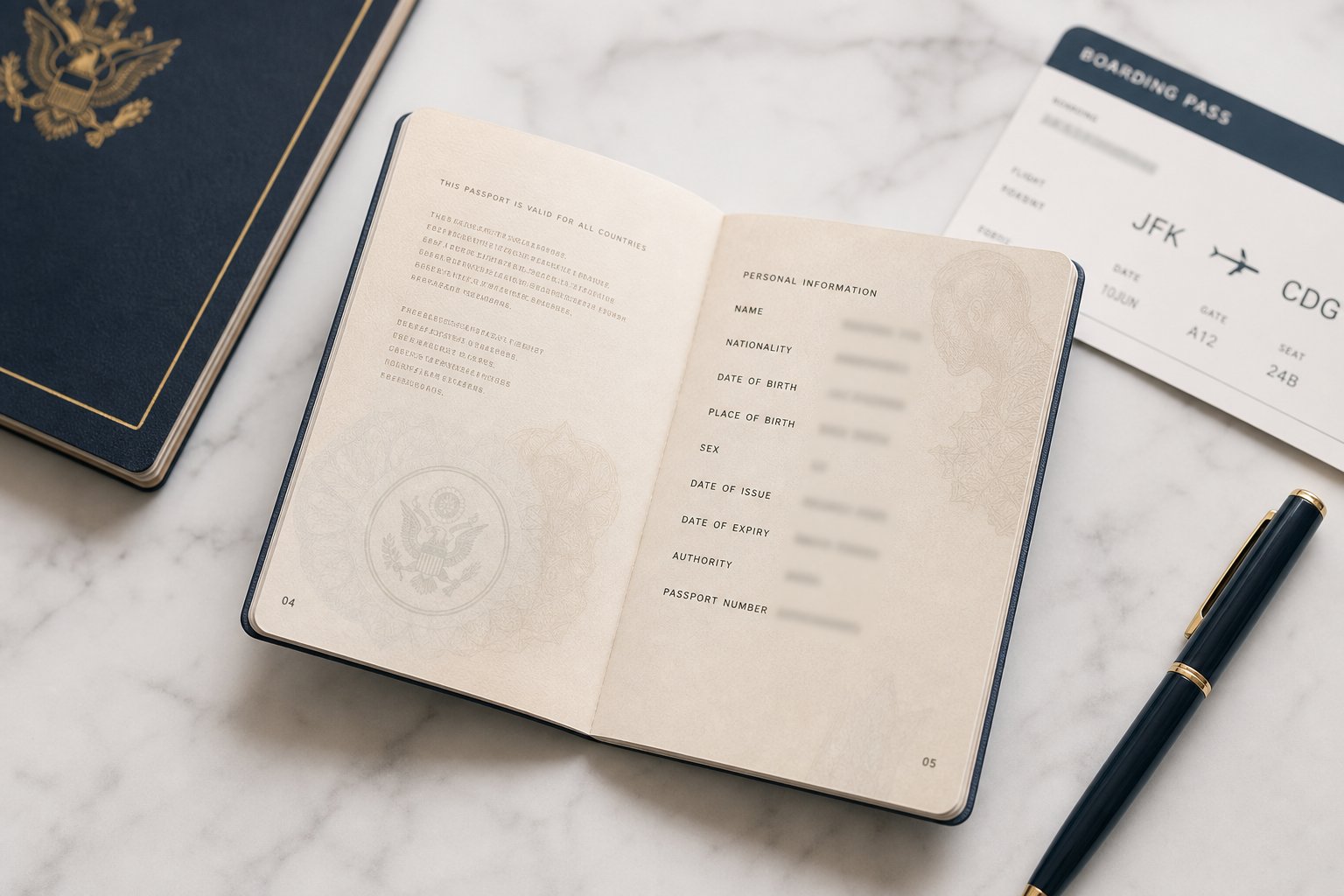
United States: The U.S. State Department's Foreign Affairs Manual (8 FAM 403.1-3) explicitly permits hyphens in passport names. Hyphens "may be included as part of a name, between parts of a multiple part name, and between names." Adjudicators are instructed to determine whether an applicant intends a hyphen or is using it to indicate a space. If the applicant wants the hyphen, it stays. The system also follows ICAO standards requiring all-uppercase printing, which means a name like "Au-Yeung" appears as "AU-YEUNG" with no visual distinction between surname elements and given name elements.
Canada: Canadian passports place the entire surname in one field, accommodating hyphens and spaces. However, the machine-readable zone (MRZ) at the bottom of the passport replaces hyphens with filler characters, which can cause mismatches when airlines compare the MRZ to the visual zone.
United Kingdom: UK passports handle hyphenated surnames without issue in the surname field, but the HMRC and NHS systems sometimes strip hyphens or split names at the hyphen into separate fields. A person registered as "Au-Yeung" with the passport office might appear as "Au Yeung" (two words, no hyphen) in their tax records.
Australia: Australian systems generally preserve hyphens, but the Department of Home Affairs has historically struggled with names exceeding character limits. A compound surname combined with a hyphenated given name can push past field boundaries, triggering truncation.
Singapore and Malaysia: Both countries issue identity cards with specific formatting rules. Singapore's NRIC system records names exactly as they appear on birth certificates, preserving dialect-based spellings. Malaysia's MyKad system similarly locks in the original romanization. Problems arise when these names enter international systems that expect Pinyin standardization.
The common thread across all these jurisdictions: the hanzi family name is unambiguous in Chinese characters, but its romanized form introduces uncertainty that each country's system resolves differently. Two letter last names like "Au" (a Cantonese romanization of 区) face particular challenges because many systems flag single-syllable or two letter surnames as potential data entry errors.
Beyond passports, the U.S. E-Verify system explicitly warns employees: "If you have two last names (family names), include both. If you hyphenate your last name, include the hyphen (-) between the names." A mismatch between your Form I-9 and your Social Security records can trigger a Tentative Nonconfirmation, potentially jeopardizing employment. The system's own guidance acknowledges that punctuation like hyphens and apostrophes must be included exactly as they appear on legal documents.
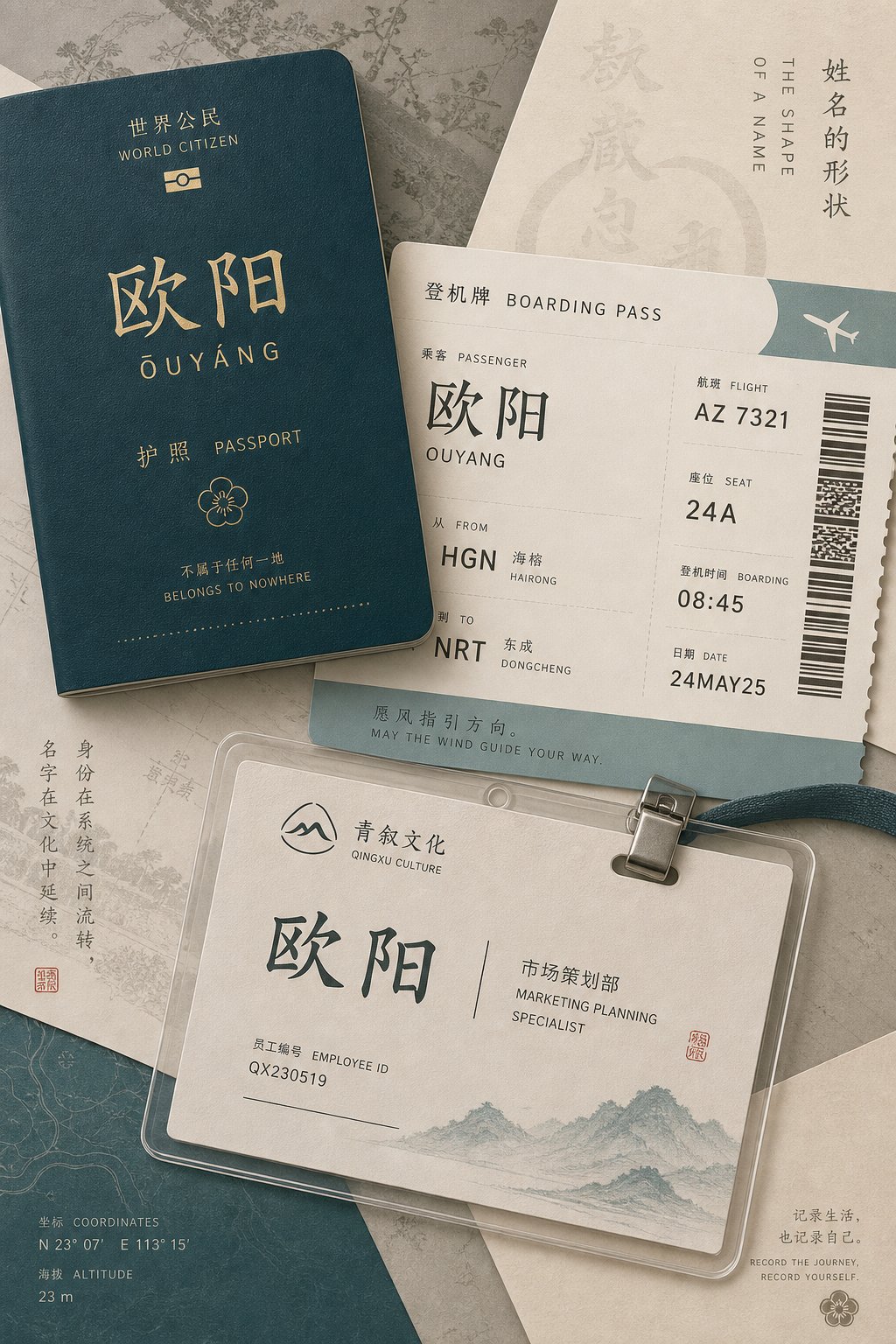
Airline ticketing adds another layer. IATA standards strip all punctuation from passenger name records (PNRs). "Au-Yeung" becomes "AUYEUNG." If your passport says "AU-YEUNG" but the airline ticket reads "AU YEUNG" (with a space instead of a hyphen), some carriers flag this as a name mismatch at check-in. The rule is simple but unforgiving: the ticket must match the passport exactly, yet the systems generating tickets often cannot reproduce the passport's formatting.
Tips for Navigating Bureaucratic Systems
You cannot fix how governments design their databases. But you can minimize friction by being strategic about consistency and documentation. These steps apply whether your hyphenated surname comes from a compound chinese last name, a married-name convention, or a romanization choice:
- Establish one authoritative spelling and stick with it. Choose how your name appears on your passport and treat that as the master version. Every other document, from driver's licenses to bank accounts to airline loyalty programs, should match it character for character, hyphen for hyphen.
- When a system rejects hyphens, join the elements without a space. If an online form won't accept "Au-Yeung," enter "AUYEUNG" rather than "AU YEUNG." A missing hyphen is a minor discrepancy. A space that creates two separate name fields is a structural error that cascades through linked systems.
- Carry documentation that explains your name structure. A brief note from your consulate or a copy of your birth certificate alongside your passport can resolve confusion at borders. The U.S. FAM notes that adjudicators may add or remove hyphens based on the applicant's stated preference supported by documentation.
- Address discrepancies between documents issued in different countries proactively. If your Hong Kong ID says "AU YEUNG" and your U.S. passport says "AU-YEUNG," contact the relevant issuing authority to align them before your next international trip. Waiting until you're at a check-in counter is too late.
- Use the "known as" or alias field when available. The U.S. passport system allows a "known as" name to be included alongside your legal name. If you use different romanizations professionally and legally, this field can bridge the gap without requiring a formal name change.
- Consider a legal name change only as a last resort. If persistent mismatches across jurisdictions are causing repeated problems, some people choose to legally standardize their name in their primary country of residence. This is a significant step with cultural implications, but it permanently resolves systemic conflicts that no amount of documentation can fix.
The core principle for anyone with a hyphenated Chinese surname navigating official systems: consistency across documents matters more than which specific format you choose. Pick one rendering, document it, and defend it at every touchpoint.
These bureaucratic headaches multiply when children enter the picture. A couple where one or both parents carry hyphenated surnames faces an immediate question: what name goes on the birth certificate? The answer depends on which country the child is born in, what that jurisdiction's naming laws permit, and how much complexity the family is willing to manage across a lifetime of official documents.
Deciding Children's Surnames in Hyphenated Families
The birth certificate is where theory meets reality. When one or both parents carry a hyphenated Chinese surname, the question of what goes in the child's surname field forces families to confront legal limits, cultural expectations, and the practical consequences of every extra character.
Legal Rules for Children's Surnames
Each jurisdiction draws its own boundaries around what a child can be named. In mainland China, the law is straightforward: a child may take either the father's or the mother's surname. A 2014 legislative interpretation confirmed that compound surnames combining both parents' names are permissible, but only if they conform to traditional chinese character family naming customs and do not violate public order. You cannot simply hyphenate two surnames together at will.
Hong Kong follows a different logic. Children receive their father's surname by default on the birth certificate. If the mother carries a hyphenated married surname like Lam-Cheng, only the father's element (Lam) passes to the child. The mother's birth surname (Cheng) does not automatically transfer. Changing this requires a formal application.
In Canada, courts weigh the best interests of the child when parents disagree about hyphenation. The Alberta Court of Queen's Bench has applied factors including the child's welfare, potential confusion of identity, and the importance of recognizing the child's relationship with both parents. There is no legal presumption in favor of hyphenation. Each case turns on its own facts.
The United States presents a patchwork. As legal scholarship from William & Mary documents, women's rights in child-naming disputes remain legally secondary to men's in many U.S. states, sometimes by direct operation of law. Some states require both parents' consent for a hyphenated surname at birth, while others default to the father's surname if the parents are married.
Most legal systems prevent indefinite surname growth across generations. Unlike some Western traditions where hyphenated names can theoretically compound (Smith-Jones marrying Brown-Davis), Chinese naming conventions and character-length limits in most jurisdictions reset the surname each generation, requiring families to choose rather than accumulate.
Cultural Expectations and Modern Choices
Legal frameworks set the outer boundaries, but cultural weight shapes what families actually do. The meaning of chinese last names runs deeper than administrative convenience. A surname carries lineage, ancestral connection, and generational continuity. Choosing which name a child bears is never purely bureaucratic.
Traditional patrilineal naming remains the dominant practice across Chinese-speaking communities. Children take their father's surname. Full stop. This convention is so deeply embedded that the chinese surnames meaning most families attach to their name centers on paternal lineage, tracing back through generations of chinese male last names recorded in genealogical registers (族谱).
But the landscape is shifting. Research published by Sixth Tone found that matrilineal naming is rising in parts of China, particularly in eastern regions. The study distinguishes two trends: families giving children their mother's surname as a strategic response to the absence of male heirs, and families creating compound surnames that recognize both parents. The compound surname trend correlates with urbanization, higher maternal education, and modernized attitudes rather than demographic pressure.
For diaspora families, the tension plays out differently. Some parents place one surname in the middle name field as a compromise. A child might be registered as "David Chen Ouyang" where Chen is the mother's surname functioning as a middle name and Ouyang is the father's compound surname. This sidesteps hyphenation entirely while preserving both lineages on the birth certificate.
Others opt for uncommon chinese last names that blend both parents' heritage into a single new form. This is more common in Western countries where naming laws are permissive, but it creates its own complications. A newly invented surname has no genealogical history, no entry in any list of traditional family names, and no meaning of chinese surnames that connects the child to either ancestral line. The chinese last name meaning that once linked a person to thousands of years of history gets severed in a single generation.
The practical ceiling on hyphenation matters here. If a woman named Lam-Cheng (hyphenated married surname) has a daughter who later marries a man surnamed Wong-Ho (also hyphenated), the daughter does not become Wong-Ho-Lam-Cheng. The system resets. She might adopt Wong as her married prefix, becoming Wong-Lam. Her mother's birth surname, Cheng, and her father-in-law's second element, Ho, both disappear from the naming chain. Each generation makes a fresh choice rather than inheriting an ever-growing string.
This generational reset reflects a deeper truth about how Chinese naming works. The meaning of chinese last names has always been about continuity within simplicity. One surname, passed down, connecting a person to their ancestors. Hyphenation introduces complexity that the system tolerates for one generation but rarely allows to compound further. The question families face is not whether to hyphenate forever, but which single thread of identity to carry forward.
That choice reverberates beyond the family dinner table. It follows the child into classrooms, onto diplomas, through job applications, and across every professional system that records their name. Managing a hyphenated surname is not just a childhood administrative task. It is a lifelong navigation challenge.

Navigating Professional Life with a Hyphenated Surname
A name that survives the birth certificate, the passport office, and the immigration counter still has to function in the professional world. And professional systems, from citation databases to corporate email servers, introduce their own set of assumptions about how surnames should look. For anyone carrying a hyphenated Chinese surname into academic publishing, corporate life, or digital platforms, the question becomes personal: do you keep the hyphen, merge the elements, or simplify for convenience?
Academic Publishing and Citation Challenges
Academic careers live and die by citations. If your name appears inconsistently across publications, your work fragments across databases. Someone searching a list of chinese surnames in a research index might find half your papers under one spelling and the other half under another, effectively splitting your scholarly identity in two.
The University of Notre Dame's APA referencing guide makes the rule clear: write the author's name exactly as it appears on the published work, including hyphenated surnames. If the surname includes a hyphen, retain it in both the reference list entry and the in-text citation. A researcher named Au-Yeung would appear as "Au-Yeung, M. (2024)" in the reference list and "(Au-Yeung, 2024)" in-text. No simplification, no merging.
MLA follows a similar principle. The surname appears as published, hyphen intact, followed by a comma and the given name. The challenge is not the style guides themselves. It is what happens before publication. Journal submission systems, peer review platforms, and indexing databases each handle hyphens differently:
- ORCID: Allows hyphens in the surname field and treats the full hyphenated string as one unit. Registering early with a consistent format prevents fragmentation across your publication record
- Google Scholar: Automatically clusters publications by author name, but hyphen variations (Au-Yeung vs. Au Yeung vs. AuYeung) can create separate profiles that require manual merging
- Web of Science and Scopus: Index surnames as published, meaning inconsistency across your own papers creates permanent splits in your citation metrics
The Notre Dame guide also highlights a specific problem with Chinese names in academic contexts: when individual elements are separated by spaces (like Huang Yuan Hui), readers unfamiliar with Chinese naming conventions cannot distinguish the surname from the given name. The guide recommends consulting a chinese last names list to identify which element is the family name. This is practical advice, but it underscores how much burden falls on readers and editors to decode names that character-based writing would make instantly clear.
For researchers with rare chinese surnames or uncommon chinese surnames that appear infrequently in Western databases, the stakes are even higher. A unique chinese surname that gets misspelled or reformatted in one early publication can haunt a career for decades as subsequent papers cite the error.
Corporate Systems and Professional Identity
Corporate environments present a different flavor of the same problem. When you join a company, your name enters an HR system that generates your email address, your directory listing, your building access badge, and your payroll record. Each of these systems has its own character limits and formatting rules.
Imagine your surname is Ouyang and your given name is Mei-Ling. Your company's email system might generate any of the following: [email protected], [email protected], [email protected], or [email protected]. Some systems strip hyphens from email addresses entirely because the hyphen is a valid character in email formatting but can cause parsing issues in older systems. Others truncate long surnames to fit character limits.
Business cards add a layer of choice. In East Asian business contexts, presenting your full name with proper formatting signals cultural awareness and respect for your heritage. In Western corporate settings, some professionals simplify their names to reduce friction in introductions and email correspondence. Neither choice is wrong, but each carries weight.
LinkedIn and other professional platforms generally handle hyphens well in the surname field. The real issue is searchability. A recruiter looking through a list of chinese last names for candidates might search "Au Yeung" and miss profiles listed as "Au-Yeung" or "AuYeung." The platform's search algorithm may or may not treat these as equivalent, depending on how it handles punctuation in name fields.
The identity dimension here is real. Choosing to keep or drop a hyphen is not just an administrative convenience. It reflects how you relate to your family history, your cultural heritage, and your sense of self in professional spaces. A person who merges "Au-Yeung" into "Auyeung" for email simplicity might feel they have lost something. A person who insists on the full hyphenated form might spend years correcting colleagues and systems. Both are valid responses to a structural problem that was never theirs to solve.
Here are practical strategies professionals use to maintain consistency while preserving their full name:
- Register your ORCID and Google Scholar profile early with your preferred name format, then ensure every publication matches it exactly
- Use your passport spelling as the anchor for all professional registrations, from LinkedIn to conference badges to journal submissions
- Add alternative name spellings to your ORCID, LinkedIn, and institutional profiles so searches under variant formats still find you
- Request a custom email address from IT if the auto-generated version mangles your name. Most companies accommodate this
- Include your name's pronunciation or structure in your email signature or LinkedIn headline if misidentification is frequent (e.g., "Surname: Au-Yeung | Given name: Mei-Ling")
- Standardize across platforms simultaneously rather than updating piecemeal. A single afternoon spent aligning your name across all professional accounts prevents years of fragmented records
Understanding chinese last names and meanings, recognizing rare chinese last names when you encounter them, and knowing that a hyphen might signal a compound surname, a married name, or a romanization convention: these are not niche skills anymore. In increasingly multicultural workplaces, classrooms, and publishing ecosystems, the ability to correctly interpret and respect a hyphenated Chinese surname is basic professional literacy.
The systems will eventually catch up. Database fields will expand. Algorithms will learn that "Au-Yeung" and "Au Yeung" are the same person. But until that infrastructure evolves, the knowledge in this article serves as a bridge, helping both the people who carry these names and the people who encounter them to navigate the gap between how Chinese names actually work and how the world's systems currently record them.
Frequently Asked Questions About Hyphenated Chinese Surnames
1. What is the difference between a Chinese compound surname and a hyphenated married surname?
A Chinese compound surname like Ouyang or Sima is a single, indivisible family name that has existed for thousands of years, often derived from official titles, place names, or ancestral designations. A hyphenated married surname, most common in Hong Kong, combines a husband's surname with the wife's birth surname (e.g., Lam-Cheng) as a social convention. The compound surname is one historical unit passed down through generations, while the married surname is created by a living person's marital choice and resets each generation.
2. How do I enter my hyphenated Chinese surname on a passport or immigration form?
Use your passport spelling as the authoritative version and replicate it exactly on all other documents. If a system rejects hyphens, join the elements without a space (e.g., AUYEUNG instead of AU-YEUNG) rather than inserting a space that could split your name into two fields. The U.S. Foreign Affairs Manual permits hyphens in passport names, and most countries follow ICAO standards. Carry supporting documentation like a birth certificate to explain your name structure at borders if needed.
3. Why does the same Chinese surname appear spelled differently in different countries?
Different romanization systems and dialect pronunciations produce different spellings of the same Chinese characters. Mainland China uses Pinyin, Taiwan historically uses Wade-Giles, Hong Kong uses Cantonese-based romanization, and Southeast Asian communities use Hokkien or Teochew spellings. For example, the character 麦 appears as Mai in Pinyin, Mak in Cantonese, and Beh in Hokkien. The country of settlement, dialect group, and era of immigration all determine which spelling a family carries.
4. Can children inherit a hyphenated Chinese surname from their parents?
Most legal systems prevent indefinite surname compounding across generations. In Hong Kong, only the father's surname typically passes to the child, not the mother's full hyphenated married name. In mainland China, children may take either parent's surname, and compound surnames combining both parents' names are permitted only if they conform to traditional naming customs. Western countries vary by jurisdiction, but the practical ceiling means each generation usually resets rather than accumulating longer hyphenated strings.
5. How should hyphenated Chinese surnames appear in academic citations and professional systems?
APA and MLA style guides require writing the author's surname exactly as published, hyphen included. Register your preferred format on ORCID early and ensure every publication matches it to prevent citation fragmentation across databases. For corporate systems, use your passport spelling as the anchor for email addresses, directory listings, and HR records. Add alternative spellings to platforms like Google Scholar and LinkedIn so searches under variant formats still locate your profile.