How Japanese Girl Names Carry Meaning Through Kanji
When English-speaking parents choose a name like "Grace" or "Rose," the meaning lives inside the word itself. You hear it, and you know what it refers to. Japanese girl names work in a completely different way. The meaning isn't carried by the sound at all. It's carried by the characters written on paper.
This distinction changes everything about how you explore japanese names and meanings. Two girls can share the exact same spoken name and yet carry entirely different identities, hopes, and stories in the written form their parents selected. Understanding this visual layer is the key to truly decoding japanese girl names meaning rather than just skimming a list of pretty sounds.
Why Japanese Girl Names Are Unlike Any Other
Imagine introducing yourself as "Ai." In conversation, it sounds like one name. But in writing, it could be any of the following:
- 愛 (Ai) - love
- 藍 (Ai) - indigo, a deep blue dye with centuries of cultural significance
- 亜衣 (Ai) - second + garment, suggesting elegance and grace
Each version looks completely different on a page. Each tells a different story about what the parents envisioned for their daughter. A girl named 愛 carries the weight of love itself, while a girl named 藍 evokes the rich tradition of Japanese indigo dyeing and quiet depth. Same pronunciation, different worlds.
This isn't a rare quirk. It's how the entire system works. As one native Japanese writer explains, the name "Aya" is extremely popular, yet she has never met another Aya with the same kanji spelling, because characters like 文, 彩, 綾, and 紋 all produce that sound while carrying distinct meanings.
In Japanese naming, one pronunciation can map to dozens of different meanings depending on which kanji characters parents select. The sound is just the surface. The kanji is the soul of the name.
The Role of Kanji in Creating Name Meanings
Kanji are ideographic characters borrowed from Chinese, where each symbol represents a concept or idea rather than a sound. Japanese names use these characters as building blocks of meaning. When parents choose japanese girl names, they're selecting visual symbols that encode their wishes, values, and aspirations for their child directly into the written form.
Japanese families choose their children's names based on the characteristics they wish their babies to embody. A name isn't just a label. It's a declaration of intent. The kanji a parent selects might reference nature, virtue, beauty, or strength, and that meaning stays visible every time the name is written down.
This is why exploring japanese name meanings requires more than a simple translation chart. You need to understand the relationship between sound, character, and cultural context. Throughout this article, you'll find names in japanese and meanings organized by theme, giving you the tools to decode any name you encounter rather than just memorize a fixed list.
The real question, then, isn't "what does this name sound like?" It's "what does this name look like, and what story do those characters tell?" That question leads directly into the mechanics of kanji itself, where readings, radicals, and character combinations create layers of meaning most Western audiences never see.
Understanding the Kanji System Behind Japanese Names
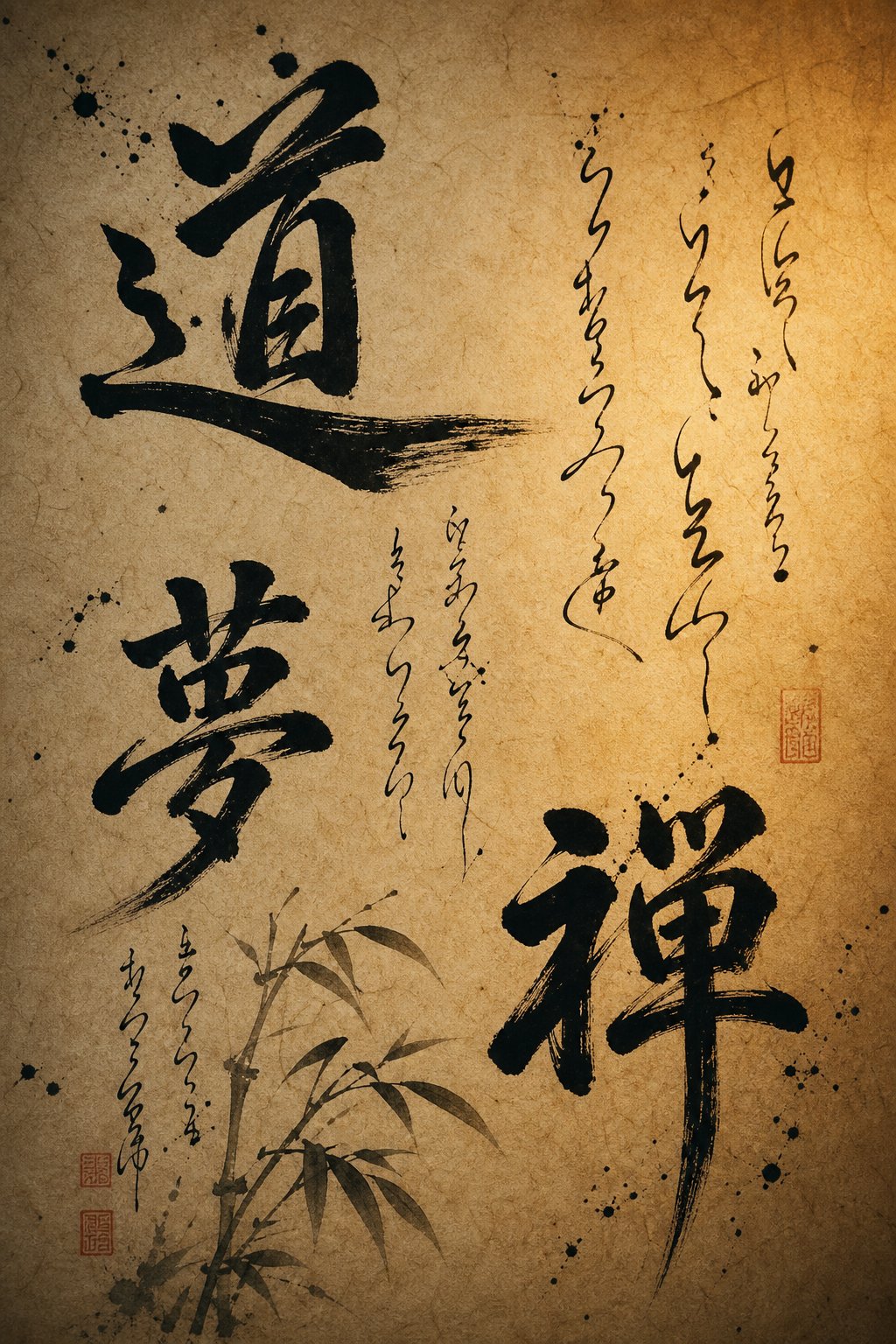
Every kanji character has at least two lives: a Chinese-derived pronunciation and a native Japanese one. When you see a character like 美 (beauty), it can be read as "bi" in its Chinese-origin form or "utsuku(shii)" in its Japanese form. This dual-reading system shapes how japanese kanji functions in names and determines the cultural flavor a name carries.
Sounds complex? It doesn't have to be. Think of it this way: each kanji symbol is like a coin with two sides. One side connects to ancient Chinese roots. The other side connects to the native Japanese word for the same concept. Parents pick which side to use when building their daughter's name, and that choice signals something about tone, tradition, and intent.
On'yomi vs Kun'yomi and What They Signal
The Chinese-origin readings are called on'yomi, and the native Japanese readings are called kun'yomi. According to Tofugu's kanji research, these readings arrived in Japan through Buddhist and Confucian texts that traveled from China through the Korean Peninsula. Japan adopted both the meanings and the sounds of Chinese characters, then layered their own native words on top.
What does this mean for names? Names built from kun'yomi readings use yamato kotoba (和語), the oldest layer of native Japanese vocabulary. These names feel earthy, warm, and traditionally Japanese. A name like Hana (花, flower) uses the kun'yomi reading and sounds immediately natural, like something rooted in the Japanese landscape itself.
Names using on'yomi readings, on the other hand, can feel more formal, literary, or elegant. A name like Reika (麗花) uses the on'yomi "rei" for 麗 (lovely/beautiful), giving it a polished, almost poetic quality. You'll notice that many compound names, where two kanji sit side by side without any hiragana attached, tend to use on'yomi readings. This mirrors how japan kanji compounds work in everyday vocabulary too.
Neither reading type is better. They simply carry different cultural weight. A parent choosing between a kun'yomi name and an on'yomi name is making a stylistic decision similar to choosing between "hearth" (Old English) and "domicile" (Latin-origin) in English. Both mean home, but they feel entirely different.
How Kanji Radicals Build Layers of Meaning
Inside every kanji character, smaller components called radicals (bushu) act as building blocks. These radicals often hint at the character's meaning category before you even know the full character. As Coto Academy explains, radicals are positioned in specific locations within a character: left, right, top, bottom, or enclosing the whole structure.
Why does this matter for names? Because radicals add a hidden layer of meaning that Japanese readers instinctively sense. Consider these examples:
- The radical 氵(water) appears in characters like 海 (sea), 洗 (wash), and 澪 (waterway). A name containing any of these characters subtly evokes water and flow.
- The radical 艹 (grass/plant) sits atop characters like 花 (flower), 菜 (greens), and 莉 (jasmine). Names with these characters carry botanical associations at the structural level.
- The radical 女 (woman) appears in characters like 好 (like/love) and 姫 (princess), connecting the name to feminine identity through its very architecture.
When parents select kanji for a name, they're choosing not just a surface meaning but an entire network of visual associations embedded in the character's internal structure. Someone familiar with japanese kanji and radicals can "read" these layers instantly, the way an English speaker might sense Latin roots in words like "illuminate" or "benevolent."
Why the Same Sound Creates Different Names
This is where the system becomes truly fascinating for anyone exploring kanji meaning in names. Because multiple characters can share a single pronunciation, parents have creative freedom to assign unique meanings to common sounds. The table below shows how one name sound maps to completely different identities depending on kanji selection:
| Pronunciation | Kanji Option 1 | Meaning | Kanji Option 2 | Meaning | Kanji Option 3 | Meaning |
|---|---|---|---|---|---|---|
| Hana | 花 | Flower | 華 | Splendor, magnificence | 葉奈 | Leaf + Nara (graceful nature) |
| Yuki | 雪 | Snow | 幸 | Happiness, fortune | 由紀 | Reason + chronicle |
| Mei | 芽衣 | Sprout + garment | 明 | Bright, clear | 命 | Life, destiny |
| Saki | 咲 | Bloom | 早紀 | Early + chronicle | 沙希 | Sand + hope |
Each row represents one spoken name with three entirely different written identities. A girl named Yuki (雪) carries the quiet beauty of snowfall, while Yuki (幸) carries a parent's wish for a fortunate life. If you were to translate english to japanese kanji for a concept like "happiness," you'd land on 幸, but the sound "Yuki" alone wouldn't tell you that without seeing the written form.
This creative flexibility isn't unlimited, though. Japan's Family Register Law restricts which kanji symbols can legally appear in registered names. Parents must choose from the 2,136 joyo kanji (everyday-use characters) plus an additional 863 jinmeiyo kanji (characters approved specifically for names), totaling roughly 2,999 approved character forms. Characters deemed inappropriate or too obscure have been explicitly excluded. In 2004, for instance, the government removed characters meaning "excrement," "curse," and "corpse" from a proposed expansion after public protest.
These legal boundaries mean that the kanji meanings available to Japanese parents are curated by the state. Japan written in japanese characters follows strict rules, and naming is no exception. A parent might love a rare or archaic character, but if it falls outside the approved list, they simply cannot use it on official documents.
With this foundation in place, the real fun begins: understanding how specific character positions within a name, particularly suffixes and prefixes, create predictable meaning patterns that repeat across thousands of Japanese girl names.
Common Name Suffixes and Their Hidden Meanings
Japanese girl names are modular. They snap together like building blocks, with a lead character carrying the primary meaning and a suffix anchoring the name's tone, rhythm, and feminine identity. Once you recognize these suffixes, you can decode the meaning of almost any japanese girl name you encounter, even one you've never seen before.
This modular structure is what makes japanese female names and meanings so accessible once you understand the pattern. The suffix tells you the name's grammatical "ending," while the lead character tells you what the parents actually wished for their daughter.
Essential Suffixes Every Parent Should Know
A handful of suffixes appear across thousands of japanese feminine names. Each one carries its own meaning and aesthetic weight:
- -ko (子) — "child." The classic suffix of the 20th century. It signals tradition, warmth, and a sense of being cherished. Examples: Sachiko (幸子, happy child), Noriko (典子, ceremony child).
- -mi (美) — "beauty." One of the most popular endings in modern names. It adds an aspirational quality. Examples: Satomi (聡美, wise beauty), Natsumi (夏美, summer beauty).
- -na (菜 or 奈) — 菜 means "greens/vegetables" (evoking freshness and natural growth), while 奈 references Nara and carries a graceful, classical feel. Examples: Haruna (春菜, spring greens), Yukina (雪奈, snow + grace).
- -ka (花 or 香) — 花 means "flower" and 香 means "fragrance." Both connect the name to natural beauty and sensory elegance. Examples: Honoka (穂花, grain + flower), Madoka (円花, circle + flower).
- -e (恵 or 江) — 恵 means "blessing/favor" and 江 means "inlet" or "bay." Examples: Kazue (和恵, harmony + blessing), Yoshie (良江, good + inlet).
- -ri (理 or 莉) — 理 means "reason/logic" and 莉 means "jasmine." The first feels intellectual; the second feels botanical and soft. Examples: Akari (明莉, bright jasmine), Saori (沙織, sand + weave, though -ri here uses 織).
You'll notice that each suffix shapes the personality of the name. A japanese woman's name ending in -ko feels different from one ending in -ri, even if the lead character is identical. The suffix is the emotional punctuation mark.
How Lead Characters Combine With Suffixes
The lead character does the heavy lifting in terms of meaning. When you pair it with a suffix, you get a compound concept that reads almost like a tiny poem. Consider how one lead character creates entirely different names depending on which suffix follows:
| Lead Character | Meaning | + Suffix | Full Name | Compound Meaning |
|---|---|---|---|---|
| 花 (hana) | Flower | 子 (-ko) | Hanako (花子) | Flower child |
| 花 (hana) | Flower | 美 (-mi) | Hanami (花美) | Flower beauty |
| 雪 (yuki) | Snow | 恵 (-e) | Yukie (雪恵) | Snow blessing |
| 雪 (yuki) | Snow | 菜 (-na) | Yukina (雪菜) | Snow greens (winter freshness) |
| 聡 (sato) | Wise | 美 (-mi) | Satomi (聡美) | Wise beauty |
| 聡 (sato) | Wise | 子 (-ko) | Satoko (聡子) | Wise child |
This combinatorial logic is why japanese female names meaning can shift dramatically with a single character swap. The lead character is the wish; the suffix is the frame around it.
Generational trends reveal how these frames fall in and out of fashion. During the mid-20th century, -ko dominated female japanese names so thoroughly that it appeared in roughly 80% of girls' names registered in the 1950s and 1960s. Names like Yoshiko, Keiko, and Kazuko were everywhere. By the 1990s and 2000s, -ko had declined sharply as parents gravitated toward softer, more open-ended suffixes like -na, -mi, and -ri. Research on Japanese naming patterns confirms that names have grown increasingly unique over the past four decades, with parents seeking individuality over convention.
This doesn't mean -ko is gone. It still appears in names chosen by parents who want a deliberately classic, grounded feel. But the shift tells a cultural story: younger Japanese families increasingly view naming as creative expression rather than adherence to formula.
Understanding these building blocks gives you a decoder ring for any name you encounter. But suffixes only tell half the story. The lead characters themselves often cluster around specific meaning themes, and the most beloved of those themes connects japanese girl names to something universal: light.
Japanese Girl Names That Mean Light and Radiance
Light carries enormous symbolic weight in Japanese culture. It represents clarity of thought, hope for the future, and the kind of quiet warmth that guides without overwhelming. Parents who choose japanese names that mean light are often expressing a wish for their daughter to illuminate the lives around her, whether through intelligence, kindness, or sheer presence.
What makes this category especially rich is that "light" doesn't show up in just one way. Some names reference light directly through kanji like 光 (hikari). Others evoke sunshine, dawn, or radiance through characters like 陽 (sun/positive energy) or 輝 (brilliance). The mood shifts depending on which facet of light the parents want to capture.
Names That Mean Light and Brightness
If you're searching for a japanese name for light in its most direct form, these names deliver that meaning without ambiguity. Each one uses kanji tied explicitly to brightness, glow, or illumination.
| Name | Kanji | Literal Meaning | Cultural Connotation |
|---|---|---|---|
| Hikari | 光 | Light, ray, beam | Pure clarity and hope; one of the most direct names that mean light in Japanese |
| Akari | 明里 or 灯 | Bright village; lamplight | Warm, gentle illumination rather than sharp brightness; feels soft and feminine |
| Kira | 輝良 | Shining goodness | Combines radiance with moral virtue; sparkle with substance |
| Akira | 明 | Bright, clear | Intellectual clarity and openness; traditionally unisex with a crisp, understated feel |
| Mitsuha | 光葉 | Light leaf | Brightness filtered through nature; evokes sunlight passing through foliage |
Hikari is perhaps the strongest choice for parents who want no ambiguity. The kanji 光 means "light" in its most fundamental sense: a ray, a beam, a glow. Naming data shows Hikari has ranked within the top 30 for Japanese girls in recent years, with usage levels around 0.6%, confirming its enduring popularity.
The akira name meaning centers on brightness and clarity rather than visible light. Written as 明, it suggests someone who sees things clearly and thinks with precision. It's traditionally unisex, which gives it a slightly more neutral, modern edge when used for girls.
Kira in japanese means "shining" or "sparkling" when written with 輝, the kanji for brilliance. Paired with 良 (good/fine), the name 輝良 creates a compound meaning of "shining goodness," suggesting someone whose radiance comes from inner quality rather than surface flash.
Pronunciation tip: Japanese vowels stay consistent. "Hikari" sounds like hee-kah-ree (three even syllables, no stress on any one). "Akari" is ah-kah-ree. English speakers often want to stress the second syllable, but Japanese distributes weight evenly across all syllables.
Names Connected to Sun and Stars
Names that mean sun take the light theme and anchor it to something celestial. These japanese names meaning light draw from solar imagery, connecting brightness to warmth, life, and daily renewal.
| Name | Kanji | Literal Meaning | Cultural Connotation |
|---|---|---|---|
| Hinata | 陽向 | Facing the sun | Cheerful warmth; the feeling of standing in a sunny spot; optimism and openness |
| Himari | 陽葵 | Sunlight + hollyhock | A flower turning toward the sun; gentle brightness with natural grace |
| Asahi | 旭 | Morning sun | Fresh starts and renewal; the energy of dawn breaking over the horizon |
| Haruka | 晴香 | Clear-weather fragrance | Brightness expressed through open skies rather than direct light |
Hinata is one of the most beloved names that mean sun in contemporary Japan. The kanji 陽 carries associations with positive energy, warmth, and the yang principle in East Asian philosophy. Combined with 向 (facing/toward), it paints a picture of someone who naturally gravitates toward brightness, both literally and emotionally. Name researchers note that Hinata feels "cheerful, open, and full of life," which explains its consistent popularity among modern parents.
Himari (陽葵) has emerged as one of the most popular girls' names in Japan in recent years. The combination of sunlight with the hollyhock flower, a plant that physically turns to follow the sun, creates a layered image of natural brightness and quiet devotion.
These light-themed names share something important: they connect to Japanese aesthetic values around clarity and hope without being heavy-handed. Light in Japanese culture isn't about dominance or power. It's about guidance, warmth, and the kind of gentle presence that makes everything around it more visible. That same sensibility extends into another deeply beloved naming category, where brightness takes root in the earth itself: the world of flowers, seasons, and natural beauty.
Japanese Girl Names Meaning Flower and Nature
Flowers aren't just decorative in Japan. They're a language. Each bloom carries specific traits, wishes, and seasonal associations through a tradition called hanakotoba (花言葉), the Japanese "language of flowers." When parents choose flower girl names for their daughters, they're tapping into centuries of symbolic meaning that connects the child to a specific season, a specific virtue, and a specific vision of beauty in japanese culture.
A 2020 survey by Meiji Yasuda Life Insurance Company found that over one-fifth of popular Japanese girl names included floral or natural elements. That's not a coincidence. It reflects an enduring cultural belief that nature's cycles mirror human life, and that naming a child after a flower or season anchors her identity to something timeless.
Flower Names and Their Deeper Symbolism
The most iconic japanese names meaning flower carry layers of meaning far beyond their one-word translations. Consider these beautiful japanese names for girls drawn from Japan's botanical heritage:
Sakura (桜) means cherry blossom, but that barely scratches the surface. Cherry blossoms bloom brilliantly for roughly two weeks before scattering, and this brevity is the point. Sakura carries connotations of ephemeral beauty, spring renewal, and national identity. Since ancient times, Japanese people have felt aesthetics in the "transience of life," and the fact that cherry blossoms are a fleeting flower that falls in a short period makes them deeply beloved. Naming a daughter Sakura connects her to this entire philosophy.
Hana (花) is the most direct flower name, meaning simply "flower" in its broadest sense. Its simplicity is its strength. Rather than pointing to one specific bloom, Hana evokes the entire concept of flowering, growth, and natural beauty unfolding.
Yuri (百合) means lily and carries associations of purity and elegance. Tsubaki (椿) means camellia, a winter-blooming flower symbolizing quiet resilience. Sumire (菫) means violet, evoking modesty and faithfulness. Each of these pretty japanese names connects the child to a specific flower's personality.
Seasonal Names Tied to Birth Time
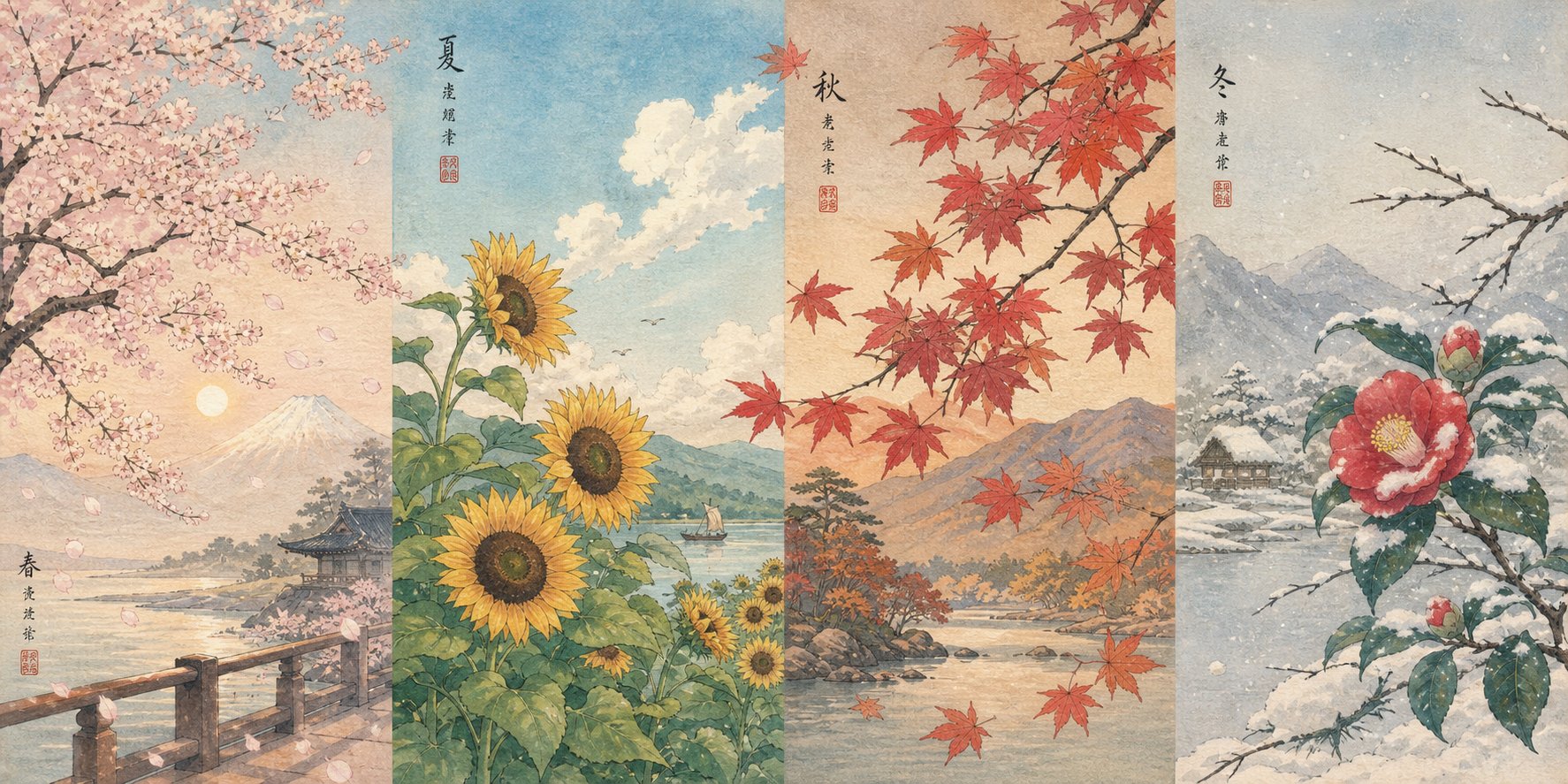
Japanese culture prizes kisetsukan (季節感), an acute awareness of seasonal change. This awareness flows directly into naming traditions. Many families choose a name that reflects the season of their daughter's birth, grounding her identity in the natural world she entered.
Here are beautiful japanese names organized by the season they evoke:
- Spring (春): Sakura (桜, cherry blossom), Haruka (春花, spring flower), Momoka (桃花, peach blossom), Wakaba (若葉, young leaves)
- Summer (夏): Natsumi (夏美, summer beauty), Himawari (向日葵, sunflower), Suzuka (涼香, cool fragrance), Aoi (葵, hollyhock)
- Autumn (秋): Akiko (秋子, autumn child), Momiji (紅葉, autumn leaves), Kaede (楓, maple), Minori (実り, harvest/fruition)
- Winter (冬): Rin (凛, dignified/crisp cold), Fuyumi (冬美, winter beauty), Setsuna (雪菜, snow greens), Tsubaki (椿, camellia)
Natsumi (夏美) pairs "summer" with "beauty," creating a name that feels warm, vibrant, and full of energy. A girl born in August might carry this name as a permanent connection to the season of her arrival. Akiko (秋子) does the same for autumn, pairing the season with the classic suffix -ko (child) to create "autumn child," a name that evokes harvest, maturity, and the rich colors of falling leaves.
Rin (凛) deserves special attention. Its kanji means "dignified" or "severe cold," carrying the crisp clarity of winter air. It suggests someone who is composed, sharp, and quietly powerful. Among pretty japanese names for girls, Rin has surged in popularity because it feels both traditional and modern, soft in sound but strong in meaning.
Nature Names Reflecting Mono no Aware
Beneath many of these names runs a philosophical current called mono no aware (物の哀れ), often translated as "the pathos of things." Nippon.com describes it as "an awareness of impermanence, and a wistful appreciation for the fleeting and ephemeral." This sensibility, rooted in the Heian period, shapes how Japanese people perceive beauty itself: something is beautiful because it doesn't last.
Momiji (紅葉) embodies this perfectly. The word means "autumn leaves" or more specifically the brilliant red and gold of maple leaves just before they fall. It's beautiful in japanese aesthetics precisely because it captures a moment of peak color that will vanish within days. Naming a daughter Momiji is an acknowledgment that beauty and impermanence are inseparable.
Sakura operates on the same principle. The blossoms scatter after their brief peak, and that scattering is considered as beautiful as the bloom itself. This isn't sadness. It's a deeper appreciation, a recognition that transience makes every moment more precious.
This philosophical thread connects flower and nature names to something larger than decoration. Parents choosing these names aren't just picking something that sounds pleasant. They're encoding an entire worldview into their daughter's identity: that life is cyclical, that beauty is found in change, and that even the most fleeting things leave lasting impressions.
Of course, not every parent gravitates toward nature imagery. Some want their daughter's name to carry a different kind of weight entirely: the force of inner strength, the warmth of love, or the sharpness of wisdom.
Japanese Girl Names Meaning Strength, Love, and Wisdom
Strength doesn't always roar. In Japanese naming traditions, it often shows up as quiet resilience, inner treasure, or the kind of beauty that endures. Love isn't just romantic. It's spiritual, familial, and woven into the fabric of daily compassion. And wisdom isn't cold intellect. It's the warmth of understanding paired with grace. These three meaning categories represent some of the most intentional choices parents make when selecting powerful japanese girl names, because each one encodes a specific hope for who their daughter will become.
Names Meaning Strength and Power
For much of the 20th century, strength-related kanji appeared almost exclusively in boys' names. Characters like 強 (strong) and 力 (power) were considered masculine territory. That's shifting. Modern Japanese parents increasingly choose strong female names that pair power with beauty or treasure, creating compound meanings that redefine what strength looks like in a girl's identity.
Consider these options:
- Tsuyomi (強美) — "strong beauty." The kanji 強 means powerful or robust, and 美 means beauty. Together, they declare that strength and femininity aren't opposites. They're partners.
- Chikara (力) — "power" or "strength" in its most direct form. A single-character name that feels bold and unadorned. While still uncommon for girls, it reflects a growing willingness to break gendered naming conventions.
- Takara (宝) — "treasure." This name carries the weight of something precious and irreplaceable. It suggests inherent value, the kind of strength that comes from knowing your own worth.
- Tsukasa (司) — "one who governs" or "director." It implies leadership and authority with a composed, dignified sound.
- Shinobu (忍) — "endurance" or "patience." This is strength expressed as perseverance, the ability to withstand difficulty without breaking. Pampers' naming guide describes Shinobu as meaning "patience" or "endurance," highlighting its appeal for parents who value resilience.
Research published in Names (2025) confirms that contemporary Japanese naming practices show a growing popularity of gender-neutral and boundary-crossing choices. Female students in particular demonstrate greater openness to names that deviate from traditional gender stereotypes. This cultural shift means strength-themed names for girls are no longer unusual. They're increasingly celebrated.
Names Meaning Love and Compassion
Love in japanese kanji takes multiple forms. The character 愛 is the most direct expression, meaning love and affection in their fullest sense. But love also appears through characters like 心 (heart/spirit) and 慈 (compassion), each offering a different shade of emotional warmth.
If you're looking for japanese names that mean love, these carry that meaning with depth and cultural authenticity:
- Ai (愛) — "love" or "affection." Perhaps the most recognized love name in Japanese. The kanji 愛 encompasses romantic love, familial love, and universal compassion. It's short, melodic, and carries enormous emotional weight in a single syllable.
- Mana (愛) — also written with 愛 but read differently, meaning "love" or "affection" with a softer, more intimate feel. The alternate reading gives the same kanji a gentler personality.
- Kokoro (心) — "heart," "mind," or "spirit." This name goes deeper than romantic love. It refers to the core of a person, the seat of emotion, thought, and intention all at once. In Japanese philosophy, kokoro is where feeling and understanding merge.
- Megumi (恵) — "blessing" or "grace." It suggests love expressed as generosity, the kind of person who naturally gives to others.
- Airi (愛莉) — "love" + "jasmine." A compound name that pairs emotional warmth with botanical softness, creating a unique girl name with meaning that feels both tender and grounded.
Why do love and compassion names remain so consistently popular? Japanese culture places high value on omoiyari (思いやり), the ability to anticipate and respond to others' feelings. It's considered one of the most admirable human qualities. Naming a daughter with love-related kanji is a way of saying: "We hope she moves through the world with empathy and warmth."
Names Meaning Wisdom and Intelligence
Wisdom names pair intellectual sharpness with aesthetic grace. Rather than suggesting cold logic, these names frame intelligence as something beautiful, something that enhances rather than isolates.
- Satomi (聡美) — "wise beauty." The kanji 聡 means "intelligent, clever, bright," and 美 means "beautiful." Behind the Name confirms that Satomi can also be written as 里美 (village + beauty) or 智美 (wisdom + beauty), giving parents multiple kanji paths to the same sound.
- Tomoko (智子) — "wise child." The character 智 specifically refers to wisdom and intellect, paired with the classic suffix -ko. It feels traditional yet aspirational.
- Reina (玲奈) — while sometimes written to mean "wise" through alternate kanji, the combination 玲奈 means "tinkling jade + grace." Pampers notes that Reina simply means "wise," making it accessible for parents who want intelligence without complexity.
- Chie (知恵) — "wisdom" or "intellect." This two-character name uses 知 (to know) and 恵 (blessing), framing wisdom as a gift rather than an achievement.
- Akemi (明美) — "bright beauty." The character 明 suggests clarity of mind and perception, making this a name where intelligence and aesthetics merge seamlessly.
The table below organizes these names by meaning category for quick reference:
| Category | Name | Kanji | Full Meaning |
|---|---|---|---|
| Strength | Tsuyomi | 強美 | Strong beauty |
| Strength | Chikara | 力 | Power, strength |
| Strength | Takara | 宝 | Treasure, something precious |
| Strength | Shinobu | 忍 | Endurance, patience |
| Love | Ai | 愛 | Love, affection |
| Love | Mana | 愛 | Love (softer reading) |
| Love | Kokoro | 心 | Heart, mind, spirit |
| Love | Megumi | 恵 | Blessing, grace |
| Wisdom | Satomi | 聡美 | Wise beauty |
| Wisdom | Tomoko | 智子 | Wise child |
| Wisdom | Chie | 知恵 | Wisdom, intellect |
| Wisdom | Akemi | 明美 | Bright beauty |
What connects all three categories is a shared philosophy: the best qualities aren't isolated traits. They're blended. Strength is paired with beauty. Love is paired with spirit. Wisdom is paired with grace. Japanese naming culture resists the idea that a girl must be either strong or gentle, either smart or beautiful. The kanji system lets parents say "both" in a single name.
This blending impulse also explains why unique girl names with meaning are increasingly popular among younger Japanese families. Parents want names that feel personal, layered, and impossible to reduce to a single adjective. Some push this desire for individuality even further, venturing into rare, unconventional, and sometimes deliberately mysterious territory.

Rare and Unique Japanese Girl Names Worth Discovering
Not every parent wants a name that blends in. Some are drawn to the edges of the naming landscape, where meanings turn mysterious, sounds feel unexpected, and the kanji combinations tell stories most people have never encountered. If you're searching for rare japanese girl names that carry genuine cultural weight rather than generic prettiness, this territory rewards exploration.
Rare Names With Dark or Mysterious Meanings
Dark doesn't mean negative in Japanese aesthetics. Darkness connects to mystery, depth, the unseen, and the poetic beauty of night. Japanese girl names with dark meanings draw from this tradition, offering names that feel enigmatic rather than ominous.
Here are some of the most compelling options for parents drawn to darker symbolism:
- Yami (闇) — "darkness" or "the absence of light." A simple, powerful name that symbolizes mystery and the unknown. The kanji 闇 contains the radical for gate (門) with the character for sound (音) inside, suggesting something hidden behind a closed door.
- Yoru (夜) — "night." Peaceful and vast, this name evokes the quiet beauty of the dark sky rather than anything threatening.
- Tsukuyomi (月読) — "moon reading." In Japanese mythology, Tsukuyomi is the moon deity. The name combines 月 (moon) with 読 (to read/interpret), suggesting someone who reads the mysteries of the night sky.
- Kage (影) — "shadow." Shadows represent the unseen and the unnoticed, carrying connotations of silent strength and hidden depth.
- Amaya (雨夜) — "night rain." A poetic name that captures the soothing, melancholic beauty of rain falling in darkness. Japanese poets have long romanticized rainy nights as symbols of love and mystery.
- Kuroyuri (黒百合) — "black lily." In folklore, black lilies are associated with sorrow and enigmatic beauty, making this a name with both botanical grace and emotional weight.
- Yamiko (闇子) — "child of darkness." Combining yami (darkness) with the classic suffix -ko (child), this name feels deeply symbolic without being harsh.
- Mizuki (水月) — "water moon." The image of moonlight reflected on water carries a melancholic, dreamlike quality that sits at the boundary between dark and luminous.
What makes these dark japanese names and meanings culturally authentic rather than merely edgy is their connection to real aesthetic traditions. The Japanese concept of yugen (幽玄) describes a profound, mysterious beauty found in darkness, shadows, and things only partially revealed. Names like Kage and Amaya tap directly into this sensibility. They aren't about negativity. They're about depth.
That said, it's worth noting that some japanese names with dark meanings work better as creative or literary choices than as registered birth names in Japan. A name like Yami (闇) would raise eyebrows at a municipal office, and parents might face questions about their intent. Female japanese names meaning dark tend to be more accepted when the darkness is poetic rather than literal, as with Amaya or Mizuki, where the dark element is softened by natural imagery.
The Kira Kira Name Phenomenon
On the opposite end of the spectrum from traditional dark names sits a modern rebellion that has reshaped Japanese naming culture entirely. Kira kira names (キラキラネーム), meaning "sparkly" or "glittery" names, are unconventional names where parents choose unexpected kanji combinations or assign readings that don't match standard pronunciation rules.
Imagine writing the kanji 光宙 and pronouncing it "Pikachu." Or writing 今鹿 (which would normally read as "imashika") and insisting it's pronounced "Naushika," after the Studio Ghibli character. Linguist John Maher at Temple University's Japan campus describes the everyday frustration: "A primary school teacher taking roll stares at the kanji of the little girl in the front row and scratches her head. 'Huh? Naushika?! Are you kidding me?'"
Kira kira names started gaining traction in the 1980s, influenced by pop culture, anime, and brand names. Parents have named children after Pikachu, Hello Kitty, Nike (rendered as "Naiki"), and even Winnie-the-Pooh (rendered as "Pu"). Former Olympic athlete Seiko Hashimoto named her sons Girishia (Greece) and Torino (Turin) after the cities hosting the Olympics in their birth years, selecting kanji that only she knew how to pronounce.
Why do parents choose these names? Noriko Mori-Kolbe, senior lecturer of Japanese at Georgia Southern University, points to "a desire for individuality, shifting perceptions of the public and private spheres, and changing family relationships." In a society where conformity pressure runs deep, a kira kira name is a declaration of creative independence.
The generational divide is real. Younger parents see these unique japanese names as personal expression. Older generations and public institutions see administrative chaos. Teachers can't read attendance rolls. Hospital staff can't confirm patient identities. The disconnect between written form and spoken sound breaks the fundamental logic of the kanji system.
Japan's government responded directly. New rules took effect in May 2025, requiring families to register furigana (phonetic readings) for all names on the family register. Only officially recognized renderings of kanji characters are now permitted. Parents who select pronunciations that clearly deviate from convention must explain their choice in writing and, if necessary, propose an acceptable alternative. The law doesn't outright ban kira kira names, but it creates a gatekeeping mechanism that makes the most extreme examples much harder to register.
Linguist Adam Aleksic believes parents will adapt rather than surrender: "I strongly believe that the desire for individuality wins out in the end and these parents will find other ways to make their names unique, maybe rare characters, maybe focusing more on katakana."
Uncommon Names That Still Feel Authentic
Between the extremes of dark mysticism and kira kira rebellion lies a sweet spot: uncommon japanese names that use legitimate kanji readings in unexpected combinations. These unique japanese girl names feel distinctive without breaking cultural rules or inviting confusion.
- Hotaru (蛍) — "firefly." A nature name that's rarely used but instantly recognizable and culturally rich, evoking summer evenings and fleeting light.
- Suzu (鈴) — "bell." Delicate and musical, this name suggests clarity of sound and a bright, ringing presence.
- Tsumugi (紬) — "pongee silk" (a type of hand-woven fabric). It carries connotations of craftsmanship, patience, and quiet luxury.
- Kozue (梢) — "treetop" or "tip of a branch." A nature name that feels elevated and uncommon, pointing toward the highest, most light-touched part of a tree.
- Shion (紫苑) — "aster" (a purple autumn flower). Botanical, seasonal, and rare enough that most people won't have encountered it as a name.
- Ibuki (息吹) — "breath" or "life force." A name that feels vital and elemental without being heavy-handed.
- Kureha (紅葉) — an alternate reading of the kanji for autumn leaves (usually read as "Momiji"). Using the less common reading creates instant distinction while keeping the meaning grounded in nature.
These names work because they follow the rules of the kanji system while choosing paths less traveled. They're legitimate, pronounceable, and culturally grounded, yet distinctive enough that a girl carrying one of these names is unlikely to share it with classmates. For parents seeking unique japanese girl names that honor tradition while standing apart from it, this middle ground offers the best of both worlds.
Whether a name leans dark, rebellious, or quietly rare, the choice reflects something deeper than personal taste. It reflects how a family positions itself within Japanese culture's ongoing conversation between tradition and individuality. That conversation extends beyond meaning and creativity into something more structured: the traditional practices, legal frameworks, and popularity data that shape which names actually appear on birth certificates.
Traditional Naming Practices and Modern Popularity Trends
Meaning alone doesn't determine a Japanese name. For many families, the selection process involves numerology, legal compliance, and careful attention to what other parents are choosing. These layers of tradition and regulation sit beneath the creative surface, quietly shaping which popular japanese girl names actually make it onto birth certificates.
Stroke Count and Fortune Telling in Name Selection
Ever heard of choosing a baby name with a calculator? In Japan, it's not unusual. The practice of seimei handan (姓名判断), or name-based fortune telling, holds that the number of brush strokes in a name's kanji characters can influence a child's luck, health, personality, and life trajectory. Japanese onomancy traditions teach that each time the pen lifts from the paper counts as a separate stroke, and the totals are believed to predict everything from career success to relationship harmony.
Seimei handan analyzes five numerical elements derived from the family name and given name together:
- Tenka (天格) — the "heavenly" number, calculated from the family name's total strokes. It reflects inherited fortune and family destiny.
- Jinkaku (人格) — the "personality" number, derived from the last character of the surname plus the first character of the given name. It reveals core temperament and middle-life fortune.
- Chikaku (地格) — the "earth" number, calculated from the given name's total strokes. It governs youth, health, and foundational luck.
- Gaikaku (外格) — the "outer" number, representing social relationships and how others perceive you.
- Soukaku (総格) — the "total" number, combining all strokes in the full name. It predicts overall life fortune and later years.
Certain totals are considered extremely lucky. A stroke count of 5 predicts "excellent balance of mind and body" and being "trusted by others." A count of 11 predicts "steady success" through hard work rewarded by support. Meanwhile, counts like 19 or 28 are considered unlucky, predicting obstacles or disaster-prone tendencies. Parents who take seimei handan seriously will adjust their kanji choices, sometimes swapping one character for another with the same meaning but a different stroke count, just to land on a more auspicious number.
How seriously do modern families take this? It varies widely. Some consult professional name fortune tellers. Others use free online calculators as a final check after choosing a name they already love. And some skip it entirely. But the tradition persists strongly enough that name-ranking books in Japan routinely include stroke count charts alongside meaning guides.
Here's the general sequence many Japanese families follow when selecting japanese baby names:
- Identify the desired meaning or wish for the child (strength, beauty, nature, etc.).
- Brainstorm kanji characters that express that meaning.
- Check that all chosen kanji appear on the government's approved list.
- Test different kanji combinations for sound, rhythm, and how the name looks when written.
- Calculate stroke counts using seimei handan to verify the name carries favorable fortune.
- Confirm the name doesn't create awkward initials, unfortunate homophones, or unintended associations.
- Register the name at the local municipal office within 14 days of birth.
This process blends intuition with system. The meaning comes first, but numerology acts as a filter, sometimes nudging parents toward a slightly different character that preserves the intended meaning while improving the fortune profile.
Legal Restrictions on Kanji Choices
Japanese parents can't use just any character they want. The Family Register Law (koseki-ho) maintains an approved list of kanji permitted in registered names. This list includes the 2,136 joyo kanji (everyday-use characters) plus an additional set of jinmeiyo kanji (characters approved specifically for personal names), totaling roughly 3,000 permitted characters.
The list has expanded over time. The government periodically adds new characters based on public demand, most recently expanding the jinmeiyo set to include characters parents had been requesting for years. Characters deemed offensive, overly obscure, or impossible for others to read have been excluded or removed.
Revisions to the family registry act in 2025 added another layer of regulation: parents must now register the phonetic reading (furigana) of their child's name, and only officially recognized renderings of kanji are permitted. This change targets the kira kira name phenomenon discussed earlier, where parents assigned wildly unconventional pronunciations to standard characters. Under the new rules, parents who select readings that clearly deviate from convention must explain their choice in writing and potentially propose an alternative.
These legal boundaries mean that common japanese names aren't just culturally popular. They're also legally accessible. The approved character list effectively defines the universe of possible meanings available to parents, making certain kanji combinations more practical than others.
Current Popularity Trends in Japanese Girl Names
What are Japanese parents actually choosing right now? Annual surveys from Meiji Yasuda Life Insurance track the most common japanese girl names registered each year, revealing clear patterns in which meanings families currently favor.
In 2025, the top-ranked girls' name was 翠 (Sui/Midori), meaning "kingfisher" and associated with jade (翡翠, hisui), a stone believed to bring good fortune. This name rose steadily from 18th place in 2022 to the top spot, reflecting a growing preference for nature-connected names with auspicious associations. The second most popular name, 陽葵 (Himari), combines sunlight with sunflowers, carrying cheerful associations with warmth and brightness. Third place went to 紬 (Tsumugi), the kanji for a traditional plain-woven silk fabric, symbolizing connection and perseverance.
Other popular female japanese names in the 2025 top ten include:
| Rank | Name (Kanji) | Reading | Core Meaning |
|---|---|---|---|
| 1 | 翠 | Sui, Midori | Kingfisher, jade |
| 2 | 陽葵 | Himari | Sunlight + hollyhock |
| 3 | 紬 | Tsumugi | Pongee silk (connection) |
| 4 | 茉白 | Mashiro | Jasmine + white |
| 5 | 凛 | Rin | Dignified, crisp |
| 6 | 陽菜 | Hina | Sunlight + greens |
| 7 | 心陽 | Koharu | Heart + sun |
| 8 | 彩葉 | Iroha, Ayaha | Color + leaf |
| 8 | 詩 | Uta | Poetry, verse |
| 10 | 琴葉 | Kotoha | Harp + leaf |
Several patterns emerge from this data. The kanji 陽 (sun/positive) appears in three of the top ten names, confirming that light and warmth remain dominant meaning themes among popular japanese female names. Nature imagery dominates: leaves (葉), flowers (葵), and natural materials (紬) appear repeatedly. Single-character names like 翠, 凛, and 詩 are gaining ground, suggesting a trend toward simplicity and visual impact.
The most commonly used kanji across all girls' names in 2025 was 愛 (love) for the fourth consecutive year, reinforcing that love remains the single most desired meaning Japanese parents encode into their daughters' names. Meanwhile, the most popular name by pronunciation (regardless of kanji) was Ema, illustrating once again how sound and meaning operate on separate tracks in Japanese naming.
These trends reveal something important: the most common japanese names aren't random. They cluster around specific meaning families, particularly nature, light, and emotional warmth. Parents are choosing names that feel both beautiful and intentional, balancing personal expression with cultural resonance. A name like 翠 (Sui) works because it's visually elegant, carries auspicious meaning through its jade association, and sounds modern without being outlandish.
Understanding these patterns helps whether you're a Japanese family weighing options or an international parent drawn to Japanese naming traditions. But for non-Japanese speakers, one practical challenge remains: pronunciation. Getting the sounds right, and choosing a name that travels well across languages and cultures, requires its own set of considerations.
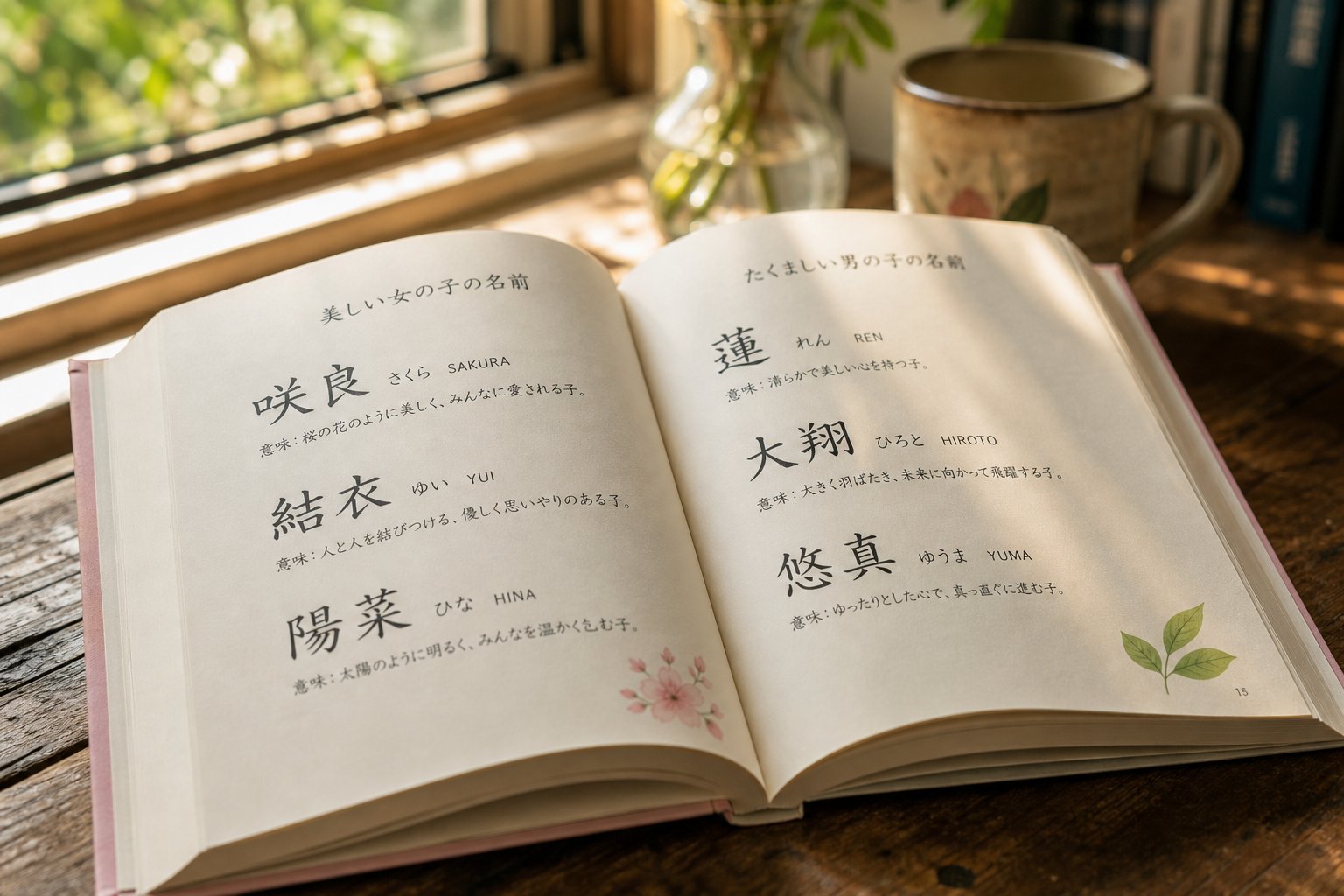
Pronunciation Tips and Cross-Cultural Name Choices
Choosing a name is one thing. Saying it correctly is another. If you're a non-Japanese parent drawn to japanese names for girls, or a diaspora family looking for something that honors heritage while functioning smoothly in English-speaking environments, pronunciation is the bridge between intention and everyday life. The good news? Japanese pronunciation is far more consistent than English. Once you learn five vowel sounds, you can say virtually any name correctly.
A Quick Pronunciation Guide for Non-Japanese Speakers
Japanese has only five vowel sounds, and they never change regardless of where they appear in a word. Compare that to English, which has somewhere between 14 and 20 vowel sounds depending on dialect. Migaku's pronunciation research confirms that these vowels stay consistent no matter what consonant precedes them or what position they hold in a name.
| Romaji Vowel | English Approximation | Example Name | Sounds Like |
|---|---|---|---|
| a | "ah" as in "father" | Sakura | sah-koo-rah |
| i | "ee" as in "see" | Hikari | hee-kah-ree |
| u | "oo" as in "food" (lips barely rounded) | Tsumugi | tsoo-moo-gee |
| e | "eh" as in "bed" | Megumi | meh-goo-mee |
| o | "oh" as in "boat" (less lip rounding) | Kokoro | koh-koh-roh |
The biggest difference from English? Syllable stress. English speakers instinctively emphasize one syllable over others: we say "sa-KU-ra" with a punch on the middle. Japanese distributes weight evenly across all syllables. Each mora (sound unit) gets roughly equal time, like a metronome. So Sakura is "sa-ku-ra" with three even beats, not one stressed and two swallowed.
Common pitfalls to avoid when pronouncing japanese girls names:
- Don't add extra syllables. "Rin" is one beat, not "Ri-nu." "Ai" is two beats (ah-ee), not one diphthong like the English word "eye."
- Don't curl the R. The Japanese R-sound is a quick tongue tap against the ridge behind your upper teeth, similar to the "tt" in the American pronunciation of "butter." It's neither an English R nor an L.
- Don't swallow vowels. Every vowel gets pronounced. "Kaede" is four beats: ka-eh-deh, not "kade" or "kay-dee."
- Watch for long vowels. A doubled vowel means you hold the sound for two beats. "Yuuki" (courage) has a longer "uu" than "Yuki" (snow). The difference matters.
Names That Work Beautifully Across Cultures
Some japanese baby girl names travel effortlessly between languages. They're easy for non-Japanese speakers to pronounce, don't create awkward associations in English or other major languages, and still carry authentic kanji meanings. If you're looking for cute japanese girl names that function internationally, these are strong choices:
- Hana (花) — "flower." Short, intuitive, and already familiar in many cultures. Works as a standalone name in English, German, Korean, and Arabic.
- Mia (美亜) — "beautiful" + "second/Asia." Recognized globally as a given name, with legitimate kanji backing in Japanese.
- Emi (恵美) — "blessing" + "beauty." Two syllables, no pronunciation traps, and a warm meaning that resonates universally.
- Naomi (直美) — "honest beauty." Already established as a name in English and Hebrew traditions, making it genuinely bicultural.
- Rina (莉奈) — "jasmine" + "grace." Simple, melodic, and free of awkward homophones in English, Spanish, or French.
- Mei (芽依) — "sprout" + "reliance." Sounds like the English month "May," making it instantly accessible while carrying deeper kanji meaning.
- Sara/Sakura — Sara (沙良, "sand" + "good") works identically in English, while Sakura has become globally recognized enough to need no explanation.
- Kei (恵) — "blessing." Short, gender-neutral in sound, and easy to spell in any alphabet.
Japan Dev's naming guide notes that names like Emma (えま), Nina (にな), and Naomi (なおみ) work particularly well for families navigating both Japanese and English-speaking environments. The key is finding names where the Japanese pronunciation and the English pronunciation land close enough that the child won't constantly correct people.
For japanese american girl names specifically, consider whether the name will appear on two passports. Savvy Tokyo's guide for international families points out that Japan doesn't recognize middle names, so a name registered as "Mary Margaret" becomes "Marymargaret" on Japanese documents. Keeping the given name short and singular avoids this administrative headache.
Choosing a Japanese Name Respectfully
If you're not Japanese but feel drawn to asian names for girls from Japan's naming tradition, the question of cultural respect naturally arises. Here's a practical framework:
- Learn the meaning before committing. Don't choose a name purely for its sound. Understand which kanji you'd associate with it and what those characters mean. A name without kanji awareness is like wearing a shirt with text you can't read.
- Avoid sacred or historically loaded names. Names tied to specific deities (like Amaterasu) or imperial lineage carry weight that may feel presumptuous without cultural connection.
- Consider your child's future context. Will your daughter spend time in Japan? If so, a name with legitimate kanji backing will be received more warmly than one that sounds Japanese but has no written form that makes sense to native speakers.
- Consult native speakers if possible. A Japanese friend, colleague, or cultural advisor can flag associations you'd never catch on your own, like homophones with unfortunate meanings or names that sound dated in ways a foreigner wouldn't recognize.
- Respect the system's logic. Japanese naming is meaning-first. If you choose a japanese names girl option because you love the sound but ignore the kanji layer entirely, you're engaging with only half the tradition. Even if you never formally register kanji, knowing which characters you'd choose shows genuine engagement with the culture.
The most important thing? Sincerity. Japanese culture generally welcomes respectful appreciation of its traditions. A non-Japanese parent who has researched the kanji, understands the meaning, and can explain why they chose a particular name will be met with warmth far more often than criticism. The effort itself communicates respect.
Whether you're selecting from popular lists or venturing into rare territory, the principles remain the same: understand the meaning encoded in the characters, pronounce the name as its language intends, and choose with the awareness that a name is a gift your daughter will carry for life. In Japanese tradition, that gift isn't just a sound. It's a story written in strokes, radicals, and centuries of cultural meaning, visible every time someone writes her name.
Frequently Asked Questions About Japanese Girl Names and Their Meanings
1. How do Japanese girl names get their meaning?
Japanese girl names derive meaning from kanji characters rather than the sound itself. Each kanji is an ideographic symbol representing a concept like love, light, or flower. Parents select specific characters to encode their wishes for their daughter, which means two girls with the same spoken name can carry entirely different meanings depending on which kanji were chosen. For example, the name Yuki can mean snow (雪), happiness (幸), or reason plus chronicle (由紀) based on the written characters selected.
2. What are the most popular Japanese girl names right now?
According to 2025 data from Meiji Yasuda Life Insurance, the top Japanese girl names include Sui/Midori (翠, meaning kingfisher/jade), Himari (陽葵, sunlight plus hollyhock), Tsumugi (紬, pongee silk symbolizing connection), Mashiro (茉白, jasmine plus white), and Rin (凛, dignified). Nature imagery, light-related kanji, and single-character names dominate current trends, with 愛 (love) remaining the most commonly used individual kanji in girls' names for four consecutive years.
3. Can non-Japanese parents give their child a Japanese name?
Yes, non-Japanese parents can choose Japanese names for their children. The key to doing so respectfully is understanding the kanji layer behind the name rather than selecting purely for sound. Research which characters you would associate with the name, learn their meanings, and consider consulting a native Japanese speaker to avoid unintended associations. Names like Hana, Mei, Naomi, and Emi work particularly well cross-culturally because they are easy to pronounce in English while carrying authentic kanji meanings.
4. What Japanese girl names mean strength or power?
Japanese names meaning strength include Tsuyomi (強美, strong beauty), Chikara (力, power), Takara (宝, treasure suggesting inherent worth), Tsukasa (司, one who governs), and Shinobu (忍, endurance or patience). Modern Japanese parents increasingly choose strength-related kanji for daughters, often pairing power characters with beauty or grace suffixes. This reflects evolving gender expectations where strength and femininity coexist rather than conflict in a single name.
5. What is the difference between on'yomi and kun'yomi in Japanese names?
On'yomi are Chinese-derived readings of kanji characters, while kun'yomi are native Japanese readings. In naming, this distinction affects the cultural feel of a name. Kun'yomi names use yamato kotoba (native Japanese vocabulary) and feel earthy, warm, and traditionally Japanese, like Hana (花, flower). On'yomi names tend to feel more formal, literary, or elegant, like Reika (麗花, lovely flower). Neither type is superior; they simply carry different stylistic weight, similar to choosing between Anglo-Saxon and Latin-origin words in English.