The Liu Family Name and Its Place in Chinese Heritage
Imagine sharing your last name with nearly 70 million people. That's more than the entire population of France or the United Kingdom. If your liu last name connects you to this vast global community, you're part of a lineage that stretches back thousands of years and once ruled one of history's most influential empires.
What the Liu Surname Represents
The liu family name (刘/劉) is far more than a common identifier. It's the surname of the Han dynasty emperors, a name that originally meant "battle axe," and a living thread connecting millions of descendants across continents. Whether your family spells it Lau, Liew, Low, or Ryu, there's a strong chance your roots trace back to the same ancestral clan. The surname liu carries within it a story of imperial power, deliberate expansion, and centuries of migration that shaped East Asian culture.
Liu ranks as the 4th most common surname in mainland China, shared by approximately 67.7 million people — roughly 5.1% of the population. Globally, it is one of the most widespread surnames on Earth, appearing across China, Korea, Vietnam, Japan, Southeast Asia, and Western diaspora communities.
Why Liu Ranks Among the Most Common Surnames
You'll notice that most of the world's common surnames grew organically over millennia. The liu surname took a different path. Its extraordinary prevalence traces directly to a single historical event: the founding of the Han dynasty in 206 BC. When Liu Bang rose from peasant origins to become emperor, he didn't just establish a 400-year dynasty. He actively granted his surname to loyal subjects and allies as a mark of imperial favor, artificially multiplying the Liu population in ways no other Chinese surname experienced.
This article serves as a comprehensive reference for anyone seeking to understand the full scope of this heritage. You'll find the etymology and ancient origins of the name, a breakdown of the Chinese character itself, the imperial history that made it so widespread, every spelling variant across dialects and languages, global migration patterns, and practical guidance for tracing your own Liu ancestry through traditional genealogical records. Whether you're an overseas Chinese reader reconnecting with your roots or a genealogy enthusiast exploring Chinese naming culture for the first time, each section builds on the last to give you a complete picture of what it means to carry this surname.
Origins and Etymology of the Liu Surname
A surname that means "battle axe" and traces its lineage to a legendary dragon tamer — the liu last name origin story reads more like mythology than genealogy. Yet historical records and classical texts anchor this name firmly in documented Chinese history, with roots reaching back over three thousand years.
Ancient Roots Dating to 827 BC
The earliest origins of the Liu surname connect to one of China's most revered figures: Emperor Yao (approximately 2377 BC - 2259 BC). After Yao abdicated his throne to Emperor Shun, one of Yao's sons was granted a territory called Liu. This land grant established the State of Liu and planted the seed for what would become one of the world's most common surnames.
The liu surname origin becomes more concrete with Liu Lei (刘累), widely recognized as the founding ancestor of the Liu lineage. Living during the late Xia dynasty (approximately 2070 BC - 1600 BC), Liu Lei earned fame as a dragon tamer trained by the mythical Huanlong clan. He served King Kongjia by taming four dragons and received the title "Yulong" — the Dragon Tamer. When one of the dragons died under his care, Liu Lei fled south with his family, where they preserved their ancestor's surname and continued worshiping Emperor Yao.
A separate origin branch dates to around 599 BC, when Duke Kang of Liu was enfeoffed in the land of Liu by his brother, King Ding of Zhou. Duke Kang established a state that thrived until its eventual annexation. After the state fell, its people adopted "Liu" as their surname — a common pattern in ancient China where place names became family names. This line traces through the Ji royal family of the Zhou dynasty, connecting the liu name origin to aristocratic Zhou lineage rather than Emperor Yao's bloodline.
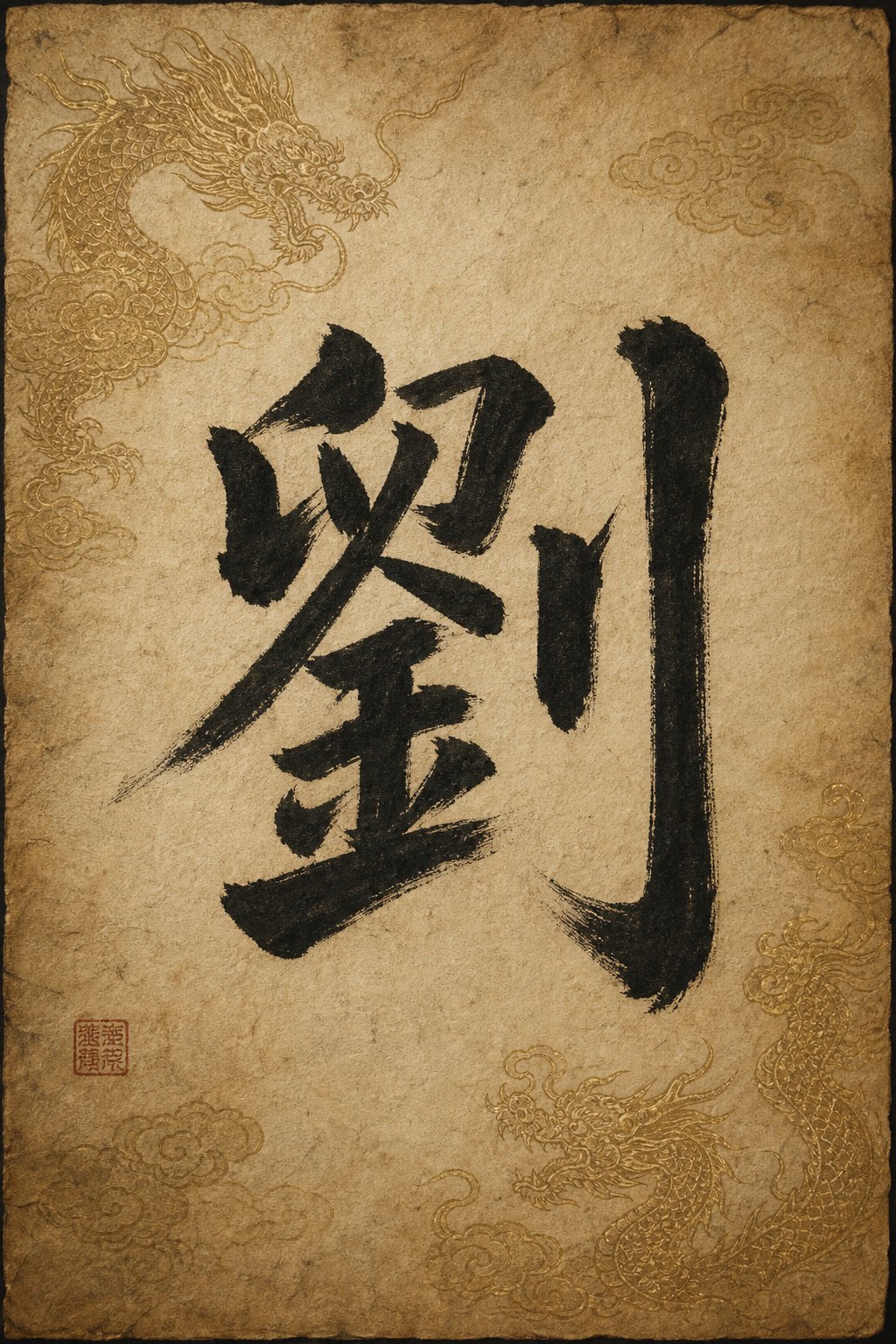
The liu surname meaning itself reveals a martial character. The traditional form 劉 classically referred to a type of battle axe, carrying connotations of killing and slaughter. This wasn't a farmer's name or a merchant's name. It was a warrior's name, rooted in metal and blades — a fitting origin for a surname that would eventually belong to dynasty-founding emperors.
Different Characters That Share the Liu Sound
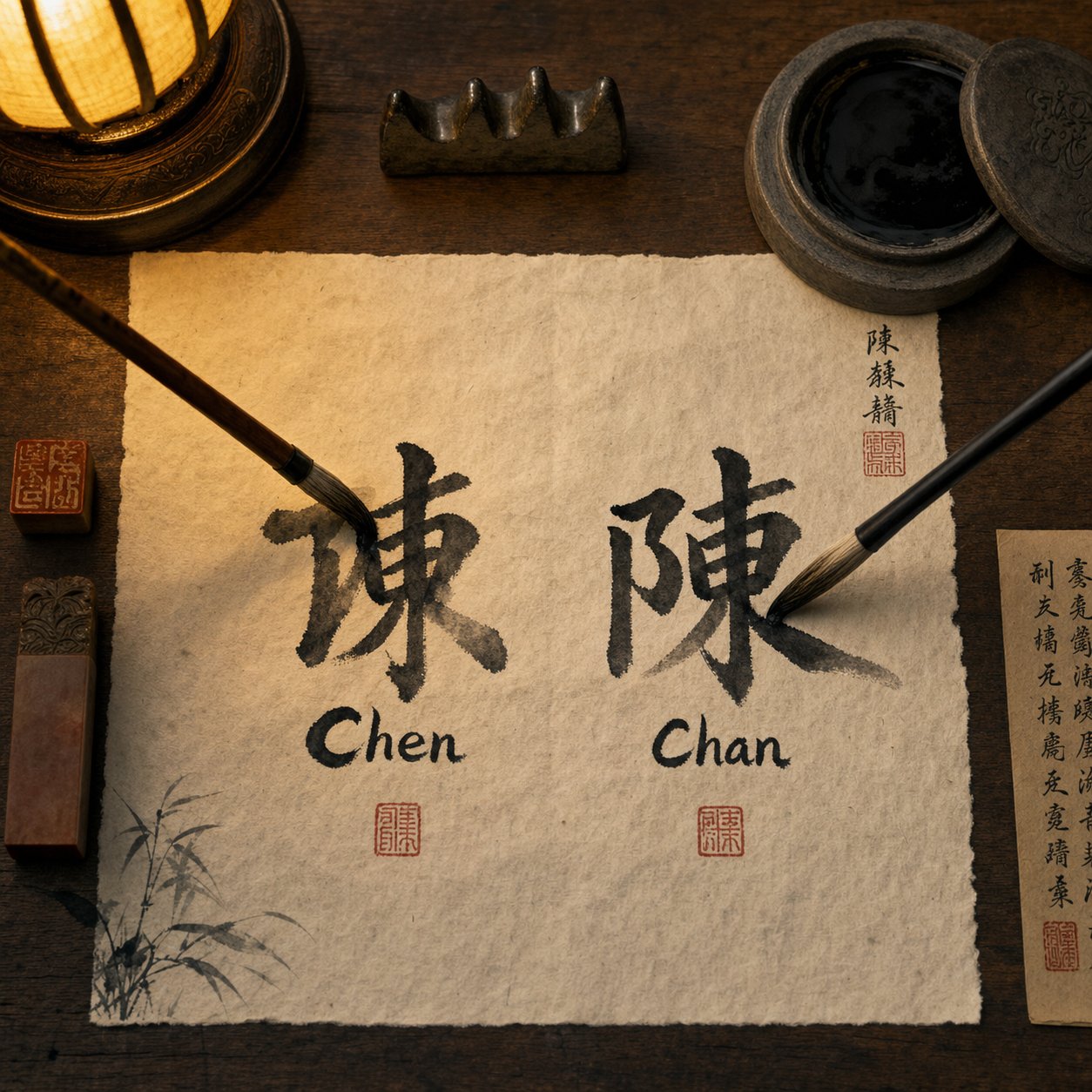
Here's where things get tricky for genealogy researchers. When you encounter the romanized spelling "Liu" in English records, it could represent several completely unrelated Chinese surnames. These characters share a pronunciation but have distinct origins, meanings, and ancestral lines. Knowing which one belongs to your family is essential for tracing your roots accurately.
- 劉/刘 (liu, second tone) — The most common Liu by far. Its classical meaning is "a type of battle axe; to kill, to slaughter." This is the imperial surname of the Han dynasty, descended from Emperor Yao's lineage and the Zhou royal family. The vast majority of people with the Liu last name carry this character.
- 柳 (liu, third tone) — Means "willow tree." This surname has entirely separate origins, often traced to descendants who lived near willow groves or were granted land with willow-related place names. It is a distinct clan with no connection to the imperial Liu.
- 留 (liu, second tone) — Means "to remain" or "to stay." A rare surname with its own independent lineage, sometimes originating from place names or bestowed names during ancient periods.
- 六 (liu, fourth tone) — Means "six." An extremely rare surname, likely originating from an ancient state or place name. Almost never encountered in modern records.
How do you identify which Liu applies to your family? Start with older family documents, ancestral tablets, or any records written in Chinese characters. If your family emigrated from southern China and the surname appears as "Lau" or "Low" in older records, you're almost certainly dealing with 劉/刘 — the dominant Liu. The liu last name meaning in your specific case depends entirely on which character your ancestors used, so finding that original written form is the first step in any serious genealogy effort.
The character itself holds the next layer of the story. Its radical components — metal, knife, and an ancient phonetic element — encode the surname's martial identity directly into its written form, a linguistic fossil preserved across millennia of script evolution.
The Liu Chinese Character and Its Evolution
Every Chinese character is a small machine built from meaningful parts. The liu chinese character is no exception. In its traditional form 劉, you can read the surname's entire martial history just by examining its components. Understanding how this character was constructed — and how it was later simplified — reveals the liu meaning in chinese at a deeper level than any dictionary entry alone.
Breaking Down the Character Components
The traditional character 劉 is classified as a phonosemantic compound. That means one part signals pronunciation while other parts signal meaning. In this case, 卯 (mao) provides the sound, while 金 (jin/metal) and 刂 (dao/knife) together convey the meaning: a type of battle axe made of metal with a cutting edge.
| Component | Pinyin | Meaning | Position in 劉 | Function |
|---|---|---|---|---|
| 卯 | mao | Fourth earthly branch | Upper left | Sound (phonetic) |
| 金 | jin | Metal / gold | Lower left | Meaning (semantic) |
| 刂 | dao | Knife / blade | Right side | Meaning (semantic) |
Imagine the logic: a metal object (金) with a blade (刂) that sounds like "mao" (卯). Put them together and you get 劉 — originally meaning a specific type of battle axe used for killing. The surname we know today is actually a phonetic loan. Over centuries, the character's primary use shifted from "battle axe" to "surname Liu," while the weapon meaning faded into classical dictionaries.
This structure tells you something important about liu meaning chinese culture encodes into names. The character wasn't chosen arbitrarily. It carried connotations of military power and authority — qualities that would prove fitting when the Liu clan eventually founded the Han dynasty.
From Traditional 劉 to Simplified 刘
The traditional form 劉 contains 15 strokes. Writing it repeatedly in daily life, government documents, and school assignments was time-consuming. When the People's Republic of China promulgated the Chinese Character Simplification Scheme in 1956, 劉 was among the characters targeted for reduction.
The simplification method used for this character falls under "replacing a component with a simple arbitrary symbol." The entire left side of 劉 — the phonetic element 卯 stacked above the semantic element 金 — was replaced with 文 (wen, meaning "writing"), a shorthand that preserves the general shape without retaining the original semantic logic. The knife radical 刂 on the right side remained unchanged. The result: 刘, with just 6 strokes instead of 15.
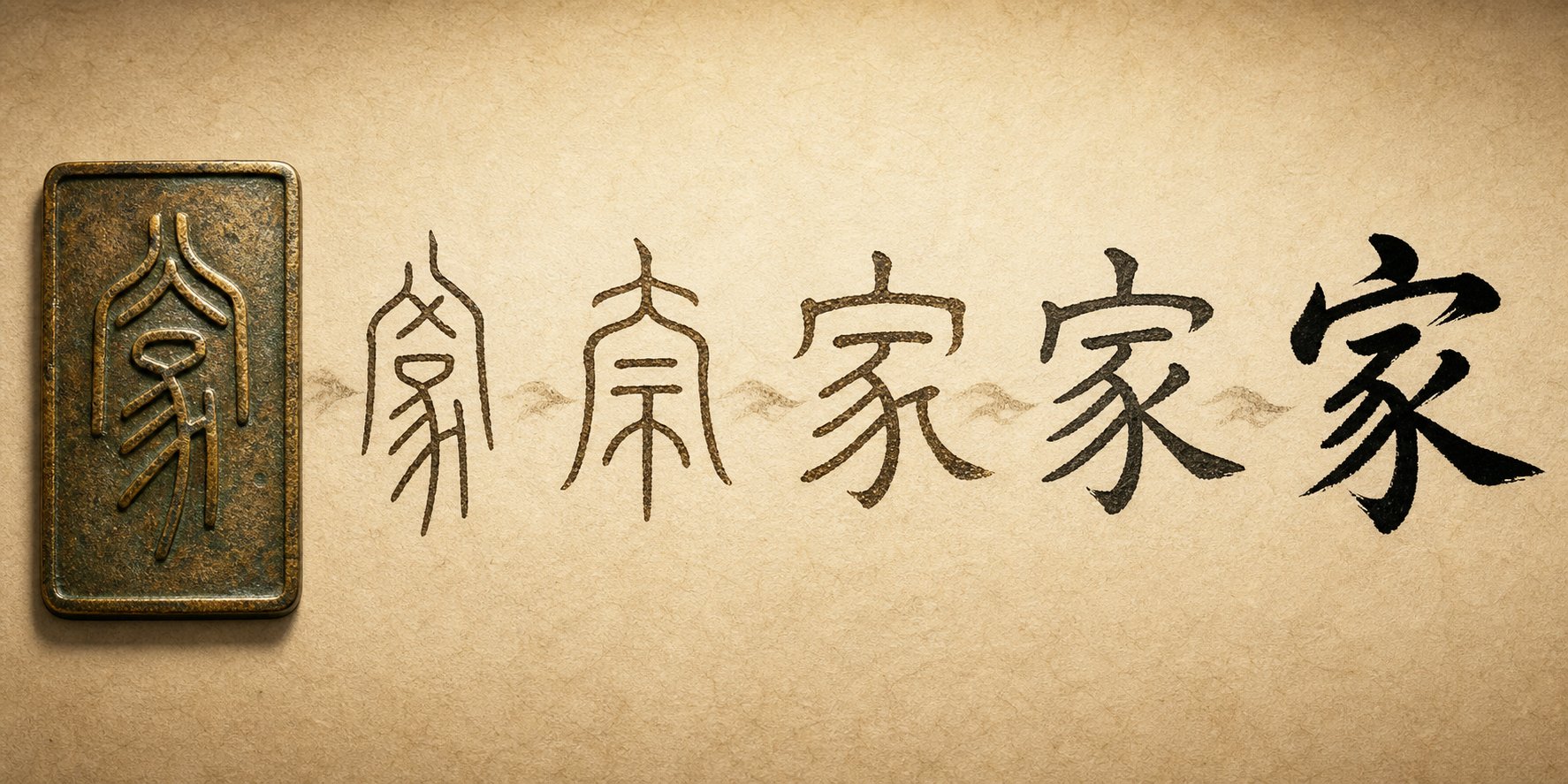
Before the modern simplified form existed, the character had already passed through several script stages. Clerical script versions from the Western Han dynasty (202 BC - 9 AD) show 劉 written with recognizable but more angular strokes compared to seal script predecessors. Bronze inscriptions from the Zhou period preserve even earlier forms where the metal and blade components are more pictographic — closer to actual depictions of a weapon. By the Western Jin dynasty (266 - 316 AD), clerical script had settled into the form that would become the standard traditional character used for over a thousand years.
Today, 刘 is used in mainland China, Singapore, and Malaysia, while 劉 remains standard in Taiwan, Hong Kong, and Macau. If you encounter the liu in chinese written form in older family documents, ancestral tablets, or pre-1950s records, you'll almost certainly see 劉. Knowing both forms is essential for genealogy research, since records span the divide between traditional and simplified writing systems.
The character's visual transformation mirrors a broader pattern: a surname born from weapons and warfare, gradually abstracted into a simple six-stroke identity marker carried by tens of millions. Yet the pronunciation stayed constant across all these changes — and that pronunciation sounds remarkably different depending on which Chinese dialect or neighboring language you speak.

How the Han Dynasty Made Liu a Global Surname
A character meaning "battle axe" carried by a regional warrior clan — that was the Liu surname before 206 BC. What transformed it into one of the most common surnames on Earth wasn't gradual population growth or geographic luck. It was a single peasant-turned-emperor and a deliberate imperial policy that multiplied the name across an entire civilization.
Liu Bang and the Birth of the Han Dynasty
Liu Bang started life as a minor village official in what is now Jiangsu province. He had no aristocratic pedigree, no military training, and no obvious path to power. Yet after the collapse of the Qin dynasty sparked widespread rebellion, he emerged from the chaos of the Chu-Han Contention as the victor over the warlord Xiang Yu. In 202 BC, he proclaimed himself Emperor Gaozu and established the Han dynasty — a liu dynasty that would rule China for over four centuries.
The Han dynasty (202 BC - 220 AD) became one of the longest and most culturally defining periods in Chinese history. Its influence was so profound that the dominant ethnic group in China still calls itself "Han Chinese" and the Chinese writing system is still called "Han characters." At the center of all this stood the Liu imperial house, whose surname became synonymous with legitimate rule.
How Imperial Policy Multiplied the Liu Surname
Here's where the story gets unusual. Most common surnames grew large simply because families had children over many generations. The Liu surname had an accelerant: deliberate imperial expansion through grants and enfeoffment.
Liu Bang followed a feudal strategy of creating vassal kingdoms ruled by kings. Initially, he rewarded generals and allies of different surnames with kingships. But these non-Liu kings proved unruly and rebellious. One by one, Liu Bang deposed them and replaced them with his own sons, brothers, and relatives. Before his death, he ordered his ministers to swear an oath: only members of the royal House of Liu would be created as kings from that point forward.
The result was a network of Liu-surnamed princes and kings spread across the empire. Each prince established his own branch lineage, producing descendants who carried the surname through subsequent generations. Emperors Wen, Jing, and Wu continued creating new princedoms for their sons, further multiplying Liu lineages across different regions of China.
Beyond royal blood, the Han emperors also granted the Liu surname directly to loyal subjects, meritorious officials, and even surrendered foreign leaders who pledged allegiance. Receiving the imperial surname was one of the highest honors possible — it meant being adopted into the ruling clan. Over four centuries of Han rule, this practice injected the Liu name into populations that had no biological connection to the original family.
A single emperor's decision to restrict kingship to his own surname — and four centuries of granting that surname as a political reward — transformed Liu from a regional clan name into one of the world's most common surnames, carried today by nearly 70 million people.
The Liu Song Dynasty and Later Prominence
The Han dynasty fell in 220 AD, but the Liu surname's association with imperial power didn't end there. During the turbulent Three Kingdoms period (220-280 AD), general Liu Bei claimed descent from the Han imperial line and founded the state of Shu Han. His legitimacy rested entirely on his Liu surname — proof that the name still carried political weight decades after the dynasty's collapse. His son Liu Chan inherited the throne and ruled Shu Han for over 40 years until its conquest by the Wei state in 263 AD.
Centuries later, the surname returned to imperial prominence with the Liu Song dynasty (420-479 AD). Founded by Liu Yu, a military general who claimed distant Han dynasty ancestry, the Liu Song was the first and strongest of the Southern Dynasties. Taoists of the era recognized its rulers as the legitimate continuation of the Han dynasty's messianic legacy. Though it lasted only 59 years, the Liu Song reinforced the surname's association with dynastic power and cultural legitimacy in southern China.
These repeated resurgences meant the Liu name never faded into obscurity after the Han fell. Each new liu dynasty or Liu-led state added fresh branches to the family tree, created new regional concentrations of Liu descendants, and kept the surname culturally prominent across centuries of political fragmentation. By the time China reunified under the Sui and Tang dynasties, the Liu surname was already deeply embedded in every province — a permanent demographic reality that migration would eventually carry far beyond China's borders.
Every Spelling Variant of Liu Across Languages and Dialects
Your passport says Lau. Your cousin's says Low. A relative in Korea spells it Yoo, and someone in Vietnam writes Luu. Are you all the same family? In most cases, yes. The same ancestral character 劉 sounds completely different depending on which Chinese dialect or neighboring language carries it forward. If you've ever struggled to pronounce Liu or wondered why your family's spelling doesn't match the standard Mandarin form, this section maps every major variant back to its source.
Mandarin and Cantonese Romanizations
In standard Mandarin (Putonghua), the character 劉/刘 is pronounced with a rising second tone: Liu (pinyin: Liú). This is the form you'll encounter in mainland Chinese records, Taiwanese documents using Wade-Giles (spelled "Liu" as well), and most international media. The pronunciation of Liu in Mandarin rhymes roughly with "leo" — a quick, rising syllable that non-Chinese speakers often find unfamiliar.
Cantonese speakers — primarily from Guangdong province, Hong Kong, and Macau — read the same character as Lau (Jyutping: lau4). This is why so many Hong Kong families carry the surname Lau on their identity documents. The Lau family name in Cantonese-speaking communities is identical in origin to Liu in Mandarin. They share the same character, the same ancestors, and the same clan records. Only the sound differs.
Hokkien speakers — concentrated in Fujian province, Taiwan, Singapore, Penang, and the Philippines — also romanize 劉 as Lau, though some families use Liew or Lew depending on their specific sub-dialect and the romanization system used during immigration. Teochew speakers from the Chaoshan region of eastern Guangdong similarly produce Lau or Low. Hakka speakers, interestingly, retain a pronunciation closer to Mandarin: Liu or Liew.
The pattern is clear: southern Chinese dialects tend to drop the initial "i" glide and produce a rounder vowel, giving you Lau or Low instead of Liu. If your family emigrated from southern China or Southeast Asia before the mid-20th century, your official surname spelling almost certainly reflects a dialect pronunciation rather than Mandarin.
Korean and Vietnamese Branches of the Liu Surname
The character 劉 didn't stay within Chinese-speaking communities. It traveled into Korea, Vietnam, and Japan through centuries of cultural exchange, adopting entirely new sounds in each language.
In Korean, 劉 is written as 유 (yu) in hangul and romanized as Yoo, Yu, or Ryu. The pronunciation liu takes in Korean follows the language's initial sound rule (두음 법칙), which transforms the initial "r/l" sound into "y" at the beginning of a word. Roughly a million people carry this surname in South Korea, making up about 2% of the population. The Korean Yoo lineage traces connections to both the Han dynasty and the Joseon dynasty, with notable clans maintaining genealogies stretching back centuries.
In Vietnamese, 劉 becomes Luu (written Lưu with a horn mark on the u). Vietnamese adopted Chinese surnames during centuries of Chinese cultural influence, and the Liu surname persists as a recognizable minority surname in Vietnam. Japanese readings of 劉 include Ryuu (on'yomi, the Sino-Japanese reading), though the character is rarely used as a native Japanese surname. You'll encounter it primarily in historical texts referring to Chinese figures or among Chinese-Japanese families.
How to Identify Your Specific Liu Variant
The table below consolidates every major romanization of 劉 by dialect and language. Use it to trace your family's spelling back to its linguistic origin.
| Dialect / Language | Romanization Variants | Region of Use | Approximate Population |
|---|---|---|---|
| Mandarin | Liu, Liou | Mainland China, Taiwan | ~67 million |
| Cantonese | Lau, Low | Hong Kong, Macau, Guangdong | ~5-6 million |
| Hokkien | Lau, Liew, Lew | Fujian, Taiwan, Singapore, Philippines | ~3-4 million |
| Teochew | Lau, Low | Eastern Guangdong, Thailand, Cambodia | ~2-3 million |
| Hakka | Liu, Liew | Guangdong, Jiangxi, Taiwan, Malaysia | ~2-3 million |
| Hainanese | Lau | Hainan, Southeast Asia | ~500,000 |
| Korean | Yoo, Yu, Ryu, Ryoo | South Korea, Korean diaspora | ~1 million |
| Vietnamese | Luu (Lưu) | Vietnam, Vietnamese diaspora | ~300,000 |
| Japanese | Ryuu (リュウ) | Japan (rare as surname) | Minimal |
So how do you figure out which variant applies to your family? Start with geography. If your ancestors came from Hong Kong or Guangdong, you're likely a Lau. If they emigrated from Fujian or through Singapore, Lau or Liew is most probable. Korean families spelling it Yoo or Ryu can check their clan registry (jokbo) for the hanja character — if it shows 劉, the connection to the Chinese Liu is confirmed. Vietnamese families writing Luu share the same root character.
The pronunciation liu carries in each language reflects centuries of independent phonetic evolution. Mandarin, Cantonese, Hokkien, and Korean all descended from or borrowed the same Middle Chinese pronunciation, but each language shifted its vowels and consonants along different paths. The result is a single surname character that sounds like "lyoh" in one city and "lau" in the next — yet points back to the same Han dynasty imperial house.
These spelling differences aren't just linguistic curiosities. They shaped where Liu families settled, which communities they joined, and how their records were filed in immigration offices around the world. A Lau arriving in San Francisco in 1880 and a Liu arriving in Vancouver in 1990 might share a common ancestor — but finding that connection requires understanding how dialect determined documentation.

Global Distribution and the Liu Diaspora
Dialect shaped how the surname was spelled on a passport. Geography determined where it ended up. If you're reading this from Sydney, Toronto, or Singapore and wondering about your liu last name ethnicity, you're part of a migration story that unfolded in distinct waves over six centuries — each one depositing Liu families into new countries under different names, different circumstances, and different immigration systems.
Where Liu Families Live Around the World
Within China itself, the Liu surname isn't evenly distributed. It concentrates heavily in the northern and central provinces where the Han dynasty's political heartland once stood. Shandong province holds the largest absolute number of Liu-surnamed residents, followed by Henan, Sichuan, and Hebei. In Jiangxi province, Liu is actually the single most common surname — a regional dominance that reflects centuries of localized population growth from Han dynasty princely branches established there.
Is Liu a Chinese last name exclusively? Not quite. While its origins are undeniably Chinese, the surname has been naturalized into Korean culture (as Yoo/Ryu) and Vietnamese culture (as Luu) for centuries. Still, the overwhelming majority of the world's Liu-surnamed people — roughly 67.7 million in mainland China alone — are ethnically Han Chinese. Add Taiwan's population (where Liu ranks 8th), the Korean branch, and the global diaspora, and you're looking at well over 70 million people connected to this single ancestral character.
Outside East Asia, Liu Chinese communities cluster in predictable patterns shaped by historical migration routes. Southeast Asia holds the oldest and largest overseas populations. North America, Australia, and Europe host more recent arrivals. Each destination tells a different chapter of the story.
Migration Waves That Spread the Liu Surname
The Liu diaspora didn't happen all at once. It rolled out in three major waves, each driven by different forces and producing different community profiles in the destination countries.
- Ming and Qing Dynasty Trade Migration (1400s-1800s): The earliest Liu families to leave China were merchants and traders from the southeastern coastal provinces of Fujian and Guangdong. During the Ming dynasty (1368-1644), these entrepreneurs established footholds in the Philippines, Malaysia, Indonesia, and Thailand. Cambridge University Press research confirms that lineage and native-place associations organized these communities abroad. Liu families from this era typically appear in local records as Lau, Low, or Liew — reflecting Hokkien, Cantonese, and Teochew pronunciations. Thailand's Chinese community, the largest in Southeast Asia, includes Liu descendants with over 400 years of local integration.
- Labor Migration to the Americas and Oceania (1840s-1920s): The Opium Wars and internal rebellions during the Qing dynasty (1644-1912) pushed hundreds of thousands of Chinese laborers overseas. UNESCO documents that Britain and France essentially forced the Qing government to authorize mass labor exports to replace enslaved workers following abolition. Liu-surnamed workers joined gold rushes in California and Australia, built railroads across North America, and labored on plantations in Southeast Asia and the Caribbean. By the early 1940s, approximately 8.5 million Chinese lived abroad, with over 90% concentrated in Southeast Asia. These laborers' descendants often carry anglicized or dialect-based spellings — Lau in San Francisco Chinatown records, Low in British Malaya census rolls.
- Modern Professional Migration (1980s-present): After Deng Xiaoping's reforms reopened China's borders in the late 1970s, a fundamentally different type of migration began. Research published in PubMed Central highlights that post-reform emigrants were increasingly drawn from educated and professional classes — engineers, academics, entrepreneurs, and investors. Liu families arriving in North America, Europe, and Australia from the 1980s onward typically use the Mandarin pinyin spelling "Liu" on their documents, distinguishing them from earlier Cantonese-speaking arrivals who registered as "Lau." This wave brought the standard Mandarin romanization into Western immigration systems for the first time at scale.
These three waves produced layered communities. In cities like Vancouver, Sydney, and London, you'll find third-generation Lau families whose grandparents arrived as laborers alongside first-generation Liu families who immigrated as software engineers. Same ancestral character, same clan origins — but separated by a century of history and completely different documentation trails.
For anyone asking "liu is what nationality" — the answer depends on which generation and which wave you're tracing. The surname itself is Chinese in origin, but Liu families have held citizenship across dozens of countries for generations. A Lau family in Malaysia may have been locally rooted since the 1600s. A Yoo family in Los Angeles may trace Korean lineage back centuries before their American chapter began. The liu family name is Chinese in its DNA, but global in its lived reality.
This global scattering created a practical challenge that persists today: how do you reconnect branches of a family separated by oceans, spelling differences, and lost records? The answer lies in a uniquely Chinese genealogical tradition — the zupu — that many Liu clans maintained even through centuries of migration and upheaval.
Tracing Your Liu Ancestry Through Zupu Records
Scattered spelling variants, multiple migration waves, and centuries of separation — reconnecting the branches of a Liu family tree sounds impossible without a roadmap. Fortunately, Chinese clans developed their own genealogical system long before Western census records existed. It's called the zupu (族谱), and for anyone carrying the family name Liu, it may be the single most powerful tool for tracing your lineage back hundreds or even thousands of years.
Understanding Zupu Family Records
A zupu — sometimes called jiapu (家谱) — is a clan genealogy book compiled and maintained by extended family groups. Unlike Western genealogical records scattered across churches, courthouses, and government offices, the zupu consolidates an entire clan's history into one document. Think of it as a family bible, census record, and legal charter rolled into a single multi-volume publication.
What's inside? According to Legacy Tree Genealogists, a typical zupu can contain:
- Detailed lineage charts with names of ancestors going back several hundred to several thousand years
- Biographies of prominent ancestors, including dates and family information
- Clan migration histories tracing the ancient origins of the family and their movement to current locations
- Clan rules dictating membership and behavioral expectations
- Generation poems — a series of characters that guide the naming of new family members according to their generational position
A word of caution: zupu were written by clans to glorify their ancestors. Compilers were selective about who they included. Individuals who disgraced the family were often omitted, and since clans were heavily patrilineal institutions, only scant details were kept about wives, sisters, and daughters. Treat these records the way you'd treat any compiled family history — valuable but not infallible.
For Liu families specifically, hundreds of zupu volumes exist in archives across China. The Liu name appears in genealogy collections held by provincial libraries in Shandong, Henan, Jiangxi, Hunan, and Guangdong — the provinces where Liu populations concentrated most heavily after the Han dynasty's princely branches spread across the empire. Some of these records trace lineages directly back to Emperor Gaozu (Liu Bang) himself, though such claims deserve healthy skepticism given the political incentive to connect one's branch to the imperial line.
Clan Hall Names and Generational Naming Poems
Two features within Liu zupu records deserve special attention because they serve as identification keys — shortcuts that can help you locate your specific branch among millions of Liu descendants.
The first is the tangming (堂名), or clan hall name. In Chinese culture, each surname — and often each sub-branch of a surname — is associated with a specific tangming that references the clan's place of origin or a famous ancestor's achievement. As ThinkChina reports, these hall names served to honor ancestors, unite relatives of the same clan, and help descendants trace their roots back to China. In Singapore, Malaysia, and other Southeast Asian communities, some families still display tangming plaques above their doors.
For Liu families, several tangming are commonly used:
- Pengcheng (彭城) — The most widespread Liu hall name, referencing the city in present-day Xuzhou, Jiangsu province, where Liu Bang was born. Most Liu clans claiming Han dynasty descent use this tangming.
- Zhongshanwang (中山王) — Referencing the Prince of Zhongshan lineage, a branch descended from Emperor Jing's son Liu Sheng. Liu Bei of the Three Kingdoms claimed this lineage.
- Hongnong (弘农) — Associated with Liu clans from the Hongnong commandery in present-day Henan, another major Han dynasty branch.
If your family preserves a tangming — on a plaque, in old documents, or in oral tradition — it narrows your search dramatically. Instead of sifting through all Liu zupu, you can target the specific branch associated with your hall name.
The second key is the zibei (字辈), or generational naming poem. This is a sequence of characters — sometimes a four-line poem, sometimes a longer verse — where each character corresponds to one generation. When a child is born, their given name incorporates the character assigned to their generation. If you know your zibei character, you can determine exactly which generation you belong to within your branch and match yourself to the correct position in a zupu chart.
For example, a Liu clan might use the poem: "Zhong Xiao Chuan Jia Yuan, Shi Shu Ji Shi Chang" (忠孝传家远, 诗书继世长). The first generation uses "Zhong" in their given name, the second uses "Xiao," and so on. FamilySearch's guide to family generation poems explains how these poetic traditions preserve family order and pass meaning from one generation to the next. If your grandfather's Chinese name contains a specific character shared by all his male cousins, that character is likely your family's zibei marker — and it's a direct clue to your generational position.
Where to Begin Your Liu Ancestry Search
Sounds complex? It can be. But the process follows a logical sequence. Here's a practical starting point for anyone with the liu name who wants to trace their roots:
- Interview living relatives. Ask older family members for any Chinese names, ancestral village names, tangming, or zibei characters they remember. Even fragments — a single character, a village pronunciation, a province name — give you something to search with.
- Identify your ancestral village. This is the village your emigrating ancestor left. Be aware that many village names have changed over the past century. Local Chinese government offices can help confirm current names for historical locations.
- Contact the village leadership. Once you've confirmed the village location, reach out with photographs and information about your ancestor: their Chinese name, when they left, and who they were related to. Village leaders can advise whether your zupu still exists locally and verify your ancestor's name inside it.
- Search digital archives. FamilySearch's database of Chinese genealogy holds thousands of digitized zupu. Provincial libraries in Guangdong, Fujian, Shanghai, and Beijing also maintain online databases, though these are typically in Chinese only.
- Check Southeast Asian clan associations. If your family emigrated through Singapore, Malaysia, or other Southeast Asian countries, local Liu clan associations sometimes collect and preserve zupu for their members. These organizations can be invaluable intermediaries.
- Arrange translation if needed. Zupu are written in classical Chinese — a literary style that differs significantly from modern Mandarin. You'll likely need someone experienced with these records to create an intelligible translation that accounts for historical context and naming conventions.
The zupu revival of the past 20 years has made this search more feasible than ever. Since the 1990s, many Liu clans in southern China have been re-compiling their genealogies after decades of disruption during the Cultural Revolution, when many books were burned or destroyed. Libraries and government institutions have received funding to digitize surviving collections, and new compilations incorporate oral histories from elderly clan members who remember details that would otherwise be lost.
Finding your zupu can be a long process. But the payoff is extraordinary: a single document that connects your name liu to a specific village, a specific generation, and a specific branch of one of the world's largest surname communities. That connection doesn't just satisfy curiosity — it places you within a living network of clan associations, ancestral halls, and cultural practices that Liu descendants maintain across the globe today.
The Living Legacy of the Liu Surname Today
A zupu connects you to the past. But what does liu mean in the present? Across China and the diaspora, the surname isn't just a historical artifact sitting in archives. It's an active identity maintained through clan associations, ancestral halls, annual rituals, and evolving naming practices that adapt ancient traditions to modern life.
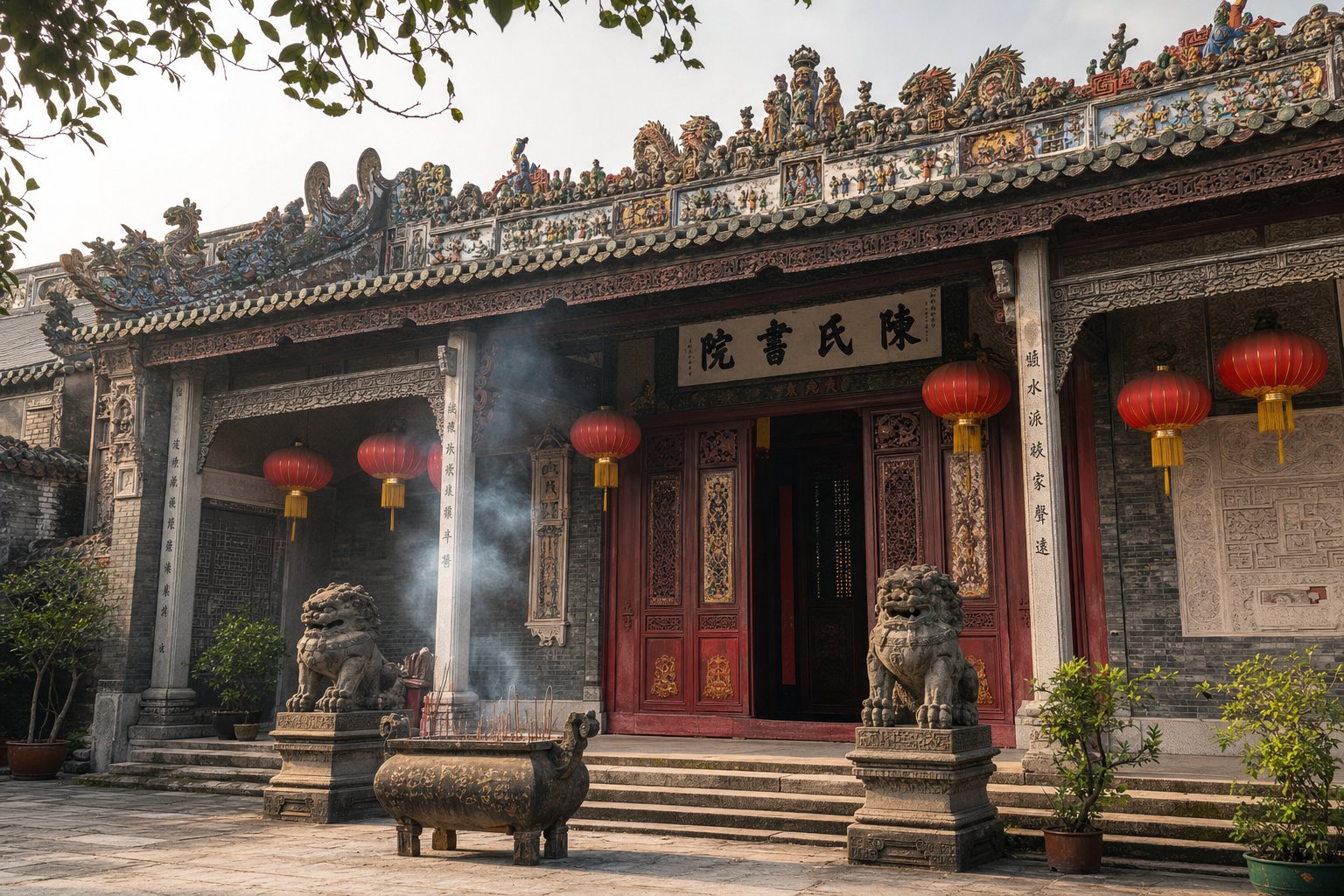
Liu Clan Associations and Ancestral Halls
Liu descendants haven't waited for genealogists to keep their connections alive. Clan associations — formal organizations that unite people sharing the same surname — operate in nearly every country with a significant Chinese population. These groups organize ancestral worship ceremonies, maintain genealogical records, fund scholarships, and provide networking opportunities for members.
- Liu Man Shek Tong, Sheung Shui, Hong Kong — Built in 1751, this ancestral hall hosts annual spring worship rites on the 2nd of the 2nd Lunar Month. Clansmen don traditional long gowns, and ceremony masters perform over a dozen ritual roles including chanting invocations in ancient style with a Hakka inflection. Men over 61 receive a ceremonial slice of pork.
- World Liu Clan Association (世界刘氏宗亲联谊会) — An international umbrella organization connecting Liu clan chapters across Southeast Asia, North America, and Europe. It coordinates global gatherings and genealogical research projects.
- Pengcheng Liu Clan Association, Singapore and Malaysia — Named after the Pengcheng tangming (Liu Bang's birthplace), these chapters serve Hokkien and Cantonese-speaking Liu families who emigrated during the 19th and early 20th centuries.
- Liu Ancestral Halls in Jiangxi and Shandong — Mainland China's provinces with the highest Liu concentrations maintain dozens of restored ancestral halls, many rebuilt after the Cultural Revolution with clan donations from overseas members.
The Hong Kong spring rites illustrate how seriously these traditions persist. The Liu Clan of Sheung Shui traces its migration to the end of the Yuan dynasty, when ancestors settled first in Tuen Mun before moving to their current location. Their ceremony retains ancient customs largely unchanged — doors sealed during worship to keep out evil spirits, offerings presented by seniority, and invocations read in classical literary style. Sub-branches like the Liu Ying-lung family (Yin Shing Tong) and Liu Ying-fung family (Ming Duk Tong) hold their own separate spring worships on subsequent days.
Chinese Naming Culture and What Liu Means Today
To fully define liu in a modern context, you need to understand how Chinese surnames function differently from Western ones. Chinese naming conventions place the family name first — always. A person named Liu Qing is "Liu" first and "Qing" second. The surname isn't just an identifier; it's the primary social marker, spoken and written before any individual identity.
Chinese names are traditionally patrilineal, meaning children take their father's surname at birth. Women don't change their legal names at marriage, though some may place their husband's surname before their own full name in social contexts. This patrilineal system is precisely what made the Han dynasty's surname-granting policy so powerful — once you received the Liu name, your entire male line carried it forward indefinitely.
What does liu mean for naming practices specifically? Parents with the surname Liu often choose given names that complement the character's sound or meaning. As the Cultural Atlas notes, a family named Liu (which can evoke the homophone 柳, meaning "willow tree") might name their child "Qing" (green), creating the poetic combination "green willow." Chinese parents also avoid names that sound like unflattering words and consider astrological compatibility — a good name is believed to bring luck.
These conventions are shifting. Research published by Sixth Tone reveals that patrilineal naming practices are being overturned in parts of China. Some families now give children their mother's surname, while others create compound surnames recognizing both parents. The liu name meaning hasn't changed, but the rules governing who receives it are evolving. In eastern regions like Shanghai and Zhejiang, matrilineal naming has become a strategy for preserving a family line when no sons are born — a direct response to decades of family planning policy. Meanwhile, compound surnames reflect modernized attitudes about gender equality in urban, educated households.
For the 70 million people who carry this surname today, the liu definition encompasses all of it: a battle axe character from the Bronze Age, an imperial dynasty's legacy, a network of clan halls stretching from rural Jiangxi to suburban Sydney, and a living naming tradition that continues adapting to contemporary life. Whether you spell it Liu, Lau, Yoo, or Luu — whether you found your zupu or are still searching — you belong to a surname community that has reinvented itself across three millennia without losing its core identity. That's what it means to carry the liu family name into the future.
Frequently Asked Questions About the Liu Family Name
1. What does the Liu surname mean in Chinese?
The traditional character 劉 originally referred to a type of battle axe, combining the radicals for metal (金) and knife (刂) with a phonetic element (卯). Over time, the character's primary use shifted from its weapon meaning to function exclusively as a surname. The simplified form 刘, introduced in 1956, retains the knife radical but replaces the left components with 文. This martial origin reflects the surname's connection to warrior clans and imperial power long before Liu Bang founded the Han Dynasty in 206 BC.
2. Is Liu a Chinese or Korean last name?
Liu is originally a Chinese surname written as 劉/刘, but it also exists in Korean culture as 유, romanized as Yoo, Yu, or Ryu. About one million Koreans carry this surname, which shares the same ancestral Chinese character. The name also appears in Vietnamese as Lưu and in Japanese as Ryuu. So while its roots are Chinese, the surname has been naturalized across multiple East Asian cultures for centuries through historical cultural exchange.
3. Why is the Liu surname so common?
The Liu surname's extraordinary prevalence stems directly from Han Dynasty imperial policy. When Liu Bang became emperor in 206 BC, he restricted kingship to members of his own family and granted the Liu surname to loyal subjects as a political honor. Over 400 years of Han rule, this practice created dozens of princely branches across China and injected the surname into populations with no biological connection to the original clan. Later dynasties founded by Liu-surnamed rulers further expanded the name's reach.
4. How do you pronounce the surname Liu?
In standard Mandarin, Liu is pronounced with a rising second tone (Liú), rhyming roughly with 'leo.' However, the same character sounds completely different across Chinese dialects: Cantonese speakers say 'Lau,' Hokkien speakers use 'Lau' or 'Liew,' and Teochew speakers produce 'Lau' or 'Low.' In Korean it becomes 'Yoo' or 'Ryu,' and in Vietnamese it is 'Luu.' Your family's specific pronunciation depends on which dialect or language carried the surname forward from your ancestors.
5. How can I trace my Liu family ancestry?
Start by interviewing older relatives for Chinese names, ancestral village names, clan hall names (tangming), or generational naming characters (zibei). Next, identify your ancestral village in China and contact local leadership about surviving zupu (clan genealogy books). Digital resources like FamilySearch hold thousands of digitized Chinese genealogies. Southeast Asian clan associations also preserve records for overseas Liu families. Knowing your tangming — such as Pengcheng, Zhongshanwang, or Hongnong — can narrow your search to a specific branch among millions of descendants.