The Hidden Manchu Origins Behind Common Chinese Surnames
Imagine discovering that your perfectly ordinary Chinese surname — Guan, Jin, Zhao, or Lang — isn't Han Chinese at all. For millions of people across China, this is the reality. These single-character surnames, indistinguishable from any other in daily life, trace back to multi-syllable Manchu clan names that were compressed, translated, or phonetically shortened centuries ago. The Guan (关) family next door may descend from the powerful Guwalgiya clan. A colleague surnamed Jin (金) could carry the bloodline of the Aisin Gioro — the Manchu imperial house itself.
What Manchu Surnames in Chinese Actually Means
Manchu surnames in Chinese refers to the historical process by which original Manchurian names — often two to six syllables long — were converted into standard single-character Chinese surnames. Unlike Han surnames that evolved over millennia from totems, fiefdoms, and professions, these Manchu names underwent a rapid transformation driven by political upheaval and cultural assimilation. Clan names like Niohuru became Lang (郎), Hesheri became He (赫), and Tongiya became Tong (佟). Each conversion followed specific linguistic patterns that can still be decoded today.
Over 600 documented Manchu clan names were reduced to roughly 100 common Chinese surnames — meaning a single Chinese surname like Zhao or Bai could trace back to dozens of distinct Manchu clans.
Why This Topic Matters for Ancestry Research
For anyone researching family roots in northeastern China or Beijing, understanding these Manchu names is essential. A surname alone can unlock an entire genealogical trail — connecting you to specific clans, banner affiliations, and geographic origins stretching back to the 1600s. This guide walks through the historical systems that organized Manchu clan identity, the exact methods used to convert those names, and practical steps for tracing whether your own surname carries hidden Manchu roots.
The story begins with the organizational system that made all of this traceable in the first place: the Eight Banners.
The Eight Banners System and Manchu Clan Identity
Every Manchu clan name that eventually became a Chinese surname was recorded somewhere — and that somewhere was the Eight Banners. Think of the Banners not just as a military structure but as a total social system: a way of organizing every family, tracking every lineage, and documenting every clan across the entire Manchu population. Without this system, the mapping of Manchu clan names to Chinese surnames would be guesswork. With it, researchers have a paper trail stretching back to the early 1600s.
How the Eight Banners Organized Manchu Clans
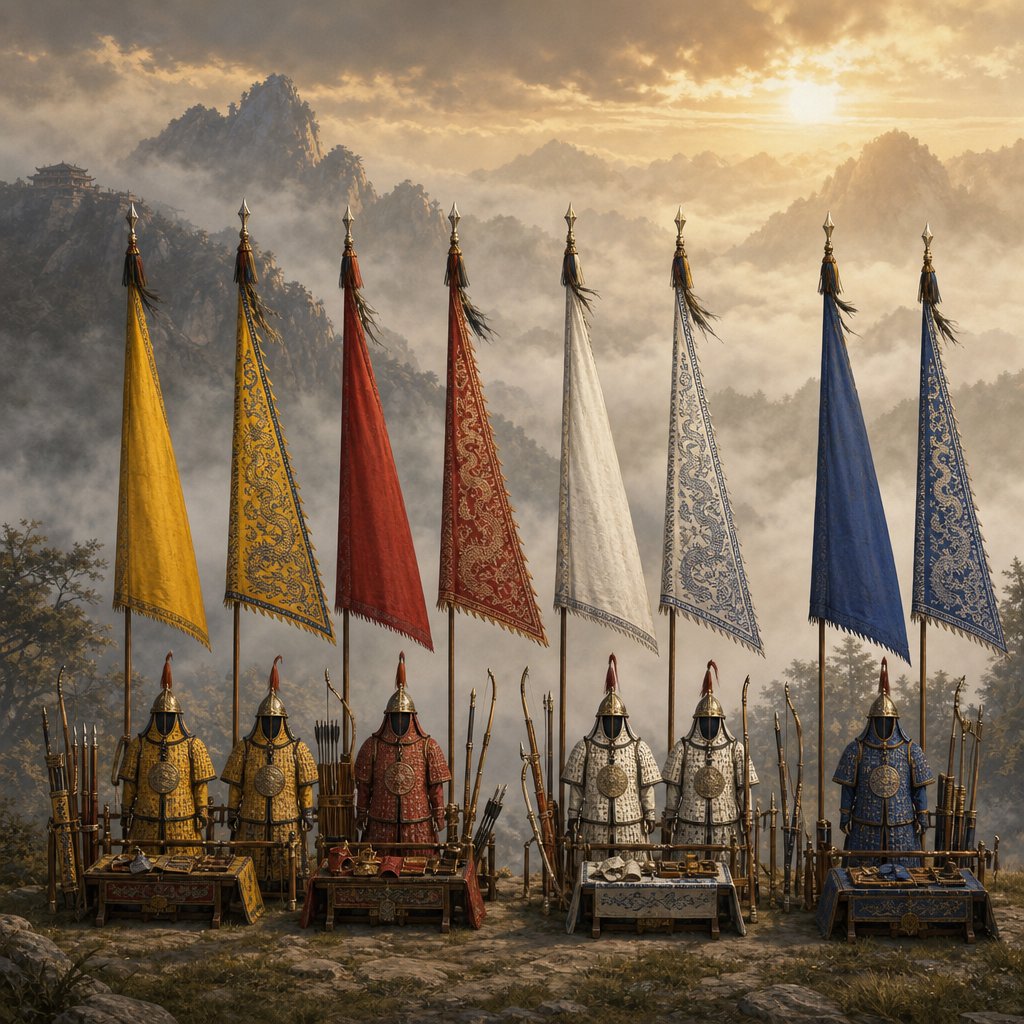
The Banner system originated in the hunting groups of the Jurchen people — the ancestors of the Manchus. In 1601, the leader Nurhaci organized his warriors into four companies distinguished by colored banners: yellow, red, white, and blue. By 1615, he doubled the structure to eight banners by adding bordered versions of each color. What started as a military formation quickly became something much larger.
Nurhaci organized the entire population into these banners — not just soldiers, but their families, clans, and households. Every Manchu clan was registered under a specific banner. Taxation, conscription, marriage, land allotment, and social rank all flowed through this structure. Your banner affiliation defined where you lived, who you could marry, and what opportunities your children would have. It was identity, military service, and social status rolled into one.
By the time the Manchus conquered China in 1644, the system had expanded to 24 banners total: eight Manchu, eight Mongol, and eight Chinese (Han). But the original eight Manchu banners remained the core — and they contained the detailed clan registrations that matter most for surname research today. Each banner tracked its member clans by geographic origin, genealogical line, and notable achievements. These records were refreshed every three years, creating a continuously updated genealogical database centuries before the concept existed elsewhere.
The Manchu-Han dynamic within this system is key to understanding later surname changes. Manchu bannermen held privileged status over their Chinese counterparts. They received annual pensions, land allotments, and rice rations. They answered to separate legal authorities. This distinct identity — maintained through clan registration within the banners — is precisely what made Manchu clan names so well-documented and, ultimately, so traceable.
The Authoritative Genealogy That Maps Every Surname
In December 1735, the newly enthroned Qianlong Emperor recognized a problem: the eight banners contained hundreds of Manchu clan names, but no single reference compiled them all. Existing records were scattered across individual banner administrations. He ordered the creation of a comprehensive genealogy — a master document that would catalog every Manchu surname in one place.
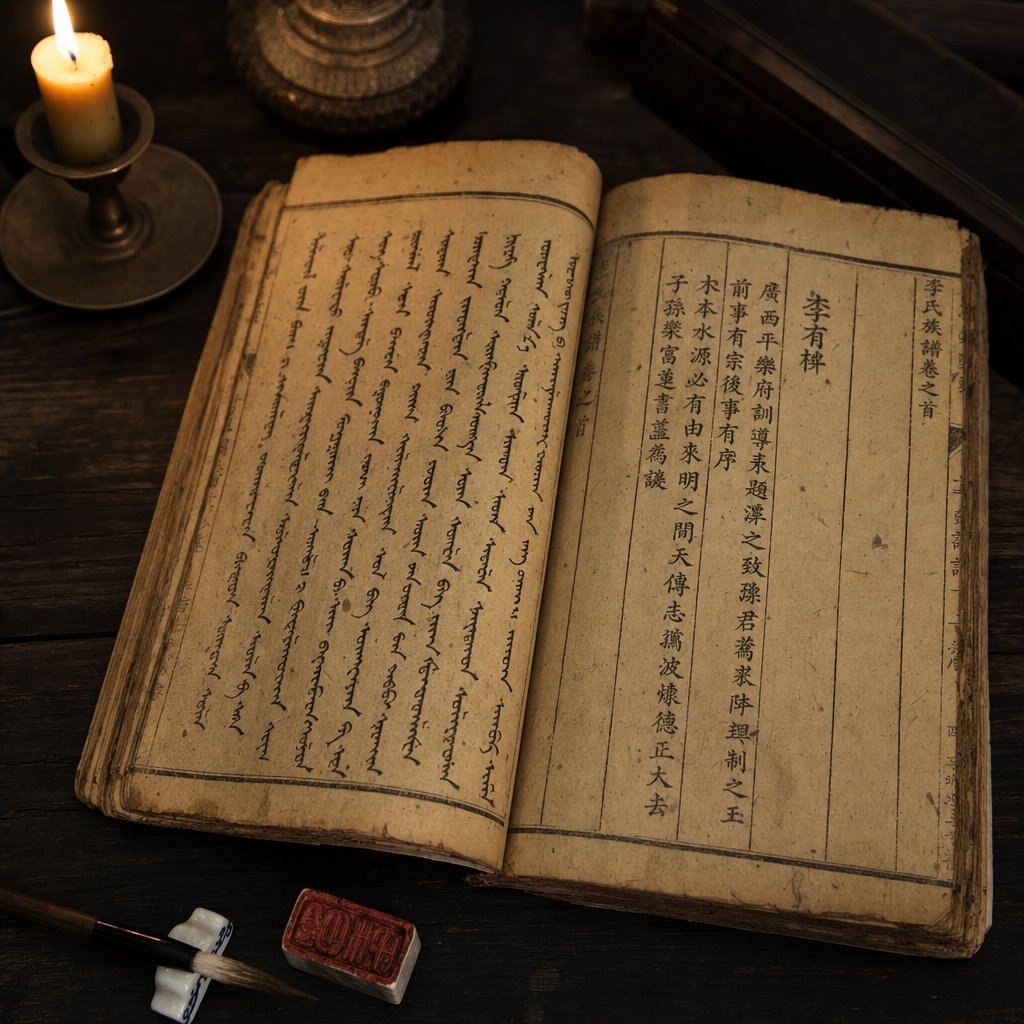
The result, completed in 1744 after nearly a decade of work, was the Comprehensive Genealogy of the Manchu Clans of the Eight Banners (八旗满洲氏族通谱 / Baqi Manzhou Shizu Tongpu). Spanning 80 volumes, it recorded 645 Manchu surnames, 235 Mongol surnames, 43 Korean surnames, and 246 Chinese banner surnames — 1,169 clan names in total. For each surname, the text listed geographic origins, notable individuals, their official ranks, and their achievements.
You'll notice the structure was deliberately hierarchical. Prominent clans appeared first, with multi-generational family histories. Lesser clans followed in sequence. The Qianlong Emperor personally wrote the preface, framing the work as a celebration of Manchu heritage and military accomplishment.
For modern researchers, this genealogy serves as the Rosetta Stone of Manchu surname mapping. It connects original Manchu clan names to specific banner affiliations, geographic origins, and — through later cross-referencing — the Chinese surnames those clans eventually adopted. Both Manchu-script and Chinese-script versions exist, making it accessible to scholars working in either language. When you see a modern reference claiming that the Guwalgiya clan became Guan (关) or that the Nara clan became Na (那), the chain of evidence almost always traces back to this single document.
The genealogy also reveals something crucial about scale. With 645 documented Manchu clan names funneling into a much smaller pool of Chinese surnames, you can see why a single Chinese surname might connect to dozens of unrelated Manchu clans — and why tracing ancestry requires more than just knowing your surname. It requires understanding which method was used to convert the original name.
Three Methods That Transformed Manchu Names into Chinese Surnames
So how does a six-syllable Manchu clan name become a single Chinese character? Not randomly. The manchu to chinese surname conversion followed three distinct linguistic strategies, each producing different results from the same raw material. Understanding which method was used is the key to reverse-engineering a modern Chinese surname back to its Manchu origin — and it explains why the same clan sometimes produced different Chinese surnames in different branches.
First-Character Extraction Method
The most common approach was also the simplest: take the first syllable of the Manchu clan name and find a Chinese character that sounds similar. The rest of the original name was simply dropped. This is why so many Manchu-origin surnames feel indistinguishable from ordinary Han surnames — they were chosen purely for phonetic resemblance to one syllable.
- Guwalgiya (瓜尔佳, Guāěrjiā) → Guan (关, Guān) — the opening sound "Gū" was matched to the character 关
- Fuca (富察, Fùchá) → Fu (富, Fù) — the first syllable "Fu" was adopted directly
- Nara (那拉, Nàlā) → Na (那, Nà) — the first syllable "Na" became the surname
This method accounts for the majority of manchu name sinicization cases. The Comprehensive Genealogy of the Manchu Clans of the Eight Banners documents dozens of clans that followed this pattern, including the Socolo clan becoming Suo (索) and the Majia clan becoming Ma (马). The appeal was obvious: it preserved a faint phonetic echo of the original name while producing a perfectly normal-looking Chinese surname.
Phonetic Transliteration Method
The second method went beyond the first syllable. Here, a Chinese character was selected to approximate a broader phonetic element of the Manchu name — not just the opening sound, but a compressed version of the name's overall pronunciation. The result often captured more of the original name's character than simple extraction.
- Hešeri (赫舍里, Hèshělǐ) → He (赫, Hè) — the character 赫 captures the dominant phonetic impression of "Hešeri"
- Tongiya (佟佳, Tóngjia) → Tong (佟, Tóng) — 佟 approximates the core sound of the full clan name
- Sumuru (舒穆禄, Shūmùlù) → Shu (舒, Shū) — the character 舒 echoes the leading phonetic cluster
You'll notice the line between first-character extraction and phonetic transliteration can blur. The practical difference is intent: extraction grabs one syllable mechanically, while transliteration selects a character that best represents the name's sound as a whole. In many cases, the chosen character already existed in the Chinese transliteration of the Manchu name — 赫 appears in the full rendering 赫舍里 — making the transition feel natural rather than forced.
Meaning-Based Translation Method
The third method ignored sound entirely and focused on meaning. If the Manchu clan name contained a recognizable word, that word was translated into its Chinese equivalent. This produced surnames with no phonetic connection to the original — making them the hardest to trace without documentation, but also the most linguistically fascinating.
- Niohuru (钮祜禄, Niǔhùlù) → Lang (郎, Láng) — "niohe" in Manchu means wolf (狼, láng); the homophone 郎 was adopted as the surname
- Aisin Gioro (爱新觉罗, Àixīnjuéluó) → Jin (金, Jīn) — "aisin" means gold in Manchu, directly translated to the character 金
- Hašhu (哈思呼) → Ye (叶, Yè) — the Manchu word for "leaf" was rendered as its Chinese meaning equivalent
This manchu surname translation method is particularly well-documented for the Niohuru clan. The Qianlong Emperor himself noted the practice in an imperial edict, complaining that the Niohuru clan "sometimes changes to be called the Lang surname" and questioning why they would not at least use "Niu" — the first-character extraction — instead of jumping to a meaning-based translation. His frustration reveals that these methods were not centrally planned but emerged organically from individual families making their own choices.
These three methods rarely operated in isolation. A single large clan could produce multiple Chinese surnames depending on which branch chose which strategy — and sometimes which generation made the change. The Guwalgiya clan, for instance, primarily became Guan through first-character extraction, but some branches adopted other surnames entirely. This multiplicity is exactly why tracing Manchu ancestry requires knowing not just the surname but the method behind it.
The Eight Great Manchu Surnames and Their Chinese Equivalents
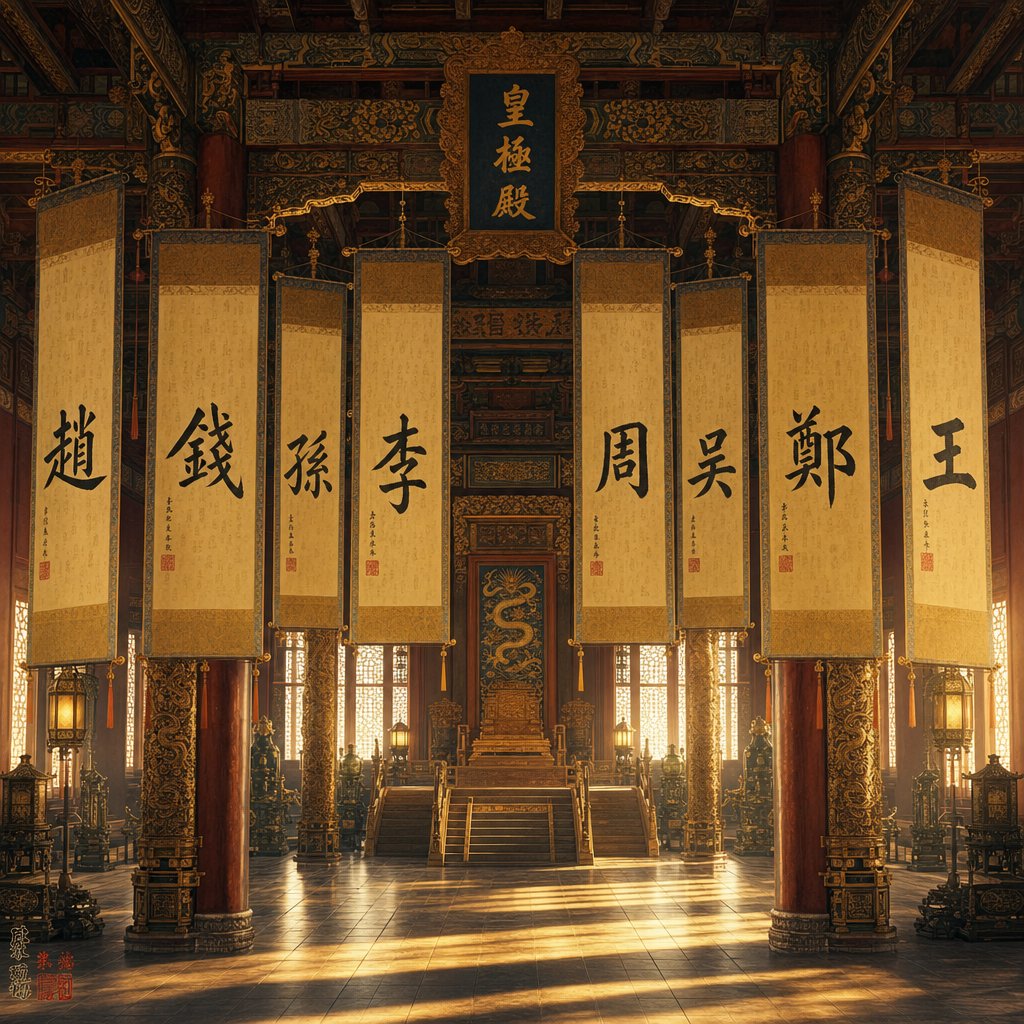
Those three methods — extraction, transliteration, and translation — aren't abstract theory. They played out in real time across the most powerful Manchu families in history. The eight great Manchu surnames (满洲八大姓, Mǎnzhōu Bādà Xìng) represent the most prominent clans of the Qing dynasty, and each one followed a specific path into its modern Chinese form. If you carry one of these surnames today, you're looking at a direct line to Manchu aristocracy.
The Eight Great Surnames Explained
The Comprehensive Genealogy of the Manchu Clans of the Eight Banners identifies the officially recognized great surnames from the Qianlong era. These clans dominated Qing politics, military leadership, and court life for nearly three centuries. Here's each one with its transformation story:
- Niohuru (钮祜禄, Niǔhùlù) → Lang (郎, Láng) — The Manchu word "niohe" means wolf. Rather than extracting the first syllable, this clan translated the meaning into Chinese: wolf (狼, láng), then adopted the homophone 郎 as a more elegant surname character. The niohuru surname clan produced Eidu, one of the founding generals of the Qing dynasty, and resided primarily in the Changbai Mountain region.
- Gūwalgiya (瓜尔佳, Guāěrjiā) → Guan (关, Guān) — The opening syllable "Gū" was matched to the character 关. This clan was among the most populous in Liaodong and produced Fiongdon, one of Nurhaci's Five Chief Councilors. Members served across multiple banners, with the Suwan branch being especially prominent.
- Nara (那拉, Nàlā) → Na (那, Nà) — A straightforward first-character extraction. The Nara clan took its name from the Nara River and was historically scattered across the Yehe, Ula, Hada, and Hoifa regions. Notably, the Nara clans in these different regions were not all of the same bloodline — they shared a surname but formed separate lineages.
- Šumuru (舒穆禄, Shūmùlù) → Xu (徐, Xú) or Shu (舒, Shū) — Different branches chose different paths. Some extracted the first character to become Shu, while others adopted Xu through phonetic approximation. The clan resided in areas including Changbai Mountain and Ying'e.
- Tatara (他塔喇, Tātǎlǎ) → Tang (唐, Táng) — A phonetic transliteration that compressed the "Ta-ta" opening into the single character 唐. This clan was recognized among the officially acknowledged great surnames during the Qianlong reign.
- Gioro (觉罗, Juéluó) → Zhao (赵, Zhào) — The gioro clan name belongs to the broader Aisin Gioro imperial lineage. Non-imperial Gioro branches adopted Zhao — the surname of the Song dynasty emperors — as a prestige choice rather than a phonetic match. This makes it one of the few cases where social aspiration, not linguistics, drove the selection.
- Magiya (马佳, Mǎjiā) → Ma (马, Mǎ) — First-character extraction at its simplest. The clan took its name from the Majia region and was registered across multiple banners, including the Bordered Yellow Banner and Plain Red Banner.
- Tongiya (佟佳, Tóngjiā) → Tong (佟, Tóng) — The first syllable was extracted directly. This clan traced its origins to the Tongjia River basin in Liaodong, and its members were among the earliest to engage in cross-border trade during the Ming dynasty. The Bordered Yellow Banner housed many Tongiya members.
Which Sinicization Method Each Clan Used
When you line up all eight clans, a clear pattern emerges: first-character extraction dominated, but the exceptions are the most interesting cases. The Niohuru clan's meaning-based translation and the Gioro clan's prestige-driven choice both reveal that surname adoption was never purely mechanical — cultural and social factors shaped the outcome.
| Manchu Clan Name | Pinyin | Chinese Surname Adopted | Pinyin of Chinese Surname | Sinicization Method |
|---|---|---|---|---|
| Niohuru (钮祜禄) | Niǔhùlù | 郎 | Láng | Meaning-based translation (wolf) |
| Gūwalgiya (瓜尔佳) | Guāěrjiā | 关 | Guān | First-character extraction |
| Nara (那拉) | Nàlā | 那 | Nà | First-character extraction |
| Šumuru (舒穆禄) | Shūmùlù | 徐 / 舒 | Xú / Shū | Phonetic transliteration / First-character extraction |
| Tatara (他塔喇) | Tātǎlǎ | 唐 | Táng | Phonetic transliteration |
| Gioro (觉罗) | Juéluó | 赵 | Zhào | Prestige adoption |
| Magiya (马佳) | Mǎjiā | 马 | Mǎ | First-character extraction |
| Tongiya (佟佳) | Tóngjiā | 佟 | Tóng | First-character extraction |
One detail worth noting: the popular folk version of the eight great surnames sometimes swaps in Suo (索, from Socolo) and He (赫, from Hešeri) or Fu (富, from Fuca) in place of Tatara and Gioro. Regional variation in Liaodong meant that different communities recognized slightly different lists. The core group — Tong, Guan, Ma, Na, and Lang — appears in virtually every version.
These eight clans represent the aristocratic peak, but they account for only a fraction of the total Manchu surname landscape. Hundreds of lesser-known clans underwent the same transformation, often producing Chinese surnames that overlap with the famous eight — or with each other.
Beyond the Famous Eight — A Broader Manchu Surname List
Those eight aristocratic clans get all the attention, but they represent a tiny slice of the full picture. The Comprehensive Genealogy documented over 645 Manchu clan names — and the vast majority were ordinary families whose descendants now carry lesser known manchu surnames that blend invisibly into the Chinese population. Some of these clans were just as large as the famous eight. They simply lacked the political prominence to make it into popular lists.
Lesser-Known Manchu Clans and Their Chinese Forms
The Fuca clan (富察氏, Fùchá shì) is a perfect example. Despite being one of the most powerful families in Qing history — producing empresses, generals, and grand secretaries — it rarely appears in popular English-language lists of the "eight great surnames." The Fuca manchu clan primarily adopted the surname Fu (富, Fù) through first-character extraction, though some branches also used Fu (傅) or Ning (宁) depending on region and generation.
Then there's the Irgen Gioro clan (伊尔根觉罗, Yī'ěrgēn Juéluó). This was one of the most numerous Manchu clans, recorded as 340 households in the early Manchu empire alone. The name literally means "common Gioro" — it was added with the prefix "Irgen" (meaning regular citizen) to distinguish these families from the imperial Aisin Gioro line. Most Irgen Gioro descendants chose Zhao (赵, Zhào) as their Chinese surname, inspired by the first surname in the famous Hundred Family Surnames text and by the clan's legendary connection to the Song dynasty imperial house. But that's far from the only option they used — other branches adopted Tong (佟), Gu (顾), Yi (伊), Gong (公), Cao (曹), Bao (鲍), or even Chen (陈).
The Donggo clan (董鄂氏, Dǒng'è shì) tells a similar story of multiplicity. Famous for producing Imperial Noble Consort Donggo during the Shunzhi reign, this clan scattered across at least eleven different Chinese surnames: Dong (董), Zhao (赵), He (何), Tang (唐), E (鄂), Cheng (成), Xi (席), Tong (佟), Peng (彭), Qi (齐), and Hong (红). The surname you ended up with depended on which branch you belonged to, which banner you served under, and sometimes which generation made the switch.
The Kuyala clan (库雅拉氏, Kùyǎlā shì) is another one that flies under the radar in English sources. Historically residing in Heilongjiang, this clan adopted the Chinese surname Hu (胡, Hú) — a common surname that most people would never associate with Manchu origins.
Surnames You Might Not Know Have Manchu Roots
What makes this manchu surname list so surprising is how ordinary these Chinese surnames look. Surnames like Dong, Bai, Cao, Qi, and Cai appear throughout China with no obvious marker of Manchu heritage. Yet each one has documented Manchu clan origins for at least some of its bearers.
Consider the surname Bai (白, Bái). It could derive from the Guaerjia clan, the Nara clan, the Bayala clan, the Nata clan, or several others — each through different linguistic pathways. Or take Gao (高, Gāo): it traces back to the Guaerjia clan, the Gaojia clan, the Tongjia clan, the Sakda clan, and the Hesheli clan, among others. This many-to-one mapping is exactly why a Chinese surname alone can never confirm Manchu ancestry — but it can certainly raise the question.
The table below compiles some of the most significant lesser-known clans and their adopted Chinese forms, drawn from the Comprehensive Genealogy and related historical records:
| Manchu Clan Name | Romanization | Chinese Surname(s) Adopted | Pinyin |
|---|---|---|---|
| 富察氏 | Fuca | 富 / 傅 | Fù |
| 伊尔根觉罗氏 | Irgen Gioro | 赵 / 佟 / 顾 / 伊 | Zhào / Tóng / Gù / Yī |
| 董鄂氏 | Donggo | 董 / 赵 / 何 / 鄂 | Dǒng / Zhào / Hé / È |
| 库雅拉氏 | Kuyala | 胡 | Hú |
| 赫舍里氏 | Hešeri | 赫 / 张 / 高 / 康 / 何 | Hè / Zhāng / Gāo / Kāng / Hé |
| 萨克达氏 | Sakda | 李 / 马 / 罗 / 苍 / 老 | Lǐ / Mǎ / Luó / Cāng / Lǎo |
| 索绰罗氏 | Socolo | 索 / 曹 | Suǒ / Cáo |
| 完颜氏 | Wanyan | 王 / 颜 | Wáng / Yán |
| 西塔拉氏 | Xitala | 涂 / 朱 / 赵 / 文 | Tú / Zhū / Zhào / Wén |
| 萨玛拉氏 | Samala | 蔡 | Cài |
| 伊拉里氏 | Ilari | 刘 / 范 / 廖 / 年 | Liú / Fàn / Liào / Nián |
| 瓜尔佳氏 (乌拉支) | Ula Gūwalgiya | 关 / 白 / 石 / 鲍 | Guān / Bái / Shí / Bào |
| 齐佳氏 | Cigiya | 齐 / 祁 | Qí |
| 觉尔察氏 | Jueloca | 赵 / 常 | Zhào / Cháng |
| 楚库勒氏 | Cukule | 楚 / 金 / 伊 | Chǔ / Jīn / Yī |
A few patterns jump out from this data. First, the most politically powerful clans tended to produce the widest variety of Chinese surnames — the Irgen Gioro and Donggo clans each generated over ten different options. Second, some Chinese surnames appear repeatedly across unrelated clans: Zhao shows up as an adopted surname for Irgen Gioro, Donggo, Xitala, and several others. Third, clans with Mongol or Jurchen-era roots (like Wanyan) often chose surnames that referenced their pre-Manchu heritage rather than following standard phonetic patterns.
This complexity is precisely what makes the two historical waves of surname change so important. The timing of when a family adopted its Chinese surname — during the Qing dynasty or after its collapse — shaped which method they used and which surname they chose.
Two Waves of Change — Manchu Surname Change History Explained
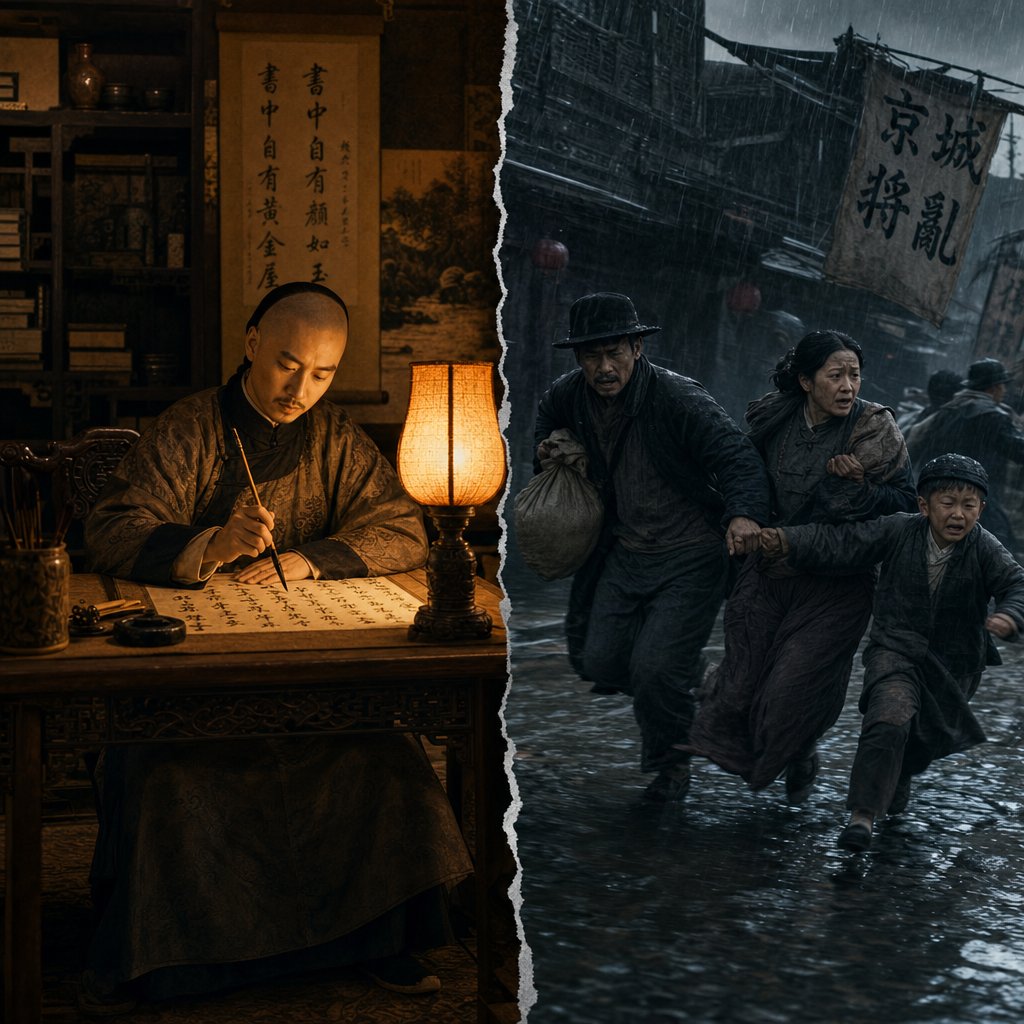
The complexity in that table above — one clan producing ten different Chinese surnames, or the same Chinese surname tracing back to a dozen unrelated clans — didn't happen all at once. The manchu surname change history unfolded in two distinct waves, separated by over a century and driven by completely different motivations. The first was a slow, voluntary drift during the Qing dynasty itself. The second was a sudden, desperate scramble after the dynasty collapsed in 1912. Each wave left a different fingerprint on the surname landscape.
Voluntary Adoption During the Qing Dynasty
Even at the height of Manchu power, some clan members began quietly adopting Chinese-style names. Why would a ruling elite abandon their own naming conventions? Practical necessity. Manchu officials governing Han-majority provinces found that multi-syllable clan names created friction in daily administration. Documents, seals, and correspondence all worked more smoothly with single-character surnames. The deeper you moved into Han Chinese society — through commerce, local governance, or intermarriage — the more a Chinese surname became a convenience rather than a concession.
The Qianlong Emperor himself noticed this trend and had mixed feelings about it. On one hand, he ordered the compilation of the Comprehensive Genealogy specifically to preserve Manchu clan identity. On the other, his broader policies accelerated the very assimilation he claimed to resist. By the mid-1700s, Qing court culture had become deeply sinicized — Manchu officials wrote poetry in Chinese, studied Confucian classics, and socialized with Han literati. The Qianlong Emperor even issued edicts criticizing specific clans for abandoning their Manchu names, singling out the Niohuru clan for adopting "Lang" instead of retaining their original designation.
The Yehenara clan genealogy from Fengcheng, Liaoning, records that this branch adopted the Chinese surname "Na" during the late Guangxu period — still within the Qing dynasty, but near its end. This pattern of late-Qing voluntary adoption was common among clans stationed far from Beijing, where Manchu-Han integration had progressed furthest.
Voluntary adopters had the luxury of choice. They could select prestigious Chinese surnames, pick characters with auspicious meanings, or carefully match the phonetics of their original clan name. The Gioro clan choosing Zhao — the surname of Song dynasty emperors — is a perfect example of this prestige-driven selection. Families making this transition during the Qing had time, resources, and social standing to be deliberate about their new identity.
Survival-Driven Changes After 1912
The fall of the Qing dynasty in 1912 transformed surname adoption from a personal choice into a survival strategy. Anti-Manchu sentiment, stoked by revolutionary rhetoric that framed the Qing as foreign occupiers, exploded into violence across China. The manchu identity after 1912 became genuinely dangerous to display.
The ethnic hatred whipped up by anti-Qing revolutionaries resulted in massacres of Manchu communities during the 1911 Xinhai Revolution. In Xi'an, revolutionary forces sealed off the inner city and killed approximately 10,000 Manchus. In Fuzhou, Manchu women committed suicide by hanging or drowning themselves in wells rather than face the mobs. Men could sometimes disguise themselves by changing clothes, but women's unbound feet — a marker of Manchu identity, since Manchu women never practiced foot-binding — gave them away.
Under these conditions, retaining qing dynasty manchu names was not a cultural statement. It was a death sentence. Families that had proudly maintained their clan identities for 250 years abandoned them overnight. Fu Chunbin, an ethnic Manchu researcher, estimates that this period resulted in "90 percent of Manchus today not knowing their true surnames." Beijing's Manchu population collapsed from roughly 600,000 in the late Qing to just 30,000 by 1949 — not primarily through killing, but through people erasing every visible trace of their heritage.
Voluntary adopters during the Qing chose surnames for prestige and phonetic elegance. Post-1912 adopters chose surnames for speed and anonymity — grabbing whatever common Chinese surname would make them invisible fastest.
The patterns from this second wave are strikingly different. Instead of carefully matching phonetics or translating meanings, families grabbed the most common, unremarkable Chinese surnames available — Wang, Li, Zhang, Liu. The goal wasn't to preserve a connection to the original clan name. The goal was to disappear. Some families in the same clan adopted completely different surnames simply because they fled to different regions and picked whatever was locally common. This is why tracing post-1912 surname changes is so much harder than tracing Qing-era voluntary adoptions: the linguistic logic that connected Manchu clan names to their Chinese equivalents was abandoned in favor of pure survival pragmatism.
These two waves also explain a geographic puzzle. In northeastern China — the Manchu homeland where the population was large enough to feel relatively safe — families tended to adopt surnames that still echoed their clan origins. In southern cities where Manchus were isolated minorities surrounded by hostile populations, the break was total and untraceable. That geographic dimension adds another layer to the ancestry research puzzle, one that depends heavily on where your family was living when the change happened.
Regional Distribution of Manchu Surnames in Northeast China and Beijing
That geographic factor — where your family was living when the surname change happened — turns out to be one of the strongest clues available for ancestry research. Manchu-origin Chinese surnames are not evenly distributed across the country. They cluster heavily in specific provinces and cities, following patterns set by the Eight Banners garrison system over 300 years ago. If you know where your family comes from and what surname they carry, you can estimate the probability of Manchu ancestry with surprising precision.
Northeastern China — The Manchu Homeland Provinces
The three provinces of Liaoning, Jilin, and Heilongjiang form the historical Manchu heartland. This is where the Jurchen tribes lived before Nurhaci unified them, where the Eight Banners were first organized, and where the densest concentration of Manchu descendants remains today. Census data shows that approximately 46.2 percent of China's 10.68 million Manchu people live in Liaoning Province alone, with most of the remainder concentrated in Jilin and Heilongjiang.
The manchu population in Liaoning is not randomly scattered — it clusters around former banner garrison towns and the old Manchu administrative centers. Cities like Shenyang (the former Mukden, the Qing secondary capital), Fushun, Fengcheng, and Xinbin all have exceptionally high concentrations of Manchu-descended families. The surnames these families carry reflect the specific clans that were garrisoned in each area during the Qing dynasty.
Here's how manchu surnames in northeast China distribute across the three provinces:
- Liaoning Province — The highest overall concentration. Common Manchu-origin surnames include Tong (佟), Guan (关), Ma (马), Na (那), Lang (郎), Bai (白), Fu (富), and He (赫). The Tongiya, Guwalgiya, and Nara clans had their deepest roots here. Fengcheng County alone contains multiple Manchu villages where nearly every resident shares a Manchu-origin surname.
- Jilin Province — Historically the territory of the Ula and Yehe Nara clans. Surnames like Na (那), Ye (叶), Zhao (赵), and Guan (关) appear frequently. The city of Jilin (Girin in Manchu) was a major banner garrison, and surrounding counties retain high Manchu surname density.
- Heilongjiang Province — The northernmost Manchu territory, home to clans like the Hurha, Sakda, and Kuyala. Common Manchu-origin surnames here include Hu (胡), Guan (关), Fu (富), and Zhao (赵). The area around Aihui County preserved Manchu language and customs longer than anywhere else — some families there maintained their original clan names well into the 20th century.
The garrison system is the key to understanding these clusters. When the Qing conquered China in 1644, they didn't relocate all Manchus south. Large populations remained in the northeast, organized into local banners that maintained their clan structures intact. These communities were relatively insulated from Han Chinese cultural pressure, which is why northeastern Manchu families tended to adopt surnames that still phonetically echoed their clan origins — unlike the survival-driven changes seen in southern cities.
Beijing and Other Urban Concentrations
Beijing presents a different pattern entirely. As the imperial capital, it housed the largest urban concentration of Manchu bannermen outside the northeast. The Eight Banners Garrison System placed Manchu troops in a ring of garrisons around the Forbidden City, with each banner assigned to a specific sector of the Inner City. These manchu descendants in Beijing carried surnames tied to the most politically prominent clans — the ones closest to imperial power.
Common Manchu-origin surnames in Beijing include Guan (关), Jin (金), Zhao (赵), Lang (郎), Na (那), Ye (叶), and Tong (佟). The Aisin Gioro imperial clan's descendants — now mostly surnamed Jin or Zhao — are disproportionately concentrated in Beijing for obvious reasons. The Niohuru clan (now Lang) and Hesheri clan (now He) also have strong Beijing presence due to their centuries of court service.
Beyond the northeast and Beijing, smaller but significant Manchu surname clusters exist in:
- Hebei Province — Particularly around Chengde, where the Qing summer palace drew permanent Manchu settlement. Surnames like Bai (白), Zhao (赵), and Tong (佟) are common among Manchu descendants here.
- Shandong and Gansu Provinces — Banner garrisons in Qingzhou (Shandong) and Liangzhou (Gansu) created isolated Manchu communities that retained distinct surname patterns for generations.
- Inner Mongolia — Overlap between Manchu and Mongol banner populations produced mixed surname patterns, with some families carrying surnames traceable to either Manchu or Mongol clan origins.
So what does this mean practically? If your family carries a surname like Guan, Tong, or Na and originates from Liaoning, the probability of Manchu ancestry is high — far higher than if the same surname appears in a family from Guangdong or Fujian, where Manchu settlement was negligible. Geography doesn't confirm ancestry on its own, but it dramatically narrows the field. A surname that could trace to fifty possible origins nationwide might trace to only two or three when you factor in the specific province and county your family calls home.
That geographic filter becomes even more powerful when combined with a structured research process — one that starts from the Chinese surname you already know and works backward toward its possible Manchu origins.
How to Trace Whether Your Chinese Surname Has Manchu Roots
You have a Chinese surname. You know your family comes from somewhere in the northeast, or maybe Beijing. An older relative once mentioned something about banners, or a clan name that sounded nothing like your current surname. How do you move from suspicion to evidence? The process works in reverse — starting from the modern Chinese surname and peeling back layers until you either confirm a Manchu connection or rule it out.
Starting from Your Chinese Surname
The first thing to understand: not every instance of a surname like Guan, Tong, or Jin traces back to Manchu origins. These are also common Han Chinese surnames with their own independent histories. The surname Hu (胡) has been a Han surname for over two thousand years — but it's also the adopted surname of the Manchu Kuyala and Hurha clans. The chu family name (褚/楚) could be ancient Han Chinese or could derive from the Manchu Cukule clan (楚库勒氏). Similarly, the hua surname (华/花) appears among descendants of the Boduri clan (博都哩氏) and the Alai clan (阿赉氏), where it was adopted as a Chinese translation of the clan's meaning. Even a less common surname like the ku last name (库) traces to the Bukur clan (布库尔氏) in some lineages.
The point is this: a surname alone is never proof. It's a starting hypothesis that needs corroborating evidence from geography, family records, and historical documentation.
Key Steps for Manchu Ancestry Research
Here's a structured process that moves from the easiest checks to the most involved research:
- Check your surname against known Manchu-to-Chinese mapping lists. The Wikipedia list of Chinese surnames taken by Manchu clans is a solid starting point in English. It documents hundreds of clan-to-surname connections with their derivation methods. If your surname doesn't appear on any such list, Manchu origins are unlikely (though not impossible for very small clans).
- Investigate your family's geographic origins. Ask the oldest living relatives where the family lived before any modern relocations. Liaoning, Jilin, Heilongjiang, Beijing, and Hebei are strong indicators. Get as specific as possible — a county or village name can narrow things dramatically. Former banner garrison towns like Xinbin, Fengcheng, or Aihui are especially significant.
- Look for oral traditions or family artifacts mentioning banner affiliation. Many Manchu families preserved fragments of their history even after changing surnames. Listen for mentions of a "banner" color (yellow, white, red, blue), a longer clan name that preceded the current surname, or stories about ancestors serving in the Qing military. Some families kept handwritten genealogy books (家谱, jiāpǔ) that record the original Manchu clan name alongside the adopted Chinese surname.
- Search for your family's genealogy records in digitized collections. FamilySearch's China Collection of Genealogies (1239-2014) contains clan genealogies from various institutions across China, North America, and Southeast Asia. These records include Manchu-language materials and cover the Qing dynasty through the Republic era. Browse by family name and province to locate relevant volumes.
- Cross-reference with the Comprehensive Genealogy of the Eight Banners. The Baqi Manzhou Shizu Tongpu (八旗满洲氏族通谱) remains the authoritative primary source. Digital versions are available through Chinese academic databases like CNKI and Duxiu. Search for your suspected Manchu clan name to find its banner affiliation, geographic origin, and notable members — then compare those details against your family's known history.
- Verify through multiple converging lines of evidence. A confirmed Manchu ancestry claim typically requires at least three matching data points: the surname appears in mapping lists, the family originates from a known Manchu settlement area, and some form of family record or oral tradition corroborates the connection. Any single piece of evidence alone is suggestive but not conclusive.
Primary Sources and Where to Find Them
Beyond the Comprehensive Genealogy, several other historical documents support this research:
- Eight Banners Household Registers (八旗户口册) — These administrative records tracked every bannerman family by name, banner color, and company. Surviving registers are held in the First Historical Archives of China in Beijing.
- Local gazetteers (地方志, dìfāngzhì) — County-level gazetteers from northeastern provinces often list prominent local clans and their banner affiliations. Many have been digitized and are searchable online.
- Clan genealogy books (族谱/家谱) — Private family genealogies are the most direct evidence. The FamilySearch collection contains thousands of these, with records primarily from the Qing dynasty and Republic era. Some are hand-copied manuscripts from private households; others are published multi-volume works.
- Qing dynasty official histories — The Draft History of Qing (清史稿) and the Comprehensive Mirror of Qing Dynasty Governance (清朝通志) both contain surname sections that cross-reference Manchu clan names with their Chinese equivalents.
One practical tip: if you're working in English and don't read Chinese, start with the romanized Manchu clan name rather than the Chinese characters. Many online Manchu genealogy communities maintain searchable databases in both romanization and Chinese script. Forums on platforms like Baidu Tieba (the "Manchu" and "Eight Banners" boards) and dedicated sites like Manchu.work host active communities of descendants sharing genealogical findings.
The research process can feel circular at first — you need to know the clan name to find the records, but you need the records to confirm the clan name. Geographic origin is what breaks that circle. A family surnamed Guan from Fengcheng, Liaoning almost certainly descends from the Guwalgiya clan. A family surnamed Guan from Guangzhou almost certainly does not. Start with geography, narrow with surname mapping lists, and confirm with primary documents.
For many researchers, this process doesn't end with a confirmed clan name — it opens a door into a broader cultural identity that was deliberately hidden for generations and is only now being reclaimed.

Modern Manchu Identity and the Revival of Ancestral Names
That door — the one connecting a modern Chinese surname back to a Manchu clan — stayed shut for most of the 20th century. Decades of political upheaval, from the anti-Manchu violence of 1912 through the Cultural Revolution's purges of anyone with aristocratic ties, made Manchu ethnic identity something to bury rather than celebrate. But starting in the 1980s, a quiet reversal began. People who had spent their entire lives as "Han Chinese" started reclaiming what their grandparents had hidden.
The 1980s Ethnic Re-Registration Movement
China's 1982 census counted just over 4 million Manchu people. By the early 2000s, that number had surged past 10 million — a growth rate far exceeding natural population increase. What happened? The Chinese government relaxed ethnic classification policies in the 1980s, allowing citizens to change their registered ethnicity on official identity documents. Families that had registered as Han Chinese for survival after 1912 could now officially reclaim their manchu ethnic identity.
The motivations were mixed. Some families felt a genuine pull toward ancestral heritage — grandparents finally sharing stories they'd kept secret for decades. Others were drawn by practical benefits: China's affirmative action policies for ethnic minorities offered preferential treatment on college entrance exams and, in some periods, exemptions from family-size restrictions. Both motivations produced the same result: millions of people publicly acknowledging Manchu ancestry for the first time in generations.
The re-registration wave revealed something striking about how thoroughly the post-1912 erasure had worked. Many people who changed their classification back to Manchu had grown up completely unaware of their heritage. One Beijing family, descendants of the Yehenara clan — the same lineage as Empress Dowager Cixi — didn't learn their true ancestry until the 1970s, when a dying father finally confided the family secret during a walk to the Summer Palace. "That's how shameful it was to be part of the royal family," the family's patriarch later explained. "This is something that nobody would brag about."
The manchu cultural revival is not about returning to a pre-modern past. It is about reclaiming the right to know where you come from — a right that political violence stripped away for over seventy years.
Modern Manchu Cultural Revival and Online Communities
The internet transformed what had been isolated family discoveries into a collective movement. Online forums dedicated to Manchu genealogy began appearing in the early 2000s, and they've grown steadily since. One forum called "Fortunate Manchu Ethnicity" gathered over 17,000 members sharing clan histories, comparing genealogy records, and helping newcomers trace their roots. Platforms like Baidu Tieba host active boards where descendants post photographs of handwritten family genealogies, debate the correct romanization of clan names, and organize meetups in northeastern cities.
The manchu cultural revival extends well beyond surnames. A handful of universities — including Ethnic Minorities University in Beijing — now offer courses in the Manchu language, which has fewer than 100 native speakers remaining. Some elementary schools in northeastern China teach basic Manchu script to prevent the language from dying entirely. Calligraphers practice the looping vertical script that resembles Arabic written top-to-bottom. Cultural seminars cover traditional dance, music, and cuisine. The Yehenara clan held a large family reunion in 2008 on the centenary of Empress Dowager Cixi's death, working to rehabilitate her historical reputation.
Popular culture has amplified this awareness in unexpected ways. Historical dramas set during the Qing dynasty — enormously popular on Chinese television — regularly feature characters with full Manchu clan names. Audiences hear "Niohuru," "Guwalgiya," and "Nara" spoken aloud in prime-time entertainment, making these once-hidden names part of mainstream cultural vocabulary. Some viewers discover that these dramatic clan names cool enough for television are, in fact, their own ancestral surnames. The jianghu names of historical fiction turn out to be family history.
A younger generation of Manchu descendants approaches identity differently than their grandparents did. They don't carry the trauma of persecution or the instinct to hide. Instead, they treat their heritage as something worth understanding — a layer of identity that enriches rather than endangers. As one young Manchu college student put it after being asked about his ethnic background: "People would say to me, 'Oh, you're Manchu. What's your language?' I had no answer, so I figured I had to learn."
Some families have gone further, giving children their original Manchu clan names as legal surnames. In a country where nearly all family names are a single character, a child named Yehenala stands out in any classroom. But that visibility is precisely the point — a deliberate reversal of the invisibility their ancestors were forced into.
Understanding manchu surnames in chinese is ultimately about recognizing living cultural heritage. These aren't museum artifacts or academic curiosities. They're the names of real families navigating a complex relationship with a past that was alternately glorious and traumatic. Every Guan, Jin, Tong, and Lang surname walking through a northeastern Chinese city carries a story — whether its bearer knows it yet or not.
Frequently Asked Questions About Manchu Surnames in Chinese
1. What are the Eight Great Manchu Surnames and their Chinese equivalents?
The Eight Great Manchu Surnames (满洲八大姓) are Niohuru (now Lang 郎), Guwalgiya (now Guan 关), Nara (now Na 那), Sumuru (now Xu 徐 or Shu 舒), Tatara (now Tang 唐), Gioro (now Zhao 赵), Magiya (now Ma 马), and Tongiya (now Tong 佟). These clans dominated Qing dynasty politics and military leadership for nearly three centuries. Each adopted its Chinese surname through a specific method, whether phonetic extraction, transliteration, or meaning-based translation.
2. How were Manchu clan names converted into single-character Chinese surnames?
Three distinct methods were used. First-character extraction took the opening syllable and matched it to a similar-sounding Chinese character, as with Guwalgiya becoming Guan. Phonetic transliteration selected a character approximating the full name's sound, like Hesheri becoming He. Meaning-based translation converted the semantic content into Chinese, such as Aisin Gioro becoming Jin because 'aisin' means gold. A single clan could produce multiple Chinese surnames depending on which branch used which method.
3. How can I find out if my Chinese surname has Manchu origins?
Start by checking your surname against documented Manchu-to-Chinese mapping lists available online. Then investigate your family's geographic origins, as northeastern China (Liaoning, Jilin, Heilongjiang) and Beijing have the highest concentrations of Manchu descendants. Look for oral traditions mentioning banner colors or longer clan names. Search digitized genealogy collections like FamilySearch, and cross-reference findings with the Comprehensive Genealogy of the Eight Banners. You typically need at least three converging data points to confirm a connection.
4. Why did Manchu people change their surnames to Chinese ones?
Surname changes happened in two waves with different motivations. During the Qing dynasty, some Manchu officials voluntarily adopted Chinese surnames for administrative convenience when governing Han-majority regions. After the Qing fell in 1912, anti-Manchu violence made retaining Manchu names dangerous, forcing families to adopt common Chinese surnames overnight for survival. Voluntary adopters chose prestigious or phonetically matching names, while post-1912 adopters grabbed whatever common surname would help them blend in fastest.
5. Which Chinese surnames are most likely to have Manchu roots?
Surnames with the highest probability of Manchu origins include Tong (佟), Guan (关), Ma (马), Na (那), Lang (郎), He (赫), Fu (富), and Jin (金), especially when the family originates from northeastern China or Beijing. However, common surnames like Zhao, Bai, Dong, Gao, and even Wang or Li can also trace to Manchu clans in specific cases. Geographic origin is the critical differentiator, as the same surname from Liaoning is far more likely to be Manchu than the same surname from southern provinces.