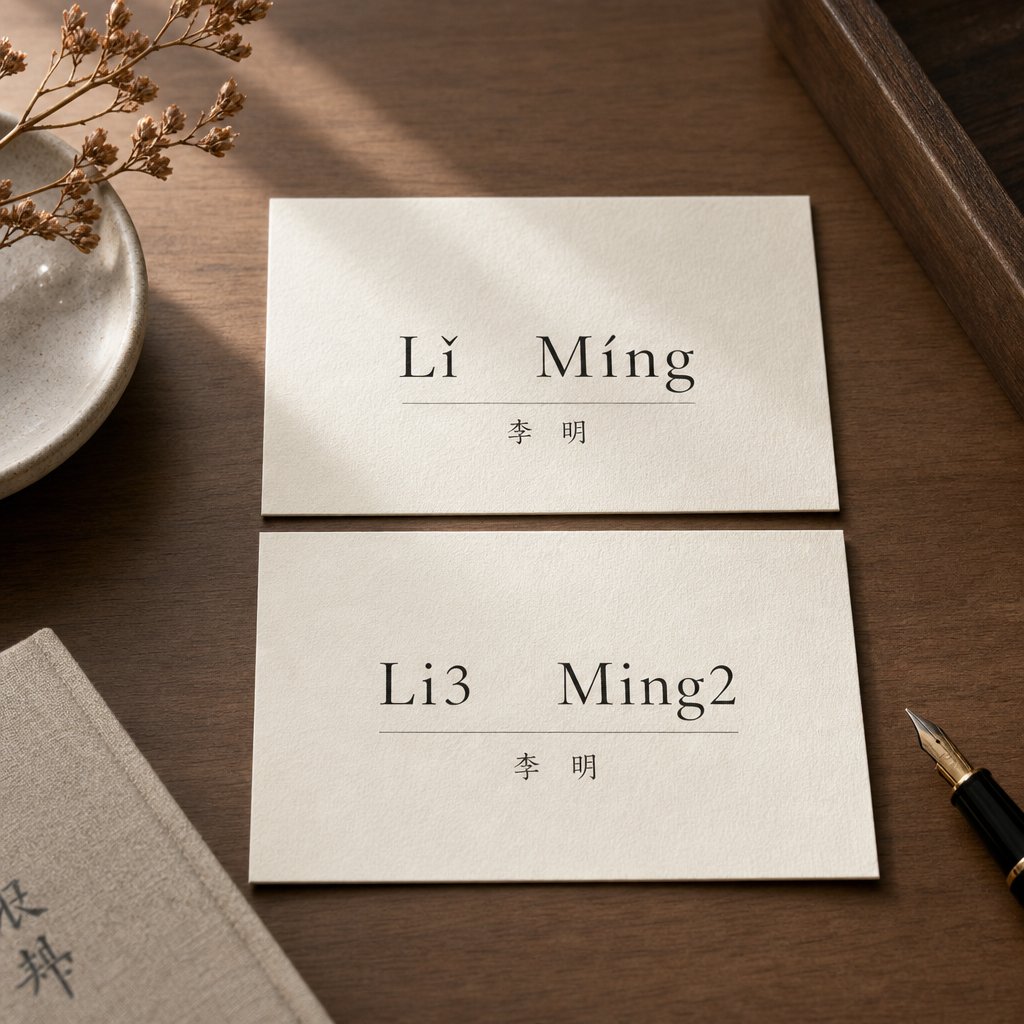
Why Matching Chinese and English Names Is More Complex Than You Think
Imagine you have a colleague named Wei. She asks you to call her Vivian at work. Or picture yourself choosing an English name for your bilingual child that somehow echoes the meaning of their Chinese characters. These scenarios share a common thread: the challenge of pairing a Chinese name with an English name in a way that feels authentic, functional, and culturally respectful.
Matching a Chinese name and English name is not a simple translation exercise. It involves navigating two fundamentally different linguistic systems, each with its own rules around sound, meaning, and social convention. Sometimes the goal is phonetic resemblance. Other times it is about preserving the semantic weight a name carries. Often it is both at once.
What Does Matching Chinese and English Names Actually Mean
At its core, this process means creating a meaningful link between a name in one language and a name in the other. That link might be based on how the names sound, what they mean, or how they function socially. There is no single correct method, which is exactly what makes it tricky.
Who Needs to Match Names Across These Languages
The need spans a surprisingly wide range of people:
- Chinese speakers choosing an English name for school, work, or international life, often seeking something that resonates with their given name's sound or meaning.
- English speakers understanding a Chinese colleague's name, wanting to pronounce it correctly or grasp its significance.
- Parents naming bilingual children who need a Chinese name with English name harmony that works across both cultures.
- Professionals handling cross-language documentation in legal, medical, or immigration contexts where name consistency matters.
So why do Chinese people have English names in the first place? The practice is rooted in both practicality and cultural tradition. China has a deep history of multiple names, from the courtesy name (zi) to the self-chosen literary name (hao). Adopting an English name fits naturally into this tradition. It also serves as a social bridge, helping non-Chinese speakers remember and pronounce a name that might otherwise feel inaccessible. As linguistic professor David C.S. Li from the Hong Kong Institute of Education has noted, Western names create a useful middle ground between formality and intimacy in professional settings.
This article is not a static list of name pairings. It is a skill-building guide that equips you to understand the logic behind Chinese and English names so you can make informed, culturally aware choices. The real difficulty starts when you look under the hood at how these two naming systems actually work.
Structural Differences Between Chinese and English Names
Think of a Chinese name and an English name side by side. One is compact, character-based, and loaded with deliberate meaning. The other is longer, phonetically driven, and often inherited without much thought about its original etymology. These are not just surface-level differences. They represent two entirely distinct philosophies of what a name is supposed to do, and they explain why finding a satisfying english name chinese name pairing requires more than a quick search.
How Chinese Name Structure Differs from English
A Chinese name is typically two or three characters total. The surname comes first, usually a single character, followed by a given name of one or two characters. So when you see a name like Wang Xiaoming, Wang is the family name and Xiaoming is the given name. This surname-first convention reflects a Confucian value: family identity precedes individual identity.
English names flip this entirely. Given name first, family name last. And while Chinese given names are rarely longer than two syllables, English names routinely stretch to three or four: Christopher, Elizabeth, Alexander. This syllable mismatch alone creates friction when people try to find chinese names for english names or vice versa.
The sound inventory compounds the problem. Mandarin Chinese has roughly 400 distinct syllables (before accounting for tones). English, by contrast, uses thousands of possible syllable combinations. That means many English sounds simply have no close equivalent in Mandarin, and multiple English names may collapse into the same Chinese syllable when transliterated.
Why Character Meaning Creates Unique Matching Challenges
Here is where the gap widens dramatically. Every Chinese character is a morpheme, a unit of meaning. The given name 美华 (Meihua) does not just sound pleasant. It literally means "beautiful splendor." Parents spend months choosing characters that express hopes for their child: wisdom, strength, resilience, beauty. The name is a message.
English names carry etymological meaning too, but most speakers are unaware of it. Few people named "Matthew" think about its Hebrew origin meaning "gift of God" in daily life. The meaning is dormant. In Chinese, it is alive and immediately visible to any literate reader.
This creates a fundamental tension when pairing a chinese name english name combination. A phonetic match might sound right but carry meaningless or even unfortunate characters. A semantic match might preserve the intended meaning but sound nothing like the original name. You are essentially trying to satisfy two systems that prioritize completely different things.
| Feature | Chinese Names | English Names |
|---|---|---|
| Name order | Surname first, given name second | Given name first, surname last |
| Typical syllable count (full name) | 2-3 syllables | 3-6 syllables |
| Meaning embedded in name | Always visible and intentional | Usually dormant or unknown |
| Total possible syllables | ~400 (before tones), ~1,300 with tones | Thousands of combinations |
| Character/letter count (given name) | 1-2 characters | 3-10+ letters |
| Naming philosophy | Aspirational message from parents | Aesthetic preference or family tradition |
You will notice that these structural gaps do not make matching impossible. They just mean that any chinese english names pairing involves trade-offs. You are always choosing which dimension to prioritize: sound, meaning, or cultural fit. The question then becomes how the name gets rendered in the other language's writing system, and that is where romanization enters the picture.
How Romanization Systems Shape English Versions of Chinese Names
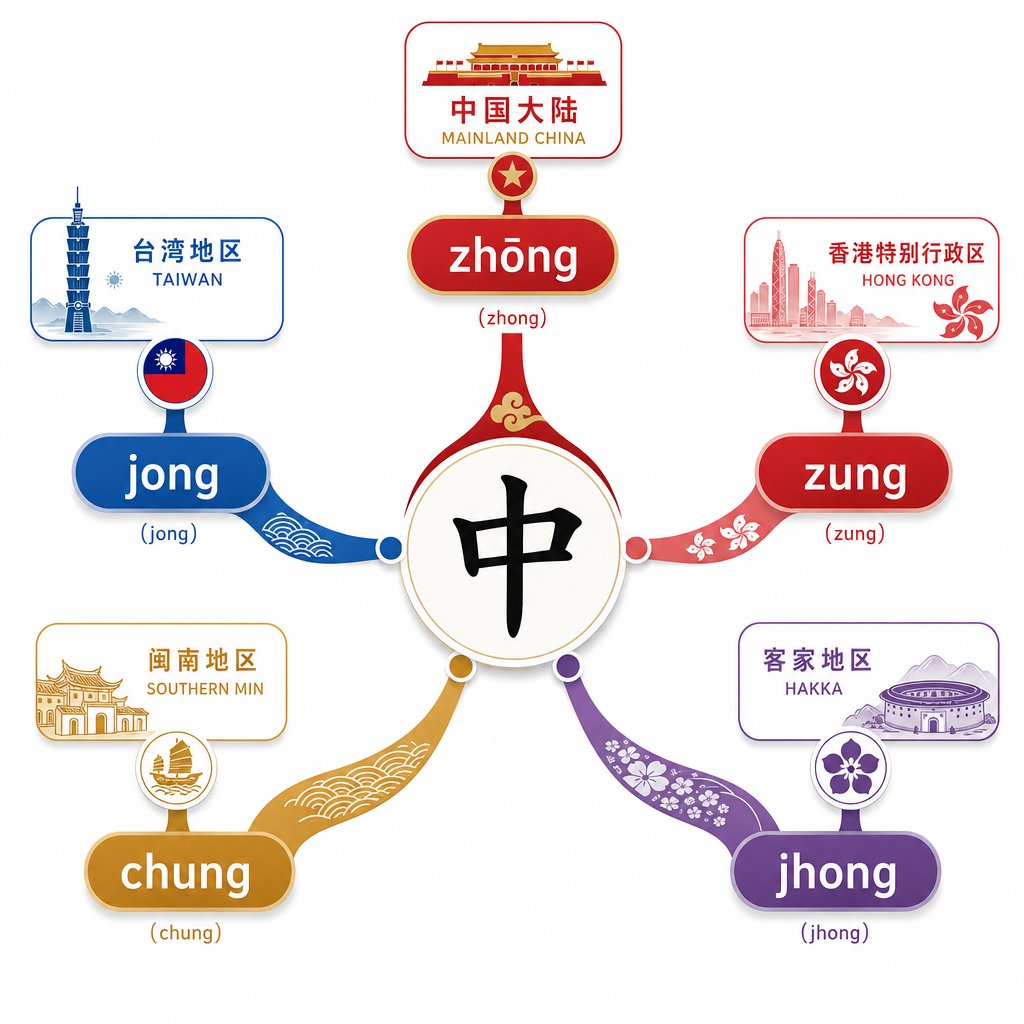
The same Chinese character can look completely different when written in English, depending on which romanization system was used to convert it. Consider the surname 张. A person from Beijing writes it as "Zhang." Someone from Taipei might write "Chang." A family in Hong Kong could spell it "Cheung." All three refer to the same character, the same surname, the same meaning. Yet on paper, they look like three unrelated names.
This is the romanization problem, and it is one of the biggest obstacles when working with chinese names in english. If you do not understand which system produced a particular spelling, you cannot reliably trace it back to its source character or match it with a name in the other language.
Pinyin Wade-Giles and Yale Romanization Compared
Three major systems have shaped how chinese names written in english appear across documents, passports, and academic records:
- Pinyin is the official romanization standard of the People's Republic of China, adopted in 1958 and now used internationally. It maps Mandarin pronunciation to Latin letters with specific spelling conventions. The Yale Library romanization guide confirms that Pinyin has replaced Wade-Giles as the standard in U.S. libraries for cataloging Chinese-language materials.
- Wade-Giles was developed in the 19th century by British diplomats Thomas Wade and Herbert Giles. It uses apostrophes to distinguish aspirated consonants (e.g., "t'" vs. "t") and was the dominant system in English-language scholarship for over a century. Taiwan historically used Wade-Giles or locally modified versions for personal names and place names.
- Yale romanization was created in the 1940s for teaching Mandarin and Cantonese to American military personnel. It avoids diacritics and special punctuation, making it more intuitive for English speakers but less precise for linguistic purposes. Yale romanization sees limited use today outside academic contexts.
Each system makes different choices about how to represent the same sounds. Pinyin uses "x" for a sound that Wade-Giles writes as "hs." Pinyin uses "q" where Wade-Giles uses "ch'." These are not minor spelling variations. They produce chinese names english translation results that look entirely different to someone unfamiliar with the conventions.
Here is how several common Chinese surnames appear under each system:
| Chinese Character | Pinyin (Mainland China) | Wade-Giles (Taiwan) | Yale (Academic) | Cantonese (Hong Kong) |
|---|---|---|---|---|
| 张 | Zhang | Chang | Jang | Cheung |
| 王 | Wang | Wang | Wang | Wong |
| 陈 | Chen | Ch'en | Chen | Chan |
| 黄 | Huang | Huang | Hwang | Wong |
| 周 | Zhou | Chou | Jou | Chow |
| 林 | Lin | Lin | Lin | Lam |
You will notice that some surnames stay consistent across systems (Lin remains Lin in most Mandarin-based systems), while others diverge dramatically. The surname 黄 appears as both "Huang" and "Wong" depending on whether the speaker uses Mandarin or Cantonese. Someone trying to convert chinese names into english without knowing the source dialect could easily misidentify the underlying character.
Regional Romanization Differences and What They Mean for Matching
The romanization landscape is not just about competing academic systems. It reflects real political and linguistic geography:
- Mainland China standardized on Pinyin in 1958 and uses it on passports, official documents, and international communications. If you encounter a Chinese name spelled in Pinyin, you can reliably look up the corresponding characters using any Pinyin dictionary.
- Taiwan has a more complicated history. The government officially adopted a modified Pinyin system (Tongyong Pinyin) in 2002, then switched to Hanyu Pinyin in 2009. But personal names on older passports and established public figures still use Wade-Giles or idiosyncratic spellings. As the Yale Library catalog guide notes, well-established names like Chiang Ching-kuo (蒋经国) remain in Wade-Giles even in systems that otherwise use Pinyin.
- Hong Kong uses Cantonese pronunciation rather than Mandarin, and there is no single official romanization standard. The government uses a loosely codified system based on historical conventions. Individual families may spell their surnames however they were first registered decades ago, creating inconsistencies even within the same district.
- Singapore and Malaysia add another layer. Chinese Singaporeans may romanize names using Mandarin Pinyin, Hokkien, Teochew, or Cantonese conventions depending on their family's dialect group and generation.
The practical consequence? When you see a Chinese name written in English, you cannot assume it follows Pinyin rules. A surname spelled "Tan" could be the Hokkien romanization of 陈 (which is "Chen" in Pinyin). "Lee" could represent 李 in a Cantonese or older romanization context, while Pinyin renders it as "Li." The same applies to given names, where a single character might appear as "Wei," "Wai," or "Hui" depending on the dialect and system used.
This matters enormously for anyone trying to match names across languages. If you are working with a name like "Cheung Wing-fat" and trying to find the corresponding Mandarin form, you first need to recognize that this is a Cantonese romanization. The Mandarin Pinyin equivalent would be "Zhang Yongfa," a spelling that shares almost no visual resemblance with the original. Without understanding the romanization layer, the connection between these two forms is invisible.
Romanization determines how a name looks in English, but it does not tell you how to match it with an English name that a person might actually use in daily life. That requires a different set of strategies altogether, ones that weigh phonetic similarity, semantic resonance, and cultural context against each other.
Three Proven Approaches to Matching Names Across Languages
Romanization tells you how a Chinese name gets spelled in English letters. But spelling is not the same as matching. When someone wants to derive a chinese name from english name, or find an English name that echoes their Chinese one, they need a strategy that goes beyond transliteration. Three distinct methodologies have emerged, each with its own logic and trade-offs.
Phonetic Matching Based on Sound Similarity
This is the most intuitive approach. You listen to how a name sounds in one language and find something that sounds similar in the other. A person named Li (丽) might choose Lily. Someone named Kai (凯) might go with Kyle. The goal is auditory resemblance, a name that triggers recognition across both languages.
Phonetic matching works well when the source name contains syllables that happen to overlap with common names in the target language. It is fast, easy to explain, and gives both names a sense of continuity. When someone calls you "Lily" in English and "Li" in Chinese, the connection is immediately audible.
The limitation? Mandarin's restricted syllable inventory means many Chinese syllables have no natural English counterpart. And as Hacking Chinese points out, if phonetic accuracy is your only goal, you often have to sacrifice meaning completely. The characters chosen to approximate an English sound may produce gibberish or awkward connotations in Chinese. Translating english names into chinese purely by sound can result in character combinations that mean "gram advantage thus earlobe man," to borrow one memorable example.
Semantic Matching Based on Character Meaning
Instead of chasing sound, this method asks: what does the name mean? If your Chinese name contains 雪 (snow), you might choose Crystal, Bianca, or Snow as your English name. If it contains 勇 (courage), names like Victor or Valerie carry a similar spirit. You are translating the intention behind the name rather than its pronunciation.
Semantic matching preserves the emotional and aspirational weight that Chinese parents embed in their children's names. It also tends to produce English names that feel natural and complete on their own, since you are selecting from existing names rather than forcing a phonetic approximation.
The downside is that the resulting English name may share zero auditory resemblance with the Chinese original. Someone named Haoran (浩然, meaning "vast and righteous") who chooses "Max" has preserved the spirit but lost the sound entirely. For people who want others to recognize both names as belonging to the same person, this disconnect can feel jarring.
Hybrid Approaches That Blend Sound and Meaning
The hybrid method tries to satisfy both ears and intent. You look for an English name that partially echoes the Chinese pronunciation and carries a compatible meaning. This is harder to pull off, but when it works, the result feels seamless.
Consider someone named Mingzhu (明珠, meaning "bright pearl"). The name "Pearl" captures the meaning directly, while "Ming" as a standalone has some phonetic presence. A hybrid thinker might land on "Pearl" and accept the partial sound loss, or explore names like "Mina" that echo the opening syllable while suggesting brightness. The Chinese Name Translator blog describes this as the most common real-world pattern: keeping the Chinese surname in pinyin while pairing it with an English given name that resonates with the original characters' meaning or sound.
No single method is universally superior. The right approach depends on whether you prioritize recognition, meaning, or cultural fit, and these priorities shift depending on context.
Here is how the three approaches compare across practical dimensions:
| Approach | Best Use Case | Advantages | Limitations |
|---|---|---|---|
| Phonetic (sound-based) | Casual social settings, easy recall across languages | Immediate auditory link between names; simple to explain | Limited by Mandarin's syllable inventory; characters may carry no coherent meaning |
| Semantic (meaning-based) | Preserving family intent, formal or literary contexts | Honors the aspirational meaning parents chose; produces natural-sounding English names | No sound resemblance to original; harder for others to connect both names to one person |
| Hybrid (sound + meaning) | Professional identity, bilingual families, personal branding | Balances recognition and meaning; feels culturally grounded in both languages | Harder to find a perfect fit; may require compromise on both sound and meaning |
When deriving a chinese name from english, the same logic applies in reverse. An English speaker named "Grace" might receive the Chinese name 雅 (ya, meaning elegance) for its semantic parallel, or 葛蕾丝 (Gelisi) for its phonetic approximation. Each path produces a valid result, but the name will feel different to native Chinese speakers depending on which method was used.
What none of these approaches can fully account for on paper is how a name actually sounds when spoken aloud in Mandarin, where pitch contour changes everything. A syllable that looks like a perfect phonetic match in romanized form may land very differently once tones enter the picture.

Tonal Considerations That Affect Phonetic Name Matching
On paper, the syllable "ma" looks like a straightforward building block for a name. But say it aloud in Mandarin and you have four completely different words depending on pitch. This is the tonal dimension that romanized spelling hides, and it is the reason chinese names that sound like english names on paper can feel entirely wrong when spoken.
How Mandarin Tones Change Name Perception
Mandarin uses four tones plus a neutral tone to distinguish meaning. The same consonant-vowel combination becomes a different word, with a different character and a different connotation, based solely on its pitch contour. English has no equivalent system. Pitch in English conveys emotion or sentence structure (rising pitch for questions), but it never changes a word's dictionary meaning.
Here are the four tones applied to the syllable "ma," a common component in Chinese names:
- First tone (mā) - high and level: Means "mother" (妈). The pitch stays flat at the top of your range. Characters using this tone often feel stable and dignified in names.
- Second tone (má) - rising: Means "hemp" or "numb" (麻). The pitch climbs upward like asking a question. In names, rising-tone syllables can sound energetic but also restless.
- Third tone (mǎ) - dipping then rising: Means "horse" (马). The pitch drops low before curving back up. Third-tone characters in names carry a grounded, sometimes heavy quality.
- Fourth tone (mà) - sharp falling: Means "to scold" (骂). The pitch drops quickly and decisively. Fourth-tone syllables sound assertive, which works well for some names but feels harsh in others.
Notice that all four share identical romanized spelling yet produce completely unrelated meanings. When you convert a name english to chinese using phonetic matching, you are not just picking a syllable. You are picking a tone, and with it, a character and its entire semantic baggage.
Why a Phonetic Match on Paper May Not Work in Practice
Imagine someone named "Mei" in English chooses this syllable as the basis for their Chinese name. Sounds simple. But méi (没) means "not have," méi (梅) means "plum blossom," měi (美) means "beautiful," and mèi (妹) means "younger sister." A native speaker hears these as four entirely different names with different gender associations, aesthetic weight, and cultural resonance. The English speaker searching for chinese boy names that sound english might land on a syllable that, in the wrong tone, reads as feminine or carries an unfortunate association.
Tone combinations matter too. Chinese naming tradition favors certain tonal patterns over others. A name with two consecutive third tones feels awkward to pronounce because of Mandarin's tone sandhi rules, where the first third tone shifts to a second tone in natural speech. Names combining a fourth tone followed by a first tone (falling then high-level) are often perceived as strong and balanced. Parents choosing english to mandarin names for bilingual children frequently discover that the syllable they liked for its English resemblance produces an unpleasant tonal sequence in Mandarin.
A phonetic match that ignores tone is like matching colors by name while being colorblind to shade. The label says "blue," but one is navy and the other is cyan.
This tonal layer explains why purely sound-based matching has a ceiling. You can find a syllable that looks right in pinyin, but a native Mandarin speaker will always hear the tone first and the phonetic resemblance second. The character chosen for that tone then carries meaning that either supports or undermines the name's intent. It is a three-dimensional puzzle, sound, pitch, and meaning, compressed into a single syllable.
Tones are a property of individual syllables, but names do not exist in isolation. They sit inside regional pronunciation systems that shift not just tone but entire vowel and consonant inventories, adding yet another variable to the matching equation.
Regional Dialects and Their Impact on English Name Forms
Mandarin tones reshape how a single syllable lands on the ear. But step outside Mandarin entirely, into Cantonese, Hokkien, Hakka, or Teochew, and the syllable itself changes. The same character gets a completely different pronunciation, which produces a completely different English spelling. This is why converting a chinese to english name is never a one-to-one exercise. The dialect behind the name determines what it looks like on a passport, a business card, or a LinkedIn profile.
How Cantonese and Hokkien Romanization Differs from Mandarin Pinyin
Mandarin Pinyin gives you one standardized spelling per character. Dialects have no such universal standard. Cantonese romanization in Hong Kong follows loose historical conventions that vary by family. Hokkien romanization in Singapore and Malaysia depends on which generation registered the name and which local system was in use at the time. The result is that a single surname character can appear as three or four entirely unrelated English spellings depending on the speaker's regional background.
In territories with a sizeable Chinese diaspora, the way a family name is spelt can be a signifier of the region a person's ancestors hail from. A person surnamed Wong is generally understood to have Cantonese heritage, likely from Guangdong province or Hong Kong. Someone surnamed Tan almost certainly has Hokkien roots, typically tracing back to Fujian province or Southeast Asian communities.
Here are common surnames showing how dramatically china names in english diverge across dialect groups:
- 王 — Wang (Mandarin), Wong (Cantonese), Ong (Hokkien), Heng (Teochew)
- 陈 — Chen (Mandarin), Chan (Cantonese), Tan (Hokkien), Chin (Hakka)
- 林 — Lin (Mandarin), Lam (Cantonese), Lim (Hokkien/Teochew)
- 张 — Zhang (Mandarin), Cheung (Cantonese), Teo/Teoh (Hokkien), Chong (Hakka)
- 黄 — Huang (Mandarin), Wong (Cantonese), Ng or Wee (Hokkien), Bong (Hakka)
- 刘 — Liu (Mandarin), Lau (Cantonese), Low (Hokkien), Liew (Hakka)
- 吴 — Wu (Mandarin), Ng (Cantonese), Goh (Hokkien)
Notice that 黄 and 王 both become "Wong" in Cantonese, despite being completely different characters with different meanings. This kind of collision makes deriving an english name from chinese name especially confusing when you only have the romanized form to work with.
Identifying Regional Origin from a Romanized Chinese Name
When you encounter a romanized Chinese name and need to trace it back to its source character, regional clues can narrow the possibilities quickly. According to research on Chinese surname romanization patterns, people of mainland descent generally use Pinyin, those from Taiwan use Wade-Giles, and people from Southeast Asia and Hong Kong usually base their romanization on Min, Hakka, or Cantonese pronunciation.
A few practical signals to watch for:
- Surnames starting with "Ch" followed by an apostrophe (like Ch'en or Ch'iang) point to Wade-Giles and likely a Taiwanese background.
- Surnames ending in "-ng" (Wong, Ng, Ong, Cheung) typically indicate Cantonese or Hokkien origin.
- Surnames using "oo" or "ee" spellings (Goh, Teo, Wee) often signal Hokkien or Teochew heritage from Singapore or Malaysia.
- Clean Pinyin spellings without apostrophes or unusual letter combinations (Zhang, Huang, Zhou) almost always indicate mainland Chinese origin.
This matters for anyone working with international documents or diaspora communities. If you are trying to match a romanized name back to its characters, or help someone find an english name from chinese, you first need to identify the dialect layer. A "Chan" is not a "Chen" is not a "Tan," even though all three may represent the same character 陈. Getting the dialect right is the prerequisite for everything that follows, from phonetic matching to avoiding the cultural pitfalls that trip up even experienced bilinguals.

Common Pitfalls and Mistakes When Matching Names
Dialect awareness, tonal sensitivity, structural knowledge. You can have all of these and still stumble into a naming mistake that makes a native speaker wince. The gap between a technically correct chinese english name translation and one that actually works in social reality is filled with cultural landmines that no dictionary will flag for you.
False Cognates and Unintended Meanings to Watch For
A phonetic match that looks elegant in pinyin can carry embarrassing or nonsensical meaning once you assign actual characters to it. As one language learner recounted on Yoyo Chinese, he chose the name 金才宇 (jin cai yu), meaning "Golden Skill Universe," based on a quick dictionary search. Every introduction brought awkward shuffles and reluctant handshakes. The characters were real, the pronunciation was fine, but the combination was so grandiose it made native speakers cringe on his behalf.
This is the false cognate trap. A syllable that sounds like your English name may map to characters with meanings that clash, confuse, or accidentally insult. Consider chinese names with mei: the syllable "mei" can mean "beautiful" (美), "plum blossom" (梅), "every" (每), or "not have" (没) depending on tone and character choice. Someone who picks 没 thinking it sounds like their English name "May" has just named themselves "lacking."
Cultural Taboos and Gender Conventions in Name Matching
Beyond individual character meaning, Chinese naming culture carries real taboos that families take seriously. Ignoring them when creating a chinese name translated to english, or going the other direction, produces results that feel tone-deaf to native speakers.
Here are the most common pitfalls that trip people up:
- Using an ancestor's characters: Chinese naming tradition considers it disrespectful to reuse characters from a direct ancestor's name (避讳, bihui). A character that seems perfect on paper may be off-limits within a specific family.
- Inauspicious sound-alikes: A name that sounds like 死 (si, death), 苦 (ku, suffering), or 败 (bai, failure) in any tone will be avoided regardless of how well it matches an English name phonetically.
- Gender mismatch: Characters like 美 (beautiful), 玉 (jade), and 秀 (elegant) are strongly feminine in Chinese. Characters like 军 (military), 鹏 (great bird), and 刚 (firm) read as masculine. An English name like "Ashley" is gender-neutral in many Western contexts, but its chinese english name translation needs to pick a gendered lane because the characters themselves carry those associations.
- Ignoring surname context: A given name that sounds lovely in isolation may form an unfortunate phrase when combined with the surname. The full-name sound matters. Parents say the complete name aloud many times before committing, checking for awkward homophones or unintended puns.
- Assuming Mandarin pronunciation: Treating every romanized Chinese name as Pinyin is a common error. A colleague named "Ng" is not mispronouncing something. That is a valid Cantonese romanization of 吴 or 黄. Trying to "correct" it to a Mandarin form is both inaccurate and culturally dismissive.
- Overlooking established equivalents: Some english names in chinese already have widely recognized standard translations. "David" is almost always 大卫 (Dawei). "Michael" is 迈克尔 (Maikeʼer). Inventing a creative alternative when a conventional equivalent already exists can confuse people who expect the standard form.
Consulting a native speaker remains the single most reliable validation step. No tool, dictionary, or framework can replicate the intuition of someone who has spent a lifetime hearing how names land in their language.
The author behind the "Golden Skill Universe" disaster eventually settled on a name carefully chosen by a native Chinese speaker: 任桐慕 (ren tong mu). His conclusion? "If you want it done well, don't do it yourself." That advice may sound extreme, but it reflects a real pattern. The people who end up with the most natural-sounding cross-language names are those who treat the process as collaborative rather than solitary, using their own research as a starting point and a native speaker's ear as the final filter.
Knowing what to avoid clears the path. The next question is how to put all of these considerations together into a repeatable process you can follow from start to finish.

A Practical Framework You Can Apply Today
Structure, romanization, tone, dialect, cultural taboos. Each layer adds complexity, but none of them should paralyze you. What you need is a clear sequence of decisions that accounts for these variables without requiring a linguistics degree. Whether you are converting a chinese name to english name or going the other direction, the following framework gives you a repeatable path from uncertainty to a name that works.
Step-by-Step Process for Finding Your Match
- Identify the romanization system in play. If you are starting from a chinese name in english, determine whether the spelling follows Pinyin, Wade-Giles, or a dialect-based convention. Regional clues like "-ng" endings or apostrophes help narrow this down. If you are starting from characters, decide which romanization you will use going forward.
- Decide whether phonetic or semantic matching fits your purpose. Ask yourself: do I need people to hear the connection between my two names, or do I need them to feel the same meaning? Professional networking often favors phonetic resemblance for easy recall. Personal identity and family naming lean toward meaning preservation.
- Check for established conventional equivalents. Many common names already have widely accepted translations. "David" maps to 大卫 (Dawei). "Anna" maps to 安娜 (Anna). Inventing something new when a standard transcription already exists can create confusion rather than distinction.
- Validate tone and character meaning with a native speaker. Say the full name aloud. Check that the tonal sequence sounds natural, that no character carries an unintended connotation, and that the surname-plus-given-name combination avoids unfortunate homophones. As Hacking Chinese emphasizes, it is crucial to ask native speakers rather than advanced second-language learners, because connotation and emotional weight are extremely hard for non-native speakers to judge.
- Confirm the match works in both directions. Introduce yourself using both names. Does the connection feel intuitive to speakers of each language? If you have to explain the link every time, the match may be technically sound but practically weak.
Choosing the Right Approach Based on Your Context
The "best" match is not a linguistic absolute. It depends entirely on what the name needs to do:
- Professional use: Prioritize ease of pronunciation and memorability. People with chinese names to english pairings for workplace settings often favor short, phonetically linked English names that colleagues can say without hesitation.
- Personal identity: Prioritize meaning and emotional resonance. If your Chinese characters carry a message your parents chose with care, a semantic match honors that intention even if the sound shifts entirely.
- Legal documentation: Prioritize consistency and traceability. Immigration forms, academic transcripts, and banking records need a stable romanization that maps unambiguously back to the original characters. Creative matching takes a back seat to clarity here.
People with chinese with english names often discover that their relationship to both names evolves over time. A name chosen at eighteen for a study-abroad application may feel different at thirty-five. That is perfectly fine. Chinese naming tradition itself accommodates change. Historically, scholars adopted new names at different life stages to reflect growth or shifting values.
If the framework above produces a result that satisfies the linguistic checks but does not feel like you, trust that instinct. Name matching is ultimately a personal and cultural choice, not a math problem with one correct answer. The linguistics inform the decision. They do not make it for you.
Frequently Asked Questions About Matching Chinese and English Names
1. Why do Chinese people choose English names?
The practice stems from both cultural tradition and practicality. China has a long history of adopting multiple names at different life stages, from courtesy names (zi) to literary names (hao). An English name serves as a social bridge in international settings, making it easier for non-Chinese speakers to remember and pronounce. It also creates a comfortable middle ground between formality and intimacy in professional environments, fitting naturally into an existing cultural pattern rather than replacing Chinese identity.
2. What is the best method for matching a Chinese name with an English name?
There is no single best method. Three proven approaches exist: phonetic matching (based on sound similarity, like pairing Li with Lily), semantic matching (based on character meaning, like pairing 雪/snow with Crystal), and hybrid matching (blending both sound and meaning). The right choice depends on your context. Professional settings often favor phonetic links for easy recall, while personal or family naming benefits from meaning preservation. Many people use a hybrid approach that partially echoes the Chinese pronunciation while carrying compatible meaning.
3. How do Mandarin tones affect Chinese-English name matching?
Mandarin has four tones plus a neutral tone, meaning the same romanized syllable represents completely different characters and meanings depending on pitch. For example, 'ma' can mean mother, hemp, horse, or scold based on tone alone. A phonetic match that looks perfect in pinyin spelling may carry an embarrassing or nonsensical meaning once a specific tone and character are assigned. Certain tone combinations are also considered more pleasant or auspicious in Chinese naming tradition, so ignoring tones can produce names that sound awkward or harsh to native speakers.
4. Why does the same Chinese surname appear with different English spellings?
Different romanization systems and regional dialects produce entirely different English spellings for the same character. Mainland China uses Pinyin, Taiwan historically uses Wade-Giles, and Hong Kong uses Cantonese-based conventions. The surname 陈 appears as Chen (Mandarin Pinyin), Ch'en (Wade-Giles), Chan (Cantonese), and Tan (Hokkien). A person's regional background, dialect group, and generation all influence how their name gets romanized, which is why tracing a romanized name back to its source character requires identifying the system used.
5. What mistakes should I avoid when creating a Chinese-English name pairing?
The most common pitfalls include choosing characters that sound right but carry embarrassing or meaningless combinations, ignoring gender conventions embedded in Chinese characters, reusing an ancestor's characters (considered disrespectful in Chinese tradition), and assuming all romanized names follow Mandarin Pinyin rules. Names that sound like words for death, suffering, or failure are strongly avoided regardless of phonetic fit. Always validate your choice with a native speaker, as connotation and emotional weight are nearly impossible for non-native speakers to judge accurately.