What 金 Means and Why It Represents Both Gold and Metal
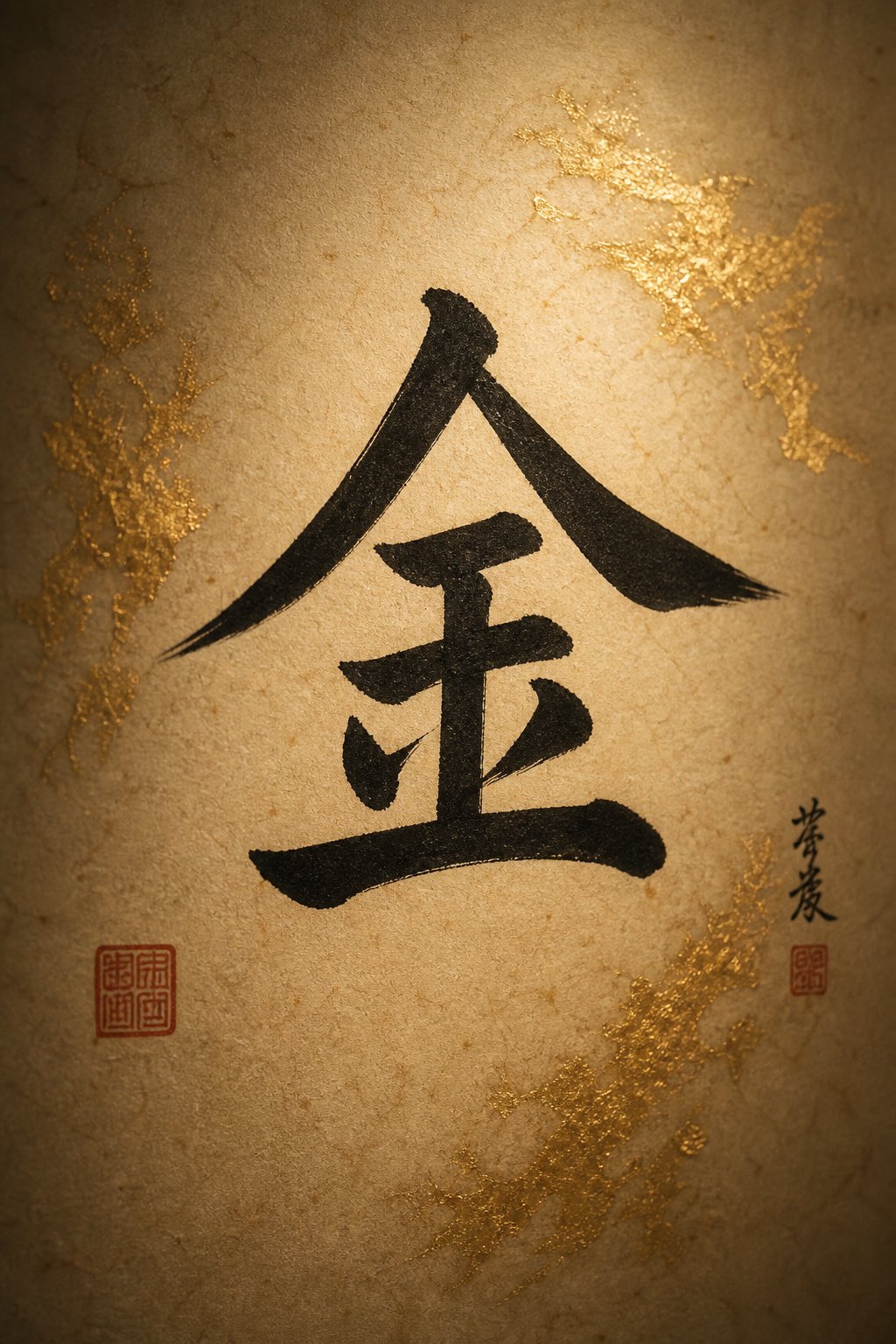
Imagine opening a Chinese dictionary and finding that one single character means "gold," "metal," and "money" all at once. Sounds confusing? It actually makes perfect sense once you understand how ancient Chinese people saw the natural world. The Chinese character for metal, 金 (jīn), carries all three meanings because thousands of years ago, gold was the first metal humans recognized and valued. The character grew from there.
What Does the Metal Chinese Character Actually Mean
Here is the quick-reference definition:
| Character | Pinyin | Core Meanings |
|---|---|---|
| 金 | jīn (first tone) | Gold, metal, money, precious |
The metal Chinese character appears everywhere in daily life. It shows up in words for silver (银), iron (铁), copper (铜), and steel (钢) as a radical component. It forms the basis of 钱 (money) and 银行 (bank). It even names the planet Venus (金星). This single character connects an entire web of concepts related to metallic substances, wealth, and material value.
Why One Character Carries Multiple Meanings
The logic is straightforward. When early Chinese civilizations first encountered metals, gold was the most visible and prized example. They created a character to represent it. As people discovered other metals like copper and iron, the same character broadened to cover the entire category rather than spawning separate root words for each new material.
In Chinese, 金 originally referred to gold specifically, then broadened to encompass all metals and metallic substances.
This pattern of a specific word generalizing into a category label is common across languages, but few examples are as productive as 金. The character didn't just keep its dual meaning quietly. It became one of the most active radicals in the entire Chinese writing system, generating hundreds of related characters for tools, elements, and actions involving metal.
That productivity raises a natural question: what did the original character actually look like, and how did its visual form encode the concept of metal buried in the earth?
How 金 Evolved From Ancient Pictographs to Modern Form
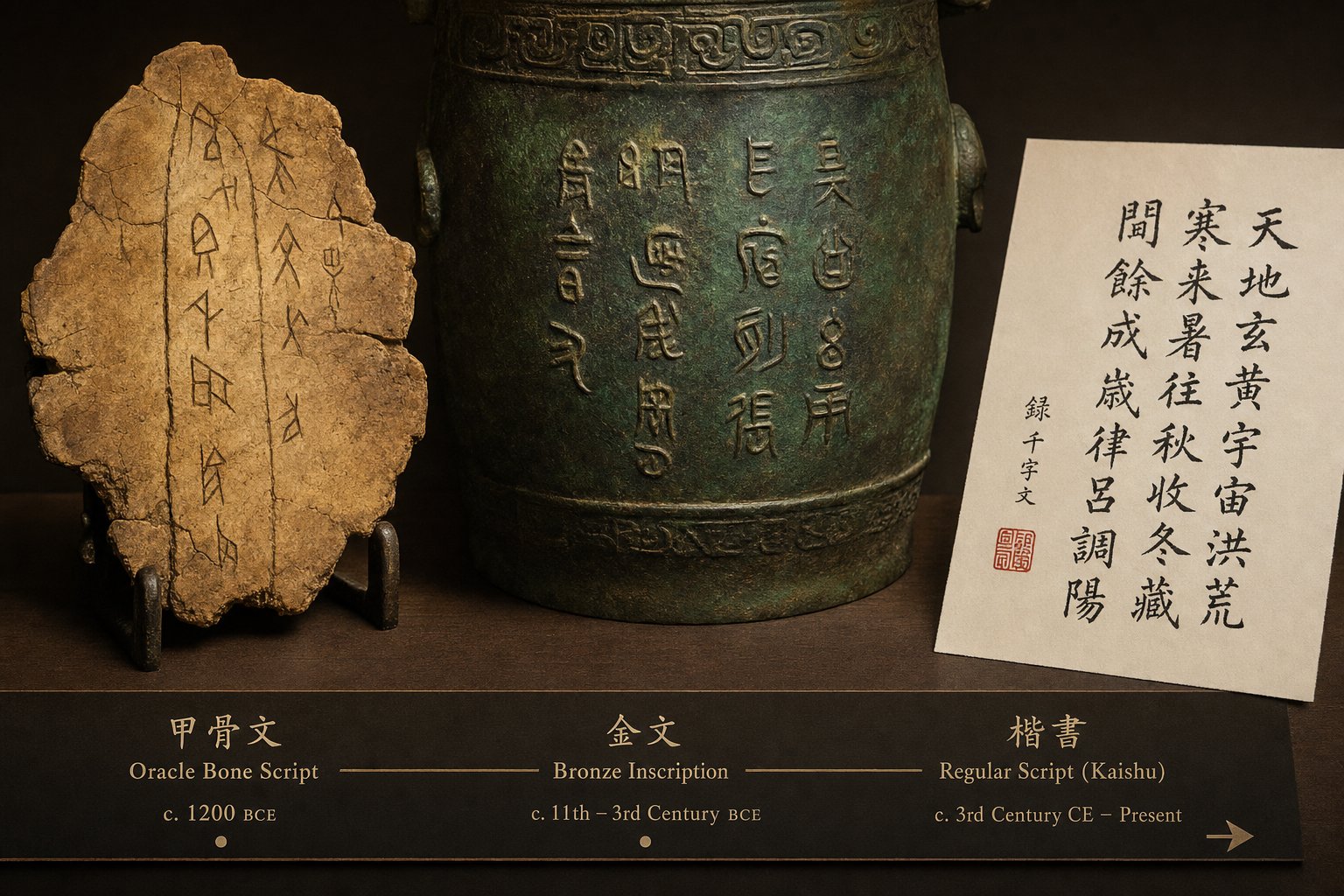
The answer lies buried in roughly 3,400 years of visual history. The chinese character evolution for metal didn't happen overnight. It moved through distinct script stages, each one simplifying the form while preserving the core idea of metal extracted from the earth. Tracing that journey reveals why 金 looks the way it does today and gives you a built-in memory aid for writing it correctly.
Oracle Bone and Bronze Script Origins
The earliest known forms of 金 appear on Shang dynasty oracle bones (circa 1600-1046 BCE), where diviners carved characters into turtle shells and animal bones. These ancient versions look nothing like the modern character. They are rough pictographs showing lumps of metal ore, often with dots or oblong shapes representing nuggets of copper sitting beside or beneath a pointed form resembling an axe-head or a casting mould.
According to research documented by Beyond Calligraphy, the kanji 金 is a pictograph of copper ore cast in a mould. The two small dots visible in oracle bone forms represent actual lumps of copper, the primary ingredient of bronze, which was the most precious metal in ancient China. A Western Zhou dynasty food vessel called the 效父簋 (Xiao fu gui) even records a king being offered three units of 金, represented by the character with its telltale copper-lump dots.
When you look at bronze inscription forms (金文, jinwen, literally "text on metal"), the character becomes more elaborate. These were etched chinese characters on metal blades, ritual vessels, and ceremonial objects. The oblong dots on both sides of the character body imitate the elliptical shape of copper ore lumps more clearly. Different bronze vessels from the same era show surprisingly varied forms of 金, proof that calligraphers exercised creative freedom even within a shared pictographic logic.
Why copper and not gold? Bronze was the dominant valuable metal during the Shang and Zhou dynasties. Gold came later in Chinese metallurgical history. This is why the character's earliest visual DNA encodes copper ore rather than gold nuggets, even though its meaning eventually expanded to cover gold and all other metals.
From Pictograph to Modern Character
The transformation from those rough oracle bone carvings to the clean eight-stroke character you write today followed a predictable path. Chinese script evolved through several major stages, each driven by the practical need for faster, more standardized writing. Here is the chronological progression:
- Oracle Bone Script (甲骨文, circa 1600-1046 BCE) - Pictographic forms carved into bone and shell. The character shows recognizable metal nuggets beside a pointed shape, possibly an axe or furnace. Strokes are angular and uneven due to the carving medium.
- Bronze Inscription Script (金文, circa 1046-256 BCE) - Cast into bronze vessels during the Zhou dynasty. Forms become rounder and more decorative. The copper-lump dots are clearly visible on one or both sides of the main body. Multiple variant forms coexist.
- Seal Script (篆書, circa 221 BCE onward) - Standardized under the Qin dynasty as part of China's first writing unification. Lines become uniform in width, curves are smooth and symmetrical. The character takes on a more balanced, geometric appearance while retaining its structural elements.
- Clerical Script (隸書, circa 200 BCE-200 CE) - A major turning point. Curved strokes flatten into straight, angular lines. The character loses its pictographic roundness and gains the horizontal-vertical grid structure familiar in modern Chinese. This stage broke the old pictographic structure in favor of writing speed.
- Regular Script (楷書, circa 200 CE onward) - The final standardization. Strokes become precise and uniform, producing the eight-stroke 金 used today. The two dots at the bottom are the last visible trace of those original copper ore lumps from over three thousand years ago.
Each stage traded some visual storytelling for practical efficiency. The oracle bone form told you exactly what the character meant just by looking at it. The modern form requires you to know the history, but it can be written in seconds with a ballpoint pen.
This evolution mirrors a broader pattern across all Chinese characters. As HKBU's School of Continuing Education explains, the overall trend in Chinese script development moves from complex to simple, with clerical script serving as the major watershed moment that separated ancient pictographic writing from modern standardized forms.
Understanding this history gives you a practical advantage. When you write 金 and place those two small dots at the bottom, you're not drawing arbitrary marks. You're echoing a 3,000-year-old representation of copper nuggets in the earth. That kind of visual story makes the character far easier to remember than rote memorization ever could.
The shape is one thing. Writing it stroke by stroke, in the correct order, is another challenge entirely.
How to Write the Metal Character and Its Radical Forms
Knowing the history behind 金 is useful, but at some point you need to pick up a pen. Writing metallic chinese characters correctly comes down to stroke order, and stroke order follows a logic you can learn once and apply everywhere. The standalone character 金 uses 8 strokes. Its radical form, the compressed version that appears inside other characters, uses only 5 strokes in simplified Chinese. Both forms follow predictable rules.
Writing 金 in Eight Strokes
The structure of 金 breaks into two visual sections. The top portion resembles a roof or the "person" radical (人), formed by the first two strokes fanning outward. The bottom portion contains a shape similar to 王 (king) flanked by two dots on either side, those ancient copper nuggets still visible after thousands of years of simplification.
Here is the stroke-by-stroke sequence:
- Stroke 1 - 撇 (pie, left-falling stroke): Start from the top center and sweep diagonally down to the left. This forms the left side of the "roof."
- Stroke 2 - 捺 (na, right-falling stroke): Begin from the same starting point as stroke 1 and sweep diagonally down to the right, creating a symmetrical spread.
- Stroke 3 - 横 (heng, horizontal): Draw a horizontal line from left to right, sitting just below where the two falling strokes meet. This is the longer of the two horizontals.
- Stroke 4 - 横 (heng, horizontal): Add a second horizontal line below the first, slightly shorter.
- Stroke 5 - 竖 (shu, vertical): Draw a straight vertical line down through the center of both horizontal strokes. This creates the backbone of the lower structure.
- Stroke 6 - 横 (heng, horizontal): Place a short horizontal stroke at the bottom, anchoring the vertical line.
- Stroke 7 - 点 (dian, dot): Add a small dot to the lower left, between the second horizontal and the bottom horizontal. This represents one of the original metal nuggets.
- Stroke 8 - 点 (dian, dot): Add a matching dot to the lower right, mirroring stroke 7.
A helpful way to remember the structure: imagine a person (strokes 1-2) standing over a king (strokes 3-6) who guards two nuggets of gold (strokes 7-8). That mental image maps directly onto the character's ancient pictographic origins.
The Simplified Radical Form 钅 in Five Strokes
When 金 appears as a radical on the left side of another character, it compresses into a narrower form to leave room for the right-side component. In simplified Chinese, this compressed form is 钅. In traditional Chinese, it appears as 釒. You'll encounter 钅 far more often than the standalone 金 because it builds hundreds of common characters like 铁 (iron), 银 (silver), and 钱 (money).
The 5-stroke sequence for 钅 goes like this:
- Stroke 1 - 撇 (pie, short left-falling): A short diagonal stroke falling to the left from the top.
- Stroke 2 - 横 (heng, horizontal): A horizontal line extending to the right from just below the starting point of stroke 1.
- Stroke 3 - 横 (heng, horizontal): A second horizontal line below the first.
- Stroke 4 - 竖 (shu, vertical): A vertical stroke dropping straight down, intersecting both horizontals.
- Stroke 5 - 提 (ti, rising stroke): A short stroke that rises from left to right at the bottom, flicking upward. This replaces the two dots and bottom horizontal of the full character.
Notice how the simplified radical condenses the eight strokes of 金 into five by eliminating the initial right-falling stroke and merging the bottom elements into a single rising flick. The result is compact enough to fit neatly beside another component without crowding the character square.
Here is a side-by-side comparison of all three forms:
| Form | Character | Stroke Count | Usage Context |
|---|---|---|---|
| Standalone | 金 | 8 strokes | Used as an independent character meaning gold, metal, or money |
| Simplified Radical | 钅 | 5 strokes | Left-side radical in simplified Chinese characters (e.g., 铁, 银, 钱) |
| Traditional Radical | 釒 | 8 strokes | Left-side radical in traditional Chinese characters (e.g., 鐵, 銀, 錢) |
The traditional radical 釒 keeps all 8 strokes but squeezes them into a narrower column. If you're studying simplified Chinese, you'll primarily write 钅. If you're working with traditional characters or reading older texts, chinese character metal stamps, and classical calligraphy, you'll need to recognize 釒 as well.
One practical tip: when practicing, write the standalone 金 first until the structure feels natural. The radical form 钅 is essentially the same character with its right side shaved off and its bottom compressed. Once your hand knows the full form, the radical version follows almost automatically.
Getting the shape right is half the challenge. The other half is making sure the sound that comes out of your mouth matches the character on the page, and 金 has a tone that trips up more learners than you might expect.
Pronunciation and Tone Guide for 金
The metal character in Chinese looks straightforward on paper, but saying it correctly requires attention to two things: the initial consonant and the tone. The pinyin for 金 is jīn, spoken in the first tone. Get both elements right and you'll sound natural. Get either one wrong and native speakers may hear a completely different word.
Pronouncing 金 With the Correct First Tone
Mandarin's first tone is high and level. Imagine holding a single musical note without letting your pitch rise or fall. Your voice stays flat at the top of your comfortable range, like a steady horizon line stretching across the sky. That sustained, unwavering pitch is exactly what 金 requires.
English speakers sometimes struggle with this because English uses pitch changes for emphasis and emotion rather than meaning. A useful comparison: think of the flat, sustained tone you use when a doctor asks you to say "ahhh" during a throat exam. That steady, unchanging pitch is close to Mandarin's first tone.
The initial consonant "j" in jīn sounds similar to the English "j" in "jeep," but with one key difference. Your tongue tip should sit behind your lower front teeth, with the blade of your tongue pressing against the hard palate just behind the ridge. It's a softer, more forward articulation than the English "j," which tends to sit further back in the mouth. If you say "jeep" while consciously pushing your tongue forward and flattening it slightly, you'll land close to the correct sound.
The vowel combination "in" rhymes with English "seen" but is shorter and crisper. Put it all together: a forward "j," a short "in" like the end of "seen," and a high flat pitch held steady throughout. That's jīn.
Common Pronunciation Mistakes to Avoid
The biggest trap with the gold metal in Chinese character pronunciation isn't the consonant. It's the tone. Learners frequently let their pitch drift downward or go neutral, which transforms the word into something unrecognizable or, worse, into a different word entirely. Here are the tone pairs that cause the most confusion:
- jīn (first tone) - gold, metal, money (金)
- jín (second tone) - not a standard syllable in common use, but rising pitch here sounds hesitant or questioning
- jǐn (third tone) - only, merely (仅); tight, tense (紧)
- jìn (fourth tone) - to enter (进); near, close (近); to prohibit (禁)
Mixing up jīn and jìn is especially common. Saying "I want jìn" instead of "I want jīn" shifts your meaning from "I want gold" to something closer to "I want to enter." Context usually rescues you in conversation, but the error is noticeable to native ears.
Another frequent mistake: pronouncing the "j" like an English "zh" or "ch." This happens when speakers carry over sounds from other Chinese syllables or from their native language. Keep the tongue forward and the sound soft. If it feels like you're about to say "gin" (the drink) with a slightly softer "g," you're in the right neighborhood.
One piece of good news about 金 in compound words: tone sandhi, the rule that changes tones when certain tones appear next to each other, does not affect first-tone syllables. Whether you say 金色 (jīnsè, golden color), 金属 (jīnshǔ, metal), or 金鱼 (jīnyú, goldfish), the first tone on 金 stays high and flat every time. You never need to adjust it based on what follows. This consistency makes metal in Chinese character compounds easier to pronounce than third-tone words, which shift constantly depending on their neighbors.
With the sound locked in, the next layer of understanding involves how 金 functions not as a standalone word but as a building block inside other characters, silently signaling "this has something to do with metal" to anyone who knows where to look.
Understanding the Metal Radical and How It Builds Characters
You already know that 金 stands alone as a word meaning gold, metal, or money. But here's where things get interesting: 金 also works as a component inside other characters, acting like a silent label that tells you "this character has something to do with metal." That dual role, standalone word and internal building block, is the key to unlocking hundreds of chinese characters with the metal radical.
This system isn't random. It follows a clear logic that, once you grasp it, turns unfamiliar characters from intimidating puzzles into readable clues.
How the Metal Radical Signals Meaning in Characters
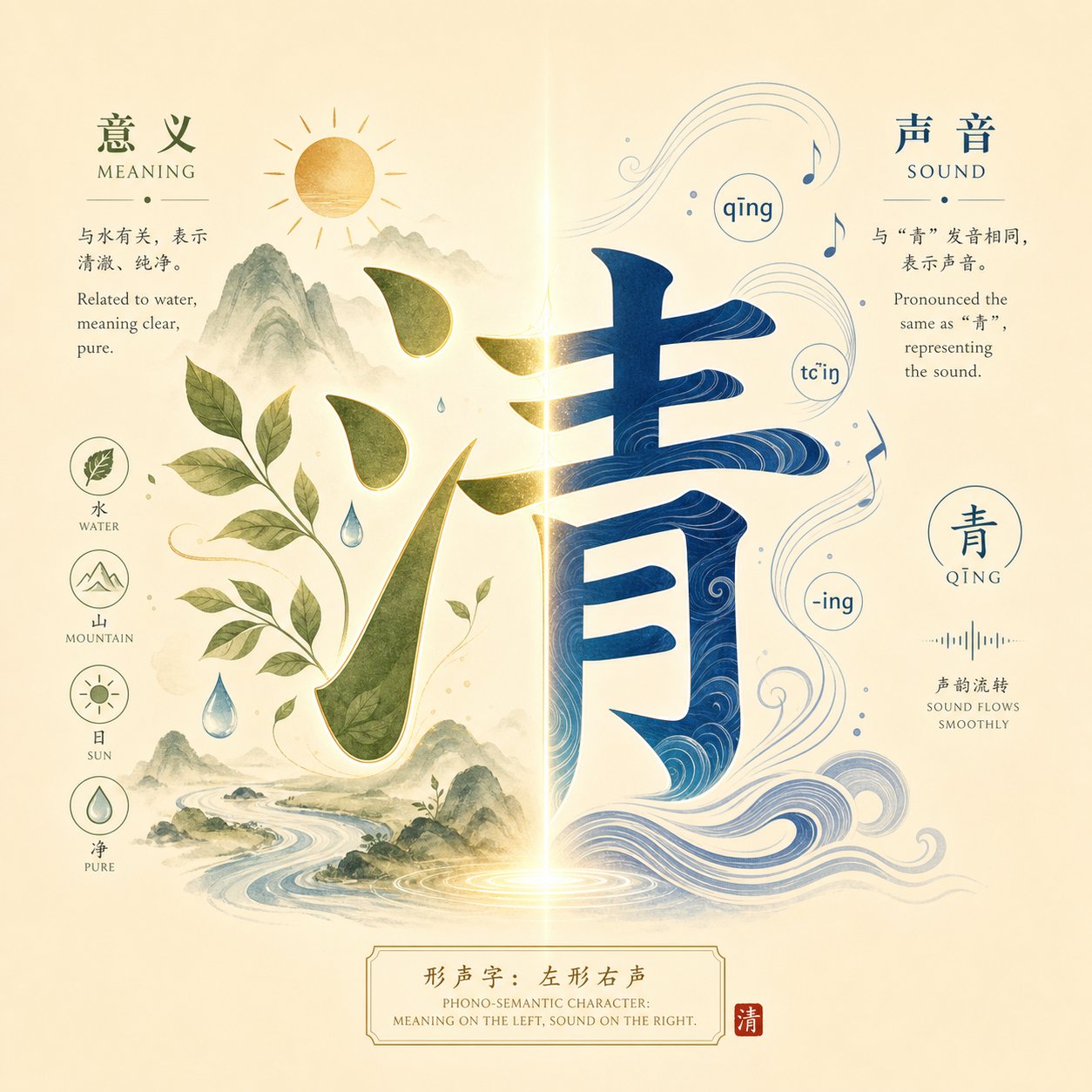
Chinese characters aren't random collections of strokes. Most of them are built from two functional parts:
- A semantic radical - provides a hint about the character's meaning category
- A phonetic component - provides a hint about the character's pronunciation
When you spot 钅 on the left side of a character, it's the semantic radical doing its job. It signals that the character relates to metal, metallic objects, tools made from metal, or qualities associated with metallic substances. You don't need to know the full character to get this information. The radical alone narrows the meaning down to a specific domain.
Think of it like a filing system. Imagine walking into a library where every book spine is color-coded. A silver spine means the book is about science. A green spine means history. You can't read the title from across the room, but the color already tells you which section you're in. The metal radical works the same way. It's the color-coded spine for anything metal-related in the Chinese writing system.
Take the character 铁 (tie, iron). The left side is 钅, telling you this word belongs to the metal family. The right side is 失 (shi), which contributes to the pronunciation rather than the meaning. You don't need to memorize 铁 from scratch if you already recognize the radical. You know it's a metal. The phonetic component gives you a rough guide to how it sounds. Two clues working together.
This structure applies to the vast majority of chinese characters with the metal radical. Characters like 银 (silver), 铜 (copper), 钢 (steel), 钱 (money), and 锁 (lock) all follow the same pattern: metal radical on the left, phonetic component on the right.
Identifying the Metal Radical in Different Positions
The metal radical most commonly appears on the left side of a character in its compressed form 钅 (simplified) or 釒 (traditional). This left-side position accounts for the overwhelming majority of cases. But it's not the only position where 金 shows up.
Occasionally, the full character 金 appears at the top or bottom of a compound character, keeping all eight strokes intact rather than compressing into the five-stroke radical form. Recognizing these less common positions helps you identify metal-related characters even when they don't follow the typical left-right layout.
| Position | Form Used | Example Characters | Meaning |
|---|---|---|---|
| Left side (most common) | 钅 (simplified) / 釒 (traditional) | 铁, 银, 铜, 钢, 钱 | Iron, silver, copper, steel, money |
| Top position | 金 (full form) | 鑫 (xīn) | Prosperity, abundance (three 金 stacked) |
| Bottom position | 金 (full form) | 鉴 (jiàn) | To inspect, to appraise, a mirror |
The character 鑫 is a fascinating case. It stacks three copies of 金 together, one on top and two on the bottom, tripling the idea of gold to express abundance and prosperity. You'll see it frequently in business names and personal names across China. Meanwhile, 鉴 places the metal element at the bottom, connecting to the ancient idea of a bronze mirror used for inspection and judgment.
When you encounter heavy metal chinese characters in texts about chemistry, industry, or materials science, the radical position stays consistent. Whether the character names an element like 铀 (uranium) or describes a process like 锻 (to forge), the 钅 radical sits reliably on the left, anchoring the meaning to the metal domain.
The Character Family Tree Concept
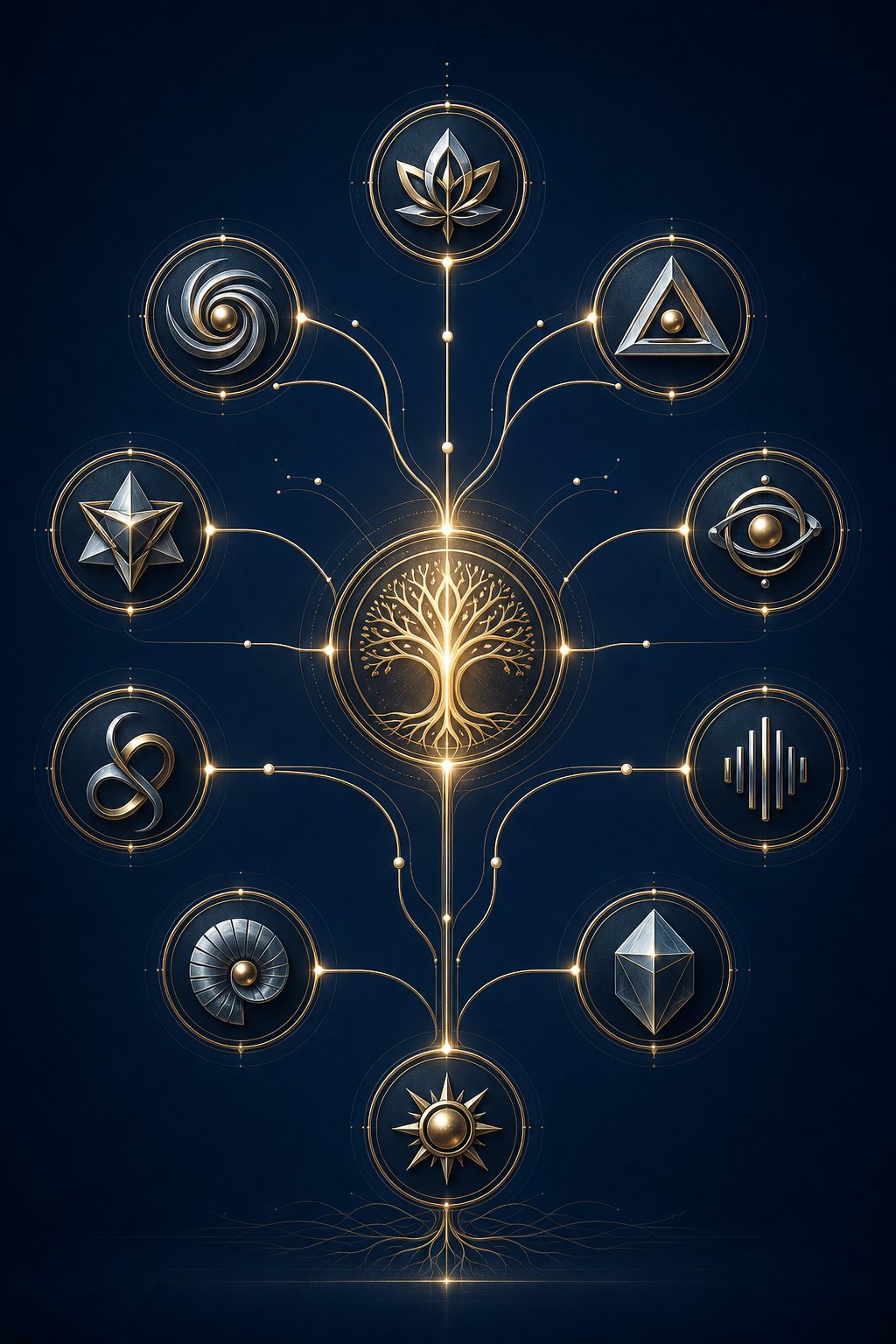
Here's where the system becomes genuinely powerful for learners. The metal radical doesn't just label characters. It generates entire families of related words through combination with different phonetic components. Imagine a family tree where 金/钅 is the parent, and each child character inherits the "metal" meaning while getting its unique pronunciation from the other parent, the phonetic component.
Consider this small family:
- 钅 + 同 (tong) = 铜 (tong, copper) - the phonetic component 同 gives the pronunciation "tong"
- 钅 + 艮 (gen) = 银 (yin, silver) - the phonetic hint is approximate, not exact
- 钅 + 冈 (gang) = 钢 (gang, steel) - the phonetic component 冈 directly provides the sound "gang"
- 钅 + 失 (shi) = 铁 (tie, iron) - here the phonetic match has drifted over centuries
Notice something important: the phonetic component doesn't always give you a perfect pronunciation match. In some cases, like 钢 and 铜, the sound correspondence is nearly exact. In others, like 铁 and 银, centuries of pronunciation shifts have weakened the connection. Still, even an imperfect phonetic hint combined with a clear semantic radical gives you two angles of attack on any unfamiliar character.
This family tree logic means that learning the steel metal in Chinese character (钢) isn't an isolated memorization task. It's part of a pattern. Once you know that 钅 means metal and 冈 sounds like "gang," the character assembles itself logically. Apply the same thinking to 铜, 铃, 锋, or any other member of the metal radical family, and you're no longer memorizing hundreds of unrelated shapes. You're reading a system.
The practical payoff is significant. Research on character acquisition suggests that learners who understand radical-phonetic structure acquire new characters faster than those who rely on rote repetition. When you see an unfamiliar character with 钅 on the left, you can immediately make two educated guesses: it probably relates to metal, and its pronunciation probably resembles the right-side component. Those two guesses are correct often enough to accelerate your reading speed dramatically.
The metal radical is one of the 214 essential radicals in the Chinese writing system, and it ranks among the most productive. It appears in characters spanning ancient bronze tools, medieval weaponry, modern chemistry, and digital-age technology. That range raises an obvious question: just how many characters does this one radical generate, and how do they organize into meaningful groups?
Metal Radical Characters Organized by Category
The answer is: a lot. The metal radical generates one of the largest character families in Chinese, spanning everything from ancient coins to modern padlocks. Rather than presenting these characters as a flat, alphabetical list, grouping them by meaning category reveals the internal logic. You'll notice that each group connects back to a specific relationship between the object or concept and physical metal.
Think of this as a vocabulary map. Each category represents a neighborhood, and the metal radical is the street sign telling you which part of town you're in.
Precious Metals and Materials
The most intuitive group. These characters name the metals themselves, the raw materials that gave the radical its reason to exist. If you've ever examined metal coins with chinese characters stamped on their surface, you've seen several of these in action.
| Character | Pinyin | Meaning | Why the Metal Radical Applies |
|---|---|---|---|
| 金 | jīn | Gold | The original metal; the radical itself |
| 银 | yín | Silver | A precious metal; also used in 银行 (bank) |
| 铜 | tóng | Copper | The dominant metal of ancient China's Bronze Age |
| 铁 | tiě | Iron | The metal that replaced bronze for tools and weapons |
| 钢 | gāng | Steel | An iron alloy; modern industrial backbone |
| 铝 | lǚ | Aluminum | A lightweight metal used in aerospace and packaging |
| 锡 | xī | Tin | A soft metal historically used for plating and solder |
| 铅 | qiān | Lead | A heavy metal; appears in 铅笔 (pencil, literally "lead pen") |
Notice how each character pairs the metal radical 钅 with a phonetic component on the right. The radical tells you it's a metal. The right side hints at pronunciation. This pattern holds consistently across the entire group.
Tools and Implements Made of Metal
This category covers objects historically forged, cast, or assembled from metal. From a needle to a bell, if the object was traditionally made of metal, its character carries the 钅 radical. You'll find these characters on everything from vintage antique suitcase metal chinese characters password lock padlocks to modern kitchen implements.
| Character | Pinyin | Meaning | Why the Metal Radical Applies |
|---|---|---|---|
| 锤 | chuí | Hammer | A metal-headed striking tool |
| 锯 | jù | Saw | A cutting tool with metal teeth |
| 针 | zhēn | Needle | A thin metal implement for sewing or injection |
| 钉 | dīng | Nail | A metal fastener hammered into material |
| 锁 | suǒ | Lock | A metal security device; think of a metal box in chinese character form |
| 镜 | jìng | Mirror | Ancient mirrors were polished bronze discs |
| 钟 | zhōng | Bell / Clock | Bells were cast from bronze; clocks inherited the character |
| 钥 | yào | Key | A metal device that operates a lock |
| 键 | jiàn | Key (keyboard/piano) | Originally a door bolt; now any pressable metal mechanism |
The character 钟 is a good example of meaning evolution. It originally referred to bronze bells used in ritual music. When mechanical clocks arrived in China, the same character expanded to cover timekeeping devices because early clocks used metal bells to mark the hours. The word 分钟 (minute) still carries that metallic heritage in its second syllable.
Actions and Processes Involving Metal
Characters in this group describe what people do with metal or what happens to metal over time. They're verbs and process words rather than object names, but the radical still applies because the action fundamentally involves metallic material.
| Character | Pinyin | Meaning | Why the Metal Radical Applies |
|---|---|---|---|
| 铸 | zhù | To cast (metal) | Pouring molten metal into a mould |
| 锻 | duàn | To forge | Shaping metal by heating and hammering |
| 镀 | dù | To plate | Coating a surface with a thin metal layer |
| 锈 | xiù | To rust / Rust | Oxidation that occurs on metal surfaces |
| 铭 | míng | To engrave / Inscription | Carving text into metal surfaces |
The character 锻 (duàn) is particularly interesting because its modern usage has expanded well beyond metalwork. The compound 锻炼 (duànliàn) now means "to exercise" or "to train physically," metaphorically extending the idea of forging and tempering metal into forging and tempering the body. The metal radical remains, preserving the word's industrial origin even in a fitness context.
Abstract Concepts Derived From Metal
This is the most surprising category. These characters started with concrete metallic meanings but drifted into abstract territory over centuries of use. Their metal radicals now feel almost invisible because the modern meanings seem unrelated to metal at first glance.
| Character | Pinyin | Modern Meaning | Original Metal Connection |
|---|---|---|---|
| 锐 | ruì | Sharp / Keen | Refers to the sharpness of a metal blade or point |
| 错 | cuò | Wrong / Mistake | Originally meant to grind or polish metal; "crossed" or "misaligned" edges led to the meaning of error |
| 链 | liàn | Chain / Link | Metal links connected together; now used for supply chains, blockchain, necklaces |
| 锋 | fēng | Sharp edge / Vanguard | The cutting edge of a metal weapon; extended to mean the forefront of anything |
The character 错 deserves special attention. Its original meaning involved interlocking or grinding metal surfaces together, a process where pieces cross and overlap. From that physical crossing came the abstract idea of things being "crossed up" or misaligned, which eventually became the modern meaning of "wrong" or "mistaken." As noted in HSK vocabulary references, 错 appears as early as HSK level 2, making it one of the first metal-radical characters learners encounter, often without realizing its metallic origin.
These four categories cover the major semantic neighborhoods of the metal radical family. Materials, tools, processes, and abstract extensions. When you encounter an unfamiliar character with 钅 on the left, mentally run through these groups. Is it naming a metal? Describing a tool? Referring to a metalworking process? Or has it drifted into metaphorical territory? That quick mental check narrows your guessing range dramatically.
What's remarkable is that this ancient radical hasn't stopped producing new characters. Modern science and technology keep adding members to the family, coining fresh terms for elements, alloys, and inventions that didn't exist when the radical was first carved into oracle bones over three thousand years ago.
Why Modern Chinese Still Creates Words With the Metal Radical
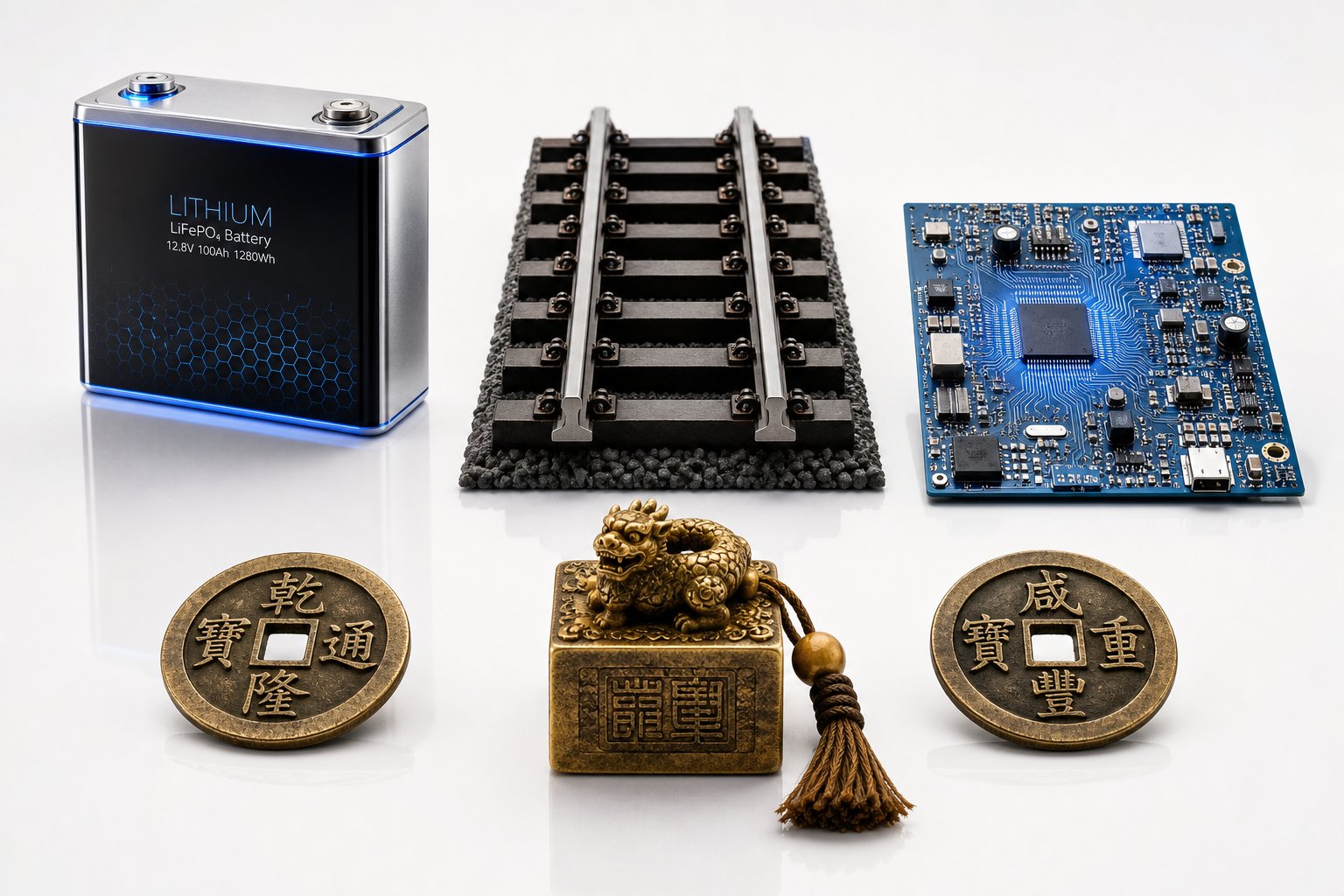
A radical system invented during the Bronze Age shouldn't still be productive in the age of lithium batteries and titanium alloys. And yet it is. The metal radical 钅 continues to generate new characters for elements, technologies, and concepts that ancient scribes could never have imagined. This isn't a quirk or a leftover tradition. It's evidence that the radical system is genuinely flexible, a living framework that adapts to new knowledge without breaking its own rules.
So how does a 3,000-year-old building block keep up with the periodic table?
Ancient Radical Meets Modern Technology
When Western science introduced dozens of new metallic elements to China in the 19th and 20th centuries, linguists needed characters for each one. They didn't invent a new system. They used the existing radical-phonetic structure: pair 钅 with a phonetic component that approximates the element's sound in Chinese, and you have a brand-new character that any literate person can immediately identify as a metal.
Here are some examples that power modern technology:
- 锂 (li, lithium) - The phonetic component 里 (li) provides the sound. Lithium drives rechargeable batteries in phones, laptops, and electric vehicles. The character didn't exist in classical Chinese. It was coined specifically for this element.
- 铀 (you, uranium) - The phonetic component 由 (you) gives the pronunciation. Uranium fuels nuclear reactors and appears in discussions of energy policy. Again, a modern creation using ancient architecture.
- 铝 (lv, aluminum) - The phonetic component 吕 (lv) supplies the sound. Aluminum is everywhere in aerospace, construction, and packaging. The character slots neatly into the metal radical family as if it had always been there.
- 钛 (tai, titanium) - The phonetic component 太 (tai) approximates the pronunciation. Titanium appears in medical implants, aircraft frames, and high-end consumer products.
- 钴 (gu, cobalt) - The phonetic component 古 (gu) provides the sound. Cobalt is critical for battery cathodes and superalloys.
The pattern is consistent. Every one of these characters follows the same formula: metal radical on the left signals "this is a metallic element," phonetic component on the right tells you how to say it. A chemistry student encountering an unfamiliar element character can immediately identify it as a metal just by spotting 钅, even without knowing the specific element. That's the radical system doing exactly what it was designed to do, thousands of years after its invention.
Infrastructure and Finance Words With the Metal Radical
Technology isn't the only modern domain where the metal radical thrives. Everyday words for infrastructure, transportation, and finance carry 钅 because their origins trace back to physical metal objects. The radical connects these modern concepts to their material roots in ways that are easy to overlook until someone points them out.
Consider these common terms:
- 铁路 (tielu, railway) - Literally "iron road." The character 铁 carries the metal radical because rails are made of iron and steel. China's high-speed rail network, the largest in the world, is described using a character whose radical was carved into bronze vessels three millennia ago.
- 银行 (yinhang, bank) - Literally "silver business." The character 银 combines the metal radical with a phonetic component, and the word itself reflects an era when banks dealt primarily in silver currency. Every time you walk past a bank branch in China, the sign overhead contains the metal radical.
- 钱 (qian, money) - The metal radical appears because early Chinese currency took the form of metal coins and, before that, metal farm tools used as a medium of exchange. The right side of the character originally depicted spears or agricultural implements, reinforcing the connection between metal objects and economic value.
- 铃 (ling, bell / ringtone) - Originally a small metal bell. The same character now appears in 手机铃声 (phone ringtone), linking a digital sound notification back to the physical metal bell it imitates.
What's fascinating about these words is how the metal radical preserves material history inside everyday language. A Chinese speaker saying 银行 doesn't consciously think about silver, just as an English speaker saying "bank" doesn't think about the Italian "banca" (bench) where medieval money-changers worked. But the radical is still there, a fossil record of how financial institutions grew out of physical metal exchange.
You might even notice the metal radical showing up in unexpected places if you look at chinese character metal home decor art frame designs or chinese character metal wall hanging home decor art window pieces. These decorative items often feature characters like 钱, 银, or 金 precisely because the metal radical family carries associations with wealth, strength, and permanence, qualities people want displayed in their living spaces.
How Recognizing the Radical Aids Reading and Memorization
All of this leads to a practical study strategy that can dramatically speed up your character acquisition. When you encounter an unknown character with 钅 on the left side, you can immediately do two things:
- Narrow the meaning - The character almost certainly relates to metal, a metallic object, a metallic element, or a concept with metallic origins. You've eliminated thousands of possible meanings and landed in one specific domain.
- Guess the pronunciation - Look at the right-side component. If you recognize it as a standalone character or have seen it in other compounds, its sound likely approximates the pronunciation of the full character. The match isn't always perfect, but it's right often enough to be useful.
Imagine you're reading a Chinese science article and encounter the character 钨. You've never seen it before. But you spot 钅 on the left, so you know it's a metal. The right side is 乌 (wu), which you recognize from 乌鸦 (crow). You guess the pronunciation is "wu" and the meaning is some kind of metal. You'd be correct: 钨 is tungsten, pronounced wu. Two educated guesses, both right, and you never needed a dictionary.
This recognition skill compounds over time. The more metal-radical characters you learn, the more phonetic components you recognize, and the faster you can decode new ones. It's a snowball effect. A learner who understands the radical-phonetic system doesn't memorize characters one by one. They learn patterns that unlock entire families at once.
When you see 钅, you already know the answer to the first question: what category does this character belong to? Metal. Every time.
That certainty is rare in Chinese character learning, where ambiguity is the norm. The metal radical's consistency makes it one of the most reliable semantic signals in the entire writing system. Whether the character was coined three thousand years ago for bronze tools or last century for a newly discovered element, the radical keeps its promise: this is about metal.
The metal radical's reach extends even further than vocabulary and technology. In traditional Chinese philosophy, 金 represents one of five fundamental forces that govern the natural world, connecting language, medicine, astronomy, and cultural practice into a single unified framework.
The Metal Element in Chinese Philosophy and Culture
The character 金 doesn't just name a material. It names a cosmic force. In the Five Elements system (五行, Wu Xing), 金 represents Metal, one of five fundamental phases that ancient Chinese thinkers used to explain how the universe operates. This framework connects the chinese character for wood fire earth metal water into a single dynamic system where each element generates, regulates, and transforms the others in endless cycles.
If you've only studied 金 as a vocabulary word, this is where its meaning deepens from "a thing you can hold" into "a principle that governs nature."
Metal in the Five Elements System
The Five Elements are not static substances. They are patterns of energy, each describing a distinct way that force moves through the world. The Five Elements framework classifies Metal (金) as contracting, refining energy — the force that sharpens, structures, and distills. It sits alongside Wood (木), which pushes upward and expands; Fire (火), which radiates and transforms; Earth (土), which consolidates and stabilizes; and Water (水), which flows and adapts.
These five forces interact through two fundamental cycles:
The Generating Cycle (相生) describes how each element produces the next. Wood feeds Fire. Fire creates Earth (ash). Earth produces Metal (minerals form underground). Metal generates Water (metal surfaces collect condensation in classical Chinese observation). Water nourishes Wood. The cycle loops endlessly, each phase giving rise to the next.
The Controlling Cycle (相克) describes how each element restrains another. Fire melts Metal. Metal cuts Wood. Wood parts Earth. Earth dams Water. Water extinguishes Fire. This cycle prevents any single element from growing unchecked. It's the universe's built-in regulation system.
For Metal specifically, the relationships look like this:
- Earth produces Metal — minerals and ores form within the earth, so Earth is Metal's "parent" in the generating cycle
- Metal generates Water — Metal is the "parent" of Water
- Fire melts Metal — Fire controls and restrains Metal
- Metal cuts Wood — Metal controls and restrains Wood
As traditional Chinese philosophy explains, the right proportion of each element is essential to the balance of the universe and nature's harmony. If Metal energy is excessive, it exhausts Wood's energy and disproportionately raises Water's energy. Balance, not dominance, is the goal.
Full Correspondences of the Metal Element
Each element in the Five Elements system maps onto a complete set of natural and human phenomena. These correspondences aren't arbitrary. They were developed over centuries of observation and form the backbone of traditional Chinese medicine, feng shui, astrology, and seasonal living. Here is the full correspondence table for Metal:
| Category | Metal (金) Correspondence |
|---|---|
| Direction | West |
| Season | Autumn |
| Color | White |
| Organ (Yin) | Lungs |
| Organ (Yang) | Large Intestine |
| Emotion | Grief / Sadness |
| Planet | Venus (金星, literally "gold/metal star") |
| Taste | Pungent / Spicy |
| Sense | Smell |
| Animal | Tiger |
| Climate | Dry |
| Life Stage | Harvest / Decline |
The logic behind these pairings becomes clear when you think about autumn. It's the season of contraction — leaves fall, energy draws inward, the natural world sharpens and refines itself before winter. That contracting, distilling quality is exactly what Metal represents. The west is where the sun sets, marking the day's decline. White is the color of mourning in Chinese culture, connecting to grief. The lungs take in air and release what's unneeded, a refining process. Every correspondence reinforces the same core principle: Metal is the force that contracts, purifies, and lets go.
Cultural Significance Beyond Language
These associations don't stay locked in philosophy textbooks. They permeate daily Chinese life in ways that might surprise you.
Traditional Chinese Medicine (TCM) uses the Five Elements to diagnose and treat illness. A patient with chronic respiratory issues or unresolved grief might be diagnosed with a Metal element imbalance. Acupuncture points along the lung meridian are classified under Metal. Pungent foods like ginger and garlic are prescribed to stimulate Metal energy. The character 金 connects language, medicine, and the body into one coherent system.
Feng shui practitioners use Metal element principles when arranging living spaces. Metal energy is activated through white and metallic colors, round shapes, and objects made from metal. If you've seen chinese character metal wall art or chinese characters metal wall art displayed in homes and offices, those pieces often serve a dual purpose: aesthetic decoration and deliberate feng shui placement to strengthen Metal energy in a space associated with the western direction.
Naming conventions reveal perhaps the most personal connection. Many Chinese surnames incorporate 金 directly — the surname 金 (Jin) is common across China and Korea. Given names frequently include 金 or metal-radical characters for their auspicious associations with wealth, strength, and resilience. Parents choosing names based on a child's Bazi (birth chart) might add Metal element characters if the chart shows a Metal deficiency. The character isn't just a word in these cases. It's a deliberate invocation of elemental balance.
Chinese astrology weaves the Five Elements into the zodiac cycle. Each zodiac year carries an elemental designation that rotates on a 60-year cycle. A "Metal Ox" year produces different energetic conditions than a "Water Ox" year. The planet Venus is literally called 金星 (jin xing, "metal star") because its bright white appearance corresponds to Metal's associated color.
Understanding 金 in its full cultural context transforms it from a vocabulary item into a window on how Chinese civilization organizes reality itself.
When you learn the metal chinese character meaning at this level, you're no longer just memorizing a symbol. You're grasping a node in a vast network of correspondences that connects language to medicine, astronomy to architecture, and personal identity to cosmic cycles. The character 金 carries all of that weight — eight strokes holding thousands of years of accumulated meaning about how the world works, what autumn feels like, why grief lives in the lungs, and where Venus sits in the evening sky.
Frequently Asked Questions About the Metal Chinese Character
1. What is the Chinese character for metal and how is it pronounced?
The Chinese character for metal is 金, pronounced jīn in the first tone (high and level pitch). It carries multiple meanings including gold, metal, money, and precious. The first tone requires a steady, unwavering pitch at the top of your comfortable vocal range, similar to holding a sustained musical note. Be careful not to confuse jīn (metal/gold) with jìn (to enter) or jǐn (only/tight), as the wrong tone changes the meaning entirely.
2. Why does the Chinese character 金 mean both gold and metal?
When ancient Chinese civilizations first encountered metals, gold and copper were the most visible and valued examples. They created 金 to represent these prized materials. As people discovered additional metals like iron and tin, the character broadened to cover the entire category rather than creating separate root characters for each new metal. This expansion from a specific referent to a general category label is a natural linguistic process, and 金 became one of the most productive radicals in Chinese, generating hundreds of characters for metallic elements, tools, and processes.
3. How many strokes does the metal character 金 have and what is its radical form?
The standalone character 金 has 8 strokes. When it appears as a radical on the left side of other characters, it compresses into 钅 (5 strokes in simplified Chinese) or 釒 (8 strokes in traditional Chinese). The simplified radical 钅 is far more common in everyday writing because it builds hundreds of characters like 铁 (iron), 银 (silver), and 钱 (money). The radical form drops the right-falling stroke and merges the bottom elements into a single rising flick to fit compactly beside other components.
4. What does the metal element represent in Chinese Five Elements philosophy?
In the Five Elements system (五行), Metal (金) represents contracting, refining energy associated with autumn, the west direction, the color white, the lungs, and the emotion of grief. It interacts with other elements through generating and controlling cycles: Earth produces Metal, Metal generates Water, Fire melts Metal, and Metal cuts Wood. These correspondences influence traditional Chinese medicine, feng shui, naming conventions, and astrology, making 金 far more than a vocabulary word — it represents a fundamental cosmic principle in Chinese thought.
5. How does recognizing the metal radical help learn new Chinese characters?
Spotting 钅 on the left side of any character immediately tells you it relates to metal, metallic objects, or concepts with metallic origins. The right-side component then hints at pronunciation. This two-clue system lets you make educated guesses about unfamiliar characters without a dictionary. For example, seeing 钨 for the first time, you know it is a metal (from 钅) and guess it sounds like 乌 (wū) from the right side — correctly identifying tungsten. This pattern-recognition approach accelerates character acquisition far beyond rote memorization.