Understanding Pinyin Surnames and Why They Matter
Imagine you're reading a colleague's email signature and you see the name "Zhang Wei." How do you say it? If your instinct is to pronounce "Zhang" like it rhymes with "hang," you're already off track. Chinese surnames show up constantly in global workplaces, university rosters, and research papers, yet most non-Chinese speakers have never learned how to read them correctly.
That's where pinyin comes in. It's the bridge between Chinese characters and the Roman alphabet, and understanding even a handful of the most common pinyin surnames gives you a practical edge in cross-cultural communication.
Why Pinyin Surnames Matter in a Global Context
Chinese family names are among the oldest surviving surname systems in the world. With over 1.4 billion people in China alone, plus massive diaspora communities, you'll encounter Chinese last names in virtually every international setting. Among all asian names and surnames used globally, Chinese ones appear with remarkable frequency in business directories, academic journals, and immigration records.
Over 85% of China's population shares roughly 100 surnames, meaning familiarity with even a short list of chinese surnames makes the vast majority of names you encounter immediately recognizable.
That concentration is staggering. Learn the top 20 chinese last names in pinyin, and you can correctly identify and pronounce the family name of nearly 750 million people.
What Makes Pinyin Different From Other Romanization Systems
Pinyin is the official romanization system for Mandarin Chinese, adopted by the People's Republic of China and recognized internationally by the United Nations and ISO standards. Older systems like Wade-Giles and Yale still appear on documents from Taiwan and in historical texts, but pinyin dominates modern usage.
What sets pinyin apart is its systematic pairing of Roman letters with Mandarin sounds, including tone marks that indicate pitch. Unlike Wade-Giles, which uses apostrophes to distinguish sounds (think "Ch'en" vs. "Chen"), pinyin relies on unique letter combinations like zh, x, and q. For anyone navigating asia surnames in professional or academic contexts, pinyin provides the most consistent and widely understood spelling standard.
In this guide, you'll find correct pinyin forms with tone marks, pronunciation tips tailored for English speakers, historical context behind major chinese family names, and practical etiquette for using these surnames respectfully. Whether you're preparing for a business meeting, reviewing academic citations, or simply want to stop guessing, the payoff starts with the top 20 list.
The Top 20 Most Common Chinese Surnames in Pinyin
When you look at the numbers, the concentration of Chinese surnames is almost hard to believe. According to data from China's Ministry of Public Security, 596.3 million people — 42.9% of the entire population — share just 10 family names. That means learning the most common chinese surnames gives you immediate recognition of nearly half the names you'll encounter in any Chinese-speaking context.
The rankings below draw from the ministry's 2022 report, the most recent government survey of registered names covering 1.4 billion people on the Chinese mainland. These are the popular chinese last names you'll see again and again in email signatures, conference badges, and published research.
The Top 10 Pinyin Surnames by Population
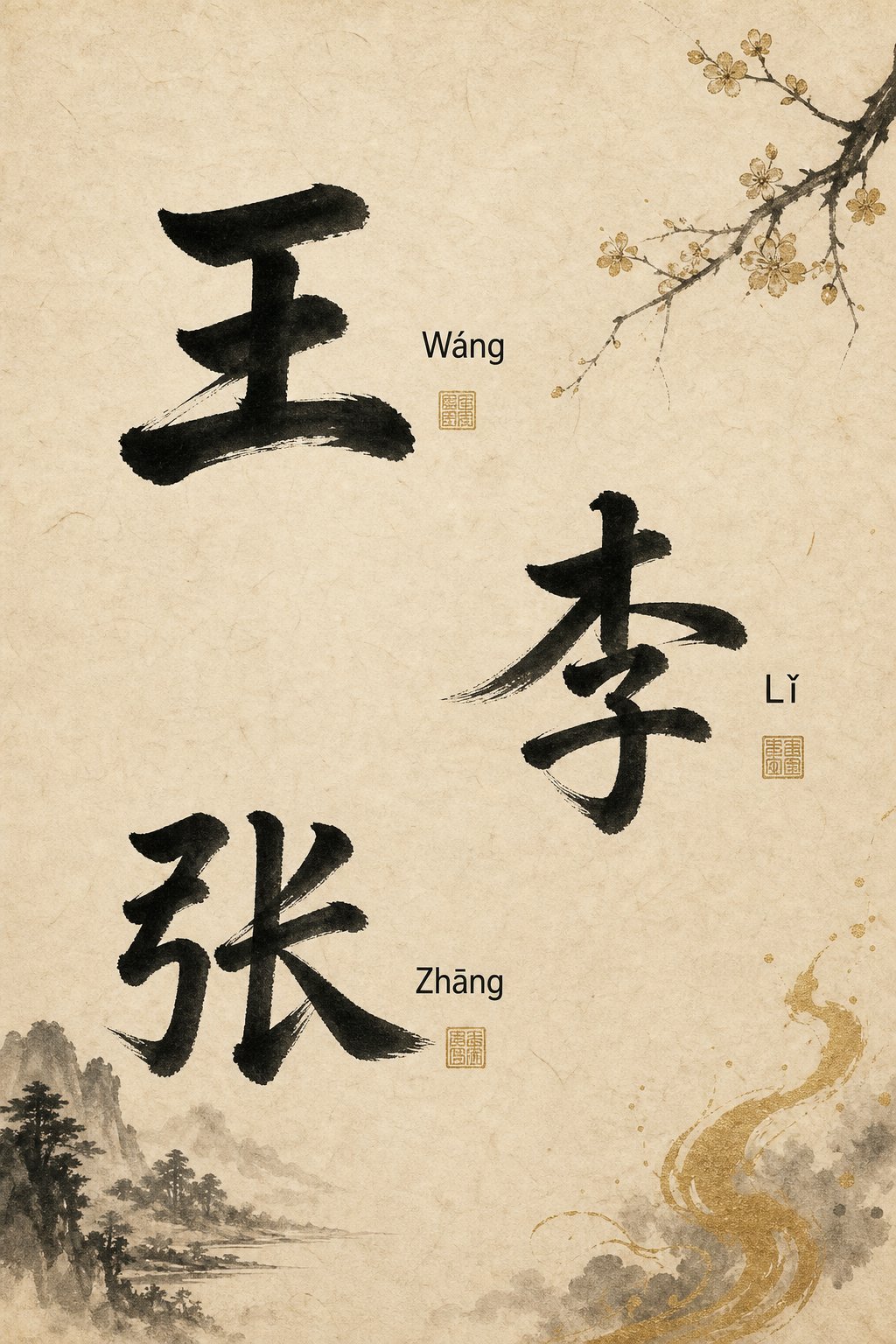
The first five surnames alone — Wang, Li, Zhang, Liu, and Chen — account for 30.8% of China's registered population. You'll notice these common chinese last names are all single-syllable, which is typical. The vast majority of Chinese family names consist of one character and one syllable in pinyin.
| Rank | Pinyin (Tone Mark) | Tone Number | Character | Approx. Population | Meaning |
|---|---|---|---|---|---|
| 1 | Wang2 | Wang2 | 王 | 101.5 million | King |
| 2 | Li3 | Li3 | 李 | 100.9 million | Plum |
| 3 | Zhang1 | Zhang1 | 张 | 95.4 million | Stretch (a bow) |
| 4 | Liu2 | Liu2 | 刘 | 72.1 million | Kill (archaic) |
| 5 | Chen2 | Chen2 | 陈 | 63.3 million | Ancient state name |
| 6 | Yang2 | Yang2 | 杨 | 46.2 million | Poplar tree |
| 7 | Huang2 | Huang2 | 黄 | 33.7 million | Yellow |
| 8 | Zhao4 | Zhao4 | 赵 | 28.6 million | Ancient state name |
| 9 | Wu2 | Wu2 | 吴 | 27.8 million | Loud, noisy |
| 10 | Zhou1 | Zhou1 | 周 | 26.8 million | Dragon (archaic) |
Together, these top 10 surnames represent roughly 596 million people. To put that in perspective, it's nearly double the entire population of the United States packed into just ten one-syllable names.
Surnames Ranked 11 Through 20
The next tier of top chinese last names covers another 167 million people. While individually smaller than the top 10, these surnames still appear with striking regularity across China and in overseas communities.
| Rank | Pinyin (Tone Mark) | Tone Number | Character | Approx. Population | Meaning |
|---|---|---|---|---|---|
| 11 | Xu2 | Xu2 | 徐 | 20.2 million | Slowly, calmly |
| 12 | Sun1 | Sun1 | 孙 | 19.4 million | Grandchild |
| 13 | Ma3 | Ma3 | 马 | 19.1 million | Horse |
| 14 | Zhu1 | Zhu1 | 朱 | 18.1 million | Vermilion red |
| 15 | Hu2 | Hu2 | 胡 | 16.5 million | Beard, whiskers |
| 16 | Guo1 | Guo1 | 郭 | 15.8 million | Outer city wall |
| 17 | He2 | He2 | 何 | 14.8 million | Carry a load |
| 18 | Lin2 | Lin2 | 林 | 14.2 million | Forest |
| 19 | Luo2 | Luo2 | 罗 | 14.2 million | Bird-catching net |
| 20 | Gao1 | Gao1 | 高 | 14.1 million | High, tall |
Combined, the most common chinese last names in this top 20 list cover approximately 763 million people. That's more than half of China's population represented by surnames you can now read in pinyin.
A few patterns stand out. Most of these chinese common last names carry meanings rooted in nature, geography, or ancient political structures. Names like Lin (forest), Ma (horse), and Huang (yellow) reflect the natural world, while others like Chen, Zhao, and Wu trace back to ancient kingdoms. These meanings aren't just trivia — they're clues to where each surname originated and why it spread so widely.
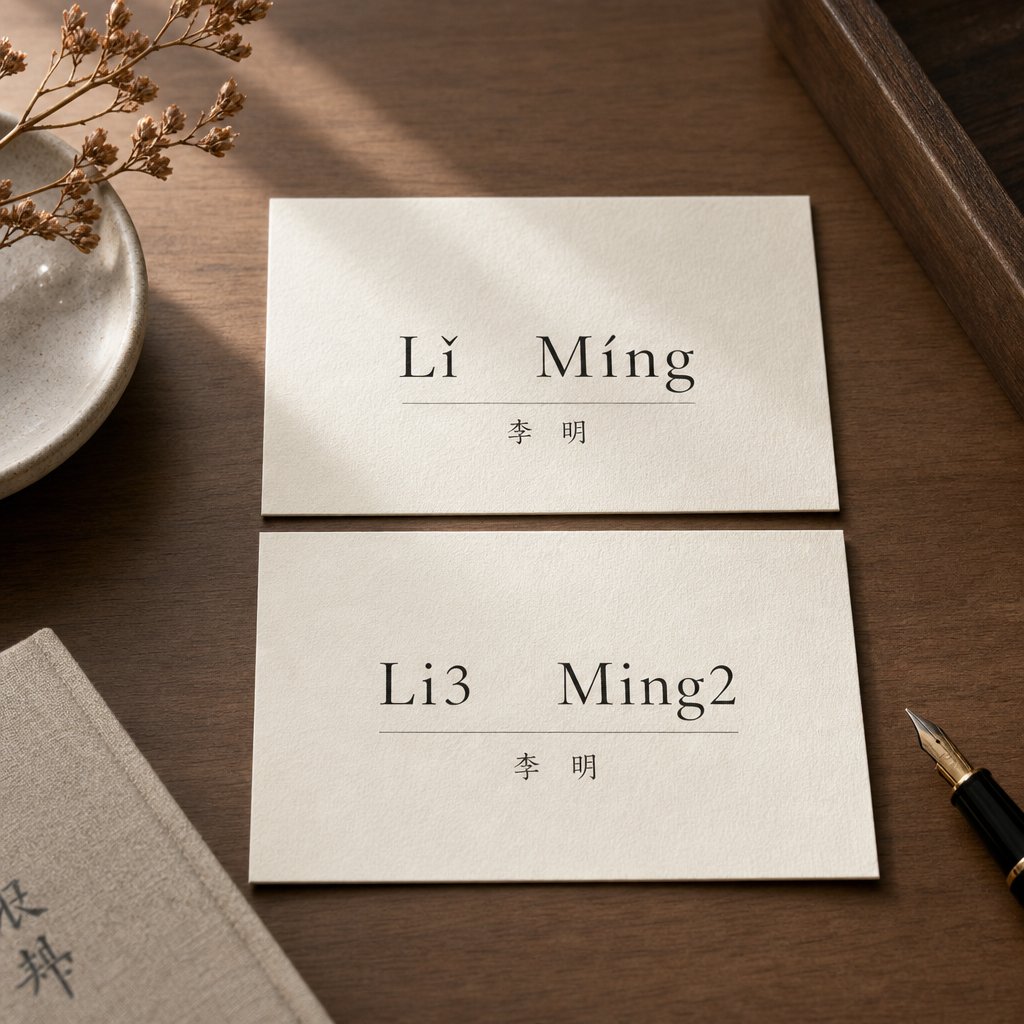
You'll also notice that tone numbers range from 1 through 4, with no neutral tones among the most popular chinese last names. That's significant for pronunciation. Saying "Wang" with a flat tone (tone 1) instead of a rising tone (tone 2) actually produces a different surname entirely — 汪 (Wang1) instead of 王 (Wang2). Getting the tone right isn't optional decoration; it's the difference between one name and another.
Knowing these 20 surnames in their correct pinyin forms is the foundation. But reading them on a page and saying them correctly are two different challenges — especially when pinyin uses letters like zh, x, and q in ways English speakers don't expect.
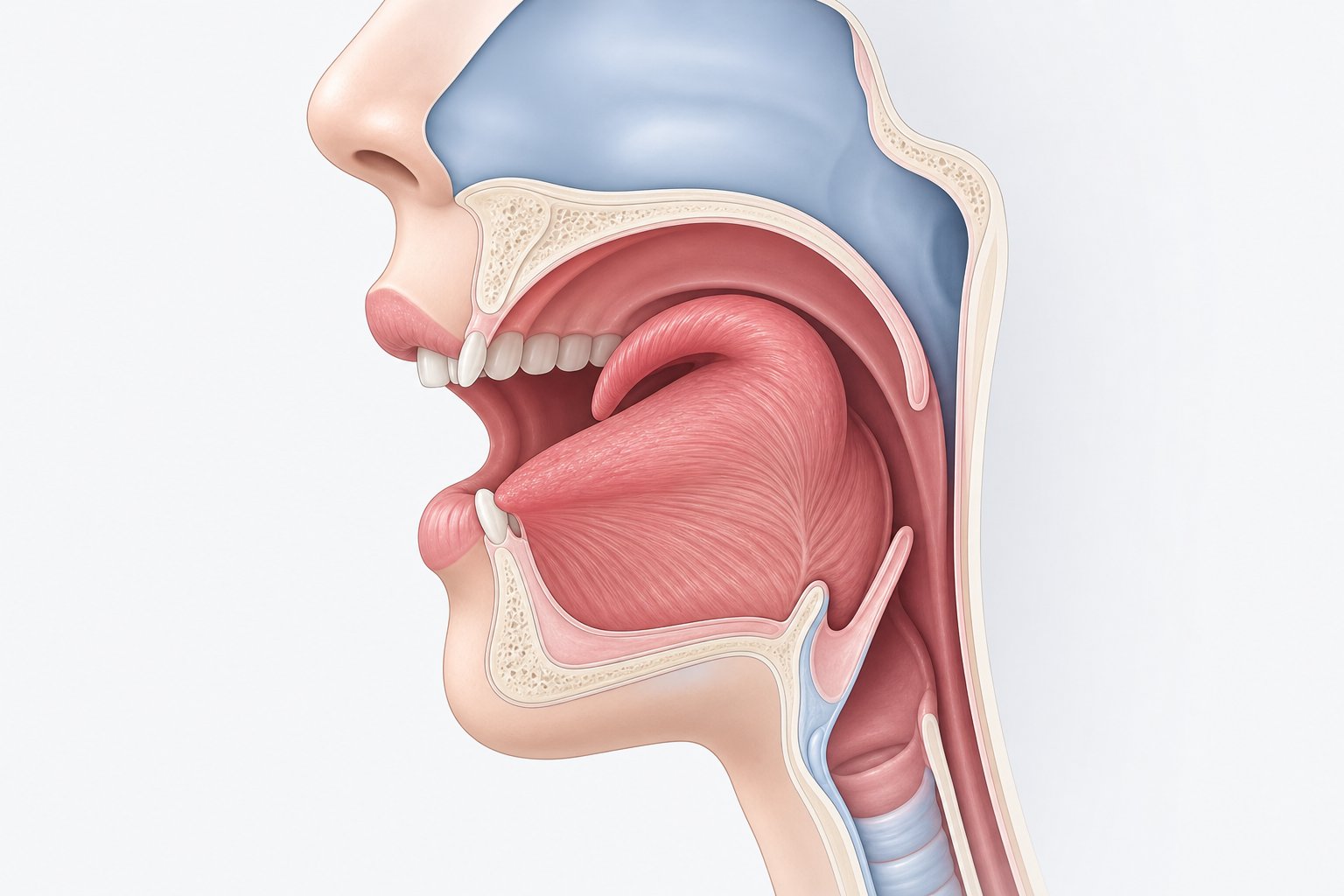
How to Pronounce Common Pinyin Surnames Correctly
Pinyin looks like English, and that's exactly the trap. When you see "Zhang," your brain reaches for familiar sounds — but Mandarin uses those same Roman letters to represent entirely different mouth positions. Every chinese surname on the top 20 list is a single syllable carrying a specific tone, and getting both the consonant and the pitch right is what separates a respectful pronunciation from a garbled guess.
How Mandarin Tones Change Surname Pronunciation
Mandarin has four tones plus a neutral tone. Each tone changes the pitch contour of a syllable, and since most chinese last name entries are one syllable last names, the tone is the identity of the name. Say the wrong tone and you're literally saying a different word. As Hacking Chinese puts it, tones in Mandarin are roughly as important as vowels in English — skip them and meaning collapses.
Here's how each tone works, tied to specific mandarin surnames you already know:
- Tone 1 (high and flat) — Hold your pitch steady at the top of your comfortable range, like humming a single note. Examples: Zhāng (张), Zhōu (周), Gāo (高). Think of the flat beep of a heart monitor.
- Tone 2 (rising) — Start mid-range and rise, the way your voice lifts at the end of "Really?" Examples: Wáng (王), Liú (刘), Chén (陈), Yáng (杨), Huáng (黄). Most of the top 10 surnames sit in this tone.
- Tone 3 (low dipping) — Drop your pitch low, let it dip, then rise slightly. English speakers often flatten this into a monotone, which is the single most common mistake identified in pronunciation research. Examples: Mǎ (马), Lǐ (李). Exaggerate the dip when practicing.
- Tone 4 (sharp falling) — Drop your pitch quickly and firmly, like a curt command: "Stop!" Example: Zhào (赵). Short, decisive, downward.
The neutral tone (tone 0) doesn't appear in any common surname in chinese, so you won't encounter it in this context. But notice how heavily tone 2 dominates the top surnames — Wáng, Liú, Chén, Yáng, Huáng, Lín, Luó all share that rising pitch. Drilling that single tone with these names builds muscle memory fast.
Written Pronunciation Guides for the Top Surnames
Tones are only half the challenge. The consonant initials in pinyin trip up English speakers because they map familiar letters to unfamiliar tongue positions. Here are the three biggest offenders among chinese names and characters you'll encounter:
zh- (as in Zhāng, Zhào, Zhōu, Zhū): This is not the "zh" in "measure." Curl your tongue back so the tip touches the roof of your mouth behind the ridge, then release with no puff of air. It's closer to a "j" sound made further back in the mouth. English has nothing quite like it.
x- (as in Xú): This is not "sh" or "z." Push your tongue forward so it nearly touches your lower front teeth, then produce a hissing "sh" sound with your lips spread in a slight smile. Think of whispering "she" while grinning — that forward tongue position is the key difference from English "sh," which curls the tongue back.
q- (not in the top 20, but common in given names): Same forward tongue position as x-, but with a stop. It sounds like "ch" said through a smile, with the tongue pressed against the front palate rather than curled back. Drill the pair qī / chī until your tongue knows the difference.
A quick reference for the surname 中文 learners ask about most often: Huáng is not "hwang." The initial h- is a soft, breathy sound (like English "h" in "hello"), followed by the vowel combination "-uang" pronounced roughly "oo-ahng" blended into one syllable. Similarly, Liú is not "loo" — it's closer to "lyoh" with a rising pitch.
The payoff for getting these sounds right goes beyond politeness. When you pronounce a colleague's chinese surname correctly, you signal that you've taken their name seriously — and that recognition carries weight in professional relationships. Of course, correct pronunciation only solves part of the confusion. Many of these same surnames appear under completely different spellings depending on which romanization system was used, and that's where things get genuinely confusing.
Pinyin Surname Pairs That Confuse English Speakers
You've learned to pronounce Zhang correctly — but what happens when you meet someone whose last name is spelled "Chang"? Are they different people with different surnames, or the same surname written differently? This is one of the most common sources of confusion for anyone working with chinese american surnames, and the answer lies in competing romanization systems that have coexisted for over a century.
The same Chinese character can appear as Zhang, Chang, or Cheung depending on whether the writer used Pinyin, Wade-Giles, or Cantonese romanization. None of these spellings is "wrong" — they simply reflect different systems designed for different dialects or historical periods. But if you don't know the mapping, you'll treat one person's family name as two unrelated names.
Pinyin vs Wade-Giles vs Cantonese Romanization
Three systems account for the vast majority of romanized Chinese surnames you'll encounter in English-language contexts:
- Hanyu Pinyin — The international standard since the 1980s, used in Mainland China on passports, official documents, and academic publications. If a surname was romanized after roughly 1980 in the PRC, it's almost certainly pinyin.
- Wade-Giles — Developed in the 19th century and dominant in Western academia until pinyin replaced it. Many surnames in taiwan still use Wade-Giles or a simplified variant without diacritics. As Yale University Library's romanization guide notes, well-established personal names in Wade-Giles are often not converted to pinyin, which is why figures like Chiang Ching-kuo retain their older spellings.
- Cantonese romanization — Used in Hong Kong, Macau, and many overseas communities where Cantonese is the heritage language. These spellings reflect Cantonese pronunciation rather than Mandarin, producing forms like Wong for Huang and Chan for Chen.
The confusion multiplies because surnames in taiwan frequently appear in Wade-Giles on passports and official records, while the same surname from a Mainland Chinese colleague appears in pinyin. Meanwhile, cantonese surnames from Hong Kong or Southeast Asian communities use yet another spelling. One character, three completely different-looking romanizations.
Common Surname Pairs That Confuse English Speakers
The table below maps 18 frequently confused surnames across all three systems. Use it as a reverse-lookup tool: if you've encountered a romanized surname and aren't sure which character it represents, find it in any column to identify the correct pinyin and Chinese character.
| Pinyin | Wade-Giles | Cantonese | Character |
|---|---|---|---|
| Zhang | Chang | Cheung | 张 |
| Chen | Ch'en | Chan | 陈 |
| Huang | Huang | Wong | 黄 |
| Zhou | Chou | Chow / Jau | 周 |
| Xu | Hsu / Hsü | Tsui / Chui | 徐 |
| Liu | Liu | Lau | 刘 |
| Lin | Lin | Lam | 林 |
| Wu | Wu | Ng | 吴 |
| Li | Li | Lee / Lei | 李 |
| Wang | Wang | Wong | 王 |
| Yang | Yang | Yeung | 杨 |
| Zhao | Chao | Chiu / Jiu | 赵 |
| Guo | Kuo | Kwok | 郭 |
| He | Ho | Ho | 何 |
| Xie | Hsieh | Tse | 谢 |
| Zhu | Chu | Chu / Jyu | 朱 |
| Luo | Lo | Lo | 罗 |
| Zeng | Tseng | Tsang | 曾 |
A few patterns jump out. The pinyin initials zh-, x-, and z- cause the biggest visual gaps because Wade-Giles renders them as ch-, hs-, and ts- respectively. That's why Zhang becomes Chang, Xu becomes Hsu, and Zeng becomes Tseng. Once you internalize those three conversion rules, most of the table becomes predictable.
Cantonese last names diverge even further because they represent an entirely different spoken language. The family name Ng — which puzzles many English speakers because it has no vowel — is simply the Cantonese pronunciation of 吴 (Wu in pinyin). Similarly, the lim last name origin traces to the Hokkien (Southern Min) pronunciation of 林, which is Lin in pinyin and Lam in Cantonese. These aren't misspellings; they're faithful representations of how the same character sounds in different Chinese languages.
For asian american last names, the romanization often reflects whichever system was in use when a family immigrated. A family that arrived from Taiwan in the 1970s likely carries a Wade-Giles surname. A family from Hong Kong uses Cantonese romanization. A recent immigrant from Shanghai uses pinyin. All three might share the exact same Chinese character — but their English-language surnames look nothing alike.
Understanding these mappings doesn't just prevent embarrassing mix-ups. It helps you recognize that Chang in your department and Zhang in your partner firm might share the same ancestral surname — a connection rooted in history that stretches back thousands of years.

Historical Origins Behind the Most Common Surnames
A surname that covers 100 million people didn't get there by accident. Each of the dominant chinese surnames and meanings you see on the top 20 list traces back to a specific origin story — a clan, a kingdom, a geographic feature, or an emperor's decree. Understanding these roots turns a flat list of syllables into a living map of Chinese civilization.
Chinese family names emerged over 4,000 years ago, making them among the oldest hereditary surname systems on Earth. FamilySearch notes that the legendary Yellow Emperor is said to have ordered people to adopt hereditary family names as early as the third millennium BC. But not all surnames formed the same way. Historians group their origins into several distinct categories:
- Ancient state or fief names — Surnames derived from kingdoms, duchies, or territories granted to nobles. Chen (陈), Zhao (赵), Wu (吴), and Zhou (周) all trace back to states that existed during the Zhou Dynasty or Warring States period.
- Geographic features — Clans named after rivers, mountains, or regions where they settled. The surname Zhong (钟), for example, originated when a family ancestor relocated to the Zhongli Mountains during the late Qin Dynasty and adopted the mountain's name.
- Ancestral occupation or status — Names reflecting what a clan's founder did. Wang (王) literally means "king" and was adopted by descendants of various royal lineages. Sima (司马) meant "master of horses," a military title.
- Imperial grants — Emperors sometimes bestowed their own surname on loyal subjects or generals as an honor, instantly expanding that surname's population.
- Natural objects or characteristics — Li (李) means "plum tree," Yang (杨) means "poplar tree," Lin (林) means "forest," Ma (马) means "horse," and Huang (黄) means "yellow." These names in chinese and meanings often reflect the natural environment where a clan originated.
Geographic and Clan Origins of Major Surnames
Geography played an outsized role in surname dominance. China's fertile river valleys — the Yellow River basin in the north and the Yangtze Delta in the south — supported dense populations for millennia. Clans that settled these regions early had a compounding advantage: more food, more children, more descendants carrying the same name across generations.
The surname Wu (吴) illustrates this perfectly. It derives from the ancient State of Wu in the Yangtze River Delta, present-day Jiangsu and Zhejiang provinces. That region's agricultural wealth allowed the Wu clan to grow into one of the largest surname groups in southern China, now numbering roughly 28 million people.
Chen (陈) follows a similar pattern. It originates from the State of Chen in what is now Henan province — the heartland of ancient Chinese civilization along the Yellow River. When that state fell, its people scattered but kept the name, spreading it across southern China and eventually into Southeast Asian diaspora communities. The meaning of chinese last names like Chen ("to display" or "ancient") often preserves a faint echo of the original territory's identity.
Zhao (赵) traces to the State of Zhao, one of the Seven Warring States in northern China. Its later prominence was cemented when Zhao Kuangyin founded the Song Dynasty in 960 AD, making Zhao the imperial surname and placing it first in the famous Hundred Family Surnames poem.
How Imperial History Shaped Surname Dominance
Dynasties didn't just rule — they reshaped the surname landscape. When a family seized the throne, their surname gained prestige, protection, and population growth that compounded over centuries.
The clearest example is Li (李). As HanziStroke documents, Li became the imperial surname of the Tang Dynasty (618-907 AD), one of China's most prosperous and culturally influential periods. Tang emperors granted the Li surname to loyal generals, foreign allies, and meritorious officials as a mark of honor. This practice alone injected millions of new "Li" bearers into the population. Combined with the dynasty's nearly 300-year reign and the prestige attached to sharing the emperor's name, Li grew into one of the two largest surnames in the world — roughly 100 million people carry it today.
Liu (刘) followed the same trajectory earlier. Liu Bang founded the Han Dynasty (206 BC - 220 AD), one of the longest-ruling dynasties in Chinese history. Four centuries of imperial status gave the Liu clan enormous demographic momentum, and the surname still covers over 72 million people.
Even Wang (王), meaning "king," owes its dominance partly to imperial fragmentation. Multiple royal lineages across different periods adopted Wang as their surname after losing power — a way of preserving their identity as descendants of kings without claiming an active throne. Over time, these separate Wang clans merged into a single massive surname group.
The chinese last name meanings embedded in these characters aren't decorative. They're compressed histories. Huang (黄) means "yellow" — the imperial color and the name of the mythical Yellow Emperor considered the ancestor of all Chinese people. Zhou (周) means "complete circle" and references the Zhou Dynasty (1046-256 BC), the longest dynasty in Chinese history. Each character carries its dynasty's weight.
What's remarkable is how stable these rankings have remained. The surnames that dominated 2,000 years ago still dominate today, because early demographic advantages in fertile regions compounded across a hundred generations. That stability is precisely what made the Hundred Family Surnames poem possible — a Song Dynasty text that attempted to catalog and rank these names into a cultural canon that children memorized for centuries.
The Hundred Family Surnames: A Chinese Surname List That Shaped a Culture
That Song Dynasty text wasn't just a poem — it was a national curriculum. The Bǎijiāxìng (百家姓), or "Hundred Family Surnames," is a rhyming document written during the early Song period (960-1279) that organized common chinese surnames into four-character verses designed for children to memorize. For over a thousand years, it served as one of China's primary literacy tools, and its cultural footprint persists today.
The Bǎijiāxìng Text and Its Cultural Significance
The text opens with four surnames that immediately reveal its political context:
Zhào, Qián, Sūn, Lǐ — the first four names in the Bǎijiāxìng were not ranked by population but by political loyalty, placing the Song imperial surname first and honoring the rulers of the preceding Wu-Yue state.
Why Zhao (赵) in the lead position? It was the surname of the Song Dynasty emperors. According to ChinaKnowledge, the second surname, Qian (钱), was the family name of the rulers of the Wu-Yue state (907-978), suggesting the anonymous compiler wished to honor the last ruler of that dynasty. Sun (孙) was the surname of Qian's empress, and Li (李) belonged to the rulers of the Southern Tang. The following names — Zhou, Wu, Zheng, Wang — were all surnames of the wives of Wu-Yue rulers.
So this wasn't a frequency ranking at all. It was a political statement wrapped in a literacy exercise. The original text contained 411 surnames, later expanded to 504 — 444 single-character names and 60 compound surnames like Sima (司马) and Ouyang (欧阳). The four-character rhyming structure made it easy for young students to chant and memorize, and it became part of the "San-Bai-Qian" (三百千) canon of elementary education alongside the Sanzijing and Qianziwen.
The word "hundred" in the title doesn't mean exactly 100 — it means "all" or "many," reflecting the text's ambition to catalog the entire china surnames list of its era. Remarkably, surnames from this document still account for roughly 90% of all Chinese surnames in use today.
How Ancient Rankings Compare to Modern Data
Here's where things get interesting. The Bǎijiāxìng places Zhao first, Qian second, Sun third, and Li fourth. Modern census data tells a completely different story about the most common surnames in china. Wang and Li now dominate the top two positions with over 100 million bearers each, while Zhao has dropped to eighth place and Qian doesn't even crack the top 50.
What happened? A thousand years of population shifts, migration, and dynastic change reshuffled the deck. The Tang Dynasty (618-907) had already supercharged the Li surname through imperial grants before the Song text was even written. Meanwhile, the fertile northern plains where Wang clans concentrated experienced sustained population growth that compounded across centuries. Zhao's population, concentrated in the former State of Zhao in northern China, grew steadily but couldn't keep pace with the explosive expansion of Wang and Li clans across multiple provinces.
The Kangxi Emperor (r. 1662-1722) even commissioned his own version of the chinese surname list, placing Kong (孔) — Confucius's surname — first instead of Zhao. That edition never gained traction, proving that cultural momentum matters more than imperial decree when it comes to common surnames china has memorized for generations.
The Bǎijiāxìng endures not because its rankings are accurate, but because it gave Chinese culture a shared framework for thinking about 中国姓氏 (Chinese surnames) as a collective identity. Every child who memorized "Zhào, Qián, Sūn, Lǐ" absorbed the idea that surnames connect individuals to a vast national family — a concept that still shapes how names function in official documents, international communications, and cross-cultural encounters.
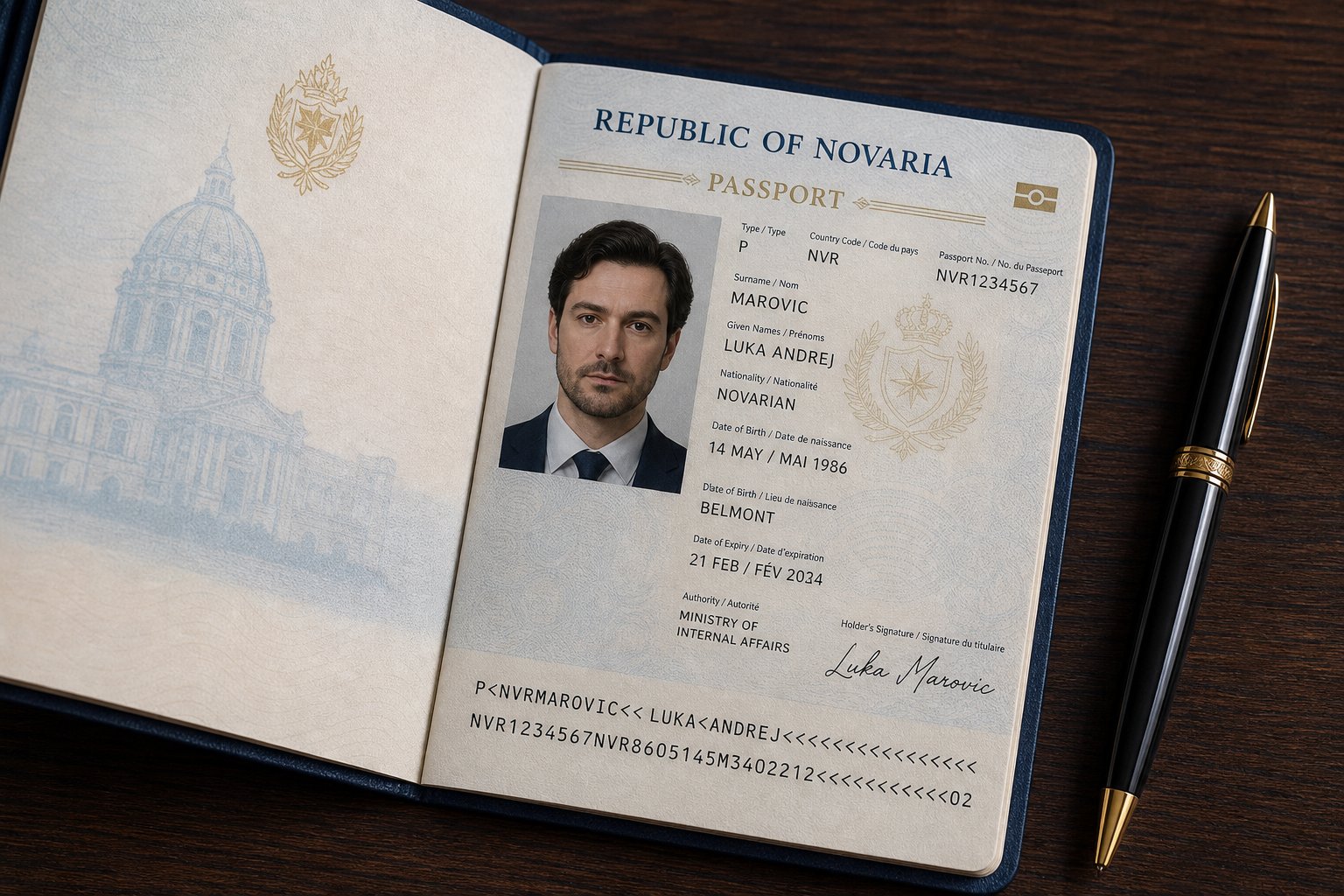
How Pinyin Surnames Work on Official Documents
Cultural memory is one thing — bureaucratic reality is another. The Bǎijiāxìng taught generations how to think about surnames, but modern passports, visa applications, and academic journals each impose their own formatting rules on chinese first and last names. If you've ever stared at a name on a conference badge and wondered which part is the family name, you're dealing with a formatting problem that trips up millions of people every year.
Pinyin Surnames on Passports and Legal Documents
China's approach is standardized. On Mainland Chinese passports, names appear in pinyin without tone marks, with the surname printed in full capitals and the given name in lowercase. A person named 张志明 appears as ZHANG Zhiming. No hyphen, no space between the two characters of the given name, surname clearly distinguished by capitalization.
Taiwan takes a different path. Taiwan's Ministry of Education guidelines encourage Hanyu Pinyin but explicitly state that "the choice of the concerned party shall override" the standard system. Citizens may use Wade-Giles, Tongyong Pinyin, or other romanizations on passports and household registration documents. That's why you'll see the same surname spelled Chen, Ch'en, or Tan depending on the individual's preference and regional background.
The practical result: two colleagues with identical chinese full names in characters can carry passports with completely different romanized spellings. One reads ZHANG Zhiming, the other reads CHANG Chih-ming. Same person? No. Same surname? Yes.
Name Order in International Communications
The deeper confusion isn't spelling — it's sequence. Chinese convention places the last name in chinese first: family name before given name. Western convention does the opposite. When a Chinese professional adapts their name for international use, they might flip the order, keep it, or add a Western first name chinese colleagues never use. As the Cultural Atlas documents, someone named ZHANG Chen might appear as "James Zhang," "Chen Zhang," or "James Chen Zhang" depending on context.
This creates real problems. Is "Wei Zhang" a person with the given name Wei and surname Zhang, or did they keep Chinese order with surname Wei and given name Zhang? In academic citations, the ambiguity can lead to misattributed papers and broken reference links.
Here are practical tips for identifying the surname when you encounter common chinese full names in documents, emails, or publications:
- If one part of the name is in ALL CAPITALS, that's the surname — this follows the international convention many Chinese institutions use.
- Single-syllable components are more likely to be surnames. Most Chinese family names are one character, while given names are often two characters written together (e.g., WANG Xiaoming).
- In academic papers from Mainland China, assume surname-first order unless the author has clearly adopted Western formatting.
- Check the context: Chinese-language publications always use surname-first order, so if you see the same author in both Chinese and English sources, the Chinese version reveals which part is the family name.
- When in doubt, ask. A brief "Do you prefer to be addressed as Dr. Zhang or Dr. Wei?" shows respect rather than ignorance.
These formatting differences aren't just bureaucratic quirks. They reflect deeper patterns in how Chinese surnames distribute and adapt across regions — patterns that shift noticeably depending on whether you're looking at Mainland China, Taiwan, Hong Kong, or overseas communities.
Regional Differences in Chinese Surname Distribution
The formatting on a passport tells you which system someone uses — but geography tells you why. The same top 20 list doesn't apply uniformly across every Chinese-speaking region. Surname frequency shifts dramatically depending on whether you're looking at a northern Chinese city, a Taiwanese household registry, or a Singaporean phone book. These differences trace directly to centuries of migration, dialect boundaries, and political separation.
Mainland China Regional Surname Concentrations
Within China itself, surname distribution is far from even. Research published in the American Journal of Physical Anthropology analyzed 1.28 billion citizen records and found that prefectures in southern and western China — mountainous, linguistically diverse, and historically isolated — maintain highly distinct surname profiles with many rare local names. Meanwhile, northern and northeastern regions show much more homogeneous distributions, dominated by the familiar top surnames like Wang, Li, and Zhang.
Why the split? The study identifies migration as the key driver. Northeastern China was sparsely populated until the 19th and 20th centuries, when massive waves of settlers arrived from the Yellow River basin during the "Rush to Northeast" movement. These migrants carried the most common surnames with them, creating a population that looks statistically similar across vast distances. Southern provinces like Guangdong, Fujian, and Guangxi, by contrast, were shielded by mountains and developed distinct surname ecosystems over thousands of years of relative isolation.
A few regional concentrations stand out:
- Lin (林) is disproportionately concentrated in Fujian and Guangdong provinces, where it ranks among the top three surnames rather than its national position of 18th.
- Huang (黄) clusters heavily in Guangdong, Guangxi, and Fujian — southern regions where Cantonese and Hokkien dialects dominate.
- Chen (陈) is the single most common surname in Guangdong and Fujian, outranking Wang and Li in those provinces despite sitting fifth nationally.
- Wang (王) dominates the northern plains — Henan, Shandong, Hebei — but drops significantly in the far south.
These provincial patterns matter because they predict which asian surnames you'll encounter depending on where a person's family originated. Someone from Fujian is far more likely to be a Lin or Chen than a Wang.
Surname Patterns in Taiwan and Overseas Communities
Taiwan's surname landscape reflects its settlement history. Most Taiwanese families descend from Hokkien and Hakka migrants who crossed the Taiwan Strait from Fujian and Guangdong provinces between the 17th and 19th centuries. That southern Chinese origin means taiwanese surnames skew toward the same names that dominate those coastal provinces — Chen, Lin, and Huang rank far higher in Taiwan than they do nationally in Mainland China.
The same logic applies to Southeast Asian Chinese communities. Singapore and Malaysia received waves of Hokkien, Teochew, Cantonese, and Hakka immigrants, each group carrying the surname profile of their home province. The result is a diaspora surname landscape that looks quite different from the Mainland national average.
| Rank | Mainland China | Taiwan | Singapore/Malaysia |
|---|---|---|---|
| 1 | Wang (王) | Chen (陈) | Tan/Chen (陈) |
| 2 | Li (李) | Lin (林) | Lim/Lin (林) |
| 3 | Zhang (张) | Huang (黄) | Lee/Li (李) |
| 4 | Liu (刘) | Zhang (张) | Wong/Huang (黄) |
| 5 | Chen (陈) | Li (李) | Ng/Wu (吴) |
Notice how Chen and Lin leap to the top in both Taiwan and Southeast Asia, while Wang — the undisputed number one in Mainland China — drops out of the top five entirely. These taiwanese last names and Southeast Asian rankings reflect the Fujian-Guangdong origin of most overseas Chinese communities rather than the national Mainland average.
The romanization column in the Singapore/Malaysia list reveals another layer. Tan is the Hokkien pronunciation of 陈 (Chen in pinyin). Lim is Hokkien for 林 (Lin). These aren't errors or alternative spellings of pinyin — they're faithful romanizations of entirely different spoken dialects. When you encounter common asian last names like Tan, Lim, Ng, or Wong in Western countries, you're seeing Hokkien or Cantonese pronunciations frozen in time from the era when a family emigrated.
In Western countries — particularly the United States, Canada, Australia, and the United Kingdom — the most common asian last names of Chinese origin tend to be Lee, Wong, Chan, Chen, and Wang. Lee dominates because it works as a romanization for both 李 (Li in pinyin, Lee in Cantonese) and because early immigrants often adopted spellings that felt natural in English. Wong covers both 王 (Wang) and 黄 (Huang) in Cantonese, which is why it appears so frequently despite representing two different characters.
Each asian family name you encounter in a Western context carries a hidden geographic fingerprint. A surname spelled Chan almost certainly traces to Cantonese-speaking Hong Kong or Guangdong. Tan points to Hokkien-speaking Fujian or Southeast Asia. Hsu suggests a Taiwanese background using Wade-Giles. And Zhang signals a Mainland Chinese origin using standard pinyin. Recognizing these patterns turns a single asian last name into a clue about dialect, region, and migration history — context that matters when you're navigating professional relationships across cultures.
Regional variation also shapes etiquette. The way you address someone by their surname, the titles you pair with it, and even whether you use the surname at all depends on cultural norms that differ between Mainland, Taiwanese, and overseas Chinese communities.

Using Pinyin Surnames in Professional and Social Settings
Knowing how to read and pronounce a surname is only half the equation. The other half is knowing how to use it. In Chinese professional culture, you rarely address someone by their surname alone. Instead, the surname pairs with a title or honorific — and getting that pairing right signals respect in ways that go far beyond correct pronunciation.
Professional Etiquette When Using Pinyin Surnames
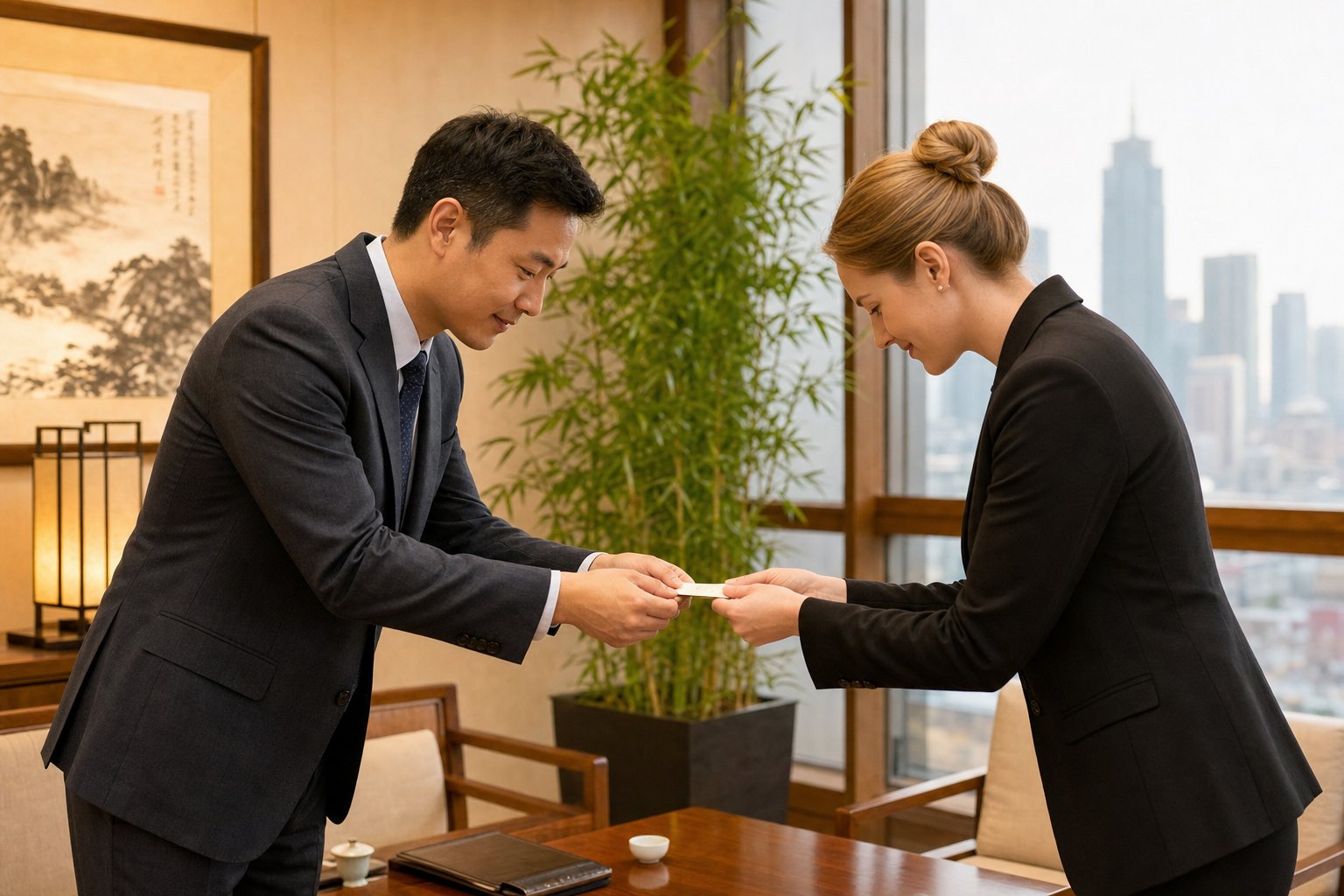
In Mainland China, most people are addressed by their surname followed by their job title. A manager surnamed Wang becomes Wang Jingli (王经理). A professor surnamed Zhang becomes Zhang Jiaoshou (张教授). A teacher surnamed Li becomes Li Laoshi (李老师). This pattern — surname plus role — is the default in meetings, emails, and formal introductions.
If you don't know someone's title, safe fallbacks include Xiansheng (先生, Mr.), Nushi (女士, Ms.), or the more casual Xiaojie (小姐, Miss) for younger women in informal settings. Among the most common chinese names you'll encounter in business, pairing the surname with the correct title matters more than perfecting the tone.
Here are key etiquette points to keep in mind:
- Always use surname plus title in first interactions. Switching to given names happens only after the other person invites it.
- Compound surnames stay intact. Someone surnamed Sima (司马) or Ouyang (欧阳) is addressed as "Sima Jingli" or "Ouyang Laoshi" — never just "Si" or "Ou."
- When a Chinese colleague offers a Western first name ("Call me David"), use it in English-language contexts but revert to surname-plus-title in Chinese-language settings.
- In academic contexts, default to surname plus "Laoshi" (teacher) or "Jiaoshou" (professor) unless told otherwise. This applies to typical chinese names across universities in China, Taiwan, and Singapore.
- Avoid using someone's full name (surname plus given name) as a form of address — in Chinese culture, that combination is reserved for parents scolding children or officials reading names from a list.
Rare and Unusual Pinyin Surnames You May Encounter
Not every surname you meet will appear on the top 20 list. China has over 7,000 surnames currently in use, including single-character, compound, and multi-character names from ethnic minorities. While popular chinese names cluster around the familiar Wang, Li, and Zhang, you'll occasionally encounter rare chinese last names that don't match anything on standard lists.
Some rare chinese surnames carry fascinating histories. Die (迭), distributed mainly in northwestern China, evolved from a four-character compound surname of the Northern Wei Dynasty. Nan (难) traces to Xianbei migrations. Zhi (植) claims descent from Goujian, the King of Yue. The last name rarity of these surnames makes them conversation starters — but also potential sources of confusion if you assume every Chinese surname is one syllable and one character.
When you encounter an unfamiliar pinyin surname, a few verification strategies help:
- Ask the person directly how their name is written in characters. Most Chinese professionals appreciate the interest.
- Check whether it might be a compound surname (two characters) rather than a given name you're misreading as a family name.
- Search the pinyin spelling in a Chinese dictionary to confirm the character and meaning.
- Consider whether the spelling might reflect a non-pinyin romanization system — what looks like rare last names in pinyin might actually be common surnames in Wade-Giles or Cantonese.
The practical takeaway is straightforward. Familiarity with even the top 10 common chinese names — Wang, Li, Zhang, Liu, Chen, Yang, Huang, Zhao, Wu, Zhou — equips you to correctly recognize, pronounce, and respectfully address over half a billion people. Add the pronunciation rules, the romanization mappings, and the surname-plus-title etiquette pattern, and you have a working toolkit for cross-cultural communication in business, academia, and daily life. You don't need to memorize thousands of names. You just need to get the common ones right — and know what to do when you encounter one you haven't seen before.
Frequently Asked Questions About Pinyin Surnames
1. What are the top 5 most common Chinese surnames in pinyin?
The five most common Chinese surnames in pinyin are Wang (王, tone 2), Li (李, tone 3), Zhang (张, tone 1), Liu (刘, tone 2), and Chen (陈, tone 2). Together these five surnames cover approximately 433 million people, representing 30.8% of China's registered population according to the Ministry of Public Security's 2022 report.
2. Why do the same Chinese surnames have different English spellings?
Different spellings arise from competing romanization systems. Pinyin is the modern standard used in Mainland China, Wade-Giles was dominant in Western academia until the 1980s and remains common in Taiwan, and Cantonese romanization reflects Hong Kong and southern Chinese pronunciation. For example, the character 张 appears as Zhang (pinyin), Chang (Wade-Giles), or Cheung (Cantonese). The spelling typically reflects when and where a family emigrated or which system their government uses on official documents.
3. How do you correctly pronounce Chinese surnames with tones?
Mandarin has four tones that change a surname's identity. Tone 1 is high and flat (like Zhang, Zhou, Gao). Tone 2 rises like a question (Wang, Liu, Chen, Yang, Huang). Tone 3 dips low then rises slightly (Li, Ma). Tone 4 drops sharply like a command (Zhao). Most top 10 surnames use tone 2. Saying the wrong tone produces a completely different word — for instance, Wang with tone 1 means a different character than Wang with tone 2.
4. What is the Hundred Family Surnames (Baijiaxing) and why does it matter?
The Baijiaxing is a Song Dynasty rhyming text listing over 500 Chinese surnames in four-character verses. It was used as a literacy tool for over a thousand years. Its famous opening line — Zhao, Qian, Sun, Li — ranks surnames by political loyalty rather than population, placing the Song imperial surname Zhao first. While its ordering differs significantly from modern census data, it remains culturally significant as a shared framework for understanding Chinese surname identity.
5. How should you address someone by their Chinese surname in professional settings?
In Chinese professional culture, pair the surname with a title rather than using the surname alone. A manager surnamed Wang becomes Wang Jingli, a professor surnamed Zhang becomes Zhang Jiaoshou, and a teacher surnamed Li becomes Li Laoshi. Never use someone's full name (surname plus given name) as a form of address, as this is reserved for formal roll calls or parental scolding. If you don't know someone's title, use Xiansheng (Mr.) or Nushi (Ms.) after the surname.