What Pinyin Initials Mean for Company Names
Imagine you are registering a domain, designing a logo, or filing paperwork for a Chinese company. You need something short, recognizable, and easy to type. That is exactly where pinyin initials come in. This shorthand method condenses a full Chinese company name into a compact string of letters, and it shows up everywhere from stock tickers to email addresses.
What Are Pinyin Initials in a Company Name Context
Pinyin initials (shouzimu/首字母) for company names refers to the practice of extracting the first letter of each syllable in a company's official pinyin romanization to form a short alphabetic abbreviation. This abbreviation is used across branding, domain registration, stock market listings, and regulatory filings as a condensed identifier for the business.
Think of JD.com. Its Chinese name is Jingdong (京东), and the pinyin initials are simply J and D. That two-letter combination becomes the company's international identity, its stock ticker, and its web address all at once. The same logic applies to thousands of Chinese businesses that compress multi-syllable names into brief letter strings for practical use.
This approach differs from English-language acronyms. Rather than abbreviating translated words, initials in pinyin are derived directly from the romanized sounds of the original Chinese characters. Each Chinese character maps to one pinyin syllable, and the first letter of that syllable becomes part of the abbreviation.
Why Businesses Use Pinyin Initial Abbreviations
Chinese companies turn to pinyin initials for several overlapping reasons:
- Domain names: short letter combinations are easier to remember and type than full pinyin strings
- Stock tickers: Chinese exchanges often use pinyin-derived codes for listed companies
- Logo marks: a two- or three-letter lockup works better visually than a lengthy romanized name
- International branding: initials offer a language-neutral entry point for global audiences
- Official filings: regulatory documents sometimes reference the abbreviated pinyin form alongside the Chinese registered name
The scale of pinyin-based naming in corporate China is significant. An analysis of the top 100 Chinese internet companies found that 43% use pinyin domains, while another 9% rely on acronym-style domains built from initials pinyin extraction. Combined, that means roughly half of China's leading internet firms anchor their online identity in some form of romanized Chinese. Within that landscape, pure initial-based abbreviations represent the shortest and most compressed end of the spectrum, trading phonetic clarity for brevity.
The appeal is obvious. But brevity introduces risk. When dozens of companies share the same two or three initials in pinyin, differentiation collapses and branding conflicts multiply. Understanding how these abbreviations are actually constructed, and where they break down, is the first step toward using them strategically rather than reflexively.
How Pinyin Initials Are Formed from Company Names
Every Chinese company name follows a rigid legal structure. That structure determines which syllables feed into the abbreviation and, ultimately, which letters represent the business. You cannot extract initials accurately without first understanding what goes into the name itself.
Breaking Down Chinese Company Name Components
Chinese regulations require a registered company name to contain four mandatory parts: the administrative region, the trade name (shanghao), the industry descriptor, and the organization type. The Administration of Market Regulation (AMR) enforces this structure during registration, and the order of these components can vary slightly depending on the investor's preference.
Imagine a fictional technology company registered in Shanghai called 上海明途科技有限公司. Here is how each component breaks down into pinyin and yields its initial pinyin letter:
| Component | Chinese | Pinyin | Extracted Initials |
|---|---|---|---|
| Administrative Region | 上海 | Shang Hai | S, H |
| Trade Name (shanghao) | 明途 | Ming Tu | M, T |
| Industry Descriptor | 科技 | Ke Ji | K, J |
| Organization Type | 有限公司 | You Xian Gong Si | Y, X, G, S |
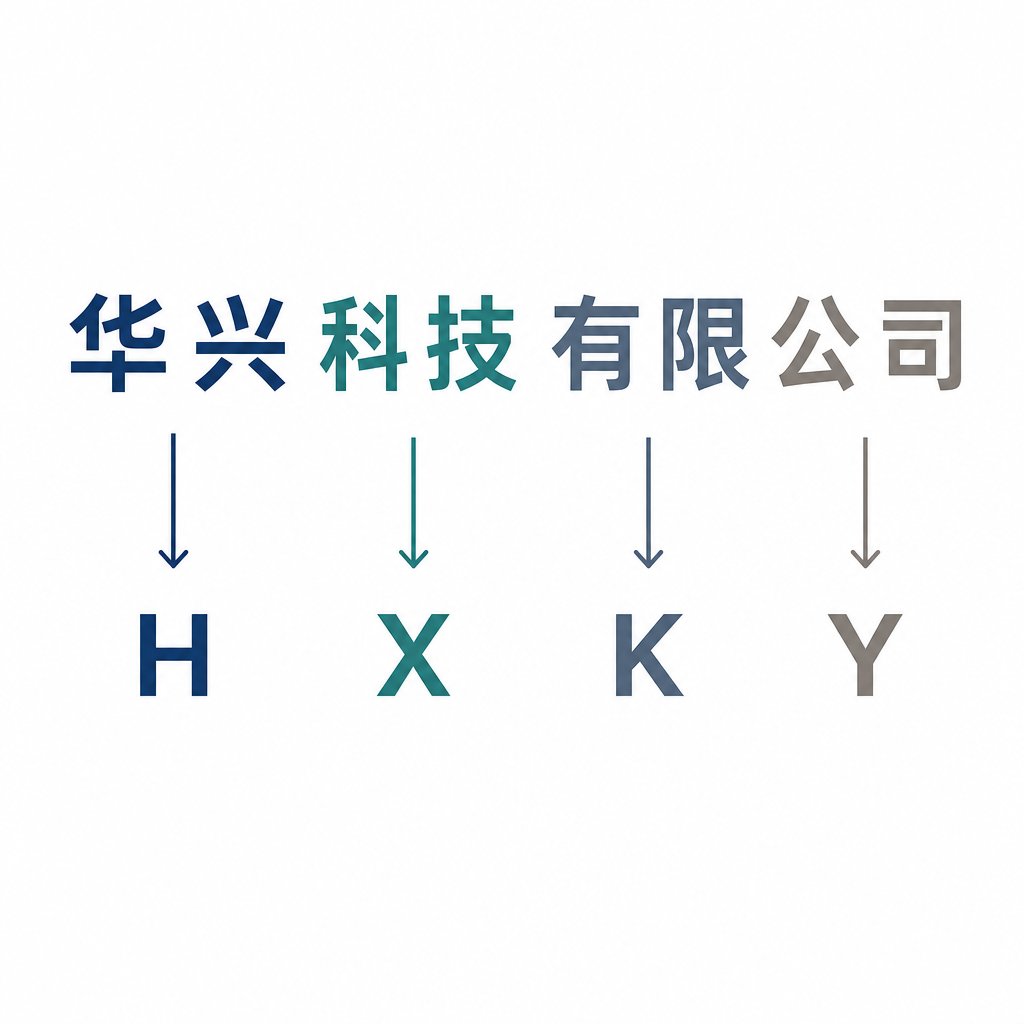
If you abbreviate the full registered name, you get SHMTKJYXGS. That is ten letters long and barely more convenient than the original. In practice, most businesses abbreviate only the trade name portion, producing a clean "MT" for branding purposes. Others include the industry descriptor for differentiation, yielding "MTKJ." The convention depends entirely on context: stock tickers tend to use the trade name, while regulatory filings may reference the full string.
This flexibility is important. The same company can legitimately produce multiple initial-based abbreviations depending on which components are included. Knowing all initials in pinyin that a name generates helps you anticipate conflicts and choose the version that works best for your specific use case.
Rules for Extracting the First Letter of Each Syllable
Sounds straightforward? It mostly is, but a few phonological quirks in the pinyin system create edge cases that trip people up.
The pinyin initial and final structure of each syllable matters here. Every pinyin syllable consists of an initial consonant (or none) followed by a final. When extracting the first letter, you take only the opening letter of the syllable's romanization, not the full initial consonant sound. This distinction is critical for digraphs:
- zh, ch, sh: These are single initial sounds in the phonological system, but when extracting abbreviation letters, convention takes only the first letter. "Zhongguo" (中国) yields "Z," not "ZH." Similarly, "Shanghai" yields "S," not "SH." This keeps abbreviations compact.
- Zero-initial syllables: Some syllables begin with a vowel because they lack a consonant onset. Characters like 安 (an), 恩 (en), or 艾 (ai) start directly with a vowel letter. In these cases, the extracted initial is that vowel itself. A company with 安达 in its trade name produces "A, D" rather than skipping the first character. Understanding how pinyin initials vowels interact is essential here, because vowel-led syllables are common in business-related characters like 业 (ye), 亿 (yi), and 欧 (ou).
- The letter "y" and "w" as quasi-initials: Syllables written as "yi," "wu," or "yu" use y and w as orthographic placeholders. When extracting initials, you take "Y" or "W" as the letter. So 万达 (Wanda) gives "W, D."
These rules mean that the same phonological system produces different abbreviation outcomes depending on whether you treat digraphs as one unit or split them. Most corporate and domain-registration contexts default to single-letter extraction, which keeps the abbreviation short but increases the chance of duplication.
Consider how this plays out with initials and finals in pinyin across a real scenario. Two companies, 中国 (Zhongguo) and 智光 (Zhiguang), both abbreviate to "ZG" under single-letter extraction. The full initial consonant "zh" is identical in both cases, and the second character's initial is "g" in both. Without additional context, the abbreviation is ambiguous.
This ambiguity is not a flaw in the system. It is a natural consequence of compressing a tonal, character-based language into 26 Latin letters. The question is not whether conflicts will arise, but how many companies share your specific letter string, and that depends heavily on which of the 21 pinyin initials dominate common business vocabulary.
The 21 Pinyin Initials and Their Role in Business Abbreviations
So how many initials are in pinyin, and why does that number matter for your company's abbreviation? The answer is 21. Every Mandarin syllable either opens with one of these 21 consonant sounds or begins directly with a vowel. That relatively small set of starting letters is the entire alphabet from which corporate abbreviations are drawn, and it explains why collisions happen so frequently.
The Complete Set of 21 Pinyin Initials
The following pinyin initials chart groups all 21 initials of pinyin by where in the mouth each sound is produced. If you are evaluating how your company abbreviation will sound to different audiences, these categories help you understand the phonetic character of each letter.
| Category | Initials | Approximate English Sound |
|---|---|---|
| Labials | b, p, m, f | b as in "spin" (unaspirated); p as in "pin" (aspirated); m as in "mother"; f as in "father" |
| Dentals / Alveolars | d, t, n, l | d as in "stop" (unaspirated); t as in "top" (aspirated); n as in "name"; l as in "love" |
| Velars | g, k, h | g as in "skill" (unaspirated); k as in "key" (aspirated); h as Scottish "loch" |
| Palatals | j, q, x | j as in "jeep" (no lip rounding); q as in "cheese" (aspirated); x as in "she" (tongue forward) |
| Retroflexes | zh, ch, sh, r | zh as in "jump" (tongue curled back); ch as in "church" (retroflex); sh as in "shoe" (retroflex); r with tongue curled back |
| Dental Sibilants | z, c, s | z as "ds" in "adds"; c as "ts" in "cats" (aspirated); s as in "sun" |
Notice that y and w appear in many pinyin spellings but are not counted among the 21 initials pinyin recognizes as true consonant onsets. They function as orthographic markers for zero-initial syllables. This is a subtle but important distinction when you are building a list of pinyin initials for abbreviation purposes: characters starting with yi, wu, or yu will yield Y or W in your abbreviation, even though these are technically glides rather than initials.
Which Initials Dominate Chinese Corporate Abbreviations
Not all chinese pinyin initials show up equally in business names. Characters commonly used in corporate vocabulary cluster around a handful of sounds, and that clustering creates crowding in the abbreviation space.
Consider the characters that appear most often in company names:
- zh — 中 (zhong, "central/China"), 智 (zhi, "wisdom"), 正 (zheng, "upright")
- sh — 商 (shang, "commerce"), 盛 (sheng, "prosperous"), 世 (shi, "world")
- x — 新 (xin, "new"), 信 (xin, "trust"), 兴 (xing, "prosper")
- j — 金 (jin, "gold"), 建 (jian, "build"), 佳 (jia, "excellent")
- h — 华 (hua, "China/splendid"), 恒 (heng, "eternal"), 宏 (hong, "grand")
Because zh and sh reduce to just Z and S in single-letter extraction, any company using 中, 智, 正, or 众 in its name produces the same leading letter. Pair that Z with a second character starting with G (国, 光, 广), and you get ZG, an abbreviation shared by potentially hundreds of registered entities.
The palatal initials j, q, and x compound the problem. These three sounds only combine with i and u vowels in Mandarin, which means they attach to a concentrated set of high-frequency business characters. The result is that abbreviations starting with J, Q, or X are disproportionately common relative to, say, those starting with R or F.
Understanding this distribution is practical, not academic. If your proposed trade name generates an abbreviation heavy in Z, S, J, X, or H, you are operating in the most congested part of the abbreviation landscape. Recognizing where your letters fall within the full phonological system helps you anticipate registration conflicts, domain unavailability, and branding confusion before they become expensive problems.
The phonetics tell you which letters to expect. But the legal system determines what you can actually register and protect, and that is where national standards and regulatory bodies enter the picture.
Regulatory Standards Governing Pinyin Initials in Business
Knowing which letters your company name produces is one thing. Knowing what the government will actually allow you to do with those letters is another. China has a layered regulatory framework that governs how hanyu pinyin initials can appear in company registrations, official documents, and public-facing branding. Getting this wrong does not just create confusion; it can block your registration entirely.
GB/T 16159 and Official Romanization Standards
The national standard GB/T 16159 (Basic Rules of Hanyu Pinyin Orthography) is the foundational document governing how pinyin is written in official contexts across China. Originally issued in 1996 and revised multiple times since, it prescribes specific rules for capitalization, word spacing, and abbreviation that directly affect how corporate names appear in romanized form.
Here is what the standard requires for business-relevant contexts:
- Capitalization: Proper nouns, including company names, must capitalize the first letter of each word. A multi-syllable trade name is written as one word with only the initial letter capitalized. So a company named 明途 is written "Mingtu," not "Ming Tu" or "MINGTU" in standard running text.
- Spacing: Words are separated by spaces, not individual syllables. The four components of a company name (region, trade name, industry, legal form) are treated as separate words with spaces between them. This matters because it determines where abbreviation boundaries fall.
- Abbreviation: When abbreviating, the standard permits taking the first letter of each word (not each syllable) in certain contexts. This creates a distinction: abbreviating by word yields fewer letters than abbreviating by syllable. A company might produce "SMKJ" (four words) rather than "SHMTKJYXGS" (every syllable).
The pinyin spelling rules also require apostrophes between syllables where boundaries are ambiguous (like ping'an versus pingan) and mandate English punctuation when writing pinyin. These details seem minor until your abbreviation appears in a legal filing and a regulator questions whether your romanization follows the national standard.
In practice, most companies do not follow GB/T 16159 strictly when creating brand abbreviations. Domain names ignore capitalization and spacing entirely. Stock tickers use all-caps. Logo marks take creative liberties. The standard matters most during formal registration and in official government documents where initials in chinese pinyin must conform to prescribed orthographic rules.
How Regulatory Bodies Evaluate Pinyin Initial Names
China's State Administration for Market Regulation (SAMR) oversees company name registration through a system that has undergone significant revision. Under updated regulations, a company name must consist of standardized Chinese characters. Foreign scripts, pinyin, letters, Arabic numerals, and non-standard characters are generally prohibited in the registered name itself unless expressly permitted.
What does this mean for pinyin initials? The registered company name is always in Chinese characters. The pinyin abbreviation is a derivative, not the official name. SAMR does not register the pinyin form as the legal entity name. Instead, the abbreviation exists in a parallel space: used for domains, branding, and international communications, but not as the name of record in China's corporate registry.
This distinction creates a regulatory gap. Your Chinese registered name goes through SAMR's comparison system, which checks for conflicts with existing entities. But your pinyin abbreviation does not receive the same formal vetting. Two companies with completely different Chinese names can produce identical initials and finals of chinese pinyin abbreviations without triggering any registration conflict.
SAMR does, however, impose restrictions that indirectly affect abbreviation strategy:
- Government confusion: Names that could be mistaken for government agencies or party organizations are rejected. If your pinyin abbreviation happens to match a well-known government acronym (like GWY for 国务院, the State Council), you will face scrutiny even though the abbreviation itself is not formally registered.
- Identical trade names: The trade name (zihao) must contain at least two Chinese characters and cannot duplicate an existing registration in the same administrative region and industry. Since the trade name is the portion most commonly abbreviated, this rule limits some duplication at the source, but only within the same jurisdiction.
- Misleading names: Names that mislead the public about the company's nature, scale, or affiliation are prohibited. A pinyin abbreviation that implies a national scope (like "ZG" suggesting Zhongguo/China) when the company is locally registered could attract regulatory attention.
The revised rules also reinforce that the administrative region in the name must correspond to the company's actual place of registration. This means a Shenzhen-registered company cannot use "BJ" (Beijing) in its abbreviation if that abbreviation derives from a name component it is not entitled to use.
For foreign-invested enterprises, the picture adds another layer. These companies may include "(China)" in their name, and the trade name must correspond to the foreign investor's name or its Chinese translation. When a multinational creates a Chinese subsidiary, the chinese pinyin initials and finals of the translated name may produce an abbreviation that bears no resemblance to the parent company's global brand, creating a disconnect that requires careful planning.
The practical takeaway is this: China's regulatory system protects the Chinese-character name, not its pinyin derivative. Your abbreviation lives in a space with less formal protection but more practical risk. Two companies can legally coexist with the same pinyin initials as long as their Chinese names are sufficiently different. That legal coexistence does not prevent market confusion, domain conflicts, or trademark disputes in other jurisdictions where the Latin-letter abbreviation is what customers actually see.
Where Pinyin Initials Appear in Corporate Identity
That regulatory gap between the protected Chinese name and its unprotected pinyin derivative does not stop companies from building entire identity systems around their abbreviations. In fact, pinyin initials show up across nearly every touchpoint where a Chinese business interacts with the outside world. Understanding the full landscape of usage contexts helps you see why getting the abbreviation right matters far beyond a single registration form.
Here are the key contexts where pinyin initials function as corporate identifiers:
- Domain names
- Stock tickers on Chinese exchanges
- Email address prefixes
- Logo marks and lettermarks
- Social media handles
- Regulatory filings and official correspondence
Each of these contexts places different demands on the abbreviation. A two-letter domain needs to be memorable and typeable. A stock ticker needs to be unique within its exchange. A logo mark needs to be visually distinctive. When you look at the full pinyin initials and finals combination table of possible syllables in Mandarin, you realize that the same compressed letters must perform across wildly different environments, and what works in one context may fail in another.
Pinyin Initials in Domain Name Strategy
Domain names are where pinyin abbreviations carry the highest financial stakes. A short, clean domain built from pinyin initials can be worth tens of millions of yuan, and the biggest Chinese tech companies have invested accordingly.
Consider the spectrum. At one end, you have full pinyin domains like Taobao.com, Baidu.com, and Douyin.com, where the complete romanized brand name serves as the web address. These are double-pinyin domains, and data from the top 100 Chinese internet companies shows that 27 of the 36 companies using pinyin domains chose this format. The brand name is spelled out in full, making it instantly recognizable to Chinese speakers.
At the other end sit single-pinyin domains, the most compressed form possible. Xiaomi secured Mi.com. Lufax operates on Lu.com. Beike uses Ke.com. These are not technically initial-based abbreviations; they are single syllables extracted from the brand name. But they represent the logical extreme of the same compression impulse that drives pinyin initial abbreviations. When a company cannot afford or find a single-syllable domain, the next step is a two- or three-letter initial combination like JD.com.
The middle ground is where most companies land. Triple-pinyin domains like Pinduoduo.com and Xiaohongshu.com work for brands with strong name recognition, but they sacrifice the brevity that makes domains easy to type and share. Companies in this position often acquire a shorter initial-based domain as a redirect or secondary brand asset. The pinyin initials and finals chart of their full name gives them a menu of possible short-form options to pursue.
What makes domain strategy particularly tricky is scarcity. Every two-letter .com domain was registered long ago. Three-letter combinations are nearly exhausted. Companies competing for initial-based domains are bidding against each other in a market where the supply of short letter strings is fixed and the demand keeps growing.
Stock Tickers and Corporate Identity Systems
On Chinese stock exchanges, pinyin initials serve a different function. The Shanghai and Shenzhen exchanges assign stock codes that are numeric, but the accompanying stock abbreviation (gupiao jiancheng) displayed alongside the code is typically derived from the company's Chinese name using pinyin logic. Investors scanning a trading screen see these abbreviated names constantly, and the abbreviation becomes inseparable from the company's market identity.
The constraints here differ from domain naming. Stock abbreviations on Chinese exchanges are limited to a set character count and must be unique within the exchange. This forces companies to differentiate their pinyin-derived abbreviation from every other listed entity, sometimes by including industry descriptors or using less common character combinations in their trade name.
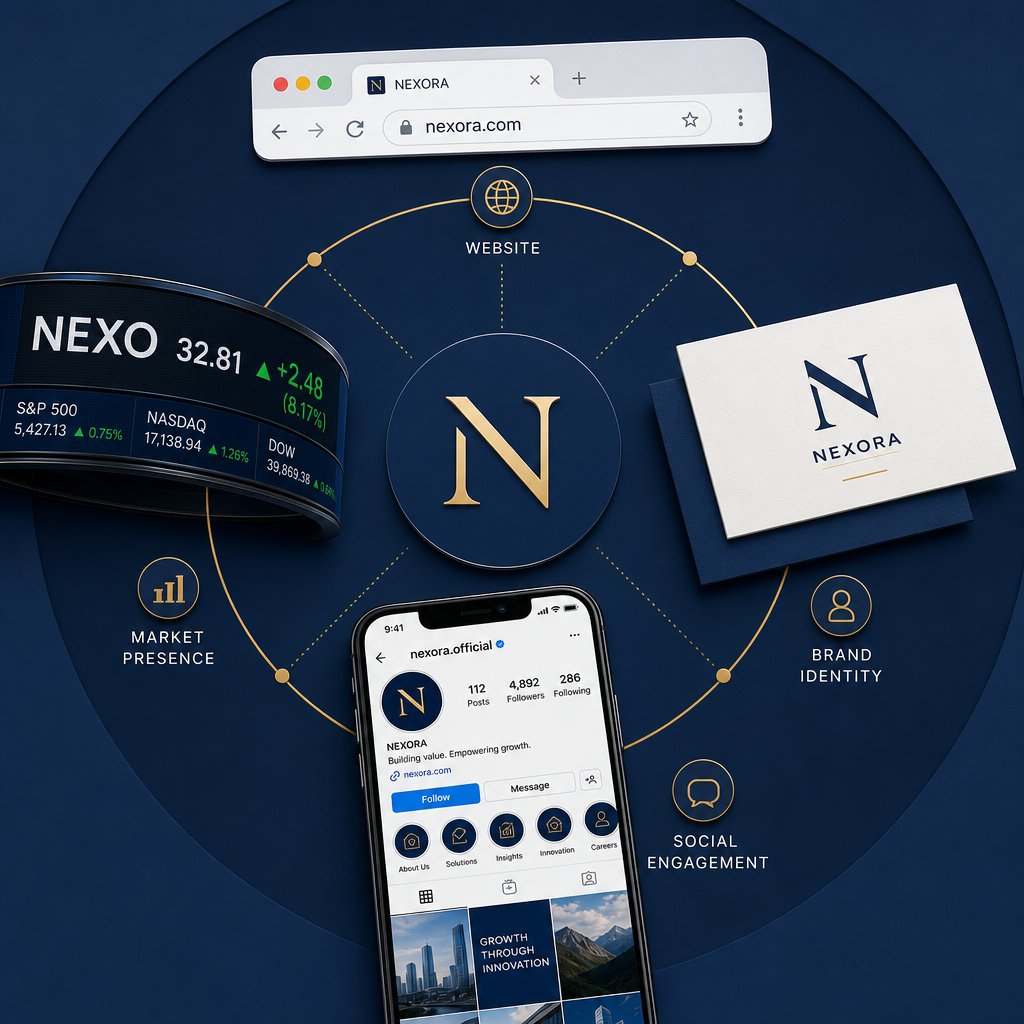
Beyond exchanges, pinyin initials permeate corporate identity systems in subtler ways. Logo designers frequently build lettermarks from the initials, creating visual brand assets that work across languages. You will notice these on business cards, app icons, and signage where the full Chinese name would be too long or the full pinyin too unfamiliar for international audiences. The pinyin initials and finals table of the brand name essentially becomes a design brief, dictating which letter shapes the visual identity team has to work with.
Email conventions follow a similar pattern. Internal email addresses at Chinese companies often use the pinyin initial format: employees might be addressed as [email protected] (for Xiao Ming) while the company domain itself reflects the corporate abbreviation. Social media handles on platforms like Weibo, WeChat official accounts, and international networks like Twitter/X and LinkedIn mirror whatever abbreviation the company has standardized across its other channels.
The cumulative effect is significant. Once a pinyin initial abbreviation takes root in one context, it propagates across every other identity touchpoint. Your domain reinforces your stock abbreviation, which reinforces your logo, which reinforces your social handles. That consistency is powerful when the abbreviation is distinctive. But when it is generic or shared with competitors, the same propagation effect amplifies confusion across every channel simultaneously.
This dual nature of pinyin initials, powerful when unique, problematic when common, plays out very differently depending on whether your audience is domestic or international.

Domestic Versus International Use of Pinyin Initials
A Chinese consumer sees "JD" and instantly thinks Jingdong. A German consumer sees the same two letters and thinks... nothing. That gap between domestic recognition and international opacity is the central tension every Chinese company faces when deploying pinyin-based abbreviations beyond its home market. The same abbreviation that functions as a powerful shorthand domestically can become an empty cipher abroad.
Pinyin Initials for the Chinese Domestic Market
Within China, pinyin abbreviations work almost effortlessly. Chinese speakers grow up learning pinyin as the phonetic scaffolding for their writing system. They intuitively reverse-engineer abbreviations back to the original characters. When someone sees "GW" on a shopping bag, their brain fills in Guomei or Guowai depending on context. This cognitive shortcut is deeply embedded in Chinese literacy itself.
Several factors make pinyin initial sounds highly effective for domestic audiences:
- Cultural familiarity: Chinese consumers encounter pinyin abbreviations daily in text messages, social media, and casual writing. Shortening words to their first letters is a native digital communication habit, not a corporate invention.
- Contextual disambiguation: Even when multiple companies share the same initials, Chinese audiences use industry context, visual branding, and character recognition to distinguish between them. The abbreviation does not need to do all the work alone.
- Tonal memory: Chinese speakers mentally attach tones to pinyin letters, adding a layer of phonetic richness that non-speakers cannot access. "HW" is not just two flat letters; it carries the rising-falling melody of Huawei in a Chinese listener's mind.
- Internal communications: For B2B contexts, internal memos, and local marketing campaigns, pinyin initials reduce cognitive load without sacrificing clarity. Employees and partners already know the full name.
This domestic effectiveness explains why so many Chinese companies default to pinyin initials without questioning whether the approach translates. Within the home market, the abbreviation is a compression tool that loses almost nothing. The original meaning, pronunciation, and brand associations all survive the shortening because the audience already holds the key to decode them.
Adapting Pinyin Initials for International Audiences
Cross the border, and that decoding key disappears. International audiences encounter pinyin initials as raw letter combinations stripped of phonetic, tonal, and semantic context. The challenges are immediate and varied.
Unpronounceable consonant clusters. Mandarin's syllable structure is simple: one consonant followed by a vowel sound. But when you stack multiple initials together, you create consonant clusters that violate the phonological rules of most languages. An abbreviation like ZGY (from Zhongguo Yinhang, Bank of China's internal systems) or XHS (from Xiaohongshu) presents a wall of consonants that English, Spanish, French, and German speakers cannot voice naturally. Research on Chinese phonology confirms that the language does not allow consonant clusters at all, with a syllable structure of [C]V or [C]V[C]. Ironically, the very simplicity of Chinese syllables creates unpronounceable combinations when only the initial consonants are extracted.
Lack of phonetic transparency. For anyone who did not learn chinese pinyin initial sounds in school, the letters carry no predictable pronunciation. Is the "x" in XHS pronounced like English "x" (as in "box"), like "sh" (its actual Mandarin value), or like "z" (as in some European languages)? Even someone motivated to learn chinese pinyin how to pronounce 21 initials would find that the abbreviation alone gives no clue about the original brand name. The abbreviation becomes a code that requires external explanation rather than a name that communicates on its own.
Unintended meanings in other languages. This is where pinyin initials that sound like English words become a double-edged sword. Sometimes the accident is fortunate: a company whose initials spell "ACE" or "TOP" gets a free positive association. More often, the result is neutral at best and damaging at worst. Transform magazine documented how the pinyin name "Hongqi" (Red Flag automobiles) sounds like "Honky" in English, a disparaging term with racial undertones. The same risk applies to initial combinations: a three-letter string that means nothing in Chinese might spell an obscenity, a competitor's name, or a politically sensitive term in another language.
Strategies companies use to bridge the gap:
- Trade-name-only abbreviation: Rather than abbreviating the full registered name, companies extract initials from just the trade name portion for international use. This produces shorter, cleaner strings (two or three letters) that are easier to brand globally.
- Modified abbreviations: Some companies adjust their international abbreviation to improve pronounceability. Adding a vowel, reordering letters, or selecting a different syllable boundary can transform an opaque cluster into something speakable. BYD (Build Your Dream) is a notable example: the company reinterpreted its pinyin-derived initials through an English phrase, giving international audiences a mnemonic that the raw pinyin abbreviation could never provide.
- Complete renaming: When the pinyin initials pronunciation is simply too problematic, companies abandon the abbreviation entirely for foreign markets. Lenovo is the classic case. Its Chinese name Lianxiang would produce "LX" as an abbreviation, but the company instead created an entirely new word that blends "Le" (from the original) with "novo" (Latin for "new"). The pinyin connection is severed in favor of global accessibility.
- Hybrid identity: Companies like Huawei maintain the full pinyin name internationally rather than abbreviating it, accepting the pronunciation challenge in exchange for brand consistency. As branding experts note, a pinyin name works globally when its pronunciation fits foreign language habits and its connotation aligns with brand tonality.
The decision between these strategies depends on your target market, industry, and growth ambitions. A B2B industrial supplier selling primarily to Chinese-speaking markets can rely on pinyin initials indefinitely. A consumer brand entering Europe or North America needs to ask harder questions about how to pronounce pinyin initials in a way that resonates rather than confuses.
What makes this challenge particularly tricky is that problems often surface only after the abbreviation is already embedded across domains, legal filings, and marketing materials. By then, changing course is expensive. The smarter approach is to stress-test your abbreviation against international audiences before it calcifies into your permanent identity, catching the pitfalls that domestic familiarity can mask.
Common Pitfalls When Using Pinyin Initials for Branding
Catching problems early is cheaper than rebranding later. Yet many companies discover their pinyin abbreviation is flawed only after it has been printed on business cards, embedded in contracts, and indexed by search engines. The issues fall into two broad categories: duplication that erodes distinctiveness, and cross-cultural misfires that damage perception.
Ambiguity and Duplication Problems
Imagine registering a domain or social handle only to find that dozens of other companies already use the same letter string. This is not hypothetical. Because high-frequency business characters cluster around a small subset of initials, certain abbreviations are wildly overcrowded.
Take "ZG." Any company with 中国 (Zhongguo), 智光 (Zhiguang), 正广 (Zhengguang), or 众冠 (Zhongguan) in its name produces the same two letters. "HW" maps to both 华为 (Huawei) and 汉王 (Hanwang). "XD" could be 新东 (Xindong), 兴达 (Xingda), or 旭东 (Xudong). The more common the characters in your trade name, the more neighbors you share in the abbreviation space.
Strategies for differentiation include:
- Extend the abbreviation: Include the industry descriptor initials alongside the trade name. "ZGKJ" (中国科技) is less crowded than "ZG" alone, though still not unique.
- Use full-syllable elements: Instead of pure initials, retain one full pinyin syllable for distinctiveness. JD.com works partly because "Jing" and "Dong" are both common, but the two-letter combination is short enough to own.
- Anchor to a single distinctive character: Companies like Ke.com (from Beike) extract one memorable syllable rather than compressing the entire name into ambiguous initials.
- Pair with a visual differentiator: When the letter string cannot be unique, a distinctive logo mark, color system, or typographic treatment carries the differentiation burden that the letters alone cannot.
The underlying math is unforgiving. With only 21 consonant initials plus a handful of vowel-starting syllables feeding into abbreviations, and thousands of companies registering names from the same pool of auspicious characters, duplication is a structural inevitability rather than bad luck.
Pronunciation and Cultural Pitfalls
Duplication confuses. Pronunciation and cultural missteps actively repel. When your abbreviation crosses into international markets, a different set of risks emerges, and these are harder to reverse because they attach emotional associations to your brand.
Common issues include:
- Unpronounceable consonant clusters: Strings like ZGY, XHS, or CQJT violate the phonotactic rules of English, Spanish, German, and most other major languages. Audiences cannot say your name, so they avoid it. Understanding chinese pinyin initials and finals pronunciation does not help a foreign customer who simply sees a jumble of consonants.
- Offensive meanings in other languages: A three-letter combination that is neutral in Mandarin might spell a slur, a vulgar term, or a politically charged word elsewhere. Branding research has documented how Chinese companies routinely overlook alphabetic connotations that Western audiences catch immediately, because Chinese decision-makers tend to see letter combinations visually rather than reading them phonetically.
- Conflicts with existing international trademarks: Your pinyin-derived initials may already be trademarked by an unrelated company in your target market. A two- or three-letter string has limited distinctiveness, and trademark offices in the US, EU, and elsewhere may flag it as confusingly similar to an existing registration.
- Unintended cultural connotations: Even when the letters do not spell a recognizable word, certain combinations carry associations. "SS" evokes historical connotations in Europe. "KKK" is unusable in the United States. "BS" reads as an abbreviation for a common English vulgarity. These associations are invisible to teams working exclusively in a Chinese-language context.
The trademark challenge deserves special attention. In many non-Chinese jurisdictions, a pinyin-initial abbreviation may not qualify for strong trademark protection at all. Trademark law generally requires distinctiveness, and a short string of letters derived mechanically from a generic name structure (region + trade name + industry) can be deemed descriptive or weak. The correct pronunciation of initials in chinese pinyin is irrelevant to a trademark examiner in Frankfurt or New York who evaluates the mark purely as a visual and phonetic element in their own linguistic context.
This means your abbreviation might be both unprotectable and confusable: too generic to register as a strong mark, yet similar enough to existing marks to trigger opposition proceedings. Companies relying on pinyin initials and finals pronunciation as their primary international identifier often discover this catch-22 only when they file for trademark protection abroad and receive a refusal citing lack of inherent distinctiveness.
The pattern across all these pitfalls is consistent. Problems that are invisible within China's domestic context become visible, and sometimes severe, the moment the abbreviation encounters a different linguistic and legal environment. Recognizing these failure modes is the diagnostic step. The next question is how to decide whether pinyin initials are the right strategic choice for your specific situation, and what validation process can catch these issues before they calcify into permanent brand liabilities.

Strategic Framework for Choosing Pinyin Initials
Diagnosing the risks is only useful if it leads to a clear decision. Should you use pinyin initials as your company's compressed identity, or pursue an alternative? The answer depends on your market, your audience, and how much weight the abbreviation needs to carry across different contexts.
When Pinyin Initials Are the Right Strategic Choice
Not every company faces the same calculus. A domestic logistics firm and a consumer electronics brand targeting Europe have fundamentally different needs. The following table maps common business scenarios to the approach most likely to succeed:
| Scenario | Pinyin Initials Work Well | Consider Alternatives |
|---|---|---|
| Target market | Domestic Chinese audience, Chinese-speaking diaspora | Western consumer markets, multilingual audiences |
| Industry context | B2B industrial, supply chain, government contracting | Consumer brands, luxury goods, SaaS with global ambitions |
| Stock exchange listing | Shanghai or Shenzhen exchanges where pinyin abbreviations are standard | NYSE, NASDAQ, or LSE where pronounceability matters for analyst coverage |
| Internal systems | Email prefixes, intranet identifiers, internal project codes | Customer-facing product names, app store listings |
| Trademark strategy | Primary protection sought in China only | Multi-jurisdiction trademark portfolio needed |
| Domain availability | Matching two- or three-letter domain is acquirable | Desired combination is taken or priced prohibitively |
| Brand recognition | Company already well-known domestically; abbreviation reinforces existing awareness | New market entry where no prior recognition exists to decode the initials |
The pattern is clear. Pinyin initials excel in environments where the audience already knows your full name and simply needs a shortcut. They struggle in environments where the abbreviation must introduce you to strangers who have no context for decoding it.
Steps to Validate Your Pinyin Initial Name
If you decide that a pinyin-based abbreviation fits your situation, do not skip the validation work. A structured pinyin initials test catches problems that intuition misses. Run through this checklist before committing your abbreviation to any permanent asset:
- Check for duplication against existing registrations. Search China's AMR databases for companies sharing your exact initial string in the same industry and region. Expand the search to adjacent industries where customer confusion could arise.
- Test pronunciation across your target markets. Ask native speakers of English, Spanish, German, and any other relevant language to read your abbreviation aloud. If they hesitate, mispronounce it, or laugh, you have a problem. This is pinyin initial practice applied to real-world brand perception rather than language learning.
- Verify no negative connotations in key languages. Check whether your letter combination spells, suggests, or phonetically resembles offensive words, competitor names, or politically sensitive terms in every market you plan to enter.
- Confirm domain and social handle availability. Search for your exact abbreviation across .com, .cn, and country-code TLDs. Check major social platforms simultaneously. Name availability verification should cover both legal registries and digital channels in a single pass.
- Assess trademark registrability. Consult with IP counsel in each target jurisdiction. A two- or three-letter string may lack inherent distinctiveness under local trademark law, requiring evidence of acquired distinctiveness through use before it qualifies for protection.
- Stress-test against the full phonological system. With only 21 initials and roughly 35 finals in the pinyin system, how many initials and finals are there in pinyin system that could generate your same abbreviation? Calculate how many common characters share your leading letters. If the collision pool is large, consider extending or modifying the abbreviation.
This validation sequence is not optional. It is the difference between an abbreviation that compounds your brand equity and one that dilutes it. Companies that skip the pinyin initials test often discover conflicts months or years later, after the abbreviation is embedded in legal documents, printed materials, and customer memory.
The broader lesson from this entire framework is simple. Pinyin initials are a tool, not a default. They compress beautifully when conditions are right: a distinctive trade name, a domestic audience, and a short letter string that happens to be available and inoffensive across contexts. They backfire when applied reflexively to names built from high-frequency characters, aimed at audiences who cannot decode them, or deployed without checking whether the resulting letters already belong to someone else. Treat the abbreviation as a strategic decision with the same rigor you would apply to naming the company itself, because in many markets, the abbreviation is the name your customers will actually use.
Frequently Asked Questions About Pinyin Initials for Company Names
1. How are pinyin initials extracted from a Chinese company name?
Each Chinese character in a company name corresponds to one pinyin syllable. The first letter of each syllable is extracted to form the abbreviation. For digraphs like zh, ch, and sh, only the first letter (z, c, s) is taken. Vowel-starting syllables use the vowel itself as the initial letter. Most companies abbreviate only the trade name portion rather than the full registered name, which keeps the result short enough for domains and logos.
2. Why do so many Chinese companies end up with the same pinyin initial abbreviation?
The pinyin system has only 21 consonant initials, and common business-related characters cluster around a small subset of sounds like zh, sh, x, j, and h. Characters such as zhong, xin, jin, and hua appear frequently in corporate names, meaning abbreviations like ZG, XD, JD, and HW are shared by potentially hundreds of registered entities. This structural crowding is unavoidable given the limited letter inventory and the popularity of auspicious characters in Chinese naming conventions.
3. Can I register a pinyin initial abbreviation as my official company name in China?
No. China's SAMR requires registered company names to consist of standardized Chinese characters. Foreign scripts, pinyin, and individual letters are generally prohibited in the official registered name. The pinyin abbreviation exists as a derivative used for branding, domains, and international communications, but it is not the legal entity name. This means two companies with different Chinese names can share identical pinyin initials without triggering a registration conflict.
4. What problems can pinyin initials cause when used internationally?
International audiences face several issues with pinyin-based abbreviations: consonant clusters like ZGY or XHS are unpronounceable in most Western languages, the letters carry no phonetic meaning without knowledge of Mandarin, and certain combinations may spell offensive words or conflict with existing trademarks in foreign jurisdictions. Additionally, short letter strings often lack the inherent distinctiveness required for strong trademark protection outside China.
5. How do I validate whether my pinyin initial abbreviation is safe to use?
Run a structured validation process: search AMR databases for companies sharing your initials in the same industry, test pronunciation with native speakers in your target markets, check for negative connotations in all relevant languages, verify domain and social media handle availability, and consult IP counsel on trademark registrability in each jurisdiction. Calculate how many common characters could generate the same letter string to gauge your collision risk before committing the abbreviation to permanent brand assets.