What Makes Pinyin Names Culturally Powerful
Imagine meeting someone named "Li." That single syllable could represent 丽 (beautiful), 力 (strength), 礼 (ritual), 理 (reason), or 立 (independence) — each character carrying a completely different parental aspiration, philosophical tradition, and cultural weight. Yet on a passport, a business card, or an email signature, they all collapse into the same three letters. This is the core tension of pinyin name cultural significance: an entire world of meaning compressed into alphabetic shorthand.
Pinyin — literally meaning "spell sound" — is the standard romanization system for Mandarin Chinese. Developed in the 1950s, it uses Latin letters and four tone marks to represent how Chinese characters are pronounced. But when applied to names, pinyin becomes something far more complex than a pronunciation guide. It becomes a cultural bridge — essential, widely used, and inevitably incomplete.
What Pinyin Names Represent Beyond Letters
A chinese name definition goes well beyond its spelling. Chinese names are built from characters, and each character is a bundle of visual meaning, historical resonance, and tonal identity. The relationship between names and characters is intimate: parents select specific characters for their beauty, their balance of brushstrokes, and the aspirations they encode. When you see a pinyin name like "Mingyu," you're looking at a surface layer. Beneath it might be 明宇 (bright universe) or 铭玉 (inscribed jade) — two entirely different visions for a child's life, invisible once romanized.
Pinyin is not merely phonetic spelling. It's a cultural translation layer that carries deep meaning forward into global contexts while, unavoidably, leaving some of that meaning behind.
Why Cultural Significance Matters in Name Romanization
In multicultural workplaces, university classrooms, and international communities, chinese names appear on rosters, org charts, and conference badges every day. Understanding the china name meaning embedded in these names — and recognizing what pinyin can and cannot convey — is increasingly a matter of professional respect and cultural literacy.
Pinyin flattens the rich dimensionality of Chinese characters into alphabetic approximations, compressing visual meaning, tonal identity, and centuries of naming tradition into a handful of letters that were never designed to carry that weight.
The chinese for name is 名字 (mingzi), and chinese name meaning operates on multiple simultaneous levels: sound, visual form, cultural association, and family context. Chinese name interpretation requires awareness of all these layers. This article explores what pinyin preserves, what it loses, and why that gap matters more than most people realize.
How Chinese Names Are Structured and Ordered
Every name tells you something about what a culture values most. In English-speaking countries, the given name leads — the individual comes first. Chinese name order flips that entirely. The surname arrives before anything else, placing family, lineage, and collective identity at the front of every introduction. This isn't arbitrary formatting. It's a philosophical statement built into the language itself.
Surname First and What That Order Signals
The chinese name structure follows a consistent pattern: surname (姓 xing) followed by given name (名 ming). This ordering reflects Confucian values where filial piety and ancestral continuity outweigh individual distinction. You belong to your family before you belong to yourself — and your name announces that priority every time it's spoken or written.
When chinese first and last names enter Western administrative systems, confusion follows quickly. A person named Zhang Wei often gets filed under "W" because the system assumes the first word is a given name. HR databases, airline bookings, and academic records routinely split or reorder chinese last names, sometimes creating legal headaches that take years to untangle. The pinyin representation looks simple — "Zhang Wei" — but the cultural logic running beneath it clashes with Western naming assumptions at nearly every institutional touchpoint.
Among common chinese names, the top five surnames alone (Wang, Li, Zhang, Liu, Chen) account for over 30% of China's population. Over 90% of people share just 120 common surnames, and nearly all of these consist of a single character. This concentration means chinese naming conventions rely heavily on the given name to create individuality within a shared family identity.
Given Name Characters and Their Layered Meanings
Choosing chinese first names is a deliberate, multilayered process. Parents consider character meaning, tonal harmony, stroke count, radical composition, and five-element balance (金木水火土 — metal, wood, water, fire, earth). A name isn't just pleasant-sounding. It's engineered to align a child's identity with cultural aspirations, cosmological balance, and family hopes.
Pinyin can only partially convey these layers. Consider how three names look when romanized versus what their characters actually communicate:
| Full Pinyin | Surname Character | Given Name Characters | Individual Character Meanings | Combined Cultural Meaning |
|---|---|---|---|---|
| Wang Wei (Wáng Wěi) | 王 | 伟 | Great, mighty | Greatness from the Wang lineage |
| Li Mingyu (Lǐ Míngyǔ) | 李 | 明宇 | Bright + universe | A luminous, expansive spirit |
| Chen Jiaxin (Chén Jiāxīn) | 陈 | 佳欣 | Beautiful + joyful | A life of beauty and happiness |
You'll notice that the pinyin alone — "Wang Wei" or "Li Mingyu" — gives no indication of these meanings. The chinese name first name portion (the given name) carries the family's deepest wishes, yet reads as generic syllables to anyone unfamiliar with the underlying characters.
The Three-Character Standard and Its Variations
Most Chinese full names consist of either two or three characters. Data from China's Ministry of Public Security shows that over 90% of names are three characters long (one-character surname plus two-character given name), while roughly 6% use just two characters, and about 3% extend to four or more. This three-character standard creates a recognizable rhythm in both speech and pinyin.
How pinyin spacing represents these names varies by context and follows conventions outlined in GB/T 16159 standards. A name like 李小明 might appear as:
- Li Xiaoming — standard pinyin orthography, given name joined as one unit
- Li Xiao Ming — each character separated, common in Hong Kong and some international documents
- Li Xiao-Ming — hyphenated, sometimes used in Taiwan or academic contexts
These aren't just formatting preferences. Each spacing convention signals a different cultural or regional context, and the choice between them often reflects where a person grew up, which passport office processed their documents, or how they want to present their identity internationally. The chinese name order stays consistent — surname first — but how the given name gets rendered in pinyin carries its own quiet cultural message.
Still, all of these representations share one limitation: they capture sound but not meaning. And in Mandarin, sound without tone is only half the story.

How Tones in Pinyin Shape Name Meaning
Mandarin is a tonal language with four distinct tones, plus a neutral tone. The same syllable pronounced with a different pitch contour becomes an entirely different word. In everyday conversation, context usually resolves ambiguity. In names, though, tone is the difference between one identity and another — between a child named "strength" and a child named "pear."
This is the single biggest factor in chinese name pronunciation that non-tonal language speakers tend to miss. Pinyin tone marks (the small diacritics above vowels) aren't optional decorations. They're the key that unlocks which character — and which meaning — a name actually carries.
Four Tones That Transform a Name's Identity
Consider the syllable "li." Spoken in Mandarin's four tones, it maps to completely different characters and cultural aspirations:
- li (1st tone, high and flat): 丽 — beautiful, radiant. A name expressing the hope for grace and elegance.
- li (2nd tone, rising): 黎 — dawn, the people. Evokes new beginnings or connection to community.
- li (3rd tone, dipping): 礼 — ritual, propriety, courtesy. Reflects Confucian values of moral conduct.
- li (4th tone, falling): 力 — strength, power. A name encoding ambition and resilience.
Four tones. Four entirely different visions for a child's life. When you encounter chinese names and pronunciation together, you're seeing how sound and meaning are inseparable in Mandarin. A parent choosing li in the third tone is making a philosophical statement about propriety and social harmony. A parent choosing the fourth tone is betting on determination and force. These are not interchangeable.
Here's the problem: in everyday usage — email addresses, social media handles, government forms, airline tickets — tone marks disappear. "Li" becomes just "Li." The entire layer of mandarin name meaning encoded in that diacritic vanishes, and with it, the ability to distinguish between dozens of possible characters and intentions.
Homophone Collapse and Cultural Ambiguity
When tones are stripped away, pinyin creates what linguists call homophone collision. The scale of this collapse is staggering. The syllable "shi" without tone marks maps to over 30 commonly used characters. "Yi" covers more than 40. Every toneless pinyin syllable becomes a container holding multiple unrelated meanings.
Take the syllable "ming" — one of the most popular sounds in Chinese given names. Even within a single tone (second tone, rising), it represents several characters with distinct cultural weight:
| Pinyin | Character | Core Meaning | Cultural Connotation in Names |
|---|---|---|---|
| ming (2nd tone) | 明 | Bright, clear | Intelligence, clarity of vision, moral illumination |
| ming (2nd tone) | 名 | Fame, name | Reputation, legacy, being known for achievement |
| ming (2nd tone) | 铭 | Inscribed, engraved | Permanence, remembrance, something worth recording |
| ming (2nd tone) | 鸣 | Cry, sound, resonance | Making one's voice heard, standing out, expression |
A person named "Ming" could carry any of these characters. The pronunciation of chinese names might sound identical to an outside listener, yet the meaning chinese names hold diverges dramatically depending on which character was chosen. A parent selecting 铭 (inscribed) wants their child's life to leave a permanent mark. A parent selecting 鸣 (resonance) hopes their child will speak boldly and be heard. Same sound, opposite philosophies.
This homophone collapse means that chinese pronunciation of names, when rendered without characters or tone marks, becomes genuinely ambiguous. Two colleagues both named "Li Ming" in pinyin might share zero characters in common — different surnames, different given names, different meanings entirely.
Why Tone Marks Are Cultural Markers Not Just Pronunciation Guides
Tone marks in pinyin do more than tell you how to move your voice. They function as cultural markers that preserve the link between sound and intention. The difference between yu (2nd tone, 玉 jade) and yu (3rd tone, 雨 rain) is not just phonetic — it's the difference between a name meaning "precious as jade" and a name meaning "gentle as rain." These represent fundamentally different parental aspirations encoded in a single diacritic.
When mandarin name pronunciation is recorded with full tone marks — as in Wáng Míngyù versus Wáng Míngyǔ — a reader familiar with Chinese can narrow down the likely characters and recover much of the cultural meaning. Without those marks, the name flattens into pure alphabet, and the cultural significance dissolves into guesswork.
Tone marks are not pronunciation aids for foreigners. They are the last surviving thread connecting a romanized name to the specific character — and specific cultural aspiration — that a family chose.
This is why discussions of pinyin name cultural significance cannot treat tone marks as optional. They are the minimum viable link between a name's sound and its soul. Drop them, and you don't just lose pronunciation guidance — you lose the ability to tell whether someone's name means "beautiful jade" or "standing rain," whether their parents wished them brilliance or gentleness, legacy or freedom.
Yet tone marks disappear constantly. And they're not the only layer that romanization strips away. The characters themselves — their visual radicals, their stroke counts, their calligraphic presence — carry meaning that no alphabetic system can encode at all.
What Gets Lost When Names Become Pinyin
Characters are not just symbols for sounds. They are composite images — built from radicals that signal meaning categories, drawn with a specific number of strokes that carry numerological weight, and rendered in calligraphic styles that express personality. When a chinese name translation moves from characters to pinyin, it doesn't just change scripts. It sheds entire dimensions of meaning, one layer at a time.
The Layers of Meaning Lost in Romanization
Think of a Chinese name in its full character form as a five-story building. Pinyin keeps the ground floor — approximate sound — and demolishes everything above it. Here's what each floor contains:
- Visual-radical meaning: Chinese characters contain radicals that reveal semantic categories at a glance. The character 淑 (shu, "virtuous") contains the water radical 氵, suggesting purity and flow. The character 琳 (lin, "fine jade") contains the jade radical 王. These visual cues tell a reader what conceptual world the name inhabits — water, wood, metal, jade, heart — before they even process the full character. Pinyin erases this entirely.
- Tonal meaning: As covered previously, the four tones distinguish between completely different characters and aspirations. Stripped of diacritics, pinyin collapses dozens of possible meanings into a single spelling.
- Homophone disambiguation: Characters resolve ambiguity that pinyin cannot. Two people named "Jing" might carry 静 (tranquil) or 晶 (crystal) — visually and conceptually distinct on paper, identical in romanized form.
- Calligraphic aesthetics: How a name looks when written by hand matters in Chinese culture. The balance of dense and sparse strokes, the visual rhythm across two or three characters — these aesthetic qualities influence name selection and carry cultural weight that no alphabetic rendering can reproduce.
- Numerological stroke-count significance: Many families consult stroke-count charts when choosing name chinese characters, seeking combinations that produce auspicious totals. A name with 24 total strokes carries different fortune implications than one with 28. This entire system becomes invisible the moment characters convert to letters.
Each layer operates independently, and parents often optimize across all five simultaneously. The result is that chinese characters for names function as dense packages of intentional meaning — packages that pinyin can only gesture toward.
When Pinyin Creates New Cultural Considerations
Romanization doesn't just lose meaning. It sometimes creates problems that didn't exist in the character-based system. Two names that look completely different in characters — say, 李丽 and 李莉 — become identical when you name translate chinese into pinyin: both render as "Li Li." In international contexts, this homophone collision generates genuine confusion. Colleagues, professors, and administrators cannot distinguish between two people whose names are visually and semantically distinct in Chinese but alphabetically identical in English.
The system itself carries political history. When the People's Republic of China introduced pinyin on February 11, 1958, it replaced the Wade-Giles system that had been standard for nearly a century. This wasn't a neutral technical upgrade. The Communist Party explicitly rejected Wade-Giles as a relic of treaty-port colonialism, and the adoption of pinyin was a political and cultural assertion — a statement that China would define its own romanization rather than inherit one designed by British diplomats. Every chinese name converter that defaults to pinyin today reflects that 1958 decision, whether users realize it or not.
The choice also shaped global perception. "Mao Tse-tung" became "Mao Zedong." "Peking" became "Beijing." These aren't just spelling differences — they signal which political era, which China, a text is referencing. The same dynamic plays out at the individual level: a name spelled in Wade-Giles often signals Taiwanese heritage or pre-1958 diaspora roots, while pinyin signals mainland Chinese or post-normalization context.
Active Choice Versus Assigned Romanization
There's a crucial distinction between someone who actively chooses how to convert chinese names into english and someone who has that conversion imposed by a bureaucratic system. A person selecting their own pinyin representation for international use exercises cultural agency — they might choose specific capitalization, spacing, or even a preferred spelling that better captures their name's sound for English speakers.
Contrast this with a passport office that mechanically converts characters to pinyin following a rigid algorithm, ignoring tone marks, enforcing all-caps formatting, and sometimes even truncating names that exceed character limits. The cultural significance differs substantially. One is identity expression; the other is administrative processing. One says "this is how I present myself to the world"; the other says "this is what the system produced."
When a person chooses their own romanization, the pinyin becomes an act of cultural self-translation. When a system assigns it, the pinyin becomes a bureaucratic artifact — technically accurate, culturally hollow.
This distinction matters because it shapes how people relate to their own romanized names. Some embrace their pinyin as a functional international identity. Others experience it as a flattened version of themselves — a chinese name convert that lost something essential in the process. Understanding this tension is part of understanding why pinyin name cultural significance extends beyond linguistics into questions of identity, agency, and belonging.
Yet the translation challenges don't stop at Mandarin. Pinyin is specifically a Mandarin romanization system — and not all Chinese names originate in Mandarin. Across Hong Kong, Guangdong, Taiwan, and Southeast Asia, entirely different romanization traditions encode different regional identities into the same family names.
Regional Dialects and Romanization Beyond Mandarin
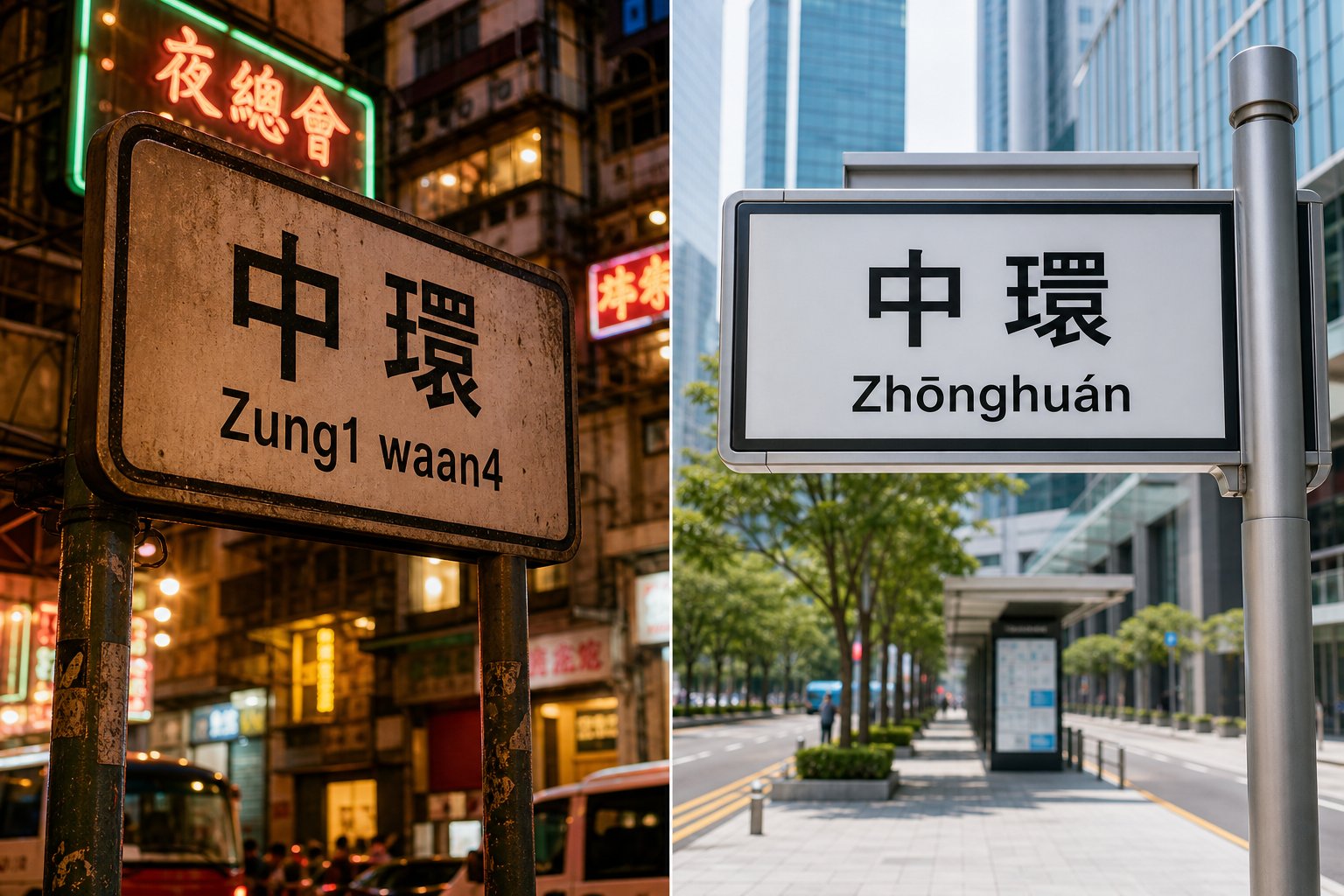
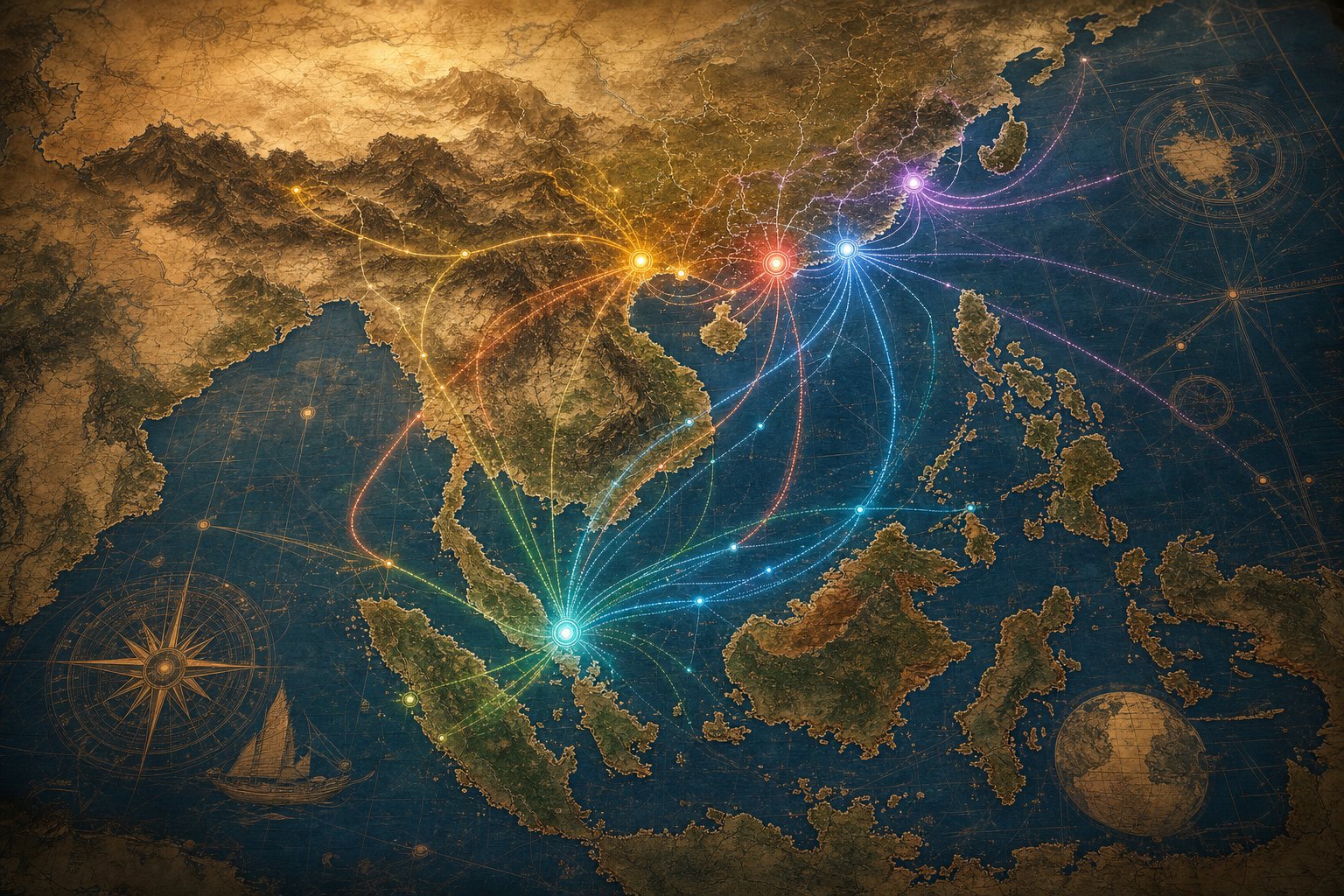
A chinese surname like 黄 appears as "Huang" in Mandarin pinyin. But meet someone from Hong Kong with the same character on their ID card, and you'll see "Wong." Same family, same character, same chinese last name meanings rooted in ancient aristocratic lineage — yet two completely different spellings that signal two completely different regional identities. Pinyin is a Mandarin-specific system, and Mandarin is only one of many Chinese languages. For millions of people, their romanized name was never pinyin to begin with.
Cantonese Jyutping and Hong Kong Romanization
Hong Kong developed its own romanization conventions long before pinyin became an international standard. Under British colonial administration, cantonese names were transliterated using systems loosely based on Cantonese pronunciation, producing spellings that look nothing like their Mandarin pinyin equivalents. The differences are striking:
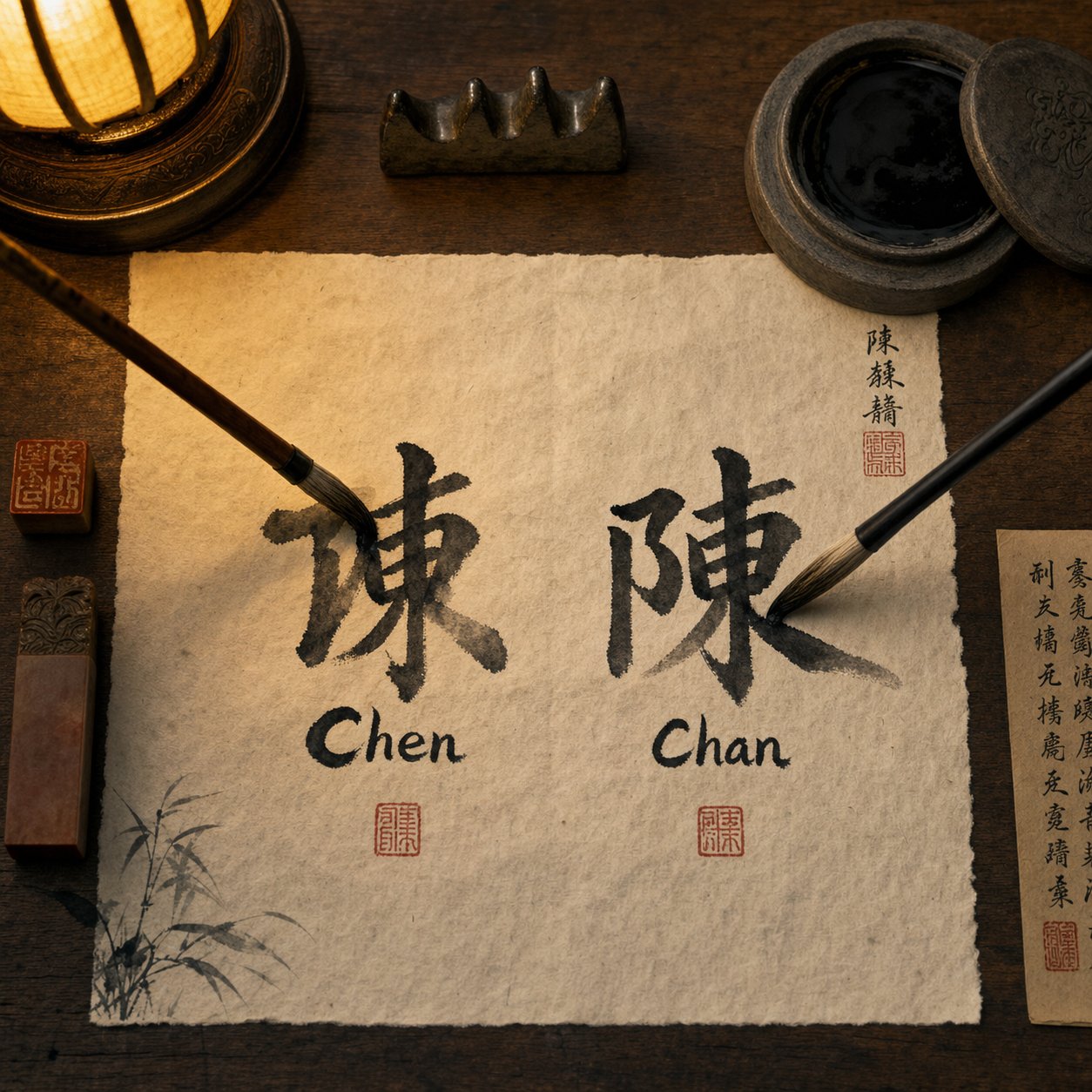
- Chan instead of Chen (陈)
- Wong instead of Huang (黄)
- Leung instead of Liang (梁)
- Ng instead of Wu (吴)
- Tsang instead of Zeng (曾)
These aren't misspellings or outdated forms. They reflect how the same characters actually sound in Cantonese — a language with six to nine tones (depending on the analysis) compared to Mandarin's four. When you encounter an asian name spelled "Wong," you're reading a cultural marker that signals Hong Kong or Guangdong heritage. The spelling itself encodes migration history, colonial-era documentation practices, and regional linguistic identity.
Cantonese romanization also carries generational weight. Families who emigrated from Hong Kong in the 1960s and 1970s passed down their Cantonese-romanized surnames to children and grandchildren born abroad. A third-generation Canadian named "Ng" carries a surname in chinese that connects them to Cantonese-speaking ancestors, even if they personally speak only English. The romanization became the inheritance.
Hokkien and Hakka Name Romanization
Southeast Asian Chinese communities add further complexity. In Malaysia, Singapore, the Philippines, and parts of Taiwan, Chinese names often follow Hokkien (Southern Min), Teochew, or Hakka pronunciation rather than Mandarin. The surname 林 appears as "Lim" in Hokkien, "Lam" in Cantonese, and "Lin" in Mandarin pinyin. The surname 陈 becomes "Tan" in Hokkien — a spelling that looks nothing like "Chen" yet represents the same character and the same ancient lineage.
These variations encode specific migration histories. A Singaporean named "Tan" likely descends from Hokkien-speaking immigrants from Fujian province. A Malaysian named "Chin" may trace Hakka roots to Guangdong's mountainous interior. Each romanization is a compressed record of which dialect group a family belonged to, which port they departed from, and which colonial administration documented their arrival. The asian names you encounter in Southeast Asian contexts carry this layered heritage in their spelling.
Taiwan presents its own case. While the island officially adopted a modified pinyin system (Tongyong Pinyin, later switching to Hanyu Pinyin for most purposes), many Taiwanese people retain older romanizations based on Wade-Giles or local dialect pronunciation. A Taiwanese person named "Hsieh" uses a Wade-Giles spelling for 谢 that Mandarin pinyin would render as "Xie." The choice to keep "Hsieh" is often a deliberate cultural and political statement about Taiwanese identity distinct from mainland conventions.
Why One Romanization System Cannot Capture All Chinese Names
The dominance of Mandarin pinyin in international contexts creates a quiet erasure. When global systems default to pinyin as the "correct" romanization for all Chinese names, they implicitly treat Cantonese, Hokkien, and Hakka romanizations as deviations rather than legitimate alternatives. A database that "corrects" Wong to Huang or Tan to Chen isn't fixing errors — it's overwriting regional identity with a Mandarin-centric standard.
Chinese surnames meaning and identity extend beyond the character itself into how that character gets voiced and spelled. The same 黄 character carries different cultural resonance when pronounced "Wong" by a Hong Kong family versus "Huang" by a Beijing family versus "Ooi" by a Penang Hokkien family. Each pronunciation connects to a different community, a different set of cultural practices, and a different relationship to Chinese identity.
The romanization system someone uses for their name is itself a cultural identity statement — it tells you not just what their name sounds like, but where their family comes from, which Chinese language they speak, and which historical forces shaped their documentation.
This is why pinyin name cultural significance cannot be discussed in isolation from the broader landscape of Chinese romanization. Pinyin represents one path — the Mandarin path, the PRC-standardized path — through a much larger territory. Recognizing that "Chan" and "Chen" and "Tan" all represent the same chinese surname 陈, romanized through different linguistic and historical lenses, is fundamental to understanding how Chinese names function in the global world.
These regional and dialectal complexities play out daily in professional settings, immigration offices, and digital platforms — spaces where romanized names must function as legal identities, professional brands, and personal introductions all at once.
Pinyin Names in Professional and Global Contexts
A name in chinese language carries layers of family history, tonal precision, and character-level meaning. But the moment that name enters a passport application, a corporate HR system, or an academic journal byline, it collides with infrastructure designed for entirely different naming conventions. These friction points aren't theoretical — they shape careers, create legal confusion, and force millions of people into daily cultural compromises.
Immigration Documents and Legal Name Challenges
Government systems are where pinyin names lose the most. Passport offices in China convert characters to pinyin mechanically, stripping tone marks because international machine-readable travel documents (following ICAO standards) only support the 26 basic Latin letters. No diacritics. No characters. The result is a permanent legal identity that carries none of the cultural meaning the original name held.
Beyond tone marks, other system constraints compound the problem:
- Character limits: Some immigration forms cap name fields at 20-30 characters, forcing truncation of longer pinyin names or compound surnames.
- No-space policies: Certain systems merge given name syllables into a single block (XIAOMING rather than XIAO MING), making it harder for others to parse where one syllable ends and another begins.
- All-caps formatting: Capitalization rules eliminate the visual cue that distinguishes surnames from given names in standard pinyin orthography.
- Inconsistent ordering: Some countries' visa systems force surname-last order, while Chinese passports maintain surname-first — creating mismatches across a person's document portfolio.
These aren't minor inconveniences. A name in chinese that appears differently across a passport, a visa, and a bank account can trigger identity verification failures, delayed immigration processing, and rejected applications. The cultural compromise becomes a bureaucratic trap.
International Business and Academic Publishing
In professional contexts, pinyin names navigate a different set of pressures. Business cards in China and Singapore commonly display both characters and pinyin — the chinese name in chinese language alongside its romanized form — giving recipients access to both layers. But once that card enters a CRM database or LinkedIn profile, only the pinyin typically survives.
Academic publishing presents particularly acute challenges. Research from a 2024 study on author name ambiguity highlights the scale of the problem: the name "Y. Wang" appeared in bylines of nearly 30,000 articles over a ten-year period, with affiliations at over 500 universities across nearly 100 countries. The name "Wang Wei" alone had 2,863 instances on ORCID. This isn't one prolific researcher — it's thousands of distinct scholars whose pinyin names collapse into identical strings in citation databases.
Name order confusion makes things worse. When Chinese researchers publish in international journals, they typically adopt the Western surname-last convention. A name like "Xu Shaoxiong" becomes "Shaoxiong Xu" — and if the given name's two syllables get separated as "Shao Xiong Xu," the second syllable might be misidentified as a middle name or even a different surname entirely. These misattributions affect citation counts, grant reviews, and career advancement.
This is partly why many Chinese professionals adopt an english name chinese name combination — pairing a Western given name with their pinyin surname. "David Zhang" or "Michelle Liu" functions as a cultural negotiation: it eases pronunciation for international colleagues while preserving the family name's connection to lineage. The practice of creating chinese names for english names (or the reverse — choosing an english to chinese name equivalent) reflects a pragmatic response to systems that weren't built for Chinese naming conventions.
Digital Identity and Social Media Profiles
Digital platforms introduce yet another layer of constraint. Email systems, social media handles, and username fields rarely support tone marks or Chinese characters. A person whose name in chinese is 张明宇 might become [email protected] — a string that carries no meaning, no tone, and no visual connection to the characters their parents carefully selected.
Younger generations are responding to this reality at the naming stage itself. Modern parents increasingly consider how a name will look and function in romanized digital contexts alongside its character-level meaning. They ask: Will this pinyin be easy for international colleagues to pronounce? Does it accidentally spell an unfortunate English word? Does it look aesthetically balanced as a username?
This represents a genuine shift. Where previous generations chose names purely at the character level — optimizing for meaning, stroke count, and tonal harmony — today's parents often weigh pinyin readability as a practical factor. A chinese name from english name generators and cross-cultural naming consultants have emerged to help families navigate both dimensions simultaneously.
Social media also creates new forms of identity expression. Some users display their full chinese name in chinese language characters in their display name while using pinyin for their handle. Others create hybrid identities — mixing English nicknames with pinyin surnames, or using creative romanizations that better capture their name's sound for an international audience. Each choice is a small act of cultural positioning in digital space.
These professional and digital pressures don't exist in a vacuum. They interact with deeper traditions — generational naming patterns, family lineage markers, and evolving customs around how names connect children to their ancestors and their future.
Generational Naming Traditions and Modern Trends
In a village in Jinhua, Zhejiang Province, every resident's name derives from an 80-character poem. Each character in the poem rotates every five years, so all individuals born within a given period share that specific character in their given names. The village is home to descendants of Zhuge Liang, the ancient chinese military strategist, and their naming system has persisted for centuries — a living thread connecting each generation to the one before it. As village leader Zhuge Kunheng told the Global Times: his name is not a token for showing off, but a reminder of his responsibility as a descendant to protect and preserve his family's heritage.
This practice — called 字辈 (zibei), or generation names — represents one of the most structured chinese naming customs still in use. And it raises a fascinating question about pinyin: can a romanization system designed for sound preserve the visual pattern of lineage that characters make obvious?
Generational Characters and Family Lineage in Pinyin
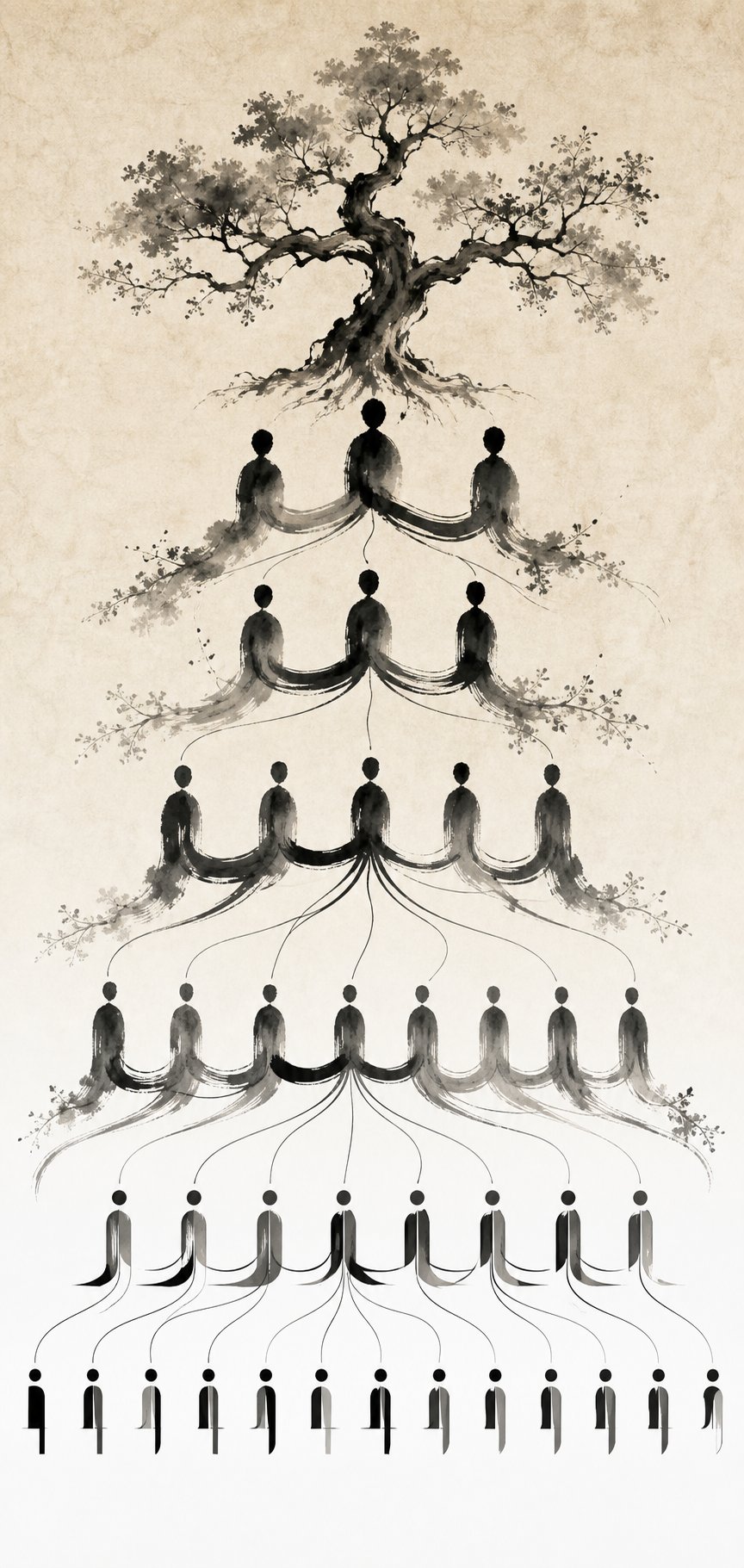
The generation name tradition works like this: a family establishes a sequence of characters (often drawn from a poem or classical text), and each generation uses the next character in that sequence as one element of every child's given name. Siblings and cousins born in the same generation all share that character. The result is that family relationships become readable directly from names — if you know the system.
Imagine two siblings named Wang Jiaming and Wang Jiali. In pinyin, the shared "Jia" generation character is visible — but only if the reader understands the convention. To someone unfamiliar with chinese naming customs, "Jiaming" and "Jiali" might look like unrelated names that happen to start with the same syllable. The generational link that would be immediately obvious in characters (佳明 and 佳丽 both containing 佳) becomes ambiguous in romanized form.
Pinyin formatting choices affect this visibility. When given names are written as single units (Jiaming, Jiali), the shared element blends into the syllable flow. Hyphenation (Jia-ming, Jia-li) makes the generation character slightly more apparent. But neither approach explicitly marks which syllable carries the generational meaning versus the individual meaning. The pattern is there — hidden in plain sight for those who know where to look, invisible to everyone else.
This matters because generation names encode something profound: your place in a family's timeline. In ancient chinese names and traditional lineage records, the zibei sequence could span 20 or 30 generations into the future, pre-assigning characters for descendants not yet born. The system transforms a name from a personal label into a coordinate — locating you within a family's past and future simultaneously.
Traditional Naming Customs and Their Modern Evolution
Generation names are just one layer of traditional chinese names and the customs surrounding them. Several other practices operate at the character level, shaping which characters are available and which are forbidden — with effects that ripple into pinyin choices even when the underlying logic remains invisible.
The most significant of these traditions include:
Naming taboos (避讳 bihui): It is not customary or appropriate to name a child after an elder or family member. This taboo extends beyond identical characters to include homophones — characters that share the same pinyin spelling. If a grandfather's name contains the character 明 (ming), parents might avoid all characters pronounced "ming" in their child's name, regardless of which specific character they intended. Here, pinyin collision creates a cultural constraint: the romanization system's homophone problem becomes a practical naming limitation.
Five-element balancing (五行 wuxing): Traditional practice holds that a child's birth date and time determine which of the five elements (metal, wood, water, fire, earth) their destiny lacks. Parents then select naming chinese characters containing radicals associated with the missing element — the water radical 氵for a child lacking water, the wood radical 木 for one lacking wood. This system operates entirely at the visual-radical level of characters, making it completely invisible in pinyin. A name chosen specifically because its character contains a fire radical looks no different in romanized form from one chosen for any other reason.
Fortune teller consultation: Many families consult fortune tellers who analyze a child's birth data (八字 bazi, the "eight characters" of year, month, day, and hour) to recommend auspicious name characters. These recommendations consider stroke count, radical composition, tonal harmony, and five-element balance simultaneously. The fortune teller's work happens entirely in the character domain — yet the resulting name must eventually function in pinyin when the child grows up and enters international contexts.
In historical Chinese culture, the chinese courtesy name (字 zi) added another dimension. Beyond their given name, individuals received a courtesy name at adulthood — a formal name used by peers and in professional contexts, while the birth name remained intimate and private. This courtesy name tradition, common among scholars and officials for over two thousand years, has largely faded from modern practice. But its echo persists in the contemporary habit of adopting English names or professional aliases for different social contexts — a modern parallel to the ancient practice of maintaining multiple names for multiple roles.
How Modern Parents Consider Pinyin Aesthetics
Something has shifted in how chinese baby names get chosen. Where previous generations optimized purely at the character level — consulting fortune tellers, balancing elements, honoring generational sequences — today's parents increasingly factor in how a name will function once romanized. The pinyin form is no longer an afterthought. It's becoming a design constraint.
A 2026 Global Times report on naming trends found that post-1990 generation parents are drawing heavily from classical Chinese texts while simultaneously considering international readability. Names like "Yanzhou" (inkstone and boat, from a Northern Song Dynasty poem) and "Jincheng" (splendid prospects, from a classical idiom) reflect both cultural depth and phonetic accessibility. Cultural sociologist Xu Shumin described this as young parents "reclaiming traditional Chinese culture as a living aesthetic in everyday life" — not abandoning tradition, but selecting from it with new criteria in mind.
The considerations modern parents weigh when selecting chinese baby names with international pinyin readability include:
- Pronunciation accessibility: Avoiding initials like "x," "q," and "zh" that non-Chinese speakers consistently mispronounce, or choosing characters whose pinyin maps more intuitively to English phonetics.
- Unfortunate English associations: Checking whether the pinyin spelling resembles an English word with negative or humorous connotations — a concern that simply didn't exist for previous generations.
- Visual balance in Latin script: Considering how the romanized name looks written out — its length, letter distribution, and aesthetic rhythm as a string of Latin characters.
- Distinctiveness in pinyin: Avoiding extremely common pinyin combinations (like "Li Wei" or "Zhang Min") that create identity confusion in international databases and professional networks.
- Cross-cultural tonal simplicity: Preferring characters whose tones are easier for non-native speakers to approximate, reducing the gap between how the name sounds in Mandarin and how it gets pronounced abroad.
- Maintaining character-level depth: Ensuring that optimizing for pinyin doesn't mean settling for characters with shallow or generic meanings — the cultural weight must remain intact beneath the accessible surface.
This dual optimization represents a genuinely new development in chinese naming customs. A mother in Chengdu named her daughter "Chirou" (harness softness) — drawn from Chapter 43 of the Tao Te Ching, expressing the quiet power of gentleness. The name carries deep philosophical resonance in characters while remaining pronounceable for international contacts. As she described it, a name that carries cultural tradition is "a gift beyond value" — her daughter's first life gift.
The trend reflects a broader pattern: traditional chinese names are not disappearing. They're evolving. Parents of this generation live at the intersection of cultural revival and global connectivity, and their naming choices reflect both forces simultaneously. They want characters rooted in classical literature and philosophical tradition. They also want pinyin that travels well across borders, email systems, and Zoom introductions.
This evolution raises a practical question for everyone who encounters these names in daily life: how do you honor the cultural weight a pinyin name carries when you can't see the characters behind it? The answer starts with something simple — learning to pronounce it correctly, and knowing the right questions to ask.

Respecting Pinyin Names in Everyday Interactions
You've seen how much meaning a pinyin name compresses — tonal identity, character-level aspiration, generational lineage, regional heritage. But here's the practical reality: most people encountering a pinyin name in a classroom, office, or conference won't have access to any of those layers. What they can do is pronounce it well, address the person correctly, and ask thoughtful questions. These small actions carry outsized cultural weight.
Pronouncing Pinyin Names with Respect and Accuracy
Pinyin looks like English, but it doesn't sound like English. This is where most mispronunciation starts. The letter "q" in pinyin sounds closer to "ch" (as in "cheese"), not "kw." The letter "x" maps roughly to "sh" (as in "she"), not "ks." And "zh" produces a sound similar to "j" (as in "judge"), not the "zh" in "Zhivago" that English speakers might guess. A name like "Qian" isn't "kwy-an" — it's closer to "chee-en." "Xu" isn't "zoo" — it's closer to "shoo."
These differences mean that how to pronounce a chinese name correctly requires unlearning English letter-sound assumptions. The effort matters. When you take time to learn the pronunciation of chinese names you encounter regularly, you signal that the person behind the name is worth that effort. It's one of the simplest ways to acknowledge the cultural identity embedded in someone's pinyin representation.
Here are five concrete steps for learning to pronounce chinese names accurately:
- Ask the person directly. A simple "Could you say your name for me so I can learn it properly?" is always appropriate. Listen for syllable stress, tone contour, and vowel quality — not just the consonants.
- Learn the pinyin letters that diverge from English. Focus on the biggest traps: "q" (ch), "x" (sh), "zh" (j), "c" (ts), "z" (dz), and the "u" with umlaut (as in "yu," pronounced with rounded lips like the French "u").
- Practice the name out loud before your next interaction. Repetition builds muscle memory. Say it five times in a row. Record yourself and compare to how the person said it.
- Use online pinyin audio tools to hear tones. Resources with native-speaker recordings let you hear the difference between, say, second-tone "ming" and fourth-tone "ming" — a distinction that changes the name's entire meaning.
- Accept correction gracefully and adjust. If someone corrects your pronunciation, thank them and try again. Getting closer over time matters more than getting it perfect on the first attempt.
Pronouncing chinese names well isn't about achieving native-level Mandarin fluency. It's about closing the gap between a careless anglicization and a respectful approximation. That gap is where cultural acknowledgment lives.
Understanding Name Order and Addressing People Properly
The surname-first convention in Chinese names creates a persistent source of confusion in international settings. When you see "Zhang Xiaoming" on a roster, "Zhang" is the surname — the family name — and "Xiaoming" is the given name. Addressing this person as "Mr. Zhang" or "Ms. Zhang" follows the same logic as addressing "John Smith" as "Mr. Smith." The surname just happens to come first rather than last.
A common mistake: treating the first syllable of a two-syllable given name as a separate first name. "Xiaoming" is one given name composed of two characters (小明), not a first name "Xiao" and a middle name "Ming." Calling someone "Xiao" when their given name is "Xiaoming" is like calling someone named "Christopher" just "Chris" without permission — except worse, because "Xiao" alone might not correspond to any meaningful name element the person identifies with.
Chinese honorifics follow the pattern of surname plus title. In formal or professional contexts, Chinese business etiquette uses forms like "Wang xiansheng" (王先生, Mr. Wang) or "Li nushi" (李女士, Ms. Li). Position-based address is also common: "Zhang jingli" (Manager Zhang) or "Liu zhuren" (Director Liu). These chinese honorifics place the surname before the title — the reverse of English word order — and using them correctly in cross-cultural settings demonstrates awareness of Chinese naming conventions.
When in doubt about name order, a safe approach is to use the person's full name as written until they indicate a preference. Many Chinese professionals working internationally will specify "Please call me [given name]" or "I go by [English name]." Follow their lead. If they introduce themselves as "Zhang Wei," don't rearrange it to "Wei Zhang" in your records without asking.
Asking the Right Questions About Someone's Name
The best way to pronounce a chinese name correctly is to ask. The best way to address someone properly is to ask. The best way to understand their naming preference is — you guessed it — to ask. Asking isn't a sign of ignorance. It's a sign of respect.
Here are questions that open the door without putting someone on the spot:
- "How would you like me to pronounce your name?"
- "Which part of your name is your family name?"
- "Do you have a preferred name for everyday use?"
- "Would you mind saying your name for me once more? I want to get it right."
These questions work because they center the person's preference rather than your assumptions. They acknowledge that a name might function differently in different contexts — that someone might use their full pinyin name in formal settings but prefer an English name among close colleagues, or vice versa.
What you want to avoid: assuming someone's English name is their "real" name, or that their pinyin name is too difficult to learn. Both assumptions diminish the cultural identity work that naming represents. A person who introduces themselves by their pinyin name is making a choice about how they want to be known. A person who offers an English name is also making a choice. Both deserve acknowledgment.
A person's name choice — whether pinyin, English, or a combination — reflects their ongoing cultural identity negotiation. Acknowledging that choice, rather than overriding it with your own convenience, is the foundation of cross-cultural respect.
Educators, HR professionals, and team leads carry particular responsibility here. Pronouncing chinese names correctly on a class roster or in a team meeting sets a tone that ripples outward. When a teacher takes thirty seconds to learn how to pronounce a chinese name on the first day of class, every student in that room receives a message about whose identity matters. When an HR system allows employees to specify their preferred name alongside their legal pinyin name, it creates space for the cultural complexity that a single romanized string cannot contain.
Pinyin name cultural significance ultimately lives in this space between systems and people — between the flattened alphabetic string on a screen and the layered human identity behind it. You may never see the characters, hear the tones, or know the generational poem that shaped someone's name. But you can pronounce it carefully, address them correctly, and ask with genuine curiosity. That's where respect begins.
Frequently Asked Questions About Pinyin Name Cultural Significance
1. Why do Chinese names put the surname first?
Chinese names place the surname before the given name to reflect Confucian values of collective identity and filial piety. The family name leads because, culturally, your belonging to a lineage takes precedence over individual distinction. This ordering embeds a philosophical statement into every introduction: you are part of your family before you are yourself. When pinyin names enter Western systems that assume given-name-first order, this cultural logic often gets reversed or misinterpreted, causing confusion in legal documents, academic citations, and professional databases.
2. What meaning is lost when Chinese names are written in pinyin?
Pinyin strips away at least five layers of meaning from Chinese names: visual-radical meaning (characters contain components revealing semantic categories like water, jade, or wood), tonal identity (the same syllable in different tones represents entirely different characters), homophone disambiguation (characters visually distinguish names that sound identical), calligraphic aesthetics (the visual balance and rhythm of brushstrokes), and numerological stroke-count significance (auspicious totals that families carefully calculate). Only approximate sound survives the conversion to romanized letters.
3. How do tones change the meaning of a pinyin name?
Mandarin's four tones transform a single pinyin syllable into completely different characters with unrelated meanings. For example, 'li' in the first tone can mean beautiful, in the third tone it can mean ritual or propriety, and in the fourth tone it can mean strength. When tone marks are dropped from pinyin (as happens in emails, passports, and most digital systems), these distinctions vanish entirely. Two people with the name 'Li' in pinyin might carry characters representing opposite cultural aspirations, with no way to tell them apart from the spelling alone.
4. Why do some Chinese surnames look different from their pinyin equivalents?
Not all Chinese names use Mandarin pinyin for romanization. Cantonese speakers from Hong Kong use Cantonese-based spellings (Wong instead of Huang, Chan instead of Chen), while Hokkien speakers in Southeast Asia use yet another system (Tan instead of Chen, Lim instead of Lin). These alternative romanizations are not errors or outdated forms. They reflect how the same characters sound in different Chinese languages and encode regional heritage, migration history, and cultural identity. The romanization system itself signals where a family comes from and which linguistic community they belong to.
5. How should I correctly pronounce a colleague's pinyin name?
Start by asking the person directly how they pronounce their name, then listen carefully for tone and vowel quality. Learn the pinyin letters that differ from English: 'q' sounds like 'ch,' 'x' sounds like 'sh,' and 'zh' sounds like 'j.' Practice the name aloud several times before your next meeting, and use online pinyin audio tools with native-speaker recordings to hear the tonal differences. If corrected, accept it gracefully and adjust. The goal is not perfect Mandarin fluency but a respectful approximation that shows you value the person behind the name.