What Are Pinyin Name Character Components
When you see a Chinese name written in Roman letters, you're looking at pinyin. But beneath that familiar spelling sits a Chinese character, and inside that character live smaller structural pieces called components. Together, these three layers form what we call pinyin name character components: the sound, the specific hanzi, and the building blocks within it.
Most people stop at pronunciation. They learn to say the name and move on. The problem is that pinyin only captures one dimension of a name that was designed to carry several.
What Pinyin Name Character Components Actually Mean
To define pinyin simply: it is the official romanization system for Standard Chinese, spelling out how each character sounds using the Latin alphabet. The pinyin definition from a linguistic standpoint describes it as a phonetic transcription based on the Beijing dialect of Mandarin. But what is pinyin in Chinese naming practice? It is only the first layer of a three-part system.
Here are the three pillars you need to understand:
- Pinyin — the romanized sound of a name syllable (e.g., "ming")
- Character — the specific hanzi chosen to represent that sound (e.g., 明 or 铭 or 鸣)
- Components — the radicals and sub-elements inside that character (e.g., 日 "sun" + 月 "moon" inside 明)
Each Chinese character is built from smaller meaningful pieces. Some indicate meaning, others hint at sound. When parents select a character for a name, they are choosing not just a pinyin syllable but an entire internal architecture of meaning. Understanding that architecture is what separates surface-level reading from genuine name comprehension.
Why Understanding Components Matters for Names
This knowledge has real practical value. Heritage learners reconnecting with family names can finally see why a grandparent chose a particular character. Genealogy researchers tracing lineage through name pinyin records can distinguish between identically spelled but structurally different names. Professionals in international business, immigration, or education who encounter Chinese names daily gain a deeper respect for what those names communicate.
A single pinyin syllable like "li" can map to dozens of different characters — 丽 (beauty), 力 (strength), 理 (reason), 莉 (jasmine), 立 (independence) — each built from unique components carrying distinct meanings. Without component knowledge, every "Li" looks the same. With it, each one tells a different story.
The pinyin meaning of a name is just the entry point. What is pinyin if not a doorway? The real depth lives in the character chosen and the components packed inside it. A name like "Wei" could express greatness, protection, or subtlety depending entirely on which character was selected and what structural elements it contains.
This layered relationship between sound, character, and internal structure is exactly what makes Chinese naming so intentional. And it raises a natural question: how does pinyin itself work as a system, and what patterns govern the syllables that form every Chinese name?
How Pinyin Structure Works in Chinese Names
Every Chinese name you encounter in pinyin follows a precise phonetic formula. The syllable isn't random. It's assembled from a fixed set of building blocks: an initial consonant, a final vowel combination, and a tone. Recognizing these pieces helps you move from simply reading a name aloud to understanding how that sound connects to specific characters and their internal components.
Mandarin has roughly 400 unique syllables. When you factor in the four tones plus the neutral tone, that number expands to just over 1,200 possible sound units. Every single Chinese name syllable draws from this finite pool, which means the system is learnable and predictable once you see the pattern.
Initials and Finals That Build Name Syllables
A pinyin syllable breaks into two parts: the initial and the final. The initial is the leading consonant sound, and the final is everything that follows. Mandarin uses 21 initials and approximately 36 finals that combine to produce all possible mandarin syllables. Some syllables have no initial at all — the final carries the entire sound on its own.
Think of chinese consonants as the starting gate and chinese vowels as the runway. The initial launches the syllable, and the final gives it shape and duration. When you look at a pinyin pronunciation chart, you'll notice that not every initial pairs with every final. Only about half the theoretical combinations actually exist in spoken Mandarin, which is why the total syllable count stays relatively small.
Here's how this plays out in popular name syllables:
| Name Syllable | Initial | Final | Common Name Character |
|---|---|---|---|
| Ming | m | ing | 明 (bright) |
| Hua | h | ua | 华 (splendid) |
| Wei | w | ei | 伟 (great) |
| Jing | j | ing | 静 (quiet) |
| Xin | x | in | 欣 (joyful) |
| Lan | l | an | 兰 (orchid) |
| Tian | t | ian | 天 (sky) |
| Yun | y | un | 云 (cloud) |
| Fei | f | ei | 飞 (fly) |
| An | — | an | 安 (peace) |
Notice that "An" has no initial. The final alone forms the complete syllable. This is common in chinese pronunciation — syllables like "ai," "en," and "ou" function independently as name sounds. In a pinyin chart, these zero-initial syllables are typically listed in their own row, and they appear frequently in both given names and surnames.
The chinese initials you'll encounter most often in names include m, l, j, x, zh, and h. Finals like -ing, -an, -ei, and -ua dominate because they pair naturally with characters that carry positive meanings. Parents aren't just choosing sounds at random; they're selecting from syllables whose associated characters offer the richest component-level meaning.
How Tones Change Everything in a Name
Here's where chinese tones transform the picture entirely. Two names can share the exact same initial and final yet refer to completely different characters with completely different components — all because of a single tone mark.
Mandarin uses four basic tones: the first tone (high and flat), the second tone (rising), the third tone (low or dipping), and the fourth tone (falling). A fifth neutral tone appears in some grammatical particles but rarely in name characters. These tones are marked above the main vowel in pinyin, and they are not optional decoration. They change the word itself.
Imagine you meet someone whose name pinyin reads "Li." Without the tone mark, you can't determine which character was intended:
| Pinyin with Tone | Character | Key Component | Meaning |
|---|---|---|---|
| Li (1st tone: lī) | 丽 | 丽 (beauty radical form) | Beautiful |
| Li (2nd tone: li) | 黎 | 禾 (grain) + 勹 + 氺 | Dawn, multitude |
| Li (3rd tone: lǐ) | 李 | 木 (wood) + 子 (child) | Plum tree (common surname) |
| Li (4th tone: li) | 力 | 力 (strength itself) | Power, strength |
Same initial, same final, four different tones — and four entirely different characters with distinct internal components. The tone isn't just a pronunciation detail. It's the key that unlocks which character, and therefore which set of components and meanings, a name actually carries.
This is why tone marks matter so much when recording Chinese names in pinyin. A name written as "Liming" without tones could be 黎明 (dawn), 李明 (plum + bright), or several other combinations. Each version contains different radicals, different semantic layers, and different cultural intentions. The tone narrows the possibilities dramatically, pointing you toward the correct character and its component structure.
For anyone working with pinyin name character components, this structural awareness is foundational. You now know that every name syllable is built from a predictable initial-final pair, and that the tone determines which character — and which internal architecture — that syllable represents. The next logical step is understanding what happens when one pinyin syllable maps to not just four but dozens of possible characters, each chosen for the specific meaning its components convey.
From Pinyin Syllables to Specific Name Characters
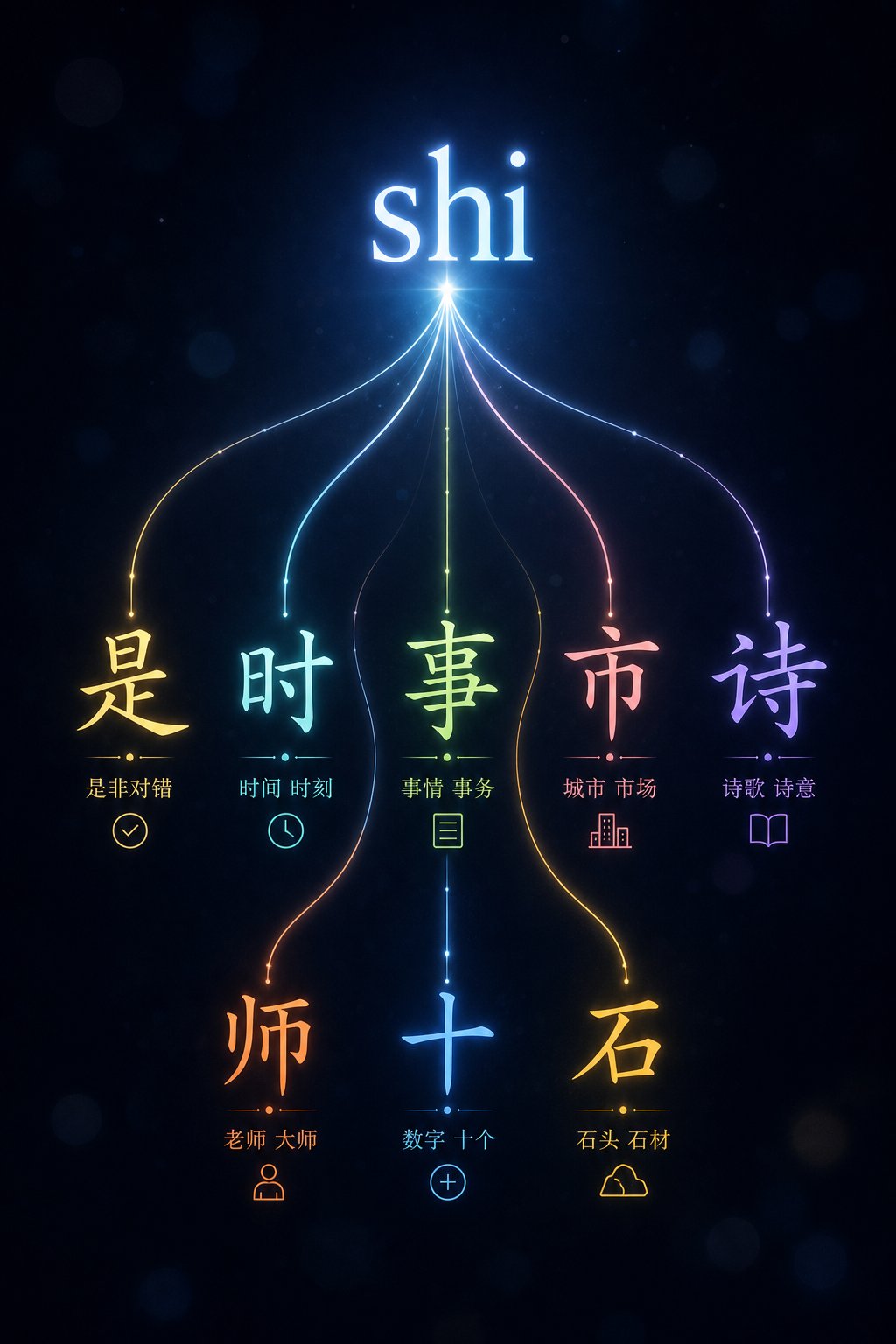
That many-to-one relationship between sound and character is not a minor quirk of the system. It is the defining feature. Thousands of distinct Chinese characters compress into just 375 unique pinyin syllables, meaning any single syllable you encounter in a name could represent dozens of completely different characters. Each of those characters carries its own components, its own radical, and its own meaning. This is precisely why converting pinyin to chinese characters requires more than phonetic knowledge — it demands context, intention, and component awareness.
One Syllable and Many Characters
When parents choose a name, they aren't picking a sound. They're picking a character. The pinyin syllable is just the audible surface. Beneath it, they're selecting from a pool of hanyu pinyin chinese characters that all share the same pronunciation but differ entirely in structure and significance.
Consider the syllable "jing" (fourth tone: jìng). A parent searching chinese characters by pinyin for this single sound would find options like these:
| Character | Primary Component/Radical | Meaning | Why Chosen for a Name |
|---|---|---|---|
| 静 | 青 (blue-green) + 争 (contend) | Quiet, serene | Expresses calm temperament |
| 敬 | 苟 (careful) + 攵 (action) | Respect | Values reverence and propriety |
| 竞 | 立 (stand) + 兄 (elder) | Compete | Signals ambition and drive |
| 镜 | 钅(metal) + 竟 (finish) | Mirror | Symbolizes clarity and self-reflection |
| 境 | 土 (earth) + 竟 (finish) | Realm, territory | Suggests broad horizons |
| 净 | 冫(ice) + 争 (contend) | Pure, clean | Represents moral purity |
Same pinyin, six different characters, six different internal architectures, six different reasons a parent might choose one over another. The chinese word pinyin "jing" tells you almost nothing until you know which character sits behind it. This is why the process of going from han yu pin yin to chinese word is never a simple one-to-one conversion — it's a selection guided by meaning at the component level.
How Character Selection Shapes Name Meaning
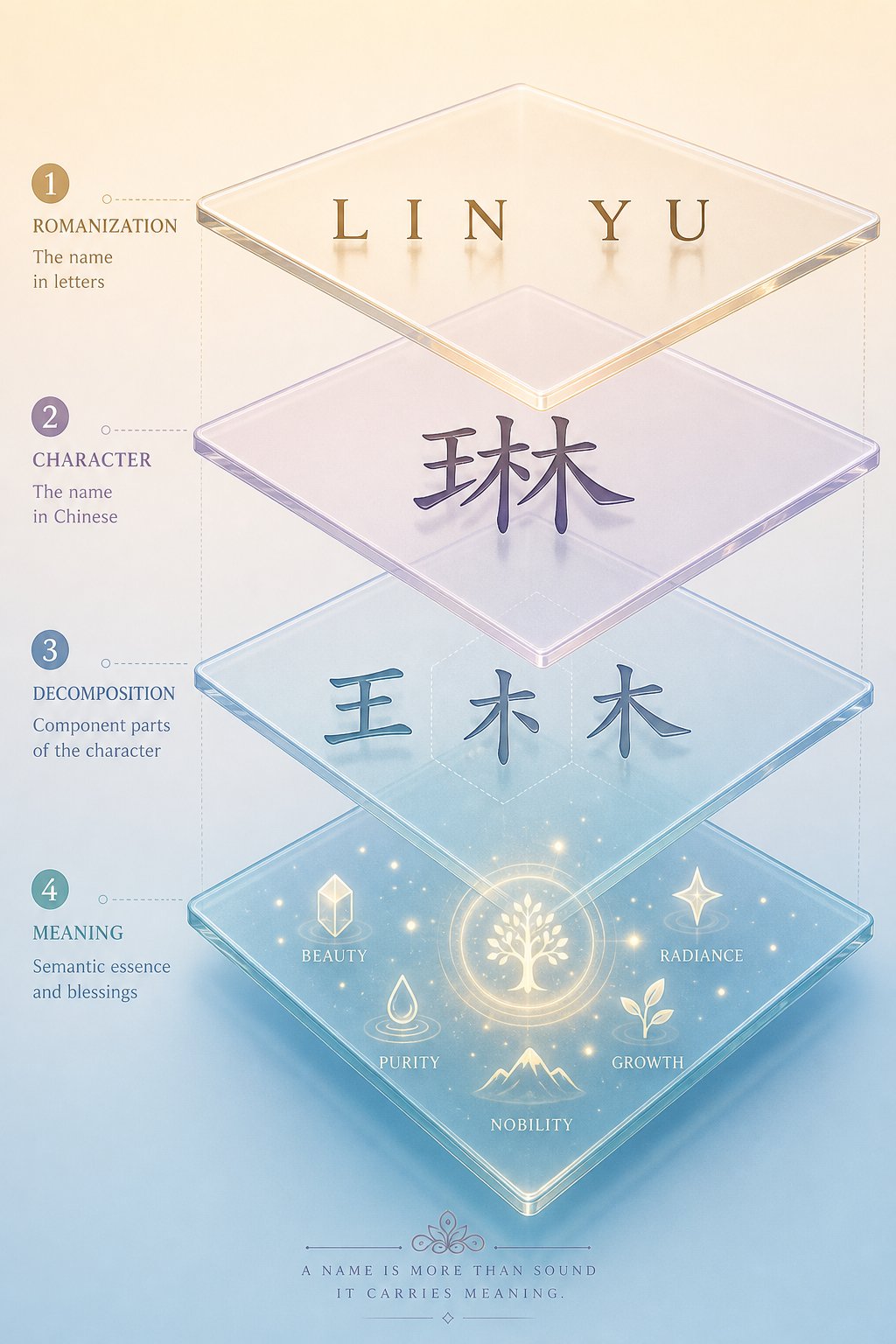
Understanding this mapping is the key skill for decoding any name written in pinyin. When you encounter a pinyin name, you're looking at Layer 1 of a four-layer system:
- Layer 1 — Pinyin sound: Identify the syllable and its tone (e.g., jìng, fourth tone)
- Layer 2 — Specific character: Determine which hanzi was chosen from the pool of candidates (e.g., 静)
- Layer 3 — Component breakdown: Decompose that character into its semantic and phonetic parts (e.g., 青 + 争)
- Layer 4 — Meaning construction: Synthesize how those components combine to produce the name's intended significance (e.g., stillness emerging from contention = inner peace)
This layered approach transforms pinyin to mandarin characters from a guessing game into a structured analysis. Every Chinese name, no matter how unfamiliar, yields to this same method. You move from sound to character to component to meaning, each layer adding depth that the previous one couldn't provide alone.
The real power of this framework becomes clear when you zoom into Layer 3. Characters aren't monolithic symbols — they're assembled from smaller pieces that carry their own semantic weight. Some of those pieces appear across hundreds of name characters, forming recognizable patterns that reveal an entire vocabulary of meaning hidden inside the strokes.
Semantic Components and Radicals in Name Characters
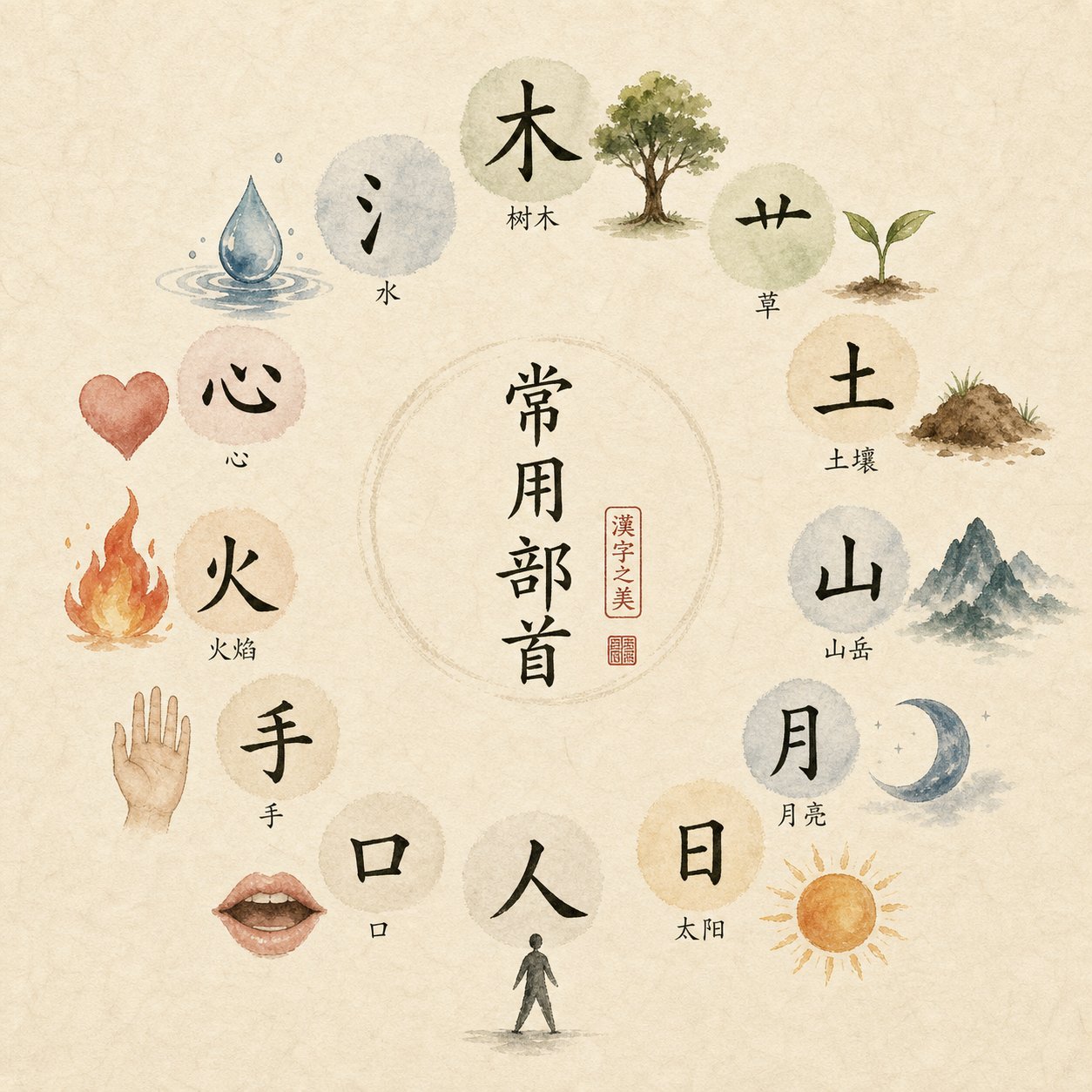
Those smaller pieces inside each character aren't random fragments. They belong to a structured system that has organized the chinese writing system for thousands of years. Every character you encounter in a name is built from identifiable sub-elements, each carrying either meaning or sound information. Knowing which piece does what gives you direct access to the intentions behind any name.
People often ask, what are chinese letters called? Technically, they aren't letters at all. They're characters — hanzi — and each one functions as a complete unit of meaning rather than a single sound. But inside those characters, the components operate somewhat like an internal alphabet of meaning, which is why understanding them matters so much for name analysis.
Radicals vs Components in Name Characters
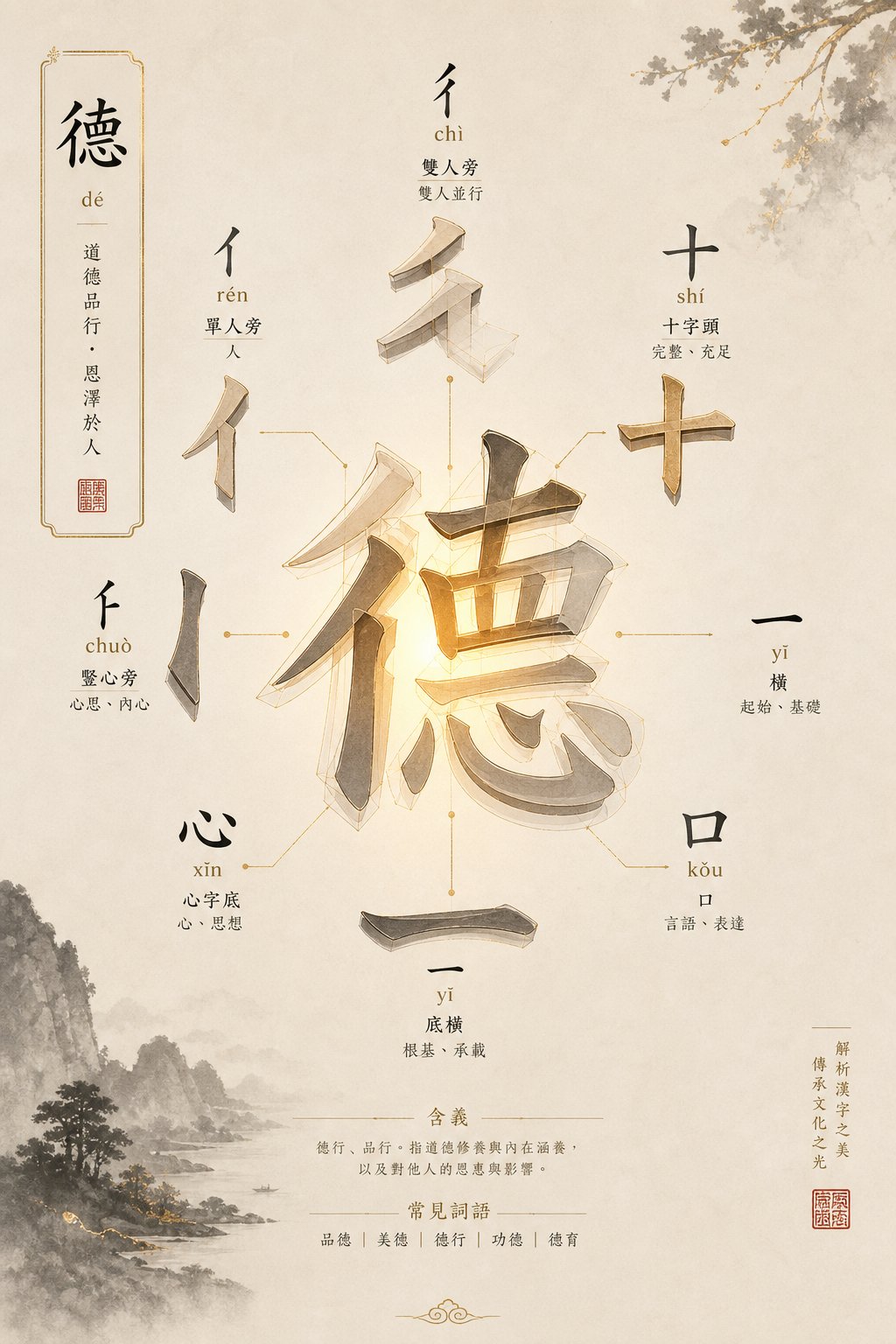
Here's a distinction that trips up even experienced learners: radicals and components are not the same thing. Every Chinese character contains components — the smaller structural pieces it's assembled from. But only one of those pieces is designated the official radical, used for dictionary indexing purposes.
Think of it this way. A character like 想 (xiǎng, "to think") breaks down into 相 and 心. Then 相 further splits into 木 and 目. That gives you three components: 心, 木, and 目. But the character has only one radical — 心 (heart) — which is the piece dictionaries use to categorize it.
Components fall into two functional categories:
- Semantic components — carry information about meaning. In 洁 (jie, "pure"), the 氵component signals a connection to water, suggesting clarity and cleanliness.
- Phonetic components — hint at pronunciation. In 妈 (ma, "mother"), the 马 component has nothing to do with horses; it signals the sound "ma."
When analyzing chinese characters and pinyin in the context of names, this distinction is critical. The semantic component tells you what category of meaning the name draws from. The phonetic component explains why the character sounds the way it does. And the radical? It's simply whichever component the dictionary chose as the filing label — often the semantic one, but not always.
A common misconception is saying a character "contains two radicals." It doesn't. As the chinese language characters alphabet is organized, each character has exactly one radical and potentially several components. Confusing the two leads to muddled analysis. When you're decoding a name, focus on components and their functions rather than worrying about which one happens to be the official radical.
The Most Meaningful Radicals in Chinese Names
That said, many radicals double as the most common semantic components — and these appear constantly in name characters. Parents selecting hanzi and pinyin combinations for a child's name gravitate toward characters whose semantic components evoke specific qualities. Over centuries, certain radicals have become deeply associated with naming because of the meanings they carry.
Here are the radicals you'll encounter most frequently when analyzing chinese characters in pinyin form within names:
| Radical | Pinyin Name | Core Meaning | Example Name Characters |
|---|---|---|---|
| 氵 | shuǐ | Water | 洁 (jie, pure), 海 (hǎi, ocean), 涵 (han, contain) |
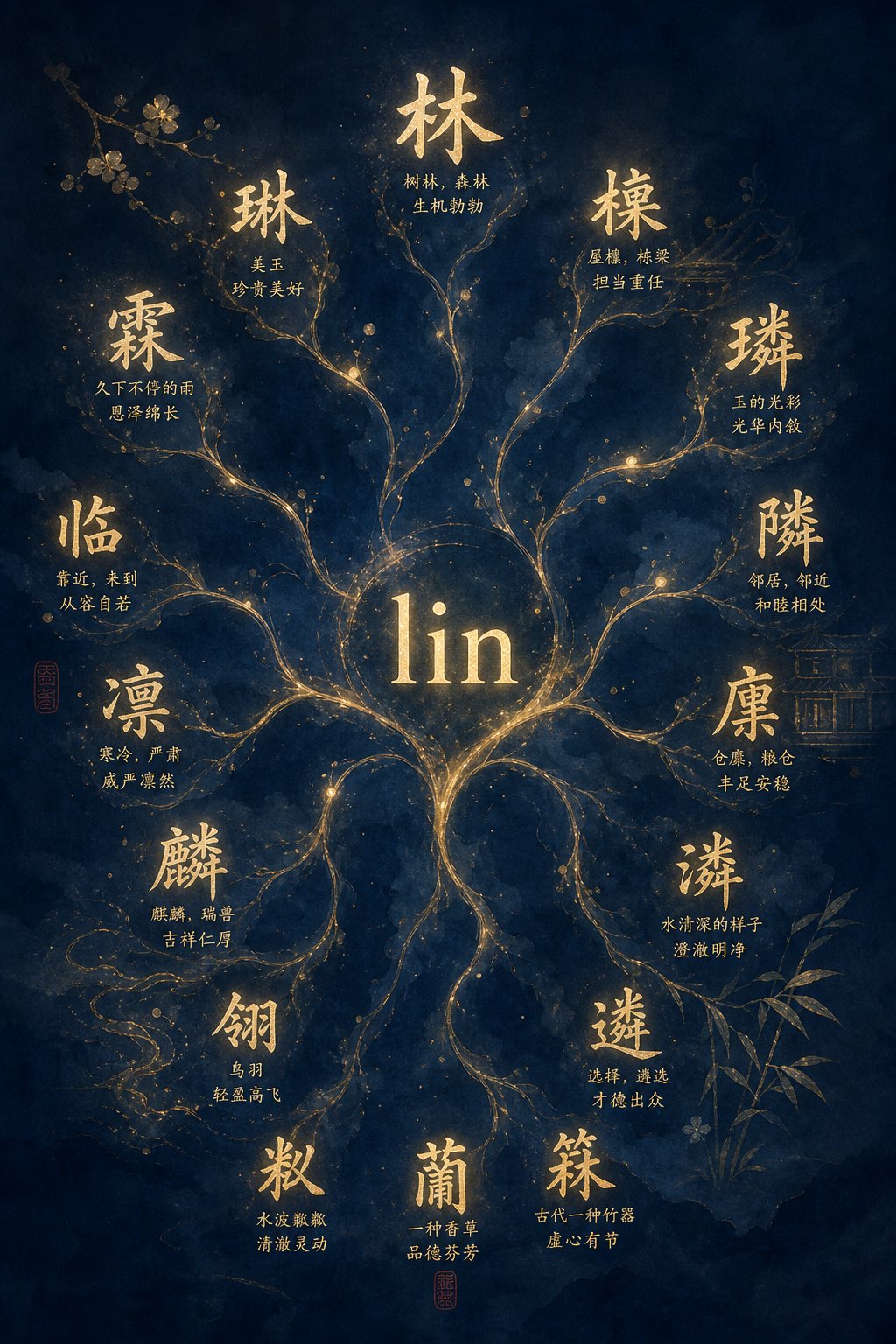
| 木 | mu | Tree/Wood | 林 (lin, forest), 桂 (gui, osmanthus), 梅 (mei, plum) |
| 女 | nǚ | Woman | 婷 (ting, graceful), 娜 (na, elegant), 妍 (yan, beautiful) |
| 王/玉 | wang/yu | King/Jade | 珍 (zhen, precious), 琳 (lin, fine jade), 瑞 (rui, auspicious) |
| 心/忄 | xīn | Heart | 慧 (hui, wise), 恩 (en, grace), 怡 (yi, joyful) |
| 日 | ri | Sun | 明 (ming, bright), 晨 (chen, morning), 昊 (hao, vast sky) |
| 艹 | cǎo | Grass/Plants | 芳 (fang, fragrant), 莉 (li, jasmine), 蕾 (lei, bud) |
| 金/钅 | jīn | Metal/Gold | 鑫 (xin, prosperous), 铭 (ming, inscribe), 锐 (rui, sharp) |
| 火/灬 | huǒ | Fire | 炎 (yan, flame), 煜 (yu, brilliant), 烨 (ye, splendid) |
| 禾 | he | Grain | 秀 (xiu, elegant), 颖 (ying, clever), 穗 (sui, ear of grain) |
| 立 | li | Stand | 靖 (jing, tranquil), 端 (duan, upright), 竣 (jun, complete) |
| 子 | zǐ | Child | 孝 (xiao, filial), 学 (xue, learn), 孟 (meng, eldest) |
You'll notice these radicals cluster around specific thematic territories. When parents choose a character for a child's 名 (ming, given name), they're typically drawing from one of these semantic categories:
- Nature elements — water, wood, fire, earth, and metal (often aligned with the five elements tradition)
- Virtues — filial piety, wisdom, grace, respect, and integrity
- Beauty — jade, flowers, elegance, and refinement
- Strength — metal, standing tall, sharpness, and resilience
- Wisdom — heart-mind, brightness, learning, and clarity
Recognizing these common radicals gives you an immediate reading on what a name is trying to express. A name character containing 氵likely connects to purity, depth, or flow. One with 王/玉 signals preciousness or nobility. The radical acts as a semantic signpost, pointing you toward the character's meaning category before you even look up its full definition.
This is where component analysis becomes genuinely powerful for anyone working with names. You don't need to memorize thousands of characters. You need to recognize a few dozen recurring semantic components and understand what they signal. The patterns repeat across the naming vocabulary with remarkable consistency.
But semantic components only tell half the story. Many name characters also contain a second structural piece — one that doesn't carry meaning at all but instead encodes something equally valuable: a clue to how the character sounds.
Phonetic Components as the Bridge Between Pinyin and Structure
That second structural piece — the one encoding sound rather than meaning — is called a phonetic component (声旁, shengpang). It's the most overlooked element in Chinese name analysis, yet it explains why certain pinyin chinese characters cluster around similar pronunciations. Roughly 80% of all Chinese characters are phonetic-semantic compounds, meaning they contain both a meaning piece and a sound piece working together. For anyone decoding names, this is the missing link between pinyin romanization and internal character structure.
What Are Phonetic Components in Characters
Imagine you encounter an unfamiliar name character. You recognize the radical on the left — maybe 氵, signaling water. But what about the other half? That remaining piece often functions as a pronunciation hint, telling you approximately how the character sounds.
Here's how it works. When ancient scribes needed to write a word, they combined a semantic component (to indicate meaning category) with another character that already had the target sound. The result: a new character whose pronunciation of pinyin can be partially predicted just by recognizing its phonetic piece. The sound in chinese characters isn't purely arbitrary — it's structurally encoded.
Take the component 青 (qing, blue-green). Every character built around it shares a similar sound: 清 (qing, clear), 请 (qing, please), 情 (qing, emotion), 晴 (qing, sunny). The tones vary, but the core syllable stays consistent. If you spot 青 inside an unfamiliar name character, you can immediately guess it probably sounds like "qing" — even without a dictionary.
This pattern recognition is what makes chinese language phonetics so powerful for name analysis. You don't need to memorize every character individually. You need to recognize phonetic families and let them guide your reading. Native speakers do this instinctively. Second-language learners and name researchers can develop the same skill deliberately.
One important caveat: phonetic components are probability hints, not guarantees. Over 3,000 years of sound change, some families have drifted. Mandarin IPA transcriptions of modern pronunciations don't always match the ancient sound the component originally represented. But even imperfect matches narrow your options dramatically. A phonetic component that gets you into the right neighborhood saves significant lookup time when working through unfamiliar name characters.
Phonetic Components as Pronunciation Clues in Names
Sounds complex? It's actually straightforward once you see the families in action. Chinese characters group into phonetic families — clusters of characters sharing the same sound-indicating piece. Many of these families contain characters commonly used in names. Recognizing even a handful of families gives you a powerful shortcut for reading unfamiliar names aloud and connecting pinyin transliteration back to character structure.
Here are five phonetic component families that appear frequently in Chinese names:
- 青 (qing) family — shared sound: qing/jing: 清 (qing, pure/clear, used in names for moral clarity), 静 (jing, quiet/serene, popular in female names), 晴 (qing, sunny, suggests brightness), 情 (qing, emotion/feeling). The semantic radical changes the meaning; the 青 piece keeps the sound consistent.
- 方 (fang) family — shared sound: fang: 芳 (fang, fragrant, extremely common in female names), 放 (fang, release), 防 (fang, protect), 房 (fang, house). All carry the f- initial and -ang final. The character 芳 appears in countless names to suggest elegance and fragrance.
- 包 (bao) family — shared sound: bao/pao: 抱 (bao, embrace), 饱 (bao, full/satiated), 跑 (pao, run), 泡 (pao, bubble). The bilabial initials b- and p- alternate, but the -ao final stays fixed. 宝 (bao, treasure) draws from this sound neighborhood and is a beloved name character.
- 羊 (yang) family — shared sound: yang: 洋 (yang, ocean/vast), 样 (yang, manner/appearance), 养 (yang, nurture/raise). The character 洋 appears in names suggesting broad-mindedness, while 养 connects to themes of care and cultivation.
- 可 (ke) family — shared sound: -e final (he/ge): 河 (he, river), 荷 (he, lotus), 歌 (ge, song), 哥 (ge, elder brother). The initials shift due to historical sound changes, but the -e vowel persists. 荷 is a graceful name character evoking the lotus flower.
You'll notice a pattern: the chinese phonetic alphabet encoded within these characters isn't random. Each family clusters around recognizable sound features — shared initials, shared finals, or both. When you encounter a name character containing 方, you can confidently predict it sounds like "fang." When you see 青 embedded in a character, "qing" or "jing" is your best guess. This works whether you're reading a genealogy record, a business card, or a student roster.
The practical payoff is significant. Instead of treating every name character as an isolated symbol requiring memorization, you start seeing sound patterns that repeat across the naming vocabulary. A character you've never encountered before becomes partially readable the moment you identify its phonetic component. Combined with the semantic radical knowledge from the previous section, you now have two structural handles on any name character: one telling you what it means, the other telling you how it sounds.
With both semantic and phonetic components in your toolkit, you're ready to put the entire system to work on real names — walking through the complete decoding process from a pinyin spelling all the way down to component-level meaning.
Decoding a Chinese Name Step by Step
Theory is useful, but nothing cements a method like walking through it with real names. Let's take everything covered so far — pinyin structure, character selection, semantic radicals, phonetic components — and apply it to actual Chinese names from start to finish. You'll see how a string of Roman letters transforms into a layered portrait of meaning once you know where to look.
Breaking Down a Pinyin Name Layer by Layer
Consider the name Li Ming. It's one of the most common Chinese names, and anyone working with chinese and pinyin records has likely encountered it. Without further context, those two syllables could mean almost anything. Here's the four-layer process that decodes it completely:
- Identify each pinyin syllable and tone. The name splits into two syllables: Li (third tone: Lǐ) and Ming (second tone: Ming). The tones narrow the character candidates immediately.
- Determine the specific character for each syllable. Lǐ (third tone) most commonly maps to 李, the surname meaning "plum tree." Ming (second tone) most commonly maps to 明, meaning "bright" or "brilliant." Context confirms this: 李明 is the standard pairing for this name.
- Decompose each character into its components.
- 李 = 木 (mu, tree — semantic component indicating the plant category) + 子 (zi, child — phonetic component hinting at the historical pronunciation)
- 明 = 日 (ri, sun — semantic component) + 月 (yue, moon — semantic component). This is a compound ideograph: sun and moon together create "brightness."
- Synthesize the overall name meaning. The surname 李 places the bearer in one of China's largest family lineages, rooted in the image of a plum tree — a symbol of resilience. The given name 明 combines the two brightest celestial objects to express brilliance and clarity. Together, 李明 suggests a person from a deep-rooted family destined for illumination.
That's the complete journey from pinyin to english-readable meaning. Four steps, applied consistently, and any name opens up. The process works identically whether you're translating chinese to pinyin and english for a genealogy project or simply trying to understand a colleague's name at a deeper level.
A Second Worked Example With Complex Components
Simple names like Li Ming demonstrate the method cleanly. But what about names with more complex character structures? Let's try Zhou Yuanhua — a three-character name with richer internal architecture.
If you've ever wondered how to pronounce zhou, it follows the zh- initial plus -ou final (first tone: Zhōu). And to pronounce yuan chinese style, you combine the y- initial with the -uan final (second tone: Yuan). The zhou pronunciation places the tongue behind the upper teeth for the retroflex zh-, then glides into the -ou diphthong. These aren't exotic sounds once you break them into their initial-final pairs.
Here's the full component breakdown for this name:
| Pinyin Syllable | Character | Semantic Component | Phonetic Component | Combined Meaning |
|---|---|---|---|---|
| Zhou (Zhōu) | 周 | 口 (kou, mouth — suggesting completeness/enclosure) | Originally pictographic (no separate phonetic) | Complete, thorough; common surname |
| Yuan (Yuan) | 远 | 辶 (chuo, movement/walking) | 元 (yuan — phonetic hint) | Far, distant; suggests broad vision |
| Hua (Hua) | 华 | 十 (shi, ten — simplified form remnant) | 化 (hua — phonetic component) | Splendid, magnificent; Chinese civilization |
The given name 远华 combines "far-reaching" with "splendor" — a parent's wish for a child whose brilliance extends across great distances. Notice how the semantic component 辶 in 远 signals movement or journey, while the phonetic component 元 confirms the yuan sound. In 华, the phonetic piece 化 anchors the pronunciation while the character's overall meaning evokes grandeur and cultural pride.
This systematic approach scales to any name you encounter. Whether you're converting chinese to mandarin pinyin from a historical document or reading a modern business card, the same four layers apply. Identify the sound, pin down the character, split it into components, and read the meaning those components construct together.
The method also works in reverse. When you see chinese with pinyin annotations in a textbook or dictionary, you can trace backward from the character's components to understand why it carries that particular pronunciation. The phonetic component explains the sound; the semantic component explains the meaning category. Every name becomes a small puzzle with a satisfying, logical solution.
Of course, applying this method efficiently depends on knowing how to look things up. Pinyin itself serves as a powerful lookup key — one that connects you to dictionaries, digital tools, and databases designed to reveal exactly the component information you need.
Using Pinyin to Look Up and Identify Character Components
Pinyin isn't just a pronunciation guide — it's a lookup key. Whether you're working with a paper dictionary or a smartphone app, knowing the pinyin of a name character gives you a direct path to finding that character, identifying its radical, and mapping its internal component structure. The process differs between traditional and digital methods, but the starting point is always the same: the sound.
Using Pinyin to Find Characters in Dictionaries
Paper Chinese dictionaries typically include a pinyin-organized section where characters are arranged alphabetically by their romanized spelling. If you know a name character's pinyin, you can locate it the same way you'd find a word in an English dictionary — flip to the right letter, scan for the syllable, then narrow by tone.
Here's the standard process using a chinese pinyin table or index:
- Look up the syllable in the dictionary's pinyin index (usually found at the front of the book).
- Find the correct tone group within that syllable's listing — first tone entries appear before second tone, and so on.
- Identify your target character among the candidates sharing that pronunciation.
- Follow the page reference to the character's full entry, where you'll find its radical, stroke count, component breakdown, and definitions.
The challenge? A single pinyin syllable often points to dozens of characters. The entry for "yi" in a comprehensive dictionary might span multiple pages. Context helps — if you know the name belongs to a woman and the syllable is "ting," you can skip past characters unrelated to naming and focus on candidates like 婷 (graceful) or 亭 (pavilion). A chinese pinyin chart at the front of the dictionary helps you confirm you're searching under the correct syllable spelling, especially for tricky finals like "uan" versus "un."
This method works, but it's slow. You're essentially converting chinese to pinyin in your head, then using that pinyin to reverse-engineer the character. For occasional lookups it's fine. For serious name research, digital tools change the game entirely.
Digital Tools for Component Analysis of Name Characters
Modern technology has collapsed what used to be a multi-step paper process into something nearly instant. When you type hanyu pinyin on a mandarin keyboard, your input method immediately displays a ranked list of candidate characters. You select the one you want, and from there, any number of resources can decompose it into components.
The chinese typing method most people use — pinyin input — is itself a research tool. Type "ming" and you'll see 明, 铭, 鸣, 名, and more lined up as options. Each candidate is a different character with different components, all sharing the same sound. This visual lineup mirrors exactly the one-to-many mapping we discussed earlier, making it tangible and browsable.
Beyond basic input, several categories of digital tools support component-level name analysis:
- Pinyin input methods — built into every major operating system, these let you type a syllable and browse all matching characters instantly. Useful for identifying which character a name likely uses.
- Online character decomposition databases — sites that break any character into its semantic and phonetic components, showing radical classification, sub-elements, and structural relationships.
- Radical lookup charts — digital versions of the traditional mandarin pinyin chart organized by radical, letting you search by component when you recognize a piece but not the whole character.
- Stroke-order references — animated guides showing how each component is written, which reinforces structural awareness and helps distinguish visually similar pieces.
- OCR and handwriting recognition — when you can see a character but don't know its pinyin, drawing it on a touchscreen or scanning it with your camera identifies it instantly, giving you the pinyin and components together.
The most effective workflow combines these tools in sequence. Start with pinyin input to generate character candidates. Select the correct one based on context. Then feed it into a decomposition database to reveal its components. This pinyin-to-component pipeline works for any name you encounter, whether on a document, a business card, or a family tree.
What makes this approach powerful is that it's cumulative. Every name you decode adds to your mental library of recurring components. Over time, you stop needing the tools for familiar patterns and reach for them only when something genuinely new appears — which brings us to how you build that recognition into a lasting, practical skill.

Putting Pinyin Name Component Knowledge Into Practice
Every tool and concept covered so far converges on one practical outcome: the ability to take any Chinese name written in pinyin and read it with genuine understanding. Not just pronunciation. Not just a vague sense of origin. Full structural comprehension — sound, character, components, meaning. The question now is how to make that skill automatic rather than effortful.
The Four-Layer Framework for Any Pinyin Name
Here's the complete method distilled into a repeatable process. Bookmark this. It works universally for any Chinese name you encounter, whether on a genealogy record, a conference badge, or a student roster.
- Read the pinyin and identify the tone. Break the name into its individual syllables. Note the initial, final, and tone mark for each. If tone marks are missing, flag that ambiguity — it means multiple character candidates remain open.
- Determine the specific character. Use context, digital input tools, or direct confirmation to identify which hanzi corresponds to each syllable. Remember that a single syllable maps to dozens of possibilities. Context narrows the field; confirmation eliminates doubt.
- Decompose the character into components. Identify the semantic component (what meaning category does it signal?) and the phonetic component (what sound clue does it carry?). Note the official radical for dictionary reference if needed.
- Synthesize the name's constructed meaning. Read the components together. How do the semantic pieces interact? What aspiration, quality, or image did the parents encode? The answer lives in the relationship between components, not in any single piece alone.
This framework applies whether you're working with mandarin chinese pinyin on a modern document or deciphering older romanizations from historical records. The layers don't change. Only your speed improves with practice.
What is chinese pinyin at its core? It's the entry point — Layer 1. But stopping there is like reading only the cover of a book. The chinese mandarin pinyin system gives you access to the sound, and from that sound, you can reach everything else. The mandarin pinyin alphabet of initials and finals is your key ring; the characters and their components are the rooms those keys unlock.
Building Your Component Recognition Over Time
You don't need to memorize hundreds of components before this method becomes useful. Start small and let repetition do the heavy lifting. Here's a practical progression:
- Week 1-2: Learn the 10-12 most common radicals found in name characters (the table from earlier in this article is your starting list). Focus on recognizing them visually and knowing their meaning category.
- Week 3-4: Add 5 phonetic component families. Practice predicting the pinyin of unfamiliar characters based on their phonetic piece.
- Ongoing: Every time you encounter a new name, run it through the four-layer framework. Each repetition reinforces patterns you already know and introduces new ones organically.
The best practice material is personal. Start with your own Chinese name if you have one, or the names of family members, colleagues, and friends. Names you already care about stick faster than abstract examples. When you decode a name that belongs to someone you know, the components become memorable because they're attached to a real person and a real story.
The pinyin chinese language connection runs deeper than most learners realize. What is pinyin in mandarin if not the bridge between spoken sound and written structure? Every syllable in the system points toward characters, and every character opens into components that reveal intention. Once you internalize this relationship, pinyin names stop being opaque romanizations and start functioning as readable, meaningful texts.
Mastering the relationship between pinyin, characters, and components transforms Chinese names from flat strings of letters into windows of cultural and personal meaning — each one a small architecture of sound, structure, and intention built by someone who chose every piece deliberately.
The chinese language pinyin system was designed to make Chinese accessible. Component analysis was developed to make characters learnable. Combining both — using pinyin as your entry point and components as your destination — gives you a complete reading of any name you encounter. That's not a skill reserved for linguists or native speakers. It's available to anyone willing to look one layer deeper than the surface.
Frequently Asked Questions About Pinyin Name Character Components
1. What are pinyin name character components?
Pinyin name character components refer to the three interconnected layers within any Chinese name: the pinyin (romanized sound), the specific Chinese character (hanzi) chosen for that sound, and the internal structural pieces (radicals and sub-elements) that build that character. Understanding all three layers lets you move beyond surface pronunciation to grasp the full cultural and personal meaning encoded in a Chinese name.
2. Why can one pinyin syllable represent so many different name characters?
Mandarin Chinese compresses thousands of distinct characters into roughly 400 unique syllables (about 1,200 when tones are included). This many-to-one mapping means a single syllable like 'jing' can correspond to characters meaning quiet, respect, compete, mirror, or pure — each built from entirely different components. Parents select a specific character based on the meaning its internal components convey, not just the sound it produces.
3. What is the difference between a radical and a component in a Chinese name character?
Every Chinese character contains multiple components — the smaller structural pieces it is assembled from. However, only one of those pieces is designated the official radical, which serves as the dictionary indexing label. Components fall into two functional types: semantic components that carry meaning information, and phonetic components that hint at pronunciation. The radical is typically the semantic component, but not always.
4. How do phonetic components help you read unfamiliar name characters?
About 80% of Chinese characters contain a phonetic component — a sub-element that signals how the character sounds. Characters sharing the same phonetic piece tend to share similar pronunciations. For example, characters containing the piece 青 generally sound like 'qing' or 'jing.' Recognizing these phonetic families lets you predict the pinyin of unfamiliar name characters without needing a dictionary for every lookup.
5. How can I decode a Chinese name written in pinyin step by step?
Use the four-layer framework: First, identify each pinyin syllable and its tone. Second, determine which specific character corresponds to that syllable using context or digital tools. Third, decompose the character into its semantic and phonetic components. Fourth, synthesize how those components combine to produce the name's intended meaning. This method works universally for any Chinese name and improves with practice as you recognize recurring component patterns.