Why Chinese Pinyin Names Sound Nothing Like They Look
Imagine you are about to introduce a new colleague at a meeting. You glance at the name on your screen: Xu Qiang. Your brain offers "Zoo Kwee-ang" and you already know that cannot be right. This moment of hesitation is universal for English speakers encountering Chinese names written in pinyin, and it happens because the romanization system behind those letters was never designed with you in mind.
Pinyin, formally known as Hanyu Pinyin, is the official system for writing Mandarin Chinese sounds using the Latin alphabet. Chinese scholars developed it in the 1950s, building on earlier work from the 1930s and 1940s. Its primary purpose was to teach standard pronunciation within China and to promote literacy by giving Chinese students a way to look up unfamiliar characters in a dictionary. Street signs, maps, and digital input methods across mainland China all rely on it. The system works beautifully for that goal. The problem is that its letter-to-sound mappings follow Mandarin phonology, not English phonology, so the same 26 letters you learned in elementary school suddenly behave like strangers.
Why Pinyin Confuses English Speakers
English spelling is already complicated. Think about how the letter "c" sounds different in "cat" versus "cereal," or how "gh" is silent in "knight" but audible in "ghost." You have spent a lifetime internalizing these quirks. Pinyin introduces a completely separate set of quirks using the same alphabet, and your brain defaults to English rules every time.
Letters like x, q, zh, and c are the worst offenders. In pinyin, "x" represents a sound close to "sh" but lighter. The letter "q" maps to something resembling "ch" rather than the "kw" sound English speakers expect. And "c" produces a "ts" sound, not the hard or soft c you know from English. Few sounds in Chinese have exact counterparts in English, which means saying that a pinyin letter equals a specific English sound is almost always wrong without some caveat. These mismatches are not random. They reflect deliberate choices by linguists who were mapping Mandarin's sound inventory onto 26 available letters for a Chinese-speaking audience, not an English-speaking one.
What English Approximation Actually Means
So if pinyin to english sound mapping is inherently imperfect, why bother with approximations at all? Because in everyday life, you do not need to pass a Mandarin phonetics exam. You need to say a colleague's name at a meeting, greet a client, or introduce a speaker at a conference. A respectful attempt that lands in the right neighborhood beats avoidance or a wildly wrong guess every time.
English pinyin approximation means using familiar English sounds as a starting point to get you close to the intended pronunciation. It is a practical bridge, not a perfect replica. Text-based guides cannot fully capture tongue position, airflow, or tonal contour. They can, however, steer you away from the most common errors and toward something recognizable to a native Mandarin speaker.
A respectful effort at someone's name always matters more than perfect pronunciation. Getting it 80% right signals that you care. Avoiding the name entirely signals the opposite.
With that honest expectation set, the real question becomes: which pinyin letters actually behave the way English speakers assume, and which ones require a mental reset? The answer splits neatly along logical lines once you understand why each letter was chosen in the first place.
The Logic Behind Pinyin Letter Choices
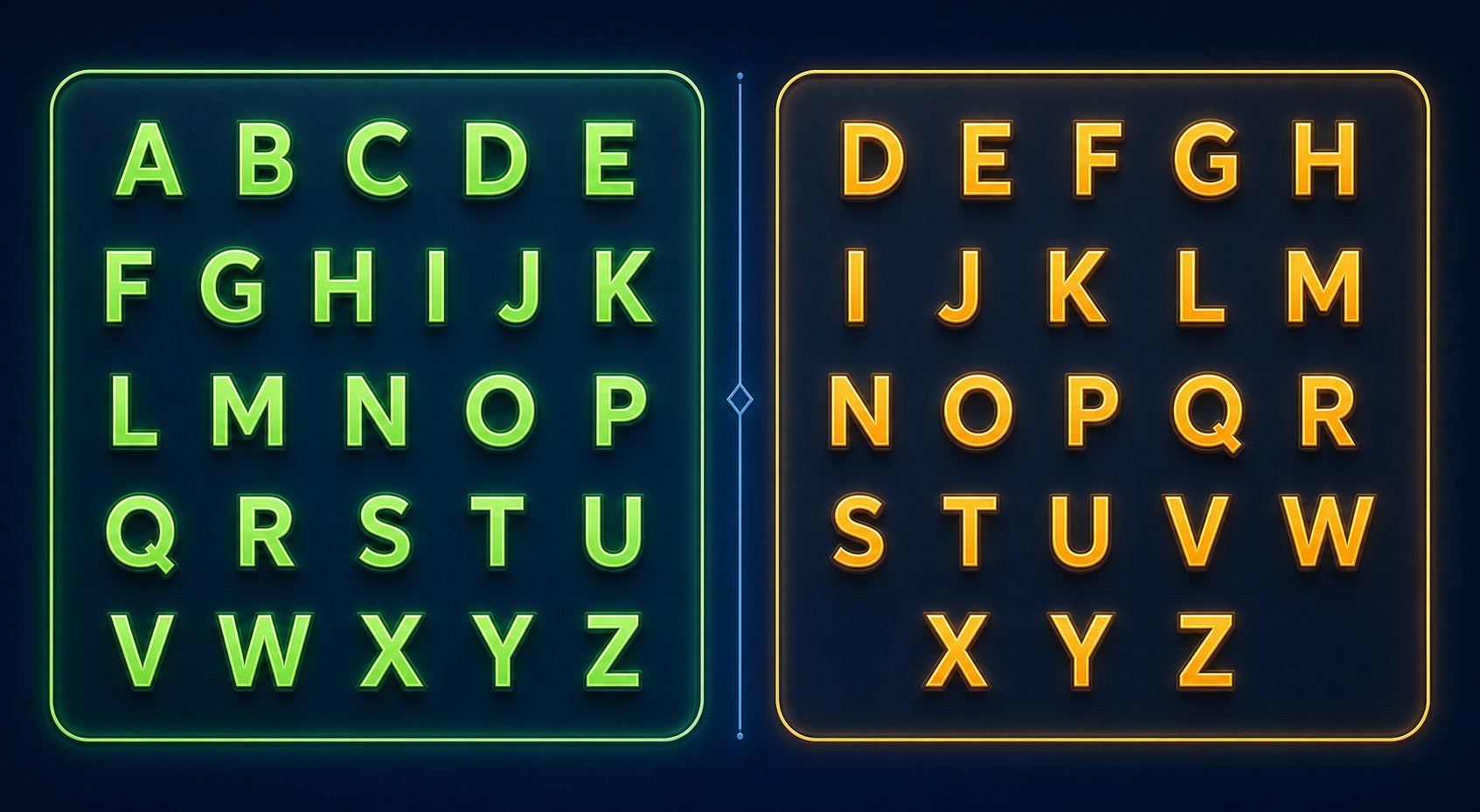
Pinyin's designers faced a constraint that explains almost every confusing letter choice: Mandarin Chinese has more distinct consonant sounds than the English alphabet has available consonant letters. Twenty-one initial sounds needed to fit into roughly 18 usable consonant letters. Something had to give. Rather than inventing new symbols or piling on accent marks, linguists repurposed letters that were either unused or underused in Chinese phonology. The letter "q" was free because Mandarin has no "kw" sound. The letter "x" was available because Mandarin does not use the English "ks" sound. And "c" could be reassigned because the hard-c and soft-c distinction from English simply does not exist in this system.
When you understand this reasoning, the alphabet pronunciation in english versus pinyin stops feeling random. Each "weird" letter choice was a deliberate solution to a space problem. You are not memorizing arbitrary rules. You are learning a different mapping applied to the same 26 characters you already know.
Letters That Deceive English Readers
These are the consonants that form the biggest consonant sound wall between English intuition and Mandarin reality. For each one, your brain will suggest an English default. Here is what to replace it with:
X - English speakers typically say "ks" (as in "box") or "z" (as in "xylophone"), but it should sound closer to "sh" in "sheep." The difference from standard "sh" is subtle: your tongue sits flatter and further forward, producing a lighter, hissier sound. For names, thinking "sh" gets you respectably close.
Q - English speakers typically say "kw" (as in "queen"), but it should sound closer to "ch" in "cheap." Like "x," the pinyin "q" is produced with the tongue positioned forward. Imagine saying "cheese" with a bit more air pushed out, and you are in the right territory.
J - English speakers typically say the hard "j" in "jam," but it should sound closer to a softer "j" as in "jeep" with the tongue pressed forward. The pinyin "j" is similar to "zh" but with a "y" quality added, because Mandarin pronunciation rules mandate a "y" sound after it most of the time.
C - English speakers typically say "k" or "s," but it should sound closer to "ts" in "boots" or "pants." This one surprises people the most. The name "Cai" is not "kai" or "sai" but something like "tsai."
Z - English speakers typically say the buzzy "z" in "zoo," but it should sound closer to "ds" in "woods." It is the unaspirated partner of "c," produced in the same position but with less air.
Zh - English speakers typically say "z" followed by "h," but it should sound closer to "j" in "John" or "dr" in "dream," with the tongue curled backward against the roof of the mouth. This retroflex quality has no clean English match, but "j" gets you close enough for names.
R - English speakers typically say the "r" in "red," but it should sound closer to the "s" in "vision" or the "r" in "azure," with the tongue curled upward. Some describe it as halfway between English "r" and French "j." For a name like "Rui," think "rway" with a softer, buzzier onset.
Letters That Work as Expected
Not every pinyin consonant requires a mental reset. Several initials align closely enough with English that you can relax and trust your instincts. The letters b, m, f, n, l, h, and s all sound essentially the same as their English equivalents. The letters d, g, k, and t are also close, though they differ slightly in aspiration. For the purpose of saying someone's name correctly, these differences are minor enough to ignore.
This means that when you see a name like "Lin," "Fan," or "Ma," you can pronounce it almost exactly as English spelling suggests. The cognitive load of the Chinese phonetic alphabet concentrates on roughly seven tricky consonants, not all twenty-one.
Here is a quick-reference table covering the most deceptive pinyin consonants and their closest English sound approximation:
| Pinyin Letter | Closest English Approximation |
|---|---|
| x | "sh" in "she" (lighter, tongue forward) |
| q | "ch" in "cheap" (more air, tongue forward) |
| j | "j" in "jeep" (softer, tongue forward) |
| c | "ts" in "boots" |
| z | "ds" in "woods" |
| zh | "j" in "John" (tongue curled back) |
| r | "r" blended with "zh" in "vision" (tongue curled back) |
You will notice a pattern in this table. The letters j, q, and x form one family: tongue forward, lighter sounds. The letters zh, ch, and sh form another: tongue curled back, heavier sounds. Grouping them this way turns seven isolated facts into two small clusters, which is far easier to remember when you are scanning a conference badge or email signature and need a quick mental lookup.
Knowing which letters to worry about and which ones to trust is a solid foundation. The next layer of practical skill comes from sorting these sounds by difficulty so you can focus your effort where it actually makes a difference.
Three Difficulty Tiers for Pronouncing Pinyin Names
Not every pinyin sound demands equal effort. Some syllables roll off an English speaker's tongue naturally. Others need a small adjustment. A few have no real English counterpart at all. Sorting these into tiers lets you spend your energy where it counts most, especially when your goal is respectful pronunciation pinyin rather than fluent Mandarin.
Think of it like a triage system. You handle the easy wins first, correct the near-misses second, and accept that a handful of sounds will always be approximate. Here is how the tiers break down:
- Tier One: Sounds That Match English Intuition
- Tier Two: Sounds That Need a Small Correction
- Tier Three: Sounds With No English Equivalent
Tier One: Sounds That Match English Intuition
These are the freebies. When you see syllables like ba, ma, fan, lin, da, na, fu, or si (minus the vowel quirk), the consonants behave almost exactly as English predicts. The vowel "a" in an open syllable sounds like the "a" in "spa." The "i" in "li" or "ni" sounds like "ee" in "see." And finals like "-an" land close to "ban" or "Dan."
For names, this means a surname like "Ma" or "Fan" requires zero mental gymnastics. A given name like "Lin" sounds just like the English name Lynn. You can relax with these and trust your instincts. A large portion of common Chinese names contain mostly tier-one sounds, so your baseline accuracy is already higher than you might expect.
Tier Two: Sounds That Need a Small Correction
This is where chinese pronunciation in english gets tricky but manageable. Tier two covers sounds where English has a near-equivalent, but the tongue position or airflow differs just enough to matter. The key correction pairs:
- zh vs. j: Both sound like English "j," but "zh" curls the tongue back (retroflex) while pinyin "j" keeps it forward. For names, English "j" works for both in a pinch, but pulling your tongue slightly back for "zh" improves accuracy noticeably.
- sh vs. x: Both land near English "sh," but "x" is lighter and produced with the tongue flat behind the lower teeth. Saying "sh" with a slight smile gets you closer to "x."
- ch vs. q: Both resemble English "ch," but "q" pushes more air and positions the tongue forward. Think of "ch" in "cheese" with extra breath for "q," and a heavier, tongue-back "ch" for the pinyin "ch."
The pattern is consistent: the zh, ch, sh group curls the tongue backward, while the j, q, x group keeps it forward and adds a slight "y" quality. If you can internalize just this one distinction, you will correctly approximate the majority of confusing consonants in Chinese names.
Tier Three: Sounds With No English Equivalent
A few Mandarin sounds simply do not exist in English. The vowel ü (as in the name "Lü" or hidden inside syllables after j, q, x, and y) requires rounding your lips as if saying "oo" while your tongue tries to say "ee." The closest shortcut is pronouncing the English letter "u" as a word, but even that is only an approximation.
The retroflex r initial sits somewhere between the "r" in "red" and the "s" in "vision." No single English sound captures it. And tones, the pitch contours that distinguish otherwise identical syllables, have no parallel in English word-level phonology at all.
Here is the reassuring part: for the purpose of saying someone's name respectfully, mastering tiers one and two already puts you well ahead of most English speakers. Native Mandarin speakers are accustomed to hearing their names approximated. When you pronounce ethnicity-specific sounds with visible care, even an imperfect attempt at tier-three elements registers as genuine effort rather than carelessness.
Getting tiers one and two right covers roughly 80% of the sounds in common Chinese names. That is more than enough to show respect and be understood.
The real test of these tiers comes when you apply them to actual surnames and given names you encounter daily. Some of the most common Chinese surnames sit squarely in tier two, which means a small correction yields a big payoff in how naturally you say them.
Common Chinese Surnames and How to Actually Say Them
Theory is useful, but you probably landed on this page because a specific name is staring back at you from an email signature or meeting invite. This section gives you a practical, name-by-name reference for the Chinese surnames English speakers encounter most often. For each one, you will see what people commonly say wrong and what to say instead.
Top Surnames and Their Correct Approximations
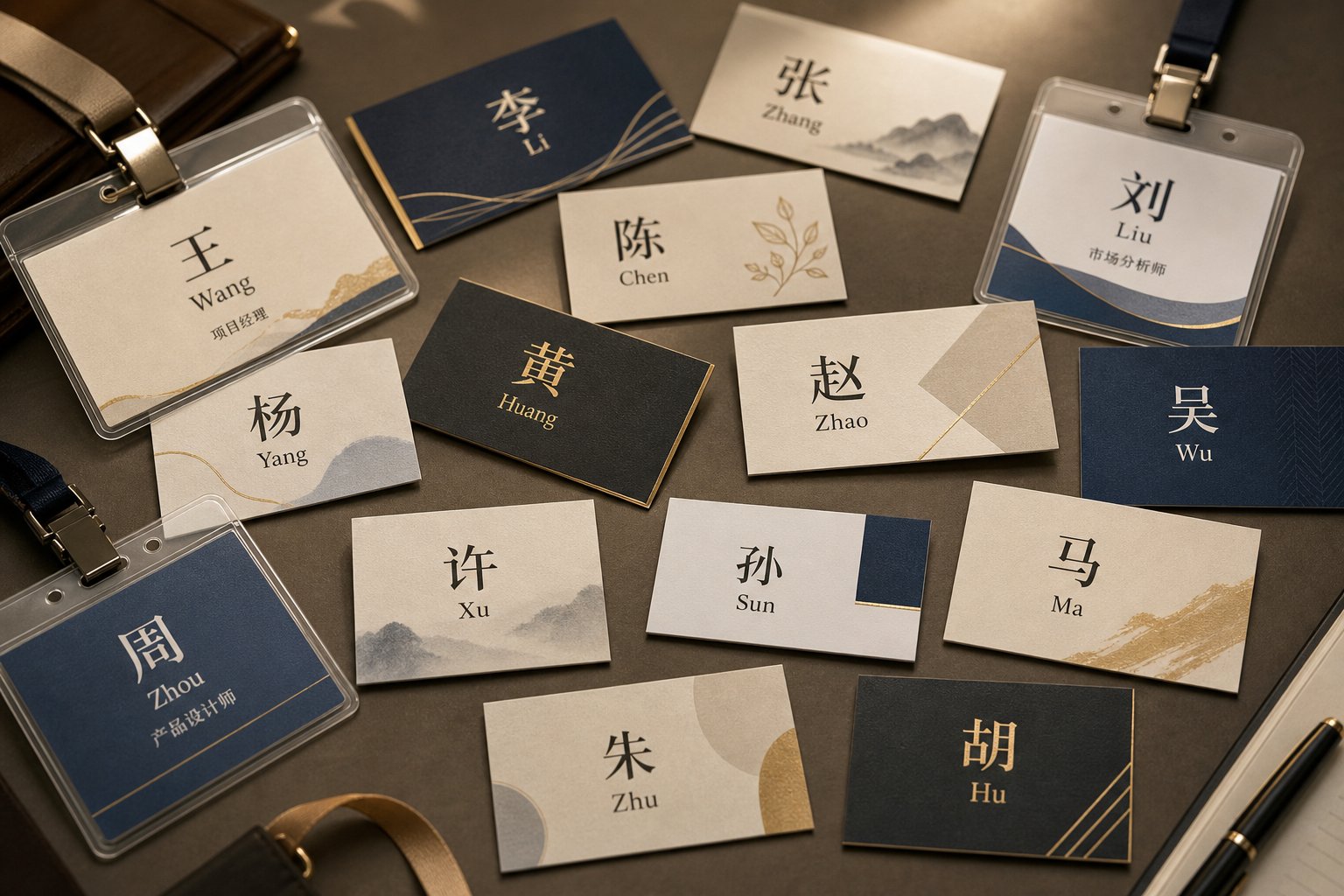
China has a relatively small pool of high-frequency surnames. The top ten alone cover hundreds of millions of people, so learning these gives you outsized returns. Here is how to handle each one:
Wang - Not like the English word "wang." The vowel is the "a" in "spa," not the "a" in "bang." Say "wahng" with a soft, open mouth. Think of it rhyming with "song" rather than "sang."
Zhang - Not "zang" or "chang." The "zh" sounds like the "j" in "John," and the vowel is again the open "ah." Say something close to "jahng." Sishu Mandarin describes it as "John + ng," which is a handy shortcut.
Li - This one is easy. It sounds exactly like the English name "Lee." No tricks here.
Liu - Not "loo" or "lie-oo." The "iu" final sounds like "yo" as in "mayo." Say "lyo" quickly, almost like "Leo" but with a tighter vowel. Think of it as one smooth syllable, not two.
Chen - Close to the English name "Jen" but with a "ch" onset. The vowel sits between the "e" in "taken" and the "u" in "fun." Saying "chuhn" gets you in the right zone.
Zhao - Not "zay-oh." The "zh" is the "j" in "jerk," and "ao" sounds like "ow" in "cow." Put them together: "jow," rhyming with "cow."
Huang - Not "hoo-ang." It is one syllable. The "u" glides quickly into "ahng." Say "hwahng" as a single beat, similar to how you might say "Wong" but with a breathy "hw" at the start.
Xu - This trips up nearly everyone. It is not "zoo," "ex-oo," or "sue." The "x" sounds like a light "sh," and the "u" here is actually the tricky "u" vowel (lips rounded, tongue saying "ee"). The closest English approximation is "shoo" but with tighter, more forward lips. Aim for something between "shoo" and "shew."
Wu - Simpler than it looks. It sounds like "woo" in "wood." The "w" is just a guide into the "oo" vowel.
Zhou - Not "zoo" or "z-how." The "zh" is the "j" sound again, and "ou" sounds like "oh" as in "boat." Say "joe," like the English name Joe. That is genuinely how close it is.
Surnames That Trip Up English Speakers Most
Some surnames combine multiple tricky elements at once. These are the ones that make people freeze mid-sentence or quietly avoid saying the name altogether. If you want to know how do you say qi or handle names starting with "x," this is where to focus.
Xu deserves a second mention because it is so commonly butchered. English has no natural path from the letter "x" to a "sh" sound, and the vowel is one that does not exist in English at all. When in doubt, "shoo" with slightly pursed lips is far better than "zoo."
Qian is not "kee-an" or "kwee-an." The "q" is a forward "ch" sound, and "ian" sounds like "yen" (as in the Japanese currency). Together: "chee-en," said quickly as one flowing syllable.
Xie is not "zee," "zy," or "ex-ee." The "x" is the light "sh," and "ie" sounds like "yeah" compressed into one beat. Say "shee-eh" quickly, almost like "she-yeah" blended together. ASU's pronunciation guide provides audio for this and other common surnames if you want to hear it spoken aloud.
Zhu is not "zoo." The "zh" is the retroflex "j" (tongue curled back), and the "u" is a standard "oo." Say "joo" with your tongue pulled slightly back, like the first part of "juice" but rounder.
Qi is not "kee" or "kwee." The "q" maps to "ch," and "i" is "ee." Say "chee," like the word "cheese" without the "z." So how do you say qi? Just say "chee."
The following table consolidates these problem surnames into a quick-scan reference. If you bookmark one thing from this article, make it this:
| Pinyin Spelling | Common Wrong Pronunciation | Better English Approximation | IPA Transcription |
|---|---|---|---|
| Xu | "zoo" or "ex-oo" | "shoo" (lips forward) | /ɕy/ |
| Qian | "kee-an" | "chee-en" (one syllable) | /tɕʰiɛn/ |
| Xie | "zee" or "zy" | "shee-eh" (blended) | /ɕiɛ/ |
| Zhu | "zoo" | "joo" (tongue back) | /ʈʂu/ |
| Qi | "kee" or "kwee" | "chee" | /tɕʰi/ |
| Zhang | "zang" | "jahng" | /ʈʂɑŋ/ |
| Zhao | "zay-oh" | "jow" (rhymes with cow) | /ʈʂaʊ/ |
| Zhou | "zoo" or "z-how" | "joe" | /ʈʂoʊ/ |
| Huang | "hoo-ang" | "hwahng" (one syllable) | /xwɑŋ/ |
| Liu | "loo" or "lie-oo" | "lyo" (like Leo, tighter) | /lioʊ/ |
For anyone who wants to go beyond text and actually hear these names spoken, searching for pronounce chinese names audio resources online is a worthwhile next step. ASU's SILC program offers clickable audio files for many common surnames, which lets you calibrate your mental approximation against a native speaker's voice.
Of course, surnames are only half the picture. A full Chinese name also includes a given name, and the way surname and given name interact, including their order, spacing, and hyphenation, follows conventions that differ significantly from Western naming patterns.
Understanding Chinese Name Structure and Tones
Knowing how to pronounce individual syllables is one thing. Knowing which syllable is the surname, which part is the given name, and how to handle the whole package in conversation is another challenge entirely. Chinese names follow a structure that mirrors the culture's emphasis on family and lineage, and understanding that structure helps you navigate everything from email greetings to conference introductions.
Identifying Surname and Given Name in Pinyin
In Chinese naming convention, the family name comes first, symbolizing the importance of heritage and collective identity. The given name follows. So when you see "Zhang Wei," Zhang is the surname and Wei is the given name. This is the opposite of the English pattern where "John Smith" puts the personal name first.
Most Chinese surnames are a single syllable, and most given names are one or two syllables. That gives you a reliable rule of thumb: the first syllable is almost always the surname, and whatever comes after it is the given name. Here are the most common patterns you will encounter:
- One-syllable surname + two-syllable given name (most common): Li Mingzhe, Wang Xiaoming, Chen Jiahui
- One-syllable surname + one-syllable given name: Zhang Wei, Liu Fang, Zhao Lei
- Two-syllable surname + one or two-syllable given name (rare): Ouyang Xiu, Sima Qian, Zhuge Liang
Two-character surnames like Ouyang, Sima, and Shangguan exist but are uncommon. If you see a three-syllable Chinese name, the split is almost certainly one-plus-two. A four-syllable name might be two-plus-two, but context usually makes this clear.
Here is where things get confusing in Western contexts: many Chinese people reverse their name order when living or working abroad, placing the given name first to match local expectations. "Wei Zhang" and "Zhang Wei" are the same person. Some people also hyphenate or merge their two-syllable given name: "Mingzhe," "Ming-Zhe," or "Ming Zhe" all represent the same given name. There is no single standard, so when converting chinese to pinyin and english formats, the same individual's name might appear differently on a passport, a business card, and a LinkedIn profile.
When you are unsure which part is the surname, a practical shortcut: Chinese surnames draw from a relatively small pool. If you recognize one syllable as a common surname (Wang, Li, Zhang, Chen, Liu), that is almost certainly the family name regardless of where it appears in the written order.
Tones and Why They Matter for Names
Every syllable in Mandarin carries one of four tones, or a neutral tone, and this pitch contour is as fundamental to the word as its consonants and vowels. Mandarin has four tones: a high flat tone, a rising tone, a low dipping tone, and a sharp falling tone. The classic example uses "ma": ma with a high flat tone means "mother," with a rising tone means "hemp," with a dipping tone means "horse," and with a falling tone means "to scold."
Names work the same way. The surname "Li" can represent entirely different characters depending on tone. With a falling tone it often writes as the character meaning "benefit" or the common surname character. With a rising tone it could be a different character altogether. You cannot be sure in chinese which "Li" someone means without knowing the tone and the character behind it.
So should English speakers attempt tones when saying Chinese names? The honest answer: it helps, but it is not expected. Most native Mandarin speakers understand that tones are foreign territory for English speakers and will not be offended by a flat, toneless pronunciation if the consonants and vowels are in the right place. That said, if you happen to know someone's tone pattern, using it signals a level of care that people notice and appreciate.
A practical approach: focus your energy on getting the consonants and vowels right first. If you interact with someone regularly, ask them to say their name for you and listen for the melodic shape. You do not need to origin pronounce every tonal nuance perfectly. Even approximating the general pitch direction, whether the name rises, falls, or stays level, adds a layer of recognition that a completely flat delivery misses.
Tones also explain why audio resources matter so much more for Chinese names than for, say, French or Spanish names. A text-based guide can tell you which consonant and vowel sounds to aim for, but pitch is something you need to hear. This is one reason why the same pinyin spelling can belong to dozens of different people with different characters and different meanings behind their names, a reality that becomes even more complex when you factor in the multiple romanization systems used across the Chinese-speaking world.
Different Romanization Systems and Why Names Vary
You have been building a mental map of pinyin sounds, but here is a curveball: the name on your screen might not be pinyin at all. Hanyu Pinyin is the standard in mainland China, yet millions of Chinese-heritage people worldwide spell their names using entirely different romanization systems. A name like "Hsieh" follows different rules than "Xie," even though both represent the same Chinese surname and the same spoken sound. If you apply pinyin logic to a non-pinyin name, your chinese pronunciation to english mapping will land in the wrong place entirely.
Multiple romanization systems exist because the Chinese-speaking world is not monolithic. Different regions adopted different standards at different points in history, and personal names, once established on passports and legal documents, tend to stick regardless of what system a government later endorses. Understanding which system you are looking at is the first step toward pronouncing the name correctly.
Identifying Which Romanization System a Name Uses
You do not need to become a linguist to spot the differences. Each system leaves distinctive spelling fingerprints that you can learn to recognize at a glance:
Wade-Giles clues: This older system, developed in the 19th century and widely used in Taiwan until recently, has several telltale patterns. Look for apostrophes between syllables (though these are often dropped in casual use), the combination "hs" where pinyin would use "x" (Hsieh = Xie, Hsiao = Xiao), and doubled vowels or unusual consonant clusters. If you see a word with xi spelled as "hsi" instead, you are almost certainly looking at Wade-Giles. Other giveaways include "ts" or "tz" where pinyin uses "z" or "c" (Tsai = Cai, Tzu = Zi), and "ch" where pinyin uses "zh" or "j" (Chiang = Jiang, Chang = Zhang).
Hong Kong romanization clues: Hong Kong names follow Cantonese pronunciation rather than Mandarin, which means the underlying sounds are different, not just the spelling system. Look for endings like "-ng" as a standalone syllable (Ng is a common surname), consonant clusters that pinyin never uses (Tse, Cheung, Leung), and vowel patterns like "oo" or "eu" that do not appear in standard pinyin. A name like "Wong" is the Cantonese reading of the same character that Mandarin speakers write as "Wang."
Hokkien and other dialect clues: Names from Fujian province, Taiwan's older generation, or Southeast Asian Chinese communities sometimes use Hokkien romanization. Patterns include "Ong" (= Wang), "Tan" (= Chen), "Lim" (= Lin), and "Goh" (= Wu). These reflect entirely different dialect pronunciations of the same characters.
Here is a comparison table showing how the same surnames appear across different systems. Notice how dramatically the spelling shifts even though the underlying Chinese character remains identical:
| Hanyu Pinyin | Wade-Giles | Hong Kong / Cantonese | Hokkien / Southeast Asian |
|---|---|---|---|
| Wang | Wang | Wong | Ong |
| Xie | Hsieh | Tse | Chia |
| Cai | Tsai | Choi | Chua |
| Jiang | Chiang | Keung | - |
| Zhang | Chang | Cheung | Teo |
| Huang | Huang | Wong | Ng / Ooi |
| Lin | Lin | Lam | Lim |
| Chen | Chen | Chan | Tan |
A few patterns jump out immediately. Words that begin with z-sounds in pinyin often start with "ts" or "tz" in Wade-Giles. The pinyin "x" becomes "hs" in Wade-Giles and something else entirely in Cantonese. And Cantonese romanization frequently ends syllables with consonants like "-ng," "-m," or "-p" that Mandarin pinyin never uses in final position. Recognizing these patterns helps you avoid applying the wrong pronunciation rules to the wrong system.
Regional Conventions From Taiwan to Hong Kong to Singapore
Geography is your strongest context clue. When you know where someone's name originates, you can narrow down which romanization system is likely in play:
Mainland China standardized on Hanyu Pinyin in 1958 and has used it consistently for passports, street signs, and official documents since the 1980s. If someone's name comes from mainland China and was registered in the modern era, it almost certainly uses pinyin. The pronunciation rules from earlier chapters apply directly.
Taiwan presents the most complex situation. The government officially adopted Hanyu Pinyin for place names in 2009, but personal names on Taiwanese passports still use a mix of Wade-Giles, Tongyong Pinyin (a short-lived local alternative), and sometimes idiosyncratic spellings chosen by individuals. A Taiwanese person named "Tsai" is using Wade-Giles for what pinyin would spell "Cai." Someone named "Shie" might be using Tongyong Pinyin for what standard pinyin writes as "Xie." The safest approach with Taiwanese names is to ask rather than assume.
Hong Kong uses a Cantonese-based romanization system that reflects Cantonese pronunciation, not Mandarin. This is not just a different spelling of the same sounds. It represents genuinely different spoken forms. "Cheung" is not an alternate spelling of the Mandarin "Zhang." It is the Cantonese pronunciation of the same written character. When you encounter a Hong Kong name, you should pronounce it as the Cantonese romanization suggests rather than trying to convert it back to Mandarin pinyin.
Singapore and Malaysia add another layer. Chinese Singaporeans may use Hanyu Pinyin (the government promotes it), Hokkien, Teochew, or Cantonese romanization depending on their family's dialect group and when the name was registered. A Singaporean named "Goh" is using Hokkien for what Mandarin pinyin would write as "Wu." The name "Tan" corresponds to Mandarin "Chen."
The practical takeaway: before you apply any pronunciation rules, consider the person's regional background. A name spelled "Chang" could be the Wade-Giles version of Mandarin "Zhang" (a Taiwanese person) or the Cantonese reading of an entirely different character (a Hong Kong person). Context determines which pronunciation path to follow.
This regional complexity also explains why you might encounter names that seem to defy every rule you have learned. When spelling alone cannot tell you how to pronounce a name, and when the romanization system itself is uncertain, you need a different set of strategies, ones that go beyond decoding letters on a page.

Cultural Etiquette When Saying Chinese Names
Pronunciation accuracy is only part of the equation. How you approach someone's name, the questions you ask, the assumptions you avoid, and the effort you visibly make, carries just as much weight as whether your tongue lands in exactly the right position. A pinyin name english approximation that is slightly off but delivered with genuine respect will always land better than a perfect pronunciation wrapped in awkwardness or condescension.
Chinese naming conventions carry cultural significance that goes beyond phonetics. The Asia Media Centre notes that Chinese people often address others by family name followed by a title to express politeness and respect. Friends use given names. Getting this social layer right matters as much as getting the sounds right.
How to Ask Someone About Their Name Respectfully
Imagine you are meeting a new colleague named Xu Yifei. You have read this guide, you know "Xu" is closer to "shoo" than "zoo," but you are still not fully confident. What do you say?
Keep it simple and direct. Here are a few scripts that work in professional settings without making the moment feel heavy:
- "I want to make sure I say your name correctly. Could you say it for me?"
- "I've seen your name written down, but I'd love to hear how you pronounce it."
- "Is there a pronunciation you prefer when speaking English?"
These phrases work because they center the other person's preference rather than your own uncertainty. You are not saying "your name is hard" or "I can't pronounce that." You are saying "your name matters to me."
In professional contexts, default to using someone's surname with a title (Mr. Zhang, Ms. Chen) until invited to do otherwise. In casual settings, follow the person's lead. Many Chinese people in Western countries adopt an English first name for convenience, introducing themselves as "David Wang" or "Amy Liu." Some prefer their Chinese given name. Others use both interchangeably depending on context. The key is to ask which they prefer rather than assuming the English name is the "real" one or that the Chinese name is too difficult to bother with.
One detail worth noting: when someone shares their Chinese name with you, listen for how many syllables they emphasize and where the stress falls. Repeat it back once to confirm. This small act of active listening does more for rapport than any amount of silent studying.
Common Social Mistakes to Avoid
Good intentions sometimes produce bad outcomes. Here are the patterns that trip people up most often:
Avoiding the name entirely. This is the most common mistake, and it is more noticeable than you think. Saying "hey, you" or restructuring every sentence to dodge someone's name signals discomfort that the other person absolutely picks up on. A slightly imperfect attempt is always better than erasure.
Attempting someone's name respectfully, even imperfectly, communicates care. Avoiding it communicates that their identity is an inconvenience.
Shortening or nicknaming without permission. Turning "Xiaoming" into "Xiao" or "Ming" without asking is like someone deciding your name is too long and chopping it in half. Some people are fine with it. Others find it dismissive. Always ask first.
Assuming all Asian names follow the same rules. Chinese, Korean, Japanese, and Vietnamese names each have distinct structures, romanization systems, and cultural norms. A surname-first convention in Chinese does not mean every Asian name you encounter works the same way. Treat each person's name as individual rather than applying a blanket "Asian name" framework.
Over-apologizing after a mistake. If you mispronounce someone's name, correct yourself briefly and move on. A long, effusive apology centers your discomfort rather than the other person's identity. "Sorry, let me try that again" is enough.
Here is a quick-reference list to keep these principles accessible:
- Do ask how someone prefers their name to be pronounced
- Do repeat the name back to confirm you heard it correctly
- Do use their preferred name consistently once you know it
- Do ask whether they prefer their Chinese name or an English name
- Don't shorten or create nicknames without explicit permission
- Don't avoid using someone's name because you fear mispronouncing it
- Don't assume all East Asian names follow identical conventions
- Don't make a prolonged scene out of a pronunciation error
Cultural etiquette around names is ultimately about treating people as individuals rather than puzzles to solve. The pronunciation skills from earlier chapters give you the technical foundation. The social awareness here ensures you deploy those skills in a way that builds connection rather than creating distance. And when you encounter a name where neither your phonetic knowledge nor social context gives you enough information to proceed confidently, a few practical strategies can fill the gap.
What to Do When Spelling Alone Is Not Enough
Sometimes you have done everything right. You have checked the consonant table, identified the romanization system, and considered the regional context. The name still does not click. Maybe the spelling is ambiguous, maybe you cannot tell if it is Wade-Giles or pinyin, or maybe the combination of sounds is one you have never encountered before. This is normal. Even experienced Mandarin learners hit walls where text on a screen simply cannot resolve the pronunciation question.
The good news: you are never stuck. A reliable set of fallback strategies exists for exactly these moments, and they work whether you are preparing for a meeting in ten minutes or building long-term familiarity over months.
Practical Steps When You Cannot Determine Pronunciation
When spelling leaves you uncertain, these strategies are ranked from most reliable to least. Start at the top and work down until you have enough confidence to proceed:
- Ask the person directly. This is always the most accurate option and, as covered in the etiquette section, it signals respect rather than ignorance. A simple "Could you say your name for me?" resolves ambiguity instantly. No guide, app, or reference table will ever be more reliable than the person themselves.
- Look up the Chinese characters if available. If you have access to the characters behind the name (from an email signature in Chinese, a WeChat profile, or a bilingual business card), you can paste them into any pinyin dictionary tool to get the standard Mandarin reading. This also resolves the romanization-system ambiguity, since the character is the same regardless of whether someone spells their name in Wade-Giles or pinyin.
- Use regional context clues. Knowing that a colleague is from Hong Kong versus Beijing versus Taipei immediately narrows which pronunciation rules apply. A "Chan" from Hong Kong is Cantonese and sounds as written. A "Chan" who is actually mainland Chinese likely has a passport that says "Chen" instead. Geography is a powerful disambiguation tool.
- Check audio pronunciation resources online. Sites like AllSet Learning's Pinyin Chart let you hear every standard Mandarin syllable spoken by a native speaker. For common surnames specifically, university resources and language-learning platforms often provide clickable audio files. Hearing the name once is worth more than reading ten descriptions of tongue position.
- Apply the approximation rules from this guide. If none of the above options are available in the moment, fall back on the consonant mappings and surname reference table from earlier chapters. Even an educated guess based on these patterns will land closer than an uninformed one.
You will notice the pattern: human sources beat digital sources, and digital sources beat guessing. The pinyin pronunciation guide for beginners you have been building throughout this article is your safety net, not your first resort. Real voices always win.
Building Long-Term Pinyin Intuition
If you interact with Chinese names regularly, whether in a multinational workplace, an academic setting, or a diverse social circle, investing a small amount of effort over time pays compounding returns. You do not need to enroll in a Mandarin course. You need a minimal, sustainable practice loop.
Here is a low-effort approach that builds genuine intuition without demanding hours of study:
Learn the ten most common surnames cold. Wang, Li, Zhang, Liu, Chen, Yang, Zhao, Huang, Zhou, and Wu cover a staggering percentage of Chinese people you will ever meet. If you can pronounce these ten correctly and without hesitation, you have already handled the majority of surname encounters. Revisit the table from chapter four until these feel automatic.
Internalize the five most counterintuitive consonants. The letters x, q, zh, c, and r account for nearly all pronunciation errors English speakers make. You do not need to master every pinyin sound. Just drilling these five until "x = light sh" and "q = forward ch" become reflexive will transform your accuracy across hundreds of names.
Practice with audio, not text. Spend five minutes listening to a pinyin chart with audio once a week. Click through the syllables that appear in names you have encountered recently. Your ear will start recognizing patterns that no written description can fully convey. As Hacking Chinese emphasizes, the written word should be an aid to memory, not a replacement for actually hearing the sounds.
Notice and correct one name per week. Pick a name you have been saying on autopilot and check whether your pronunciation matches the actual pinyin reading. Small corrections accumulated over months build a kind of muscle memory that eventually makes new names feel less foreign on first encounter.
The goal was never linguistic perfection. It was respectful approximation, the kind that tells another person their name matters enough for you to try. Consistent small efforts, a surname memorized here, a consonant corrected there, compound into something that feels less like studying and more like natural familiarity. And that familiarity, built one name at a time, is the real bridge between pinyin on a page and a person standing in front of you.
Frequently Asked Questions About Pinyin Name Pronunciation
1. How do you pronounce the pinyin letter X in Chinese names?
The pinyin X sounds closest to a light 'sh' in English, not the 'ks' or 'z' sound English speakers expect. Your tongue sits flatter and further forward than a standard English 'sh.' For a name like Xu, aim for something between 'shoo' and 'shew' rather than 'zoo' or 'ex-oo.' Similarly, Xie sounds like 'shee-eh' blended quickly, not 'zee' or 'zy.'
2. What is the difference between pinyin and Wade-Giles romanization?
Pinyin is the modern standard used in mainland China, while Wade-Giles is an older system common in Taiwan and historical texts. They spell the same sounds differently: pinyin writes 'Xie' where Wade-Giles writes 'Hsieh,' pinyin uses 'Cai' where Wade-Giles uses 'Tsai,' and pinyin spells 'Zhang' where Wade-Giles spells 'Chang.' You can identify Wade-Giles by telltale patterns like 'hs,' 'ts/tz,' and apostrophes between syllables.
3. How do you say Qi in English?
Qi is pronounced like 'chee,' similar to the word 'cheese' without the final 'z' sound. The pinyin Q maps to a forward 'ch' sound with extra breath, not the 'kw' sound English speakers associate with the letter Q. So names like Qian sound like 'chee-en' spoken as one flowing syllable, and Qiang sounds like 'chee-ahng.'
4. Which part of a Chinese name is the surname?
In traditional Chinese name order, the surname comes first. So in 'Zhang Wei,' Zhang is the family name and Wei is the given name. Most Chinese surnames are one syllable, and given names are one or two syllables. However, many Chinese people reverse this order in Western contexts, placing the given name first. If unsure, check whether you recognize a common surname like Wang, Li, Zhang, Chen, or Liu in either position.
5. Is it rude to mispronounce a Chinese name?
Mispronouncing a Chinese name is not rude as long as you show genuine effort. What native speakers find more hurtful is when someone avoids using their name entirely or shortens it without permission. The best approach is to ask the person directly how they prefer their name pronounced, repeat it back to confirm, and correct yourself briefly if you make a mistake. A respectful attempt always communicates more care than avoidance.