What Makes Chinese Names in Pinyin So Poetically Rich
Imagine reading the name "Mei" on a class roster, a business card, or a birth certificate. Three letters. One syllable. Simple enough, right? What you cannot see is that this single pinyin spelling conceals an entire universe of meaning. It could represent 梅 (plum blossom, a symbol of resilience through harsh winters), 美 (beauty or excellence), 玫 (rose), or 眉 (eyebrow, evoking delicate features). Each character carries its own poetic weight, its own cultural story, its own visual architecture of brushstrokes. Yet pinyin flattens all of them into one identical romanization.
This is the core challenge of pinyin name poetic meaning: the aesthetic, literary, and symbolic significance embedded in Chinese characters simply cannot travel through romanization intact. When thousands of distinct Chinese characters compress into just 375 possible pinyin syllables, the poetry hiding behind each name becomes invisible to anyone reading only the Latin-alphabet version.
What Pinyin Name Poetic Meaning Really Refers To
So what does this concept actually point to? It refers to the layered beauty that Chinese parents deliberately encode into their children's names through careful character selection. A Chinese name meaning goes far beyond a dictionary definition. It draws on nature imagery, classical poetry, philosophical ideals, and even the visual elegance of how a character looks when written with a brush. Parents often spend months deliberating over names in chinese and meanings that will shape a child's identity, consulting elders, literary texts, and sometimes professional name-choosers.
To fully grasp the poetic dimension of any Chinese name, you need to understand three interconnected systems working together:
- Pinyin (sound) - The phonetic layer. Tones, rhythm, and how syllables flow together when spoken aloud create musicality.
- Characters (visual meaning) - Each character is a word with its own semantic weight, radical composition, and stroke-based beauty. Two characters placed side by side form a phrase that expresses a wish or quality.
- Cultural-poetic tradition (layered symbolism) - Characters carry centuries of literary association. A plum blossom is never just a flower. It references specific poems, Confucian virtues, and seasonal metaphors that educated Chinese readers recognize instantly.
These three systems overlap and reinforce each other. The sound of a name pleases the ear. The characters please the eye and mind. The cultural tradition gives the name depth that resonates across generations. When parents research chinese baby names and meanings, they are navigating all three layers simultaneously.
Why Romanization Alone Cannot Capture Name Beauty
Consider the artist Ai Weiwei. His given name uses two identical characters, 未未, but the pinyin spelling "wei" maps to dozens of other characters with completely different meanings. Without seeing the original characters, you lose the specific poetic intention his parents encoded. This is not a minor inconvenience. It is a fundamental loss of identity and meaning chinese names carry within them.
A single pinyin syllable like "mei" can represent over a dozen characters, from 梅 (plum blossom, symbolizing perseverance) to 美 (beauty) to 玫 (rose) to 妹 (younger sister). Each carries vastly different poetic connotations, yet all become identical the moment they are romanized.
This gap between sound and meaning is exactly what makes Chinese naming so rich and so easily misunderstood. The poetry lives in the characters. Pinyin is merely the doorway to pronunciation. What follows in this article bridges that gap, moving from the musical qualities of pinyin tones into the deeper waters of character symbolism, classical literary allusion, and the philosophical traditions that give every Chinese name its soul.
How Pinyin Tones and Sounds Create Poetic Rhythm
Every Chinese name is a tiny piece of music. Before meaning even enters the picture, the sound of a name spoken aloud produces an emotional impression. Parents choosing chinese first names male or female instinctively test how syllables feel rolling off the tongue, how tones rise and fall in sequence, and whether the overall effect sounds graceful, commanding, or lyrical. This sonic dimension is where pinyin name poetic meaning begins, at the level of pure sound.
How Four Tones Shape Name Musicality
Mandarin has four main tones plus a neutral tone, and each one creates a distinct pitch contour. The first tone holds steady and high, like a sustained note. The second tone rises, creating a sense of lift or aspiration. The third tone dips low, adding gravity and depth. The fourth tone falls sharply, conveying decisiveness and force. When you string two or three of these together in a name, the result is a melodic phrase with its own emotional color.
Think of it this way: saying a name aloud is like playing a short musical interval. A name with two rising tones feels buoyant and optimistic. A name that starts high and drops creates a sense of authority. Parents who care about the poetic quality of a name are essentially composing a two- or three-note melody that their child will hear thousands of times throughout life.
The neutral tone also plays a role, though it appears less often in given names. It creates a soft, unstressed landing that can make a name feel casual or intimate. In formal naming, parents typically prefer the four full tones because they carry more expressive weight.
Tone Pairing Patterns for Poetic Effect
Chinese naming tradition pays close attention to how tones interact in sequence. A two-character given name produces a tone pair, and certain combinations carry recognized aesthetic qualities. You'll notice that many male chinese given names favor bold, dynamic pairings, while softer combinations often appear in names intended to sound gentle or refined.
| Tone Combination | Pitch Movement | Aesthetic Quality | Example Name |
|---|---|---|---|
| Tone 1 + Tone 2 | High level, then rising | Gentle, aspirational | Fēiháng (飞航, soaring voyage) |
| Tone 2 + Tone 4 | Rising, then falling | Dynamic energy, boldness | Chéngyì (诚毅, sincere and resolute) |
| Tone 1 + Tone 4 | High level, then falling | Commanding, decisive | Tiānruì (天瑞, heavenly blessing) |
| Tone 4 + Tone 2 | Falling, then rising | Dramatic contrast, resilience | Hàorán (浩然, vast and natural) |
| Tone 1 + Tone 1 | High level, high level | Calm, steady, dignified | Jūnfēng (军锋, military edge) |
| Tone 2 + Tone 2 | Rising, rising | Uplifting, optimistic | Chéngyáng (成阳, becoming sunlight) |
| Tone 3 + Tone 4 | Low dip, then falling | Grounded strength | Yǒngzhì (勇志, brave ambition) |
| Tone 4 + Tone 4 | Falling, falling | Forceful, emphatic | Zhènhào (振浩, shaking vastness) |
Parents selecting mandarin names male often gravitate toward combinations like Tone 2 + Tone 4 or Tone 4 + Tone 2 because the contrast between rising and falling creates a sense of movement and power. For names meant to sound elegant or literary, Tone 1 + Tone 2 pairings produce a smooth, upward arc that feels aspirational without being aggressive.
A practical note: tone sandhi rules also influence how names actually sound in speech. When two third tones appear together, the first shifts to a rising tone in pronunciation. This means a name like Yǔměi (雨美) is spoken more like Yúměi, which changes the perceived melodic shape. Thoughtful parents account for these tone change rules when evaluating how a name will sound in everyday use.
Soft and Hard Initials in Pinyin Name Aesthetics
Beyond tones, the consonant sounds at the beginning of each syllable shape a name's personality. Pinyin initials fall along a spectrum from soft to hard, and this distinction carries strong aesthetic and sometimes gendered associations in Chinese naming culture.
Soft initials like "l," "r," "x," "m," and "n" produce sounds that feel fluid and gentle. Names built from these consonants tend to sound lyrical and approachable. Imagine the difference between "Lìxuān" and "Guózhèn." The first glides; the second punches. Chinese given names male that use harder initials like "zh," "g," "k," and "z" project strength and solidity. These sounds require more forceful articulation, and that physical quality translates into perceived character.
Here is how this plays out in practice:
- Soft initials (l, r, x, m, n, y, w) - Create names that sound melodic and refined. Common in literary or nature-inspired names. Example: Lánxīn (兰心, orchid heart), Ruìyáng (瑞阳, auspicious sun).
- Hard initials (zh, ch, g, k, z, d) - Produce names that sound decisive and powerful. Frequently chosen for male chinese first names meant to convey ambition or strength. Example: Zhìgāng (志刚, determined and firm), Guóqiáng (国强, nation's strength).
- Aspirated initials (ch, p, t, k) - Add a breathy quality that can feel expansive or open. Example: Chūnhé (春和, spring harmony).
The interplay between initial consonants and tone creates the full sonic profile of a name. A soft initial paired with a rising tone produces a completely different feeling than a hard initial paired with a falling tone. Parents who understand this are essentially sculpting sound the way a poet selects words for their phonetic texture as much as their meaning.
This musical dimension of naming explains why two names sharing identical characters but different pronunciation orders would feel entirely different. The poetry of a Chinese name lives not only in what the characters mean but in how they sound when called across a room, whispered to a child, or written into a poem. That sonic beauty, however, is only one half of the equation. The same pinyin syllable, no matter how beautifully toned, still maps to dozens of possible characters, each hiding a different poetic world behind identical sounds.
How Pinyin Flattens Meaning Through Homophones
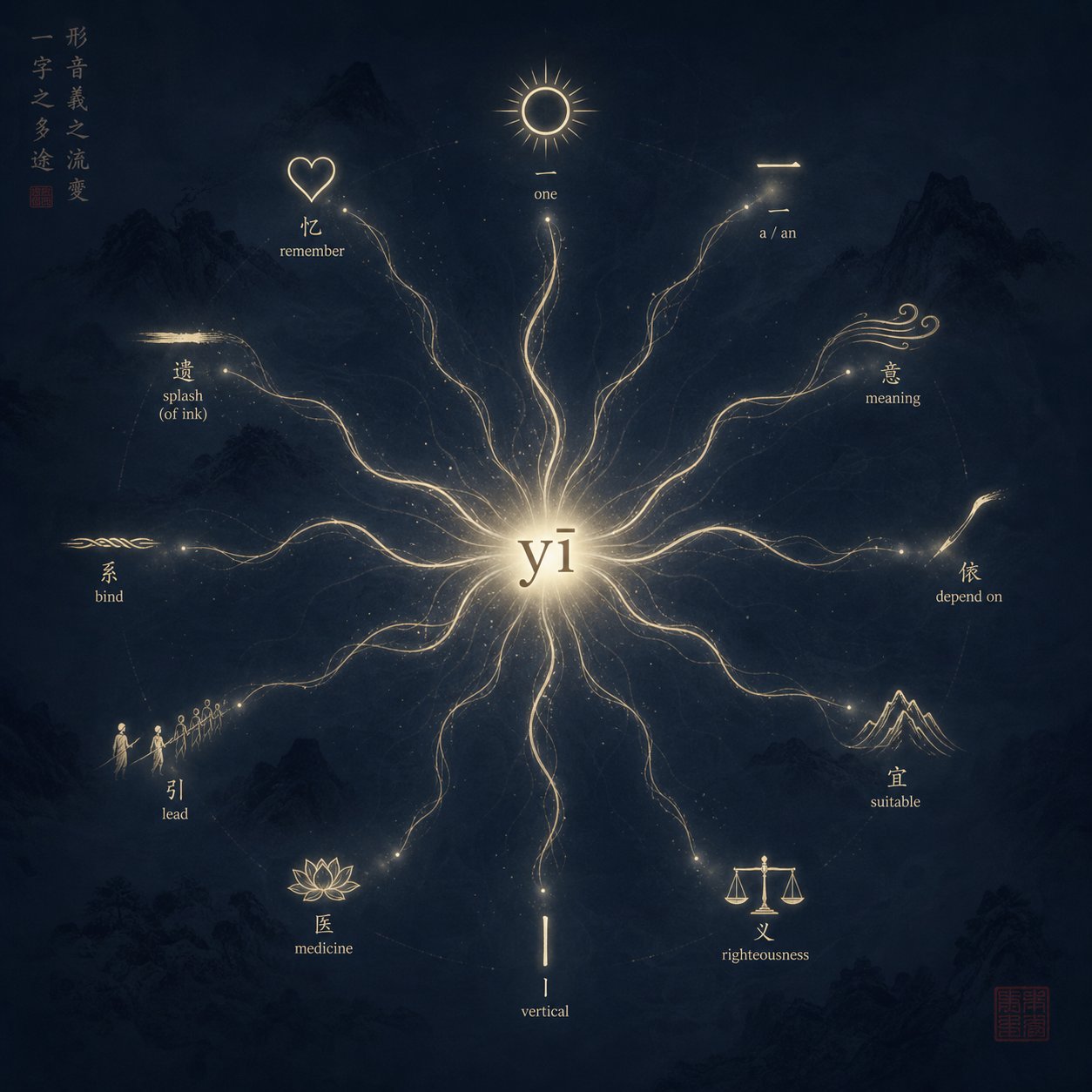
Here is the fundamental problem: Mandarin Chinese uses thousands of distinct characters, but the entire phonetic system compresses into roughly 375 possible syllables. That means dozens, sometimes hundreds, of characters share the same romanized spelling. When you see a pinyin name, you are looking at a shell that could contain any number of completely different poetic souls. The chinese name meanings hidden behind identical spellings are not minor variations. They are entirely separate worlds.
When One Pinyin Syllable Hides Dozens of Meanings
Take the syllable "li." If someone introduces themselves with a name containing this sound, what does my name mean in chinese becomes an impossible question without seeing the written characters. Consider what "li" could represent:
- 丽 (lì) - Beautiful, radiant. Evokes elegance and visual splendor. Common in female names suggesting grace.
- 力 (lì) - Strength, power. Carries connotations of physical and moral force. Often chosen for names expressing determination.
- 理 (lǐ) - Reason, logic, principle. Suggests intellectual clarity and philosophical depth.
- 莉 (lì) - Jasmine. A fragrant flower symbolizing purity and sweetness, frequently paired with 茉 (mò) in names.
- 立 (lì) - To stand, to establish. Implies independence, self-reliance, and the founding of something lasting.
- 黎 (lí) - Dawn, the moment before sunrise. Poetically suggests hope emerging from darkness.
- 礼 (lǐ) - Ritual, propriety, courtesy. Carries deep Confucian resonance about social harmony.
Seven characters. One pinyin spelling. The poetic distance between "dawn" and "jasmine" and "strength" is enormous, yet romanization erases all distinction. A person named Lì could be carrying the weight of beauty, power, or a flower, and you would never know from the spelling alone.
The same collapse happens with "yu." The syllable 雨 (yǔ) means "rain" while 鱼 (yu) means "fish," but in naming, the poetic stakes are even higher:
- 雨 (yǔ) - Rain. Suggests nourishment, gentleness, the quiet sustaining of life. A name evoking spring showers and renewal.
- 宇 (yǔ) - Universe, cosmos. Implies vastness, boundless potential, and cosmic ambition.
- 羽 (yǔ) - Feather. Carries lightness, freedom, flight. References the mythical roc bird in classical poetry.
- 玉 (yù) - Jade. Symbolizes moral perfection, incorruptibility, and refined character in Chinese tradition.
- 语 (yǔ) - Language, words. Suggests eloquence, communication, and literary talent.
A child named Yu could be the universe or a feather. Rain or jade. The poetic intention is radically different, but pinyin renders them identical.
Why You Cannot Decode Meaning from Pinyin Alone
This is not merely a linguistic curiosity. It has real consequences for understanding chinese names with meaning intact. When researchers study author names in academic databases, or when immigration documents record only the romanized version, the cultural and poetic identity encoded in the original characters vanishes. As one CSH researcher noted, foreign names like Chinese names are often excluded from research on gender inequality in academia precisely because transliteration makes gender identification difficult.
You simply cannot reverse-engineer chinese names meanings from pinyin. The process only works in one direction: if you know the characters, you can produce the pinyin. But given only the pinyin, you face a branching tree of possibilities with no way to choose the correct path without additional context.
Yet this very ambiguity is not purely a loss. Chinese parents have long turned homophone richness into a creative tool. Because characters share sounds with other characters, a name can carry hidden resonances. Parents deliberately select characters whose pinyin pronunciation echoes auspicious words. The number 8 (八, bā) is considered lucky because it sounds like 发 (fā, "to prosper"). The same logic applies to naming: a character chosen for its primary meaning also benefits from sounding like something fortunate. A name containing 余 (yu, "surplus") resonates with 鱼 (yu, "fish"), which is why fish symbolizes abundance during Spring Festival celebrations.
This layered wordplay means that chinese names with meaning operate on multiple phonetic levels simultaneously. The character a parent selects carries its own definition, but its sound also activates associations with every other character sharing that pronunciation. A well-chosen name hums with these hidden connections, creating a web of meaning that only readers literate in Chinese characters can fully appreciate.
Understanding this homophone phenomenon reveals why the poetic dimension of Chinese names demands more than phonetic knowledge. It requires familiarity with specific character categories, the imagery traditions they belong to, and the cultural weight each one carries within centuries of literary practice.
Poetic Character Categories Used in Chinese Names
Knowing that pinyin hides dozens of possible characters behind each syllable raises an obvious question: which characters do parents actually reach for when building a poetically meaningful name? The answer is not random. Chinese naming draws from a well-established palette of imagery types, each carrying centuries of literary and cultural weight. These categories function like a poet's toolkit, offering parents specific emotional textures and symbolic associations to weave into their child's identity.
Nature Imagery Characters in Poetic Names
Nature is the oldest and richest source of poetic naming material in Chinese culture. Each plant, season, and landscape element carries symbolic meaning refined over thousands of years of literary use. A name containing 兰 (lan, orchid) does not simply reference a flower. It invokes the Confucian ideal of quiet virtue, since orchids bloom in hidden valleys without seeking attention. Similarly, 松 (song, pine) represents endurance and integrity because pine trees remain green through winter. Parents choosing nature characters are embedding moral narratives into a child's name through imagery rather than direct statement.
Other popular nature characters include 雪 (xue, snow) for purity and quietude, 月 (yue, moon) for gentle luminosity and poetic contemplation, and 梅 (mei, plum blossom) for perseverance through hardship. The Classic of Poetry (Shijing) and Chu Ci are traditional sources where parents discover these nature characters already embedded in beautiful verse, lending each name an echo of ancient literary heritage.
Virtue and Strength Characters for Boys
Classical virtues form another major category, particularly for masculine chinese names. Characters like 德 (de, virtue), 仁 (ren, benevolence), and 义 (yi, righteousness) directly encode Confucian moral ideals. These are not subtle or metaphorical. They are explicit declarations of the qualities parents hope their child will embody. Powerful chinese male names often combine virtue characters with strength characters like 刚 (gang, firm), 勇 (yong, brave), or 志 (zhi, ambition) to create names that feel both morally grounded and forceful.
For families seeking chinese warrior names or chinese names for warrior qualities, elemental force characters offer dramatic poetic weight. The character 龙 (long, dragon) is among the most culturally charged options available. Chinese names that mean dragon carry imperial resonance, cosmic power, and masculine energy all at once. The dragon in Chinese tradition is not a destructive beast but a symbol of supreme authority, rainfall, and celestial movement. Paired characters like 飞龙 (Feilong, flying dragon) appear directly in the Chu Ci anthology, connecting the name to classical literary tradition.
Other elemental force characters include 凤 (feng, phoenix) for grace and renewal, 虎 (hu, tiger) for courage and protective strength, and 鹏 (peng, the mythical roc) for boundless ambition. These chinese masculine names project power through mythological imagery rather than abstract adjectives.
Celestial and Literary Name Characters
Celestial imagery occupies a space between nature and philosophy. Characters like 星 (xing, star), 辰 (chen, dawn or celestial body), and 晨 (chen, morning) connect a child's identity to cosmic cycles and the promise of new beginnings. A name containing 辰 suggests someone aligned with time itself, with the turning of heavens and the arrival of light.
Literary reference characters take a different approach. Instead of pointing outward to nature or the cosmos, they point inward to intellectual cultivation. Characters like 诗 (shi, poetry), 文 (wen, literature or culture), and 书 (shu, book or writing) signal that a family values scholarly achievement and artistic refinement. These characters appear frequently in names from educated families who see literacy and literary creation as the highest human pursuits.
| Category | Pinyin | Character | Poetic Meaning |
|---|---|---|---|
| Nature | lán | 兰 | Orchid: hidden virtue, quiet elegance |
| Nature | sōng | 松 | Pine: endurance, moral integrity through hardship |
| Nature | xuě | 雪 | Snow: purity, stillness, untouched beauty |
| Nature | yuè | 月 | Moon: gentle radiance, poetic contemplation |
| Celestial | xīng | 星 | Star: brilliance, guidance, destiny |
| Celestial | chén | 辰 | Dawn/celestial body: cosmic timing, new beginnings |
| Celestial | chén | 晨 | Morning: freshness, hope, vitality |
| Virtue | dé | 德 | Virtue: moral excellence, ethical character |
| Virtue | rén | 仁 | Benevolence: compassion, humaneness |
| Virtue | yì | 义 | Righteousness: justice, loyalty, honor |
| Literary | shī | 诗 | Poetry: artistic soul, literary refinement |
| Literary | wén | 文 | Literature/culture: scholarly cultivation |
| Literary | shū | 书 | Book/writing: intellectual depth, learning |
| Elemental Force | lóng | 龙 | Dragon: imperial power, cosmic authority |
| Elemental Force | fèng | 凤 | Phoenix: renewal, grace, harmonious union |
| Elemental Force | hǔ | 虎 | Tiger: courage, protective ferocity |
What makes these categories powerful is not just individual character meaning but how characters from different categories combine. A name pairing a nature character with a virtue character, like 松德 (Songde, pine virtue), creates a compressed metaphor: integrity as enduring as an evergreen tree. A celestial character paired with a literary one, like 星文 (Xingwen, star literature), suggests brilliance expressed through writing. These combinations are where pinyin name poetic meaning truly comes alive, in the space between two characters where a parent's hopes crystallize into imagery greater than either character alone.
Character Breakdowns That Reveal Hidden Poetry
Combining characters from different poetic categories is where the real artistry happens. But how exactly does that combination work? What transforms two individual characters into something greater than their parts? The answer lies in the way Chinese characters interact semantically, visually, and tonally when placed side by side. Breaking down real names character by character reveals the compressed poetry that parents encode into what might look, in pinyin, like a simple two-syllable word.
Breaking Down Poetic Names Character by Character
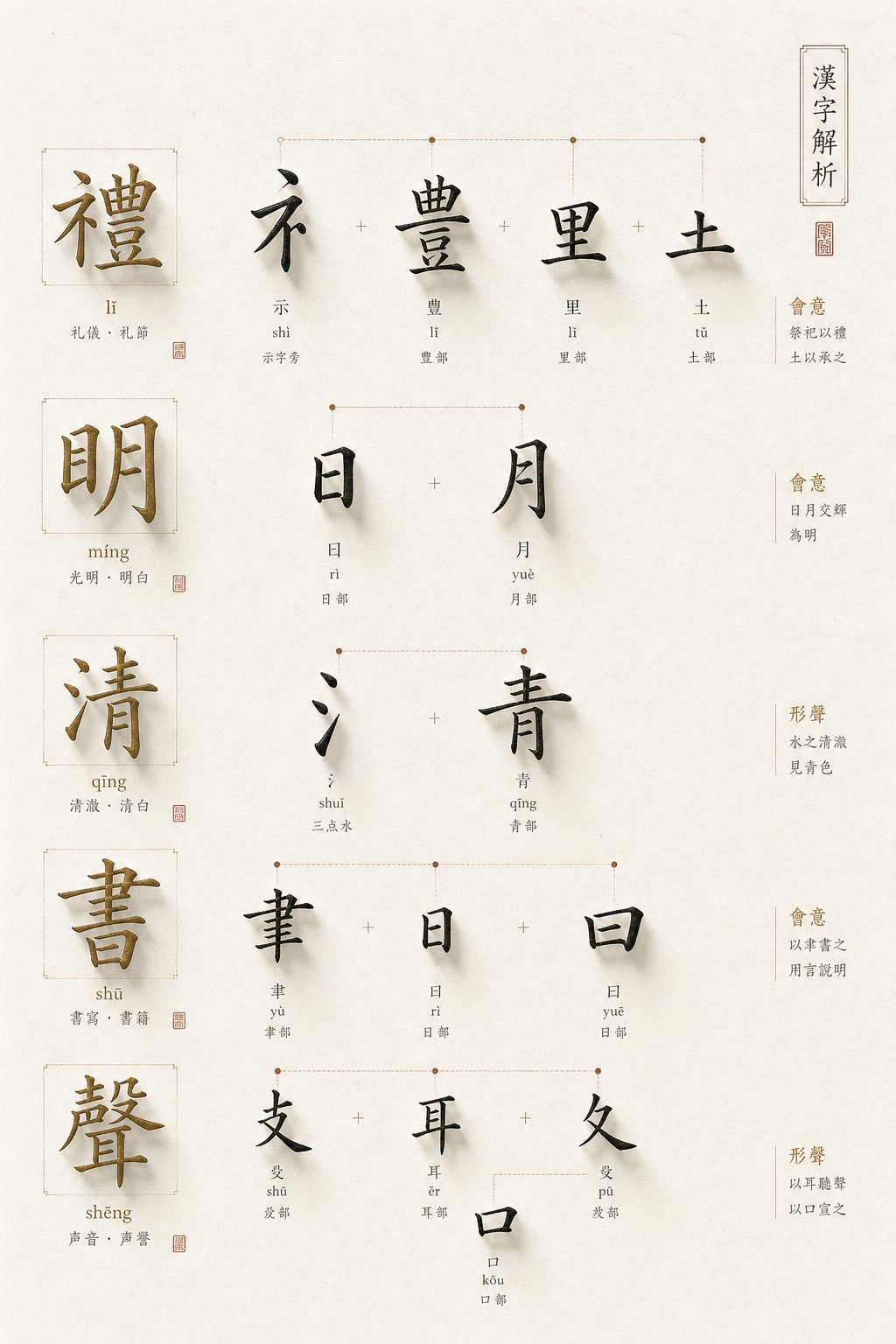
When you examine chinese boy names and meanings at the character level, you discover that each name functions like a miniature couplet. The two characters of a given name do not merely sit next to each other. They create a relationship, a tension, a scene, or a philosophical statement. Understanding this requires looking at four layers for each character: its radical composition (the building blocks that hint at category), its individual meaning, its tonal value, and finally, the combined resonance when both characters are read together.
Let's walk through three example names to see this decoding process in action.
- Jinze (金泽, Jīn Zé) - Gold and Grace
The character 金 (jīn) contains the metal radical and means gold or metal. It symbolizes preciousness, strength, and integrity. Tonally, it sits at Tone 1, high and steady. The character 泽 (zé) contains the water radical (氵), meaning a pool, marsh, or more poetically, grace and benevolence that flows outward. It carries Tone 2, rising. Together, the tonal movement from high-level to rising creates a smooth, aspirational arc. Semantically, the pairing evokes the image of golden light reflecting on water, or integrity that radiates generosity. In Five Elements theory, Metal generates Water, so the name also achieves elemental harmony. One name, four dimensions satisfied simultaneously. - Mingyue (明月, Míng Yuè) - Bright Moon
The character 明 (míng) combines the sun radical (日) and the moon radical (月), literally meaning brightness born from both celestial lights. It carries Tone 2, rising. The character 月 (yuè) is the moon itself, Tone 4, falling sharply. The tonal pairing of rising-then-falling creates a dramatic arc, like watching the moon ascend and then settle into stillness. But the real power here is literary. This exact phrase appears in Li Bai's famous Tang dynasty poem "Quiet Night Thought" (静夜思): 举头望明月, "I raise my head and gaze at the bright moon." Any educated Chinese reader hearing this name instantly recalls that poem's themes of longing, solitude, and beauty. The name does not just mean "bright moon." It carries an entire emotional landscape from one of China's most beloved verses. - Mubai (沐白, Mù Bái) - Bathed in Light
The character 沐 (mù) contains the water radical (氵) and means to bathe, to wash, or to be immersed in grace. Tone 4, falling. The character 白 (bái) means white, pure, or bright. Tone 2, rising. The falling-then-rising tonal shape creates a sense of descent into water followed by emergence into clarity. Together, the characters paint a scene: someone washed clean by light, emerging pure. This name also carries a cultural resonance that Chinese audiences recognize from the swordsman Li Mu Bai in Crouching Tiger, Hidden Dragon, adding a layer of heroic association. The combination of chinese male names and meanings like this one shows how a name can simultaneously reference nature imagery, moral purity, and popular cultural memory.
Notice how each breakdown reveals meaning that pinyin alone could never communicate. "Jinze" as a romanized spelling tells you nothing about gold, water, or elemental balance. "Mingyue" without characters loses its connection to Tang poetry. The poetic soul of each name lives entirely in the character layer.
Classical Poetry as a Naming Source
The tradition of mining classical Chinese poetry for name characters is not casual or incidental. It is a deliberate practice stretching back centuries. The three most important sources are the Shijing (Book of Songs), the Chuci (Songs of the South), and Tang dynasty poetry. Each offers a different flavor of poetic material.
The Shijing, compiled around 600 BCE, is China's oldest poetry anthology. Its verses celebrate nature, love, and agricultural life in language that feels fresh and direct. Names drawn from the Shijing tend to carry earthy, grounded beauty. A name like 桃夭 (Taoyao, "peach blossom radiance") comes directly from a Shijing wedding poem celebrating a bride's beauty.
The Chuci, attributed partly to the poet Qu Yuan, offers more dramatic and mythological imagery. Characters drawn from this source tend toward the cosmic and heroic. The phrase 飞龙 (Feilong, "flying dragon") appears in the Chuci, and names referencing this text carry a sense of grandeur and spiritual aspiration.
The Tang dynasty poets, particularly Li Bai, Du Fu, and Wang Wei, provide the most widely recognized literary allusions. A name containing 云 (yun, cloud) and 鹤 (he, crane) together might reference Wang Wei's landscape poetry. A name with 霜 (shuang, frost) and 月 (yue, moon) could echo Li Bai's imagery of cold, luminous solitude. When parents choose chinese names male meaning from Tang poetry, they are giving their child a name that educated readers will immediately place within a specific literary tradition.
There is even a traditional saying that captures this practice: "Name girls from the Shijing, name boys from the Chuci" (女诗经, 男楚辞). While modern parents do not follow this rule rigidly, it reflects the longstanding belief that the Shijing's gentler imagery suits feminine names while the Chuci's heroic scope suits masculine ones.
How Character Pairing Creates Layered Meaning
The magic of chinese male names meaning lies not in individual characters but in what happens between them. Two characters placed together create semantic relationships that function like poetic devices: metaphor, synecdoche, parallelism, or narrative compression.
Consider these pairing patterns:
- Modifier + noun - One character describes the other. 明月 (bright moon), 清风 (clear wind). The first character shapes how you perceive the second.
- Parallel imagery - Both characters occupy the same conceptual level. 云鹤 (cloud crane), 松竹 (pine bamboo). Together they paint a complete scene.
- Abstract + concrete - One character is a quality, the other a physical thing. 德松 (virtue pine), 仁山 (benevolence mountain). The concrete image grounds the abstract ideal.
- Cause + effect - The characters imply a narrative. 沐白 (bathed in light) suggests a process and its result in just two syllables.
This is why a name like 浩然 (Haoran) resonates so deeply. 浩 means vast or boundless. 然 means "so" or "naturally." Together they form a phrase meaning "naturally vast" or "expansive by nature," which also happens to be the courtesy name of the Tang poet Meng Haoran. The name carries its dictionary meaning, its tonal beauty (Tone 4 falling into Tone 2 rising, creating dramatic contrast), and an entire literary biography in two characters.
The finest Chinese names achieve this density: sound, image, literary echo, and philosophical aspiration compressed into a space that pinyin reduces to a handful of letters. Each name is, in the words of traditional naming philosophy, "a poem written in four languages at once" — sound, image, meaning, and energy working together.
These character-level breakdowns reveal the craftsmanship behind individual names. But the poetic choices parents make do not happen in isolation. They emerge from deeper philosophical systems — generational naming poems, Five Elements theory, and the guidance of elders — that have structured Chinese naming for centuries.
Traditional Naming Philosophy Behind Poetic Choices
Individual character selection is only one layer of the system. Beneath the surface of every poetically meaningful Chinese name lies a deeper architecture: philosophical frameworks that have guided naming decisions for centuries. These traditions determine not just which characters sound beautiful or carry rich imagery, but which characters a family is permitted or expected to use. The poetry in a Chinese name is not freestyle. It emerges from structured systems that connect a single child's identity to cosmic forces, ancestral lineage, and the moral aspirations of an entire clan.
Generational Naming Poems Across Family Lines
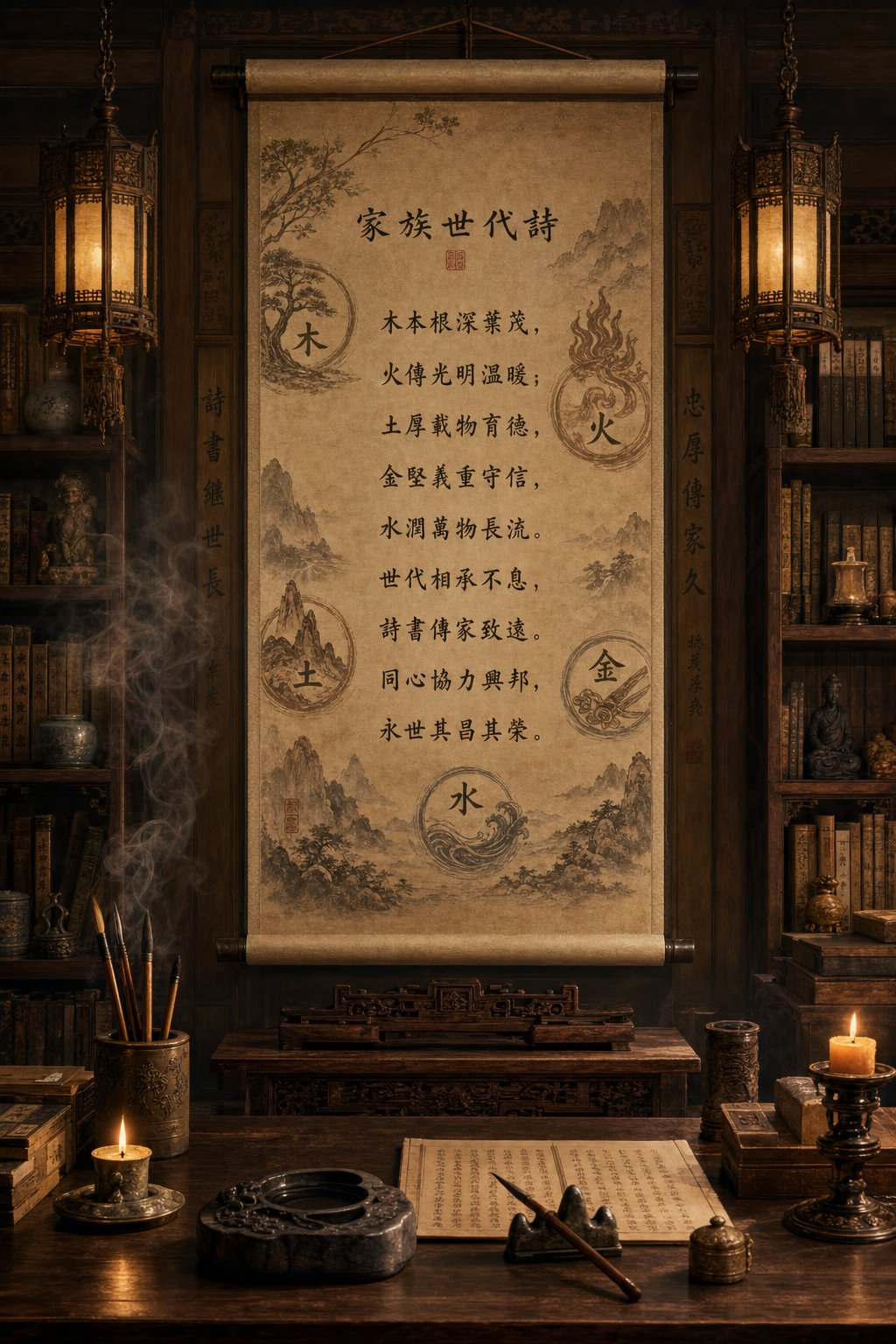
Imagine a poem written not to be read on a page, but to be lived across centuries. Each line produces one character. Each character marks one generation. Every child born into that generation carries that character in their name. This is the tradition of the generational naming poem, or 字辈诗 (zibei shi), one of the most remarkable intersections of poetry and identity in Chinese culture.
Here is how it works. A clan ancestor or respected scholar composes a poem, typically structured in lines of five or seven characters. Each character in the poem corresponds to one generation. When a child is born, their given name must include the character assigned to their generation. The remaining character in the name is chosen individually, making each person unique while still visibly connected to their family line.
A real example from the Wong family of Gom Benn Village in Toishan illustrates this beautifully. Their generational poem, attributed to Ming Dynasty scholar Wong Shi Jun (1570-1661), reads:
- 圣帝启文明 (Sheng di qi wenming) - "The Holy Emperor begot civilization"
- 道德尊朝廷 (Daode zun chaoting) - "The imperial court respects morality"
- 世传礼义重 (Shichuan li yi zhong) - "Etiquette is passed down from generation to generation"
- 奕祀振家声 (Yi si zhen jia sheng) - "Family traditions are invigorated from age to age"
The 22nd through 26th generations of this family drew their generation characters from the third line: 世 (22nd), 传 (23rd), 礼 (24th), 义 (25th), 重 (26th). Brothers, cousins, and even very distant relatives within the same generation all shared that one character. So when you encounter full chinese names from traditional families, the structure typically follows a three-part pattern: surname first, then the generation character, then the personal character unique to the individual.
Do chinese people have middle names? Not in the Western sense. But the generation character functions somewhat like a middle position within the given name. According to FamilySearch's research on Chinese generation poems, the generation character most often appears as the first of two given-name characters, though some clans place it second. This shared character made it immediately clear where someone stood in the family hierarchy. Meeting a stranger with the same surname and generation character meant you could identify your exact generational relationship to them.
The poems themselves were not arbitrary strings of characters. They praised ancestors, expressed hopes for future prosperity, and encoded the values a clan wanted to perpetuate. Each character chosen for the poem carried its own poetic weight, meaning that the generational naming tradition layered poetry on top of poetry: the poem itself was literary art, and the names it generated inherited that artistry.
This tradition stretches back roughly 2,000 years to the Han Dynasty (206 BC - 220 AD), with the practice of using structured poems for generation names becoming widespread just before the Song Dynasty (960-1276 AD). For ancient chinese names male, the generation poem was essentially mandatory. Daughters were sometimes included, though many clan genealogy books historically recorded only male names.
Five Elements and Yin-Yang in Name Selection
While generational poems governed which character a family must use, the Five Elements theory (wuxing) governed which characters would bring balance and fortune to the individual child. These two systems often operated simultaneously, with the generation character fixed by tradition and the personal character selected through elemental analysis.
The Five Elements are Wood (木), Fire (火), Earth (土), Metal (金), and Water (水). In traditional Chinese philosophy, everything in the universe is believed to be composed of these five forces, and each person's birth time (calculated through the Bazi system of eight characters representing year, month, day, and hour) reveals which elements are strong and which are deficient in their destiny.
The naming implication is direct: if a child's birth chart shows a deficiency in Water, their name should include a character containing the water radical (氵) or one semantically associated with water. If Fire is lacking, characters like 炎 (yan, flame), 煜 (yu, brilliant light), or 烨 (ye, splendid) might be chosen. This is not merely superstition. It represents a cosmological system where a name actively participates in shaping a person's fate by supplying what nature left incomplete.
Here is how each element translates into naming character choices:
| Element | Associated Qualities | Common Name Characters | Poetic Associations |
|---|---|---|---|
| Wood (木) | Growth, vitality, flexibility | 林 (lin, forest), 桐 (tong, paulownia), 松 (song, pine) | Upward striving, resilience, spring energy |
| Fire (火) | Passion, warmth, brilliance | 炎 (yan, flame), 煜 (yu, radiance), 晖 (hui, sunlight) | Illumination, transformation, creative force |
| Earth (土) | Stability, nourishment, grounding | 坤 (kun, earth), 安 (an, peace), 培 (pei, nurture) | Steadfastness, maternal care, endurance |
| Metal (金) | Strength, clarity, precision | 鑫 (xin, prosperity), 锋 (feng, sharp edge), 铭 (ming, inscribe) | Decisiveness, purity, lasting value |
| Water (水) | Wisdom, adaptability, depth | 淼 (miao, vast water), 泽 (ze, marsh/grace), 涵 (han, contain) | Flowing intelligence, nourishment, mystery |
The intersection with poetic naming is fascinating. A parent might desire the character 月 (yue, moon) for its literary beauty, but if the child's chart already overflows with Metal energy, a naming consultant might steer them toward 涵月 (Hanyue, "moon contained in deep water") to introduce the Water element while preserving the desired lunar imagery. The Five Elements system does not override poetic intention. It shapes and redirects it, creating constraints that often produce more creative solutions.
Yin-yang balance adds another dimension. Characters are classified as yin (soft, receptive, dark) or yang (strong, active, bright). A balanced name ideally contains both qualities. Stroke count also matters: even numbers of strokes carry yin energy, odd numbers carry yang. Some families calculate the total stroke count of a full name and adjust characters to achieve a numerologically favorable sum.
The Role of Elders and Scholars in Naming Ceremonies
Given all these overlapping systems, it is no surprise that naming a child was rarely a solo decision. Traditional Chinese naming involved a community of advisors, each contributing expertise to different layers of the process.
Elders held authority over the generational poem. They knew which character belonged to the current generation and ensured compliance with clan tradition. In families that maintained chinese middle names through the generation system, the elder's role was essentially non-negotiable. The generation character was fixed before the child was even born.
Fortune tellers or Bazi analysts handled the elemental calculation. They examined the child's birth time, identified missing or excessive elements, and provided a list of characters or radicals that would restore balance. Their contribution was cosmological rather than literary.
Literary scholars or educated family members brought the poetic dimension. They searched classical texts for characters that satisfied the elemental requirements while also carrying beautiful imagery and literary resonance. This was the most creative role in the process, requiring deep knowledge of poetry, philosophy, and the aesthetic qualities of individual characters.
In some families, all three roles converged in a single respected figure, a grandfather or great-uncle whose education and seniority gave them authority across all dimensions. In others, the process was collaborative, with parents presenting options to elders for approval and consulting professional name-choosers for elemental analysis.
This collaborative approach explains why traditional Chinese names often achieve a density of meaning that feels almost impossible for a single person to engineer alone. The name emerges from multiple minds working within multiple systems, each adding a layer of intention. The result is a name that satisfies the ear (tonal beauty), the eye (character aesthetics), the family (generational continuity), the cosmos (elemental balance), and the literary tradition (poetic allusion) all at once.
The generational poem tradition declined significantly in the early twentieth century as urbanization pulled families away from ancestral villages and clan structures weakened. Yet recent surveys suggest a modest revival, with roughly 20-30% of young Chinese people still carrying a generation character in their names. Ancestral halls have been rebuilt. Genealogy books republished. The philosophical infrastructure behind poetic naming has not disappeared. It has simply adapted, with modern parents selectively drawing on Five Elements theory or literary tradition while exercising more individual creative freedom than their ancestors enjoyed.
These philosophical systems did not develop in a vacuum. They evolved alongside broader cultural shifts, from imperial literary culture through revolutionary simplification to the contemporary renaissance of classical aesthetics. The history of how poetic naming conventions changed across dynasties reveals just how deeply Chinese names reflect the spirit of their era.
From Ancient Poetry to Modern Naming Trends
Chinese naming has never stood still. Each era imprinted its values, anxieties, and aspirations directly onto the names parents chose for their children. What counts as a poetically meaningful name in one century might feel outdated or politically charged in the next. Tracing this evolution reveals how deeply pinyin name poetic meaning is tied to historical context, and why the names trending today look so different from those of fifty or five hundred years ago.
How Poetic Naming Evolved Across Chinese Dynasties
During the Tang and Song dynasties (618-1279), literary culture reached extraordinary heights. Poets like Li Bai and Su Shi were national celebrities, and naming conventions reflected this literary atmosphere. Given names drew heavily from classical verse, favoring characters associated with landscape, scholarly refinement, and cosmic imagery. Common chinese male names of this period often contained characters like 文 (wen, literature), 彦 (yan, accomplished scholar), or 之 (zhi, a classical particle lending elegance). The aesthetic priority was formal beauty and literary resonance.
The Ming and Qing dynasties (1368-1912) shifted emphasis toward Confucian moral virtues. Names became more explicitly aspirational, encoding ideals of loyalty, filial piety, and social responsibility. Popular chinese male names from this era frequently included 忠 (zhong, loyalty), 孝 (xiao, filial piety), and 德 (de, virtue). Generational naming poems also reached their peak during this period, with clans commissioning elaborate poems that would govern naming for twenty or more generations.
The mid-twentieth century brought the most dramatic rupture. After 1949, revolutionary fervor reshaped naming entirely. Research on 1.2 billion Han Chinese names shows that the most popular chinese names for men born in the 1960s and 1970s included 建军 (Jianjun, "build the army"), 建国 (Jianguo, "build the nation"), and 卫东 (Weidong, "defend the East"). Poetic subtlety gave way to political directness. Names became slogans. A woman named Feng Aimin ("love the people") told the Global Times that her siblings were named Jianguo ("build the country") and Yongjun ("support the army"), reflecting how deeply patriotic sentiment shaped an entire generation's identity.
The 1980s brought another shift. As China opened economically, names grew more individualistic. Single-character given names peaked during this decade, partly because the one-child policy eliminated the need for shared generation characters among siblings. Common chinese boy names of this era favored characters like 伟 (wei, great), 强 (qiang, powerful), and 杰 (jie, excellence), projecting personal ambition rather than collective ideology. Some parents began choosing what they considered cool chinese male names influenced by Hong Kong and Taiwanese pop culture, introducing characters like 俊 (jun, handsome) and 杰 (jie, outstanding) that carried a more modern, cosmopolitan feel.
| Era | Example Name (Pinyin) | Characters | Poetic Characteristics |
|---|---|---|---|
| Tang-Song (618-1279) | Yanzhou | 彦舟 | Literary allusion, scholarly elegance, nature metaphor |
| Ming-Qing (1368-1912) | Zhongde | 忠德 | Confucian virtue, moral aspiration, formal gravity |
| Revolutionary (1949-1976) | Jianguo | 建国 | Political directness, collective identity, patriotic fervor |
| Reform Era (1980s) | Weijie | 伟杰 | Personal ambition, strength, individual excellence |
| 1990s | Mengyue | 梦月 | Romantic imagery, softness, pop culture influence |
| Contemporary (2010s-present) | Yanzhou | 砚舟 | Classical revival, poetic allusion, literary depth |
Modern Revival of Classical Name Aesthetics
Something remarkable happened in the 2010s and 2020s. Young Chinese parents, many born in the 1990s, began reaching back past the revolutionary and reform eras to reclaim classical poetic naming. Cultural sociologist Xu Shumin described this shift as young parents "reclaiming traditional Chinese culture as a living aesthetic in everyday life." Just as they might wear Hanfu to express cultural identity, naming their children from classical texts became another form of self-expression.
Recent newborn name data from provinces like Sichuan and Zhejiang confirms this trend. Names like Jincheng (锦程, from the idiom meaning "splendid prospects") and Yanzhou (砚舟, referencing a Northern Song poem comparing an inkstone to a boat carrying thought) have gained cross-regional popularity. One mother in Chengdu named her daughter Chirou (驰柔), drawn from Chapter 43 of the Tao Te Ching, encoding the philosophical idea that softness overcomes hardness. These are not simple cute chinese names chosen for pleasant sound alone. They carry deliberate literary weight.
The modern twist is that today's parents also think about international accessibility. They consider how a name will look and sound in pinyin on a passport, whether it will be pronounceable by non-Chinese speakers, and whether the romanized form carries any unfortunate associations in English. This dual awareness, classical depth paired with global readability, defines the current generation's approach to poetic naming. A name must satisfy both the Chinese literary tradition and the practical reality of a globalized world where pinyin is often the only version others will see.
Yet even as naming conventions cycle through historical phases, the underlying poetic system remains remarkably consistent within Mandarin. What happens when that same system encounters different Chinese dialects, each with its own romanization and phonetic personality? The same characters, carrying identical poetic meaning, can sound and feel entirely different depending on whether they are spoken in Cantonese, Hokkien, or Mandarin.
Pinyin Poetics Across Dialects and Romanizations
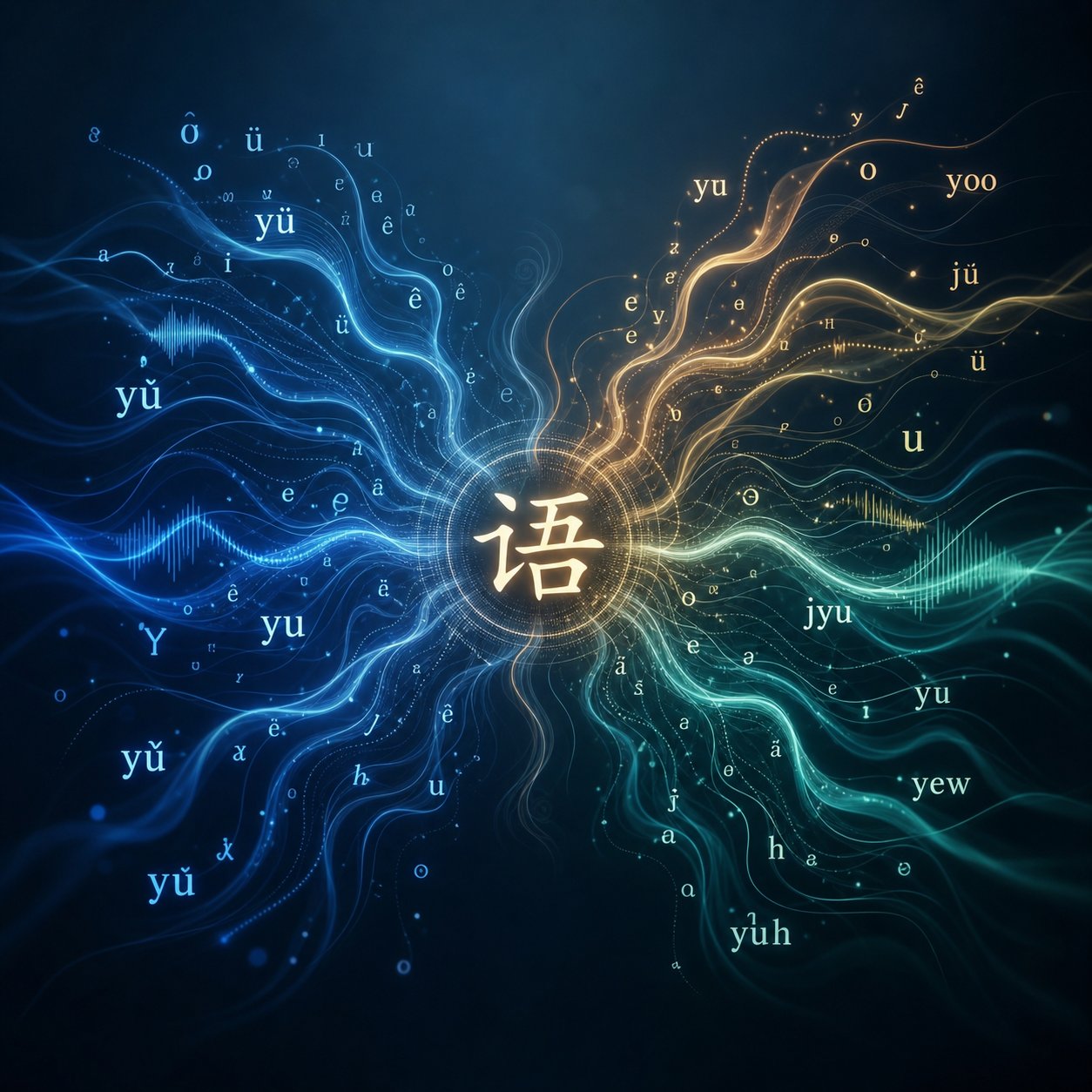
A character's poetic meaning stays fixed on the page, but its sound transforms the moment you cross a dialect boundary. The character 王, for instance, is "Wang" in Mandarin pinyin, "Wong" in Cantonese, "Ong" in Hokkien, and "Heng" in Teochew. Same character, same meaning ("king"), but four completely different sonic personalities. For anyone exploring mandarin chinese names alongside their Cantonese or Hokkien equivalents, this phonetic divergence reshapes the entire aesthetic experience of a name.
Mandarin Pinyin Versus Cantonese Romanization
Mandarin pinyin is a standardized system with consistent spelling rules. Cantonese romanization, by contrast, has historically lacked a single unified standard. The Hong Kong Government Cantonese Romanisation (HKG-romanisation) system is non-standardized, meaning the same character can appear as multiple spellings. Research from University College London found that the character 周 appears as "Chow," "Chau," or "Chiau" in HKG-romanisation, while Jyutping (the standardized Cantonese system) consistently renders it as "Zau1." This inconsistency does not just create administrative confusion. It fractures the phonetic identity of a name across documents, databases, and generations.
The poetic implications are real. Cantonese preserves six tones (compared to Mandarin's four), plus entering tones with abrupt consonant endings like "-k," "-t," and "-p." These clipped finals give Cantonese names a percussive quality that Mandarin lacks. A name ending in "-k" sounds sharp and decisive in Cantonese but loses that edge entirely when converted to Mandarin pinyin. The musicality parents carefully composed in one dialect simply does not translate to another.
How Dialect Differences Affect Poetic Perception
Consider how the same poetic name sounds and feels across romanization systems:
- 明月 (Bright Moon) - Mandarin: Mingyue. Cantonese (Jyutping): Ming4jyut6. Hokkien: Beng-goat. The Mandarin version flows with soft nasals. The Cantonese version ends with a clipped "-t," adding crispness. The Hokkien version sounds entirely foreign to Mandarin ears.
- 志强 (Ambitious and Strong) - Mandarin: Zhiqiang. Cantonese: Zi3koeng4. Hokkien: Chi-kiong. Mandarin's retroflex "zh" gives weight; Cantonese's "z" feels lighter; Hokkien's aspirated "ch" adds breath.
- 美玲 (Beautiful Jade Sound) - Mandarin: Meiling. Cantonese: Mei5ling4. Hokkien: Bi-leng. The Mandarin version sounds melodic and familiar internationally. The Hokkien version carries a sharper, more angular quality.
In diaspora communities across Singapore, Malaysia, and North America, the way a family romanizes their surname signals ancestral origin. A person surnamed "Wong" is understood to have Cantonese heritage, likely tracing roots to Guangdong province or Hong Kong. Someone with the surname "Ong" signals Hokkien ancestry. The romanization itself becomes a cultural marker, a compressed genealogy visible in a single spelling choice.
This matters for asian boy names and asian names boy searches conducted by diaspora families. A family with Cantonese roots might select characters whose poetic beauty shines specifically in Cantonese pronunciation, prioritizing the six-tone system's richer melodic range. A Mandarin-speaking family optimizes for the four-tone system instead. The same character 浩 (vast) is "Hou6" in Cantonese and "Hao4" in Mandarin. Both carry the meaning of boundlessness, but "Hao" with its open vowel feels expansive in a way that "Hou" with its rounded vowel does not.
Sound symbolism research adds another layer. Linguists have found that certain phonetic qualities carry near-universal aesthetic associations across languages. Front vowels like "i" and "e" tend to evoke smallness, lightness, and brightness. Back vowels like "o" and "u" suggest largeness, darkness, and weight. Consonants with voicing ("b," "d," "g") feel heavier than their unvoiced counterparts ("p," "t," "k"). These cross-linguistic patterns interact with Chinese-specific naming conventions in interesting ways. A name like 丽 (li, beautiful) benefits from the front vowel's association with brightness and delicacy, reinforcing its meaning at the phonetic level. A name like 龙 (long, dragon) gains weight from its back vowel and nasal ending, sonically matching its semantic power.
When a Chinese name travels internationally through pinyin, these sound-symbolic associations become the only poetic dimension accessible to non-Chinese speakers. They cannot read the characters or appreciate the literary allusions, but they can feel whether a name sounds light or heavy, sharp or flowing. This is the thin thread of poeticism that survives romanization intact, a universal phonetic aesthetics operating beneath the culturally specific layers that only character literacy can unlock.
How to Decode and Create Poetic Pinyin Names
Everything covered so far, tones, homophones, character categories, classical poetry sources, elemental philosophy, and dialect variation, converges on a single practical question: what do you actually do with all of this? Whether you are trying to understand the poetic depth behind an existing name or searching for good chinese names to give a child, the process follows a consistent logic. Here is that logic distilled into a usable framework.
A Step-by-Step Framework for Decoding Pinyin Names
When you encounter a romanized Chinese name and want to uncover its poetic meaning, work through these layers in sequence:
- Identify the pinyin syllables and tones. Break the name into its component syllables. Determine the tone of each syllable if tone marks are present. Note the tonal movement: is it rising-falling, level-rising, or another pattern? This tells you the name's musical shape.
- Research possible character matches. For each syllable, list the characters that share that pronunciation. A syllable like "yu" could map to 雨 (rain), 宇 (universe), 羽 (feather), 玉 (jade), or 语 (language). Without seeing the original characters, you cannot determine meaning, but you can identify the range of possibilities.
- Analyze tone patterns for musicality. Check whether the tone combination produces a recognized aesthetic quality. A Tone 2 + Tone 4 pairing suggests dynamic energy. A Tone 1 + Tone 2 pairing feels gentle and aspirational. This reveals what emotional texture the parents likely intended.
- Check character category and imagery type. Once you identify the actual characters (by asking the name's bearer or seeing them written), classify each one: nature imagery, celestial reference, classical virtue, literary allusion, or elemental force. This places the name within a poetic tradition.
- Verify cultural and literary associations. Search for the character combination in classical poetry databases or idiom dictionaries. Does the pairing appear in the Shijing, Chuci, or Tang poetry? Does it reference a chengyu? Literary echoes multiply a name's meaning exponentially.
- Consider elemental balance. Examine the radicals within each character. Do they contain water (氵), wood (木), fire (火), earth (土), or metal (金)? The elemental composition reveals whether the name was designed to compensate for a birth chart deficiency or to reinforce existing strengths.
This process works whether you are decoding chinese boy names encountered in literature, understanding a colleague's name more deeply, or researching chinese baby boy names from a family heritage perspective. The key insight is that decoding always requires moving from pinyin back to characters. Without that step, you are working with sound alone.
Principles for Composing Poetically Meaningful Names
Creating a name reverses the process. Instead of starting with pinyin and working backward, you begin with intention and build outward through characters toward sound. If you are searching for unique chinese boy names or gender neutral chinese names with genuine poetic depth, these principles guide the composition:
- Start with meaning, not sound. Decide what quality, image, or aspiration you want the name to carry. A wish for resilience might lead to pine (松) or plum blossom (梅). A hope for intellectual brilliance might point toward 睿 (rui, wise) or 哲 (zhe, philosophical).
- Select characters from complementary categories. Pair a nature image with a virtue, or a celestial reference with a literary character. The tension between categories creates depth. A name for boys like 泽文 (Zewen) combines water-grace with literary cultivation, producing richer meaning than two characters from the same category.
- Test the tonal melody. Say the full name aloud, surname included. Does the tone sequence flow or stumble? Avoid three identical tones in a row. Seek contrast that creates movement.
- Verify homophone associations. Check whether the name's pinyin pronunciation sounds like any unfortunate words. A beautiful character combination loses its power if spoken aloud it resembles something embarrassing.
- Consult classical sources. Search your chosen characters in poetry anthologies. If the combination already appears in a beloved verse, the name inherits that poem's emotional weight. If it does not appear anywhere, confirm that the pairing reads naturally to native speakers.
For families exploring chinese names for boys that balance tradition with modern sensibility, the most successful approach combines one character rooted in classical imagery with one that feels contemporary. This produces a name that honors heritage without sounding archaic, a chinese name for boys that works equally well called across a playground or printed on a university diploma.
Without character knowledge, pinyin name poetic meaning remains permanently inaccessible. Sound can charm the ear, but only the written character unlocks the image, the literary echo, the elemental force, and the ancestral intention that give a Chinese name its soul.
This is the irreducible truth at the heart of the entire system. Pinyin is a doorway, not a destination. The poetry lives in the characters, in the space between two brushstroked forms placed side by side with centuries of intention behind them. Whether you are decoding a name you have encountered or composing one that will accompany a child through life, the path always leads back to the same place: the character itself, holding meaning that no romanization can carry alone.
Frequently Asked Questions About Pinyin Name Poetic Meaning
1. Can you determine the meaning of a Chinese name from pinyin alone?
No. Pinyin romanization compresses thousands of distinct Chinese characters into roughly 375 possible syllables, meaning dozens of characters share identical spellings. A syllable like 'yu' could represent rain, universe, feather, jade, or language. Without seeing the original characters, the poetic intention, literary allusions, and symbolic meaning remain completely inaccessible. You must know the specific characters to decode any Chinese name's true meaning.
2. How do Chinese parents choose characters for poetically meaningful names?
Parents typically navigate multiple systems simultaneously. They consider tonal musicality (how syllables rise and fall when spoken), character imagery categories (nature, celestial, virtue, literary, or elemental force), Five Elements balance based on the child's birth chart, and classical poetry references from sources like the Shijing or Tang dynasty verse. Many also consult elders, fortune tellers, or literary scholars to ensure the name satisfies aesthetic, philosophical, and familial requirements.
3. What role do tones play in making a Chinese name sound poetic?
Mandarin's four tones create melodic patterns when combined in a two-character given name. Rising-then-falling combinations (Tone 2 + Tone 4) sound dynamic and bold, while level-then-rising pairings (Tone 1 + Tone 2) feel gentle and aspirational. Parents essentially compose a short musical phrase, testing how the tonal arc feels when the name is spoken aloud. Soft consonant initials like 'l' and 'x' add fluidity, while hard initials like 'zh' and 'g' project strength.
4. What is a generational naming poem in Chinese culture?
A generational naming poem (zibei shi) is a verse composed by a clan ancestor or scholar, where each character in the poem corresponds to one generation. Every child born into a specific generation must include that generation's assigned character in their name. This tradition, dating back roughly 2,000 years, creates poetic continuity across family lines. The remaining character in the name is chosen individually, making each person unique while visibly connected to their lineage.
5. How does the same Chinese name sound different across dialects like Cantonese and Mandarin?
The same characters carry identical meaning but produce entirely different sonic experiences across dialects. Cantonese preserves six tones plus entering tones with abrupt consonant endings like '-k' and '-t,' giving names a percussive quality Mandarin lacks. For example, the poetic name meaning 'bright moon' is 'Mingyue' in Mandarin but 'Ming4jyut6' in Cantonese Jyutping, with the clipped final adding crispness absent from the Mandarin version. Parents in different dialect communities optimize tonal beauty for their specific phonetic system.