Understanding Pinyin Name Spacing and Why It Confuses Everyone
Imagine filling out a passport application and pausing at the name field. Should your two-syllable given name be one word or two? Hyphenated or joined? This single decision can trigger document rejections, flight booking mismatches, and weeks of delays. The culprit is pinyin name spacing, and almost no one gets it right on the first try.
What Pinyin Name Spacing Actually Means
At its core, the chinese name definition for spacing in pinyin comes down to one question: how do you arrange the romanized syllables of a name in Chinese when writing it in Latin letters?
Pinyin name spacing refers to the standardized rules that determine whether syllables in a romanized Chinese name are written together as one unit, separated by a space, or connected with a hyphen.
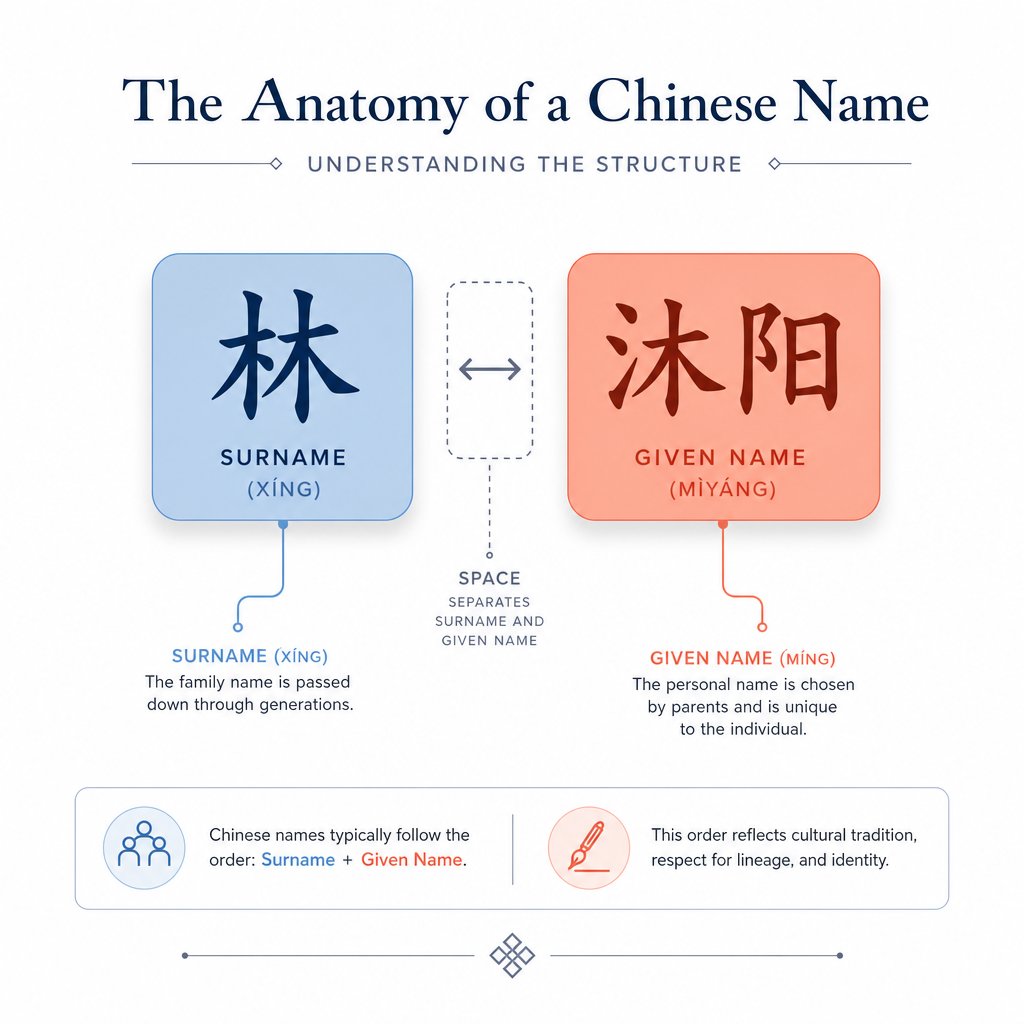
Chinese names follow a surname-first structure. The family name (xing) comes before the given name (ming). Most Chinese surnames are a single syllable, while given names can be one or two syllables. When a name in Chinese like 王小明 gets romanized, the correct pinyin is "Wang Xiaoming" with the two given-name syllables joined into one word. Writing it as "Wang Xiao Ming" with a space between given-name syllables is technically incorrect, yet it happens constantly on official documents worldwide.
Why Spacing Varies Across Documents and Systems
The confusion exists because multiple systems handle chinese names differently. Mainland China follows Hanyu Pinyin rules, where two-syllable given names are written as one word with no space or hyphen. Taiwan often uses a hyphen between given-name syllables. Hong Kong and Malaysian Chinese communities typically insert a space between each character. Wade-Giles, an older romanization system, hyphenates given names by default.
These competing conventions mean that chinese name interpretation varies depending on which country issued the document, which era it was created in, and which romanization system was applied. A single person might see their name formatted three different ways across a passport, a university transcript, and a bank account. This guide covers the official standards, practical applications, and context-specific rules you need to keep your documents consistent and your applications moving forward.
The root of all these formatting differences lies in how Chinese names are structurally built, starting with the relationship between surname and given name.
How Chinese Name Structure Determines Spacing Rules
Every pinyin spacing decision traces back to one thing: the structural anatomy of a Chinese name. Unlike English names, where given names and surnames can each be multiple words of varying length, Chinese names follow a compact, predictable pattern. Understanding that pattern is the key to getting the spacing right every time.
Surname and Given Name Order in Pinyin
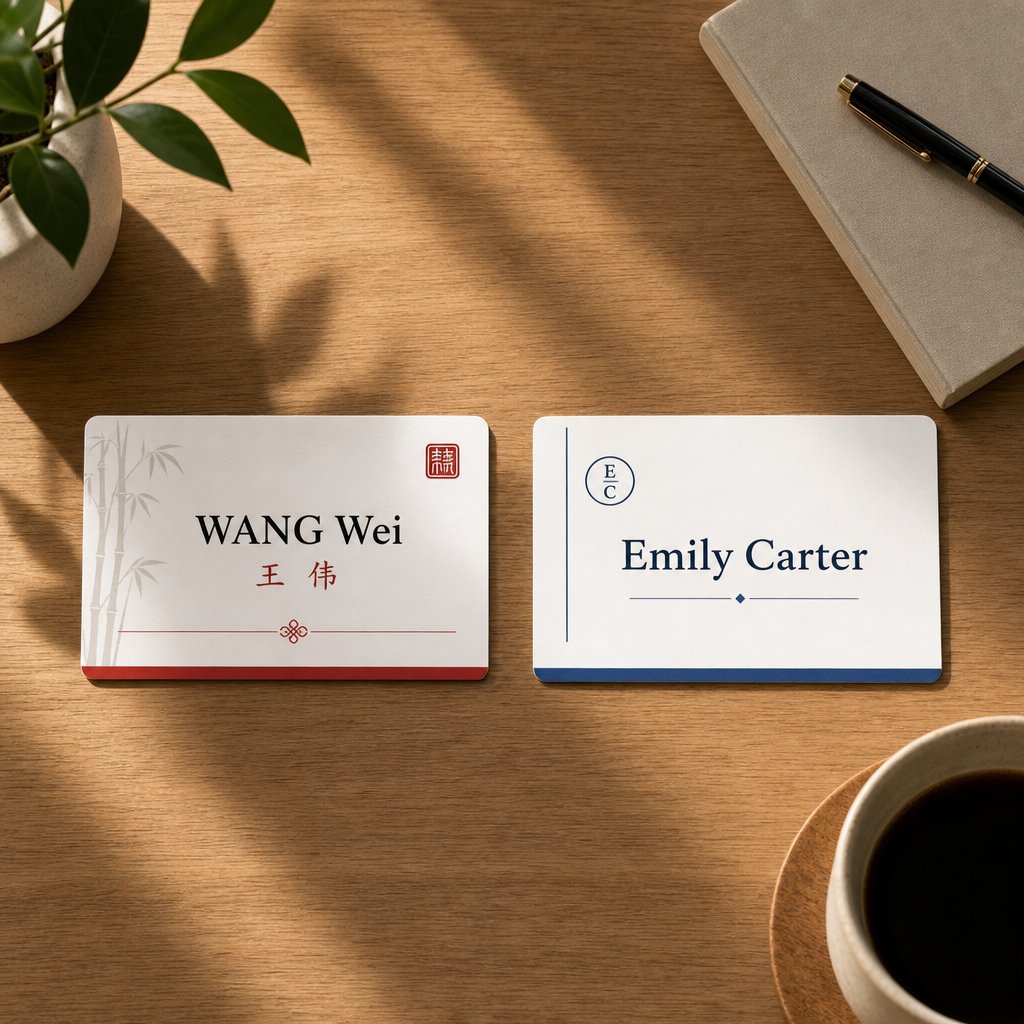
Chinese names place the family name first, followed by the given name. This is the opposite of most Western naming conventions. So when you see "Wang Xiaoming," Wang is the chinese surname and Xiaoming is the given name, not the other way around.
The family name (xing) represents lineage. It is inherited from one's parents and shared across the immediate family. The given name (ming) is the personal identifier chosen at birth. In pinyin, these two components are separated by a single space, and each begins with a capital letter. That space between surname and given name is the only space that belongs in a correctly formatted Chinese name.
Here is where many people trip up. If you see a three-syllable name like Li Jianguo, you might assume it splits as "Li Jian Guo" with spaces between every syllable. It does not. The chinese last names in this case is Li (one syllable), and the given name Jianguo (two syllables written as one word) follows it. Only one space exists in the entire name.
Single vs Compound Surnames and Their Impact on Spacing
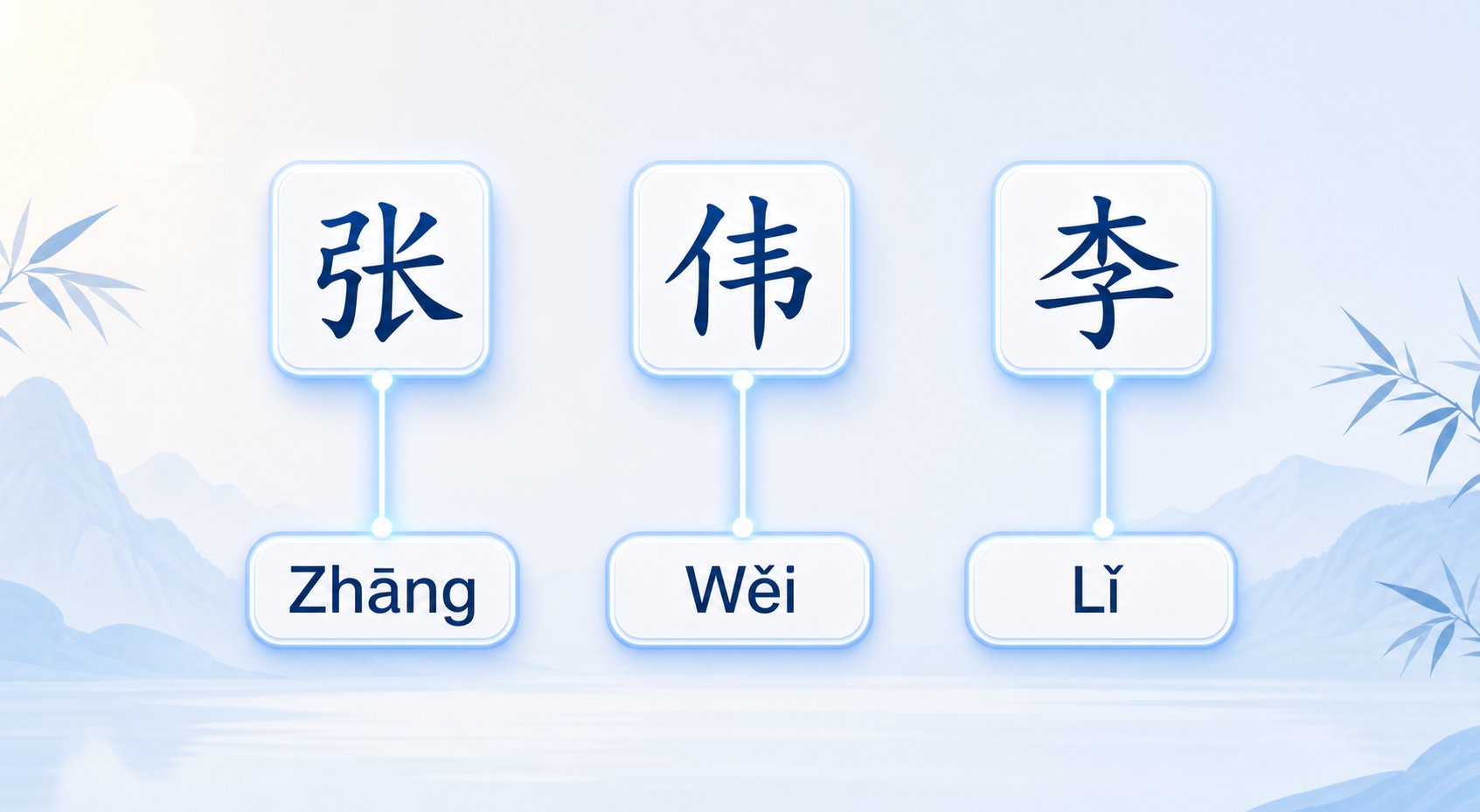
The vast majority of chinese last names are a single character and a single syllable. The top 100 surnames in China are all monosyllabic, and these cover roughly 85 percent of the population. Names like Wang, Li, Zhang, Liu, and Chen each take up just one syllable in pinyin.
Compound surnames complicate things slightly. About 81 compound surnames exist in Chinese, including Ouyang, Zhuge, Shangguan, and Sima. These surnames contain two syllables written as a single unit with no space between them. So the surname in chinese for someone named Ouyang Xiu is "Ouyang" (two syllables, one word), followed by a space, then the given name "Xiu."
The spacing rule stays consistent: one space separates the surname from the given name, regardless of how many syllables each contains. A compound surname does not get an internal space. This means "Ouyang Xiu" is correct, while "Ou Yang Xiu" or "Ou-yang Xiu" are not standard under modern pinyin rules.
One-Syllable vs Two-Syllable Given Names
Chinese first names come in two varieties: single-character (one syllable) and double-character (two syllables). Both are common, though two-character given names are more prevalent in modern usage.
A one-syllable given name is straightforward. The name 王伟 becomes "Wang Wei" in pinyin. Two components, two words, one space. No ambiguity.
Two-syllable given names are where spacing errors multiply. The name 王秀英 should be written as "Wang Xiuying" with the given-name syllables merged into a single word. Writing it as "Wang Xiu Ying" with a space between the given-name syllables is technically incorrect under standard pinyin orthography, even though many people do it. That extra space can cause a non-Chinese speaker to misread "Xiu" as a middle name or even a second surname, splitting the last name in chinese from the first name at the wrong point.
The table below breaks down how different name structures map to correct pinyin spacing:
| Chinese Characters | Pinyin (Correct Spacing) | Surname | Given Name | Structure Type |
|---|---|---|---|---|
| 王伟 | Wang Wei | Wang | Wei | Single surname + single given name |
| 王秀英 | Wang Xiuying | Wang | Xiuying | Single surname + two-syllable given name |
| 李小明 | Li Xiaoming | Li | Xiaoming | Single surname + two-syllable given name |
| 欧阳修 | Ouyang Xiu | Ouyang | Xiu | Compound surname + single given name |
| 司马相如 | Sima Xiangru | Sima | Xiangru | Compound surname + two-syllable given name |
| 诸葛亮 | Zhuge Liang | Zhuge | Liang | Compound surname + single given name |
Notice the pattern. Every correctly spaced name contains exactly one space, sitting between the surname and the given name. The surname is one unit whether it has one syllable (Wang) or two (Ouyang). The given name is one unit whether it has one syllable (Wei) or two (Xiaoming). No hyphens, no extra spaces, no exceptions under standard pinyin rules.
This structural clarity is what makes pinyin name spacing predictable once you identify the two components. The real challenge comes when official standards, international documents, and legacy systems each apply their own interpretation of these rules.
Official Standards That Govern Pinyin Name Spacing
Knowing the structure of a Chinese name is one thing. Knowing which rulebook to follow when spelling chinese names in pinyin is another. Multiple national and international standards exist, and they do not always agree. Here is what each one says and how they rank against each other.
GB/T 16159 and GB/T 28039 Explained
Two Chinese national standards form the backbone of pinyin name spacing rules. The first is GB/T 16159-2012, titled "Basic Rules of the Chinese Phonetic Alphabet Orthography." This standard covers general han yu ping ying orthography for all contexts, including how to write words, phrases, proper nouns, and punctuation in pinyin. It was revised in 2012 to allow some alternate forms, such as writing "wode" instead of "wo de" for possessives. For personal names, it establishes the foundational rule: surname and given name are separated by a space, and the first letter of each is capitalized.
The second and more specific standard is GB/T 28039-2011, officially titled "Chinese Phonetic Alphabet Spelling Rules for Chinese Names." This one targets identity documents directly. It mandates that two-syllable given names must be written as a single unit with no space or hyphen between syllables. Under this standard, 李小明 becomes "Li Xiaoming," not "Li Xiao Ming" or "Li Xiao-ming." China's National Immigration Administration explicitly references GB/T 28039-2011 when issuing rules for how name chinese characters are converted to pinyin on exit-entry documents.
Think of it this way: GB/T 16159 sets the general rules for chinese pin yin orthography, while GB/T 28039 narrows the focus specifically to names and characters on passports, ID cards, and travel documents. When the two overlap, GB/T 28039 takes priority for personal name formatting because it is the more specific standard.
ISO 7098 and International Romanization Standards
Beyond China's national standards, two international frameworks also address pinyin spelling. ISO 7098 ("Information and documentation — Romanization of Chinese") provides guidelines for libraries, publishers, and international organizations. Its third edition largely aligns with Hanyu Pinyin conventions but permits a hyphen between given-name syllables as an optional alternative. This flexibility is why you still see hyphenated names in academic publications and library catalogs.
The United Nations Group of Experts on Geographical Names (UN/GEGN) adopted Hanyu Pinyin as the international standard for romanizing Chinese geographic and personal names in 1977. Their guidelines follow the same core principle: surname first, given name second, each capitalized, with multi-syllable given names joined as one word. These UN guidelines reinforce the approach found in GB/T 28039 for international contexts like diplomatic documents and cross-border identification.
The Rule Hierarchy from Official to Practical
With multiple standards in play, you need a clear priority system. When deciding how to format a name, follow this hierarchy:
- GB/T 28039-2011 — The definitive standard for personal names on identity documents. Surname and given name separated by one space, each capitalized, multi-syllable given names written as one unit. No hyphens.
- GB/T 16159-2012 — The general pinyin orthography standard. Consistent with GB/T 28039 on names but broader in scope. Use this for non-document contexts where GB/T 28039 does not explicitly apply.
- ISO 7098 / UN/GEGN — International standards that largely mirror the Chinese national rules but allow minor variations like optional hyphenation. Follow these when publishing for international academic or institutional audiences.
- Common real-world practice — What airlines, banks, and online forms actually accept. Often deviates from the standards due to system limitations or legacy conventions.
- Exceptions — Ethnic minority names, historical figures, and established English-language conventions for well-known individuals (e.g., "Sun Yat-sen" rather than "Sun Yixian").
The practical takeaway is simple. For any official document, GB/T 28039-2011 is the authority. It is what Chinese immigration agencies enforce, and it is what your passport will reflect. Deviations from this standard are where real-world complications begin, especially when those documents cross international borders and encounter systems with their own formatting expectations.
Pinyin Name Spacing on Passports and Official Documents
GB/T 28039-2011 tells you how names should be formatted. Your passport shows you how they actually are. The gap between standard and practice is where most problems start, especially once your chinese name translation crosses into international systems that each apply their own logic.
How Chinese Passports Format Pinyin Names
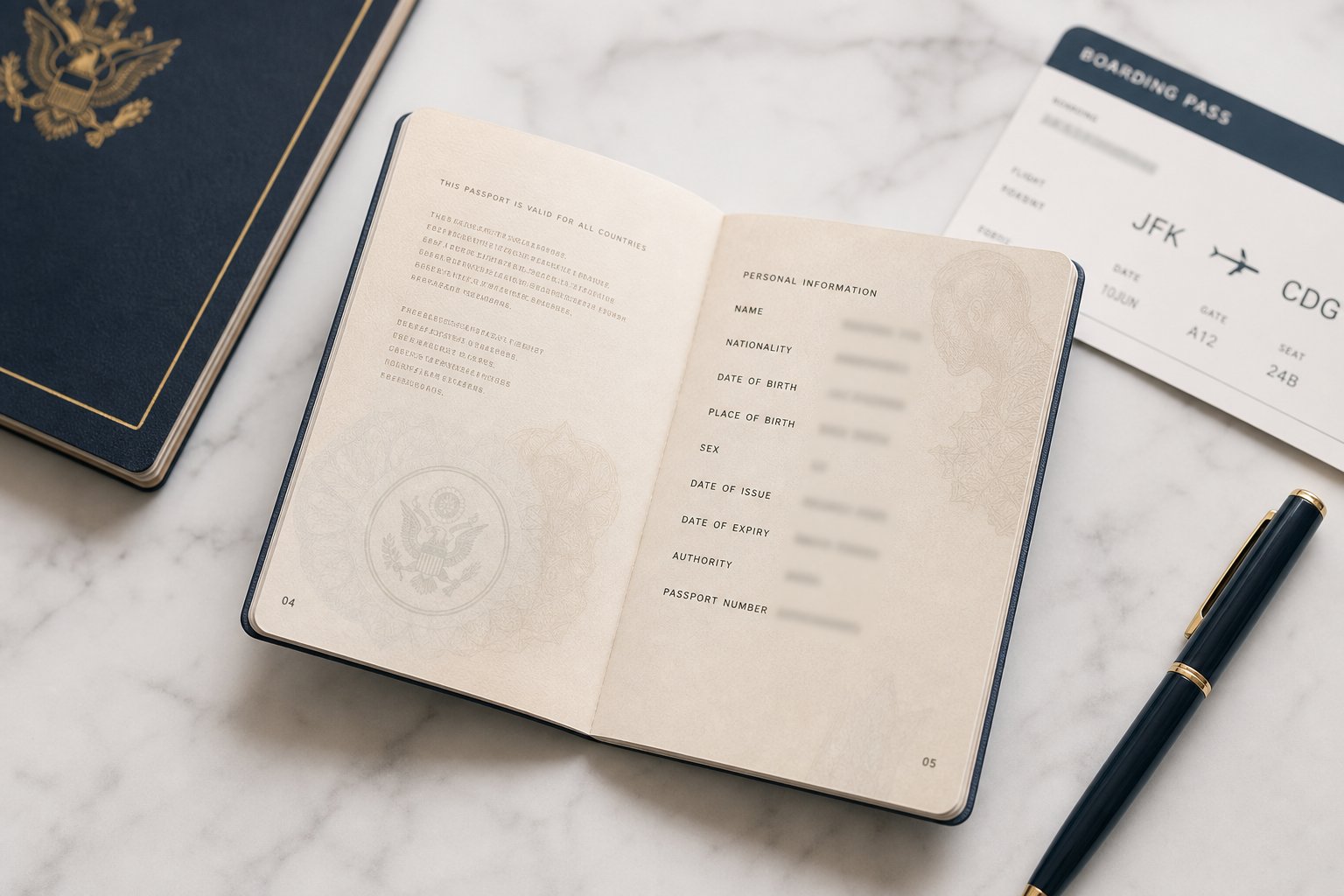
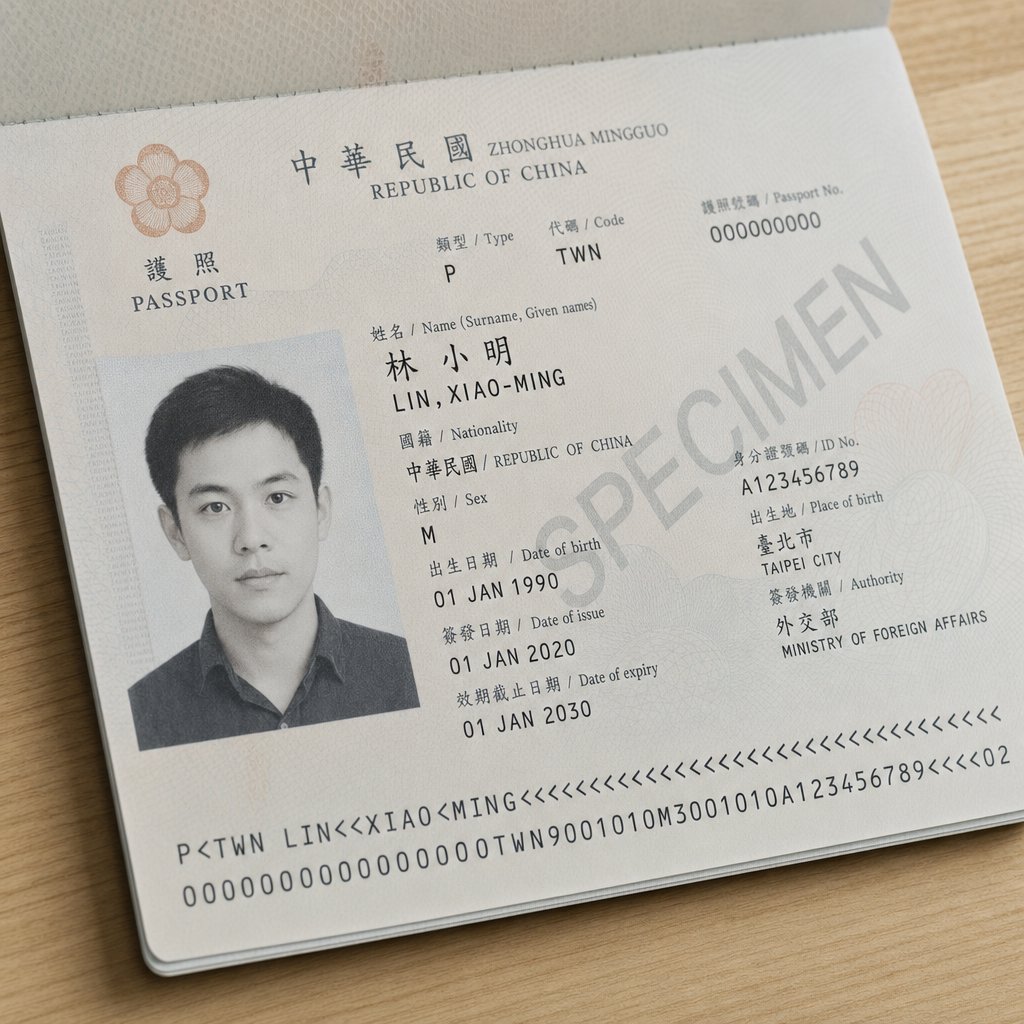
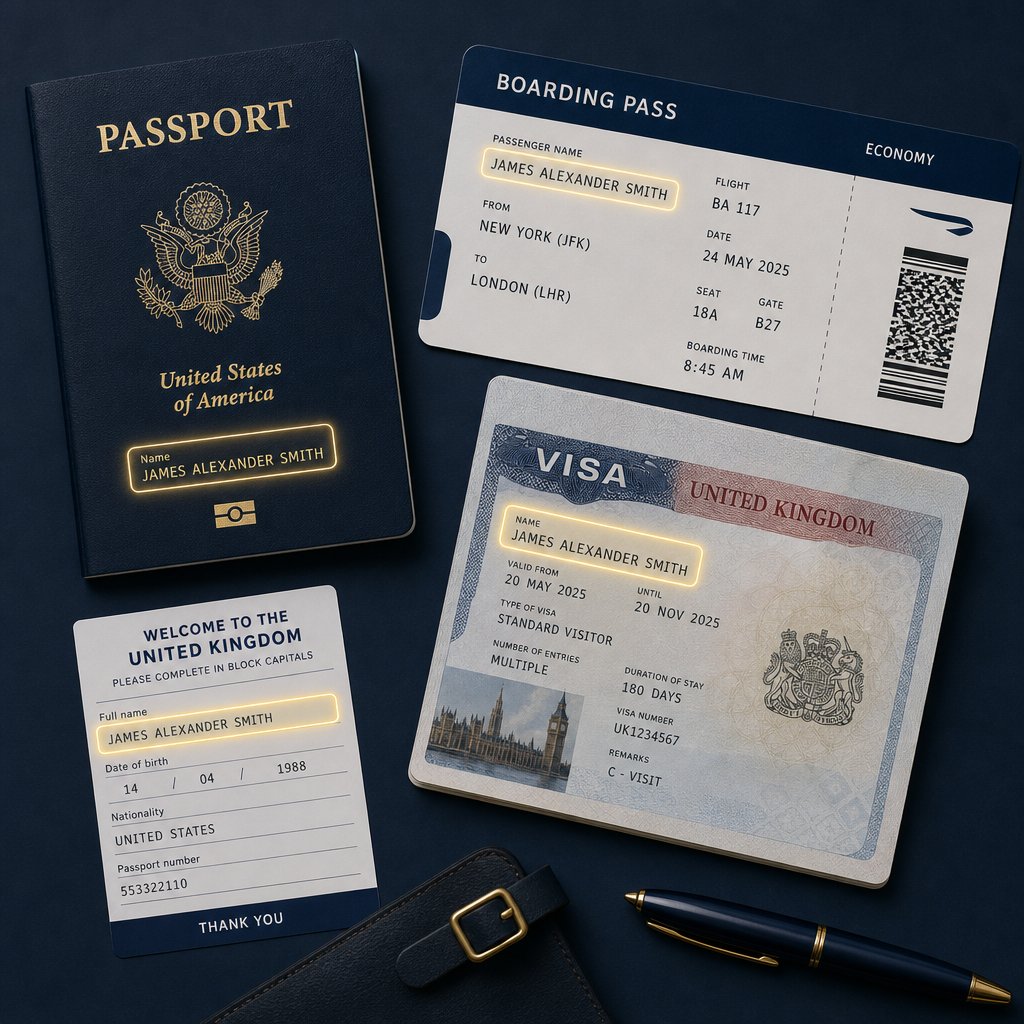
Chinese passports issued by the Ministry of Public Security (MPS) and administered through the National Immigration Administration follow a specific visual format. The surname and given name are printed in all capital letters, separated by a single space. Two-syllable given names are joined into one block with no space or hyphen between them.
So if your name is 张小明, your passport reads: ZHANG XIAOMING. The surname field shows ZHANG, and the given name field shows XIAOMING as a single unbroken string.
You will notice this differs from the mixed-case format that GB/T 28039-2011 recommends (Zhang Xiaoming). The all-caps rendering is not a deviation from the standard. It is an ICAO formatting requirement for machine-readable travel documents, where the Machine Readable Zone (MRZ) prints everything in uppercase. The visual inspection zone (VIZ) on Chinese passports mirrors this convention for consistency.
One notable exception involves the umlaut. The surname 吕 is standard pinyin "Lu" with an umlaut, but China's National Immigration Administration prints it as LYU on exit-entry documents rather than using a diacritic that most international systems cannot process. Holders of older passports may retain a previous spelling for continuity, which means two valid passports for the same person can show different romanizations.
ICAO Standards and International Document Requirements
The International Civil Aviation Organization (ICAO) Document 9303 governs how names in chinese passports appear in the MRZ. It specifies that the primary identifier (surname) and secondary identifier (given name) are separated by two filler characters (<<). Within the given name field, multiple components are separated by a single filler character (<).
Here is where things get tricky for chinese names into english contexts. Because Chinese passports write two-syllable given names as one unit (XIAOMING), the MRZ treats it as a single secondary identifier. But if a Taiwanese passport hyphenates the same name (HSIAO-MING) or a Malaysian IC separates it (XIAO MING), international systems may read these as different names entirely, even when they represent the same person.
Different countries' embassies also interpret spacing differently when issuing visas. A US visa might split a joined given name into two parts based on the officer's reading. A Schengen visa might preserve the passport format exactly. This inconsistency means your name can appear in three different formats across three documents you carry simultaneously.
| Document Type | Name Format for 李建国 | Spacing Style |
|---|---|---|
| Chinese Passport (VIZ) | LI JIANGUO | Joined, all caps |
| Chinese Passport (MRZ) | LI<| Joined, MRZ delimiters | |
| US Visa (typical) | LI JIAN GUO | Split given name syllables |
| Schengen Visa (typical) | LI JIANGUO | Matches passport format |
| Taiwanese Passport | LI CHIEN-KUO | Hyphenated, Wade-Giles |
| Hong Kong ID | LI KIN KWOK | Cantonese romanization, spaced |
| Academic Publication | Li Jianguo or Li Jian-guo | Mixed case, optional hyphen |
The same person, the same chinese translation for names, rendered seven different ways depending on the issuing authority and system. Each format is internally valid within its own context, but together they create a documentation puzzle.
Real Consequences of Spacing Inconsistencies
These are not theoretical problems. When you name translate chinese characters into pinyin and the result does not match across your documents, real things break.
- Flight booking rejections: Airlines compare the name on your ticket against your passport using exact string matching. If you booked as "XIAO MING" (with a space) but your passport reads "XIAOMING" (joined), automated check-in systems may flag a mismatch and deny boarding.
- Visa application delays: Embassy staff reviewing applications may question why your passport says JIANGUO but a supporting document says JIAN GUO. This can trigger additional verification steps or outright rejection.
- Bank account issues: A name mismatch between your bank record and your current passport creates compliance risk that surfaces during anti-money laundering reviews or routine re-verification. As documented by expats in China, mismatches can block salary payments, prevent mobile payment linking, and cause overseas transfers to be rejected.
- Work permit complications: If the spacing on your work permit differs from your passport, the discrepancy can flag compliance issues for your employer and create complications at renewal time.
The practical rule is straightforward: for any international travel or official purpose, match your passport exactly. Do not "correct" the spacing to align with what the standard says it should be. Your passport is the anchor document, and every other system needs to reflect what it actually shows, not what the textbook recommends.
This passport-first approach works well for official documents, but it leaves an open question. What about the hyphen that appears in so many older romanizations and Taiwanese documents? Its role in pinyin given names is more nuanced than a simple yes-or-no answer.
Hyphenation Rules for Two-Syllable Given Names
The hyphen is the most polarizing punctuation mark in Chinese name romanization. Some systems require it, others forbid it, and millions of people use it out of habit without knowing whether their context calls for it. If you have ever seen names with a hyphen like "Xiao-ming" and wondered whether that format is correct, the answer depends entirely on which standard applies to your situation.
When Hyphens Are Permitted in Pinyin Names
Hyphens in romanized Chinese given names are not universally wrong. They have legitimate roots in specific systems and regions. The key is knowing which contexts still accept them.
The Wade-Giles romanization system, developed in the 19th century and dominant in English-language academia for over a hundred years, hyphenates two-syllable given names by default. Under Wade-Giles, 李小明 becomes "Li Hsiao-ming" with a lowercase second syllable after the hyphen. This convention carried over into decades of library catalogs, academic publications, and government records across Taiwan, Hong Kong, and pre-1979 Western scholarship on China.
Taiwan's naming conventions inherited this hyphenation practice. Whether using a modified Wade-Giles, Tongyong Pinyin, or a personal romanization, most Taiwanese citizens write their given names with a hyphen. As Taiwanese writer Cheng-Wei Hu explains, the hyphen serves two functions: it marks syllable boundaries for non-Mandarin speakers, and it signals Taiwanese identity by distinguishing the name from mainland Chinese conventions that omit hyphens entirely.
ISO 7098, the international standard for romanizing Chinese, also permits hyphens as an optional format for given names. This means academic publishers, libraries, and international organizations operating under ISO guidelines can legitimately use either "Xiaoming" or "Xiao-ming" without violating the standard.
Here is when hyphens are appropriate:
- Taiwanese passports and official documents — Taiwan's Bureau of Consular Affairs uses hyphenated given names as the default format (e.g., Tsai Ing-wen, Ma Ying-jeou).
- Wade-Giles romanization contexts — Historical texts, older library records, and legacy academic citations that follow this system.
- ISO 7098 publications — International academic or institutional documents where the hyphen option is explicitly adopted.
- Personal preference in informal contexts — When no official standard applies and the individual chooses to hyphenate for clarity or identity reasons.
Standards That Prohibit Hyphenation
For mainland Chinese documents, the rule is unambiguous. GB/T 28039-2011 does not permit hyphens in given names. Two-syllable given names must be written as a single joined unit. Period.
This means that on a Chinese passport, national ID card, or any exit-entry document issued by the National Immigration Administration, the name 王小明 is always WANG XIAOMING. Never WANG XIAO-MING. Never WANG XIAO MING. The standard treats the given name as one indivisible word, regardless of how many syllables it contains.
GB/T 16159-2012, the general pinyin orthography standard, reinforces this position. It specifies that multi-syllable given names are written continuously without internal punctuation. The UN/GEGN romanization guidelines for Chinese names follow the same principle, making the no-hyphen rule the dominant international convention for Hanyu Pinyin contexts.
Here is when hyphens are not appropriate:
- Chinese mainland passports and ID cards — GB/T 28039-2011 explicitly prohibits them.
- Any document following Hanyu Pinyin orthography — The standard treats given names as single words.
- UN and diplomatic documents using Chinese romanization — These follow the GB/T conventions.
- Flight bookings matching a mainland Chinese passport — Adding a hyphen creates a mismatch that automated systems will flag.
The distinction matters for practical reasons. If your passport shows XIAOMING and you book a flight as XIAO-MING, the airline system sees two different strings. That hyphen is not invisible to computers. It is a character, and it changes the name.
Before and After Correction Examples
To make this concrete, consider how common chinese first names male and chinese first names female look under each format. The three possible renderings of a two-syllable given name are:
- Joined (standard Hanyu Pinyin): Xiaoming — two syllables written as one word
- Hyphenated (Wade-Giles / Taiwanese convention): Xiao-ming — two syllables connected by a hyphen
- Separated (incorrect under all major standards): Xiao Ming — two syllables written as independent words
The separated format is wrong in every context. No standard, whether mainland Chinese, Taiwanese, or international, treats given-name syllables as separate words. Writing them apart creates the false impression of a middle name or a second surname, which confuses both human readers and automated systems.
| Incorrect Format | Correct Format (Mainland/Hanyu Pinyin) | Correct Format (Taiwan/Wade-Giles) | Error Type |
|---|---|---|---|
| Zhang Xiao Ming | Zhang Xiaoming | Chang Hsiao-ming | Space inserted between given-name syllables |
| Wang Jian-Guo | Wang Jianguo | Wang Chien-kuo | Hyphen used in Hanyu Pinyin context + incorrect capitalization after hyphen |
| Li Mei Ling | Li Meiling | Li Mei-ling | Given name split into two separate words |
| Chen XIAO-HONG | CHEN XIAOHONG | CHEN HSIAO-HUNG | Hyphen in mainland passport format |
| Huang mei-Li | Huang Meili | Huang Mei-li | Inconsistent capitalization |
Notice the capitalization pattern in the Taiwanese column. Under Wade-Giles convention, only the first letter of the given name is capitalized. The syllable after the hyphen stays lowercase: "Hsiao-ming" not "Hsiao-Ming." Many people capitalize both syllables (Hsiao-Ming), which is technically non-standard even under Wade-Giles, though it has become common practice. Popular chinese names male like Jian-guo, Zhi-qiang, and Wei-ming, or chinese names for boys like Jun-jie and Hao-ran, all follow this same pattern when hyphenated correctly.
The bottom line: match your format to your document's system. If you hold a mainland Chinese passport, no hyphens. If you hold a Taiwanese passport, the hyphen is expected. If you are writing for an international academic audience, either format works as long as you stay consistent throughout the document. Mixing conventions within a single publication or application is the one approach that is always wrong.
Passports and academic papers each have clear rules. But what happens when you sit down to write a bibliography, format a citation, or catalog a name in a library system? The conventions shift again, and the stakes are different.

Pinyin Name Spacing in Academic Writing and Citations
Passports demand one format. Academic writing demands another. If you are citing a Chinese-language source in a research paper, the spacing rules you just learned for identity documents do not fully apply. Libraries, publishers, and citation manuals each impose their own logic on how Chinese names get romanized, and the differences are significant enough to affect whether readers can find your sources at all.
Library of Congress vs Standard Pinyin Formatting
The Library of Congress (LOC) romanization guidelines govern how Chinese names appear in library catalogs across North America. Their approach diverges from GB/T 28039 in one critical way: LOC joins all forename syllables together into a single string, regardless of length or type. Given names, courtesy names, Buddhist names, and pseudonyms are all written in running form with connected syllables and only the first letter capitalized.
Under LOC rules, a name like 无名氏 becomes "Wumingshi" as one unbroken word. A courtesy name like 云谷老人 (used by the Song-dynasty scholar Zhu Xi) becomes "Yun'gulaoren." The rationale is practical: because the structure and origin of many ancient chinese names are obscure, separating syllables consistently would require case-by-case linguistic analysis that slows cataloging. Joining everything promotes uniform application.
This means LOC formatting looks different from standard pinyin in several ways. Standard pinyin separates the surname from the given name with a space (Wang Xiaoming). LOC does the same for modern names but treats all forename components as a single block. For famous chinese names that include chinese honorifics or titles of address, LOC separates those titles from the name and writes them in lowercase with separated syllables. So 白沙先生 becomes "Baisha xian sheng" with the title "xian sheng" written apart from the name "Baisha."
Citation Style Differences for Chinese Names
When you move from library catalogs to citation formats, the rules shift again. Each major style guide handles Chinese name spacing slightly differently, and all three require pinyin romanization when writing in English.
The ALA-LC Romanization Tables serve as the foundation for transliterating Chinese sources across APA, MLA, and Chicago styles. All three require you to romanize non-Latin scripts into pinyin so references can be alphabetized. But they differ in how they structure the author entry and handle capitalization.
| Element | APA (7th Edition) | MLA (9th Edition) | Chicago (17th Edition) |
|---|---|---|---|
| Author format | Surname, Initial(s). or Surname, Given name | Surname, Given name. | Surname, Given name. |
| Example (刘长松) | Liu, C.S. or Liu, Changsong | Liu, Changsong. | Liu, Changsong. |
| Given name spacing | Joined as one word | Joined as one word | Joined as one word |
| Title capitalization | Sentence case (pinyin rules) | Title case (pinyin rules) | Sentence case (pinyin rules) |
| Translation provided? | Yes, in square brackets | Optional, in square brackets | Optional, in square brackets |
| Chinese characters included? | Not typically | Not typically | Optional, after romanized text |
Notice that all three styles join given-name syllables into one word for the author entry. The surname is always listed first, followed by a comma, then the given name. This inverted format aligns naturally with Chinese name order, which means a Chinese author's name does not actually get "inverted" the way an English name does. Li Jianguo stays as "Li, Jianguo" rather than being flipped.
Where things get tricky is alphabetical sorting. A name like Ouyang Xiu files under "O" because the compound surname starts with that letter. But if a cataloger mistakenly splits it as "Ou Yang, Xiu," the entry lands under "O" with a different sort string, potentially creating duplicate records. Consistent spacing directly affects whether readers can locate your cited sources.
Historical Names and Courtesy Name Conventions
Ancient chinese names add another layer of complexity. Historical Chinese figures often had multiple names: a personal name (ming), a courtesy name (zi), a style name (hao), and sometimes a posthumous name or temple name. Each served a different social function. The chinese courtesy name was given at adulthood and used by peers as a sign of respect, while the personal name was reserved for elders and the individual themselves.
Consider the Tang dynasty poet Li Bai. His personal name is Bai (白), his courtesy name is Taibai (太白), and he is also known by the style name Qinglian Jushi (青莲居士). In LOC cataloging, the heading is established under the most commonly known form, with references from alternatives. The courtesy name and style name are each written with joined syllables: "Taibai" and "Qinglianjushi."
For famous chinese names like Confucius, the LOC romanizes the Chinese form as "Kongzi" but establishes the heading under the conventional English form. Laozi is cataloged directly as "Laozi." Buddhist figures like Huineng (the Sixth Patriarch of Chan Buddhism) have their religious names joined as a single word, with any chinese honorifics like "da shi" (great master) separated and written in lowercase.
The practical guidance for researchers is this: when citing historical figures, use the form established in your field's conventions. Sinologists typically use pinyin with joined syllables (Sima Qian, Ouyang Xiu, Zhu Xi). General-audience publications may use conventional English forms where they exist (Confucius, Mencius, Sun Tzu). Whichever form you choose, keep the spacing consistent throughout your paper and verify the LOC authority record if you are unsure how a particular name should be segmented.
Academic conventions assume you are working with a name you already know how to parse. But what happens when the name itself does not follow the standard two-part Chinese structure at all? Ethnic minority names in China introduce entirely different spacing patterns that neither GB/T 28039 nor citation guides handle intuitively.
Ethnic Minority Names and Non-Standard Spacing Cases
Everything covered so far assumes a name that fits the classic Han Chinese two-part structure: one surname, one given name, one space between them. But China is home to 55 officially recognized ethnic minorities, and many of their naming conventions break this pattern entirely. A Uyghur name might have three or four components. A Tibetan name might have no surname at all. When these names get romanized into pinyin for passports and official documents, the standard two-part spacing logic simply does not apply.
Uyghur and Tibetan Name Spacing in Pinyin
Uyghur names typically follow a given-name-plus-patronymic structure rather than a fixed surname system. A name like Abdurehim Heyit consists of a personal name (Abdurehim) followed by the father's name (Heyit). In pinyin romanization on Chinese documents, each component is separated by a space and capitalized independently. GB/T 28039-2011 acknowledges this structure by allowing multi-component names to retain spaces between each meaningful unit rather than forcing them into a surname-given-name pair.
Tibetan names present a different challenge. Many Tibetans do not use family names at all. A name like Tenzin Gyatso consists of two given-name elements with no surname component. On Chinese identity documents, these names are romanized into pinyin with each component written as a separate capitalized word. The spacing reflects semantic units rather than a surname-given-name division.
Mongolian and Zhuang Name Conventions
Mongolian names within China often use a patronymic system similar to Uyghur conventions. A name might appear as three or four syllables grouped into two components: a clan or patronymic identifier followed by a personal name. Zhuang names, by contrast, often mirror Han Chinese structure closely because of centuries of cultural exchange, but some traditional Zhuang naming patterns include generational markers or village identifiers that add extra components.
Here is how different minority name structures handle spacing:
- Uyghur names — Each component (personal name + patronymic) is written as a separate word, capitalized individually. Example: Abudulla Abudureheman.
- Tibetan names — Two or more given-name elements separated by spaces, each capitalized. No surname component required. Example: Zhaxi Dunzhu.
- Mongolian names — Patronymic or clan name first, followed by personal name, separated by a space. Example: Chaoketu Menghe.
- Zhuang names — Typically follows Han Chinese two-part structure. Multi-component traditional names retain spaces between semantic units. Example: Nong Zhigao.
Multi-Component Names Beyond the Two-Part Structure
The broader category of asian names includes naming systems from dozens of linguistic traditions. When these cross into Chinese pinyin romanization on official documents, the spacing rules flex to accommodate structures that have no equivalent in Han Chinese conventions. A Kazakh name, a Korean-Chinese name, or a Dai name each brings its own internal logic.
GB/T 28039-2011 handles this by establishing a general principle: each semantically distinct component of a minority name is written as a separate word with its initial letter capitalized. This contrasts with Han Chinese names, where the given name is always merged into one unit regardless of syllable count. For minority names, the standard respects the original language's word boundaries rather than imposing Han Chinese formatting.
What this means practically is that an asian name on a Chinese passport might have two, three, or even four space-separated components, all fully valid under the national standard. If you encounter a Chinese passport with more than two name blocks, it likely belongs to someone from a minority group whose naming convention requires that extra spacing. The same principle applies to cantonese names romanized under Hong Kong conventions, where each character is typically rendered as a separate word rather than joined.
These multi-component names create unique challenges in digital systems. A form field designed for "first name" and "last name" cannot accommodate a three-part Uyghur name or a surname-free Tibetan name without forcing the holder to make arbitrary decisions about which box gets which component. That friction between naming diversity and rigid form design is exactly where the next set of practical problems emerges.
Digital Systems and International Form Filling
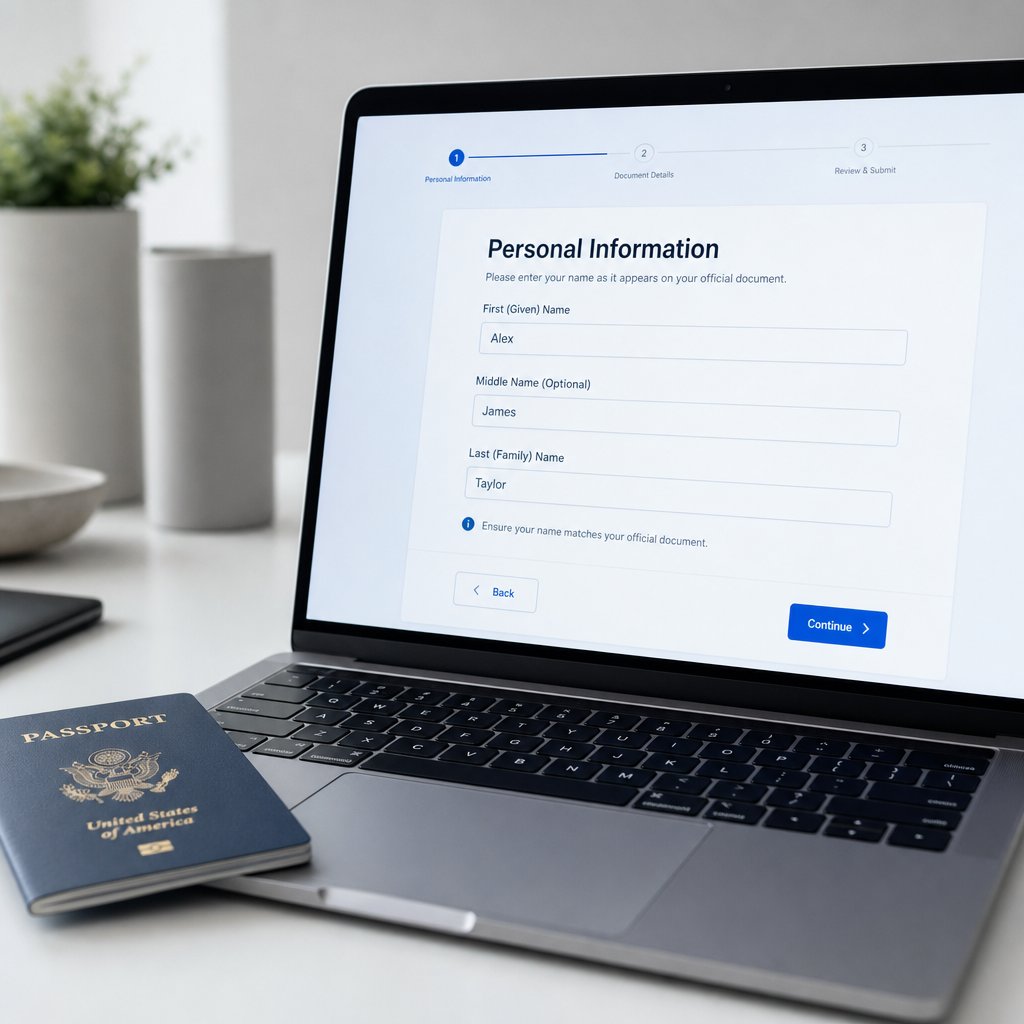
You know the correct spacing. You understand the standards. Then you sit down at a computer to book a flight, and the form has two boxes labeled "First Name" and "Last Name" with a 20-character limit and no option for special characters. Suddenly, all that knowledge collides with software that was never designed for Chinese naming conventions. This is where theory meets friction.
Flight Bookings and Travel System Requirements
Airline reservation systems are the highest-stakes digital environment for pinyin name spacing. A mismatch between your ticket and your passport can mean denied boarding, and airlines are not sympathetic to explanations about romanization standards.
Most airline booking systems use the Global Distribution Systems (GDS) like Amadeus, Sabre, or Travelport, which impose strict formatting rules. These systems typically strip hyphens, ignore diacritics, and convert everything to uppercase. The name on your ticket must match your passport character for character, space for space.
China Airlines' traveler name guidelines illustrate the standard approach: enter the family name and given name exactly as shown on the passport, with no spaces or punctuation within each field. If your passport shows a hyphenated given name like CHUN-HAO, you enter CHUNHAO in the given name field, dropping the hyphen entirely. The system does not accept punctuation within a name component.
Here is the step-by-step process for booking flights with a Chinese passport:
- Open your passport to the data page. Look at the MRZ (the two lines of machine-readable text at the bottom) and the printed name above it. These are your source of truth.
- Enter your surname exactly as printed. If your passport shows ZHANG, enter ZHANG. If it shows OUYANG (compound surname), enter OUYANG as one block in the family name field.
- Enter your given name as one joined string. If your passport shows XIAOMING, enter XIAOMING. Do not insert a space between syllables, even if the form seems to have room for it.
- Drop all punctuation. If your passport shows a hyphen (common on Taiwanese passports), remove it when the booking system does not accept special characters. CHUN-HAO becomes CHUNHAO.
- Verify the confirmation. After booking, check that the name on your e-ticket or itinerary receipt matches your passport exactly. If the system added a space or truncated characters, contact the airline before your travel date.
One edge case worth noting: if your name in the passport's given name field contains only a single letter or is unusually short, some systems reject it as invalid. China Airlines specifies that a one-letter family name like "E" should be doubled to "EE" in their booking system. These workarounds vary by airline, so check the carrier's specific name input guidelines before finalizing.
Online Forms and Software Limitations
Beyond airlines, everyday digital systems create their own spacing headaches. University enrollment portals, bank account applications, government service websites, and e-commerce platforms each impose different constraints on how a name can be entered.
Common system limitations that force non-standard formatting include:
- Character limits: Many forms cap name fields at 20 to 30 characters. A compound surname plus a two-syllable given name rarely exceeds this, but add a middle name field or a suffix requirement and the system may truncate your name.
- Mandatory "middle name" fields: Some Western-designed forms require a middle name. Chinese names do not have middle names. Leaving the field blank may trigger a validation error, forcing users to enter "N/A" or split their given name across two fields.
- Space stripping: Certain systems automatically remove all spaces from name inputs, merging surname and given name into one string. ZHANG XIAOMING becomes ZHANGXIAOMING, which no longer matches any document.
- Hyphen rejection: Systems that strip special characters will turn CHUN-HAO into CHUNHAO silently, which may or may not match the passport depending on the issuing country.
- Case enforcement: Some platforms force title case (Zhang Xiaoming) while others force all caps (ZHANG XIAOMING). Neither is wrong, but inconsistency across platforms means your name looks different in every system.
As software engineers have documented extensively, most form designs assume a Western two-part name structure with a clear first name and last name. Chinese names written in pinyin technically fit this structure, but the assumptions behind the labels cause confusion. A Chinese user seeing "First Name" may enter their surname, because in Chinese the family name comes first. The label "Given Name" is clearer, but far from universal in form design.
For account creation and non-travel contexts, the practical approach is different from the passport-matching rule:
- Follow the system's constraints. If the form strips spaces, let it. If it forces title case, accept it. These systems rarely cross-reference your passport.
- Stay internally consistent. Pick one format for a given platform and stick with it. If you registered as "Xiaoming Zhang" (Western order), do not later try to change it to "Zhang Xiaoming" (Chinese order) unless the platform allows name changes.
- Document your choices. Keep a note of which format you used on which platform. When you need to verify your identity later, you will need to remember whether you entered your name in Chinese order or English order.
For email addresses, conventions are more relaxed. Common patterns include xiaoming.zhang@, zhangxm@, or xmzhang@. No standard governs email name formatting, so choose whatever is memorable and professional. The only rule is consistency across your professional communications.
Navigating Name Order in International Systems
The deepest source of confusion in digital forms is not spacing within the given name. It is name order. When a system asks for "First Name" and "Last Name," a Chinese user faces an immediate question: does "first" mean the name that comes first in Chinese (the surname), or the name that comes first in English convention (the given name)?
The answer depends on context. Chinese naming conventions place the family name before the given name. English conventions do the opposite. When you convert between these two orders, the spacing stays the same but the position in form fields changes.
Consider someone whose Chinese name is 张晨 (Zhang Chen). In different systems, this name might need to be entered as:
| System Context | "First Name" / "Given Name" Field | "Last Name" / "Family Name" Field | Display Result |
|---|---|---|---|
| Chinese passport application | CHEN | ZHANG | ZHANG CHEN |
| US university enrollment | Chen | Zhang | Chen Zhang |
| UK visa application | CHEN | ZHANG | ZHANG, Chen |
| International conference registration | Chen | Zhang | Zhang, C. |
| Social media (Western audience) | Chen | Zhang | Chen Zhang |
Many Chinese people working internationally adopt a Western given name to simplify this process. ZHANG Chen might become "James Zhang" in English-speaking contexts, sidestepping the order confusion entirely. This is a personal choice, not a requirement. The Cultural Atlas notes that people commonly format their name as [Western given name] [Chinese given name] [family name], producing something like "James Chen Zhang." This hybrid format works as a chinese name from english name adaptation, letting the person maintain their Chinese identity while fitting Western system expectations.
If you need to convert between formats, whether using a chinese name converter tool or doing it manually, the process is mechanical:
- Identify the surname. In pinyin, it is always the first component (one or two syllables). In a Western-order entry, it moves to the "Last Name" field.
- Identify the given name. Everything after the surname in Chinese order. It moves to the "First Name" or "Given Name" field in Western systems.
- Preserve the internal spacing of each component. Whether you are converting english to chinese name order or the reverse, the given name stays as one joined word (Xiaoming, not Xiao Ming) and the surname stays as one unit (Ouyang, not Ou Yang).
- Do not add components that do not exist. If you have no middle name, leave that field blank or enter a placeholder only if the system requires it. Do not split your given name to fill a middle name field.
The critical point is that name convert to chinese order or from it never changes the internal spacing of either component. "Xiaoming" stays "Xiaoming" whether it sits in a "First Name" box or follows the surname in Chinese order. The spacing rules are independent of which position the name occupies in a form.
Digital systems will keep evolving, and most are slowly improving their handling of non-Western names. Until then, the safest strategy is to match your passport for anything travel-related, follow each system's constraints for everything else, and keep a personal record of which format you used where. That consistency is your best defense against the mismatches that trigger real-world problems, the kind covered in the next section's error catalog and quick-reference guide.
Common Mistakes and a Quick-Reference Spacing Guide
Knowing the rules and applying them consistently are two different things. Even people who understand how do chinese names work still make formatting errors when switching between contexts or filling out forms under time pressure. Here are the mistakes that show up most often, why they happen, and a single reference table you can bookmark for every situation.
Most Common Spacing Errors and Why They Happen
Most errors fall into a handful of patterns. People split given-name syllables because they look like two separate words. They mix Wade-Giles conventions into Hanyu Pinyin contexts. They forget capitalization rules or apply them inconsistently. Each mistake has a logical cause, but each one can also trigger document mismatches.
| Incorrect Format | Correct Format | Error Explanation |
|---|---|---|
| Zhang Xiao Ming | Zhang Xiaoming | Space inserted between given-name syllables. The given name is one word, not two. |
| zhang xiaoming | Zhang Xiaoming | No capitalization. Both surname and given name require an initial capital letter. |
| Zhang Xiao-Ming | Zhang Xiaoming | Hyphen used in a Hanyu Pinyin context where GB/T 28039 prohibits it. |
| Xiaoming Zhang | Zhang Xiaoming | Western name order applied to a Chinese-order context (passport, Chinese ID). |
| ZHANG XIAO MING | ZHANG XIAOMING | Given-name syllables separated in all-caps format. Still one unit even in uppercase. |
| Chang Hsiao-ming | Zhang Xiaoming | Wade-Giles romanization used where Hanyu Pinyin is required. |
| Ou Yang Xiu | Ouyang Xiu | Compound surname split into two words. Compound surnames are always one unit. |
| Wang XiaoMing | Wang Xiaoming | InterCaps (camelCase) within the given name. Only the first letter is capitalized. |
A question that often comes up alongside these errors: should chinese be capitalized when referring to the language or nationality? Yes. "Chinese" is always capitalized in English as a proper adjective. But within a pinyin name, only the initial letters of the surname and given name are capitalized, not every syllable. The question "is chinese capitalized" applies to English prose, not to internal syllable formatting within a name.
Quick Reference by Context
Rather than memorizing every standard, match your formatting to the context. Here is what to do in each common situation:
| Context | Format Rule | Example (for 李美玲) |
|---|---|---|
| Chinese passport / official ID | All caps, surname + joined given name, one space | LI MEILING |
| Flight booking | Match passport exactly, drop hyphens if system rejects them | LI MEILING |
| Academic citation (APA/Chicago/MLA) | Surname, Given name (joined, title case) | Li, Meiling |
| Informal English context | Western order acceptable, title case | Meiling Li |
| Taiwanese passport holder | Hyphenated given name, title case or all caps | LI MEI-LING |
| Email or username | No standard; stay consistent | meiling.li@ or limeiling@ |
For typical chinese names with two-syllable given names like Meiling, Jianguo, or Xiaohong, the joined format without spaces or hyphens is correct in every mainland Chinese context. For common chinese names that appear frequently in international settings, consistency across all your documents matters more than perfection in any single one.
Maintaining Consistency Across All Your Documents
The single most damaging mistake is not any one formatting error. It is inconsistency. Writing your name as ZHANG XIAOMING on your passport, Zhang Xiao-Ming on a visa application, and Xiaoming Zhang on a bank form creates three separate identities in three separate systems. When those systems need to cross-reference each other, nothing matches.
Here is the hierarchy to fall back on whenever you are unsure:
- Passport first. Whatever your passport shows is your anchor format for all travel and legal documents.
- GB/T 28039-2011 second. For any new document where you control the input, follow the national standard: surname + space + joined given name, each capitalized.
- Context-specific standards third. Academic papers follow citation style guides. Taiwanese documents follow Taiwanese conventions. Each context has its own correct answer.
- Internal consistency always. Within any single document, application, or system, never mix formats.
A common chinese name like Wang Xiaoming or Li Meiling should look the same everywhere it appears within one context. If you remember nothing else from this guide, remember this: one space, between surname and given name. Given-name syllables joined. No hyphens in Hanyu Pinyin. Match your passport for travel. That covers the vast majority of situations where pinyin name spacing decisions actually matter.
Frequently Asked Questions About Pinyin Name Spacing
1. Should two-syllable Chinese given names be written as one word or two in pinyin?
Under GB/T 28039-2011, the official Chinese standard for personal names on identity documents, two-syllable given names must be written as a single joined unit with no space or hyphen. For example, the name 李小明 is correctly written as Li Xiaoming, not Li Xiao Ming or Li Xiao-ming. The only space in a correctly formatted pinyin name sits between the surname and the given name. This rule applies to all mainland Chinese passports, national ID cards, and exit-entry documents.
2. Why does my name appear differently on my passport versus my visa?
Chinese passports follow GB/T 28039-2011 and print given-name syllables joined together in all caps (e.g., ZHANG XIAOMING). However, foreign embassies may split the given name into separate syllables when issuing visas, producing formats like ZHANG XIAO MING. This happens because visa officers unfamiliar with Chinese naming conventions may interpret each syllable as a separate name component. The inconsistency can cause problems with flight bookings and identity verification, so always use your passport format as the anchor for travel documents.
3. When is it acceptable to use a hyphen in a romanized Chinese name?
Hyphens are acceptable in Taiwanese passport names (which follow Wade-Giles or Tongyong Pinyin conventions), in publications governed by ISO 7098 where the hyphen option is explicitly adopted, and in historical or legacy academic citations using Wade-Giles romanization. They are explicitly prohibited on mainland Chinese passports and any document following Hanyu Pinyin orthography under GB/T 28039-2011. The key rule is to match the convention of your issuing authority rather than mixing systems.
4. How should I enter my Chinese name when booking a flight online?
Always enter your name exactly as it appears on your passport. For mainland Chinese passports, enter the surname in the family name field and the joined given name in the given name field with no spaces or hyphens between syllables. For Taiwanese passports with hyphenated names, remove the hyphen if the booking system rejects special characters. After booking, verify the confirmation matches your passport character for character, since any mismatch can result in denied boarding at check-in.
5. How do I format a Chinese name in an academic citation?
In APA, MLA, and Chicago citation styles, Chinese names are formatted with the surname first, followed by a comma, then the given name written as one joined word in title case. For example, 刘长松 becomes Liu, Changsong. All three major styles join given-name syllables into a single word. The Library of Congress romanization system also joins forename syllables but may handle historical names and courtesy names differently, so check LOC authority records for pre-modern Chinese figures.