Understanding Taiwan's Remarkable Surname Concentration
Imagine a country where you could call out "Chen" in a crowded room and more than one in ten people would turn around. That's Taiwan. The island's surname distribution is strikingly concentrated, with just ten taiwanese last names accounting for over half the entire population. In most Western nations, you'd need hundreds of surnames to cover the same share.
How Concentrated Are Taiwanese Surnames
Taiwan's Ministry of the Interior tracks household registration data that reveals a fascinating pattern. The ten most common taiwanese surnames, led by Chen, Lin, and Huang, represent 52.79 percent of the population, or roughly 12.33 million people. The island has only 1,785 recorded surnames in total, with 1,667 being single-character names and 118 being two-character names.
Chen alone accounts for 2.61 million people, or 11.21 percent of Taiwan's population, making it the single most dominant surname on the island.
To put that in perspective, the most common surname in the United States (Smith) covers barely 0.8 percent of the population. Taiwan's top surname is roughly fourteen times more concentrated.
Why Taiwanese Surname Patterns Matter
This concentration isn't random. It reflects centuries of migration from specific regions of mainland China, colonial-era policies, and postwar demographic shifts. For anyone researching genealogy, studying taiwanese names, or simply trying to understand how Taiwanese society formed, surname data offers a direct window into the island's layered history.
The Ministry of the Interior's "Name Statistics" booklets serve as the authoritative source for this data, published periodically with detailed breakdowns by region, gender, and marriage combinations. Throughout this article, you'll find ranked data on the most common surnames, the historical forces that made them dominant, and practical guidance on why the same taiwanese last names appear so differently when romanized for international use.
How Hoklo and Hakka Migration Shaped Taiwanese Surnames
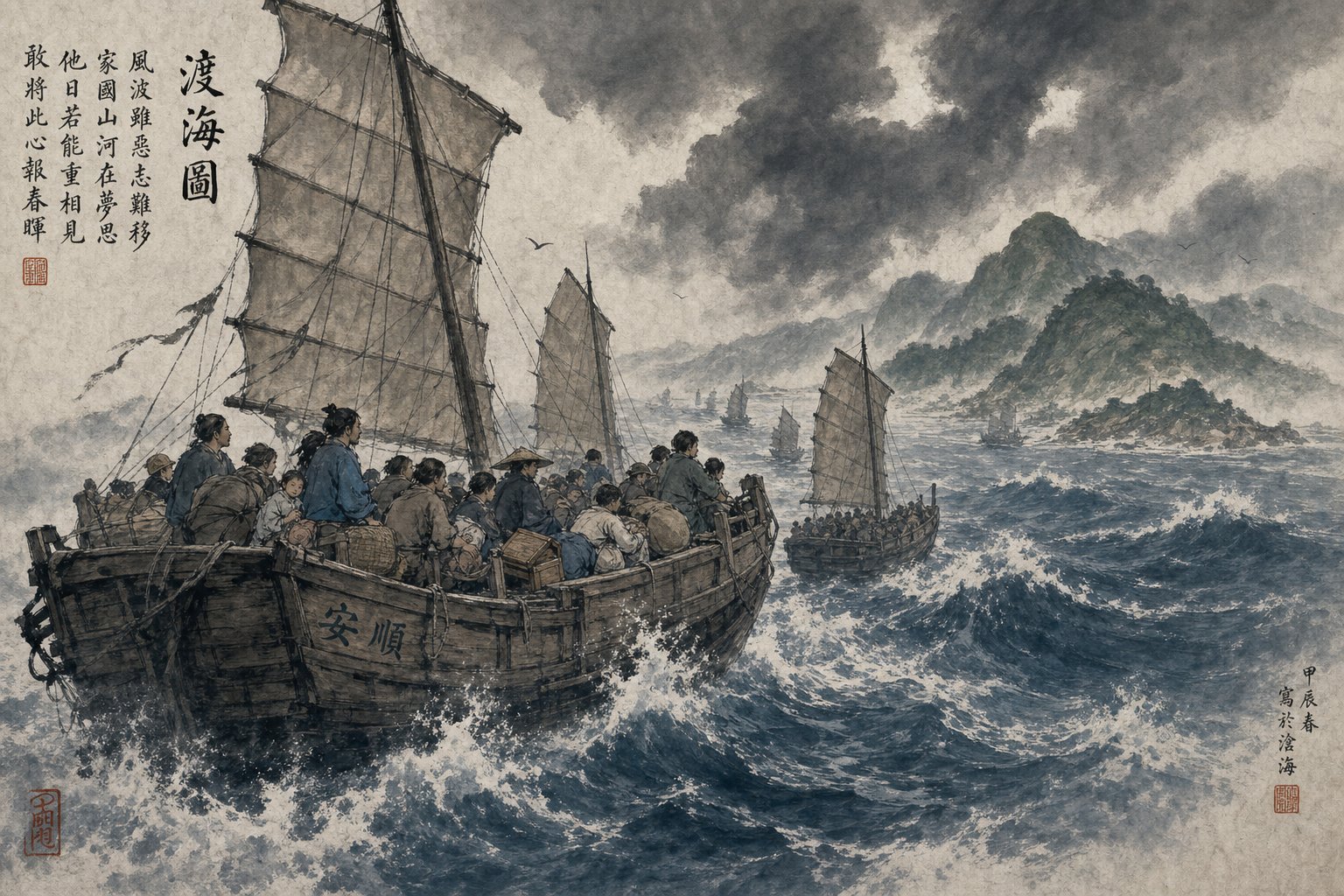
Surname concentration doesn't happen by accident. It happens when large numbers of people from the same narrow geographic origin settle in one place, generation after generation. Taiwan's dominant taiwan last names trace directly to two major migration streams: Hoklo settlers from southern Fujian and Hakka settlers from Guangdong. These groups didn't arrive from all over China. They came from specific prefectures, carrying specific clan surnames with them.
Hoklo Migration From Fujian Province
The earliest permanent Han Chinese settlement in Taiwan dates to 1624 during Dutch colonization, when the Dutch East India Company imported laborers to work sugar plantations in what is now Tainan. Most of these workers were young Hoklo men from southern Fujian, an estimated 50,000 to 60,000 during Dutch rule alone.
The real population explosion came during the Qing Dynasty. After the Qing annexed Taiwan in 1683, the first governor, Shi Lang, regulated who could cross the Taiwan Strait. Because Shi Lang himself was Hoklo, the policies favored migrants from Fujian province. Over roughly two centuries of Qing rule, Taiwan's Han population grew to 2.5 million, with the vast majority tracing their forebears surnames to just a handful of prefectures: Quanzhou and Zhangzhou in southern Fujian.
Here's the key detail. These prefectures were already dominated by a small set of powerful clans. The Chen clan, the Lin clan, and the Huang clan were among the largest lineage groups in Quanzhou and Zhangzhou. When entire villages migrated together, they brought their surname dominance with them. That's why Chen and Lin alone account for over 22 percent of Taiwan's population today. They weren't just common surnames in China broadly. They were the dominant surnames in the exact regions that fed migration to Taiwan.
Hakka Settlers From Guangdong
The second major stream came from Hakka-speaking communities, primarily from Jiaying Prefecture (modern-day Meizhou) in Guangdong province. Hakka settlers arrived somewhat later than the Hoklo majority and often settled in hillier, less desirable land in what are now Hsinchu, Miaoli, and Pingtung counties.
During the Japanese colonial period, maps labeled these communities simply as "people from Guangdong" rather than Hakka. The Hakka forebears last name patterns brought surnames like Liu, Zhong, and Zeng in higher proportions than the Hoklo population carried. Hakka communities also reinforced surnames like Huang and Li, which overlapped with Hoklo settlers but traced to different ancestral branches.
Clan Associations and Ancestral Halls
These migration patterns didn't just shape statistics. They created living institutions. Across Taiwan, clan associations and ancestral halls still connect modern families to their specific migration origins. The Chen clan association in Taipei, for example, maintains genealogical records linking members back to Quanzhou-area villages. Ancestral halls in Hakka townships preserve tablets documenting the exact generation that crossed the strait.
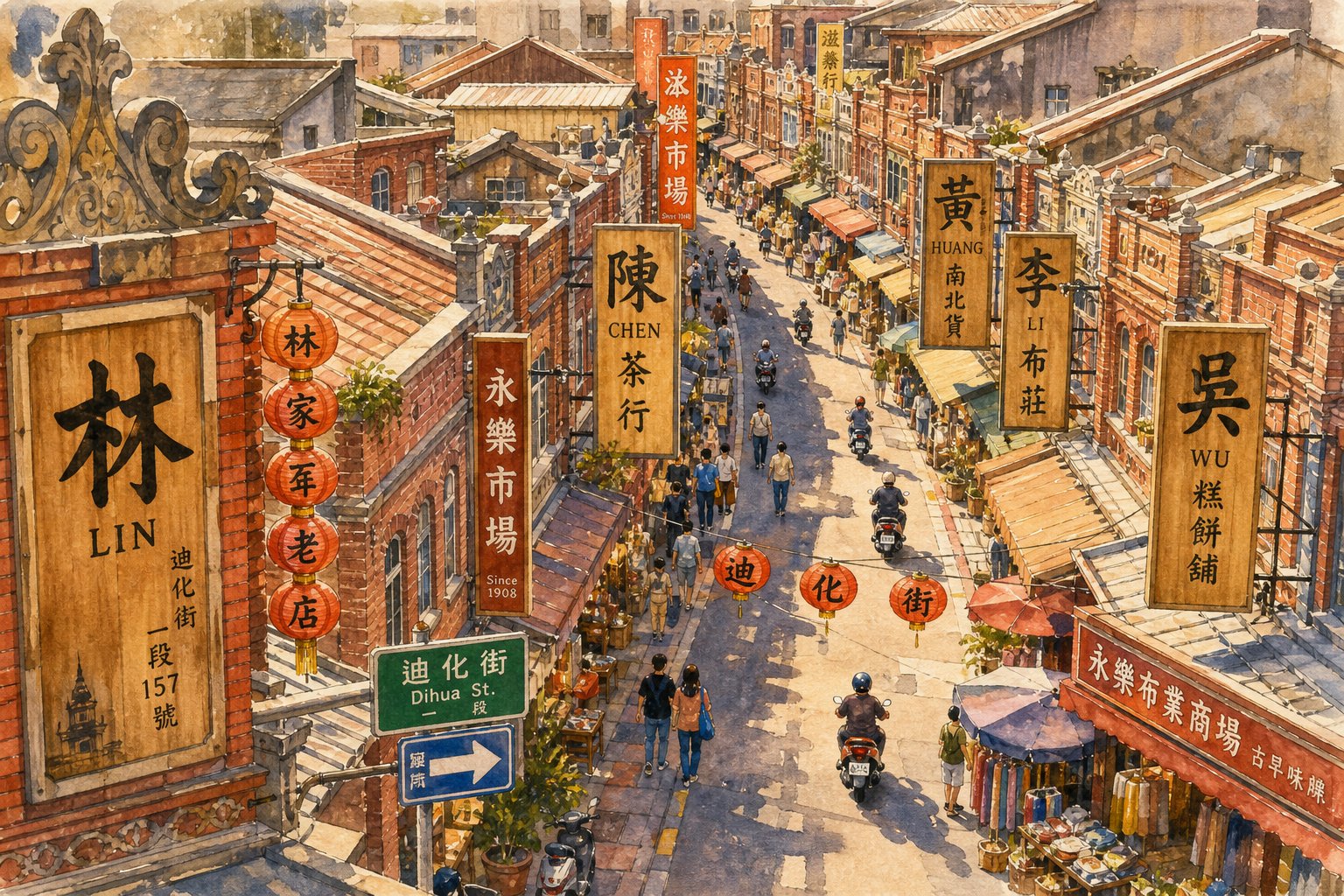
For anyone researching taiwan last names through genealogy, these clan associations remain a practical resource. They hold zupu (genealogical records), organize annual ancestor worship ceremonies, and in many cases maintain direct contact with origin villages in Fujian and Guangdong. The surnames carved above their doors aren't just decorative. They're a direct map of which clans settled where, and when.
This layered migration history produced a surname landscape unlike anywhere else. The question that follows naturally is: exactly how do these surnames rank against each other in modern population data?
The Top 30 Most Common Taiwan Surnames Ranked
Taiwan's Ministry of the Interior publishes household registration statistics that give us a precise snapshot of how names in Taiwan distribute across the population. Based on data compiled from 23.37 million registered residents, the top ten surnames alone cover 12.33 million people, or 52.79 percent of the total population. The top 100 surnames account for 96.62 percent. That leaves fewer than 4 percent of the population spread across the remaining 1,685 surnames.
Below you'll find a ranked breakdown of the 30 most common taiwan surnames, drawn from the Ministry's most recent national name statistics analysis. For each entry, you'll see the Chinese character, common romanization variants, approximate population share, and a brief note on clan origin.
Top 10 Taiwanese Surnames by Population
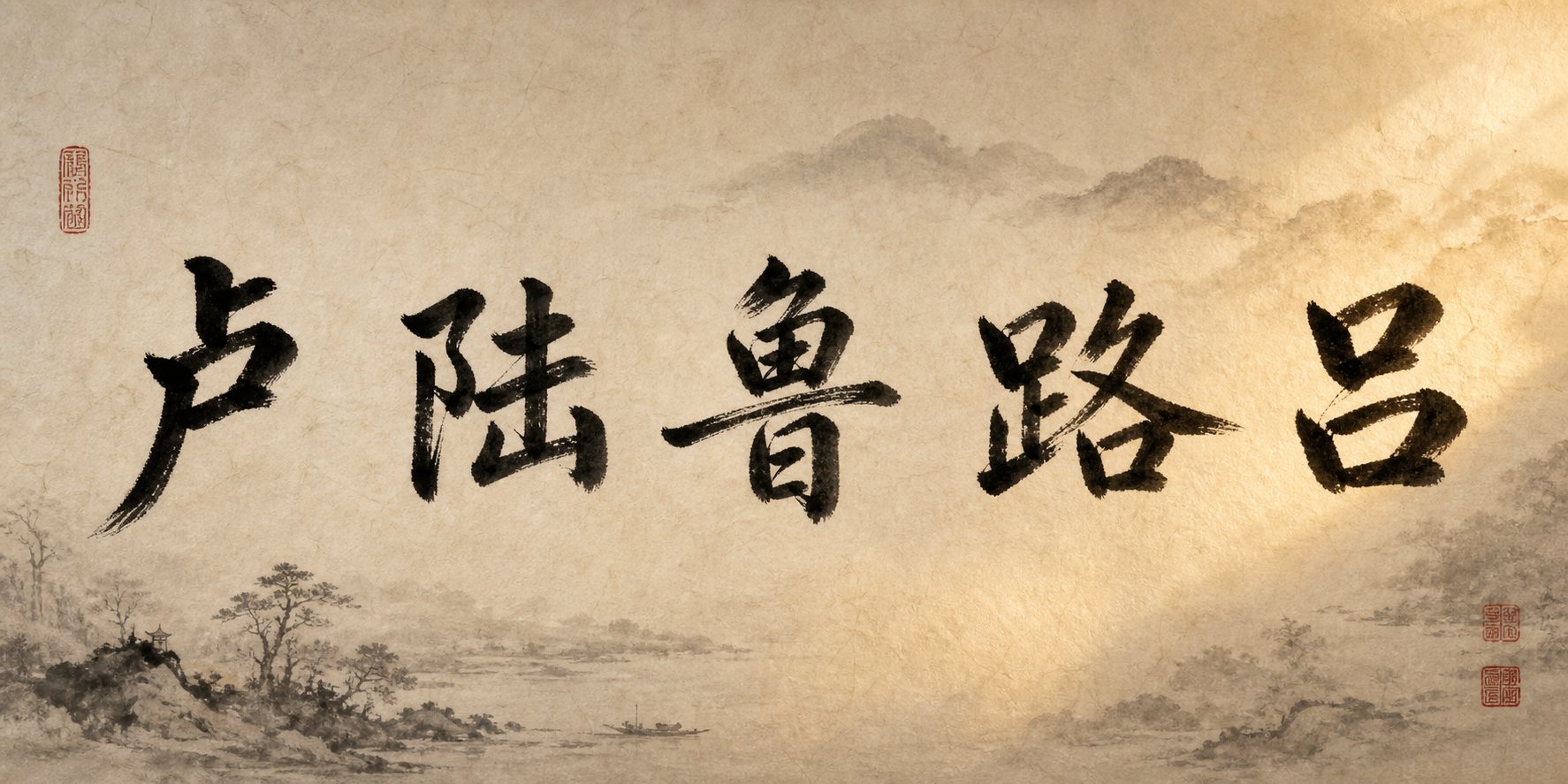
These ten surnames form the backbone of Taiwanese identity. Each one traces to specific migration waves from Fujian and Guangdong provinces, and together they represent more than half of everyone living on the island.
| Rank | Character | Common Romanizations | Approx. % of Population | Origin Note |
|---|---|---|---|---|
| 1 | 陳 | Chen, Tan, Chan | 11.21% | State of Chen (modern Henan); dominant clan in Quanzhou, Fujian |
| 2 | 林 | Lin, Lim, Lam | 8.30% | Descended from Bi Gan of the Shang Dynasty; concentrated in Fujian |
| 3 | 黃 | Huang, Ng, Wong, Ooi | 5.99% | Ancient state of Huang (modern Henan); strong in both Fujian and Guangdong |
| 4 | 張 | Chang, Zhang, Cheung | 5.26% | Descended from the inventor of the bow; widespread across China |
| 5 | 李 | Lee, Li | 5.14% | Royal surname of the Tang Dynasty; common in both Hoklo and Hakka groups |
| 6 | 王 | Wang, Wong, Ong | 4.19% | Means "king"; derived from royal descendants of the Zhou Dynasty |
| 7 | 吳 | Wu, Goh, Ng | 4.04% | State of Wu (modern Jiangsu); strong presence in southern Fujian |
| 8 | 劉 | Liu, Lau, Low | 3.17% | Royal surname of the Han Dynasty; common among Hakka settlers |
| 9 | 蔡 | Tsai, Cai, Chua | 2.91% | State of Cai (modern Henan); disproportionately common in Taiwan due to Fujian roots |
| 10 | 楊 | Yang, Yeung, Yeo | 2.58% | Descended from the rulers of the state of Yang; linked to Fujian migration |
A few things stand out immediately. Chen and Lin together account for nearly one in five people in Taiwan. That's a level of surname dominance you won't find in most countries. The gap between rank 1 and rank 10 is also dramatic: Chen is more than four times as common as Yang.
You'll also notice that several of these taiwan names carry multiple romanization variants. That's because Taiwanese people romanize their surnames using different systems depending on dialect, era, and personal preference. A person surnamed 黃 might appear as Huang, Ng, Wong, or Ooi in international documents, all representing the same character.
Surnames Ranked 11 Through 30
Beyond the top ten, the next twenty surnames each represent between roughly 0.5 and 2 percent of the population. While individually smaller, they collectively cover another significant portion of Taiwan's residents and reflect the same Fujian-Guangdong migration patterns.
| Rank | Character | Common Romanizations | Approx. % of Population | Origin Note |
|---|---|---|---|---|
| 11 | 許 | Hsu, Xu, Koh | 2.17% | State of Xu (modern Henan); strong in Quanzhou-origin communities |
| 12 | 鄭 | Cheng, Zheng, Tay | 1.89% | State of Zheng; linked to Koxinga's followers who settled Taiwan |
| 13 | 謝 | Hsieh, Xie, Chia | 1.72% | Descended from the Xie clan of Henan; common in southern Fujian |
| 14 | 洪 | Hung, Hong, Ang | 1.50% | Originally from the state of Gong; prevalent in Zhangzhou-origin families |
| 15 | 郭 | Kuo, Guo, Kwok | 1.46% | Means "outer city wall"; traces to the state of Guo in Shanxi |
| 16 | 邱 | Chiu, Qiu, Khoo | 1.31% | Originally Qiu from the state of Qi; modified to avoid imperial naming taboo |
| 17 | 曾 | Tseng, Zeng, Chan | 1.22% | Descended from the state of Zeng; common in both Hakka and Hoklo groups |
| 18 | 廖 | Liao, Liaw | 1.18% | Ancient state of Liao; particularly common in central Taiwan's Hakka belt |
| 19 | 賴 | Lai | 1.10% | State of Lai (modern Henan); concentrated in central and southern Taiwan |
| 20 | 徐 | Hsu, Xu, Chee | 1.05% | State of Xu (different from rank 11); common among Hakka communities |
| 21 | 周 | Chou, Zhou, Chew | 0.99% | Royal surname of the Zhou Dynasty; widespread origin |
| 22 | 葉 | Yeh, Ye, Yap | 0.95% | Means "leaf"; traces to the ancient Ye territory in Henan |
| 23 | 蘇 | Su, Soh | 0.88% | State of Su; strong presence in Quanzhou-origin settlers |
| 24 | 莊 | Chuang, Zhuang, Chng | 0.85% | Descended from King Zhuang of Chu; common in Zhangzhou families |
| 25 | 江 | Chiang, Jiang, Kang | 0.78% | Means "river"; traces to the Jiang River region |
| 26 | 呂 | Lu, Lyu, Loo | 0.76% | State of Lu (modern Henan); ancestor Jiang Ziya was enfeoffed there |
| 27 | 何 | Ho, He | 0.74% | Derived from the Han surname; traces to the state of Han |
| 28 | 羅 | Lo, Luo | 0.70% | State of Luo (modern Hubei); common in Hakka populations |
| 29 | 高 | Kao, Gao | 0.63% | Means "tall/high"; descended from the Qi state nobility |
| 30 | 蕭 | Hsiao, Xiao, Siew | 0.61% | Royal surname of the Liang Dynasty; linked to Fujian migration |
Several patterns emerge from this extended list. Surnames like Liao, Lai, and Chuang appear at higher frequencies in Taiwan than in mainland China overall, reflecting the specific Fujian and Guangdong origins of Taiwan's settler population. Hakka-associated surnames such as Liu, Tseng, Liao, and Lo cluster together in the middle ranks, mirroring the Hakka community's roughly 15 percent share of Taiwan's population.
You'll also notice that Taiwan records a total of 1,785 distinct surnames, including 118 two-character compound surnames and over 8,000 people whose names are transliterated into Chinese characters, a category that includes foreign residents and indigenous Taiwanese who have adopted transliterated traditional names.
The raw numbers tell you who lives in Taiwan. But they don't tell you what these surname characters actually mean, or what stories they carry from thousands of years of Chinese history. Each character in the table above is more than a label. It's a compressed origin story.
Meaning and Origin of Major Taiwanese Surname Characters
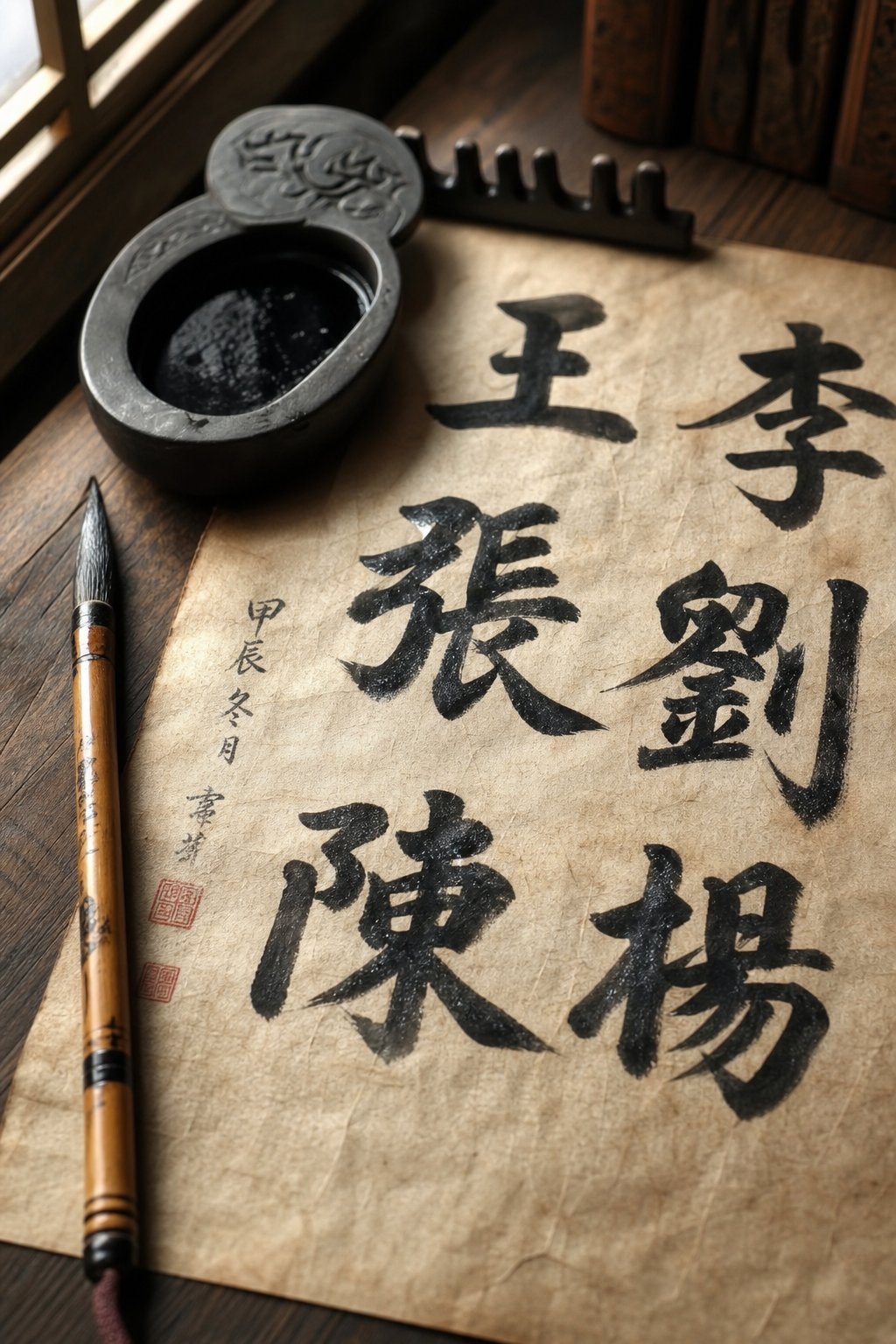
Every taiwan last name carries a story compressed into a single character. These aren't arbitrary labels. They encode geography, occupation, royal lineage, and even ancient botany. When you see the character 林 on a Taiwanese business card, you're looking at a word that literally means "forest" and traces back over three thousand years to a prince who fled into the woods to survive. Understanding what these characters mean transforms a list of names into a map of Chinese civilization itself.
What the Top Surname Characters Mean
Each of Taiwan's ten most common surnames originated from a distinct source: an ancient feudal state, a royal title, a natural element, or an ancestral occupation. Here's what each character actually says when you break it down.
- 陳 (Chen) - The character means "exhibit, display" or "old, ancient." As a surname, it refers to the State of Chen, which existed from the 11th to 5th centuries BC in what is now Henan province. The state's ruling family descended from Emperor Shun, one of the legendary sage-kings. When Chen fell, its people scattered southward, eventually concentrating in Fujian, which is why this taiwan name dominates the island today.
- 林 (Lin) - Means "forest" or "grove." The character is visually intuitive: two "wood" (木) radicals side by side. The surname traces to Bi Gan, a loyal minister of the Shang Dynasty who was executed by the tyrant King Zhou. His pregnant wife fled into the wilderness and gave birth in the forest. The Zhou Dynasty king later granted the child the surname Lin in honor of that refuge. Fujian province, where most Taiwanese Lin families originate, even takes its name from the same character.
- 黃 (Huang) - Means "yellow," the imperial color in Chinese culture associated with the earth element and the center direction. As a surname, it derives from the ancient state of Huang in modern Henan, which was conquered by the state of Chu around 648 BC. Displaced Huang descendants migrated south over centuries, establishing deep roots in both Fujian and Guangdong.
- 張 (Zhang/Chang) - The character combines "bow" (弓) with "long" (長), and its original meaning relates to stretching or drawing a bow. The surname traces to a grandson of the Yellow Emperor who reportedly invented the bow and arrow. It may also have denoted a bow maker whose job was to stretch bow wood. This occupational origin makes Zhang one of the few top surnames linked to a craft rather than a state.
- 李 (Li/Lee) - Means "plum" or "plum tree," composed of the radicals for "wood" (木) and "child" (子). The surname gained massive prominence as the royal family name of the Tang Dynasty (618-907 AD), one of China's most prosperous and culturally influential periods. Imperial favor and mass adoption during Tang rule spread the Li surname across every region of China.
- 王 (Wang) - Simply means "king" or "monarch." The character's three horizontal strokes represent heaven, humanity, and earth, connected by a single vertical stroke symbolizing the ruler who unites all three. Multiple royal lineages adopted this surname after losing power, making it the most common surname in China overall, though it ranks sixth in Taiwan due to the island's specific Fujian-origin demographics.
- 吳 (Wu) - Refers to the ancient state of Wu, located in the Yangtze River Delta region of present-day Jiangsu and Zhejiang provinces. The character originally depicted a person speaking loudly or calling out. The Wu kingdom was a major power during the Spring and Autumn period, and its descendants carried the surname southward into Fujian over subsequent centuries.
- 劉 (Liu) - The character historically relates to a type of weapon or battle axe, carrying the meaning "kill" or "destroy." Its fame comes from Liu Bang, the commoner who overthrew the Qin Dynasty and founded the Han Dynasty (206 BC-220 AD). As the imperial surname for over four centuries, Liu spread throughout China. In Taiwan, it's particularly common among Hakka communities from Guangdong.
- 蔡 (Cai/Tsai) - Refers to the ancient state of Cai, which existed during the Zhou Dynasty in what is now Henan province. The state was established when King Wu of Zhou enfeoffed his brother Cai Shu there. After the state's fall, its people adopted the state name as their surname. Cai is disproportionately common in Taiwan compared to mainland China because of its heavy concentration in southern Fujian, the primary source of Taiwanese migration.
- 楊 (Yang) - Means "willow," "poplar," or "aspen tree." The character combines the wood radical (木) with a phonetic component related to the sun rising. The surname descends from rulers of the ancient state of Yang and later gained prominence through the Sui Dynasty's imperial Yang family. In Taiwan, Yang families trace primarily to Fujian-origin settlers.
Tracing Clan Origins Through Characters
A pattern emerges when you look at these origins together. Six of the top ten surnames (Chen, Huang, Wu, Cai, Yang, and Zhang) derive from ancient feudal states. Two (Li and Liu) became dominant through imperial dynasties. One (Wang) comes from a royal title. And one (Lin) traces to a dramatic origin legend.
This isn't coincidental. In ancient China, commoners often had no fixed surname. Surnames solidified when ruling families lost their states and their descendants needed an identity marker. The state name became the family name. Over millennia, these families grew, split, and migrated, but the original character remained unchanged.
For genealogy researchers, the taiwan old name inscribed on an ancestral tablet isn't just identification. It's a geographic and political timestamp. A Chen family knows their deepest roots connect to Henan's ancient Chen state. A Lin family can trace their story back to a Shang Dynasty prince. These characters function as compressed archives, carrying three thousand years of history in a single brushstroke.
What makes Taiwan's situation unique is that these ancient origins passed through a very specific geographic filter. The surnames didn't arrive directly from Henan or Shaanxi. They arrived after centuries of secondary migration through Fujian and Guangdong, shaped further by colonial-era policies that would alter how Taiwanese people related to their own names.
Colonial History and Mainlander Migration Effects on Surnames
The Treaty of Shimonoseki in 1895 transferred Taiwan from Qing China to Imperial Japan, and with that transfer came fifty years of colonial rule that would reshape how taiwan people called themselves in official records. While the Hoklo and Hakka surname landscape had solidified over two centuries of Qing-era migration, Japanese colonial policies introduced pressures that temporarily disrupted the relationship between Taiwanese families and their ancestral names.
Japanese Colonial Name Policies
For most of the colonial period, the Japanese administration maintained a clear distinction between Japanese subjects born in the home islands and Taiwanese colonial subjects. Taiwanese residents kept their Chinese-character surnames in household registers, though the government recorded them using Japanese readings. A person surnamed Chen (陳) would appear in documents as "Chin" under Japanese pronunciation.
The real disruption came during the kominka movement of the late 1930s and 1940s. As Japan escalated its war efforts across Asia, the colonial government launched an "imperialization" campaign designed to transform Taiwanese subjects into loyal Japanese citizens. One component was the name-change policy, which encouraged (and in practice pressured) Taiwanese families to adopt Japanese-style names. Unlike in Korea, where name changes were made compulsory, Taiwan's policy remained technically voluntary. Roughly 7 percent of Taiwanese households adopted Japanese names by 1943, a relatively low rate that reflected widespread quiet resistance.
Taiwan's indigenous Austronesian peoples faced a different trajectory entirely. Colonial authorities assigned them Japanese names during the occupation, and after 1945, the incoming Kuomintang government required them to adopt Chinese surnames. Entire indigenous communities received surnames like Lin, Chen, or Gao through administrative assignment rather than ancestral connection. This means that when you encounter an indigenous Taiwanese person surnamed Lin today, that surname may carry only seventy-odd years of history rather than three millennia.
Post-1949 Mainlander Surnames
The second major disruption to Taiwan's surname landscape arrived between 1945 and 1955. After the Kuomintang lost the Chinese Civil War, approximately 900,000 to 1.1 million people fled to Taiwan from provinces scattered across mainland China. These migrants, often called waishengren (外省人), came from places like Hunan, Sichuan, Shandong, Shanghai, and Guangdong, regions with surname distributions quite different from the Fujian-dominated Hoklo majority already on the island.
What did this mean for Taiwan's surname profile? Surnames like Zhao, Sun, Ma, and Gao, relatively rare among Hoklo and Hakka settlers, suddenly appeared in meaningful numbers. Northern Chinese surnames that had never crossed the Taiwan Strait during Qing-era migration now entered the island's household registers. Taiwan men who had served in Nationalist armies from every corner of China brought surnames reflecting the full diversity of the mainland rather than the narrow Fujian-Guangdong corridor that had defined earlier waves.
The waishengren constituted roughly 12 to 15 percent of Taiwan's postwar population. Their surname contribution didn't displace the existing top-ten dominance of Chen, Lin, and Huang, but it did broaden the island's surname diversity in the lower ranks. It also created a subtle demographic marker. Certain less-common surnames became informal signals of mainlander heritage, a distinction that carried social and political weight for decades.
These layered historical forces, Qing-era Fujian migration, Japanese colonial disruption, indigenous name reassignment, and postwar mainlander influx, produced the modern surname distribution visible in today's registration data. But the story doesn't end with who carries which surname. Taiwan's position between China and the broader world also created a unique situation: the same surname can look completely different depending on which romanization system renders it into the Latin alphabet.
Distinctively Taiwanese Surnames Compared to Mainland China
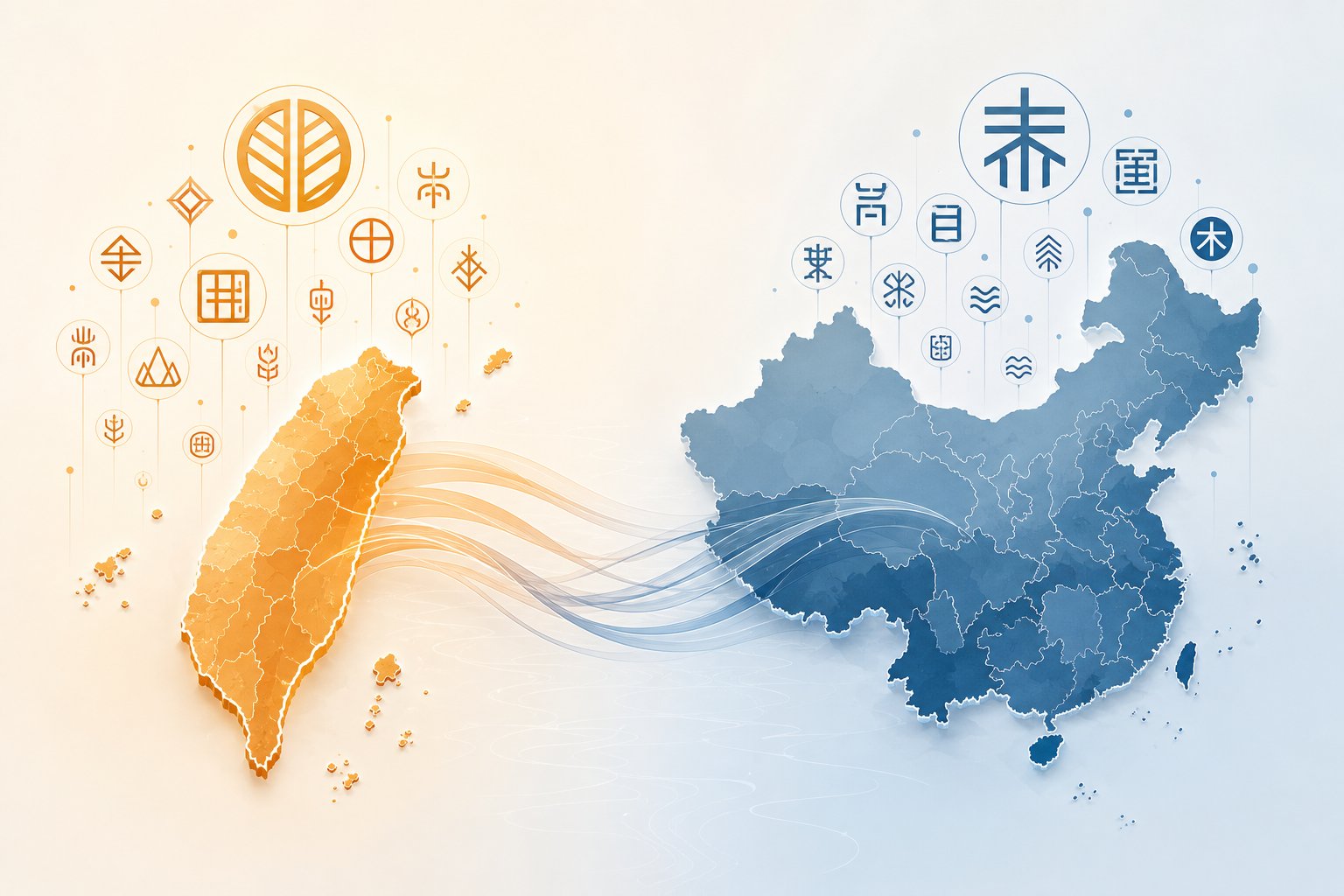
Taiwan and mainland China share the same pool of Chinese-character surnames, yet the frequency at which those surnames appear tells two very different demographic stories. If you lined up the top ten surnames in taiwan next to the mainland's top ten, you'd notice immediate differences in both ranking and proportion. These gaps aren't random. They're a direct fingerprint of which specific regions fed migration to the island over three centuries.
Surnames More Common in Taiwan Than Mainland China
The most striking difference sits right at the top of the list. Chen ranks first in Taiwan at 11.21 percent of the population, but only fifth on the mainland at roughly 4.5 percent. That's because Chen is overwhelmingly concentrated in Fujian province, the origin point for the majority of Taiwan's settlers. In mainland China, the top three surnames are Li, Wang, and Zhang, reflecting the demographic weight of northern and central provinces where those clans are strongest.
Lin tells a similar story. It ranks second in Taiwan at 8.30 percent but falls outside the mainland's top five entirely, hovering around 1.2 percent nationally. Fujian is sometimes called "the province of Lin," and that provincial concentration transferred directly to Taiwan through migration. The same pattern holds for Cai (Tsai), which ranks ninth in Taiwan at 2.91 percent but sits much lower on the mainland, around 0.5 percent nationally. Cai's roots in southern Fujian made it disproportionately common among the Hoklo settlers who crossed the strait.
Other surnames in taiwan that punch above their mainland weight include Hung (洪), Hsu (許), Chuang (莊), and Lai (賴). Each of these traces to clans heavily concentrated in the Quanzhou-Zhangzhou corridor of southern Fujian or in Hakka communities of eastern Guangdong.
Regional Differences That Explain the Gap
Why does this divergence exist? Think of it this way. Mainland China's surname statistics reflect contributions from every province, from Heilongjiang in the northeast to Yunnan in the southwest. Taiwan's surname profile reflects contributions from essentially two provinces: Fujian and Guangdong. About 80 percent of Taiwan's population traces ancestry back to Fujian, with most of the remainder coming from Guangdong's Hakka regions or post-1949 mainlander families.
This narrow geographic funnel explains why surnames dominant in northern China barely register in Taiwan. Wang, the single most common surname on the mainland (covering over 7 percent of China's population), ranks only sixth in Taiwan at 4.19 percent. Zhang, second or third on the mainland depending on the survey year, drops to fourth in Taiwan. Li, the mainland's most common or second-most common surname, falls to fifth on the island.
The comparison becomes even more revealing when you look at surnames that are common in northern China but nearly absent in Taiwan. Surnames like Zhao, Sun, Ma, and Dong, all top-50 names on the mainland, appear at much lower frequencies in Taiwan because they're concentrated in provinces like Shandong, Hebei, and Shaanxi that contributed almost no migration to the island before 1949.
To illustrate the contrast, here's a side-by-side look at how select surnames rank differently between the two populations:
| Surname | Character | Taiwan Rank | Mainland China Rank | Explanation |
|---|---|---|---|---|
| Chen | 陳 | 1st (~11.2%) | 5th (~4.5%) | Dominant in Fujian, Taiwan's primary source region |
| Lin | 林 | 2nd (~8.3%) | 16th (~1.2%) | Heavily concentrated in Fujian; rare in northern China |
| Cai/Tsai | 蔡 | 9th (~2.9%) | 34th (~0.5%) | Southern Fujian clan with limited spread elsewhere |
| Wang | 王 | 6th (~4.2%) | 1st (~7.2%) | Dominant in northern China; less common in Fujian |
| Li | 李 | 5th (~5.1%) | 2nd (~7.0%) | Widespread but strongest in northern/central provinces |
| Zhang | 張 | 4th (~5.3%) | 3rd (~6.8%) | Common everywhere but peaks in the north |
| Zhao | 趙 | Below top 50 | 8th (~2.3%) | Northern surname; minimal Fujian/Guangdong presence |
| Ma | 馬 | Below top 50 | 14th (~1.5%) | Concentrated in northwestern China; rare in the south |
What do you call someone from Taiwan who shares a surname with millions on the mainland? Technically, the same clan descendant. But the proportional differences reveal that Taiwan's population is essentially a demographic snapshot of southern Fujian and eastern Guangdong, frozen in time and then layered with a smaller post-1949 contribution from across China.
This distinction matters for genealogy researchers and anyone comparing surname data across Chinese-speaking populations. A surname's rank in Taiwan doesn't predict its rank on the mainland, and vice versa. Even compared to other regions with large Chinese diaspora populations, like Texas, which has one of the largest Asian-American communities in the United States, the most common last names in Texas of Chinese origin reflect a more geographically diverse migration pattern than Taiwan's concentrated Fujian roots.
These frequency differences are visible in raw statistics. But they become even more confusing when the same surname gets written in completely different ways depending on which romanization system a person uses, a challenge that turns a single character into three or four unrecognizable spellings in international contexts.
Why Taiwanese Surnames Look Different in Romanization
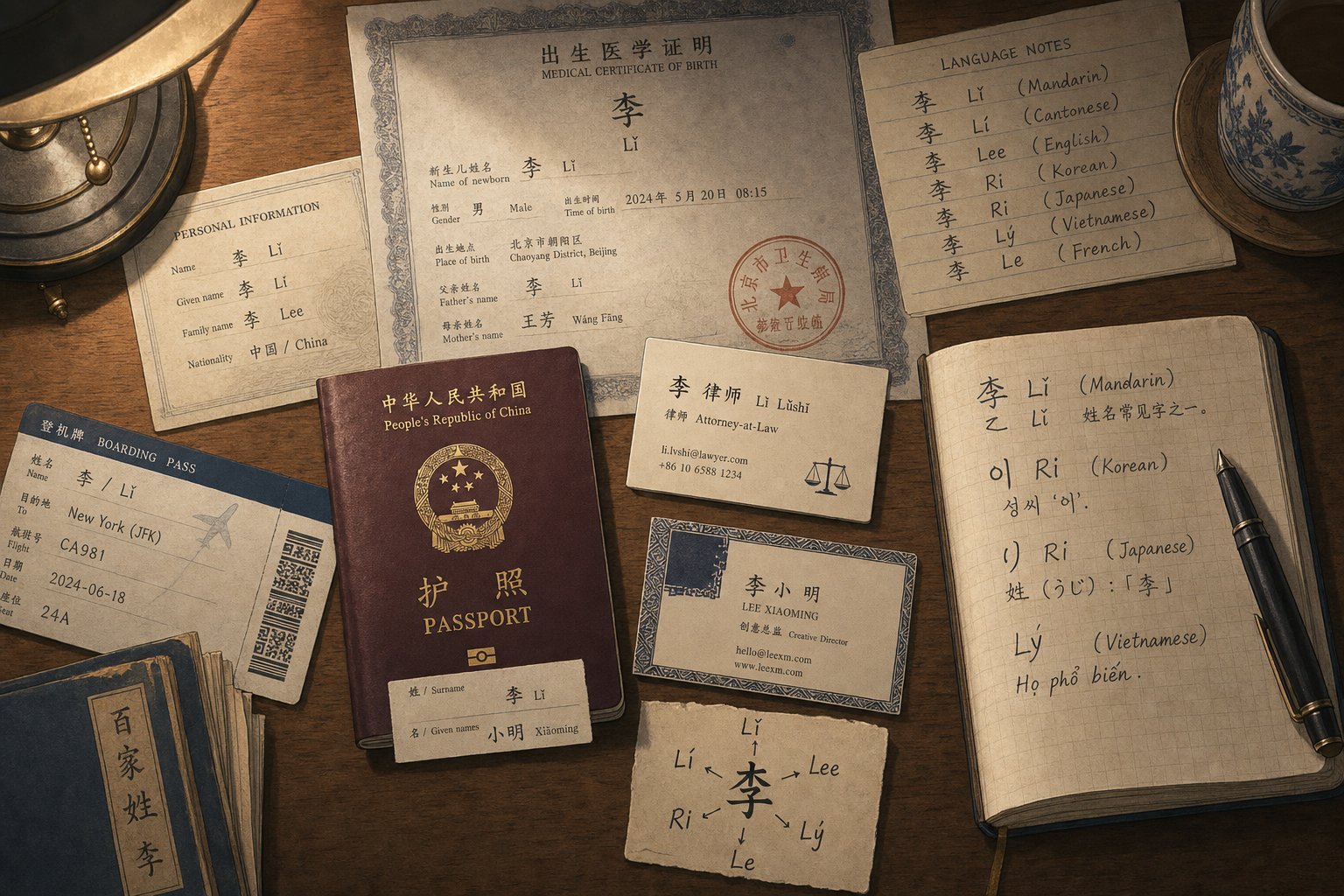
You've probably noticed something odd if you've ever searched for a Taiwanese colleague's name online. The same person might appear as "Huang" in one database, "Ng" in another, and "Wong" on a conference badge. These aren't different people or different surnames. They're all the character 黃, rendered through different romanization systems that have accumulated across Taiwan's complex linguistic history. For anyone researching taiwan names male or female, this creates a genuine puzzle: how do you connect records when one surname produces four or five unrelated-looking spellings?
Wade-Giles Versus Pinyin in Taiwan
Most Taiwanese people romanize their names using a simplified version of Wade-Giles, a system developed by British diplomats in the 19th century. This isn't a conscious choice for most people. It's simply what government offices have used in their reference materials for decades. When you apply for a passport or an international document in Taiwan, the default romanization offered by the clerk typically follows Wade-Giles conventions, stripped of diacritics and apostrophes.
Taiwan officially adopted Hanyu Pinyin as its national standard in 2009, the same system used in mainland China and recognized internationally. But here's the catch: the policy applies primarily to street signs, place names, and new government signage. It does not force individuals to change their existing romanized names. Someone who has been "Tsai" on their passport for twenty years isn't required to become "Cai." And since most Taiwanese learn Zhuyin (bopomofo) rather than any romanization system in school, many people simply accept whatever spelling the government office generates.
The result is a patchwork. A father might be "Hsu" (Wade-Giles) while his son's newer passport reads "Xu" (Pinyin). Both represent the character 許. Neither is wrong, but they look like completely different tiwan names to anyone unfamiliar with the systems.
Some prominent figures illustrate the inconsistency perfectly. Former president Lee Teng-hui's surname would be "Li" in any major romanization system, yet he used "Lee." Former vice-president Vincent Siew's surname (蕭) appears in a rare Hokkien-derived form rather than the standard Mandarin-based "Hsiao" or "Xiao." Former president Tsai Ing-wen uses "Tsai" (Wade-Giles) for her surname but a Gwoyeu Romatzyh spelling for her given name.
Hokkien Romanization and International Variants
The confusion deepens when you factor in dialect-based romanization. Around 70 percent of Taiwan's population speaks Taiwanese Hokkien as a heritage language, and many families romanized their surnames based on Hokkien pronunciation rather than Mandarin. The Pe̍h-oe-ji (POJ) system, developed by Presbyterian missionaries in the 1860s, was the first romanization system used in Taiwan and remains influential in how older families spell their names.
Under Hokkien pronunciation, 陳 becomes "Tan" rather than "Chen." The character 黃 becomes "Ng" (a nasal sound with no vowel) or "Ooi" depending on the specific Hokkien dialect. 林 becomes "Lim" instead of "Lin." These aren't errors or alternative spellings. They reflect a completely different spoken language applied to the same written character.
In Southeast Asian Chinese diaspora communities, where Hokkien speakers from the same Fujian origins settled, you'll encounter these Hokkien-based spellings frequently. A Singaporean "Tan" and a Taiwanese "Chen" may share the exact same ancestral surname and even the same village of origin. The spelling difference simply reflects whether the family romanized through Mandarin or Hokkien.
Since 2019, Taiwan's Ministry of Foreign Affairs has allowed passport holders to use romanizations based on Hoklo, Hakka, or indigenous languages, not just Mandarin. This policy change acknowledged what had been happening informally for generations: families choosing spellings that reflect how they actually pronounce their own names at home.
Here's how the top ten taiwan male names and surnames appear across the major romanization systems:
| Character | Wade-Giles (Mandarin) | Hanyu Pinyin (Mandarin) | Hokkien (POJ/Common) | Cantonese Variant |
|---|---|---|---|---|
| 陳 | Ch'en / Chen | Chen | Tan / Tin | Chan |
| 林 | Lin | Lin | Lim | Lam |
| 黃 | Huang | Huang | Ng / Ooi / Ui | Wong |
| 張 | Chang | Zhang | Tiu / Teo | Cheung |
| 李 | Li / Lee | Li | Li / Lee | Lei |
| 王 | Wang | Wang | Ong / Heng | Wong |
| 吳 | Wu | Wu | Goh / Go | Ng |
| 劉 | Liu | Liu | Lau / Lao | Lau |
| 蔡 | Ts'ai / Tsai | Cai | Chua / Choa | Choi |
| 楊 | Yang | Yang | Iu / Yeo | Yeung |
Notice how some surnames stay relatively stable across systems (Lin remains "Lin" in both Wade-Giles and Pinyin) while others become nearly unrecognizable. The character 黃 alone can appear as Huang, Ng, Ooi, Wong, or Ui depending on the system and dialect. For international databases, academic citations, and family research, this means a single person's publications might be split across multiple author entries that appear to be different individuals entirely.
What does this mean practically? If you're searching for genealogical records, academic papers, or business contacts with taiwan names, you need to think in characters rather than romanized spellings. A "Goh" in Singapore, a "Wu" in Beijing, and a "Wu" in Taipei all share the surname 吳, but a "Ng" in Taiwan might be either 吳 (Wu in Mandarin) or 黃 (Huang in Mandarin), depending on which character the Hokkien "Ng" represents. The romanization is a lossy translation. The character is the constant.
This romanization complexity doesn't just affect surnames in isolation. It ripples through the entire structure of Taiwanese names, from how given names pair with surnames to how families navigate naming conventions that blend tradition with modern personal expression.
Taiwanese Naming Conventions Beyond the Surname
Surnames provide the foundation, but they're only one piece of a Taiwanese name. The given name that follows carries its own set of rules, traditions, and cultural weight. Whether you're trying to understand a taiwanese boy names list or researching taiwan female names for a character in a novel, the conventions governing how given names pair with surnames reveal just as much about Taiwanese culture as the surname data itself.
How Taiwanese Full Names Are Structured
Taiwanese names of Han Chinese descent follow a consistent formula: surname first, given name second. The vast majority of people carry a three-character name, with one character for the surname and two for the given name. Think of it as CHEN Wei-Ting or HUANG Hui-Wen, where the capitalized portion is the family name and the hyphenated portion is the personal name.
A few structural details set Taiwanese names apart from Western conventions:
- The surname almost always consists of a single character. Fewer than one in a hundred Taiwanese citizens carry a two-character surname.
- The given name is typically two characters, though roughly one in twenty people has a single-character given name.
- There is no middle name in the Western sense. The two-character given name functions as a single unit, not a first-plus-middle combination.
- When romanized, the two given-name characters are usually hyphenated (Wei-Ting), written together (Weiting), or separated (Wei Ting). The hyphenated form is most common in Taiwan.
- Women do not change their surname at marriage. A married woman keeps her birth name in all legal documents, though she may informally place her husband's surname before her full name in social contexts.
- Children traditionally take the father's surname, though recent legal changes allow families to choose either parent's surname at registration.
In international settings, many Taiwanese people reverse the order to match Western expectations, placing the given name first and surname last. They also frequently adopt an English name for daily use, something like "Susan Huang" or "Kevin Chen," which may bear no phonetic relationship to their Chinese name at all.
Gendered Naming Patterns in Taiwan
Given names in Taiwan often carry gendered associations, though these aren't absolute rules. Certain characters appear far more frequently in female taiwan names, while others cluster heavily among men. The patterns reflect cultural aspirations parents hold for their children.
For taiwanese boy names, common character choices include:
- 志 (Zhi) - ambition, will
- 偉 (Wei) - greatness, grandeur
- 建 (Jian) - to build, establish
- 明 (Ming) - bright, clarity
- 俊 (Jun) - handsome, talented
The most common men's given name in Taiwan is Chi-ming (志明), combining ambition with brightness. For women, Shu-fen (淑芬) has held the top spot for over a decade, pairing "virtuous" with "fragrant." Other popular characters in taiwan female names include Mei (美, beautiful), Hui (惠, grace), Ya (雅, elegance), and Wen (文, literary refinement).
That said, gendered naming is becoming less rigid. Modern parents increasingly choose characters for their meaning or sound without strict gender coding, and once a name is romanized, gender becomes nearly impossible to determine from spelling alone.
One tradition that persists in some families is the generation name. Siblings or cousins share one character in their given name to mark their generational position within the clan. Two brothers might be named CHEN Chang-Hu and CHEN Chang-Wei, where "Chang" signals they belong to the same generation. This practice connects directly back to the clan structures that shaped Taiwan's surname landscape, though it's less common among younger families today.
Perhaps the most distinctive aspect of modern Taiwanese naming is the role of fortune tellers. Parents commonly consult a fortune teller or use stroke-counting methods to select a name that aligns with the child's birth date, time, and the family surname's stroke count. Certain stroke combinations are considered auspicious while others invite bad luck. It's common belief that a well-chosen name brings prosperity, and an ill-fitting one can hold a person back. This conviction runs deep enough that adults who experience setbacks sometimes legally change their given name in search of better fortune, a practice far more common in Taiwan than in most Western countries.
The surname, then, isn't just a family marker. It's the fixed anchor around which an entire naming system revolves, from stroke-count calculations to generational identity to the fortune teller's recommendations. Understanding how these elements interact gives you a complete picture of why Taiwanese names look and function the way they do, and why those five dominant surnames at the top of the list carry so much more cultural weight than a simple population statistic might suggest.
Frequently Asked Questions About Taiwanese Surnames
1. What is the most common surname in Taiwan?
Chen (陳) is the most common surname in Taiwan, carried by approximately 2.61 million people, or 11.21 percent of the total population. Its dominance traces to the massive concentration of Chen clans in southern Fujian province, particularly in Quanzhou and Zhangzhou, the two prefectures that supplied the majority of Han Chinese settlers to Taiwan during the Qing Dynasty. Chen is roughly fourteen times more concentrated in Taiwan than the most common surname (Smith) is in the United States.
2. Why are Chen and Lin so common in Taiwan but not in mainland China overall?
Chen and Lin together account for nearly 20 percent of Taiwan's population because the island's settlers came overwhelmingly from southern Fujian, where these two clans were already dominant. On the mainland, surname statistics reflect contributions from all provinces, diluting the Fujian-heavy surnames. Lin ranks second in Taiwan at 8.3 percent but only around 16th on the mainland at roughly 1.2 percent. The narrow geographic funnel of Qing-era migration concentrated these Fujian surnames far beyond their mainland proportions.
3. Why do Taiwanese surnames have so many different English spellings?
The same Chinese character can appear as multiple romanized spellings because Taiwan has historically used Wade-Giles, while mainland China uses Hanyu Pinyin, and many Taiwanese families romanize based on Hokkien dialect pronunciation. For example, the character 黃 can appear as Huang (Pinyin/Wade-Giles), Ng or Ooi (Hokkien), or Wong (Cantonese). Taiwan officially adopted Pinyin in 2009 for signage, but individuals are not required to change existing passport spellings, creating a patchwork of systems across generations.
4. How many total surnames exist in Taiwan?
Taiwan's household registration records contain 1,785 distinct surnames in total. Of these, 1,667 are single-character surnames and 118 are two-character compound surnames. Additionally, over 8,000 residents have names transliterated into Chinese characters, a category covering foreign residents and indigenous Taiwanese who have adopted transliterated traditional names. Despite this variety, the top 100 surnames account for 96.62 percent of the population, leaving fewer than 4 percent spread across the remaining 1,685 surnames.
5. Do Taiwanese women change their surname after marriage?
No, Taiwanese women retain their birth surname in all legal documents after marriage. There is no legal or cultural expectation to adopt the husband's family name. In some social contexts, a married woman may informally place her husband's surname before her full name, but this practice is increasingly rare among younger generations. Recent legal reforms also allow parents to register children under either parent's surname, breaking from the traditional patrilineal convention.