The Zhu Surname and Its Place in Chinese Civilization
Imagine a single family name so powerful that an entire dynasty hunted its bearers after seizing the throne. That is the story of the Zhu surname — a name written in vermillion red and etched into over three millennia of Chinese history. Among the thousands of last names recorded in China, the surname Zhu (朱) ranks as the 14th most common, carried by roughly 18 million people. Yet its significance reaches far beyond population numbers.
Why the Zhu Surname Matters in Chinese History
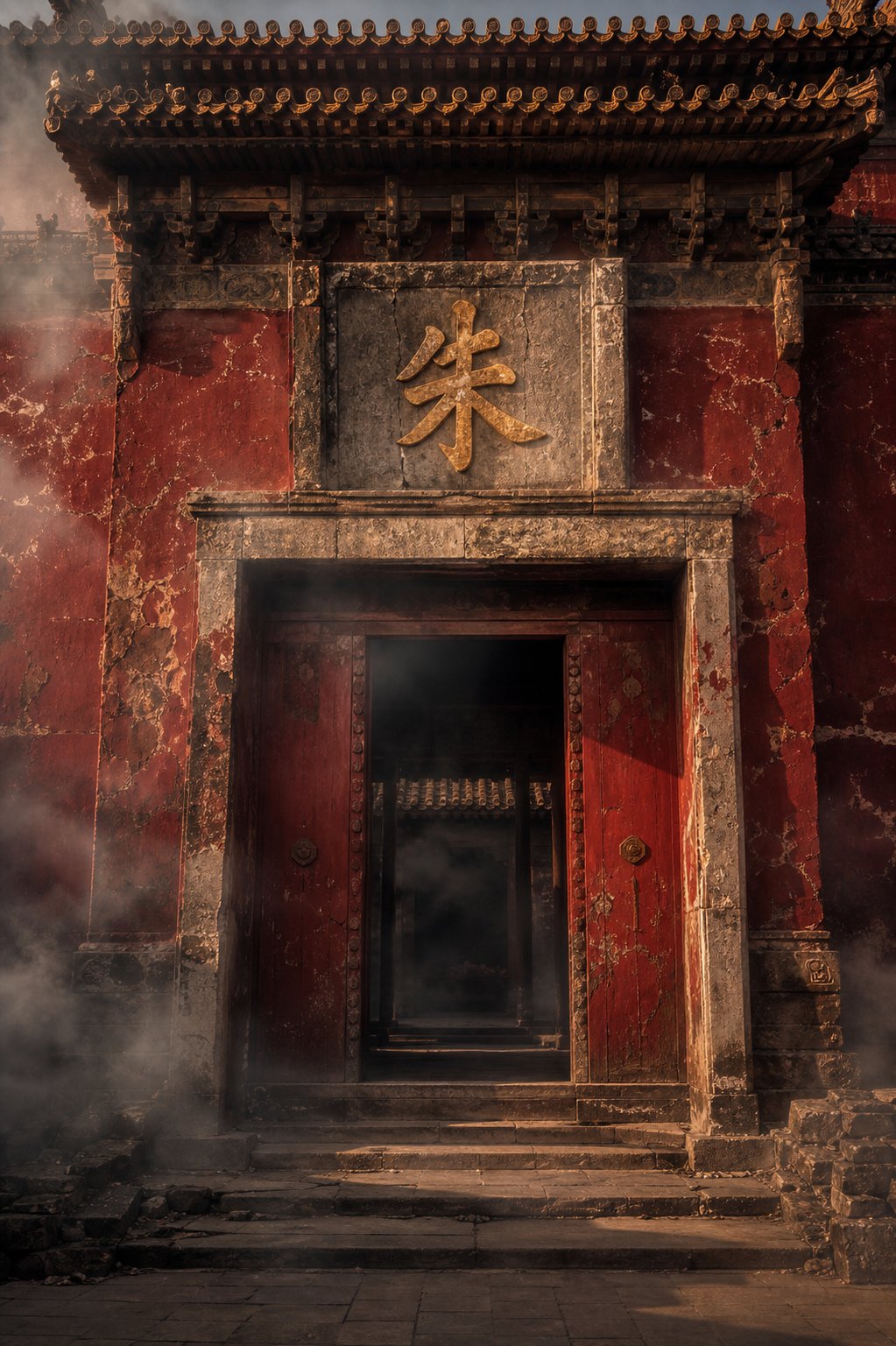
The character 朱 literally means vermillion — the deep, vivid red of cinnabar pigment that Chinese culture has long associated with authority, prosperity, and imperial power. This is not just any color. Vermillion adorned palace gates, official seals, and sacred texts for centuries before the Zhu clan ever sat on a throne. When a peasant named Zhu Yuanzhang founded the Ming Dynasty in 1368, the surname and the color merged into a single symbol of supreme rule over China.
The Zhu surname holds a rare distinction in Chinese genealogy: it is both an ancient clan name tracing back over 3,000 years to the Zhou Dynasty and the imperial surname of China's last native-ruled dynasty, the Ming.
A Surname Spanning Three Millennia
The zhu last name did not begin with emperors. Its roots stretch back to the ancient State of Zhu (邾国), a vassal kingdom whose ruling family carried the ancestral surname Cao. When that state fell to conquest around the 4th century BC, its displaced people adopted 朱 as their new identity — a quiet act of remembrance for a lost homeland. From there, the surname Zhu traveled through centuries of war, philosophy, and cultural transformation, picking up new lineages along the way.
This is a story of how one name became inseparable from Chinese civilization itself — rising from tribal origins to imperial glory, then plunging into persecution and diaspora after 1644 when the Qing conquest forced millions to hide or abandon the very characters that defined their identity.
What the Character 朱 Means and Why It Matters
What does 朱 actually mean in Chinese? The answer is more layered than a simple dictionary entry suggests. The zhu meaning has shifted dramatically over three thousand years, moving from a humble botanical reference to one of the most symbolically charged characters in the Chinese writing system. Understanding this evolution reveals why the surname carried cultural weight long before any Zhu emperor wore a crown.
The Character 朱 From Oracle Bones to Modern Script
In its earliest known form — carved into oracle bones around 1250 to 1000 BC — the character 朱 was a pictograph of a tree (木) with a horizontal mark indicating the trunk or heartwood. The original meaning of zhu was simply "tree trunk," referring specifically to the reddish-brown core of certain conifers. Over time, a separate character 株 took over that botanical meaning, and 朱 drifted toward its color association through what linguists call a phonetic loan.
You can trace this journey through the physical evolution of the written character itself:
- Oracle bone script (~1250-1000 BC): A clear tree shape with a dot or stroke marking the heartwood
- Bronze script, Mid Western Zhou (~900 BC): The form becomes more stylized, with the trunk indicator more prominent
- Seal script, as recorded in the Shuowen (~100 AD): The character settles into a balanced, symmetrical form
- Clerical script, Eastern Han dynasty (25-220 AD): Angular strokes replace curves, approaching the modern look
- Regular script (modern): The six-stroke character used today
The Shuowen Jiezi (说文解字), China's foundational etymological dictionary compiled around 100 AD by Xu Shen, provides the classical definition that bridges the character's botanical origin and its color meaning:
"朱,赤心木,松柏属。从木,一在其中。" — The Shuowen Jiezi defines 朱 as "red-hearted wood, of the pine and cypress family. From 木 (tree), with a stroke in its center."
This definition captures the exact moment of transition. The character still references a tree, but the emphasis has already shifted to the redness of its core. By the Han dynasty, the 朱 meaning had fully settled on "cinnabar" and "vermillion red" — the color that would define its cultural destiny.
Vermillion Red and Its Cultural Symbolism
Why does a color matter so much to a surname's prestige? In Chinese civilization, vermillion is not just another shade of red. It represents an entire system of meaning. The Smithsonian's National Museum of Asian Art describes how red has been China's color of power, celebration, fertility, prosperity, and protection against evil for centuries. Cinnabar and red ochre appeared in ancient burials to represent lifeblood and aid the transition from death to immortality.
Consider what vermillion touched in traditional Chinese life:
- The robes of high-ranking officials
- The walls surrounding the Forbidden City
- Imperial seals pressed onto official documents
- Sacred texts and ritual objects
- Wedding garments symbolizing joy and fertility
The color carried associations with fire, the sun, the heart, and the southern direction — all positive forces of energy in Chinese cosmology. Pantone's standardized color system even includes "Chinese red" as a recognized hue, described as a vivid orangey-red best captured by the word vermillion.
For anyone bearing the surname 朱, this symbolism was embedded directly in their identity. Long before the Ming Dynasty made it an imperial name, the meaning of zhu already connected its bearers to concepts of authority and auspiciousness. A family named "Vermillion" carried connotations of legitimacy and cosmic favor simply through the character on their ancestral tablets.
This cultural loading helps explain something that might otherwise seem like coincidence. When Zhu Yuanzhang rose to power in the 14th century, propagandists did not need to invent symbolism for the new ruling house — the surname already meant "the color of emperors." The Ming court leaned into this connection deliberately, favoring red in porcelain, lacquerware, and architecture. The dynasty was founded in the south, which is itself represented by the color red, creating a triple alignment of surname, geography, and cosmic symbolism that no other Chinese dynasty could claim.
The character 朱 thus arrived at the Ming era already carrying millennia of accumulated prestige — a six-stroke vessel filled with meanings of vitality, authority, and sacred power. What remained was for history to test whether a name so closely tied to one dynasty could survive that dynasty's violent end.
Multiple Origins of the Zhu Surname Explained
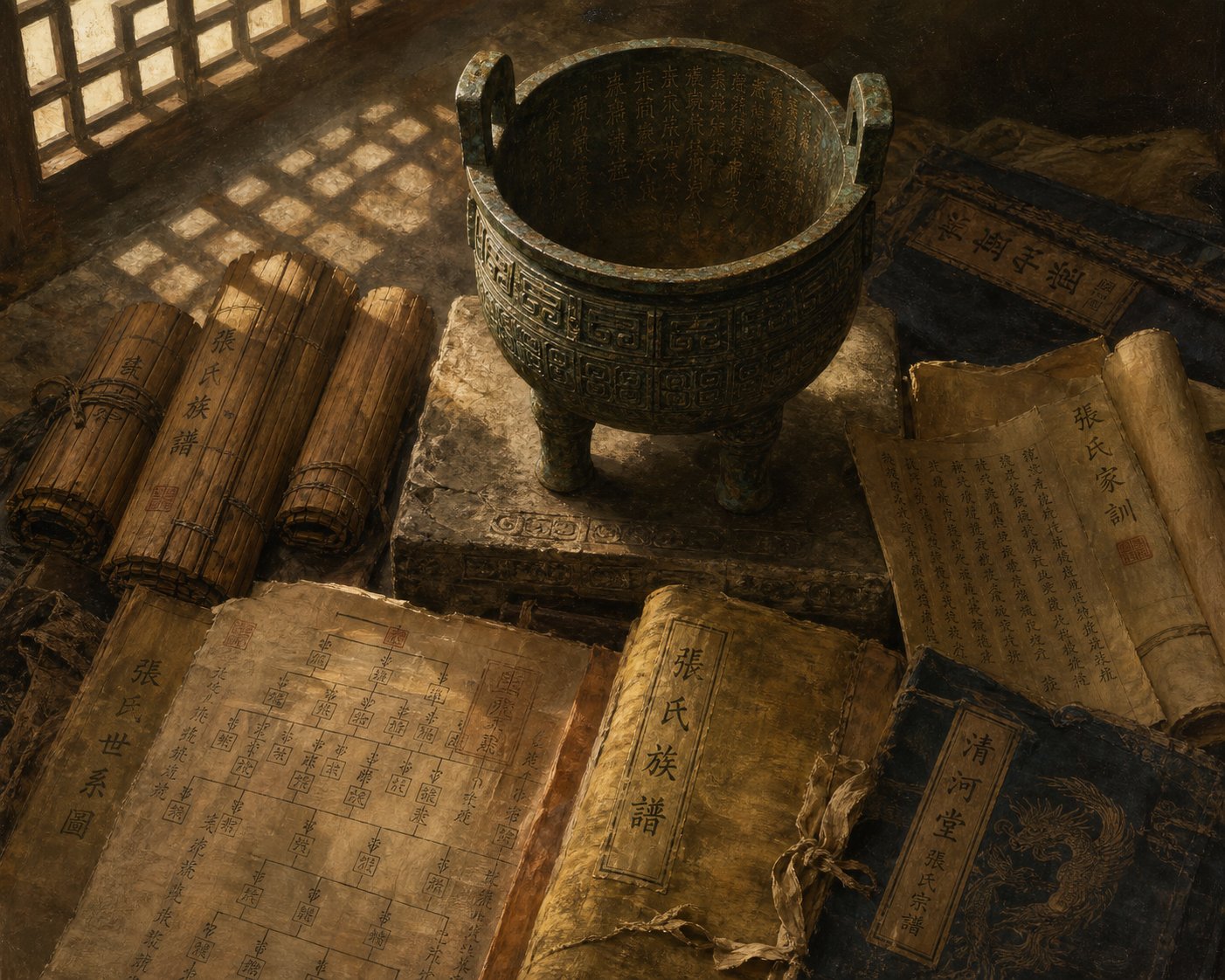
Where does the Zhu last name actually come from? If you expect a single, clean answer, Chinese genealogy has a surprise for you. Unlike many Western surnames that trace to one occupation or one place, the zhu last name origin branches into at least five distinct lineages spanning mythological antiquity to the 14th century. Some of these lines share nothing but the character 朱 itself — different ancestors, different regions, different centuries of origin.
Understanding which lineage your family belongs to is the first step in any serious genealogical research. Here are the major origin streams, arranged chronologically from oldest to most recent:
- The ancient Zhu Xiang tribe (~3000 BC or earlier) — A prehistoric clan whose totem was the red-hearted wood, making them possibly the earliest people to carry the proto-form of the Zhu name.
- Descendants of Dan Zhu, son of Emperor Yao (~2300 BC) — Some descendants of the legendary sage-king Yao's son adopted Zhu as a commemorative surname, linking the name to China's mythological golden age.
- The Zhu Rong fire god lineage — Families claiming descent from Zhu Rong, the mythological god of fire, whose association with the color red created a natural connection to the character 朱.
- The State of Zhu and the Cao clan (~1046 BC - ~300 BC) — The most widely documented origin, tracing to Cao Xie and the vassal State of Zhu (邾国) established during the Zhou Dynasty.
- Ethnic minority adoptions and assimilations (various dynasties) — Non-Han peoples who adopted the Zhu surname through sinicization, intermarriage, or political alliance across multiple centuries.
- Imperial grants during the Ming Dynasty (1368-1644) — Loyal followers and adopted sons of Zhu Yuanzhang who received the imperial surname as a reward.
Each of these streams fed into the broader Zhu population at different points in history. Let's look at the most significant ones in detail.
The State of Zhu and the Cao Clan Lineage
The most thoroughly documented chu last name origin traces back to the ancient State of Zhu (邾国), a vassal kingdom that existed for roughly seven centuries. The story begins with Cao Xie, a leader of the Cao tribe who had served as a subordinate power under the Shang Dynasty (1600-1046 BC). When King Wu of Zhou overthrew the Shang and established the Zhou Dynasty around 1046 BC, he recognized Cao Xie's contributions by granting him a fiefdom in the region of Zhu — officially establishing the State of Zhu as a Zhou vassal.
For centuries, this small state flourished in what is now southern Shandong province. Its people developed their own cultural traditions while maintaining political ties to the Zhou court. The state's name was written with the character 邾, which includes the city radical (邑) attached to 朱 — literally marking it as "the city of Zhu."
The turning point came during the Warring States period (403-221 BC), when the powerful State of Chu conquered and annexed the State of Zhu. The displaced Zhu people were forced to relocate. To honor their lost homeland, they simplified their state's name by dropping the city radical from 邾, leaving only 朱. This act of simplification was also an act of mourning — removing the symbol for "city" acknowledged that their city no longer existed, while preserving the core identity in the remaining character.
This single lineage accounts for the largest share of people bearing the Zhu surname today, and it explains why Shandong province remains a significant ancestral homeland for Zhu families researching their chau surname origin.
The Zhu Rong Fire God Connection
A more mythological branch traces the surname to Zhu Rong (祝融), the legendary god of fire in Chinese mythology. Zhu Rong is one of the most ancient figures in the Chinese pantheon — a deity associated with the southern direction, summer, and the element of fire. His connection to the color red is obvious: fire, the south, and vermillion all belong to the same symbolic cluster in traditional Chinese cosmology.
Families claiming this lineage assert descent from Zhu Rong's historical counterparts — tribal leaders who served as "fire officials" in prehistoric times. Whether Zhu Rong was a single historical person, a hereditary title, or a purely mythological figure remains debated. What matters genealogically is that certain Zhu clans have maintained this origin claim for centuries, and classical sources record it as a legitimate lineage.
The Dan Zhu lineage operates similarly. Emperor Yao, one of China's legendary Five Emperors, had a son named Dan Zhu (丹朱). Some of Dan Zhu's descendants adopted 朱 as their surname to commemorate their royal ancestor. This gave the name a noble pedigree stretching back to roughly 2300 BC — long before any historical state called Zhu existed.
Minority Adoptions and Later Lineages
Not every Zhu family traces to Han Chinese origins. Across dynasties, various ethnic groups adopted the surname through different mechanisms. Xianbei, Mongol, Manchu, and other peoples took on the name 朱 through sinicization policies, intermarriage with Han families, or voluntary cultural assimilation. These adoptions happened in waves — during the Northern and Southern Dynasties period (420-589), the Tang Dynasty (618-907), and the Yuan-Ming transition.
The Ming Dynasty itself created an entirely new category of Zhu surname bearers. Zhu Yuanzhang granted his imperial surname to adopted sons, loyal generals, and political allies as a mark of supreme favor. Receiving the emperor's surname was one of the highest honors possible — it made the recipient a nominal member of the imperial clan. This practice expanded the zhu in chinese genealogical records well beyond biological descent lines.
How do we know all this? Two classical genealogical sources serve as primary authorities. The Yuanhe Xingzuan (元和姓纂), compiled in 812 AD during the Tang Dynasty by Lin Bao on imperial order, is one of China's earliest systematic surname registers. It documented the origins, branches, and geographic distributions of major families by drawing on older sources like the Fengsu Tong and various private family registers. Though the original was lost, Qing-era scholars reconstructed it from fragments preserved in the Ming encyclopedia Yongle Dadian.
The Xing Pu (姓谱) tradition — a broader category of surname genealogies compiled across multiple dynasties — provides additional documentation. Song Dynasty scholar Zheng Qiao drew on the Yuanhe Xingzuan and similar works for his universal history Tongzhi, which contains one of the most comprehensive medieval treatments of Chinese surname origins. Together, these sources give modern researchers a framework for distinguishing between the various Zhu lineages and understanding how each branch spread geographically over time.
These multiple origin streams converge on a single character — 朱 — but they diverge in every other way. A Zhu family from Shandong claiming Cao clan descent has a fundamentally different ancestral story than a Zhu family from Yunnan whose ancestors adopted the name during a Ming-era assimilation campaign. The same written surname, spoken in different dialects across different regions, fractures into an even wider array of romanized forms — a complexity that creates real challenges for anyone trying to connect the dots across borders and centuries.
From Zhu to Chu to Chau and Every Variant Between
Here is a scenario that plays out in diaspora communities every day: a family named Chu in San Francisco, a family named Choo in Singapore, and a family named Zhu in Beijing all carry the exact same surname character — 朱. They share the same ancestral origins, the same genealogical records, and potentially the same lineage. Yet their English-language spellings look completely unrelated. How did one character produce so many different names?
The answer lies in China's dialect diversity. Mandarin is only one of many Chinese language groups, and each pronounces 朱 differently. When families emigrated to different countries across different centuries, they romanized their surname based on whichever dialect they spoke at home — not based on any universal standard. The result is a patchwork of spellings that obscures shared ancestry.
Mandarin Pinyin and Wade-Giles Romanizations
In standard Mandarin, the character 朱 is pronounced with a retroflex initial consonant — the tongue curls back slightly before releasing into the vowel. The modern Pinyin system, adopted by the People's Republic of China in 1958, renders this as Zhu (first tone, high and level). If you are wondering how do you pronounce z h u, think of it as "joo" with the tongue pulled further back than an English "j." The lips round slightly, and the vowel sits between English "oo" and "u."
Before Pinyin existed, the dominant romanization system for Mandarin was Wade-Giles, developed by British diplomats in the 19th century. Under Wade-Giles rules, the same sound is written as Chu. This is why older academic texts, Taiwanese passports, and Korean adaptations of Chinese surnames all use Chu rather than Zhu — they are following the Wade-Giles convention or its regional equivalents. A person with the surname Chu in Chinese contexts is almost certainly carrying the same character 朱 as someone named Zhu.
You will also occasionally encounter Ju as a romanization. This appears in some older transliteration systems and in certain Korean contexts where the character 朱 is read with a Korean pronunciation.
Cantonese Hokkien and Teochew Variants
Southern Chinese dialects diverge sharply from Mandarin in their pronunciation of 朱. Each dialect group produced its own romanization when families registered names in colonial-era Southeast Asia, Hong Kong, or Taiwan. According to dialect variant documentation, the major southern readings break down as follows:
- Cantonese: Pronounced roughly like "chew" with a shorter vowel, romanized as Chu — identical in spelling to the Wade-Giles Mandarin form, which creates additional confusion
- Hokkien: Pronounced closer to "choo" (rhyming with English "too"), romanized as Choo — common in Singapore, Penang, and parts of Taiwan
- Teochew: Also romanized as Choo, though the actual pronunciation carries a slightly different tonal contour than the Hokkien version
- Hakka: Romanized as Chu, overlapping again with both Cantonese and Wade-Giles spellings
- Hainanese: Romanized as Choo, aligning with the Hokkien and Teochew forms
In Cantonese-speaking regions like Hong Kong and Guangdong, you may also encounter the surname Chau — a romanization that reflects an older Cantonese pronunciation or a variant transliteration system used in certain registration contexts. The surname Chau in these communities often traces back to the same 朱 character.
The practical consequence? A Choo family in Malaysia and a Chu family in Hong Kong and a Zhu family in Shanghai may all descend from the same Peiguo branch of the Zhu clan. Their spelling differences reflect nothing more than which dialect their great-grandparents spoke when a colonial clerk first wrote down their name in Roman letters.
How to Pronounce Zhu Correctly
For English speakers trying to pronounce Zhu accurately, the biggest challenge is the initial consonant. The Mandarin "zh" is a retroflex sound — your tongue tip curls back to touch the roof of your mouth just behind the ridge, then releases. It sits somewhere between English "j" (as in "juice") and "dr" (as in "drew"), but is neither. The vowel that follows is a rounded "u" similar to the "oo" in "food" but slightly more closed.
A practical approximation: say "drew" but drop the "d" and round your lips more tightly. You will land close to the correct zhu pronunciation. The tone is first tone in Mandarin — high, flat, and sustained, like holding a musical note steady.
| Dialect Group | Romanization | Region of Origin | Common Countries |
|---|---|---|---|
| Mandarin (Pinyin) | Zhu | Northern and Central China | Mainland China, recent immigrants worldwide |
| Mandarin (Wade-Giles) | Chu | Northern and Central China | Taiwan, older academic texts, Korea |
| Cantonese | Chu / Chau | Guangdong, Hong Kong | Hong Kong, USA, Canada, UK, Australia |
| Hokkien | Choo | Fujian, Southern Fujian | Singapore, Malaysia, Philippines, Indonesia |
| Teochew | Choo / Tju | Eastern Guangdong (Chaoshan) | Thailand, Cambodia, Singapore, Malaysia |
| Hakka | Chu | Guangdong, Fujian, Jiangxi highlands | Malaysia, Indonesia, Mauritius, India |
| Hainanese | Choo | Hainan Island | Singapore, Malaysia, Thailand |
This table is not just academic trivia. For diaspora families researching their roots, recognizing that Chu, Choo, Chau, and Zhu all point back to the same character 朱 is often the critical first step in connecting scattered branches of a family tree. A relative listed as "Choo" in a 1920s Singapore registry and another listed as "Zhu" in a modern Chinese database are not different families — they are the same lineage, separated only by the romanization conventions of their respective eras and regions.
The character itself never changed. Only the way outsiders wrote it down in Roman letters varied — a reminder that behind every spelling variant stands the same vermillion-red character that once marked an imperial dynasty. And it was that dynasty's spectacular rise that transformed the Zhu surname from one lineage among many into a name carried by millions.

The Ming Dynasty and the Explosion of the Zhu Surname
No single event reshaped the demographic footprint of the Zhu surname more dramatically than the founding of the Ming Dynasty in 1368. In the span of 276 years, one impoverished family's name went from moderately common to explosively widespread — carried by an imperial clan that grew from a handful of relatives to over 100,000 male descendants. This was the zhu dynasty moment: the point where a surname became synonymous with ruling China itself.
Zhu Yuanzhang From Peasant to Emperor
The story begins with a boy who had nothing. Zhu Yuanzhang was born in 1328 to a family of itinerant tenant farmers in Zhongli County (present-day Fengyang, Anhui province). In 1344, famine and plague killed his parents and eldest brother. Orphaned at sixteen, he entered a small Buddhist monastery as a lay novice — not out of spiritual calling, but because he had nowhere else to go. When even the monastery could no longer feed him, he wandered the Huai River basin as a mendicant beggar for over three years.
In 1352, with floods and rebellions devastating the region, Zhu joined a local branch of the Red Turban Rebellion against the Mongol-led Yuan Dynasty. He rose fast. By 1356 he had captured Nanjing and established it as his headquarters. Over the next decade, he defeated rival rebel leaders and Yuan armies alike, forcing the last Mongol emperor to flee northward. On January 23, 1368, Zhu declared himself emperor of a new dynasty he named Da Ming — "Great Brightness" — and took the reign name Hongwu, meaning "Vastly Martial."
He remains the only emperor in China's long history born to a peasant family. From begging monk to Son of Heaven — that arc alone would make the chinese zhu surname legendary. But what happened next is what truly multiplied the name across the population.
How Imperial Policy Multiplied the Surname
The Hongwu Emperor did not simply rule under the Zhu name. He actively expanded it through deliberate policy. Several mechanisms worked in parallel:
- Imperial surname grants: Loyal generals, adopted sons, and political allies received the surname 朱 as a supreme honor, making them nominal members of the imperial clan.
- Forced adoptions: Certain families were incorporated into the Zhu lineage through political arrangements, expanding the clan's reach into new regions.
- Polygamy among the elite: Imperial princes maintained large households with multiple consorts, producing far more children per generation than ordinary families.
- Generous state stipends: Every titled member of the imperial family received financial support from the state treasury, removing economic barriers to large families.
The result was a demographic engine unlike anything China had seen. When the Hongwu Emperor died in 1398, there were 58 titled members of the Zhu clan. By the early 15th century, that number had grown to 127. By the end of the 1400s, it exceeded 2,000. Late Ming authors recorded over 100,000 male descendants of the founding emperor during their lifetimes.
The Princely Estates and Branch Families
The system that drove this growth was the princely estate network. The Hongwu Emperor appointed his sons — aside from the heir — as princes and dispatched them to different provinces with large entourages and primarily military powers. Each prince established a regional household that became a permanent branch of the zhu chinese imperial family. Their sons received the title of commandery prince, and subsequent generations held progressively lower but still titled ranks, down to the sixth level of "supporter-commandants of the state."
Every one of these titled descendants drew a state pension. The financial burden became staggering. By 1562, Shanxi Province was spending more money supporting local imperial family members from land-tax revenue than it spent on all provincial, prefectural, and county government offices combined. In some northern counties, nearly half of all tax income went toward feeding the ever-expanding Zhu clan.
The Yongle Emperor — the Hongwu Emperor's fourth son, who seized the throne in 1402 — moved the capital from Nanjing to Beijing in 1420, but the princely estates remained scattered across the empire. This geographic dispersal meant the Zhu surname was not concentrated in one region. It spread into every province where a prince had been stationed, creating local populations of Zhu descendants from Guangxi in the south to Shanxi in the north.
By the time the dynasty entered its final century, the name 朱 had become one of China's most common surnames — not through natural migration patterns or ancient tribal growth, but through the deliberate machinery of imperial reproduction and state-funded expansion. The Zhu clan had grown from one desperate orphan's family into a vast network numbering in the hundreds of thousands.
That very visibility made them targets. When the dynasty fell in 1644, every bearer of the surname became a potential threat to the new regime — and the hunters were already sharpening their knives.

After the Fall: What Happened to Ming Descendants
On April 25, 1644, the Chongzhen Emperor hanged himself from a tree on Coal Hill behind the Forbidden City as rebel forces breached Beijing's walls. With that single act, the Zhu surname transformed overnight from a mark of supreme privilege into a death sentence. The Manchu-led Qing Dynasty that seized power in the chaos had every reason to eliminate the former ruling clan — and they pursued that goal with ruthless efficiency.
Imagine carrying a last name that hundreds of thousands of soldiers were actively hunting. That was the reality for anyone bearing the surname Chu or Zhu in the decades after 1644. The imperial clan had grown to over 100,000 titled male members by the dynasty's end. Including untitled descendants, women, and extended family, the total number of people with direct connections to the House of Zhu likely reached into the millions. Every single one became a potential rallying point for resistance — and therefore a target.
The Qing Persecution of the Zhu Imperial Clan
The Qing regime understood a basic political truth: as long as legitimate Zhu princes survived, they could serve as figureheads for rebellion. The new dynasty's response was systematic. Qing armies hunted down members of the House of Zhu across southern China, executing captured princes and their families. The violence was not limited to titled royals. Ordinary people bearing the chu family name fell under suspicion simply because their surname matched the fallen dynasty's.
The scale of destruction was staggering. When Qing forces captured Guangzhou after a ten-month siege in November 1650, they massacred as many as 70,000 people — many of them Ming loyalists and their families. Similar atrocities occurred in Yangzhou, Jiading, and other cities that resisted Qing authority. For the Zhu clan specifically, capture meant execution. The Qing sent the 17 Ming princes still living on Taiwan back to the mainland after the island's conquest in 1683, ending the last visible remnant of the imperial line.
Survival Strategies and Hidden Identities
Faced with extermination, Zhu descendants adopted desperate survival strategies. The most common was the simplest: change your name. Families across southern China quietly altered their surname to something phonetically similar or graphically related to 朱, hoping to preserve a coded connection to their true identity while escaping detection. Common substitutions included:
- Zhuang (庄): A phonetically adjacent surname that allowed families to maintain the initial sound
- Zha (查): Adopted by some branches, particularly in the Jiangnan region
- Niu (牛): According to oral traditions in some communities, chosen because the character 朱 can be split into 牛 (ox) and 八 (eight)
- Ming (明): Some Hui Muslim loyalists who fled with the Yongli Emperor to the Burmese border changed their surname to Ming as a mark of defiance and loyalty to the fallen dynasty
Other families did not change their surname outright but instead fled to remote mountain regions, frontier zones, or overseas communities where Qing authority was weak or nonexistent. Yunnan, Guizhou, and the mountainous interior of Guangxi absorbed waves of Zhu refugees who blended into local populations. Some families simply stopped using their surname publicly, passing down their true identity only through whispered oral traditions and hidden genealogical records.
The psychological weight of this concealment lasted generations. Families who had once displayed their connection to the imperial house as a source of pride now treated it as a dangerous secret. Genealogical records were buried, burned, or encoded. Generation poems — the naming sequences that identified which branch and generation a person belonged to — were memorized privately rather than inscribed publicly.
Southern Ming Resistance and Diaspora Flight
Not all Zhu descendants went quietly. A series of Southern Ming resistance regimes kept fighting for nearly two decades after Beijing fell. Zhu princes established courts in Nanjing (1644-1645), Fuzhou (1645-1646), Guangzhou (1646-1647), and finally in the deep southwest. The Yongli Emperor — the last recognized Southern Ming sovereign — fled progressively further from Qing armies, retreating through Guangxi and Guizhou into Yunnan before crossing into Burma in 1659. He was captured and executed there in 1662 by Wu Sangui, the very general whose defection had opened China's gates to the Manchus eighteen years earlier.
Meanwhile, the maritime resistance led by Koxinga (Zheng Chenggong) — who had been granted the imperial surname Chu by the Longwu Emperor — established the Kingdom of Tungning on Taiwan after expelling the Dutch in 1662. Ming princes accompanied him, and the island served as the last territorial holdout of Zhu loyalism until its fall in 1683.
Each stage of retreat pushed Zhu descendants further south and further overseas. Ming loyalist fleets sailed to Vietnam, where followers established communities they named Minh Huong — literally "Ming Fragrance" — to preserve their allegiance to the fallen dynasty. Others scattered across maritime Southeast Asia, settling in port cities from the Mekong Delta to the Malay Peninsula. These refugees carried the surname Chu into regions where it would be romanized according to local dialect conventions, creating the Choo and Chu communities that still exist in Malaysia, Singapore, and Indonesia.
The persecution paradoxically achieved the opposite of its intent. By scattering the Zhu clan across a vastly wider geographic area than the Ming princely estate system ever reached, the Qing campaign of elimination actually ensured the surname's survival in more diverse locations. Families that might have remained concentrated in a few Chinese provinces instead dispersed across an entire continent — carrying their hidden genealogies, their dialect-specific romanizations, and their memories of imperial glory into communities that would preserve them for centuries to come.
The question for modern descendants is practical: after generations of concealment and migration, how do you find your way back? The answer lies in the traditional genealogical systems that Zhu families used to track lineage even through periods of persecution — systems built on commanderies, hall names, and generation poems that encoded identity in ways outsiders could not easily decode.
Global Distribution of the Zhu Surname
Centuries of imperial expansion, persecution, flight, and emigration left the Zhu surname scattered across a far wider geography than most Chinese family names. Where exactly did all those displaced descendants end up? The answer stretches from the rice paddies of the Yangtze Delta to shophouses in Singapore and suburbs in California — a distribution shaped by every major upheaval in Chinese history since the 14th century.
Where Zhu Families Live in China Today
The Zhu surname currently ranks #13 among the most common Chinese surnames, with an estimated 18 to 20 million bearers in mainland China. That ranking reflects a specific geographic pattern: Zhu families concentrate heavily in the provinces along the middle and lower Yangtze River — Jiangsu, Zhejiang, Anhui, Jiangxi, and Hubei.
Why these provinces? Two historical forces converged there. First, the Ming Dynasty's founding base was in Anhui (Zhu Yuanzhang's birthplace) and Jiangsu (where Nanjing served as the first Ming capital). The earliest princely estates radiated outward from this core. Second, research on Chinese surname distribution patterns shows that the Yangtze River basin functioned as a major "immigration region" for centuries — absorbing waves of migrants from northern China, especially after the Song Dynasty. These migrations brought existing Zhu families southward while the Ming imperial system simultaneously planted new ones.
Shandong province also retains a significant Zhu population, reflecting the surname's ancient origins in the State of Zhu. Further north, Henan and Hebei hold smaller but notable concentrations tied to Ming-era princely estates. The pattern is distinct from surnames like Li or Wang, which dominate China's northeast. Zhu families cluster in the east-central band of the country — a footprint that maps almost perfectly onto the Ming Dynasty's administrative heartland.
People sometimes confuse the Zhu surname with the zhou last name (周), which sounds similar in some dialects but uses a completely different character and traces to an entirely separate lineage. Despite the phonetic overlap, these are unrelated families.
The Zhu Surname in Southeast Asia and Beyond
The diaspora story is where things get interesting — and where the chu last name, Choo, and other variants come into play. Waves of emigration from different dialect regions at different historical moments created distinct Zhu communities across Southeast Asia, each carrying a different romanization of the same character.
Hokkien-speaking emigrants from Fujian province settled heavily in Singapore, Penang, and the Indonesian archipelago from the 17th century onward. Their descendants carry the surname Choo. Among common Indonesian surnames of Chinese origin, Choo and its local variants appear in communities across Java, Sumatra, and Kalimantan — often alongside other Hokkien-origin names like Tan, Lim, and Ong.
Cantonese speakers from Guangdong emigrated primarily to Hong Kong, North America, Australia, and the United Kingdom. They registered as Chu or occasionally Chau. Teochew speakers, concentrated in Thailand and Cambodia, used Choo or Tju. Hakka emigrants, who spread across Malaysia, Indonesia, and even Mauritius, also registered as Chu.
The result is a global patchwork where the same ancestral surname appears under different spellings depending on which port a family departed from and which colonial administration first wrote their name down. A Choo family in Medan, Indonesia and a Chu family in Vancouver, Canada may share a common ancestor from the same Fujian village — separated only by the dialect their respective grandparents spoke.
| Province / Region | Estimated Zhu Concentration | Historical Reason | Primary Diaspora Destinations |
|---|---|---|---|
| Jiangsu | Very High | Ming capital at Nanjing; imperial administrative center | Taiwan, North America (recent) |
| Anhui | Very High | Zhu Yuanzhang's birthplace; founding clan homeland | Taiwan, North America (recent) |
| Zhejiang | High | Yangtze Delta migration; Southern Ming refuge | Europe, North America |
| Jiangxi | High | Yangtze basin settlement; Ming princely estates | Southeast Asia (Hakka emigrants) |
| Hubei | High | Ancient origin region; Yangtze corridor | Limited diaspora |
| Shandong | Moderate | Ancient State of Zhu homeland | Northeast China (internal migration) |
| Fujian | Moderate | Southern Ming resistance; maritime trade | Singapore, Malaysia, Indonesia, Philippines |
| Guangdong | Moderate | Post-1644 flight; trade port emigration | Hong Kong, USA, Canada, UK, Australia |
In North America and Europe, Zhu communities are more recent and more mixed. Post-1980s immigration from mainland China brought the Pinyin spelling "Zhu" into Western countries for the first time in large numbers. These newer arrivals now coexist with older Chu and Choo families whose ancestors left China generations earlier — sometimes creating situations where relatives in the same city carry different surname spellings without realizing their shared heritage.
This geographic scattering raises an obvious challenge. When your family's records are split across multiple countries, multiple romanization systems, and multiple centuries of migration, how do you piece the story back together? The traditional Chinese genealogical infrastructure — commanderies, hall names, and clan records — was designed precisely for this kind of long-distance identity tracking.
Traditional Genealogical Systems of the Zhu Clan
Picture a system where your surname alone is not enough to identify who you are. In a country with millions of people sharing the same character on their family register, Chinese clans developed layered identity markers that functioned like a postal address for ancestry — narrowing from the broadest geographic claim down to the exact branch and generation a person belonged to. For the Zhu clan, scattered across provinces and eventually across oceans, these systems were not just cultural traditions. They were survival tools.
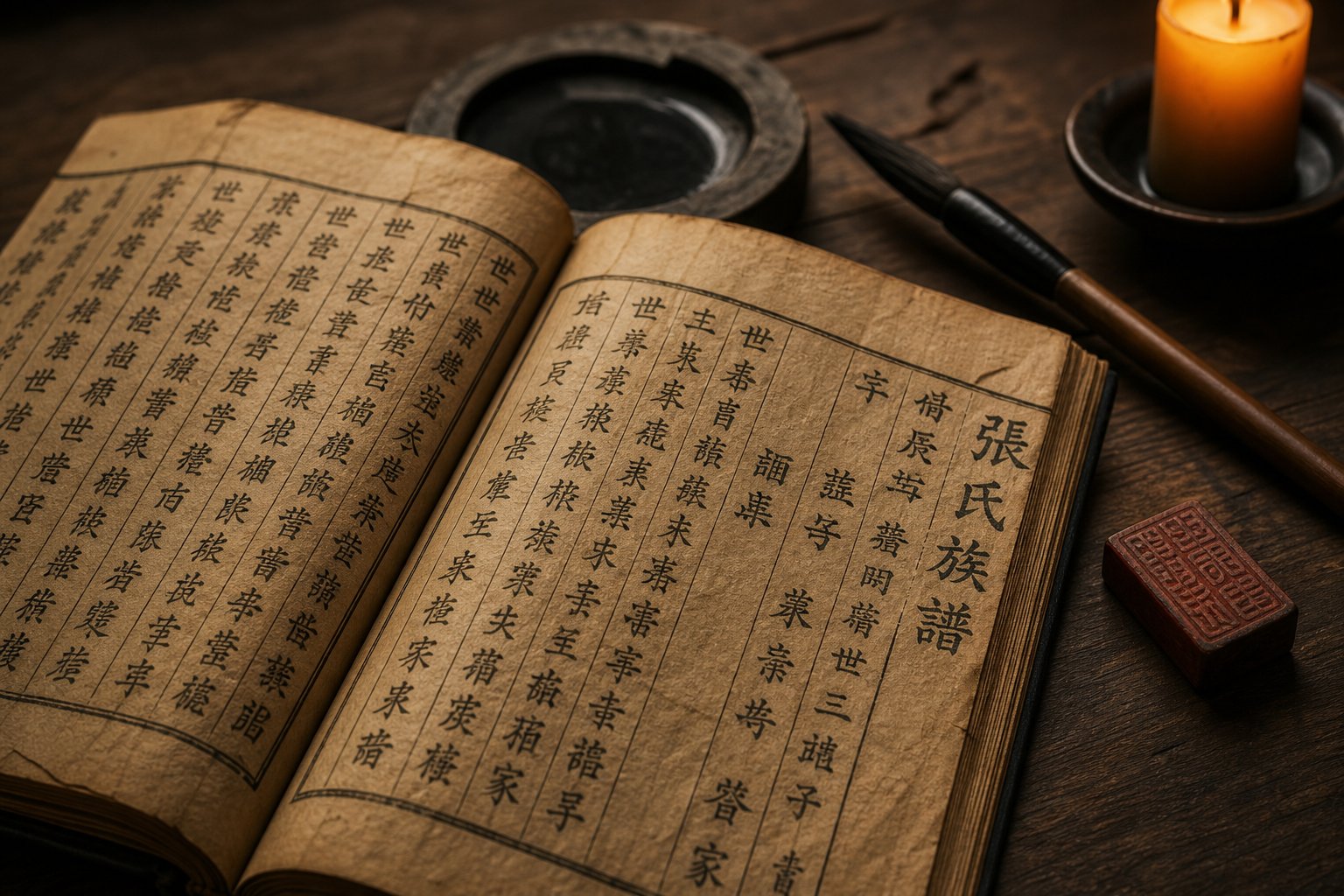
Three interlocking systems formed the backbone of traditional Zhu genealogy: commanderies (郡望, junwang), hall names (堂名, tangming), and genealogical records (族谱, zupu). Each served a different purpose, and together they created a framework that could track lineage across centuries of migration, war, and political upheaval. If you carry the chu surname, the zhou surname, or any variant of 朱, understanding these systems is the key to unlocking what your family's records actually mean.
Commanderies and Hall Names Explained
Sounds complex? It is simpler than it looks. A commandery (郡望) is essentially a geographic prestige marker — it tells you which region a particular branch of a surname clan originally rose to prominence in. The concept originated during the Eastern Han Dynasty (25-220 AD) when China's aristocratic family system took shape. Powerful clans became identified with specific administrative regions called commanderies (郡), and their prominence within those regions became their "prestige" (望). Combine the two, and you get junwang — the commandery where your clan was famous.
During the Wei, Jin, and Northern and Southern Dynasties (220-589 AD), your commandery affiliation determined your social status, marriage prospects, and even career opportunities. The system flourished through the Sui and Tang Dynasties before gradually weakening after the Song Dynasty abolished commandery-level administrative divisions. But the cultural memory persisted. Even today, printed editions of the Hundred Family Surnames annotate each surname with its traditional commandery. For the Zhu surname, that annotation reads: Pei County (沛国).
The major Zhu commanderies represent different branches of the clan that achieved prominence in different regions at different historical periods:
- Pei Guo (沛国/沛郡): Located in what is now northern Anhui and parts of Jiangsu. This is the primary and most widely claimed Zhu commandery, associated with the oldest documented lineages tracing back to the ancient State of Zhu. Families claiming Pei Guo origin assert descent from the Cao clan lineage that adopted the surname after their state's fall.
- Wu Jun (吴郡): Centered on the Suzhou area in modern Jiangsu province. This commandery represents Zhu families who rose to prominence in the prosperous Yangtze Delta region, often associated with scholarly and official achievement during the Six Dynasties period.
- Qiantang (钱塘): Located in what is now Hangzhou, Zhejiang province. Zhu families claiming Qiantang origin typically trace their prominence to the Tang and Song Dynasties, when the region became one of China's wealthiest cultural centers.
- Yiyang (义阳): In modern Henan province. A smaller but historically documented Zhu commandery associated with branches that settled in central China.
- Fengcheng (凤城): Associated with later branches, particularly those connected to the Ming imperial line's ancestral homeland in Anhui.
When you encounter a Zhu family record that states its commandery, you are looking at a claim about geographic origin and social standing — not necessarily where the family lives now, but where their ancestors first became notable. A Zhu family in Singapore claiming Pei Guo commandery is asserting a connection back to the ancient heartland in Anhui, regardless of how many generations have passed since anyone in the family actually lived there.
Hall names (堂名) work one level deeper. If the commandery tells you which region your clan came from, the hall name tells you which specific branch or ancestral hall your family belongs to within that commandery. Think of it as the difference between saying "I'm from New York" versus "I'm from the Brooklyn Chens." Hall names were typically derived from a significant ancestor's achievement, a moral virtue the clan valued, or the name of the physical ancestral hall where tablets were kept.
In traditional Chinese society, one's commandery was often introduced together with one's surname at social gatherings, enabling others to immediately identify which ancestral temple and clan a person belonged to. For the Zhu clan, common hall names include "Bailu Tang" (白鹿堂, White Deer Hall — associated with the famous Zhu Xi's academy), "Juyi Tang" (居敬堂, Hall of Reverent Dwelling), and various names tied to specific regional branches. Each hall name functions as a sub-clan identifier that can help researchers distinguish between unrelated Zhu families who happen to share the same commandery.
Understanding Zupu Genealogical Records
The zupu (族谱) is where commanderies and hall names come alive as working documents. These clan genealogies are the "holy grail" of Chinese family history research — comprehensive records that can trace a lineage back hundreds of generations. My China Roots has collected over 15,000 of these records, with nearly 1,700 digitized and searchable online.
A traditional zupu is not just a family tree chart. It is an entire book — sometimes spanning thousands of pages across multiple volumes. The Taishan Li Zupu, for example, runs to seven volumes and 8,000 pages. A typical zupu contains:
- Introduction (谱序): Records who compiled the zupu, when, and why — including all previous introductions from earlier editions to maintain provenance
- Surname origins (姓氏源流): Documents which lineage the clan claims and how the surname was acquired
- Generation charts (世系图): The actual family tree, typically presented five generations per chart following the format pioneered by Song Dynasty scholars Ouyang Xiu and Su Xun
- Clan rules (家法): Behavioral codes governing everything from ancestral worship rituals to prohibitions against theft or misrepresenting the clan
- Biographies (传记): Accounts of illustrious ancestors, first migrant ancestors, and members who achieved official rank
- Migration records: Narratives describing how and when branches moved to new locations
For the zhou family name and other surnames that share phonetic similarities with Zhu, zupu records are especially important for disambiguation. The generation chart within a zupu clearly establishes which character a family actually uses, eliminating confusion caused by romanization overlap.
One critical caveat: zupu contents should be approached with healthy skepticism. As researchers at Singapore's National Library note, these records were compiled by families to document lineage and inspire pride. They generally excluded women (until the 1980s revival), ancestors who brought shame to the clan, and individuals lost to migration or premature death. Wealthier families had more resources to compile and print zupu, meaning peasant lineages are rare. The earliest generations recorded in any zupu often reflect idealized or politically motivated claims rather than verified historical fact.
Many zupu were destroyed during the Cultural Revolution (1966-1976), when campaigns against the "Four Olds" targeted ancestral halls, genealogical records, and even tombstones. Yet remarkably, many survived. Some were buried in neighboring villages for over a decade and dug up again in 1979. Others were shipped overseas with emigrating relatives. The 1980s saw a nationwide revival of zupu compilation, with elders recreating entire records from memory and scraps of hidden notes.
Generation Poems and Naming Conventions
Perhaps the most elegant feature of the zupu system is the generation poem (班次联, banci lian, or 派字歌, paizi ge). This is a poem — sometimes just a few lines, sometimes dozens of characters long — that assigns one character to each generation. Every person born into that generation uses the assigned character as part of their given name, creating an instant identifier of where they sit in the family hierarchy.
Imagine meeting a stranger with the zhou surname or the Zhu surname at a clan gathering. You exchange names. If your generation character is the eighth in the poem and theirs is the twelfth, you immediately know they are four generations younger than you — and you can address each other with the appropriate level of respect. The system turns a poem into a social map.
For the Ming imperial Zhu clan, generation naming was formalized to an extraordinary degree. The Hongwu Emperor personally composed generation poems for each of his sons' princely lines, assigning twenty characters per line. He also mandated that the second character of each prince's descendants' names follow a five-element cycle (wood, fire, earth, metal, water) in the character's radical — encoding cosmological symbolism directly into personal names. This system was so rigorous that modern researchers can identify which princely branch a Ming-era Zhu belonged to simply by examining the radicals in their name.
For diaspora families, a remembered generation character can be the single most valuable clue in reconnecting with ancestral records. Even if you do not know your commandery or hall name, knowing that your grandfather's generation used the character "kai" (开) and your father's used "tai" (泰) gives a researcher something concrete to match against existing zupu. It narrows the search from millions of Zhu families down to a specific branch in a specific region — the genealogical equivalent of a fingerprint.
As Huang Chang, a Ming Dynasty civil official, wrote in 1404: "By having a zupu, their ancestry can always be traced back, and there is no need to worry about descendants forgetting where they came from."
These traditional systems — commanderies pointing to geographic origin, hall names identifying specific branches, zupu preserving the full record, and generation poems encoding generational position — form an interlocking infrastructure designed to maintain identity across vast distances and long centuries. They were built for exactly the kind of disruption the Zhu clan experienced after 1644: scattering, concealment, and the slow erosion of memory across generations. The practical question for modern descendants is how to work backward through these layers — starting from whatever fragments survive in family memory and tracing them back to a specific village, a specific branch, and a specific line in a zupu that has waited centuries to be read again.
How to Research Your Zhu Family History
Knowing the history is one thing. Figuring out where your own family fits within it is another challenge entirely. Maybe you carry the last name Zhou, Chu, Choo, or Zhu and you have heard fragments — a province name, a generation character, a half-remembered village. How do you turn those fragments into a real genealogical trail? The good news: Chinese surname research has more accessible tools now than at any point in history. The challenge is knowing where to start and what to look for.
Identifying Your Zhu Lineage Step by Step
Working backward from what you know today toward ancestral records requires a systematic approach. Each piece of information narrows the search dramatically. Here is a process that moves from the broadest identifiers to the most specific:
- Confirm your surname character. If your family spells it Chu, Choo, Chau, or Zhu, verify that the underlying Chinese character is 朱 and not a similar-sounding surname like 周 (Zhou) or 褚 (Chu). The surname zhou has an entirely different zhou last name origin tracing to the ancient Zhou Dynasty royal house — a common source of confusion. Ask older relatives, check tombstones, or look for any documents with Chinese characters. As Legacy Tree Genealogists advise, even old letters, ID documents, or clan association membership records may preserve the original characters.
- Identify your dialect group. Your family's romanization variant is a direct clue to their dialect and therefore their region of origin. Choo points toward Hokkien or Teochew speakers from Fujian or eastern Guangdong. Chu suggests Cantonese, Hakka, or Wade-Giles Mandarin. Zhu indicates Mandarin speakers or recent emigrants. Historical immigration patterns can help narrow this further — most Filipino Chinese came from Quanzhou and Xiamen in Fujian, while most Californian Chinese came from the Pearl River Delta in Guangdong.
- Locate your ancestral province and county. Once you know the dialect group, you can identify the probable emigration region. Interview older family members about any remembered place names — even partial or phonetically garbled ones. A village name spoken in Hokkien will sound completely different from its Mandarin pronunciation, so work with someone who knows the relevant dialect.
- Search for your commandery and hall name. If your family preserved any ancestral tablets, couplets displayed during Lunar New Year, or old documents, look for references to Pei Guo (沛国), Wu Jun (吴郡), or other commandery names. Hall names may appear on ancestral hall plaques or in family correspondence.
- Identify generation characters. Do male relatives of the same generation share a character in their given names? If your father and his brothers all have names starting with the same character, that is likely a generation character from your clan's poem. This single detail can pinpoint your exact branch within a zupu.
- Search for your zupu. With surname, region, and ideally a generation character or hall name in hand, you can search digitized genealogical databases to find your clan's records.
You do not need every piece of this puzzle to make progress. Even two or three confirmed details — say, the character 朱, a Hokkien dialect background, and a remembered province — can narrow millions of potential matches down to a manageable set of clan records.
Key Resources for Zhu Surname Research
Several major platforms now offer searchable access to Chinese genealogical records, many of them free:
- FamilySearch Chinese Genealogy Collection: Offers a dedicated Chinese jiapu search tool where you can input your surname in Chinese characters, ancestral province, and other details to locate digitized clan books. Their collection includes thousands of scanned zupu volumes accessible for free.
- FamilySearch Surname Finder and Village Finder: Purpose-built tools for identifying surname variants and locating ancestral villages in Guangdong and other provinces — particularly useful for Cantonese-speaking families.
- Shanghai Library Genealogy Collection: Holds over 30,000 zupu volumes, the largest single collection in China. Many are being progressively digitized.
- My China Roots: A commercial service with over 15,000 collected zupu records, nearly 1,700 of which are digitized and searchable online.
- Chinese Clan Associations: Zhu clan associations exist in Singapore, Malaysia, and other diaspora communities. These organizations sometimes maintain member lists, ancestral records, and connections to home villages that predate digital databases.
- National Archives (U.S., Canada, Australia): Immigration records often contain Chinese characters, dialect notations, or village names that were recorded at entry. The U.S. National Archives holds Chinese Exclusion Act case files that sometimes include detailed family information.
When searching these resources, be aware that the same person may appear under different romanizations in different records. A researcher named Zhu Chaoxiang in Chinese (朱朝祥) might appear as "Chu Chao-hsiang" in a Taiwanese document or "Choo Tio Siang" in a Hokkien-dialect registry. Cross-referencing across romanization systems is essential.
One often-overlooked resource: if your family has any connection to literary or philosophical traditions, searching for xu zhu (序朱, meaning "preface to the Zhu [genealogy]") in digitized text collections can surface introductions written for Zhu clan genealogies across different regions. These prefaces typically name the compiler, the branch, and the geographic scope of the record — giving you a direct entry point into a specific zupu even without knowing your exact lineage beforehand.
Connecting Diaspora Families to Ancestral Villages
The hardest leap in Chinese genealogy research is bridging the gap between overseas records and village-level records in China. FamilySearch's ancestral village research guide identifies this as the central challenge for diaspora families — and the most rewarding breakthrough when it succeeds.
Here is what makes it difficult: colonial-era records in Southeast Asia, North America, and Australia often recorded only a surname and a broad regional origin ("Canton" or "Amoy") without specifying the actual village. Meanwhile, zupu records in China are organized by village and branch, not by destination country. You need to bridge from one system to the other.
Strategies that work:
- Gravestones and tomb inscriptions: Chinese tombstones in overseas cemeteries frequently include the deceased's ancestral county or village in Chinese characters. Even a partially weathered inscription can provide the breakthrough detail that connects a diaspora family to a specific location.
- Ancestral halls overseas: Zhu clan halls in Singapore, Penang, and other cities sometimes display origin information — county names, xu zhu prefaces, or branch identifiers — on plaques and tablets within the hall.
- Oral history interviews: Talking with elderly relatives remains the single most productive research method. Ask specifically about village names, nearby landmarks, rivers, or market towns. Even phonetic approximations of place names can be matched against gazetteers.
- DNA testing: While Y-DNA testing cannot identify a specific village, it can confirm or rule out connections between Zhu families who believe they share a common ancestor. Matching haplogroups between a diaspora family and a documented mainland branch provides biological confirmation of genealogical claims.
A word of caution about the surname zhou and other phonetically similar names: if your research hits dead ends, consider whether your family's actual surname character might differ from what you assume. The last name Zhou (周), the surname Zhou (邹, sometimes romanized as Zou — where the zou meaning in a Chinese name context relates to an ancient state, not the Zhu lineage), and 朱 (Zhu) all sound similar enough in certain dialects to have been confused during registration. Verifying the actual character eliminates months of searching in the wrong genealogical records.
The tools exist. The records survive in greater numbers than most people expect. What connects a family in Toronto spelling their name "Chu" to a specific line in a zupu held in a Jiangsu county archive is usually not a lack of records — it is knowing which questions to ask and in what order to ask them. Start with what your family remembers, confirm the character, identify the dialect, and let each answer guide you to the next question. Three thousand years of genealogical infrastructure was built for exactly this purpose.
Frequently Asked Questions About the Zhu Surname
1. What does the Chinese surname Zhu mean?
The character 朱 originally referred to the reddish heartwood of pine and cypress trees. Over time, its meaning shifted to vermillion or cinnabar red, a color deeply associated with imperial authority, prosperity, and protection in Chinese culture. The Shuowen Jiezi dictionary from around 100 AD records this transitional meaning, defining it as red-hearted wood. By the Han Dynasty, the character had fully settled on its color meaning, which later gave the surname powerful symbolic associations when the Zhu clan founded the Ming Dynasty in 1368.
2. Are Chu, Choo, Chau, and Zhu the same surname?
Yes, these are all romanizations of the same Chinese character 朱. The spelling differences arise from China's dialect diversity. Zhu comes from Mandarin Pinyin, Chu from Wade-Giles romanization or Cantonese pronunciation, Choo from Hokkien or Teochew dialects, and Chau from certain Cantonese transliteration systems. When families emigrated to different countries, colonial clerks wrote down the surname based on whichever dialect the family spoke, creating a patchwork of spellings that all trace back to the identical ancestral character.
3. Why did millions of people hide the Zhu surname after 1644?
When the Manchu-led Qing Dynasty overthrew the Ming Dynasty in 1644, every bearer of the imperial surname 朱 became a potential rallying point for resistance. The Qing regime systematically hunted Ming descendants, executing captured princes and their families. To survive, many Zhu families changed their surnames to phonetically similar or graphically related characters like Zhuang, Zha, or Niu. Others fled to remote regions or overseas. This persecution scattered the surname across a far wider geography than it had previously occupied.
4. How can I trace my Zhu family ancestry?
Start by confirming your actual surname character is 朱 rather than similar-sounding names like 周 (Zhou). Next, identify your dialect group through your romanization variant, as this points to a specific emigration region. Search for generation characters shared among male relatives of the same generation, and look for commandery or hall name references on ancestral tablets or old documents. Key resources include FamilySearch's Chinese jiapu search tool, the Shanghai Library's collection of over 30,000 zupu volumes, and local Zhu clan associations in diaspora communities.
5. Where do most Zhu families live today?
The Zhu surname ranks 13th to 14th among Chinese surnames with roughly 18 to 20 million bearers in mainland China. The highest concentrations are in Jiangsu, Anhui, Zhejiang, Jiangxi, and Hubei provinces along the Yangtze River basin. This pattern reflects both the Ming Dynasty's founding base in Anhui and Jiangsu and centuries of southward migration. Overseas, Zhu descendants live across Southeast Asia as Choo or Chu families, in Hong Kong and North America as Chu or Chau, and increasingly worldwide under the Pinyin spelling Zhu.