What Tian Xin Means in Chinese
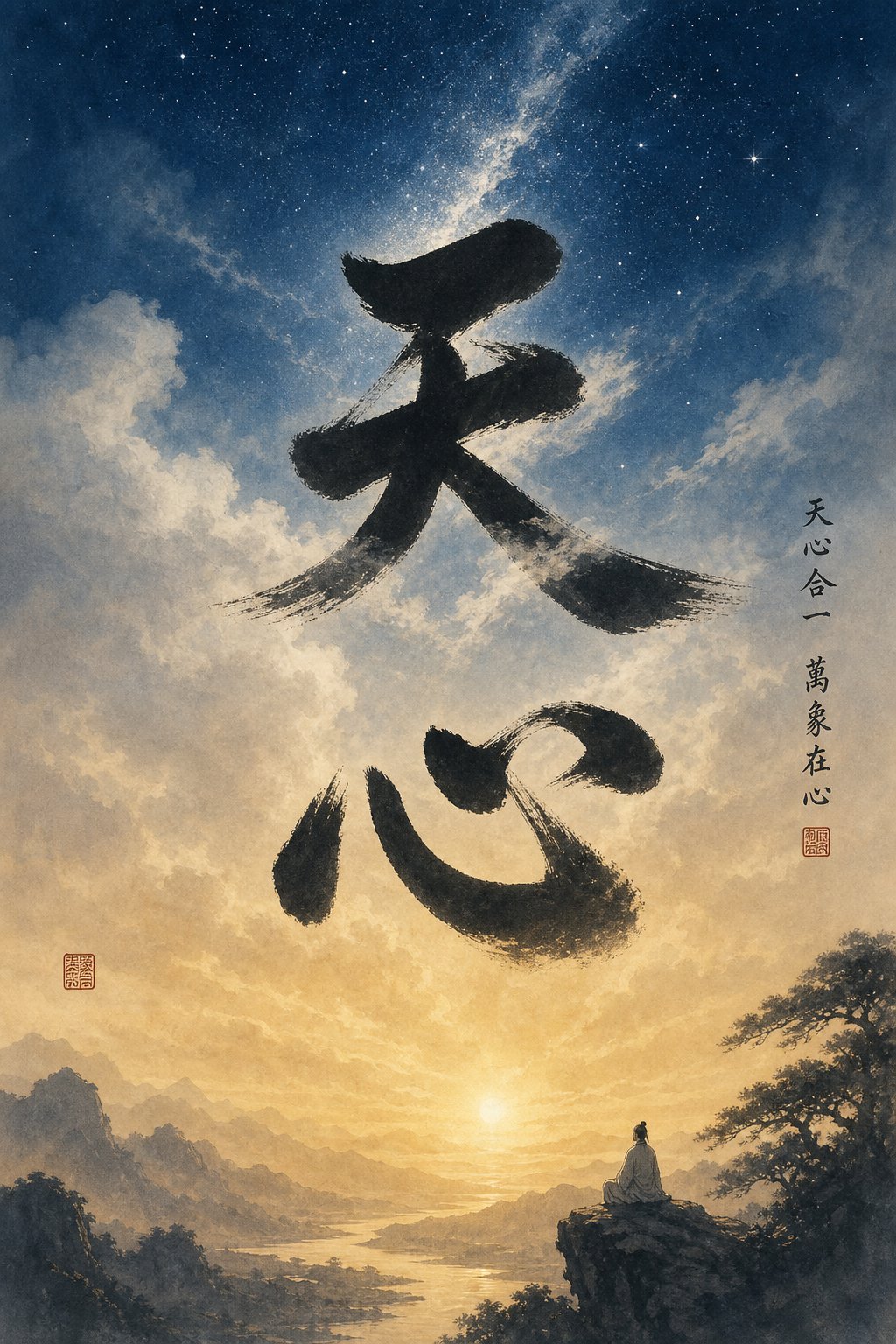
When you encounter the term tian xin in Chinese, you're looking at a compound that carries far more weight than its two syllables suggest. In its most common written form, 天心 (tian xin), it pairs two characters that together evoke something like "the heart of heaven" or "heaven's mind." But here's the catch: no single English phrase captures it fully.
Tian xin meaning: Written as 天心 (tian xin), this Chinese compound combines 天 (tian, "heaven" or "sky") with 心 (xin, "heart" and "mind"). It refers to the will or consciousness of heaven, the moral center of the cosmos, or the midpoint of the sky. The term appears across Chinese philosophy, naming traditions, geography, and medicine.
Whether you're a language learner parsing characters, a philosophy student exploring Confucian thought, a parent considering Chinese names, or a cultural researcher tracing how ideas travel through language, this guide covers the full landscape of tian xin and its many lives.
Character-by-Character Breakdown of Tian Xin
The first character, 天 (tian, first tone), means "heaven," "sky," or "the divine." In classical Chinese thought, 天 is not merely the physical sky overhead. It represents a cosmic order, a governing principle above human affairs.
The second character, 心 (xin, first tone), is where things get linguistically rich. In Chinese, 心 means both "heart" and "mind" simultaneously. There is no clean split between the emotional organ and the thinking organ the way English separates them. As scholars at the University of Pennsylvania's Language Log have discussed extensively, 心 encompasses cognition, emotion, intention, and consciousness in a single word. Bryan Van Norden, a specialist in Chinese philosophy, describes xin as straddling "the supposed dichotomy between emotion and cognition that became enshrined in post-Enlightenment Western thought."
This dual nature of 心 means that tian xin is not simply "heaven's heart" in a poetic sense. It also implies heaven's intention, heaven's awareness, heaven's moral reasoning. You'll notice English translators often struggle here, sometimes rendering it as "the mind of heaven," other times as "heaven's will." Both are partially correct. Neither is complete.
Why Tones Matter in Understanding Tian Xin
Mandarin Chinese uses four tones plus a neutral tone to distinguish words that share the same consonant and vowel sounds. Imagine saying "tea" in English but changing its meaning entirely based on whether your pitch rises, falls, stays flat, or dips. That's how tones function in Mandarin.
For tian xin, the tones shift everything. When both syllables carry the first tone (tian xin, high and flat), you get 天心, "heaven's heart-mind." But change the first syllable to the second tone (tian, rising pitch), and you could be writing 田心, which means "field-heart" and functions as a surname or place reference. The Digital Dictionary of Buddhism identifies 田心 (tian xin) as a Buddhist term referring to "the mind of a field," describing a mental state focused on one's own personal matters.
A single tonal shift, invisible in romanized spelling without diacritics, creates an entirely different word with an entirely different history. And these are just two of several character combinations that produce the sound "tian xin" in spoken Mandarin. Even 甜心 (tian xin, with a rising second tone on the first syllable) means "sweetheart," borrowing the same sounds for a completely unrelated concept.
This tonal complexity is precisely why understanding the tian xin meaning requires looking beyond pronunciation and into the characters themselves. The everyday phrase 天天开心 (tian tian kai xin meaning "happy every day") uses 天 in its sense of "day" and 心 in its emotional register, showing how flexibly these characters operate even in casual speech.
The characters behind the sound tell you which world of meaning you've entered. And as we'll see, those worlds range from ancient philosophy to modern street addresses.
Different Characters Behind the Same Sound
Say "tian xin" aloud. Without seeing the characters written down, a listener could picture at least three or four completely different words. This is the reality of Mandarin: a language with roughly 400 base syllables carrying thousands of characters. Homophones are not exceptions. They are the norm. As Khanji School explains, context and written form are essential for distinguishing Chinese homophones, since many characters sound identical but carry entirely different meanings.
So which "tian xin" are we talking about? The answer depends on tone, character, and context working together.
天心 Versus 田心 and Tonal Distinctions
The two most common written forms are 天心 (tian xin) and 田心 (tian xin). They sound nearly identical in casual speech, separated only by the tone on the first syllable. That single pitch difference rewires the entire meaning.
天心 uses the first tone (high, flat) on tian. It means "heaven's heart-mind" and carries philosophical, geographic, and literary weight. 田心 uses the second tone (rising) on tian. It translates literally as "field-heart" and appears primarily as a surname, a place name, or in Buddhist terminology referring to a mind preoccupied with personal concerns.
Then there's 甜心 (tian xin), also with a rising second tone on the first syllable. This one means "sweetheart" and belongs to an entirely different register: casual, affectionate, modern. Reverse the character order to xin tian (心田), and you get yet another compound meaning "the field of the heart," a poetic term for one's inner emotional landscape.
Here's a comparison of the major pairings:
| Characters | Pinyin | Literal Translation | Contextual Usage |
|---|---|---|---|
| 天心 | tian xin (1st + 1st tone) | Heaven's heart-mind | Philosophy, place names, personal names |
| 田心 | tian xin (2nd + 1st tone) | Field-heart | Surname, Buddhist term, village names |
| 甜心 | tian xin (2nd + 1st tone) | Sweet-heart | Term of endearment, casual speech |
| 心田 | xin tian (1st + 2nd tone) | Heart-field | Poetic: one's inner emotional world |
| 天天心 | tian tian xin (1st + 1st + 1st tone) | Every day's heart | Brand names, casual expressions |
| 新新天 | xin xin tian (1st + 1st + 1st tone) | New-new-heaven | Commercial names, aspirational branding |
You'll notice that even tian tian xin and xin xin tian show up in commercial and colloquial contexts, where characters get stacked for emphasis or branding purposes. The flexibility is enormous.
How Chinese Compound Words Build Meaning
Understanding why these combinations work requires a quick look at how Chinese builds meaning from parts. Unlike English, where longer words often derive from Latin or Greek roots invisible to most speakers, Chinese compounds are transparent. Each character contributes a visible, recognizable piece of meaning.
Take 天心. The character 天 (heaven, sky, day) modifies 心 (heart-mind). The relationship is possessive: heaven's heart-mind. Flip the order to 心天, and the grammatical relationship shifts. Now 心 modifies 天, suggesting something like "a heaven of the heart" or "the sky within one's mind."
This modifier-modified structure is the engine behind most two-character Chinese compounds. The first character typically narrows or specifies the second. So 田心 gives you "the heart of the field" or "a field-like mind," while 甜心 gives you "a sweet heart." Same second character. Completely different first character. Completely different meaning.
This is why memorizing translations falls short. When you grasp the structural logic, you can read new compounds and make reasonable guesses about their meaning, even if you've never encountered them before. The building blocks are consistent. The combinations are where creativity and cultural history enter.
That cultural history runs deep. The compound 天心 didn't emerge in a vacuum. It grew out of centuries of philosophical debate about what heaven wants, what heaven knows, and whether humans can access that knowledge. Those debates shaped entire dynasties.
Tian Xin Across Chinese Philosophical Traditions
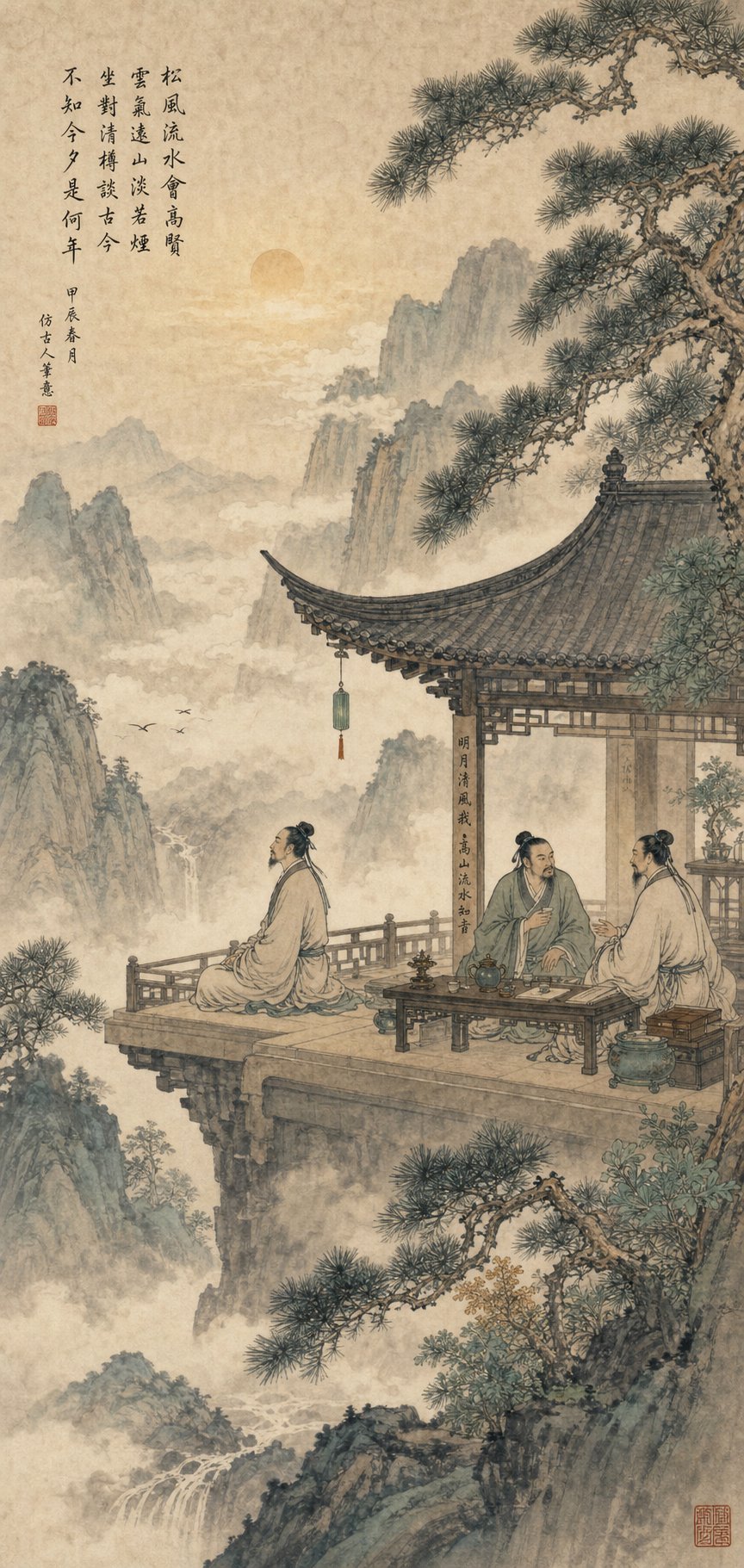
Those centuries of philosophical debate didn't confine themselves to a single school of thought. The compound 天心 traveled across all three of China's major intellectual traditions: Confucianism, Daoism, and Buddhism. Each tradition absorbed the term and refracted it through its own lens, producing overlapping but distinct meanings. What stays constant is the core question: what does heaven want, and how does a human being align with it?
天心 in Confucian and Neo-Confucian Thought
In Confucianism, 天心 sits within a constellation of related concepts that together form the tradition's moral cosmology. As a 2024 study in the journal Religions explains, the concept of 天命 (tianming, the mandate of Heaven) "encompasses the interrelated notions of 天道 (tiandao, the way of Heaven), 天理 (tianli, the principle of Heaven), 天性 (tianxing, the nature of Heaven), 天德 (tiande, the virtue of Heaven), and 天心 (tianxin, the mind of Heaven)." Together, these form what the study calls "the ultimate idea in ancient Confucian philosophy," functioning as a transcendent ontological foundation for moral and political life.
Imagine a cosmic order that isn't indifferent. That's 天心 in the Confucian framework. Heaven has a moral preference. It rewards virtue and punishes wickedness. The ancient Book of Documents states it plainly: "Great Heaven has no affections; it helps only the virtuous." When Confucians speak of 天心, they're pointing to this moral intelligence at the center of the universe, a consciousness that watches, judges, and responds.
The Neo-Confucians of the Song (960-1279) and Ming (1368-1644) dynasties pushed this idea further. Thinkers like Zhu Xi (1130-1200) and the Cheng brothers developed sophisticated metaphysical systems where 天心 represents the moral Pattern (理 li) expressing itself through the cosmos. According to the Stanford Encyclopedia of Philosophy, these Neo-Confucians believed that all things share a Pattern characterized by "ceaseless life-generativity" (生生不息), a system where birth, growth, and reproduction work in harmony. 天心 is the awareness behind that system, the reason it tends toward life rather than destruction.
Wang Yangming (1472-1529) took a different angle. He argued that the heartmind (心 xin) is itself a constituent of Pattern, meaning that when your own heart-mind is clear and unclouded by selfish desire, it directly reflects 天心. Your purified consciousness and heaven's consciousness become one. This idea, that ordinary people can access the mind of heaven through moral cultivation, gave 天心 a deeply personal dimension. It wasn't just a cosmic abstraction. It was something you could embody.
The concept also echoes in the popular expression 天下父母心 (tian xia fu mu xin), "the heart of all parents under heaven," which captures how Confucians saw heaven's care for humanity as analogous to a parent's love for children. Heaven's heart is not cold or distant. It is concerned, watchful, and invested in human flourishing.
Daoist and Buddhist Interpretations of Heaven's Heart
Daoism approaches 天心 from a different direction. Where Confucianism emphasizes moral order and active governance, Daoism asks: what happens when you stop imposing your will and simply align with heaven's natural rhythm?
In Daoist practice, 天心 refers to the still point of awareness where human intention dissolves into cosmic spontaneity. The concept of 守护天心 (shou hu tian xin), guarding or protecting heaven's heart, appears in Daoist cultivation texts as a meditative discipline. The practitioner quiets the thinking mind until only heaven's original awareness remains. This isn't about acquiring something new. It's about removing the noise that obscures what was always there.
The Daoist text Tian Xin Zheng Fa (天心正法, "Correct Methods of Heaven's Heart") from the Song dynasty codified ritual practices built around this concept. Practitioners sought to channel 天心 as a source of healing and spiritual authority, acting not from personal will but from alignment with the natural order. The Daoist 天心 is less a moral judge and more a generative stillness, the quiet center from which all natural processes unfold.
Buddhism brought yet another layer. The term 天心 appears in esoteric Buddhist texts preserved in the Taisho Tripitaka, the standard modern edition of the Chinese Buddhist canon. The Vairocana Sutra (T 848), translated into Chinese by Subhakarasimha and Yi Xing during the Tang dynasty (725 CE), is one of the foundational texts of East Asian Esoteric Buddhism. Within this tradition, 天心 takes on meanings related to the enlightened mind of cosmic buddhas, particularly Mahavairocana (the Great Sun Buddha), whose awareness pervades all of space like sunlight filling the sky.
In Buddhist usage, the "heaven" in 天心 shifts from the Confucian moral cosmos to a reference to the deva realms or to the cosmic scope of awakened consciousness. The formula 天王补心 (tian wang bu xin), literally "the heavenly king supplements the heart," bridges Buddhist cosmology with Chinese medical philosophy, showing how these traditions cross-pollinated in practice.
Here are key texts where 天心 appears across all three traditions:
- Zhongyong (中庸, The Doctrine of the Mean) — Confucian classic linking heaven's nature to human moral capacity
- Zhuzi Yulei (朱子語類, Classified Conversations of Master Zhu) — Zhu Xi's recorded discussions on Pattern, heartmind, and cosmic order
- Chuanxi Lu (傳習錄, Instructions for Practical Living) — Wang Yangming's teachings on the unity of heartmind and heaven
- Tian Xin Zheng Fa (天心正法, Correct Methods of Heaven's Heart) — Song-dynasty Daoist ritual text
- Vairocana Sutra (大日經, T 848) — Tang-dynasty esoteric Buddhist scripture on cosmic enlightenment
- Shangshu (尚書, Book of Documents) — Ancient text recording early Chinese beliefs about heaven's moral will
What's striking is how all three traditions agree on one point: 天心 is not something humans invented. It's something humans discover, align with, or return to. The disagreements are about method and emphasis, not about whether heaven has a heart worth knowing.
These philosophical roots didn't stay locked in ancient texts. They branched outward into a web of related terms, each capturing a slightly different facet of heaven's relationship to human life.
Related Concepts and the Semantic Web of Heaven and Heart
That branching web of related terms is exactly where many learners get tangled. Chinese philosophy doesn't offer a single word for "heaven's relationship to humanity." It offers a cluster: 天心, 天意, 天命, 天道. Each captures a different angle on the same cosmic question, and confusing them flattens centuries of careful distinction.
How 天心 Differs from 天意 and 天命
Think of it this way. If heaven were a person, 天道 (tian dao) would be how that person walks through the world, their consistent patterns of behavior. 天命 (tian ming) would be the specific orders they issue. 天意 (tian yi) would be their private intentions, what they want to happen. And 天心 (tian xin) would be their inner consciousness itself, the awareness from which intentions, commands, and patterns all originate.
The Stanford Encyclopedia of Philosophy traces how 天命 first gained prominence as a political doctrine justifying the Zhou dynasty's conquest of the Shang. Heaven's "mandate" was conditional: rulers who served the people kept it, rulers who didn't lost it. This made 天命 fundamentally about legitimacy and consequence. 天心, by contrast, points to the source behind those consequences, the moral awareness that decides whether a mandate holds or falls.
天意 (heaven's intention) overlaps with 天心 but narrows the focus. Where 天心 is the full consciousness of heaven, 天意 is what that consciousness wants in a specific situation. You might hear someone say "wo xiang xin ming tian" (我相信明天, "I believe in tomorrow") in a pop song, expressing faith that things will work out. That everyday optimism echoes the older philosophical confidence that 天意 bends toward justice, even when evidence is scarce.
Here's how these terms map against each other:
| Term | Pinyin | Literal Meaning | Philosophical Context | English Approximation |
|---|---|---|---|---|
| 天心 | tian xin | Heaven's heart-mind | The inner consciousness or moral awareness of the cosmos | Heaven's mind / cosmic consciousness |
| 天意 | tian yi | Heaven's intention | What heaven wills in a particular situation or outcome | Divine will / providence |
| 天命 | tian ming | Heaven's command | The mandate granted to rulers; also one's destined role | Mandate of heaven / fate |
| 天道 | tian dao | Heaven's way | The consistent natural and moral patterns governing reality | Natural law / the way of heaven |
| 天理 | tian li | Heaven's pattern | Neo-Confucian: the coherent principles structuring all things | Heavenly principle / cosmic order |
Notice how each term uses 天 (heaven) as its first character but pairs it with a different second character that shifts the conceptual angle. The second character acts like a lens, focusing the vast idea of "heaven" onto a specific dimension of meaning.
The Full Semantic Range of 心 in Chinese
The reason 天心 sits at the center of this web, rather than at one edge, comes down to the extraordinary breadth of its second character. As research published in the Journal of Languages and Culture demonstrates, 心 (xin) functions as a cultural keyword in Chinese with no exact equivalent in English. The study identifies xin as "the root of physical and mental life," encompassing emotions, cognition, moral nature, wisdom, intention, and even one's fundamental attitude toward living.
In English, we split these functions across multiple words. "Heart" handles emotion. "Mind" handles thought. "Conscience" handles moral judgment. "Consciousness" handles awareness. "Intention" handles purpose. Chinese collapses all five into 心. The Encyclopedic Dictionary of the Chinese Language contains over 560 expressions using 心 as their core morpheme, spanning everything from 开心 (kai xin, "happy") to 心智 (xin zhi, "wisdom") to 良心 (liang xin, "conscience").
This is why the tian xin meaning resists clean translation. When you pair 天 with a word that simultaneously means heart, mind, consciousness, intention, and moral core, you get a compound that English can only approximate through multiple phrases stacked together. "Heaven's heart-mind-consciousness-intention" is clunky but honest.
The phrase 天天开心 (tian tian kai xin, "happy every day") uses 心 in its emotional register. Song lyrics like "yi tian yi tian tie jing ni de xin" (一天一天贴近你的心, "day by day drawing closer to your heart") use it in its relational, intimate sense. Classical philosophy uses it in its cognitive and moral dimensions. Same character. Different facets activated by context.
Even the compound xin tian di meaning (心天地, "the heaven and earth of the heart") plays on this richness, suggesting that one's inner world is as vast as the cosmos itself. The semantic range of 心 doesn't just make 天心 hard to translate. It makes 天心 conceptually larger than any single Western philosophical term. It's not "God's will" because it includes feeling. It's not "cosmic emotion" because it includes rational order. It's both at once, held together by a character that never learned to separate them.
This conceptual density didn't stay abstract. It poured into the physical landscape, naming districts, pavilions, and entire neighborhoods after the idea that heaven's heart could be located in a place.
Geographic and Cultural Landmarks Named Tian Xin
Chinese place names rarely function as neutral labels. They carry aspirations, encode history, and broadcast philosophical commitments to anyone who can read the characters. When a district or pavilion bears the name 天心, it's claiming a relationship with the cosmic order itself. And across China, several prominent locations do exactly that.
Tianxin District and Tianxin Pavilion in Changsha
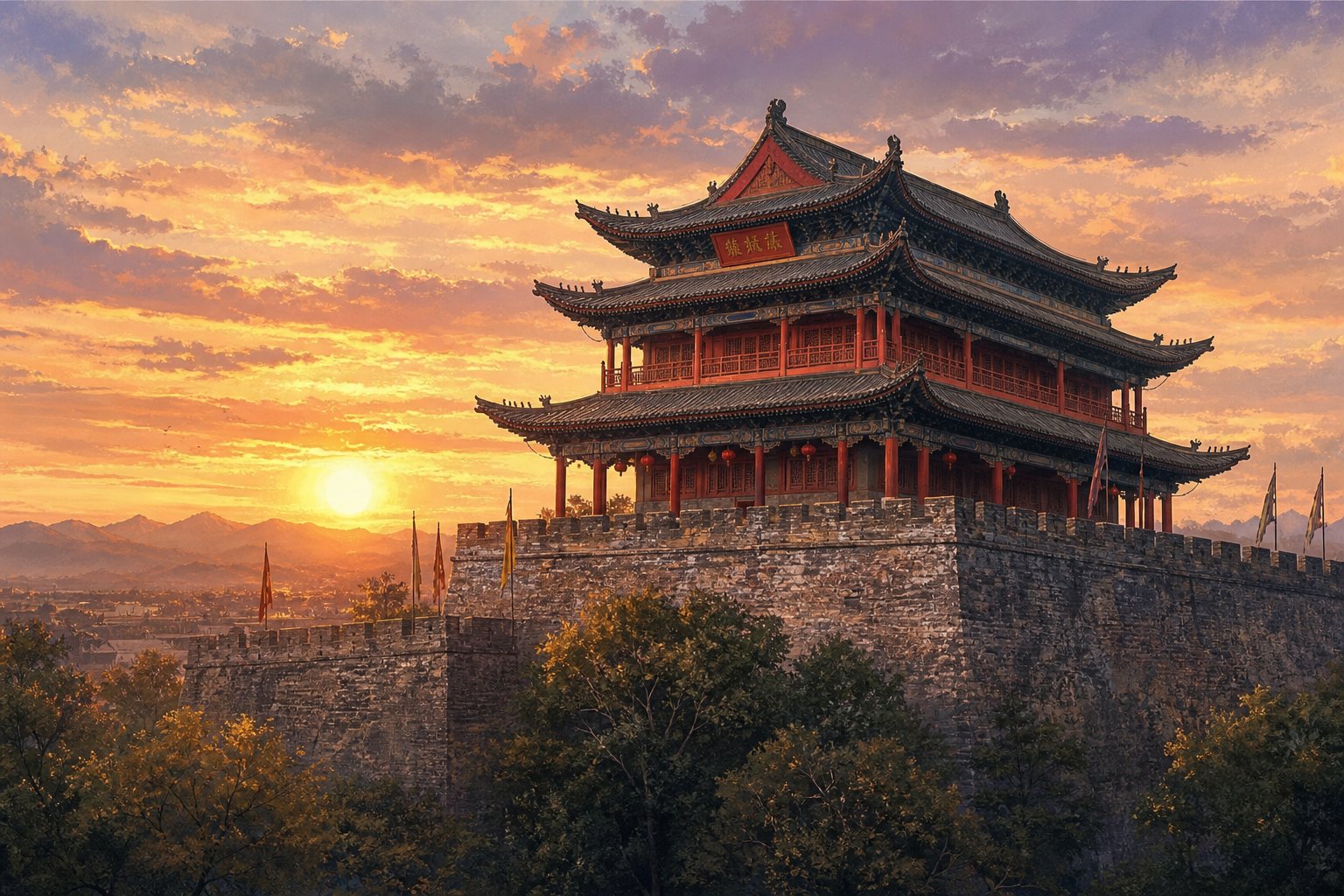
Changsha, the capital of Hunan Province, contains an entire administrative district called Tianxin (天心区). The name traces back to the district's most famous structure: Tianxin Pavilion (天心阁), a three-story building perched atop the city's only surviving ancient city wall. The name literally means "Pavilion of Heaven's Heart," positioning the structure as a point where the earthly city meets the cosmic order above.
The history runs deep. According to Hunan's Department of Culture and Tourism, the ancient city wall beneath Tianxin Pavilion was originally built in the fifth year of Emperor Gaozu's reign during the Western Han Dynasty (202 BC). It's the only ancient building in Hunan Province that preserves a complete set of defensive functions: city walls, moats, and artillery platforms. When Changsha demolished most of its city wall during the Republic of China period to build a ring road, only 251 meters survived, all of it directly under Tianxin Pavilion.
Visitors climbing the stairs beside those ancient walls find the pavilion standing at the highest point. Inside, pairs of classical couplets hang on the walls. The Northern Song poet Kou Zhun wrote famous lines after gazing into the distance from this vantage point. Xia Chengtao, a pioneer in modern Chinese lexicology, composed a celebrated couplet praising both the pavilion and the city it watches over. From the top floor, the view blends modern Changsha's traffic and skyscrapers with the ancient stonework below, a visual metaphor for the tian xin concept itself: heaven's perspective looking down on human activity.
The tian xin place name didn't stay confined to the pavilion. The entire surrounding district adopted it, and today Tianxin District is one of Changsha's core urban areas. Nearby attractions include the Changsha Jiandu Museum, Dingwangtai Book Market, and Baisha Well Park. Even the popular Tianxin Pavilion Antique Market, which opens on weekends, draws its identity from the pavilion's name and the philosophical weight it carries.
Shanghai Xintiandi and the Cultural Weight of Place Names
Roughly 900 kilometers east, Shanghai offers a different case study in how these characters shape urban identity. Xintiandi (新天地) translates as "new heaven and earth," a name that deliberately invokes cosmic renewal. The xin tian di district sits at Shanghai's commercial heart, occupying a site that was once a dilapidated Shikumen neighborhood called Taipingqiao.
The transformation is striking. As research published in Asian Culture and History documents, Shanghai xin tian di preserves the city's traditional Shikumen housing style, stone-framed gates and narrow alleyways dating to the early twentieth century, while converting the interiors to contemporary commercial use. The project, developed by Hong Kong-based Shui On Group and designed by an international team including Boston architect Benjamin Wood, won the Urban Land Institute Award for Excellence in 2003.
The name choice was deliberate. "Xintiandi" signals both a physical facelift and a philosophical statement: this is where Shanghai's past meets its future, where tradition and modernity coexist rather than compete. The research describes it as "a place of temporal and cultural hybridity: foreign to Chinese and Chinese to foreigners; being nostalgic and trendy at the same time." Sometimes called "Shanghai's living room," the xin tian di shanghai precinct draws locals and international visitors alike to its restaurants, galleries, cafes, and specialty stores. If you're searching for a xin tian di shanghai restaurant, you'll find dozens housed inside restored Shikumen buildings where the original stone frames and alleyway layouts remain intact.
The xin tian di mall and surrounding retail spaces function as more than shopping destinations. They're arguments about what tradition means in a modernizing city. The Wulixiang Museum inside the North Block recreates a typical middle-class Shanghai household from the early twentieth century, complete with bonsais, bamboo chairs, and a gramophone playing Shanghai Opera. Visitors move between this curated past and the contemporary boutiques next door without ever leaving the Shikumen streetscape.
For anyone trying to find the xin tian di shanghai address, it's located in the Huangpu District at the east end of the former French Concession, near the site of the Chinese Communist Party's first national congress.
Here are notable locations across China that use these characters in their names:
- 天心阁 (Tianxin Pavilion) — Changsha, Hunan: historic pavilion atop a 2,200-year-old city wall
- 天心区 (Tianxin District) — Changsha, Hunan: core urban district named after the pavilion
- 新天地 (Xintiandi) — Shanghai: cultural and commercial district in restored Shikumen architecture
- 天心 (Tianxin) — Sanshui, Guangdong: a community area where tian xin sanshui references local geography
- 田心 (Tianxin) — Shenzhen, Guangdong: a village and metro station using the "field-heart" characters
What connects all these locations is a shared instinct: naming a place after heaven's heart or a new cosmos isn't just poetic decoration. It's a claim about what that place aspires to be. Changsha's pavilion claims a vantage point worthy of heaven's gaze. Shanghai's Xintiandi claims the power to remake the world. Even smaller communities bearing the name participate in this tradition of encoding ambition into geography.
That same impulse to encode meaning into names extends beyond places and into people. When parents choose 天心 for a child, they're drawing on the same philosophical reservoir, but directing it toward a single life rather than a city block.
Tian Xin as a Personal Name and Naming Philosophy
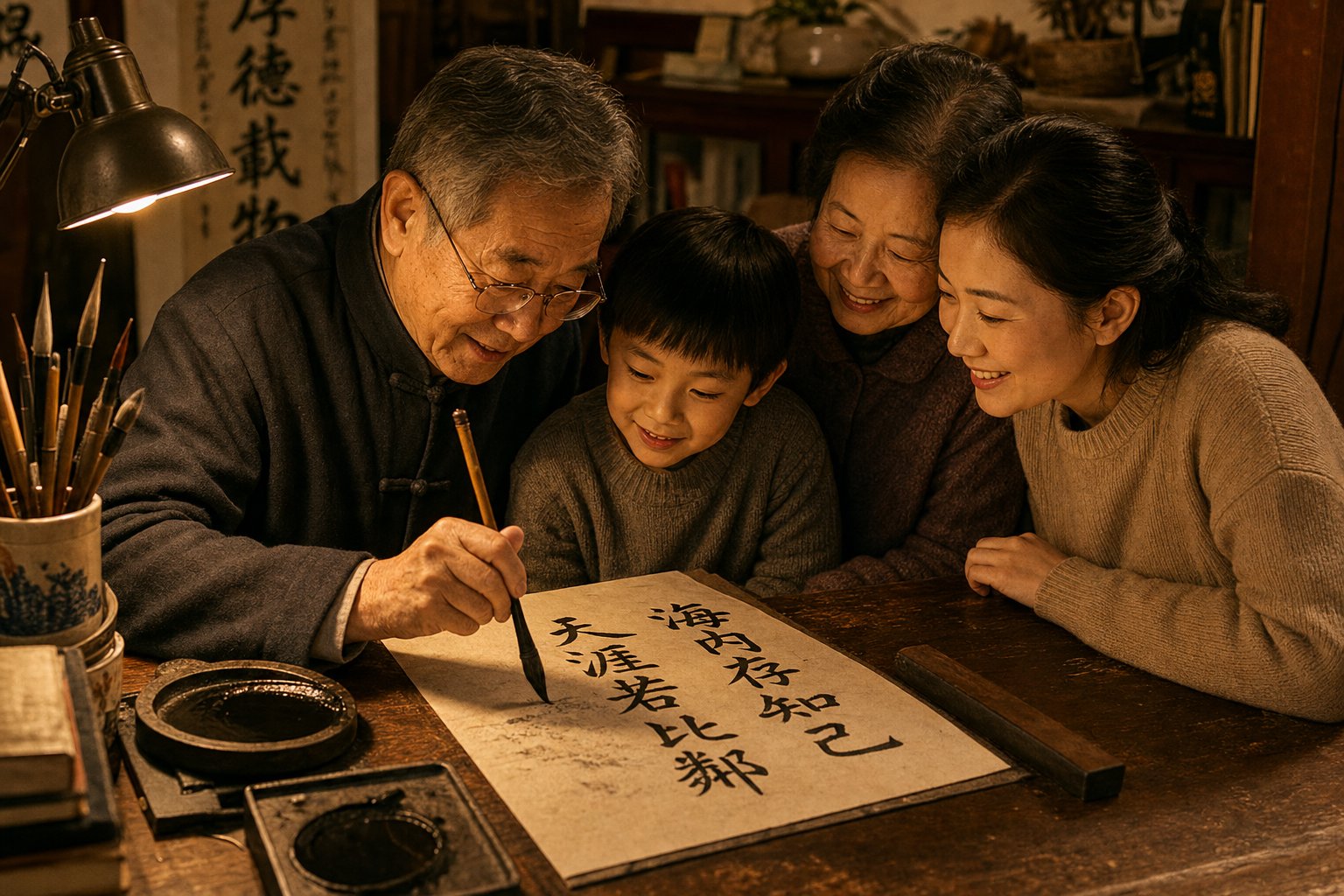
Directing that philosophical reservoir toward a single life is exactly what Chinese naming does. A name in Chinese isn't a label picked from a list. It's a designed artifact, built character by character to shape the bearer's identity and fortune. When parents select 天心 for a child, they're making a statement about what kind of person they hope that child will become.
Why Parents Choose 天心 as a Name
Imagine naming your child "heaven's heart-mind." That's not a casual choice. It encodes a specific set of aspirations, a blueprint for character that the child carries through every introduction, every signature, every time someone calls their name aloud.
Parents who choose 天心 are typically drawn to a cluster of qualities the name evokes:
- Alignment with cosmic order — the idea that the child's life will flow in harmony with heaven's natural patterns rather than fighting against them
- Purity of heart — a mind unclouded by selfishness or petty concerns, reflecting heaven's impartial clarity
- Moral clarity — the capacity to distinguish right from wrong instinctively, as if guided by a higher awareness
- Inner stillness — the Daoist dimension of 天心, suggesting a person who remains centered amid chaos
- Expansive consciousness — a mind as vast and open as the sky itself, capable of seeing beyond narrow self-interest
- Spiritual connection — a sense that the bearer maintains a direct link to something larger than individual existence
The name works for both genders, though it leans slightly more common for women in contemporary usage. For girls, it often emphasizes purity and grace. For boys, it tends to highlight moral strength and cosmic alignment. The same two characters shift their emotional register depending on the bearer, much like the character 心 itself shifts between feeling and thinking depending on context.
One of the most recognizable bearers of this name is the Taiwanese tian xin actress (天心), born Wu Tian Xin (吳天心), who built a career spanning film, television, and modeling in Taiwan. Her birth name, wu tian xin, combines the common surname Wu (吳) with the aspirational given name Tian Xin. She later adopted just 天心 as her professional stage name, letting the philosophical weight of those two characters stand alone. Her career in Taiwanese drama made the name widely recognized across Chinese-speaking audiences, and younger fans sometimes refer to her affectionately as xiao tian xin, using the diminutive 小 (xiao, "little") as a term of endearment. The nickname sugar xiao tian xin circulates among fan communities as a playful variation.
The name also appears in other entertainment contexts. The phrase tian xin ge ge (天心哥哥, "Brother Tian Xin") surfaces in variety shows and children's programming, demonstrating how the name crosses gender lines in practice. These pop culture appearances keep the name visible and fresh in the public imagination, even as its philosophical roots stretch back millennia.
Five Elements Theory and Chinese Naming Conventions
Choosing a name like 天心 isn't purely about meaning. Traditional Chinese naming also considers the energetic composition of the characters through the lens of Wu Xing (五行), the Five Phases or Five Elements: Wood, Fire, Earth, Metal, and Water. These aren't chemical elements in the Western sense. As the classical text Shangshu (Book of Documents) first documented around 1000 BCE, Wu Xing describes five fundamental patterns of energy that govern how the universe transforms.
Here's how it connects to naming. A child's BaZi (八字) birth chart, calculated from their exact time of birth, reveals which elemental energies are dominant, which are missing, and which need balancing. A naming specialist then selects characters whose elemental associations compensate for any imbalances. The goal isn't to stack one element. It's to create harmony across all five phases.
The character 天 carries Fire associations through its connection to the sky and the sun's radiance. The character 心 also resonates with Fire energy, since the heart in Chinese medicine corresponds to the Fire element. This makes 天心 a name with strong Fire characteristics: warmth, illumination, visibility, and expressive energy. For a child whose birth chart lacks Fire, this name could provide exactly the supplementation needed. For a child already abundant in Fire, a naming specialist might suggest alternatives to avoid elemental excess.
Chinese characters carry elemental associations through their radicals, the structural components that make up each character. Fire-associated radicals include 火 (fire) and 灬 (fire dots), while the heart radical 心 or its variant 忄 connects to Fire through the organ correspondence system in traditional Chinese medicine. This layered system means that 天心 doesn't just sound meaningful. It participates in an energetic architecture designed to support the bearer's life path.
Beyond elemental balancing, generational naming conventions also shape character selection. Many Chinese families follow a generational poem (字辈 zibei), a sequence of characters predetermined by ancestors, where each generation uses a specific character as one element of their given name. If a family's generational character for the current generation happens to be 天, then the second character becomes the space for individual expression, and 心 might be chosen for its philosophical depth and elemental properties.
Other families prioritize stroke count, phonetic harmony with the surname, or calligraphic balance, ensuring the name looks as good written as it sounds spoken. A name like 天心 scores well on visual symmetry: 天 has four strokes with a broad, open structure, while 心 has four strokes with a compact, centered form. Together they create a visual rhythm of expansion followed by concentration, sky opening into focused awareness.
This multi-dimensional approach to naming, where meaning, sound, elemental energy, visual form, and generational tradition all intersect, explains why Chinese parents often spend weeks or months selecting a name. It's not vanity. It's engineering. And 天心, with its philosophical resonance and energetic clarity, represents one of the more deliberate choices a parent can make.
That deliberateness extends beyond the nursery. The same characters that name children also name businesses, and the aspirational logic works identically: choose characters that broadcast your values to anyone who reads the sign.
How Tian Xin Lives in Modern Chinese Culture
Walk through any Chinese commercial district and you'll spot these characters on storefronts, menus, and hotel signage. Business owners reach for 天心 and its related compounds because the characters radiate warmth, sincerity, and a sense of cosmic goodwill without sounding pretentious. A tian xin foot spa & massage parlor in Vancouver, a tian xin wanton noodle stall in Singapore, a tian xin vegetarian restaurant in Taipei: each borrows the same philosophical gravity to signal care and authenticity to customers.
Tian Xin in Business Names and Everyday Phrases
The logic is straightforward. A name like 天心 tells potential customers: "We operate from the heart, aligned with something higher than profit." You'll find it attached to wellness businesses especially, where the heart-mind connection resonates with the service being offered. Search for tian xin foot spa & massage vancouver reviews and you'll see how the name sets expectations of holistic care before a customer even walks through the door. The same principle applies to hospitality ventures like qing tian xin yue hotel, where the characters promise tranquility and heartfelt service.
Food businesses lean into the warmth dimension. A tian xin place menu might feature traditional comfort dishes, while tian xin su shi bao dian (天心素食宝典) signals a vegetarian establishment guided by Buddhist-influenced compassion. The xin tian di spa concept works similarly, combining "new heaven and earth" with wellness to suggest total renewal of body and spirit. In each case, the classical meaning isn't abandoned. It's compressed into a brand promise.
Classical Meaning Meets Contemporary Usage
Beyond shopfronts, these characters saturate everyday Mandarin. Here are common modern phrases and expressions that keep 天 and 心 alive in casual speech:
- 天天开心 (tian tian kai xin) — "happy every day," the most common birthday and greeting-card wish among friends, as documented in CLI's guide to Chinese birthday expressions
- 开心果 (kai xin guo) — literally "happy fruit" (pistachio), used colloquially to describe someone who always cheers others up
- 心想事成 (xin xiang shi cheng) — "may your heart's wishes come true," a standard New Year blessing
- 天心如镜 (tian xin ru jing) — "heaven's heart is like a mirror," meaning justice will prevail
- 良心 (liang xin) — "good heart-mind" or conscience, used in phrases like 凭良心说 ("speaking from conscience")
- 甜到心里 (tian dao xin li) — "sweet all the way to the heart," describing something deeply touching or a particularly good dessert
Notice how 天天开心 uses 天 in its everyday sense of "day" rather than "heaven," while 心 stays in its emotional register. The phrase appears on greeting cards, text messages, and social media posts millions of times daily. It's the default wish Chinese friends send each other, so common it functions almost like "take care" in English. Yet the characters themselves still carry their deeper resonances for anyone paying attention.
In popular music and television, songwriters exploit this layered quality. A lyric using 心 can simultaneously reference romantic love and spiritual longing. A drama titled with 天 can evoke both the literal sky and fate's invisible hand. Modern Chinese media doesn't discard classical meaning. It plays with it, trusting audiences to hear both registers at once.
This persistence of ancient meaning inside modern usage isn't accidental. It reflects something fundamental about how Chinese characters work: they accumulate associations over centuries without shedding old ones. A business named 天心 in 2025 benefits from the same philosophical weight that Neo-Confucian scholars debated in the twelfth century. The context changes. The resonance compounds.
That compounding effect reaches its most practical expression in traditional Chinese medicine, where the concept of nourishing heaven's heart-mind isn't metaphorical at all. It's a clinical principle with specific herbal formulas attached.
Tian Xin in Traditional Chinese Medicine and Wellness
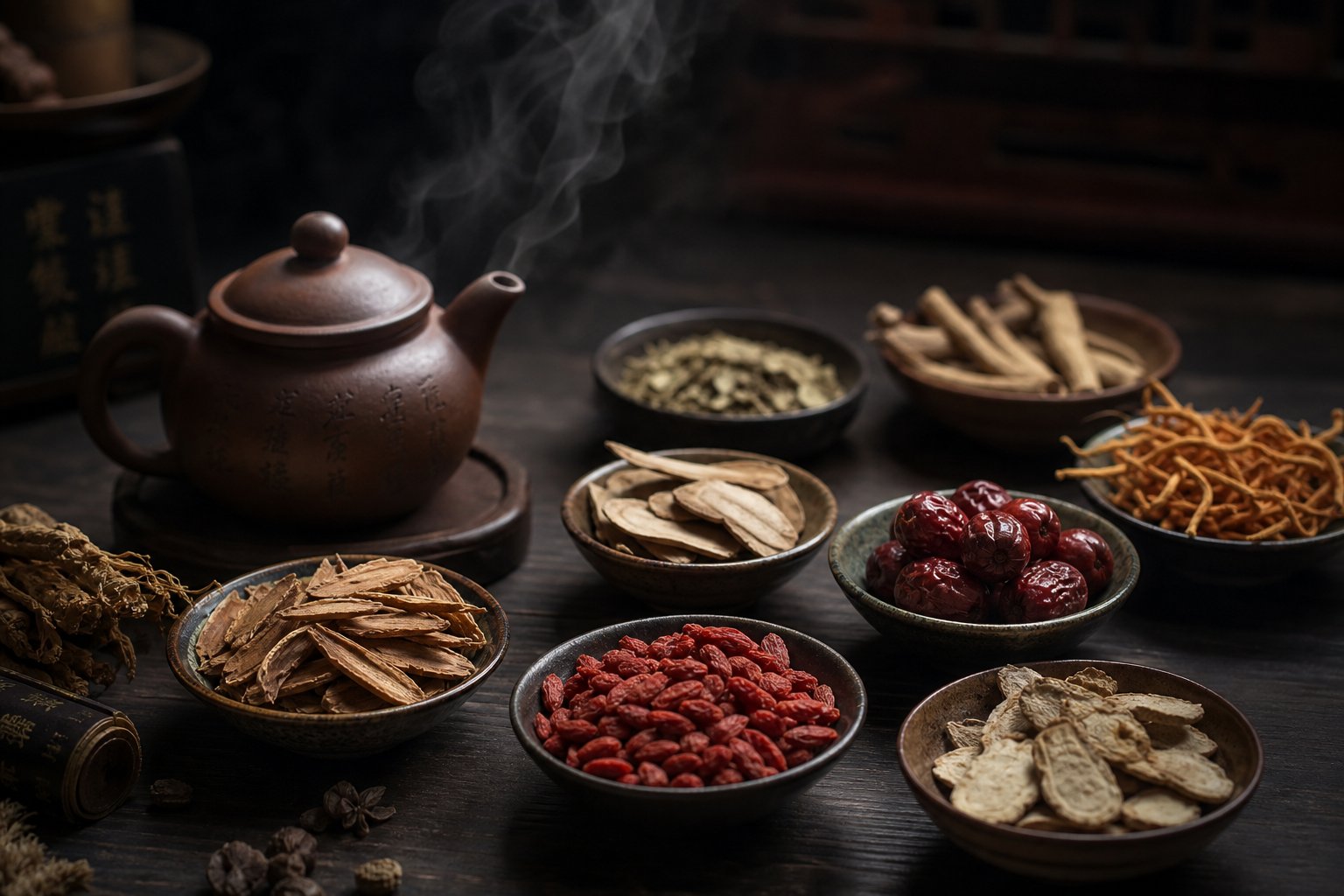
In Traditional Chinese Medicine (TCM), the Heart isn't just a pump. It's the emperor of the organ system, the seat of Shen (神), which governs consciousness, emotions, sleep, and mental clarity. When TCM practitioners talk about "nourishing the heart," they mean restoring this entire heart-mind complex to balance. The concept of 天心 lives here too, embedded directly in one of the tradition's most celebrated herbal formulas.
The Heart-Mind Connection in Traditional Chinese Medicine
TCM treats the Heart as the organ that houses Shen, one of the "Three Treasures" of life alongside Jing (essence) and Qi (energy). When Shen is balanced, you feel calm, focused, and emotionally resilient. When it's disturbed, symptoms like insomnia, anxiety, palpitations, brain fog, and emotional withdrawal appear. The Heart corresponds to the Fire element, and its health depends on adequate Yin, Blood, and internal stillness.
This framework maps directly onto the philosophical concept of 天心. Just as Confucians and Daoists described heaven's heart-mind as the still, luminous center of cosmic order, TCM describes the human heart-mind as the still, luminous center of personal health. Disturb that center through overwork, excessive worry, or chronic stress, and the whole system destabilizes. The treatment principle? Nourish the heart, calm the spirit, restore the quiet awareness that was always meant to reside there.
How Tian Wang Bu Xin Dan Reflects the Tian Xin Concept
No formula illustrates this principle more directly than Tian Wang Bu Xin Dan (天王补心丹), one of the most widely prescribed classical formulas in Chinese medicine.
Tian Wang Bu Xin Dan translates as "Heavenly King's Pill to Tonify the Heart." The name encodes a complete philosophical statement: heaven's authority (天王) actively nourishes (补) the heart-mind (心), restoring it to its natural state of clarity and peace.
The formula's origin story reinforces this cosmic dimension. According to research published by Mayway, the formula traces back to the Tang Dynasty Buddhist monk Dao Xuan (596-667), who practiced extreme asceticism, chanting scriptures for 90 consecutive days without rest. The resulting physical and mental exhaustion led to what TCM calls Heart and Kidney Yin deficiency. Legend holds that Vaisravana, leader of the Four Heavenly Kings and Protector of the Dharma in Buddhism, appeared to Dao Xuan in a dream and prescribed the herbal formula to cure him. A Dunhuang manuscript (Stein manuscript S.5598V, stored in the British Library) recovered from the Mogao caves contains a passage titled "Vaisravana Heavenly King granted Xuan Monk a Miraculous Heart-Nourishing Pill Recipe," supporting the formula's antiquity.
The formula was later recorded by Ming Dynasty physician Hong Ji in his 1638 text Secrets of Health Preservation, and it remains one of the most commonly prescribed formulas for neurological and mental disorders as well as cardiovascular conditions. You'll also encounter it spelled as tian wang bu xin wan (the pill form) or occasionally as tian wan bu xin dan in informal transliterations. Some Western practitioners refer to it as Emperor's Teapills or, in Korean practice, Cheonwangbosimdan.
The tian wang bu xin dan benefits center on a specific TCM pattern: Heart and Kidney Yin deficiency with Blood deficiency and Shen disturbance. In practical terms, this manifests as insomnia, frequent waking, vivid dreaming, palpitations, fatigue, forgetfulness, and irritability. The formula's strategy is to nourish Yin, clear deficiency Heat, replenish Blood, and calm the Shen. Its lead herb, Sheng Di Huang (Rehmannia), makes up nearly a third of the formula, tonifying Blood when entering the Heart and nourishing Yin when entering the Kidney.
People searching for tian wang bu xin dan anxiety relief are often dealing with exactly this pattern: the restlessness and emotional sensitivity that arise when the heart-mind lacks nourishment. Memorial Sloan Kettering Cancer Center notes that preliminary findings show the formula comparable to cognitive behavioral therapy for insomnia (CBT-I) in cancer patients, and capable of reducing anxiety in breast cancer patients undergoing treatment. The formula also appears in resources like the tian wang bu xin dan american dragon database, which catalogs classical formulas for English-speaking practitioners.
Regarding tian wang bu xin dan contraindications, the original formula contained cinnabar (Zhu Sha), a mercury-containing mineral used historically to anchor the Shen. Modern commercial formulations have removed cinnabar due to toxicity concerns with long-term use, substituting safer alternatives. As for tian wang bu xin dan drug interactions, Memorial Sloan Kettering's clinical summary reports none currently known, though the center advises patients to inform healthcare providers about any herbal formulas they're taking, since multi-herb compounds can theoretically interact with pharmaceutical medications.
What makes this formula philosophically significant, beyond its clinical applications, is how completely it embodies the tian xin concept. The name itself is a sentence: heaven's king nourishes the heart. The origin story places the formula's source in a divine being, not a human physician. The clinical target is the heart-mind complex, the same 心 that Confucians, Daoists, and Buddhists all identified as the seat of human consciousness. And the treatment goal is restoration to a natural state of clarity, the same state that Daoist meditators called 天心, heaven's original awareness unclouded by exhaustion or desire.
From philosophy to place names to personal identity to the herbal formulas sitting on pharmacy shelves, the tian xin concept threads through every layer of Chinese civilization. It's not a relic preserved in museums. It's a living idea, still shaping how people name their children, design their cities, and treat their insomnia. Two characters. One sound. A world of meaning that keeps expanding the closer you look.
Frequently Asked Questions About Tian Xin Meaning
1. What does tian xin mean in Chinese?
Tian xin, written as 天心, combines the characters for heaven (天) and heart-mind (心). It refers to the consciousness, will, or moral awareness of heaven. Because 心 means both heart and mind in Chinese without distinction, the compound carries richer meaning than any single English translation can capture, encompassing heaven's intention, awareness, and moral reasoning simultaneously.
2. Is tian xin a male or female name?
Tian xin works as a unisex name in Chinese. For girls, it tends to emphasize purity and grace, while for boys it highlights moral strength and cosmic alignment. The Taiwanese actress Wu Tian Xin (吳天心), who uses 天心 as her stage name, is one of the most well-known bearers. Parents choose it to encode aspirations like harmony with natural order, clarity of conscience, and expansive awareness.
3. What is the difference between 天心 and 甜心 in Chinese?
Though both sound like 'tian xin' in spoken Mandarin, they are entirely different words. 天心 (first tone on tian) means heaven's heart-mind and carries philosophical and cultural weight. 甜心 (second tone on tian) means sweetheart and belongs to casual, affectionate speech. The tonal difference on the first syllable, high-flat versus rising pitch, completely changes the meaning and written form.
4. What is Tian Wang Bu Xin Dan used for?
Tian Wang Bu Xin Dan (天王补心丹) is a classical Chinese herbal formula used to nourish Heart and Kidney Yin, replenish Blood, and calm the spirit. It addresses symptoms like insomnia, palpitations, anxiety, forgetfulness, and emotional restlessness caused by Yin deficiency. Preliminary research from Memorial Sloan Kettering suggests it may help with insomnia and anxiety in certain patient populations.
5. Where is Tianxin District and why is it called that?
Tianxin District (天心区) is a core urban area in Changsha, Hunan Province, China. It takes its name from Tianxin Pavilion (天心阁), a historic three-story structure built atop the city's only surviving ancient city wall dating to 202 BC. The pavilion's name means 'Pavilion of Heaven's Heart,' positioning it as a point where the earthly city symbolically meets the cosmic order above.