What Tiange Dige Renge Name Analysis Reveals About Your Name
When you hear someone say a name carries luck, fortune, or personality traits baked into its very structure, you might wonder how a few characters could hold that much weight. In Chinese numerological naming, the answer lies in stroke counts and mathematical grids. Tiange dige renge name analysis breaks a person's name into distinct numerical components, each governing a different phase of life, from childhood through old age.
What Is the Wuge Name Analysis System
The wuge (五格) system, sometimes called the Five Grids Method, is a structured approach to evaluating names based on the number of strokes in each character. It divides any given name into five mathematical grids: tiange (天格, the Heaven Grid), renge (人格, the Personality Grid), dige (地格, the Earth Grid), waige (外格, the External Grid), and zongge (总格, the Total Grid). Among these five, tiange, renge, and dige form the central trio that practitioners focus on most closely.
The wuge system assigns numerical values derived from character stroke counts to five positional grids within a name. Tiange reflects ancestral influence and early life, renge governs personality and prime years, and dige shapes relationships and later life. Together, these three grids map a person's fortune across their entire lifespan.
Each grid corresponds to a specific life domain. Think of it like reading a name in layers: your last name feeds into tiange, the junction between surname and given name creates renge, and the given name characters produce dige. The eno meaning of each grid number is then interpreted through a system of 81 possible numerical values, each carrying its own significance.
Origins and Cultural Significance of Stroke-Based Naming
This system did not originate in China. It was first developed in 1918 by Japanese scholar Kumosaki Kengi (熊崎健翁), who built it on principles of numerical theory. The method is still sometimes called "Kumasaki-style name study" in academic circles. In 1936, a Taiwanese scholar named Bai Yuguang brought the system back from Japan, translating and promoting it across Taiwan. From there, it spread to Korea, Southeast Asia, Hong Kong, and eventually mainland China.
By the 1990s, Chinese practitioners had adapted the framework to better fit Chinese naming traditions. They standardized it around the Kangxi Dictionary stroke count system and integrated elements of traditional Chinese cosmology, particularly the five elements (wuxing). The orgo meaning behind this adaptation was practical: Chinese characters carry different structural rules than Japanese ones, so the counting methods needed refinement.
For families choosing names, the system offers a tangible framework. Rather than relying purely on intuition or the aesthetic sound of last names paired with given names, parents can evaluate numerical harmony across all three core grids. Whether you view it as cultural tradition or a structured naming tool, understanding how tiange, dige, and renge interact gives you a clearer picture of what this centuries-old practice actually measures.
The real depth of this system, though, emerges not from individual grid numbers but from how those numbers translate into elemental relationships and whether they flow harmoniously from one grid to the next. That translation starts with one deceptively simple skill: counting strokes correctly.
How to Calculate Stroke Counts for Name Analysis
Getting the stroke count wrong throws off every grid calculation that follows. It sounds straightforward, but counting strokes in the wuge system is not the same as counting strokes the way you learned in school. The system uses a specific standard, and even one stroke of difference can shift a grid number into an entirely different numerological category.
Traditional vs Simplified Stroke Counting Rules
Here is the key rule: tiange dige renge name analysis relies on traditional character stroke counts as defined by the Kangxi Dictionary, not the simplified forms used in everyday modern Chinese writing. This distinction matters because simplified characters often reduce stroke counts significantly. The character for "dragon" (龙), for example, has 5 strokes in simplified form but 16 strokes in its traditional form (龍). Using the wrong version would produce a completely different grid number.
Why the Kangxi Dictionary specifically? The Five Grids Analysis Method was standardized around this reference because it represents the most authoritative historical record of traditional character structures. When practitioners in the 1990s adapted the system for mainland Chinese use, they retained this standard to maintain consistency with the original framework. Think of it like using a fixed measurement system: if everyone measures differently, the results become meaningless.
So when you sit down to analyze a name, your first step is always to look up each character's traditional form and count its strokes according to Kangxi conventions. Modern dictionaries or digital stroke counters that default to simplified characters will lead you astray.
Special Radical Counting Exceptions You Must Know
Even with traditional characters, certain radicals follow special counting rules that trip up beginners. These radicals appear visually as abbreviated forms, but in wuge analysis, you count them as their full original characters. The water radical (氵) looks like three strokes on the page, yet it counts as four because it represents the full character for water (水). The grass radical (艹) appears to have three or four strokes visually, but it counts as six because it derives from the full character for grass (草).
Imagine you are analyzing a name containing the character "ocean" (海). You might count the left-side water radical as 3 strokes based on appearance. In wuge analysis, that radical counts as 4. Miss this rule, and your entire calculation shifts.
Here is a reference table of the most common radicals and their correct wuge stroke counts:
| Radical | Full Character | Visual Stroke Count | Wuge Stroke Count |
|---|---|---|---|
| 氵 (water) | 水 | 3 | 4 |
| 忄 (heart) | 心 | 3 | 4 |
| 扌 (hand) | 手 | 3 | 4 |
| 犭 (dog) | 犬 | 3 | 4 |
| 礻 (spirit) | 示 | 4 | 5 |
| 王 (jade radical) | 玉 | 4 | 5 |
| 艹 (grass) | 草 | 3-4 | 6 |
| 衤 (clothing) | 衣 | 5 | 6 |
| 月 (flesh radical) | 肉 | 4 | 6 |
| 辶 (walk) | 走 | 3-4 | 7 |
| 阝 right (city) | 邑 | 2-3 | 7 |
| 阝 left (mound) | 阜 | 2-3 | 8 |
Notice that the left-ear radical (阝) and the right-ear radical (阝) look identical but carry different stroke values. The left version derives from "mound" (阜, 8 strokes), while the right version derives from "city" (邑, 7 strokes). This is one of the trickiest distinctions in the system, similar to how a single word can carry different meanings depending on context, much like how a rabe definition or guthrie definition shifts based on the field of study.
Single-Character and Compound Surname Differences
The surname type directly affects how you calculate tiange, the Heaven Grid. The rules differ depending on whether a name uses a single-character surname (like Wang 王, Li 李, or Zhang 张) or a compound surname (like Sima 司马, Ouyang 欧阳, or Zhuge 诸葛).
For single-character surnames, the tiange formula is:
Tiange = surname stroke count + 1
That "+1" is a fixed rule in the system, not an optional step. For example, the surname Ding (丁) has 2 strokes in its traditional form, so its tiange equals 3. The surname Tian (田) has 5 strokes, giving a tiange of 6.
For compound surnames, the formula changes:
Tiange = first surname character strokes + second surname character strokes
No "+1" is added here. The compound surname Sima (司马) produces a tiange of 15 (司 = 5 strokes, 马 = 10 strokes in traditional form). Ouyang (欧阳) produces a tiange of 32 (欧 = 15 strokes, 阳 = 17 strokes in traditional form).
This distinction is essential because it changes the starting point for all subsequent grid interactions. If you apply the single-surname rule to a compound surname or vice versa, every grid in the analysis will be off. It is comparable to translating between two different systems entirely, not unlike the precision required when converting romanian to english, where structural rules shift even though the underlying meaning stays the same.
With accurate stroke counts in hand and the surname type properly identified, you have the raw numbers needed to calculate each grid. The next question is what those numbers actually reveal, starting with tiange and its connection to ancestry, early life, and inherited fortune.
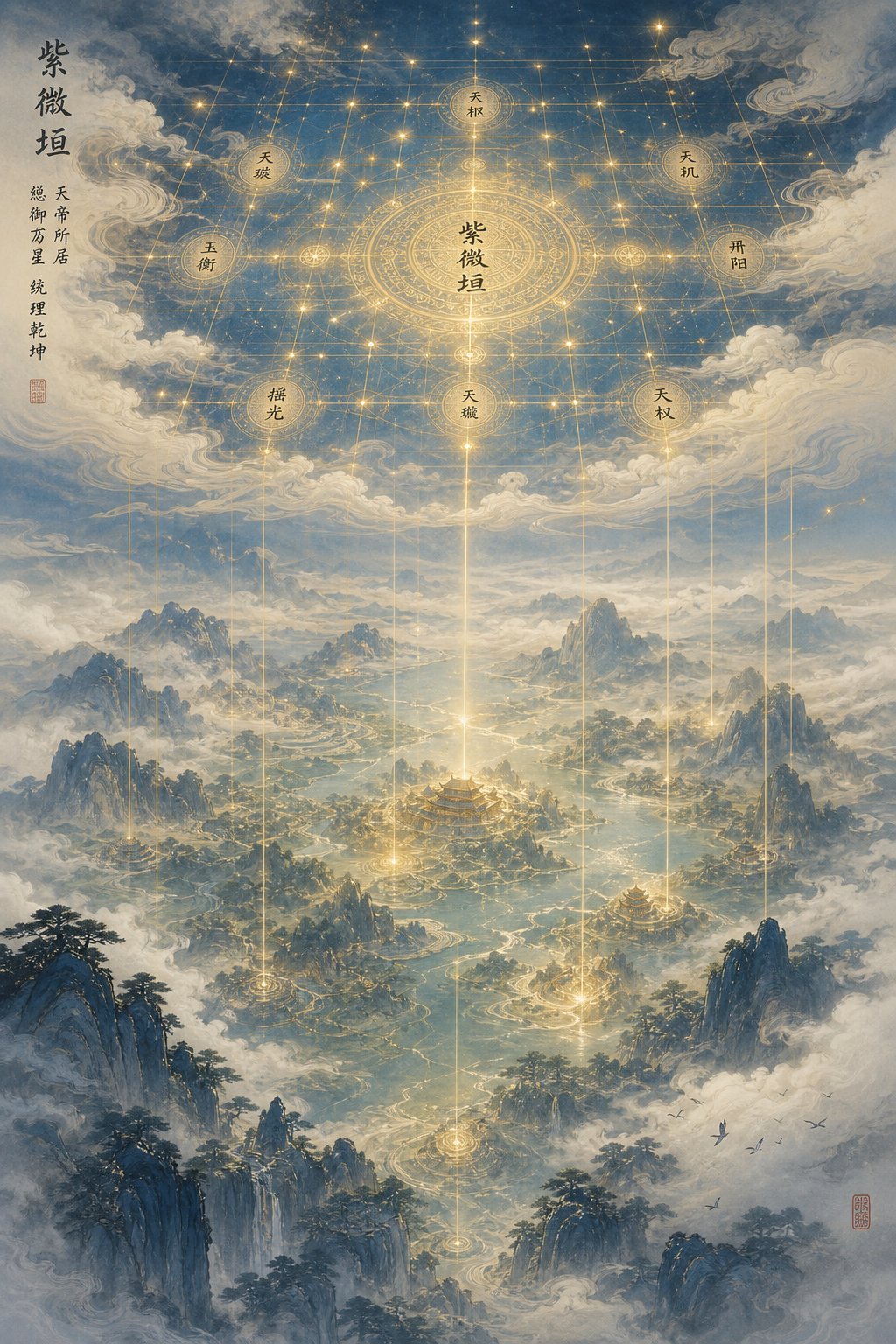
Tiange the Heaven Grid and Its Influence on Early Life
Your surname is something you inherit, not something you choose. In tiange dige renge name analysis, that inherited quality is exactly what makes the Heaven Grid unique among the five grids. Tiange (天格) is the only grid entirely determined by your family name, which means it carries the weight of lineage, ancestral patterns, and the conditions surrounding your earliest years.
Tiange Calculation Formula and Method
The calculation itself is simple once you know your surname type. For a single-character surname, add 1 to the traditional stroke count. For a compound surname, sum the strokes of both characters with no addition. A quick recap of how this works in practice:
- Single surname: Liu (刘) has 15 strokes in traditional form, so tiange = 15 + 1 = 16
- Single surname: Wang (王) has 4 strokes, so tiange = 4 + 1 = 5
- Compound surname: Sima (司马) = 5 + 10 = 15
- Compound surname: Ouyang (欧阳) = 15 + 17 = 32
The "+1" rule for single surnames exists because the system requires at least two numerical inputs to form a grid value. Think of it as a structural placeholder that keeps the mathematical framework consistent across all name types. Without it, single-character surnames would produce grid numbers too low to carry meaningful interpretation within the 81-number system.
What Tiange Reveals About Early Life and Ancestry
Tiange governs the period before adulthood. It reflects the family environment you were born into, the resources available during childhood, and the inherited traits passed down through your bloodline. In practical terms, it speaks to questions like: Did you grow up in a supportive household? Were early opportunities available or scarce? What foundational patterns did your family establish before you had any say in the matter?
Tiange primarily influences life before age 20 and reflects family legacy rather than personal destiny. It is the grid of inheritance, not individual effort.
The wuge system explicitly states that tiange's numerical influence on a person is relatively limited compared to renge or dige. Its meaning is more contextual than deterministic. A tiange number of 16, for instance, carries the interpretation of "noble assistance and prosperous family" in the 81-number system, suggesting a supportive early environment. A tiange of 12 suggests "weak will and family solitude," pointing to a more challenging start. But these readings describe conditions, not fixed outcomes.
This is similar to how a surname like Mulholland carries meaning rooted in geography and ancestry, or how the mulholland meaning traces back to a specific Irish landscape. The name itself tells a story about where you came from, not necessarily where you are going. Likewise, the reich meaning in German points to "empire" or "realm," reflecting collective heritage rather than individual character. Tiange operates on the same principle: it maps the territory you were born into.
Why Tiange Cannot Be Changed but Still Matters
Since tiange is locked to your surname, it cannot be adjusted when choosing a name for a child. You cannot pick a different tiange number the way you can shape renge or dige through careful given-name selection. This is why practitioners say tiange alone should never determine whether a name is considered auspicious or inauspicious.
Yet tiange still matters for one critical reason: it participates in the sancai (三才) configuration. The element assigned to tiange interacts with the elements of renge and dige, and that three-way relationship determines the overall harmony of the name. A tiange number that clashes elementally with renge can create friction in the system, even if renge and dige are individually strong. It is the difference between evaluating a single note versus hearing how it sounds within a chord.
Practitioners who dismiss tiange entirely miss this relational dimension. The grid may not define your personal destiny, but it sets the stage on which renge, the central pillar of the entire system, performs its role.
Renge the Personality Grid and Your Core Identity
If tiange is the stage, renge (人格) is the performer standing at center. In tiange dige renge name analysis, no grid carries more weight than this one. Practitioners call it the "main fortune" (主运) because it reflects who you actually become, not where you came from or what surrounds you. It governs your personality, your drive, and the trajectory of your most productive years.
Renge Calculation and Why It Is the Central Grid
The formula for renge sits right at the junction between surname and given name:
Renge = last character of the surname (stroke count) + first character of the given name (stroke count)
For a single-character surname like Liu (刘, 15 strokes) paired with a given name starting with Jiang (江, 7 strokes), renge equals 15 + 7 = 22. For a compound surname like Sima (司马), you take only the second character, Ma (马, 10 strokes), and add the first given-name character. So Sima Yi (司马懿) produces a renge of 10 + 22 = 32.
Why does this grid sit at the center? Because it literally bridges the surname and the given name. It draws one character from each side, making it the only grid that touches both your inherited identity and your chosen identity. The wuge system ranks it as the most important grid precisely because of this structural position: renge connects tiange above to dige below, forming the human link between heaven and earth.
How Renge Shapes Personality and Career Path
Renge governs roughly ages 20 through 40, the period when most people establish their careers, form lasting relationships, and solidify their sense of self. Where tiange describes the conditions you were born into, renge describes what you do with them.
Think of it this way: two people might share the same surname and therefore the same tiange, yet lead completely different lives. The difference, according to this system, lies largely in renge. It is the grid that reflects individual character rather than collective inheritance.
The life aspects governed by renge include:
- Personality formation - core temperament, emotional patterns, and behavioral tendencies
- Career aptitude - professional strengths, leadership capacity, and vocational direction
- Social relationships - how you connect with peers, colleagues, and community
- Willpower - resilience, determination, and capacity to overcome obstacles
- Overall life direction - the general arc of personal development and ambition
A name like Poirot, for instance, carries an immediate association with sharp intellect and methodical thinking, much like how the poirot meaning evokes a specific character type in Western culture. Renge works similarly in the Chinese system: the number it produces is interpreted as a personality signature. A renge of 21 suggests leadership and independence. A renge of 12 points toward hesitation and emotional sensitivity. Each of the 81 possible values paints a distinct portrait.
Renge as the Bridge Between Tiange and Dige
The structural importance of renge goes beyond individual interpretation. It is the pivot point for two critical relationships in the system:
Tiange + Renge = Success Fortune (成功运)
This pairing indicates how well a person can translate inherited advantages into real-world achievement. When the element of tiange supports the element of renge through the productive cycle, career success flows more naturally.
Renge + Dige = Foundation Fortune (基础运)
This pairing reveals whether a person's inner character is supported by stable domestic and relational ground. A harmonious connection here suggests that personal ambition rests on solid footing.
In this sense, renge functions like a dover meaning in geography: a crossing point, a strait between two landmasses. It is where the inherited world (tiange) meets the personal world (dige), and the quality of that meeting determines whether the overall name reads as harmonious or strained. Practitioners who evaluate names professionally will often start with renge and work outward, because if the center is weak, even strong surrounding grids cannot fully compensate.
The flack meaning of criticism or resistance also applies here conceptually. When renge clashes elementally with either tiange or dige, the system interprets this as internal friction: a person whose personality works against their circumstances rather than with them. This is why parents selecting names pay the most attention to renge, carefully choosing given-name characters whose stroke counts produce a favorable number at this critical junction.
Renge tells you who the name says you are. But identity does not exist in isolation. It needs ground to stand on, relationships to grow into, and a domestic foundation to sustain it. That grounding is exactly what the Earth Grid provides.
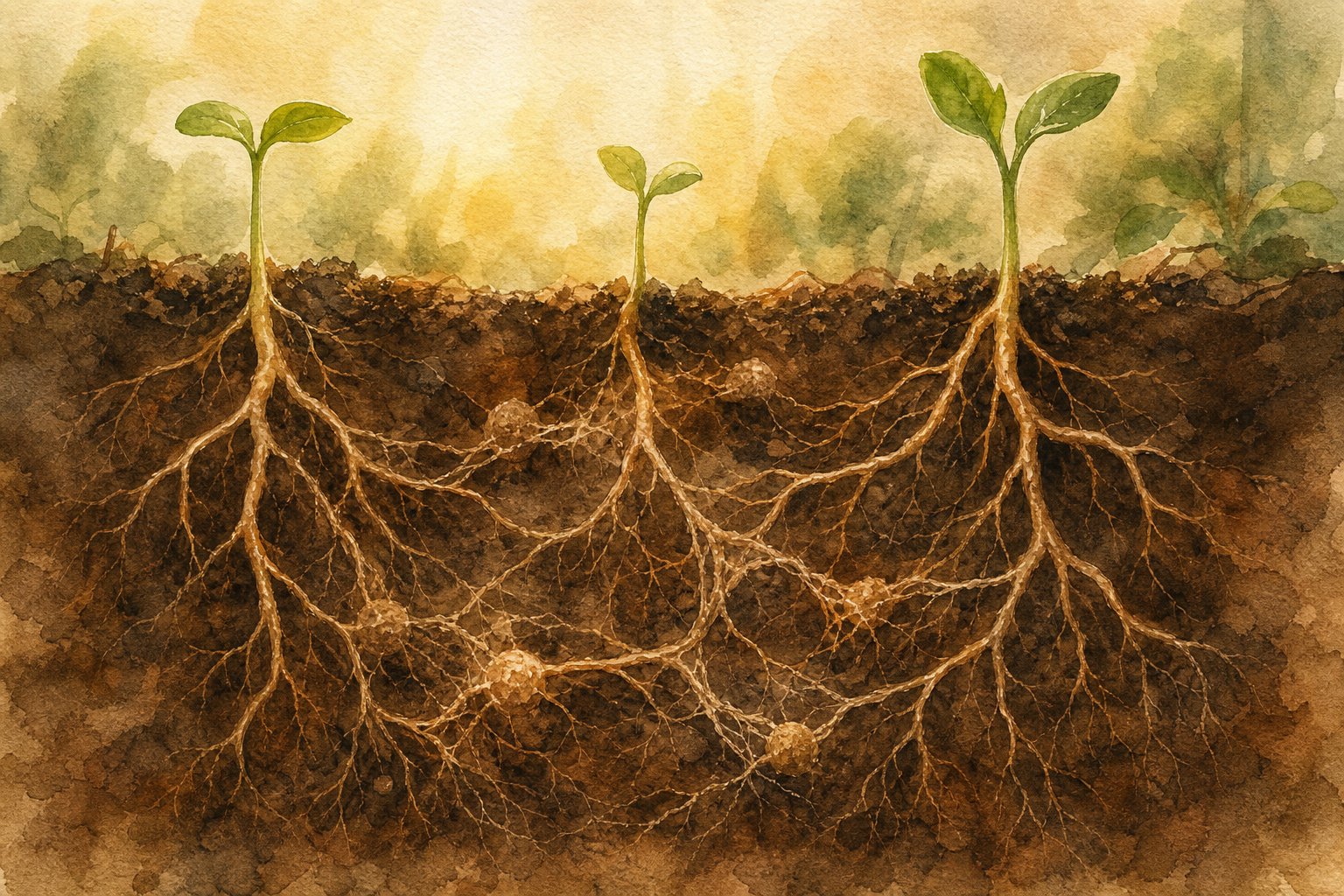
Dige the Earth Grid and What It Means for Relationships
Renge may define who you are, but dige (地格) defines the ground beneath your feet. In tiange dige renge name analysis, the Earth Grid represents your domestic world: the quality of your closest relationships, your physical vitality, and the stability of your later years. If renge is the performer, dige is the home they return to after the curtain falls.
Dige Calculation for Single and Multi-Character Given Names
The formula for dige focuses exclusively on the given name portion. It ignores the surname entirely:
For multi-character given names: Dige = first given-name character strokes + second given-name character strokes
For single-character given names: Dige = given-name character strokes + 1
That "+1" rule mirrors the tiange calculation for single-character surnames. It serves the same structural purpose: maintaining mathematical consistency within the 81-number framework. Without it, single-character given names would produce grid values too narrow for meaningful interpretation.
Consider a practical example. The name Zhang Wei (张伟) has a single-character given name. Wei (伟) carries 11 strokes in its traditional form, so dige = 11 + 1 = 12. For a name like Zhang Mingyu (张明宇), you sum both given-name characters: Ming (明, 8 strokes) + Yu (宇, 6 strokes) = 14.
Compound surnames follow the same dige logic since the calculation only involves given-name characters. Sima Yi (司马懿) has a single given-name character, Yi (懿, 22 strokes), producing a dige of 22 + 1 = 23. Zhuge Kongming (诸葛孔明) sums both given-name characters: Kong (孔, 4 strokes) + Ming (明, 8 strokes) = 12.
Dige and Its Connection to Relationships and Later Life
Where tiange maps your first two decades and renge governs your prime working years, dige speaks to what comes after. It reflects domestic harmony, marriage quality, relationships with children and subordinates, and physical constitution as you age. The wuge system describes dige as having a close relationship with renge, primarily influencing personal fortune while also representing connections with children, subordinates, and younger generations.
Think of dige as the warren meaning of your name: a network of interconnected passages, a home structure with many chambers. It is not about individual ambition but about the web of people who share your daily life. A strong dige suggests a person who builds lasting bonds, maintains a stable household, and finds support in family during difficult periods. A weak dige points toward domestic friction, loneliness in later years, or health challenges that undermine physical foundations.
This grid is particularly relevant for parents choosing names because it directly addresses the child's future relational life. Will they form stable partnerships? Will their home life provide refuge or stress? These are the questions dige attempts to answer through its numerical value.
Interpreting Dige Numbers for Domestic Harmony
Dige does not operate in isolation. Its meaning sharpens considerably when read alongside renge, because the interaction between these two grids forms what practitioners call "foundation fortune" (基础运). A harmonious renge-dige pairing suggests that your inner character aligns with your relational environment. A conflicting pairing indicates tension between who you are and the domestic world you inhabit, similar to how the seaver meaning of "tailor" implies precision and craft, yet placed in the wrong context, that precision becomes rigidity.
The element assigned to each grid determines whether the pairing is productive or destructive. Here is a reference showing common renge-dige element interactions and their relational implications:
| Renge Element | Dige Element | Relationship | Interpretation |
|---|---|---|---|
| Wood | Fire | Productive | Warm, nurturing domestic bonds; personality fuels family growth |
| Fire | Earth | Productive | Passion creates stable home foundation; strong family loyalty |
| Earth | Metal | Productive | Steady character produces disciplined household; reliable partnerships |
| Metal | Water | Productive | Structured personality supports adaptable family life; financial ease |
| Water | Wood | Productive | Flexible nature encourages growth in relationships; creative home life |
| Wood | Metal | Destructive | Ambition clashes with rigid home expectations; marital friction |
| Fire | Water | Destructive | Emotional intensity meets instability; domestic conflict likely |
| Earth | Wood | Destructive | Conservative nature resists partner's growth; stagnation in relationships |
| Metal | Fire | Destructive | Control meets resistance; power struggles within family |
| Water | Earth | Destructive | Adaptability blocked by routine; feeling trapped in domestic roles |
Notice that productive pairings flow in one direction: renge's element naturally generates or supports dige's element. This suggests a person whose character strengthens their home life rather than working against it. Destructive pairings indicate the opposite: internal traits that create friction in close relationships, much like how the bratz meaning of "brat" carries an inherent tension between boldness and social harmony.
A dige number of 23, for example, carries the interpretation of "rising prosperity" in the 81-number system, suggesting strong relational fortune and late-life success. A dige of 20 falls into what practitioners classify as a "thin fortune" number, indicating potential isolation or health vulnerability in later years. But these individual readings only tell half the story. The full picture emerges when you map the element of each grid and trace whether energy flows smoothly from tiange through renge into dige, or whether it hits a wall somewhere along the way.
Five Elements Wuxing and How They Connect the Grids
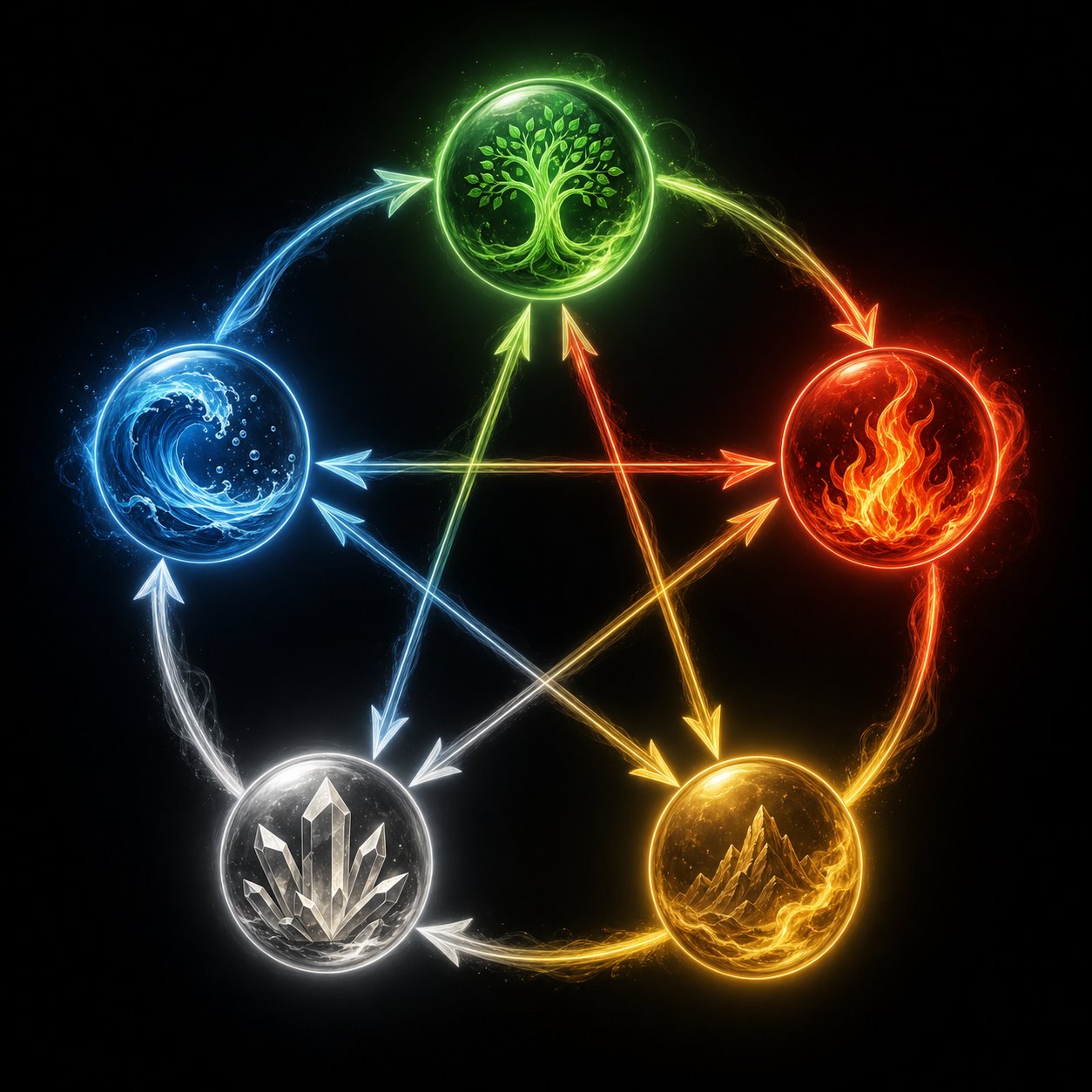
Every grid number you calculate carries a hidden layer of meaning beyond its position in the 81-number system. That layer is elemental. In tiange dige renge name analysis, each grid number maps to one of the five elements (五行/wuxing): Wood, Fire, Earth, Metal, or Water. This mapping transforms raw stroke-count math into a living system of relationships, where elements either nourish or undermine each other depending on their arrangement.
Mapping Stroke Numbers to the Five Elements
The assignment rule is straightforward. You only need the last digit of each grid number. The wuge system follows the sequence of the Ten Heavenly Stems (十天干) to assign elements, pairing numbers in groups of two:
| Last Digit of Grid Number | Element | Heavenly Stem Basis |
|---|---|---|
| 1 or 2 | Wood (木) | Jia (甲), Yi (乙) |
| 3 or 4 | Fire (火) | Bing (丙), Ding (丁) |
| 5 or 6 | Earth (土) | Wu (戊), Ji (己) |
| 7 or 8 | Metal (金) | Geng (庚), Xin (辛) |
| 9 or 0 | Water (水) | Ren (壬), Gui (癸) |
If a grid number is 10 or 20, the last digit is 0, which maps to Water. A grid number of 15 ends in 5, so it belongs to Earth. A renge of 22 ends in 2, making it Wood. You will notice this is not arbitrary. It mirrors the classical Chinese cosmological pairing system that has organized natural philosophy for millennia, much like how the graf meaning in German traces back to "count" or "earl," reflecting a structured hierarchy rooted in tradition.
One important note: when the grid number's last digit is 0, some practitioners treat it as 10 for element assignment purposes. Either way, the result is the same: Water.
The Productive and Destructive Element Cycles in Names
Once you have assigned an element to each grid, the next question is whether those elements cooperate or conflict. Chinese cosmology defines two fundamental cycles governing elemental interaction.
The productive cycle (相生) describes elements that feed energy forward:
- Wood feeds Fire - wood burns to create flame
- Fire creates Earth - ash and heat produce soil
- Earth bears Metal - minerals form within the ground
- Metal collects Water - metal surfaces condense moisture
- Water nourishes Wood - water enables trees to grow
The destructive cycle (相克) describes elements that weaken or overpower each other:
- Wood breaks Earth - roots split soil apart
- Earth dams Water - soil absorbs and blocks flow
- Water extinguishes Fire - water quenches flame
- Fire melts Metal - heat overcomes hardness
- Metal chops Wood - an axe fells a tree
Imagine these cycles as a circular chain. Adjacent elements in the productive cycle support each other like neighbors sharing resources. Elements separated by one position in the destructive cycle work against each other, like the borg meaning of assimilation through force: one element absorbs or overwhelms the other rather than coexisting.
Evaluating Element Harmony Across All Three Grids
The real power of this system emerges when you read all three grid elements together. You are looking for a directional flow: does energy move productively from tiange through renge into dige, or does it hit resistance somewhere?
Consider a name where tiange is Water (grid number ending in 9), renge is Wood (ending in 1), and dige is Fire (ending in 3). Water nourishes Wood, and Wood feeds Fire. Energy flows smoothly downward from heaven through the person into the earth. This is an ideal configuration.
Contrast that with tiange as Fire, renge as Metal, and dige as Water. Fire melts Metal (destructive), and Metal collects Water (productive). The chain breaks at the top: the ancestral element attacks the personality element, suggesting that inherited circumstances work against personal development. Even though renge and dige connect productively, the damage at the tiange-renge junction weakens the whole structure.
This evaluation is not just about pairs. It is about sequence. A canela-colored thread woven through fabric looks different depending on what colors sit beside it. The same element in renge reads differently depending on whether tiange supports it from above and dige receives it below. Wood supported by Water and feeding Fire tells a story of growth. Wood attacked by Metal above and blocked by Earth below tells a story of struggle.
The key principle: elements flowing in productive sequence from tiange to renge to dige indicate smooth fortune. Any destructive relationship in that chain signals friction at the corresponding life stage. Tiange clashing with renge suggests early-life obstacles hindering personal development. Renge clashing with dige points toward personality traits that create relational or domestic difficulty.
This three-element sequence has a formal name in the system. Practitioners call it sancai (三才), the Three Talents configuration, and it represents the most holistic single reading you can extract from a name. Understanding how to interpret sancai is what separates casual number-crunching from genuine name evaluation.
Sancai Three Talents and the Interaction Between Grids
Individual grid numbers tell you something. But a name is not three isolated numbers sitting side by side. It is a system, and the system only speaks when you read all three grids as a single configuration. In Chinese naming tradition, this unified reading has a name: sancai (三才), the Three Talents. It is the concept that transforms tiange dige renge name analysis from arithmetic into interpretation.
Understanding Sancai as the Three Talents Configuration
The term "sancai" comes from the I Ching (Book of Changes), where it refers to the three fundamental forces of the universe: Heaven (天), Human (人), and Earth (地). In name analysis, these map directly onto the three core grids. Tiange represents Heaven, the inherited and ancestral. Renge represents the Human, the individual self. Dige represents Earth, the relational and material foundation.
When practitioners evaluate sancai, they are not looking at each grid's number in isolation. They are examining the five-element relationship between all three grids as a chain. The sancai configuration is expressed as a three-element sequence, like "Wood-Fire-Earth" or "Metal-Water-Wood," where each position corresponds to tiange, renge, and dige respectively.
Sancai analysis is what distinguishes basic stroke counting from meaningful name interpretation. Without it, you have numbers. With it, you have a story about how heaven, self, and earth cooperate or collide across a lifetime.
Think of it like three musicians in a trio. Each might be technically skilled on their own, but the performance depends on whether they play in the same key. Sancai tells you whether the name's three grids are harmonizing or clashing, and where the dissonance lives if it exists.
How to Read the Element Flow from Heaven to Earth
The interpretation framework is directional. You read sancai from top to bottom: tiange flows into renge, and renge flows into dige. At each junction, you ask one question: does the upper element support the lower element through the productive cycle?
The ideal configuration looks like this:
- Tiange element produces Renge element - ancestral fortune supports personal development
- Renge element produces Dige element - personality strengthens domestic and relational life
When both junctions are productive, energy cascades smoothly from heaven through the individual into the earth. The wuge system classifies these configurations as "da ji" (大吉, greatly auspicious). For example, a sancai of Water-Wood-Fire flows perfectly: Water nourishes Wood, Wood feeds Fire. Each element receives support from above and passes energy downward.
You can also have configurations where elements are identical or "comparative" (相比). A sancai of Earth-Earth-Earth (三才配置 555 or 666) represents stability through sameness. The system generally reads these as auspicious because there is no conflict, though some practitioners note that excessive sameness can indicate stagnation, much like how a name such as Bannfeld might sound grounded but lacks the dynamic tension that drives growth.
The tiange-to-renge junction specifically governs what the system calls "success fortune" (成功运). If tiange's element produces or matches renge's element, the person is said to receive ancestral support in achieving their goals. The renge-to-dige junction governs "foundation fortune" (基础运). If renge's element produces or matches dige's element, the person's character builds a stable base for relationships and later life.
Auspicious vs Challenging Sancai Combinations
Not all three-element sequences are equal. The system categorizes sancai configurations into tiers ranging from greatly auspicious to greatly inauspicious. Here is how the logic breaks down:
Highly auspicious configurations feature productive flow at both junctions or compatible same-element pairings. Examples include:
- Wood-Wood-Wood (111, 222) - unified growth energy, described as "success, prosperity, and longevity"
- Wood-Fire-Earth (135, 246) - complete productive chain, "solid foundation and steady achievement"
- Fire-Earth-Metal (357, 468) - downward generation, "gaining support from superiors and building lasting wealth"
- Earth-Metal-Water (579, 680) - full productive flow, "ambition supported by structure and adaptability"
- Metal-Water-Wood (791, 802) - ancestral blessing enabling personal growth, "unexpected success through elder support"
Challenging configurations contain one or more destructive relationships in the chain. The severity depends on where the clash occurs and how many junctions are broken:
- Single clash at tiange-renge: Early life obstacles hinder personal development, but domestic life may still be stable (e.g., Metal-Wood-Fire, where Metal chops Wood but Wood feeds Fire)
- Single clash at renge-dige: Personal character creates friction in relationships, though career may still succeed (e.g., Wood-Fire-Water, where Fire meets Water's extinguishing force)
- Double clash: Both junctions are destructive, indicating persistent difficulty across all life stages (e.g., Fire-Metal-Wood, where Fire melts Metal and Metal chops Wood)
The reference materials from the sancai configuration table list detailed interpretations for all possible three-element combinations. A configuration like Fire-Fire-Water (339, 440) is classified as "da xiong" (大凶, greatly inauspicious), described as "extremely unstable, prone to sudden disaster." Meanwhile, Earth-Metal-Water (579, 680) receives a "da ji" rating with the note that success comes through diligent effort and elder support.
What makes sancai particularly useful is its ability to reveal hidden tensions. A name might have individually favorable grid numbers, yet if the elements clash in sequence, the overall reading turns negative. It is like evaluating athletes individually versus as a team. A roster of talented players who cannot pass to each other still loses games. Similarly, a name like Brouger or Gaiardelli might carry strong individual syllables, but the question is always whether the parts work together as a unified whole.
Practitioners also note that certain renge numbers carry special weight within sancai. Numbers like 3, 5, 6, 11, 13, 15, 16, 21, 23, 24, 25, 31, 32, 35, 37, and 41 are considered inherently favorable for renge. When these appear alongside a supportive sancai configuration, the combined reading is especially strong. Conversely, renge numbers like 4, 9, 10, 14, 19, 20, 22, 34, or 44 are classified as inauspicious, and even a good sancai flow cannot fully compensate for their presence at the system's center.
Sancai gives you the big picture. It tells you whether a name's energy architecture is sound. But knowing the theory is only half the work. The practical question remains: how do you actually sit down, take a name apart, and run this analysis yourself from start to finish?
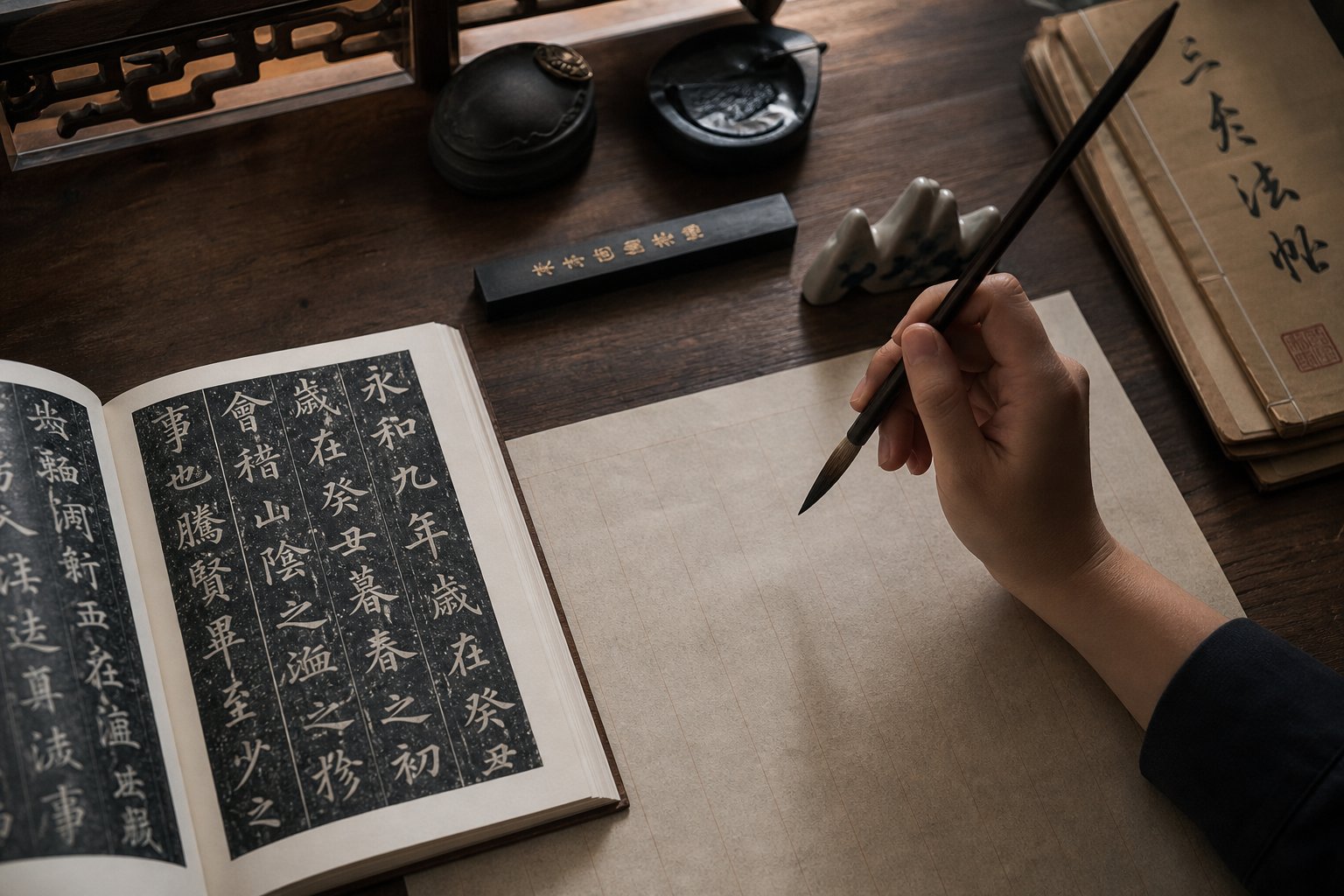
How to Perform Your Own Name Analysis Step by Step
You have the theory. You understand what each grid represents, how elements interact, and why sancai matters. The practical part is simpler than it looks. Grab a pen, pull up a Kangxi Dictionary reference, and walk through the following process with your own name or one you are evaluating.
Step-by-Step Self Analysis Walkthrough
Imagine you are analyzing the name Chen Mingzhe (陈明哲). Here is exactly how you would work through it, one layer at a time:
- Determine the correct stroke count for each character. Look up each character in its traditional (Kangxi Dictionary) form. Chen (陈) becomes the traditional 陳, which has 16 strokes. Note that the left-ear radical (阝) counts as 8 strokes, not 2-3. Ming (明) has 8 strokes. Zhe (哲) has 10 strokes. Write these numbers down clearly: 16, 8, 10.
- Calculate tiange, renge, and dige using the formulas. Since Chen is a single-character surname: Tiange = 16 + 1 = 17. Renge = last surname character (16) + first given-name character (8) = 24. Dige = first given-name character (8) + second given-name character (10) = 18.
- Assign five elements to each grid. Check the last digit of each grid number. Tiange 17 ends in 7 = Metal. Renge 24 ends in 4 = Fire. Dige 18 ends in 8 = Metal.
- Evaluate the sancai element flow. Read the sequence top to bottom: Metal (tiange) → Fire (renge) → Metal (dige). At the first junction, Metal meets Fire. Fire melts Metal, which means the destructive cycle runs from renge upward against tiange. At the second junction, Fire meets Metal. Fire again melts Metal, creating another destructive relationship. This sancai configuration (Metal-Fire-Metal) contains conflict at both junctions, signaling friction between inherited circumstances and personal drive, as well as between personality and domestic stability.
- Interpret individual grid numbers using the 81-number system. Tiange 17: "排除万难,有贵人助,把握时机,可得成功" (overcoming obstacles with noble assistance, classified as auspicious). Renge 24: "锦绣前程,须靠自力,多用智谋,能奏大功" (bright future through self-reliance, auspicious). Dige 18: "经商做事,顺利昌隆,如能慎始,百事亨通" (smooth business and affairs, auspicious). Individual numbers look favorable, but the sancai element clash tempers the overall reading.
This five-step sequence works for any Chinese name. The entire process takes about ten minutes once you are comfortable with stroke-count lookups. Whether the name belongs to someone named Peitner, Domer, or M nez in a different cultural context, the underlying logic of breaking a name into positional components and evaluating their interaction follows the same structural principle, though the wuge system applies specifically to Chinese characters.
Common Mistakes to Avoid in Your Calculation
Most errors happen in the first two steps. Here are the pitfalls that trip up beginners consistently:
- Using simplified stroke counts instead of Kangxi traditional counts. This is the single most common error. The character for "dragon" (龙) has 5 simplified strokes but 16 traditional strokes. One wrong count cascades through every grid.
- Forgetting the plus-one rule for single characters. Single-character surnames need +1 added for tiange. Single-character given names need +1 added for dige. Skip this step and your grid numbers will be off by one, which shifts the element assignment entirely.
- Confusing surname and given-name boundaries. Renge draws from both sides of the boundary: the last character of the surname plus the first character of the given name. If you misidentify where the surname ends, especially with compound surnames like Ouyang or Sima, the renge calculation breaks.
- Ignoring special radical counting rules. The water radical (氵) counts as 4, not 3. The grass radical (艹) counts as 6, not 3-4. Always check radicals against the traditional wuge counting conventions before finalizing your numbers.
- Treating tiange as a pass/fail indicator. Tiange reflects inherited fortune and cannot be changed. Practitioners do not judge a name as bad solely because tiange produces an unfavorable number. Its role is relational, not standalone.
Interpreting Your Results Using the 81 Number System
Each grid number from 1 through 81 carries a fixed interpretation. The 81-number system classifies each value as auspicious (吉), inauspicious (凶), or mixed (吉带凶). Number 1 represents "great ambition and reliable success." Number 21 means "moonlight at its zenith, career prosperity." Number 28 warns of "hardship and misfortune, consider changing the name."
A few interpretation principles to keep in mind:
- Renge's number matters most. An auspicious renge can partially offset weaker numbers elsewhere.
- Tiange's number is informational, not actionable. You cannot change your surname, so treat it as context rather than verdict.
- Dige's number speaks to relational fortune. Pay attention to it when evaluating marriage compatibility or family harmony.
- The 81-number cycle repeats: number 81 carries the same meaning as number 1, and the cycle restarts. Any grid number above 81 is reduced by subtracting 80.
Keep in mind that individual number interpretations and sancai readings can sometimes contradict each other. A name might show three individually auspicious grid numbers yet produce a clashing sancai configuration. When this happens, practitioners generally give sancai priority because it reflects systemic harmony rather than isolated values. A team of strong players who cannot cooperate still underperforms.
This self-analysis method gives you a working framework. It is structured, repeatable, and grounded in the traditional rules that practitioners have followed for decades. Yet like any system rooted in numerology and cultural tradition, it carries inherent limitations that deserve honest examination.
Limitations and Criticisms of the Wuge Naming System
Any system that reduces something as complex as a human life to a set of numbers invites scrutiny. Tiange dige renge name analysis offers a structured, repeatable framework, and that structure is precisely what makes it appealing. But structure is not the same as validity. Honest engagement with this tradition means acknowledging where it falls short, where practitioners disagree, and where cultural significance diverges from empirical evidence.
Historical Adaptation Issues from Japanese to Chinese
The wuge system was not built for Chinese names. Kumosaki Kengi developed it in early 20th-century Japan, calibrating it to the structure of Japanese names and the way kanji characters function within that linguistic context. Japanese naming conventions differ from Chinese ones in significant ways: name length, surname frequency, character usage patterns, and even the relationship between written characters and pronunciation all follow different rules.
When the system crossed back into Chinese-speaking regions in the 1930s and gained wider traction by the 1990s, practitioners adapted it rather than rebuilt it from scratch. The core formulas remained intact. The 81-number interpretation table stayed the same. The sancai framework carried over unchanged. This raises a fundamental question: can a system designed for one language's naming structure produce meaningful results when applied to another?
Critics point out that Japanese names often include characters used purely for phonetic value (ateji), while Chinese names almost always carry semantic meaning. A system that ignores meaning entirely and focuses only on stroke counts may miss what matters most in a Chinese naming context. It is a bit like applying a lavalier meaning from audio engineering to jewelry design: the term transfers, but the underlying logic does not map perfectly.
The Simplified vs Traditional Stroke Count Debate
Even among practitioners who accept the system's validity, there is no consensus on which stroke-count standard to use. The orthodox position insists on Kangxi Dictionary traditional counts. But modern Chinese speakers write, read, and think in simplified characters daily. If a name's influence operates through the "form" of characters as they appear in everyday life, then the simplified version arguably carries more psychological weight than a traditional form most people never actually write.
This debate has no resolution in sight. Experts have noted that the Kangxi Dictionary itself contains an estimated 20,000 errors across its 4.5 million characters, giving it an error rate that would make it an "unqualified product" by modern publishing standards. Building an entire naming system on a reference with known inaccuracies adds another layer of uncertainty. The linklater meaning of a name might shift depending on which edition of a dictionary you consult, and the same problem applies here.
Some practitioners have attempted to use simplified stroke counts instead, producing entirely different grid numbers and element assignments for the same name. Two analysts evaluating the same name can reach opposite conclusions simply because they chose different counting standards. This inconsistency undermines the system's claim to objective measurement.
Balancing Cultural Tradition with Critical Thinking
The most direct criticism is also the simplest: no scientific evidence supports the idea that stroke-count numerology predicts life outcomes. No controlled study has demonstrated a correlation between grid numbers and career success, relationship quality, or health. The system's interpretive claims remain unfalsifiable, meaning they cannot be tested or disproven in any rigorous way.
Here are the specific limitations worth keeping in mind:
- No scientific validation. No peer-reviewed research confirms that stroke-count-derived numbers correlate with personality traits, life events, or fortune.
- Cross-cultural adaptation concerns. The system was designed for Japanese names and retrofitted to Chinese without fundamental structural revision.
- Oversimplification of naming traditions. Chinese naming draws on character meaning, phonetic harmony, literary allusion, generational naming conventions, and family values. Reducing all of this to stroke arithmetic ignores most of what makes a name culturally rich.
- Disagreement among practitioners on counting methods. The simplified vs. traditional debate, special radical exceptions, and variant character forms mean two experts can produce different readings for the same name.
- Fixed number interpretations lack individual context. The 81-number system assigns the same meaning to a number regardless of who carries it, contradicting the core principle in Chinese philosophy that context determines significance.
Does this mean the system is worthless? Not necessarily. Cultural practices carry value beyond empirical proof. For many families, the process of carefully selecting a name using structured criteria provides psychological comfort and a sense of intentionality. The act of deliberation itself, of weighing options and considering harmony, often produces names that feel more considered and meaningful than those chosen casually. Even a poindexter-level deep dive into stroke counts can be a form of care expressed through effort.
The wuge system also serves as a gateway into broader Chinese cosmological thinking. Learning about five-element cycles, the relationship between heaven, human, and earth, and the philosophical weight of numbers connects modern parents to a tradition stretching back centuries. That cultural continuity has its own kind of value, separate from whether the predictions themselves hold up under scrutiny.
A balanced approach treats tiange dige renge name analysis as one input among many rather than the final word. Consider the stroke-count harmony alongside character meaning, phonetic flow, family significance, and personal resonance. Use the system as a lens, not a verdict. And remember that the most important quality of any name is not its grid number but whether the person who carries it feels it belongs to them.
Frequently Asked Questions About Tiange Dige Renge Name Analysis
1. What is the difference between tiange, renge, and dige in name analysis?
Tiange (Heaven Grid) reflects ancestral influence and early life before age 20, calculated from the surname. Renge (Personality Grid) governs core identity, career, and prime years between ages 20-40, formed by combining the last surname character with the first given-name character. Dige (Earth Grid) shapes relationships, domestic harmony, and later life, derived entirely from given-name characters. Together, these three grids map fortune across a person's entire lifespan using stroke-count-based numerology.
2. Should I use simplified or traditional stroke counts for wuge name analysis?
The orthodox standard requires traditional Kangxi Dictionary stroke counts, not simplified character forms. This matters because simplified characters often have significantly fewer strokes. For example, the character for dragon has 5 simplified strokes but 16 traditional strokes. Using the wrong system produces entirely different grid numbers and element assignments. However, practitioners remain divided on this issue, and some argue that simplified counts carry more psychological relevance for modern Chinese speakers.
3. How do I calculate renge for a compound surname like Sima or Ouyang?
For compound surnames, renge uses only the second character of the surname plus the first character of the given name. So for Sima Yi, you take Ma (10 strokes) and add Yi (22 strokes) to get a renge of 32. This differs from single-character surnames where the entire surname stroke count is used. The key rule is that renge always bridges the junction between surname and given name, taking one character from each side.
4. What is sancai and why does it matter more than individual grid numbers?
Sancai (Three Talents) examines how the five elements assigned to tiange, renge, and dige interact as a unified chain. It reads the element flow from heaven through the person into earth. A productive sequence like Water-Wood-Fire indicates smooth fortune, while destructive relationships signal friction at specific life stages. Sancai takes priority over individual grid interpretations because a name with three individually auspicious numbers can still produce a clashing element configuration, undermining overall harmony.
5. Is the wuge naming system scientifically proven to work?
No peer-reviewed research confirms that stroke-count numerology predicts life outcomes. The system was originally designed for Japanese names and later adapted to Chinese without fundamental structural revision. Critics note it ignores character meaning, pronunciation, and cultural context. However, many families find value in the structured deliberation process it provides. A balanced approach treats wuge analysis as one cultural input among many, alongside character meaning, phonetic harmony, and personal significance.