The Hidden Luck Inside the Goat Character
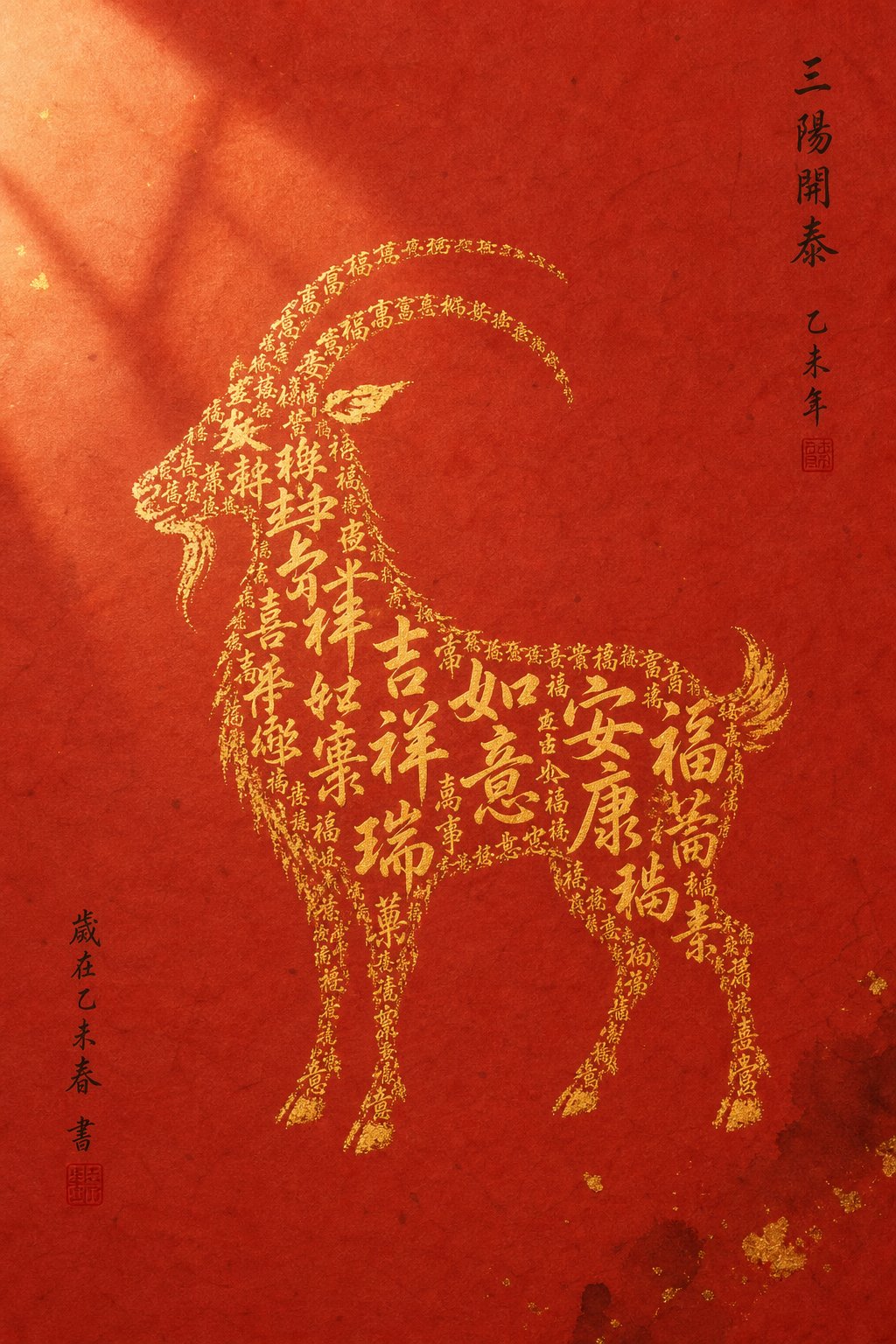
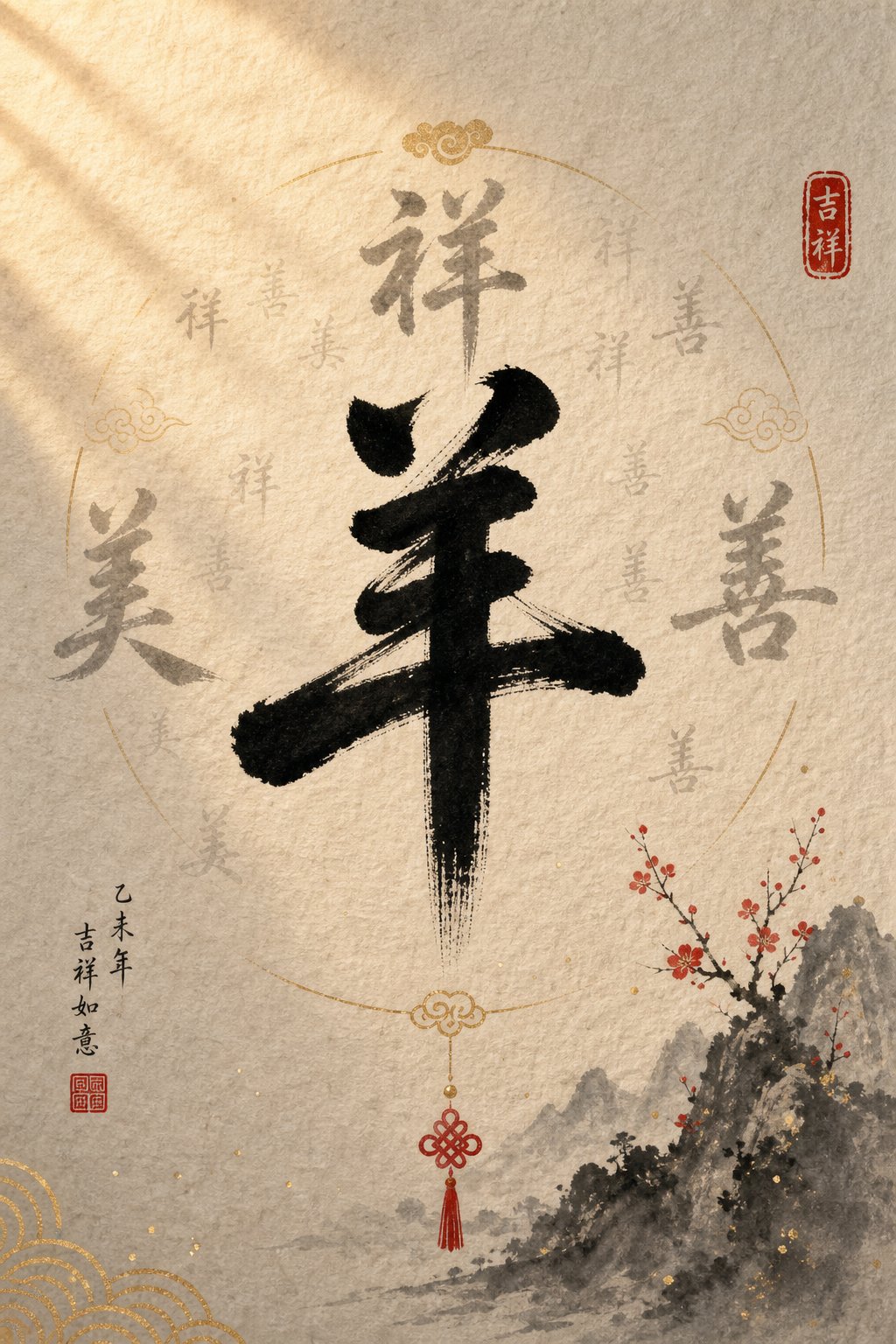
Imagine discovering that your zodiac animal is literally written into the DNA of the Chinese language's most positive words. That's exactly what happens with 羊 (yang), the character for goat. Pull it apart and you'll find it sitting inside 祥 (xiang, auspicious), 善 (shan, good), 美 (mei, beautiful), 義 (yi, righteous), and 鲜 (xian, fresh). No other zodiac animal enjoys this kind of linguistic privilege. The lucky chinese characters for year of the goat aren't just cultural symbols chosen by tradition. They're structurally embedded in the written language itself.
This isn't another generic rundown of chinese zodiac goat personality traits or vague horoscope predictions. What you'll find here is a character-by-character breakdown of which written symbols carry the most auspicious energy for people born in the year of the goat, why those characters hold power, and exactly how to put them to use in names, calligraphy, and daily life.
The 羊 radical appears inside more auspicious Chinese characters than any other zodiac animal radical, making the Goat the luckiest sign at the structural language level.
Why the Goat Is the Luckiest Radical in Chinese
Think about it this way. The character for dragon (龙) doesn't appear inside words meaning "beautiful." The character for tiger (虎) isn't hiding inside "goodness." But 羊 shows up repeatedly in characters that Chinese culture considers deeply fortunate. When ancient scribes needed a visual component to express concepts like auspiciousness or moral virtue, they reached for the goat. This pattern stretches back thousands of years, and it means that people born in the year of the sheep or goat carry a zodiac sign whose very form radiates positive meaning.
The year of the goat and sheep shares this connection because 羊 functions as a radical, a building block that lends its meaning to every character it inhabits. Each time you write 祥 on a red banner or see 善 in a philosophical text, the goat is quietly doing its work.
Goat Sheep or Ram — Understanding 羊
English speakers often ask: is a ram a goat, or is there a meaningful difference? In Chinese, the question dissolves. The character 羊 refers broadly to Caprinae, the taxonomic subfamily that includes goats, sheep, and rams alike. The word yang doesn't distinguish between them the way English does. When people debate ram vs sheep in the context of this zodiac sign, they're applying an English-language distinction that simply doesn't exist in the original Chinese. Some call it the year of the lamb, others prefer goat or sheep. All are valid translations of the same character.
Within China, regional preferences shape interpretation. Southern Chinese tend to picture a goat, while northern Chinese lean toward sheep. Vietnamese zodiac tradition uses an unambiguous word for goat, while Japanese tradition specifies sheep. But the year of the goat/sheep remains one sign with one character, and that character carries all the embedded luck regardless of which hoofed animal you picture.
What matters for our purposes is what 羊 does inside other characters. And what it does is remarkable. The sections ahead break down each lucky character by radical composition, trace their cultural roots, and show you how to activate their energy in practical, everyday ways.
Cultural Roots of Goat Zodiac Lucky Characters
The connection between 羊 and auspicious meaning didn't appear by accident. It grew from thousands of years of philosophy, ritual, and agricultural life. Understanding why these characters became lucky requires stepping back into the belief systems that shaped them.
Confucian Values and the Goat Symbol
In Confucian thought, the goat embodies three core virtues: gentleness (温, wen), filial piety (孝, xiao), and righteousness (义, yi). A young goat kneels when nursing from its mother, and ancient scholars interpreted this posture as an expression of gratitude and respect toward elders. This image became so culturally powerful that the chinese sign the goat evolved into a shorthand for moral uprightness itself.
Confucius and his followers valued harmony over aggression, compassion over dominance. The goat, quiet and communal by nature, fit that ideal perfectly. When later scholars needed characters to express goodness or virtue, they built them around the 羊 radical because the animal already carried those associations in the cultural imagination. The chinese horoscope goat inherits this philosophical weight. It isn't just a personality profile. It's a moral archetype encoded in language.
From Oracle Bones to Modern Characters
Long before the zodiac system was formalized, 羊 was already one of the earliest pictographs carved into oracle bones during the Shang dynasty (around 1200 BCE). The original glyph depicted two curving horns above a simple face, a direct sketch of a goat viewed head-on. In seal script, which developed centuries later, those horns became more stylized but remained unmistakable.
Here's what makes this significant for chinese astrology the goat: the character's association with positive meaning predates the zodiac cycle by several hundred years. By the time the twelve-animal system solidified during the Han dynasty, 羊 had already been lending its form to words like 祥 and 善 for generations. The zodiac didn't create the goat's luck. It inherited it.
Goat Personality Traits in Character Form
The goat chinese zodiac personality centers on creativity, compassion, elegance, and resilience. People born in the year of the goat are often described as artistic, empathetic, and drawn to beauty. What's fascinating is how directly these traits map onto the characters that contain 羊:
- Creativity and beauty — 美 (mei, beautiful). The chinese star sign goat is associated with artistic talent, and 美 literally places the goat at the center of aesthetic value.
- Compassion and goodness — 善 (shan, good/kind). The year of the goat personality leans toward empathy and generosity, qualities 善 captures precisely.
- Righteousness and integrity — 義 (yi, righteous). Chinese zodiac goat personality descriptions emphasize moral courage beneath a gentle exterior.
- Elegance and desirability — 羡 (xian, admiration/envy). The goat's grace inspires others, just as this character suggests something worth longing for.
- Freshness and vitality — 鲜 (xian, fresh). Chinese astrology goat readings highlight renewal and sensitivity to the natural world.
Each of these characters doesn't just describe a trait in the abstract. It physically contains the goat radical, creating a resonance between the person's zodiac identity and the written word itself. That structural link is what separates generic lucky symbols from characters that carry specific zodiac power.
The question that follows naturally: what exactly is happening inside each of these characters at the radical level, and how does that composition amplify their meaning?
Lucky Characters With the 羊 Radical Explained
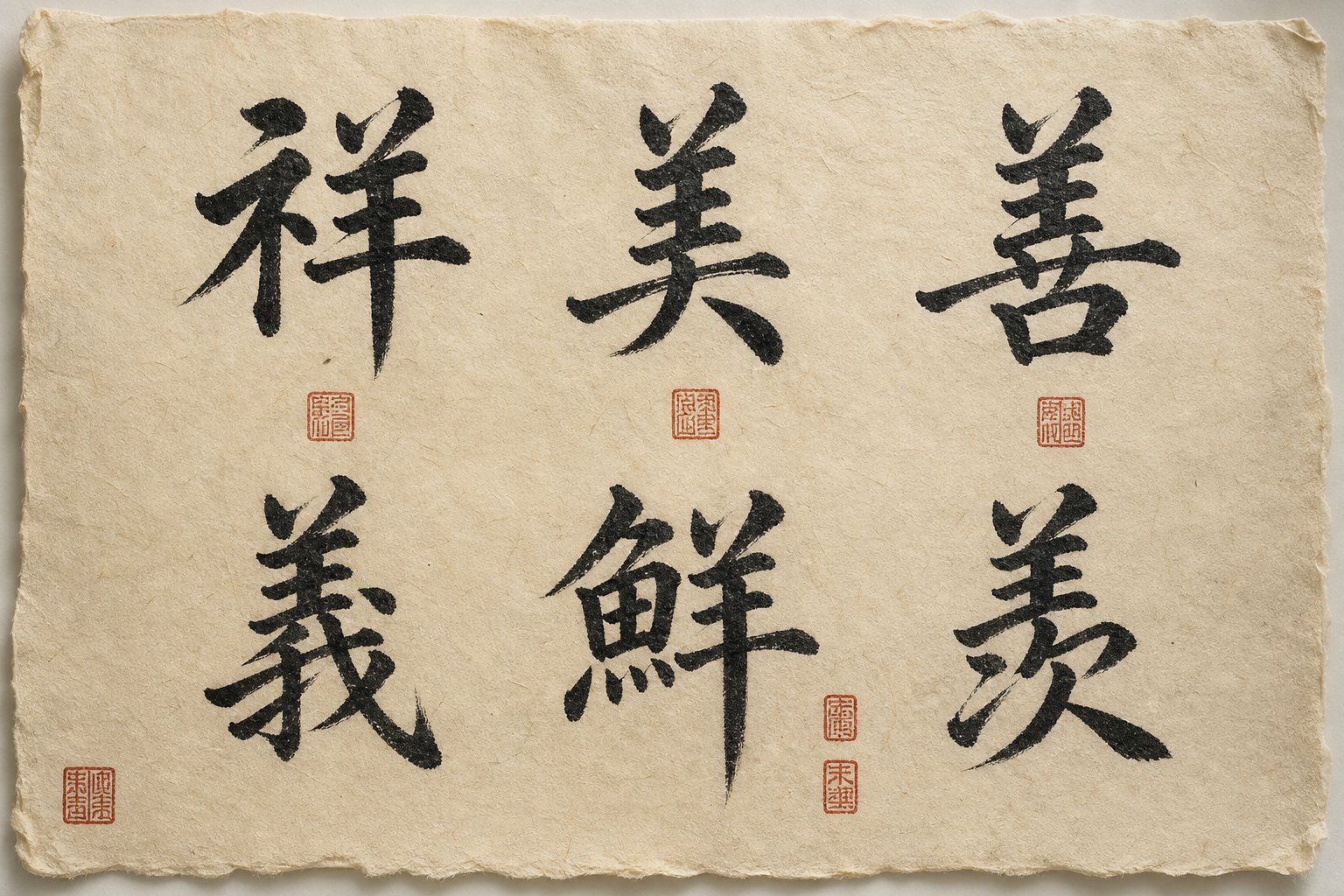
Each character below contains the goat in chinese — the 羊 radical — as a structural component. That means every time you write, display, or name yourself after one of these characters, you're activating a direct connection to the chinese zodiac animal sheep. This isn't symbolic in a loose, metaphorical sense. It's architectural. The goat is literally built into the character's bones.
祥 Xiang — The Character of Auspiciousness
祥 (xiang, second tone) is the single most important lucky character for anyone born under the sheep zodiac. Its radical breakdown tells the whole story: 示 (shi, the altar/spirit radical) sits on the left, while 羊 (yang) occupies the right. The combination means "a goat presented at the altar brings good fortune." In ancient Chinese, 羊 was actually used interchangeably with 祥 — the two characters were considered the same word. The phrase 大吉羊 (da ji yang, "the great auspicious goat") was identical in meaning to 大吉祥 (da ji xiang, "great auspiciousness").
The Shuowen Jiezi, China's oldest dictionary, states plainly: "Yang means xiang (auspicious)." When writing 祥, the 示 radical is narrow on the left and the 羊 component stretches wider on the right. The three horizontal strokes within 羊 vary in length, with the middle stroke being shortest. For the ram chinese zodiac, this character carries the deepest resonance because it preserves the original linguistic identity between goat and good fortune.
美 Mei — Big Goat Means Beautiful
美 (mei, third tone) breaks down into 羊 on top and 大 (da, big) on the bottom. The literal reading? A big goat is beautiful. In oracle bone script, the character showed a person wearing goat horns as ceremonial adornment — a sign of attractiveness and status. Over time, the meaning broadened to encompass all forms of beauty, from physical appearance to moral excellence.
This character is especially powerful for Goat-year natives pursuing creative or artistic paths. The chinese animal goat is already associated with aesthetic sensitivity, and 美 reinforces that identity at the written level. You'll find it in compounds like 美德 (meide, virtue), 美好 (meihao, wonderful), and 完美 (wanmei, perfect).
善 義 鲜 — Goodness Righteousness and Freshness
Three more characters complete the core set of lucky chinese characters for year of the goat natives:
善 (shan, fourth tone) places 羊 at the top with two 口 (kou, mouth) components beneath. The traditional interpretation: a goat speaks with two mouths, meaning its goodness is proclaimed repeatedly. It represents kindness, charity, and moral excellence. The chinese sign sheep connects naturally to this character because the goat's gentle temperament embodies善's meaning.
義/义 (yi, fourth tone) combines 羊 on top with 我 (wo, I/self) below in its traditional form. The message: "I carry the goat's nature" — meaning I act with righteousness. This character represents justice, loyalty, and moral duty. In the year of the sheep chinese zodiac tradition, 義 signals that integrity flows from one's zodiac identity itself.
鲜 (xian, first tone) pairs 鱼 (yu, fish) on the left with 羊 on the right. Fish plus goat equals freshness and deliciousness — two of the finest foods combined into one concept of supreme quality. For Goat-year people, this character symbolizes vitality, abundance, and the ability to attract life's finest offerings.
羡 (xian, fourth tone) stacks 羊 above 次 (ci, next/secondary). It means admiration or envy — the feeling others have when looking at something desirable. For the chinese symbol for sheep in zodiac context, 羡 suggests that Goat natives naturally inspire longing and respect in others.
| Character | Pinyin | Radical Breakdown | Literal Meaning | Cultural Significance |
|---|---|---|---|---|
| 祥 | xiang (2nd tone) | 示 (altar) + 羊 (goat) | Goat at the altar = blessing | The original lucky character; 羊 and 祥 were once the same word |
| 美 | mei (3rd tone) | 羊 (goat) + 大 (big) | Big goat = beautiful | Beauty, virtue, and aesthetic excellence |
| 善 | shan (4th tone) | 羊 (goat) + 口口 (mouths) | Goodness spoken repeatedly | Kindness, charity, moral goodness |
| 義 | yi (4th tone) | 羊 (goat) + 我 (self) | I carry the goat's nature | Righteousness, justice, loyalty |
| 鲜 | xian (1st tone) | 鱼 (fish) + 羊 (goat) | Fish and goat = supreme freshness | Vitality, abundance, finest quality |
| 羡 | xian (4th tone) | 羊 (goat) + 次 (next) | What others long for | Admiration, desirability, inspiring envy |
These six characters form the core toolkit for Goat-year natives seeking zodiac-aligned luck. They work because the 羊 radical creates a structural echo — your zodiac animal resonating inside the written word itself. But characters containing the goat radical aren't the only ones that carry power for this sign. Some universally lucky characters gain extra potency when paired with Goat-specific energy, and certain trait-aligned characters resonate with the Goat's ruling qualities even without the 羊 radical present.
Universal Versus Goat-Specific Auspicious Characters
Not every lucky character works the same way for every zodiac sign. Some carry universal power — they're auspicious for anyone, regardless of birth year. Others resonate specifically with the goat zodiac sign because they mirror its ruling traits. Understanding the difference helps you choose characters that do double duty: general good fortune layered with personal zodiac alignment.
Universal Lucky Characters and Their Goat Connection
Three characters dominate Chinese auspicious culture across all twelve signs:
- 福 (fu, fortune) — The most widely displayed lucky character in Chinese homes. Traditionally posted on doors during Chinese New Year, often upside-down because the word for "inverted" (dao) sounds identical to "arrives." Fortune arriving. For the chinese horoscope year of the goat, 福 gains extra resonance when paired with 羊-radical characters like 祥, forming the compound 福祥 (fuxiang, blessed auspiciousness).
- 吉 (ji, luck/auspicious) — A compact character meaning good fortune and favorable outcomes. It appears in 吉祥 (jixiang), one of the most powerful lucky phrases in Chinese. Since 祥 already contains the goat radical, 吉 becomes a natural amplifier for Goat-year natives.
- 寿 (shou, longevity) — Represents long life and enduring health. While not zodiac-specific, it pairs beautifully with Goat-aligned characters in calligraphy displays and gift inscriptions.
These characters work for everyone. But when you combine them with Goat-specific ones — writing 吉祥 instead of just 吉, or pairing 福 with 善美 — you create a layered effect. Universal luck meets zodiac resonance. So what does the goat mean in the chinese zodiac at the character level? It means access to combinations that other signs simply can't activate as naturally.
Trait-Aligned Characters for Goat Natives
Beyond the 羊-radical characters and universal lucky symbols, a third category exists: characters that don't contain the goat radical but align perfectly with the Goat's core nature. The year of the goat meaning centers on peace, creativity, elegance, and wisdom. These characters echo those qualities:
- Peace and harmony:
- 安 (an, peace) — The chinese symbol for peace is built from 宀 (a roof) placed over 女 (woman). The image: a woman safe beneath a roof, representing domestic tranquility. This resonates deeply with the chinese sign of the goat because Goat natives are home-loving, security-seeking, and thrive in calm environments.
- 和 (he, harmony) — Combines 禾 (grain) with 口 (mouth). Having enough to eat creates peace. The Goat's desire for harmonious relationships makes this character a natural fit.
- Creativity and art:
- 艺 (yi, art/skill) — Contains the grass radical 艹 on top, which is itself auspicious for Goat-year people because grass represents nourishment. Art plus sustenance in one character.
- 雅 (ya, elegance/refinement) — The goat of the zodiac is consistently described as graceful and aesthetically aware. 雅 captures that refined sensibility perfectly.
- Wisdom and virtue:
- 慧 (hui, wisdom/intelligence) — Contains the heart radical 心 at its base, suggesting wisdom rooted in emotional understanding rather than cold logic. This matches the Goat's intuitive, empathetic intelligence.
- 德 (de, virtue/moral character) — A character associated with inner goodness and ethical conduct, aligning with the Goat's Confucian connection to righteousness.
The year of the goat zodiac isn't just about characters with 羊 inside them. It's about building a complete vocabulary of luck — one that matches your sign's energy at every level. Universal characters provide the foundation. Goat-radical characters create zodiac resonance. And trait-aligned characters reinforce the specific qualities that make this sign thrive.
Each of these characters also interacts with another layer of Chinese metaphysics: the Five Elements. A Water Goat born in 1943 or 2003 responds to different elemental characters than a Fire Goat born in 1967. The element assigned to your specific birth year reshapes which radicals carry the strongest charge.
Five Elements and Their Lucky Characters for Each Goat Type
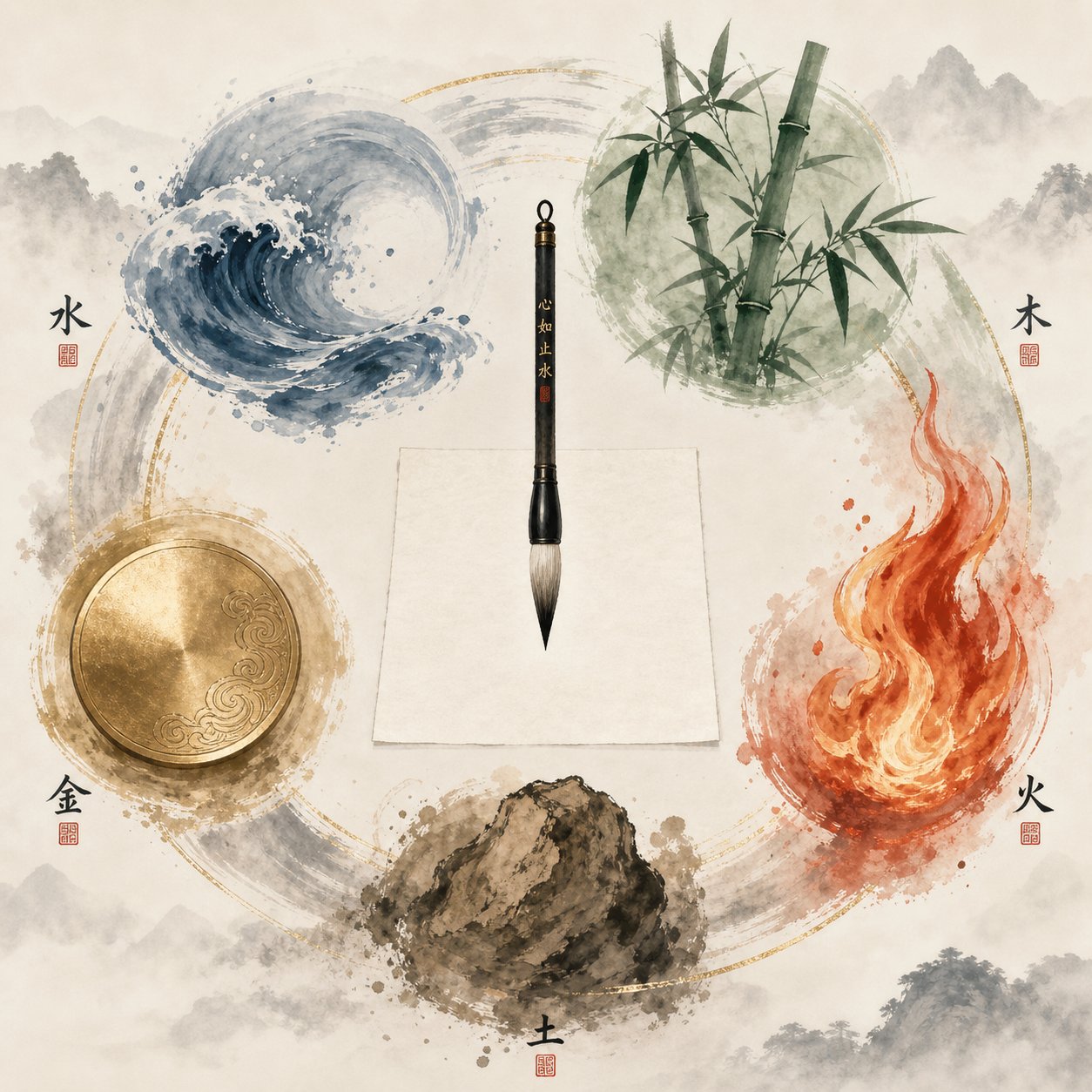
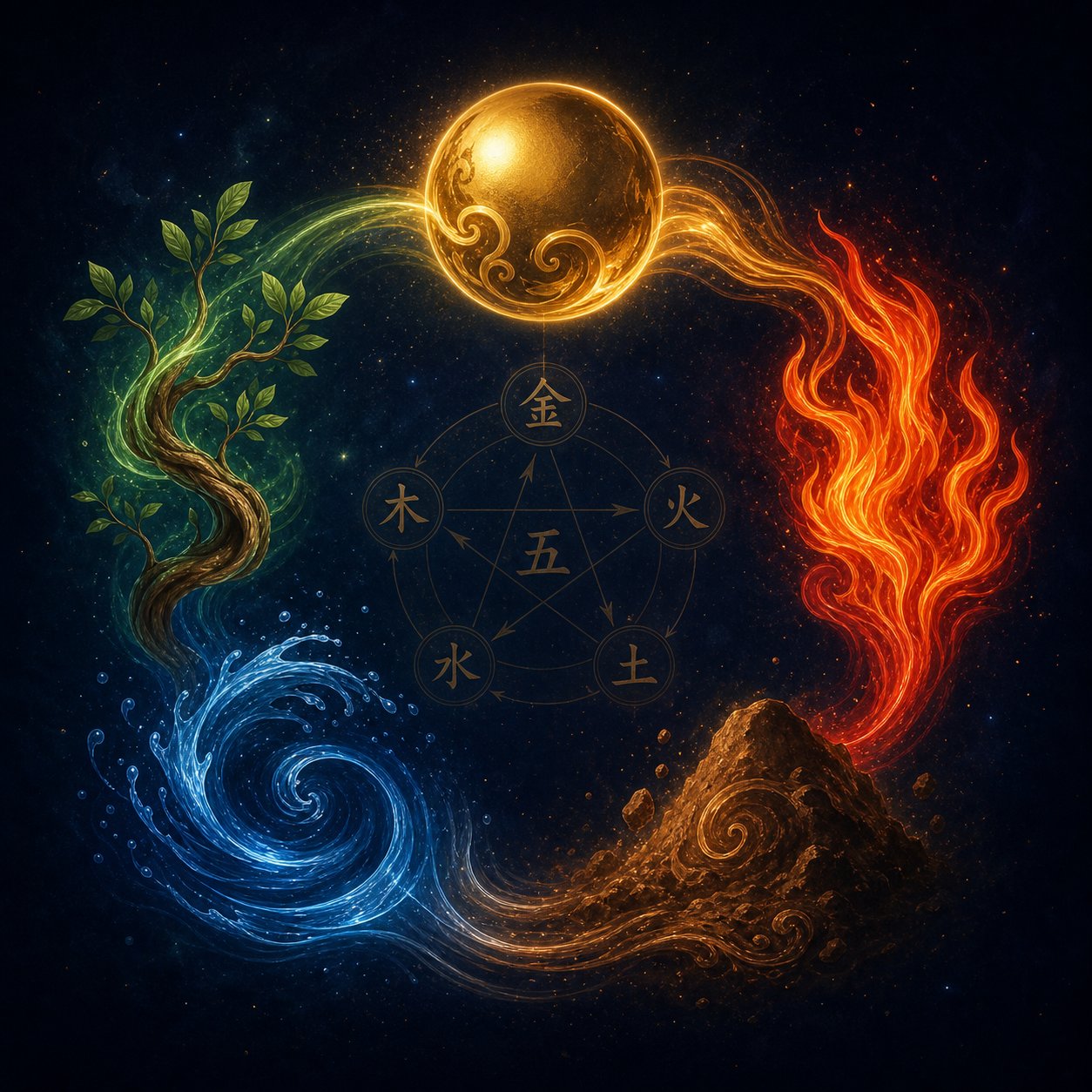
Your birth year doesn't just make you a Goat. It makes you a specific kind of Goat. Chinese metaphysics layers the Five Elements — Metal, Water, Wood, Fire, and Earth — over the twelve-year zodiac cycle, creating a sixty-year rotation where no two Goat years are elementally identical. The element assigned to your birth year determines which radicals and characters carry the strongest energetic charge for you personally.
Think of it this way: the 羊-radical characters discussed earlier work for all Goat natives. They're the zodiac baseline. But elemental characters act as a second frequency — a personalized signal that amplifies luck based on your specific birth year's ruling element. A metal goat chinese zodiac native responds to characters built around the 金 radical. A water goat chinese zodiac native draws power from the 氵 radical. Matching your element to your characters creates a precision that generic zodiac advice can't offer.
The Five Element cycle for Goat years follows this pattern: Metal Goat (1931, 1991), Water Goat (1943, 2003), Wood Goat (1955, 2015), Fire Goat (1967, 2027), and Earth Goat (1979). Each element shapes personality and fortune differently, and each responds to a distinct set of lucky characters.
Metal Goat Lucky Characters
If your chinese zodiac 1991 element is Metal (also called Gold), your lucky characters contain the 金 (jin) radical or its compressed form 钅. Metal represents ambition, determination, and a strong sense of responsibility — traits that align with the 1991 chinese zodiac element profile of someone who is kind-hearted yet occasionally stubborn.
Characters that resonate with Metal Goat energy include:
- 铭 (ming, inscribe/remember) — 钅+ 名 (name). To engrave something permanently. Represents lasting achievement and legacy, matching the Metal Goat's ambitious drive.
- 锦 (jin, brocade/splendid) — 钅+ 帛 (silk). Beautiful woven fabric. Symbolizes a life of richness and refinement.
- 鑫 (xin, prosperous) — Three 金 stacked together. Triple gold means overflowing wealth. A powerful character for business-minded Metal Goats.
- 钰 (yu, precious jade) — 钅+ 玉 (jade). Combines metal with jade, two precious materials. Represents someone of rare value.
Metal Goats born in 1991 carry a natural intensity beneath their gentle exterior. Characters with the 金 radical reinforce their capacity for precision, clarity, and material success without contradicting the Goat's underlying softness.
Water Goat and Wood Goat Characters
The 2003 chinese zodiac element is Water, producing natives who are selfless, adaptable, and emotionally generous. Water Goats born in 1943 or 2003 thrive with characters containing the 氵(three-dot water) radical or the full 水 form. These characters channel fluidity, nourishment, and emotional depth:
- 清 (qing, clear/pure) — 氵+ 青 (blue-green). Crystal clarity. Represents purity of intention and transparent character.
- 润 (run, moist/smooth) — 氵+ 闰 (intercalary). Gentle moisture that nourishes without flooding. Symbolizes quiet generosity — giving without overwhelming.
- 涵 (han, contain/cultivate) — 氵+ 函 (envelope). Water that holds and nurtures. Represents intellectual depth and emotional capacity.
- 澜 (lan, great wave) — 氵+ 阑 (railing). A magnificent wave. For Water Goats who want to channel their element's power rather than its stillness.
The 2003 chinese zodiac element personality — always ready to help others, willing to sacrifice personal interests — finds its perfect expression in 润. Gentle moisture that makes everything around it flourish without demanding attention.
Wood Goats (1955, 2015) respond to the 木 radical. Wood represents growth, compassion, and flexibility. Their lucky characters include:
- 桐 (tong, paulownia tree) — 木 + 同 (together). The paulownia is considered the only tree worthy of the phoenix. Represents nobility and artistic refinement.
- 栩 (xu, vivid/lifelike) — 木 + 羽 (feather). Something so alive it seems to move. Captures the Wood Goat's creative vitality.
- 楠 (nan, cedar/nanmu) — 木 + 南 (south). A prized hardwood. Symbolizes enduring value and quiet strength.
- 森 (sen, forest) — Three 木 together. Abundance of growth. Represents a life surrounded by thriving energy.
Fire Goat — The Most Powerful Elemental Combination
The fire goat holds a special position in Chinese zodiac theory. Fire Goats (born in 1967, and the upcoming 2027 cycle) combine the Goat's innate gentleness with Fire's transformative intensity. The result is a personality described as frank, honest, and driven to create order from chaos. This elemental pairing is considered especially potent because fire illuminates — it makes the Goat's hidden inner strength visible to the world.
Characters containing the 火 radical or its variant 灬 (four dots of fire) carry maximum charge for Fire Goat natives:
- 煌 (huang, brilliant/radiant) — 火 + 皇 (emperor). Imperial fire. Represents dazzling success and unmistakable presence.
- 炫 (xuan, dazzling) — 火 + 玄 (mysterious). Mysterious flame. Symbolizes talent so striking it captivates others instantly.
- 焕 (huan, shining/glowing) — 火 + 奂 (abundant). A glow that radiates outward. Represents renewal and revitalization.
- 熙 (xi, prosperous/bright) — Contains 灬 at the base. Warm, spreading light. Symbolizes an era of peace and flourishing — exactly what the Fire Goat's honest nature works to create.
Why is the fire goat considered the most powerful combination? Because the Goat's natural element in Chinese cosmology leans toward Yin (passive, receptive) energy. Fire introduces Yang (active, radiant) energy without overwhelming the Goat's core gentleness. The balance creates someone who is both warm and strong, visible and compassionate. Characters like 煌 and 炫 amplify that balance by channeling fire's brilliance through the Goat's refined sensibility.
For the 1979 in chinese calendar, the element is Earth. Earth Goats are described as righteous, honest, and fiercely loyal to friends. Their lucky characters draw from the 土 (tu, earth) radical:
- 坤 (kun, earth/feminine principle) — 土 + 申 (extend). One of the eight trigrams in the I Ching, representing receptive earth energy. Deeply aligned with the Goat's nurturing nature.
- 培 (pei, cultivate/nurture) — 土 + 咅 (sound). To build up soil around a plant's roots. Represents patient development and steady growth.
- 垚 (yao, high/lofty) — Three 土 stacked. Mountains of earth. Symbolizes towering achievement built on solid foundations.
| Element | Birth Years | Radical | Key Lucky Characters | Core Meaning | Personality Alignment |
|---|---|---|---|---|---|
| Metal (Gold) | 1931, 1991 | 金 / 钅 | 铭, 锦, 鑫, 钰 | Legacy, splendor, prosperity, preciousness | Ambitious, responsible, determined |
| Water | 1943, 2003 | 水 / 氵 | 清, 润, 涵, 澜 | Clarity, nourishment, depth, power | Selfless, adaptable, generous |
| Wood | 1955, 2015 | 木 | 桐, 栩, 楠, 森 | Nobility, vitality, endurance, abundance | Compassionate, gentle, creative |
| Fire | 1967, 2027 | 火 / 灬 | 煌, 炫, 焕, 熙 | Brilliance, dazzle, renewal, warmth | Frank, honest, transformative |
| Earth | 1919, 1979 | 土 | 坤, 培, 垚 | Receptivity, cultivation, lofty achievement | Righteous, loyal, straightforward |
The practical takeaway: identify your element first, then layer elemental characters on top of the universal 羊-radical characters from earlier sections. A Metal Goat might display 祥 alongside 鑫 in a calligraphy pairing. A Water Goat could combine 善 with 涵 in a child's name. The elemental layer personalizes what would otherwise be one-size-fits-all zodiac advice.
Individual characters carry real power. But in Chinese tradition, characters rarely work alone. They pair up, forming compounds and phrases that multiply their auspicious energy. The most potent combinations for Goat-year people follow specific structural rules — matching tones, parallel meanings, and deliberate radical echoes that turn a single lucky character into a complete blessing.
Lucky Character Pairs and Celebration Couplets
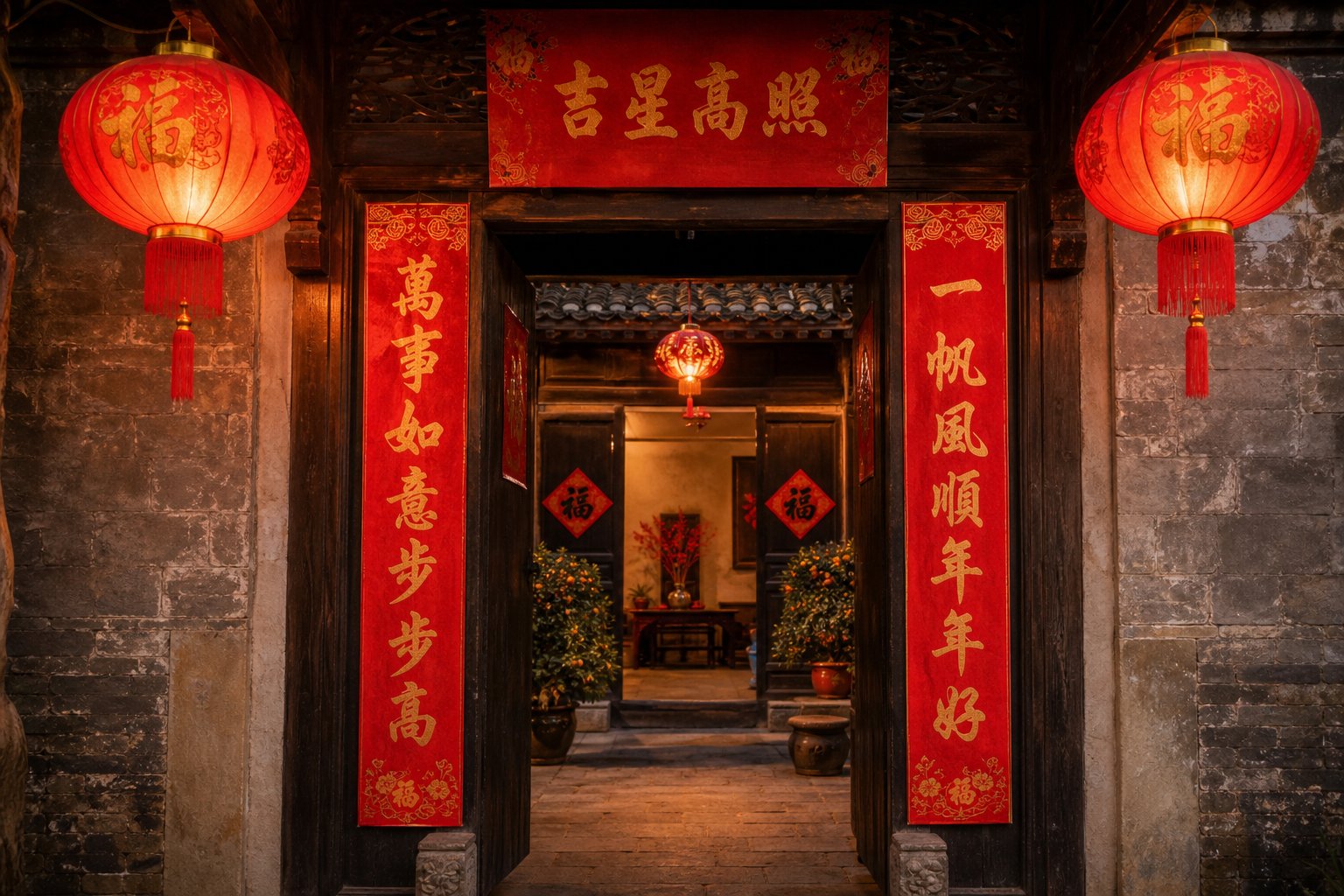
A single character is a spark. Two characters together become a flame. In Chinese, paired characters (字组, ziqu) create compound meanings that exceed the sum of their parts. When both characters in a pair carry auspicious weight — and especially when one or both contain the 羊 radical — the result is a concentrated blessing tailored for chinese new year goat celebrations.
Why do pairs matter more than singles? Chinese grammar naturally favors two-syllable compounds. Most modern Chinese words are disyllabic, meaning the language itself is built for pairing. A lone 祥 on a wall looks incomplete. But 吉祥 on a red banner? That reads as a full, resonant wish. For Goat-year natives preparing for the 2027 chinese new year — the next Year of the Goat — knowing which pairs carry the strongest charge turns a generic decoration into a personalized talisman.
Powerful Character Pairs for Double Luck
Not all lucky pairs are equal. Some carry deeper historical roots, stronger phonetic harmony, or more direct zodiac resonance. Here they are ranked from the most potent to the most subtle in auspicious meaning:
- 吉祥 (jixiang, auspicious/lucky) — The most powerful pair for Goat-year people. 吉 means luck, and 祥 contains the 羊 radical directly. Together they form China's most recognized blessing phrase. The 2027 chinese zodiac will be the Fire Goat, and 吉祥 activates both universal fortune and zodiac-specific resonance in a single two-character phrase.
- 祥瑞 (xiangrui, propitious omen) — Both characters independently mean good fortune, creating a doubled intensity. 祥 carries the goat radical while 瑞 (rui) means auspicious jade or a heavenly sign. This pair is traditionally reserved for significant occasions — births, weddings, and new year celebrations.
- 善美 (shanmei, good and beautiful) — Two 羊-radical characters combined. 善 (goodness) plus 美 (beauty) creates a phrase meaning moral and aesthetic perfection. This is the only common pair where both characters contain the goat, making it uniquely powerful for the 2027 year of the chinese zodiac.
- 如意 (ruyi, as one wishes) — 如 means "as" or "according to," and 意 means "intention" or "desire." Together: may everything go as you wish. While neither character contains 羊, this pair resonates with the Goat's personality — gentle aspiration fulfilled without force.
- 平安 (ping'an, peace and safety) — 平 (level/calm) plus 安 (peace). The Goat's home-loving, harmony-seeking nature makes this pair especially fitting. It's the most common blessing written on red envelopes for chinese zodiac 2027 celebrations.
You'll notice that the top three pairs all involve characters with direct 羊-radical connections or doubled auspicious meaning. The bottom two work through trait alignment — they match the Goat's energy without containing its radical. Both approaches are valid, but radical-resonant pairs carry an extra structural charge that trait-aligned pairs don't.
Goat-Year Couplets and Celebration Phrases
Character pairs are powerful on their own. But during Chinese New Year, they expand into something grander: spring couplets, or duilian (对联). These are paired lines of poetry — printed in gold on bright red paper — hung on either side of a doorframe to welcome the new year. The tradition dates back over a thousand years, and every zodiac year inspires couplets tailored to its animal.
A duilian follows strict structural rules. The right scroll (上联, shanglian) and left scroll (下联, xialian) must match in character count, grammatical structure, and tonal pattern. Where the first line ends on an oblique tone (仄声), the second line ends on a level tone (平声). Parallel meaning runs through both lines — if the first mentions spring, the second might reference harvest. If the first names the goat, the second echoes with an auspicious quality the goat embodies.
For Goat-year celebrations, effective couplets weave 羊-radical characters into their structure. The chinese 2015 zodiac year (the most recent Wood Goat) produced couplets that circulated widely during that Spring Festival. The lunar new year 1979 — an Earth Goat year — inspired its own set. And the chinese new year 2003 Water Goat celebration saw families across China hanging couplets that played on the 羊/祥 homophone connection.
Here are example couplets composed for Goat-year celebrations, with pinyin and translation:
Couplet 1:
上联: 三羊开泰迎春到 (san yang kai tai ying chun dao)
下联: 万象更新送福来 (wan xiang geng xin song fu lai)
Translation: "Three goats open prosperity as spring arrives / All things renew as fortune is delivered."
This couplet uses the classical phrase 三羊开泰 (san yang kai tai), which references the I Ching hexagram where three yang lines signal the return of spring. The pun works because 羊 (goat) and 阳 (yang, positive energy) share the same pronunciation.
Couplet 2:
上联: 羊年吉祥花开富贵 (yang nian jixiang hua kai fugui)
下联: 春日和美福满人间 (chun ri hemei fu man renjian)
Translation: "In the Goat year, auspiciousness blooms into wealth / On spring days, harmony and beauty fill the world with fortune."
Notice how 吉祥 appears in the first line (carrying the 羊 radical inside 祥) while 和美 in the second line echoes with 美 (also containing 羊). The parallel structure satisfies the duilian rules while embedding goat-radical characters on both sides of the doorframe.
For the upcoming 2027 chinese new year, you can adapt these templates by incorporating Fire element references — adding characters like 煌 or 熙 — to honor the specific Fire Goat energy of that year. A family preparing for the chinese new year goat celebration might commission a calligrapher to write a custom couplet that combines 祥 with fire-radical characters, creating a personalized blessing that honors both zodiac animal and birth element simultaneously.
The beauty of duilian lies in their balance. Every character on the right scroll finds its mirror on the left. Every tone rises where its partner falls. This structural harmony reflects the Goat's own nature — seeking equilibrium, creating beauty through careful arrangement rather than brute force. But what happens when that balance is disrupted? Certain characters actively clash with Goat energy, and traditional belief holds that displaying or naming with the wrong ones can invite the very misfortune these lucky pairs are designed to prevent.
Taboo Characters Goat-Year People Should Avoid
Knowing which characters attract luck is only half the equation. Traditional Chinese zodiac theory also identifies characters that actively disrupt Goat energy — ones that create friction rather than flow. The system behind this isn't arbitrary. It's rooted in the concept of Xiang Chong (相冲), or Direct Conflict, where two zodiac signs positioned exactly opposite each other on the twelve-animal circle generate antagonism.
Characters That Clash With Goat Energy
The Goat's direct conflict partner is the Ox. In zodiac terminology, this is called 丑未相冲 (chou wei xiang chong) — the Ox branch (丑) clashes with the Goat branch (未). They sit six positions apart on the zodiac wheel, creating maximum opposition. This clash extends beyond personality into the written language itself. Characters containing the 牛 (niu, ox/cow) radical or carrying aggressive, forceful meanings work against the Goat's gentle nature.
Here are the characters and radicals traditionally considered inauspicious for Goat-year natives:
- 牧 (mu, to herd) — Contains 牛 (ox) plus 攵 (strike/action). Literally means to drive cattle with a stick. The image of being controlled or driven conflicts with the Goat's need for peaceful autonomy.
- 牺 (xi, sacrifice) — Contains 牛 radical. Historically referred to sacrificial animals. Carries connotations of loss and submission that undermine the Goat's fortune.
- 犟 (jiang, stubborn/obstinate) — Built around 牛 with 强 (strong). Represents the Ox's unyielding rigidity — the exact opposite of the Goat's adaptive flexibility.
- 刚 (gang, hard/rigid) — While it doesn't contain 牛, its meaning of unyielding hardness clashes with the Goat's Yin-oriented softness. Aggressive force disrupts what the Goat builds through gentleness.
- 斗 (dou, fight/struggle) — Combative energy directly opposes the Goat's harmony-seeking nature. Characters built around conflict and confrontation create dissonance for this sign.
The logic is consistent: anything that evokes the Ox's stubborn, forceful energy or introduces aggression into the Goat's environment creates a subtle energetic clash. This matters most in naming. Parents checking 1967 chinese zodiac compatibility or 1979 chinese zodiac compatibility when choosing characters for a child's name will want to avoid 牛-radical characters if the child is born in a Goat year. The same principle applies to goat and goat compatibility — even when two Goat-year people pair up, surrounding themselves with clashing characters can introduce unnecessary tension into an otherwise harmonious match.
The enemy year of the goat concept works similarly. During Ox years (the most recent being 2021), Goat natives face their zodiac opposition year. Traditional belief holds that displaying or wearing characters with 牛 energy during these periods amplifies the clash. The year of the snake for goats presents a different dynamic — Snake and Goat share a generally neutral relationship, but Snake years can bring unexpected changes that the Goat's cautious nature finds unsettling.
Turning Misfortune Into Protection With Characters
You may have heard the claim that the Goat is the "unluckiest" zodiac sign. This narrative circulates widely but misses the point entirely. The Goat isn't unlucky — it's sensitive. Its gentle energy responds more visibly to environmental clashes, which is precisely why character selection matters more for this sign than for others.
The protective strategy is straightforward: counter clash energy with characters that reinforce the Goat's strengths rather than exposing its vulnerabilities. When facing an enemy year or navigating difficult periods, lean harder into 羊-radical characters like 祥 and 善. These function as energetic anchors, reminding the universe (and yourself) of the Goat's inherent connection to auspiciousness.
Specific protective pairings include:
- 祥安 (xiang'an) — Auspiciousness plus peace. Directly counters the instability of clash periods.
- 善和 (shanhe) — Goodness plus harmony. Reinforces the Goat's core nature against aggressive external forces.
- 美雅 (meiya) — Beauty plus elegance. Strengthens the Goat's creative identity when outside pressures threaten to overwhelm it.
When considering goat goat compatibility in relationships, these protective characters work for both partners simultaneously. Two Goat-year people sharing a home can display 善美 or 祥瑞 to amplify their shared zodiac resonance — doubling the 羊-radical presence in their environment rather than introducing conflicting energies.
The takeaway isn't fear. It's awareness. Avoiding 牛-radical characters and aggressive meanings doesn't require paranoia — it simply means making intentional choices that honor your sign's nature rather than working against it. And that intentionality extends naturally into one of the most significant character choices a family ever makes: naming a child born in a Goat year.
Naming Goat-Year Babies With Auspicious Characters
Choosing a goat zodiac sign name isn't a casual decision in Chinese culture. It's an act of architecture — building a child's fortune character by character, radical by radical. The Chinese Name Analysis System (八字生肖姓名学) treats each component of a name as an energetic force that shapes relationships, career, health, and emotional wellbeing throughout life. For babies born in the chinese zodiac year of goat, specific radicals create alignment between the child's zodiac identity and the written form of their name.
The logic draws directly from the goat's natural behavior. A real goat needs grass to eat, trees for shelter, an enclosure for safety, and enough food to feel satisfied. The ancient masters translated these physical needs into radical categories, reasoning that a name containing these elements would ensure the child's life mirrors a well-cared-for goat — nourished, protected, and content.
Best Radicals for Goat-Year Baby Names
Four radical families form the foundation of auspicious naming for the chinese zodiac sign goat. Each corresponds to a basic need that, when met in the name, signals abundance and security in the child's destiny:
| Radical | Meaning | Why It Benefits Goat | Example Characters | Example Names |
|---|---|---|---|---|
| 艹 (grass) | Plants, vegetation, nourishment | Goats feed on grass — this radical means the child will always have plenty and attract helpful people | 菁, 莉, 蓉, 茂, 菊, 莆, 芮 | 林芮菁, 陈茂蓉, 杨莉菊 |
| 木 (wood) | Trees, shelter, rest | Trees provide shade and protection — represents good support and easier paths to success | 桐, 栩, 楠, 森, 栋, 柏, 杰 | 宋楠桐, 朱柏森, 刘栩杰 |
| 口 (mouth/enclosure) | Being fed, contained, secure | A mouth radical suggests the goat is well-fed and satisfied — represents contentment and stability | 国, 园, 同, 和, 品, 嘉 | 马嘉园, 许品和, 陈同国 |
| 宀 (roof) | Home, shelter, protection | A roof over the goat means safety from harm — represents a quality life shielded from misfortune | 宏, 定, 富, 安, 宛, 容 | 宋安宏, 田富定, 吴宛容 |
The grass radical (艹) deserves special attention. According to Chinese name analysis practitioners, goats eat only plants — never meat. A name built around grass-radical characters signals that the child will find nourishment easily, attract supportive people, and achieve success without exhausting struggle. Characters like 菁 (jing, essence of plants), 蓉 (rong, lotus), and 茂 (mao, lush/flourishing) all carry this energy.
The zodiac goat also benefits from enclosure-type radicals beyond 宀 and 口. Characters containing 广 (guang, wide shelter), 厂 (chang, cliff shelter), and 山 (shan, mountain) all suggest environments where a goat thrives — fenced pastures, mountain caves, and open valleys. The goat sign is one of the earliest domesticated animals in Chinese history, so characters evoking safe, bounded spaces resonate with its nature.
Building a Complete Name With Lucky Characters
A Chinese name typically has two or three characters: one surname (姓) plus one or two given-name characters (名). The surname governs the child's relationship with parents and early life advantages. The middle character influences peer relationships, marriage, and emotional intelligence. The final character shapes career luck, finances, and health.
For the year of goat chinese zodiac, the ideal approach layers radicals strategically across all positions. Imagine a child surnamed 宋 (Song) — already auspicious because 宋 contains both 宀 (roof, protection) and 木 (wood, support). That child starts life with built-in zodiac alignment before the given name even enters the picture.
Favorable surnames for Goat babies include 陈, 朱, 刘, 马, 许, 方, 吴, 黄, 程, 蔡, 田, 叶, 杨, 林, and 宋. These contain radicals that complement the goat's energy — wood, grass, enclosures, or earth elements that signal nourishment and shelter.
When building the given name, combine radicals from the table above with the lucky 羊-radical characters discussed in earlier sections. A name like 宋善蓉 (Song Shanrong) layers three levels of fortune: 宋 provides the protective roof and supportive wood, 善 carries the goat radical for zodiac resonance, and 蓉 supplies the grass radical for nourishment. Each position in the name does specific work.
The goat zodiac symbol also harmonizes with characters from the San He (三合) trinity — Pig, Rabbit, and Goat form a three-harmony relationship in BaZi theory. Characters containing radicals associated with Pig (豕) or Rabbit (卯/东) energy amplify this alliance. Examples include 家 (jia, home — contains 豕), 豪 (hao, heroic — contains 豕), 逸 (yi, leisurely — contains the rabbit-associated form), and 东 (dong, east — associated with Rabbit's direction).
Radicals to Avoid in Goat-Year Names
Just as certain radicals nourish the chinese sign goat, others actively harm it. The naming taboos align with the clash principles covered earlier but extend further into radicals that evoke danger, sacrifice, or deprivation for the goat:
- 氵/ 水 (water radical) — Goats fear water. Their sweat glands sit beneath their hooves, and wet feet threaten their survival. Characters like 涵, 清, 泳, and 港 in a name can create financial instability or relationship stress for Goat natives. (Note: these characters work as elemental boosters for Water Goats specifically, but carry risk as name characters according to traditional naming practice.)
- 王 (king radical) — The closest a goat gets to a king is as a sacrificial offering. Characters like 珍, 玲, 瑜, and 琨 in a Goat-year name suggest the person will constantly sacrifice for others while receiving little in return.
- 心 / 忄/ 月 (heart/flesh radicals) — These represent meat. Goats eat only grass. A name containing 思, 慈, 惠, or 愛 suggests effort that never equals reward — the person works hard but gains disproportionately little.
- 人 / 亻(person radical) — Some characters with this radical imply a human carrying a knife (like 分). For the goat, this evokes slaughter. Characters like 俊, 修, and 仙 can create defensiveness and interpersonal wariness.
- 丑 / 牛 (ox radical) — The direct zodiac clash. Characters like 妞, 纽, and 牢 introduce the Ox's opposing energy directly into the child's identity.
The approach to selecting a goat zodiac sign name is holistic. It isn't enough to pick one beautiful character — every radical in every position must work together without contradiction. A name that combines a grass-radical character with a water-radical character sends mixed signals, nourishing the goat with one hand while threatening it with the other.
Professional name consultants in Chinese tradition evaluate not just the child's zodiac year but also the parents' zodiac signs, the family surname's radical composition, and the BaZi (Eight Characters) destiny chart derived from the exact birth date and time. The characters you choose become a permanent energetic signature — one that either harmonizes with or works against the child's innate zodiac nature every single day of their life.
With the right name selected, the next question becomes practical: how do you activate these lucky characters beyond the birth certificate? Calligraphy, red envelopes, feng shui placement, and even digital wallpapers all offer ways to keep auspicious energy circulating through daily life.
How to Use Lucky Characters in Everyday Life
Characters on a page are potential energy. Characters displayed, gifted, or carried become kinetic — actively shaping the environment around you. The goat zodiac animal benefits from intentional placement more than most signs because its Yin-oriented nature absorbs surrounding energy rather than projecting outward. What you put in your space, you become. Here's how to translate everything covered so far into daily practice.
Calligraphy Display and Feng Shui Placement
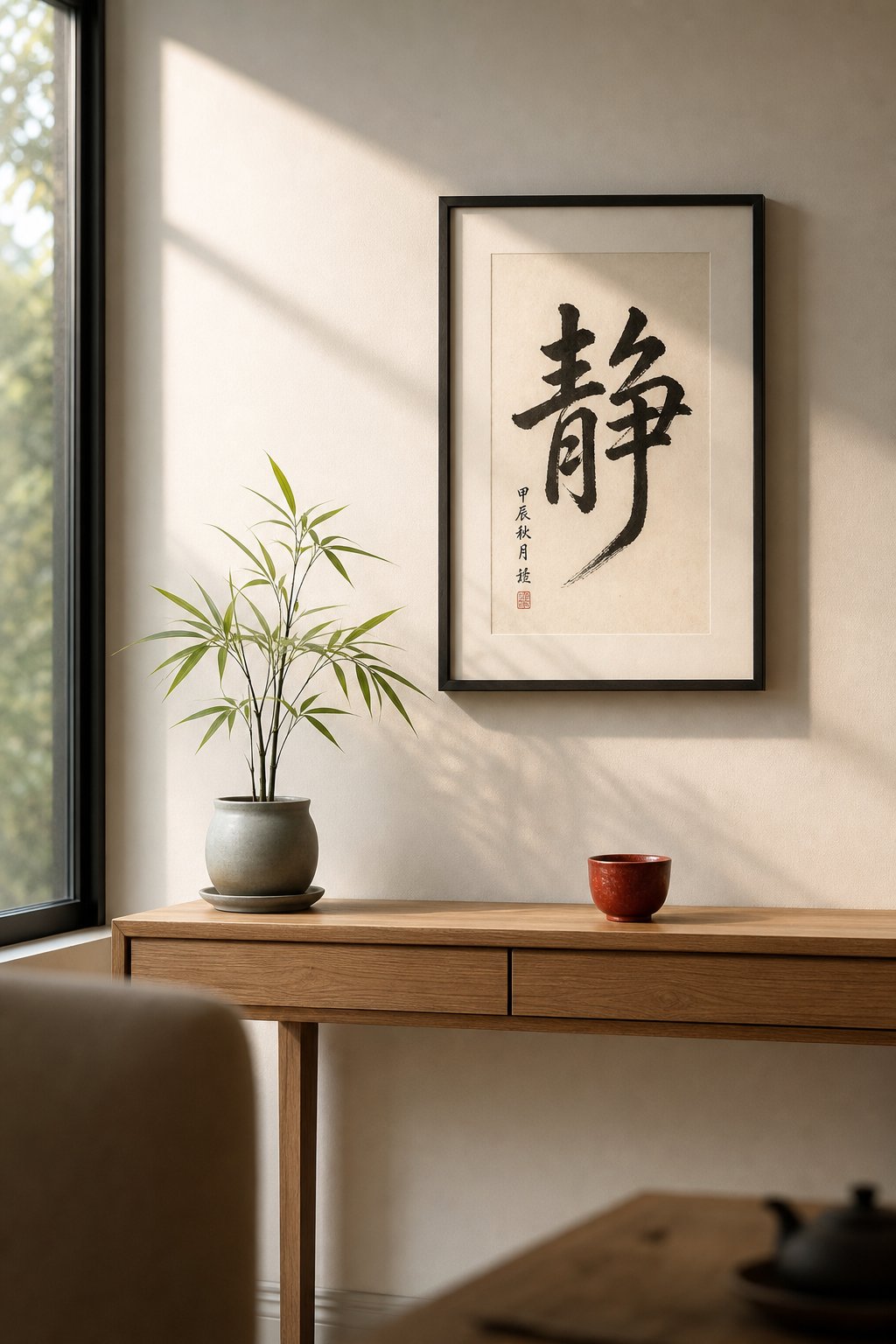
Hanging calligraphy isn't decoration. In feng shui, it's a deliberate energy intervention. The character you choose, the wall you place it on, and the script style all influence how that energy circulates through your home. For people born during years of goat chinese zodiac cycles, the most effective display characters are 祥, 善, 美, and 福 — either individually or in auspicious pairs like 吉祥 or 善美.
Placement follows the bagua map principles. The character 福 (fortune) traditionally goes on the main entrance door, often displayed upside-down because 福倒 (fu dao, "fortune inverted") sounds identical to 福到 (fu dao, "fortune arrives"). Characters emphasizing wealth and career — like 鑫 for Metal Goats or 煌 for Fire Goats — belong on the south-facing wall or in the home office. Peace-oriented characters like 安 and 平安 work best in bedrooms or family gathering spaces where the Goat's need for domestic tranquility is strongest.
Here's a step-by-step approach to creating a lucky character display for your home:
- Identify your element (Metal, Water, Wood, Fire, or Earth) using your birth year to determine which elemental characters complement your 羊-radical ones.
- Select two to three characters maximum — one 羊-radical character (祥, 善, or 美), one elemental character matching your birth year, and optionally one universal character like 福.
- Commission or purchase calligraphy in an appropriate script style: 楷书 (kaishu, regular script) for formal spaces like entryways and offices, or 行书 (xingshu, running script) for living rooms and creative studios where artistic flow matters more than precision.
- Mount the calligraphy at eye level or slightly above on the wall corresponding to its energy type — south for fame and recognition, east for health and family, southeast for wealth.
- Refresh or replace calligraphy annually during Chinese New Year to reset the energy cycle, especially important during zodiac sheep years when the Goat's energy peaks.
Red Envelopes and Gift Inscriptions
When giving red envelopes (hongbao) to someone born in a Goat year, the envelope design matters as much as the amount inside. Traditional red envelopes are decorated with calligraphy and symbols — choose ones featuring 吉祥, 祥瑞, or 三羊开泰 (san yang kai tai, "three goats open prosperity") for maximum zodiac resonance. The significance lies in the red paper and its inscriptions, not just the money within.
For the chinese calendar goat, timing amplifies impact. Red envelopes given during Chinese New Year carry the strongest charge, but birthdays and the Goat's ruling month (the sixth lunar month, roughly July) are also potent windows. If you're wondering when is the year of the goat next arriving — 2027 is the upcoming Fire Goat year, making it an ideal time to prepare envelopes inscribed with both 羊-radical characters and fire-element ones like 熙 or 焕.
Gift-giving extends beyond envelopes. Character-inscribed items make meaningful presents for Goat-year recipients: jade pendants engraved with 祥, tea sets stamped with 善, silk scarves printed with 美, or ceramic pieces bearing 如意. The key is matching the character to the occasion. Weddings call for 善美 or 吉祥. Birthdays favor 安 or 寿. Business milestones pair well with 鑫 or 煌 depending on the recipient's element.
Digital and Modern Uses for Lucky Characters
Lucky characters don't require ink and paper to function. Digital environments carry energy too — you interact with your phone screen dozens of times daily, making it one of the most frequently encountered surfaces in your life. Setting a wallpaper featuring your personal lucky character (祥 for universal Goat luck, or your elemental character for precision) creates repeated visual contact that reinforces intention.
WeChat users in Chinese-speaking communities regularly share digital stickers and greeting images during festivals. For the next goat year in 2027, custom stickers featuring 三羊开泰 imagery or animated 吉祥 calligraphy will circulate widely. Creating personalized versions — incorporating your specific elemental characters alongside the standard Goat-year greetings — distinguishes your blessings from generic ones.
Social media profiles offer another activation point. Adding a lucky character to your display name, bio, or profile banner during auspicious periods keeps the energy visible to both yourself and others. When is the next year of the goat? 2027 — and the preparation window opens during the preceding year. Updating digital elements in early 2027 (before the Lunar New Year begins the Fire Goat cycle) positions you to receive the year's energy from day one.
Seasonal timing matters across all these applications. The years of the goat — 1955, 1967, 1979, 1991, 2003, 2015, and the upcoming 2027 — represent peak activation periods when Goat-specific characters carry their maximum charge. But even in non-Goat years, the sixth lunar month (未月, wei yue, the Goat's branch month) creates a yearly window where 羊-radical characters pulse with extra strength. Birthdays, naturally, are personal peak moments regardless of the calendar year. Layer these timing windows together — a Goat-year person celebrating their birthday during the sixth lunar month of a Goat year hits a triple resonance that amplifies any character work exponentially.
The practical truth is simple. Lucky characters for the goat zodiac animal work best when they're woven into the fabric of daily life rather than reserved for special occasions alone. A 祥 on your wall, a 善美 on your phone screen, a 吉祥 on the red envelope you hand to a friend's child — each instance reinforces the connection between your zodiac identity and the language-level luck that makes the Goat sign uniquely fortunate.
Frequently Asked Questions About Lucky Chinese Characters for Year of the Goat
1. Why is the goat considered the luckiest radical in Chinese characters?
The 羊 (yang) radical appears inside more auspicious Chinese characters than any other zodiac animal radical. It forms a structural component of 祥 (auspicious), 善 (good), 美 (beautiful), 義 (righteous), and 鲜 (fresh). In ancient Chinese, 羊 was even used interchangeably with 祥, meaning the goat and auspiciousness were literally the same word. No other zodiac animal — not the dragon, tiger, or phoenix — enjoys this level of linguistic integration with positive meaning.
2. What are the best characters for naming a baby born in the Year of the Goat?
Traditional Chinese naming practice recommends four radical families for Goat-year babies: 艹 (grass, representing nourishment), 木 (wood, representing shelter), 口 (mouth/enclosure, representing being well-fed), and 宀 (roof, representing protection). Characters like 菁, 蓉, 桐, 嘉, and 安 combine these radicals with auspicious meanings. Parents should avoid radicals associated with water (氵), the ox (牛), and meat/heart (心/月), as these conflict with the goat's nature according to BaZi naming theory.
3. How do the Five Elements change which characters are lucky for Goat-year people?
Each Goat year carries a different element that determines personalized lucky characters. Metal Goats (1931, 1991) benefit from 金-radical characters like 鑫 and 锦. Water Goats (1943, 2003) resonate with 氵-radical characters like 清 and 涵. Wood Goats (1955, 2015) align with 木-radical characters like 桐 and 森. Fire Goats (1967, 2027) draw power from 火-radical characters like 煌 and 熙. Earth Goats (1979) connect with 土-radical characters like 坤 and 培. Layering your elemental characters with universal 羊-radical ones creates precision luck.
4. Which characters should people born in the Year of the Goat avoid?
Goat-year natives should avoid characters containing the 牛 (ox) radical due to the zodiac clash between Goat and Ox (丑未相冲). Characters like 牧 (to herd), 牺 (sacrifice), and 犟 (stubborn) carry opposing energy. Characters with aggressive or combative meanings such as 刚 (rigid) and 斗 (fight) also conflict with the Goat's gentle Yin nature. In naming specifically, radicals associated with water, meat/heart, and the king radical (王) are traditionally considered inauspicious because they evoke danger or sacrifice for the goat.
5. How can I use lucky Goat characters in everyday life beyond naming?
Display calligraphy of characters like 祥, 善, or 吉祥 on walls following feng shui placement — south-facing for career luck, east for health, and bedrooms for peace characters like 安. Use red envelopes inscribed with 三羊开泰 or 祥瑞 when gifting to Goat-year recipients. Set phone wallpapers featuring your personal lucky character for repeated daily contact. Gift jade pendants engraved with 祥 or tea sets stamped with 善. Timing matters too — the sixth lunar month and Chinese New Year are peak activation windows for Goat-specific characters.