Understanding Traditional Chinese Boy Names and Their Cultural Roots
When most people search for chinese boy names, they expect a list. Pick one that sounds nice, move on. But Chinese naming is not a list-picking exercise. It is one of the oldest continuous naming traditions on earth, a system where philosophy, cosmology, and family lineage converge into two or three carefully chosen characters. Among all asian names, few carry as much encoded meaning as those rooted in Chinese tradition.
Why Traditional Chinese Boy Names Carry Deep Cultural Weight
Imagine giving your son a name that simultaneously balances the five classical elements, honors his place in a generational poem stretching back centuries, sounds melodic across four tones, and looks beautiful when written with a brush. That is what traditional chinese boy names are designed to do. Each character operates across multiple dimensions at once: sound, visual form, literary meaning, and elemental energy. A name that succeeds on one dimension but fails on another is considered incomplete.
In Chinese tradition, a name is not merely an identifier. It is the first and most enduring blessing a parent bestows upon a son, a compressed wish for who he will become, encoded into characters he will carry every day of his life.
This depth is what separates chinese names from most Western naming conventions, where phonetic appeal tends to be the primary filter. In Chinese culture, a name functions as a gift layered with intention, shaped by systems refined across dynasties for over three thousand years.
What You Will Learn About Chinese Naming Traditions
This article goes beyond surface-level lists of asian boy names or asian names for boys. You will learn the structural rules that govern how chinese names for boys are built, from surname placement to character pairing. You will understand how the Five Elements (Wuxing) and a child's birth chart (Bazi) determine which characters create balance. You will discover how the Chinese zodiac, Confucian virtues, stroke count numerology, and generational naming poems all feed into a single naming decision. And you will see how diaspora families adapt these traditions for multicultural contexts.
The goal is to teach the why before presenting the what, so that every name you encounter later in this article carries its full weight of meaning. That understanding starts with how a Chinese name is actually constructed.
How Chinese Names Are Structured and Why It Matters
Every traditional Chinese boy name follows a precise architecture. It is not a random pairing of sounds. The structure itself carries meaning, and understanding it is the first step toward choosing a name with real cultural integrity. Chinese naming conventions arrange names as follows: surname first, given name second. So a boy named 张晨 is ZHANG Chen, not Chen Zhang. This order reflects a core cultural value: the family precedes the individual.
Surname First and Given Name Structure
A Chinese name consists of two parts: the surname (姓/xìng) and the given name (名/míng). The surname is inherited from the father's lineage and always comes first. Most Chinese surnames are monosyllabic, meaning they consist of a single character and a single syllable. The given name that follows can be one or two characters, though two-character given names are far more common today. A name like 王明哲 (Wáng Míngzhé) breaks down as: Wáng (surname) + Míngzhé (two-character given name).
Why does this matter for choosing traditional chinese boy names? Because the given name must work in harmony with the surname. The mandarin characters you select for the given name need to complement the surname's tone, stroke count, and meaning. Parents with the surname 刘 (Liú, meaning "willow") might pair it with a character that extends a nature metaphor. The surname is fixed, so the creative work happens entirely in the given name, where every character is chosen with deliberate intention.
Character Combinations and What to Avoid
Selecting the chinese for name characters involves navigating a set of taboos refined over millennia. The most critical rule: avoid homophones with negative words. Mandarin is a tonal language with many characters sharing the same pronunciation, so a name that looks elegant on paper might sound unfortunate when spoken aloud.
Here are the key avoidance rules:
- Death homophones: Any character or combination that sounds like 死 (sǐ, death) is strictly avoided. For example, naming a boy 思 (sī, to think) paired with certain tones can create an uncomfortable echo.
- Unlucky sound-alikes: Characters that produce embarrassing or negative phrases when combined with the surname. The reference name 杜子腾 (Dù Zǐténg) sounds like "stomachache" in spoken Mandarin, making it a cautionary example.
- Elder name taboo: It is not customary to name a child after a living elder or ancestor. Using an elder's name character disrupts generational hierarchy and is considered disrespectful.
- Overly uncommon characters: Rare characters that most people cannot read or pronounce create poor interpersonal energy. A name should be recognizable without being generic.
- Awkward tonal sequences: Three consecutive characters in the same tone sound flat and monotonous. Tonal variety creates a name that flows naturally when called aloud.
Single-character given names are also discouraged in modern practice. Common chinese last names like Wáng and Lǐ are shared by tens of millions of people, so a single-character given name dramatically increases the chance of duplication. The full name 张伟 (Zhāng Wěi) is the most common name in mainland China, shared by roughly 290,000 people. Two-character given names provide the space needed for uniqueness and elemental balance.
Common Chinese Surnames for Context
To understand how given names pair with surnames, you need context on the most common chinese surnames. The concept of China as the land of the "Old Hundred Surnames" (老百姓/Lǎo Bǎi Xìng) dates to the Song dynasty, when the Hundred Family Surnames (百家姓/Bǎi Jiā Xìng) was compiled as a rhyming poem of existing surnames. Even today, China has only around 4,100 surnames total, a remarkably small pool compared to over 6.2 million surnames recorded in the United States.
The top five surnames alone, all monosyllabic, account for more people than the entire population of Indonesia. Among asian last names, these five dominate globally:
| Character | Pinyin | Approx. % of Population | Meaning or Origin |
|---|---|---|---|
| 王 | Wáng | 7.17% | King; derived from royal lineage |
| 李 | Lǐ | 7.00% | Plum tree; associated with Tang dynasty rulers |
| 张 | Zhāng | 6.74% | To draw a bow; military origin |
| 刘 | Liú | 5.10% | To kill/battle-axe; Han dynasty imperial surname |
| 陈 | Chén | 4.61% | Ancient state name; to display |
| 杨 | Yáng | 3.22% | Poplar tree; nature origin |
| 黄 | Huáng | 2.45% | Yellow; linked to the Yellow Emperor |
| 赵 | Zhào | 2.00% | Ancient state of Zhao; Song dynasty imperial surname |
| 吴 | Wú | 2.00% | Ancient state of Wu; regional origin |
| 周 | Zhōu | 1.90% | Zhou dynasty; to encircle |
Notice that each surname is a single character, a single syllable. This monosyllabic quality gives the given name room to breathe. When you pair a one-syllable surname with a two-character given name, you get a three-syllable name that allows for tonal variation, elemental balancing, and layered meaning. That layered meaning often begins with the most fundamental system in Chinese cosmology: the Five Elements.
The Five Elements System Behind Traditional Name Selection
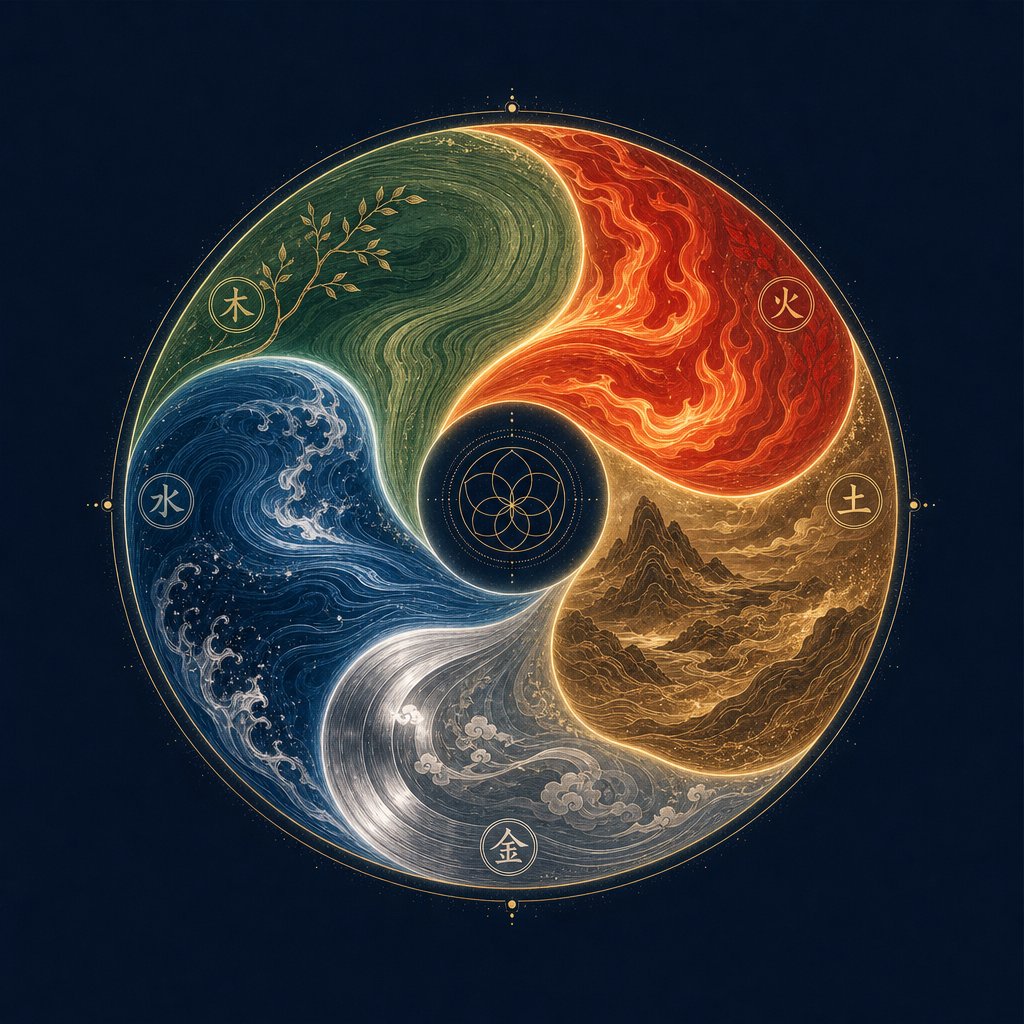
The Five Elements, or Wuxing (五行), form the energetic backbone of traditional Chinese boy names. This is not a decorative layer added for cultural flavor. It is the diagnostic system that tells parents which characters will bring balance to their son's life. Every name character carries elemental energy through its radical, its meaning, or both, and the goal is to match that energy to what the child's birth chart actually needs.
The Five Elements and Their Role in Naming
Wuxing literally translates to "Five Movements" or "Five Phases," not "Five Elements" in the Western chemical sense. These are dynamic patterns of energy: Wood (木/Mù) represents growth and upward expansion, Fire (火/Huǒ) represents radiance and outward expression, Earth (土/Tǔ) represents stability and grounding, Metal (金/Jīn) represents refinement and clarity, and Water (水/Shuǐ) represents depth and adaptability. First documented in the Book of Documents (尚书) around 1000 BCE, this framework has shaped Chinese naming for over two millennia.
In naming practice, each element carries specific virtues. A boy whose name contains Wood energy is being wished vitality and resilience. Fire energy brings warmth and leadership. Earth provides reliability. Metal instills discipline and sharp intellect. Water grants wisdom and emotional depth. Understanding these chinese symbols and meanings is essential because the characters parents select are not random. They are prescriptions, chosen to supplement what the child's natural energy map lacks.
How Birth Charts Determine Element Balance
So how do parents know which element their son needs? They calculate his Bazi (八字), literally "Eight Characters." This system, first systematized during the Tang Dynasty by scholar Li Xuzhong and refined during the Song Dynasty by master Xu Ziping, converts four units of time into elemental data: birth year, month, day, and hour. Each unit produces a pair of characters from the Heavenly Stems and Earthly Branches system, yielding eight characters total, hence the name.
These eight characters map the distribution of all five elements across four "pillars." The Day Pillar's Heavenly Stem, called the Day Master (日主), represents the child's core elemental identity. A naming specialist then asks: is this Day Master strong or weak? Which elements support it, and which drain it?
Here is the critical insight most people miss. The goal is not simply to count which element is absent and add it. A professional Bazi reading identifies the "Favorable Element" (用神/yòngshén), the specific energy that will harmonize the entire chart. A boy born in deep winter with heavy Water energy does not need more Water just because his chart "looks unbalanced." He needs Fire for warmth. The yin pinyin of each character, its tonal quality, and its radical all factor into whether it delivers the right elemental correction.
This is why traditional naming is never a casual exercise. The names and characters chosen must satisfy elemental logic, not just sound pleasant.
Example Characters for Each Element
Chinese characters carry elemental associations primarily through their radicals, the structural components that act as building blocks. A character with the water radical (氵) channels Water energy. A character built on the wood radical (木) or grass radical (艹) channels Wood. These chinese word symbols encode elemental identity visually, so even at a glance, a knowledgeable reader can identify which phase of energy a name invokes.
Below is a practical reference showing names and characters organized by element, each carrying auspicious meaning suited for boys:
| Element | Character | Pinyin | Meaning | Connecting Radical |
|---|---|---|---|---|
| Wood (木) | 林 | Lín | Forest; abundance | 木 (wood) |
| Wood (木) | 桐 | Tóng | Paulownia tree; nobility | 木 (wood) |
| Wood (木) | 彬 | Bīn | Refined; elegant | 木 (wood) |
| Fire (火) | 煜 | Yù | Radiant; shining brightly | 火 (fire) |
| Fire (火) | 炎 | Yán | Blazing flame; intensity | 火 (fire) |
| Fire (火) | 焕 | Huàn | Glowing; brilliant | 火 (fire) |
| Earth (土) | 坤 | Kūn | Earth; receptive power | 土 (earth) |
| Earth (土) | 岳 | Yuè | Great mountain; lofty | 山 (mountain) |
| Earth (土) | 城 | Chéng | City walls; fortification | 土 (earth) |
| Metal (金) | 铭 | Míng | Inscription; to engrave | 钅 (metal) |
| Metal (金) | 锐 | Ruì | Sharp; keen-minded | 钅 (metal) |
| Metal (金) | 鑫 | Xīn | Prosperity; abundant gold | 金 (metal) |
| Water (水) | 浩 | Hào | Vast; grand as the ocean | 氵 (water) |
| Water (水) | 泽 | Zé | Marsh; grace and generosity | 氵 (water) |
| Water (水) | 涵 | Hán | To contain; depth and composure | 氵 (water) |
| Water (水) | 润 | Rùn | To moisten; gentle nourishment | 氵 (water) |
Notice how each character does double duty. 泽 (Zé) does not just carry Water energy through its radical. Its meaning, "marsh" or "beneficence," suggests generosity and nourishment, like water flowing to sustain fertile land. 铭 (Míng) does not just register as Metal. Its meaning, "to engrave," implies a person who leaves a lasting mark, possessing intellect as enduring as carved bronze. The best traditional names satisfy elemental balance and semantic richness simultaneously.
Elemental naming through Wuxing gives each character a cosmic job to do. But the Five Elements do not operate in isolation. They interact with another ancient system that assigns energy based on birth year rather than birth hour: the Chinese zodiac, which adds its own layer of character recommendations and restrictions.
Chinese Zodiac Influence on Boy Name Selection
The Five Elements tell you what energy a chinese baby needs. The Chinese zodiac tells you how that energy should be delivered, filtered through the personality and symbolic associations of the child's birth year animal. These two systems work in tandem, and traditional naming masters consult both before recommending a single character.
How Birth Year Animals Shape Name Choices
The Chinese zodiac (生肖/shēngxiào) assigns one of twelve symbolic animals to each birth year in a repeating cycle: Rat, Ox, Tiger, Rabbit, Dragon, Snake, Horse, Goat, Monkey, Rooster, Dog, and Pig. Each animal carries specific traits, habitat preferences, and relationships with other animals. Research on Chinese naming practices shows that the shēngxiào method selects characters compatible with the special features of the birth year animal, aiming to emphasize its strengths and shield against its vulnerabilities.
The logic is concrete, not abstract. Rats are nocturnal grain-eaters who hide in holes, so characters with the roof radical (宀) give them shelter, while characters with the sun radical (日) expose them to danger. Dragons command rain and seas, so water radicals empower them. This is not metaphor. Traditional practitioners treat these associations as functional prescriptions for a child's lifelong energy.
Each zodiac animal also has a concept of lucky star chinese astrology calls 吉星 (jíxīng). These are favorable celestial influences activated when a name aligns with the animal's strengths. A well-chosen name is said to invite these chinese lucky star energies into the child's destiny, amplifying natural talents rather than working against them.
Auspicious Characters by Zodiac Sign
Sounds complex? The principle is straightforward once you see it in action. Each animal has radicals that feed its nature (auspicious) and radicals that threaten it (inauspicious). When naming a boy, parents select characters containing favorable radicals while steering clear of clashing ones. Here are five zodiac animals with specific guidance:
| Zodiac Animal | Favorable Radicals | Unfavorable Radicals | Recommended Characters |
|---|---|---|---|
| Dragon (龙/Lóng) | 氵 (water), 雨 (rain), 辰 (chen branch) | 犭 (dog), 戌 (xu branch), 虫 (insect) | 泽 (Zé, grace/marsh), 云 (Yún, cloud), 宸 (Chén, imperial mansion) |
| Rat (鼠/Shǔ) | 宀 (roof), 口 (opening), 禾 (grain), 王 (king) | 日 (sun), 火 (fire), 午 (horse branch), 马 (horse) | 宏 (Hóng, magnificent), 琴 (Qín, zither/refinement), 程 (Chéng, order/journey) |
| Tiger (虎/Hǔ) | 木 (wood), 山 (mountain), 王 (king) | 申 (monkey branch), 辶 (movement), 人 (person) | 岳 (Yuè, great mountain), 林 (Lín, forest), 琛 (Chēn, treasure) |
| Snake (蛇/Shé) | 口 (mouth/cave), 宀 (roof), 艹 (grass) | 日 (sun), 亥 (pig branch), 虎 (tiger) | 安 (Ān, peace), 蓉 (Róng, lotus), 宇 (Yǔ, universe/eaves) |
| Horse (马/Mǎ) | 艹 (grass), 彡 (ornament), 巾 (cloth) | 子 (rat branch), 水 (water), 牛 (ox) | 彦 (Yàn, accomplished), 芃 (Péng, lush growth), 骏 (Jùn, fine steed) |
For parents seeking cool dragon names, the Dragon row is particularly rich. Because dragons in Chinese mythology govern rain and waterways, characters with the water radical (氵) channel their natural dominion. 泽 (Zé) gives a Dragon-year boy the vast marshlands he rules. 宸 (Chén) connects to the Earthly Branch 辰 (chén), which is the Dragon's own branch, reinforcing identity rather than creating conflict.
Characters to Avoid Based on Animal Clashes
The zodiac operates on a system of harmonies and clashes (冲/chōng). Each animal has a direct opposite that creates friction. The six major clashes are: Rat vs. Horse, Ox vs. Goat, Tiger vs. Monkey, Rabbit vs. Rooster, Dragon vs. Dog, and Snake vs. Pig. When naming a chinese baby, characters containing radicals associated with the clashing animal are avoided.
A Dragon-year boy should not carry characters with the dog radical (犭) or the Earthly Branch 戌 (xū, paired with the Dog), because Dragon and Dog form one of the six direct clashes in Chinese astrology. Similarly, a Rat-year boy avoids the horse radical (马) and the branch 午 (wǔ, paired with the Horse), because Rat and Horse sit in direct opposition. The Rat also avoids fire radicals, since the Rat's paired element is Water, and Water and Fire conflict.
These restrictions are not arbitrary superstition. They form a coherent internal logic: each animal thrives in specific environments and struggles in others. A name that places a nocturnal Rat under blazing sun, or a water-ruling Dragon in the territory of its canine rival, works against the child's innate energy rather than supporting it.
Zodiac naming adds specificity to the broader Five Elements framework. Where Wuxing tells you a boy needs Water energy, the zodiac tells you which kind of Water character suits his animal nature. This layered precision is what makes traditional naming so much richer than simply picking characters that sound pleasant. The next layer goes deeper still, into the moral philosophy that has shaped Chinese civilization for over two thousand years: the Confucian virtues that give names their ethical weight.
Traditional Boy Names Organized by Confucian Virtues
Confucius identified five cardinal virtues that define a morally complete person: 仁 (benevolence), 义 (righteousness), 礼 (propriety), 智 (wisdom), and 信 (integrity). For over two thousand years, these virtues have served as the ethical vocabulary of chinese male names. Parents do not simply admire these qualities in the abstract. They encode them directly into their son's identity, selecting characters that function as lifelong moral reminders.
What makes these classic male names endure across dynasties is their dual function. They sound dignified when spoken aloud, and they carry philosophical weight that deepens with age. A boy named for wisdom at birth grows into that name differently at twenty, forty, and sixty. The character matures with him.
Names Embodying Benevolence and Righteousness
仁 (Rén) sits at the center of Confucian ethics. The character itself is built from "person" (人) and "two" (二), suggesting that true humanity only emerges in relationship with others. 义 (Yì) complements it as the courage to act rightly even when it costs you something. Together, these two virtues produce some of the most respected boy names with meaning in Chinese tradition.
Names rooted in benevolence (仁):
- 仁杰 (Rénjié) — Benevolent and outstanding. 杰 means a person of exceptional ability, so the pairing suggests someone whose greatness flows from kindness rather than ambition alone.
- 仁泽 (Rénzé) — Benevolent grace. 泽 (marsh, beneficence) implies kindness that spreads outward like water nourishing land.
- 德仁 (Dérén) — Virtuous benevolence. Placing 德 (virtue) before 仁 emphasizes that this kindness is cultivated through moral discipline, not mere temperament.
- 怀仁 (Huáirén) — To hold benevolence in one's heart. 怀 means to cherish or carry within, creating an image of internalized compassion.
- 弘仁 (Hóngrén) — To expand benevolence. 弘 means vast or to enlarge, suggesting a person who spreads kindness broadly.
Names rooted in righteousness (义):
- 义轩 (Yìxuān) — Righteous and elevated. 轩 refers to a high-roofed hall, implying lofty character and noble bearing.
- 正义 (Zhèngyì) — Upright righteousness. 正 means straight or correct, doubling down on moral clarity.
- 义博 (Yìbó) — Righteousness and breadth. 博 means broad or learned, pairing moral courage with intellectual scope.
- 信义 (Xìnyì) — Trustworthy righteousness. This combines two cardinal virtues into a single name, a powerful statement of values.
- 义铭 (Yìmíng) — Righteousness engraved. 铭 means inscription, suggesting principles carved so deeply they cannot be erased.
Notice how 礼 (Lǐ, propriety) also shapes male chinese names, though less commonly as a standalone name character. It appears in combinations like 礼贤 (Lǐxián, propriety toward the worthy) and 知礼 (Zhīlǐ, understanding ritual), where it signals social grace and respect for tradition.
Names Representing Wisdom and Integrity
智 (Zhì) and 信 (Xìn) address the intellectual and relational dimensions of character. Wisdom in the Confucian sense is not raw intelligence. It is clarity of judgment, the ability to see through confusion and act accordingly. Integrity is the quality that makes a person's word reliable, their presence trustworthy. Among names of chinese male tradition, these two virtues produce some of the most sought-after characters.
Names rooted in wisdom (智):
- 智远 (Zhìyuǎn) — Wisdom that reaches far. 远 means distant, implying foresight and long-term thinking.
- 智轩 (Zhìxuān) — Wise and elevated. A name suggesting intellectual refinement paired with noble character.
- 睿智 (Ruìzhì) — Sagacious wisdom. 睿 means acute perception, creating a name that emphasizes penetrating insight.
- 哲瀚 (Zhéhàn) — Philosophical and vast. 哲 means philosophy or deep thinking, while 瀚 evokes the boundless ocean.
- 明智 (Míngzhì) — Clear wisdom. One of the most direct names meaning bright or smart, combining illumination with sound judgment.
Names rooted in integrity (信):
- 诚信 (Chéngxìn) — Sincerity and trustworthiness. This pairs inner authenticity (诚) with outward reliability (信), covering both dimensions of honesty.
- 信达 (Xìndá) — Trustworthy and accomplished. 达 means to reach or achieve, suggesting that integrity leads to success.
- 守信 (Shǒuxìn) — To uphold one's word. 守 means to guard or maintain, creating an image of someone who protects their promises.
- 信恒 (Xìnhéng) — Enduring trustworthiness. 恒 means constant or eternal, emphasizing reliability that does not waver.
- 立信 (Lìxìn) — To establish trust. 立 means to stand or establish, implying someone who builds credibility through action.
How Two-Character Names Create Compound Meaning
You will notice that most chinese names male families choose are two characters rather than one. This is not just about avoiding duplication. Two-character given names create compound meanings that transcend their individual parts. Each character contributes a dimension, and together they form something richer than either alone.
Consider 明哲 (Míngzhé). 明 means bright or clear. 哲 means wise or philosophical. Separately, each is a fine character. Together, they produce "brilliantly wise," a name suggesting not just intelligence but illuminated understanding, wisdom that shines outward and clarifies what others find murky. This is a unique boy names with meaning approach that single characters cannot achieve.
Here is how compound meaning works in practice:
- 浩然 (Hàorán) — 浩 (vast) + 然 (naturally so) = a person of vast, natural integrity. This name references Mencius's concept of 浩然之气, the "flood-like qi" of moral courage.
- 志远 (Zhìyuǎn) — 志 (aspiration) + 远 (far) = ambition that reaches into the distance. The pairing transforms generic ambition into visionary purpose.
- 文博 (Wénbó) — 文 (literature/culture) + 博 (broad/learned) = broadly cultured. Neither character alone captures the idea of a person steeped in wide-ranging scholarship.
- 承德 (Chéngdé) — 承 (to inherit/carry forward) + 德 (virtue) = one who carries virtue forward across generations. The compound adds a temporal dimension that neither character possesses alone.
This compounding principle is what gives traditional naming its depth. A single character states a quality. Two characters in sequence create a narrative, a miniature philosophy compressed into a name that takes less than a second to speak but carries centuries of meaning. The best chinese names male tradition produces are not labels. They are compressed ethical arguments about who a person should strive to become.
Confucian virtues give names their moral architecture. But traditional naming draws from other wells too. Nature, celestial phenomena, and physical power have inspired chinese male names across every dynasty, producing a parallel tradition where mountains, dragons, and starlight carry the weight of parental aspiration.
Nature, Strength, and Scholarly Names in Chinese Tradition
Confucian virtues give a name its ethical skeleton. But not every traditional name speaks in the language of philosophy. Across Chinese dynasties, parents have also reached toward the natural world, toward raw physical power, and toward scholarly ideals to shape their sons' identities. Mountains that endure for millennia, dragons that command storms, scholars whose brushwork outlasts empires. These images carry a different kind of weight, one rooted in sensory power rather than abstract principle.
What makes these earthy boy names and celestial references so enduring? They tap into something visceral. A boy named for a mountain peak does not need the name explained. The image does the work instantly, across languages and centuries.
Names Inspired by Nature and the Elements
Chinese culture treats nature not as scenery but as a living teacher. Mountains represent steadfastness. Rivers represent ambition that carves its own path. Jade represents inner purity refined under pressure. When parents choose nature-based characters, they are wishing specific natural qualities onto their son.
The character 山 (shān, mountain) appears in names like 岳山 (Yuèshān), evoking the sacred peaks where emperors performed rituals. 峰 (fēng) means "summit" and carries the aspiration of reaching the highest point in any endeavor. Water characters like 涛 (tāo, great waves) and 海 (hǎi, sea) suggest a mind as vast and deep as the ocean. These are not decorative choices. In traditional practice, a boy given a mountain name is being anchored to stability, while a boy given a water name is being granted adaptability.
Jade characters deserve special mention. 瑜 (Yú, fine jade) and 琛 (Chēn, treasure) reference the Chinese belief that jade embodies the five Confucian virtues simultaneously: benevolence in its warmth, wisdom in its translucence, righteousness in its sharp edges, propriety in the way it hangs without tangling, and integrity in the clear note it produces when struck.
Names Conveying Strength and Power
The chinese warrior tradition runs deep in naming culture. Characters that evoke physical dominance, military prowess, and mythical creatures have been popular since the Zhou dynasty, when martial valor was considered inseparable from moral character.
龙 (Lóng, dragon) is the most culturally loaded character in this category. Unlike Western dragons, the Chinese dragon is a benevolent force associated with imperial authority, rainfall, and cosmic power. Names mythical in origin like 龙飞 (Lóngfēi, dragon in flight) or 龙威 (Lóngwēi, dragon's might) were historically reserved for families with high aspirations, as the dragon symbolized the emperor himself. Even today, Dragon-year boys frequently receive names containing this character.
虎 (Hǔ, tiger) projects a different energy: fierce independence, courage in solitude, and territorial command. The tiger in Chinese culture embodies a lion masculine quality of raw, protective strength. Characters like 威 (Wēi, commanding power) and 刚 (Gāng, unyielding steel) extend this energy without using the animal character directly, giving parents flexibility while preserving the underlying force.
鹏 (Péng) references the legendary Peng bird from Zhuangzi's philosophy, a creature so vast it darkens the sky when it flies. This is not mere physical size. It represents ambition without ceiling, the kind of xia celestial aspiration that refuses earthly limits.
Scholarly and Celestial Name Characters
The scholar-warrior ideal (文武双全, wénwǔ shuāngquán, "complete in both literature and martial arts") means that intellectual characters carry just as much prestige as strength-based ones. 文 (Wén, literature/culture) signals scholarly achievement and refined intellect. It appears in cool boy names like 文博 (Wénbó, broadly cultured) and 文韬 (Wéntāo, literary strategy). 德 (Dé, virtue/moral authority) carries the weight of a person whose character commands respect without force.
Celestial characters connect a boy to cosmic forces. 星 (Xīng, star) suggests brilliance that guides others. 辰 (Chén, celestial bodies/time) links to the Dragon's Earthly Branch and carries connotations of destiny. 曜 (Yào, luminous celestial body) is rarer but powerful, implying a radiance that illuminates even the darkest depths.
The table below organizes these names into three thematic streams, each with character, pinyin, and meaning:
| Nature/Elements | Pinyin | Meaning | Strength/Power | Pinyin | Meaning | Scholarly/Celestial | Pinyin | Meaning |
|---|---|---|---|---|---|---|---|---|
| 峰 | Fēng | Mountain summit | 龙 | Lóng | Dragon; imperial power | 文 | Wén | Literature; culture |
| 涛 | Tāo | Great waves | 虎 | Hǔ | Tiger; fierce courage | 德 | Dé | Virtue; moral authority |
| 海 | Hǎi | Sea; vastness | 威 | Wēi | Commanding power | 星 | Xīng | Star; brilliance |
| 岳 | Yuè | Sacred mountain | 刚 | Gāng | Unyielding steel | 辰 | Chén | Celestial bodies; destiny |
| 瑜 | Yú | Fine jade; purity | 鹏 | Péng | Legendary giant bird | 曜 | Yào | Luminous heavenly body |
| 松 | Sōng | Pine; resilience | 雷 | Léi | Thunder; unstoppable force | 翰 | Hàn | Writing brush; scholarship |
| 琛 | Chēn | Treasure; precious jade | 骏 | Jùn | Fine steed; excellence | 启 | Qǐ | To enlighten; dawn |
Each column represents a different dimension of aspiration. Nature names ground a boy in endurance and organic growth. Strength names project force and lion masculine dominance into the world. Scholarly and celestial names aim upward, toward intellectual achievement and cosmic significance. The most admired traditional names often blend columns, pairing a nature character with a scholarly one, or a strength character with a celestial reference, creating compound identities that honor multiple dimensions at once.
These thematic streams have not remained static. Each major Chinese dynasty reshaped naming preferences, elevating certain character types while introducing entirely new traditions like courtesy names and generational poems. The evolution of these conventions across imperial history reveals how deeply naming practices are tied to the philosophical currents of their era.
Historical Evolution of Chinese Boy Names Across Dynasties
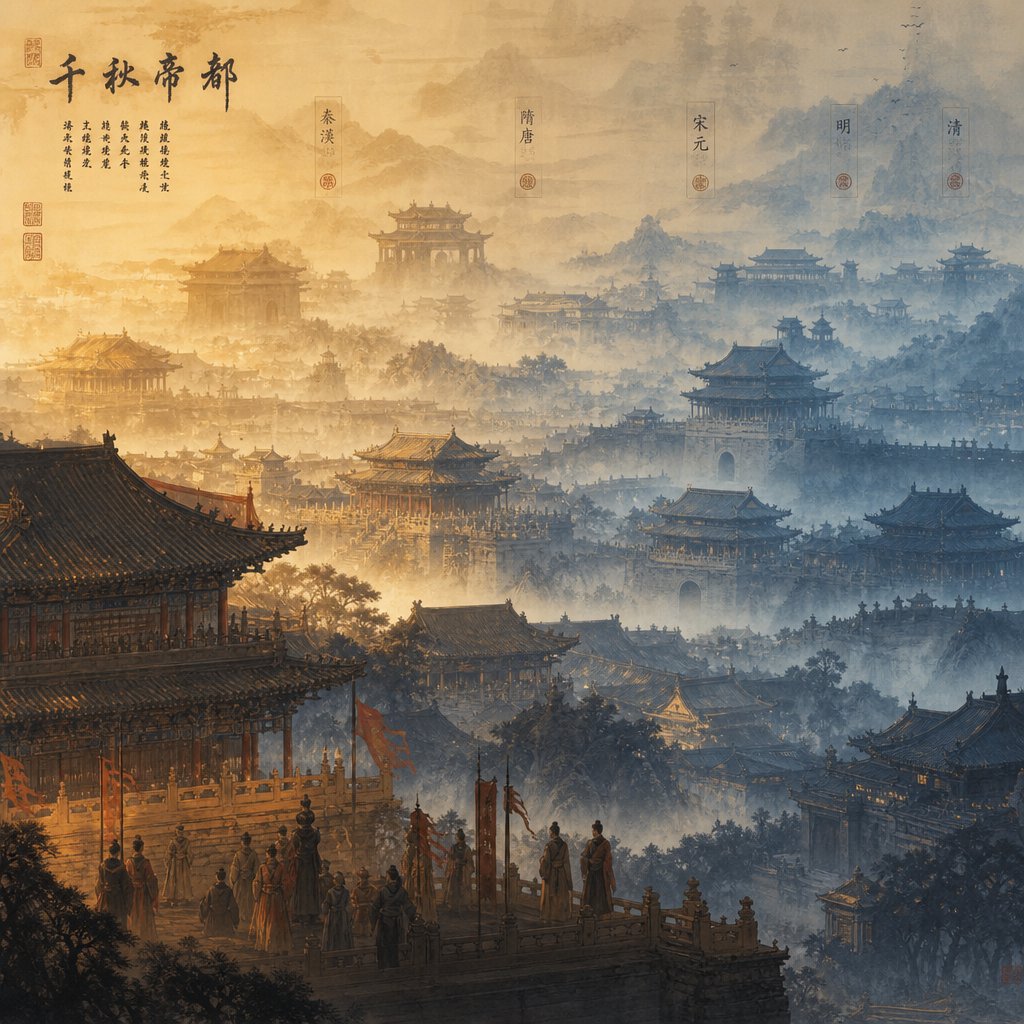
Naming conventions did not arrive fully formed. They accumulated layer by layer across three thousand years of imperial chinese history, each dynasty adding a new dimension to how families chose chinese first names for their sons. The Zhou dynasty introduced courtesy names as a rite of passage. The Tang dynasty infused naming with poetic elegance. The Song dynasty anchored it in Neo-Confucian ethics. And the Ming and Qing dynasties systematized generational identity through shared characters that linked fathers, sons, and grandsons into a single literary thread.
Understanding this evolution explains why traditional naming carries so much weight. It is not one system. It is many systems layered on top of each other across millennia, each still active in the choices families make today.
Courtesy Names and the Coming-of-Age Tradition
Imagine reaching your twentieth birthday and receiving a second name, one chosen specifically to express your moral character and signal to the world that you are no longer a child. This was the courtesy name (字/zì) tradition, one of the most distinctive features of chinese given names male culture from the Zhou dynasty onward.
According to the Book of Rites (礼记/Lǐjì), a boy at twenty underwent a capping ceremony (冠礼/guānlǐ) and received his courtesy name. From that point forward, it was considered disrespectful for peers to use his given name (名/míng). The given name became reserved for oneself and one's elders, while the courtesy name served as the proper form of address among equals and in formal writing.
The relationship between given name and courtesy name was never random. They were designed to complement each other, often through synonyms, extensions, or literary allusions. Kong Zi (孔子), known in the West as Confucius, had the given name Qiu (丘, meaning hill) and the courtesy name Zhongni (仲尼). The character 仲 (zhòng) indicated he was the second son in his family, a common structural device. The Tang poet Du Fu (杜甫) carried the courtesy name Zimei (子美), where 子 (zǐ) was a respectful prefix meaning "master" and 美 (měi, beauty) extended the meaning of his given name 甫 (fǔ, beginning/great).
Before the Qin dynasty, courtesy names were typically monosyllabic. After the Qin, they became disyllabic, consisting of two characters. This shift allowed for richer meaning-making. General Sun Jian's four sons illustrate how birth order structured courtesy names: Sun Ce received 伯符 (Bófú, where 伯 marks the eldest), Sun Quan received 仲谋 (Zhòngmóu, where 仲 marks the second), Sun Yi received 叔弼 (Shūbì, where 叔 marks the third), and Sun Kuang received 季佐 (Jìzuǒ, where 季 marks the youngest).
The courtesy name tradition faded in the twentieth century, but its influence persists. It established the principle that a name should express moral integrity, not merely identify a person. That principle still shapes how families select common chinese names today.
How Dynasties Shaped Naming Conventions
Each major dynasty left a distinct fingerprint on naming culture. The shifts were not arbitrary. They reflected the dominant intellectual currents, political structures, and aesthetic values of their era. Here is how naming evolved across imperial chinese history:
- Zhou Dynasty (1046-256 BCE): Established the courtesy name system and naming taboos. Names were relatively simple, often single-character given names. The concept of 避讳 (bìhuì, name taboo) emerged, prohibiting the use of characters from a ruler's name. This era produced the foundational naming philosophy that a name should carry moral weight, not just phonetic identity.
- Qin and Han Dynasties (221 BCE-220 CE): Single-character given names dominated, partly due to Wang Mang's decree favoring monosyllabic names. Courtesy names shifted from one to two characters. The most common chinese names of this period were direct and martial: 武 (Wǔ, martial), 勇 (Yǒng, brave), 刚 (Gāng, strong). Emperor Wu of Han established the reign title system, and name taboos became legally enforced.
- Tang Dynasty (618-907 CE): Poetry transformed naming aesthetics. The golden age of Chinese verse, documented in collections like the Complete Tang Poems (全唐诗), produced literary names of extraordinary elegance. Parents drew characters from the books of Tang poet masters like Li Bai (李白, courtesy name Taibai/太白) and Wang Wei (王维). Names became more lyrical: 云 (Yún, cloud), 霖 (Lín, sustained rain), 逸 (Yì, transcendent ease). The Tang also saw courtesy names grow longer and more elaborate, with characters chosen for their poetic resonance rather than simple semantic extension.
- Song Dynasty (960-1279 CE): Neo-Confucianism under Zhu Xi (朱熹) reinforced virtue-based naming. Characters like 德 (Dé, virtue), 道 (Dào, the Way), and 理 (Lǐ, principle) surged in popularity. The generational naming system (字辈/zìbèi) began to formalize during this period, as clans grew larger and needed systematic ways to track lineage. Naming became more intellectually rigorous, reflecting the Song emphasis on scholarship and moral cultivation.
- Ming and Qing Dynasties (1368-1912 CE): Generational naming reached full maturity. The Ming imperial family itself used a zibei system where each generation shared a designated character. Two-character given names became standard practice, and the combination of generation character plus personal character became the dominant naming structure. This era also saw the most elaborate development of stroke count numerology and Five Elements naming, as these systems were codified into formal reference texts.
Notice the trajectory. Early naming was simple and direct. Each successive era added complexity: poetic allusion, philosophical depth, systematic family structure. By the Qing dynasty, choosing a name required consulting birth charts, generational poems, stroke count tables, and zodiac compatibility simultaneously. The kong zi tradition of moral naming never disappeared. It simply gained companions.
Generational Naming and the Zibei System
The zibei (字辈) system is perhaps the most distinctive structural innovation in Chinese naming history. It works like this: a clan's founding generation composes a poem or phrase, and each character in that poem is assigned to a successive generation. Every boy born into that generation receives the designated character as part of his given name. The result is that cousins, brothers, and all male relatives of the same generation share one character in common, while the second character remains unique to the individual.
According to FamilySearch's research on Chinese generation poems, these shared characters were arranged in ordered lines, usually in sets of five or seven, sometimes following rhyme schemes. The generation character most often appeared as the first character of the two-character given name, though some clans placed it second. The remaining character served as the personal name, unique to each individual.
Here is a concrete example. Imagine a clan whose generational poem begins: 仁义礼智信 (Rén Yì Lǐ Zhì Xìn, the five Confucian virtues). The first generation uses 仁 as their shared character: brothers might be named 仁杰 (Rénjié), 仁宏 (Rénhóng), and 仁达 (Réndá). The next generation uses 义: cousins become 义轩 (Yìxuān), 义博 (Yìbó), 义铭 (Yìmíng). By reading a person's name, any clan member could instantly identify which generation they belonged to and their position in the family hierarchy.
This system served multiple purposes beyond identification:
- Family identity: The shared character made kinship visible at a glance. Meeting a stranger with your clan's surname and the correct generation character immediately established a familial bond.
- Guiding values: The poem's characters often conveyed virtues like loyalty, wisdom, or respect, expressing the hopes the founding generation held for all descendants.
- Generational order: The system reinforced traditional hierarchy. A person whose generation character appeared earlier in the poem held seniority over someone whose character came later, regardless of actual age.
The Ming dynasty imperial Zhu (朱) family provides the most famous example. Emperor Zhu Yuanzhang composed generation poems for each of his sons' lineages, and every prince in subsequent generations followed the designated character. This practice filtered down through all social classes during the Ming and Qing periods, becoming standard for any family with a written genealogy (家谱/jiāpǔ).
By the mid-twentieth century, the zibei tradition declined in mainland China as political upheaval disrupted clan structures. Single-character given names without generation markers grew more popular. Yet many families, especially in rural southern China and overseas Chinese communities, still maintain their generational poems today. The system remains a living tradition, not merely a historical curiosity.
Generational poems gave chinese first names a structural logic that connected individual identity to collective lineage. But the systems governing name selection did not stop at meaning and lineage. Traditional practitioners also evaluated names through a mathematical lens, counting every brushstroke and analyzing every tonal pattern to ensure the name's formal properties were as auspicious as its semantic content.
Stroke Count, Phonetics, and Naming Taboos
Meaning, elemental balance, zodiac compatibility, generational poetry. A traditional name must satisfy all of these. But there is still another layer of evaluation that operates purely on the formal properties of the characters themselves: how many brushstrokes they contain, how their tones interact when spoken aloud, and whether the name violates any of the cultural prohibitions that have governed Chinese naming for centuries.
This is where naming moves from philosophy into mathematics and acoustics. A name can carry perfect meaning and still fail if its stroke count lands on an inauspicious number or its tonal pattern sounds flat when called across a room.
Stroke Count Numerology in Traditional Naming
Every Chinese character is built from a specific number of brushstrokes (笔画/bǐhuà), and traditional naming practice treats that number as energetically significant. The system used to evaluate stroke counts is called the Five Grids (五格/wǔgé) and Three Talents (三才/sāncái) method. It divides a full name into five numerical positions, each derived from the stroke counts of the surname and given name characters, then interprets those numbers through a numerological grid.
The five grids are:
- Heaven Grid (天格): Derived from the surname's stroke count plus one. Represents inherited fortune from ancestors.
- Personality Grid (人格): The sum of the surname's last character strokes and the given name's first character strokes. Represents the person's core character and middle-age fortune.
- Earth Grid (地格): The sum of all given name character strokes. Represents youth and foundational luck.
- External Grid (外格): Derived from the total name strokes minus the Personality Grid value, plus one. Represents social relationships and external circumstances.
- Total Grid (总格): The sum of all strokes in the full name. Represents overall life trajectory and later years.
A name's total stroke count should align with auspicious numbers in the Five Grids system. Each grid value is evaluated against a numerological table where certain numbers signal prosperity, leadership, or scholarly success, while others warn of instability, isolation, or repeated setbacks.
Here is the critical detail most people miss: stroke counts must be calculated using Traditional Chinese characters, not Simplified ones. The system relies on stroke values from the Kangxi Dictionary (康熙字典), a classical reference compiled in 1716 that uses Traditional forms exclusively. The simplified character 灵 counts as 7 strokes in modern writing, but its Traditional form 靈 counts as 24 strokes. Using the wrong form produces entirely different grid values and, therefore, entirely different interpretations. This is why professional name consultants in Taiwan, Hong Kong, and among overseas Chinese communities still insist on Traditional characters for naming calculations, even if the family uses Simplified characters in daily life.
The Three Talents layer evaluates the relationship between Heaven, Personality, and Earth grids by mapping their values to the Five Elements. If all three grids produce elements that generate each other in the productive cycle (Wood feeds Fire, Fire creates Earth, Earth yields Metal, Metal carries Water, Water nourishes Wood), the name is considered harmonious. Clashing element combinations, like Fire meeting Water across grids, signal internal conflict.
Phonetic Flow and Tonal Harmony
A name is not just written. It is spoken thousands of times across a lifetime, called out in classrooms, whispered in affection, shouted across distances. Phonetic quality matters as much as visual form. Traditional naming evaluates how a name sounds through two lenses: tonal pattern and phonetic distinctiveness.
Mandarin has four tones plus a neutral tone. By syllable definition, each character in a name occupies one syllable, one word one syllable, producing a rhythmic unit. A three-character name (surname plus two-character given name) creates a three-beat tonal phrase. The rule is straightforward: avoid three consecutive characters in the same tone. Three falling tones in a row (fourth tone, fourth tone, fourth tone) sound heavy and monotonous. Three rising tones (second, second, second) feel unresolved, like a question that never lands.
The ideal tonal pattern creates contrast. A name like 王浩然 (Wáng Hàorán) moves from second tone to fourth tone to second tone, producing a wave-like rhythm that feels natural and complete. Compare this to a hypothetical 王浩号 (Wáng Hào Hào), where the repeated fourth tone creates a blunt, percussive effect that lacks elegance.
Phonetic distinctiveness is the second concern. A name should not sound like a common word or phrase when spoken quickly. Consider the yuan pronunciation in names: 元 (Yuán, origin) is a strong character, but paired carelessly with certain surnames, it might echo 原来 (yuánlái, "originally") or other everyday phrases, diluting the name's distinctiveness. Similarly, understanding xiao pronunciation matters when using characters like 晓 (Xiǎo, dawn) or 孝 (Xiào, filial piety), because the syllable "xiao" also means "small" (小) in its most common usage. Parents must ensure the full name's sound does not accidentally invoke unintended syllables meaning something trivial or negative.
The ā pronunciation and ā meaning also deserve attention in this context. The prefix 阿 (ā) is commonly used as an informal diminutive in Chinese, attached before a name character to create nicknames: 阿明 (Ā Míng), 阿强 (Ā Qiáng). When selecting given name characters, parents consider how the name sounds with this prefix attached, since family members will inevitably use it. A character whose pronounced meaning shifts awkwardly when preceded by 阿 may be reconsidered.
Naming Taboos and Characters to Avoid
Beyond stroke counts and tonal flow, traditional naming enforces a set of prohibitions that are especially strict for boys. These taboos are not superstitions to be dismissed. They represent accumulated cultural wisdom about how names interact with social perception and literary association.
Avoiding overly soft or feminine characters. While Chinese names are not as rigidly gendered as Western ones, certain characters carry strong feminine associations that traditional families avoid for boys. Characters like 婉 (Wǎn, gentle/graceful), 娜 (Nà, elegant/delicate), and 芳 (Fāng, fragrant) are culturally coded as feminine. Using them for a boy creates social friction, as teachers, classmates, and colleagues will assume the name belongs to a girl before meeting the person. Traditional naming for boys gravitates toward characters that project strength, intellect, or moral weight rather than beauty or delicacy.
Characters associated with early death in literature. Certain characters carry unfortunate literary baggage. 夭 (Yāo) means "to die young" and is obviously avoided, but subtler cases exist. Characters strongly associated with tragic literary figures, those who died in battle, by betrayal, or in youth, can carry that shadow into a name. The character 瑜 (Yú, fine jade) is generally auspicious, but some families hesitate because of its association with Zhou Yu (周瑜), the brilliant strategist who died at thirty-six. Context and regional tradition determine how seriously these literary echoes are weighed.
The elder name taboo (避讳/bìhuì). This is perhaps the most universally observed prohibition. Using the same characters as a direct ancestor, especially grandparents or great-grandparents, is considered deeply disrespectful. The taboo extends beyond exact matches to homophones: if a grandfather's name contains the character 建 (Jiàn, to build), a grandson should avoid not only 建 but also characters pronounced "jiàn" in the same tone. In imperial times, this taboo was legally enforced. Using a character from the emperor's name was a punishable offense. Today, the practice remains strong within families even as the legal dimension has disappeared.
Overly common or overly rare characters. A name that is too common (like 伟/Wěi, great, which appears in millions of names) loses its individuality. A name that is too rare creates daily inconvenience: people cannot read it, computers cannot always render it, and the boy spends his life spelling his own name. The sweet spot is a character that is recognizable to educated readers but not so common that it blends into the crowd.
These taboos function as guardrails. They do not restrict creativity so much as channel it, ensuring that the final name works across every dimension: visual form, numerical value, acoustic quality, literary association, and social perception. A name that passes all these filters is not just a name. It is a piece of cultural engineering, refined by the same civilization that produced the compass and movable type.
All of these systems, elements, zodiac, virtues, stroke counts, phonetics, and taboos, developed within a single cultural context. But millions of Chinese families today live between cultures, raising sons who will carry their names across languages and continents. For these families, the challenge becomes preserving traditional depth while ensuring the name functions in English-speaking classrooms and workplaces.
Choosing Traditional Names for Diaspora and Multicultural Families
A boy born in Toronto, Sydney, or London to Chinese parents will carry his name across two linguistic worlds every single day. His teacher will call it out during attendance. His grandparents will use it over video calls to Guangzhou. His future colleagues will see it on business cards. For multicultural families, the naming challenge doubles: the name must satisfy traditional Chinese principles of elemental balance, tonal harmony, and cultural meaning while also functioning in English-speaking environments where tones disappear and unfamiliar consonant clusters get mangled.
This is not a compromise between authenticity and convenience. It is a design problem with elegant solutions, ones that families have been refining for generations across the Chinese diaspora.
Strategies for Dual-Language Name Compatibility
Families navigating the traditional chinese to english naming bridge generally follow one of three strategies:
Strategy 1: Phonetic overlap. Choose a Chinese name whose pinyin pronunciation maps naturally onto an English name or word. The character 凯 (Kǎi, meaning triumphant) produces the sound "Kai," which English speakers read and pronounce effortlessly. The kai meaning of triumph and victory carries cultural weight in Chinese, while the sound registers as a familiar, modern name in Western contexts. No translation needed. No awkward spelling. The same syllable works in both worlds.
Strategy 2: Parallel names. Give the boy a full traditional Chinese name for cultural identity and a separate English name for daily use in Western settings. Research from Boston University documents how common this practice is among Asian families, with many students carrying both names throughout their lives. One student described it as having "an avatar," a second identity that makes cross-cultural navigation smoother without erasing the original. The Chinese name remains the "real" name, used within family and community, while the English name handles professional and social contexts where pronunciation barriers exist.
Strategy 3: Meaning-first selection with pronunciation coaching. Some families refuse to let phonetic convenience override meaning. They choose the best possible name according to Bazi, Five Elements, and Confucian principles, then simply teach people how to say it. This approach prioritizes cultural integrity over ease, and it works well when the family is committed to correcting mispronunciations patiently. The question "how do you say my name is in chinese" becomes a teaching moment rather than a source of frustration.
Which strategy is right? It depends on where the family lives, how connected they remain to Chinese-speaking communities, and how much weight they place on elemental balance versus social convenience. There is no single correct answer, but there are names that make the decision easier by working well across both systems simultaneously.
Names That Bridge Chinese and English Phonetics
The best cross-cultural names share a key trait: their pinyin romanization produces sounds that English speakers can approximate without instruction. No chinese name generator or asian name generator tool can replicate the nuance of selecting these names manually, because the selection requires weighing meaning, elemental energy, tonal quality, and phonetic crossover simultaneously. A machine might match sounds, but it cannot evaluate whether the character satisfies a boy's Bazi chart or avoids his family's generational taboos.
That said, professional bilingual naming services do exist for families who want expert guidance. These practitioners consider phonetic compatibility with the Chinese name, the meaning and origin of the English pairing, and how the overall name interacts with the child's elemental profile. The result is a cohesive identity that honors both Chinese tradition and the multicultural world the child will grow up in.
Here are names that bridge both worlds effectively, each carrying genuine traditional weight while remaining accessible to English speakers:
- 凯文 (Kǎiwén) — Triumphant and cultured. Sounds like "Kevin" in English, making it one of the most seamless chinese first names male families choose for bilingual contexts. 凯 carries Metal energy (victory), while 文 adds scholarly refinement.
- 安 (Ān) — Peace and stability. Maps directly to the English name "Ann" or works as a standalone. The character contains the roof radical (宀) over woman (女), meaning safety within shelter. Works beautifully as a middle name or single-character given name.
- 明 (Míng) — Bright, clear, illuminated. Pronounced "Ming," which English speakers handle without difficulty. Combines sun (日) and moon (月), carrying both Fire and Water energy. Pairs well with surnames like Lee or Chen in Western contexts.
- 浩 (Hào) — Vast, grand as the ocean. Pronounced approximately like "How" in English. Carries strong Water energy through its radical (氵). Works as a standalone or in combinations like 浩然 (Hàorán), which sounds close to "Howard" phonetically.
- 杰 (Jié) — Outstanding, heroic. Sounds close to "Jay" in English, making it immediately accessible. The character implies exceptional ability and is one of the most popular asian male names characters across the diaspora.
- 瑞 (Ruì) — Auspicious, lucky omen. Sounds like "Ray" to English ears. Carries Earth energy and connotations of good fortune. A strong choice for families who want a name that signals prosperity in Chinese while sounding natural in Western settings.
- 伦 (Lún) — Ethics, order, human relationships. Sounds like "Lun" or maps to "Allen" when paired with a surname. Carries deep Confucian weight, referencing the five cardinal relationships (五伦) that structure society.
- 达 (Dá) — To reach, to achieve, accomplished. Sounds like "Da" and pairs phonetically with English names like "Darren" in combination (达仁/Dárén). Implies a person who achieves their goals and communicates effectively.
- 天 (Tiān) — Heaven, sky, the celestial. Pronounced "Tee-en," which English speakers can approximate as "Tian." Carries cosmic significance and pairs well in names like 天宇 (Tiānyǔ, meaning "heavenly universe"), which sounds close to "Tianyu" and reads cleanly on Western documents.
- 睿 (Ruì) — Sagacious, perceptive wisdom. Shares the "Ray" sound with 瑞 but carries intellectual rather than fortune-based meaning. Ideal for families who prioritize wisdom-oriented naming and want a chinese first names male option that crosses linguistic boundaries.
Preserving Cultural Identity in Multicultural Contexts
The deeper question beneath phonetic compatibility is this: does adapting a name for English speakers dilute its cultural power? Not necessarily, but it requires intentionality.
A name like 凯文 (Kǎiwén) works phonetically as "Kevin," but its Chinese meaning, "triumphant and cultured," carries weight that the English name Kevin (which derives from Irish Gaelic meaning "gentle birth") does not. The boy carries both meanings simultaneously. In Chinese contexts, he is 凯文, a name encoding victory and scholarship. In English contexts, he is Kevin, a familiar and approachable name. Neither identity erases the other.
For families who want to maintain full traditional depth, the parallel name strategy offers the most flexibility. The Chinese name can be chosen with complete fidelity to Bazi analysis, stroke count numerology, and generational poetry. The English name operates independently, selected for its own merits. Many families find that their son naturally code-switches between names depending on context, using his Chinese name with family and his English name at school or work, without experiencing either as less "real."
What matters most is that the Chinese name is not an afterthought. When families treat the Chinese name as the primary identity and the English name as a practical tool, the cultural weight remains intact. The boy grows up knowing that his "real" name, the one his grandparents chose using birth charts and generational poems, carries three thousand years of tradition behind it. The English name is a bridge. The Chinese name is the foundation.
Whether you use a chinese name generator male tool for initial inspiration or consult a professional Bazi practitioner for a fully personalized analysis, the goal remains the same: give your son a name that honors the depth of Chinese naming tradition while equipping him to move through the world with confidence, in any language he encounters.
Frequently Asked Questions About Traditional Chinese Boy Names
1. How do Chinese parents choose a name based on the Five Elements?
Chinese parents calculate their son's Bazi (Eight Characters) birth chart using the year, month, day, and hour of birth. This chart reveals which of the five elements (Wood, Fire, Earth, Metal, Water) are strong or weak. A naming specialist identifies the 'Favorable Element' that will harmonize the chart, then selects characters containing radicals or meanings tied to that element. For example, a boy lacking Water energy might receive a name with characters like 浩 (vast water) or 泽 (marsh/grace), which carry the water radical 氵.
2. What is the generational naming (zibei) system in Chinese culture?
The zibei system assigns one character from a pre-composed clan poem to each successive generation. Every boy born into that generation shares the designated character as part of his given name, while the second character remains unique to the individual. This allows any clan member to instantly identify someone's generational position. The tradition reached full maturity during the Ming and Qing dynasties and remains active in many families today, particularly in southern China and overseas Chinese communities.
3. Why does the Chinese zodiac affect boy name selection?
Each zodiac birth year animal has specific radicals and characters considered auspicious or inauspicious based on the animal's symbolic nature and habitat. For instance, a Dragon-year boy benefits from water radicals because dragons govern rain and seas, while characters with the dog radical are avoided due to the Dragon-Dog zodiac clash. The system works alongside Five Elements analysis to determine not just what elemental energy a boy needs, but which specific type of character best delivers that energy given his birth year animal.
4. How do multicultural families choose Chinese names that work in English?
Families typically follow one of three strategies: phonetic overlap (choosing characters whose pinyin maps to English sounds, like 凯/Kai meaning triumphant), parallel naming (a full traditional Chinese name plus a separate English name for daily Western use), or meaning-first selection where the best Bazi-aligned name is chosen regardless of English pronunciation. Names like 杰 (Jie, sounding like Jay), 瑞 (Rui, sounding like Ray), and 明 (Ming) work well across both linguistic worlds.
5. What naming taboos should be avoided when choosing a traditional Chinese boy name?
Key taboos include avoiding homophones with negative words like 死 (death), never using characters from a living elder's name (the bihui tradition), steering clear of overly feminine characters for boys, and avoiding characters strongly associated with tragic literary figures who died young. Additionally, three consecutive characters in the same tone should be avoided for phonetic flow, and overly rare characters that people cannot read or type create lifelong inconvenience.