Understanding the Traditional Chinese Nickname System
Imagine a culture where your nickname could reveal your social rank, your family's deepest fears, or your personal philosophy of life. In China, nicknames have never been casual shorthand. They form a layered identity system that has governed relationships, signaled status, and encoded meaning for over three thousand years. A single person could carry four or five different names across their lifetime, each one unlocked by a specific social context, a particular relationship, or a milestone ceremony.
When you look up a nick name in Chinese, you quickly discover there is no single equivalent term. Instead, the language offers a constellation of words: 绰号 (chuohao) for descriptive nicknames based on appearance or personality, 小名 (xiaoming) for informal childhood names, 乳名 (ruming) for the intimate "milk names" whispered by family, 字 (zi) for the formal courtesy name bestowed at adulthood, and 号 (hao) for the self-chosen art name adopted by scholars and poets. Each category operated under its own rules, and mixing them up carried real social consequences.
What Makes Chinese Nicknames Different From Western Ones
In English, a nickname usually trims a formal name down. William becomes Will. Elizabeth becomes Liz. The function is convenience and familiarity. Chinese nicknames work in the opposite direction. Rather than simplifying identity, they expand it. Each additional name adds a new dimension, a new social permission, a new layer of meaning.
This distinction runs deep. Western nicknames flatten hierarchy. Anyone can call Robert "Bob." Traditional Chinese nicknames reinforce hierarchy. Your milk name belonged to your grandmother. Your courtesy name belonged to your peers. Your art name belonged to the public. Confucian values, folk superstition, and rigid social structure all shaped who could call you what and when. The result is less a naming convention and more a complete identity architecture, one where nicknames in Chinese culture functioned as social passports.
The Five Pillars of Traditional Chinese Naming
To understand how this system works, you need to know its five core categories. Each one served a distinct purpose in a person's life:
- 乳名 (ruming) — Milk Names: The first name a baby received, often deliberately humble or ugly, used exclusively within the family by elders.
- 小名 (xiaoming) — Childhood Names: Informal pet names used in daily family life, typically featuring reduplication patterns or the prefix 小 (xiao, "little").
- 字 (zi) — Courtesy Names: A formal adult name bestowed during the coming-of-age ceremony at 20 for boys and 15 for girls, used by peers and in polite social interaction.
- 号 (hao) — Art Names or Pseudonyms: Self-chosen names reflecting personal philosophy, literary aspirations, or life circumstances, often adopted by scholars and artists.
- 绰号 (chuohao) — Descriptive Nicknames: Names given by others based on physical traits, talents, or personality, similar to Western-style nicknames but carrying cultural weight.
These five categories did not exist in isolation. A single historical figure could accumulate multiple names across all categories throughout their lifetime. The Ming dynasty founder Zhu Yuanzhang, for example, held a personal name, a courtesy name (Guorui), a temple name, a posthumous title, and a reign motto. Understanding a nick name in Chinese history means recognizing which layer of identity you are looking at and what social relationship it implies.
This system persisted in various forms from the Zhou dynasty through the end of imperial China, and its echoes still shape how Chinese nicknames in English translation are understood today. What follows is a closer look at each category, starting with the earliest names a child ever receives and the surprising logic behind making them as unappealing as possible.
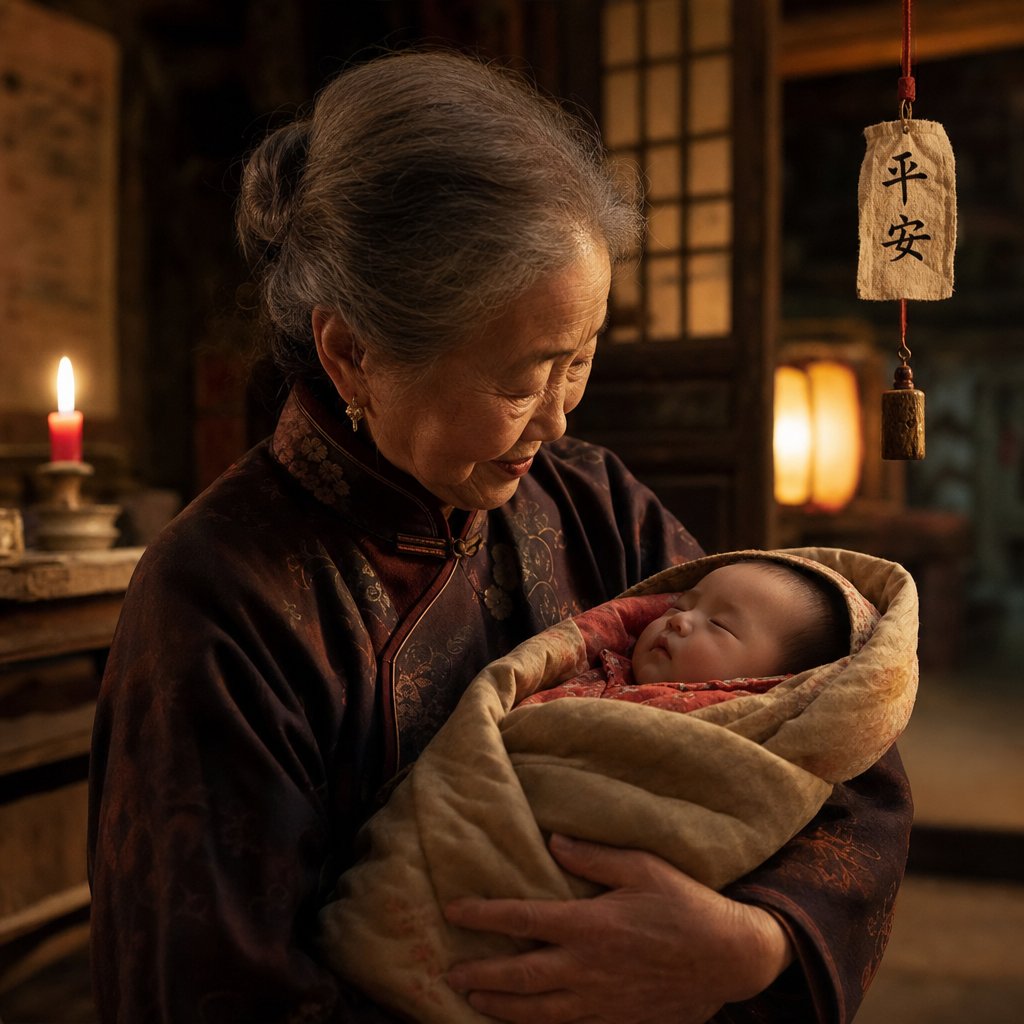
Milk Names and the Art of Humble Beginnings
Why would loving parents deliberately name their newborn "dog," "ugly," or "iron egg"? The answer lies in one of the oldest and most fascinating superstitions in Chinese culture. The 乳名 (ruming, "milk name") was the very first nickname a child received, often within days of birth, and its purpose was not affection but protection. In a world where infant mortality was devastatingly common, families believed that evil spirits and jealous ghosts roamed the earth looking for beautiful, promising children to steal. The logic was simple and desperate: if a baby's name sounded worthless, the spirits would pass it by.
Why Traditional Milk Names Were Deliberately Humble
This practice produced some of the most striking chinese nicknames for children in history. Parents reached for characters that signaled lowliness, toughness, or outright unattractiveness. Common choices included 狗 (gou, "dog"), 丑 (chou, "ugly"), 铁 (tie, "iron"), 石头 (shitou, "stone"), and 蛋 (dan, "egg"). Animal names were especially popular because they implied the child was no more significant than livestock. Natural elements like iron and stone suggested durability, the hope that the child would be too tough for death to claim.
To modern ears, these might sound like chinese funny names, but they carried profound emotional weight. A mother calling her son 狗蛋 (goudan, "dog egg") was not being cruel. She was performing a kind of verbal camouflage, dressing her most precious possession in rags so that fate would not notice it. The uglier the name, the fiercer the love behind it.
The Superstitious Origins of Baby Nicknames
The superstition ran deep enough to reach the imperial court. Even emperors, the most protected people in China, were not exempt from this tradition in their infancy.
Emperor Wu of the Han Dynasty (汉武帝), one of China's most powerful and celebrated rulers, carried the childhood milk name 彘 (zhi), meaning "pig" or "boar." The future Son of Heaven, who would expand the empire's borders and establish the Silk Road, spent his earliest years answering to a name that placed him on the level of barnyard animals. His parents believed that such a humble name would keep malevolent spirits from recognizing the extraordinary destiny within.
This was not an isolated case. The Song Dynasty general Xin Qiji, one of China's greatest poets, had the milk name 铁柱 (tiezhu, "iron pillar"). The practice cut across class lines. Whether your family ruled an empire or farmed a small plot, the spiritual logic remained the same: name the child low, and it will survive to grow tall.
As the New Zealand China Friendship Society notes, a superstitious custom sometimes attached to the milk name was to select a disgusting name specifically to ward off evil spirits who might wish to harm the child. The milk name might eventually be abandoned, but it was often continued as a familial nickname well into adulthood.
Common Patterns in Childhood Nickname Formation
Beyond the protective ugly names, traditional milk names and childhood names (小名, xiaoming) followed several recognizable formation patterns that persist in Chinese culture today:
- Reduplication (叠字 diezi): Doubling a single character to create a soft, affectionate sound. Names like 明明 (Mingming), 乐乐 (Lele), 甜甜 (Tiantian, "sweet-sweet"), and 圆圆 (Yuanyuan, "round-round") use this pattern. The repetition creates a diminutive effect, making the name sound smaller and more intimate.
- 小 (xiao) + name: Prefixing "little" to a character from the child's formal name or a descriptive word. 小明 (Xiao Ming), 小红 (Xiao Hong), 小虎 (Xiao Hu, "little tiger") all follow this structure. This remains one of the most common cute chinese nicknames heard in families today.
- 阿 (a) + name: Adding the prefix 阿 before a name character, particularly common in southern China and Cantonese-speaking regions. 阿宝 (A Bao, "precious") and 阿毛 (A Mao, "hairy") are classic examples.
- Food and nature terms: Characters drawn from fruits, plants, and seasons. 桃子 (Taozi, "peach"), 冬冬 (Dongdong, "winter-winter"), and 小花 (Xiaohua, "little flower") reflect the natural world and seasonal birth timing.
These patterns produced what many people today recognize as cute chinese names, though their origins were rooted in ritual rather than mere sweetness. The reduplication pattern in particular carried linguistic significance. Since repeated characters function as diminutives in Chinese, doubling a character automatically signaled that the name belonged to someone small, young, and cherished within the family circle.
What made these names socially powerful was not just their sound but their restricted use. A milk name belonged exclusively to the domestic sphere. Only parents, grandparents, and close elder relatives had the right to use it. Siblings might share it, but outsiders never would. Hearing someone's ruming meant you were inside their most intimate family circle. Using it without that privilege was a serious breach of boundaries. In this way, the humble milk name established the very first layer of social hierarchy in a person's life, long before courtesy names and art names added further complexity.
Even the process of choosing the name reinforced family structure. Parents often consulted grandparents before settling on a milk name, and in many families the paternal grandfather held final authority over the selection. The name was not just a label but a tiny contract between generations, a shared secret that bound the family together around the vulnerable new life at its center.
This intimate, family-only quality of milk names stands in sharp contrast to the next layer of traditional naming. Where the ruming whispered protection within household walls, the courtesy name announced a young person's readiness to step beyond them and into the structured world of Confucian social life.
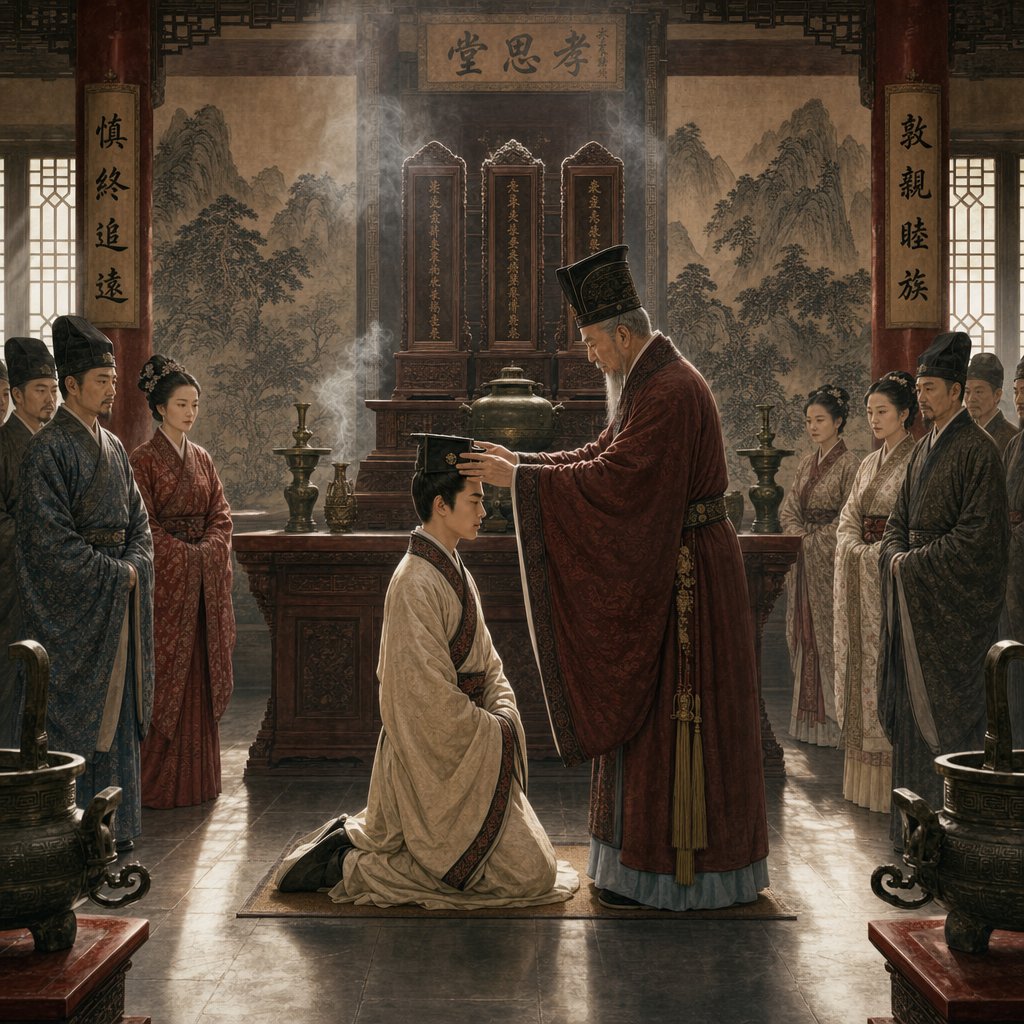
Courtesy Names and Confucian Social Hierarchy
A young man turns twenty. His family gathers in the ancestral temple. An elder places a cap on his head for the first time, and in that moment, he receives something far more significant than headwear. He receives his 字 (zi), his courtesy name, the name that will define how the outside world addresses him for the rest of his life. This single ritual transformed a boy with a private milk name into a man with a public social identity.
The Capping Ceremony and Coming of Age
The chinese courtesy name was not casually chosen or informally adopted. It arrived through ceremony. For young men, the 冠礼 (guanli, "capping ceremony") took place at age twenty. Originating in the Zhou Dynasty, this ritual was performed in the ancestral temple, typically in the second month of the year. After the ceremony, the young man could wear adult headwear and arrange his hair in the style of a grown man. More importantly, he gained his zi and with it, full eligibility for marriage, clan activities, and formal social participation.
For young women, the equivalent was the 笄礼 (jili, "hairpin ceremony"), performed at age fifteen. Her hair was braided and adorned with a hairpin, symbolizing adulthood and readiness for betrothal. She too received a courtesy name at this point. As the Chinese Culture textbook at Raider Digital Publishing explains, after the jili ceremony, noblewomen typically received further education in etiquette and household skills necessary for their roles as wives and daughters-in-law.
People sometimes ask: do chinese people have middle names? The courtesy name is the closest traditional equivalent, though it functioned very differently. Rather than sitting passively between a first and last name on official documents, the zi actively replaced the given name in nearly all social interactions outside the family. It was not a middle layer of identity but a social-facing layer that shielded the private given name from casual use.
How Courtesy Names Related to Given Names
Courtesy names were not random. They were carefully crafted to relate semantically to the bearer's given name (名, ming). The relationship could take several forms:
- Synonyms: The zi echoed the meaning of the ming using a different character. 诸葛亮 (Zhuge Liang), where 亮 means "bright," received the courtesy name 孔明 (Kongming), where 明 also means "bright" or "clarity."
- Antonyms: The zi expressed the opposite meaning. 韩愈 (Han Yu), where 愈 means "to advance" or "surpass," took the courtesy name 退之 (Tuizhi), meaning "to retreat."
- Amplification: The zi expanded or elevated the concept in the ming. 李白 (Li Bai), where 白 means "white" or "pure," received 太白 (Taibai), meaning "great whiteness," also referencing the planet Venus.
- Birth order markers: Many courtesy names began with a character indicating the bearer's position among siblings. 伯 (bo) for the eldest, 仲 (zhong) for the second, 叔 (shu) for the third, and 季 (ji) for the youngest. Confucius himself, named 孔丘 (Kong Qiu), received the courtesy name 仲尼 (Zhongni), with 仲 marking him as the second son.
This semantic linking meant that mandarin chinese names operated as paired concepts. Knowing someone's given name, you could often guess the logic behind their courtesy name, and vice versa. The two names formed a conceptual unit, like two sides of the same coin, one private and one public.
Famous Historical Courtesy Names and Their Meanings
The best way to see this system in action is through the figures who carried these names across Chinese history. Notice how each courtesy name connects back to the given name through meaning, metaphor, or literary allusion:
| Historical Figure | Given Name (名) | Courtesy Name (字) | Semantic Connection |
|---|---|---|---|
| 诸葛亮 (Zhuge Liang) | 亮 (Liang) — "bright" | 孔明 (Kongming) — "great clarity" | Synonym: both characters relate to brightness and light |
| 曹操 (Cao Cao) | 操 (Cao) — "conduct, virtue" | 孟德 (Mengde) — "first in virtue" | Amplification: 德 (virtue) expands on moral conduct; 孟 marks eldest status |
| 李白 (Li Bai) | 白 (Bai) — "white, pure" | 太白 (Taibai) — "great whiteness" | Amplification: 太 intensifies the original meaning; also references Venus |
| 杜甫 (Du Fu) | 甫 (Fu) — "just beginning, man" | 子美 (Zimei) — "son of beauty" | Complementary: 子 is a respectful prefix; 美 (beauty) elevates 甫 |
| 岳飞 (Yue Fei) | 飞 (Fei) — "to fly" | 鹏举 (Pengju) — "the roc rises" | Amplification: a flying bird becomes the mythical roc soaring upward |
| 关羽 (Guan Yu) | 羽 (Yu) — "feather" | 云长 (Yunchang) — "long as clouds" | Extension: feathers reach toward the clouds, suggesting soaring ambition |
Each pairing reveals deliberate thought. Yue Fei's parents named him "fly," and his courtesy name elevated that flight into the legendary roc of Chinese mythology. Cao Cao's given name referenced moral conduct, and his courtesy name declared him first among the virtuous. These were not arbitrary labels but carefully constructed statements of aspiration and identity.
The social stakes of this system were real. According to the Book of Rites, after a man reached adulthood, it was disrespectful for others of the same generation to address him by his given name. The given name was reserved for oneself and one's elders. Peers, colleagues, and social equals used the courtesy name exclusively. Calling someone by their ming when you should have used their zi was not a minor slip. It was a deliberate insult, a declaration that you considered them beneath basic respect.
A vivid example from the Three Kingdoms period illustrates this. When the general 马超 (Ma Chao) recounted how Cao Cao had slaughtered his entire family, he still referred to his enemy as "孟德" (Mengde), using the courtesy name rather than the given name. Even in the grip of murderous hatred, Ma Chao maintained the naming protocol because violating it would have reflected poorly on his own character, not his enemy's. The idiom 指名道姓 (zhi ming dao xing), meaning to publicly call out someone's full name, still carries the connotation of open hostility in modern Chinese.
This rigid etiquette meant that a single person existed under multiple names simultaneously, each one accessible only to specific people in specific contexts. Your parents called you by your ming. Your friends called you by your zi. Strangers referred to you by your surname and title. The system created invisible walls between social spheres, and crossing those walls without permission was a transgression everyone understood.
Yet for all its formality, the courtesy name was still given to you by others. It arrived through ceremony, chosen by a father, a teacher, or an elder. What if you wanted a name that was entirely your own, one that reflected not your family's hopes but your personal philosophy, your artistic vision, or the circumstances of your life? That desire gave rise to the most creatively free layer of the traditional naming system: the self-chosen art name.
Art Names and the Freedom of Self-Naming
Milk names were chosen by parents. Courtesy names were bestowed by elders at a ceremony. But the 号 (hao, "art name" or pseudonym) belonged entirely to the individual. This was the one layer of the traditional naming system where a person could speak for themselves, crafting an identity that reflected their philosophy, their circumstances, or the life they aspired to live. No ritual required. No elder's permission needed. You simply chose a name and began using it.
Self-Chosen Identity in Classical Chinese Culture
The freedom of the hao made it radically different from every other name in the system. As Baidu Encyclopedia notes, because the art name was self-chosen, it was not subject to the restrictions of family, patriarchal clan system, etiquette, or generational hierarchy that governed surnames, given names, and courtesy names. A person could freely express and showcase their aspirations and interests through this name alone.
The practice traces back to the Spring and Autumn period, with figures like Lao Dan (老聃) and Guiguzi (鬼谷子) representing some of China's earliest art names. By the Eastern Jin dynasty, the poet Tao Yuanming gave himself the name 五柳先生 (Wuliu Xiansheng, "Mr. Five Willows") after the five willow trees growing outside his home. The custom became widespread during the Tang and Song dynasties and reached its peak in the Yuan, Ming, and Qing periods. Some individuals accumulated remarkable collections of names. The Ming dynasty painter Chen Hongshou carried four art names simultaneously, including 老莲 ("Old Lotus") and 悔迟 ("Repentance of Delay"). The Korean scholar Kim Jeong-hui, working within the same East Asian tradition, reportedly used as many as 503 art names across his lifetime.
What made these names compelling was their storytelling quality. Each hao encoded a narrative. When Su Shi was exiled to Huangzhou and forced to farm a plot of land on the eastern slope of a hill, he adopted the name 东坡居士 (Dongpo Jushi, "Householder of the Eastern Slope"). The name transformed humiliation into identity, turning a punishment into a philosophical statement about finding peace in simplicity. These are some of the most cool chinese nicknames in history precisely because they carry weight beyond mere aesthetics.
Literary and Artistic Pseudonyms Through History
Art names followed recognizable patterns that reflected the values of their era. During the Tang and Song dynasties, when Buddhism deeply influenced intellectual life, many scholars adopted names ending in 居士 (jushi, "lay Buddhist"). In the Yuan dynasty, Daoism held sway, and names ending in 道人 (daoren, "Daoist") became fashionable. By the late Qing, patriotic themes dominated, producing names like 竞雄 ("Competing Hero") used by the revolutionary Qiu Jin.
Here are some of the most notable art names and the stories behind them:
- 苏轼 (Su Shi) — 东坡居士 (Dongpo Jushi, "Householder of the Eastern Slope"): Adopted after his political exile to Huangzhou, where he farmed land on the eastern slope. The name embraced rural simplicity as a philosophical ideal.
- 陶渊明 (Tao Yuanming) — 五柳先生 (Wuliu Xiansheng, "Mr. Five Willows"): Named for the five willow trees beside his home. Expressed his rejection of official life and love of pastoral solitude.
- 李白 (Li Bai) — 青莲居士 (Qinglian Jushi, "Green Lotus Lay Buddhist"): Referenced his birthplace near Qinglian Township and his affinity for Buddhist thought.
- 白居易 (Bai Juyi) — 香山居士 (Xiangshan Jushi, "Xiangshan Lay Buddhist"): Named after the Xiangshan Temple in Luoyang where he spent his later years in contemplation.
- 欧阳修 (Ouyang Xiu) — 六一居士 (Liuyi Jushi, "Householder of the Six Ones"): He described himself as possessing "one myriad books, one thousand inscriptions, one qin, one chess set, one pot of wine, plus one old man" — himself.
- 齐白石 (Qi Baishi) — 借山翁 (Jieshan Weng, "Old Man Who Borrows Mountains"): Reflected his philosophy that an artist borrows from nature rather than owning it.
Many of these rank among the most awesome chinese names ever created because they compress an entire worldview into two or three characters. A single hao could communicate exile, defiance, humor, or spiritual aspiration. Scholars and officials often adopted new art names at turning points in their lives, marking political disgrace, retirement, spiritual awakening, or artistic breakthroughs with a fresh identity.
The revolutionary writer Jiang Guangci exemplifies how this tradition extended into the modern era. He used the self-given name 侠生 (Xiasheng, "chivalrous life") as a young student, then cycled through pen names like 光赤, 华希理, and 维素 as his political circumstances shifted. Each name marked a new chapter in his revolutionary career.
Calligraphers and painters still use hao today when signing their work. A scroll painting bearing the seal 借山翁 immediately identifies Qi Baishi without needing his legal name. This practice maintains a direct, unbroken link to the Tang dynasty artists who first popularized the custom over a thousand years ago.
The tradition also connects to how modern Chinese users craft their digital identities. When someone selects a chinese username for a gaming platform or social media profile, they often follow the same underlying logic as the classical hao: choosing characters that express personality, mood, or aspiration rather than legal identity. Chinese display names on platforms like WeChat or Weibo frequently draw on literary allusions, nature imagery, and philosophical references that would feel familiar to a Song dynasty poet selecting his studio name. The impulse to create a chinese username that communicates something meaningful about the self, rather than simply identifying it, is the hao tradition alive in digital form. Whether someone picks chinese names for games or crafts a poetic handle for a calligraphy forum, they are participating in a creative practice that stretches back millennia.
The art name represented personal freedom within a rigid system. But that system itself was not static. Across two thousand years of dynastic history, the rules governing all these naming layers shifted, expanded, and eventually collapsed under the weight of political revolution.
How Chinese Nicknames Evolved Across Dynasties
Every dynasty reshaped the rules. What began as a simple system of milk names and clan identifiers in the Bronze Age grew into an elaborate architecture of courtesy names, art names, and descriptive nicknames spanning two millennia. Each era added layers, democratized access, or stripped traditions away entirely. Tracing this evolution reveals how deeply a chinese nickname was tied to the political and intellectual currents of its time.
Nicknames in the Zhou and Han Dynasties
The Zhou Dynasty (1046–256 BC) laid the foundation. During this period, members of the nobility could possess up to four different names: personal names (名 ming), clan names (姓 xing), lineage names (氏 shi), and courtesy names (字 zi). According to historical records, commoners possessed only a personal name, and the modern concept of a surname did not yet exist at any level of society. The courtesy name system, codified in the Book of Rites, established the principle that adults should not be addressed by their given names among peers. This single rule would govern Chinese social interaction for the next two thousand years.
The Han Dynasty (206 BC–220 AD) expanded the system in two directions. First, surnames finally trickled down to all commoners by the late Han period, giving every person a formal identity structure. Second, the scholarly class began adopting elaborate art names (号 hao) as intellectual culture flourished under imperial patronage. The nickname in chinese culture shifted from a purely aristocratic privilege to something accessible across social classes. The Han also saw the rise of descriptive nicknames (绰号 chuohao) in popular culture, with military heroes and officials earning titles based on their exploits or appearance.
The Golden Age of Tang and Song Naming
The Tang Dynasty (618–907) produced China's most celebrated poets, and with them, some of the most famous nickname traditions in history. Li Bai earned the popular nickname 诗仙 (Shixian, "Poetry Immortal"). Du Fu became 诗圣 (Shisheng, "Poetry Sage"). These descriptive titles functioned as a form of chinese nickname that transcended the individual, becoming permanent cultural labels that outlived the poets themselves by over a thousand years.
The Song Dynasty (960–1279) democratized naming practices further. As printing technology spread literacy beyond the aristocracy and the civil examination system drew talent from all social classes, courtesy names and art names were no longer restricted to hereditary elites. Merchants, minor officials, and even educated commoners began adopting zi and hao. The Song also saw populations with a majority of two-character given names for the first time, reshaping how nickname chinese patterns interacted with formal names.
The Ming (1368–1644) and Qing (1644–1912) dynasties brought increasing complexity. Generation name poems, where sixteen or more generations of a family shared predetermined characters in their names, became widespread. Art names multiplied as scholars accumulated multiple hao across their careers. The system reached its most elaborate form just before its collapse.
| Dynasty | Period | Key Nickname Developments |
|---|---|---|
| Zhou | 1046–256 BC | Formalized courtesy name (字) system for nobility; codified naming etiquette in the Book of Rites |
| Han | 206 BC–220 AD | Surnames extended to all commoners; art names (号) emerged among scholars; descriptive nicknames gained popularity |
| Tang | 618–907 | Literary golden age produced iconic poetic nicknames; Buddhist-influenced art names (居士) became widespread |
| Song | 960–1279 | Naming practices democratized beyond aristocracy; two-character given names became the majority |
| Ming | 1368–1644 | Generation name poems formalized; multiple art names per person became common; naming conventions reached peak complexity |
| Qing | 1644–1912 | Manchu-Han naming blended; elaborate naming persisted until Western influence and political reform began eroding traditions |
Decline of Traditional Practices in the Modern Era
The collapse came swiftly. The abolition of the imperial examination system in 1905 removed one of the primary social contexts where courtesy names carried weight. Without the examination halls, the scholarly networks, and the formal correspondence that demanded zi usage, the practice lost its functional purpose.
The May Fourth Movement of 1919 delivered the decisive blow. This intellectual revolution, directed toward national independence and the rebuilding of society and culture, explicitly attacked traditional Confucian ideas. Young intellectuals inspired by Western thought viewed the elaborate naming system as a relic of feudal hierarchy. The movement promoted vernacular writing and egalitarian social norms that left no room for the rigid distinctions between ming, zi, and hao. As the practice was decried by reformers, courtesy names rapidly fell out of use among the educated urban class.
The founding of the People's Republic in 1949 accelerated the decline. Revolutionary names like 强国 (Qiangguo, "strong nation") and 东风 (Dongfeng, "eastern wind") replaced classical naming patterns. The Cultural Revolution (1966–1976) went further, actively destroying genealogical records, banning traditional ceremonies, and stigmatizing classical culture. The capping ceremony vanished. Generation name poems were abandoned. The nickname in chinese daily life was reduced to simple patterns like 小+surname or reduplication, stripped of its former ritual significance.
Taiwan and overseas Chinese communities tell a different story. Separated from mainland political movements, Taiwan preserved more traditional naming customs well into the late twentieth century. The southern Chinese practice of 阿+name nicknames persisted in Taiwanese Hokkien communities. Overseas Chinese in Southeast Asia maintained generation name systems and familial milk name traditions that had disappeared on the mainland. These regional variations kept classical patterns alive even as they vanished from their place of origin, creating a patchwork of surviving traditions scattered across the Chinese-speaking world.
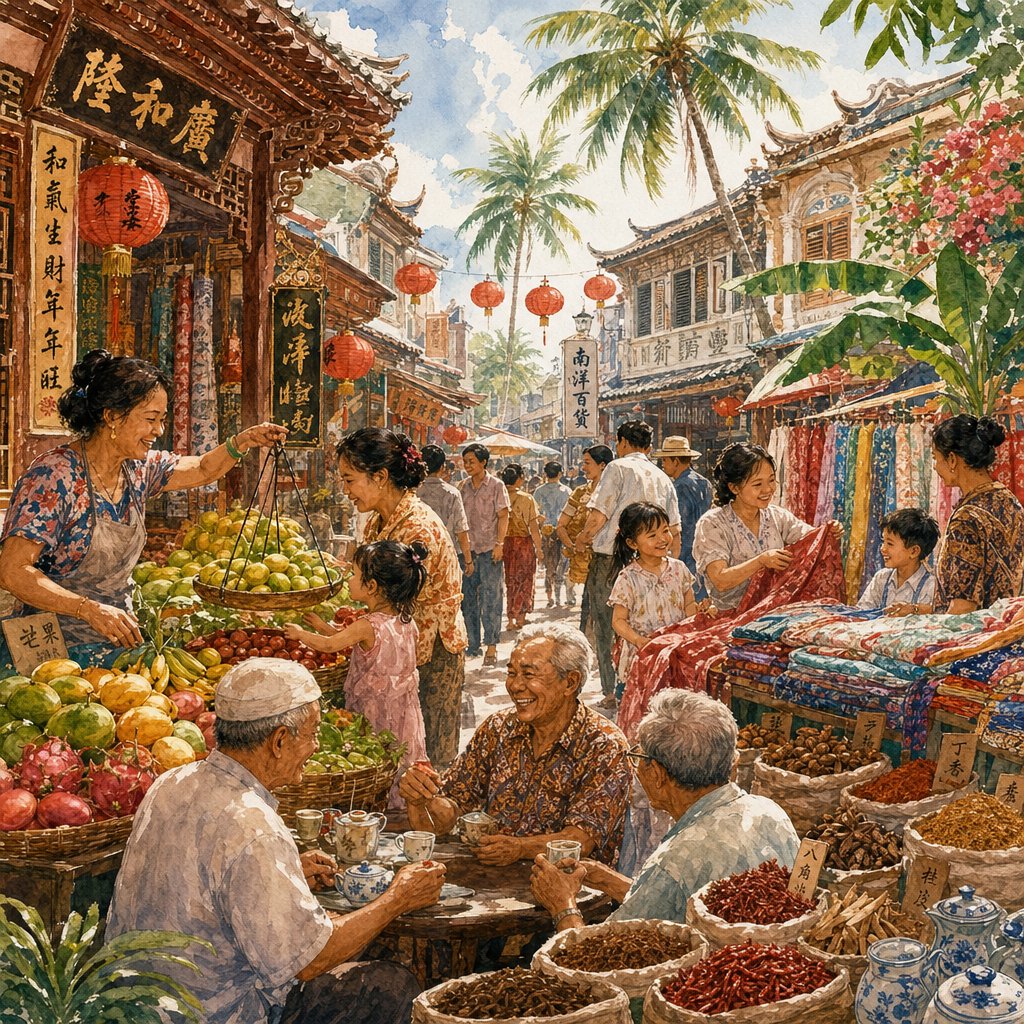
Regional and Dialectal Variations in Nickname Formation
China's linguistic landscape is not one language but many. Cantonese, Hokkien, Shanghainese, Hakka, and dozens of other dialect groups each developed their own nickname patterns over centuries of relative isolation. These regional systems share underlying logic with the Mandarin traditions discussed above, but the specific prefixes, suffixes, and sound patterns differ dramatically. A person greeted warmly in Guangzhou sounds nothing like a person greeted warmly in Taipei or Shanghai, even when the social function of the nickname is identical.
Cantonese Nickname Patterns in Hong Kong and Guangdong
If you have ever spent time around Cantonese speakers, you will notice one pattern immediately: the prefix 阿 (aa3) attached to nearly every informal name. Cantonese speakers place 阿 in front of someone's name as a marker of familiarity and warmth. A person named 明 (Ming) becomes 阿明 (Aa3 Ming). Someone named 芳 (Fong) becomes 阿芳 (Aa3 Fong). The prefix works with single characters from given names, surnames, or even descriptive words. 阿伯 (aa3 baak) addresses an older man, while 阿嫂 (aa3 sou) addresses a sister-in-law.
This pattern dominates cantonese nicknames in both Hong Kong and Guangdong province. It functions as a verbal handshake, signaling that the speaker considers the relationship close enough for informality. In professional settings, the prefix disappears. In family kitchens and neighborhood markets, it is nearly universal. The hong kong nickname tradition adds another layer: during the British colonial period, many Cantonese speakers adopted English first names alongside their Chinese names. A person might be 阿John or 阿Mary among family, blending the Cantonese prefix with an English given name. This hybrid form persists today, creating nicknames that exist in neither language fully but make perfect sense in Hong Kong's bilingual culture.
Hokkien and Taiwanese Naming Traditions
In Fujian province and Taiwan, the Hokkien dialect uses a different diminutive marker: the suffix 仔 (a). Where Cantonese places familiarity at the front of a name, Hokkien attaches it to the end. The suffix -a (仔) in Taiwanese historically derives from "kiann" (child, son) and functions as a diminutive, meaning the small or little one. It adds color and affection to nouns and names alike.
The taiwan nickname tradition preserves this pattern in everyday life. A child named 明 might be called 明仔 (Beng-a). The suffix triggers special tone changes in the preceding syllable, a phonological feature unique to Hokkien that makes these nicknames sound distinctly musical. Some names always carry the suffix, like 囡仔 (gin-a, "child"), while for others it remains optional. The pattern extends beyond people to animals, objects, and places, creating a linguistic world where everything can be made smaller, more familiar, more intimate through a single syllable.
Taiwan's separation from mainland political upheaval allowed these Hokkien patterns to survive intact. While the Cultural Revolution dismantled traditional naming on the mainland, Taiwanese families continued using generational name poems, milk name customs, and dialect-specific nickname forms well into the late twentieth century. Grandparents in southern Taiwan still address grandchildren with Hokkien diminutives that would have been common in Fujian three hundred years ago.
Other dialect groups maintain their own distinctive patterns:
- Shanghainese: Uses the 小 (xiao) prefix like Mandarin but with distinctive Shanghainese pronunciation. The reduplication pattern is especially common, with names like 囡囡 (niuniu, "baby girl") used as affectionate nicknames. Shanghainese also favors 阿拉 (ala, "our") as a collective marker in family nicknames.
- Hakka: Employs 阿 (a) as a prefix similar to Cantonese, but also uses 老 (lau, "old") as a familiar prefix among peers. Hakka communities in Guangdong, Jiangxi, and Southeast Asia maintain naming traditions that emphasize clan identity, with nicknames often referencing ancestral villages.
- Cantonese (阿+name): 阿明, 阿芳, 阿Sir — prefix signals familiarity; used with given name characters, English names, or titles.
- Hokkien/Taiwanese (name+仔): 明仔, 猴仔, 店仔 — suffix creates diminutive; triggers special tone changes in the preceding syllable.
- Mandarin (小+name): 小明, 小红, 小李 — prefix means "little"; the most widely recognized pattern across China.
- Mandarin (reduplication): 明明, 乐乐, 甜甜 — doubling a character creates intimacy; common for children and romantic partners.
How Overseas Chinese Communities Preserve Traditional Names
Diaspora communities across Southeast Asia, North America, and Europe function as living archives of regional nickname traditions. In Malaysia and Singapore, Hokkien and Cantonese naming patterns persist among families who left southern China generations ago. A third-generation Malaysian Chinese family might still use 阿公 (aa3 gung) for grandfather and address children with Hokkien diminutives, even if the younger generation speaks primarily English or Malay.
These communities often create hybrid forms. In San Francisco's Chinatown, you might hear someone greeted as "Ah Bobby" — the Cantonese 阿 prefix fused with an English name. In Vietnamese Chinese communities, Cantonese nicknames blend with Vietnamese tonal patterns. The underlying logic remains Chinese, but the surface forms adapt to local linguistic environments. When you learn how to say hello friend in chinese, you quickly discover that the greeting itself varies by dialect and region, and the nickname attached to it signals which community the speaker belongs to.
What makes these preserved traditions valuable is their authenticity. Mainland China's political disruptions created gaps in the naming record. Overseas communities, insulated from those disruptions, maintained practices that might otherwise have been lost entirely. A Hakka family in Kolkata or a Hokkien clan in Manila may preserve nickname customs closer to their Ming dynasty origins than anything found in modern Fujian or Guangdong. The mandarin for friend is 朋友 (pengyou), but the way friends actually address each other, the specific nickname pattern they reach for, reveals their regional roots more precisely than any dictionary definition.
These regional variations remind us that traditional Chinese nicknames were never a single monolithic system. They were dozens of local systems sharing common principles but expressing them through radically different sounds. The rules governing who could use which name, however, operated with remarkable consistency across all dialect groups, creating a shared etiquette that transcended linguistic boundaries.
Chinese Terms of Endearment and the Etiquette of Nickname Usage
Shared principles, different sounds. That was the pattern across dialect groups. But what exactly were those shared principles? The answer is a strict, unwritten code governing who could call you what and when. In traditional Chinese society, using the wrong name for someone was not an awkward slip. It was a social weapon, a declaration of intimacy or hostility that everyone in earshot understood immediately.
Who Could Call You What and When
Imagine a scholar named 王明 (Wang Ming), courtesy name 子光 (Ziguang), art name 松溪居士 (Songxi Jushi, "Householder of Pine Creek"). In daily life, these three identities existed simultaneously, but each one was locked behind a different social key:
- 乳名 (ruming) and 名 (ming): Only parents, grandparents, and direct elders could use his given name 明. A teacher might also use it, but only in private instruction. Hearing your given name from a peer in public meant one of two things: this person considers you beneath respect, or this person claims a level of intimacy reserved for family.
- 字 (zi, courtesy name): Peers, colleagues, friends, and social equals used 子光. This was the default mode of polite address between adults of similar standing. Using someone's zi signaled mutual respect and proper Confucian conduct.
- 号 (hao, art name): The public literary world knew him as 松溪居士. This name appeared on his calligraphy, his published writings, and in literary circles where personal identity merged with artistic reputation.
The boundaries were rigid. A junior official addressing his superior by given name would face immediate social consequences, potentially career-ending ones. A stranger using someone's milk name would provoke confusion and offense, like a person on the street suddenly calling you by the pet name your grandmother used when you were three.
The Book of Rites (礼记) states: "After the capping ceremony, one is addressed by the courtesy name. Only the ruler and one's father may use the given name." (冠而字之, 敬其名也。君父之前称名, 他人则称字。) This single passage codified the rule that governed Chinese social interaction for over two thousand years: the given name belonged to authority, the courtesy name belonged to respect.
The consequences of violation were not merely social embarrassment. The idiom 指名道姓 (zhi ming dao xing), meaning to publicly call out someone by their full given name, carried the weight of an open challenge. In the Three Kingdoms period, even sworn enemies maintained naming protocol. Using someone's ming in public was to declare them unworthy of basic human dignity. It was the verbal equivalent of a slap.
Name Taboos and Imperial Naming Rules
The etiquette extended far beyond personal relationships. The concept of 避讳 (bihuì, "name taboo") elevated naming rules to the level of state law. Subjects throughout the empire were forbidden from writing or speaking characters that appeared in the emperor's given name. This was not a suggestion. It was enforced by punishment, sometimes severe.
During the Qin Dynasty, Emperor Qin Shi Huang's given name 政 (zheng) forced the entire empire to alter the pronunciation of 正月 (the first month of the year) from zhengyue to a modified reading, and eventually rename it 端月 (duanyue) entirely. The naming taboo of the state (国讳 guohui) required that everyone, from court officials to common farmers, avoid the emperor's name characters in speech and writing.
The methods of avoidance were creative out of necessity:
- Character substitution: Replacing the taboo character with a synonym. The Forbidden City's 玄武门 (Xuanwu Gate, "Black Warrior Gate") was renamed 神武门 (Shenwu Gate, "Gate of Divine Might") to avoid a character from the Kangxi Emperor's name 玄烨.
- Stroke omission: Writing the character but deliberately leaving out the final stroke, signaling awareness of the taboo while still communicating meaning.
- Leaving a blank: Simply omitting the character entirely and leaving empty space on the page.
The stakes were real. In 1777, the scholar Wang Xihou wrote the Qianlong Emperor's name without the required stroke omission in his dictionary. The result was execution for Wang and his family, along with confiscation of all property. This was not an isolated incident but a demonstration of how seriously the imperial state treated naming violations.
Beyond the emperor, the 家讳 (jiahui, "clan naming taboo") required families to avoid using the given name characters of ancestors going back seven generations. When two families corresponded, each observed the other's naming taboos in their letters. Forgetting or ignoring a clan taboo in diplomatic documents was considered a sign of poor education and deliberate disrespect.
Terms of Endearment Within Family Hierarchies
Within the family itself, a parallel system of address terms functioned as a form of chinese words of endearment that encoded precise relational information. These were not nicknames in the Western sense. They were positional markers that told everyone present exactly where two people stood in the family structure.
Consider 哥哥 (gege). If you have encountered Chinese media, you may have wondered what does gege mean beyond its dictionary definition of "elder brother." In traditional family usage, the gege meaning in chinese carried layers of social information. It was not simply a label for a male sibling born earlier. It established hierarchy, obligation, and emotional tone in a single word. A younger sister calling her brother 哥哥 acknowledged his seniority and the Confucian expectation that he would protect and guide her. Between non-siblings, using 哥哥 as an address term implied a chosen relationship modeled on brotherly closeness.
The same precision applied throughout the family tree. The nainai meaning (奶奶, paternal grandmother) distinguished this specific grandmother from 外婆 (waipo, maternal grandmother). Each term carried different expectations about closeness, authority, and domestic role. Chinese kinship terms are among the most specific in any language, distinguishing between:
| Term | Pinyin | Literal Meaning | Relational Function |
|---|---|---|---|
| 哥哥 | gege | elder brother | Signals seniority and protective obligation; used between siblings or to express chosen closeness |
| 姐姐 | jiejie | elder sister | Acknowledges female seniority; implies nurturing role within family |
| 奶奶 | nainai | paternal grandmother | Identifies father's mother specifically; carries authority over household matters |
| 外婆 | waipo | maternal grandmother | Identifies mother's mother; traditionally associated with warmth and indulgence |
| 叔叔 | shushu | father's younger brother | Distinguished from 伯伯 (bobo, father's older brother); different rank within clan |
| 姑姑 | gugu | father's sister | Distinguished from 阿姨 (ayi, mother's sister); different family line |
These terms functioned as chinese terms of endearment precisely because they were not generic. Calling someone 奶奶 was not like calling someone "grandma" in English, where the word applies equally to both grandmothers. The Chinese term specified which grandmother, which family line, and by extension, which set of cultural expectations governed the relationship. The specificity was the affection. Knowing exactly where someone stood in your family meant knowing exactly how to love them.
In practice, these kinship terms often replaced given names entirely within the household. A child might never hear their grandmother's actual name. She was simply 奶奶, and that title carried more warmth and authority than any personal name could. Extended to non-family members, these terms created fictive kinship. Calling an unrelated older woman 阿姨 (ayi, "auntie") or an older man 叔叔 (shushu, "uncle") drew them into a family-like framework, assigning them a role and the respect that came with it.
This entire system, from imperial name taboos down to the specific word a child used for each grandparent, operated on a single principle: names are not neutral. Every form of address carried social weight, relational meaning, and emotional consequence. The wrong name at the wrong time could end a career, start a feud, or shame a family. The right name, spoken by the right person, could express love, respect, and belonging more powerfully than any declaration.
These rigid classical rules have not disappeared so much as transformed. The same impulse that made a Song dynasty scholar careful about which name to use now shapes how young Chinese couples choose pet names, how gamers craft online identities, and how families blend traditional patterns with modern sensibilities.

How Traditional Patterns Shape Modern Chinese Nicknames
The capping ceremony is gone. Courtesy names have vanished from daily life. Yet the underlying logic of traditional Chinese nicknames has not disappeared. It has migrated. The same patterns that governed naming in imperial courts now surface in WeChat messages between lovers, in gaming handles on Chinese servers, and in the names people give their cats. The forms look different. The cultural DNA is identical.
Classical Patterns in Modern Romance
When a young Chinese couple calls each other 宝贝 (baobei, "treasure") or 宝宝 (baobao, "baby"), they are using the same reduplication and diminutive logic that produced classical childhood names like 乐乐 and 甜甜. The 小 prefix that once created intimate family nicknames like 小明 now generates romantic pet names in chinese like 小宝贝 (xiao baobei, "little treasure") and 小可爱 (xiao ke'ai, "little cutie"). The structure is centuries old. Only the context has shifted from parent-child to romantic partner.
Terms like 亲爱的 (qin'ai de, "my dear"), 老公/老婆 (laogong/laopo, "hubby/wifey"), and 心肝 (xingan, "heart and liver," meaning "dearest one") draw on the same principle that made traditional nicknames powerful: restricted access. Just as a milk name belonged only to family elders, these romantic terms belong exclusively to the couple. Using 老婆 for someone who is not your partner would be as jarring today as using someone's ruming without family permission was in the Tang dynasty.
Young couples also create code names for crushes chinese style, drawing on literary allusions and wordplay. A crush might be referred to by a character from a classical poem, a homophone that sounds innocent to outsiders, or a food item that carries private meaning. This practice echoes the layered secrecy of the traditional system, where different audiences had access to different names for the same person.
From Art Names to Internet Handles
The 号 (hao) tradition finds its most direct modern descendant in chinese gamertags and social media display names. When Su Shi chose 东坡居士 to reflect his exile and philosophy, he was doing exactly what a modern gamer does when selecting a handle that communicates personality rather than legal identity. The impulse is the same: craft a public-facing name that says something meaningful about who you are or who you want to be.
Chinese gaming platforms and social networks are filled with usernames that follow classical patterns. Nature imagery (月下独酌, "drinking alone under the moon"), literary references (青莲客, "green lotus guest"), and philosophical statements (无为道人, "Daoist of non-action") appear alongside modern slang and pop culture references. The format has changed from ink seals to digital profiles, but the creative logic of self-naming persists.
Here is how traditional patterns map onto their modern equivalents:
- Reduplication (叠字) then: 明明, 乐乐 for children → Now: 宝宝, 甜甜 between romantic partners; 豆豆, 球球 for pets
- 小+name then: 小明, 小红 for family intimacy → Now: 小宝贝, 小可爱 for lovers; 小黑, 小白 for cats and dogs
- 号 (art name) then: 东坡居士, 五柳先生 for scholars → Now: poetic gaming tags, WeChat display names, creative usernames on Bilibili and Douyin
- Humble 乳名 then: 狗蛋, 铁柱 to ward off spirits → Now: ironic self-deprecating usernames like 咸鱼 ("salted fish," meaning lazy person) used with affectionate humor
- Descriptive 绰号 then: 诗仙, 诗圣 for poets → Now: fan-given nicknames for celebrities and internet personalities based on traits or viral moments
Traditional Naming Patterns for Pets and Gaming
Pet naming in China reveals traditional patterns with striking clarity. According to Chinese cultural naming traditions, pet owners frequently choose names that embody blessings, like 旺财 (Wangcai, "prosperous wealth") or 福福 (Fufu, "fortune-fortune"). Others draw on food vocabulary: 小可乐 (Xiao Kele, "little cola"), 土豆 (Tudou, "potato"), 汤圆 (Tangyuan, "glutinous rice ball"). The reduplication pattern dominates chinese cat names and dog names alike, with names like 点点 (Diandian, "dot-dot"), 圆圆 (Yuanyuan, "round-round"), and 豆豆 (Doudou, "bean-bean") ranking among the most popular.
When choosing cat names in chinese, owners often reach for the same character categories their ancestors used for children's milk names: food, animals, physical descriptions, and lucky words. A black cat becomes 小黑 (Xiao Hei, "little black"). A chubby cat becomes 胖胖 (Pangpang, "chubby-chubby"). A cat adopted for good fortune might be named 招财 (Zhaocai, "beckoning wealth"). Chinese names for cats and chinese names for dogs follow the same structural logic as human childhood nicknames, using the 小+descriptor, reduplication, and auspicious character patterns that have existed for centuries.
The food-naming tradition is particularly interesting. Just as traditional milk names used humble, earthy terms to protect children, modern chinese pet names use food words to express affection through smallness and sweetness. A cat named 饺子 (Jiaozi, "dumpling") or a dog named 包子 (Baozi, "steamed bun") carries the same diminutive warmth as a child once called 桃子 (Taozi, "peach").
Generational differences make this cultural continuity visible. A grandmother in rural Sichuan might still call her grandson 狗娃 (gouwa, "dog child"), using the protective ugly-name tradition without irony. Her grandson, meanwhile, might use 咸鱼翻身 ("salted fish flipping over") as his gaming tag, a self-deprecating joke that nonetheless follows the same structural principle: adopt a humble identity to navigate a hostile environment. The grandmother wards off spirits. The grandson wards off online trolls. Different threats, same cultural instinct.
This persistence across generations suggests that traditional Chinese nickname patterns are not historical curiosities but living cultural grammar. The vocabulary updates. The platforms change. But the underlying rules about intimacy, identity, and social positioning continue to shape how Chinese speakers name the people, animals, and digital selves they care about most.
Practical Guide to Traditional Chinese Nickname Categories
Living cultural grammar needs a practical key. Whether you are learning Mandarin, building a relationship with a Chinese partner, or simply curious about the names you hear in Chinese media, the categories below organize the most common terms of endearment in chinese by function and context. Each one traces back to the traditional patterns explored throughout this article.
Romantic and Affectionate Traditional Nicknames
Chinese romantic nicknames borrow heavily from family-structure language. Calling your boyfriend in chinese 老公 (laogong, "husband") or your girlfriend in chinese 老婆 (laopo, "wife") does not require a marriage certificate. Dating couples use these terms freely, signaling commitment and envisioning a shared future. The practice draws directly on the Confucian family model, where the most intimate address terms were positional rather than personal.
Similarly, 哥哥 (gege) and 妹妹 (meimei) appear between couples as affectionate role-play, not literal sibling references. A girlfriend calling her partner 哥哥 invokes the protective, senior-brother dynamic. A boyfriend calling his partner 妹妹 expresses tenderness and care. These chinese terms of affection repurpose kinship vocabulary for romance, a pattern unique to Chinese culture. The word for lover in chinese language, 爱人 (airen), carries a more formal weight and is often reserved for married couples or deeply committed partnerships.
Funny and Descriptive Nicknames in Chinese Culture
The 绰号 tradition of descriptive nicknames lives on in playful teasing between friends and partners. Funny chinese nicknames like 土豆 (tudou, "potato") for someone who lounges around, 笨蛋 (bendan, "dumb egg") for a lovable blunder, or 胖子 (pangzi, "fatty") for a close friend all follow the ancient pattern of naming people after observable traits. These funny chinese names sound harsh in translation but carry genuine warmth in context. The closer the relationship, the more license you have to tease.
The reduplication pattern also produces humorous chinese endearments like 笨笨 (benben, "silly-silly") and 傻瓜 (shagua, "silly melon"), terms that express affection precisely through their apparent insult. Calling someone stupid with a smile is, in Chinese culture, a declaration of closeness.
Choosing a Meaningful Chinese Nickname
The table below organizes common nicknames by category, showing how each one connects to the traditional system:
| Category | Chinese | Pinyin | Literal Meaning | Usage Context |
|---|---|---|---|---|
| Romantic | 亲爱的 | qin'ai de | dear one | Universal term between couples; equivalent to "darling" |
| Romantic | 宝贝 | baobei | treasure | Intimate and warm; used by couples and for children |
| Romantic | 老公/老婆 | laogong/laopo | husband/wife | Dating and married couples; signals deep commitment |
| Romantic | 心肝 | xingan | heart and liver | Deeply intimate; means "dearest one" |
| Playful | 傻瓜 | shagua | silly melon | Affectionate teasing between close partners or friends |
| Playful | 小猪 | xiao zhu | little piggy | Cute teasing for a partner; implies cuddly warmth |
| Humorous | 土豆 | tudou | potato | Friends or pets; someone who loves lounging |
| Humorous | 笨蛋 | bendan | dumb egg | Playful ribbing after a funny mistake |
| Respectful | 哥哥/姐姐 | gege/jiejie | elder brother/sister | Acknowledges seniority; used between couples or friends |
| Respectful | 知己 | zhiji | one who knows me | Deep friendship; a confidante who truly understands you |
Every entry in this table carries centuries of cultural weight. The romantic terms descend from family-hierarchy language. The humorous ones continue the 绰号 tradition of naming people by their most visible trait. The respectful ones preserve Confucian relational logic in modern dress.
Traditional Chinese nicknames were never casual labels. They encoded family bonds, social rank, spiritual protection, artistic identity, and thousands of years of linguistic creativity into a few carefully chosen characters. The next time you encounter a Chinese nickname, whether in a historical novel, a WeChat conversation, or a grandmother calling across a crowded market, you will know there is an entire system behind it. Every name tells a story about who is speaking, who is listening, and what they mean to each other.
Frequently Asked Questions About Traditional Chinese Nicknames
1. What are the different types of traditional Chinese nicknames?
Traditional Chinese culture recognizes five main nickname categories: ruming (milk names given at birth for spiritual protection), xiaoming (childhood pet names using reduplication or the prefix xiao), zi (courtesy names bestowed at coming-of-age ceremonies), hao (self-chosen art names reflecting personal philosophy), and chuohao (descriptive nicknames based on traits or talents). Each type served a distinct social function and was governed by strict rules about who could use it and when.
2. Why did Chinese parents give their babies ugly or humble names?
Chinese families traditionally believed that evil spirits and jealous ghosts searched for beautiful, promising children to steal. By giving babies deliberately humble milk names using characters like gou (dog), chou (ugly), or tie (iron), parents hoped to make their children appear worthless to malevolent forces. Even Emperor Wu of the Han Dynasty carried the childhood milk name zhi, meaning pig. The practice reflected deep parental love disguised as verbal camouflage in an era of high infant mortality.
3. What is a Chinese courtesy name and how was it given?
A Chinese courtesy name (zi) was a formal adult name bestowed during a coming-of-age ceremony. Boys received theirs at age 20 during the guanli (capping ceremony), while girls received theirs at 15 during the jili (hairpin ceremony). The courtesy name was semantically linked to the given name through synonyms, antonyms, or amplification. After the ceremony, peers and social equals used the courtesy name exclusively, while using someone's given name without proper authority was considered a serious social offense.
4. How do traditional Chinese nickname patterns appear in modern culture?
Classical patterns persist in several modern forms. The reduplication pattern (like lele or tiantian) now appears in romantic pet names and pet naming. The xiao prefix creates terms of endearment between couples. The hao tradition of self-chosen names lives on through creative gaming tags and social media display names. Even the protective logic of humble milk names resurfaces in ironic, self-deprecating internet usernames. The vocabulary has updated, but the structural grammar remains recognizably ancient.
5. What is the difference between Chinese nicknames and Western nicknames?
Western nicknames typically shorten formal names for convenience and flatten social hierarchy, since anyone can use them. Traditional Chinese nicknames work in the opposite direction: they expand identity by adding layers, with each name accessible only to specific people in specific contexts. A milk name belonged to family elders, a courtesy name to peers, and an art name to the public. Rather than simplifying identity, Chinese nicknames created a parallel system rooted in Confucian values, superstition, and social rank.