Why the Difference Between Two and Three Character Chinese Names Matters
Imagine two people introduce themselves. One says "Wang Wei." The other says "Wang Xiaoming." Both are common Chinese names, yet that single extra character shifts everything: the sound, the meaning layers, the cultural associations, even how strangers perceive their age or family background. In Chinese naming culture, length is never accidental.
Chinese names are built from characters, and each character carries its own tone, meaning, and history. A name in Chinese meaning is not just a label but a compressed statement of identity. Parents select characters for their phonetic harmony, visual balance when written, and the aspirations they encode. As Temple University's Center for Chinese Language Instruction explains, a person's name tells the story of their parents' ideals and hopes, aspirations the bearer often embraces throughout life. So when you add or remove a single character, you are not just making a name shorter or longer. You are reshaping what that name can express.
A one-character difference in a Chinese name changes not just syllable count but meaning capacity, cultural signaling, and how millions of administrative systems process your identity.
Why Chinese Name Length Is More Than a Number
The debate between two character vs three character Chinese names touches structural mechanics, historical tradition, regional variation, and real-world practicality. Two-character names (one surname character plus one given-name character) sound concise and modern. Three-character names (one surname character plus two given-name characters) offer richer meaning combinations and stronger ties to generational naming customs. Neither format is inherently superior, but each carries distinct advantages depending on context, era, and geography.
Understanding how Chinese names and meanings connect to length helps decode patterns you will notice across business cards, historical texts, and baby-naming forums alike. It also reveals why certain decades produced waves of two-character names while others favored three.
Who This Comparison Helps
This guide serves two audiences. If you are exploring Chinese culture, learning Mandarin, or working with Chinese colleagues, understanding names and characters gives you a practical framework for recognizing naming patterns and showing cultural respect. If you are a Chinese-heritage individual choosing a name for a child or selecting a Chinese name for professional use, this comparison lays out the trade-offs clearly so you can make an informed decision.
Across the sections ahead, we break down the structural rules, trace historical shifts, examine regional differences, and weigh the everyday implications that make this choice far more consequential than it first appears.
How We Evaluated Two Character and Three Character Names
Comparing name lengths in Chinese is not as simple as counting characters. How do chinese names work at a deeper level? Each dimension of a name, from its historical roots to its bureaucratic footprint, tells a different story. To give you a clear and structured chinese name interpretation, we built this comparison around six distinct criteria that capture the full picture.
Dimensions of Comparison
Think of these as lenses. Each one reveals something different about why a two-character name feels and functions differently from a three-character name:
- Structural mechanics - How surname length and given-name length combine to produce total character counts, and what combinations are actually possible.
- Historical context - Which periods favored which name length, and what political or social forces drove those shifts over the past century.
- Cultural perception - How name length shapes first impressions, formality, and social signaling in everyday interactions.
- Regional variation - How preferences differ across mainland China, Taiwan, Hong Kong, and overseas Chinese communities.
- Practical implications - How name length interacts with ID systems, digital forms, legal regulations, and the problem of duplicate names.
- Modern trends - Where naming conventions are heading and what current data reveals about parental choices.
Each criterion carries equal weight in our analysis. A name that scores well on uniqueness might create headaches on official documents, and a name rooted in tradition might feel out of step in a modern professional setting. The goal is not to declare a winner but to map the trade-offs clearly so the chinese name definition you arrive at fits your specific needs.
Sources and Research Context
The findings in this article draw from peer-reviewed academic research, linguistic documentation, and cultural analysis. A key source is the study published in F1000Research examining historical changes in baby names across birth cohorts from 1920 to 2005, which tracked shifts in average name length and the proportions of one-character versus two-character given names over time. We also reference the Chinese name database covering nearly 1.2 billion Han Chinese individuals born between 1930 and 2008, along with linguistic observations from researchers at institutions like the University of Pennsylvania. Together, these sources ground our comparison in data rather than anecdote, giving you a reliable framework for understanding chinese name meaning at every level.
With this structure in place, the logical starting point is the building blocks themselves: how surnames and given names physically combine to produce the character counts we see on ID cards and family registers.
Name Structure Mechanics and Character Combinations
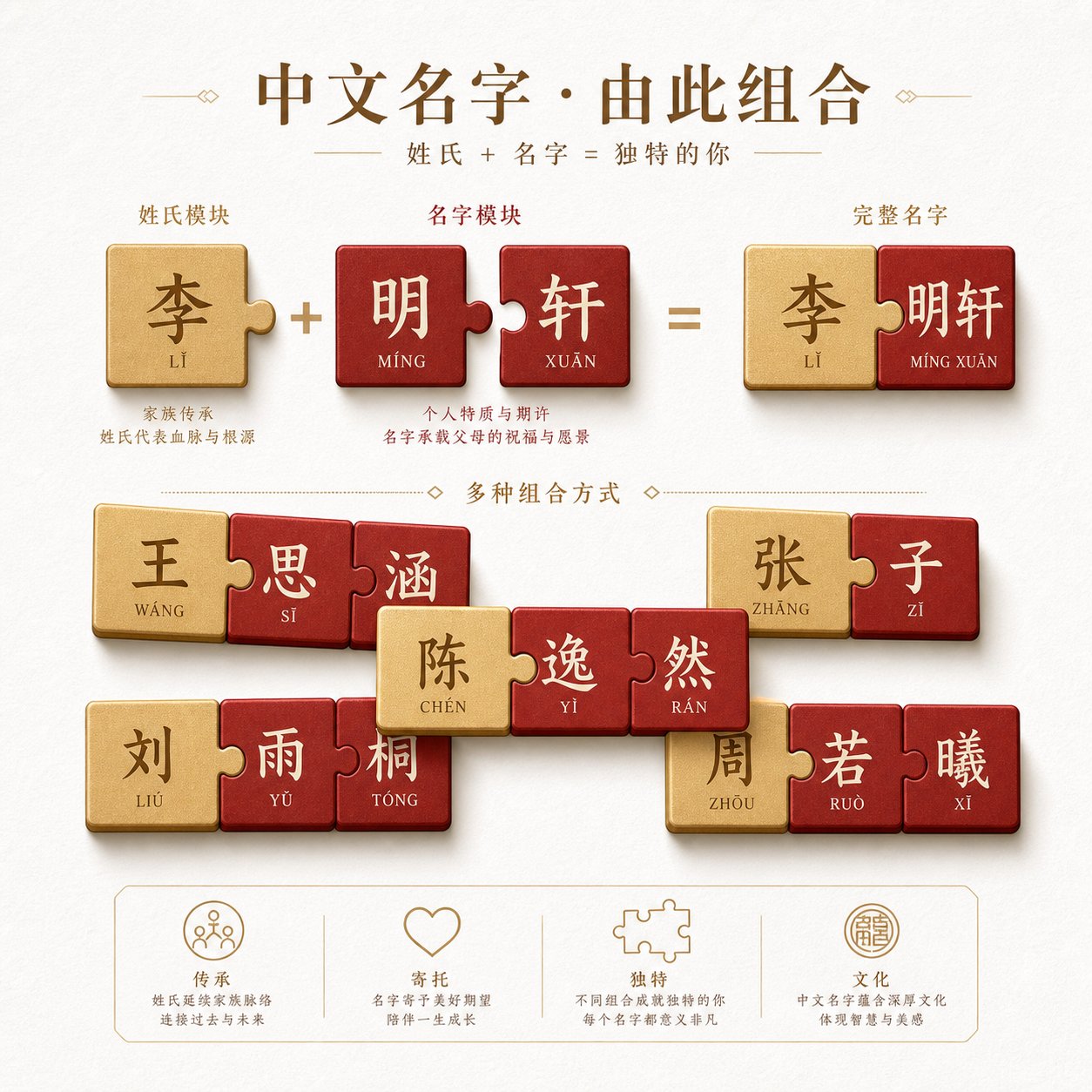
Every Chinese name is a small equation. A surname in chinese plus a given name equals a total character count, and that count determines whether someone carries a two-character, three-character, or even four-character name. Sounds simple? The mechanics underneath reveal why certain combinations dominate and others barely exist.
How Surname and Given Name Combine
Chinese names follow a fixed order: family name first, given name second. Unlike English, where first and last names operate somewhat independently of each other's length, Chinese names produce their total character count through a direct addition of surname characters and given-name characters. There are only a few possible combinations:
- 1-character surname + 1-character given name = 2-character name (e.g., Wang Wei / 王伟)
- 1-character surname + 2-character given name = 3-character name (e.g., Wang Xiaoming / 王小明)
- 2-character surname + 1-character given name = 3-character name (e.g., Ouyang Xiu / 欧阳修)
- 2-character surname + 2-character given name = 4-character name (e.g., Sima Xiangru / 司马相如)
When people discuss two character vs three character Chinese names, they are almost always comparing the first two combinations: a single-character surname paired with either a one-character or two-character given name. That is because the vast majority of Chinese last names contain just one character.
Single vs Compound Surnames and Total Length
How common are single-character surnames? The top 100 chinese last names in China all have only one character, and these cover about 85 percent of the population. The three most frequent, Li (李), Wang (王), and Zhang (张), are shared by more than 270 million people in mainland China alone. With roughly 400 different surnames in active use, the single-character chinese surname is overwhelmingly the norm.
Compound surnames, also called character surnames with two characters, do exist but are rare. China currently has fewer than 100 compound surnames still in use. The most common is Ouyang (欧阳), carried by over 1.1 million people according to the 2020 National Name Report by China's Ministry of Public Security. After that, the numbers drop sharply: Shangguan is used by about 88,000 people, followed by Huangfu, Linghu, Zhuge, Situ, and Sima.
Historically, China had over 1,000 compound surnames. Most disappeared over the centuries, simplified into single-character forms or lost entirely through patrilineal inheritance patterns. Some were ancient official titles, others derived from place names or ethnic minority tribes. The surname Ouyang, for instance, is a hereditary regional name. People today with the single-character surname Eu or Yang are believed to be descendants of the original Ouyang family who simplified their name over generations.
This means that for the overwhelming majority of Chinese people, the choice between a 3 letter chinese name and a two-character name comes down entirely to given-name length: one character or two.
The Rare Four-Character Name
Four-character names appear when a two-character compound surname pairs with a two-character given name. You might encounter historical figures like Sima Xiangru (司马相如) or fictional characters from wuxia novels, such as Zhuge Liang (诸葛亮, three characters) or Sikong Zhaixing (司空摘星, four characters). In daily life, four-character names are uncommon enough to draw attention.
A modern twist worth noting: some parents today blend both parents' surnames to create a new two-character surname for their child, producing what looks like a compound surname but is actually a contemporary invention. If they then add a two-character given name, the result is a four-character name that has no historical clan behind it. This practice remains niche but reflects evolving attitudes toward gender equality in surname inheritance.
The table below maps out every possible combination clearly:
| Surname Length | Given Name Length | Total Characters | Example | Frequency |
|---|---|---|---|---|
| 1 character | 1 character | 2 | 李白 (Li Bai) | Common |
| 1 character | 2 characters | 3 | 张小明 (Zhang Xiaoming) | Most common |
| 2 characters | 1 character | 3 | 欧阳修 (Ouyang Xiu) | Rare |
| 2 characters | 2 characters | 4 | 司马相如 (Sima Xiangru) | Very rare |
Notice that three-character names can arise from two different structural paths: a common single-character surname with a two-character given name, or a rare compound surname with a one-character given name. When you see a three-character name in the wild, the first scenario is far more likely. Context and knowledge of common chinese last names will usually tell you where the surname ends and the given name begins.
These structural rules have remained stable for centuries. What has changed dramatically is which combination parents prefer, and that preference has swung back and forth in response to political upheaval, cultural movements, and a very practical problem: millions of people ending up with identical names.
Historical Trends That Shaped Name Length Popularity
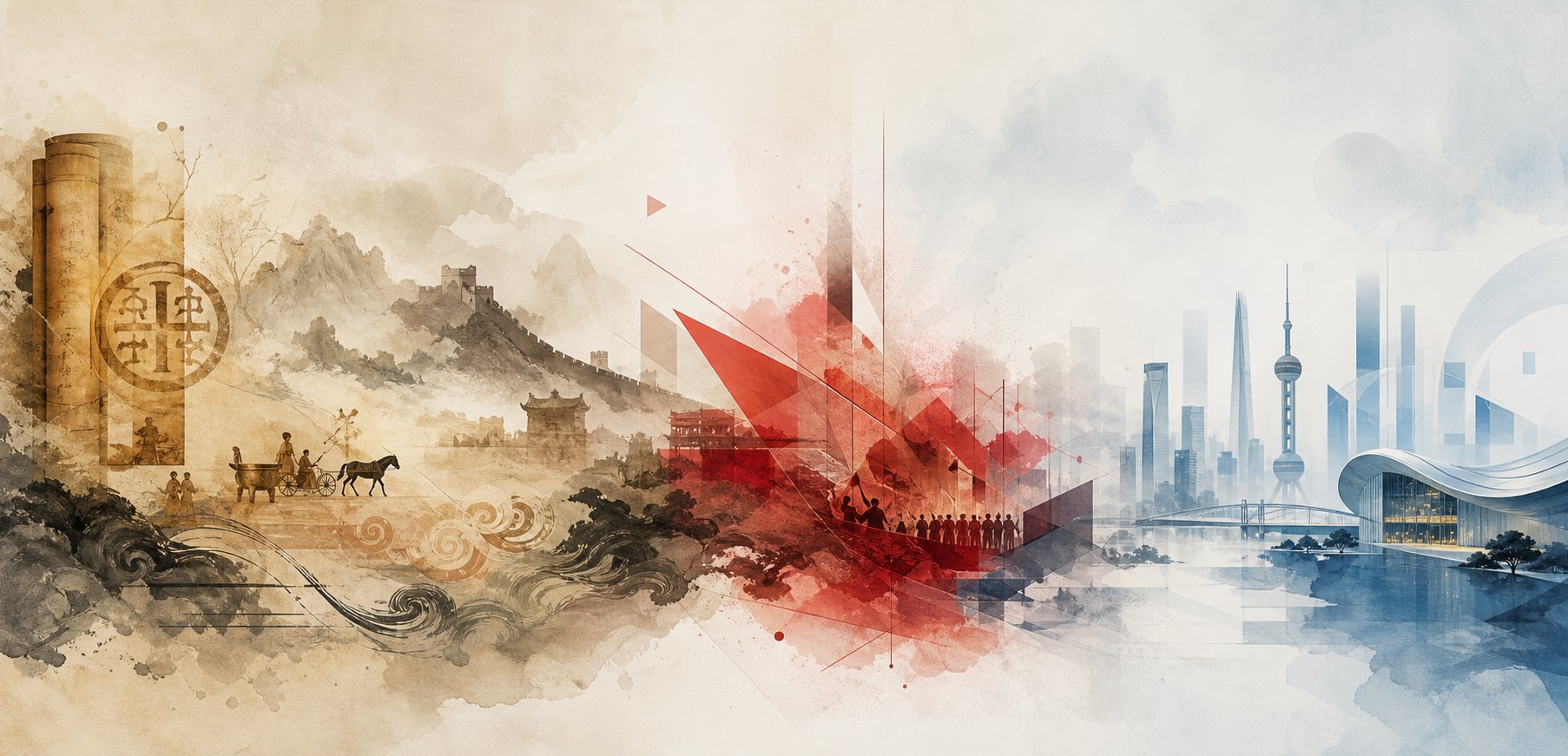
These structural rules have stayed consistent for centuries, but the popularity of each combination has not. The preference for two-character versus three-character names has swung dramatically across generations, shaped by clan traditions, political revolutions, pop culture, and government policy. Understanding this arc explains why your grandfather's name likely has three characters, your uncle's might have two, and your cousin's newborn almost certainly has three again.
Generational Naming Traditions and Three-Character Dominance
For most of Chinese history, three-character names were the default. The reason lies in a practice called generational naming, or 字辈 (zibei). Under this system, all members of the same generation within a clan share one fixed character in their given name. The other character is chosen individually. Since the surname takes one character and the generational marker takes another, the personal element requires a third, producing a three-character name by design.
Imagine a family where all male cousins of one generation share the character 国 (guo, meaning "nation"). You would see names like 李国强 (Li Guoqiang), 李国伟 (Li Guowei), and 李国明 (Li Guoming). The surname 李 is inherited, 国 signals the generation, and the final character distinguishes individuals. This pattern was often planned out in ancestral poems or recorded in clan books, sometimes mapping dozens of generations into the future.
Many ancient chinese names followed this exact template. The tradition reinforced family cohesion, made lineage immediately visible, and connected individuals to a broader kinship network. It also meant that two-character names were structurally incompatible with the system: there simply was not room for both a generational marker and a personal character in a single-character given name. For centuries, choosing a two-character name effectively meant opting out of your clan's naming tradition.
The chinese courtesy name (字, zi) tradition added another layer. In imperial China, a person received a formal given name at birth and later acquired a courtesy name used in adult social interactions. These courtesy names were typically two characters and served as a parallel identity. Famous chinese names from history often come in pairs: the poet Li Bai (李白) had the courtesy name Taibai (太白). This dual-name system meant the birth name itself did not need to carry every layer of meaning alone, which further supported the three-character format as the standard birth name structure.
The Cultural Revolution Shift to Two Characters
The mid-twentieth century broke this centuries-old pattern. Research analyzing birth cohorts from 1920 to 2005 reveals a clear timeline: from 1920 to 1960, the proportion of one-character given names (producing two-character total names) remained stable at roughly 10 percent. Then, between 1961 and 1990, one-character given names surged to over 30 percent of all names, sharply decreasing the average name length across China.
What happened? Several forces converged:
- Political naming culture: The founding of the People's Republic in 1949 launched waves of patriotic names. Characters like 国 (nation), 建 (build), and 红 (red) dominated. By the 1960s, the Cultural Revolution intensified ideological naming. People named children 文革 (Wenge, short for Cultural Revolution) or used characters like 兵 (soldier) from 红卫兵 (Red Guards). These politically charged names often used just one given-name character for punchy, slogan-like impact.
- Collapse of clan structures: The Cultural Revolution actively dismantled traditional family hierarchies. Clan books were destroyed, ancestral halls were repurposed, and generational naming was dismissed as feudal. Without the 字辈 system requiring a generational character, parents had no structural reason to use two-character given names.
- Modernization aesthetics: After Reform and Opening Up in the late 1970s, people became interested in a concise and modern style, so single-character given names gained further appeal. A two-character name sounded streamlined, contemporary, and free from the weight of tradition.
- Pop culture reinforcement: By the 1980s, Western-style names appeared alongside celebrity influence. Double-character names where the same character repeats (like 冰冰 or 诗诗) became trendy for girls, but many parents also gravitated toward single-character given names that felt sharp and distinctive.
The result was a generation where two-character names went from a 10 percent minority to representing nearly a third of all names. In some birth cohorts of the 1980s, the proportion was even higher in urban areas.
The Modern Return to Three-Character Names
Starting around 1991, the trend reversed. The proportion of one-character given names began declining while three-character names surged. By the early 2000s, the average name length had climbed back up sharply. What drove the reversal?
The most immediate cause was practical: massive name duplication. With only about 400 common surnames and a limited pool of desirable single characters, two-character names produced an epidemic of identical names. Millions of people shared the same full name, creating chaos in schools, hospitals, and government databases. Parents and officials alike recognized that adding a second given-name character exponentially expanded the pool of unique combinations.
Cultural factors also played a role. As China's economy stabilized and national confidence grew, traditional aesthetics regained appeal. Parents began seeking names with literary depth, layered meaning, and connections to classical culture, qualities that two-character given names deliver more easily than one. The courtesy name tradition had long since faded from daily use, so the birth name now needed to carry all the meaning a family wanted to express. One character often was not enough.
Government guidance reinforced the shift. Public security bureaus began discouraging overly common names, and media coverage of the duplication crisis raised awareness. The combination of top-down signals and bottom-up frustration with shared names created a strong cultural consensus: three characters offered a better balance of identity, meaning, and uniqueness.
Here is how the major periods break down:
- Pre-1949 (Imperial and Republican era): Three-character names dominant. Generational naming (字辈) enforces two-character given names. Courtesy name system supplements birth names.
- 1949-1960 (Early PRC): Three-character names still dominant. Patriotic themes emerge but name length stays stable. One-character given names remain around 10%.
- 1961-1990 (Cultural Revolution and Reform era): Two-character names surge. One-character given names rise from ~10% to over 30%. Clan naming traditions collapse. Concise, modern style preferred.
- 1991-present (Contemporary era): Three-character names return strongly. One-character given names decline. Uniqueness, meaning depth, and government guidance drive the shift back.
This historical pendulum reveals something important: the choice between name lengths has never been purely personal. It reflects the political climate, the strength of family institutions, and the practical realities of living in a country where hundreds of millions of people draw from the same small pool of surnames. That duplication problem, it turns out, became one of the most powerful forces reshaping Chinese naming culture in the modern era.
The Duplicate Name Problem and Why Three Characters Won
Picture this: a teacher calls out "Wang Wei" in a classroom, and three students look up. A hospital receptionist pages "Li Na," and two patients stand. This is not a hypothetical scenario. It is daily life in China, where the collision between a tiny surname pool and the popularity of single-character given names created one of the world's most severe name duplication crises.
Why Two-Character Names Create Duplicates
The root cause is mathematical scarcity. China has only about 6,000 surnames in active use, and nearly 86 percent of the population shares just 100 of those. The five most popular chinese names by surname alone, Wang, Li, Zhang, Liu, and Chen, account for over 433 million people, roughly 30 percent of the country. Compare that to the United States, which has 6.3 million surnames for less than a quarter of China's population.
When you pair these few hundred common surnames with a single given-name character, the possible unique combinations shrink dramatically. Even if parents draw from 3,000 commonly used characters, pairing 400 surnames with one character produces only about 1.2 million distinct names for a population exceeding 1.4 billion. The result? Millions of people end up sharing the exact same full name.
Homophones make the problem worse. Mandarin has only about 1,600 distinct syllables (including tones). Many characters share identical pronunciations, so even names written differently sound the same when spoken aloud. A common chinese name like "Zhang Wei" might be written with different characters by different families, yet in conversation, at a doctor's office, or over a phone call, they are indistinguishable.
With roughly 400 common surnames serving 1.4 billion people, two-character names mathematically guarantee that millions will share identical names, creating confusion in schools, hospitals, banks, and government records.
The Mathematics of Name Uniqueness
Adding a second given-name character transforms the equation. Instead of 400 surnames multiplied by 3,000 characters (1.2 million combinations), you get 400 multiplied by 3,000 multiplied by 3,000, producing 3.6 billion possible unique names. That is more than double China's entire population, giving every person a realistic shot at a distinct identity.
This exponential leap explains why three-character names solve the duplication crisis so effectively. Each additional character does not just add options linearly; it multiplies the entire pool by thousands. The chinese surnames meaning behind names like Wang, Li, or Zhang may be shared by hundreds of millions, but a two-character given name attached to that surname creates enough variation to distinguish individuals within even the largest surname groups.
The colloquial term for this problem is "market names" (菜市场名), describing how calling out a typical chinese name in a crowded market turns multiple heads. A generation of children born in the 1980s grew up experiencing this firsthand, which directly influenced their own naming choices as parents in the 2000s.
Government Response to the Duplication Crisis
The duplication problem was not just a social annoyance. It created genuine administrative chaos. Public security databases, social insurance records, and banking systems struggled to differentiate between individuals sharing the same name and birth region. Misidentification led to wrongly flagged criminal records, misdirected financial transactions, and bureaucratic nightmares that could take months to resolve.
In response, China's Ministry of Public Security began actively discouraging overly common names. Public awareness campaigns highlighted the most popular chinese names and urged parents to choose more distinctive combinations. Annual name reports published by the ministry now list the most duplicated names as a cautionary reference. Media coverage amplified the message, turning name uniqueness into a mainstream parenting concern.
The shift worked. By the 2000s birth cohort, parents overwhelmingly favored two-character given names (producing three-character total names), and the use of rarer, more literary characters increased steadily. Research analyzing 2.1 million names confirmed that name-character uniqueness rose continuously from the 1970s onward, with parents increasingly selecting characters that were uncommon in both daily language and naming practice.
The duplication crisis did more than push parents toward longer names. It fundamentally changed how Chinese society thinks about naming: from a collective act rooted in clan tradition to an individual act of distinction. Yet this shift toward uniqueness plays out differently depending on where you live, whether in mainland China, Taiwan, Hong Kong, or overseas communities where bilingual considerations add another layer of complexity.
Regional Variations Across Chinese-Speaking Communities
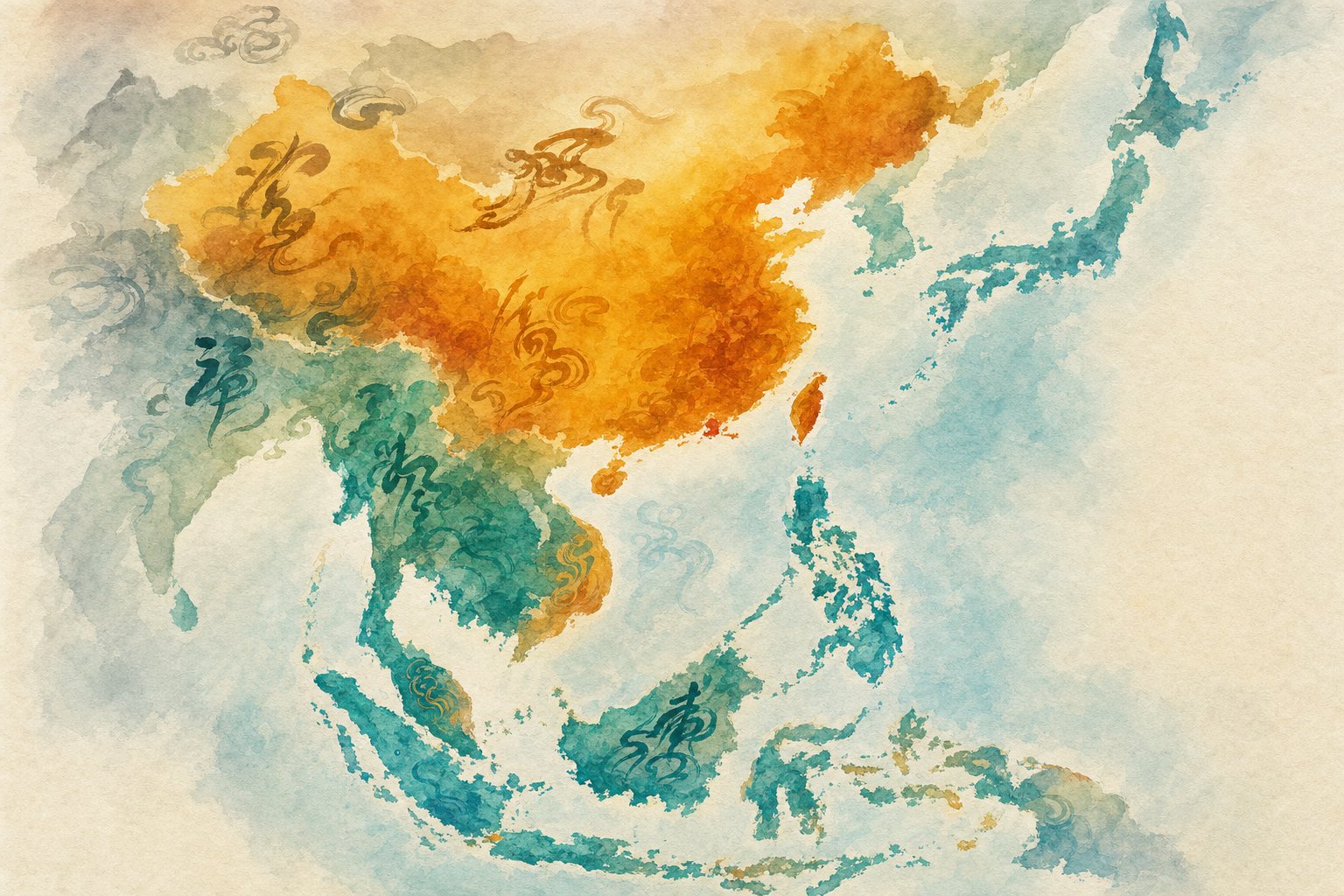
The duplication crisis reshaped naming in mainland China, but Chinese-speaking communities elsewhere never experienced the same pressures at the same scale. Taiwan, Hong Kong, and overseas diaspora populations each developed their own relationship with name length, influenced by local languages, colonial histories, and the practical demands of living between two writing systems. When you look at how an asian name functions across these regions, the differences are striking.
Mainland China Naming Patterns
Mainland China's trajectory is the one we have traced so far: a swing toward two-character names during the Cultural Revolution era, followed by a strong return to three-character names from the 1990s onward. Government guidance, the duplication crisis, and a cultural desire for meaning depth all pushed parents back toward two-character given names. Today, the overwhelming majority of newborns in mainland China receive three-character names. The Ministry of Public Security's annual name reports consistently show single-character given names declining to well under 10 percent of new registrations.
Ethnic minorities within China add another dimension. Uyghur, Tibetan, Mongolian, and other minority names follow entirely different structural rules and can be much longer when transliterated into Chinese characters. A Uyghur name like Dilraba Dilmurat becomes four characters (迪丽热巴) when rendered in Chinese, which does not map onto the Han Chinese surname-plus-given-name framework at all. These names exist in a parallel system, though administrative databases still impose character-based constraints on them.
Taiwan and Hong Kong Preferences
Taiwan has remained more consistently attached to three-character names than the mainland ever was. No more than one in twenty Taiwanese citizens has a single-syllable given name, meaning three-character names account for roughly 95 percent of the population. Taiwan never experienced the Cultural Revolution's dismantling of clan traditions, so generational naming persisted longer, and the cultural pressure toward brevity never took hold the same way.
Fortune-telling plays a significant role in Taiwanese naming. Parents frequently consult fortune tellers who calculate auspicious stroke counts for each character. The total number of strokes, not just the number of characters, drives the final choice. This system tends to favor two-character given names because they offer more flexibility in hitting the desired stroke-count targets.
Hong Kong presents a different picture. Cantonese names follow the same structural rules as Mandarin names, but romanization creates unique patterns. Under the colonial-era system, many Hong Kong residents wrote their given names with a hyphen between syllables: for example, Chan Tai-man rather than Chan Taiman. These names with a hyphen became a visual signature of Hong Kong identity, distinguishing local naming style from mainland pinyin conventions. Cantonese names also tend to use different character preferences than Mandarin-speaking regions, though the two-versus-three character split remains similar, with three-character names dominant.
Overseas Chinese and Bilingual Naming
Diaspora communities face a challenge that does not exist in Asia: making a chinese name in chinese language work alongside an English or European name. Many overseas Chinese families give children both a Chinese name and a Western name, using the Chinese name at home and the Western name in public life. The Chinese name itself still follows traditional length conventions, usually three characters.
When translating chinese names into english for official documents, the romanization method depends on family heritage. A person with Cantonese roots might spell their surname Wong rather than Wang, immediately signaling regional origin. In territories with a sizeable Chinese diaspora like Singapore and Malaysia, the way a family name is spelt can be a signifier of the region a person's ancestors hail from.
Creating a chinese name from english, where a non-Chinese person adopts a Chinese name, typically produces a three-character result. Translators select a surname-like character for the first syllable and two given-name characters that approximate the original sound while carrying positive meaning. Two-character results are possible but less common because they limit phonetic and semantic options.
| Region | Dominant Name Length | Two-Character Name Frequency | Key Cultural Factors |
|---|---|---|---|
| Mainland China (current) | 3 characters | Under 10% of newborns | Government guidance, duplication crisis, meaning depth preference |
| Taiwan | 3 characters | ~5% of population | Fortune-telling stroke counts, preserved generational naming, no Cultural Revolution disruption |
| Hong Kong | 3 characters | ~10-15% | Cantonese character preferences, hyphenated romanization tradition, colonial-era naming conventions |
| Singapore/Malaysia | 3 characters | ~10-15% | Dialect-group heritage (Hokkien, Teochew, Cantonese), bilingual naming with English |
| Overseas diaspora (West) | 3 characters (Chinese name) + Western name | Varies | Dual naming systems, phonetic adaptation, cultural identity preservation |
Across every region, three-character names hold the majority. The real variation lies not in length preference but in how names are romanized, displayed, and integrated with non-Chinese naming systems. Yet regardless of geography, the same underlying question persists: how does name length shape the way others perceive you in social and professional settings? That perception layer operates differently depending on whether you are in a boardroom, a classroom, or a government office.
Social Perception and Professional Impact of Name Length
You hear a name before you see a face. In Chinese society, that brief auditory moment already triggers a cascade of assumptions about the person behind it. A two-character name lands differently in the ear than a three-character name, and those differences carry real weight in job interviews, client meetings, and everyday social interactions. The psychology here is not just folk wisdom. Research published in the International Journal of Psychology demonstrated that the recognizability and character complexity of Chinese names directly influence perceptions of trustworthiness and social categorization, confirming that names shape first impressions before any personal interaction occurs.
Formality and First Impressions
When you encounter chinese first names in a social setting, length sends an immediate signal. Two-character names tend to sound crisp, modern, and slightly informal. Think of names like Li Na (李娜) or Wang Wei (王伟). They carry a streamlined energy, almost like a brand name. Three-character names, by contrast, often feel more traditional, layered, and literary. A name like Chen Yuxuan (陈宇轩) or Zhang Shiyuan (张诗源) suggests parents who invested time in selecting characters with complementary meanings and tonal balance.
These perceptions are not universal rules, but they reflect broad cultural patterns:
- Two-character names are often perceived as direct, confident, and contemporary. They can suggest decisiveness or a break from tradition.
- Three-character names tend to evoke depth, education, and cultural rootedness. They signal that the family valued meaning layering and possibly consulted literary or philosophical sources.
- Repeated-character names (like Fangfang or Tingting) carry a casual, affectionate quality and are more common among chinese male given names and female names used in informal contexts.
- Rare or complex characters in any name length can project intellectualism but may also create friction in daily interactions when others struggle to read or write them.
Imagine meeting two colleagues for the first time. One introduces herself as Liu Jing (刘静). The other says Liu Mengxuan (刘梦璇). Before either speaks another word, you have already formed slightly different mental images: the first feels approachable and no-nonsense, the second feels polished and perhaps more formally educated. Neither impression is necessarily accurate, but both are real in their social effect.
Name Length in Professional Settings
In the workplace, name length interacts with hierarchy and industry culture. Corporate environments in finance, law, and government tend to favor the gravitas that three-character names carry. Creative industries, tech startups, and media are more comfortable with the punchy brevity of two-character names. None of this is codified, but patterns emerge when you look at executive rosters and public figures across sectors.
There is also a generational dimension. Colleagues born in the 1970s and 1980s are more likely to carry two-character names, reflecting the era when their parents chose brevity. Younger employees born after 2000 overwhelmingly have three-character names. This means name length can inadvertently signal age in a professional context, which matters in cultures where seniority influences workplace dynamics.
For professionals building a personal brand, the phonetic rhythm of a name matters too. Two-character names are easier to remember, faster to type, and fit neatly into email signatures and business cards. Three-character names offer more distinctiveness, reducing the chance that a client confuses you with another Wang Wei in the same industry. The trade-off between memorability and uniqueness plays out differently depending on how common your surname is.
Honorifics and Forms of Address by Name Length
Chinese honorifics interact with name length in specific ways. In Chinese business culture, the standard formal address combines a surname with a title: Wang Jingli (王经理, Manager Wang) or Li Laoshi (李老师, Teacher Li). This pattern works identically regardless of given-name length because only the surname is used. The honorific mr in chinese, or xiansheng (先生), attaches to the surname the same way: Wang Xiansheng (王先生).
Where name length matters is in informal and semi-formal address. Close colleagues often use full given names without the surname. Calling someone "Xiaoming" (two characters) feels natural and warm. Calling someone by a single given-name character, like just "Wei," can sound abrupt or overly intimate unless the relationship is very close. This creates a subtle social advantage for three-character names: the two-character given name provides a ready-made informal address that still feels complete.
The courtesy name tradition (字, zi) historically solved this problem differently. In imperial China, a person's birth name was considered private, used only by elders and in formal documents. Social peers used the courtesy name instead. These were almost always two characters and served as a public-facing identity. The poet Du Fu (杜甫) was addressed by his courtesy name Zimei (子美) in social settings. This system meant name length in the birth name mattered less for daily interaction because the courtesy name handled social address.
That tradition faded in the twentieth century. Modern Chinese people use a single name for all contexts, which means the birth name now carries the full burden of functioning across formal, informal, and professional registers. A three-character name adapts more flexibly: the full name works in formal contexts, the two-character given name works among friends, and nicknames can be derived from either character. A two-character name offers fewer natural variations, sometimes pushing people toward diminutives like Xiao Wang (小王, "Little Wang") that can feel patronizing in professional settings.
These social dynamics are not trivial. They influence how comfortable people feel introducing themselves, how easily colleagues remember and use their names, and how authority or approachability is projected in group settings. Yet perception is only one layer. The practical mechanics of how names function in official systems, digital platforms, and legal frameworks add another set of constraints that can override personal preference entirely.
Practical Implications for Documents and Daily Life
Social perception shapes how others see your name. But administrative systems shape whether your name even works. In China, your name must pass through government databases, banking software, airline ticketing platforms, and ID card printers before it functions as a legal identity. These systems impose constraints that most people never think about until something goes wrong, and name length plays a surprisingly direct role in what goes smoothly and what creates friction.
Official Documents and ID Systems
Every Chinese citizen over the age of 16 must carry a Resident Identity Card at all times. The name printed on this card is your legal identity, and it must be registered in the government's electronic database. The card itself has a fixed layout with designated space for name chinese characters, and while there is no official maximum character count, the physical design and digital backend both assume names will fall within the typical two-to-four character range.
For two-character and three-character names, the system works seamlessly. Problems arise at the extremes: names that are too short (a single character, which is technically possible for some ethnic minorities) or too long (transliterated minority names that can stretch to eight or more characters). The sweet spot for frictionless processing is exactly where most Han Chinese names land: two or three characters total.
Here is where name length creates practical differences in daily life:
- Bank account registration: Two-character names occasionally trigger manual verification because the system flags them as potentially incomplete entries. Three-character names pass automated checks without issue.
- Train and flight bookings: Name fields on ticketing platforms expect two to four characters. Two-character names work fine but can cause mismatches when cross-referencing with other databases that store names differently.
- Hospital records: With millions of duplicate two-character names, hospitals in major cities routinely deal with patient misidentification. Three-character names reduce this risk significantly.
- School enrollment: Teachers report that classrooms with multiple students sharing the same two-character name require nicknames or numbered suffixes to avoid confusion during roll call.
- International travel: When a chinese name convert process renders characters into pinyin for a passport, two-character names produce very short romanized strings (e.g., "WANG WEI") that can look incomplete to foreign immigration systems accustomed to longer names.
Digital Systems and Character Limits
China's government database supported approximately 32,232 characters as of 2009, drawn from the GBK character encoding standard. That sounds like a lot, but China has over 70,000 known characters in its historical corpus. If a parent chooses a rare or archaic character for their child's name, the system may simply refuse to accept it.
The case of Ma Cheng (马𩧢) illustrates this perfectly. Her given name uses an extremely rare character composed of three horse radicals arranged horizontally. Because this character fell outside the supported encoding set, government computers could not process her name. Some systems recorded it as "马CHENG" or even "马马马马" as a workaround. She was eventually told to change her name, a demand that linguist Victor Mair discussed on Language Log, noting that the character is simply an archaic variant of the common character 骋 (meaning "gallop").
Another well-known case involved a man named Zhao C (赵C), whose given name was literally the Latin letter "C." The government rejected this because only Chinese characters are permitted in legal names. He sued, won initially, but ultimately settled and changed his name. These cases highlight a key point: the constraint is not about name length but about character compatibility with digital infrastructure. Still, name length interacts with this issue indirectly. Two-character names leave room for only one given-name character, which means parents sometimes reach for rarer, more distinctive characters to compensate for the limited space, increasing the odds of hitting an unsupported character.
Three-character names sidestep this problem more easily. With two given-name characters to work with, parents can combine two relatively common characters in an unusual pairing, achieving distinctiveness without relying on obscure characters that might not exist in the database. The chinese translation for names that use standard characters in creative combinations tends to process cleanly across all systems.
Legal Naming Regulations in China
China's naming laws are more permissive than many people assume. Article 99 of the General Principles of Civil Law guarantees citizens the right to a name. Parents can choose any given name they wish, and the government has no right to interfere with that choice, provided the name uses Chinese characters and does not violate specific prohibitions.
The key legal constraints are:
- Characters only: Latin letters, numerals, and non-Chinese symbols are prohibited. A couple who tried to name their baby "王@" (Wang "at") was rejected because the @ symbol is not a Chinese character.
- Computer compatibility: Characters that cannot be input on government systems are effectively disallowed, not by explicit law but by practical impossibility. If the system cannot store your name, you cannot get an ID card.
- Surname rules: The surname must come from either parent. You cannot invent a surname, though you can use either your mother's or father's family name.
- No character limit: There is no legal maximum or minimum on name length. Two-character, three-character, and even longer names are all equally valid under the law.
- Simplified characters preferred: The use of simplified characters is advised over traditional forms, though this is not strictly enforced.
In practice, these regulations create a system where three-character names face the fewest obstacles. They are long enough to avoid duplication flags, short enough to fit every form and database field, composed of common enough characters to pass encoding checks, and structured in the format that every administrative system expects. Two-character names are equally legal but encounter more friction points: duplication alerts, occasional manual verification requirements, and the temptation to use rare characters that may not be system-compatible.
For anyone navigating a chinese name translation or using a chinese name converter tool to romanize their name for international documents, three-character names also produce more natural-looking pinyin strings. "Zhang Xiaoming" reads as a complete name to foreign eyes, while "Li Na" can be mistaken for a first-name-only entry in systems designed for Western naming conventions.
These practical realities do not make two-character names wrong or problematic. Millions of people carry them without issue. But they do tilt the playing field slightly toward three-character names in terms of administrative smoothness, a factor that compounds over a lifetime of form-filling, account creation, and document processing. Combined with the social perception advantages and the uniqueness mathematics covered earlier, the practical dimension helps explain why the modern consensus has shifted so decisively toward three characters as the default choice.

Complete Side-by-Side Comparison of Two and Three Character Names
Administrative smoothness, social perception, historical weight, uniqueness math. Each dimension tells a slightly different story. So which name length actually comes out ahead when you stack everything side by side? The answer depends on what you prioritize, but the pattern across all dimensions is clear enough to map.
Head-to-Head Comparison Matrix
The table below consolidates every dimension we have examined into a single reference. Think of it as a scorecard for understanding chinese name meanings at a structural level, showing where each format holds a genuine advantage.
| Dimension | Two-Character Names | Three-Character Names | Advantage |
|---|---|---|---|
| Uniqueness | ~1.2 million possible combinations. Massive duplication risk. | ~3.6 billion possible combinations. Near-zero duplication. | Three-character |
| Meaning depth | One character carries all semantic weight. Limited layering. | Two characters allow compound meanings, literary allusions, and tonal contrast. | Three-character |
| Historical tradition | Rare before 1960. Associated with Cultural Revolution era naming. | Default format for centuries. Tied to generational naming (字辈) and clan identity. | Three-character |
| Modern perception | Sounds concise, confident, contemporary. Can signal decisiveness. | Sounds cultured, layered, and intentional. Signals parental investment in naming. | Contextual |
| Memorability | Shorter, punchier, easier to recall quickly. | More distinctive, less likely to be confused with others sharing the same surname. | Two-character (recall) / Three-character (distinction) |
| Practical convenience | Fits all systems but triggers duplication flags and occasional verification. | Passes all administrative checks smoothly. Produces natural-looking pinyin for international use. | Three-character |
| Tonal harmony | Only two tones to balance. Less room for melodic flow. | Three tones create richer rhythmic patterns and avoid monotony. | Three-character |
| Calligraphic balance | Compact visual signature. Can feel sparse. | More visual weight and compositional variety when written. | Three-character |
| Regional preference | Under 10% in mainland China, ~5% in Taiwan, ~10-15% in Hong Kong. | Dominant across all Chinese-speaking regions without exception. | Three-character |
| Flexibility of address | Limited nickname options. Full name or surname-only. | Given name works as informal address. Multiple nickname derivations possible. | Three-character |
Where Each Name Length Excels
Three-character names win on most objective criteria: uniqueness, meaning chinese names can carry, administrative compatibility, and alignment with both historical tradition and current trends. The mandarin name meaning encoded in two given-name characters simply has more room to breathe, layer, and resonate.
Two-character names hold their ground in specific niches. They excel at brevity, immediate recall, and a modern aesthetic that some parents and professionals deliberately seek. If your surname is already uncommon, the duplication risk drops significantly, and a single well-chosen given-name character can carry powerful chinese names meaning without needing a second. Artists, performers, and public figures sometimes prefer the punchy rhythm of a two-character name for branding purposes.
The comparison is not a knockout. It is a tilt. Three-character names offer broader advantages across more situations, but two-character names remain a legitimate choice when brevity, modernity, or a rare surname shifts the calculus. The real question is not which format is universally better but which one fits your specific goals, heritage, and the practical systems your name will move through every day.
Final Verdict on Choosing the Right Chinese Name Length
The comparison matrix makes the structural advantages clear, but structure alone does not make a decision for you. Your situation, whether you are browsing chinese baby names for a newborn, asking "what is my chinese name" as a Mandarin learner, or tracing family heritage, determines which trade-offs matter most.
Choosing Based on Your Situation
Different goals call for different approaches. Here is how the two-versus-three character choice plays out across the most common scenarios:
- Naming a baby: Three characters give your child the best odds of a unique, meaningful, and administratively smooth name. Whether you are exploring chinese masculine names that convey strength or chinese feminine names that evoke elegance, two given-name characters let you layer complementary meanings and balance tonal harmony. The current data on chinese names for boys and girls confirms that over 93 percent of parents now choose this format.
- Choosing a Chinese name as a language learner: If you want a chinese name from english name roots, three characters give translators more phonetic and semantic flexibility. Consult a native speaker rather than relying solely on automated tools. A well-chosen three-character name signals cultural respect and sounds natural to Chinese ears.
- Understanding a colleague's name: If their name has two characters, they likely were born between the 1960s and 1990s or carry an uncommon surname. If it has three, they follow the historical and modern default. Either way, use their full name until invited to do otherwise.
- Researching family heritage: Look for generational characters shared among relatives. If you find a repeating character across siblings or cousins, you have identified the 字辈 system at work, a hallmark of traditional three-character naming that connects individuals to their clan lineage.
- Creating chinese names for english names in professional contexts: Three characters produce romanized pinyin that reads as a complete name internationally, reducing confusion on business cards and email signatures.
Key Takeaways for Name Selection
Neither length is wrong. A two-character name is not lazy, and a three-character name is not old-fashioned. Each serves a purpose shaped by era, region, family values, and the practical systems your name must navigate. The strongest choice is the one made with awareness of what each format offers and costs.
The best Chinese name is not defined by character count but by how well it balances meaning, uniqueness, cultural context, and the life it will move through.
Frequently Asked Questions About Two and Three Character Chinese Names
1. Why are three-character Chinese names more common than two-character names?
Three-character names dominate because they offer exponentially more unique combinations, roughly 3.6 billion versus only 1.2 million for two-character names. With just 400 common surnames serving 1.4 billion people, two-character names cause massive duplication where millions share identical names. Three-character names also align with centuries of generational naming traditions and allow parents to layer complementary meanings across two given-name characters, providing richer semantic depth and tonal harmony.
2. What is the structure of a Chinese name and how does character count work?
A Chinese name places the family name first and given name second. Most Chinese surnames are a single character, so a two-character name means one surname character plus one given-name character, while a three-character name means one surname character plus two given-name characters. Rare compound surnames like Ouyang or Sima use two characters, which can produce three or four character total names. Over 85 percent of the population carries a single-character surname, making the given-name length the primary variable in total name length.
3. When did two-character Chinese names become popular and why?
Two-character names surged between 1961 and 1990, rising from about 10 percent to over 30 percent of all names. The Cultural Revolution dismantled traditional clan structures and generational naming systems, while politically charged single-character given names gained favor for their slogan-like impact. After economic reforms in the late 1970s, concise and modern-sounding names became fashionable. This trend reversed in the 1990s when the duplication crisis and renewed cultural pride pushed parents back toward three-character names.
4. Does Chinese name length affect professional perception or social status?
Name length does influence first impressions in Chinese society. Two-character names tend to sound direct, modern, and confident, while three-character names often convey tradition, literary depth, and parental investment in naming. In professional settings, name length can inadvertently signal generational identity since people born in the 1970s-1980s more often carry two-character names. Three-character names also offer more flexibility in forms of address, providing a natural two-character given name for informal use among colleagues.
5. How do I choose between a two-character and three-character Chinese name for my child?
For most families today, three characters offer the strongest combination of uniqueness, meaning depth, and administrative compatibility. Over 93 percent of Chinese parents currently choose this format. However, two-character names remain a valid choice if your surname is already uncommon, reducing duplication risk, or if you prefer a concise modern aesthetic. Consider how the name will function across official documents, digital systems, and international contexts where romanized pinyin needs to read as a complete name.