Why the Chinese Government Rejects Certain Names
Imagine walking into a government office to register your newborn's name and being told no. Not because of a typo or missing paperwork, but because the name itself is considered unacceptable. In China, this happens regularly. Registration clerks at local public security bureaus have the authority to reject names on cultural, legal, and even technical grounds, turning what most parents consider a deeply personal choice into a negotiation with the state.
Why China Says No to Certain Names
So why does China reject names? The reasons span a surprisingly wide range. Some names fall outside the approved set of standardized Chinese characters. Others carry politically sensitive associations, sound like offensive words due to Mandarin homophones, or simply cannot be processed by the national population database. Both personal and business names face this scrutiny, meaning parents and entrepreneurs alike must navigate Chinese government name restrictions before making anything official.
In one widely reported case, Chinese parents attempted to name their child "@" because in Mandarin, the symbol sounds similar to a phrase meaning "love him." The registration office rejected it outright since symbols, punctuation, and numbers cannot be entered into China's national ID system.
That case might sound extreme, but it reflects a broader reality. China's naming laws are designed to preserve cultural norms, maintain social order, and ensure administrative systems function smoothly. The rules touch everything from ancient family surnames written in rare characters to trendy modern names inspired by foreign pop culture.
The Scale of Name Rejections in China
Before you think of this as uniquely authoritarian, consider the global picture. Germany requires names to clearly indicate gender and prohibits anything that could harm a child's welfare. Denmark maintains an official list of roughly 7,000 approved names, and anything outside that list requires government review. Iceland's Naming Committee only permits names compatible with Icelandic grammar and alphabet. China's approach is stricter in scope, but the underlying impulse to regulate names is far from unusual.
What makes China's system distinct is the combination of factors at play. Legal statutes define what is banned. Cultural traditions shape what is considered appropriate. And digital infrastructure, specifically the character encoding limits of national databases, creates a practical barrier that rejects names no law ever explicitly prohibited. These three forces work together, sometimes in tension, to determine which names make it onto an ID card and which get sent back to the drawing board.
Understanding how banned names in China actually work requires looking at each of these layers individually, from the legal framework and cultural logic to the real cases that made headlines and the computer systems quietly rejecting traditional characters behind the scenes.
The Legal Framework Behind Name Rejections
Every rejected name in China traces back to a specific legal provision. The system did not appear overnight. It evolved through decades of regulation, gradually tightening the rules around what qualifies as an acceptable name. Understanding Chinese name registration law means following that evolution from early administrative rules to the comprehensive Civil Code that governs the process today.
Key Laws Governing Name Registration
China's modern naming regulations took shape in stages. The 2003 Regulations on Household Registration laid initial groundwork by requiring all citizens to register names through local public security bureaus, the police-run offices that manage China's hukou (household registration) system. These bureaus remain the frontline gatekeepers of name registration, meaning a clerk at your local police station effectively decides whether your chosen name passes or fails.
In 2007, the Ministry of Public Security issued more specific guidelines restricting the use of rare and non-standard characters in registered names. This was partly a response to growing complaints from registration offices struggling with names their computer systems could not process. The guidelines formalized what had been informal practice: names must use characters from a standardized national list.
How the Civil Code Updated Earlier Naming Rules
The real consolidation came with China's Civil Code, adopted in 2020 and effective since January 1, 2021. The Code's Part on Personality Rights dedicates an entire chapter to the rights of name and title. Article 1012 protects a natural person's right to "decide on, use, change, or authorize others to use" their name, but only if consistent with "public order and good morals." Article 1015 requires children to take their mother's or father's family name, with narrow exceptions allowing the surname of an elder direct blood relative.
These China Civil Code naming rules replaced and unified the patchwork of earlier regulations. The legal grounds for name rejection in China now fall into clearly defined categories:
- Characters that violate public order and good morals (including names with vulgar, offensive, or superstitious connotations)
- Names that could cause public confusion due to resemblance to well-known figures or entities
- Characters not included in the nationally standardized character set approved for official use
- Names that violate other legal provisions, such as those containing political terms or symbols restricted by separate statutes
- Names that do not conform to surname requirements (must use a parent's or qualifying relative's family name)
The standardized character requirement deserves special attention. China maintains an official list of characters approved for use in names, derived from the Table of General Standard Chinese Characters. If a character falls outside this list, regardless of its historical legitimacy or cultural significance, public security bureau name registration systems will not accept it. This creates a situation where the law and technology reinforce each other: the legal requirement for standardized characters aligns with the technical limitations of the databases processing those names.
What the legal framework does not always account for, however, is the rich cultural and linguistic complexity behind the names people choose. A name that seems perfectly reasonable to a parent steeped in classical literature or regional dialect traditions can still collide with rules designed around modern standardization.
Cultural and Linguistic Reasons Names Get Denied
Legal statutes define the boundaries, but culture and language fill in the details. Many names that technically use approved characters still get flagged or discouraged at registration offices because of what they sound like, what they imply, or who they resemble. The cultural reasons names get rejected in China often surprise outsiders unfamiliar with how deeply sound, meaning, and historical association intertwine in the Chinese naming tradition.
Homophones and Superstition in Chinese Naming
Mandarin Chinese has roughly 400 distinct syllables (around 1,600 when you factor in tones). Compare that to English, which has thousands. The result? An enormous number of homophones, words that sound identical or nearly identical but carry wildly different meanings. For parents choosing a name, this creates a minefield.
Consider the characters "Si" (meaning "to think" or "manage") and "Wang" (meaning "prosperous"). Individually, both are positive. Combined, they produce a sound nearly identical to "siwang," the Mandarin word for death. A registration clerk familiar with this Chinese name homophones problem might not formally reject the name, but will almost certainly warn the parents. In many cases, social pressure alone is enough to force a change.
Superstition compounds the issue. The number four is avoided because "si" (four) sounds like "si" (death). Names incorporating characters that sound like unlucky words, inauspicious animals, or funeral-related terms face resistance even when no explicit law prohibits them. Registration officials exercise informal discretion, advising parents that a name will bring bad fortune or social ridicule. This gray zone between legal rejection and cultural discouragement means many names never make it onto an ID card without ever triggering a formal denial.
Even characters with positive individual meanings can collide when spoken aloud. "Ri" literally means "sun" and appears in classical poetry, but in colloquial Mandarin it doubles as a vulgar expletive. Parents who choose characters for their written beauty sometimes overlook how the full name sounds in rapid conversation, in regional dialects, or when shortened to a nickname.
Politically Sensitive Name Choices
Political sensitivity represents another major category of rejection. Naming a child after a sitting leader, a revolutionary figure, or a controversial historical person invites scrutiny that most parents would rather avoid. Why are some Chinese characters banned in names when they appear perfectly ordinary in other contexts? Often because the combination evokes a specific political figure.
Research from Citizen Lab at the University of Toronto demonstrated how deeply political name sensitivity runs in Chinese systems. Their analysis found that names of incumbent leaders like Xi Jinping, retired officials like Wen Jiabao, and historical figures like Chinese Communist Party co-founder Li Dazhao were censored from Microsoft Bing's autosuggestion feature, both within China and internationally. If digital platforms treat these names as sensitive search terms, imagine the scrutiny they receive at a physical registration office.
The concern is not limited to exact matches. Names that sound similar to political figures, use the same characters in a different order, or combine a leader's surname with characters associated with their policies can all trigger questions. Registration clerks operate with an unwritten understanding: approving a politically sensitive name creates liability. Rejecting it, or strongly discouraging it, carries no professional risk.
The Simplified vs Traditional Character Problem
After the founding of the People's Republic of China in 1949, the government adopted simplified characters nationwide to combat illiteracy. The policy succeeded spectacularly in raising literacy rates, but it created a lasting tension in naming. Many families, particularly those with deep roots in classical culture or connections to Hong Kong, Taiwan, or overseas Chinese communities, prefer traditional characters for their aesthetic richness and historical continuity.
The problem is straightforward: China's Ministry of Education has affirmed that simplified Chinese is the standard for schools and official institutions, as stipulated by the Law on Standard Spoken and Written Chinese Language. Registration systems are built around simplified characters. When parents submit a name using a traditional character variant, the system may reject it outright or force a conversion to the simplified equivalent, sometimes altering the name's meaning or aesthetic intent in the process.
This hits especially hard for rare surname characters. Some ancient family names exist only in traditional form or use archaic variants that were never included in the simplified standard. A family that has carried a surname for centuries can find that modern standardization effectively erases it from official records. The character still exists in dictionaries and historical texts, but if it is not in the approved national list, it cannot appear on an ID card.
| Rejection Category | How It Works | Example |
|---|---|---|
| Homophone conflict | Name sounds like an unlucky, vulgar, or offensive word when spoken aloud | "Si Wang" (sounds like "death"); "Ri" character (sounds like a vulgar term) |
| Superstition-related | Characters or combinations associated with bad luck, death, or inauspicious meaning | Names containing sounds linked to the number four; funeral-related homophones |
| Political sensitivity | Name resembles or directly references a political leader, revolutionary figure, or controversial person | Names matching Xi Jinping, Mao Zedong, or other CCP leaders past and present |
| Traditional/rare characters | Characters not included in the standardized simplified character set approved for official use | Ancient surname variants; traditional forms of common characters |
| Offensive combinations | Individually acceptable characters that together create vulgar, violent, or socially harmful meaning | Character pairs that form slang insults or sexual references when read together |
What connects all these categories is a single underlying principle: in China, a name is not purely a private expression. It functions as a public-facing identifier that must pass through cultural, political, and administrative filters before it becomes official. The cultural logic is clear, even if Western observers find it restrictive. A name carries social weight, and the state considers itself a stakeholder in ensuring that weight does not become a burden, whether on the individual, the community, or the political order.
These cultural and linguistic filters explain why certain names get denied in theory. But what happens when real parents push back, insisting on names that break the mold? The documented cases tell a story that is equal parts absurd, poignant, and revealing.
Real Cases of Personal Names the Government Denied
Theory only goes so far. The real texture of China's naming restrictions emerges when you look at specific people who tried to register unusual names and hit a wall. Some of these cases went viral for their sheer creativity. Others sparked genuine legal battles over identity and personal freedom. Together, they paint a picture of a system where bureaucratic logic and individual expression collide in unpredictable ways.
Personal Names That Were Actually Rejected
The cases below are drawn from journalistic reporting and court records. Each one illustrates a different facet of the rejection system, from symbol-based names to foreign-language elements to characters too rare for modern databases.
- The "@" Baby. A Chinese couple attempted to register their newborn with the single-character name "@." The father's reasoning? The symbol is universally used in email addresses, and when sounded out in Mandarin, "at" with a drawn-out T resembles "ai ta," meaning "love him." As Reuters reported, the deputy chief of the State Language Commission, Li Yuming, cited this as an extreme example of people's increasingly adventurous approach to Chinese naming. The government had already announced a ban on names using Arabic numerals, foreign languages, and symbols not belonging to Chinese minority languages, making the at symbol name effectively impossible to register.
- Zhao "C" (Left Crescent). For 22 years, a man in Jiangxi Province carried the legal name Zhao C. His lawyer father had chosen "C" for China, intending to encourage his son to learn English. The name slipped through because birth certificates were handwritten at the time. When Zhao tried to obtain a second-generation ID card, police informed him it was "technically not possible to put English letters in names" within the computerized system. A local court initially sided with Zhao and ordered the Public Security Bureau to issue the card, but the PSB refused and appealed. After a three-hour hearing, the case ended in compromise: Zhao would choose a new name, and the bureau would waive the paperwork fee.
- "King Osrina." Another couple attempted to give their child a name that, rendered into English, sounds like "King Osrina." Li Yuming referenced this case alongside the "@" example as evidence of how commercialization and the internet were breaking down naming conventions. The name was flagged for incorporating foreign-language elements incompatible with the Chinese character system.
- Former Premier Zhu Rongji's "Rong." Even China's former Premier was not immune to the system's limitations. The "rong" character in Zhu Rongji's name was so rare that it gave newspaper editors headaches and could not be processed by standard computer systems. Li Yuming noted that roughly 60 million Chinese citizens faced similar problems because their names contained ancient characters too obscure for digital recognition.
The Most Viral Rejected Name Cases
The "@" case became the most internationally recognized example of unusual names banned in China, largely because it crystallized the clash between digital-age creativity and a naming system rooted in thousands of years of character-based tradition. Western media picked it up as a quirky headline, but the underlying issue is serious: parents genuinely believed the symbol expressed love for their child, and the state said no.
Zhao C's case cuts even deeper. Here was a man who had lived with his legal name for over two decades, only to be told that a system upgrade made his identity invalid. His father argued in court that addresses routinely contain Latin letters ("Section A, Building B, Unit C"), that the national broadcaster uses the abbreviation CCTV, and that the letter X already appears in ID card checksums. The Public Security Bureau countered that the name field is exclusively for Chinese characters and that entering letters into the computerized registration system would prevent form submission entirely.
What makes these real cases of name rejection in China so revealing is the gap between intent and outcome. The "@" parents saw poetry in a symbol. Zhao's father saw patriotism in a letter. The state saw administrative chaos. Neither side was entirely wrong, which is precisely what makes the tension so difficult to resolve.
As the LA Times documented in its reporting on Chinese naming culture, the tradition of choosing meaningful, one-of-a-kind names runs deep. UCLA sociology professor Cameron Campbell noted that unusual names are historically viewed as a sign of literary creativity in China, not eccentricity. Picking a rare character is "kind of like a marker of learning." That cultural expectation of uniqueness sits in direct tension with a registration system designed for standardization.
The civil rights dimension is hard to ignore. When a 22-year-old man must abandon the name he has used his entire life because a computer system was upgraded, the question shifts from "Is this name appropriate?" to "Who owns your identity?" Zhao C's case was ultimately resolved through compromise, but it exposed a structural problem: names that existed perfectly well in the handwritten era become illegal in the digital one. That technological barrier, it turns out, drives far more rejections than most people realize.
How Computer Systems Reject Traditional Names
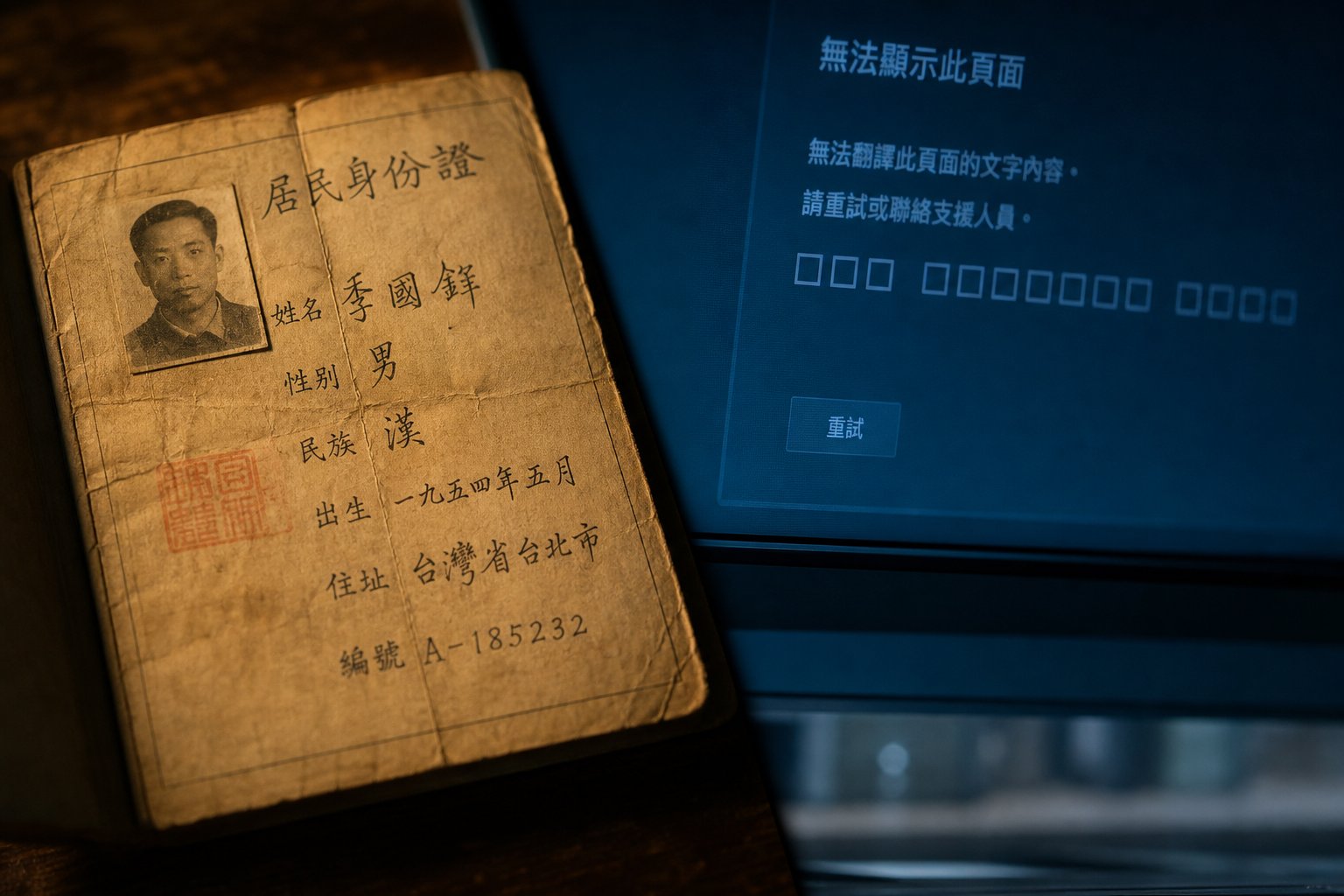
Laws can be debated. Cultural norms can shift. But when a computer system simply cannot process the characters in your name, there is no clerk to persuade and no appeal form to fill out. The screen flashes an error, and your identity does not exist. This is the reality for millions of Chinese citizens whose names contain rare or archaic characters that fall outside the national population database character limits.
Database Limitations as a Driver of Rejections
China's household registration system runs on a centralized digital infrastructure. Every birth, marriage, address change, and ID card issuance passes through computer systems maintained by local public security bureaus. These systems rely on a standardized character set, essentially a finite list of characters the software can recognize, store, and display. If your name contains a character not in that list, the system treats it as invalid input.
How large is the gap? The national standard GB 18030 has registered more than 80,000 Chinese characters. That sounds comprehensive until you learn that most computers in practical use only support the input and display of roughly 30,000 commonly used characters. Meanwhile, Unicode 17.0 defines over 101,000 CJK Unified Ideograph characters. The difference between what exists in the written tradition and what a registration terminal can actually process is enormous.
The China character encoding name problem operates on multiple levels:
- Input failure: The character cannot be typed because input methods do not support it, so the clerk cannot even enter the name into the form.
- Display failure: The character exists in the encoding standard but the system font lacks a glyph for it, showing only an empty box or placeholder symbol.
- Interoperability failure: A character encoded one way in the registration system uses a different code point in the banking or transportation system, meaning the person's identity cannot be verified across platforms.
- Legacy incompatibility: Older systems use encoding schemes that conflict with newer standards, corrupting name data when records are transferred or updated.
The practical result? A computer system rejects a Chinese name not because any law forbids it, but because the digital infrastructure was never built to accommodate it. The rejection is silent, automatic, and often irreversible without a name change.
When Technology Decides Your Name Is Invalid
In Huaiyuan county, Anhui province, more than 1,000 residents from a single village were forced to change their surnames because the character could not be typed into the computer system for registration. Their surname, Chi, written in traditional Chinese, simply did not exist in the simplified Chinese font used by the system.
That case is not an isolated glitch. According to Global Times reporting, approximately 60 million names of people and places, ancient books, and dialects contain rare Chinese characters not in the database, most of which have not been digitized. Tens of millions of living citizens carry names with characters their government's own systems cannot recognize.
One of the most striking examples comes from a village in Lijiang, Yunnan Province. An ethnic minority tribe that takes birds as their totem carries the surname pronounced "nia," meaning "a flying bird." Because this character could not be inputted or displayed on computers, villagers were forced to register for ID cards using a similar character meaning "duck" instead. As 25-year-old Ya Xingui explained: "Since computers lack this character, the system cannot recognize it. If you didn't change it, you couldn't even take airplane or train, nor buy any tickets."
Think about what that means in practice. You cannot open a bank account. You cannot buy a train ticket. You cannot register property or obtain a passport. Your legal identity effectively ceases to exist because a font library does not include the character your family has used for generations. The cascade of consequences transforms a technical limitation into a barrier to essential services.
China recognized the scale of this problem. In April 2023, the country launched its first WeChat mini program specifically to collect rare characters that cannot be inputted into computers. On its first day, the program received over 630,000 visits, with users submitting 1,404 rare characters for review. After professional assessment, approved characters are coded and entered into the national standard character library, eventually enabling barrier-free input and display across devices.
The Ministry of Industry and Information Technology has also formulated a compulsory national standard for Chinese coded character sets, meaning all government administrations, products, and public service systems must comply. Input method providers like Sogou have expanded their databases to include 90,000 Chinese characters, offering handwriting, stroke-based, and pinyin input for rare characters.
Still, the gap between what is encoded in international standards and what ordinary users can actually type remains significant. A character may exist in Unicode, yet remain inaccessible because input methods do not support it, system fonts lack the glyph, or application software fails to render it correctly. Each layer of the technology stack introduces another potential point of failure.
The deeper irony is generational. Ya Zhenggao, 40, recalled that before he was 10 years old, his original surname "nia" still appeared on his handwritten ID card. Only when systems went digital did his identity get overwritten. He still keeps that original card. Children born today in his village all take their mothers' surnames instead, because the fathers' ancestral name literally cannot be registered. A naming tradition that survived centuries of dynastic change, war, and revolution was finally broken by a database upgrade.
This technological dimension reveals something important about how unusual names get rejected in China. The conversation often focuses on political censorship or cultural conservatism, and those factors are real. But for millions of people, the barrier is far more mundane: their name is older than the computer system asked to process it, and the system wins by default. The question of who bears responsibility for fixing this, whether standards bodies, software developers, or government agencies, remains unresolved even as digital transformation accelerates across every sector of Chinese life.
Personal names are not the only casualties of China's standardization impulse. The same logic that rejects a rare surname character at a registration office also governs what businesses can call themselves, and the rules for company names are, if anything, even more explicit.
Company Names Banned by the Chinese Government
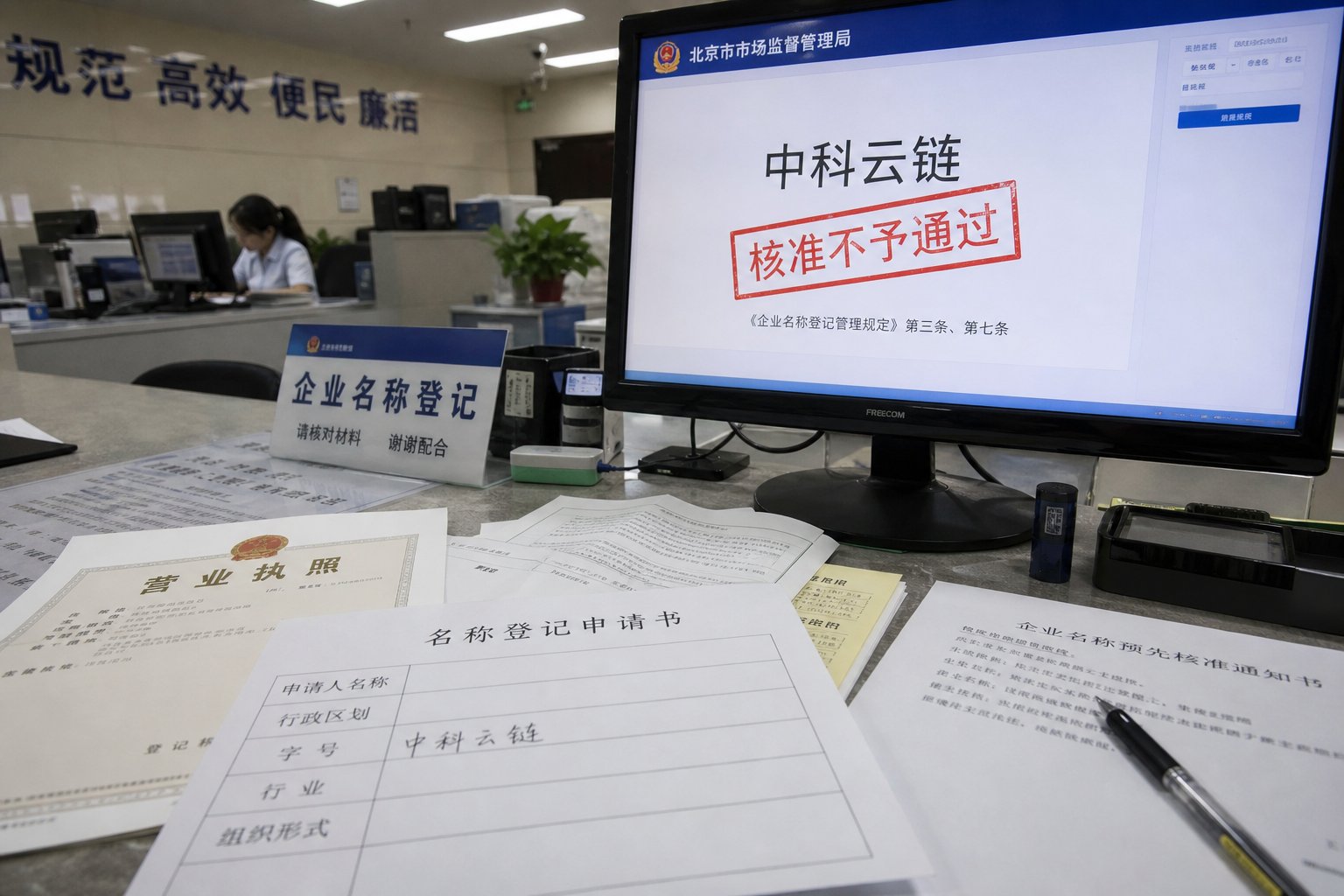
China's naming restrictions do not stop at the birth certificate. Entrepreneurs face their own version of the same scrutiny, governed by a parallel set of Chinese business name registration rules that are, in many ways, even more prescriptive. Where personal names must avoid rare characters and political sensitivity, company names must also dodge vagueness, excessive length, misleading claims, and anything the government deems "weird."
Rules for Chinese Business Name Registration
Under Chinese law, a company name must follow a mandatory structure: administrative region + trade name + industry description + legal form. Every element must use standardized Chinese characters. Foreign scripts, pinyin, letters, Arabic numerals, and traditional or non-standard characters are generally prohibited unless expressly permitted.
The trade name portion, known as the "zi hao," is the most distinctive element. It must contain at least two Chinese characters and cannot consist of administrative divisions, industry terms, or legal forms alone. Beyond structure, the trade name must not violate laws, public order, or mislead the public. Generic terms like "centre" or "institute" cannot replace a legally recognized corporate form such as limited liability company or joint stock company.
China's State Administration for Industry and Commerce (now the State Administration for Market Regulation) issued specific guidelines that explicitly ban:
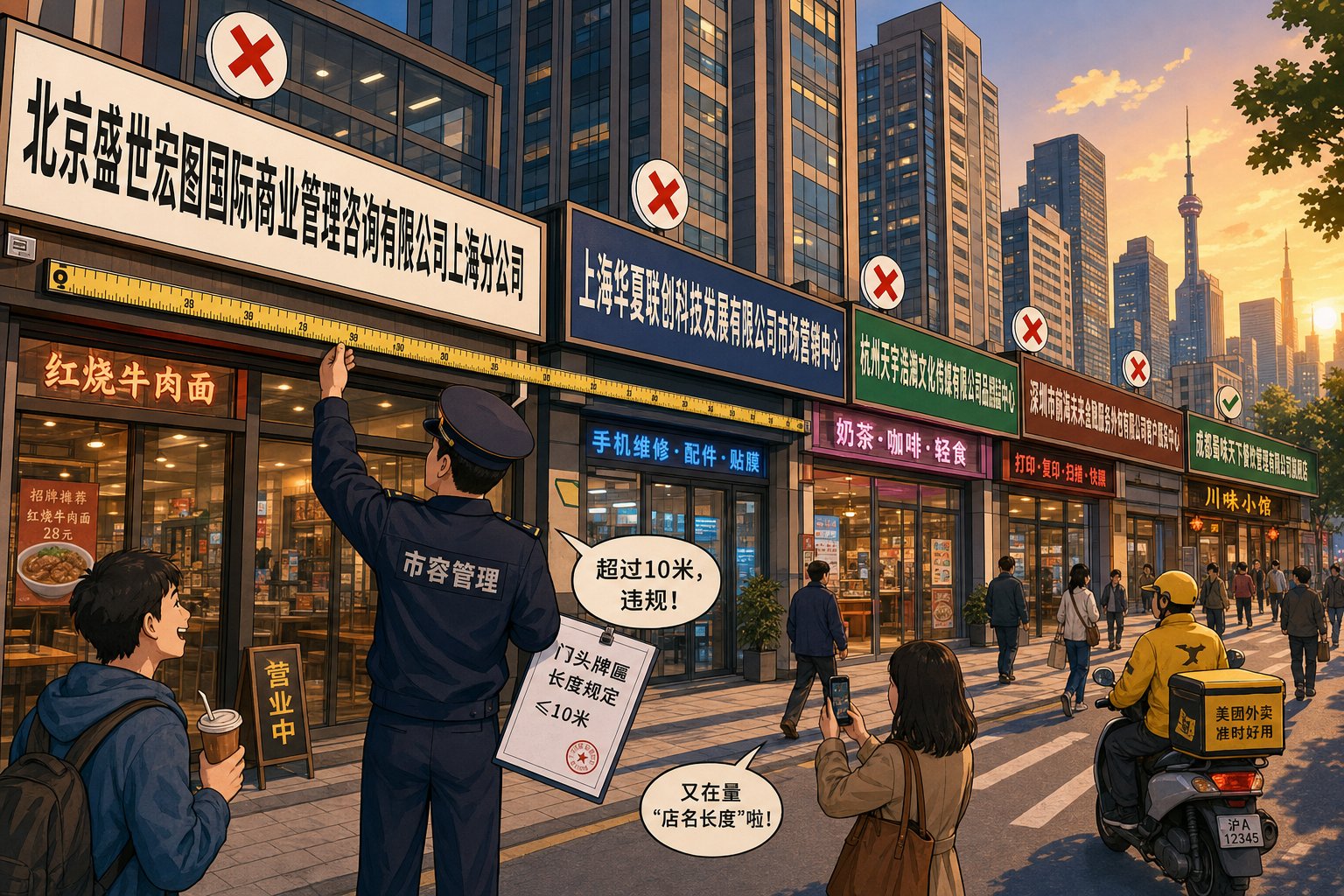
- Names that are excessively long, structured as sentences, paragraphs, or full narratives rather than concise identifiers
- Language that discriminates against genders, races, or ethnicities
- Overtly religious terms related to Christianity, Islam, or other faiths
- Words associated with politically sensitive subjects such as national law, the People's Liberation Army, or banned organizations
- References to terrorism or dissident groups
- Claims of being "national" or "the best" without authorization
- Duplicate registrations that copy existing company names
Foreign-invested enterprises face additional constraints. They may include "(China)" in their name, but the trade name must correspond to the foreign investor's name or its Chinese translation. A company using the designation "group" must control at least three legal entities and complete separate registration requirements.
Examples of Banned Company Names
The most famous case of a weird business name rejected in China involves a condom company from northern China. Officially registered as "There Is a Group of Young People With Dreams, Who Believe They Can Make the Wonders of Life Under the Leadership of Uncle Niu Internet Technology Co. Ltd.," the 39-character name went viral on Weibo before the new guidelines made such registrations impossible. The rules now insist that all company names be comprised of just a few words rather than sentences or literary narratives.
After the guidelines took effect, journalists and netizens searched the National Enterprise Credit Information Publicity System for the most outlandish names already on record. Among the discoveries:
- "What Are You Looking At Shenzhen Technology Co. Ltd."
- "Hangzhou Looking for Trouble Internet Technology Co. Ltd."
- "Beijing Under My Wife's Thumb Technology Co. Ltd."
- "King of Nanning, Guangxi, and His Friends Trading Co. Ltd."
These names slipped through before the crackdown. Under current China company naming restrictions, none would pass the registration comparison process.
The Broader Normalization Campaign
The ban on bizarre company names did not emerge in isolation. It fits within a broader government campaign against what officials consider culturally inappropriate or aesthetically chaotic public-facing identifiers. In February 2016, a directive banned buildings deemed too "odd-shaped" or "weird," targeting structures like China Central Television's Beijing headquarters, nicknamed "Big Pants," and a Fujian office building resembling the Starship Enterprise.
A month later, then-minister of civil affairs Li Liguo called for an end to strangely named housing complexes, particularly those named after Western places. Developments called "Venice Gardens" and "Merlin Champagne Town" were singled out as too bizarre or occidentalized. People's Daily argued that using foreign names for Chinese residential complexes fails to promote Chinese culture.
The pattern is consistent: personal names, company names, building designs, and neighborhood identifiers all face the same normalization pressure. The government views public-facing names as part of the cultural landscape, not purely private choices.
| Criteria | Personal Name Restrictions | Company Name Restrictions |
|---|---|---|
| Character requirements | Must use standardized simplified Chinese characters from the approved national list | Must use standardized Chinese characters; foreign scripts, pinyin, letters, and numerals prohibited |
| Length limits | No explicit maximum, but extremely long names face practical rejection | Must be concise words, not sentences or paragraphs; explicit prohibition on narrative-length names |
| Political sensitivity | Names resembling leaders or political figures discouraged or rejected informally | Explicit ban on terms related to national law, military, banned organizations, and terrorism |
| Structural rules | Must follow parent's surname (with narrow exceptions) | Must follow fixed order: administrative region + trade name + industry + legal form |
| Misleading content | Names causing "public confusion" prohibited under Civil Code | Cannot claim to be "national" or "the best"; must not mislead consumers about business scope |
| Cultural/moral standards | Cannot violate "public order and good morals" | Cannot discriminate by gender, race, or ethnicity; cannot use overtly religious terms |
| Enforcement mechanism | Local public security bureau clerks at registration; informal discretion common | Market regulation authorities; formal comparison process against existing registrations |
You'll notice the overlap. Both systems share the same DNA: standardized characters, political caution, and a preference for order over individual expression. The difference is enforcement style. Personal name rejections often happen through informal discouragement at the registration window. Company name rejections operate through a formal filing and comparison system where automated checks flag violations before a human ever reviews the application.
For foreign businesses entering China, the practical takeaway is clear. Your proposed company name must pass both legal and cultural filters. A name that works perfectly in English may translate into something politically sensitive, phonetically awkward, or structurally non-compliant in Chinese. Careful review before filing is not optional; it is the difference between a smooth registration and months of back-and-forth with market regulation authorities.
The standardization campaign treats all public identifiers, whether personal or commercial, as part of a unified cultural project. But this project was designed primarily around Han Chinese linguistic conventions. For China's 55 officially recognized ethnic minorities, whose naming traditions often operate on entirely different principles, the system creates a distinct set of challenges that neither personal nor company name rules were built to address.
Minority Ethnic Names and Registration Challenges
China's 55 officially recognized ethnic minorities represent over 120 million people. Many of these groups follow naming traditions that predate the modern registration system by centuries, traditions built on entirely different linguistic and cultural foundations than Han Chinese conventions. When these naming systems meet a registration infrastructure designed around the two-to-three character surname-plus-given-name structure of Mandarin, the friction is immediate and structural.
Ethnic Minority Names in a Han-Centric System
The core problem is architectural. China's household registration system assumes every citizen has a fixed family surname followed by a given name, typically totaling two to four characters. This mirrors Han Chinese naming conventions perfectly. But for many ethnic minorities, that structure simply does not apply.
Imagine trying to fit a name built on completely different principles into a form with a "surname" field and a "given name" field, where both must use standardized Chinese characters. That is the daily reality for millions of minority citizens navigating ethnic minority naming challenges in China.
- Uyghur names: Traditionally patronymic, meaning a person's full name consists of their given name followed by their father's given name. There is no fixed hereditary surname in the Han Chinese sense. Registration systems that demand a static family name force Uyghur families to artificially designate one, creating Uyghur names registration problems that ripple across generations when siblings end up with different "surnames" depending on which clerk processed their paperwork.
- Tibetan names: Most Tibetans do not use family surnames at all. Names are typically two or four syllables given by a lama or elder, with no inherited component. Fitting Tibetan names into the Chinese system requires selecting characters that approximate the Tibetan sounds, often resulting in names that carry unintended or nonsensical meanings in Mandarin.
- Mongolian names: Traditionally structured as a given name with a clan or tribal affiliation that functions differently from a Han surname. The patronymic element (father's name) may or may not appear depending on regional custom. Registration forms that insist on a single fixed surname flatten this complexity.
- Dai, Yi, and Zhuang names: These groups use naming systems that may incorporate generational markers, birth-order indicators, or honorifics that do not map cleanly onto the surname/given-name binary. Some traditions change a person's name at major life events, conflicting with a system that treats your registered name as permanent.
Transliteration Challenges for Non-Mandarin Names
Even when the structural issue is resolved, a second barrier emerges: transliteration. Non-Mandarin name transliteration issues affect every minority group whose native language does not use Chinese characters. Converting a Uyghur name written in Arabic script, a Tibetan name in Tibetan script, or a Mongolian name in Cyrillic or traditional Mongolian script into Chinese characters is not a neutral act. It is an approximation that inevitably distorts.
Chinese characters are meaning-bearing units, not purely phonetic symbols. When a Tibetan name like "Tashi Delek" gets transliterated into Chinese characters chosen for their sound, those characters also carry their own semantic content. The result can be a name that sounds roughly correct in Mandarin but reads as gibberish, or worse, as something embarrassing or inauspicious to Han Chinese speakers. Parents have no control over which characters a registration clerk selects for the transliteration, and different offices may transliterate the same name differently.
Length compounds the difficulty. Many minority names are longer than typical Han names. A four-syllable Tibetan name or a Uyghur name-plus-patronymic combination can stretch to six or more Chinese characters, exceeding what some database fields accommodate. The system may truncate the name, forcing the citizen to use an abbreviated version that neither reflects their identity nor matches other official documents.
The cumulative effect is a quiet form of erasure. A naming system designed for one linguistic tradition becomes the mandatory standard for all, and the groups whose traditions differ most from Han conventions bear the greatest burden of adaptation. Unlike the viral cases of rejected "@" symbols or sentence-length company names, these rejections rarely make headlines. They happen at registration windows in rural prefectures, one family at a time, with no media attention and limited legal recourse.
That question of recourse matters. When a name is rejected, whether for technical, cultural, or structural reasons, what options does a citizen actually have? The answer depends on where you are, who you ask, and how far you are willing to push.

The Appeal Process When Your Name Is Denied
So can you challenge a name rejection in China? The short answer is yes, but the path is neither simple nor guaranteed. Most people at the registration window simply accept the clerk's decision and choose a different name. Those who push back enter a multi-layered system of administrative review and, in rare cases, litigation. Understanding how to appeal a rejected name in China means knowing which doors exist and how hard each one is to open.
Steps to Appeal a Rejected Name
When a public security bureau refuses to register a name, the rejection is an administrative act, a formal decision by a government organ. Under Chinese law, citizens who believe their rights have been violated by such a decision have structured China name rejection recourse options available to them.
The process generally follows this sequence:
- Request a written explanation. Ask the registration office to provide the specific legal basis for the rejection. Clerks sometimes refuse names based on informal guidance or personal judgment rather than explicit legal provisions. A written explanation forces the office to cite actual law.
- Resubmit with alternative characters. The fastest resolution is often pragmatic rather than legal. If the rejection stems from a character encoding issue or a rare character not in the approved set, selecting a homophonic alternative that preserves the name's meaning can resolve the problem without formal dispute.
- File for administrative reconsideration. China's Administrative Reconsideration Law provides a formal channel for citizens who refuse to accept an administrative organ's decision. Under Article 11, a citizen may apply for reconsideration when an administrative organ rejects an application they believe should have been approved. The application must be filed within 60 days of learning about the rejection, and can be submitted in writing or orally.
- Await the reconsideration decision. Once accepted, the administrative reconsideration organ (typically the local government at or above the county level) must render a decision within 60 days, extendable by 30 days for complex cases. The public security bureau that rejected the name must submit a written reply with evidence justifying its decision within 10 days.
- Institute administrative litigation. If the reconsideration decision still goes against the applicant, Article 10 of the Administrative Reconsideration Law preserves the right to file an administrative lawsuit in a people's court. This is the final formal avenue.
The administrative reconsideration route is designed to be accessible. No fees are charged for filing. Legal aid institutions are required to assist applicants who meet eligibility criteria. And the law explicitly states that if a reconsideration organ refuses to accept an application without justifiable reasons, the applicant can report this to the next higher-level administrative organ, which can order corrective action or directly accept the case.
When Courts Overrule Registration Offices
Chinese court name dispute cases are rare but not unheard of. The most instructive example remains Zhao C, discussed earlier. When the Jiangxi Public Security Bureau refused to issue a second-generation ID card bearing his name, Zhao took the matter to court. The local court initially ruled in his favor, ordering the bureau to issue the card. The PSB appealed, and the case ultimately ended in a negotiated compromise rather than a binding precedent.
That outcome is typical. Courts in China tend to mediate rather than issue sweeping rulings on naming rights. Judges balance the individual's right to a name (protected under Article 1012 of the Civil Code) against the administrative need for standardization. In practice, this means courts often push both sides toward a middle ground: the citizen adjusts the name slightly, and the bureau processes the registration without further obstruction.
Other documented cases follow a similar pattern. Parents whose chosen characters were rejected for encoding reasons have successfully argued that the character exists in the national standard GB 18030, even if the local system could not process it. In those instances, courts or reconsideration organs ordered the bureau to upgrade its systems or manually enter the character rather than forcing a name change. These victories are incremental, won one family at a time, but they establish informal expectations that registration offices cannot hide behind outdated technology indefinitely.
The system is evolving, if slowly. The 2023 launch of the rare character collection program via WeChat signals government acknowledgment that the approved character set is too narrow. As more characters get coded into the national standard library, the technical basis for many rejections disappears. Legislative discussions around expanding the approved name character list surface periodically in National People's Congress sessions, though no comprehensive reform has been enacted.
For anyone navigating this system, the practical reality is clear. Informal negotiation at the registration window resolves most disputes. Administrative reconsideration exists for those willing to invest time and paperwork. And litigation remains a last resort that produces compromises more often than precedents. The balance between naming freedom and administrative standardization in China continues to shift, pushed by technology upgrades, legal challenges, and the quiet persistence of citizens who refuse to let a database define their identity.
Frequently Asked Questions About Chinese Name Rejections
1. Why does the Chinese government reject certain names?
China rejects names for three main reasons: legal violations (characters that harm public morality or cause confusion), cultural concerns (homophones that sound offensive or politically sensitive associations), and technical limitations (rare characters that cannot be processed by the national population database). Local public security bureaus serve as gatekeepers, and clerks can deny registration if a name fails any of these filters. The Civil Code, effective since 2021, formally codifies these restrictions under provisions protecting 'public order and good morals.'
2. What are some real examples of names rejected in China?
Notable cases include a couple who tried to name their baby '@' because it sounds like 'love him' in Mandarin, a man named Zhao C who lived with his name for 22 years before a computer system upgrade made it unregisterable, and a child whose parents attempted the name 'King Osrina' using foreign-language elements. Even former Premier Zhu Rongji's name contained a character so rare it caused problems in digital systems. These cases highlight how symbol-based, foreign-language, and rare-character names all face rejection through different mechanisms.
3. Can you appeal a rejected name in China?
Yes, Chinese citizens have formal recourse options. The process starts with requesting a written legal explanation from the registration office, then potentially filing for administrative reconsideration under China's Administrative Reconsideration Law within 60 days. If that fails, citizens can file an administrative lawsuit in a people's court. No fees are charged for reconsideration filings, and legal aid is available for eligible applicants. In practice, most disputes are resolved through informal negotiation or by selecting alternative characters that preserve the name's intended meaning.
4. How do computer systems cause name rejections in China?
China's household registration system relies on a standardized character set that supports roughly 30,000 commonly used characters, far fewer than the 101,000-plus CJK characters defined in Unicode. Names containing rare or archaic characters trigger input failures, display errors, or interoperability problems across government platforms. Approximately 60 million Chinese citizens carry names with characters their systems cannot recognize, preventing them from obtaining ID cards, buying train tickets, or opening bank accounts until they change their registered name.
5. Do ethnic minorities face special naming challenges in China?
Yes, China's 55 recognized ethnic minorities face structural barriers because the registration system was designed around Han Chinese naming conventions. Uyghur patronymic names lack a fixed hereditary surname, Tibetan names often have no inherited surname component at all, and Mongolian clan affiliations function differently from Han surnames. Transliterating non-Mandarin names into Chinese characters introduces additional distortion since the characters carry their own semantic meanings. Longer minority names may also exceed database field limits, forcing truncation that misrepresents the person's identity.