Why Wang and Wong Confuse Everyone
Are Wang and Wong the same surname? Ask this question at a family gathering or in a genealogy forum, and you'll get confident answers on both sides. Some people insist they're identical. Others swear they're completely unrelated. The truth? Both camps are right, depending on which Chinese character sits behind the English spelling.
Why Wang and Wong Cause So Much Confusion
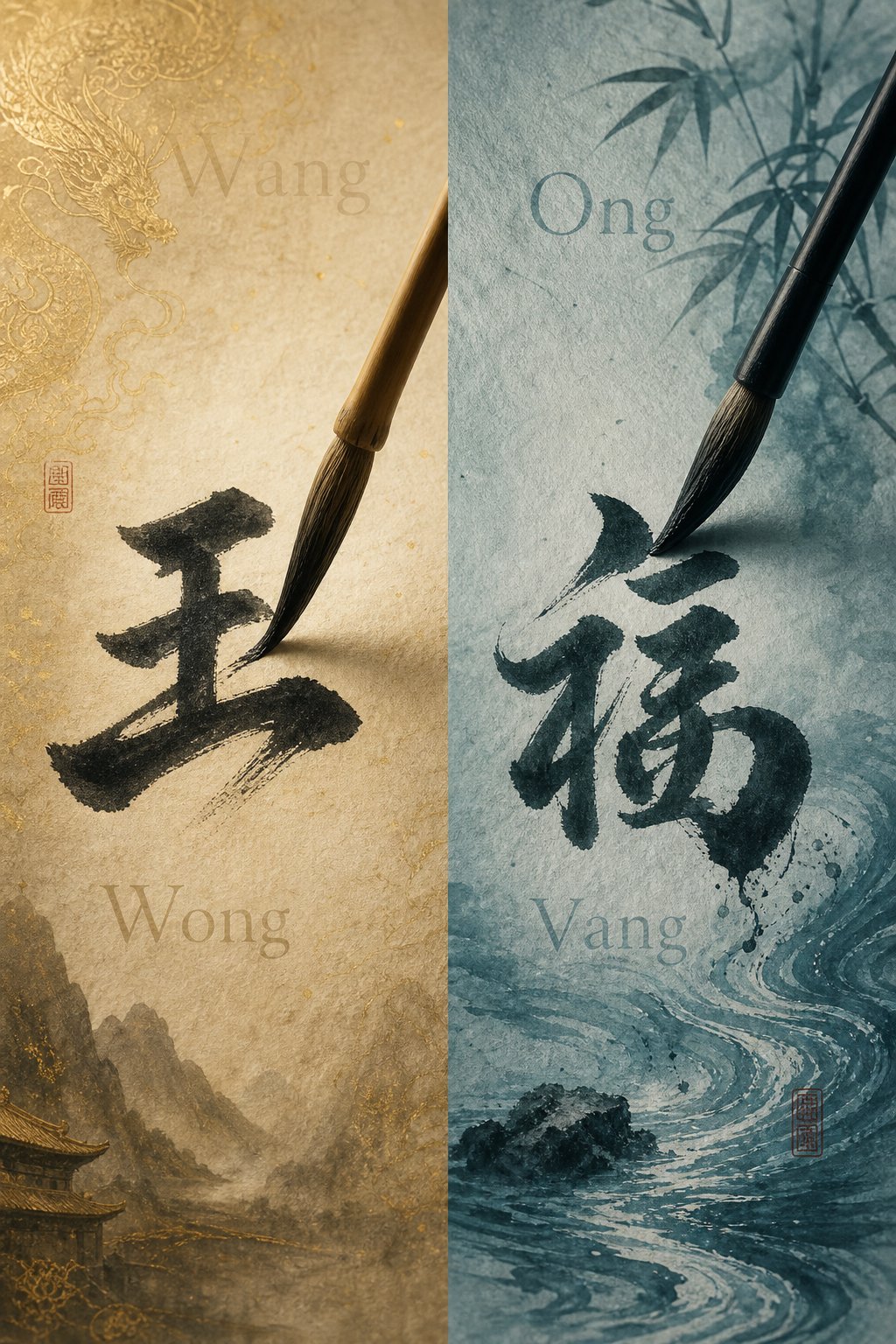
Here's the core problem: English strips away the tonal and character-level information that makes Chinese last names distinct. The character 王 can be romanized as either "Wang" (in Mandarin Pinyin) or "Wong" (in Cantonese). In that case, Wang and Wong are literally the same surname, just filtered through different dialect systems. But 黃, a completely separate character meaning "yellow," also becomes "Wong" in Cantonese. And 汪, yet another unrelated character, also becomes "Wang" in Pinyin. Three different families, overlapping spellings, and no way to tell them apart from the English alone.
Wang and Wong can be the same surname spelled differently OR completely unrelated surnames that happen to look similar in English.
This isn't a minor edge case. The character 王 alone accounts for roughly 7.1% of the Chinese population, making it one of the most popular surnames in the world. When you combine that massive frequency with the romanization overlap from 黃 and 汪, you're looking at tens of millions of people whose family names blur together in English-speaking countries.
What This Guide Covers
This article breaks down every path from Chinese character to English spelling. You'll learn exactly when wang wong refers to the same lineage, when it points to entirely different clan origins, and how to figure out which scenario applies to your own family. We'll cover each character individually, map out the romanization systems that created this confusion, and give you a practical framework for tracing your ancestry through the noise. Whether you're researching your own roots or simply trying to understand how Chinese last names work in translation, this is the side-by-side comparison that clears it all up.
How We Mapped These Surname Variants
Spelling alone is unreliable when dealing with Chinese surnames in English. Two people named "Wong" might share an ancestor, or they might come from entirely different lineages separated by thousands of years. The only way to cut through this ambiguity is to start with the Chinese character itself and trace outward through the various romanization systems that produced the English spelling.
Character-First Analysis Approach
Think of it this way: the Chinese character is the root, and every English spelling is just a branch. When you see "wang in chinese," it could point to 王 or 汪. When you encounter "wong in chinese," it might represent 王 or 黃. The character carries the meaning, the clan history, and the ancestral lineage. The English spelling only tells you which dialect filter was applied during romanization.
This is why our comparison starts at the character level every time. We identify the original character first, then map how each dialect system translates it into Roman letters. This approach prevents the most common mistake people make: assuming two identical English spellings mean the same family, or that two different spellings mean unrelated families. Neither assumption holds up once you understand how romanization actually works.
Romanization Systems We Compare
Multiple romanization systems exist because Chinese dialects differ dramatically in pronunciation, and different political and colonial histories produced competing standards. Here are the systems we reference throughout this guide:
- Hanyu Pinyin - The official standard in Mainland China since 1958. This is where chinese wang gets its most common modern spelling. Nearly all recent immigrants from the PRC use Pinyin-based surnames.
- Jyutping/Yale - Used for Cantonese pronunciation, primarily associated with Hong Kong, Macau, and Guangdong province. This system produces "Wong" from both 王 and 黃.
- Wade-Giles - An older system still found on Taiwanese documents and in historical records. It renders 王 as "Wang" but with different formatting conventions than Pinyin.
- Southeast Asian local conventions - In Malaysia, Singapore, Indonesia, and the Philippines, colonial-era spelling practices created unique romanizations like "Ong" (Hokkien/Teochew) and "Heng" that don't follow any single standard system.
Here's the critical detail that locks everything into place: immigration history froze these spellings in time. A Cantonese family that arrived in San Francisco in the 1860s had their surname recorded as "Wong" by immigration officials using ear-based transliteration. Their descendants carry that spelling regardless of modern standards. A Mandarin-speaking family arriving in 2020 gets "Wang" from their Pinyin-based passport. Same character, same lineage, different century, different spelling on paper.
Colonial-era practices in Hong Kong, British Malaya, and the Dutch East Indies each applied their own phonetic logic, which is why diaspora families often carry romanizations that don't match any current official system. Understanding which system produced a spelling is the first step toward identifying the original character behind it.
王 as Wang in Mandarin - The King Surname
The character behind the most common spelling of this surname carries a meaning that's hard to miss. 王 translates directly to "king" or "monarch" — and its wang meaning is visible in the character's very structure. Three horizontal strokes connected by a single vertical line, traditionally interpreted as a figure uniting heaven, earth, and humanity. The connection between wang and king isn't metaphorical. It's literal.
The Character 王 and Its Royal Origins
So where does the wang last name origin actually begin? The story traces back to Chinese royalty. According to genealogical records, when rulers of ancient dynasties fell from power, their descendants retained recognition as people of royal blood. Over time, the title 王 shifted from a position of authority into a hereditary surname.
One of the oldest accounts involves Bigan (比干), a nobleman killed after falling out of favor with King Zhou, the last monarch of the Shang dynasty. His descendants adopted the clan name Wang because Bigan had originally been the child of a local ruler. This lineage became known as the Jijun Wang Clan (汲郡王氏) and spread throughout Gansu, Hebei, Shanxi, and Shandong over centuries.
A second prominent origin story centers on Wang Zijin (王子晋), the exiled son of Zhou emperor Ji Xiexin. After his exile, the imperial court continued using the name Wang for his son Zongjing, who still held a government post. From that point forward, Wang became the family surname. This makes the king in chinese language not just a vocabulary word but the foundation of one of the world's largest family lineages.
Why Wang Dominates Mainland China
Numbers tell the story clearly. Wang is the single most common surname in China, ranking number one in no fewer than 16 provinces stretching from Jilin in the northeast to Xinjiang in the far west. The highest concentration sits in Shandong province, and northern provinces generally show higher rates of occurrence than southern ones. Altogether, people surnamed 王 comprise over 7.1% of China's total population — well over a hundred million people sharing this one surname.
In Taiwan, Wang also ranks among the top surnames, though the spelling remains "Wang" under both Wade-Giles and Pinyin conventions. This consistency across Mandarin-speaking regions means that if you encounter the spelling "Wang" on a modern passport or official document from Mainland China or Taiwan, you can be fairly confident the underlying character is 王.
Pronunciation Guide for English Speakers
Here's where things get tricky for non-Chinese speakers. How do you pronounce wang correctly? Most English speakers default to rhyming it with "bang" or "sang." That's wrong. The Mandarin wang pronunciation sits closer to "wahng" — with a broader, more open "ah" vowel sound, not the flat "a" in "cat" or "pan."
When you pronounce wang with the flat English "a" sound, it ends up sounding remarkably similar to how English speakers say "Wong." This phonetic overlap in English ears adds yet another layer to the confusion between these two spellings. Native Mandarin speakers hear a clear difference — the vowel in 王 (wáng, second tone) is distinct from how Cantonese speakers produce "Wong." But strip away tonal context and filter it through English phonology, and the two blur together.
This mispronunciation issue matters practically. In English-speaking workplaces and schools, people named Wang frequently hear their name pronounced identically to Wong, which reinforces the false assumption that the two spellings are interchangeable.
Pros of Having the Surname Wang (王)
- Instantly recognizable — As the most common Chinese surname globally, Wang carries immediate cultural recognition in both Chinese and international contexts.
- Massive genealogical records available — Centuries of clan documentation, family tree books (zupu), and regional archives exist for Wang lineages across China.
- Clear Pinyin standard — The spelling "Wang" maps cleanly to modern Hanyu Pinyin, reducing ambiguity on official documents issued after 1958.
Cons of Having the Surname Wang (王)
- Extremely common — With over 100 million bearers, narrowing down specific ancestry requires additional information like ancestral village, generation name, or clan branch.
- Often confused with Wong — In English-speaking countries, Wang is frequently treated as interchangeable with Wong, leading to misspellings on legal documents, mail, and professional records.
- Pronunciation challenges abroad — English speakers rarely pronounce it correctly on the first attempt, which can feel like a constant minor friction for diaspora families.
The sheer scale of the Wang surname creates a paradox for genealogy researchers. On one hand, the documentation is vast — clan associations, historical records, and zupu collections span centuries. On the other hand, that same popularity means you're searching through an enormous pool of people who share your exact surname. Pinpointing your specific branch requires knowing your ancestral village, dialect background, or generation naming pattern.
That said, 王 romanized as "Wang" represents just one piece of the puzzle. The same character takes on a completely different English spelling the moment you cross into Cantonese-speaking territory — a shift that explains why so many families named Wong share the exact same ancestral character as families named Wang.
王 as Wong in Cantonese - Same Character Different Spelling
Cross the border from Mandarin-speaking northern China into Guangdong province, Hong Kong, or Macau, and something immediate happens to 王. The character stays the same. The meaning stays the same. The family lineage stays the same. But the sound shifts — and with it, the English spelling changes entirely. In Cantonese, 王 is pronounced "wong4" (in Jyutping romanization), which gets written in English as "Wong." Same royal surname, same ancestry, completely different spelling on a passport.
This is the single most important point for anyone asking whether Wang and Wong are related: a person surnamed Wong and a person surnamed Wang may share the exact same character, the exact same clan origins, and the exact same bloodline. The only difference is which dialect their family spoke when their name was first written in Roman letters.
Same Character Different Spelling - 王 in Cantonese
Cantonese pronunciation of 王 lands on a rounded vowel that English ears naturally transcribe as "Wong." The Jyutping notation is wong4 — a low-falling tone with a vowel sound close to the "o" in "long." Compare that to the Mandarin wáng, which uses a flatter, more open "ah" vowel. Two dialects reading the same written character produce two sounds different enough that English speakers would never guess they're the same name.
Is wong a chinese last name? Absolutely — and one of the most historically significant ones. The surname wong traces directly to the same Zhou dynasty royal lineage discussed in the previous section. Every origin story, every clan branch, every ancestral village associated with 王 applies equally to families spelling it "Wong." The character didn't change. Only the phonetic system used to render it in English did.
Hong Kong and Diaspora Usage
Geography and timing explain why "Wong" became the dominant spelling in so many Western countries. Cantonese speakers from Guangdong province were among the earliest Chinese emigrants to reach North America, Australia, and the United Kingdom. Gold rushes in California and Victoria during the 1850s and 1860s drew tens of thousands of Cantonese-speaking laborers overseas. When immigration officials recorded their names, they wrote what they heard — and what they heard was "Wong."
Hong Kong's status as a British colony further cemented this spelling. For over 150 years, official documents in Hong Kong used English transliterations based on Cantonese pronunciation. Every birth certificate, identity card, and school record for a person surnamed 王 in Hong Kong reads "Wong." When these families emigrated to Canada, the UK, Australia, or the United States, they carried that spelling with them.
The result? In cities like San Francisco, Vancouver, Sydney, and London, "Wong" became one of the most recognizable chinese wong surnames long before Mandarin Pinyin existed as a standardized system. Families who arrived in the 19th and early 20th centuries established businesses, community associations, and legal identities under the Wong spelling. Their descendants — now third, fourth, or fifth generation — have no practical reason to switch to "Wang" even if they understand the connection.
Macau followed a similar pattern under Portuguese colonial administration, though Portuguese phonetic conventions occasionally produced variant spellings like "Vong." Across all these regions, the underlying character remained 王. Only the colonial and linguistic filter changed.
When Wang and Wong Are Literally the Same Name
Imagine two cousins. One grew up in Beijing, the other in Hong Kong. Their grandfather was the same man, from the same village in Guangdong. The Beijing cousin's passport says "Wang." The Hong Kong cousin's passport says "Wong." At a family reunion in Canada, their name tags look like they belong to different families. They don't. The wong last name origin in this case is identical to the Wang origin — both trace back to 王 and the same royal Zhou dynasty lineage.
This scenario plays out constantly in diaspora communities. Families split across dialect regions during the upheavals of the 20th century ended up with different romanizations of the same surname. Reunification efforts, inheritance claims, and even simple family tree projects hit a wall when English-language records show "Wang" on one branch and "Wong" on another. Without knowing the original character, you'd never connect them.
Pros of the Surname Wong (from 王)
- Clearly signals Cantonese heritage — The spelling "Wong" immediately communicates a connection to Cantonese-speaking regions, helping others identify dialect background and likely ancestral geography.
- Well-established in English-speaking countries — Generations of usage in the West mean that "Wong" appears in legal precedents, business directories, and community organizations with deep institutional roots.
- Easy for non-Chinese speakers to pronounce — Unlike "Wang" (which English speakers often mangle), "Wong" gets pronounced correctly on the first try in most English-speaking contexts.
Cons of the Surname Wong (from 王)
- Easily confused with 黃 (Huang) — This is the biggest drawback. The character 黃, meaning "yellow" and carrying entirely different clan origins, is ALSO romanized as "Wong" in Cantonese. Two unrelated surnames collapse into one English spelling.
- Disconnected from Mandarin-speaking relatives — Family members in Mainland China or Taiwan using "Wang" may not immediately recognize "Wong" as the same surname, complicating cross-border family research.
- Assumed to be only Cantonese — Some people incorrectly assume all Wongs are Cantonese, when in reality the surname wong could also belong to families from other dialect groups who adopted the spelling through colonial-era documentation.
The overlap between Wang and Wong from 王 is clean and well-documented. If your family speaks Cantonese and spells the surname Wong, there's a strong chance you share the same ancestral character as every Wang family tracing back to Zhou dynasty royalty. But that confidence comes with a catch — because "Wong" doesn't exclusively belong to 王. Another character, entirely unrelated in meaning and origin, produces the identical English spelling through the same Cantonese romanization process.
黃 as Wong - A Completely Different Surname
That catch mentioned above? It's a big one. The character 黃 (Huáng in Mandarin) also becomes "Wong" when filtered through Cantonese pronunciation. This means two people both surnamed "Wong" in English might come from entirely separate lineages with zero shared ancestry. One carries 王 (king). The other carries 黃 (yellow). Same English spelling. Different characters. Different meanings. Different clan histories stretching back thousands of years in opposite directions.
The Hidden Trap - 黃 Also Becomes Wong
In Cantonese, 黃 is pronounced "wong4" — phonetically identical to how Cantonese speakers say 王. The Jyutping notation is the same: wong4. English ears can't distinguish between them, and English spelling certainly can't. So when a Cantonese-speaking family surnamed 黃 emigrated to the West, their name got recorded as "Wong" — the exact same spelling used by families surnamed 王.
The wong surname meaning shifts dramatically depending on which character sits behind it. For 王-Wong, the meaning is "king" or "monarch," rooted in Zhou dynasty royalty. For 黃-Wong, the meaning is "yellow," tied to an entirely different origin story involving the ancient state of Huang (黃國) during the Spring and Autumn period. These aren't distant cousins or variant branches of the same clan. They're completely unrelated families whose names happen to collide in English due to Cantonese phonology.
How common is this overlap? Extremely. The huang surname ranks among the top 10 most common surnames in China, carried by tens of millions of people. In Guangdong province and Hong Kong — the exact regions where Cantonese romanization dominates — 黃 is particularly prevalent. This means a huge number of "Wong" families in Western countries actually descend from 黃, not 王.
If your surname is Wong, you cannot assume it comes from 王 — it may come from 黃 (Huang), an entirely different lineage.
How to Tell 王-Wong from 黃-Wong
Without seeing the original Chinese character, there's no way to distinguish these two surnames from the English spelling alone. They look identical on paper. But several clues can help you figure out which character your family carries:
- Mandarin-speaking relatives — If older family members in Mainland China spell the surname "Huang" rather than "Wang," your character is almost certainly 黃. The Mandarin Pinyin for 黃 is "Huáng" — completely different from "Wáng."
- Ancestral hall names (堂號) — The huang family name traditionally uses hall names like Jiangxia (江夏) or Zijin (紫金), while 王 families use Taiyuan (太原) or Langya (琅琊). If your family has records mentioning these, the distinction becomes clear.
- Immigration documents — Some older records include the Chinese character alongside the romanized spelling. Ship manifests, naturalization papers, and early census records occasionally preserved this information.
- Clan associations — In cities with large Chinese diaspora populations, separate Wong clan associations exist for 王 and 黃 families. Membership records can confirm which character your family belongs to.
You'll notice that all these methods require reaching beyond the English spelling. That's the fundamental challenge. The romanization system erased the distinction, and only by recovering the original character can you restore it.
Why This Matters for Family Research
Imagine you're building a family tree and you find historical records for a "Wong" family in San Francisco's Chinatown from the 1880s. You assume they're your ancestors because the surname matches. But your family is 黃-Wong, and those records belong to a 王-Wong family. You've just grafted an entirely unrelated lineage onto your tree. The genealogical research goes sideways from that point forward — wrong ancestral village, wrong clan connections, wrong everything.
This isn't a hypothetical problem. Genealogy forums and DNA testing communities regularly surface cases where diaspora families spent years researching the wrong lineage because they didn't know which character their "Wong" came from. The huang family name and the 王 family name lead to different provinces, different historical figures, and different migration patterns.
Pros of Understanding This Distinction
- Immediately clarifies family origins — Knowing whether your Wong comes from 王 or 黃 points you toward the correct ancestral region, clan records, and historical context.
- Prevents genealogical dead ends — You avoid wasting time researching the wrong lineage or connecting with unrelated families who share only an English spelling.
- Connects you to the right community — Clan associations, surname societies, and ancestral village networks are organized by character, not English spelling. The correct character opens the right doors.
Cons of This Situation
- Requires knowing the original Chinese character — Many diaspora families, especially those three or more generations removed from immigration, have lost track of which character their surname represents.
- No visual distinction in English — Unlike Wang/Huang (which look different in Pinyin), both characters produce identical "Wong" spellings in Cantonese contexts, making passive identification impossible.
- Recovery can be difficult — If no older relatives remember the character and no original-language documents survive, determining whether you're 王-Wong or 黃-Wong may require DNA testing or deep archival research.
The 王/黃 collision in Cantonese romanization represents the sharpest edge of the wang vs wong surname confusion. It's not just about dialect differences producing alternate spellings of the same name — it's about completely unrelated names becoming invisible to each other behind identical English letters. And this pattern doesn't stop at Wong. The character 汪, yet another surname with its own distinct origins, adds a third layer to the puzzle when romanized through Mandarin Pinyin.
汪, Vang, Vuong, and Ong - Other Regional Variants
The character 汪 (Wāng) throws yet another wrench into the picture. In Mandarin Pinyin, it's spelled exactly the same as 王 — "Wang." Same four letters. Same basic appearance on any English-language document. But 汪 is a completely different surname with its own meaning, its own clan history, and its own ancestral roots. If you thought the 王/黃 collision was confusing, consider that even within Mandarin Pinyin — a single romanization system — two unrelated characters produce identical English spellings.
汪 - The Other Wang You Might Not Know
The character 汪 carries a water radical (氵) on its left side, and its meaning relates to vast or deep water — think of a broad, still pool or an expanse of floodwater. This is a far cry from the royal connotations of 王 (king). The two characters share no semantic connection whatsoever. Different radical, different meaning, different origin story.
So how do native Mandarin speakers tell them apart in conversation? Tone. In spoken Chinese, 汪 is pronounced with the first tone (Wāng) — a high, flat pitch that stays level. The character 王 uses the second tone (Wáng) — a rising pitch, like the inflection English speakers use when asking a question. To a Mandarin speaker, these sound clearly distinct. To an English speaker reading a name off a page? Completely indistinguishable. Pinyin romanization without tone marks — which is how surnames appear on passports, driver's licenses, and business cards — erases the difference entirely.
In terms of frequency, 汪 is far less common than 王. While 王 sits at number one among Chinese surnames with over 100 million bearers, 汪 typically ranks somewhere around 57th to 60th, carried by roughly 4 to 5 million people. That's still a significant population, but it means the vast majority of people you meet named "Wang" will be 王, not 汪. Still, if you're researching the vang last name origin or tracing a Wang family tree and the ancestral records don't match up with 王 clan histories, 汪 is worth investigating as an alternative.
The 汪 surname traces its origins to the Ru (汝) River region in what is now Henan province. Historical accounts link it to descendants of a minor feudal lord whose territory was associated with water features — fitting for a character built around the concept of deep water. Over centuries, 汪 families concentrated in Anhui and Jiangxi provinces, giving the surname a distinctly southern-central geographic footprint compared to 王's dominance in the north.
Vang, Vuong, and Ong - Southeast Asian Variants
The romanization puzzle extends well beyond Mandarin and Cantonese. As Chinese communities migrated across Southeast Asia over centuries, the character 王 picked up entirely different English spellings depending on the local language and dialect group. These variants often confuse people who don't realize they're looking at the same underlying character:
- Vang — The vang last name is the Hmong adaptation of 王. Hmong communities in Laos, Thailand, and the United States use this spelling extensively. If you're wondering about the vang last name origin, it connects directly to 王 through historical contact between Hmong and Chinese populations. Vang is one of the most common Hmong surnames in the American Midwest, particularly in Minnesota and Wisconsin.
- Vuong — The vuong last name represents the Vietnamese reading of 王 (written as Vương in Vietnamese with diacritics). Vietnamese adopted Chinese characters historically through the Sino-Vietnamese pronunciation system, and 王 became "Vuong" in that framework. Families with the vuong last name in Vietnamese diaspora communities share the same ancestral character as Wang and Wong families of Chinese descent.
- Ong — The ong last name origin traces to Hokkien and Teochew dialect speakers, primarily from Fujian province and the Chaoshan region of Guangdong. In these southern Min dialects, 王 is pronounced something close to "Ong" — a nasalized vowel sound with no initial consonant. This spelling is common in Singapore, Malaysia, the Philippines, and Indonesia, where Hokkien and Teochew communities established deep roots during colonial-era migration.
What connects all these variants is the character 王 sitting at the center. Vang, Vuong, Ong, Wong, and Wang are five different English spellings of one Chinese surname, produced by five different linguistic pathways. A Hmong-American named Vang, a Vietnamese-Australian named Vuong, a Singaporean named Ong, a Hong Konger named Wong, and a Beijinger named Wang could all share the same ancestral character and — potentially — the same deep lineage.
Pros of Knowing These Variants
- Connects diaspora families across countries — Recognizing that Vang, Vuong, Ong, Wong, and Wang can all represent 王 opens up cross-national family research possibilities that would otherwise remain invisible.
- Clarifies unexpected DNA matches — Genetic genealogy results sometimes link people with seemingly unrelated surnames. Understanding these variant spellings explains why a "Vang" in Minnesota might share DNA segments with an "Ong" in Singapore.
- Preserves cultural knowledge — Each variant carries its own migration story and community history, enriching the broader narrative of Chinese diaspora identity.
Cons of This Complexity
- Adds layers to an already confusing landscape — Five or more spellings for one character means researchers need to cast a much wider net when searching historical records.
- Regional conventions aren't standardized — Unlike Pinyin or Jyutping, Southeast Asian romanizations vary by country, era, and even individual family preference, making systematic searches difficult.
- Easy to miss connections — Without explicit knowledge of these mappings, most people would never connect "Ong" to "Wang" or "Vang" to "Wong." The spellings look nothing alike in English.
All of these variants — 汪 as a separate character, and Vang, Vuong, and Ong as regional spellings of 王 — demonstrate why a simple side-by-side comparison of "Wang" and "Wong" barely scratches the surface. The full picture requires mapping every character to every romanization system across every major dialect and neighboring language. That's exactly what a comprehensive comparison table can provide at a glance.
Complete Comparison Table of All Wang and Wong Variants
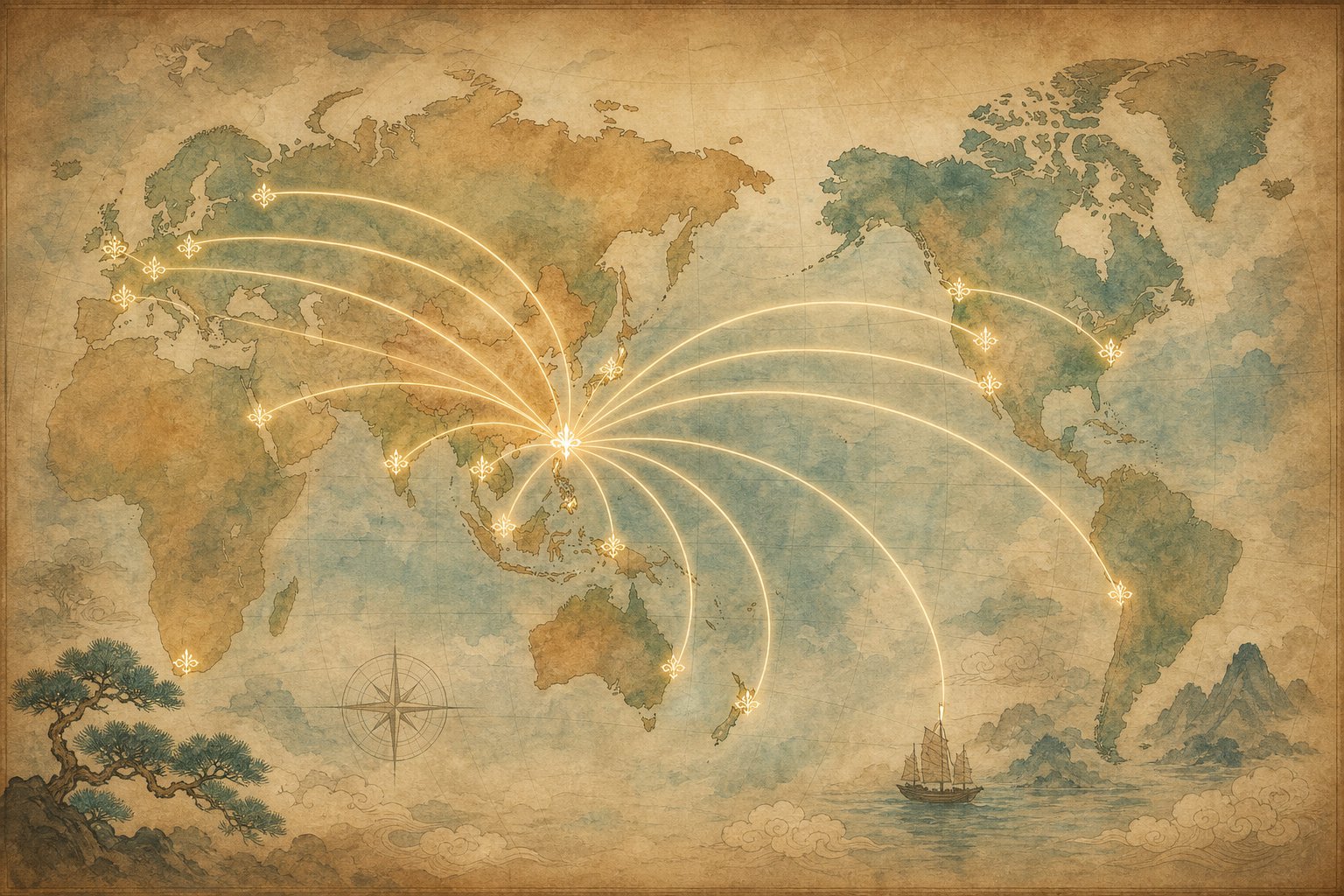
Everything discussed so far — the dialect splits, the character collisions, the regional adaptations — can be distilled into a single reference. If you've ever stared at the surname wang on a document and wondered which family it actually points to, or encountered "Wong" and needed to know whether it traces to royalty or to the ancient state of Huang, this table gives you the answer in seconds.
Complete Character to Romanization Map
The table below maps each Chinese character to its English spelling across every major romanization system and regional convention. Read it column by column to see how one character branches into multiple spellings, or read it row by row to understand why different characters collapse into identical English names.
| Chinese Character | Meaning | Mandarin Pinyin | Cantonese | Hokkien/Teochew | Vietnamese | Hmong |
|---|---|---|---|---|---|---|
| 王 | King / Monarch | Wang | Wong | Ong | Vuong (Vương) | Vang |
| 黃 | Yellow | Huang | Wong | Ng / Ooi | Hoang (Hoàng) | — |
| 汪 | Vast water / Deep pool | Wang | Wong | — | — | — |
Notice the collision points. In the Cantonese column, all three characters produce "Wong." In the Mandarin Pinyin column, both 王 and 汪 produce "Wang." These overlaps are exactly where confusion lives. The last name wang in Pinyin could be either 王 (king) or 汪 (vast water). The surname "Wong" in Cantonese could be any of the three characters. Only by identifying the original character can you determine which lineage you're looking at.
A few additional notes on reading this table:
- The Hokkien/Teochew column reflects spellings common in Singapore, Malaysia, and the Philippines. "Ng" for 黃 is particularly widespread in these regions and often surprises people who don't realize it represents the same character as "Huang" or "Wong."
- Vietnamese spellings include diacritical marks in formal usage (Vương, Hoàng) but often appear without them on Western documents, becoming "Vuong" and "Hoang."
- The Hmong "Vang" specifically represents 王. The character 黃 does not have a standard Hmong equivalent because the Hmong-Chinese surname adoption historically drew from 王 rather than 黃.
- Dashes (—) indicate that no widely recognized romanization exists for that character within that particular linguistic community.
For the wang family name specifically, this table reveals five distinct English spellings across different communities: Wang, Wong, Ong, Vuong, and Vang. All five can represent the same royal lineage tracing back to the Zhou dynasty. Meanwhile, someone named "Wong" could belong to any of three completely separate families depending on whether their character is 王, 黃, or 汪.
Quick Identification Checklist
Knowing the table exists is one thing. Figuring out where your own family fits is another. If you're trying to determine which character sits behind your surname — or behind a relative's surname — work through these steps:
- Ask older family members for the original character. Grandparents, great-aunts, or elderly relatives who grew up in a Chinese-speaking environment often know the character even if they can't write it. They may recognize it when shown the options 王, 黃, or 汪. This is the fastest and most reliable method.
- Check immigration documents for alternate spellings. Early immigration records sometimes include the Chinese character alongside the romanized name. Ship manifests, naturalization certificates, and old identity cards from Hong Kong, Singapore, or Malaysia may preserve this information. Look for handwritten Chinese characters in margins or secondary fields.
- Look at ancestral village location to determine likely dialect. If your family came from Guangdong or Hong Kong, Cantonese romanization applies — meaning "Wong" could be 王 or 黃. If they came from Fujian, Hokkien conventions apply, and "Ong" almost certainly means 王. Geographic origin narrows the possibilities significantly.
- Compare with clan genealogy records if available. Many Chinese surname associations maintain genealogy books (族谱 or 家谱) organized by character and clan branch. Contacting the relevant association in your ancestral region — or in diaspora cities like San Francisco, Vancouver, or Sydney — can confirm which character your family carries.
- Look for ancestral hall names (堂號). If family documents or oral history mention Taiyuan (太原) or Langya (琅琊), your character is likely 王. If they mention Jiangxia (江夏), it's almost certainly 黃. These hall names function like clan identifiers and persist across generations even when the character itself gets lost.
Working through this checklist won't always produce a definitive answer — especially for families several generations removed from immigration. But even partial information helps. Knowing your family's dialect background alone eliminates certain possibilities and points research in the right direction. And for families who do recover the original character, the payoff is immediate: you'll know exactly which lineage to research, which clan associations to contact, and which historical records to pursue.
How to Trace Your Wang or Wong Ancestry
Identifying the correct character is only the starting point. The real work begins when you try to trace a specific branch of the wang family back through generations, across oceans, and through documents written in multiple languages and romanization systems. Whether your wong surname origin lies with 王, 黃, or 汪, the research process follows a similar path — one that combines family oral history, archival records, and dialect-based detective work.
Steps to Trace Your Wang or Wong Lineage
Genealogy research for Chinese diaspora families works best when you move from what you know toward what you don't. Each step narrows the field and brings you closer to connecting with specific clan records. Here's a practical action plan:
- Identify your family's dialect background. This is the single most useful piece of information for disambiguation. Does your family speak Cantonese, Mandarin, Hokkien, Teochew, or Hakka? The dialect tells you which romanization system produced your English spelling and immediately narrows down the possible characters. A Cantonese-speaking Wong could be 王 or 黃. A Mandarin-speaking Wang could be 王 or 汪. Knowing the dialect cuts your options in half.
- Locate your ancestral village or county. Chinese genealogy is hyper-local. The wang surname origin for one branch might trace to Taiyuan in Shanxi province, while another traces to Langya in Shandong. Ask older relatives for village names, county names, or even just the province. Any geographic anchor helps you find the right clan records.
- Find the original character from family documents or elder knowledge. Old letters, immigration papers, ancestral tablets, or even a handwritten note tucked inside a family photo album might contain the Chinese character. Elderly relatives who grew up in a Chinese-speaking environment often recognize the character when shown options, even if they can't write it from memory.
- Cross-reference with clan genealogy databases. Chinese families have a tradition of keeping genealogy books called jiapu (家譜). These records trace lineages from father to son, sometimes spanning thousands of years. FamilySearch hosts digitized jiapu collections that you can search by surname character, ancestral hall name, and geographic location — all for free.
- Connect with surname associations in your ancestral region. In major diaspora cities like San Francisco, Vancouver, Sydney, and London, clan associations organized by surname character still operate. The wang family associations for 王 and the Huang/Wong associations for 黃 maintain separate membership rolls, host gatherings, and sometimes fund genealogy projects. Reaching out to the correct association puts you in contact with people researching the same lineage.
One practical tip that often gets overlooked: when searching jiapu records, start from the most recent entries and work backward. These books are organized chronologically, so your closest identifiable ancestor — likely someone from the early 1900s — will appear near the end of the volume. Once you locate that person, the book itself traces the lineage back through centuries for you.
The Bigger Picture of Chinese Surname Romanization
The wang vs wong confusion isn't an isolated case. It's one example of a pattern that affects dozens of Chinese surnames in English-speaking countries. Consider these parallel situations:
- Lee / Li / Lei — All can represent 李, but "Lee" might also come from older Wade-Giles conventions or Cantonese pronunciation of other characters entirely.
- Chan / Chen / Tan — The character 陳 becomes "Chen" in Pinyin, "Chan" in Cantonese, and "Tan" in Hokkien. Three spellings, one family.
- Ng / Wu / Goh — The character 吳 produces wildly different English spellings depending on dialect: "Wu" in Mandarin, "Ng" in Cantonese, and "Goh" in Hokkien.
In every case, the same underlying problem applies: English romanization collapses tonal, dialectal, and character-level distinctions into a flat alphabetic spelling. Families who understand this pattern can navigate it. Families who don't end up confused by their own relatives' name tags at reunions.
Understanding the wong surname origin or the wang surname origin in your specific family is the first step toward meaningful genealogy research. It unlocks the correct clan records, points you toward the right ancestral village, and connects you with the community of people researching the same lineage. From there, the path stretches back centuries — through jiapu records, ancestral halls, and generation poems that encode your family's history in ways that English spelling never could.
Final Verdict on Wang vs Wong
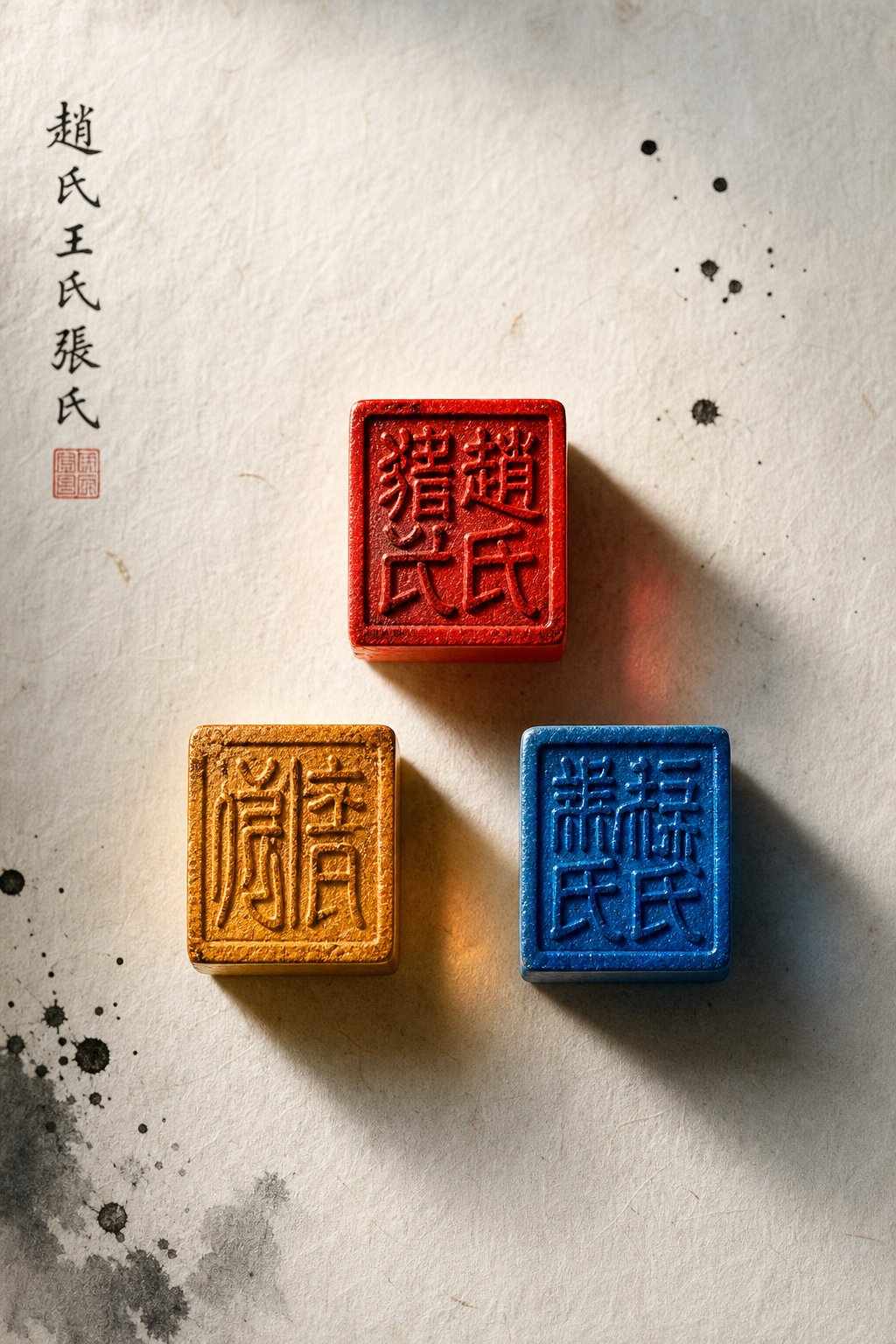
So, are Wang and Wong the same surname? After tracing every character, every dialect pathway, and every regional spelling variant, the answer comes down to exactly three scenarios. No more ambiguity, no more guessing. Your situation falls into one of these categories — and knowing which one applies changes everything about how you approach family research, identity, and connection.
The Three Scenarios Summarized
Here's the complete picture, stripped down to its essentials:
- Scenario 1: Wang and Wong from 王 are the SAME surname. A person named Wang (Mandarin Pinyin) and a person named Wong (Cantonese) may share the exact same character, the same royal Zhou dynasty lineage, and the same ancestral village. The only difference is dialect. This is the most common explanation when both families trace their roots to 王. They're the same family, split by romanization.
- Scenario 2: Wong from 黃 is a COMPLETELY DIFFERENT surname. If your wong last name traces to the character 黃 (Huang in Mandarin), you share no ancestral connection with 王-Wang or 王-Wong families. Different character, different meaning (yellow vs. king), different clan origins from the Spring and Autumn period. The English spelling is identical to 王-Wong purely by coincidence of Cantonese phonology.
- Scenario 3: Wang from 汪 is ALSO different from Wang from 王. Two people both spelled "Wang" in Mandarin Pinyin might carry different characters — 王 (king, second tone) or 汪 (vast water, first tone). These are unrelated lineages that happen to share an English spelling because Pinyin without tone marks can't distinguish them.
Every instance of wang surname or wong surname confusion in English-speaking countries falls into one of these three buckets. There are no other possibilities. Once you identify which scenario applies to your family, the path forward becomes clear.
Which Situation Applies to You
Not sure where you land? Work through this quick decision framework:
- If your family speaks Cantonese and spells the name "Wong" — you need to determine whether your character is 王 or 黃. Ask older relatives, check for ancestral hall names (Taiyuan for 王, Jiangxia for 黃), or look at immigration documents that may include the Chinese character.
- If your family speaks Mandarin and spells the name "Wang" — your character is almost certainly 王, given its overwhelming frequency compared to 汪. But if clan records don't match 王 lineage histories, or if your ancestral region is Anhui or Jiangxi rather than the northern provinces, investigate 汪 as an alternative.
- If one relative spells it "Wang" and another spells it "Wong" — and both families trace to the same ancestral village or share known relatives, you're looking at Scenario 1. Same character 王, different dialect romanizations. They're the same family.
- If your wang last name or wong last name appears as Ong, Vang, or Vuong — these are regional variants of 王 filtered through Hokkien, Hmong, and Vietnamese pronunciation systems respectively. They connect back to the same royal lineage as Wang and Wong from 王.
The spelling alone never tells you the full story — you need the original Chinese character to know whether two people named Wang and Wong are from the same family or completely unrelated lineages.
This single insight resolves decades of confusion for diaspora families. English flattens Chinese surnames into a handful of letters, erasing the tonal, dialectal, and character-level information that actually defines who you are and where you come from. The wang surname and the wong surname aren't interchangeable labels — they're entry points into a system that requires one more piece of information (the character) before anything meaningful can be determined.
For anyone navigating Chinese surname identity in English-speaking countries — whether you're filling out legal documents, building a family tree, explaining your name to colleagues, or reconnecting with relatives across dialect lines — this knowledge is foundational. The spelling on your passport is a starting point, not an answer. The answer lives in the character behind it.
Frequently Asked Questions About Wang vs Wong Surname
1. Are Wang and Wong the same last name?
It depends on the Chinese character behind the spelling. If both names trace to the character 王 (meaning king), then yes — they are the same surname romanized differently through Mandarin (Wang) and Cantonese (Wong) dialect systems. However, Wong can also come from 黃 (meaning yellow), which is a completely unrelated lineage. Similarly, Wang can represent 汪 (meaning vast water), another distinct surname. You need to identify the original Chinese character to know whether two people named Wang and Wong share ancestry.
2. Why is the same Chinese surname spelled differently in English?
Chinese surnames get their English spellings from romanization systems tied to specific dialects. Mandarin uses Pinyin (producing 'Wang'), while Cantonese uses systems like Jyutping (producing 'Wong'). Historical timing also plays a role — families who emigrated during the 1800s had their names recorded phonetically by immigration officials based on how the name sounded in their dialect. These spellings became permanent on legal documents and passed down through generations regardless of modern standardization.
3. How do I find out if my Wong surname comes from 王 or 黃?
Start by asking older family members if they recognize the original Chinese character. Check immigration documents, which sometimes include handwritten Chinese characters alongside romanized names. Look for ancestral hall names in family records — Taiyuan (太原) indicates 王, while Jiangxia (江夏) points to 黃. You can also contact Wong clan associations in diaspora cities, as separate organizations exist for 王-Wong and 黃-Wong families. If no documents survive, DNA testing combined with geographic ancestry clues may help narrow it down.
4. What is the difference between Vang, Vuong, Ong, Wong, and Wang?
All five spellings can represent the same Chinese character 王 (king), filtered through different languages and dialects. Wang comes from Mandarin Pinyin, Wong from Cantonese, Ong from Hokkien/Teochew dialects common in Southeast Asia, Vuong (Vương) from Vietnamese Sino-Vietnamese pronunciation, and Vang from Hmong communities. A family using any of these spellings may share the same Zhou dynasty royal lineage — the difference is purely linguistic, not genealogical.
5. Is Wong a common Chinese last name?
Wong is extremely common, but its frequency is amplified by the fact that two of China's most popular surnames — 王 (ranked #1, meaning king) and 黃 (ranked in the top 10, meaning yellow) — both produce the spelling 'Wong' in Cantonese romanization. Combined, these two characters account for well over 150 million people in China alone. In Western countries with large Cantonese diaspora populations like Canada, Australia, the US, and the UK, Wong consistently ranks among the most frequently encountered Chinese surnames.