Chinese Names Are Not Backwards and Here Is Why
If you have ever Googled "why are chinese names backwards," you are not alone. It is one of the most common questions people ask when they first encounter Chinese names. But here is the thing: Chinese names are not backwards at all. They simply follow a different order, one where the surname comes first and the given name follows.
The word "backwards" assumes that the Western given-name-first format is the default. It is not. It is just the convention you grew up with.
Chinese Names Are Not Actually Backwards
The order of Chinese names places the family name before the personal name. So when you hear "Wang Wei," Wang is the surname and Wei is the given name. This is not a quirk or an accident. It is a deliberate structure rooted in thousands of years of linguistic and cultural logic. The chinese naming convention prioritizes collective identity, placing the family unit before the individual, and it has done so since the third millennium BCE, long before most European cultures even had fixed surnames.
Why the Question Itself Reveals a Cultural Assumption
When someone says chinese names are "reversed," they are measuring another culture's system against their own as if theirs is the standard. Imagine someone in Beijing asking, "Why do Americans put their names backwards?" It sounds odd, right? That is exactly how the reverse question sounds to over a billion Chinese speakers.
More than 1.5 billion people worldwide use surname-first naming conventions, making it arguably the global norm rather than the exception.
Chinese name order is shared by Korean, Japanese, Vietnamese, and Hungarian cultures, among others. The given-name-first format is largely a Western European tradition that spread through colonization. So the real question is not why Chinese naming conventions seem backwards. It is why we assume our own convention is the "right" way around.
This article breaks down the logic, history, and cultural reasoning behind the chinese naming convention so you can understand the system on its own terms, not as an oddity, but as a structure that makes perfect sense once you see the pattern behind it.
How Chinese Names Actually Work
So if Chinese names are not backwards, how are they actually structured? The chinese name structure is surprisingly straightforward once you see the pattern. A standard Chinese name has two core parts: a surname (姓, xing) that comes first, followed by a given name (名, ming). That is it. No middle name, no hyphenated additions in most cases. Just family name plus personal name, in that order.
The Three Parts of a Chinese Name
You will often hear people refer to "three parts" of a Chinese name. This is because the given name frequently consists of two characters, making the full name three syllables total. Take Mao Zedong: Mao is the one-character chinese surname, while Zedong is the two-character given name. Same with Xi Jinping, where Xi is the surname and Jinping is the given name.
Not every name follows the three-syllable pattern. Some given names are a single character, producing a two-syllable name like Li Na or Wang Wei. But the underlying logic stays the same: surname first, given name second.
Surname Versus Given Name Explained
Here is where it gets interesting. Chinese last names are drawn from a remarkably small pool. The top 100 surnames cover roughly 85 percent of China's population, with only about 400 different family names in active use. The three most common chinese names for surnames, Li, Wang, and Zhang, are shared by over 270 million people.
Chinese first names, on the other hand, are highly individualized. Parents choose names and characters with specific meanings: Yong (brave), Mei (beautiful), Kang (healthy), Ling (wise). This contrast is key to understanding the system. The surname anchors you to your family lineage, while the given name is crafted to express hopes, values, or even the era you were born in.
When figuring out first name last name for chinese names, remember this rule of thumb: the one-syllable element is almost always the surname. If you see a three-syllable name like Wang Xiaoming, the single syllable Wang is the family name, and the two-syllable Xiaoming is the personal name.
To make this concrete, here is a breakdown of famous chinese names you likely recognize:
| Full Name | Surname (Family Name) | Given Name (Personal Name) | Meaning Notes |
|---|---|---|---|
| Mao Zedong | Mao (毛) | Zedong (泽东) | "Grace of the East" |
| Xi Jinping | Xi (习) | Jinping (近平) | "Approaching peace" |
| Jackie Chan (Cheng Long) | Cheng (成) | Long (龙) | "Dragon" — a stage name |
| Yao Ming | Yao (姚) | Ming (明) | "Bright" or "brilliant" |
| Li Na | Li (李) | Na (娜) | "Graceful" |
| Zhang Yimou | Zhang (张) | Yimou (艺谋) | "Artistic strategy" |
Notice the pattern: every surname is a single character, while given names carry layered personal meaning. This tight structure, a small set of shared surnames paired with deeply intentional given names, is what gives the Chinese naming system its elegance. And it is this same structure that connects to a broader linguistic pattern running through the entire Chinese language.
The Linguistic Logic Behind Surname-First Order
Chinese naming customs do not exist in a vacuum. The surname-first structure is not some isolated tradition. It is a direct reflection of how the entire Chinese language organizes information. Once you see this pattern, the question of how do chinese names work stops being confusing and starts feeling inevitable.
The General-to-Specific Pattern in Chinese Language
Imagine you are writing your home address. In English, you start small and zoom out: house number, street, city, state, country. Chinese does the exact opposite. It starts with the biggest category and narrows down to the smallest detail. This general-to-specific logic is not limited to addresses. It runs through dates, organizational titles, and yes, names.
The Chinese date format always follows Year-Month-Day order, moving from the largest unit of time to the smallest. English speakers say "December 25, 2025," but in Chinese it is 2025年12月25日, literally "2025 year, 12 month, 25 day." The same principle governs how a name in chinese language is structured: family (the larger group) comes before the individual (the specific person).
Here is how this pattern plays out across different categories:
- Addresses: Chinese writes China > Beijing > Haidian District > Zhongguancun Street > No. 15. English writes 15 Zhongguancun Street, Haidian District, Beijing, China.
- Dates: Chinese writes 2025年3月8日 (year > month > day). English writes March 8, 2025 (month > day > year).
- Names: Chinese writes Wang Xiaoming (surname > given name). English writes John Smith (given name > surname).
- Organizational titles: Chinese writes Beijing University, Department of History, Professor Wang. English writes Professor Wang, Department of History, Beijing University.
Why Surname First Makes Linguistic Sense
You will notice the logic is consistent. Chinese grammar places the broader context first, then drills down into specifics. The surname in chinese functions as the wide-angle lens, identifying which family or clan a person belongs to. The given name then zooms in, pinpointing the individual within that group.
This is not arbitrary or decorative. It reflects how Mandarin organizes word order at every level, from sentence structure to how modifiers precede the things they modify. The last name in chinese comes first because the language itself prioritizes context before detail, container before contents, group before individual.
So chinese name conventions are not a cultural quirk layered on top of the language. They are the language, following the same grammatical instincts that shape every sentence a Chinese speaker constructs. A name in chinese language is simply one more expression of a principle baked into the grammar itself.
That grammatical logic did not appear overnight. It developed alongside one of the oldest continuous surname traditions on Earth, one stretching back more than three thousand years.
The Ancient History of Chinese Name Order
Most European surnames only solidified during the Middle Ages. Ancient chinese names, by contrast, belong to one of the oldest documented surname systems on the planet, with roots stretching back over 5,000 years to China's matriarchal age and consistent recorded use since the Shang Dynasty around 1600 BCE.
Three Thousand Years of Chinese Surnames
The earliest Chinese surnames, known as Shi, were not family labels in the modern sense. They were tribal markers used to distinguish different clans in primitive society. Here is a detail that surprises most people: many of these original character surnames contain the 女 (nu) radical, meaning "woman." Surnames like Ji (姬), Jiang (姜), and Yao (姚) all carry this component. Why? Because surnames initially traced matrilineal descent. Children belonged to and were named after their mother's clan, and marriage within the same surname group was strictly forbidden.
This tells us something profound about chinese surnames meaning. These were not just identifiers. They were biological safeguards, a system designed to prevent inbreeding long before modern genetics existed. As society shifted toward patriarchy during the Zhou Dynasty, surnames transferred to the father's line, but the convention of placing the family name first never changed. The group always came before the individual.
How Generational Names Reinforce Family Identity
Confucian philosophy deepened this priority. In a worldview where filial piety and collective loyalty outweigh personal ambition, it makes sense that your family identity announces itself before your personal one. Your surname tells the world who your people are. Your given name is secondary, a detail within that larger story.
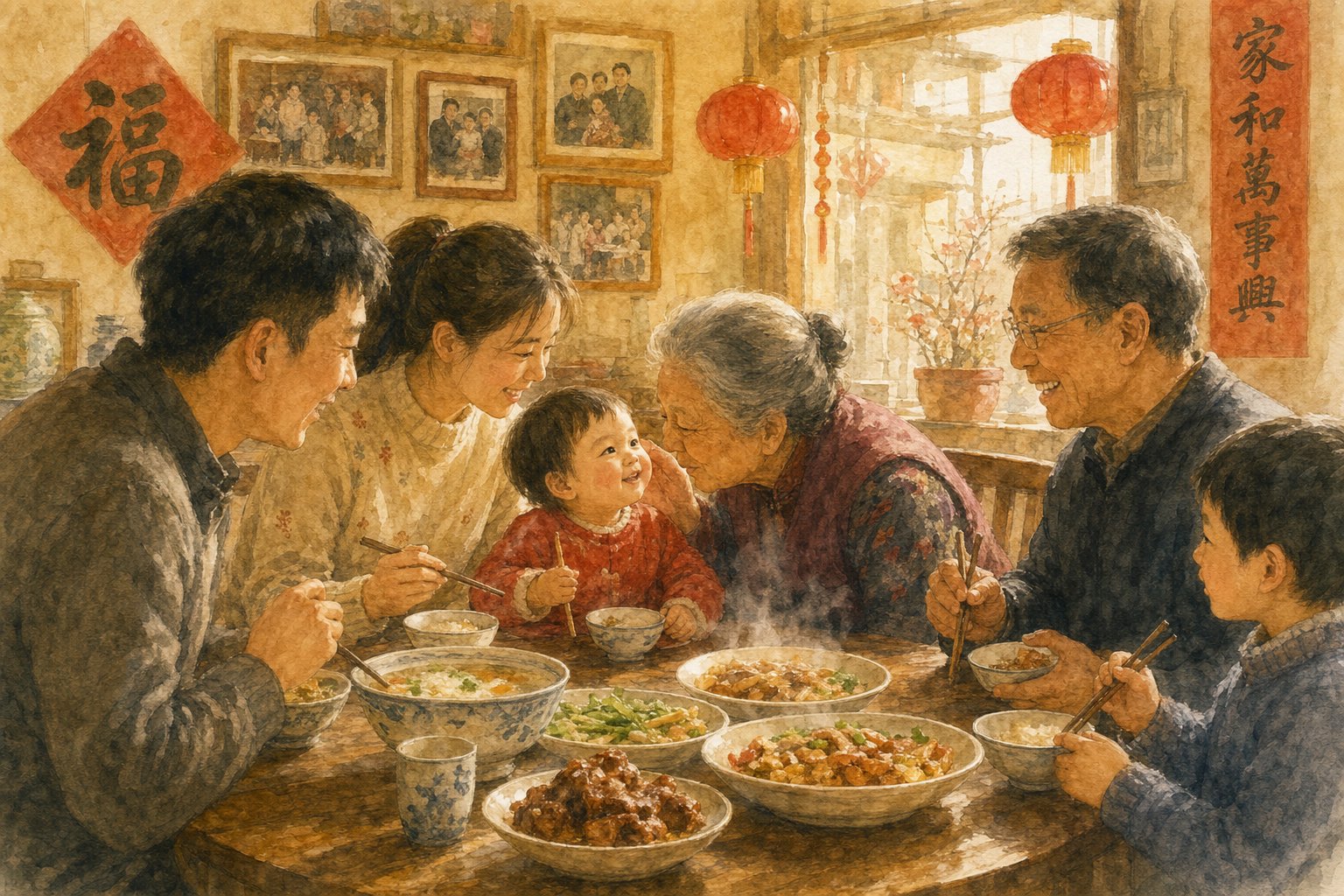
This philosophy produced another tradition that reinforces the surname-first structure: generational names (字辈, zibei). In many Chinese families, all children born in the same generation share one character in their given name. Imagine three brothers named Wang Decheng, Wang Deming, and Wang Dejun. The shared "De" character marks them as belonging to the same generational cohort within the Wang family. A poem or phrase, sometimes composed centuries ago by a clan ancestor, dictates which character each generation uses.
When you study chinese name meanings through this lens, you see that a name is not just a personal label. It is a compressed family record, encoding lineage, generation, and values into two or three syllables. Chinese last name meanings carry the weight of clan history, while the given name situates you precisely within that ongoing story.
This deep entanglement of identity and family is not unique to China, though. Dozens of cultures across Asia and beyond share the same surname-first instinct, which raises a bigger question about which naming convention is truly the global outlier.
A Global Perspective on Name Order Conventions
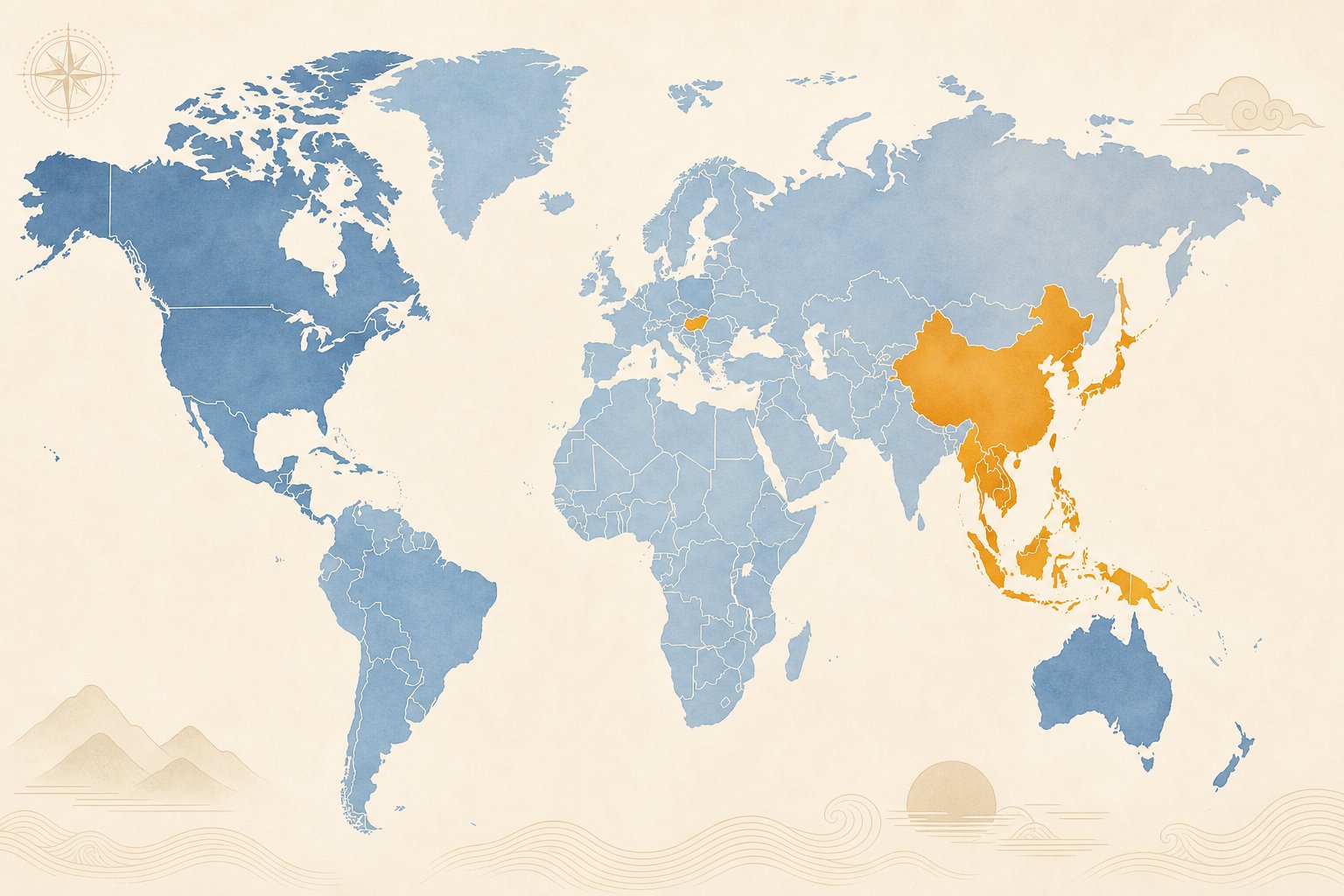
China is not alone in placing the surname first. Not even close. When you zoom out from any single culture and look at naming conventions worldwide, a surprising picture emerges: the surname-first format is used by a majority of the world's population. The given-name-first order that English speakers treat as default is actually the minority convention on a global scale.
Cultures That Put the Surname First
Think of asian names broadly. Japanese, Korean, Vietnamese, and Cantonese names all follow the same surname-first pattern as Mandarin Chinese. So do Hungarian, Cambodian, and many South Indian naming systems. In Japan, the name Yamamoto Yuki means Yamamoto is the family name and Yuki is the given name. In Korea, Park Jimin places the surname Park before the personal name Jimin. Vietnamese names like Nguyen Thi Minh Khai put the family name Nguyen at the front.
Even within China, whether you are looking at Mandarin, cantonese names, Hokkien, or any other regional variety, the surname always leads. A Cantonese speaker in Hong Kong and a Mandarin speaker in Beijing structure their names identically in this regard: family first, individual second.
Hungary is the standout European example. A Hungarian named in their own language is Nagy Istvan, not Istvan Nagy. This surname-first convention persists in Hungarian regardless of context, making it the only major European language to share this structure with East Asian naming systems. Bosnian, Croatian, and Serbian cultures also historically observed this reverse word order in certain formal contexts.
Which Name Order Is Actually More Common Globally
When you tally the populations that use surname-first order, the numbers are staggering. China alone accounts for 1.4 billion people. Add Japan (125 million), Korea (77 million combined), Vietnam (100 million), Cambodia (17 million), and Hungary (10 million), and you are well past 1.7 billion people before even counting diaspora communities worldwide. Every asian name system across East and Southeast Asia follows this pattern.
The given-name-first convention, by contrast, traces primarily to Western European languages: English, French, Spanish, German, Italian, and Portuguese. It spread globally through colonization, not because it was inherently superior or more logical, but because European empires imposed their administrative systems on colonized populations. Research published in Nature Communications demonstrates that laws fixing naming conventions were historically imposed on populations, including Native Americans and Jewish communities in Europe, often overriding existing vernacular systems.
Here is a comparison across cultures to make the pattern clear:
| Culture | Name Order | Example |
|---|---|---|
| Chinese (Mandarin) | Surname first | Wang Xiaoming (Wang = surname) |
| Japanese | Surname first | Yamamoto Yuki (Yamamoto = surname) |
| Korean | Surname first | Park Jimin (Park = surname) |
| Vietnamese | Surname first | Nguyen Minh (Nguyen = surname) |
| Hungarian | Surname first | Nagy Istvan (Nagy = surname) |
| Cambodian | Surname first | Sok Chanthy (Sok = surname) |
| English | Given name first | John Smith (Smith = surname) |
| French | Given name first | Marie Dupont (Dupont = surname) |
Notice that six of the eight cultures listed place the surname first. The two that do not, English and French, happen to dominate international media, academia, and business communication, which is why their convention feels like the "normal" one. But normal is just a matter of perspective. If you grew up speaking any East Asian language, the Western format is the one that seems flipped.
So the next time someone asks why asian names seem backwards, the honest answer is: they do not. The question itself reflects which convention the asker was raised with, nothing more. The real confusion tends to arise not from the name order itself, but from what happens when these names get transliterated into English and formatted inconsistently across different contexts.
How Romanization and Formatting Add to the Confusion
The name order itself is not what trips most English speakers up. It is what happens when Chinese names get converted into the Roman alphabet. A name written in name chinese characters is unambiguous to a Chinese reader: 王小明 is clearly surname Wang followed by given name Xiaoming. But once that name crosses into English, the clarity evaporates. Suddenly you are dealing with spacing variations, capitalization inconsistencies, and people who may or may not have reversed their own name order for your benefit.
Why Romanization Creates Extra Confusion
When translating chinese names into english, the Hanyu Pinyin system is the standard romanization method used in mainland China. But Pinyin was designed as a pronunciation guide for Chinese learners, not as a foolproof way to signal which part of a name is the surname. The result? A single person's name can appear in wildly different formats depending on the context.
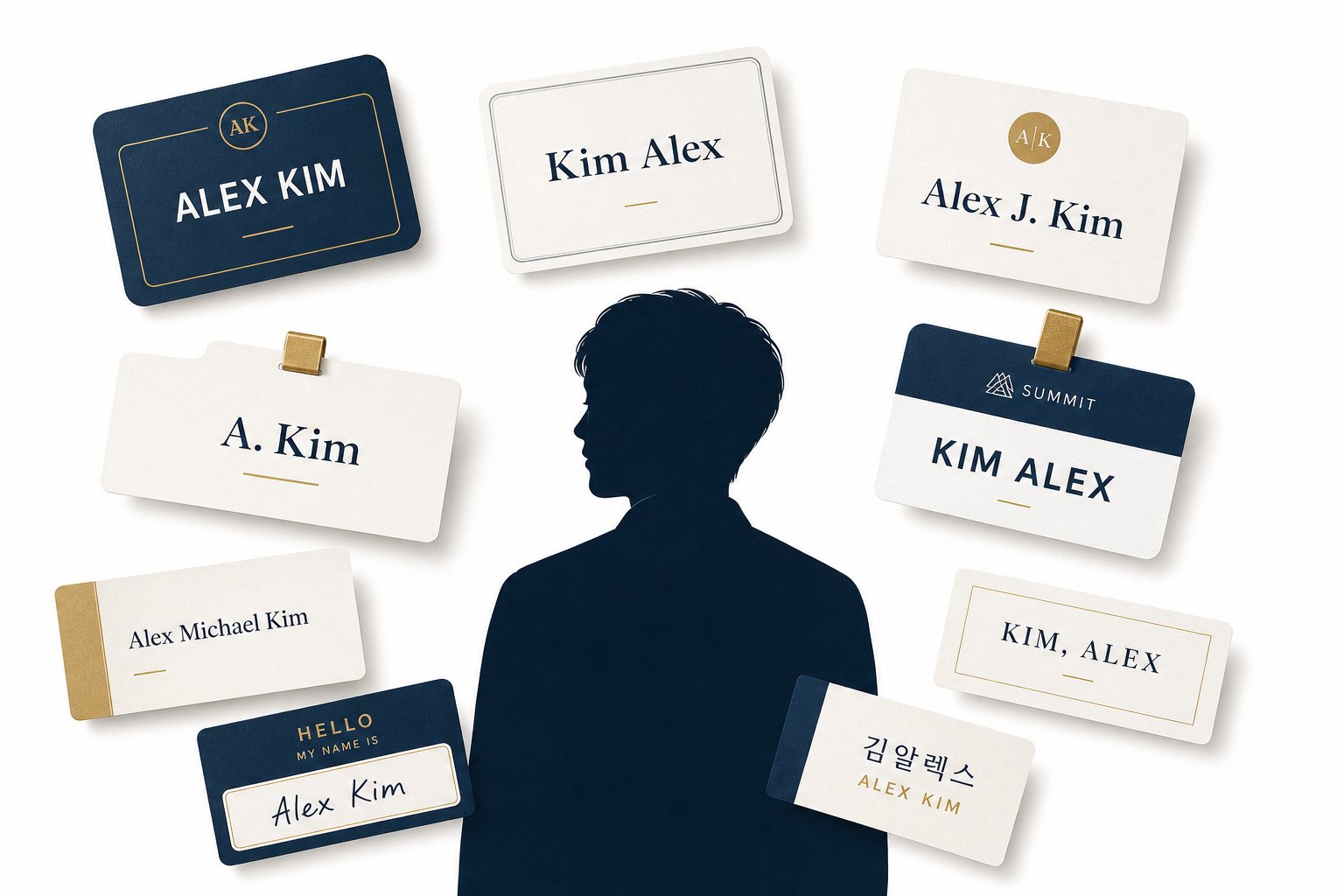
Take someone named 王小明 (Wang Xiaoming). Here is how that same name might appear across different documents and settings:
- Wang Xiaoming — standard Pinyin, surname first, given name written as one unit
- Wang Xiao Ming — given name split into two separate words
- Wang Xiao-Ming — given name hyphenated
- WANG Xiaoming — surname capitalized to distinguish it from the given name
- Xiaoming Wang — name order reversed to match Western conventions
- David Wang — Western given name adopted, Chinese given name dropped entirely
- David Xiaoming Wang — Western name plus Chinese given name as middle name, surname last
That is seven different representations of the same person. If you have ever been confused about which part of a Chinese name is the surname, this is why. There is no single universal standard for how chinese name translation should appear in English contexts. Academic journals, passports, business cards, and social media profiles may each use a different format.
The confusion deepens with regional romanization differences. A surname spelled WANG in Mandarin Pinyin might appear as WONG in Cantonese, or VONG in some Vietnamese-Chinese communities. The surname LIU can also be spelled LIOU, LAU, or LIEW depending on dialect and regional convention. Without knowing the original name chinese characters, you cannot always tell whether two differently spelled names belong to the same person or different people.
When Chinese People Reverse Their Own Names
Here is where it gets even trickier. Many Chinese people actively adjust their name format when operating in English-speaking environments, but they do not all adjust in the same way. Some keep the traditional surname-first order. Some flip to given-name-first to match Western expectations. And some adopt an entirely new english name chinese name combination.
According to the Cultural Atlas, common adaptations include adopting a Western personal name for international contexts (ZHANG Chen becomes "James"), rearranging the name to Western order (Chen ZHANG), or inserting the Chinese given name as a middle name (James Chen ZHANG). Most people revert to their original Chinese name order whenever speaking or writing in Chinese.
This means you might know someone as "David Wang" at work, never realizing their full Chinese name is Wang Xiaoming and that David is simply a name they chose for convenience. If you later see "WANG Xiaoming" on an academic paper or "Xiaoming Wang" on a conference badge, you might not connect them to the same person at all.
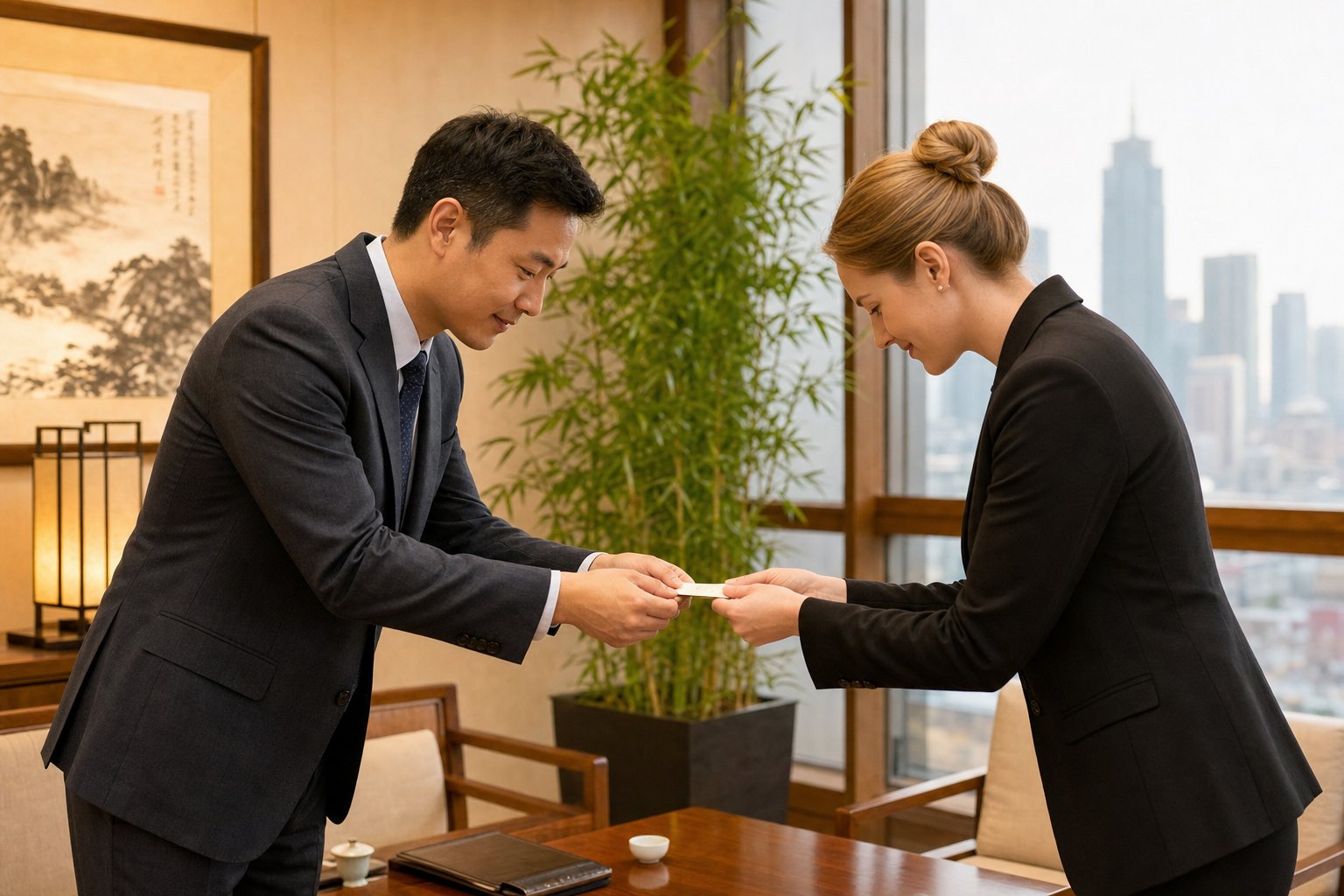
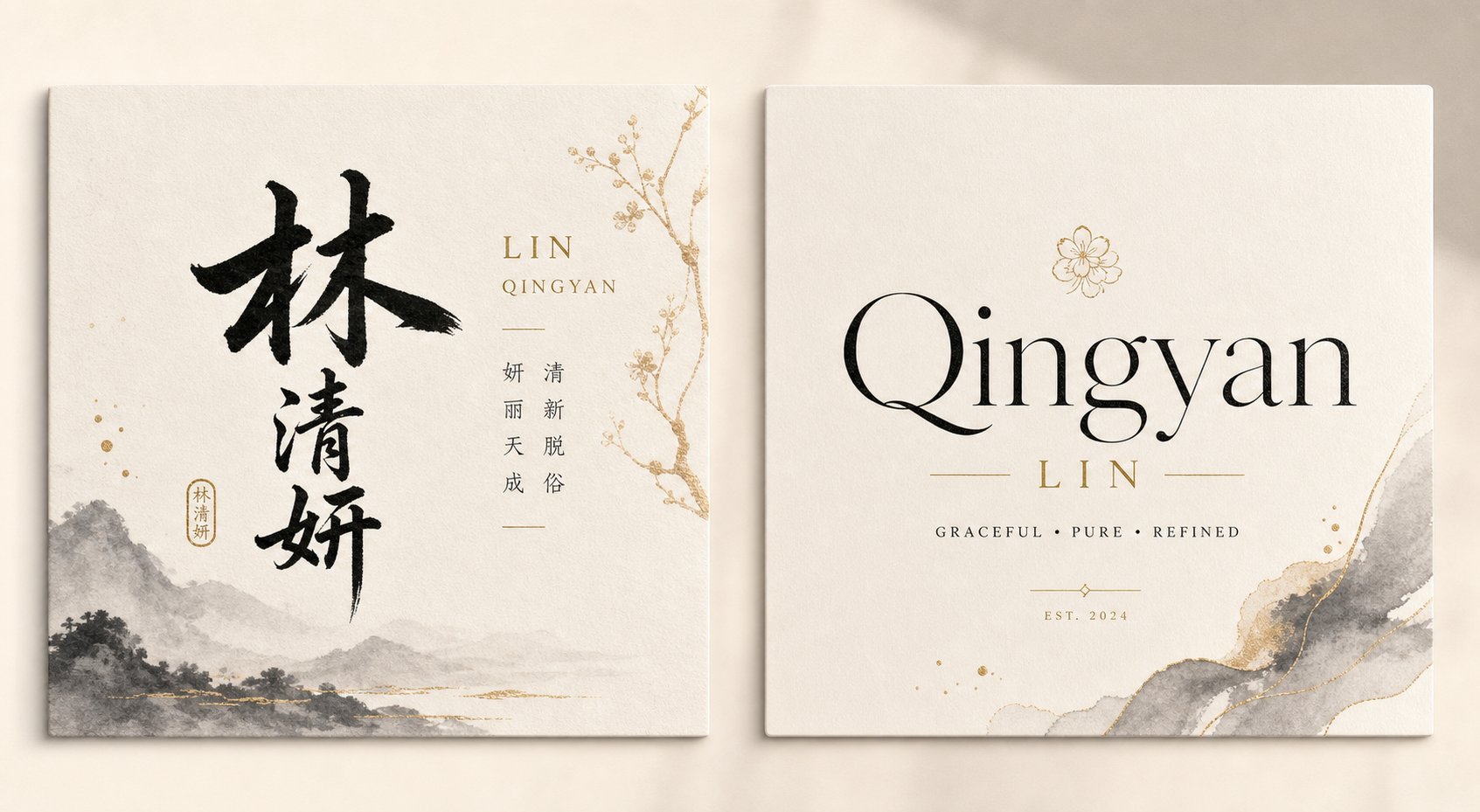
Passports add another layer. Chinese passports typically print the surname in a separate field, but international airline systems and hotel bookings often merge everything into a single name string. Business cards from mainland China usually maintain surname-first order, while cards from Hong Kong or Singapore professionals might use Western order. There is no global consensus.
For anyone trying to use a chinese name converter tool or attempting to chinese name convert between formats, the key takeaway is this: without context, you often cannot determine name order from spelling alone. The same applies in reverse. If you want to name convert to chinese, you need to understand that the resulting characters will always follow surname-first order regardless of how the English version was arranged.
The inconsistency is not anyone's fault. It is the natural friction that occurs when two fundamentally different naming systems collide in shared spaces. And it extends beyond just the name itself into how people are addressed, which involves an entirely separate layer of titles and honorifics.
Titles and Honorifics in the Chinese Name System
How you address someone in Chinese reveals far more than just their name. It signals the entire relationship: how close you are, your relative status, and the level of formality the situation demands. Chinese honorifics are built directly on top of the surname-first structure, reinforcing it every time someone is greeted or introduced.
Honorifics and Titles in Chinese Naming
In English, titles precede the surname: Mr. Smith, Dr. Johnson, Professor Lee. Chinese flips this. The surname comes first, followed by the title or honorific. A teacher surnamed Li becomes Li Laoshi (Teacher Li). A doctor surnamed Zhang becomes Zhang Yisheng (Doctor Zhang). To say mr in chinese, you would use the person's surname plus xiansheng: Huang Xiansheng (Mr. Huang). For women, the equivalent is nvshi (Ms.): Wang Nvshi (Ms. Wang).
This pattern extends to professional titles too. A manager surnamed Chen is Chen Jingli. A director surnamed Liu is Liu Zhuren. The surname anchors the address, and the title follows as a descriptor. You will never hear the title float free of the family name in formal Chinese speech.
What does each form of address signal? The rules are intuitive once you know them:
- Surname + title (Li Laoshi, Zhang Yisheng) — professional respect, appropriate for colleagues, clients, and strangers
- Full name (Wang Xiaoming) — neutral, often used in official or administrative contexts
- Given name only (Xiaoming) — reserved for close friends, family, and peers who have established familiarity
Using someone's given name without that established closeness feels presumptuous in Chinese culture. English names, as noted by The World of Chinese, have become popular in workplaces partly because they sidestep this hierarchy entirely, offering a neutral middle ground between formality and familiarity.
The Courtesy Name Tradition
Historically, the system was even more layered. Since at least the Zhou Dynasty (1046-256 BCE), individuals of a certain status received a chinese courtesy name, known as zi (字), upon reaching adulthood. This courtesy name became their primary public identifier. Using someone's personal name (ming) directly was considered disrespectful outside of family or very intimate relationships.
The courtesy name and the personal name typically complemented each other in meaning. The poet Su Shi (苏轼), for instance, had the courtesy name Zizhan (子瞻). Together, the ming and zi form mingzi (名字), which is the modern Chinese word for "name." While the formal courtesy name tradition faded in the twentieth century, its underlying logic persists: how you address someone still communicates volumes about your relationship to them.
This layered system of address means that navigating Chinese names is not just about knowing the correct order. It is about reading social context. And for anyone working across cultures, getting these details right matters more than you might expect.
Practical Tips for Getting Chinese Names Right
Knowing the theory behind Chinese name order is one thing. Applying it in real situations, where you are reading a research paper, meeting a new colleague, or drafting an email, is another. The good news is that a few reliable patterns make it much easier to navigate Chinese names confidently, even if you do not speak a word of Mandarin.
How to Identify the Surname in a Chinese Name
The single most useful rule: in a Chinese-context name, the surname is almost always one syllable and appears first. If you see a three-syllable name like Chen Xiaoming, the one-syllable element (Chen) is the family name. The two-syllable element (Xiaoming) is the given name. This pattern holds for the vast majority of typical chinese names you will encounter.
There are exceptions. A small number of compound surnames have two syllables: Ouyang, Zhuge, Shangguan, Sima. These are rare. The top 100 Chinese family names are all single-syllable, and they cover roughly 85 percent of the population. So the one-syllable-first rule works in the overwhelming majority of cases.
Another clue: familiarity. If you recognize a common chinese name element like Wang, Li, Zhang, Liu, or Chen at the beginning of a name, you are almost certainly looking at the surname. These are among the most popular chinese names for family names, shared by hundreds of millions of people. Spotting them becomes second nature with a little exposure.
Navigating Professional Introductions with Chinese Colleagues
What happens when you are not sure? You ask. It is that simple. A polite "Which is your family name?" or "How would you like me to address you?" is never offensive. It shows respect. Most Chinese professionals working internationally are accustomed to this question and appreciate the effort.
Here is a practical guide for common professional scenarios:
- Meeting a Chinese colleague for the first time: If they introduce themselves as "Wang Xiaoming," address them as Mr./Ms. Wang (surname + honorific). Do not jump to using their given name unless invited to do so. In Chinese culture, given-name usage signals close personal familiarity.
- Reading academic papers: Most journals list Chinese authors in surname-first order. If you see "Zhang Y." or "Li X." in a citation, Zhang and Li are the surnames. Some journals capitalize the surname (ZHANG Yi) to remove ambiguity. Look for that formatting cue.
- Understanding movie or TV credits: Chinese-language films almost always list names in surname-first order. The director credited as Zhang Yimou is Director Zhang, not Director Yimou. International releases sometimes flip the order, so check the original-language credits if you are unsure.
- Writing emails: When addressing someone for the first time, use their surname with a title: "Dear Mr. Chen" or "Dear Professor Liu." If they sign their reply with just a given name or a Western name, you can follow their lead from that point forward.
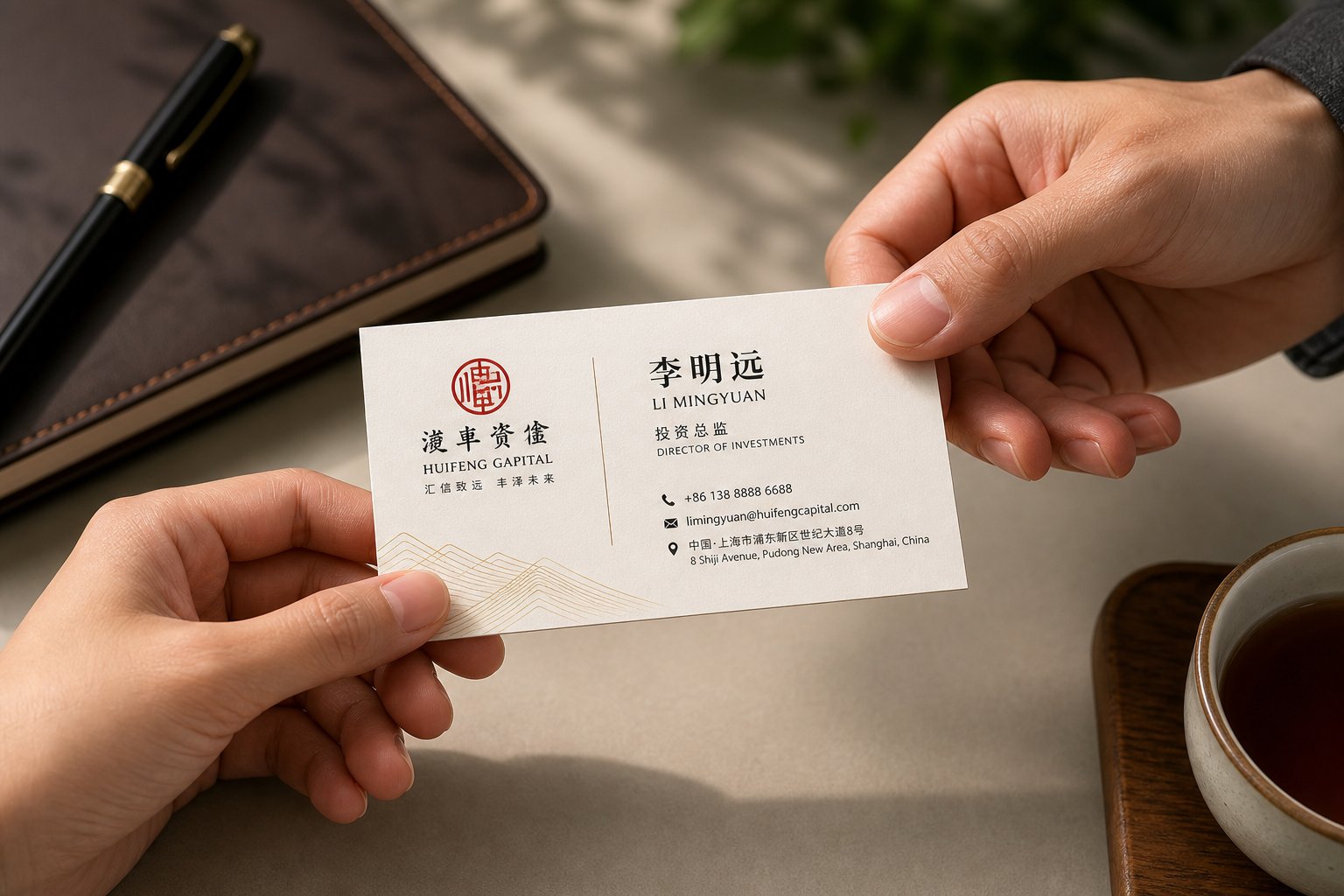
- Reading business cards: Many Chinese professionals fully capitalize their surname on business cards to prevent confusion. If you see "WANG Xiaoming" or "LI Na," the capitalized portion is the family name.
- Conference name badges: These are inconsistent. Some events use Western order, some use Chinese order, and some use the all-caps surname convention. When in doubt, introduce yourself and ask how they prefer to be addressed.
A few common mistakes are worth flagging because they come up repeatedly in cross-cultural workplaces:
- Assuming a Western name is their "real" name. If your colleague introduces herself as "Jenny Liu," do not assume Jenny is her birth name. It is likely an adopted English name chosen for convenience. Her Chinese given name might be something entirely different, like Meiling. Both names are real. Neither is more authentic than the other.
- Calling someone by their given name too early. In English-speaking workplaces, first-name basis is the default. In Chinese professional culture, jumping to someone's given name without an established relationship can feel overly familiar. Stick with surname + title until they tell you otherwise.
- Confusing two-syllable given names for two separate names. "Xiaoming" is one given name, not a first name and a middle name. Do not split it or abbreviate it to "Xiao" unless the person does so themselves.
- Reversing the name when it is already in Western order. If someone hands you a card reading "David Chen," they have already adapted to Western format. Do not "correct" it back to Chen David thinking you are being culturally sensitive. Follow their lead.
The underlying principle across all these scenarios is the same: pay attention to how people present themselves, and when uncertain, ask rather than guess. Most confusion around Chinese names comes not from the naming system itself but from the inconsistent ways it gets translated across cultural boundaries. A little awareness goes a long way toward getting it right, and people notice when you make the effort.
Chinese Names Follow Their Own Perfect Logic
Every layer of the Chinese naming system, from the surname-first structure to the general-to-specific grammar to the generational characters woven into given names, reflects a coherent logic refined over thousands of years. The chinese name meaning embedded in each character, the family history compressed into a single syllable, the philosophical values encoded in a child's given name: none of this is random, and none of it is backwards.
Rethinking What We Call Normal
The question "why are chinese names backwards" reveals something about the asker, not the system being asked about. When you dig into chinese name interpretation, what you find is a naming convention shared by more than 1.5 billion people, rooted in linguistic patterns older than most Western surnames, and structured with a clarity that mirrors the language itself. The perception of strangeness fades the moment you stop measuring one culture's logic against another's defaults.
Understanding china name meaning and mandarin name meaning is not just an academic exercise. It changes how you read a colleague's business card, how you cite a researcher's work, and how you show up in cross-cultural conversations. Every name carries a story: lineage, aspiration, generational belonging. Recognizing that story, even in a name you cannot pronounce perfectly, is a small act of respect with outsized impact.
Understanding Names as a Window into Culture
Chinese names and meanings offer one of the most accessible entry points into Chinese culture as a whole. The same general-to-specific thinking that puts the surname before the given name also shapes how Chinese speakers organize time, space, and social relationships. Learning how a name works teaches you something about how an entire worldview is structured.
Learning how another culture names its people is one of the simplest ways to practice seeing the world through a framework other than your own, and that skill transfers far beyond names.
So the next time you encounter a Chinese name and feel the impulse to mentally rearrange it, pause. The name is already in the right order. It always was.
Frequently Asked Questions About Chinese Name Order
1. Why do Chinese people put their last name first?
Chinese places the surname first because the entire language follows a general-to-specific pattern. Addresses go from country down to house number, dates go from year to day, and names go from family group to individual. The surname represents the larger clan identity, while the given name identifies the specific person within that group. This structure also reflects Confucian values where collective family identity takes precedence over individual identity, a convention maintained consistently for over 3,000 years.
2. How can I tell which part of a Chinese name is the surname?
In most cases, the surname is a single syllable and appears first when the name is written in Chinese order. For a three-syllable name like Wang Xiaoming, the one-syllable element (Wang) is the family name and the two-syllable element (Xiaoming) is the given name. Recognizing common surnames like Li, Wang, Zhang, Liu, and Chen also helps. Some professionals capitalize their surname on business cards (WANG Xiaoming) to remove ambiguity. When in doubt, politely asking is always appropriate.
3. Do all Asian countries put the surname first?
Most East and Southeast Asian countries use surname-first order, including China, Japan, Korea, Vietnam, and Cambodia. Hungary is a notable European example that also follows this convention. Combined, over 1.7 billion people use surname-first naming systems. The given-name-first format is primarily a Western European tradition that spread through colonization rather than being an inherently universal standard.
4. Should I reverse a Chinese person's name when speaking English?
Follow the person's lead. Some Chinese people keep surname-first order in English, some switch to given-name-first, and some adopt a Western first name entirely. If someone introduces themselves as David Chen, they have already adapted to Western format. If they say Chen Wei, respect that order. Business cards, email signatures, and self-introductions all provide cues. When uncertain, ask how they prefer to be addressed rather than guessing or rearranging their name.
5. What is the difference between a Chinese given name and a surname?
A Chinese surname is inherited from the family and drawn from a small pool of about 400 active family names, with the top 100 covering 85 percent of the population. Given names, by contrast, are individually chosen by parents using characters with specific meanings like bravery, beauty, or wisdom. Surnames are almost always one character, while given names are typically one or two characters. The surname anchors a person to their lineage, while the given name expresses personal hopes and values unique to that individual.