Understanding the Wood Element in Chinese Naming Tradition
Wood element Chinese names are given names built from characters that carry the energy of wood — one of the five fundamental forces in Wu Xing (五行 wǔxíng) philosophy. The practice of selecting names aligned with a specific element stretches back over two thousand years in Chinese culture, rooted in the belief that a person's name can strengthen or balance their elemental composition at birth.
So what does wood mean in this context? The wood element (木 mu) represents far more than timber or trees. In Wu Xing philosophy, it embodies growth, vitality, flexibility, and the upward energy of spring. People influenced by the element of wood tend toward resilience, ambition, and creativity — qualities that Chinese parents have long sought to embed in their children's names through carefully chosen characters.
This article goes beyond vague descriptions of wood symbolism. You'll find character-level breakdowns, radical analysis, surname-element interactions, and practical naming guidance that bridges the gap between abstract philosophy and actionable name selection. Whether you're exploring your own Chinese wood heritage or choosing a name for a child whose BaZi chart calls for the wood chinese element, the goal here is precision.
What Makes a Name a Wood Element Name
Not every character associated with nature qualifies as a wood element name character. There are three distinct categories worth understanding:
- Characters that ARE the wood radical (木). The character 木 itself, along with doubled forms like 林 (lin, forest) and tripled forms like 森 (sen, dense forest), are pure wood element characters.
- Characters that CONTAIN the wood radical as a component. Hundreds of compound characters include 木 as a structural radical — typically on the left side. Examples include 桐 (tong, paulownia), 柏 (bai, cypress), and 梅 (mei, plum blossom). The 木 radical is one of the most productive in the Chinese writing system, appearing in characters related to trees, wood products, and plant life.
- Characters semantically associated with wood without containing the radical. Some characters relate to plants, growth, or greenery through meaning rather than structure — think 芳 (fang, fragrant) or 茂 (mao, lush). These carry the grass radical (艹) but are still considered wood-adjacent in naming practice.
When a naming practitioner recommends a wood element character, they typically prioritize the first two categories because the radical provides a visible, structural connection to the element.
Why Wood Element Names Matter in Chinese Culture
In traditional Chinese belief, a person's birth chart reveals their elemental makeup — and imbalances in that makeup can be addressed through naming. A child born with insufficient wood energy might receive a name rich in wood characters to compensate, creating harmony across the five elements.
Wood's core qualities — renewal, upward growth, and resilience through adversity — are among the most auspicious traits a parent can wish for a child. A wood element name doesn't just fill a gap in a birth chart; it plants a philosophical seed of continuous becoming.
This isn't merely superstition preserved as tradition. The practice reflects a worldview where names carry weight, where the characters you write and speak daily shape identity. As one naming guide puts it, a Chinese name is a reflection of identity and destiny — not just a label. For the wood element specifically, that destiny points toward expansion, creativity, and the kind of strength that bends without breaking.
The real question, though, is how you determine whether wood is the element your name needs to carry. That answer lives in the BaZi birth chart — a system that maps your elemental strengths and deficiencies down to the hour you were born.
How BaZi Determines If You Need Wood in Your Name
BaZi (八字 bāzì) — literally "eight characters" — is the diagnostic system that tells you whether your name needs wood energy at all. Also called the Four Pillars of Destiny, it maps the elemental forces present at the exact moment of your birth. If you've ever wondered "what is my element chinese astrology assigns to me," BaZi is where that answer comes from.
Here's the basic logic: your birth data generates eight characters, each carrying one of the Five Elements — Wood (木 mù), Fire (火 huǒ), Earth (土 tǔ), Metal (金 jīn), or Water (水 shuǐ). When wood is underrepresented or absent in those eight characters, a wood element name character is introduced to compensate. The name becomes a daily, lifelong reinforcement of the element your chart lacks.
Reading Your Birth Chart for Elemental Deficiency
Your BaZi chart is built from four pillars, each derived from a different slice of your birth data:
| Pillar | Derived From | Components |
|---|---|---|
| Year Pillar (年柱 niánzhù) | Birth year | 1 Heavenly Stem + 1 Earthly Branch |
| Month Pillar (月柱 yuèzhù) | Birth month | 1 Heavenly Stem + 1 Earthly Branch |
| Day Pillar (日柱 rìzhù) | Birth day | 1 Heavenly Stem + 1 Earthly Branch |
| Hour Pillar (时柱 shízhù) | Birth hour | 1 Heavenly Stem + 1 Earthly Branch |
Each pillar contains two characters: a Heavenly Stem (天干 tiāngān) on top and an Earthly Branch (地支 dìzhī) on the bottom. Four pillars, two characters each — that's your eight characters. Every one of these carries a specific elemental charge.
The ten Heavenly Stems pair with the five elements in both Yang and Yin forms. For wood specifically, 甲 (jiǎ) is Yang Wood and 乙 (yǐ) is Yin Wood. The twelve Earthly Branches also carry elemental associations — 寅 (yín) and 卯 (mǎo) belong to wood.
The critical reference point is your Day Master (日主 rìzhǔ) — the Heavenly Stem of your Day Pillar. This character represents your core self-element. If your Day Master is 甲 (jiǎ) or 乙 (yǐ), you are fundamentally a wood person. But being a wood Day Master doesn't automatically mean your chart has enough wood. You then look at the surrounding seven characters to see whether wood appears elsewhere to support you, or whether it's isolated and overwhelmed by opposing elements.
Imagine a 甲 (jiǎ) Day Master born in autumn — a season dominated by Metal energy. Metal overcomes wood in the controlling cycle. If the remaining pillars are loaded with Metal and Earth characters but contain no Water (which feeds wood) and no additional Wood, that Day Master is structurally weak. The chart is wood-deficient despite the person technically "being" wood.
When Wood Element Names Are Recommended
A naming master (起名师 qǐmíngshī) will recommend wood element characters in several specific scenarios:
- The Day Master is wood but unsupported. A 甲 or 乙 Day Master surrounded by controlling or draining elements needs reinforcement. Wood characters in the name provide that daily elemental support.
- The chart lacks wood entirely. When none of the eight characters carry wood energy, the element is simply missing from the person's elemental profile. A wood name character fills that structural gap.
- Wood serves as the favorable element (用神 yòngshén). This is the most precise determination. The yòngshén is the single element the chart most needs for balance — identified through careful analysis of how all eight characters interact. When wood is diagnosed as the yòngshén, it becomes the primary naming target.
The concept of yòngshén is central to tcm five element theory as applied to naming. It's not about simply counting which elements appear most or least — it's about diagnosing which element restores functional balance to the entire system. A chart might show only one wood character, but if that wood is well-positioned and well-supported, the yòngshén might actually be something else entirely. Context matters more than counting.
In contemporary practice, many Chinese parents still consult naming masters for this analysis. The practitioner casts the chart, identifies the yòngshén through classical diagnostic methods, and then recommends specific characters that carry the needed elemental energy. Modern parents also use BaZi calculator apps and online tools to get an initial reading — though experienced practitioners note that automated tools often rely on simplified "strong vs. weak" assessments that miss the nuance of seasonal adjustment and elemental bridging.
The takeaway is straightforward: your birth chart is the blueprint, and the name is the prescription. Knowing whether wood is your missing element — or your favorable one — determines which characters belong in your name. The next step is learning to identify those characters through the radical system that organizes them.
The 木 Radical System and Wood Character Classification
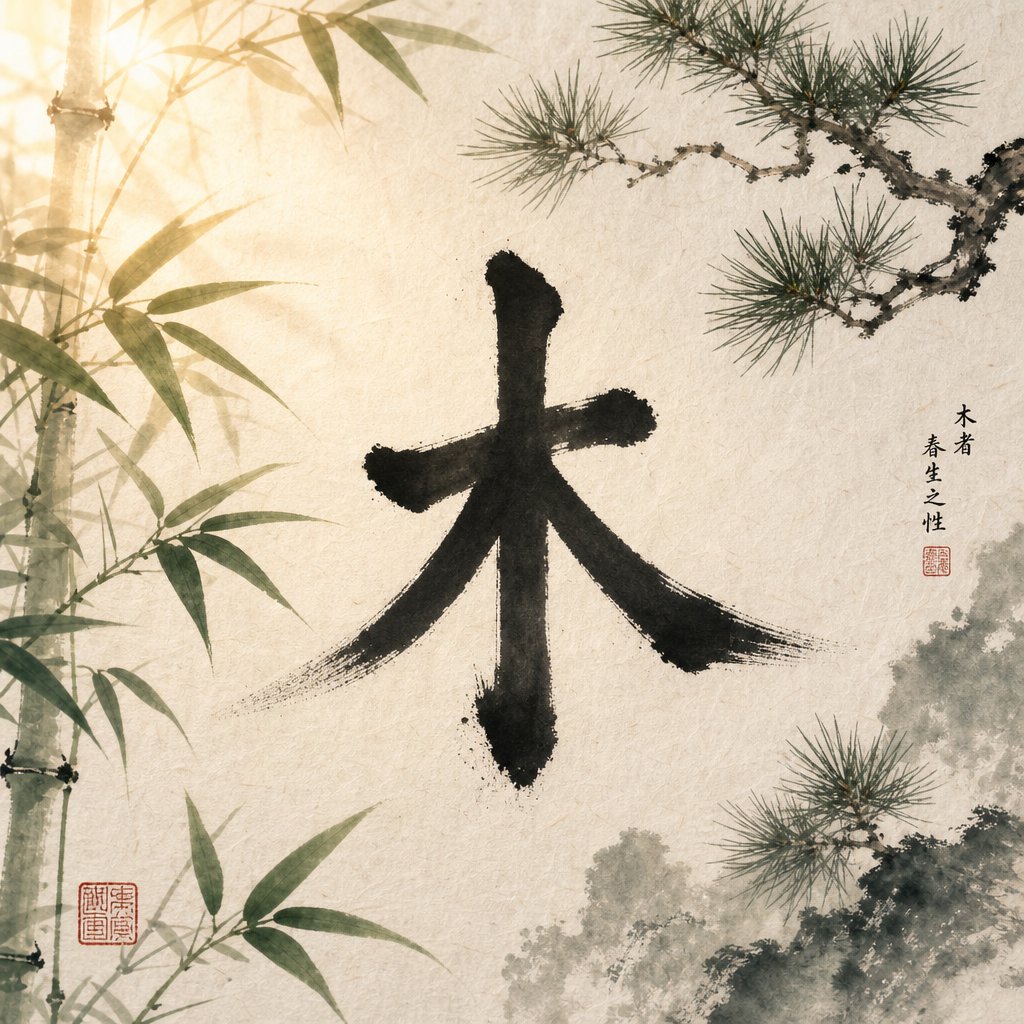
Identifying a wood element character isn't guesswork. The Chinese writing system has a built-in classification tool: the radical. And for wood, that radical is 木 (mu) — a pictographic character that originally depicted a tree with branches reaching upward and roots spreading below. It functions both as a standalone word meaning "wood" or "tree" and as a structural component embedded inside hundreds of other characters.
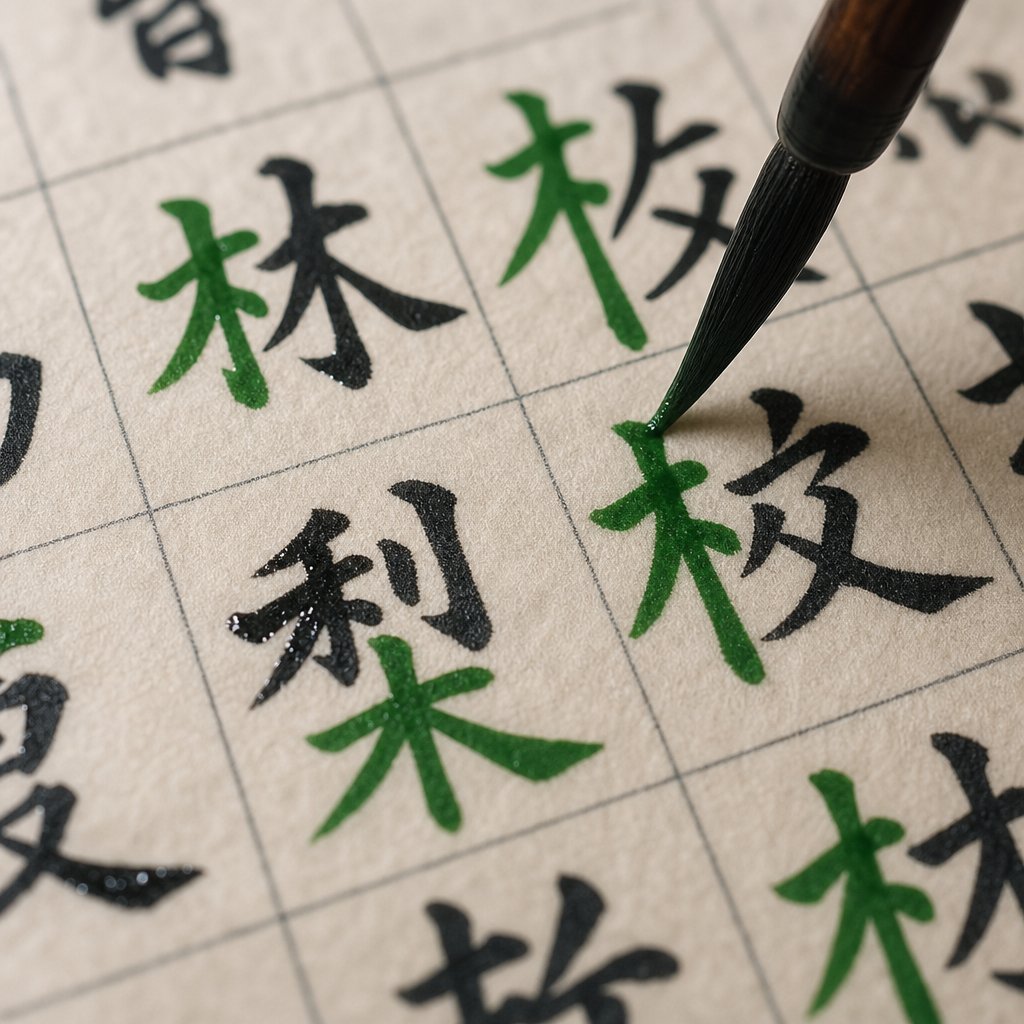
Think of the 木 radical as a visual tag. When you spot it inside a character, you're looking at something the Chinese writing system has categorized as related to trees, timber, or plant life. For naming purposes, this tag is your primary method for confirming whether a character carries wood element energy. The 木 radical — commonly called 木字旁 (mu zi pang) — appears in characters related to wood, trees, forests, and wooden products.
The wood character in its simplest form is just four strokes. But its influence extends across the entire character set. Some estimates place the number of characters containing the 木 radical at over 400 in common use. Not all of those are suitable for names — characters like 桌 (zhuo, table) or 桶 (tong, bucket) carry the radical but refer to everyday objects rather than aspirational qualities. The art of selecting wood chinese names lies in knowing which radical-bearing characters carry meaning worthy of a person's identity.
Characters Built on the 木 Radical
Below is a reference table of wood radical characters commonly used in given names. Each entry includes the character's tonal pinyin, core meaning, where the radical sits within the character's structure, and whether the character traditionally suits male names, female names, or works for either gender.
| Character | Pinyin | Meaning | Radical Position | Suitability |
|---|---|---|---|---|
| 林 | lin (2nd tone) | Forest, woods | Doubled (two 木 side by side) | Unisex |
| 森 | sen (1st tone) | Dense forest, luxuriant | Tripled (three 木 stacked) | Unisex |
| 桃 | tao (2nd tone) | Peach tree | Left side | Female |
| 梅 | mei (2nd tone) | Plum blossom | Left side | Female |
| 柏 | bai (3rd tone) | Cypress tree | Left side | Male |
| 楠 | nan (2nd tone) | Golden phoebe / cedar | Left side | Male |
| 榕 | rong (2nd tone) | Banyan tree | Left side | Male |
| 栋 | dong (4th tone) | Ridgepole, pillar | Left side | Male |
| 杰 | jie (2nd tone) | Outstanding, heroic | Bottom (木 as base) | Male |
| 桦 | hua (4th tone) | Birch tree | Left side | Unisex |
| 槿 | jin (3rd tone) | Hibiscus | Left side | Female |
| 楷 | kai (3rd tone) | Model, standard | Left side | Male |
| 梓 | zi (3rd tone) | Catalpa tree | Left side | Unisex |
| 枫 | feng (1st tone) | Maple tree | Left side | Unisex |
You'll notice a pattern: the vast majority of these name-worthy characters place the 木 radical on the left side. This is the most common structural arrangement for wood element characters in Chinese. The right side of the character then carries the phonetic component — the part that hints at pronunciation — or an additional semantic layer.
A few characters break this pattern in interesting ways. 杰 (jie) places 木 at the bottom, beneath 灬 (four dots representing fire or brilliance). 林 (lin) doubles the radical side by side. 森 (sen) triples it — two on top, one below — creating a visual image of trees multiplying into a dense forest. These structural variations don't weaken the wood element association. If anything, doubled and tripled forms intensify it.
Why Radical Position Matters for Classification
When you encounter an unfamiliar character and want to know whether it qualifies as a wood element name character, radical position is your first clue. Here's how to read it:
- Left-side radical (most common). The 木 appears as a narrow vertical component on the left. Characters like 柏, 梅, 楠, 梓, and 枫 all follow this structure. If you see a character with a tree-like shape compressed on the left, you're almost certainly looking at a wood element character.
- Bottom radical. In characters like 杰 (jie) and 李 (li, plum — also a common surname), the 木 sits at the base. This position is less immediately obvious because the radical gets flattened horizontally, but it's still structurally present.
- Doubled or tripled radical. 林 (lin) uses two 木 characters side by side, while 森 (sen) stacks three. These are pure wood element characters with no additional radical — the entire character IS the wood radical multiplied.
- Top radical (rare in names). A few characters place 木 on top, though these are uncommon in naming practice.
Here's where it gets tricky. Some characters look like they might contain the wood radical but actually don't. The character 本 (ben, root/origin) adds a horizontal stroke at the base of 木, and while it's etymologically derived from the concept of tree roots, it's classified differently in modern radical dictionaries. Similarly, 术 (shu, technique) resembles 木 with an added dot but belongs to a separate radical category. Context and dictionary classification matter — not just visual resemblance.
Conversely, some characters contain the wood radical in ways that aren't immediately visible to untrained eyes. 梦 (meng, dream) has 木 embedded within its lower structure in the traditional form. 楚 (chu, clear/distinct) stacks 林 on top of a different component. If you're selecting characters for a wood element name, a radical lookup dictionary or digital tool confirms classification faster than visual guessing.
The term "wooden in chinese" — 木 (mu) — carries a secondary colloquial meaning of "stiff" or "expressionless" when used as an adjective. This is worth knowing because it explains why the standalone character 木 rarely appears in names by itself. Parents prefer compound characters that carry the wood radical's elemental energy while adding layers of aspirational meaning — strength, beauty, achievement — on top of the raw elemental classification.
With the radical system as your identification tool, the next question becomes which specific characters match the qualities you want a name to express. That distinction splits along traditional gender lines — though modern naming practice increasingly blurs those boundaries.
Wood Element Characters for Male Names
Male wood element names tend to draw on a specific slice of what the wood personality represents: structural strength, upward ambition, and the kind of resilience that weathers storms without snapping. Think of a tall pine holding its shape through winter, or a ridgepole bearing the weight of an entire roof. These are the images Chinese parents reach for when selecting wood characters for sons.
Among the various element personality types in Chinese naming tradition, the wood person stands apart for embodying both firmness and growth simultaneously. Metal is sharp but static. Earth is stable but heavy. Wood keeps rising. That upward momentum — paired with deep roots — makes wood characters particularly well-suited for names that express ambition grounded in integrity.
Characters Conveying Strength and Structure
These characters emphasize the load-bearing, enduring qualities of wood. Each one paints a picture of someone who supports others and stands firm under pressure.
- 栋 (dong, 4th tone) — Means "ridgepole," the central beam that holds up a building's roof. The 木 radical sits on the left, with 东 (dong, east) on the right providing the phonetic component. In classical Chinese, calling someone a 栋梁之材 (dongliangzhicai) — "ridgepole-and-beam material" — means they're capable of shouldering great responsibility. This character implies being a pillar of society, someone the structure depends on.
- 柏 (bai, 3rd tone) — The cypress tree, famous for staying green through all four seasons. Radical 木 on the left, 白 (bai, white) on the right as the phonetic element. Cypress trees grow in harsh mountain terrain and live for centuries. In Chinese culture, they're planted at temples and tombs as symbols of longevity and steadfastness. A name with 柏 suggests someone who doesn't waver when conditions turn difficult.
- 楠 (nan, 2nd tone) — Refers to golden phoebe wood (楠木 nanmu), one of the most prized timbers in Chinese history. Emperors used it for palace construction because it resists rot and insects for centuries. The 木 radical on the left pairs with 南 (nan, south) as the phonetic component. Naming a child 楠 implies enduring value — someone whose worth only becomes more apparent over time.
- 松 (song, 1st tone) — The pine tree. Radical 木 on the left, 公 (gong, public) on the right. Pine is one of the "Three Friends of Winter" (岁寒三友 suihansanyou) in Chinese art, alongside bamboo and plum blossom. It represents resilience through hardship specifically because pines thrive in rocky, nutrient-poor soil where other trees cannot survive. The poet Tao Yuanming wrote of pines standing alone on ridges — an image of integrity maintained in isolation.
You'll notice a pattern in these characters: they all reference trees known for surviving adversity. The personality traits elements like wood encode aren't about brute force. They're about persistence, about outlasting difficulty rather than overpowering it.
Characters Conveying Growth and Achievement
This second group shifts the emphasis from endurance to upward movement — characters that suggest brilliance, scholarly success, and the drive to become something exceptional.
- 杰 (jie, 2nd tone) — Means "outstanding" or "heroic." Structurally unique among wood characters because the 木 radical sits at the bottom rather than the left, with 灬 (four dots, representing fire or brilliance) above it. The visual metaphor is striking: brilliance rising from roots, achievement growing upward from a solid wooden foundation. Jay Chou's Chinese name 周杰伦 (Zhou Jielun) uses this character — one of the most consistently popular characters in male given names across multiple decades.
- 楷 (kai, 3rd tone) — Means "model" or "standard," as in someone worth emulating. The 木 radical on the left pairs with 皆 (jie, all) on the right. The character also names a specific tree — the 楷树 (kaishu) — said to grow at Confucius's grave, which is why it carries connotations of moral exemplarity. In calligraphy, 楷书 (kaishu) refers to the standard script — regular, balanced, and correct. A name with 楷 suggests someone who sets the standard others follow.
- 梓 (zi, 3rd tone) — The catalpa tree, traditionally valued for making musical instruments and printing blocks. Radical 木 on the left, 辛 (xin, laborious) on the right. In classical literature, 梓里 (zili) means "hometown" — because catalpa trees were commonly planted around villages. The character thus carries a double resonance: craftsmanship and filial connection to one's origins. It has become extremely popular in recent years, appearing in both male and female names so frequently that some naming practitioners now consider it overused.
- 枫 (feng, 1st tone) — The maple tree. Radical 木 on the left, 风 (feng, wind) on the right — a poetic pairing suggesting trees that dance with the wind. In classical Chinese poetry, maple leaves turning red in autumn symbolize scholarly achievement and the bittersweet beauty of maturity. Du Mu's famous line "停车坐爱枫林晚" (stopping the carriage to admire the maple forest at dusk) cemented the maple as an image of reflective wisdom. A name with 枫 suggests someone whose brilliance deepens with age.
What connects all these characters is a specific vision of masculinity rooted in the wood element: not domination, but cultivation. Not rigidity, but directed growth. Someone exploring wood dragon personality traits in Chinese astrology will find similar themes — the dragon's power channeled through wood's patient, expansive energy rather than expressed as raw force.
These characters work powerfully in male names, but they don't exist in isolation. The wood element offers an equally rich — and philosophically distinct — set of characters for female and unisex names, drawing on different facets of the same elemental energy.
Wood Element Characters for Female and Unisex Names
Where male wood characters lean toward structural strength and towering ambition, female wood element names draw from a different branch of the same tree. Here, the emphasis shifts to elegance, ephemeral beauty, and the quiet persistence of flowers that bloom in harsh seasons. The wood spiritual meaning in feminine naming isn't about bearing weight — it's about grace under pressure, about beauty that emerges precisely because conditions are difficult.
This distinction matters because most naming guides lump all wood characters together without acknowledging that Chinese naming tradition has long associated specific trees and flowers with feminine qualities and others with masculine ones. Understanding which characters carry which energy helps you make intentional choices rather than defaulting to whatever appears first in a radical dictionary.
Feminine Wood Characters Inspired by Flowers and Trees
These characters evoke the poetic, delicate side of the wood elements — blossoms, graceful branches, and trees celebrated in classical literature for their beauty rather than their timber.
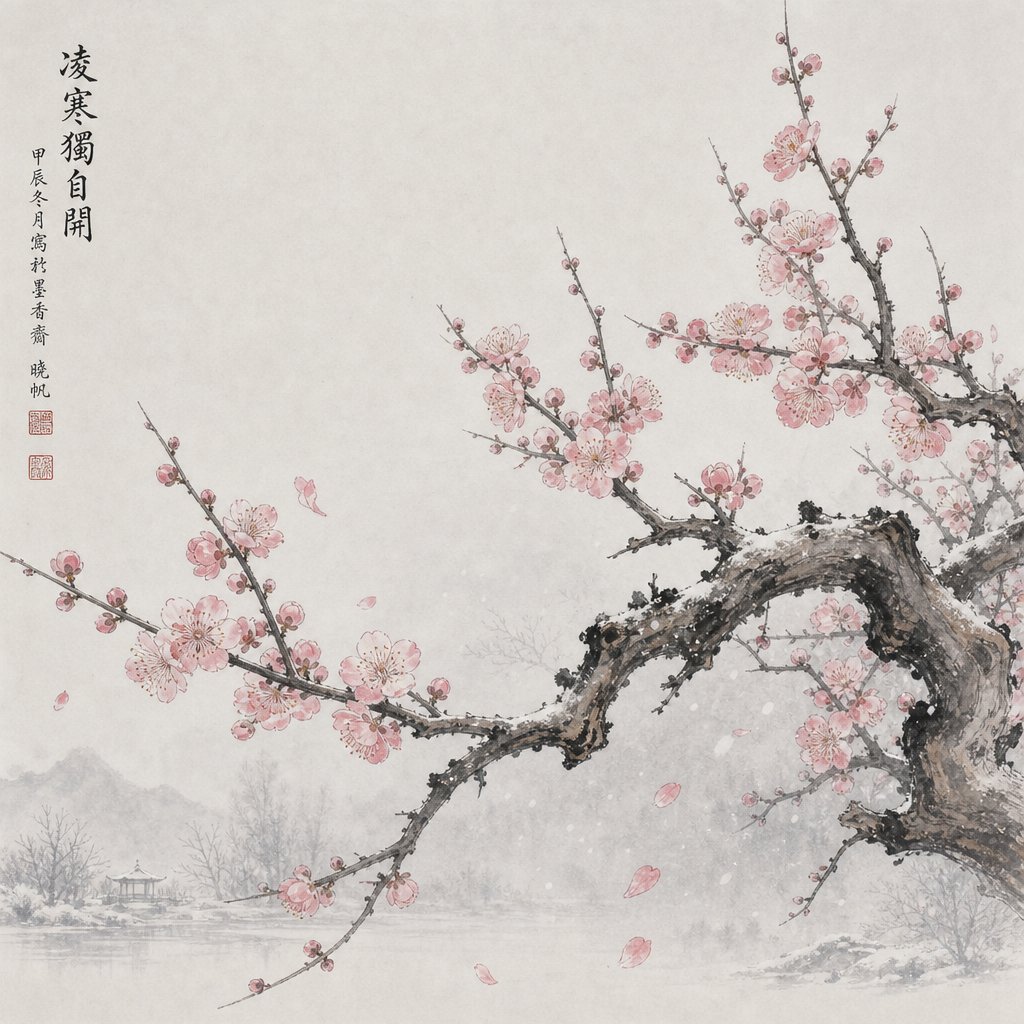
- 梅 (mei, 2nd tone) — The plum blossom, arguably the most culturally loaded flower in Chinese tradition. The 木 radical on the left pairs with 每 (mei) on the right. Plum blossoms are celebrated specifically because they bloom in late winter, pushing through frost and snow when every other flower has retreated. The famous saying "梅花香自苦寒来" — the fragrance of plum blossoms comes from bitter cold — captures why this character symbolizes perseverance and beauty in adversity. As one of the "Three Friends of Winter," 梅 carries centuries of literary weight. A name with this character suggests someone whose inner beauty intensifies through hardship.
- 槿 (jin, 3rd tone) — The hibiscus (木槿 mujin), known for flowers that bloom brilliantly for a single day before fading. Radical 木 on the left, 堇 (jin) on the right. This character represents delicate, transient beauty — the kind that's precious precisely because it doesn't last forever. In Korean culture, the same flower (무궁화 mugunghwa) symbolizes immortality, but in Chinese naming, 槿 leans toward the appreciation of fleeting elegance. It's a less common choice, which gives it a sense of refinement and uniqueness.
- 桃 (tao, 2nd tone) — The peach tree. Radical 木 on the left, 兆 (zhao) on the right as the phonetic component. In Chinese culture, peach blossoms symbolize love, beauty, and springtime, while peach trees also represent protection against evil. The expression 桃花运 (taohuayun, "peach blossom luck") refers to romantic fortune. The Book of Songs (诗经 Shijing) opens its marriage poems with peach imagery — "桃之夭夭,灼灼其华" (the peach tree is young and elegant, brilliant are its flowers). A name with 桃 carries associations of youthful romance and vibrant spring energy.
- 柳 (liu, 3rd tone) — The willow tree. Radical 木 on the left, 卯 (mao) on the right. Willows embody grace and flexibility — their branches bend in wind without breaking, swaying rather than resisting. In classical poetry, willow branches are associated with feminine beauty, particularly a slender waist (柳腰 liuyao). The character also carries a note of parting and longing, since willow branches were traditionally given as farewell gifts. A name with 柳 suggests someone who moves through life with fluid adaptability.
- 樱 (ying, 1st tone) — The cherry blossom tree. Radical 木 on the left, with a complex phonetic component on the right. Cherry blossoms suggest ephemeral beauty — stunning in full bloom but lasting only days. While cherry blossom culture is more prominently associated with Japan, the character 樱 has deep roots in Chinese poetry and is increasingly popular in modern Chinese female names. It evokes someone whose presence is vivid and memorable.
- 棠 (tang, 2nd tone) — The crabapple tree (海棠 haitang). Radical 木 at the bottom, with 尚 (shang, noble) on top. Crabapple blossoms appear throughout classical Chinese poetry as symbols of refined, understated elegance. Su Shi (苏轼) wrote a famous poem about haitang flowers in moonlight. The character carries a sense of poetic sophistication — a name for someone whose beauty is literary rather than showy.
What do woods symbolize when expressed through these feminine characters? Not raw power, but the kind of strength that manifests as beauty. Each of these trees and flowers survives conditions that would destroy something less resilient — winter frost, brief lifespans, constant wind. The elegance isn't fragility. It's endurance wearing a graceful face.
Unisex Wood Characters for Modern Naming
Gender boundaries in Chinese naming have loosened considerably over the past two decades. Characters that once belonged firmly in the "male" or "female" column now cross over freely, especially among urban, educated parents who prioritize meaning over convention. The following wood elements work naturally across genders:
- 林 (lin, 2nd tone) — Forest. Two 木 radicals side by side. This character suggests community, abundance, and collective strength — many trees growing together. It works as both a surname (one of the most common in Chinese) and a given name component. Its gender neutrality comes from the abstraction: a forest isn't masculine or feminine, it's simply alive and expansive. The character also appears in the name of the famous architect Lin Huiyin (林徽因), demonstrating its long history in female names despite being equally common for males.
- 森 (sen, 1st tone) — Dense woods, luxuriant growth. Three 木 radicals stacked together. Where 林 suggests a pleasant grove, 森 implies depth and mystery — a forest so thick that light barely penetrates. It carries connotations of seriousness and profundity. In modern naming, it appeals to parents who want a character that feels substantial without being gendered.
- 桐 (tong, 2nd tone) — The paulownia tree. Radical 木 on the left, 同 (tong, together) on the right. This tree holds special status in Chinese mythology because the phoenix (凤凰 fenghuang) is said to rest only on paulownia branches. The association with the phoenix — itself a symbol that transcends simple gender categories — makes 桐 naturally unisex. It suggests someone worthy of extraordinary things landing in their life.
- 榆 (yu, 2nd tone) — The elm tree. Radical 木 on the left, 俞 (yu) on the right. Elms are steady, reliable, and long-lived without being dramatic. They don't bloom spectacularly or grow to extreme heights — they simply persist, providing shade and stability year after year. A name with 榆 suggests quiet dependability, a quality valued regardless of gender.
- 橙 (cheng, 2nd tone) — The orange tree. Radical 木 on the left, 登 (deng, ascend) on the right. This character brings warmth, vibrancy, and a sense of harvest abundance. It's a modern naming choice — less traditional than 梅 or 松 — that appeals to parents wanting something fresh and optimistic. The color association (orange) adds a layer of brightness that works across genders.
The trend toward gender-neutral naming reflects broader shifts in Chinese society. Changing social mores have prompted parents to move away from names that encode rigid gender expectations. A character like 梓 (zi, catalpa) — discussed in the previous section as a male name character — now appears just as frequently in girls' names. Similarly, 柳 (liu, willow), traditionally feminine, occasionally surfaces in male names where parents want to emphasize flexibility over force.
This fluidity doesn't erase the deeper wood meanings each character carries. It simply means the qualities themselves — resilience, beauty, growth, steadiness — are no longer locked to one gender. The spiritual meaning of wood, at its core, is about life pushing upward regardless of obstacles. That impulse belongs to everyone.
Choosing the right character is only half the equation, though. A given name doesn't exist in isolation — it pairs with a surname, and that pairing creates its own elemental dynamics. Some surname-character combinations amplify wood energy through the generating cycle, while others inadvertently create tension.
Full Name Combinations with Common Surnames
A wood element character doesn't operate in a vacuum. The moment you pair it with a surname, a second layer of elemental interaction kicks in. Your surname carries its own elemental charge — determined by its radical and classical associations — and that charge either supports, conflicts with, or remains neutral toward the wood energy in your given name. Understanding this interaction is what separates a thoughtfully constructed name from one that simply checks the "contains wood" box.
If you've ever asked yourself "what would my chinese name be" or wondered how to find my chinese name that actually fits your BaZi chart, this is where the answer gets specific. The surname isn't something you choose — it's inherited. But knowing its elemental nature tells you exactly how to build a given name that works with it rather than against it.
Surname-Element Interaction in Name Selection
The Wu Xing generating cycle (相生 xiangsheng) describes how each element nourishes the next in a continuous loop: Water generates Wood, Wood generates Fire, Fire generates Earth, Earth generates Metal, Metal generates Water. For wood element names, the most favorable surname interaction happens when the surname carries water energy — because water nourishes wood in the generating cycle.
Several common Chinese surnames contain the water radical (氵 sāndiǎnshuǐ):
- 江 (Jiang, 1st tone) — river. Water radical on the left.
- 河 (He, 2nd tone) — river. Water radical on the left.
- 洪 (Hong, 2nd tone) — flood, vast. Water radical on the left.
- 沈 (Shen, 3rd tone) — to sink, deep. Water radical on the left.
- 汪 (Wang, 1st tone) — expanse of water. Water radical on the left.
When someone with a water-radical surname receives a wood element given name, the full name flows in the generating direction: water feeds wood. The surname literally nourishes the given name's energy. This creates what naming practitioners call elemental harmony (五行相生 wǔxíng xiāngshēng) — the name reads as a natural, supportive sequence rather than a collision.
Conversely, surnames with metal radicals introduce tension. The overcoming cycle (相克 xiangke) tells us that metal overcomes wood — think of an axe cutting a tree. Common metal-radical surnames include:
- 金 (Jin, 1st tone) — gold, metal. The character IS the metal element.
- 钱 (Qian, 2nd tone) — money. Metal radical (钅) on the left.
- 铁 (Tie, 3rd tone) — iron. Metal radical on the left.
Does a metal surname make wood element given names impossible? Not at all. But it means a skilled naming practitioner might introduce a bridging element. Since water sits between metal and wood in the generating cycle (Metal generates Water, Water generates Wood), adding a water-element character as the first character of a two-character given name creates a smooth generative chain: Metal surname → Water first character → Wood second character. The conflict dissolves into flow.
Many common surnames — 王 (Wang), 李 (Li), 张 (Zhang), 刘 (Liu) — carry more ambiguous elemental associations. 李 (Li) actually contains the 木 radical at its base, making it inherently wood-friendly. 王 (Wang) is associated with jade and earth. For these surnames, wood element given names pair without strong conflict or strong support — they're elementally neutral ground.
Two-Character Given Name Combinations
Most modern Chinese given names use two characters, creating a three-character full name (one surname character + two given name characters). This structure gives naming practitioners room to layer elemental energies, balance tonal flow, and build compound meaning. The two given name characters can both carry wood energy, or one can support wood through the generating cycle while the other delivers it directly.
Here are example full names demonstrating different surname-element interactions:
| Full Name | Pinyin | Surname Element | Given Name Meaning | Elemental Harmony |
|---|---|---|---|---|
| 沈桐语 | Shen Tongyu | Water (氵) | Paulownia + speech/language | Water surname generates Wood given name — natural flow |
| 江林轩 | Jiang Linxuan | Water (氵) | Forest + high/lofty | Water feeds Wood; double wood reinforcement |
| 王柏然 | Wang Bairan | Neutral (Earth/Jade) | Cypress + natural/so | Neutral surname; wood given name stands independently |
| 李梓轩 | Li Zixuan | Wood (木 in base) | Catalpa + high/spacious | Wood surname amplifies wood given name — strong wood energy |
| 金润楠 | Jin Runnan | Metal (金) | Moist/nourish + cedar | Metal surname → Water bridge (润) → Wood (楠); conflict resolved |
| 洪梅芳 | Hong Meifang | Water (氵) | Plum blossom + fragrant | Water generates Wood; both given characters are wood-adjacent |
| 张森然 | Zhang Senran | Neutral | Dense forest + natural | Neutral surname; triple-木 character provides concentrated wood |
| 钱泽林 | Qian Zelin | Metal (钅) | Marsh + forest | Metal surname → Water bridge (泽) → Wood (林); generative chain |
Notice the pattern in the last two rows. When the surname carries metal energy, the practitioner places a water-element character (润 run, 泽 ze) as the first given name character, followed by the wood character (楠 nan, 林 lin) as the second. This creates a three-step generative sequence across the full name: Metal → Water → Wood. Each element feeds the next rather than fighting it.
For anyone wondering "whats my chinese name" or trying to figure out how to find your chinese name through BaZi analysis, this surname interaction is often the piece that gets overlooked. Online generators that spit out random wood characters without considering your surname's elemental charge miss half the picture. A name like 金柏 (Jin Bai) — metal surname directly paired with wood given name — creates internal tension that a knowledgeable practitioner would avoid or deliberately bridge.
The tonal dimension matters here too. Beyond elemental harmony, the full name needs to sound right when spoken aloud. 沈桐语 (Shen Tongyu) moves through third tone, second tone, third tone — creating a pleasant rhythmic dip. 江林轩 (Jiang Linxuan) flows first, second, first — smooth and level. A name that achieves elemental harmony but stumbles tonally still falls short of the four-dimensional standard that serious Chinese naming demands: Sound, Form, Meaning, and Element must all align.
Surname interaction reveals one half of the strategic picture. The other half — how to deliberately pair characters using the generating and overcoming cycles within the given name itself — opens up even more precise control over a name's elemental architecture.

Wu Xing Cycles and Strategic Name Pairing
The five phases of wood earth fire water metal don't exist as isolated categories. They interact through two fundamental cycles that govern how energy flows between them — and those cycles are the engine behind strategic name construction. When you understand how elements feed or restrain each other, you can engineer a two-character given name where the characters work together rather than pulling in opposite directions.
In the wuxing system, these interactions follow predictable patterns. The generating cycle (相生 xiāngshēng) describes how each element nourishes the next. The overcoming cycle (相克 xiāngkè) describes how each element restrains another. Both cycles operate simultaneously in any name that contains characters from different elements — and a skilled naming practitioner uses this knowledge to amplify wood energy or strategically counterbalance other forces in the birth chart.
The Generating Cycle for Strengthening Wood
The principle is simple: water generates wood (水生木 shuǐ shēng mù). Just as rain nourishes a forest, water-element characters placed alongside wood-element characters in a given name amplify the wood energy. This is the most direct strategy for strengthening wood when a BaZi chart identifies it as the favorable element.
In practice, this means selecting a water-radical character (氵) as one component of the given name and a wood-radical character (木) as the other. The water character "feeds" the wood character, creating internal generative flow. Consider these combinations:
- 泽林 (Zélín) — 泽 (zé, marsh/beneficence) carries the water radical, while 林 (lín, forest) doubles the wood radical. The image: a marsh nourishing a forest. Water flows into wood, amplifying its growth energy.
- 润桐 (Rùntóng) — 润 (rùn, to moisten/enrich) is a water character suggesting gentle, sustained nourishment. 桐 (tóng, paulownia) is the tree where phoenixes rest. Together: moisture nurturing something worthy of extraordinary things.
- 淳楠 (Chúnnán) — 淳 (chún, pure/honest) carries water energy with connotations of moral clarity. 楠 (nán, golden phoebe cedar) represents enduring value. Pure water feeding precious timber — a name that suggests integrity sustaining long-term worth.
Notice the directionality. In each pair, the water character typically comes first (as the first given name character), followed by the wood character. This mirrors the natural flow of the generating cycle — water arrives before wood grows. While this ordering isn't a rigid rule, it creates a narrative logic within the name that practitioners consider aesthetically and energetically coherent.
The generating cycle extends beyond just water-to-wood. If you want the name to carry forward momentum, you can even chain three elements across the full name: a water-element surname (like 沈 Shěn) followed by a wood first character (like 林 lín) followed by a fire second character (like 炎 yán). This creates a Water → Wood → Fire generative chain where each element feeds the next — the complete wu xing elements generating sequence in miniature.
The Overcoming Cycle and Characters to Avoid
The overcoming cycle introduces conflict. Metal overcomes wood (金克木 jīn kè mù) — the image of an axe felling a tree. When you pair a metal-element character with a wood-element character inside the same given name, you create internal tension. The two characters work against each other rather than in harmony.
What does this look like in practice? Imagine a given name combining 锋 (fēng, sharp edge — metal radical 钅) with 林 (lín, forest — wood radical 木). The semantic image is a blade cutting into trees. Energetically, the metal character restrains and weakens the wood character. If the entire purpose of the name is to strengthen wood energy in the bearer's chart, introducing metal alongside it undermines that goal. The wood metal conflict within a single name is something experienced practitioners actively avoid when wood is the target element.
Characters to watch for include anything carrying the metal radical (钅 or 金): 铭 (míng, inscribe), 锐 (ruì, sharp), 钰 (yù, precious metal), 鑫 (xīn, prosperity). These are excellent characters in their own right — but pairing them directly with wood characters creates the energetic equivalent of planting a tree next to someone swinging an axe.
The relationship between wood and earth introduces a different strategic possibility. Wood overcomes earth (木克土 mù kè tǔ) — tree roots breaking through soil, holding earth in place. This means wood characters actively restrain earth energy. If a person's birth chart shows excess earth — too much stability tipping into stagnation — then a wood element name doesn't just strengthen wood; it simultaneously controls the overabundant earth. One character accomplishes two goals.
This is where the chinese zodiac elements wood vs earth dynamic becomes strategically useful. A chart dominated by earth-element characters (土, 山 radicals) benefits from wood not because wood is missing, but because wood is the element that regulates earth's excess. The naming practitioner isn't just filling a gap — they're introducing a controlling force that restores movement to a chart that's become too heavy and static.
A harmonious name flows in the generating direction — each element feeding the next like water into roots into branches. A name that deliberately invokes the overcoming cycle isn't a mistake; it's a strategic choice to counterbalance chart excesses. The difference between harmony and conflict in naming comes down to intent backed by accurate BaZi diagnosis.
The interplay of these yin yang elements — generating and overcoming, supporting and restraining — gives naming practitioners a precise toolkit. A name can be engineered to gently nourish (water feeding wood), to powerfully reinforce (wood alongside wood), or to actively regulate (wood controlling earth). The cycle you invoke depends entirely on what the birth chart needs.
These elemental strategies don't exist in a cultural vacuum, though. How practitioners apply them — which characters they favor, which combinations they consider elegant versus heavy-handed — varies significantly depending on whether you're naming a child in Beijing, Taipei, Hong Kong, or Vancouver. Regional preferences shape which wood characters feel timeless and which feel dated.
Regional Differences and Modern Naming Trends
A wood element character that feels fresh and elegant in Shanghai might sound old-fashioned in Taipei or awkward when spoken in Cantonese. Chinese naming culture isn't monolithic — it fractures along regional lines shaped by script systems, dialect pronunciation, generational attitudes, and proximity to traditional practice. If you're selecting a name based on your chinese wood sign or wood element chinese zodiac profile, where you (or the child) will live and be called by that name matters as much as the elemental analysis itself.
Regional Naming Preferences for Wood Characters
Mainland China uses simplified characters and tends toward modern, aesthetically pleasing combinations. The character 梓 (zi, 3rd tone) has dominated recent years — government data from China's Ministry of Public Security ranked it as the second most popular character in baby names for 2021, appearing in combinations like 梓涵 (Zihan) and 梓萱 (Zixuan) across both genders. Names like 雨桐 (Yutong) and 语桐 (Yutong) — both featuring the wood character 桐 — also cracked the top ten for girls. Mainland parents gravitate toward characters that sound poetic and contemporary while still satisfying five-element requirements.
Taiwan preserves traditional (unsimplified) characters and often favors more classical wood choices. Characters like 柏 (bai, cypress) and 楠 (nan, cedar) carry a scholarly weight that aligns with Taiwan's stronger connection to pre-1949 literary culture. The traditional form of characters also affects visual aesthetics — 樹 (traditional) versus 树 (simplified) look quite different on paper, and Taiwanese parents consider the stroke count and visual balance of the traditional form when selecting names.
Hong Kong introduces another variable: Cantonese pronunciation. A character that sounds elegant in Mandarin might land flat or even comically in Cantonese. For example, 松 (song in Mandarin, sung in Cantonese) works well in both dialects, but other characters shift tone and mouth-feel significantly. Hong Kong parents evaluate how a name sounds in Cantonese first, Mandarin second — and also consider how it will be romanized on identity documents, since Hong Kong uses non-Pinyin romanization systems like Jyutping or older Wade-Giles variants.
Overseas Chinese communities add yet another layer. Parents in Vancouver, Sydney, or London often prioritize characters that transliterate smoothly into English. A name like 林 (Lin) works perfectly — it's already a recognizable English syllable. But 槿 (jin, hibiscus), while beautiful in meaning, produces a romanized form that English speakers struggle with. Practicality shapes choices when the child will navigate two linguistic worlds daily.
Modern Trends Versus Classical Choices
The wood in chinese astrology has always offered a rich character pool, but not every character ages the same way. Here's how the landscape currently breaks down:
Currently popular (bordering on overused): 梓 (zi) tops this list. Its surge in popularity has been so dramatic that some naming practitioners actively steer clients away from it to avoid the child sharing a name with half their kindergarten class. 桐 (tong, paulownia) is similarly trending — appearing in multiple top-ten name combinations. These characters aren't bad choices, but their ubiquity has diluted their sense of uniqueness.
Timeless classics: 柏 (bai, cypress), 松 (song, pine), and 梅 (mei, plum blossom) have maintained steady usage across decades without ever feeling trendy or dated. They carry deep literary resonance and work across all Chinese-speaking regions. Parents who want a name that sounds as natural in 2060 as it does today tend toward these.
Feeling dated: 桂 (gui, osmanthus/laurel) and 柱 (zhu, pillar) were common in earlier generations but now sound distinctly mid-twentieth-century. You'll find these characters in the names of grandparents more often than newborns. They're not wrong — they simply carry a generational stamp that modern parents tend to avoid.
Contemporary naming masters balance five-element requirements against these aesthetic realities. A BaZi chart might call for strong wood energy, but a practitioner in 2025 won't default to 桂 when 楠 or 枫 achieves the same elemental goal with a more current feel. The art lies in satisfying the chart without dating the child.
The practical reality is that many modern Chinese parents bypass traditional naming masters entirely. Naming apps and online BaZi calculators — some powered by AI — generate character recommendations based on birth data input. BaZi analysis has received a Gen Z rebrand across East and Southeast Asia, with young professionals treating it as a planning tool rather than a superstitious ritual. These digital tools democratize access to elemental naming, though experienced practitioners note they often lack the nuance to weigh regional pronunciation, surname interaction, and generational aesthetics simultaneously.
For those born in a wood dragon chinese zodiac year — such as 1964 or 2024 — the regional dimension becomes especially relevant. The dragon wood chinese zodiac combination already carries strong wood energy from the birth year itself, which means the naming strategy might shift from "add more wood" to "support wood with water" or "balance wood's intensity with complementary elements." A wood dragon china birth year doesn't automatically mean the name needs wood characters; it means the BaZi analysis must account for the wood already present in the year pillar before prescribing more.
Regional trends shift, characters rise and fall in popularity, and digital tools reshape how parents approach the process. But the underlying framework — matching elemental need to character selection — remains constant across all Chinese-speaking communities. What changes is the aesthetic filter applied on top of that framework. The final step is learning to choose between wood characters not by region or trend, but by the specific quality you want the name to carry forward.
Choosing Wood Characters Based on Desired Qualities
You've identified that your BaZi chart needs wood. You've checked your surname's elemental charge. You understand the generating and overcoming cycles. But you're still staring at dozens of viable characters wondering: which one? The element wood offers such a broad spectrum of qualities — from the unyielding strength of a cypress to the fleeting beauty of a cherry blossom — that narrowing down to a single character requires a different kind of filter. Not elemental, not regional, but qualitative. What specific trait do you want this name to carry?
This is where abstract philosophy meets concrete decision-making. What does wood symbolize for you? Endurance through difficulty? Quiet elegance? The drive to lead? Each of these qualities maps to specific characters, and choosing between them becomes straightforward once you know which branch of wood energy you're reaching for.
Matching Wood Qualities to Character Choices
The table below organizes wood element characters by the dominant quality they express. Think of it as a decision matrix: identify the trait you want the name to embody, then select from the characters in that row.
| Quality | Characters | Pinyin | Ideal For |
|---|---|---|---|
| Resilience and Endurance | 柏, 松, 杉 | bǎi, sōng, shān | Names expressing steadfastness, longevity, and the ability to thrive in harsh conditions |
| Elegance and Beauty | 梅, 槿, 樱 | méi, jǐn, yīng | Names emphasizing grace, refined beauty, and poetic sensibility |
| Leadership and Achievement | 杰, 栋, 楷 | jié, dòng, kǎi | Names suggesting someone who leads, excels, or sets the standard for others |
| Growth and Potential | 萌, 芽, 桐 | méng, yá, tóng | Names conveying new beginnings, untapped possibility, and upward momentum |
| Collective Strength | 林, 森 | lín, sēn | Names suggesting community, abundance, and depth — strength through multiplicity |
Notice how different the energy feels across rows. A name built on 柏 (bǎi, cypress) tells a fundamentally different story than one built on 萌 (méng, sprouting). Both are wood. Both satisfy a BaZi chart calling for the element. But the first says "I endure" while the second says "I'm just beginning." What does wood represent in the context of this specific person's life? That question guides the row you choose from.
In wood element feng shui practice, practitioners make similar distinctions when selecting plants or wooden objects for a space. A tall, upright bamboo arrangement serves a different energetic purpose than a trailing vine or a bowl of fresh sprouts. The same logic applies to naming: the form of wood matters as much as its presence. Feng shui element wood isn't a single frequency — it's a spectrum, and names operate on that same spectrum.
Balancing the Wood Element with Yin and Yang
Every element in the Wu Xing system splits into two polarities, and wood is no exception. This distinction — often overlooked in simplified naming guides — fundamentally shapes which characters suit which person.
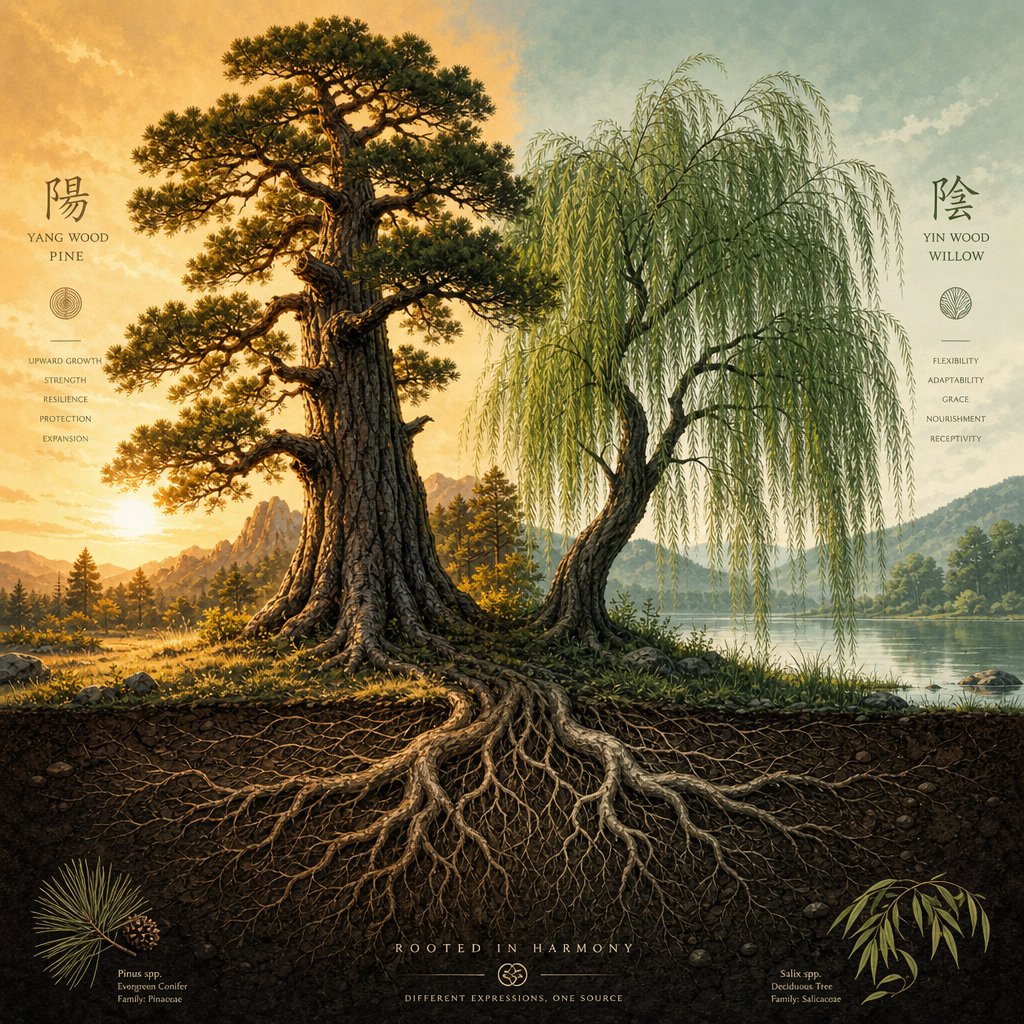
Yang Wood (甲木 jiǎmù) is the tall tree. Think of an oak or a redwood: upright, powerful, visible from a distance, deeply rooted but reaching high. Yang Wood energy is assertive, direct, and structurally strong. Characters that embody this polarity include 松 (sōng, pine), 柏 (bǎi, cypress), 栋 (dòng, ridgepole), and 楠 (nán, cedar) — all trees known for height, strength, and commanding presence.
Yin Wood (乙木 yǐmù) is the vine, the flower, the grass blade that bends around obstacles rather than pushing through them. Yin Wood individuals are characterized by adaptability, grace, and the ability to find indirect paths to growth. Characters aligned with this polarity include 柳 (liǔ, willow), 槿 (jǐn, hibiscus), 梅 (méi, plum blossom), and 桃 (táo, peach) — plants celebrated for flexibility, beauty, and the capacity to thrive by bending rather than resisting.
How do you decide between them? Look at what the BaZi chart actually needs:
- If the chart calls for assertive, outward-directed energy — perhaps the person's Day Master is weak and needs structural reinforcement — Yang Wood characters provide that backbone. They suit someone who needs to stand taller, hold firmer, and project strength.
- If the chart needs adaptability and social grace — perhaps the person has excess rigidity from strong Earth or Metal — Yin Wood characters introduce flexibility. They suit someone who needs to bend without breaking, to navigate complexity with finesse rather than force.
The wood element personality itself reflects this duality. As one source describes it: Jia Wood (甲) is "represented by large trees, strength, and sturdiness," while Yi Wood (乙) is "represented by small plants, flowers, and new growth." Both are wood. Both satisfy the elemental requirement. But they channel that energy through fundamentally different expressions — one through power, the other through grace.
This yin-yang distinction also interacts with the character's gender associations. Yang Wood characters tend to appear more frequently in male names (栋, 柏, 松), while Yin Wood characters lean feminine (梅, 槿, 柳). But these are tendencies, not rules. A woman whose chart needs assertive reinforcement benefits from Yang Wood characters. A man whose chart needs flexibility benefits from Yin Wood. The wood element personality you're building through the name should match the chart's actual need, not default gender conventions.
Pulling all of this together, here's the decision sequence for selecting a wood element name character:
- Step 1: Determine elemental need through BaZi. Confirm that wood is your favorable element (用神 yòngshén) or that your chart is wood-deficient. Without this diagnosis, character selection is guesswork.
- Step 2: Consider surname interaction. Check whether your surname supports wood (water radical), conflicts with it (metal radical), or remains neutral. If conflict exists, plan a bridging character.
- Step 3: Identify the desired quality. Use the table above to match the specific trait you want the name to express — resilience, beauty, leadership, growth, or collective strength.
- Step 4: Choose the correct polarity. Decide whether Yang Wood (assertive, structural) or Yin Wood (flexible, graceful) better serves the chart's needs and the personality you want the name to cultivate.
- Step 5: Verify tonal harmony. Speak the full name — surname plus both given name characters — aloud. The tones should flow without awkward collisions. A name that reads beautifully on paper but stumbles when spoken fails the sound dimension.
What element is wood in your chart — a missing piece, a weak foundation, or a favorable force that needs amplification? The answer shapes everything that follows. And with the framework above, you're no longer choosing blindly from a list of tree-related characters. You're selecting with precision: the right element, the right quality, the right polarity, paired with the right surname, spoken in the right tones. That's what separates a name that merely contains wood from one that genuinely embodies it.
Frequently Asked Questions About Wood Element Chinese Names
1. How do I know if I need a wood element in my Chinese name?
Your need for wood is determined by your BaZi (Four Pillars of Destiny) birth chart. A practitioner calculates eight characters from your birth year, month, day, and hour, then identifies your Day Master and checks whether wood is absent, weak, or serves as your favorable element (yongshen). If wood is underrepresented or diagnosed as the element your chart most needs for balance, a wood-radical character in your name compensates for that deficiency. Online BaZi calculators offer a starting point, though experienced naming masters provide more nuanced analysis that accounts for seasonal adjustments and elemental bridging.
2. What are the most popular wood element characters used in Chinese names?
The most popular wood element name characters include zi (catalpa), which has dominated mainland China's baby name charts in recent years, along with tong (paulownia), lin (forest), and feng (maple). Timeless classics that remain consistently used include bai (cypress), song (pine), and mei (plum blossom). For female names, liu (willow), ying (cherry blossom), and jin (hibiscus) are favored. The character jie (outstanding) remains one of the most enduring choices for male names across multiple decades.
3. Can wood element characters be used for both male and female names?
Yes, many wood element characters work across genders. Characters like lin (forest), sen (dense woods), tong (paulownia), yu (elm), and cheng (orange tree) are naturally unisex. Modern naming trends have further blurred traditional gender boundaries — zi (catalpa), once primarily masculine, now appears equally in girls' names. Similarly, liu (willow), traditionally feminine, occasionally surfaces in male names. The key factor is matching the character to the BaZi chart's actual needs rather than defaulting to gender conventions.
4. Does my surname affect which wood element characters I should choose?
Absolutely. Your surname carries its own elemental charge that interacts with your given name through the Wu Xing cycles. Surnames with water radicals (like Jiang, Shen, or Hong) naturally support wood characters because water generates wood in the producing cycle. Surnames with metal radicals (like Jin or Qian) create tension since metal overcomes wood. In that case, practitioners often insert a water-element bridging character as the first given name character, creating a Metal-Water-Wood generative chain that resolves the conflict.
5. What is the difference between Yang Wood and Yin Wood in naming?
Yang Wood (jia mu) represents tall, strong trees like oaks and pines — assertive, upright, and structurally powerful. Characters aligned with Yang Wood include song (pine), bai (cypress), and dong (ridgepole). Yin Wood (yi mu) represents vines, flowers, and flexible plants that bend around obstacles. Characters like liu (willow), mei (plum blossom), and jin (hibiscus) carry Yin Wood energy. The choice depends on what your birth chart needs: Yang Wood for assertive reinforcement, Yin Wood for adaptability and grace.