What Chinese Clan Associations Are and Why They Still Matter
Imagine arriving in a foreign country with no savings, no contacts, and no safety net. You speak a dialect no one around you understands. There is no government office to help you find work or shelter. Where do you turn? For millions of Chinese immigrants over the past two centuries, the answer was a clan association.
What Are Chinese Clan Associations
Chinese clan associations are voluntary community organizations formed by overseas Chinese immigrants who share a common surname, dialect group, or ancestral district. They serve as mutual aid societies providing welfare, cultural preservation, business networking, and a sense of belonging to members living far from their homeland.
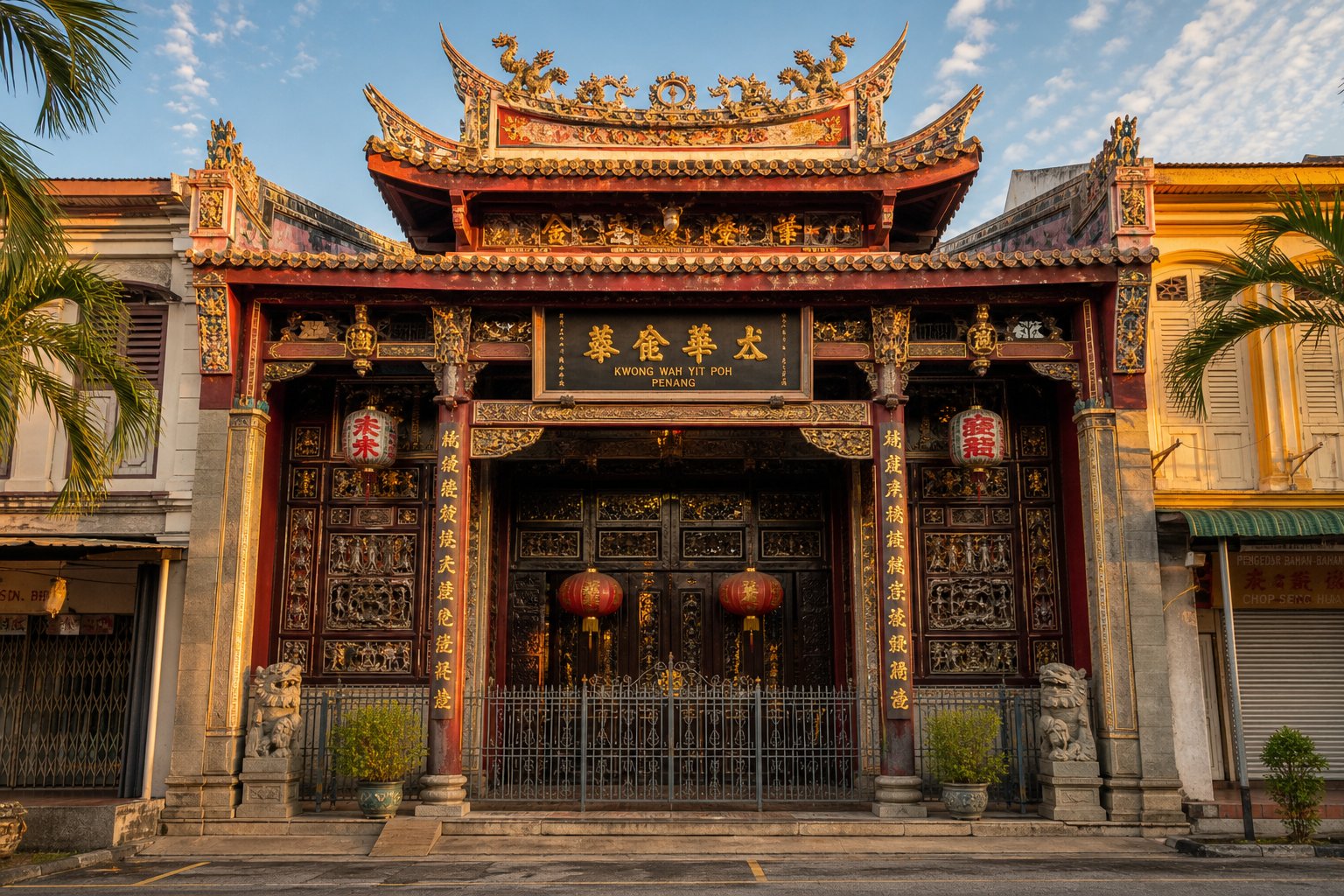
These organizations, often called huiguan in Mandarin, emerged as self-governing bodies wherever Chinese communities took root. From Singapore to San Francisco, from Lima to Melbourne, they became the social backbone of diaspora life. Their membership is traditionally defined by kinship ties, whether through a shared family name like Tan, Lee, or Chen, a common dialect such as Hokkien or Cantonese, or roots in the same ancestral county back in southern China.
You might wonder how they differ from other Chinese community organizations. Temples focused primarily on spiritual life and religious rites. Chambers of commerce centered on trade interests. Clan associations, by contrast, took a holistic approach. They functioned as an all-in-one caretaker for their members, handling everything from job placement and emergency loans to funeral arrangements and ancestral worship. As scholars have noted, the huiguan assumed a holistic nature because it traditionally functioned as an all-out caretaker of its membership community, distinguishing it from more narrowly focused guilds or professional groups.
Why Clan Associations Matter in the Chinese Diaspora
Chinese schools, newspapers, and voluntary associations have long been called the "three pillars" of overseas Chinese communities. Among these pillars, clan associations arguably carry the deepest historical weight. Their purpose extends across three core dimensions:
- Social welfare and mutual aid - Scholarships, elderly care, funeral assistance, emergency financial support, and job referrals for newly arrived immigrants.
- Cultural preservation - Maintaining dialect education, organizing traditional festivals, conducting ancestral worship ceremonies, and safeguarding genealogical records that trace lineages back centuries.
- Business networking and community governance - Facilitating introductions between merchants, arbitrating disputes, and representing community interests to local governments.
These functions made clan associations essential for survival during the colonial era, when no state welfare system existed for immigrant populations. They also bound members into what researchers describe as a "moral community" sharing a sense of common duty, identity, and destiny.
Today, with over 200 member organizations under Singapore's federation alone and active chapters spanning every continent, these associations remain one of the most widespread forms of diaspora community organization in the world. Whether you are tracing your family roots, curious about Chinese heritage, or considering membership yourself, understanding how these organizations work opens a window into centuries of migration, resilience, and cultural continuity.
Their story begins with the waves of emigration that pushed millions out of southern China and into an uncertain world abroad.
Historical Origins of Chinese Clan Associations
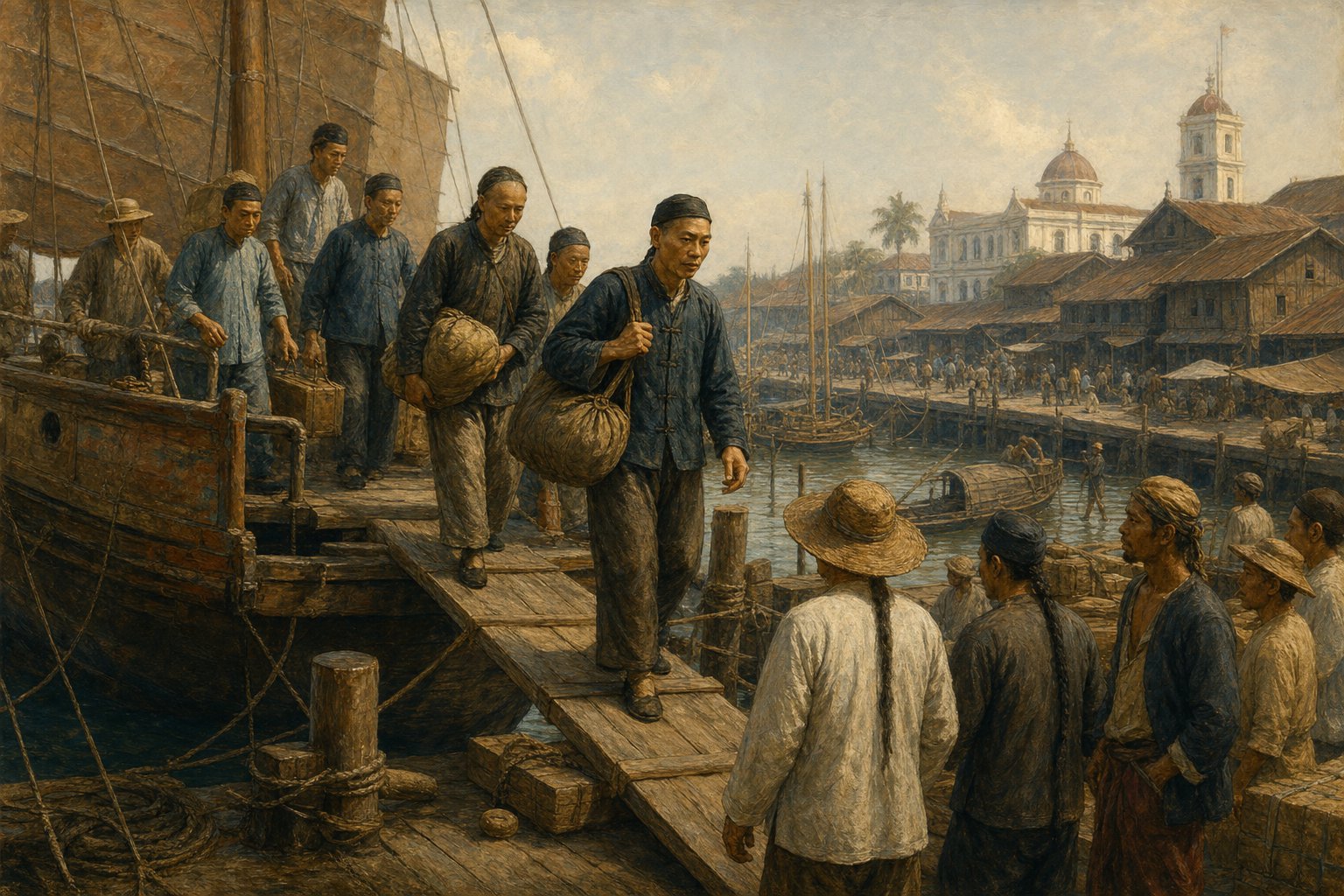
Southern China's coastline has always faced the sea. For centuries, the people living along it did too. Farmers squeezed onto overcrowded land, fishermen navigating monsoon winds, and traders chasing opportunity all looked outward. The history of Chinese clan associations begins not in the meeting halls of Singapore or San Francisco, but in the villages of Fujian, Guangdong, and Hainan, where poverty, war, and ambition pushed millions to board wooden junks and sail toward the unknown.
Migration Patterns That Sparked Community Organization
Southern China migration patterns shaped the diaspora in ways that still echo today. The emigrants were not a single, unified group. They came from distinct regions, spoke mutually unintelligible dialects, and carried different customs. Hokkien speakers from Fujian's coastal counties dominated trade routes to the Philippines and the Malay Archipelago. Teochew communities from eastern Guangdong gravitated toward Siam and the Mekong Delta. Cantonese migrants spread across Southeast Asia and later crossed the Pacific to California and Australia. Hakka and Hainanese groups carved out their own niches in mining, agriculture, and food trades.
These weren't random scatterings. As Craig Lockard's research on Chinese migration and settlement documents, by 1400 Chinese trade networks already linked Southeast Asian ports to each other and back to China. Enterprising and adaptable, these maritime peoples had long sailed to trade, with many settling permanently. After 1850, millions more left China, building the foundations for a widespread modern diaspora. Today, more than 30 million people of Chinese ancestry live outside Greater China, over 20 million of them in Southeast Asia.
Each dialect group arrived in waves, often clustering in the same port towns or mining settlements. Hokkien speakers dominated Penang and Manila. Cantonese filled the goldfields of Borneo and later the railroad camps of North America. This geographic clustering by dialect wasn't accidental. It was survival strategy. When you couldn't speak the local language or the dialect of the Chinese group next door, you relied on people from your own village, your own county, your own speech community. That reliance became the seed of formal organization.
How Credit Systems Helped New Immigrants Survive
Imagine stepping off a ship in a foreign port with nothing but the clothes on your back and a debt to the broker who paid your passage. No bank would lend to you. No government office would help you find work. This was the reality for most Chinese immigrant mutual aid societies' earliest members.
The solution came from home. Rotating credit associations, known as hui or ko in Chinese, allowed groups of trusted members to pool fixed contributions into a common fund. Each cycle, one member received the full pot, rotating until everyone had a turn. These weren't abstract financial instruments. They paid for shop leases, covered medical emergencies, and funded passage for family members still waiting back in China.
As documented in studies of Asian American cooperative economics, early Chinese immigrants arriving in San Francisco were met at the pier by representatives of family associations who escorted new arrivals to the association building and provided housing. The associations connected immigrants to employment and offered basic social insurance, including medicine, burial expenses for the poor, and travel money for the indigent elderly returning to China.
Trust was the currency that made these systems work. You couldn't run a rotating credit pool with strangers. Membership required a shared family name, a common ancestral village, or at minimum the same regional affiliation in China. This requirement for trust within dialect groups built fierce loyalty and cemented the bonds that would formalize into clan associations. The financial mechanisms weren't just practical tools. They were the glue holding fragile immigrant communities together.
Colonial Era Governance Gaps
Why did Chinese immigrants need to build their own institutions from scratch? The answer lies in the political landscape they entered. Colonial governments across Southeast Asia and North America had little interest in providing social services to immigrant laborers. The British in Malaya, the Dutch in the East Indies, and the Spanish in the Philippines all viewed Chinese workers as economic assets, not citizens deserving welfare.
In the Straits Settlements, colonial administrators relied on Chinese community leaders to maintain order within their own populations. There was no public hospital system for immigrant workers, no unemployment insurance, no pension. When a miner was injured in a tin pit or a dockworker fell ill, his clan brothers covered the cost. When he died far from home, the association arranged his burial or shipped his bones back to his ancestral village.
North America offered no better safety net. The 1882 Chinese Exclusion Act in the United States barred common laborers from entry and denied Chinese immigrants the path to citizenship. Trade unions pitted white workers against Chinese laborers. In this hostile environment, colonial era Chinese community organizations became essential infrastructure. They weren't optional social clubs. They were the only institutions standing between immigrants and destitution.
This combination of factors, distinct dialect groups competing for limited resources, financial systems built on kinship trust, and governments that offered nothing, created the conditions for clan associations to flourish. What began as informal gatherings of men from the same village became registered organizations with constitutions, elected leaders, and permanent buildings. The structures they built would eventually diversify into a complex ecosystem of association types, each serving different segments of the diaspora community.
Types of Chinese Clan Associations Explained
That ecosystem of association types is more varied than most people realize. Not all clan associations work the same way, and the differences matter if you are trying to find one that connects to your own heritage. The organizing principle behind each type determines who can join, what services it offers, and how large it grows. Think of it as a layered system: some associations cast a wide net across an entire dialect group, while others focus tightly on a single family name or ancestral village.
Dialect-Based Associations
The broadest category is the dialect-based association, known in Hokkien as huay kuan (or huiguan in Mandarin). These organizations unite all immigrants who share a common dialect, regardless of surname or specific hometown. In Singapore alone, the five major dialect groups, or bang, each established their own leading institutions. Hokkien, Teochew, Cantonese, Hakka, and Hainanese communities all built separate organizational structures that served as umbrella bodies for their respective populations.
Concrete examples help illustrate the scale. The Hokkien community in Singapore rallied around Thian Hock Keng Temple, founded in 1840, which functioned as both a religious and community institution. The Teochew community established the Ngee Ann Kongsi in 1845 and later the Teochew Poit Ip Huay Kuan in 1929. Cantonese and Hakka groups jointly managed institutions like the Fuk Tak Chi Temple before eventually separating into distinct organizations such as the Kwong Wai Shiu Free Hospital. The Hainanese founded the Kiung Chow Hwee Kuan (now Singapore Hainan Hwee Kuan) in 1857.
These dialect-based Chinese associations tend to be the largest in membership because their entry criteria are broad. Anyone who speaks the dialect or traces ancestry to the relevant province qualifies. They often serve as the political voice of their entire dialect community.
Surname-Based Associations
Surname-based clan associations operate on a more intimate principle: shared lineage. If your family name is Tan, Lee, Ong, or Chen, there is likely an association somewhere in the diaspora built specifically around that surname. Members may come from different provinces and speak different dialects, but the shared family name implies a common ancestor stretching back centuries.
These organizations maintain ancestral halls, conduct spring and autumn worship ceremonies, and keep genealogical records linking members to specific lineages in China. Some surnames carry cultural weight beyond the family itself. The Chen clan, for instance, traces its origins to an ancient feudal state, while the Lee surname connects to one of China's most prominent imperial dynasties. These symbolic associations give surname-based groups a sense of deep historical identity that transcends geography.
Singapore's earliest documented clan association, Cho Kah Koon, was precisely this type. Founded by Chow (Cao) clansmen from Taishan district in Guangdong Province, it served as a rest stop for kin arriving on the island. Surname-based groups tend to be smaller than dialect associations but often foster stronger personal bonds among members.
District and Trade-Based Associations
Beyond dialect and surname, two other organizing principles shaped the landscape. District-based associations gather people from the same ancestral county or prefecture, even if they carry different surnames. You might find a Taishan association, a Jinjiang association, or a Chaoyang association, each representing emigrants from a single geographic area back in China. These groups often maintain the closest ties to specific villages, making them valuable resources for ancestry research.
Trade-based associations, sometimes called guilds, organized members by occupation rather than kinship. Carpenters, goldsmiths, tailors, and provision shop owners each formed their own groups to regulate trade practices, set pricing standards, and protect members from competition by outsiders. While less common today, these occupational guilds played a critical role in the economic life of early Chinatowns.
| Type | Organizing Principle | Typical Size | Example Organizations | Primary Functions |
|---|---|---|---|---|
| Dialect-based | Shared dialect or provincial origin | Large (thousands of members) | Teochew Poit Ip Huay Kuan, Singapore Hainan Hwee Kuan, Kwong Wai Shiu Hospital | Community representation, welfare, cultural events, political voice |
| Surname-based | Shared family name implying common ancestry | Small to medium (hundreds of members) | Cho Kah Koon (Cao clan), Tan Si Chong Su, Ong Clan Association | Ancestral worship, genealogy records, scholarships, kinship bonding |
| District-based | Same ancestral county or prefecture in China | Medium (hundreds to low thousands) | Taishan Ning Yang Hui Kuan, Chin Kang Huay Kuan (Jinjiang) | Hometown ties, remittance coordination, village-level genealogy |
| Trade/Occupation-based | Shared profession or trade | Small (dozens to hundreds) | Carpenters' Guild, Goldsmiths' Association, Provision Shop Keepers' Association | Trade regulation, pricing standards, apprenticeship, mutual insurance |
In practice, many individuals held memberships in multiple associations simultaneously. A Hokkien-speaking carpenter surnamed Tan from Jinjiang county might belong to a dialect huay kuan, a surname association, a district group, and a trade guild all at once. Each served a different need, and together they formed a comprehensive support network that no single organization could provide alone.
Understanding these categories matters beyond historical curiosity. The type of association determines what records it keeps, what services it offers, and who qualifies for membership. That practical dimension becomes especially relevant when you look at what these organizations actually deliver to their members day to day.
Services and Benefits Clan Associations Provide
So what do you actually get when you walk through the doors of a clan association? The answer depends on the organization, but the range of Chinese clan association benefits is broader than most outsiders expect. These aren't dusty social clubs that meet once a year for dinner. Many operate year-round programs spanning financial aid, cultural programming, and professional development.
Welfare and Mutual Aid Services
Mutual aid services in the Chinese community have always been the backbone of clan life. Historically, that meant covering funeral costs and sending remittances home. Today, the scope has expanded considerably.
Clan association scholarships and bursaries represent one of the most tangible benefits for younger members. In Singapore, the SFCCA partners with the Chinese Development Assistance Council (CDAC) to offer the CDAC-SFCCA Bursary, which supports underprivileged students in the Chinese community. Individual member associations run their own scholarship funds as well, often funded by endowments built over generations. Beyond education, many associations maintain elderly care visitation programs, emergency financial assistance for members facing hardship, and funeral coordination services that handle everything from wake arrangements to burial logistics.
Cultural Preservation and Events
Cultural programming keeps these organizations alive across generations. Dialect education classes teach younger members Hokkien, Teochew, or Cantonese at a time when these languages are fading from daily use. Associations organize traditional festival celebrations, from Chinese New Year lion dances to Mid-Autumn Festival lantern events. The SFCCA itself has run the annual River Hongbao show since 1987, turning it into one of Singapore's signature Chinese New Year festivities.
Many associations also rent out their function halls for weddings, gala dinners, and cultural performances, giving members access to affordable event venues with deep community significance.
Business Networking and Professional Development
The professional dimension of Chinese clan association membership benefits often surprises newcomers. Associations facilitate introductions between established business owners and younger entrepreneurs. Annual dinners double as networking events where members exchange contacts across industries. Some organizations host seminars on topics ranging from investment strategies to emerging technology, connecting members with expertise they might not encounter otherwise.
Here is a quick overview of the main service categories you can expect:
- Financial aid - Scholarships, bursaries, emergency loans, and hardship grants for members and their families.
- Welfare support - Elderly care programs, funeral assistance, hospital visitation, and bereavement coordination.
- Cultural programming - Dialect classes, festival celebrations, heritage exhibitions, and traditional arts workshops.
- Venue and event access - Function hall rentals for weddings, banquets, and community gatherings at member rates.
- Professional networking - Business introductions, mentorship pairings, trade connections, and industry seminars.
- Publications and resources - Magazines, genealogy records, heritage handbooks, and community directories.
Not every association offers all of these. Larger dialect-based groups tend to have the broadest programming, while smaller surname associations may focus more tightly on genealogy and kinship events. The key takeaway is that membership delivers practical, ongoing value rather than just a symbolic connection to heritage.
Nowhere is this ecosystem of services more visible than in Singapore, where over 200 associations operate under a single coordinating federation and where government policy has both challenged and reshaped the role these organizations play.
Chinese Clan Associations in Singapore Then and Now
Singapore offers the clearest window into how clan associations rise, decline, and reinvent themselves. The island's compact geography, well-documented history, and active government involvement make it a case study unlike any other. From the founding of the very first association in 1819 to a modern federation coordinating hundreds of member groups, Singapore clan association history traces the full arc of diaspora community life.
The Singapore Federation of Chinese Clan Associations
By the mid-1980s, individual associations were struggling with aging memberships and shrinking relevance. A landmark seminar on 2 December 1984, jointly initiated by nine major organizations including the Singapore Hokkien Huay Kuan, Teochew Poit Ip Huay Kuan, and Singapore Kwangtung Association, broke years of silence. Then-Second Deputy Prime Minister Ong Teng Cheong delivered the opening address, outlining five directions for future development: open membership regardless of dialect or race, groom younger leadership, intensify cultural activities, establish welfare services, and coordinate with other community bodies.
The result was the Singapore Federation of Chinese Clan Associations (SFCCA), officially registered on 27 August 1986. Seven founding associations raised $400,000 in seed funding to get it off the ground. The SFCCA Singapore federation serves as an umbrella authority uniting clan associations under a common purpose: promoting Chinese culture and language to all Singaporeans, regardless of dialect, ethnicity, or nationality.
Today, SFCCA coordinates approximately 251 member organizations. Its leadership structure includes a president, a council, and six executive committees covering member affairs, social affairs, culture, research, youth, and property. The federation publishes Yuan magazine, organizes the annual River Hongbao celebration during Chinese New Year, and partners with institutions like the Singapore Chinese Cultural Centre. Its fourth and current president, Thomas Chua Kee Seng, has emphasized the federation's role in fostering racial harmony and strengthening communication between Chinese community organizations and the government.
How Singapore Policy Shaped Clan Association Decline
Understanding why SFCCA needed to exist at all requires looking at the decades that preceded it. After independence in 1965, the Singapore government pursued nation-building policies that, intentionally or not, eroded the foundations on which clan associations stood.
The most significant blow came through language policy. The Speak Mandarin Campaign, launched in 1979 by Prime Minister Lee Kuan Yew, aimed to replace dialects with Mandarin as the common language among Chinese Singaporeans. Dialect broadcasts were banned from television and radio. Chinese vernacular schools teaching in Hokkien, Teochew, or Cantonese were shut down. The results were dramatic: predominantly dialect-speaking households fell from 76 percent in 1980 to just 48 percent by 1990, while Mandarin-speaking households rose from 13 to 30 percent over the same period.
For clan associations built entirely around dialect identity, this was existential. When younger generations could no longer speak Hokkien or Teochew, the linguistic glue binding them to their parents' associations dissolved. A Teochew youth who grew up speaking Mandarin and English felt little connection to a Teochew huay kuan conducting meetings in a dialect they barely understood.
Public housing policy compounded the problem. The resettlement of Chinese communities from ethnic enclaves into racially mixed HDB estates broke up the geographic clusters that had sustained clan networks for generations. Members who once lived within walking distance of their association hall were now scattered across the island. The combination of linguistic erosion and physical dispersal left many associations with dwindling attendance and leadership vacuums.
Singapore-born Chinese also felt little emotional attachment to China. Unlike their grandparents, who viewed the motherland as home and Singapore as temporary, post-independence generations identified as Singaporean first. The welfare services that once made clan membership essential, job placement, emergency loans, burial coordination, were now handled by government agencies. Clan associations found themselves branded as old-fashioned relics by the very community they had once sustained.
Reinvention Efforts in Singapore
The formation of SFCCA in 1986 marked the beginning of a deliberate reinvention. Rather than clinging to dialect-exclusive identities, the federation encouraged associations to reposition themselves as custodians of broader Chinese culture. The strategy rests on five principles articulated by SFCCA leadership: modernization of concepts, professionalization of management, rejuvenation of organizations, diversification of activities, and institutionalization of systems.
In practice, this looks like heritage tourism programs that open historic clan halls to the public, digital archives preserving genealogical records and historical documents, and youth committees designed to attract members in their twenties and thirties. Some associations now host language workshops, calligraphy classes, and cultural immersion trips to ancestral villages in China. Others have partnered with universities on oral history projects, capturing the stories of elderly members before they are lost.
The SFCCA also maintains a directory and map of its member associations, making it easier for anyone, whether a lifelong Singaporean or a recent arrival, to locate an organization matching their surname, dialect, or ancestral district. New immigrants from mainland China are represented on SFCCA's executive committees, giving them an avenue to integrate into local society through established community structures.
The clan associations Singapore modern role occupies a different space than it did a century ago. These organizations are no longer survival infrastructure. They are cultural anchors, identity bridges, and networking platforms operating in a city-state that has moved far beyond the conditions that first created them. Their ability to adapt reflects a broader truth about diaspora institutions: relevance is not inherited. It must be earned again with each generation.
Singapore's experience is instructive, but it is only one chapter in a global story. Across the Causeway in Malaysia, across the Pacific in the United States, and throughout Southeast Asia, clan associations have followed very different trajectories shaped by the unique political and demographic conditions of each country.

How Clan Associations Operate Across the Global Diaspora
Malaysia never launched a Speak Mandarin Campaign. It never banned dialect broadcasts or dismantled Chinese vernacular schools. That single policy difference explains why Malaysian Chinese clan associations remain among the most active in the world, while their Singaporean counterparts spent decades fighting decline. Each country's political landscape, language policies, and demographic makeup shaped these organizations in radically different ways, creating a global patchwork of diaspora institutions that share common roots but look nothing alike on the ground.
Clan Associations in Malaysia
Malaysia is home to more than 10,000 local clan associations, grouped largely around dialect lines: Cantonese, Hokkien, Teochew, Hainanese, Hakka, Kwangsi, and Sanjiang. That number dwarfs any other country's count. The reason is structural. Chinese Malaysians make up roughly 23 percent of the national population, concentrated in urban centers and historically self-reliant new villages. Unlike Singapore, Malaysia preserved Chinese vernacular education, allowing dialect identity and Mandarin literacy to persist across generations.
Their origins trace back to the violent kongsi era of the 1800s. Secret societies like Hai San (Hakka) and Ghee Hin (Cantonese) fought over tin-mining rights in towns like Larut, Perak. The bloodshed only ended with the Pangkor Treaty of 1874, which brought British colonial intervention. Over time, a stronger colonial government disarmed these kongsis, and the former secret societies transformed into the community welfare organizations that exist today.
Before independence in 1957, these associations operated Chinese schools, served as job recruitment centers, and provided the social infrastructure that colonial and later federal governments did not extend to Chinese communities. Many of those roles have since been absorbed by the state, but Malaysian associations adapted rather than faded. The Federation of Chinese Associations Malaysia now represents all 10,000-plus member groups nationwide.
What keeps them relevant? A mix of property income, cultural programming, and creative pivots. The Taiping Tsen Loong Association, for instance, funds scholarships and festival subsidies through rental income from commercial properties bequeathed by its 19th-century founder. The Federation of Hokkien Associations of Malaysia hosted the World Fujian Convention-Trade Exhibition in 2024, drawing 10,000 Hokkien-descendant attendees from around the globe to Kuala Lumpur for business matchmaking. The Selangor Cheras Hokkien Association has nurtured players for Malaysia's national basketball team since 2001.
Still, challenges loom. Experts like Dr. Pek Wee Chuen of New Era University College warn that ageing committees and declining youth enthusiasm could lead to the demise of up to 80 percent of existing associations. Younger Malaysians born locally feel little emotional connection to China, and many associations struggle to establish a social media presence on platforms where Gen Z actually spends time.
Historic Chinatown Associations in the United States
Cross the Pacific, and the story takes a different shape entirely. Chinese benevolent associations in the United States emerged under conditions of extreme hostility. The 1882 Chinese Exclusion Act barred laborers from entry and denied Chinese immigrants citizenship. White labor unions organized against them. In this environment, community self-organization was not optional. It was the only path to survival.
The most prominent institution was the Chinese Consolidated Benevolent Association, better known as the Six Companies of San Francisco. The first huiguan, the Kong Chow Company, organized in 1850. By 1854 there were four major mercantile companies, and by the 1860s, six. These organizations smoothed the way for immigrant members by arranging sea passages from China, negotiating labor contracts, caring for the sick and starving, and returning corpses to China for burial. They were run by the wealthier and better-educated merchants in a paternalistic style typical of 19th-century Chinese society.
Distinct from the Six Companies were the tongs. The Chinatown tongs and associations history is often misunderstood. Some tongs were transpacific incarnations of Triad criminal gangs originating in China, involved in opium, gambling, and protection rackets. Others were far less ominous, organized among smaller family groups to defend against oppression by larger clans, or functioning as trade guilds that apportioned business among members. The line between benevolent and criminal was often blurred, with cross-membership in both types of organizations being common.
Today, most American Chinatown associations have evolved into cultural heritage organizations. They host Lunar New Year parades, maintain community centers, offer language classes, and serve as gathering points for elderly residents. The Chinese Consolidated Benevolent Association still operates in San Francisco, though its role has shifted from survival infrastructure to cultural preservation and community advocacy.
Southeast Asia and Beyond
Beyond Malaysia and the United States, Chinese clan associations by country reveal striking variation in legal status, scale, and function.
In Thailand, where Chinese immigrants assimilated more thoroughly than anywhere else in Southeast Asia, clan associations operate openly but with less political visibility. The United Chinese Clans Association of Thailand serves as a coordinating body, with dialect-specific groups like the Teochew Association of Thailand, the Hakka Association of Thailand, and the Fujian Association of Thailand maintaining active operations in Bangkok. Thai government policies encouraged assimilation through name changes and intermarriage, so these organizations focus primarily on cultural preservation and genealogical research rather than political representation.
Indonesia presents a more complex picture. Anti-Chinese policies under the Suharto regime (1966-1998) banned Chinese-language education, forced name changes, and suppressed public displays of Chinese culture. Clan associations were effectively driven underground or dissolved. Since the fall of Suharto, a gradual revival has taken place, with organizations re-emerging to reclaim cultural identity, though they operate with less institutional weight than their Malaysian or Singaporean counterparts.
In the Philippines, Chinese-Filipino associations remain active in Manila's Binondo district, one of the world's oldest Chinatowns. They focus on education, with many running Chinese-Filipino schools, and maintain strong business networking functions. Australia's Chinese community, concentrated in Sydney and Melbourne, supports clan associations that serve both heritage preservation for established families and settlement support for newer immigrants from mainland China.
| Country | Legal Status | Estimated Active Associations | Primary Modern Function |
|---|---|---|---|
| Malaysia | Registered under Societies Act | 10,000+ | Cultural preservation, welfare, business networking, political grassroots support |
| United States | Registered nonprofits (501c3) | Several hundred | Cultural heritage, community advocacy, elderly services |
| Singapore | Registered societies under SFCCA umbrella | ~251 (SFCCA members) | Cultural programming, youth outreach, heritage tourism |
| Thailand | Registered associations | Several hundred | Cultural preservation, genealogy research, trade networking |
| Indonesia | Registered foundations (post-1998 revival) | Limited (recovering) | Cultural identity reclamation, education |
| Philippines | Registered nonprofits | Several hundred | Education (Chinese-Filipino schools), business networking |
| Australia | Incorporated associations | 100+ | Heritage preservation, new immigrant settlement support |
What emerges from this global view is a clear pattern: the more a government suppressed Chinese language and identity, the weaker clan associations became. Where dialect education survived and Chinese communities maintained demographic concentration, these organizations thrived. Where assimilation was forced or cultural expression banned, they withered or went underground, only to re-emerge when political conditions shifted.
Regardless of country, one function has grown steadily more important across all these organizations: connecting descendants to their ancestral roots. For a growing number of people searching for their family origins, clan associations hold records that no government archive or commercial DNA test can replicate.
Tracing Your Ancestry Through Clan Associations
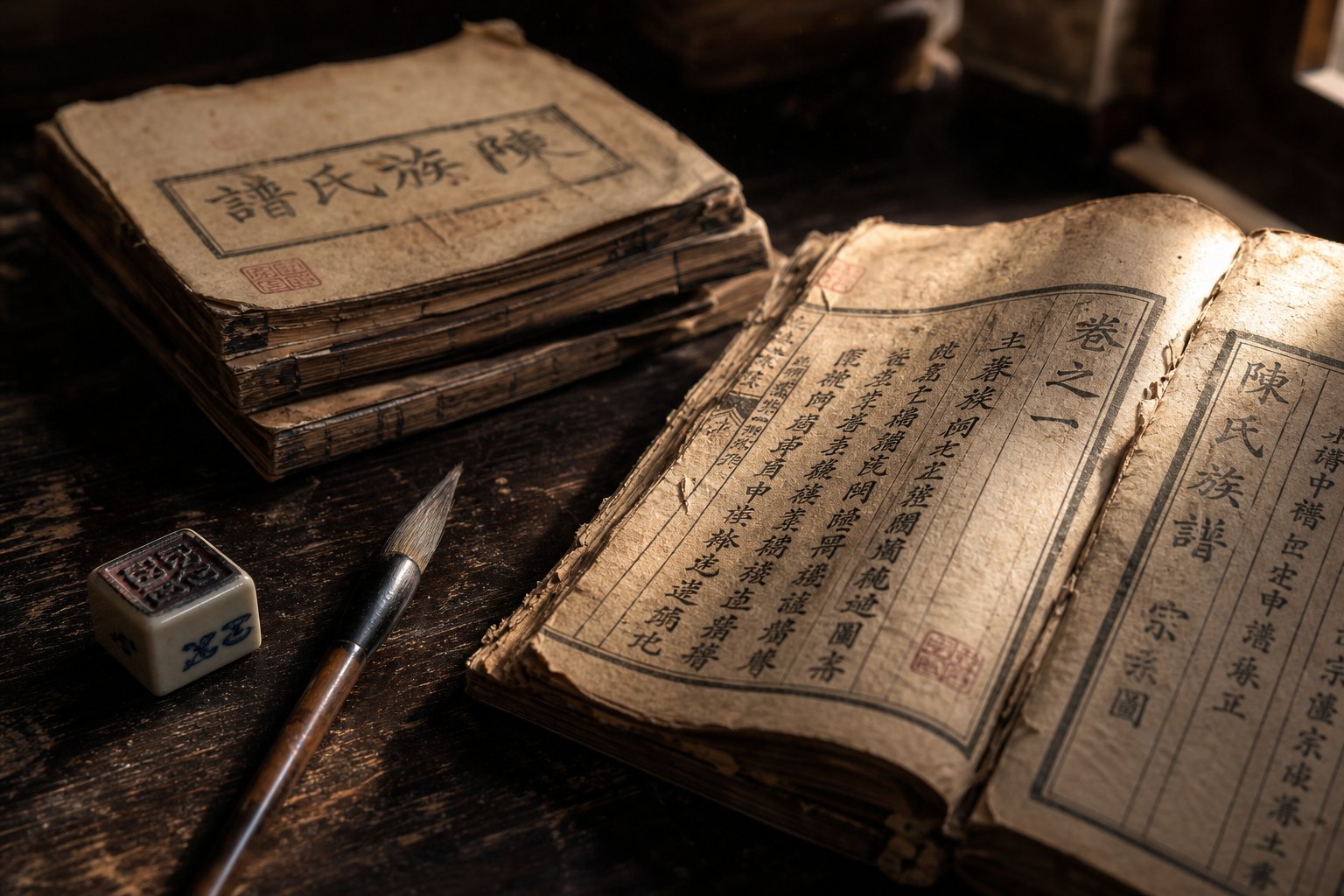
What records, exactly, do these organizations hold? For anyone wondering how to trace Chinese ancestry through clan associations, the answer is surprisingly rich. Many associations have maintained genealogical documentation for over a century, preserving lineage information that predates modern civil registries by generations. These aren't vague oral traditions. They are structured written records that can trace a family line back to a specific village, a specific ancestor, and sometimes a specific year of emigration.
Using Clan Associations to Trace Your Family Roots
The most valuable resource held by clan associations is the jiapu (family genealogy book). A jiapu is a traditional book that records family lineages, preserving a clan's bloodline heritage often tracing back hundreds of years of history. These books typically focus on male descendants, starting from a founding ancestor and continuing generation by generation. But they contain far more than names. A typical jiapu includes migration histories, ancestral portraits, cemetery maps, family rules and teachings, generation poems that determined naming conventions, and biographical accounts of significant family members.
Researchers estimate that roughly 60,000 titles of Chinese genealogies exist worldwide, many of them preserved by clan associations in Southeast Asia and North America. Some copies survived precisely because emigrants carried them overseas before political upheavals in China destroyed the originals. As FamilySearch notes, even if someone says your family's jiapu has been lost, copies are often preserved through distant relatives or clan members who emigrated before the 1960s. Complete jiapu can still be found in places like Malaysia, Singapore, or the United States.
Beyond jiapu, Chinese ancestral hall records research can yield additional clues. Ancestral halls maintained by surname-based associations often contain spirit tablets inscribed with names, birth and death dates, and hometown information. District-based associations kept registries of members' home villages, making it possible to pinpoint exactly where in Guangdong or Fujian a family originated. Some associations also preserved immigration documents, membership rolls dating back to the 1800s, and correspondence between overseas members and relatives in China.
Digital Archives and Modern Genealogy Tools
The challenge with Chinese clan association genealogy records has always been access. Many jiapu are handwritten in classical Chinese, stored in private collections, or locked in association offices with no public catalog. That is changing. A growing number of organizations are digitizing their holdings and partnering with heritage platforms to make ancestry research more accessible to descendants who may not read Chinese or live near the physical archives.
The FamilySearch Chinese research portal offers tools specifically designed for this purpose, including a Jiapu Guide that helps users read and understand genealogy books even without Chinese language skills, a Guangdong Village Finder for locating ancestral villages, a Surname Finder, and a Calendar Converter for interpreting lunar dates found in old records. The Shanghai Library maintains one of the world's largest digitized jiapu collections, searchable online.
Some clan associations in Singapore and Malaysia have begun scanning their membership records and genealogical documents into digital databases. Others partner with universities on oral history projects, recording elderly members' recollections of family origins before that knowledge disappears. These efforts bridge the gap between physical archives held in association halls and the global community of descendants searching for their roots from thousands of miles away.
If you are ready to begin, here is a practical process for starting your ancestry research through clan associations:
- Gather what you already know. Talk to parents, grandparents, and elderly relatives. Collect any surnames, dialect group identities, ancestral village names, or immigration stories your family remembers. Even partial information helps.
- Identify your relevant association type. If you know your surname, look for a surname-based association. If you know your dialect group or ancestral district, search for the corresponding huay kuan or district association. Federation directories like SFCCA's member list can help narrow the search.
- Contact the association directly. Reach out by phone, email, or in person. Explain that you are researching your family history and ask whether they maintain genealogical records, jiapu, or membership rolls that might include your ancestors. Be specific about the surname, dialect, and any village names you have.
- Request access to their jiapu or ancestral records. Some associations allow visitors to view records on-site. Others may have digitized copies or can connect you with a clan elder who manages the genealogy. Bring whatever documentation you have, including old photographs, immigration papers, or family letters.
- Cross-reference with online databases. Use platforms like FamilySearch's jiapu image search or the Shanghai Library's digital collection to look for published genealogies matching your surname and ancestral region. Multiple copies of the same jiapu often exist across different repositories.
- Connect with distant relatives. Surname-based associations can introduce you to other members researching the same lineage. These connections sometimes lead to shared jiapu copies, ancestral village contacts, or even living relatives you never knew existed.
You don't need to read classical Chinese or have a complete family tree before you start. Even a single surname and a dialect group can open doors. The records these associations hold were created specifically to ensure that descendants, no matter how far removed in time or distance, could find their way back to the family line.
Of course, knowing that these resources exist is one thing. Actually walking into an association for the first time, understanding who can join, and figuring out what modern membership looks like is another matter entirely.
How to Find and Join a Chinese Clan Association Today
Walking into a clan association for the first time can feel intimidating. You might picture a room full of elderly men speaking rapid-fire dialect, unsure whether you belong. The reality is far more welcoming than that image suggests. Most associations actively seek new members, especially younger ones, and the process of joining is simpler than you might expect.
Who Can Join a Clan Association
Chinese clan association membership requirements vary by organization type, but the core principle is straightforward. Surname-based associations accept anyone carrying the relevant family name, whether you spell it Tan, Chen, Chan, or Chin depending on your dialect background. Dialect-based groups welcome anyone who traces ancestry to the relevant province or speech community, even if you no longer speak the dialect yourself. District-based associations look for ties to a specific ancestral county or prefecture.
What about fees? Most individual associations charge modest annual dues ranging from $10 to $50 for personal membership. Some waive fees for students or young adults under 35. The SFCCA membership operates differently since it is a federation of organizations rather than individuals. Its member associations pay $200 per annum and must be duly registered bodies in Singapore. But for you as an individual, the relevant step is joining a specific clan association directly, not the umbrella federation.
The application process is typically informal. You fill out a form, provide proof of your surname or ancestral connection, and pay the membership fee. Some associations ask for a referral from an existing member, though this requirement has relaxed considerably in recent decades. Many now accept walk-in registrations at their annual general meetings or open house events.
What Modern Meetings and Events Look Like
Wondering what to expect at a clan association meeting? Forget the image of solemn ancestral rites conducted in silence. Modern programming blends tradition with social activity. A typical year might include:
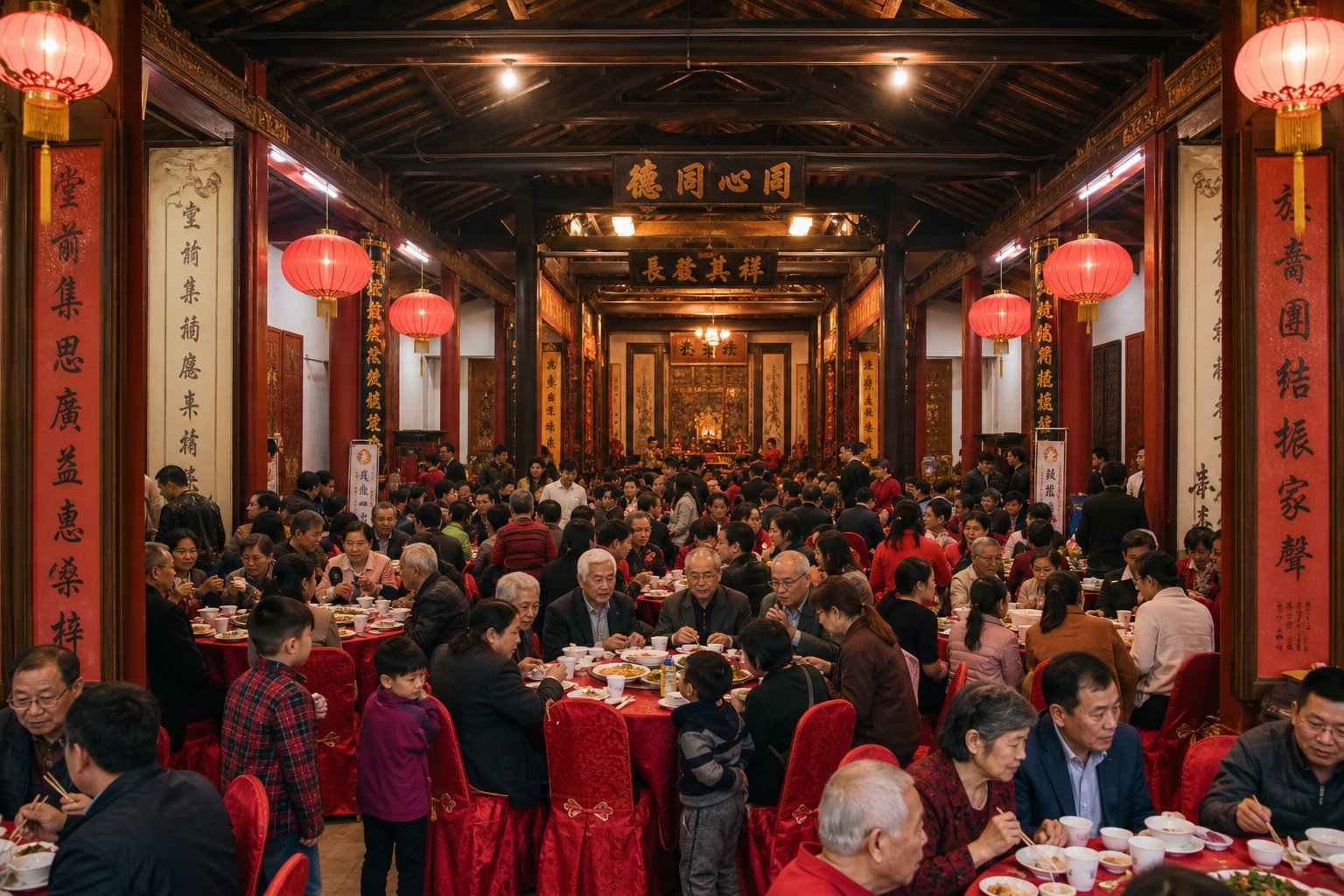
- Annual gala dinner - The biggest event on most associations' calendars, featuring a multi-course banquet, entertainment, and networking. These often draw hundreds of members and their families.
- Cultural workshops - Calligraphy classes, dialect language lessons, traditional music sessions, or cooking demonstrations focused on regional cuisine.
- Festival celebrations - Chinese New Year gatherings, Mid-Autumn Festival events, Qingming ancestral remembrance ceremonies, and Dragon Boat Festival activities.
- Youth programs - Heritage trips to ancestral villages in China, leadership camps, and mentorship pairings between established professionals and younger members.
- Community service - Elderly home visits, charity fundraisers, and volunteer drives organized through the association's welfare committee.
- Venue rentals - Many associations rent their function halls for weddings, birthday banquets, and corporate events at rates well below commercial venues.
The atmosphere at most events is relaxed and multigenerational. You will find retirees chatting over tea alongside young professionals networking after work. Language is rarely a barrier. While older members may converse in dialect, most associations conduct official business in Mandarin or English depending on the country.
How to Find a Clan Association Near You
Ready to find a Chinese clan association near you? Start with these practical steps. In Singapore, the SFCCA Members' Directory lists all affiliated organizations searchable by name, dialect group, or district of origin. The federation also partnered with the National University of Singapore to create the "Map of Origins: Chinese Clans in Singapore" resource, which maps associations geographically and by ancestral connection.
In Malaysia, the Federation of Chinese Associations Malaysia coordinates over 10,000 member groups. Local state-level federations maintain their own directories. In the United States, search for your surname or dialect group combined with "benevolent association" and your city name. San Francisco, New York, Los Angeles, and Houston all have active organizations. Australia's Chinese community associations are typically listed through state multicultural affairs directories or local Chinatown community centers.
If online searches come up empty, try visiting your nearest Chinatown community center or Chinese temple. Staff and volunteers there often know which associations are active locally and can point you in the right direction.
Before your first visit, here are the key things every prospective member should know:
- You don't need to speak a dialect. Most associations welcome English or Mandarin speakers. Language barriers are far less common than newcomers fear.
- Bring whatever family information you have. Your surname, your grandparents' hometown, or even a vague sense of dialect background is enough to start a conversation.
- Expect warmth, not formality. First-time visitors are typically greeted with curiosity and enthusiasm, especially younger ones. Associations want new members.
- Ask about upcoming events. Attending a dinner or festival celebration is the easiest low-pressure way to experience the community before committing to membership.
- There is no obligation. Visiting does not mean joining. Take your time, meet people, and see whether the organization feels like a fit for your interests and goals.
These organizations have survived for over two centuries by adapting to each generation's needs. Whether you are searching for ancestral records, looking for a professional network, or simply curious about the heritage your family left behind, a clan association offers something no app or database can replicate: a living community connected to your roots by name, language, and shared history.
Frequently Asked Questions About Chinese Clan Associations
1. What is the purpose of a Chinese clan association?
Chinese clan associations serve as voluntary mutual aid organizations for overseas Chinese sharing a common surname, dialect, or ancestral district. Their core purposes include providing welfare services like scholarships and funeral assistance, preserving cultural heritage through dialect classes and festival celebrations, facilitating business networking among members, and maintaining genealogical records that connect descendants to their ancestral roots in China. Historically, they filled critical governance gaps by offering financial support, job placement, and community governance when no government services existed for immigrant populations.
2. How do I find out which Chinese clan association I belong to?
Your relevant clan association depends on three factors: your surname, your family's dialect group, and your ancestral district in China. Start by asking elderly relatives about your family name's dialect pronunciation, which province or county your ancestors emigrated from, and whether they spoke Hokkien, Teochew, Cantonese, Hakka, or Hainanese. With this information, search federation directories like SFCCA's member list in Singapore or the Federation of Chinese Associations Malaysia. You can also visit local Chinatown community centers where staff can direct you to active organizations matching your background.
3. What is the difference between a Chinese clan association and a tong?
Clan associations are registered community organizations focused on mutual aid, cultural preservation, and welfare for members sharing a surname, dialect, or ancestral district. Tongs, primarily found in American Chinatowns, had a more complex history. Some were transpacific branches of Triad criminal organizations involved in gambling and protection rackets, while others functioned as legitimate trade guilds or smaller family defense groups. The key distinction is that clan associations operated openly with formal constitutions and elected leadership, whereas tongs often operated with greater secrecy. Today, most surviving tongs have evolved into cultural heritage organizations similar to traditional clan associations.
4. Can I use a Chinese clan association to trace my family genealogy?
Yes, clan associations are among the richest resources for Chinese genealogy research. Many maintain jiapu (family genealogy books) tracing lineages back hundreds of years, ancestral hall registries with spirit tablets recording names and dates, membership rolls from the 1800s onward, and immigration documents. To begin, contact the surname-based or district-based association matching your family background and explain your research goals. Some associations have digitized their records, and platforms like FamilySearch offer specialized tools including a Jiapu Guide, Guangdong Village Finder, and Surname Finder to help descendants access these records remotely.
5. Are Chinese clan associations still relevant today?
Chinese clan associations remain relevant but have transformed significantly. In Malaysia, over 10,000 associations actively provide scholarships, host international conventions, and support community sports programs. In Singapore, the SFCCA coordinates 251 member organizations focused on youth outreach, heritage tourism, and digital archiving. In the United States, former benevolent associations now serve as cultural heritage centers and elderly service providers. Their modern relevance centers on cultural preservation, professional networking, ancestry research, and providing younger generations a tangible connection to their heritage that digital tools alone cannot replicate.