The Zhuge Surname and Its Meaning in Chinese Culture
Imagine carrying a last name that instantly signals genius to over a billion people. That's the reality for the roughly 48,000 individuals worldwide who bear the surname Zhuge. But what does this name actually mean, and why does it command such cultural weight?
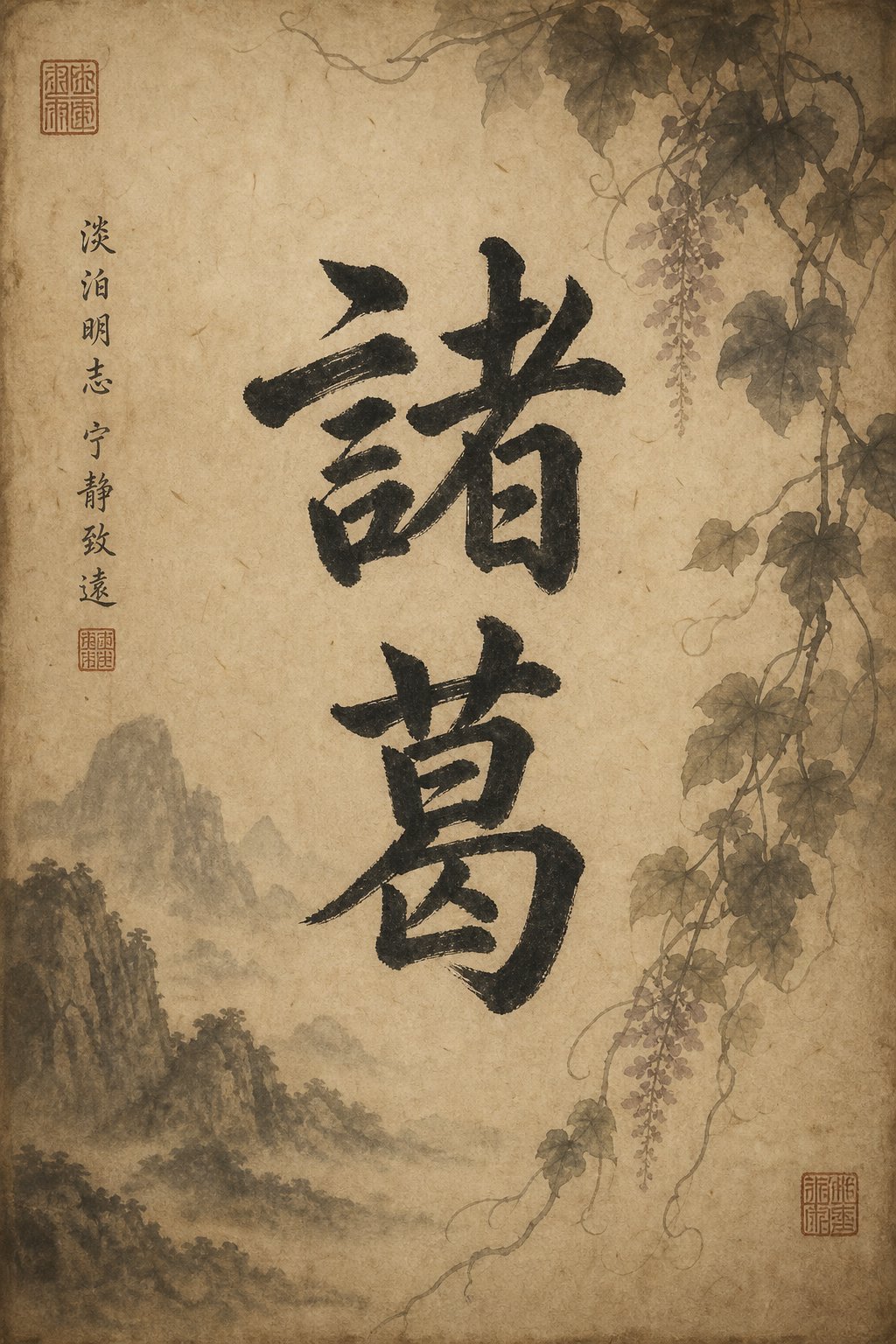
Zhuge (诸葛, pinyin: Zhūgě) is a rare Chinese compound surname (复姓/fùxìng) composed of two characters: 諸 (zhū), meaning "many" or "various," and 葛 (gě), referring to the kudzu vine plant and historically to the ancient Ge clan. Together, the name signifies "the Ge clan from Zhu county" and traces its roots to the Langya Commandery region of present-day Shandong Province.
Unlike the vast majority of Chinese surnames, which consist of a single character, Zhuge belongs to an exclusive category of two-character family names. This distinction alone sets it apart. While surnames like Wang, Li, and Zhang each account for tens of millions of people, compound surnames like Zhuge represent a tiny fraction of the population, carrying historical prestige that single-character names rarely match.
What Does the Zhuge Surname Mean
At its core, the Zhuge surname meaning connects to geography and lineage rather than a poetic or aspirational concept. The name emerged when members of the ancient Ge clan relocated to Zhu county (诸县) in the Langya Commandery. To distinguish themselves from Ge families already living in the area, they adopted the compound form Zhuge, essentially marking themselves as "the Ge people from Zhu." Over centuries, this practical identifier transformed into one of China's most culturally loaded surnames, largely thanks to the legendary strategist Zhuge Liang during the Three Kingdoms period.
Why Zhuge Is One of China's Rarest Names
How rare is it? Data from China's Ministry of Public Security places the Zhuge population at approximately 48,000 people across the country. That makes it the 5th most common compound surname, yet it still represents only a tiny sliver of China's 1.4 billion residents. For context, only about 0.11% of people in China carry any two-character surname at all.
This rarity isn't accidental. Historical events, particularly forced surname changes during the Ming Dynasty, dramatically reduced the Zhuge population. Many families were compelled to shorten their name to simply "Ge," and not all restored the original compound form afterward.
Across broader Asian surname systems, compound names occupy a unique space. While Vietnamese surnames like Nguyen dominate through sheer population numbers (the nguyen last name origin traces to royal dynasties that encouraged adoption of the name), Chinese compound surnames like Zhuge work in the opposite direction. Their scarcity amplifies their cultural significance. Similarly, understanding the ching meaning in various Chinese naming contexts reveals how individual characters carry layered historical associations that shift across dialects and eras.
The story of how two simple characters merged into a surname synonymous with brilliance involves ancient clan migrations, political upheaval, and one of history's most celebrated military minds. Each character in the name carries its own etymology worth exploring.
Character-by-Character Etymology of Zhuge
Every char in Chinese carries a story, and compound surnames pack two stories into a single family name. To truly grasp the Zhuge surname meaning, you need to pull the name apart and examine each character on its own terms. What you'll find is that neither character was originally a surname component at all. They each lived independent lives in the Chinese lexicon for centuries before merging into the name we recognize today.
Breaking Down the Characters 諸 and 葛
Let's start with the first character. 諸 (zhū) is built from the speech radical 言 (yán) on the left and the phonetic component 者 (zhě) on the right. In classical Chinese, this character functions as a versatile word meaning "many," "various," or "all." You'll encounter it constantly in literary texts, where it often serves as a pronoun combining 之 (zhī) and 於 (yú). But in the context of the Zhuge surname, 諸 doesn't carry its dictionary meaning. Instead, it references 诸县 (Zhu County), a specific administrative district in ancient Langya Commandery. Think of it as a geographic marker rather than a descriptor.
The second character, 葛 (gě), sits under the grass radical 艹, signaling its botanical roots. Its primary meaning refers to the kudzu vine (Pueraria lobata), a climbing plant used in traditional Chinese medicine and textile production. However, 葛 also functioned as an independent surname long before the compound form existed. The ancient Ge clan traced its lineage back to the legendary ruler Ge Tian Shi (葛天氏), making it one of China's oldest family names. When researchers explore the ren meaning or xi meaning of various Chinese characters, they encounter this same layered quality: a single character simultaneously holding botanical, clan-based, and geographic significance.
| Character | Pinyin | Individual Meaning | Radical | Historical Usage in Surname |
|---|---|---|---|---|
| 諸 (诸) | zhū | Many, various, all | 言 (speech) | References Zhu County (诸县) in Langya Commandery |
| 葛 | gě | Kudzu vine; the Ge clan | 艹 (grass/plant) | Independent surname from Ge Tian Shi lineage |
| 诸葛 (combined) | Zhūgě | "The Ge clan from Zhu county" | — | Compound surname formed during the Qin-Han transition |
How Two Characters Became One Surname
Sounds straightforward? The merger is more nuanced than simple concatenation. When members of the Ge clan migrated to Zhu County, they needed a way to distinguish themselves from local Ge families already established in the region. The solution was elegant: prefix the place name onto the clan name. This pattern appears across Chinese surname formation. Much like how the zou meaning chinese name connects a family to the ancient state of Zou, or how zhen as a character element appears in names tied to specific territories, the Zhuge compound anchored identity to both lineage and location simultaneously.
Linguistically, the combination created something greater than the sum of its parts. The surname stopped meaning "many kudzu vines" or "various Ge people" in any literal sense. It became a proper noun, a fixed unit where the individual character meanings faded into the background. This is a common phenomenon in Chinese naming. When you look up chi chinesisch or other character-based terms across languages, you'll notice that compound formations often shed their component definitions entirely, functioning instead as indivisible identity markers.
The tonal pronunciation also settled into a fixed pattern: Zhūgě, with a level first tone followed by a falling-rising third tone. Unlike some compound surnames where regional dialects produce wildly different readings, Zhuge maintained relatively consistent pronunciation across Mandarin-speaking regions. In Cantonese, the reading shifts to Zyu1 Got3, and in Min dialects, further variations emerge, but the written form remained stable across centuries of use.
This stability matters because it preserved the surname's recognizability even as the Chinese language evolved. The characters themselves transitioned from traditional (諸葛) to simplified (诸葛) forms during the 20th century writing reforms, yet the name's cultural resonance stayed intact. That resonance, however, owes less to etymology and more to a specific historical figure who transformed a geographic label into a symbol of unmatched intellect.
Understanding Chinese Compound Surnames and Their Prestige
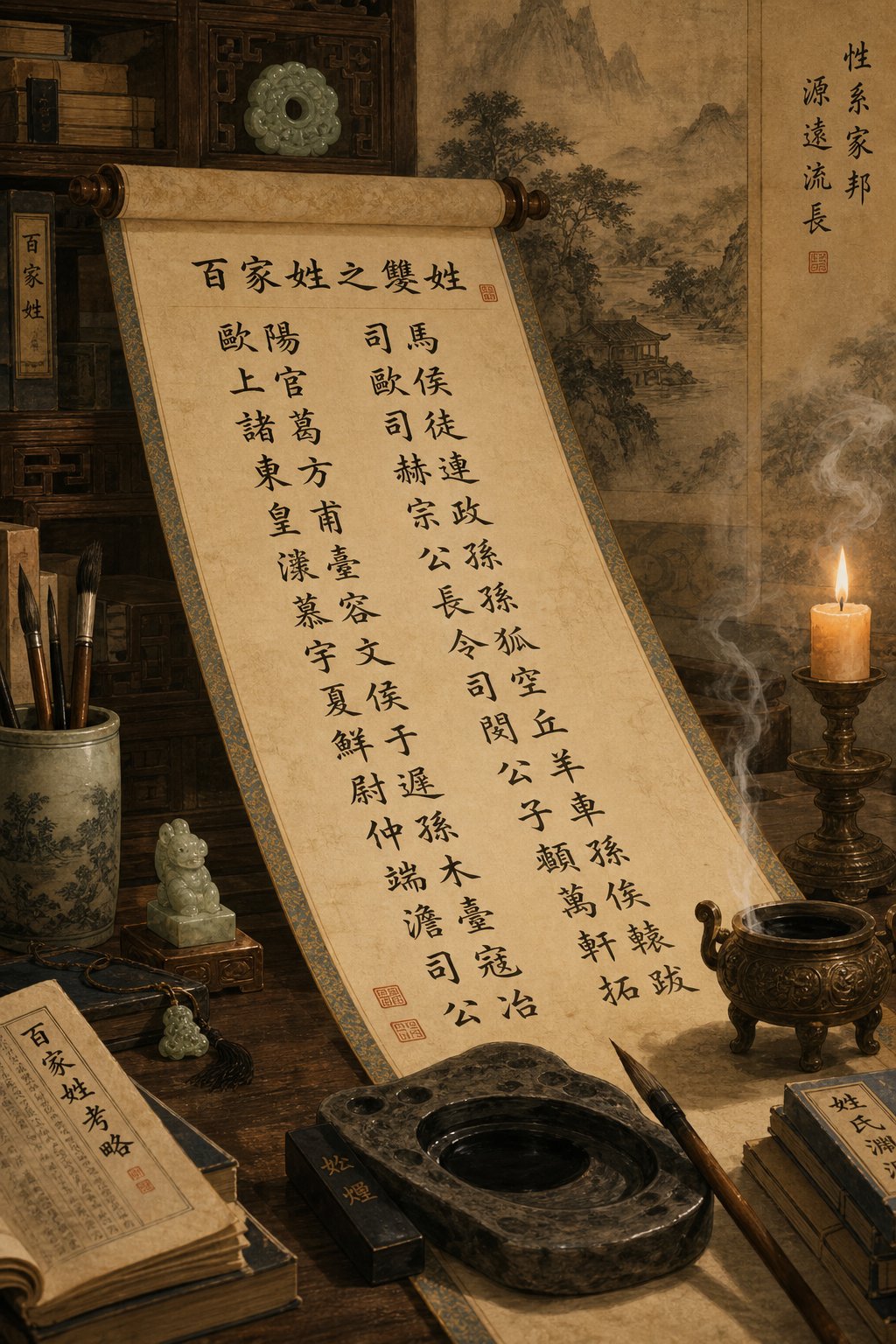
A surname built from two characters rather than one might seem like a small difference on paper. In practice, it signals something entirely distinct about a family's historical position. Compound surnames, known as 复姓 (fùxìng), occupy a rarefied space in Chinese naming culture, and Zhuge sits squarely within this elite category.
What Makes Compound Surnames Special in Chinese Culture
Here's a useful way to think about it: over 85% of China's population shares just 100 single-character surnames. Compound surnames, by contrast, number fewer than 100 in total and collectively account for only a few million bearers. Ancient China once had over 1,000 compound surnames, but centuries of simplification, intermarriage, and political pressure whittled that number down dramatically.
Why did so many disappear? The reasons vary. Some families shortened their names for convenience. Others lost the compound form when only female offspring survived in a generation, since Chinese tradition historically passed surnames through the father's line. The result is that surviving compound surnames carry an almost antique quality, a sense of unbroken lineage stretching back to ancient states, noble titles, or specific geographic territories.
Their origins fall into several broad categories:
- Official titles: Sima (司马) derives from the ancient military office of "Master of Horses," a high-ranking position in Zhou Dynasty courts.
- Geographic regions: Ouyang (欧阳) references the southern side (阳/yáng) of Mount Ou, tying the family to a specific landscape feature.
- Ancient states and clans: Yuwen (宇文) originated from the Xianbei tribal confederation, where it functioned as a royal clan name before becoming a Han Chinese surname.
- Merged identities: Zhuge (诸葛) combined a place name with a clan name when the Ge family relocated to Zhu County.
- Ethnic adaptations: Huangfu (皇甫) and Linghu (令狐) trace back to noble lineages that adopted Chinese-style compound forms from non-Han naming traditions.
This diversity of origins gives compound surnames a romantic, almost literary quality. Wuxia novelists like Jin Yong leaned heavily on this association, naming iconic characters Linghu Chong, Ouyang Feng, and Dongfang Bubai precisely because two-character surnames evoke an air of ancient prestige.
Zhuge Among Other Famous Two-Character Surnames
Where does Zhuge rank among its compound peers? According to China's 2020 National Name Report, Ouyang leads with over 1.1 million bearers. Shangguan follows at around 88,000, then Huangfu, Linghu, Zhuge, Situ, and Sima in descending order. So Zhuge holds roughly the 5th position among active compound surnames, a notable standing given how few people carry it.
The prestige factor isn't purely about numbers, though. Compound surnames are romanticized partly because their most famous bearers tend to be historical heavyweights. Sima Qian wrote China's foundational historical text. Ouyang Xiu shaped Song Dynasty literature and politics. The soong soong chinese family name, while not a traditional compound surname, similarly illustrates how certain names accumulate outsized cultural gravity through prominent bearers. And the character yong, meaning "eternal" or "brave," appears across many naming traditions in East Asia as a marker of aspiration, though it functions differently from the geographic and clan-based logic behind compound surnames.
This pattern extends beyond China's borders. Across East and Southeast Asia, surname systems reflect similar dynamics of prestige and rarity. Thai surnames, for instance, operate on an entirely different principle. Thai last names are often long, multi-syllabic, and unique to individual families because Thai law historically required each surname to be distinct. The result is the opposite of China's concentration: millions of unique Thai surnames versus China's relatively small pool. Yet in both systems, certain names carry immediate cultural recognition and social weight.
What separates Zhuge from most other compound surnames, however, isn't its structure or its ranking. It's the specific historical circumstances that created it, a story involving clan migrations, contested territories, and at least three competing origin theories that scholars have debated for centuries.
Three Origin Stories Behind the Zhuge Name
Chinese historical texts don't agree on a single origin for the Zhuge surname. Instead, three distinct theories appear across classical sources like the Tongzhi (通志), the Fengsu Tong (风俗通), and the Records of the Three Kingdoms. Each theory points to a different dynasty and a different mechanism of surname formation, yet all three converge on one geographic anchor: Langya Commandery (琅琊郡), the ancestral homeland in present-day Shandong Province.
Here are the three theories in chronological order:
- The Zhan Ge phonetic corruption (Spring and Autumn period, ~770–476 BC): Descendants of the ancient Youxiong clan in the state of Qi carried the compound surname Zhan Ge (詹葛). Over time, the Qi dialect blurred the pronunciation of "Zhan" into "Zhu," and the surname gradually became Zhuge.
- The Ge clan relocation to Zhu County (Shang–Zhou transition, ~1000 BC onward): After the fall of the ancient State of Ge, descendants of Ge Bo migrated to Zhucheng in Shandong. A branch later moved to Yangdu County. Since Ge families already lived there, the newcomers identified themselves as "the Ge from Zhu" — Zhuge — to avoid confusion.
- The Ge Ying enfeoffment (late Qin to early Western Han, ~209–180 BC): General Ge Ying served under Chen Sheng during the anti-Qin uprising but was unjustly executed. Emperor Wen of the Western Han later honored Ge Ying's loyalty by enfeoffing his grandson as the Marquis of Zhuxian. The descendants merged the fief name "Zhu" with their ancestral Zhu surname root "Ge" to form Zhuge.
The Ge Clan Relocation to Zhuye County
This theory carries the most weight among genealogical scholars. The story begins with Ge Bo, a descendant of the legendary Bo Yi, who held a fiefdom during the Shang Dynasty. After the state's collapse, the Ge clan scattered. One branch settled in Zhuxian County within Langya Commandery. Several generations later, a segment of this Zhucheng Ge clan pushed further to Yangdu County (present-day Yinan, Shandong).
The problem? Yangdu already had established Ge families. Imagine arriving in a new town where dozens of unrelated families share your exact surname. The solution was practical: the newcomers prefixed their place of origin onto their clan name. "Zhuge" literally meant "the Ge people from Zhu." This pattern of geographic differentiation appears across Chinese surname history. Much like how the zhu surname itself branched into multiple lineages distinguished by ancestral territory, the Zhuge compound anchored identity to a specific migration path.
The Zhugeshan Place-Name Theory
The second theory ties the surname directly to the land itself. Zhucheng (诸城), the geographic feature central to this account, sat within the broader Langya region. The character 诸 in this context doesn't mean "many" — it functions as a proper place name. In classical Chinese texts, lang in chinese (琅) appears frequently as part of Langya's name, a commandery that stretched across what is now southeastern Shandong. The terrain of this region, its hills and river systems, shaped settlement patterns for centuries.
When Ge Ying's grandson received the title Marquis of Zhuxian from Emperor Wen of Han, the place name became permanently fused with the family's identity. The Fengsu Tong records that this imperial bestowal formalized what had been an informal geographic label into an official surname. The descendants didn't just live in Zhu — they became Zhu-Ge, carrying the landscape in their name.
When the Zhu and Ge Families Merged
The third theory offers the most dramatic backstory. During the chaotic final years of the Qin Dynasty, Ge Ying rose as a military commander in Chen Sheng and Wu Guang's peasant rebellion. He achieved significant victories but met a tragic end when Chen Sheng, swayed by slander, had him executed. The injustice wasn't forgotten. Decades later, Emperor Wen of the Western Han recognized Ge Ying's contributions and posthumously enfeoffed his grandson as the Marquis of Zhuxian.
This act of imperial recognition effectively merged two identity markers: the "Zhu" from the granted fief and the "Ge" from the ancestral bloodline. The family adopted Zhuge as a compound surname to honor both their clan heritage and their imperially bestowed territory. Notably, this theory makes Zhuge Liang himself a direct descendant of Ge Ying, connecting the surname's most famous bearer to a lineage of military valor stretching back centuries before his birth.
Regardless of which theory holds the strongest historical evidence, all three share a common thread. The Zhuge name emerged not from poetic invention but from real-world pressures: distinguishing one's family in a crowded landscape, honoring imperial grants, or preserving identity through phonetic evolution. This grounding in practical necessity, rather than mythology, gives the surname a documentary quality rare among Chinese family names. Similar dynamics shaped surname formation across East Asia. The nguyen name history in Vietnam, for instance, reflects comparable patterns of political power reshaping family identity, with entire populations adopting or changing surnames based on dynastic shifts.
Each of these origin paths led back to the same ancestral seat in Langya. And it was from Langya that the surname's most transformative figure would eventually emerge, turning a regional clan identifier into a name synonymous with superhuman intellect.
Zhuge Liang and the Cultural Weight of the Name
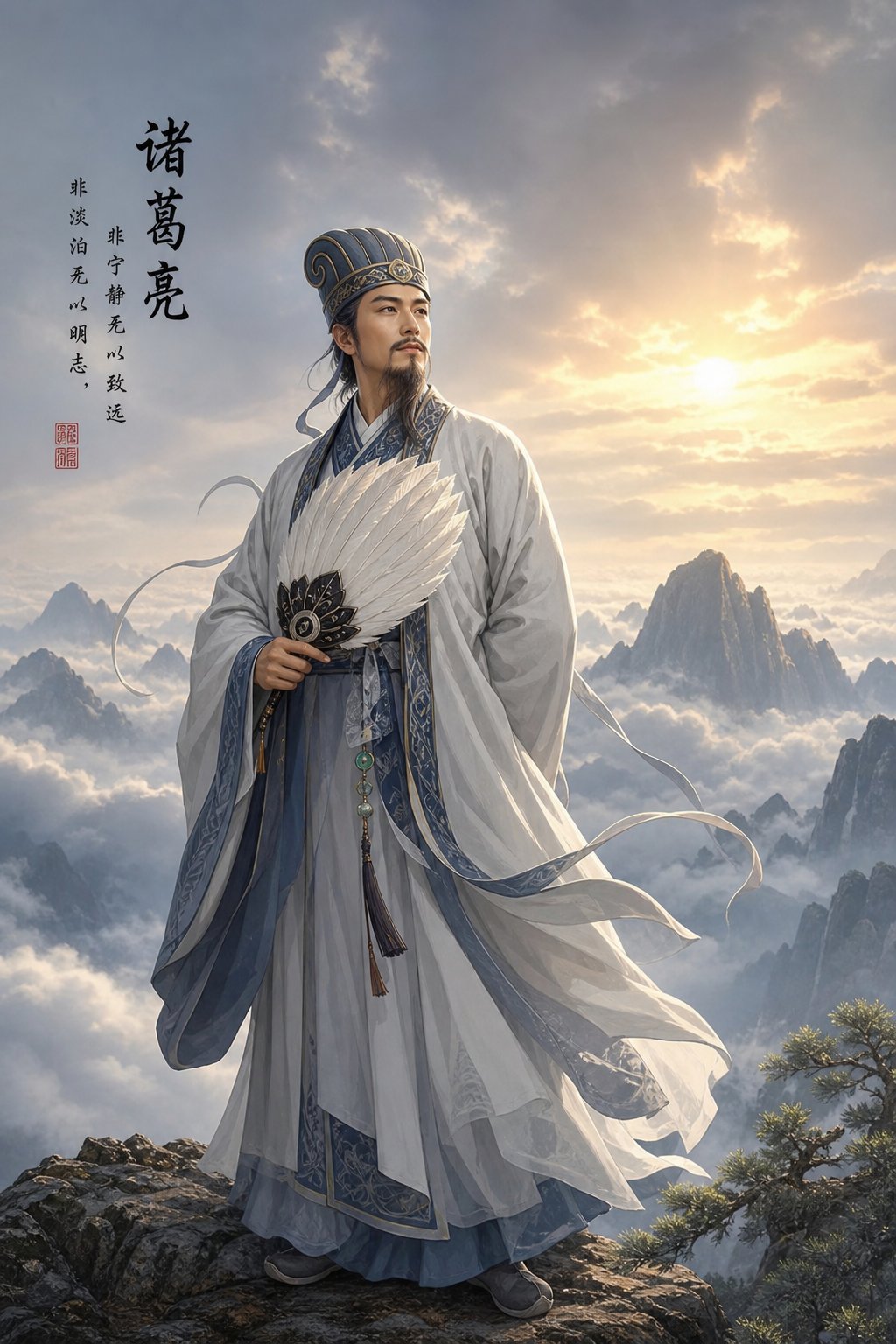
A surname can carry geographic meaning, clan history, or phonetic evolution for centuries without anyone outside the family paying much attention. Then one person changes everything. For the Zhuge name, that person was Zhuge Liang (诸葛亮, 181-234 AD), the prime minister of Shu Han during the Three Kingdoms period. His reputation for wisdom, loyalty, and strategic brilliance didn't just make him famous. It permanently rewired what the surname itself communicates to anyone who hears it.
How Zhuge Liang Defined a Surname's Legacy
Ask a Chinese person who the most intelligent figure in their history is, and the answer is likely Zhuge Liang. His achievements as a statesman, military strategist, and scholar made the name Zhuge synonymous with genius in Chinese culture. As China Daily notes, when people praise someone for being smart, they often simply say, "that's our Zhuge." The surname stopped being a geographic label and became a shorthand for intellectual brilliance.
Much of this cultural elevation traces to the Romance of the Three Kingdoms (三国演义), one of China's four great classical novels, written by Luo Guanzhong during the Ming Dynasty. The novel amplified Zhuge Liang's historical accomplishments into near-mythical feats: summoning favorable winds in battle, devising the Empty Fort Strategy, and outwitting every rival commander he faced. The character's hao, or literary name, was Wolong (卧龙), meaning "Crouching Dragon," a title suggesting immense power held in reserve. His courtesy name's zhi (智) associations with wisdom became inseparable from the surname itself.
三个臭皮匠,顶个诸葛亮 — "Three cobblers are equal to one Zhuge Liang." This proverb, equivalent to "two heads are better than one," uses Zhuge Liang as the ultimate benchmark of intelligence against which ordinary people must combine their efforts.
That single proverb reveals something remarkable: the surname functions as a unit of measurement for human intellect. No other Chinese family name operates this way. You'll also hear "事后诸葛亮" (Zhuge Liang after the fact), the Chinese equivalent of a Monday-morning quarterback, and "既生瑜,何生亮" (Since Zhou Yu was born, why did Zhuge Liang have to be born too?), a lament about facing an unbeatable rival. Each idiom reinforces the same cultural equation: Zhuge equals unsurpassable brilliance.
The Surname as a Symbol of Wisdom and Strategy
This cultural weight extends far beyond classical literature. In modern media, Zhuge Liang remains one of the most portrayed historical figures across East Asia. The Dynasty Warriors video game franchise, developed by Koei Tecmo, has featured Dynasty Warriors Zhuge Liang as a central character across dozens of installments since 1997, introducing the strategist to global gaming audiences. Television adaptations of the Three Kingdoms story air regularly across China, Japan, and Korea. Mobile strategy games routinely use Zhuge Liang as their highest-tier character, reinforcing the name's association with tactical mastery for younger generations.
For the roughly 16,000 people in China who carry the Zhuge surname today, this cultural baggage is inescapable. The name creates implicit expectations. Classmates joke about it. Teachers notice it. Job interviewers remember it. Bearing a surname that an entire civilization uses as shorthand for genius creates a peculiar social pressure, one that no amount of etymology or geographic origin can fully explain. The name's meaning, in lived experience, has less to do with kudzu vines and Zhu County than with the impossible standard set by one man nearly two millennia ago.
This transformation from clan identifier to cultural symbol also affected the surname's historical trajectory in ways that census data can track. Its ranking in China's classical surname registry, and the political forces that later threatened its survival, tell a story of prestige meeting power.
Historical Ranking and the Ming Dynasty Impact
The Hundred Family Surnames (百家姓), compiled during the early Song Dynasty around 960 AD, remains China's most recognized catalogue of family names. Its ordering wasn't alphabetical or population-based. It reflected political prestige at the time of writing. So when you find Zhuge listed at position 414 overall and 6th among compound surnames, that placement tells a story about influence rather than headcount.
Zhuge in the Hundred Family Surnames Ranking
Here's what makes this interesting: a surname could rank highly in the Hundred Family Surnames while representing a tiny fraction of the actual population. The text's compiler, a scholar in the Kingdom of Wuyue, placed the royal Zhao surname first as a political gesture, not because it was the most common. Compound surnames received their own section, and Zhuge's 6th-place standing among them signals that the clan held notable social standing during the Song era. Compare that to surnames like Cheng (程) or Chung (钟), which ranked lower in the original text despite having far larger populations.
| Compound Surname | Hundred Family Surnames Rank (Among Compound) | Estimated Modern Population | Historical Significance |
|---|---|---|---|
| Ouyang (欧阳) | 1st | ~1,100,000 | Song Dynasty literary prominence |
| Shangguan (上官) | 3rd | ~88,000 | Tang Dynasty court officials |
| Sima (司马) | 2nd | ~30,000 | Zhou Dynasty military office; Sima Qian |
| Zhuge (诸葛) | 6th | ~28,000 | Three Kingdoms era political legacy |
| Huangfu (皇甫) | 8th | ~50,000 | Western Zhou noble lineage |
Notice the disconnect between ranking and population. Sima holds a higher position than Zhuge in the text, yet both hover around similar population numbers today. Meanwhile, Ouyang dwarfs them all in actual bearers. The ranking preserved a snapshot of Song Dynasty social hierarchies, not demographic reality. For genealogical researchers tracing names like Chau (周) or yeh (葉) through historical records, understanding this distinction prevents misreading the text as a population census.
The Ming Dynasty Surname Suppression
The most devastating blow to the Zhuge population came not from war or famine but from imperial decree. When Zhu Yuanzhang founded the Ming Dynasty in 1368, he launched a campaign to simplify Chinese surnames. His reasoning was partly cultural nationalism: he classified many compound surnames as "Hu surnames" (胡姓), associating them with Mongol influence from the preceding Yuan Dynasty. The name Ming itself carried political weight, and Zhu Yuanzhang wielded naming conventions as tools of state control.
For Zhuge families specifically, the order was blunt: drop the first character and revert to the single-character surname Ge. This wasn't optional. Imperial edicts during this period carried the force of law, and non-compliance risked severe punishment. Entire lineages that had carried the Zhuge compound for over a millennium were compressed back into the common Ge surname overnight.
The damage proved lasting. While some families restored the Zhuge name after the Ming Dynasty fell in 1644, many never did. Generations had passed. Family records were lost or rewritten. The seet of a family's identity, once severed from its compound form, wasn't easily reclaimed. Researchers studying Zhuge genealogy today frequently encounter this gap: a lineage that appears as "Ge" for several Ming-era generations before reverting to "Zhuge" in the Qing Dynasty, or one that never reverted at all.
This historical disruption explains why modern Zhuge population estimates hover around just 28,000 people. Without the Ming suppression, the number would almost certainly be significantly higher. For anyone researching Zhuge ancestry, the Ming period represents both the biggest obstacle and the most important puzzle to solve: tracing which Ge families were originally Zhuge, and which were always simply Ge.
Geographic Distribution and Global Migration
A surname born in one corner of Shandong Province now appears in at least 25 countries across five continents. That journey from a single ancestral commandery to a global footprint mirrors the broader story of Chinese migration itself.
From Langya Commandery to the Modern World
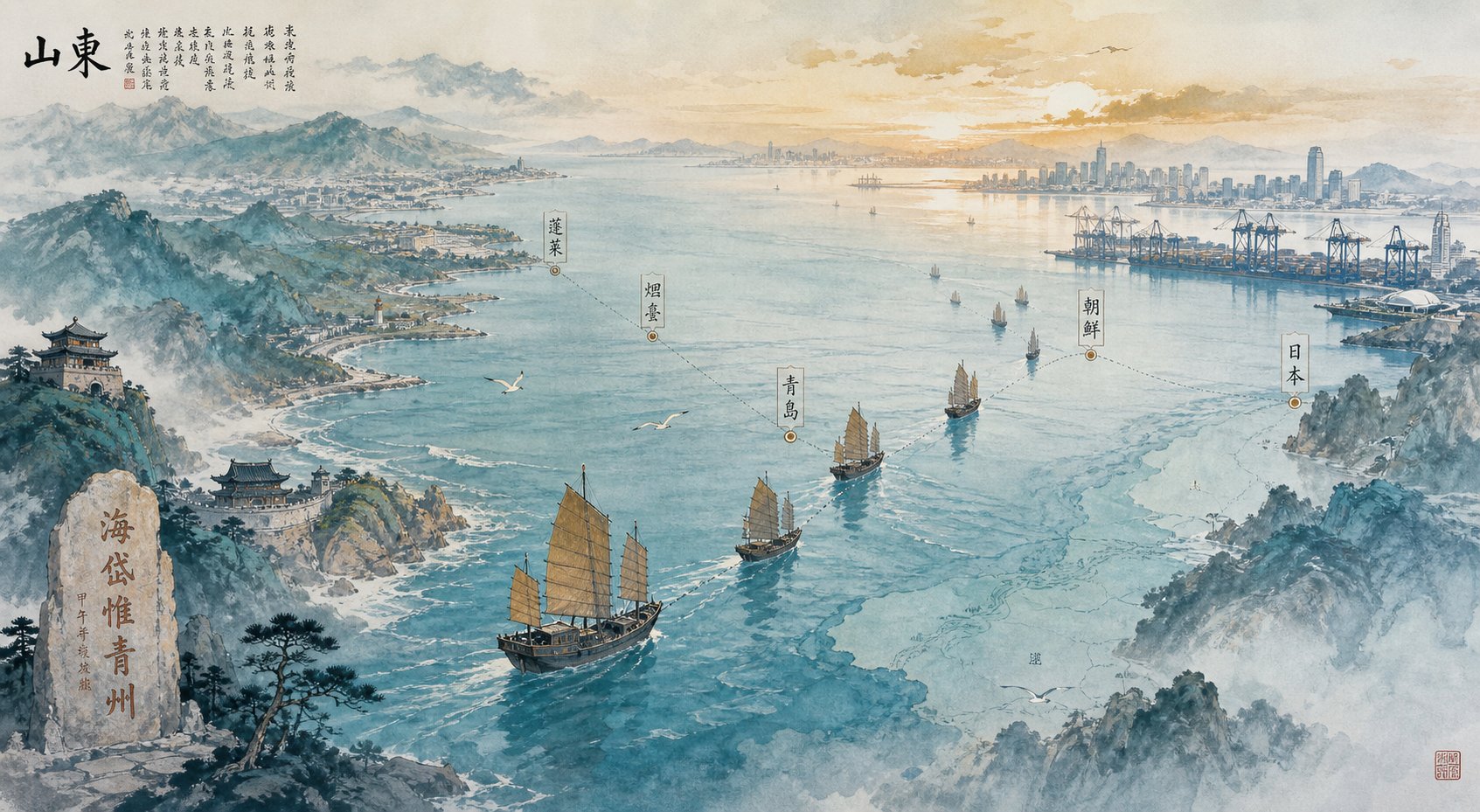
The Zhuge clan's geographic story begins in Langya Commandery (琅琊郡), established during the Qin Dynasty across what is now Zhucheng, Linyi, and Jiaonan in Shandong Province. For centuries, this remained the surname's center of gravity. Core settlement areas then expanded southward, particularly into Zhejiang Province, where China's Ministry of Public Security identified the highest modern concentration of Zhuge families. Zhuge Village in Lanxi, Zhejiang, one of the largest settlements of Zhuge Liang's descendants, still preserves ancestor worship customs recognized as National Intangible Cultural Heritage.
Beyond Zhejiang and Shandong, secondary clusters developed in Jiangsu (particularly Jintan and Suzhou), Hebei (Baoding), Hubei (Wuhan), Hunan (Changsha), and as far northwest as Gansu and Ningxia. These patterns reflect centuries of internal migration driven by war, imperial appointments, and economic opportunity.
Where Zhuge Families Live Today
Global surname data from Forebears reveals just how far the name has traveled:
| Country/Region | Incidence | Frequency | Rank in Area |
|---|---|---|---|
| China | 977 | 1 in 1,399,510 | 324 |
| United States | 78 | 1 in 4,646,909 | 242,363 |
| Taiwan | 73 | 1 in 321,161 | 2,578 |
| Hong Kong | 70 | 1 in 104,793 | 1,905 |
| Thailand | 47 | 1 in 1,502,944 | 203,155 |
| Singapore | 30 | 1 in 183,590 | 7,666 |
| Canada | 21 | 1 in 1,754,552 | 114,935 |
| Australia | 14 | 1 in 1,928,264 | 88,951 |
A few patterns stand out. Hong Kong shows the highest density relative to population, likely reflecting Cantonese migration routes from Guangdong. Thailand and Singapore represent the Southeast Asian diaspora corridor, where Chinese families settled alongside communities bearing Vietnamese surnames like Huynh, Hoang, Luu, and other names common among Cong Vietnamese populations. These Southeast Asian Chinese communities, whether in phú-rich trading cities or nhu-influenced cultural zones, maintained surname traditions even as they adapted to local languages and customs.
North America accounts for roughly 100 bearers combined between the United States and Canada, most arriving through post-1965 immigration waves tied to education and professional employment. The Forebears data also records scattered individuals in Brazil, India, England, Switzerland, France, Germany, Japan, Sweden, and Norway, painting a picture of a surname that, while vanishingly rare, has touched nearly every major region of the globe.
What makes the Zhuge diaspora distinctive isn't its size but its traceability. With only around 1,344 bearers worldwide according to global databases, every branch can theoretically be connected back to a limited number of lineage paths. That extreme rarity, paradoxically, makes genealogical research both more challenging and more rewarding for those attempting to reconstruct their family's journey from Langya to wherever they call home today.
Researching Your Zhuge Ancestry and Family Roots
Tracing a surname that spans fewer than 1,400 documented bearers worldwide sounds daunting. But that same rarity works in your favor. With so few lineage branches to untangle, connecting your family to a specific ancestral path becomes far more feasible than it would for someone researching a surname shared by millions.
Using Zupu Family Tree Books for Zhuge Research
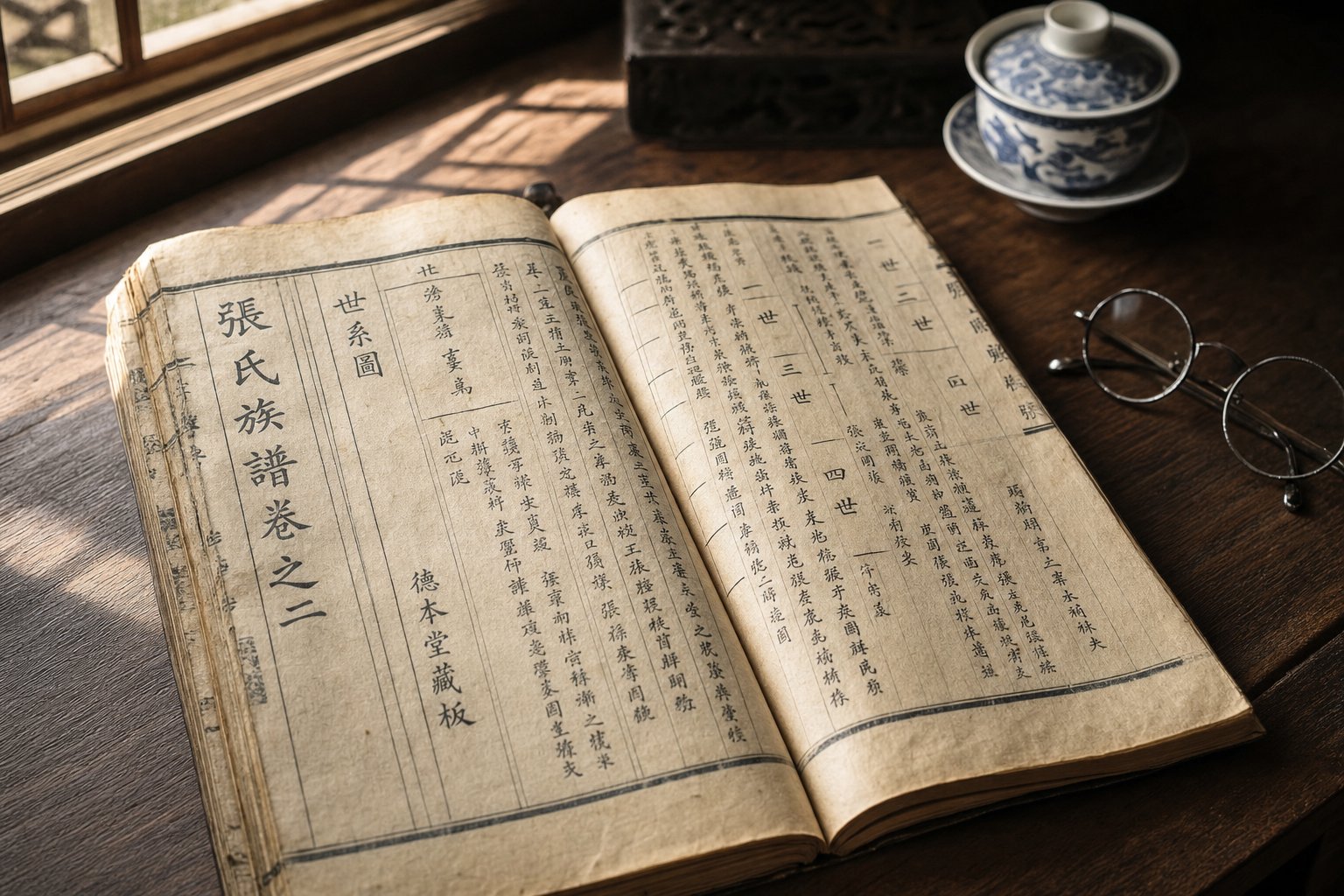
The cornerstone of Chinese genealogical research is the Zupu (族谱), also called Jiapu (家谱). These are multi-generational family record books maintained by clans, sometimes spanning over a thousand years of documented lineage from father to son. A Zupu typically includes birth and death dates, marriage records, migration notes, generation poems (排行诗), and biographical entries for notable ancestors. For Zhuge families, surviving Zupu records often trace back to the Langya Commandery origin, with branches documented through their southward migrations into Zhejiang and Jiangsu.
Think of a Zupu as a private census maintained by the family itself. Unlike government records that suffered destruction during dynastic transitions, many Zupu survived because families kept multiple copies distributed among different branches. FamilySearch hosts digitized jiapu collections searchable by surname, ancestral village, and province. Their Chinese Jiapu Search tool lets you input your family's hometown details and generation names to locate matching records online for free.
To begin a productive search, you'll want to gather several key pieces of information:
- Your surname in Chinese characters: 诸葛 (traditional: 諸葛). This is essential for searching Chinese-language databases.
- Ancestral hometown: Narrow it to province, city, county, and ideally village. For Zhuge families, Zhejiang (especially Lanxi) and Shandong are the most common starting points.
- Generation poem (字辈/排行): A poem where each character corresponds to one generation's given name. Zhuge clans used these to maintain generational order across scattered branches.
- Ancestral hall name (堂号): The name of the temple or hall where clan ancestors were honored. Zhuge families historically used halls tied to the Langya lineage.
- Known honored ancestors: Any famous or respected figures in your family's oral history, even if details are vague.
Overcoming Gaps in Zhuge Genealogical Records
The Ming Dynasty surname suppression creates the single biggest obstacle for Zhuge researchers. When Emperor Zhu Yuanzhang forced compound surnames to simplify, many Zhuge families became "Ge" in official records. Several generations passed under this shortened form before some reverted after the Ming fell in 1644. Others never changed back.
What does this mean practically? If your family carries the surname Ge and has roots in Shandong or Zhejiang, there's a real possibility your ancestors were originally Zhuge. Look for these clues in family records:
- A Ge-surnamed lineage that suddenly appears in Ming Dynasty records with no prior local history
- Ancestral hall names or generation poems that reference Langya Commandery or Zhuge Liang's lineage
- Oral traditions mentioning a "longer" or "original" form of the surname
- Geographic clustering near known Zhuge settlements like Zhuge Village in Lanxi, Zhejiang
The rarity factor actually helps here. Unlike researching a surname like Nguyen, where the nguyen name origin connects to royal dynasties that encouraged mass adoption (making the origin of nguyen last name shared by roughly 40% of Vietnam's population), Zhuge research benefits from a small, well-documented pool. Every confirmed Zhuge lineage narrows the possibilities for unconnected branches. If you can identify which of the three origin theories your branch follows, you've already eliminated two-thirds of potential ancestral paths.
Several practical resources can accelerate your research:
- FamilySearch Jiapu Search: Free digitized Chinese family records searchable by surname and location
- Shanghai Library Genealogy Collection: Houses over 30,000 jiapu volumes, the largest collection in China
- Zhuge Village (诸葛八卦村) archives in Lanxi, Zhejiang: Maintained by descendants of Zhuge Liang with records spanning 700+ years
- Local county gazetteers (县志): Government-compiled records that often list prominent local surnames and their origins
- DNA testing services: Companies like 23Mojo (Chinese market) or 23andMe can identify genetic connections to other Zhuge-surnamed individuals globally
For diaspora researchers, the challenge multiplies. Romanization differences mean the same family might appear as Zhuge, Chu-ko, Chuko, or Zhu Ge across different immigration records. Searching under all variant spellings is essential. The nguyen origin research community faced identical challenges with French colonial-era romanization creating multiple spellings for the same Vietnamese surname, and their solutions, cross-referencing immigration ports, ship manifests, and community association records, apply equally well to Zhuge diaspora research.
Whether your connection to the name is confirmed or suspected, the genealogical trail leads back to the same fundamental question: what does it mean to carry this surname in the modern world, where its historical weight follows you across continents and cultures?
What It Means to Carry the Zhuge Name Today
Genealogical records can tell you where the name came from. They can't tell you what it feels like to introduce yourself with a surname that an entire civilization equates with genius. For the small global community of Zhuge bearers, the name is both a gift and a weight, an instant conversation starter that comes loaded with centuries of expectation.
Living With a Surname That Means Genius
In Chinese-speaking communities, saying your surname is Zhuge triggers immediate recognition. Classmates quote the Three Kingdoms. Colleagues joke about whether you've inherited the strategic mind. Older relatives remind you of the legacy you represent. This isn't subtle. The cultural equation of Zhuge equals brilliance is so deeply embedded that bearing the name creates a kind of ambient pressure, not oppressive, but ever-present.
For younger generations, this association cuts both ways. It provides instant memorability in professional settings, a surname no one forgets after hearing it once. But it also invites scrutiny. When your family name is literally used as a unit of measurement for intelligence in Chinese proverbs, every stumble feels slightly more public. Modern bearers navigate this by owning the heritage without being defined by it, treating the name as a source of pride rather than a standard to meet.
Spelling Variations and Modern Identity
Diaspora communities face an additional layer of complexity: how do you spell Zhuge when you leave China? The answer depends on which romanization system your family adopted, often decades ago, and which dialect shaped the transliteration. A single family might appear under entirely different spellings across generations of immigration records.
Common romanization variants include:
- Zhuge / Zhu Ge — Standard Hanyu Pinyin (Mainland China, post-1979)
- Chu-ko / Chuko — Wade-Giles system, common in older academic texts and Taiwan
- Zyu Got — Cantonese romanization (Jyutping), used in Hong Kong communities
- Chư Cát — Sino-Vietnamese reading, found in Vietnamese historical texts
- Zu Ge — Informal or non-standard spelling occasionally seen in Southeast Asian documents
These variations matter. Someone searching for family records under "Chu-ko" won't find matches filed under "Zhuge" without knowing to cross-reference. As LingoAce notes, the same Chinese character may be romanized differently across regions due to dialect diversity, migration patterns, and colonial-era transliteration choices. For Zhuge families scattered across continents, this means identity itself fragments across spelling systems.
Yet regardless of how it appears on a passport or school roster, the name carries the same cultural DNA. Whether written as Zhuge, Chu-ko, or Zyu Got, it points back to the same Langya Commandery origins, the same Three Kingdoms legacy, and the same rare compound structure that sets it apart from the vast majority of Chinese surnames. In a world of Wangs and Lis numbering in the hundreds of millions, the Zhuge name remains what it has always been: uncommon, unmistakable, and impossible to hear without thinking of the strategist who made it immortal.
Frequently Asked Questions About the Zhuge Surname
1. What does the Zhuge surname mean in Chinese?
Zhuge (诸葛) is a compound surname combining two characters: 諸 (zhū), referencing Zhu County in ancient Langya Commandery, and 葛 (gě), referring to the Ge clan. Together it translates to 'the Ge clan from Zhu county,' marking both geographic origin and lineage. The name emerged when Ge clan members relocated to Zhu County and needed to distinguish themselves from local Ge families already living there.
2. How rare is the Zhuge surname today?
Zhuge is extremely rare. Approximately 28,000 to 48,000 people in China carry this surname, making it the 5th most common compound surname yet representing a tiny fraction of the country's 1.4 billion residents. Globally, fewer than 1,400 bearers are documented outside China, scattered across 25+ countries including the United States, Canada, Australia, Singapore, and Thailand.
3. Why is the Zhuge surname associated with intelligence?
The association stems entirely from Zhuge Liang (181-234 AD), the legendary strategist of the Three Kingdoms period. His reputation for wisdom was amplified by the classical novel Romance of the Three Kingdoms, embedding the surname into Chinese proverbs and idioms as a literal benchmark for genius. The saying 'three cobblers equal one Zhuge Liang' uses the name as a unit of measurement for intellect.
4. What happened to Zhuge families during the Ming Dynasty?
Emperor Zhu Yuanzhang forced many compound surname families to simplify their names after founding the Ming Dynasty in 1368. Zhuge families were ordered to drop the first character and revert to the single-character surname Ge. This imperial decree dramatically reduced the Zhuge population. While some families restored the compound form after the Ming fell in 1644, many never did, which explains the surname's extreme rarity today.
5. How do you spell Zhuge in different romanization systems?
The surname appears under several spellings depending on the romanization system and dialect: Zhuge or Zhu Ge in standard Hanyu Pinyin, Chu-ko or Chuko in Wade-Giles (common in older texts and Taiwan), Zyu Got in Cantonese Jyutping, and Chư Cát in Sino-Vietnamese. These variations matter for genealogical research, as immigration records may file the same family under different spellings across generations.