What Makes Chinese Esports Names So Distinctive
When a Chinese player's tag flashes across an international broadcast, most viewers see a string of letters or numbers. What they miss is a compressed story: a literary reference, a phonetic joke, a lucky number, or a piece of internet slang that millions of fans instantly recognize. Chinese esports names carry layers of meaning that no other region's naming culture quite matches.
Why Chinese Esports Names Are Unlike Any Other Region
Every chinese gamer operates within a naming system shaped by a unique collision of forces. Mandarin is a tonal language with thousands of homophones. Characters carry visual and historical weight. Internet culture on platforms like Bilibili and Weibo generates slang at breakneck speed. And the tradition of nicknames in chinese communities runs deep, from classical poetry aliases to modern fan-created monikers. The result is a naming landscape where a two-syllable tag can reference a Tang Dynasty poem, a number pun, and a meme simultaneously.
Chinese esports naming conventions sit at the intersection of 3,000 years of literary tradition and a digital culture that reinvents language daily, making every tag a miniature cultural artifact.
What This Guide Covers From Player Tags to Team Brands
This guide breaks down the full spectrum: official player IGNs, community-given nicknames, and organization names across League of Legends, Dota 2, Valorant, and mobile titles like Honor of Kings. Rather than just listing translations, you'll learn the underlying patterns behind chinese usernames so you can decode unfamiliar names on your own. Think of it as a taxonomy. Once you understand the five or six core naming strategies Chinese players and orgs rely on, even a brand-new tag starts to make sense.
The naming patterns themselves tell a bigger story about how Chinese esports culture developed its own identity, distinct from Korean precision or Western branding instincts. Those patterns start with structure, and structure starts with categories.
The Five Major Naming Patterns Chinese Pro Players Use
Look at enough chinese gamertags and you'll start noticing repetition, not in the names themselves, but in how they're built. Nearly every professional player's tag falls into one of five structural categories. Each one reflects a different relationship with language, culture, and online identity. Understanding these categories turns an opaque tag into something readable.
| Category | Description | Example Pattern |
|---|---|---|
| Pinyin Romanization | Chinese characters converted to their phonetic spelling using the pinyin system | Xiaohu (Little Tiger), Meiko (from Chinese name) |
| English Loanwords/Abbreviations | Borrowed English words, initials, or stylized abbreviations | Knight, Angel, Crisp |
| Number-Based Names | Numbers chosen for phonetic meaning, luck, or coded messages | 369, 1xiao9 |
| Cultural/Historical References | Names drawn from wuxia fiction, classical literature, or mythology | Tags evoking jianghu warriors or literary heroes |
| Internet Slang Contractions | Compressed memes, platform-specific slang, or playful abbreviations from Chinese internet culture | GALA (from a Weibo-era abbreviation style) |
Pinyin Romanization and English Hybrid Names
The most common approach is straightforward: take a Chinese word or phrase and romanize it. A player whose chinese username might be two meaningful characters simply converts them to pinyin. Xiaohu, the veteran LPL mid laner, carries a tag meaning "Little Tiger." Fans who speak Mandarin hear the meaning instantly. International audiences see a phonetic shell without the semantic layer underneath.
Then there's the English loanword approach, where players pick an aspirational or descriptive English word as their tag. Think of names like Knight, Breathe, or Angel. These players aren't translating anything from Chinese. They're choosing a word that sounds sharp in both languages and works on global broadcasts without explanation. Some blend both systems, mixing pinyin syllables with English letters to create hybrid tags that sit comfortably in neither language fully but function in both.
Cultural References From Wuxia and Classical Literature
Imagine naming yourself after a wandering swordsman from a Jin Yong novel. That's exactly what some players do. The jianghu, literally meaning "rivers and lakes," refers to the semi-mythical realm of knights-errant in Chinese fiction, a lawless but noble space where eccentric heroes roam freely. Players who draw from this tradition tap into cool chinese names jianghu enthusiasts instantly recognize: tags that evoke martial prowess, wandering independence, or literary heroism.
These chinese fantasy names carry weight because wuxia culture shaped generations of Chinese youth. The genre's emphasis on individual skill, loyalty, and defiance of rigid hierarchies maps neatly onto competitive gaming values. A player choosing a jianghu-inspired tag signals a romantic self-image, the lone warrior rising through talent alone.
Number Codes and Internet Abbreviations
Numbers in Mandarin are phonetic wildcards. Each digit sounds like other common words, turning numeric strings into coded language. A player tag like 369 isn't random. It layers lucky associations and phonetic meaning into something compact and memorable. Internet slang contractions work similarly, compressing platform humor from Bilibili or Douyu into tags that read as inside jokes to Chinese-speaking fans.
What's revealing is how each category signals generational identity. Older pros tend toward pinyin or cultural references. Younger players lean into English loanwords or internet slang. Number-based names cut across all ages but carry different connotations depending on which digits appear. The naming pattern a player chooses tells you something about when they entered the scene and which corner of Chinese internet culture shaped them, before you even watch them play a single game.
These five categories provide the structural skeleton. But one category in particular, number symbolism, hides more meaning per character than any other system in competitive gaming.
Number Symbolism Hidden Inside Player Tags
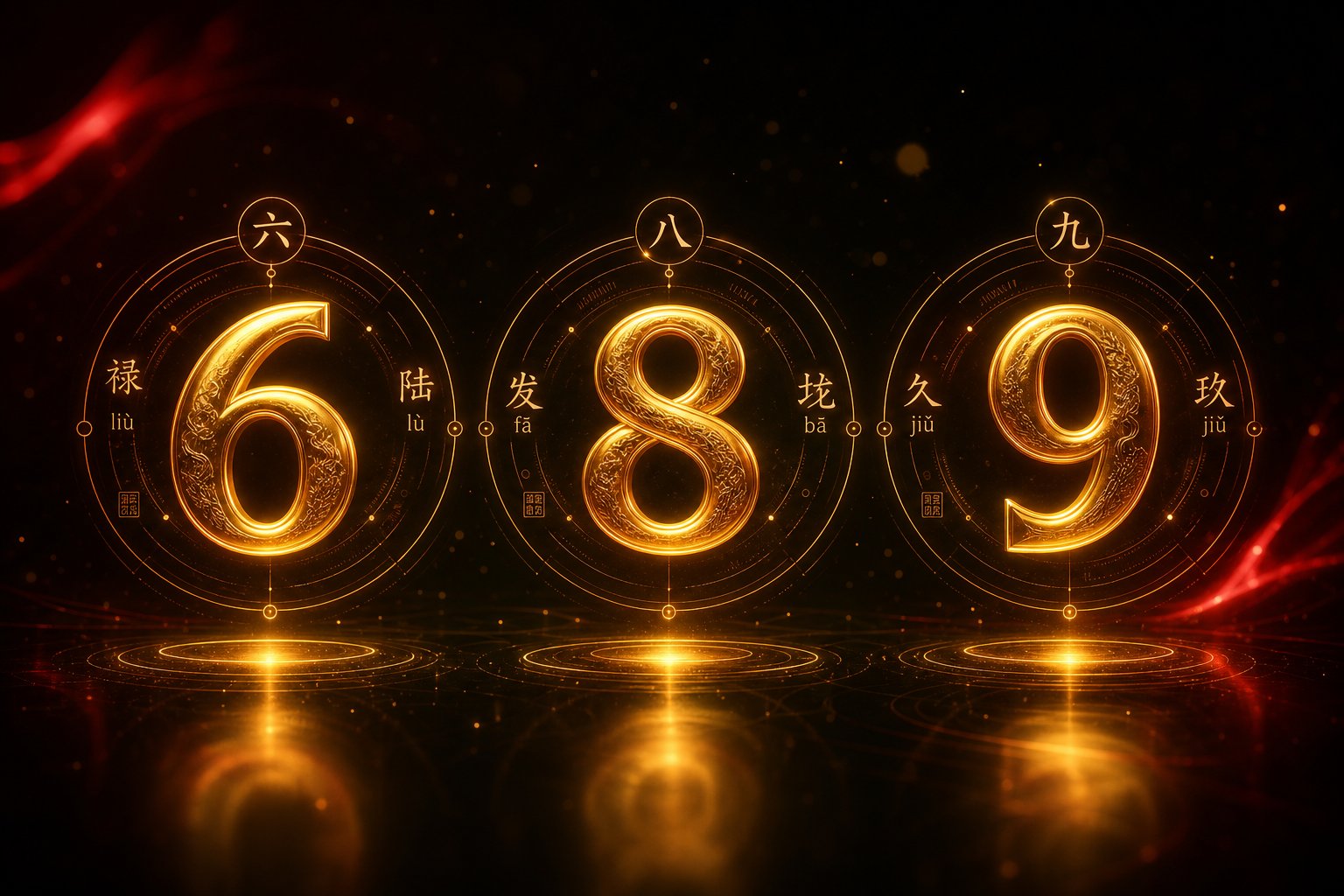
Why would a professional player put 9 in their tag instead of 7? Why does 666 flood chat during a highlight play? The answer sits in how Mandarin pronunciation works. Chinese has a relatively limited set of syllable sounds, which means numbers share pronunciations with everyday words. That phonetic overlap turns digits into a second vocabulary, one that Chinese players and fans read fluently while international audiences see only math.
Lucky and Unlucky Numbers in Chinese Gaming Culture
The system is built on homophones. Each digit from 0 to 9 has a Mandarin pronunciation that echoes meaningful words. Some of those associations are deeply positive, others carry weight people actively avoid. In esports, these associations shape everything from player tags to jersey numbers to team founding dates.
| Number | Mandarin Sound | Meaning | Usage in Esports Names |
|---|---|---|---|
| 4 | si (similar to 死, death) | Unlucky, associated with death | Rarely appears in tags; actively avoided in team branding |
| 6 | liu (similar to 溜, smooth) | Smooth, skilled, lucky | Common in tags to signal skill; 666 spammed in chat as praise |
| 8 | ba (similar to 发, prosper) | Wealth, prosperity, fortune | Favored in org names and player numbers; signals ambition |
| 9 | jiu (similar to 久, long-lasting) | Longevity, endurance | Popular in tags like 369; implies lasting greatness |
| 1 | yi (similar to 一, first/best) | Number one, the best | Used to signal dominance or primacy in a role |
| 5 | wu (similar to 我, I/me) | Self-reference | Appears in coded personal messages within tags |
You'll notice that 4 is almost invisible in Chinese esports naming. The association with death (死, si) runs so deep that buildings in China often skip the fourth floor entirely. That cultural reflex carries straight into gaming. Players don't put 4 in their tags unless they're deliberately playing with dark humor, and even then it's rare at the professional level.
Meanwhile, 6 and 8 appear constantly. A player tag containing 6 carries an implicit claim: "I'm smooth, I'm skilled." The number 8 leans more toward aspiration and fortune. When you see 9 in a tag like the LPL top laner 369, it layers longevity onto the name, a subtle statement that this player intends to last.
Number Homophones as Hidden Messages in Tags
Single digits are just the beginning. String numbers together and you get compressed sentences. This is where things get genuinely creative, and where international fans lose the thread entirely.
The most famous example is 520 (wu er ling), which sounds like 我爱你 (wo ai ni), meaning "I love you." In gaming culture, 520 shows up in couple nicknames, duo queue tags, and fan messages. It functions as code names for crushes chinese internet users have relied on for years. Pair it with 1314 (yi san yi si), which echoes 一生一世 (yi sheng yi shi, "for a lifetime"), and you get 5201314: "I love you forever." These chinese couple nicknames built from numbers appear in everything from streaming handles to in-game clan tags.
Then there's 666 (liu liu liu). In Western culture, that number carries demonic associations. In Chinese gaming, it's pure praise. Because 6 sounds like 溜 (liu, "smooth" or "slick"), spamming 666 in chat means "that play was incredible." It started as gaming-specific slang and spread into general internet culture. When a nickname mandarin speakers create includes repeated 6s, they're branding themselves as mechanically gifted.
Other coded combinations show up across the scene: 88 means "bye-bye" (ba ba echoing the English farewell), 233 means laughter (from an old forum emoticon code), and 918 (jiu yao ba) sounds like 加油吧 (jia you ba), meaning "go for it." Players and fans weave these into usernames, stream titles, and team slogans without a second thought.
The reason international audiences miss all of this is simple: romanized numbers look identical regardless of language. When a broadcast shows "369" on screen, English-speaking viewers see three arbitrary digits. Chinese-speaking viewers hear a phonetic poem about smooth skill and lasting legacy. That gap between what's displayed and what's understood is one of the biggest invisible barriers in cross-regional esports fandom, and it extends well beyond numbers into the meme-driven nickname culture that Chinese internet platforms generate at industrial scale.
Internet Slang and Meme Culture Behind the Names
Chinese internet platforms don't just host esports discussion. They actively manufacture the language fans use to talk about players. Weibo, Bilibili, and Douyu each function as nickname factories, churning out funny chinese nicknames that spread virally until they replace a player's actual tag in everyday conversation. The result is a naming ecosystem where a pro might have one official IGN but three or four community-created identities that carry more emotional weight.
How Bilibili and Weibo Memes Become Player Nicknames
Picture a player making a single awkward facial expression on stream. Within hours, Bilibili users clip it, remix it, and attach a new name to it. That name sticks. This is how ClearLove, the legendary Edward Gaming jungler, earned the nickname "Factory Director." The origin is layered: it references his dominance in the jungle during Season 1, where every match felt "directed" by him, but it also plays on the idea of him raising pigs in the opponent's jungle like a factory farmer who checks on livestock whenever he pleases. That kind of absurd, affectionate humor is peak Chinese fan culture.
The naming conventions follow recognizable patterns. Here are the most common approaches fans use to generate funny names in chinese esports communities:
- Food-based names: CaoMei literally means "strawberry" in Chinese, earning the World Elite top laner the nickname "King Strawberry" as a sign of respect wrapped in playful imagery.
- Physical appearance jokes: EDG's support player Fzzf became "Curly" after perming his hair once. That single hairstyle choice defined his community identity permanently.
- Personality contradictions: WeiXiao means "smile," but fans nicknamed him "Facial Paralysis" because he rarely showed emotion on camera. The irony between tag and reality became the joke itself.
- Gameplay behavior: Uzi earned "Puppy" from Royal Club's famous "dog strategy" (养狗战术), where the team funneled all resources into him until he grew into a hypercarry. The nickname is affectionate, not insulting.
- Self-deprecating flips: OMG's Cool was called "Old Condition" for his consistency, but casters would flip it to "No Condition" during bad games, turning praise into gentle roasting.
What makes these cool chinese nicknames distinct from Western equivalents is their tone. They're rarely aggressive or intimidating. Instead, they lean into warmth, absurdity, and inside-joke intimacy. A Western player might earn a nickname like "The Demon King" for dominance. A Chinese fan community might call that same player something closer to "Big Brother" or "Little Umbrella," names that signal closeness rather than distance.
The Fan Nickname Tradition in Chinese Esports Communities
The chinese fan name tradition operates on a principle Western audiences sometimes find confusing: the more ridiculous the nickname, the deeper the affection. Calling Uzi a "puppy" isn't diminishing. It's intimate. Calling GoGoing "Big Brother" (大哥) signals that fans see him as a protective leader who charges into fights first. OMG's ADC San, whose name means "umbrella" in Chinese, became "Emperor Umbrella" because his team shielded him like royalty, and because emperors historically had many attendants by their side.
This tradition extends beyond Chinese players. Faker earned the chinese fan name "Demon King" (大魔王) after OMG's Cool called him the "unkillable demon king" during the Season 3 World Championships. xPeke became "King of Europe" in Chinese communities. Even controversial figures get the treatment: TSM's Reginald was dubbed "Captain Orangutan" by Chinese fans, a nickname that's blunt in a way Western broadcast culture would never allow but fits the unfiltered humor of platforms like Tieba and NGA forums.
Streaming culture on Douyu accelerates this process further. When a player streams daily, fans generate nicknames in real time based on in-game moments, chat interactions, or even what the player eats on camera. These stream-born identities sometimes eclipse the official tag entirely. A casual viewer tuning into an LPL broadcast might not recognize a player's IGN but instantly knows their community nickname from Bilibili clips.
The contrast with Western naming culture is stark. North American and European fans tend to use a player's existing tag or shorten it. Chinese fans build entirely new identities around players, layering meaning through wordplay, cultural references, and shared community memory. It's collaborative storytelling disguised as trash talk, and it gives Chinese esports a social texture that formal team branding alone could never achieve.
That collaborative energy doesn't stay confined to individual players. When organizations choose their names, they tap into the same cultural currents, just filtered through corporate strategy and brand ambition rather than fan humor.
How Chinese Esports Organizations Pick Their Names
Individual players compress personal identity into a tag. Organizations face a different challenge: they need a name that works as a brand, a cultural statement, and a rallying cry for millions of fans simultaneously. The way chinese league teams choose their names reveals a fascinating tension between deep cultural roots and global commercial ambition.
Cultural Roots Behind Major Chinese Team Names
Early chinese league of legends teams drew heavily from aspirational language, mythology, and martial imagery. Consider the names that defined the first generation of professional Chinese esports:
- Invictus Gaming (IG): "Invictus" is Latin for "unconquered." Founded by Wang Sicong in 2011, the name projects classical Western warrior imagery, a deliberate choice to signal international ambition from day one.
- Royal Never Give Up (RNG): Evolved from the original "Royal Club," the expanded name layers aspirational English onto a regal identity. "Never Give Up" became a fan mantra that transcended the team itself.
- World Elite (WE): One of the oldest chinese lol teams, founded in 2005. The name is blunt and declarative: we are the world's best. No subtlety, pure confidence.
- Oh My God (OMG): An internet exclamation turned team identity. The name captures the emotional reaction fans should have watching them play.
- FunPlus Phoenix (FPX): The Phoenix (凤凰, fenghuang) is one of Chinese mythology's most powerful symbols, representing rebirth, grace, and supremacy. Pairing it with the parent company name "FunPlus" blends corporate identity with mythological weight.
What connects these early names is ambition expressed through borrowed prestige. Latin words, English declarations, mythological creatures. These teams weren't just picking cool-sounding labels. They were staking claims about their place in a global hierarchy, using language that carried weight across cultures.
How Franchising Changed Organization Naming Strategy
The LPL's franchising system, implemented in 2018, fundamentally reshaped how league of legends chinese teams approached naming. Before franchising, teams rose and fell through promotion tournaments. Names reflected passion projects and community identity. After franchising locked in permanent slots worth tens of millions of dollars, corporate investors flooded in, and naming conventions shifted accordingly.
| Era | Naming Approach | Examples | Primary Signal |
|---|---|---|---|
| Pre-Franchise (2011-2017) | Aspirational, mythological, or internet-culture driven | IG, RNG, OMG, WE, LGD | Competitive ambition and community identity |
| Post-Franchise (2018-present) | Corporate parent brand + gaming suffix | JDG (JD Gaming), BLG (Bilibili Gaming), WBG (Weibo Gaming), LNG (Li-Ning Gaming), TES (Top Esports) | Corporate ownership and brand extension |
The shift is unmistakable. Post-franchise names read like corporate subsidiaries because that's exactly what they are. JD Gaming belongs to JD.com, China's e-commerce giant. Bilibili Gaming extends the streaming platform's brand into competition. Weibo Gaming turns a social media company into a team identity. Li-Ning Gaming brings a sportswear brand into esports the same way Nike entered through its LPL apparel partnership.
This corporate naming trend reflects a broader reality: Chinese esports moved from a grassroots subculture to a recognized industry embedded in mainstream commerce. The Ministry of Education listed esports management as a college option in 2016, and the Ministry of Human Resources formally recognized esports professions in 2019. When the government validates an industry, corporate money follows, and corporate money brings corporate naming logic.
Regional Pride and Sponsor Influence in Team Branding
Chinese team names also function differently depending on the audience. During domestic LPL broadcasts, casters and fans often use abbreviated forms or community nicknames rather than full official names. EDG becomes "Little E" (小E). RNG fans call themselves "Royal Family" (皇族). These informal identities carry emotional resonance that the official English-facing brand names cannot.
At international events like Worlds or MSI, the dynamic flips. Chinese teams present their anglicized abbreviations: JDG, BLG, TES. International audiences encounter these three-letter codes without the cultural context that domestic fans carry. A viewer watching Worlds sees "WBG" and registers a team abbreviation. A Chinese fan sees Weibo's brand, remembers the platform where they follow players daily, and feels a different kind of connection entirely.
Regional city pride adds another layer. As esports infrastructure expanded across China, with cities like Shanghai, Hangzhou, and Chengdu investing in dedicated arenas, some teams began incorporating geographic identity into their branding. This mirrors traditional sports franchising where city affiliation drives local fandom, a deliberate strategy to deepen roots beyond pure online community.
The organizational naming landscape captures Chinese esports at a crossroads: old enough to have mythological and literary DNA in its founding teams, new enough that tech conglomerates are stamping their logos onto franchise slots. Both layers coexist in every LPL broadcast. And behind every team abbreviation, there are individual players whose decoded names tell even richer stories about the culture that produced them.
Famous Chinese Player Names Decoded With Characters
Every Chinese pro carries multiple identities. There's the official IGN displayed on broadcast, the real name (姓名, xingming) used in formal interviews, and one or more fan-created nicknames that dominate community discussion. Understanding chinese name characters means recognizing that a single player might be known by three or four completely different labels depending on who's talking and where. The writing system itself, called hanzi (汉字), packs visual meaning into each character in ways that romanized letters simply cannot replicate.
Take Uzi as an example. His broadcast tag "Uzi" references the submachine gun, a pure English loanword. His real name is Jian Zihao (简自豪), where 自豪 means "proud" or "self-pride," an aspirational name given by his parents. Fans call him "Puppy" (小狗). Casters sometimes use "Zihao" for dramatic effect during clutch moments. That's four distinct names for one player, each carrying different emotional weight and used in different contexts.
Iconic League of Legends LPL Player Names Explained
The LPL's history offers the richest examples of how a league of legends chinese name encodes meaning. Here are some of the most recognizable tags decoded:
| Player Tag | Chinese Characters | Literal Translation | Cultural Context | Game |
|---|---|---|---|---|
| Xiaohu | 小虎 | Little Tiger | Tiger symbolizes bravery and power in Chinese zodiac tradition | League of Legends |
| WeiXiao | 微笑 | Smile | Ironic: fans nicknamed him "Facial Paralysis" for his stoic expression | League of Legends |
| CaoMei | 草莓 | Strawberry | Playful food name reflecting Chinese internet humor; earned title "King Strawberry" | League of Legends |
| 369 | 三六九 | Three-Six-Nine | All lucky digits: 3 (life), 6 (smooth/skilled), 9 (long-lasting) | League of Legends |
| Ning | 宁 | Tranquility | From real name Gao Zhen-Ning; single character conveys calm composure | League of Legends |
You'll notice the range. Xiaohu's tag is a direct pinyin conversion of meaningful characters. WeiXiao uses a common Chinese word that became ironic through his personality. CaoMei picks a food item that sounds endearing rather than intimidating. And 369 abandons characters entirely for number symbolism. Each approach reflects a different relationship with Chinese naming traditions.
Cross-Game Examples From Valorant and Dota 2
Dota 2's Chinese scene, one of the oldest in esports, produced names that lean heavily on the diminutive "xiao" (小, meaning "little") as an affectionate prefix. The legendary captain xiao8 (小8) built his tag from "Little Eight," where 8 signals prosperity and fortune. It's humble and ambitious simultaneously, a very Chinese combination. Ame, the carry player for multiple TI-contending rosters, uses a tag derived from the Japanese word for rain (雨, ame), showing how cross-cultural borrowing works even within Asian naming conventions.
The valorant chinese name landscape looks different. Because Valorant entered the Chinese market more recently, its players tend toward English loanwords or straightforward pinyin from real names rather than the literary or number-coded traditions of older scenes. Tags like "nobody" or abbreviated pinyin handles reflect a generation of players who grew up consuming global content and default to internationally readable names from the start.
This generational shift highlights something important: the naming conventions aren't static. Earlier generations encoded dense cultural meaning into every syllable. Newer players prioritize international legibility. That tension between cultural depth and global accessibility becomes most visible when these names hit international broadcasts, where production teams must decide what to keep, what to change, and what inevitably gets lost in translation.
How Chinese Names Get Adapted for Global Broadcasts
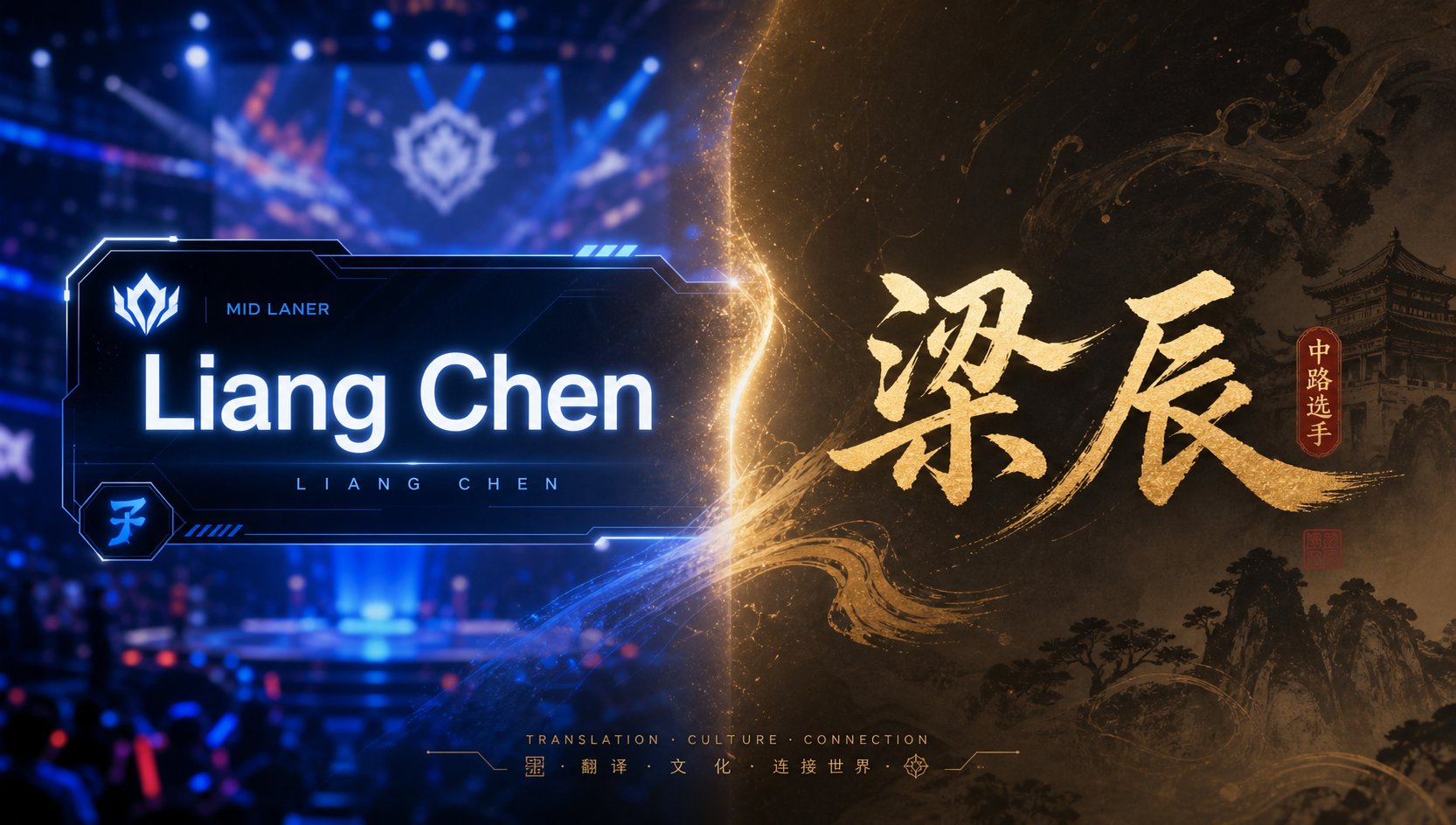
A player's tag might carry layers of phonetic wordplay, number symbolism, and literary reference in Mandarin. But when that name appears on an English-language broadcast overlay at Worlds or The International, most of those layers vanish. The production team faces a quiet dilemma every time a Chinese roster enters an international event: how do you present a name that was designed for one linguistic system inside a completely different one?
Why Some Players Use Different Names Internationally
Not every player keeps the same tag across regions. Some adopt entirely different international identities because their original chinese nicknames in english transliteration would confuse audiences, sound awkward, or lose all meaning. Imagine a caster trying to explain mid-match that a player's three-digit tag is actually a phonetic love poem. It doesn't work in real time.
Players and teams generally settle on one of several adaptation strategies:
- Keep pinyin as-is: Tags like Xiaohu or Meiko stay in their romanized pinyin form. Casters learn the pronunciation, and the name functions as a proper noun without translation. This works best when the pinyin is short and phonetically accessible to English speakers.
- Adopt a separate English name: Some players choose a completely different English word for international play. Knight, Angel, and Breathe are examples where the broadcast tag has no direct connection to the player's Chinese identity but reads cleanly on a global stage.
- Use initials or abbreviations: Players with longer pinyin names sometimes compress them into initials. This mirrors how team names like JDG or BLG function: short, punchy, language-neutral.
- Hybrid approach: A player might keep one Chinese syllable and pair it with an English element, creating a tag that nods to both worlds without fully committing to either. Tags like 1xiao9 blend number codes with pinyin in a way that's visually distinctive even if the meaning stays hidden.
The choice often depends on when a player entered the professional scene. Earlier generations of Chinese pros frequently used pinyin or number-based tags because domestic audiences were the only audience that mattered. As international events grew in viewership, newer players increasingly selected tags with global readability baked in from the start.
What Gets Lost in Romanization for English Broadcasts
Here's the core problem: chinese letters for names, meaning the characters themselves, carry visual and semantic information that romanization strips away entirely. When you see 微笑 written in hanzi, you see two characters that literally depict "smile." When you see "WeiXiao" on a broadcast overlay, you see six letters that could mean anything. The nickname in chinese carries emotional resonance. The romanized version is just a sound.
This information loss compounds across several dimensions. Tonal distinctions disappear because English doesn't mark tones. Homophones collapse, so number puns become invisible. Character-level meaning evaporates because alphabetic letters don't encode concepts the way hanzi does. And cultural references that any Mandarin speaker would catch instantly become opaque strings of syllables to everyone else.
Casters face this gap every broadcast. Pronunciation guides have existed since at least 2014, when resources began circulating to help English-language casters stop mangling Chinese player names. The early days of international esports were rough. Names got butchered on air regularly, with casters guessing at pronunciations or defaulting to anglicized approximations that bore little resemblance to the original Mandarin sounds.
Modern production standards have improved significantly. Broadcast teams now work with pronunciation coaches, and players themselves sometimes record audio guides for casters before events. But even perfect pronunciation doesn't solve the deeper issue: the meaning behind the name remains invisible to anyone who doesn't speak the language.
When a broadcast romanizes a Chinese player's tag, it preserves the sound but erases the story. International fans connect to a phonetic label while domestic fans connect to a cultural narrative, and neither side fully realizes what the other is experiencing.
This gap matters because fan connection drives esports viewership. When you understand that a player's name means something, when you get the joke or feel the aspiration behind it, you bond with that player differently. Chinese fans who watch LPL domestically carry rich associations with every tag. International fans watching the same player at Worlds see a name that functions as an empty signifier, recognizable but meaningless.
The evolution from early esports, where Chinese names were routinely mangled, to current standards, where pronunciation is respected even if meaning is lost, represents genuine progress. But the semantic gap remains. And for viewers who want to bridge that gap themselves, who want to build their own tags that carry the same density of meaning Chinese naming culture achieves, the challenge shifts from decoding to creating.
Creating Your Own Chinese-Inspired Gaming Name
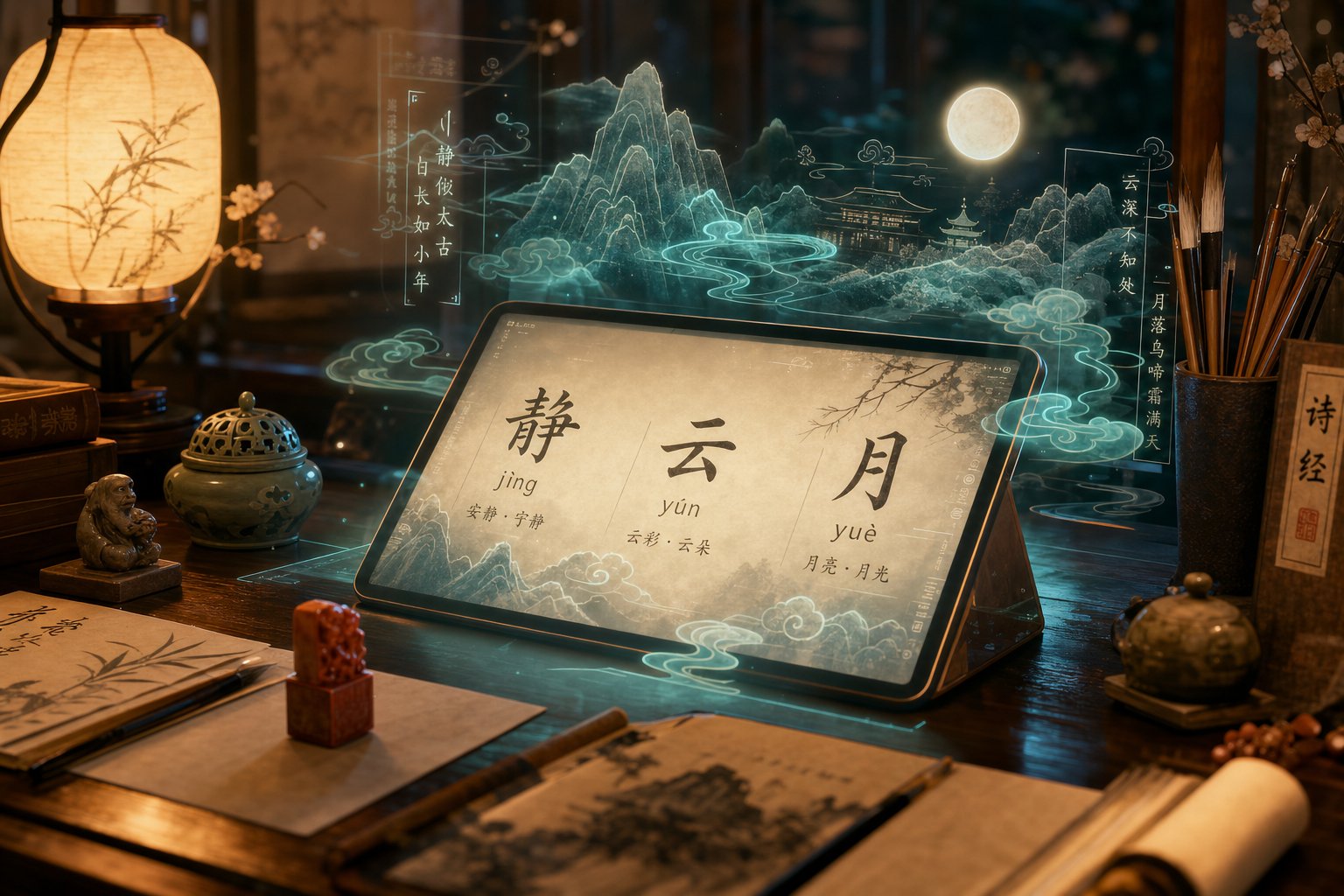
Understanding how Chinese pros build their tags is one thing. Crafting your own is a different challenge entirely. Whether you're looking for chinese names for games, a fresh Roblox display name, or a tag that channels wuxia energy, the process works best when you treat it as creative research rather than random character picking. The goal is a name that feels intentional, sounds natural to Mandarin speakers, and respects the cultural traditions behind it.
Building a Name From Meaningful Character Combinations
The strongest chinese name ideas follow the same logic real Chinese names do: every character carries deliberate meaning, and the combination creates something greater than its parts. Here's a step-by-step process to build yours:
- Choose a core concept: Decide what you want your name to express. Skill? Calm under pressure? Speed? Nature imagery? Pick one or two abstract qualities rather than a literal description.
- Find characters that match: Use a dictionary like MDBG to look up characters associated with your concept. For example, "wind" (风, feng), "shadow" (影, ying), or "blade" (刃, ren) all carry martial weight.
- Check the combination: Put your chosen characters together and verify the result doesn't accidentally form an existing word with a different meaning. Two individually positive characters can create an unfortunate compound.
- Test pronunciation: Say the pinyin version out loud. If it's longer than three syllables or contains sounds you can't comfortably pronounce, simplify. The best tags are short and phonetically clean.
- Verify with a native speaker: This step is non-negotiable. Run your final choice past someone who speaks Mandarin natively. What looks elegant on paper might sound ridiculous or offensive in conversation.
For those drawn to the wuxia tradition, a fantasy chinese name generator can provide starting inspiration, but treat the output as raw material rather than a finished product. The best chinese fantasy names combine nature imagery (cloud, moon, river) with action or virtue concepts (wandering, truth, silence) in ways that echo the naming patterns found in martial arts fiction.
Number symbolism offers another path entirely. You can build a tag using the phonetic codes covered earlier: incorporate 6 for skill, 9 for longevity, or string digits into a coded phrase. A tag like "9Feng" layers lasting greatness onto wind imagery without requiring any character knowledge from international viewers.
Common Mistakes to Avoid When Creating Chinese-Style Tags
Even well-intentioned attempts go wrong when creators skip cultural homework. These are the pitfalls that make native speakers wince:
- Random character strings: Picking characters because they "look cool" without checking meaning is the fastest way to create nonsense. Characters like 死 (death), 鬼 (ghost), or 毒 (poison) aren't used in real names and signal ignorance rather than edge.
- Ignoring tonal collisions: Two characters might look fine individually but produce a homophone for something embarrassing when spoken together. The combination "si wang" (thinking + prosperous) sounds identical to "death" in Mandarin.
- Overly literal translations: Translating your English name or a phrase word-for-word almost never works. "Dark Knight" rendered character by character produces something that reads like a bad movie subtitle, not a gamer tag.
- Using famous historical names: Naming yourself after Zhuge Liang or Li Bai is the equivalent of an international player calling themselves "Shakespeare" or "Napoleon." It reads as presumptuous rather than respectful.
- Exceeding natural length: Authentic Chinese names are two to three characters. A five-character tag immediately signals that the creator doesn't understand basic naming structure.
- Mixing simplified and traditional characters: These are two distinct writing systems. Combining them in one name is like mixing British and American spelling in the same word.
Tools and Approaches for Non-Chinese Speakers
You don't need fluency to create something authentic. A chinese name generator fantasy tool can suggest character combinations based on meaning preferences, giving you a starting point to refine. Sites like chinesename.us generate names with explanations of each character's meaning, which helps you understand what you're working with rather than blindly copying output.
For roblox chinese display name ideas or casual gaming tags, the bar is lower than professional esports, but the same principles apply. Keep it short. Make sure it means something. Avoid characters you can't explain if asked. And remember that the goal isn't to pretend you're Chinese. It's to engage thoughtfully with a naming tradition that values density of meaning, phonetic elegance, and cultural resonance in ways that English tags rarely attempt.
The best approach treats this as creative inspiration drawn from a rich tradition rather than surface-level borrowing. When you understand why Chinese players name themselves the way they do, when you grasp the number codes, the literary echoes, the internet humor, and the cultural weight behind each character, you're equipped to create something that honors that tradition while expressing your own identity within it.
Frequently Asked Questions About Chinese Esports Names
1. Why do Chinese esports players use numbers in their names?
Numbers in Mandarin share pronunciations with common words, turning digits into coded language. For example, 6 sounds like 'smooth/skilled,' 8 sounds like 'prosper,' and 9 sounds like 'long-lasting.' A tag like 369 layers multiple lucky associations together. Players also string numbers into phrases: 520 sounds like 'I love you' and 666 means 'incredible play.' This phonetic system lets players pack aspirational meaning into compact, memorable tags that Chinese-speaking fans read instantly.
2. What do Chinese fan nicknames for esports players mean?
Chinese fan communities create affectionate nicknames that often sound absurd but signal deep connection. ClearLove became 'Factory Director' for dominating the jungle like a farmer checking livestock. Uzi earned 'Puppy' from a team strategy that fed him resources until he grew into a hypercarry. WeiXiao, whose name means 'smile,' was called 'Facial Paralysis' for his stoic expression. The more ridiculous the nickname, the deeper the fan affection, which contrasts sharply with Western naming culture that tends toward intimidating titles.
3. How do Chinese team names differ from Western esports organizations?
Early Chinese teams like Royal Never Give Up and FunPlus Phoenix drew from mythology, martial imagery, and aspirational English phrases. After the LPL franchised in 2018, corporate investors reshaped naming conventions. Teams like JD Gaming, Bilibili Gaming, and Weibo Gaming now function as brand extensions of their parent tech companies. The shift reflects Chinese esports moving from grassroots subculture to mainstream industry, with naming logic following corporate strategy rather than community identity.
4. How can I create my own Chinese-inspired gaming name?
Start by choosing a core concept you want to express, such as speed, calm, or nature imagery. Use a Chinese dictionary to find characters matching that concept, then verify the combination does not accidentally form an unintended word. Keep it to two or three characters, test the pinyin pronunciation aloud, and always verify with a native Mandarin speaker before committing. Avoid random character picking, overly literal translations of English phrases, and famous historical names, which read as presumptuous rather than respectful.
5. Why do some Chinese players change their names for international tournaments?
Chinese player tags often rely on phonetic wordplay, number symbolism, or literary references that only work in Mandarin. When these names appear on English broadcasts, the meaning vanishes entirely. Some players adopt separate English tags like Knight or Angel for global readability. Others keep their pinyin but accept that international audiences will connect to the sound rather than the story. The choice often depends on generation: newer players increasingly select globally readable names from the start of their careers.