Chinese Muslim Surnames and the Hidden Islamic Heritage They Carry
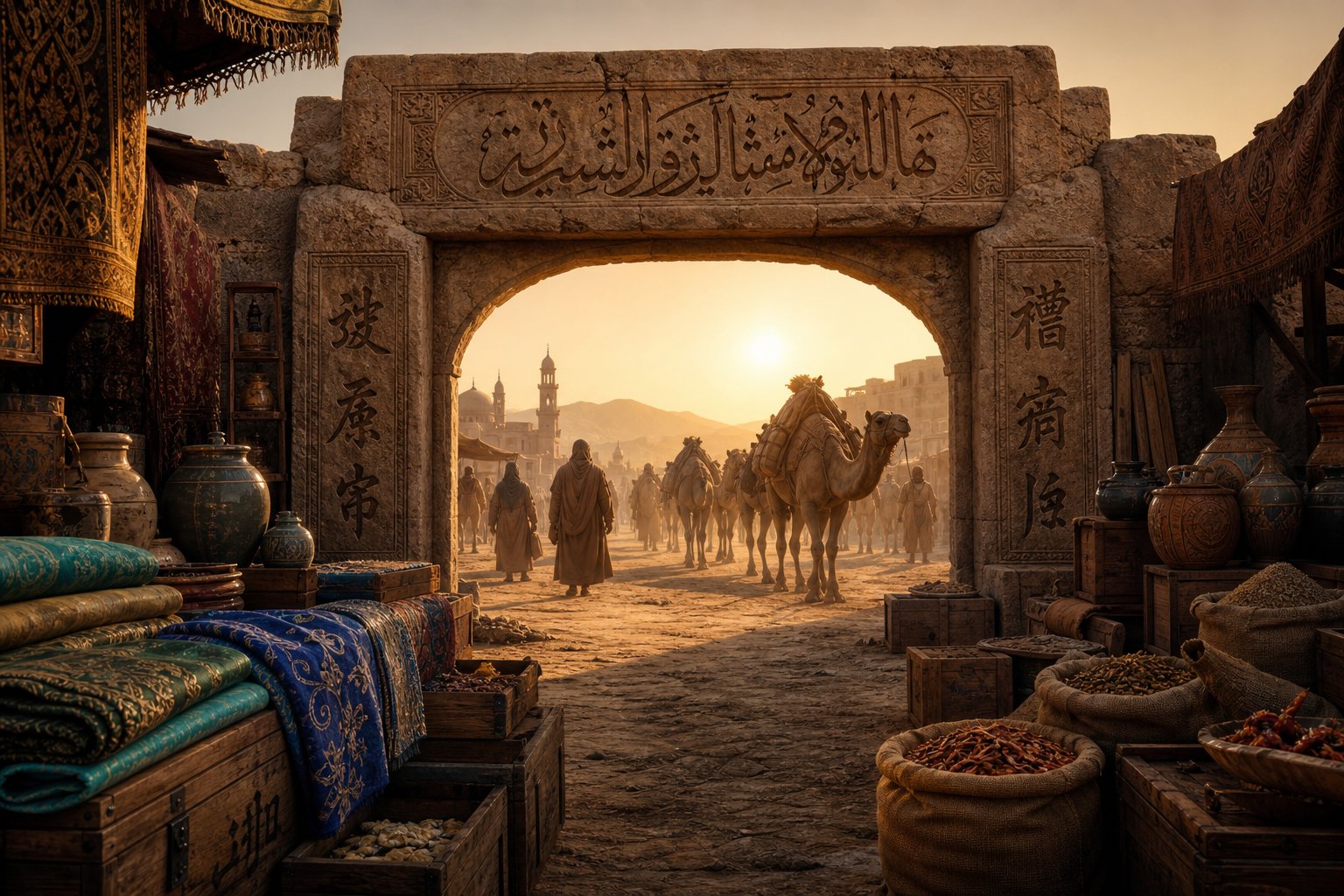
Imagine meeting someone named Ma, Bai, or Ding in China. You'd likely assume they share the same ancestry as any other Han Chinese family. Yet millions of people carrying these chinese surnames trace their roots not to ancient Chinese clans, but to Arab merchants, Persian scholars, and Central Asian soldiers who traveled the Silk Road centuries ago. Their family names are hiding in plain sight.
Chinese muslim surnames are chinese family names that originated from Arabic or Persian naming traditions, adapted into the Chinese character system over generations of cultural blending. They represent one of the most fascinating yet overlooked chapters in the story of asian names and surnames. Each character was carefully chosen to echo the sound or meaning of an Islamic name while fitting seamlessly into Chinese society.
An estimated 20+ million Chinese Muslims carry surnames that encode centuries of Islamic heritage within single Chinese characters, a living archive of Silk Road connections written into everyday identity.
What Makes a Chinese Surname Muslim in Origin
A surname qualifies as Muslim in origin when its adoption can be traced to Arabic, Persian, or Turkic naming conventions that were transliterated or translated into Chinese characters. The Hui people, numbering nearly 10 million, form the largest group carrying these names. Their ancestors were merchants, soldiers, and scholars who arrived from Islamic Persia and Central Asia between the 7th and 13th centuries. Over time, they intermarried with Han Chinese, Uyghur, and Mongolian populations, adopting chinese names that masked their foreign origins while preserving subtle phonetic links to their Islamic past.
This phenomenon extends well beyond the Hui. Uyghur, Dongxiang, Salar, Bonan, and Kazakh Muslim communities each developed their own patterns of surname adaptation. The diversity of asian names and surnames across these groups reflects distinct migration routes, languages, and historical pressures.
Why These Surnames Matter for Heritage Discovery
For diaspora communities and genealogy researchers, these chinese family names serve as the first tangible thread connecting modern families to ancestral origins along ancient trade routes. A single surname can unlock questions about which port city an ancestor arrived through, which dynasty they settled during, and which Arabic or Persian name their family once carried. The challenge lies in knowing which surnames hold these secrets and how to read the clues they contain.
The mechanisms behind this transformation, from Arabic syllable to Chinese character, follow specific linguistic patterns that repeated across dynasties and regions.
How Arab and Persian Names Became Chinese Surnames Across Dynasties
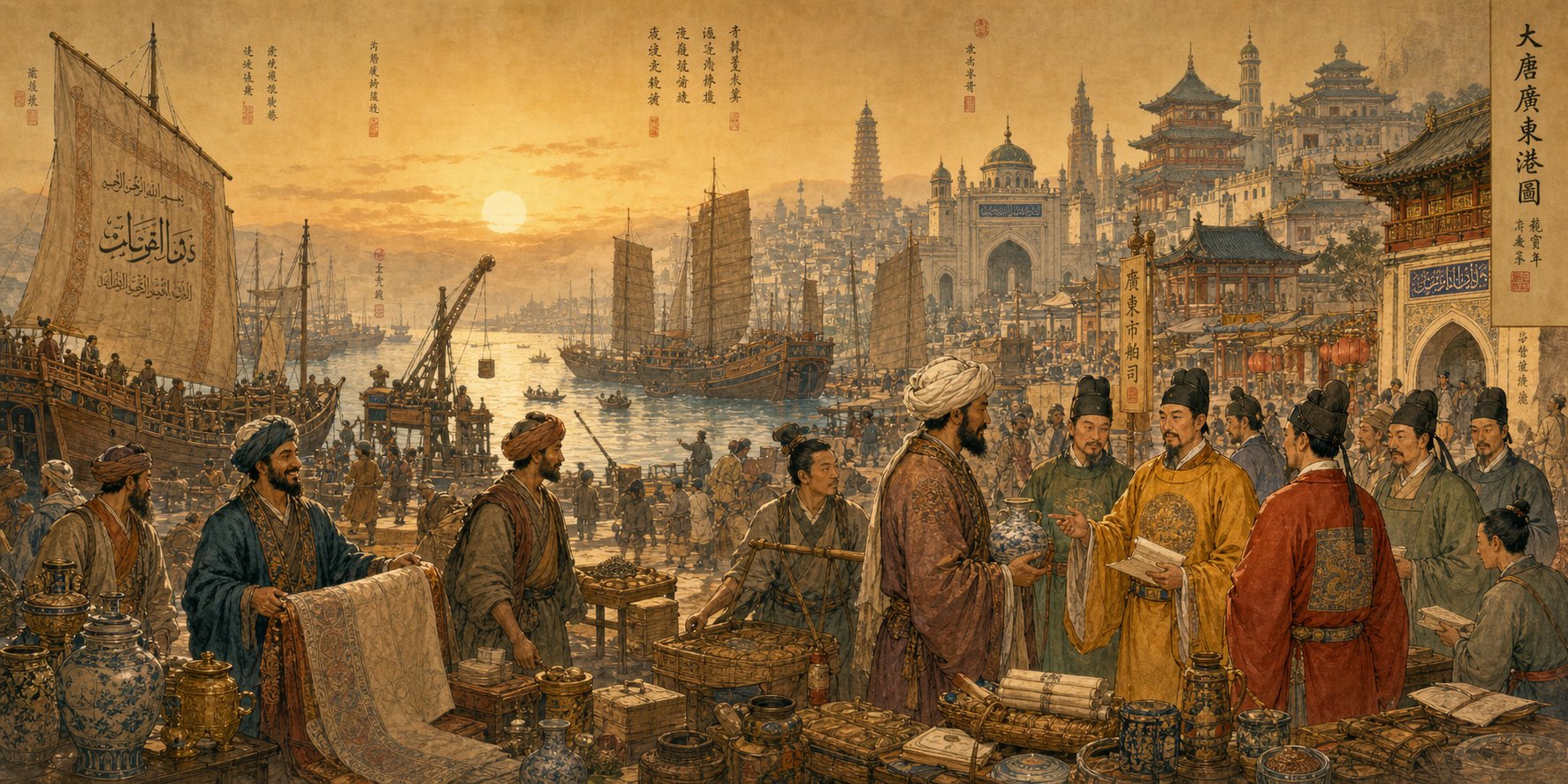
The transformation from Arabic and Persian names into chinese last names did not happen overnight. It unfolded across roughly 800 years, shaped by trade, war, imperial policy, and survival instincts. Each dynasty added a new layer of pressure or opportunity that pushed Muslim communities further toward adopting Chinese-style surnames. Understanding where surnames originate from in this context means tracing a timeline that begins with temporary visitors and ends with permanent citizens whose foreign roots became invisible.
From Tang Dynasty Traders to Permanent Settlers
When did this story begin? Picture the port of Guangzhou in the 7th century. Arab and Persian merchants arrived by sea, establishing trading quarters known as fanfang, segregated zones where foreigners lived under their own leaders and followed their own customs. During the Tang Dynasty (618-907), these Muslim traders were classified as guests, not subjects. They kept their original names, spoke their own languages, and had little reason to adopt Chinese naming conventions.
The Song Dynasty (960-1279) shifted the equation. Marriage restrictions loosened, and some Muslim merchants began settling permanently rather than cycling back to their homelands. Intermarriage with local women produced children who straddled two cultures. These families faced a practical question: what name goes on official documents? Some began using simplified versions of their Arabic names, while others adopted chinese last names from their mothers' families.
The Yuan Dynasty (1271-1368) accelerated everything. The Mongol rulers actively recruited Central Asian and Persian Muslims as administrators, tax collectors, and military officers. Sayyid Ajall Shams al-Din, a Bukharan Muslim, served as governor of Yunnan province and became one of the most powerful officials in the empire. His descendants spread across southern China, eventually adopting surnames like Ma and Na. Under Mongol rule, Muslims held privileged social positions, and many still used their full Arabic or Persian names in official records. There was no urgency to change.
- Tang Dynasty (618-907): Arab and Persian traders arrive via Silk Road and maritime routes. They live in segregated quarters, retain original names, and are classified as foreign guests.
- Song Dynasty (960-1279): Permanent settlements form. Intermarriage begins. Some families adopt partial Chinese naming for practical purposes, though no official mandate exists.
- Yuan Dynasty (1271-1368): Mongol rulers elevate Muslims to administrative roles. Full Arabic and Persian names remain in official use. Communities expand but maintain distinct identity.
- Ming Dynasty (1368-1644): Emperor Zhu Yuanzhang mandates Chinese-style dress, language, and surnames. Mass adoption of Chinese surnames occurs within one to two generations. Ancient chinese names of Islamic origin become permanently encoded in Chinese characters.
The Ming Dynasty Turning Point That Changed Muslim Names Forever
Everything changed in 1368 when Zhu Yuanzhang overthrew the Mongols and established the Ming Dynasty. His policies targeted the visible markers of foreign identity. Muslims were forbidden from wearing their traditional clothing, speaking Arabic or Persian in public, and critically, using non-Chinese names. The mandate was clear: assimilate or face consequences.
Imagine being a third-generation Muslim family in Xi'an. Your grandfather arrived from Bukhara with the name Shams al-Din. Your father shortened it to Shamsi in daily life. Suddenly, an imperial decree demands you register with a proper Chinese surname. You need a character that sounds close enough to preserve some thread of identity, yet passes as an ordinary Chinese name. You choose Sha (沙), echoing the first syllable of Shams. Your neighbor, whose family name was Muhammad, picks Ma (马). In a single generation, centuries of Arabic naming tradition compressed into one Chinese character.
The Ming Sinification policies forced the Hui community to abandon traditional customs at an unprecedented pace. Dietary restrictions, religious observance, and social practices all came under pressure. But surnames proved uniquely durable because once registered in official genealogies, they became fixed. The chinese roots of these families were literally rewritten in government records.
Why Certain Surnames Survived While Others Disappeared
Not every Arabic or Persian name made the transition successfully. The surnames that survived shared specific advantages. First, they needed phonetic compatibility. Names whose opening syllable matched an existing Chinese character with a neutral or positive meaning had the best odds. Muhammad became Ma (horse), a common and unremarkable surname. Hasan became Ha, Said became Sa. These worked because Chinese already had characters with those sounds.
Second, social camouflage mattered. Families who chose surnames that blended with the local Han population faced less discrimination. Picking a rare or unusual character drew attention. Picking Ma or Bai (white) let you disappear into the crowd while still carrying a quiet marker that other Muslim families could recognize.
Third, community consensus played a role. When an entire mosque community adopted the same surname, it reinforced that name's survival across generations. Isolated families who chose unique transliterations often saw those names fade within a few generations as descendants married into larger surname groups.
The surnames that vanished were typically those with no phonetic match in Chinese, those chosen by small or scattered families without community reinforcement, or those abandoned when families converted away from Islam entirely. Political pressure did not just create these surnames. It also acted as a filter, selecting for the names that could hide in plain sight while still carrying meaning for those who knew where to look.
The real ingenuity, though, lies in exactly how these families chose their characters. The selection process followed distinct linguistic strategies, each revealing something different about the family's priorities and circumstances.
The Linguistic Bridge Between Arabic Names and Chinese Characters
Four distinct strategies turned Arabic and Persian names into chinese last names and meanings that persist to this day. Each method reveals something about the family's circumstances, their relationship with imperial power, and how much of their original identity they chose to preserve. Think of these as four doors through which Islamic names entered the Chinese character system, each door opening under different pressures and producing different results.
Phonetic Transliteration From Arabic to Chinese Characters
The most common method was straightforward sound-matching. A family took the first syllable of their Arabic or Persian name and found a Chinese character that sounded similar. The meaning of chinese last names created this way often has nothing to do with the original Arabic word. Instead, the character served purely as a phonetic container.
Here is how the process worked in practice. Take the name Muhammad. In spoken Arabic, the first syllable sounds like "Mu." But across generations of daily use in Chinese-speaking communities, the name shortened further. Family members called each other "Ma" in casual speech, the way English speakers might shorten "Muhammad" to "Mo." When the Ming Dynasty forced surname registration, "Ma" was the natural choice. The character 马 (horse) already existed as a common Chinese surname, making it perfect camouflage.
The same logic applied across dozens of names. Hasan became Ha (哈). Said became Sa (撒). Shams al-Din became Sha (沙). In each case, the family grabbed the opening sound of their ancestral name and locked it into a single character. The chinese name meaning of the character itself, whether "horse" or "sand" or an onomatopoeia, was secondary to the phonetic echo it preserved.
You'll notice a pattern: most transliterated surnames are single-syllable, matching the monosyllabic structure of Chinese family names. Multi-syllable Arabic names had to compress dramatically. This compression is why tracing chinese surnames and meanings back to their Islamic origins requires knowing which syllable the family prioritized.
Semantic Translation and Imperial Bestowal Methods
Not every family relied on sound alone. Some chose characters based on meaning rather than pronunciation. If your Arabic name meant "light," you might select the character 明 (bright) or 光 (radiance). If your name referenced the sea, 海 (hai, meaning ocean) became a logical choice. This semantic approach produced chinese surname meanings that actually reflect the original Arabic or Persian word's definition, making them richer clues for genealogical research.
The surname Bai (白) offers a compelling example. While "Bai" can be a phonetic approximation of certain Arabic names, the character means "white" or "pure" in Chinese. For families whose original name carried connotations of purity or clarity, the semantic resonance made this character doubly appropriate.
Imperial bestowal operated on entirely different logic. When a Muslim official performed exceptional service, the emperor might grant him a prestigious Chinese surname as an honor. These bestowed surnames, often drawn from the imperial family name or other elite lineages, carried social capital. The recipient's descendants kept the name not because it sounded like their Arabic ancestor's name, but because it signified imperial favor. Surnames like Liu and Li entered some Muslim family lines through this mechanism.
A fourth pathway, voluntary adoption, involved families deliberately choosing high-status Chinese surnames to improve their social standing. During periods of anti-Muslim sentiment, some families abandoned any phonetic connection to their Islamic names entirely, selecting common surnames like Wang or Zhang purely for protection. These families are the hardest to trace genealogically because the surname itself carries no phonetic or semantic link to their origins.
The Character Selection Logic Behind Each Surname
When you examine chinese last name meanings in this context, the selection logic becomes a puzzle with multiple layers. Families weighed several factors simultaneously: Does the character sound close enough to our ancestral name? Does its meaning carry positive or neutral associations? Is it common enough to avoid drawing attention? Will other Muslim families in our community recognize it as a marker of shared heritage?
The table below traces the complete etymological chain for the most significant examples, showing how each arabic or Persian name traveled through phonetic approximation into its final Chinese character form:
| Original Arabic/Persian Name | Phonetic Approximation | Chinese Character | Pinyin | Character's Literal Meaning | Selection Logic |
|---|---|---|---|---|---|
| Muhammad | Mu → Ma | 马 | Ma | Horse | First syllable shortening; 马 already a common surname providing camouflage |
| Hasan | Ha | 哈 | Ha | Onomatopoeia (breath/laughter) | Direct first-syllable match; uncommon enough to serve as Muslim identifier |
| Said / Sa'id | Sa | 撒 | Sa | To scatter/spread | First-syllable phonetic match; rare character distinguishes from Han surnames |
| Shams (al-Din) | Sha | 沙 | Sha | Sand | First-syllable match; neutral meaning; echoes desert homeland imagery |
| Husayn | Hu | 虎 | Hu | Tiger | First-syllable match; powerful positive meaning in Chinese culture |
| Nasruddin | Na | 纳 | Na | To accept/receive | First-syllable match; positive semantic connotation |
| Din (religion) | Ding | 丁 | Ding | Male adult / fourth | Near-homophone of Arabic "Din"; extremely common Han surname for blending |
| Haidar (lion) | Hai | 海 | Hai | Sea/ocean | Phonetic match with semantic bonus (grandeur, vastness) |
Notice how some families got lucky. The surname Hai (海) works both phonetically (echoing Haidar) and semantically (the ocean's vastness suggesting strength). Others faced trade-offs. Ma (马) is phonetically perfect but semantically unrelated to Muhammad's meaning of "praised one." The chinese name meaning embedded in each character tells you which strategy the family prioritized: sound preservation or meaning preservation.
These four mechanisms did not operate in isolation. Some families combined approaches across generations. A grandfather might receive an imperially bestowed surname, while a branch of the family in another province independently chose a phonetic transliteration. This layering explains why the same Arabic ancestor can produce multiple different Chinese surnames among descendants, and why mapping chinese last names and meanings back to their Islamic origins requires understanding all four pathways simultaneously.
The question that follows naturally is which specific surnames emerged most frequently from these processes, and whether certain names became so strongly associated with Muslim identity that they function almost as ethnic markers.
The Thirteen Surnames of the Hui People Explained
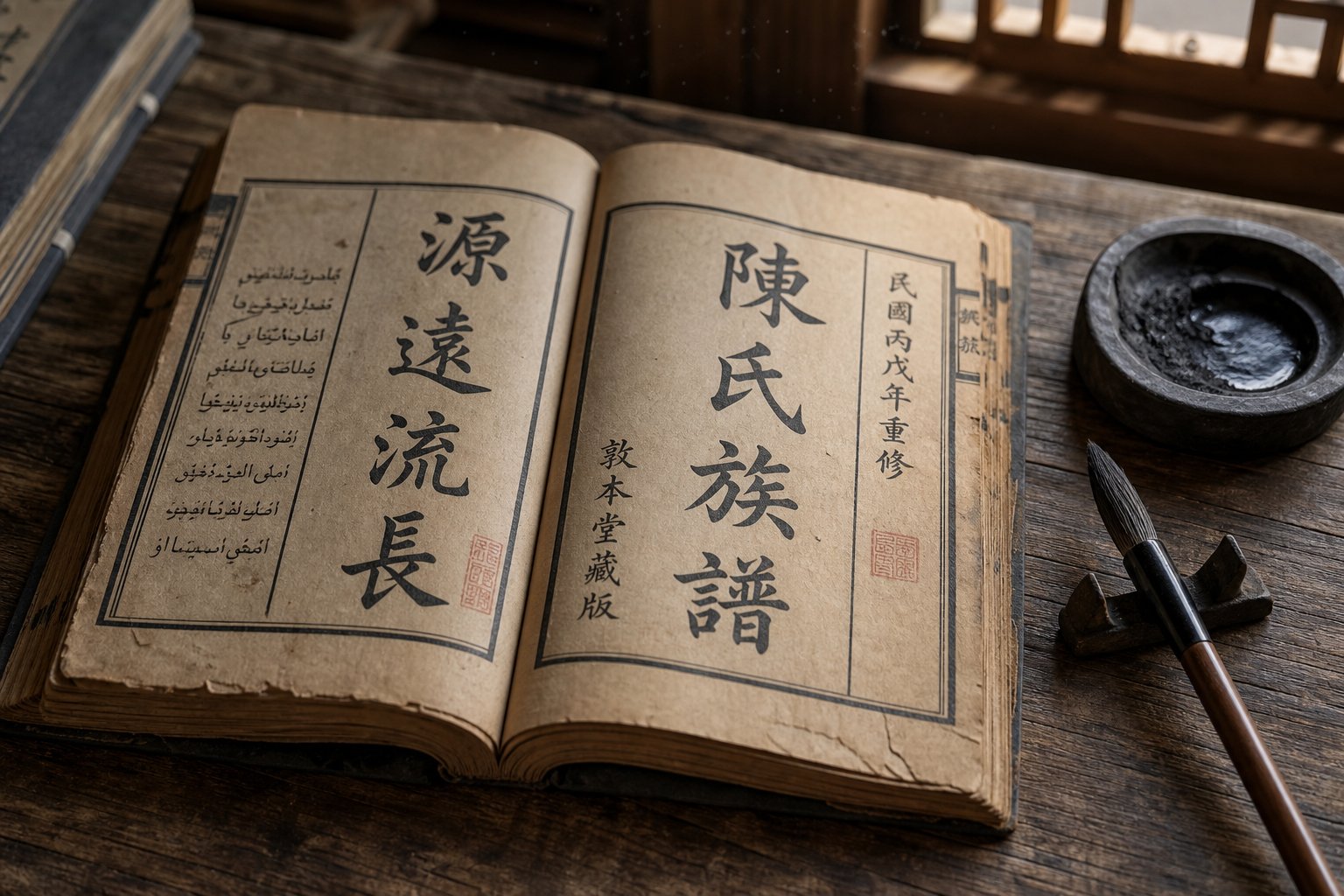
Among the most common chinese surnames, a specific cluster functions almost like a coded membership list. The Hui people call them the Thirteen Surnames (回族十三姓), and together they form the backbone of Chinese Muslim surname tradition. These thirteen names appear in genealogical records, mosque registries, and folk sayings across China's Muslim communities. The most famous proverb captures their dominance perfectly: "Nine out of ten Hui people have the surname Ma."
So which names made the list, and why these thirteen specifically? Each one traces back to an Arabic or Persian ancestor whose name was compressed into a single Chinese character during the Ming Dynasty assimilation period. Some became so strongly associated with Muslim identity that hearing them immediately signals Islamic heritage. Others blend invisibly with common chinese last names carried by millions of Han Chinese families.
The Core Thirteen Surnames and Their Arabic Roots
The traditional list includes: Ma (马), Na (纳), Sa (撒), Ha (哈), Sha (沙), Sai (赛), Su (苏), Hu (虎), Shan (闪), Bao (保), Mu (穆), Su (速), and Hao (郝). Each carries a distinct origin story rooted in Islamic naming conventions.
Ma (马) dominates the group by sheer numbers. According to China's 1990 National Population Census, the surname Ma accounted for 66.92% of the entire Hui population of 8.6 million. In nine Hui autonomous regions and counties, that figure climbed to 71.8%. The name derives from Muhammad, shortened through generations of daily use until only the opening syllable remained. Families adopted it out of reverence for the Prophet, through phonetic shortening of names containing "Ma" sounds, or through imperial bestowal.
Na (纳) traces directly to Nasr al-Din, the eldest son of the powerful Yuan Dynasty governor Sayyid Ajall Shams al-Din. His many descendants divided into four surnames: Na, Su, La, and Ding. A single village in Ningxia, Najiahu in Yongning County, houses over 700 households and 4,000 people all carrying this surname.
Ha (哈) originates from the royal family of Bukhara in Central Asia. Hasan, the second son of Sayyid Ajall Shams al-Din, served as Deputy Prefect of Ping'an Circuit during the Yuan Dynasty. The Ha family produced generations of military commanders so distinguished that the Qianlong Emperor himself composed a eulogy noting: "Among the Hui people of the Central Plains, many are naturally brave and skilled in martial arts. The Ha clan, a prominent lineage, has consistently produced military commanders."
Sha (沙) carries a dual etymology. It matches the first syllable of names like Shams al-Din, but it also echoes the Persian word "Shah" meaning king. Some bearers received it as an imperially bestowed surname, like Sheban from Calicut who was granted the surname Sha in 1430 for his diplomatic service.
Hu (虎) derives from Husayn. Among Yuan Dynasty officials holding the position of Darughachi, seven individuals named Huseyn appear in records. The character means "tiger" in Chinese, giving it a powerful cultural resonance that made it an attractive choice.
Sa (撒) connects to a Uyghur general who quelled rebellions for the Tang Dynasty and was awarded the title of Prince Bin. His descendants settled in the Guanzhong region and later spread to Anhui, where they established the clan hall "Maokuan Hall" in 1399.
The remaining surnames follow similar patterns. Mu (穆) comes from names like Mubala or Mushalafuding. Shan (闪) derives from Shams al-Din through a different phonetic path than Sha. Su (苏) traces to Sulaiman, while Su (速) takes the second character from Nasr al-Din's name. Sai (赛) connects to the Sayyid Ajall family, and Bao (保) originates from that same powerful lineage in Yunnan.
Exclusively Muslim Surnames vs Shared Surnames
Here is where things get tricky for genealogical research. Some of these thirteen names function as near-certain markers of Muslim heritage. Others appear on the most common chinese last names lists for Han Chinese populations too, making identification far more complex.
Surnames like Sa (撒), Ha (哈), Na (纳), Sai (赛), and Shan (闪) are overwhelmingly Muslim in origin. When you encounter these among common chinese surnames, the probability of Islamic heritage is high. They are rare enough in Han Chinese populations that their presence almost always signals Hui ancestry.
Ma (马), on the other hand, presents the opposite challenge. It ranks among the most common chinese last names overall, carried by millions of Han Chinese families whose ancestors have no Islamic connection whatsoever. The Han surname Ma traces to the ancient state of Ma and to descendants of Zhao She of the Zhao kingdom. Similarly, Su (苏) and Hao (郝) are widespread Han surnames with entirely separate etymologies.
The table below maps each of the Thirteen Surnames against its origin and exclusivity:
| Chinese Character | Pinyin | Arabic/Persian Origin | Original Meaning | Exclusively Muslim or Shared |
|---|---|---|---|---|
| 马 | Ma | Muhammad | The Praised One | Shared with Han Chinese |
| 纳 | Na | Nasr al-Din | Victory of the Faith | Predominantly Muslim |
| 撒 | Sa | Sa'id / Sadiqi | Happy / Truthful | Predominantly Muslim |
| 哈 | Ha | Hasan | Handsome / Good | Predominantly Muslim |
| 沙 | Sha | Shams / Shah (Persian) | Sun / King | Predominantly Muslim |
| 赛 | Sai | Sayyid | Master / Lord | Predominantly Muslim |
| 苏 | Su | Sulaiman | Man of Peace | Shared with Han Chinese |
| 虎 | Hu | Husayn | Beautiful / Good | Predominantly Muslim |
| 闪 | Shan | Shams al-Din | Sun of the Faith | Predominantly Muslim |
| 保 | Bao | Sayyid Ajall lineage | Family honorific | Shared with Han Chinese |
| 穆 | Mu | Mubala / Mushalafuding | Varies by origin name | Shared with Han Chinese |
| 速 | Su | Nasr al-Din (second syllable) | Victory of the Faith | Predominantly Muslim |
| 郝 | Hao | Uncertain | Uncertain | Shared with Han Chinese |
This distinction between exclusive and shared surnames has real consequences for anyone researching their heritage. A person named Sa or Shan can be fairly confident about Islamic roots. A person named Ma or Su needs additional evidence, context clues that go beyond the surname itself, to determine whether their family line connects to Arab ancestors or to entirely separate Han Chinese origins.
The Thirteen Surnames represent only the most recognized cluster. Dozens of additional Muslim surnames exist outside this canonical list, carried by ethnic groups whose naming traditions developed along different paths entirely.
Beyond the Thirteen Surnames and Lesser-Known Muslim Family Names
The Thirteen Surnames get most of the attention, but they represent only one ethnic group's experience. China officially recognizes ten Muslim-majority ethnic groups, and each developed its own naming patterns shaped by distinct languages, migration histories, and degrees of contact with Han Chinese culture. Many of the rare last names carried by these communities never appear in mainstream surname databases, making them invisible to researchers who focus exclusively on Hui traditions.
What happens when you look beyond the canonical list? You find dozens of uncommon surnames scattered across western and southern China, each encoding a different chapter of Islamic migration. Some are so localized that only a few hundred families carry them today.
Muslim Surnames Beyond the Hui Tradition
Several surnames fall just outside the Thirteen but remain strongly associated with Muslim heritage among Hui communities. These names followed the same phonetic transliteration logic yet never achieved the population density needed to join the canonical list.
Ding (丁) ranks among the most interesting. It derives from the Arabic word "Din," meaning religion or faith, as in "Nasruddin" (Victory of the Faith) or "Shams al-Din" (Sun of the Faith). The character 丁 literally means "male adult" or "fourth" in Chinese, carrying no semantic connection to its Islamic source. Yet in provinces like Shandong and Jiangsu, Ding-surnamed Muslim families maintain mosque records tracing their ancestry to Yuan Dynasty officials whose full names ended in "-din."
Mu (穆) appears in the Thirteen Surnames list but also extends far beyond Hui communities. The character carries connotations of solemnity and reverence in Chinese, making it a semantically rich choice for families descended from anyone named Muhammad, Mustafa, or Mubarak. Among asia surnames with Islamic roots, Mu stands out for bridging phonetic and semantic logic simultaneously.
Other notable Hui-adjacent surnames include Hai (海) from Haidar, Wan (万) from certain Persian names, and La (喇) from the second syllable of names like Allah or Nasrullah. These uncommon surnames appear in concentrated pockets, often in a single village or county where one ancestor's descendants multiplied over centuries.
Uyghur and Central Asian Muslim Naming Patterns
Uyghur naming conventions operate on fundamentally different principles from Hui traditions. Historically, Uyghurs used patronymic systems rather than fixed family surnames. A person's full name consisted of their given name followed by their father's name. Abliz Muhtar, for example, means "Abliz, son of Muhtar." No fixed surname passed down through generations the way Ma or Ha does among the Hui.
This system began shifting in the 20th century as government registration required standardized family names. Many Uyghur families adopted their father's or grandfather's given name as a permanent surname, freezing one generation's patronymic into a hereditary asian family name. Others chose names reflecting their home region, occupation, or clan affiliation.
Kazakh Muslim communities in Xinjiang follow a similar patronymic tradition, with clan names (ru) functioning as broader identity markers rather than individual family surnames. When registering in Chinese systems, Kazakh families often transliterate their clan or tribal name into Chinese characters, producing rare last names that appear nowhere else in China's surname landscape.
Dongxiang Salar and Bonan Surname Traditions
The Dongxiang people of Gansu province speak a Mongolic language yet practice Islam, creating a unique naming fusion. Their surnames often reflect Mongol-era clan names that were later filtered through Islamic naming conventions. Ma dominates among the Dongxiang just as it does among the Hui, but you'll also encounter surnames like Dong (东) derived from their ethnic name itself, and clan-based names that have no Arabic etymology at all.
Salar communities, concentrated along the Yellow River in Qinghai's Xunhua County, trace their origins to Turkic migrants from Samarkand. Their surname patterns blend Turkic, Arabic, and Chinese elements. Han (韩) appears frequently among the Salar, not from the Arabic but possibly from their ancestral connection to the Khanate system. Other Salar families carry the surname Wei (韦) or Ai (艾), the latter potentially echoing Arabic names beginning with "Ai-" or "Ay-".
The Bonan people, numbering only around 20,000 in Gansu, represent one of China's smallest Muslim ethnic groups. Their surnames show heavy Tibetan and Mongol influence alongside Islamic elements, reflecting centuries of living at the cultural crossroads between Tibetan Buddhist and Chinese Muslim communities.
Here is a breakdown of lesser-known Muslim surnames organized by ethnic group:
- Hui (beyond the Thirteen): Ding (丁) from Arabic "Din" meaning faith; Hai (海) from Haidar meaning lion; La (喇) from Allah or Nasrullah; Wan (万) from Persian name variants; Tie (铁) from Tiemuer/Timur
- Uyghur: Patronymic-based surnames frozen into fixed forms; Maimaiti from Muhammad; Aili from Ali; Yusup from Yusuf; often multi-syllable when transliterated into Chinese characters
- Dongxiang: Ma (马) dominant; Dong (东) from ethnic self-designation; clan-based names with Mongolic roots overlaid with Islamic given-name elements
- Salar: Han (韩) possibly from Khanate connections; Ai (艾) from Arabic "Ai/Ay" names; Wei (韦) of uncertain etymology; Ma (马) shared with Hui tradition
- Bonan: Ma (马) and Qi (祁) most common; surnames reflecting Tibetan-Mongol-Islamic triple heritage; extremely localized to Jishishan County in Gansu
- Kazakh: Clan names (ru) transliterated into Chinese; Hali (哈力) from various Turkic roots; patronymics registered as fixed surnames in modern records
The multi-ethnic dimension reveals something important: the same Arabic source name can produce entirely different Chinese surnames depending on which ethnic group adopted it, which language filtered the transliteration, and which dynasty's political pressures shaped the final choice. Muhammad alone generated Ma among the Hui, Maimaiti among Uyghurs, and Mu among families who preserved a different syllable.
Geography ties these scattered naming traditions together. The distribution of Muslim surnames across China's provinces maps almost perfectly onto ancient trade routes and military settlement patterns, turning the country's map into a readable archive of Islamic migration.
Where Chinese Muslim Surnames Concentrate Across China
If you plotted every family carrying these surnames on a map, a pattern would emerge almost immediately. The densest clusters trace the overland Silk Road from Xi'an westward through Gansu and into Ningxia, then branch south into Yunnan and east toward coastal trading ports. These are not random distributions. They are fossilized migration routes, each concentration marking a place where Muslim traders, soldiers, or administrators settled permanently and raised families whose asian last names still echo Arabic and Persian origins.
Geography functions as one of the strongest contextual clues for determining whether a surname carries Islamic heritage. A person named Ma in Ningxia almost certainly has Hui ancestry. A person named Ma in Hunan might not. Location narrows the odds dramatically.
Ningxia and Gansu as the Heartland of Hui Surnames
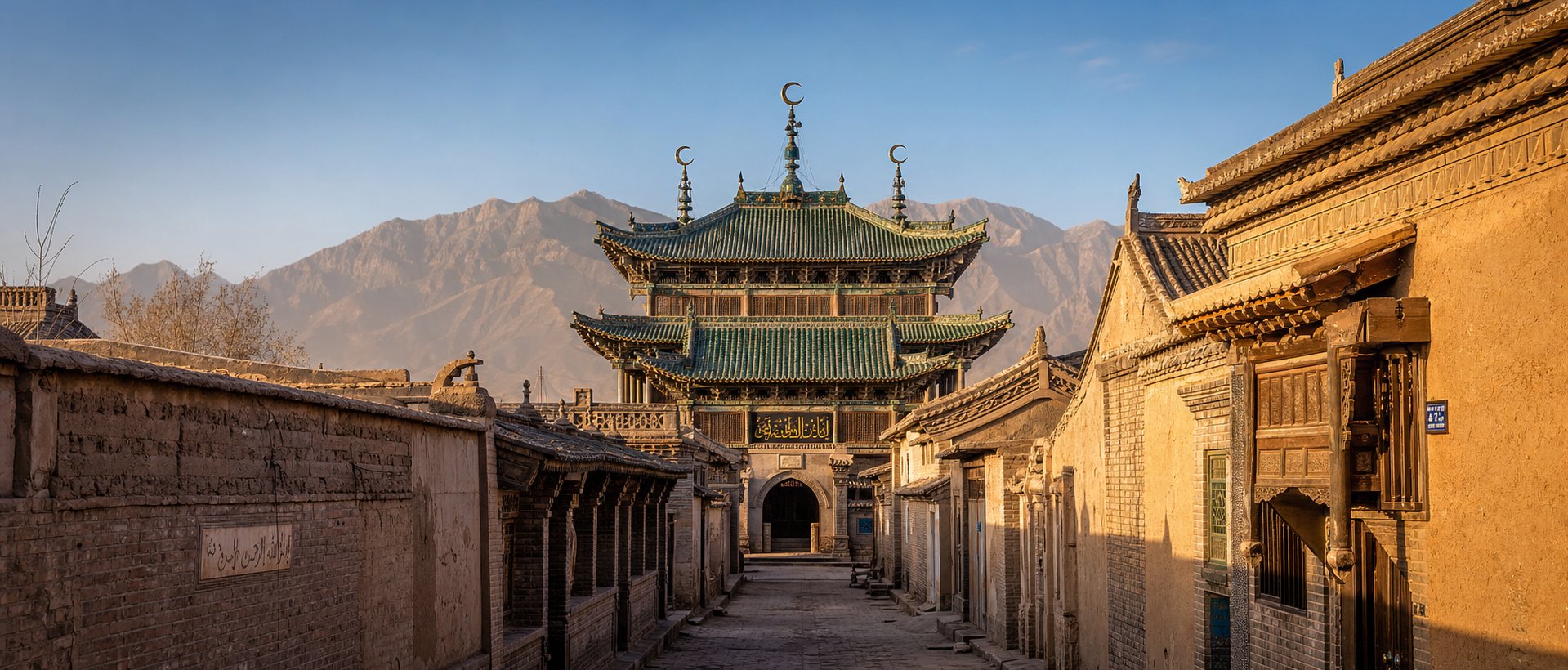
Ningxia Hui Autonomous Region is ground zero for Chinese Muslim surname density. The region's population is roughly one-third Hui, and surnames like Ma, Na, and Ha dominate local registries. Consider Najiahu Village in Yongning County, where over 700 households and 4,000 people all carry the surname Na, descended from Nasr al-Din of the Sayyid Ajall family. This kind of single-surname village is common across Ningxia, each one a living monument to a specific ancestor who settled there during the Yuan or Ming Dynasty.
Gansu province, stretching along the Hexi Corridor, served as the primary land bridge between Central Asia and interior China. Cities like Linxia, sometimes called "China's Little Mecca," concentrate Hui populations so densely that Ma alone accounts for the vast majority of local surnames. The corridor's geography made it a natural funnel. Every caravan traveling the Silk Road passed through these narrow valleys between mountain ranges, and many merchants simply stayed.
Among asian common last names in these regions, the proportion with Islamic roots far exceeds the national average. In some Ningxia counties, surname statistics show Ma constituting over 70% of the Hui population, a figure that makes the folk saying "nine out of ten Hui people have the surname Ma" feel less like exaggeration and more like census data.
Yunnan's Unique Muslim Surname Legacy
Yunnan presents a completely different story. Its Muslim communities did not arrive via the Silk Road at all. They came from the top down, literally, when the Mongol Yuan Dynasty appointed Sayyid Ajall Shams al-Din as governor of the province in the 1270s. His descendants branched into multiple surnames including Na, Sai, Ma, and Bao, spreading across Yunnan's diverse landscape.
The Bao (保) surname among Yunnan's Hui traces directly to this lineage. According to the Sayyid Ajall Family Genealogy, Emperor Taizu of the Ming Dynasty bestowed ten surnames upon the family's branches, Shan being one of them. Yunnan's Muslim surname landscape reflects administrative settlement rather than trade migration, giving it a top-heavy aristocratic character absent from the merchant-descended communities of the northwest.
Surnames like Hu (虎) also concentrate in Yunnan, derived from Husayn, the third son of Sayyid Ajall. The province essentially became a laboratory for how one powerful family's Arabic names fragmented into a dozen different Chinese surnames across just a few generations.
How Geography Helps Identify Muslim Surname Origins
Coastal cities tell yet another chapter. Quanzhou in Fujian province was medieval China's greatest international port, hosting Arab and Persian merchant communities from the Song Dynasty onward. Muslim families there adopted surnames like Su (苏) and Ding (丁), blending into the local Hokkien-speaking population. Some cantonese surnames and cantonese last names in Guangdong's port cities carry similar hidden Islamic roots, though these southern maritime communities are far less studied than their northwestern counterparts.
Beijing and Xi'an, as imperial capitals, attracted Muslim officials, astronomers, and military officers who settled permanently. Xi'an's Muslim Quarter still concentrates families with surnames like Ma, Sha, and Bai in neighborhoods surrounding the Great Mosque, a community continuously present since the Tang Dynasty.
The table below maps major regions to their dominant Muslim surnames and the historical forces that placed them there:
| Region | Dominant Muslim Surnames | Historical Reason for Concentration |
|---|---|---|
| Ningxia Hui Autonomous Region | Ma, Na, Ha, Sha | Silk Road terminus settlements; Yuan Dynasty military garrisons; Ming-era forced relocation policies concentrated Hui populations |
| Gansu (Linxia, Hexi Corridor) | Ma, Mu, Sa, Sha | Hexi Corridor trade route funnel; merchant communities settled at oasis towns; Dongxiang and Bonan ethnic overlap |
| Yunnan | Ma, Na, Sai, Bao, Hu | Administrative settlement by Sayyid Ajall Shams al-Din's descendants; Yuan Dynasty governance appointments |
| Xinjiang | Patronymic-based (Maimaiti, Aili); Ma among Hui enclaves | Turkic-speaking populations with patronymic traditions; Hui merchant communities along northern Silk Road branch |
| Fujian (Quanzhou) | Su, Ding, Jin | Maritime Silk Road port; Arab and Persian sea traders settled from Song Dynasty onward |
| Hebei (Dachang, Mengcun) | Ma, Ha, Sa | Yuan Dynasty military settlements near the capital; Ming-era garrison communities |
| Beijing / Xi'an | Ma, Sha, Bai, Ding | Imperial capital appointments; Muslim astronomers, officials, and military officers serving successive dynasties |
| Jiangsu / Zhejiang | Sha, Ding, Jin | Maritime trade connections; Ming-era Muslim naval officers; Zheng He's fleet personnel settlements |
Reading this map reveals a clear principle: the further west and the closer to historic trade routes, the higher the probability that a given surname carries Islamic origins. A surname like Ding in Quanzhou likely connects to Arab maritime traders. The same surname in Shandong might trace to entirely different roots. Geography does not prove ancestry on its own, but it dramatically shifts the odds and tells you where to look next for confirming evidence.
The real challenge emerges when a surname appears in regions where both Muslim and Han Chinese populations have carried it for centuries. Distinguishing between these parallel histories requires looking beyond geography to family-level evidence.
How to Tell If a Chinese Surname Has Muslim Origins
You carry the surname Ma. Your grandparents came from a village in Gansu. Does that make you Hui? Or are you descended from the ancient state of Ma, with no Islamic connection at all? This is the shared surname problem, and it affects millions of families across China. When a single chinese last name can trace to either Arab merchants or Han Chinese clans with entirely separate histories, the surname alone cannot answer the question. You need context.
The difficulty is real. Ma ranks as the 13th most common surname in mainland China, carried by both Hui Muslims and Han Chinese in enormous numbers. Bai, Jin, and Ding present the same overlap. So how do chinese names work as heritage markers when the name itself is ambiguous? The answer lies in layering multiple forms of evidence until a clear picture emerges.
Why Ma Bai and Jin Can Be Either Muslim or Han
The most common chinese last name with dual origins is Ma (马). For Hui families, it derives from Muhammad through progressive phonetic shortening. For Han Chinese families, it traces to an entirely different source: Zhao She, a general of the Zhao kingdom during the Warring States period, whose descendants adopted Ma as their surname after the fief of Mafu. These two lineages have no connection whatsoever, yet they share identical characters on modern ID cards.
Bai (白) follows the same pattern. Muslim families adopted it as a phonetic approximation of certain Arabic names or as a semantic translation referencing purity. Han Chinese families trace it to the ancient state of Bai or to descendants of the Shang Dynasty minister Bai Yi. Jin (金), meaning gold, served Muslim families as a translation of Arabic names referencing precious things, while Han Chinese families connect it to the Jurchen Jin Dynasty or to ancient clan origins predating Islam's arrival in China.
Ding (丁) might be the trickiest case. Among Muslim families, it echoes the Arabic "Din" meaning faith. Among Han Chinese, it is simply one of the most common last name options with roots stretching back to the Shang Dynasty. The character is so ordinary, so unremarkable, that it provides zero information on its own.
This overlap is not a flaw in the system. It was the entire point. Muslim families during the Ming Dynasty chose these characters precisely because they blended seamlessly with existing Han surnames. The camouflage that protected their ancestors now frustrates their descendants' research.
Contextual Clues That Reveal Islamic Heritage
Since the surname itself cannot settle the question, you need to examine the ecosystem surrounding it. Think of each clue as a piece of circumstantial evidence. No single indicator proves Muslim ancestry, but when several align, the case becomes strong.
- Ancestral village location: If your family's ancestral village sits in Ningxia, Linxia (Gansu), or near a historically documented Muslim community, the probability of Islamic heritage rises sharply. A Ma family from Yongning County, Ningxia carries very different odds than a Ma family from rural Hunan.
- Halal dietary traditions: Does your family avoid pork, even if they no longer practice Islam formally? Dietary habits often outlast religious observance by generations. Families who "just don't eat pork" without a clear reason may be carrying forward a tradition whose Islamic origin was forgotten.
- Mosque community records: Local mosques maintained their own registries of member families, births, marriages, and deaths. These records often survive even when government genealogies do not. If your surname appears in a mosque's historical registry for a given region, the connection is strong.
- Genealogical records (家谱/族谱): Formal clan genealogies sometimes contain prefaces explaining the family's origin. A Ma family genealogy that mentions ancestors arriving "from the Western Regions" or references an Arabic-sounding ancestral name in its earliest entries points clearly toward Islamic heritage.
- Ancestral hall inscriptions: Some Muslim families built ancestral halls (祠堂) that incorporated Arabic calligraphy, Quranic verses, or references to Mecca alongside standard Chinese commemorative texts. These physical markers survive in some villages.
- Burial practices: Islamic burial customs differ markedly from Han Chinese traditions. If family graves face west (toward Mecca), lack cremation, or follow simple shroud-wrapping practices, these physical traces confirm what the surname alone cannot.
- Oral family histories: Stories passed down about ancestors who "came from far away," who were "different from the neighbors," or who maintained special food restrictions often encode real historical memory even when specific details have faded.
- Generational naming poems (字辈): Many Hui clans maintained generational character sequences that differ from Han Chinese families sharing the same surname. If your family follows a specific naming poem that matches known Hui clan records, it confirms the connection.
You'll notice these clues operate at different scales. Geography and dietary traditions are broad indicators. Genealogical records and mosque registries provide specific documentary proof. The strongest cases combine both levels, a family named Ma from a known Muslim region whose genealogy explicitly references Arab ancestry and whose burial grounds follow Islamic customs.
Using Genealogical Records to Confirm Muslim Ancestry
Formal genealogies offer the most definitive answers, but accessing them requires knowing where to look. Hui clan genealogies (回族家谱) differ from standard Han Chinese genealogies in several telling ways. Their prefaces often begin with a migration narrative describing an ancestor's journey from Central Asia or Persia. They may include Arabic script alongside Chinese characters. And their earliest recorded ancestor frequently carries a transliterated Islamic name before the family switched to a single-character chinese last name.
Provincial archives in Ningxia, Gansu, and Yunnan hold collections of these documents. Some have been digitized and published in academic compilations. The Ningxia Social Sciences Academy, for example, has cataloged hundreds of Hui genealogies that trace specific Ma, Na, and Ha families back to named Arab or Persian ancestors.
Mosque records serve as a parallel system. Before modern civil registration, mosques functioned as community record-keepers, documenting marriages, circumcisions, and deaths. These records are particularly valuable because they confirm religious affiliation directly, removing any ambiguity about whether a surname carrier was actually Muslim. Some mosques in Xi'an and Beijing maintain continuous records spanning 400 or more years.
For families who lack access to formal documents, DNA testing has emerged as a supplementary tool. Hui individuals frequently carry Y-chromosome haplogroups associated with West Asian and Central Asian populations, markers that differ from typical Han Chinese genetic profiles. While DNA alone cannot prove Islamic religious heritage, it can confirm the geographic origins that surname research suggests.
The convergence of multiple evidence types matters most. A surname points you in a direction. Geography narrows the field. Family traditions add texture. And documentary records, whether genealogies, mosque registries, or genetic data, provide confirmation. No single piece works alone, but together they reconstruct a heritage that one Chinese character was never designed to carry by itself.
Some surnames, however, carry so much historical weight that their stories deserve individual attention. The most revealing cases show exactly how a single Arabic name fragmented, compressed, and transformed across generations until it became something entirely new.
Notable Chinese Muslim Surnames and Their Complete Origin Stories
Certain names carry so much layered history that they function almost like compressed archives. Unpack them, and entire migration stories spill out. Two surnames in particular attract more genealogical curiosity than any others: Ma (马) and Hui (回). One hides Islamic heritage behind an everyday Chinese character meaning "horse." The other announces it openly, wearing the ethnic and religious identity right on the surface.
Ma — The Most Common Chinese Muslim Surname
How does the name of the Prophet Muhammad become a single character meaning "horse"? The answer is generational compression. Picture an Arab merchant arriving in Tang Dynasty Chang'an. His full name is Muhammad ibn Ibrahim. Chinese neighbors struggle with the unfamiliar syllables and shorten it to something manageable: "Muhamma," then "Muma," then simply "Ma" in daily conversation. When Ming Dynasty edicts demanded formal Chinese surnames, "Ma" was already the name everyone used. The character 马 was waiting, common and inconspicuous.
Muhammad became Ma through progressive phonetic shortening across generations — from the full Arabic name to a two-syllable abbreviation to a single Chinese character, each step driven by the practical demands of daily speech in a Chinese-speaking environment until only the opening consonant sound survived.
The surname Ma ranks 13th among all Chinese surnames, carried by tens of millions. Among the Hui alone, it accounts for nearly 67% of the population. The folk saying "nine out of ten Hui people have the surname Ma" reflects a statistical reality confirmed by census data from Hui autonomous regions.
But the Ma surname did not spread through phonetic shortening alone. Some families adopted it out of direct reverence for the Prophet. Others received it as an imperially bestowed surname when Muslim astronomers and military officers served the Ming court. Still others switched to Ma from different surnames during periods of persecution, choosing the most common Hui surname as protective cover. As historical records note, "ten Ma surnames have different origins, and eight Ma surnames belong to different lineages." The same character conceals dozens of separate family histories.
The Hui Surname and Its Direct Islamic Connection
The surname Hui (回) occupies a completely different position. Where Ma hides its Islamic roots behind a neutral character, the hui surname declares them openly. The character 回 means "return" in standard Chinese, but it also serves as the first character in 回族 (Huizu, the Hui people) and 回教 (Huijiao, an older term for Islam in Chinese). Carrying the last name Hui is essentially carrying the word "Muslim" as your family name.
The hui last name origin connects to families who identified so strongly with their religious community that they adopted the ethnic label itself as a surname. This is unusual. Most Chinese Muslim families chose characters that concealed their heritage. Families bearing the hui family name chose the opposite strategy: visibility over camouflage.
Why would anyone make that choice during periods of assimilation pressure? Context matters. In regions where Hui communities formed the local majority, like certain villages in Ningxia, there was no need to hide. The surname Hui functioned as a statement of communal pride rather than a vulnerability. In these concentrated settlements, the hui last name carried social weight rather than social risk.
The character itself tells a visual story. 回 depicts a smaller square enclosed within a larger one, sometimes interpreted as representing the concept of return, of circling back. For Muslim families, this resonated with the spiritual concept of returning to God, of pilgrimage, of the cyclical journey between this world and the divine. Whether this interpretation influenced surname adoption or emerged afterward as folk etymology, it gives the surname hui a poetic dimension that purely phonetic surnames like Ma or Ha lack entirely.
Tracing Individual Surnames to Silk Road Ancestors
Beyond Ma and Hui, several other surnames attract frequent searches from people exploring their heritage. Sha (沙) connects searchers to the Persian word "Shah" (king) or to ancestors named Shams al-Din (Sun of the Faith). The dual etymology makes it especially rich. A Sha family in Jiangsu might descend from the diplomat Sheban of Calicut, who received the surname by imperial decree in 1430. A Sha family in Gansu might trace to a completely different Shams al-Din who settled along the Silk Road centuries earlier.
Ha (哈) links directly to the royal family of Bukhara, one of the Silk Road's greatest trading cities. The Qianlong Emperor's eulogy praising the Ha clan's military prowess confirms how thoroughly this Central Asian lineage embedded itself into Chinese imperial life. From Bukharan royalty to Qing Dynasty generals, the Ha surname traces a family arc spanning continents and centuries.
Na (纳) offers perhaps the cleanest genealogical trail of any Chinese Muslim surname. It traces to a single named individual: Nasr al-Din, eldest son of Sayyid Ajall Shams al-Din, the Bukharan governor of Yunnan. His descendants are documented, their migration patterns recorded, and their village settlements still identifiable. A person carrying the Na surname from Yunnan or Ningxia can often trace their lineage back to this specific 13th-century ancestor with unusual precision.
Each of these surnames is a compressed Silk Road story. Unfold Ma and you find the Prophet's name echoing through Chinese marketplaces. Unfold Ha and you find Bukharan royalty reinventing itself on foreign soil. Unfold Na and you find an empire's administrative machinery scattering one family's descendants across a continent. The surnames are small, single characters on a page, but the histories they encode stretch from the Arabian Peninsula to the South China Sea.
For anyone who recognizes their own family name in these stories, the natural next question is practical: where do you go from here? How do you move from a suggestive surname to confirmed ancestry, from a single character to a documented lineage?
Tracing Your Chinese Muslim Heritage Through Surname Research
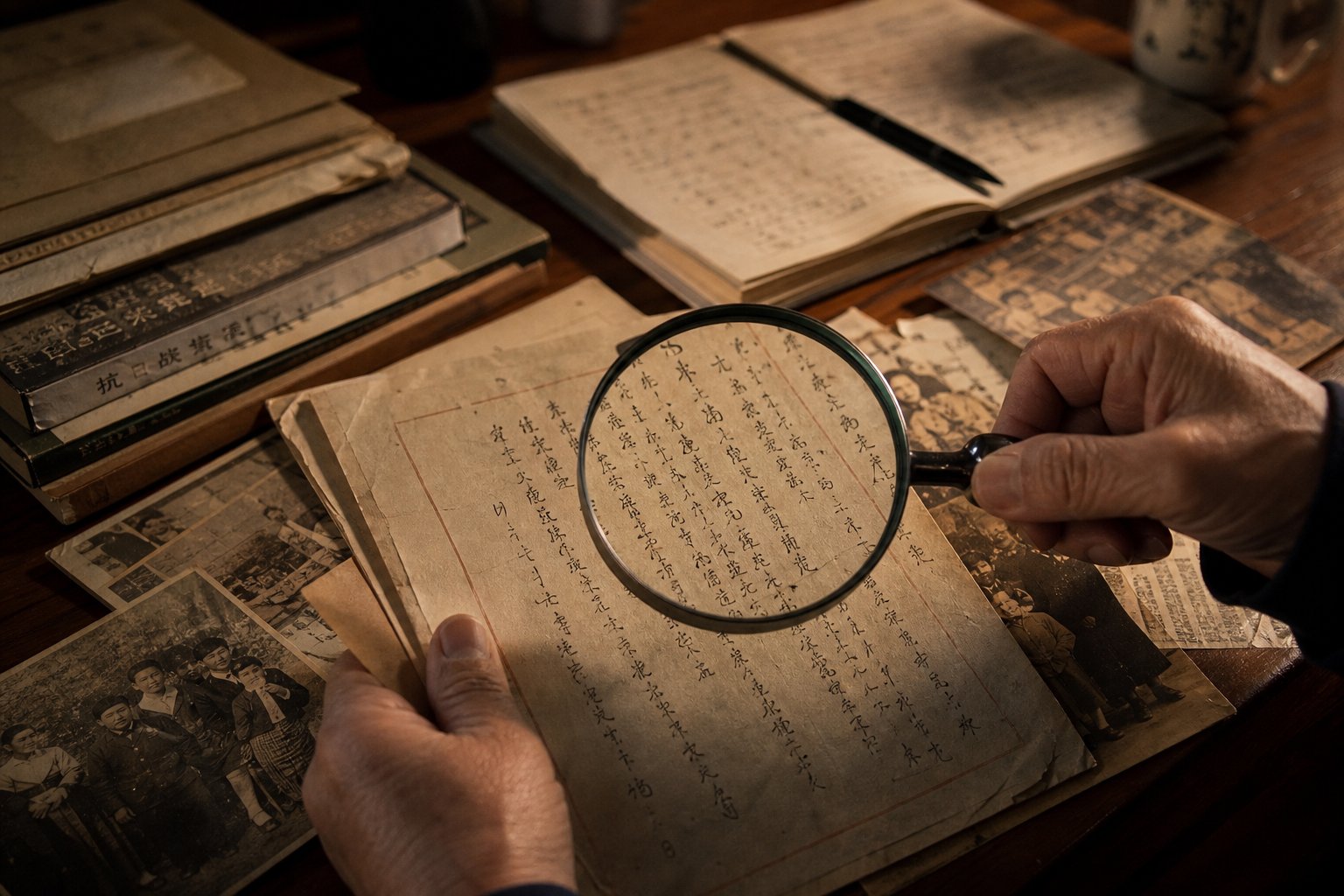
A suggestive surname is a starting point, not a conclusion. Moving from "my family name might be Muslim in origin" to "here is my documented lineage" requires a structured approach and the right resources. Whether you live in Ningxia or New Jersey, the research path follows the same basic logic: start with what you know, identify what your chinese surname might encode, then work outward toward documentary confirmation.
Starting Your Chinese Muslim Surname Research
The process works best when you treat it as layered investigation rather than a single search. Each step narrows the possibilities and points you toward the next source of evidence.
- Identify your surname's potential origin: Cross-reference your family name against known lists of chinese family names and meanings with Islamic roots. Determine whether your surname in chinese falls into the exclusively Muslim category (Sa, Ha, Shan) or the shared category (Ma, Bai, Jin). This tells you how much additional evidence you'll need.
- Document your family's oral history: Interview older relatives about ancestral villages, dietary traditions, burial customs, and any stories about ancestors "from the west." Record everything, even fragments that seem insignificant. FamilySearch's guide on talking with family members offers structured approaches for these conversations.
- Locate your ancestral village: Pin down the specific county and village your family originated from. Geography is your strongest contextual clue. A Ma family from Linxia carries different odds than one from Changsha.
- Search for clan genealogies (家谱): Check whether your family's surname has a published genealogy for your ancestral region. Provincial archives in Ningxia, Gansu, and Yunnan hold extensive Hui genealogy collections. Some have been digitized through platforms like FamilySearch's catalog and Chinese academic databases.
- Contact local mosque communities: Mosques in historically Muslim areas maintained birth, marriage, and death records independently from government systems. Reach out to Islamic associations in your ancestral county. Their records may confirm your family's membership in the community.
- Cross-reference with Hui cultural associations: Organizations like the China Hui Culture Association and provincial-level Hui research societies maintain surname databases and can connect you with clan networks still active in China.
- Consider DNA testing as supplementary evidence: Y-chromosome and autosomal DNA tests can reveal Central or West Asian ancestry markers consistent with Silk Road migration. Services like 23andMe now offer Central Asian population breakdowns that can identify genetic connections to Afghan, Tajik, Uzbek, and other populations historically linked to Muslim migration into China.
Key Resources for Heritage Discovery
Several specific resources deserve attention. FamilySearch offers free access to Chinese genealogical records, a surname finder tool, and guides for understanding clan genealogy books (jiapu). Their collection includes digitized records from Chinese provincial archives that may contain Hui family documents. For understanding how common chinese full names connect to clan structures, their guides on generation poems and ancestral villages provide essential context.
The Ningxia Social Sciences Academy has published compilations of Hui genealogies covering major surname lineages. Academic databases like CNKI (China National Knowledge Infrastructure) contain research papers documenting specific clan histories, migration patterns, and chinese family names and meanings tied to Islamic origins. Local county gazetteers (县志) often include sections on ethnic minority populations that name specific families and their settlement dates.
For DNA-based research, look for haplogroups J, R1a, and specific subclades of O that appear at elevated frequencies among Hui populations compared to surrounding Han Chinese communities. These markers do not prove religious heritage, but they confirm the geographic origins that surname research suggests.
Connecting Diaspora Communities to Their Roots
Chinese Muslim diaspora communities in Southeast Asia, particularly in Malaysia, Indonesia, and Myanmar, often preserved traditions that mainland families lost during the 20th century's political upheavals. Families who emigrated before 1949 sometimes carried genealogical documents, mosque certificates, or oral histories that no longer exist in their ancestral villages. Connecting with these overseas communities can fill gaps that domestic research cannot.
In the Americas and Europe, second and third-generation Chinese families may not realize their surname carries Islamic heritage at all. The research journey often begins with a simple curiosity: why did grandma never eat pork? Why does our family genealogy mention ancestors from "the Western Regions"? These small questions, paired with a systematic approach to surname analysis, can unlock connections stretching back through centuries of Silk Road history to ancestors whose names were written in Arabic script before they ever became a single Chinese character.
Frequently Asked Questions About Chinese Muslim Surnames
1. What is the most common Chinese Muslim surname?
Ma (马) is by far the most common Chinese Muslim surname, accounting for nearly 67% of the entire Hui population according to census data. It derives from the Prophet Muhammad's name through progressive phonetic shortening across generations. Arab and Persian settlers gradually compressed 'Muhammad' to 'Muma' and then to 'Ma' in daily Chinese speech. When Ming Dynasty policies mandated Chinese-style surnames, families registered the character 马 (meaning horse), which was already a common Han surname, providing effective social camouflage while preserving a phonetic link to their Islamic heritage.
2. How can you tell if a Chinese surname has Muslim origins?
Since many Muslim surnames like Ma, Bai, and Jin are also common Han Chinese surnames, you need multiple contextual clues to confirm Islamic heritage. Key indicators include: your ancestral village's location in historically Muslim regions like Ningxia or Gansu; family traditions of avoiding pork even without formal religious practice; entries in mosque community records; clan genealogies mentioning ancestors from 'the Western Regions'; burial grounds facing west toward Mecca; and generational naming poems matching known Hui clan records. DNA testing can also reveal Central or West Asian ancestry markers consistent with Silk Road migration patterns.
3. What are the Thirteen Surnames of the Hui people?
The Thirteen Surnames (回族十三姓) are the core cluster of Chinese Muslim family names: Ma (马), Na (纳), Sa (撒), Ha (哈), Sha (沙), Sai (赛), Su (苏), Hu (虎), Shan (闪), Bao (保), Mu (穆), Su (速), and Hao (郝). Each traces back to Arabic or Persian names that were compressed into single Chinese characters during the Ming Dynasty's forced assimilation period. Some like Sa, Ha, and Shan are predominantly Muslim in origin, while others like Ma and Su are shared with Han Chinese populations who adopted the same characters from entirely different etymological sources.
4. How did Arabic names become Chinese surnames?
Four distinct linguistic mechanisms transformed Arabic and Persian names into Chinese surnames. Phonetic transliteration matched the first syllable of an Islamic name to a similar-sounding Chinese character (Muhammad became Ma). Semantic translation chose characters whose meaning reflected the original name's definition (Haidar meaning lion became Hai meaning sea, suggesting grandeur). Imperial bestowal involved emperors granting prestigious Chinese surnames to Muslim officials as honors. Voluntary adoption saw families choosing common Han surnames purely for social protection during periods of anti-Muslim sentiment. Most transformations occurred during the Ming Dynasty when Emperor Zhu Yuanzhang mandated Chinese-style names for all foreign-origin populations.
5. Where do Chinese Muslim surnames concentrate geographically in China?
Chinese Muslim surnames cluster along historical Silk Road routes and maritime trade ports. The highest concentrations appear in Ningxia Hui Autonomous Region (where Ma can account for over 70% of Hui residents), Gansu's Linxia area known as 'China's Little Mecca,' and Yunnan province where descendants of the Yuan Dynasty governor Sayyid Ajall settled. Coastal cities like Quanzhou in Fujian host Muslim surnames from maritime Arab traders, while Beijing and Xi'an retain communities from imperial-era Muslim officials. Geography serves as one of the strongest contextual clues for determining whether a shared surname like Ma carries Islamic or Han Chinese origins.