Why Wu and Ng Are Actually the Same Surname
You see "Wu" on one person's passport and "Ng" on another's. One looks like a familiar English syllable. The other looks like someone forgot to include the vowels. Are these two completely different families, or is something else going on?
Here's the short answer: the wu surname and the ng surname both represent the exact same Chinese character — 吳 (simplified: 吴). Same ancestry, same lineage, same family. The only difference is the dialect used to romanize the character into English letters. Mandarin speakers say "Wu" (rhymes with "woo"). Cantonese speakers say "Ng" (a nasal hum, like the ending of "sing" without the "si"). Two pronunciations, one origin.
The One Character Behind Multiple Spellings
Chinese is not a single spoken language. It's a family of dialects — Mandarin, Cantonese, Hokkien, Hakka, Shanghainese — that share a written script but sound dramatically different from one another. When Chinese families emigrated across the globe, their surnames were romanized based on whichever dialect they spoke at home. A family from Beijing wrote "Wu." A family from Hong Kong wrote "Ng." A family from Singapore might have written "Goh." All three were writing the same character: 吴.
This pattern isn't unique to this surname. It's the same reason you'll find Wong and Huang, Chan and Chen, Lee and Li scattered across different communities. But few examples are as visually striking as Wu vs Ng — where the Cantonese version appears to have shed every vowel in the English alphabet.
Wu and Ng share the same origin character (吳/吴) and the same ancestral lineage despite looking completely different in English. The spelling difference is purely a matter of dialect pronunciation, not family history.
What This Guide Covers
This article breaks down every major romanization variant of 吴 — Wu, Ng, Goh, Woo, Ngo, and more — with dialect attribution, pronunciation guidance, geographic distribution, and genealogy implications. Whether you're trying to figure out your own family's dialect roots or researching a relative's immigration records, you'll find a clear map connecting each spelling back to its source. The character 吴 ranks among the top 10 most common Chinese surnames, carried by tens of millions of people worldwide. Understanding how one character became so many different English spellings is the first step toward tracing where your branch of the family tree actually begins.
How We Evaluated Each Romanization Variant
Not all romanizations are created equal. Some are instantly recognizable worldwide. Others confuse English speakers on sight. To give you a useful framework for the sections ahead, each spelling variant of 吴 is evaluated against four specific criteria.
Ranking Criteria for Each Variant
- Global prevalence — How widely used is this spelling across official documents, databases, and international records?
- Phonetic accessibility — Can an English speaker read it and produce something close to the correct sound without coaching?
- Genealogical traceability — Does the spelling help researchers identify the family's geographic and dialect origins?
- Dialect specificity — Does the romanization point clearly to one dialect group, or could it belong to several?
These four dimensions often work against each other. A spelling that scores high on phonetic accessibility (like "Woo") may score low on dialect specificity because it could come from multiple backgrounds. A spelling like "Ng" is unmistakably Ng Chinese — Cantonese, specifically — but trips up nearly every English speaker who encounters it.
The Linguistic Split Between Mandarin and Cantonese
The reason these variants exist at all comes down to a sound change that happened over a thousand years ago. In Old Chinese, the character 吴 began with a velar nasal onset — the *ng- sound (IPA: /ŋ/). Cantonese, along with other southern dialects, preserved this ancient initial. That's why the wu dialect group and Cantonese speakers still produce that nasal hum at the start of the syllable.
Mandarin, however, underwent a systematic loss of the initial *ng- before certain vowels. The nasal dropped away entirely, leaving behind a rounded "w" glide. So the same character that Cantonese speakers pronounce as "Ng" became "Wu" in the wu language family and in standard Mandarin — not because the sound was added, but because the older sound was lost.
This single phonological shift is the engine behind every spelling variant you'll encounter in the sections that follow. Each romanization captures a different dialect's snapshot of how 吴 sounds when spoken aloud.
Wu in Mandarin Pinyin as the Global Standard
Of all the romanizations of 吴, "Wu" is the one you'll encounter most often in international databases, academic papers, and news headlines. That dominance isn't accidental — it's the direct result of China's adoption of Pinyin as the official romanization system in 1958, a decision that standardized how over a billion people's names appear in Latin script.
Pronouncing it is straightforward. Think of the English word "woo" — as in "woo someone" — and you're essentially there. The Mandarin pronunciation is a second-tone rising sound (Wu, written with the accent mark as Wu), but for everyday English usage, saying "woo" gets you close enough that any Wu-surnamed person will recognize it immediately.
Why Wu Dominates Global Usage
Pinyin's reach extends far beyond mainland China. When the United Nations, international media outlets, and foreign governments adopted Pinyin as the standard for romanizing Chinese names and place names starting in 1979, "Wu" became the default spelling in passports, visa applications, and official records for Mandarin-speaking populations. Taiwan presents an interesting case — while the island historically used the Wade-Giles system, the Wade-Giles romanization of 吴 also happens to be "Wu," creating a rare instance where both systems produce the identical spelling.
This convergence means that whether a person named Wu emigrated from Beijing, Taipei, or any Mandarin-speaking diaspora community in Southeast Asia or North America, their surname looks the same on paper. That consistency makes the wu last name one of the most searchable and recognizable Chinese surnames in English-language records worldwide.
Historical Roots in the Wu Kingdom
The wu surname meaning traces back over 3,000 years to the ancient State of Wu in present-day Jiangsu province. The story begins in the 13th century BC, when Taibo, the eldest son of King Tai of Zhou, voluntarily left his homeland and traveled southeast with his brother Zhongyong. They established the state of Wu, and their descendants adopted the state's name as their surname.
That kingdom eventually became a major power during the Spring and Autumn period, fielding generals like Sun Tzu — the author of The Art of War — under King Helu. The wu last name origin, then, isn't just a family label. It's a marker of one of ancient China's most storied political lineages, connecting modern bearers to a kingdom that shaped Chinese military and philosophical thought.
A 2019 census placed Wu as the ninth most common surname in mainland China, shared by approximately 30 million people — roughly 2.1% of the population. The province with the highest concentration is Guangdong, though the name is well-represented across Jiangsu, Zhejiang, and throughout southern China. Famous modern bearers span every field: physicist Wu Chien-Shiung, director John Woo, actress Constance Wu, and Boston mayor Michelle Wu among them.
Pros and Cons of the Wu Spelling
Pros
- Phonetically intuitive for English speakers — reads naturally as "woo"
- Globally recognized as the standard Pinyin romanization
- Matches both Pinyin and Wade-Giles systems, maximizing consistency across records
- Easy to search in databases, immigration records, and genealogy platforms
Cons
- Ambiguous — the spelling "Wu" in Pinyin could represent several different characters: 吳 (the surname discussed here), 伍 (a different surname meaning "five"), or 武 (yet another surname meaning "martial")
- Provides no dialect information — you cannot tell from "Wu" alone whether the bearer speaks Mandarin, Shanghainese, or another dialect
- The short, two-letter spelling sometimes gets mistaken for an abbreviation or initial rather than a complete surname
That ambiguity — particularly the overlap between 吳 and 伍 — creates real problems for genealogy researchers. Both characters romanize identically in Pinyin, yet they represent entirely separate families with different ancestral origins. The wu surname meaning changes completely depending on which character sits behind those two English letters, a distinction that becomes critical when tracing lineage across generations.
Where "Wu" gains clarity through global standardization, the Cantonese romanization takes the opposite path — sacrificing phonetic accessibility for unmistakable dialect identity. That tradeoff produces one of the most visually unusual surnames in the English-speaking world.
Ng in Cantonese and the Vowelless Mystery
Two consonants. No vowel in sight. For English speakers encountering the surname Ng for the first time, the reaction is almost always the same: how do you even say that? It looks like a typo, an abbreviation, or a text message shorthand — anything but a complete name. Yet Ng is one of the most common surnames in Hong Kong, Macau, and Cantonese-speaking communities across the globe. The confusion it generates in English-speaking countries is not a flaw in the spelling. It's a window into how Cantonese preserves a sound that Mandarin abandoned centuries ago.
How to Actually Pronounce Ng
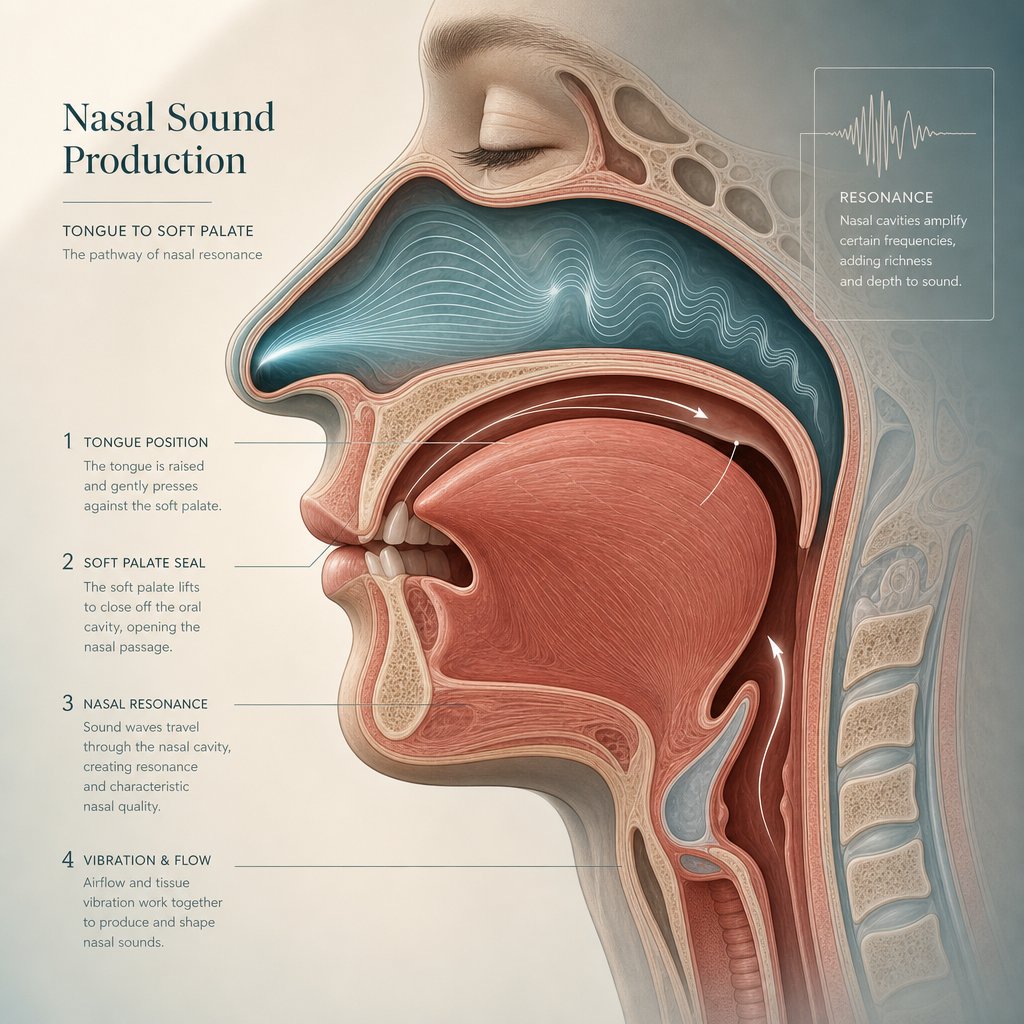
Here's the key to the ng last name pronunciation: the two letters "ng" represent a single sound, not two separate consonants strung together. In phonetic terms, it's a syllabic nasal consonant — written in the International Phonetic Alphabet as [ŋ̍]. You already make this sound every day in English. Say the word "sing" out loud. That humming resonance at the end, after the vowel drops away? That's the ng sound. Now imagine producing just that final hum — no "si" in front of it — as a standalone syllable. That's the surname Ng.
Think of it this way: the sound lives in the back of your mouth. Your tongue pushes up against your soft palate, blocking airflow through the mouth entirely, and the sound resonates out through your nose. It's the same mechanism behind the "m" in "hum" or the "n" in "sun," except the tongue position is further back — at the velum rather than behind the teeth or at the lips.
In English-speaking countries, people commonly approximate the pronunciation as "Ing," "Eng," or "Ung" — and many Ng-surnamed individuals accept these approximations without correction. Some families have even adopted variant romanizations like Eng, Ing, or Ung to sidestep the confusion entirely. But the authentic Cantonese pronunciation is simply that nasal hum: no added vowel, no "hard G" at the end.
Why Cantonese Preserves the Ancient Nasal Sound
The origin of last name Ng reaches back to the same ancient character and the same ancestral lineage as Wu — the State of Wu founded by Taibo over 3,000 years ago. The difference is purely phonological. In Old Chinese, the character 吴 began with an initial *ng- onset (the velar nasal /ŋ/). Southern Chinese dialects, including Cantonese, held onto that initial sound through millennia of linguistic evolution. Mandarin, by contrast, systematically dropped initial *ng- before rounded vowels, replacing it with a "w" glide.
So when you hear someone say "Ng," you're hearing a pronunciation that's actually older and more conservative than "Wu." Cantonese didn't add a strange sound — it kept the original one. Mandarin is the dialect that changed, shedding the nasal onset and leaving behind the smoother "w" that feels so natural to English ears. The last name Ng origin, in other words, is not some quirky Cantonese invention. It's a living fossil of how all Chinese speakers once pronounced this character.
This preservation extends beyond just 吴. Cantonese retains initial ng- in dozens of characters where Mandarin has lost it entirely — words for "I" (我, Cantonese: ngo5), "goose" (鹅, Cantonese: ngo4), and "hungry" (饿, Cantonese: ngo6) all begin with that same velar nasal that Mandarin speakers no longer produce.
The Social Experience of Bearing a Vowelless Surname
Imagine every first day — new school, new job, new doctor's office — beginning with the same awkward exchange. The receptionist stares at the form. Pauses. Attempts something like "Nuh-guh?" or skips the name entirely and asks, "How do you say your last name?" For millions of people in the Cantonese diaspora, this is a lifelong routine.
The ng surname appears throughout Hong Kong, where it ranks among the most common family names, and across Cantonese-speaking communities in the United States, United Kingdom, Canada, and Australia. Notable bearers include computer scientist Andrew Ng, novelist Celeste Ng, actor Sandra Ng, and baseball executive Kim Ng — all of whom have navigated English-speaking environments with a surname that defies English phonotactic rules.
Some families adapted. In Australia, the spelling "Ung" became a common alternative. In the United States, you'll find variants like "Eng" or "Ing" that insert a vowel to ease English pronunciation. These aren't different surnames — they're the same Cantonese sound filtered through different immigration officers' ears and different families' preferences for legibility versus authenticity.
The social friction cuts both ways. On one hand, the spelling creates constant mispronunciation and occasional bureaucratic headaches — computer systems that reject two-letter surnames, airline tickets that truncate the name, forms that flag it as incomplete. On the other hand, the spelling functions as an immediate cultural identifier. If your surname is Ng, people know — without asking — that your family roots are Cantonese. That specificity is something the more generic "Wu" spelling cannot provide.
Pros and Cons of the Ng Spelling
Pros
- Unambiguous dialect marker — immediately identifies Cantonese heritage to anyone familiar with Chinese naming conventions
- Historically authentic — preserves the ancient initial nasal that predates the Mandarin pronunciation
- Highly distinctive — unlikely to be confused with non-Chinese surnames
- Strong community recognition within Hong Kong and Cantonese diaspora networks
Cons
- Frequently mispronounced by English speakers unfamiliar with syllabic nasals
- Causes confusion in administrative systems — forms, databases, and automated phone trees often struggle with a two-letter, vowelless entry
- Requires repeated explanation in English-speaking environments
- Can be romanized inconsistently (Ng, Eng, Ing, Ung) even within the same family across generations, complicating genealogy research
The ng last name origin story is ultimately one of linguistic stubbornness — a dialect that refused to let go of an ancient sound, even as the dominant national language moved on. For genealogy researchers, spotting "Ng" on a document is an immediate clue: this family almost certainly passed through Hong Kong, Macau, or a Cantonese-speaking community before arriving at their current home.
But Cantonese isn't the only southern dialect that reshaped 吴 into something unrecognizable to Mandarin ears. Further south, in the Hokkien and Teochew communities of Southeast Asia, the same character took yet another phonetic turn — dropping both the nasal and the "w" in favor of something entirely unexpected.
Goh in Hokkien and Teochew Dialects
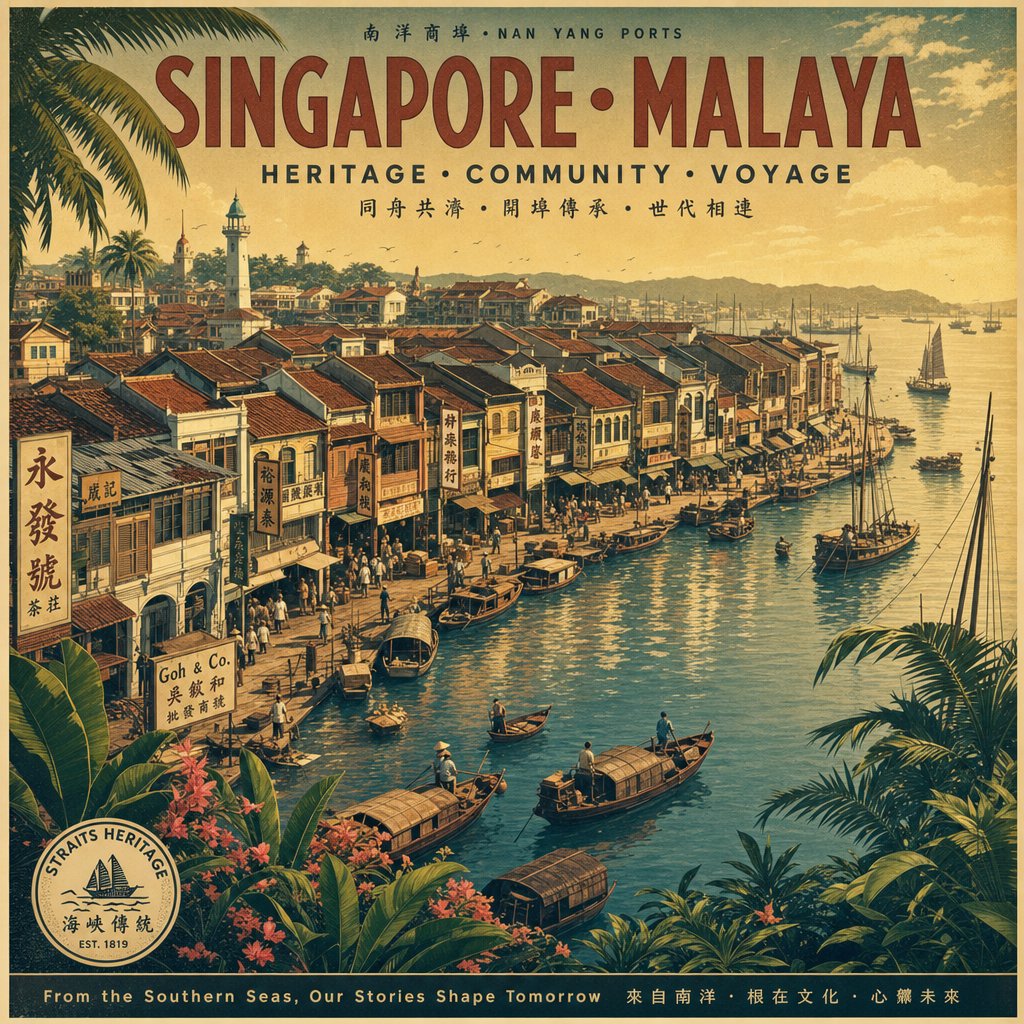
A hard "G" sound. No nasal hum, no rounded "w" glide — just a clean, percussive consonant followed by a short vowel. If you encounter someone with the surname Goh in Singapore or Malaysia, you're looking at the same character 吴 filtered through yet another branch of the Chinese dialect tree: Southern Min, which includes Hokkien, Teochew, and Hainanese. The transformation is so complete that most people would never guess Goh, Wu, and Ng all trace back to the same family.
The Southern Min Sound Shift
Southern Min dialects took a different evolutionary path from both Mandarin and Cantonese. Where Mandarin lost the ancient initial *ng- and replaced it with a "w" glide, and Cantonese preserved the nasal intact, Hokkien and Teochew underwent what linguists call a denasalization — the nasal onset hardened into a voiced stop consonant. The *ng- became a "g" sound (IPA: /ɡ/), producing a pronunciation closer to "goh" or "go" depending on the specific sub-dialect.
This isn't a random mutation. Denasalization is a well-documented phonological process across many language families. In the case of Southern Min, the velar nasal /ŋ/ shifted to the velar stop /ɡ/ in certain phonetic environments, fundamentally changing how the surname sounds while leaving the written character untouched. The result is a pronunciation that sounds nothing like either Wu or Ng to untrained ears — yet carries the identical ng name origin and ancestral lineage stretching back to the State of Wu.
Geographic Distribution of Goh and Go
The Goh spelling is overwhelmingly concentrated in Southeast Asia. According to Forebears.io, approximately 135,156 people worldwide bear the surname Goh, with Malaysia accounting for 76,427 of them and Singapore another 24,395. That means roughly 75% of all Goh-surnamed individuals live in just two countries — a geographic concentration far tighter than either Wu or Ng.
This distribution reflects migration history. Hokkien and Teochew speakers from Fujian province and eastern Guangdong formed the dominant Chinese communities in British Malaya and the Straits Settlements during the 19th and early 20th centuries. When their names were romanized for colonial records, the spelling followed their spoken dialect. As the South China Morning Post notes, the naming convention for Chinese descendants in Singapore and Malaysia romanizes surnames based on ancestral dialect pronunciation — not Mandarin Pinyin.
The variant "Go" (without the trailing "h") appears more commonly in the Philippines and among some Hokkien communities in Indonesia. The "h" in Goh serves no phonetic purpose in English — it's a spelling convention that signals a short, clipped vowel rather than a long "oh" sound. Both Go and Goh represent the same pronunciation.
Then there's the ngo last name, which bridges multiple dialect communities. In Cantonese, Ngo represents the character 吴 in certain romanization systems (particularly older ones used before the standardization of Jyutping). In Vietnamese, Ngo (Ngô) is the standard rendering of the same character — Vietnam having borrowed Chinese surnames centuries ago and adapted them to Vietnamese phonology. The ngo name origin, whether encountered in a Cantonese or Vietnamese context, still points back to the same ancestral character 吴. Ancestry.com confirms that Goh represents the "Teochew, Hokkien, or Hainanese form of the surname 吴," with this pronunciation found across eastern Guangdong, Fujian, Taiwan, and Hainan.
Pros and Cons of the Goh Spelling
Pros
- Phonetically accessible — English speakers can read "Goh" and produce a reasonable approximation without instruction
- Strong dialect specificity — immediately signals Hokkien or Teochew heritage to anyone familiar with Chinese naming patterns
- Clear geographic marker — overwhelmingly associated with Singapore, Malaysia, and Southeast Asian Chinese communities
- No vowel confusion — unlike Ng, the spelling contains a recognizable vowel and consonant structure
Cons
- Low global recognition — outside Southeast Asia, few people connect "Goh" to the same surname as Wu or Ng
- Limited genealogical database coverage — many international surname databases index under Wu (Pinyin) rather than Goh
- Potential confusion with unrelated surnames — Goh can also represent 高 (Gao) or 葛 (Ge) in certain romanization contexts
- The trailing "h" sometimes causes English speakers to over-pronounce it as "gaw" rather than the intended short "go"
The Southeast Asian experience highlights something broader about Chinese diaspora naming: in countries where multiple dialect groups coexisted — Hokkien, Teochew, Cantonese, Hakka, Hainanese — a single Chinese character could appear in half a dozen different English spellings within the same city. Singapore alone might have residents surnamed Wu, Ng, Goh, Go, and Ngo, all sharing the same ancestral character but reflecting different family dialect backgrounds.
Not every family, though, chose a dialect-specific spelling. Some opted for a middle path — a romanization designed less for linguistic accuracy and more for everyday ease in English-speaking environments.
Woo as the Phonetic English Alternative
Where Ng sacrifices readability for dialect authenticity and Wu follows official standardization, the woo surname occupies a different space entirely. It's a pragmatic choice — a spelling that prioritizes how the name actually sounds to English ears over strict adherence to any single romanization system. If you encounter someone with the last name Woo, you're likely looking at a family that made a deliberate decision: make the name easy to say, easy to spell, and easy to remember in an English-speaking environment.
Wade-Giles Origins and Anglicization
The spelling "Woo" has roots in the Wade-Giles romanization system, which predated Pinyin by over a century. Developed by British diplomats Thomas Wade and Herbert Giles in the mid-to-late 1800s, Wade-Giles was the dominant system for romanizing Chinese in English-language scholarship, diplomacy, and immigration records well into the 20th century. Under Wade-Giles conventions, the character 吴 could appear as "Wu" — identical to the later Pinyin spelling — but informal anglicizations often extended it to "Woo" to make the pronunciation unmistakable.
The logic was simple. English speakers seeing "Wu" might hesitate — does it rhyme with "up"? Is the "u" short or long? But "Woo" leaves no room for doubt. It reads exactly as it sounds: like the English word "woo," rhyming with "too," "shoe," and "blue." For families navigating immigration paperwork, school enrollment forms, and business dealings in early 20th-century America, Canada, or Australia, that phonetic clarity carried real practical value.
This wasn't a formal system decision. No government body mandated "Woo" as an official romanization. It emerged organically — sometimes chosen by families themselves, sometimes imposed by immigration officers who wrote down what they heard rather than following any standardized chart. As the Chinese American Historian blog documents, inconsistent spelling of Chinese surnames created real problems for early immigrants, particularly when names on different documents didn't match exactly. A family might be "Wu" on one form and "Woo" on another, depending on which clerk processed the paperwork.
When Families Chose Woo Over Wu
The woo last name origin story is less about linguistics and more about lived experience. Imagine arriving in San Francisco or Vancouver in the 1920s. You speak Cantonese, Mandarin, or Taishanese. The immigration officer asks your name. You say something that sounds like "woo." He writes it down. Maybe he writes "Wu." Maybe he writes "Woo." Maybe he writes "Wou." The spelling that lands on your entry documents becomes your family's official surname in the new country — sometimes for generations.
But many families also made active choices. The woo last name became particularly common among earlier generations of Chinese immigrants who wanted a spelling that English-speaking neighbors, teachers, and employers could handle without stumbling. "Woo" reads naturally in English. It doesn't trigger the "how do you say that?" reaction that Ng provokes. It doesn't get mistaken for an abbreviation the way the two-letter "Wu" sometimes does.
The woo family name appears across multiple dialect backgrounds, which is both its strength and its limitation. A person surnamed Woo might descend from Cantonese speakers, Mandarin speakers, Taishanese speakers, or Hakka speakers. The spelling tells you the family valued English-language accessibility — but it doesn't tell you which dialect community they came from. Compare that to "Ng" (unmistakably Cantonese) or "Goh" (clearly Hokkien/Teochew), and you'll see the tradeoff. Phonetic ease came at the cost of genealogical specificity.
Notable bearers of the Woo spelling include filmmaker John Woo, whose Cantonese name (吴宇森) could just as easily have been romanized as "Ng" or "Wu" depending on the system used. His choice of "Woo" — or more precisely, the choice made when his name was first romanized for English-language contexts — reflects the same pragmatic impulse that shaped thousands of families' decisions across the diaspora.
Pros and Cons of the Woo Spelling
Pros
- Phonetically transparent — any English speaker can read and pronounce it correctly on the first attempt
- No confusion or hesitation — eliminates the "is it wuh or woo?" ambiguity that "Wu" sometimes creates
- Familiar English word pattern — follows the same spelling logic as "too," "zoo," and "boo"
- Works smoothly in administrative systems — no flagging for being too short or lacking vowels
Cons
- Less common in official records — modern Chinese passports and government documents use Pinyin ("Wu"), not "Woo"
- Ambiguous dialect origin — could represent Cantonese, Mandarin, or any other dialect background, making genealogical tracing harder
- Sometimes perceived as informal or anglicized rather than "authentic"
- May not match the spelling used by relatives in China, Hong Kong, or Taiwan, creating disconnects in family records
For genealogy researchers, encountering the last name Woo on a historical document is a mixed signal. It confirms the family likely immigrated to an English-speaking country during the pre-Pinyin era (before the 1980s, when Pinyin became the international standard), but it doesn't narrow down the dialect the way Ng or Goh would. You'll need additional clues — village of origin, immigration port, community associations — to determine whether a Woo family was Cantonese, Mandarin-speaking, or something else entirely.
The ambiguity of "Woo" points to a deeper problem that affects all romanizations of this surname: multiple Chinese characters can hide behind the same English spelling. And when two completely different surnames — with different ancestors, different meanings, and different histories — collapse into identical letters, the consequences for family research become serious.
The 吳 vs 伍 Distinction Every Researcher Should Know
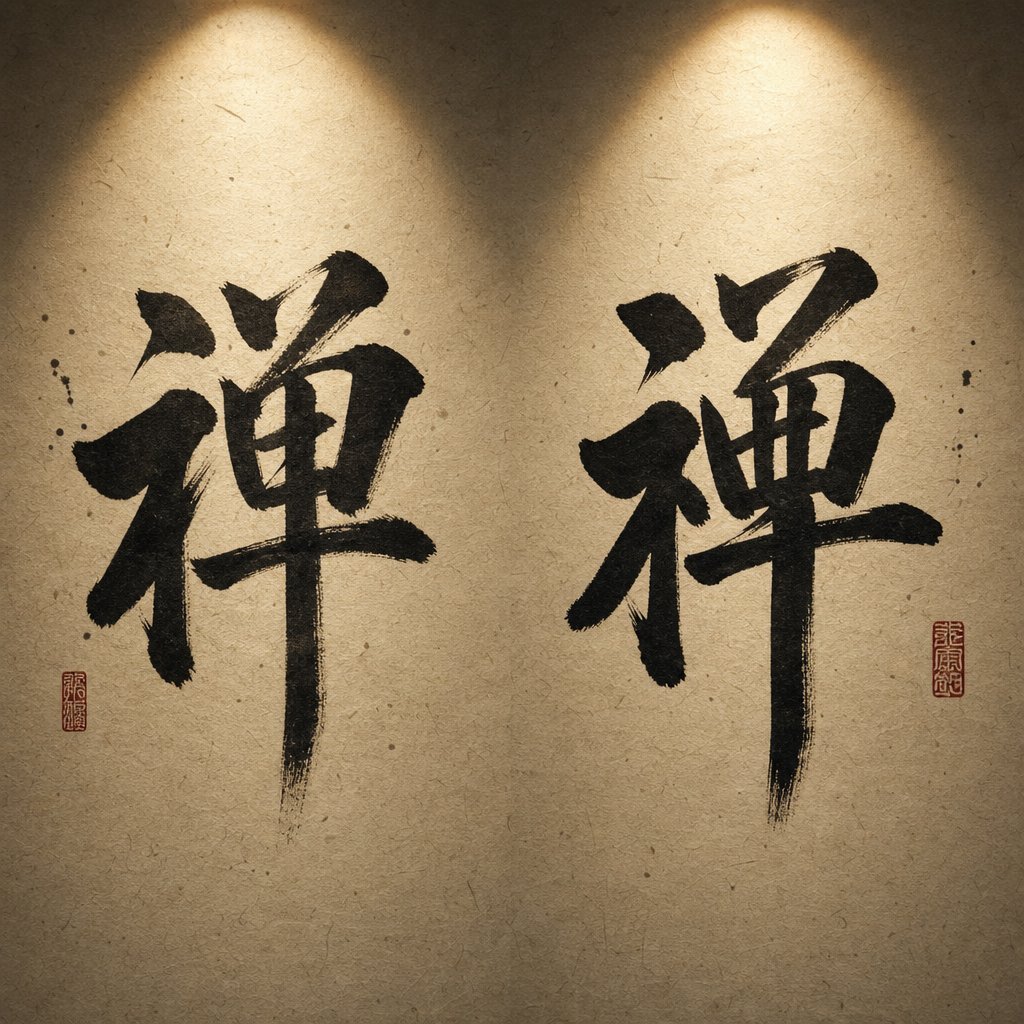
Here's where things get genuinely tricky. Everything discussed so far — Wu, Ng, Goh, Woo — refers to the character 吳 (simplified: 吴), the surname tracing back to the ancient State of Wu. But there's another Chinese character that also romanizes as "Wu" in Mandarin Pinyin: 伍. Same two English letters. Completely different family. Different ancestors, different meaning, different history. If you're researching your genealogy and you pick the wrong character, you'll end up tracing someone else's family tree entirely.
So is Wu a Chinese last name with one meaning or two? The answer is two — at minimum. And understanding which wu chinese character your family actually uses is the single most important step in any genealogy project involving this surname.
吳 and 伍 Look the Same in Pinyin
In Mandarin, both 吳 and 伍 are pronounced "wu" in the third tone (wǔ). They sound identical. They're spelled identically in Pinyin. On any English-language document — a passport, a census record, an immigration form — they collapse into the same two letters. A Stanford University study on Chinese record linkage found that this kind of character ambiguity is one of the core challenges in matching historical Chinese populations across datasets, since "a single character could be transliterated in many different ways" and conversely, a single romanization can map to multiple characters.
What does wu mean when you see it on a document? Without the Chinese character itself, you genuinely cannot tell. The character 吳 relates to the ancient Wu kingdom — its meaning is tied to that state's name and identity. The chinese character for wu in the case of 伍, however, means something entirely different: it represents the number five or a military squad of five soldiers. The character itself is composed of 亻(person) and 五 (five), visually encoding its meaning in a way that has nothing to do with kingdoms or royal lineages.
How Cantonese Tones Distinguish Them
Cantonese offers something Mandarin doesn't: a tonal distinction between these two surnames. In Cantonese, 吳 is pronounced "ng4" (mid-low level tone), while 伍 is pronounced "ng5" (mid-rising tone). To a Cantonese speaker, these are clearly different words — as different as "bat" and "bet" are to English ears. The tonal gap means that within Cantonese-speaking communities, confusion between the two surnames rarely occurs in conversation.
But that distinction vanishes the moment the name hits paper. Both characters romanize as "Ng" in standard Cantonese romanization systems. The tone number might appear in linguistic notation (Ng4 vs Ng5), but no passport, school enrollment form, or immigration document includes tone markers. On paper, in English, the two surnames are indistinguishable — whether romanized as Wu from Mandarin or Ng from Cantonese.
Genealogy Implications of the Mix-Up
The ancestral origins of these two characters couldn't be more different. According to My China Roots, the 伍 surname traces its legendary ancestor to Wu Xu (伍胥), an official during the reign of the Yellow Emperor, with roots in the State of Chu (present-day Hubei and Hunan provinces). The founding ancestor is Wu Can (伍参), who served King Zhuang of Chu. A separate origin story connects 伍 to the Zhou dynasty's hujia management system, where five households were grouped as a unit called wu (伍), and the administrators of these units eventually adopted the name.
Compare that to 吳, which traces to Taibo's founding of the Wu state in present-day Jiangsu — a completely different geographic region, a different time period, and a different royal lineage. Researching the wrong character means following the wrong migration routes, the wrong clan associations, and the wrong ancestral villages.
| Dimension | 吳 (Wu/Ng) | 伍 (Wu/Ng) |
|---|---|---|
| Character | 吳 / 吴 | 伍 |
| Meaning | Name of the ancient Wu state | Group of five; military squad |
| Mandarin pronunciation | Wu (second tone, wu2) | Wu (third tone, wu3) |
| Cantonese pronunciation | Ng4 (mid-low level) | Ng5 (mid-rising) |
| Origin | State of Wu, Jiangsu (Taibo lineage, ~13th century BC) | State of Chu, Hubei/Hunan (Wu Xu lineage, Yellow Emperor era) |
| Founding ancestor | Taibo of Zhou | Wu Can (伍参), official of King Zhuang of Chu |
| Approximate global population | ~30 million | ~7 million |
If you only know your surname's English spelling — whether it's Wu, Ng, Woo, or any other variant — the first research step is confirming which Chinese character your family uses. Check old family documents, ancestral tablets, clan association records, or ask older relatives who can read Chinese. A zupu (family history book), if your family has one, will show the character unambiguously. Without that confirmation, any genealogical research risks following the wrong branch from the very first step.
This character-level ambiguity isn't unique to Wu/伍. It's a systemic feature of romanized Chinese surnames — one that affects researchers working across every spelling variant. Seeing all those variants mapped side by side, with their dialect attributions and regional distributions, makes the full picture considerably clearer.
Side-by-Side Comparison of All Variants
Seven chapters of dialect history, phonological shifts, and immigration stories — it's a lot to hold in your head at once. What you really need is a single reference point where every romanization of 吴 sits next to its dialect, its region, and a plain-English pronunciation guide. The table below pulls together every major spelling variant of the wu family name into one view.
Complete Romanization Variant Table
| Spelling | Dialect | Primary Region | English Pronunciation | Dialect Certainty |
|---|---|---|---|---|
| Wu | Mandarin (Pinyin / Wade-Giles) | Mainland China, Taiwan, Mandarin-speaking diaspora | "woo" (rhymes with "too") | Low — could be any Mandarin-speaking background |
| Ng | Cantonese | Hong Kong, Macau, Cantonese diaspora (US, UK, Canada, Australia) | Nasal hum like the ending of "sing" without the "si" | High — almost exclusively Cantonese |
| Goh | Hokkien / Teochew | Singapore, Malaysia, Southeast Asia | "go" with a short vowel (rhymes with "doh") | High — strongly signals Southern Min heritage |
| Go | Hokkien | Philippines, Indonesia, some Southeast Asian communities | "go" (as in "go home") | High — Hokkien, though also used in non-Chinese contexts |
| Woo | Anglicized / Wade-Giles informal | US, Canada, Australia, UK (pre-Pinyin era immigrants) | "woo" (identical to Wu) | Low — could represent any dialect background |
| Ngo | Cantonese (older romanization) / Vietnamese | Vietnam, older Cantonese records, some Southeast Asian communities | "naw" with a nasal onset (Cantonese); "ngaw" (Vietnamese) | Medium — narrows to Cantonese or Vietnamese, but requires additional context |
| Ung | Cantonese (variant) | Australia, some US communities | "ung" (rhymes with "sung") | Medium — typically Cantonese, adapted for English readability |
A few patterns jump out immediately. The last name Wu and its close cousin Woo offer the widest phonetic accessibility but the least genealogical specificity — you can't pin down a dialect from either spelling alone. Ng and Goh sit at the opposite end: harder for English speakers to parse, but they hand you a dialect identification on a silver platter. The wu name, in its various forms, essentially forces a choice between ease of use and informational richness.
Notice too that dialect certainty correlates with geographic concentration. Goh clusters tightly in Singapore and Malaysia. Ng dominates Hong Kong and Cantonese diaspora hubs. Wu and Woo scatter broadly across any Mandarin-speaking or anglicized context. If you're researching a family and all you have is the English spelling, this table tells you where to start looking — and how much confidence to place in that first guess.
The Same Pattern Across Other Chinese Surnames
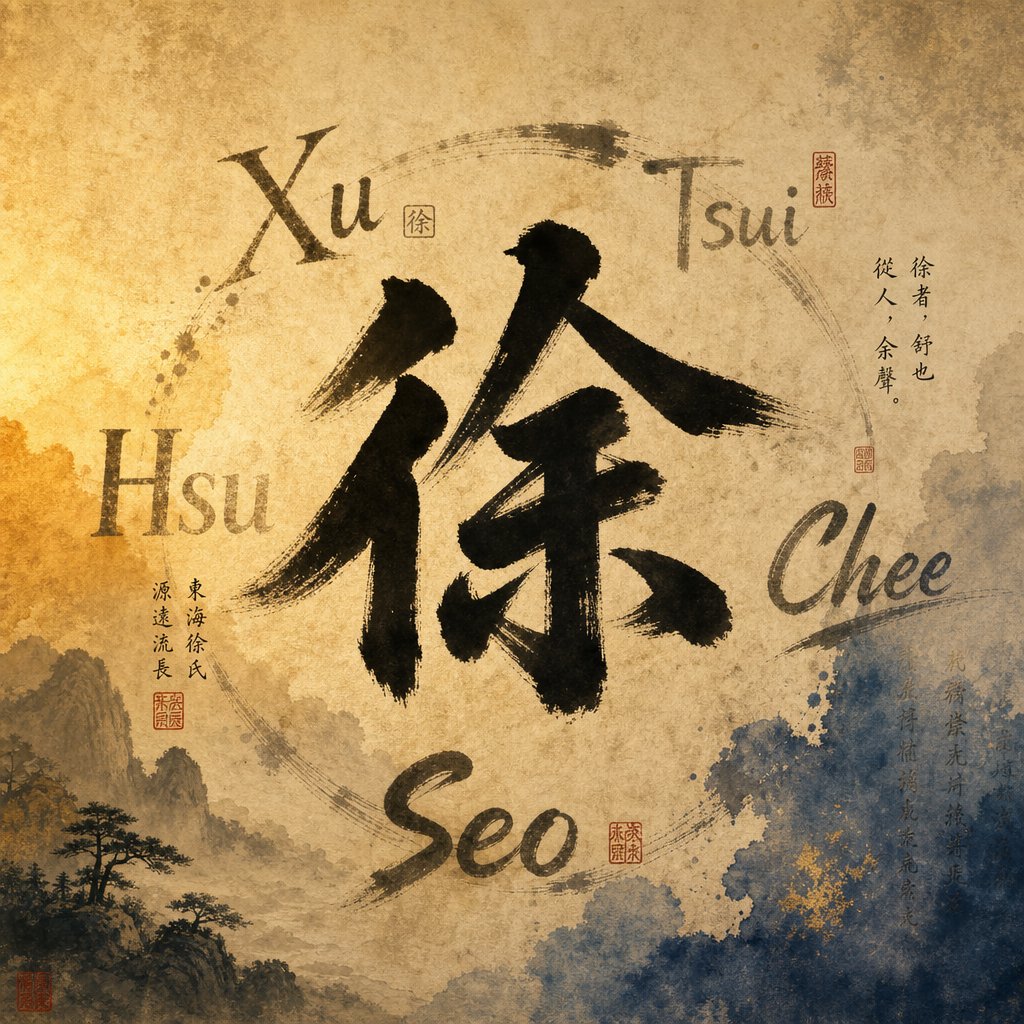
Here's the thing: this isn't a quirk specific to 吴. The exact same dialect-driven fragmentation applies to dozens of common Chinese surnames. The My China Roots research team notes that the character 黄 alone has been romanized as Huang, Wong, Ng (in Teochew), Ong, Vong, and Oei — all representing the same single character. The character 陈 has appeared as Chen, Chan, Chin, Chinn, Ching, Tan, Tang, Tchen, Tin, Tjin, and Jin across different dialect communities and immigration contexts.
You'll recognize the same structural logic at work in these common pairs:
- Wong vs Huang — 王 is "Wang" in Mandarin, "Wong" in Cantonese, and "Ong" in Hokkien. Same character, same family, three completely different English spellings.
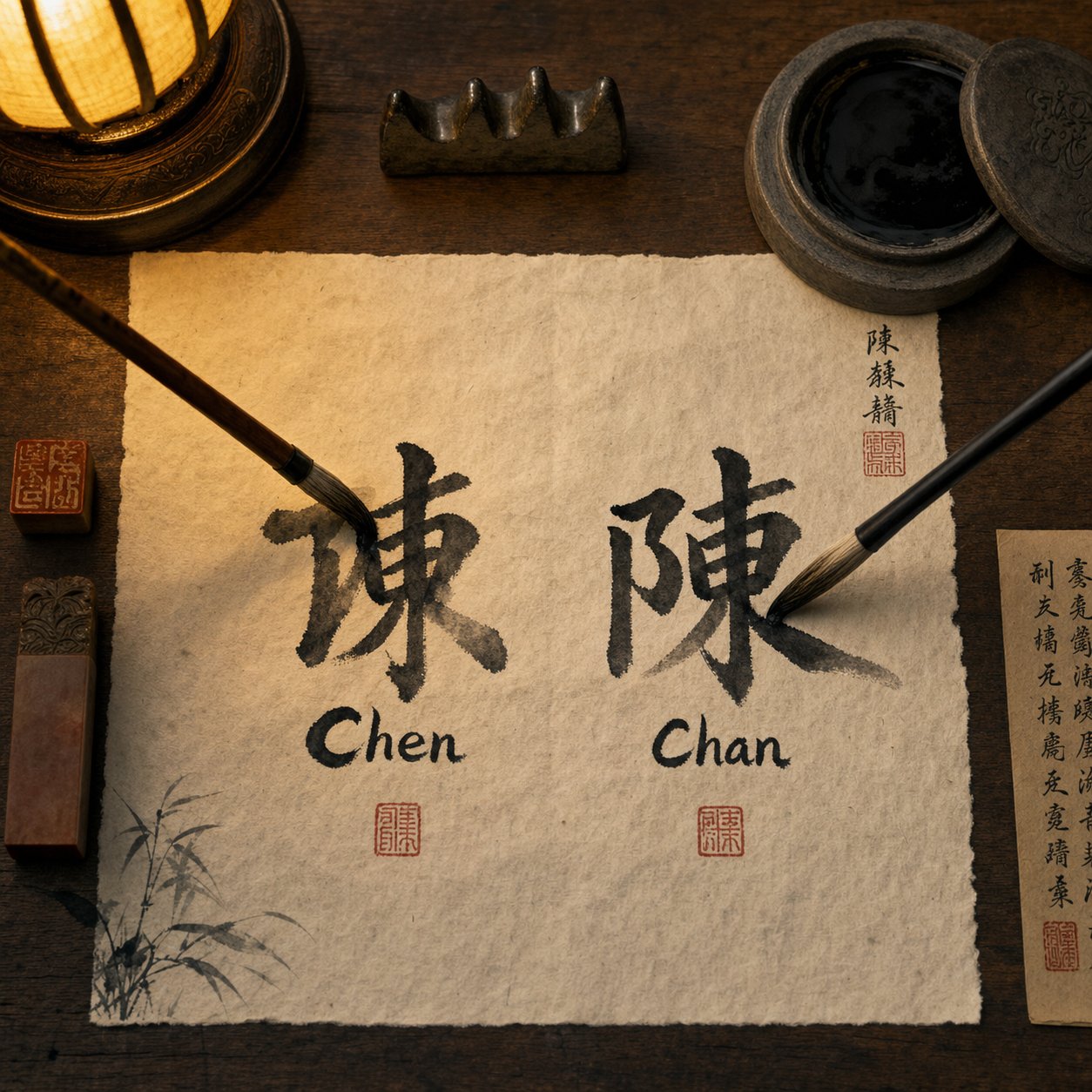
- Chan vs Chen — 陈 becomes "Chen" in Mandarin Pinyin, "Chan" in Cantonese, and "Tan" in Hokkien. As the Asia Media Centre explains, in territories with a sizeable Chinese diaspora like Singapore and Malaysia, "the way a family name is spelt can be a signifier of the region a person's ancestors hail from."
- Lee vs Li — 李 is "Li" in Pinyin, "Lee" or "Lei" in Cantonese, and "Lee" in many anglicized contexts. The Wade-Giles spelling "Lee" became so widespread that it's now often mistaken for a Korean or English surname entirely.
- Cheung vs Zhang — 张 appears as "Zhang" in Mandarin, "Cheung" or "Cheong" in Cantonese, "Chong" in Hakka, and "Teo" or "Teoh" in Hokkien.
The mechanism is always the same. One Chinese character. Multiple dialect pronunciations. Immigration officers writing down what they heard. No standardized system bridging the gap. The result is a diaspora where cousins sharing the same ancestral village might carry surnames that look nothing alike in English — separated not by family history but by which port their grandparents sailed from and which dialect they spoke when they arrived.
Understanding this systematic pattern transforms how you read Chinese surnames in English. A "Wong" and a "Huang" at the same office might share a great-great-grandfather. A "Tan" in Singapore and a "Chen" in San Francisco could be from the same clan village in Fujian. And of course, a "Wu" in Beijing and an "Ng" in Sydney are carrying the same character — 吴 — through entirely different linguistic channels.
Recognizing the pattern is one thing. Using it to actually trace your own family's dialect roots is another. The spelling on your passport or birth certificate is your first clue — but knowing how to read that clue, and what to do next, requires a more deliberate approach.
How to Trace Your Dialect From Your Surname Spelling
You know the history. You understand the phonological splits. You've seen the comparison table. The practical question remains: if all you have is an English spelling on a birth certificate or immigration record, what can you actually do with it? Your surname spelling is the first breadcrumb on the trail back to your family's dialect community, geographic origin, and ancestral village. Here's how to read that breadcrumb — and where to go from there.
Quick Dialect Identification Guide
Start with the spelling itself. Each romanization of 吴 points toward a specific dialect background with varying degrees of confidence:
- Ng → Cantonese. Your family almost certainly passed through Hong Kong, Macau, or a Cantonese-speaking community in Guangdong province. This is the strongest dialect signal of any variant.
- Wu → Mandarin / Pinyin. Your family likely came from mainland China, Taiwan, or a Mandarin-speaking diaspora community. Could also reflect post-1980s standardization regardless of actual dialect spoken at home.
- Goh → Hokkien or Teochew. Your ancestors almost certainly emigrated from Fujian province or eastern Guangdong, likely settling in Singapore, Malaysia, or elsewhere in Southeast Asia.
- Woo → Anglicized / Wade-Giles. Your family probably immigrated to an English-speaking country before Pinyin became the international standard (pre-1980s). Dialect origin is ambiguous — could be Cantonese, Mandarin, Taishanese, or another background.
- Ngo → Vietnamese or older Cantonese romanization. If your family is ethnically Chinese-Vietnamese, the character is likely 吴 adapted through Vietnamese phonology. If the context is purely Chinese, it suggests an older Cantonese romanization system.
- Go → Hokkien, typically from the Philippines or Indonesia.
- Ung / Eng / Ing → Cantonese variant, adapted for English readability. Common in Australia and parts of the United States.
The origin of surname Ng, for instance, tells you not just the dialect but narrows the geography to a specific region of southern China — the Pearl River Delta and its diaspora networks. That's a far more actionable starting point than a generic "Wu" entry, which could originate from nearly any province in China.
Next Steps for Genealogy Research
Your spelling gives you a hypothesis. Confirming it requires additional evidence. Here's a practical sequence that Legacy Tree Genealogists recommends for anyone starting Chinese family research with only a romanized surname:
- Confirm the Chinese character. This is the single most important step. Check old family documents, ancestral tablets, tombstone inscriptions, or clan association records. If your family has a zupu (族谱, genealogy book), the character will appear unambiguously. Without the character, you cannot distinguish 吳 from 伍 — and that distinction determines which ancestral lineage you actually belong to.
- Identify the dialect. Ask older relatives what language was spoken at home. Was it Cantonese? Taishanese? Hokkien? Mandarin? If no one remembers, use the surname spelling as your first clue, then cross-reference with the immigration destination. As Legacy Tree notes, most Chinese immigrants "traveled with friends and relatives, or traveled to places where they already knew someone," creating dialect-specific communities in specific cities and countries.
- Match dialect to geography. Once you know the dialect, you can narrow the origin to a specific province or even a cluster of counties. Cantonese speakers overwhelmingly came from Guangdong. Hokkien speakers from Fujian. Taishanese speakers from the Four Counties (Xinhui, Taishan, Kaiping, Enping) in the Pearl River Delta.
- Search clan associations. Chinese clan associations organized by surname exist in nearly every major diaspora city. A Wu/Ng/Goh clan association in your ancestor's immigration destination may have membership records, correspondence, or oral histories that connect your family to a specific village.
- Use surname search tools. Resources like the My China Roots surname search tool let you enter your romanized last name and narrow down possibilities for its original Chinese character based on dialect and geography.
The last name Wu origin — whether spelled Wu, Ng, Goh, or Woo — ultimately traces to the same place: the ancient State of Wu in present-day Jiangsu province, founded by Taibo over 3,000 years ago. But your specific family's migration route from that origin point through centuries of Chinese history, through a particular province, a particular village, a particular port of departure, and finally to wherever you are reading this today — that route is encoded in the details. Your surname spelling is the first detail.
One Family Across All Spellings
It's easy to get lost in the differences. Wu looks nothing like Ng. Goh sounds nothing like Woo. Immigration records in five different countries might spell the same family's name five different ways. But step back far enough and the picture simplifies: every bearer of the character 吴, regardless of romanization, shares the same ancestral heritage. The wu name meaning — rooted in a kingdom that shaped Chinese civilization during the Spring and Autumn period — belongs equally to a Wu in Shanghai, an Ng in Hong Kong, a Goh in Singapore, and a Woo in San Francisco.
The spelling changed at the border. The family didn't.
If you carry any variant of this surname, you're part of a global family roughly 30 million strong — connected not by how your name looks in English, but by the single character written on ancestral tablets across three millennia. The romanization is just the outermost layer. Peel it back, confirm your character, identify your dialect, and the path home becomes remarkably clear.
Frequently Asked Questions About Wu and Ng Surnames
1. Are Wu and Ng the same last name?
Yes, Wu and Ng represent the same Chinese character 吳 (simplified: 吴) and share identical ancestral origins tracing back to the ancient State of Wu. The difference is purely dialectal: Mandarin speakers romanize it as Wu, while Cantonese speakers romanize it as Ng. Both spellings point to the same family lineage founded by Taibo over 3,000 years ago in present-day Jiangsu province. Other variants of the same surname include Goh (Hokkien/Teochew), Woo (anglicized), and Ngo (Vietnamese or older Cantonese).
2. How do you pronounce the surname Ng?
Ng is pronounced as a syllabic nasal consonant, represented in the International Phonetic Alphabet as [ŋ̍]. To produce the sound, say the word 'sing' and isolate the final humming resonance after the vowel. That nasal hum, produced with the tongue pressed against the soft palate while air flows through the nose, is the entire syllable. There is no vowel sound involved. Common English approximations include 'Ing,' 'Eng,' or 'Ung,' and many Ng-surnamed individuals accept these in everyday conversation.
3. What is the origin of the surname Wu?
The Wu surname originates from the ancient State of Wu, established around the 13th century BC in present-day Jiangsu province, China. The founding ancestor is Taibo, the eldest son of King Tai of Zhou, who voluntarily left his homeland and traveled southeast to establish the Wu kingdom. His descendants adopted the state's name as their family surname. The Wu state later became a major power during the Spring and Autumn period, and today approximately 30 million people carry this surname worldwide, making it one of the top 10 most common Chinese surnames.
4. Why does the same Chinese surname have so many different English spellings?
Chinese is a family of dialects that share a written script but sound dramatically different when spoken. When Chinese families emigrated globally, their surnames were romanized based on whichever dialect they spoke at home. A Mandarin speaker's name became Wu, a Cantonese speaker's became Ng, and a Hokkien speaker's became Goh. Immigration officers also introduced variation by writing down what they heard without following standardized systems. This pattern affects many Chinese surnames, not just Wu/Ng — the same mechanism produces Wong vs Huang, Chan vs Chen, and Lee vs Li.
5. How can I find out which Chinese character my Wu or Ng surname represents?
The most reliable method is checking old family documents, ancestral tablets, tombstone inscriptions, or clan association records. A family genealogy book (zupu) will show the character unambiguously. You can also ask older relatives who read Chinese, as the character 吳 and the unrelated character 伍 both romanize as Wu in Mandarin Pinyin but represent completely different families with separate ancestral origins. Online tools like the My China Roots surname search allow you to enter your romanized name and narrow down the original character based on dialect and geographic clues.