The Lin Surname and Its Place Among the World's Great Family Names
The Lin surname (林) means "forest" or "woods" in Chinese. It belongs to tens of millions of people across the globe and ranks as the 18th most common surname in mainland China. If your last name is Lin, Lim, Lam, or even Hayashi, you likely share a connection to this single powerful character — two trees standing side by side.
What Does the Name Lin Mean
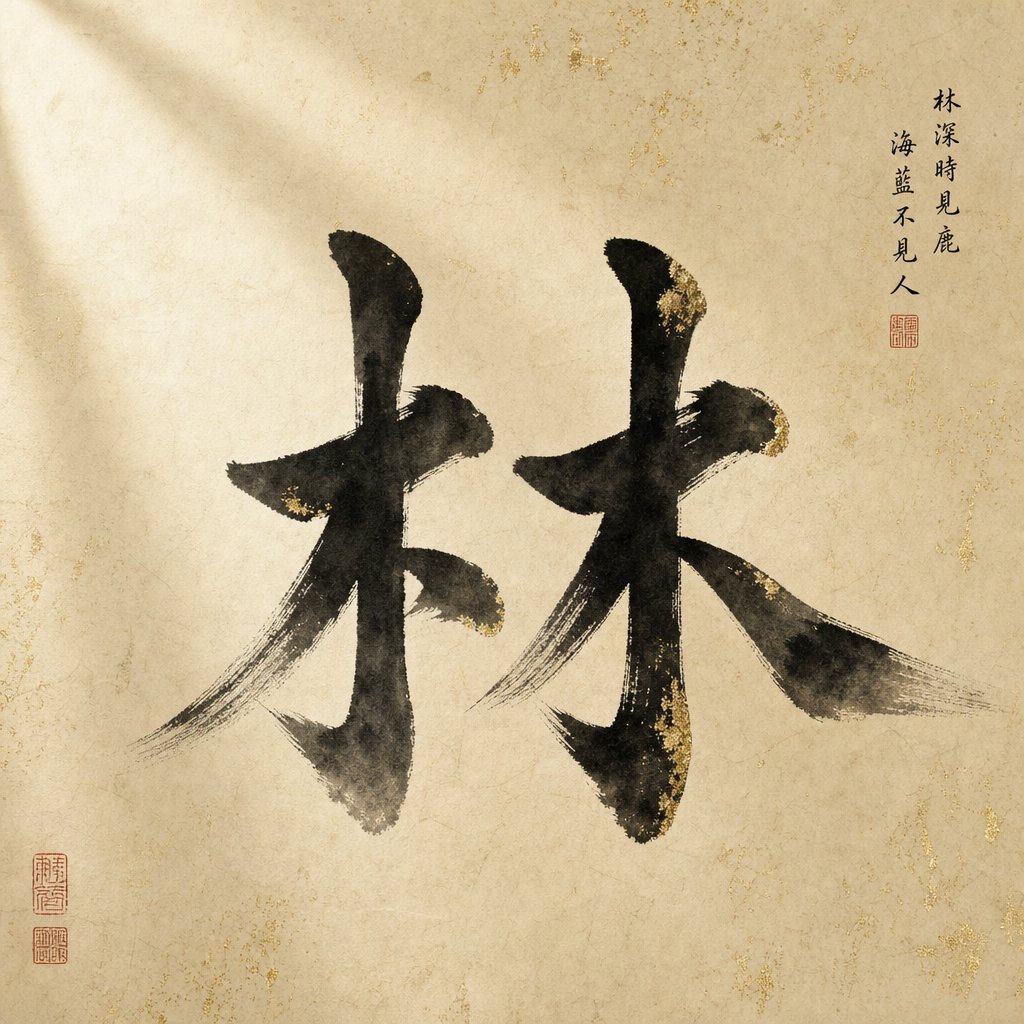
At its core, the lin meaning name carries a vivid image: a grove of trees growing together. The Chinese character 林 is composed of two 木 (tree) radicals, evoking shelter, growth, and collective strength. It is not just a label — it is a visual metaphor embedded in one of the world's oldest writing systems. Beyond Chinese culture, the Lin surname appears in Korean (as Im or Rim), Burmese, Cambodian, Vietnamese (as Lam), and even Scandinavian contexts where entirely different etymological roots apply. Each tradition brings its own story to the name.
Lin is among the top 20 most common surnames in the world, shared across China, Japan, Korea, Southeast Asia, and diaspora communities on every continent.
Why the Lin Surname Matters in Global Culture
What makes the Lin last name remarkable is not just its frequency — it is the depth of history behind it. The founding story stretches back over 3,000 years to the fall of the Shang Dynasty, where a forest refuge gave birth to both a child and a legacy. From that single origin point, the Lin surname spread southward through China, across maritime trade routes into Southeast Asia, and eventually into every corner of the modern world. Understanding what does Lin mean opens a door into ancient Chinese philosophy, dynastic politics, migration patterns, and living cultural traditions that remain active today.
The story begins, as so many great stories do, with the character itself — and the two trees that make it whole.
The Meaning Behind the Character 林 and Its Forest Symbolism
Imagine building a word the way you would build a landscape. Start with a single tree. Place another tree beside it. Suddenly, you no longer see two individual trees — you see a grove. That is exactly how the Chinese character 林 works, and it is one of the most elegant examples of visual logic in any writing system.
Breaking Down the Character 林
The character 林 is classified as a compound ideograph — a character built by combining simpler elements to express a new idea. In this case, two instances of 木 (mu, meaning "tree") sit side by side. The result is not "two trees" in a literal arithmetic sense. It represents the concept of many trees growing together: a grove, a forest, a woods.
This character has existed since the Shang Dynasty, appearing in oracle bone inscriptions dating back over 3,000 years. Even in those earliest forms, the visual logic was the same — paired tree shapes conveying abundance. The character carries 8 strokes total and falls under Kangxi radical 75 (木).
To appreciate how lin meaning Chinese builds on this visual system, consider the full progression from one tree to a dense forest:
| Character | Composition | Meaning | Pinyin | Conceptual Logic |
|---|---|---|---|---|
| 木 | Single tree radical | Tree, wood | mu (4th tone) | One tree standing alone |
| 林 | Two 木 side by side | Forest, grove, woods | lin (2nd tone) | Multiple trees forming a grove |
| 森 | Three 木 stacked | Dense forest, luxuriant | sen (1st tone) | Thick, dark, overgrown woodland |
You'll notice the pattern: each additional tree intensifies the meaning. 木 is a single element. 林 is community. 森 is overwhelming density. Chinese linguists trace both 林 and 森 to the Proto-Sino-Tibetan root *rem, meaning "jungle" or "forest" — a cognate shared with languages like Mizo and Karbi, where similar-sounding words carry the same meaning.
Forest Symbolism in Chinese Philosophy and Identity
In Chinese culture, trees are never just trees. The pine symbolizes resilience against adversity. The plum represents renewal. And a forest — lin — carries its own layered significance: shelter, growth, abundance, and the strength that comes from standing together.
Think about what a grove actually does. Individual trees are vulnerable to wind and storms. But trees growing in a group protect one another, share root systems, and create a canopy that shelters everything beneath. This is the metaphor embedded in every Lin family name — not isolation, but solidarity. Not a single trunk, but a community rooted in shared ground.
This symbolism extends into everyday Chinese language. The compound 武林 (wulin) means "martial arts world" — literally a "forest" of warriors gathered together. 儒林 (rulin) refers to the scholarly community. 翰林 (Hanlin) was the prestigious imperial academy. In each case, 林 conveys a gathering of people united by shared purpose, not just a collection of trees.
So is lin a word beyond its role as a surname? Absolutely. It functions as a standalone noun meaning forest or grove, appears in dozens of compound words, and names places across the Chinese-speaking world — from 桂林 (Guilin, "Osmanthus Forest") to 吉林 (Jilin) to 少林 (Shaolin, "Young Forest"). The character also serves as a phonetic component in other characters like 琳 (lin, "beautiful jade"), 淋 (lin, "to drench"), and 霖 (lin, "prolonged rain") — all sharing the same pronunciation because they borrow 林 as their sound element.
For the millions who carry this surname, the character is more than a family identifier. It is a philosophical statement written in two strokes of wood: strength lives in togetherness. That idea did not emerge from abstract philosophy — it was born from a specific historical moment when a forest literally saved a family line from extinction.

The Founding Ancestor Story That Gave Birth to the Lin Name
Every surname has a beginning. For the Lin family, that beginning is not a quiet bureaucratic record or a forgotten census entry. It is a story of political murder, a desperate escape through the wilderness, and a newborn child whose very survival became the foundation of a 3,000-year legacy. The lin last name origin traces back to one of the most dramatic episodes in ancient Chinese history — the fall of the Shang Dynasty.
Bi Gan and the Fall of the Shang Dynasty
The year was roughly 1046 BC. The Shang Dynasty had ruled China for over five centuries, but its final ruler — King Di Xin (also known as King Zhou of Shang) — was driving the kingdom toward collapse. Historical and genealogical records describe Di Xin as a tyrant consumed by excess, cruelty, and paranoia. He imposed brutal punishments on dissenters and ignored the suffering of his people.
Standing against this tide of corruption was Bi Gan, a prince of royal blood. Bi Gan was the son of the earlier King Wen Ding and served as a senior minister in Di Xin's court. He was Di Xin's uncle — a man whose loyalty to the dynasty ran deep enough that he refused to stay silent while his nephew destroyed it from within.
Imagine the position Bi Gan occupied. He was trusted by nobles and commoners alike as a sage counselor. He watched the kingdom fracture under Di Xin's misrule. And rather than flee or stay quiet, he chose to speak. He urged Di Xin to reform, to show mercy, to govern with wisdom rather than fear.
Di Xin's response was swift and horrific. Enraged by the criticism, the king accused Bi Gan of treason. According to traditional accounts preserved in Chinese genealogical records, Di Xin ordered Bi Gan's heart cut from his chest — a punishment meant to silence not just one man, but anyone else who might dare to speak truth to power.
How a Forest Refuge Became a Family Name
Bi Gan was dead. But his story was not over.
At the time of his execution, Bi Gan's wife was pregnant. Sympathetic soldiers, moved by the injustice of what had happened, allowed her to escape the capital rather than face execution herself. Accompanied by a small group of loyal maidservants, she fled into the wilderness — specifically into Changlin (长林), meaning "the Long Forest," a remote wooded area near what is now Weihai City in Henan Province.
Deep within that forest, hidden from the tyrant's reach, she gave birth to a son. She named him Quan (泉), though some accounts record the birth name as Changsi — meaning "endless longing" — in memory of her murdered husband. Mother and child survived in the forest's shelter, protected by the very trees that would soon define their family identity.
The Shang Dynasty did not last much longer. Acting under what Chinese historians call the "Mandate of Heaven," the neighboring state of Zhou invaded. Di Xin's own soldiers refused to fight for him. The tyrant took his own life, and King Wu of Zhou ascended to power, founding a new dynasty.
One of King Wu's first acts was to honor those who had suffered under Di Xin's cruelty. He sealed Bi Gan's tomb as a mark of respect. Then he sent people to find Bi Gan's surviving family. When the young boy and his mother were discovered in their forest refuge, King Wu brought them before the court.
King Wu granted Bi Gan's son the surname Lin (林) — meaning "forest" — to commemorate the place where he was born and where his life was saved. He also bestowed the name Jian (坚), meaning "strength," and awarded the child noble titles and lands.
In that single act, the lin name meaning was sealed forever. It was not chosen at random or assigned from a list. It was drawn directly from the landscape that had sheltered a widow and her child when no one else could. The name meaning lin carries within it the memory of survival — of trees standing together to protect what mattered most.
Lin Jian became the recognized forefather of the Lin family. From his granted fiefdom, the lineage grew and branched outward across generations, carrying with it the values embedded in its origin: loyalty in the face of tyranny, resilience through hardship, and the quiet strength of a forest that shelters those who seek refuge beneath its canopy.
The last name Lin, then, is not merely a label passed down through paperwork. It is a monument to a specific moment in history — a child born among trees, given a name that would endure for over three millennia. And from that single lineage in Henan Province, the surname would eventually spread across all of China and beyond, carried by migrations, trade routes, and the restless movement of families seeking new ground to root themselves in.
Multiple Origin Stories and the Multicultural Roots of Lin
Bi Gan's lineage accounts for the majority of Lin surname bearers worldwide. But it is not the only source. The lin name has multiple independent origin pathways — some rooted in Chinese dynastic politics, others emerging from entirely separate cultures and languages. If you carry the Lin surname, your ancestors may have entered the lineage through any one of these doors.
Zhou Dynasty Royal Grants and Secondary Lineages
Within lin chinese history, at least three additional origin streams fed into the surname during the Zhou Dynasty and beyond:
- The Ji surname lineage: King Ping of Zhou (reign began 770 BC) had a concubine-born son named Lin Kai. Some of Lin Kai's descendants adopted their ancestor's given name as their family surname, creating a separate Lin lineage rooted in the Ji royal house rather than the Zi surname of Bi Gan.
- The official title lineage: During the Western Zhou period, an official position called Linheng (林衡), or Forest Steward, was responsible for managing forests, afforestation, and irrigation. Some holders of this title eventually adopted it as their surname — a common pattern in ancient Chinese naming conventions.
- The Lin Fang lineage: Lin Fang was a student of Confucius in the State of Lu during the Spring and Autumn period. He famously asked about the essence of ritual propriety, earning Confucius's praise. Some genealogists trace a separate Lin branch to his descendants.
- Ethnic minority adoptions: During the Northern and Southern Dynasties, Emperor Xiaowen of Northern Wei ordered the Xianbei people to adopt Han Chinese surnames. The Qiulin Clan from the Dai region became Lin. Later, Taiwan's indigenous Gaoshan people — who had long inhabited densely forested areas — adopted Lin as their Han surname. Manchu clans including the Busa and Lingiya families also took the Lin surname during the Qing era.
Each of these pathways produced genuine Lin families whose descendants carry the surname today. While the chinese surname Li dominates population rankings as the most common surname in China, Lin holds a strong position at 18th nationally — and that number reflects contributions from all these separate streams, not just the Bi Gan line.
Non-Chinese Origins of the Lin Surname
Here is where the story gets genuinely global. The Lin name appears across cultures that have no historical connection to ancient China:
- Korean Lin (Im/Rim): The Korean Lin clan traces its founding ancestor to Lin Baji, who crossed the sea from Fujian during the Tang Dynasty and landed at Ganghwa Bay in the Silla Kingdom. His descendants now number over 1.8 million in South Korea — a distinct branch with its own genealogical traditions.
- Burmese and Cambodian usage: In Myanmar and Cambodia, Lin functions as both a surname and a given name element. Its usage in these contexts often derives from local linguistic traditions rather than Chinese migration, though Chinese diaspora communities in both countries also carry the name.
- Vietnamese Lam: Written with the same character 林, the Vietnamese surname Lam represents a parallel adoption shaped by centuries of Chinese cultural influence in Southeast Asia.
- Scandinavian Lin: In Sweden and Norway, the surname Lin (or Lind) derives from an entirely different root — the linden tree (Tilia). This is a purely European etymology with no connection to the Chinese character. A person named Lin in Stockholm and a person named Lin in Shanghai share a spelling but not a single ancestor.
- Thai and Indonesian adaptations: Thai Chinese families often indigenized the surname into compound forms like Limthongkul or Limjaroenrat. In Indonesia, names with lin appear as prefixes (Limantoro) or suffixes (Salim, Halim), blending Hokkien pronunciation with local naming conventions.
What emerges from this full picture is that the lin chinese surname is not a single thread but a rope woven from many fibers. The Bi Gan lineage remains the dominant strand in lin china and across the global Chinese diaspora. But the surname's presence in Korean genealogies, Southeast Asian communities, and even Scandinavian phone books makes it genuinely multicultural — a name that belongs to no single nation or ethnicity.
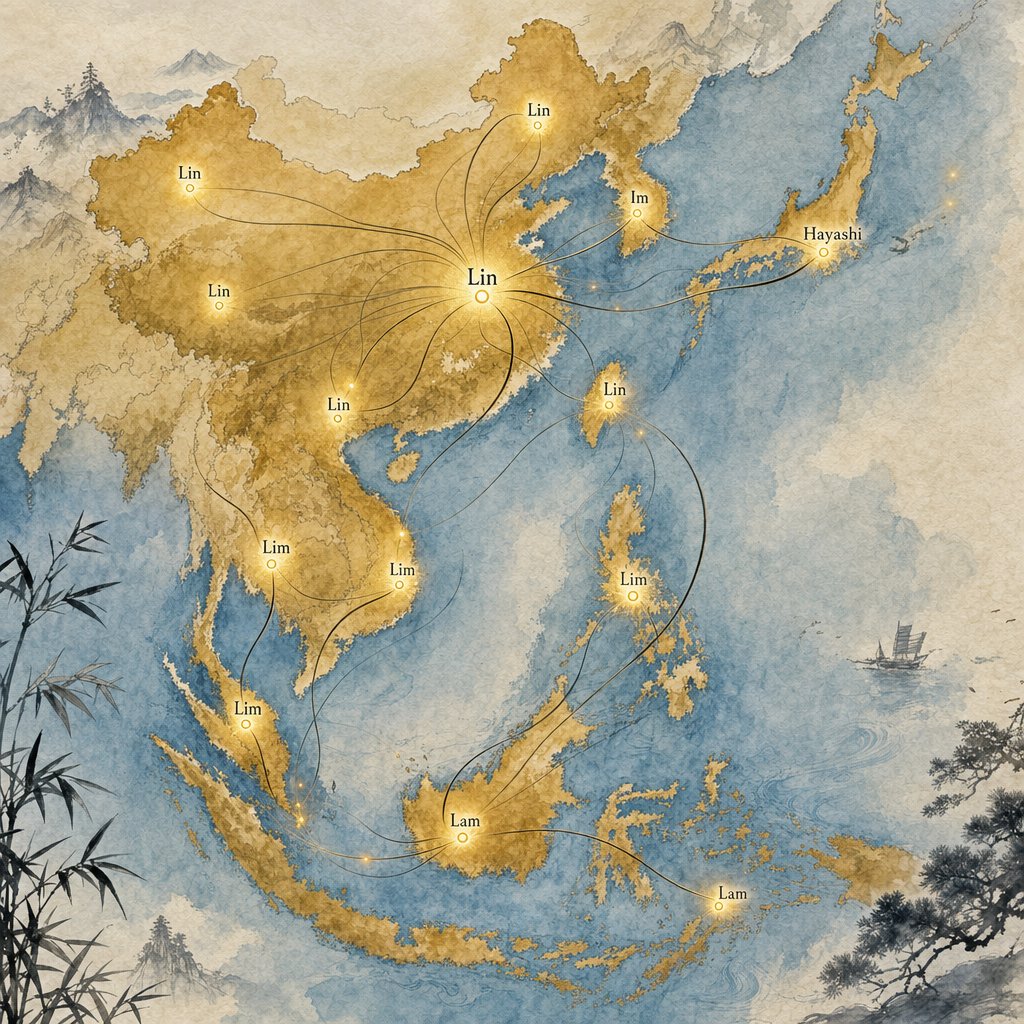
This diversity also explains why the same surname sounds so different depending on where you encounter it. A Lin in Taipei, a Lim in Manila, a Lam in Hong Kong, and a Hayashi in Tokyo may all trace back to the same character — but the path each family took to arrive at that spelling tells a story of dialect, migration, and cultural adaptation that spans centuries.
Lin Lim Lam and Hayashi Understanding Every Spelling Variant
Picture this scenario. You meet someone named Lim at a business conference in Singapore. A week later, you are introduced to a colleague named Lam in Hong Kong. Then you discover a Japanese associate named Hayashi. Three different spellings, three different countries — yet all three people share the exact same ancestral surname character: 林. How does one character produce so many different names?
The answer lies in the way Chinese dialects, neighboring languages, and colonial-era romanization systems each rendered the same written character into their own phonetic spelling. Understanding these variants is not just a linguistic curiosity — it is a practical key to recognizing family connections that might otherwise remain invisible.
Why One Character Has So Many Spellings
Chinese is not a single spoken language. It is a family of related but mutually unintelligible dialects, each with its own pronunciation system. When Chinese communities migrated across Asia and eventually to the West, they romanized their surnames based on how they spoke the character — not how it was written. Since 林 sounds different in Mandarin, Hokkien, Teochew, Cantonese, Hakka, and other dialect groups, the English spellings diverged accordingly.
Add to this the fact that neighboring countries like Japan and Korea adopted the character 林 into their own writing systems centuries ago, applying their native pronunciation rules. The result is a single character with at least a dozen legitimate romanized forms — each one a fingerprint pointing back to a specific dialect group, region, or national tradition.
The lim last name, for example, immediately signals Hokkien or Teochew heritage. If you encounter someone whose lim last name origin traces to Singapore, Malaysia, the Philippines, or Taiwan, their ancestors almost certainly spoke one of these Southern Min dialects. The spelling itself is a geographic and linguistic marker.
Similarly, the lam surname points to Cantonese-speaking communities. When you see the family name Lam on a business card from Hong Kong, Macau, or Guangdong province, you are looking at the Cantonese pronunciation of the same character that a Mandarin speaker would write as Lin. The lam last name origin is not a different surname — it is the same surname filtered through a different phonetic tradition.
Regional Dialect Guide From Mandarin to Cantonese
The table below provides a unified reference for every major romanization of 林. You'll notice that each variant maps to a specific language or dialect, a geographic region, and a distinct pronunciation. Use this as a guide to identify which branch of the Lin family tree a particular spelling likely represents.
| Romanization | Language / Dialect | Region of Use | Pronunciation Guide |
|---|---|---|---|
| Lin | Mandarin (Pinyin) | Mainland China, Taiwan | "leen" with a rising tone (2nd tone) |
| Lim | Hokkien / Teochew | Singapore, Malaysia, Philippines, Taiwan, Southern Fujian | "leem" — rhymes with English "seem" |
| Lam | Cantonese | Hong Kong, Macau, Guangdong, overseas Cantonese communities | "lahm" — rhymes with English "calm" |
| Lum | Cantonese (alternate) | Hong Kong, older overseas communities | "lum" — rhymes with English "sum" |
| Lim | Hakka | Parts of Guangdong, Jiangxi, Taiwan, Sabah (Malaysia) | "leem" — similar to Hokkien pronunciation |
| Hayashi | Japanese (kun'yomi) | Japan | "hah-YAH-shee" — native Japanese reading |
| Rin | Japanese (on'yomi) | Japan (less common as surname) | "reen" — Sino-Japanese reading |
| Im | Korean | South Korea | "eem" — single syllable |
| Rim | Korean (North Korean romanization) | North Korea, Korean diaspora | "reem" — initial r sound added |
| Lam | Vietnamese | Vietnam | "lahm" with a level tone |
| Lim / Lam | Burmese adaptation | Myanmar | Varies by regional pronunciation |
A few patterns emerge from this table. Southern Chinese dialects — Hokkien, Teochew, and Hakka — tend to preserve an "-m" ending that Mandarin lost centuries ago. Linguists call this a coda consonant, and its presence in the surname Lim reflects an older layer of Chinese pronunciation. When you encounter the lim surname in Southeast Asia, you are hearing a sound that predates modern Mandarin by hundreds of years.
The Cantonese pronunciation also retains this "-m" ending but shifts the vowel. The lam surname origin traces to the same phonetic conservatism — Cantonese preserved ancient final consonants that northern dialects dropped during the Song and Yuan dynasties. So the family name Lam is not a corruption or simplification of Lin. It is arguably a more archaic pronunciation of the same character.
Japanese presents a unique case. When the character 林 entered Japan through Chinese cultural transmission, it received two readings: the on'yomi (Chinese-derived) reading "rin" and the kun'yomi (native Japanese) reading "hayashi." As a surname, Hayashi is overwhelmingly more common. It means exactly what 林 means in Chinese — a grove or forest — but uses the native Japanese word for that concept rather than borrowing the Chinese sound.
Korean follows yet another path. The character 林 is read as "im" (임) in Korean, dropping the initial "l" sound entirely in South Korean pronunciation. North Korean romanization retains the "r/l" initial as "Rim." This means a Korean person named Im and a Chinese person named Lin may share the same written character on their family register — a connection that becomes visible only when you look past the romanized spelling to the underlying character.
What does all this mean in practical terms? If you are researching your own family history and your surname is Lim, you can narrow your ancestral search to Hokkien or Teochew-speaking regions — primarily southern Fujian province, eastern Guangdong, or the Southeast Asian communities that migrated from those areas. If your surname is Lam, your search points toward Cantonese-speaking Guangdong or Hong Kong. These dialect clues function like a compass, orienting your genealogical research toward the right geographic starting point.
The diversity of spellings can feel confusing at first glance. But each variant is actually a gift — a linguistic fossil that preserves information about where your ancestors lived, what dialect they spoke, and which migration route they followed when they left China. A Lim in Manila and a Lin in Beijing share the same character and the same founding ancestor story, but the spelling difference tells you their families diverged at some point in history, taking different paths through different dialect regions before arriving at their current homes.
That divergence — the moment when families carrying the same character scattered across different provinces, different countries, and different centuries — is the story of migration itself. And for the Lin surname, that migration story begins in one province and radiates outward across an entire hemisphere.
How the Lin Family Spread From Northern China to the World
A surname born in the forests of Henan did not stay in Henan. Over three millennia, the Lin family moved — first south through China's interior, then outward across oceans to nearly every inhabited continent. Each wave of migration left behind a trail of ancestral halls, genealogy books, and clan associations that still function today. If you carry the lim surname in Singapore or the lam last name in Hong Kong, your family's journey likely followed one of these well-documented routes.
The Southward Migration Through Chinese Dynasties
The original Lin homeland sat in what is now Henan province — the political heartland of ancient China. For the first several centuries, the family remained concentrated in the north, holding noble titles and official positions under the Zhou Dynasty. But northern China was never stable for long. Each dynastic collapse sent waves of refugees southward, and the Lin family moved with them.
The first major shift came during the Western Jin Dynasty (265-316 AD). When northern invaders overran the Central Plains, a Lin descendant named Lin Lu crossed the Yangtze River alongside Emperor Yuan of Jin. Lin Lu eventually served as Grand Administrator of Jin'an Commandery — present-day Fuzhou, Fujian — becoming the first person of the Lin surname to enter Fujian province. His descendants would make Fujian the surname's new center of gravity.
From Lin Lu's settlement in Fuzhou, the family branched outward across Fujian over the next several centuries. A pivotal moment arrived during the Tang Dynasty when Lin Pi, a 16th-generation descendant of Lin Lu, settled in Putian and fathered nine sons. All nine passed the imperial examinations and became prefectural governors — earning the family the celebrated title "Nine Mu" (九牧, Nine Shepherds). The Nine Mu Lin Clan of Putian became the most influential branch of the entire Lin surname, with descendants spreading to Xianyou, Quanzhou, Zhangzhou, Longyan, and eventually across all of southern China.
Political upheaval continued to push the family further south. During the Southern Song Dynasty, Lin Duan — a military commander from Putian — was dispatched to Jingzhou in Hunan province to suppress a border rebellion. After he died in battle in 1257, his wife Jiang Shi and their nine sons remained in Hunan, becoming the founding ancestors of the Lin clan across six southwestern provinces. Their descendants now number nearly 200,000 across Hunan, Guizhou, Guangxi, Yunnan, Sichuan, and Chongqing.
By the Ming and Qing dynasties, Fujian and Guangdong had become the surname's population strongholds. Why these two provinces specifically? Geography and economics. Fujian's mountainous terrain made it a natural refuge during northern invasions, while its long coastline created opportunities for maritime trade. Guangdong offered similar advantages — a warm climate, fertile river deltas, and access to Southeast Asian shipping lanes. Families that settled in these coastal provinces were positioned for the next great migration: overseas.
Global Distribution and Modern Diaspora Communities
Starting in the Ming Dynasty and accelerating through the Qing era, Hokkien and Teochew-speaking Lin families from southern Fujian boarded trading junks bound for Southeast Asia. The early maritime Chinese diaspora followed established trade routes connecting Fujian's ports to Manila, Batavia (Jakarta), Malacca, and Siam. These were not random migrations — they followed commercial networks that Chinese merchants had maintained for centuries.
The lim chinese communities in Southeast Asia grew rapidly. In Singapore and Malaysia, Hokkien immigrants established the surname as Lim — and it remains one of the most common Chinese surnames in both countries today. In the Philippines, Hokkien traders from Fujian brought the lim surname to Manila as early as the 16th century. Thailand developed its own concentration of Lin families, with clan associations now operating in Bangkok, Hat Yai, Surat Thani, Chiang Rai, and at least a dozen other provinces.
Cantonese-speaking Lin families from Guangdong followed a parallel but distinct path. Their migrations fed into Hong Kong, Macau, and eventually North America — particularly San Francisco, where the Lin Xihe General Association has operated for over a century. The last name lim origin in places like Penang or Johor traces back to Hokkien roots, while Lam communities in Vancouver or Sydney typically point to Cantonese ancestry.
The following table shows approximate population concentrations based on available demographic data:
| Region | Approximate Lin Population | Primary Romanization | Dialect Origin |
|---|---|---|---|
| Fujian, China | 4.72 million | Lin | Hokkien / Mandarin |
| Guangdong, China | 3.11 million | Lin / Lam | Cantonese / Teochew |
| Zhejiang, China | 1.84 million | Lin | Mandarin / Wu |
| Taiwan | ~2 million | Lin / Lim | Hokkien / Mandarin |
| South Korea | ~1 million | Im / Rim | Korean |
| Southeast Asia (combined) | Several million | Lim / Lam | Hokkien / Teochew / Cantonese |
| Rest of world | ~5 million | Various | Mixed |
| Global total | Over 20 million |
Notice where the density peaks. Fujian alone accounts for nearly a quarter of all Lin surname bearers in mainland China — 14.8% of the province's entire population carries this single surname. That concentration is not accidental. It reflects over 1,700 years of continuous settlement since Lin Lu first arrived in the fourth century.
Modern diaspora communities extend far beyond Asia. Lin clan associations operate in San Francisco, Los Angeles, New York, Honolulu, and Vancouver in North America. Australia and New Zealand host growing communities fed by both historical Cantonese migration and recent waves from mainland China and Taiwan. In each location, the specific romanization — Lin, Lim, or Lam — serves as a marker of which migration wave brought that particular family to its current home.
Why does any of this matter for someone researching their own heritage? Because migration history narrows the search. If your family spells the surname Lim and settled in the Philippines, your ancestors almost certainly came from southern Fujian — likely from Quanzhou or Zhangzhou. If your family uses Lam and has roots in British Columbia, the trail probably leads back to Guangdong's Pearl River Delta. The surname spelling, combined with the destination country, functions like a two-coordinate system that points you toward a specific origin region and a specific historical period of departure.
These migration patterns did more than move people across geography. They carried cultural practices — ancestral worship, genealogy keeping, clan solidarity — into new environments where those traditions adapted but never disappeared entirely.
Clan Traditions Ancestral Halls and Lin Family Values
Surnames travel across oceans. But what keeps a family connected after centuries of separation? For the lin family name, the answer lies in a set of living cultural practices — genealogy books, ancestral halls, and shared values — that function as connective tissue binding Lin descendants across provinces, countries, and generations.
Zupu Genealogy Books and Their Role in Lin Heritage
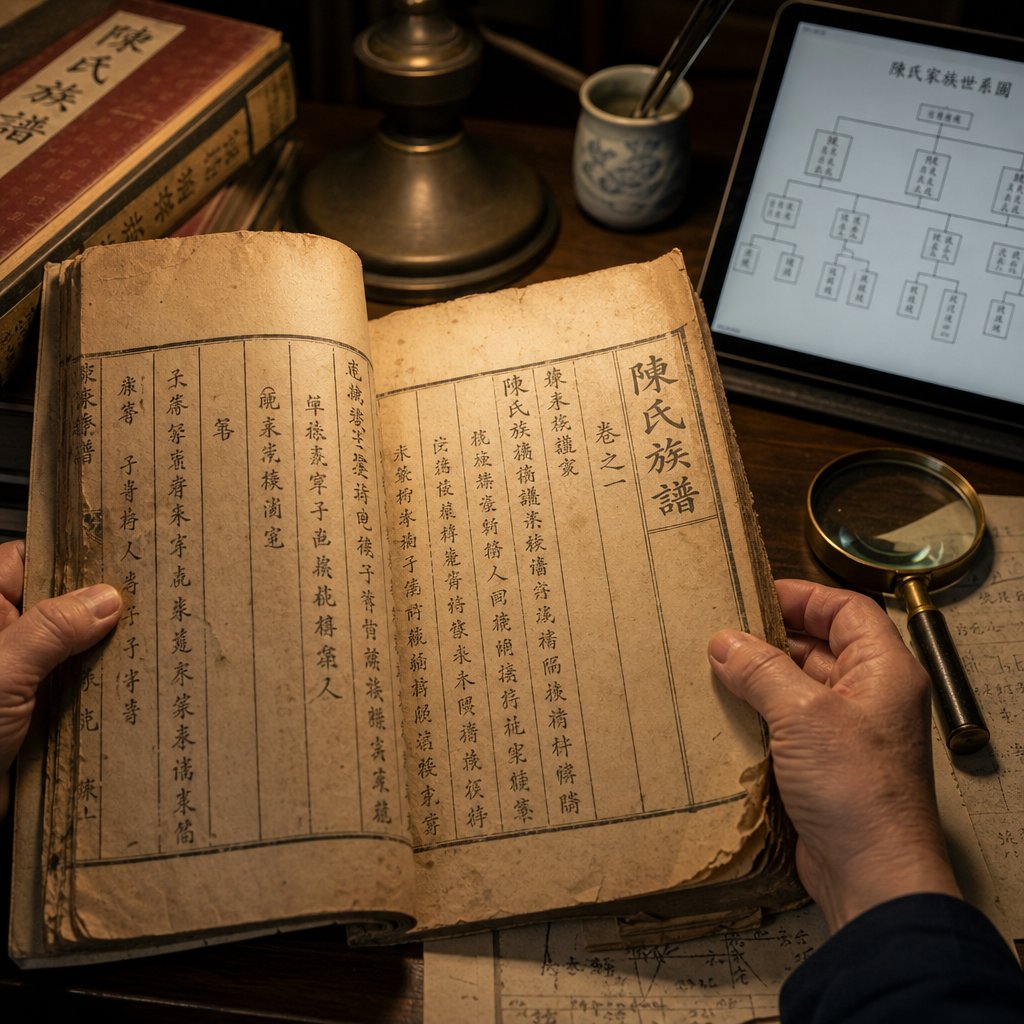
A zupu (族谱) is a handwritten genealogy book maintained by a Chinese clan. Think of it as a family's private historical archive — part family tree, part origin story, part moral guidebook. For Lin families specifically, these records trace lineage back through numbered generations (世) to the founding ancestor Lin Jian, connecting living descendants to a 3,000-year chain of names.
What does a typical Lin zupu contain? More than just names and dates:
- Generational family tree: Drawn top-down and read right to left in traditional format, recording each male heir's position within the lineage. Each person receives a generation number starting from the earliest ancestor.
- Clan migration history: Detailed entries tracking where and when branches of lin's family moved — from Henan to Fujian, from Putian to Quanzhou, from the mainland to Taiwan or Southeast Asia.
- Notable achievements: Political, military, and academic accomplishments of clan members, preserving the family's collective reputation across centuries.
- Family creed and moral guidelines: Poems and precepts rooted in Confucian values, outlining obligations and ethical standards expected of every person who carries the name Lin.
Maintaining or updating the zupu (修族谱) is considered a sacred responsibility. Traditionally, the eldest male in the extended family holds the book and passes this duty to the next generation. Some Lin zupu have been copied and expanded continuously for over a thousand years — living documents that grow with each generation born into the clan.
Ancestral Halls and Clan Gathering Traditions
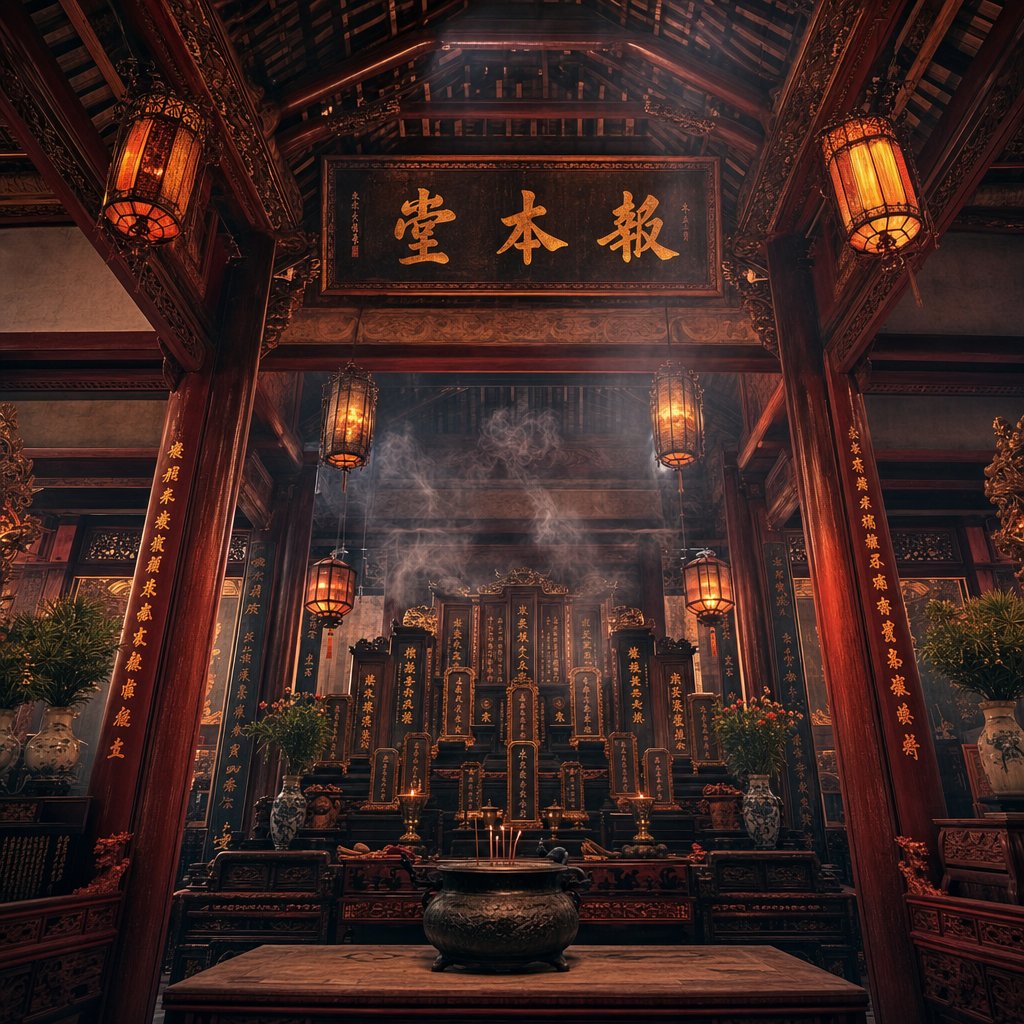
If the zupu is the family's written memory, the ancestral hall (宗祠) is its physical heart. Across Fujian province — where Lin is the most common surname — ancestral halls serve as gathering places for ceremonies, festivals, and the reinforcement of clan identity.
Consider the Wufeng Lin family in Taiwan, whose ancestors migrated from Pinghe county in Zhangzhou, Fujian during the Qing Dynasty. Their ancestral hall in Pinghe was designated a county-level cultural heritage site in 1985, and more than 3 million Taiwan compatriots trace their roots to that single county. When Lin Ming-cong, a descendant of this branch, first visited the Fujian hall in 2009, he found the clan's genealogical records carefully preserved and complete — despite decades of cross-strait separation.
"We became very close within just a few minutes, even though we had never met before," Lin recalled of meeting his mainland relatives. That instant recognition speaks to something the halls are designed to produce: a sense of belonging that transcends geography.
Ancestral halls host several key cultural practices that keep the name Lin alive as more than a spelling on a passport:
- Spring and autumn ancestral rites: Seasonal ceremonies where clan members gather to pay respects to forebears, burn incense, and recite lineage records aloud.
- Genealogy verification gatherings: Periodic events where different branches compare zupu records, reconcile discrepancies, and formally register new generations.
- Scholarship funds and mutual aid: Many Lin clan associations pool resources to support education — a tradition rooted in the "Nine Mu" legacy, where all nine sons of Lin Pi passed the imperial examinations during the Tang Dynasty.
- Cross-strait reunion events: Modern gatherings that reconnect Taiwan-based Lin descendants with their mainland ancestral villages, often organized around hall restoration projects or museum openings.
The values embedded in these practices trace directly back to the founding story. Loyalty — because Bi Gan died rather than stay silent. Scholarly achievement — because the Nine Mu branch proved that education could elevate an entire family. Community solidarity — because the character 林 itself means trees standing together.
"Our Chinese nation is, in essence, centered on the family," Lin Ming-cong observed. "This has long been the foundation of our society." For Lin clans, that foundation is not abstract philosophy. It is a hall you can walk into, a book you can hold in your hands, and a set of obligations you inherit simply by carrying the name.
These traditions also serve a deeply practical purpose for anyone researching their heritage. A zupu can confirm which generation you belong to, which branch your family split from, and exactly when your ancestors left their home village. The ancestral hall network can connect you with distant relatives who hold records your own family may have lost. In other words, the cultural infrastructure built by Lin clans over centuries doubles as a genealogical research system — one that predates modern databases by a thousand years.
Notable People Who Carried the Lin Name Through History
Clan values mean little if no one lives them out. The Lin surname's association with loyalty, scholarship, and resilience is not just a story told in ancestral halls — it is a pattern repeated across centuries by individuals whose actions shaped Chinese history and, eventually, global culture. From imperial ministers who defied tyrants to athletes who shattered stereotypes, the people profiled here gave the name Lin a weight that extends far beyond genealogy.
Historical Figures Who Shaped the Lin Legacy
The founding story of Bi Gan established loyalty as the Lin family's defining virtue. Centuries later, other bearers of the name would echo that same willingness to stand firm regardless of personal cost.
- Lin Chong (fictional, 12th century setting): One of the 108 outlaws in Water Margin (水浒传), one of China's four great classical novels. Lin Chong is an arms instructor in the imperial guard — skilled, honorable, and ultimately betrayed by corrupt officials who frame him and destroy his family. His story arc from loyal servant to righteous rebel resonates deeply with the Bi Gan narrative: a good man punished for existing in a corrupt system. Lin Chong remains one of the most beloved characters in Chinese literature, and his name carries instant recognition across East Asia.
- Lin Zexu (1785-1850): A Qing Dynasty scholar-official from Fujian province who became imperial commissioner tasked with ending the opium trade. Lin Zexu forced British merchants to surrender over 20,000 chests of opium for destruction — an act of moral conviction that directly precipitated the First Opium War (1839-42). Though the emperor later dismissed him as a scapegoat, Lin Zexu is remembered as a national hero whose courage in opposing foreign exploitation echoes the loyalty-unto-death principle embedded in the surname's origin. His statue stands in New York's Chinatown today.
- Lin Yutang (1895-1976): A writer, translator, and polymath from Fujian who became one of the first Chinese intellectuals to explain Chinese culture to Western audiences in their own language. His 1935 bestseller My Country, My People was a bold act of cultural translation — written in English, it argued that China's civilization embodied wisdom and beauty deserving of global recognition. Educated at Harvard and the University of Leipzig, Lin Yutang occupied a rare position between two worlds, using that vantage point to bridge civilizations at a time when mutual understanding felt both urgent and elusive.
- Lin Biao (1907-1971): A brilliant but controversial military commander who played decisive roles in both the Chinese Civil War and the early People's Republic. His military genius was undeniable — he commanded forces that won critical campaigns against both Japanese and Nationalist armies. Yet his later involvement in Cultural Revolution politics and his mysterious death in a plane crash while allegedly fleeing China make him one of the most complex figures in modern Chinese history.
Modern Lin Figures in Global Culture
The surname's prestige is not locked in the past. Contemporary figures have carried the Lin name into arenas where Asian representation was once rare or nonexistent.
- Jeremy Lin (born 1988): The Harvard-educated basketball player whose explosive 11-game stretch with the New York Knicks in 2012 — averaging 24.6 points and 9.2 assists per game — became a global phenomenon known as "Linsanity." Playing at Madison Square Garden, he challenged deeply entrenched stereotypes about Asian American athletes and became the first Asian American to win an NBA championship (with the 2019 Toronto Raptors). In his retirement announcement, Jeremy Lin reflected: "It's been the honor of a lifetime to challenge what the world thought was possible for someone who looks like me." If Yao Ming proved an Asian center could dominate the NBA, Jerry Lin — as fans affectionately called him — showed that point guards of Asian heritage could thrive there too.
- Bonny Lin: A senior fellow and director of the China Power Project at the Center for Strategic and International Studies (CSIS), whose analysis of cross-strait security and Chinese military strategy has made her one of the most cited voices in contemporary Asia-Pacific policy discussions.
- Lin-Manuel Miranda (born 1980): Though his Lin is a maternal surname of Latin American origin rather than Chinese, his global fame has made the name recognizable to audiences who might never encounter it otherwise — a reminder that the spelling "Lin" crosses cultural boundaries in unexpected ways.
A pattern runs through these profiles. Lin Zexu stood against foreign exploitation at personal cost. Lin Yutang bridged cultures when mutual understanding seemed impossible. Jeremy Lin broke barriers that others assumed were permanent. Each story echoes the founding narrative — loyalty under pressure, resilience through adversity, and the quiet insistence on standing tall when the easier path would be to bend.
These individuals did not simply inherit a famous surname. They renewed its meaning for their own era, ensuring that the name Lin carries forward not as a relic of ancient history but as a living identity shaped by each generation that bears it. And for the millions of ordinary Lin descendants who never became famous, these figures offer something equally valuable: a sense that the name on their documents connects them to a tradition of people who refused to be small.
That connection — between a surname's past and a living person's present — is exactly what drives so many Lin descendants today to trace their own ancestry, seeking the specific branch, village, and generation that links them to this 3,000-year chain.
Tracing Your Lin Ancestry and Connecting With Your Heritage
Knowing the meaning of name Lin is one thing. Knowing your place within that 3,000-year lineage is something else entirely. If you have ever wondered which branch of the Lin family tree you belong to, which village your ancestors left, or how your specific spelling connects to a particular migration wave, the good news is that practical tools exist to help you find answers. The challenge is knowing where to start.
Starting Your Lin Family Research
Chinese genealogical research can feel overwhelming — thousands of years of history, unfamiliar record systems, and potential language barriers. But the process becomes manageable when you break it into concrete steps. Here is a practical sequence that moves from the easiest sources to the most specialized:
- Interview living relatives first. Before touching any archive, talk with family members — especially older generations. Ask about ancestral villages, dialect spoken at home, any family books or documents stored away, and stories passed down orally. Even fragments like a village name or a generation poem can unlock entire branches of research later.
- Identify your romanization variant. Determine whether your family spells the surname Lin, Lim, Lam, or another form. As covered earlier, this spelling is a dialect fingerprint that narrows your search to a specific region and migration pathway.
- Search for existing zupu records. Many Lin clan genealogy books (族谱) have been digitized or indexed by regional genealogical societies. Libraries in Fujian and Guangdong hold extensive collections, and organizations like FamilySearch offer guides on how to locate and read jiapu records even if you do not read Chinese fluently.
- Contact ancestral hall networks. Lin clan associations operate across China, Taiwan, Singapore, Malaysia, Thailand, and North America. These organizations maintain member registries and can sometimes match you with a specific branch based on your known family details.
- Explore immigration and household records. If your family passed through Taiwan, look into Taiwan household registries. For North American families, Chinese immigration records from the 19th and early 20th centuries often contain village-of-origin information.
- Consider DNA testing as a supplement. Services like 23andMe or WeGene can confirm broad regional ancestry (southern Chinese vs. northern Chinese) and connect you with genetic relatives. DNA alone will not tell you your generation number or branch — but combined with documentary research, it can confirm or redirect your search.
Using Dialect Clues to Identify Your Ancestral Region
Your surname spelling is not just a name — it is a research compass. The meaning of the name Lin remains constant across all variants, but the pronunciation encoded in your spelling points to a specific origin zone:
- Lin (Mandarin): Likely traces to northern China, Taiwan (post-1949 migration), or families that adopted Pinyin romanization in recent decades.
- Lim (Hokkien/Teochew): The lim surname origin almost always points to southern Fujian — particularly Quanzhou, Zhangzhou, or Xiamen — or to Southeast Asian communities that migrated from those areas.
- Lam (Cantonese): The lam name origin traces to Guangdong province, Hong Kong, or Cantonese diaspora communities in North America and Oceania.
- Im/Rim (Korean): Points to the Korean Lin clan founded by Lin Baji during the Tang Dynasty, centered on the Pyeongtaek Im lineage.
Once you identify your dialect group, you can target your search to the correct province, the correct set of zupu records, and the correct clan association network. A Lim researching in Cantonese archives will waste months; the same person searching Hokkien records from Zhangzhou may find their ancestor within days.
Be prepared for obstacles along the way. Chinese genealogical research carries unique challenges that do not exist in Western family history work. The shift from traditional to simplified Chinese characters after 1949 means older records use a writing system that younger researchers may struggle to read. Political upheavals — particularly the Taiping Rebellion and the Cultural Revolution — destroyed countless zupu and ancestral hall records. Some lineages have gaps of several generations where documentation simply does not survive.
Oral history fills many of these gaps. A grandmother's memory of a village name, a generation poem recited at family gatherings, or even a half-remembered story about "the old country" can provide the single clue that connects a modern family to its documented lineage. As genealogical researchers emphasize, identifying the correct Chinese character of your surname is the crucial first step — because without it, you cannot locate your clan in any record system.
The infrastructure is there. Zupu records spanning centuries. Ancestral halls with preserved tablets. Clan associations with active membership rolls. Digital databases growing every year. The Lin surname's long history of meticulous record-keeping means that more documentation exists for this family than for most — you just need to know which door to walk through first.
Frequently Asked Questions About the Lin Surname
1. What does the surname Lin mean in Chinese?
The surname Lin (林) translates to forest or grove in Chinese. The character is formed by placing two tree radicals (木) side by side, representing multiple trees growing together. This visual metaphor carries cultural significance tied to community strength, shelter, and resilience. The character has appeared in Chinese writing for over 3,000 years, dating back to oracle bone inscriptions from the Shang Dynasty.
2. Are Lin, Lim, and Lam the same surname?
Yes, Lin, Lim, and Lam all represent the same Chinese character 林. The different spellings reflect regional dialect pronunciations. Lin comes from Mandarin (Pinyin), Lim from Hokkien or Teochew dialects common in Singapore, Malaysia, and the Philippines, and Lam from Cantonese spoken in Hong Kong and Guangdong. The Japanese reading Hayashi and Korean reading Im also refer to the same character. Each spelling serves as a linguistic clue pointing to a family's dialect group and geographic origin.
3. Who is the founding ancestor of the Lin surname?
The founding ancestor is Lin Jian, the son of Bi Gan, a loyal minister executed by the tyrannical King Di Xin during the late Shang Dynasty around 1046 BC. Bi Gan's pregnant wife fled into a forest (长林) in present-day Henan province, where she gave birth. When King Wu of Zhou overthrew the Shang, he honored the child by granting the surname Lin to commemorate the forest that sheltered him. This origin story connects the surname directly to themes of loyalty, survival, and moral courage.
4. How can I trace my Lin family ancestry?
Start by interviewing older relatives about ancestral villages, dialects spoken at home, and any family documents. Your surname spelling (Lin, Lim, or Lam) narrows your search to a specific dialect region. Next, search for zupu (clan genealogy books) through regional genealogical societies in Fujian or Guangdong, contact Lin clan associations that maintain member registries, and explore immigration or household registration records. DNA testing can supplement documentary research by confirming broad regional ancestry.
5. Why is the Lin surname so common in Fujian province?
Fujian became the Lin surname's population center after Lin Lu migrated there during the Western Jin Dynasty around 300 AD, becoming the first Lin to settle in the province. Over subsequent centuries, the family branched extensively across Fujian, particularly after the Tang Dynasty when the Nine Mu branch in Putian produced nine sons who all became prefectural governors. Fujian's mountainous terrain offered refuge during northern invasions, and its coastline enabled maritime trade that later carried Lin families throughout Southeast Asia. Today, nearly 15% of Fujian's population carries the Lin surname.